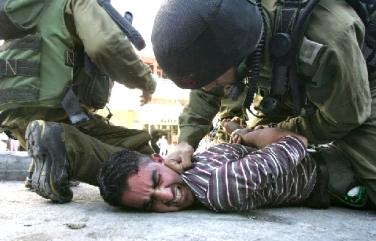
Insanely disproportionate use of violence against unarmed civilians
“The stated aim was, as always, to stop the launching of the rockets. The means: killing a maximum of Palestinians, in order to teach them a lesson. The decision was based on the traditional Israeli concept: hit the civilian population again and again, until it overthrows its leaders. This has been tried hundreds of times and has failed hundreds of times.” (Uri Avnery “Kill a Hundred Turks and Rest”: The Five-Day War in Gaza March 2008).
Operation Grapes of Wrath ~ Lebanon, in 1996
“Ehud Barak will be remembered in Israel’s history as the one who introduced the abuse of innocent civilians as political cards. Barak was probably not the first Israeli warrior to abuse civilians on a tactical level, but he was the one who turned it into a central Israeli strategy. Operation Grapes of Wrath in Lebanon, in 1996, with Barak as an influential cabinet member, openly targeted civilians, turning them into refugees to make them put pressure on Beirut’s government. The recent siege on Gaza follows a similar logic: put pressure on civilians to achieve political goals. (A clear war crime, it goes without saying.)” (Ran HaCohen ‘Israel Says ‘No’’ Feb. 2008).
Israelis fire 1,300,000 bullets during first few days of Intifada
“Malka, in an interview with the Israeli paper Ha’aretz on 14 June, revealed that during the first few days of the intifada, Israeli occupation soldiers fired 1,300,000 bullets on Palestinian population centres and other targets. This massive firepower, which had no operational justification given the Palestinians’ inherently inferior firepower (they possessed only light firearms and in limited numbers), showed that the Israeli army was interested more in decimating and harming the Palestinians and less in ending the violence. According to Israeli sources, then-Chief of Staff and now Defence Minister Shaul Mofaz didn’t plan to bring about the end of the conflict. Instead, he thought he had finally seized the opportunity to “beat and vanquish” the Palestinians in order to “burn into their consciousness” and make them “internalise their weakness and inferiority vis-a-vis Israel’s strength”. Mofaz’s ultimate aim, of which he later convinced Israeli Prime Minister Ariel Sharon, was to hector Palestinians into negotiations in a weakened and exhausted state whereby they would have no choice but to accept Israel’s dictates and demands. The new revelations, Palestinian officials argue, prove that the escalation of violence during the first few months of the intifada was, first and foremost, Israel’s responsibility. “This is what we have been saying all along that this is not about Israeli security but rather about Israel’s terrorising the Palestinian people for the purpose of arrogating their land and rights. Israel is now admitting that,” said Michael Tarazi, adviser to Palestinian Authority leader Yasir Arafat.” (Khalid Amayreh ‘The second intifada, an Israeli strategy’ July 2004).
Lebanon 2006
“This intentional and coldly calculated Israeli policy of targeting innocent Lebanese civilians and civilian infrastructure stems from a time-honoured, but hardly ever successful, Israeli doctrine of applying intense “pressure” against a civilian population in order to compel them, in-turn, to pressure the resistance into submitting to Israeli dictates, thereby doing Israel’s bidding by proxy. It has been consistently used against the Palestinians ever since the Nakba of 1948, and is still applied now in the ongoing barbaric offensive and hermetic siege against Gaza. Israel may have plagiarized this doctrine from the legacies of previous oppressors, but it has refined it to a degree that it no longer raises any moral qualms in most of Israeli society, where it is widely accepted by the public as a right, even a duty in the fight for Israel’s “security.” (Omar Barghouti ‘The Massacre at Qana’ August 01 2006); “As Limor and Shelah reveal, in spite of the fact that the conflict on the ground took place on a very narrow strip of land (the Israeli border on the south and Litani River on the north), the Israeli artillery had managed to shoot over 170,000 shells. In comparison, in the 1973 war while fighting against two strong state armies over two very large fronts, the Israelis had launched only 53,000 shells. The figures relating to the Air Force are even more striking. Though less than a few concrete targets were available for the IDF intelligence, the IAF (Israeli Air Force) had launched as many as 17,550 combat missions, this translates into 520 missions a day, almost as many as in the 1973 war (605 a day). Yet, in 1973 the IAF was fighting two well-equipped air forces, it was engaged in a fair amount of air-to-air combat and a relentless struggle against the latest Soviet ground-to-air missiles. None of that happened in the Second Lebanon War. The IAF was engaged solely in hammering the Lebanese soil. It literally threw and launched everything it had in its disposal, presenting a merciless method that in places (southern Beirut for instance), had a similar effect to the infamous 1940s Anglo-American carpet bombardment.” (Gilad Atzmon ‘Saying NO to the Hunters of Goliath’ August 13, 2007); “That was on Aug. 30, by which time U.N. teams had identified 359 separate cluster-bomb sites. Since then, the true dimensions of the problem have become even clearer: 770 cluster-bomb sites have now been identified. And the current U.N. estimate is that Israel dropped between 2 million and 3 million bomblets on Lebanon, of which up to a million have yet to explode.” (Saree Makdisi ‘Israel’s Cluster Bomb War’ Oct. 2006).
Israeli occupation authorities arrested approximately 4,000 Palestinians, including parliamentarians, women, children and patients, in 2013. The vast majority of those arrested are from the occupied West Bank, with only a small number from the Gaza Strip.
Information published by the statistics department at the ministry of prisoners in the West Bank shows that no single day has passed without arrests. The average number of arrests each month was 323, which equates to about 11 arrests each day.
The arrest rate in 2013 is only one per cent higher than the rate in 2012; however, it is 17 per cent higher than 2011.
Regarding the geographical distribution of the 2013 arrests, 98 per cent (3,799) of those arrested are from the West Bank and two per cent (75) from the Gaza Strip.
According to the statistics, those arrested were from all social classes, without exception. The occupation authorities did not make any special exceptions for the elderly, disabled, children, women, parliamentarians, political leaders, academics and journalists.
All those arrested have been exposed to at least one form of torture. Some of them were tortured in front of their family members when they were arrested at their homes.
The statistics department stated that these arrests are in violation of international law. “Some of the torture cases amount to war crimes and crimes against humanity,” it added.
Kafr Qaddum, Occupied Palestine – Yesterday morning, Murad Eshtewi, the head of the Popular Committee of Kufr Qaddum and leader of the Friday demonstrations was arrested and is still being held by Israeli forces.
At around 3:00 on Friday morning, Israeli soldiers entered the village of Kafr Qaddum, in Qalqilya district, arresting two citizens on the accusation of having taken part in the regular Friday demonstrations held in the village. The men were released the following morning without charges.
The house of Murad Eshtewi, the head of the Popular Committee of Kafr Qaddum, was also raided during the night incursion and he was subjected to aggressive questioning.
Later, at approximately 10:00 on Friday morning, two hours before the demonstration was due to begin, Mr Eshtewi was walking on the outskirts of the village and was ambushed and arrested by soldiers. He did not resist this arrest and yet Israeli forces were extremely aggressive in their use of both pepper spray and stun grenades. He has not yet been released.
His attorney, Lymor Goldstein, stated that, “Contrary to the fundamental principles of due process we have not been presented with the accusations against Murad nor has he been interrogated since his arrest. “
In recent weeks there has been a steady escalation of night raids, increasingly violent repression of Friday demonstrations, flying checkpoints and seemingly arbitrary arrests. In the past month alone there have been more than twenty night raids on houses in the village.
Last month a new army commander responsible for the area gave a verbal warning to villagers stating that, unless they suspend their Friday demonstrations, the military harassment outlined above would be increased.
A typical night raid will involve up to around fifty soldiers surrounding and entering a particular house. Tear gas is often released and live ammunition may be fired into the air to intimidate residents. Israeli soldiers may break windows and doors in order to enter the houses.
Arrestees are blindfolded and handcuffed before being taken for questioning to another location. Interrogation may take place in the back of an army jeep, on the ground at the side of the road, or within the police station. Frequently they are subjected to verbal and physical abuse. When released, the detainees are often left in the road, kilometers from their homes.
The villagers of Kafr Qaddum are currently unable to access much of their land due to the closure by the Israeli army of the village’s main and only road leading to Nablus in 2003. The road was closed in three stages, ultimately restricting access for farmers to the 11,000 dunams of land that lie along either side to one or two times a year. Since the road closure, the people of Kafr Qaddum have been forced to rely on an animal trail to access this area; the road is narrow and, according to the locals, intended only for animals. In 2004 and 2006, three villagers died when they were unable to reach the hospital in time. The ambulances carrying them were prohibited from using the main road and were forced to take a 13 km detour. These deaths provoked even greater resentment in Kafr Qaddum and, on 1 July 2011, the villagers decided to unite in protest in order to re-open the road and protect the land in danger of settlement expansion along it.
Israeli Naval Forces stationed off Beit Lahi shore, in the northern Gaza Strip, opened fire at Palestinian fishing boats in 4 separate incidents, while sailing between 600 meters and 3 nautical miles. Israeli naval forces also confiscated 24 fishing nets.
The Palestinian Center for Human Rights (PCHR) expresses concern over the continued targeting of fishermen and their livelihoods.
Economic and social rights of fishermen have been violated by the illegal naval blockade imposed by Israeli authorities on the Gaza waters since June 2007.
According to investigations conducted by PCHR, at approximately 10:40 on Wednesday, December 18, Israeli gunboats opened fire at a Palestinian fishing boat that was sailing about 600 meters off al-Wahah shore in Beit Lahia, in the northern Gaza Strip.
Two gunboats surrounded the fishing boat which was boarded by 3 fishermen: Mahmoud ‘Ali ‘Arouq (16); his brother Mohammed (22); and Jom’aah Amin ‘Arouq (24).
Israeli naval forces then ordered the men to stop fishing and give themselves up, but they refused and fled.
The naval forces confiscated 14 fishing nets, a total length of 840 meters.
Mahmoud ‘Ali ‘Arouq (28) said that they left the waters, to the shore, and watched the gunboats, hoping that they would regain their fishing nets.
However, the gunboats confiscated the nets and left the place.
In another incident, at approximately 12:30 yesterday, December 18, Israeli gunboats opened fire at a fishing boat belonging to Khalid ‘Awad al-Kafranah, from Beit Hanoun, in the northern Gaza Strip, while sailing at approximately 1.5 nautical miles off al-Wahah shore in Beit Lahia, also in the northern Gaza Strip. Israeli naval forces then confiscated 10 fishing nets.
In a third incident, at approximately 06:00 on Tuesday, December 17, Israeli gunboats stationed off al-Wahah shore in Beit Lahia, in the northern Gaza Strip, opened fire in the vicinity of Palestinian fishing boats that were sailing approximately 3 nautical miles offshore.
The shooting continued for about 10 minutes, so the fishermen were forced to flee, for fear of being attacked.
In a fourth incident, at approximately 14:10 on Monday, December 16, Israeli gunboats stationed off al-Wahah shore in Beit Lahia, in the northern Gaza Strip, opened fire in the vicinity of Palestinian fishing boats that were sailing at approximately 3 nautical miles offshore.
The shooting continued for about 15 minutes, so the fishermen were also forced to flee, for fear of being attacked.
PCHR condemns the continued Israeli attacks against Palestinian fishermen in the Gaza Strip, and:
1. Calls for the immediate halt of the policy of chasing and arresting Palestinian fishermen, and allowing them to sail and fish freely;
2. Demands compensation for the fishermen, for the physical and material damage caused to them and their property as a result of these violations;
3. Calls upon the international community, including the High Contracting Parties to the Fourth Geneva Convention of 1949, Relative to the Protection of Civilian Persons in Time of War, to immediately intervene and stop the Israeli violations against the Palestinian fishermen and to allow them to sail and fish freely in the Gaza Sea.
**************************************
For more information please e-mail: pchr@pchrgaza.org
Four more innocents were released from America’s Robben Island this month. Our offshore penal colony at Guantanamo Bay still holds 158 prisoners, 84 of whom have been cleared for release. The men sent home were never charged with a crime and were cleared four years ago.
The releases may give other prisoners a reason for hope if they heard the news. During hunger strikes last spring, some of which lasted over 80 days, the military raided the prison and put 100 strikers in solitary. No one knows how or what information passes to them.
At the time, when 100 of 166 prisoners were refusing food, the ACLU, the Center for Victims of Torture, Human Rights Watch and 17 other civic groups wrote to Pentagon boss Chuck Hagel that force feeding detainees was “cruel, inhuman and degrading” — the treaty definition of torture — and called for its immediate and permanent cessation. Hagel also got a letter from Jeremy Lazarus, the president of the American Medical Association, who charged that doctors helping force-feed prisoners against their will violated “core ethical values of the medical profession.”
From February to June, the White House presided over the torturous force-feeding of at least 21 bound prisoners, a choking and gagging experience in which plastic tubes are shoved through the nostrils and down the throat while one is cinched to a restraint chair.
Cooler Heads Pronounce, but Don’t Yet Prevail
In the midst of the hunger strike, a diverse group of legal scholars, constitutional lawyers and former high ranking government and military officials published a major report that said Guantánamo demonstrates “… the willingness of the United States to detain significant numbers of innocent people … and subject them to serious and prolonged privation and mistreatment, even torture.”
The nonpartisan Constitution Project’s Task Force on Detainee Treatment’s (CPTF) self-titled “most important” finding — made “without reservation” — was that “[I]t is indisputable that the United States engaged in the practice of torture,” and that “[I]t occurred in many instances and across a wide range of theaters.”
The 600-page study, two years in the making, explained “[T]his conclusion is grounded in a thorough and detailed examination of what constitutes torture in many contexts, notably historical and legal. The CPTF examined court cases … in which the United States has leveled the charge of torture against other governments. The United States may not declare a nation guilty of engaging in torture and then exempt itself from being so labeled for similar if not identical conduct.”
The CPTF declared that by authorizing torture, the government “… set aside many of the nation’s venerable values and legal principles.” I wouldn’t use such niceties as “set aside.” Government employees disobeyed, defied, denigrated and mocked the law, particularly the US Torture Statute, the US War Crimes Act and both the Geneva Conventions and the Convention Against Torture which are US law under the Constitution. Obama himself said on April 30 that Guantanamo was “a symbol around the world for an America that flouts the rule of law.” On Sept. 24, 2009, he said, “International law is not an empty promise, and treaties must be enforced.”
The CPTF’s second major conclusion was that the “highest officials bear some responsibility for allowing — and contributing to the spread of — torture.” This bombshell puts the perpetrators in legal jeopardy considering US treaties governing torture. They hold that if an accused government — in this case the United States — fails to investigate and prosecute the credibly accused, other states or the International Criminal Court may be obligated to do so.
The CPTF noted that during a February 2012 visit to Guantanamo by its staff, the prison commander at the time, Rear Adm. David Woods, “was quick to point out the facility’s motto: ‘Safe, Humane, Legal, Transparent.’” And I am Marie of Romania.
Karen Greenberg, founder of the Center on National Security at Fordham University’s law school, has said of Guantanamo’s hunger strikers, “They can’t tolerate it any more. It is despair…” Ten years of indefinite imprisonment without charges, and often without mail, phone calls or access to attorneys, is so psychologically devastating that the beleaguered inmates would rather have died than drift in oblivion. In May, prisoner Al Madhwani wrote to a federal court “… Obama must be unaware of the unbelievably inhumane conditions at the Guantanamo Bay prison, for otherwise he would surely do something to stop this torture.”
Obama has ignored torture allegations made against Dick Cheney, Donald Rumsfeld, Alberto Gonzales and George Bush — who did prosecutors the favor of publishing an autobiographical confession. When asked if his administration would investigate, Obama said it would be unproductive to “look backwards.” It would also be self-incriminating, since Obama himself has authorized cruel, inhuman and degrading treatment at Guantanamo.
John LaForge is a Co-director of Nukewatch, a nuclear watchdog and environmental justice group in Wisconsin, edits its quarterly newsletter, and writes for PeaceVoice.
When Israel was established, its founders made sure to emphasize, in its Declaration of Independence, the universal values of Jewish tradition: “The State of Israel […] will promote the development of the country for the benefit of all its inhabitants; will be based on the precepts of liberty, justice and peace as envisaged by the prophets of Israel; will uphold the full social and political equality of all its citizens, without distinction of race, creed or sex; will guarantee full freedom of conscience, worship, education and culture; will safeguard the sanctity and inviolability of the shrines and Holy Places of all religions; and will dedicate itself to the principles of the Charter of the United Nations.” Later on, the Knesset voted to adopt the Universal Declaration of Human Rights. Furthermore, Israel is in the habit of calling itself “the only democracy in the Middle East”, and since its earliest days, its leaders were partial to the term “a light unto the nations.” As we mark Human Rights Day, we should examine whether Israel stands by the high rhetoric of its founders, and whether it fulfills the Declaration of Human Rights.
As every person living in Israel knows, assuming their eyes are open and their hearts are not blocked, Israel and the Universal Declaration of Human Rights have a rocky relationship. In the beginning of 2010, Gideon Sa’ar’s Ministry of Education decided to stop teaching the Declaration at schools (Hebrew), since it informs tender children of their right to convert to another religion and even, heaven forbid, live somewhere other than Israel. However, this is just a minor problem; reading the text of the Declaration shows that the Israeli occupation of the Palestinian territories violates 15 of its articles. Given that there are only 30 of them, that’s quite impressive.
Let us begin. The first violation comes with the first operative article of the Declaration, Article 2. It states, “Everyone is entitled to all the rights and freedoms set forth in this Declaration, without distinction of any kind, such as race, colour, sex, language, religion, political or other opinion, national or social origin, property, birth or other status. Furthermore, no distinction shall be made on the basis of the political, jurisdictional or international status of the country or territory to which a person belongs, whether it be independent, trust, non-self-governing or under any other limitation of sovereignty.” Only, as everyone knows, after “no distinction shall be made”, the text is irrelevant in the territories occupied by Israel. Article 2 is sort of an umbrella article; the following ones will note specific violations.
Article 3 of the Declaration states, “Everyone has the right to life, liberty and security of person.” Except that those living under Israeli rule in the West Bank are entitled to none of the above. The indictment rate for Israeli soldiers who have killed Palestinian non-combatants is negligible. Since 2000, only seven soldiers were put on trial and convicted for crimes involving the death of Palestinians; the number of Palestinian deaths since 2000 is estimated at over 5,000. IDF soldiers need no warrant to break into Palestinian homes; they are authorized to arrest them without any explanation, and from time to time enforce curfews on Palestinian towns and villages.
Next. Article 5 of the Declaration states, “No one shall be subjected to torture or to cruel, inhuman or degrading treatment or punishment.” Anyone familiar with the way our security services operate, or with the fact that, on many occasions, IDF soldiers beat up Palestinian detainees, knows that this article is often violated. Furthermore, it’s hard to see the standard procedure of blindfolding prisoners as anything but “degrading treatment.”
The fourth violation of the Declaration comes with Article 7: “All are equal before the law and are entitled without any discrimination to equal protection of the law.” Except, the whole essence of the occupation is creating two populations in the same region, with two different sets of rights and two different legal systems. Discrimination manifests itself not just in the laws themselves, but also through unequal enforcement. To put it mildly, the Jewish victim of a crime in the OPT is significantly more likely to see justice served than would a Palestinian living in a neighboring village. .
The fifth violation also comes from the legal world: “No one shall be subjected to arbitrary arrest, detention or exile,” declares Article 7. Except for the fact that the occupation forces maintain the right to hold a person in administrative detention, that is, held without charges and deprived of the right to defend himself in court. It’s hard to imagine a more “arbitrary arrest or detention” than that. Furthermore, from time to time Israel exiles Palestinians – in the last few years mostly from the West Bank to the Gaza Strip, but it used to exile them to Lebanon and other countries, not to mention the internal displacement looming over South Hebron residents.
Article 10 of the Declaration states that “Everyone is entitled in full equality to a fair and public hearing by an independent and impartial tribunal.” But it’s doubtful whether you can call our military courts “an independent and impartial tribunal” with a straight face. Their conviction rate is 99.7%. The British courts in India used to take pride in the large number of Indians who served there as judges; in Israel’s military courts, Palestinians naturally have nary a chance of being sentenced by a Palestinian. Israel once recruited police officers from among the occupied population, but it never imagined allowing them to sit in judgment. Israel’s military courts are a foreman’s court, conducted in the foreman’s language.
As far as the military courts are concerned, Article 11 of the Declaration is also troublesome: it says that, “Everyone charged with a penal offence has the right to be presumed innocent until proved guilty according to law in a public trial at which he has had all the guarantees necessary for his defence.” My emphasis. The military courts of Israel are notorious for allowing “secret evidence” presented to the judges by the prosecution, the content of which the defendant has no knowledge, nor is able to contradict. This means that the conviction of a defendant relies, at least in large part, on evidence that he has not had the opportunity to refute, and whose absurdities or lies he cannot expose. Such “secret evidence”, fabricated to the gills, was the crux of the Dreyfus Affair. The French court, when exonerating Captain Dreyfus, ruled that the admission of “secret evidence” is incompatible with the right of a person to a legal defense. Dreyfus would, in time, be decorated by the thankful Republic with its highest decoration, the Légion d’honneur, because “by defending his own honor, he defended the nation’s ” and prevented it from jailing an innocent man. It’s been almost 120 years since Dreyfus’ infamous court-martial, and the Israeli military courts are yet to absorb this simple lesson.
Article 12 states, “No one shall be subjected to arbitrary interference with his privacy, family, home or correspondence, nor to attacks upon his honour and reputation.” As noted above, Palestinians have no defense against arbitrary search of their homes. In fact, their houses sometimes serve as military training sites.
Onwards! Article 13 declares, “Everyone has the right to freedom of movement and residence within the borders of each state. Everyone has the right to leave any country, including his own, and to return to his country.” However, Israel enforces a rigid “permit regime” in the West Bank and the Gaza Strip, and it operates checkpoints which cut the West Bank into fragments. Our colleagues at Gisha can tell you more about just how fastidious Israel is about the right of Palestinians to move from the West Bank to the Gaza Strip and vice versa. Some Palestinians are even barred from travel outside the West Bank at all. And of course, residents of East Jerusalem, which though Israel may have forgotten, is part of what the world views as occupied territory and is contiguous with the West Bank, risk losing their ability to return to their homes should they leave for a few years – say, for familial, economic or educational reasons – even if they only leave to the West Bank.
Article 15 declares plainly that “Everyone has the right to a nationality.” We shan’t belabor that point. Article 17 also seems to be so simple as to be self-evident: “No one shall be arbitrarily deprived of his property.” It is, however, anything but. Ask the villagers whose land is slowly being devoured by illegal outposts; ask the residents of Dura al-Qara, whose land was confiscated in what the State now stammers is a “frozen military need”, and left unused.
While Article 19 states that “Everyone has the right to freedom of opinion and expression; this right includes freedom to hold opinions without interference and to seek, receive and impart information and ideas through any media and regardless of frontiers,” Israel has employed brutal censorship for years towards the occupied people/ The IDF responds harshly to protests across the West Bank, resulting in many of Yesh Din’s complaints of unwarranted injuries, and it still detains people from time to time for “holding inciting material.” The military orders in force in the West Bank effectively make every demonstration an illegal one. For this reason, Article 20 of the Declaration – ” Everyone has the right to freedom of peaceful assembly and association” – is dead letter in the West Bank.
Article 21 declares that “Everyone has the right to take part in the government of his country, directly or through freely chosen representatives. The will of the people shall be the basis of the authority of government.” Palestinians living in Areas B and C are effectively subjects of the Israeli government, which they never elected and which they have no way of electing or being elected to. Also, given that Israel forbids Hamas to participate in the Palestinian elections, which grant limited powers to a Palestinian government, and given that it maintains the right to detain Palestinian politicians as it sees fit, one can hardly speak of “the will of the people.”
But perhaps the most painful violation is that which should be most obvious: “Motherhood and childhood are entitled to special care and assistance. All children, whether born in or out of wedlock, shall enjoy the same social protection,” says Article 25. Anyone who has seen detained children, quite a few of them under the age of discretion; anyone who has compared the special rights given to accused minors in the Israeli system with the almost dearth of comparable rights granted to Palestinian minors in the military courts; and anyone who has observed our brave troops raiding a house at night, handcuffing a child and blindfolding him; and anyone who understands the psychological damage to children witnessing their parents brutally arrested at gunpoint at night in their beds knows just how the most obvious is anything but that in the territories under Israeli occupation.
Yet these many violations, we should remind you, are not a force of nature, do not stand of their own power; they are no ancient, unbreakable law; they are man-made, they are an act we fund, carried out by those we empower to act and whose actions we approve – admittedly, mostly by averting our eyes. But we can mend this; and we shall.
Last Friday, after 13 months and 400 witness testimonies, the mega-lawsuit in Federal Court of Tucumán found 37 of 41 defendants guilty of crimes against humanity during the 1976-83 dictatorship in Argentina. In the historic trial, known as Jefatura II-Arsenales II, four civilians were among the accused: two were pardoned and two were convicted for their involvement in the dictatorship.
María Elena Guerra, a civilian and ex-police officer, and Guillermo Francisco Lopez Guerrero, a civil intelligence agent, joined a select few civilians who have been found guilty of crimes committed during the brutal seven-year military regime, in which some 30,000 people were kidnapped and killed or ‘disappeared’.
Since the trials were reopened in 2003, hundreds of members of the military have been sentenced to prison for crimes committed during the dictatorship. However, it was only in December last year that James Smart, a former government minister of the Province of Buenos Aires, became the first civilian to be convicted of crimes against humanity committed during the dictatorship. He was sentenced to life in prison for crimes committed in six clandesine detention centres.
These landmark rulings demonstrate how, after 30 years of democratic rule, the way Argentines, politicians, and the legal system examine crimes from this period has evolved, with the focus turning more recently to the role of businesses and civilians in the human rights atrocities of that period.
Human rights groups have long used the term ‘civic-military dictatorship’ to acknowledge the complicity and support of some civilian sectors. But the title has become increasingly common in recent years under the Cristina Fernández de Kirchner administration, opening the door for a number of emblematic trials investigating the role of these civilians, with the aim of bringing the impunity of the powerful to an end.
Causes of the Coup: A New Economic Model
Human rights groups argue that economic motives were behind the 24th March 1976 coup, saying it can no longer be argued that the objective was only to combat “subversion”. They believe so-called “captains of industry” collaborated with military leaders to perpetrate crimes against humanity for economic gain.
Last week, Banco de la Nación Argentina officially recognised Roberto Hugo Barrera as the 31st employee still missing – disappeared – after being kidnapped during the dictatorship. The institution has been an important player in the drive to highlight the economic motives behind the so-called ‘National Reorganisation Process’ implemented by the military junta.
Graciela Navarro, President of the Commission of the Banco de la Nación Personnel for Memory, Truth and Justice told The Argentina Independent that when identifying what occurred in 1976, it is first important to understand that there was no “war.”
“There were operations of some armed groups, but these were isolated. There was never a war here. It was always state terrorism,” she said, alluding to the still oft-used term ‘Dirty War’ by foreign press.
According to Navarro, certain civilian sectors used the military to implement a neo-liberal economic model. “It was necessary to implement an economic model of exclusion to benefit economic groups that utilised the Armed Forces as a instrument of social discipline – for repression, for fear, to deal with any resistance movement.
“The true causes of the coup were economic, because of this we say civic-military dictatorship,” she added.
Marta Santos, a former Central Bank employee and friend of one of the five known desaparecidos (missing) who worked at the institution, echoes this view.
“This dictatorship, this military force, needed the support of civilians in key parts of the state and in the private economy… In this sense we say that dictatorship was civic-military because it pursued neo-liberal economic interests of private [business] and the state,” says Santos, who today is part of a team working with the Central Bank to investigate if there are more unknown desaparecidos who worked there.
Civilians in Government
Santos says it is important to denounce civilian collusion with the military junta in the defence of democracy, to ensure these institutions can never again prop up a dictatorship. She names José Alfredo Martínez de Hoz as the prime example of civilian involvement.
Former president of the steel company Acindar – which operated one of the country’s first clandestine torture and detention centres on its premises in 1975 – Martínez de Hoz was economy minister from 1976 to 1981, in charge of ushering in a new economic paradigm based on the principles of neo-liberalism. During this period, it was common for businessmen close to the economy minister to assume key government roles, helping to fuse civil society to the military junta. His policies sowed the seeds for financial collapse, providing a brief period of prosperity but leading to a deep recession in 1981 and saddling the nation with a burdensome external debt that would cause problems long after the return to democracy.
José Martínez de Hoz – 1976
Martínez de Hoz was under house arrest when he died in March this year, being investigated for his alleged role in the kidnap of father and son, Federico and Miguel Gutheim. The family owned the cotton export company Sadeco, and were allegedly coerced into making business deals that favoured the dictatorship.
He was also linked to the kidnap of René Carlos Alberto Grassi, director de Industrias Siderúrgicas Grassi (a rival company of Acindar) and president of the Bank of Hurlingham, in September 1978. Grassi was held in Campo de Mayo for a year after his abduction, and eventually Industrias Siderúrgicas Grassi was absorbed by Acindar. One month before the abduction, Martínez de Hoz had asked to buy the Bank of Hurlingham and was declined.
From the early days of the dictatorship there was a strong repression of workers, but the kidnap of Grassi was significant; he did not pose a threat as an opposition force to the regime, his value was economic.
Martínez de Hoz was pardoned by Menem in 1990, though this was annulled 16 years later when the Gutheim case was reopened. Up until his death, he denied any involvement in the kidnappings and was a remorseless defender of the dictatorship-era economic policies.
The investigation of Martínez de Hoz is an early example of a civilian investigated for abuses committed during the reign of the military junta. In recent years, many more legal battles concerning civilian’s roles in the dictatorship have come to the surface.
Thirty Years of Reconstruction
Horacio Verbitsky, president of CELS and co-author of the 2013 book ‘Cuentas pendientes: los cómplices económicos de la dictadura’, which examines the links between economic powers and state repression, argues the economic influence of civilians who were complicit in the dictatorship continued throughout the first two decades of democracy. Verbitsky argues that economic powers could have endangered the stability of democracy, which limited the possibility of pursuing justice for their responsibility during the dictatorship.
Argentina’s first president after the return of democracy, Raúl Alfonsín, had the complex task of addressing human rights abuses in the face of a weak economy and massive external debt, which had ballooned from US$7.87bn in 1975 to US$43bn in 1982.
“It is not easy to build democracy in a setting where political culture and civic habits have been degraded by authoritarianism. Nor is it easy to build democracy in the midst of a deep economic crisis exacerbated by the need to repay a huge foreign debt that the old dictatorial regime had contracted and irresponsibly misspent,” Alfonsín said in 1992, after his term had ended prematurely in 1989.
Videla and other military chiefs are found guilty of crimes against humanity in 1985.
The neo-liberal economic paradigm that dominated the nineties – a time that corresponded with the amnesty offered to those responsible in the dictatorship – deepened the economic model launched in 1976, taking it to the economic and political crisis of 2001.
Graciela Navarro believes that since Nestor Kirchner took office in 2003 there have been two distinct periods relating to the last civic-military dictatorship, the first being the recovery of the memory of those who had been tortured or disappeared, and the end of impunity for military leaders. “When Cristina was elected,” Navarro believes, “it was possible to begin to examine the true causes of the coup, which were economic, and charge those who are responsible.
“The military has been judged,” adds Navarro, “but many civilians, if not them then their children, are owners of the large economic groups… this is difficult. These are the interests that Cristina is dealing with.”
Pending Cases
After years of impunity, Argentina’s legal system has begun to investigate the role of officials, powerful businessmen, and mulitnationals who may have collaborated with the military in state terrorism. According to the Centre for Legal and Social Studies (CELS), as of September 2013 there were a total of 261 civilians accused of involvement in the human rights abuses of the era.
Several high profile and emblematic cases involving civilians, and their business interests, are currently making their way through the legal system.
Papel Prensa: On 2nd November, 1976, three newspapers – Clarín, La Nación, and La Razón – obtained the majority shares in Papel Prensa, the company which produces newsprint for the industry, soon after owner, businessman and banker David Graiver, died in a plane crash in Mexico in August 1976. Graiver’s widow, Lidia Papaleo testified in 2010 that at that time she was stripped of the factory after receiving death threats against her and her young daughter. In March 1977, Papaleo was abducted and tortured until she was released on July 24, 1982.
The case concerning the sale of Papel Prensa was opened in August 2010 after President Fernández presented a report in the Casa Rosada titled “Papel Prensa: The Truth” denouncing the “illegal appropriation” of the business. Most recently, the case has been in the headlines after the discovery of official minutes from the dictatorship that mention Papel Prensa 13 times between September 1976 and November 1977.
According to Defence Minister Agustín Rossi, the minutes make it “clear that for the Junta, Papel Prensa was a part of the same theme as the detention of [ex-owners] the Graiver family… this appears clearly in the minutes.” Copies of the documents are now in the hands of Federal Judge Julián Ercolini, who has jurisdiction over the case.
Ledesma: Also working its way through the legal system is a case involving president of sugar company Ledesma, one of Argentina’s most powerful businesses, for his involvement in kidnappings during the ‘blackout night’, when over 400 people were kidnapped in the province of Jujuy following an electricity outage on 20th July, 1976.
President of Ledesma Carlos Blaquier and former general manager Alberto Lemos are accused of providing the vehicles that were used for transporting the victims. This month, the Federal Court of Salta confirmed that there is sufficient evidence that the company Ledesma collaborated in the kidnapping of their workers to dismantle the labour union. As a result, Blaquier and Lemos will be put on trial, which is set to begin in April 2014. The court upheld that Blaquier will be prosecuted as a “necessary participant” in twenty cases of illegal deprivation of liberty and Lemos is accused of being a “secondary participant” to the kidnappings.
Ford: During the dictatorship, the Ford Falcon became known as a vehicle commonly used by kidnappers. But the company is also accused of more direct involvement in the human rights abuses of the time.
In May, charges were laid against three ex-directors of Ford Motors Argentina for their role in the disappearance of 24 workers from the plant. Former plant manager Pedro Müller, ex-leader of labour relations Guillermo Galarraga, and ex-security chief Héctor Sibilla are accused of having given to military commanders in the area “personal data, photographs, and addresses” of workers at the factory between 24th March and 20th August, 1976.
The three men are also accused of having allowed the military to use the factory as a detention centre where they carried out the interrogation of the workers. According to Judge Alicia Vence, the workers were “tied up with their faces covered and beaten.”
Although 24 workers survived the kidnapping and torture, only twelve are still alive today. The formal legal process began in 2001 but the first reports of the events date back to 1984.
Mercedes Benz: The families of 17 workers from the Mercedes Benz plant who were kidnapped and tortured have bought a civil case against the parent company of the car maker, Daimler Chrysler, in the US. Mercedes-Benz Argentina is alleged to have identified workers who were kidnapped and sent to the clandestine torture centre, Campo de Mayo, during the dictatorship.
The investigation began in 2004 and has been rejected by US courts on previous occasions, with the US Supreme Court currently determining if the case falls under its jurisdiction. A decision is expected in the coming months on whether multinational corporations can be sued in US courts for alleged human rights abuses abroad.
In Argentina, the lawsuit for kidnapping and torture of the 17 workers, 14 of whom are still missing, was initiated by journalist Gabriela Weber in 2002 and in 2006 was transferred to Federal Court in San Martín under the charge of Judge Alicia Vence. So far no one has been formally charged or arrested.
The car maker is also accused of the appropriation of three children, and the adoption and substitution of identity of Paula Logares, the first grandchildren reclaimed by the Abuelas de Plaza de Mayo in 1987.
Yemeni MPs have strongly condemned US assassination drone strikes inside the Arab country and the parliament passed a law banning the drone attacks.
“Lawmakers have voted to ban drone strikes in Yemen,” the official Saba news agency reported after the parliament held a session on Sunday.
The legislators stressed “the importance of protecting all citizens from any aggression” and “the importance of preserving the sovereignty of Yemeni air space,” Saba said.
On Thursday, a US drone fired several missiles into a convoy of vehicles traveling to a wedding party in central Yemen, killing at least 17 people.
The strike triggered protests across Yemen. Relatives of the people killed in the attack blocked roads to protest against the deadly incident, calling on the government to adopt measures to halt the drone strikes. They also demanded an official apology as well as compensation.
“If the government fails to stop American planes from… bombing the people of Yemen, then it has no rule over us,” Yemeni tribal chief Ahmad al-Salmani said on Saturday.
Washington has stepped up its assassination drone operations in Yemen over the past few years.
According to the Washington-based think tank the New America Foundation, US drone attacks in the Arab country almost tripled last year, surging from 18 to 53.
US officials claim that the attacks target militants, but local sources say civilians have been the main victims of the non-UN-sanctioned airstrikes — which have also been launched against locations in Afghanistan, Pakistan, and Somalia.
The US has come under fire for increasing its drone attacks in Yemen, where the people have held many demonstrations to condemn the violation of their national sovereignty.
BETHLEHEM – Approximately 10,000 people have been forced to flee their homes due to widespread flooding in the Gaza Strip, according to a report released Saturday evening by the United Nations Office for the Coordination of Humanitarian Affairs.
The numbers of displaced dwarf earlier estimates, as they take into account both the thousands who have sought refuge in Gaza shelters as well as those who have sought refuge elsewhere.
Previous estimates released by the Gaza government had measured only those who had sought refuge in official shelters, who at their peak reached above 5,000 but were estimated at around 2,234 on Sunday.
In a comprehensive report on winter storm Alexa’s effects on the Palestinian Territories, OCHA reported that as of Saturday at 9 p.m., 10,000 Gazans had been evacuated from their homes and had gone to either shelters or relatives’ houses.
The areas most devastated by the storm are “North Gaza and Gaza City where over 1,500 houses suffered damage due to water entering houses, damaging furniture and electricity networks.”
An infant died and 100 were injured in storm-related incidents throughout Gaza, the report said. Gaza government officials said on Sunday that two individuals had died, but did not mention any case involving an infant.
Schools throughout Palestine have been closed since Thursday, and according to OCHA 17 schools in Gaza have been converted into shelters, while five other schools have been rendered unusable due to flooding.
The report also discussed the effects of the storm, in conjunction with the Israeli occupation, on herding communities in the West Bank.
“Several herding communities had their structures demolished (by the Israeli authorities) one day before the storm hit, prompting the UN Humanitarian Coordinator to call again for a halt to demolitions due to their humanitarian impact,” the report said.
Additionally, “approximately 30 families living in ten Bedouin communities in the northern Jordan Valley require emergency assistance.”
Meanwhile, the report said farmers across Palestine have been hit with livestock and crop losses, further weighing on levels of food insecurity throughout the territories.
“In the West Bank, preliminary reports of damages to the livestock sector are emerging from Hebron, Bethlehem and Salfit. Bedouin and herding communities seem to be the most affected. Herders are expected to face increasing livestock fatalities and morbidity in the coming weeks.”
In Gaza, over 10 percent of the coastal enclave’s greenhouses and field crops were destroyed or damaged by winter storm Alexa, in addition to 50 animal pens, the report said.
“120,000 chicks and 200 heads of livestock died as a result of the weather.”
The Gaza Strip is currently under a state of emergency due to severe weather conditions caused by a historic storm front moving south across the Levant.
UNRWA spokesperson Chris Gunness said on Saturday that large regions of the Gaza Strip were a “disaster area” and called on the international community to lift the Israeli blockade in order to allow recovery efforts to proceed.
“Any normal community would struggle to recover from this disaster. But a community that has been subjected to one of the longest blockades in human history, whose public health system has been destroyed and where the risk of disease was already rife, must be freed from these man made constraints to deal with the impact of a natural calamity such as this,” he said in a statement sent to Ma’an.
Fuel shortages have caused daily life in the Gaza Strip to grind slowly to a halt since early November, cutting off access to basic necessities for Gaza residents.
Until Sunday, the Gaza Strip had been without a functioning power plant since the beginning of November, when the plant ran out of diesel fuel as a result of the tightening of a seven-year-long blockade imposed on the territory by Israel with Egyptian support.
The power station began operating Sunday after receiving a delivery of diesel that was purchased from Israel by the Palestinian Authority using funds donated by Qatar.
The plant was only reopened in 2012 after it was targeted by an Israeli airstrike in the 2006 assault on the Strip. The power plant generates around 30 percent of the Gaza Strip’s electricity supply, while the rest comes from Israel and Egypt.
Until July of this year, the tunnels to Egypt provided a vital lifeline for the territory amidst the otherwise crippling Israeli blockade. The blockade has been in place since 2006, and it has limited imports and exports and led to a major economic decline and wide-reaching humanitarian crisis.
In 2011 and 2012, however, the situation improved, as the tunnels to Egypt witnessed a brisk trade following the Egyptian Revolution.
Gaza Strip energy officials have blamed Egypt for destroying numerous tunnels linking the Gaza Strip and Egypt in recent months. They also blamed the Fatah-led Palestinian Authority for charging taxes on fuel too high for Hamas authorities to afford.
BETHLEHEM – The Gaza Government’s Disaster Response Committee announced late Friday that Israeli authorities had opened up dams just east of the Gaza Strip, flooding numerous residential areas in nearby villages within the coastal territory.
Committee chairman Yasser Shanti said in a press conference that Israeli authorities had opened up dams just to the east of the border with the Gaza Strip earlier in the day.
He warned that residential areas within the Gaza Valley would be flooding within the coming hours.
He said that the move by Israeli authorities would flood areas in Moghraqa and other parts of Deir el-Balah in central Gaza, and he called upon residents of areas near the Gaza Valley to evacuate their homes in preparation for the anticipated flooding.
The Gaza Strip is currently under a state of emergency due to severe weather conditions caused by a historic storm front moving south across the Levant.
Fuel shortages have caused daily life in the Gaza Strip to grind slowly to a halt since early November, as power plants and water pumps are forced to shut down, cutting off access to basic necessities for Gaza residents.
Lack of diesel fuel is a result of the tightening of a seven-year-long blockade imposed on the territory by Israel with Egyptian support.
The Gaza Strip has been under a severe economic blockade imposed by the State of Israel since 2006.
GAZA — Israeli occupation forces opened on Sunday Wadi Sofa dam east of Rafah, south of the Gaza Strip, flooding dozens of Palestinian homes, local sources said.
The IOF opened its dams towards Palestinian houses without any prior warning for the second time since the stormy weather hit the region recently.
Rescue teams have evacuated trapped people from their flooded houses and transferred them to safe places and shelter centers.
Several Israeli earth dams have been established to the east of Gaza Strip, in order to benefit from rainwater and prevent its access to Gaza; however in such cases the Israeli occupation opens its dams toward the Strip to prevent swamping its agriculture lands.
Many residential areas and agricultural lands in Gaza were flooded when the Israeli authorities opened up the dams, which aggravated the population’s suffering. … Full article
By Richard Edmondson | Fig Trees and Vineyards | December 17, 2013
It has been reported in the past several days, by Ma’an News and on several websites including this one, that Israel may have opened one or more dams resulting in the severe flooding we have seen in Gaza and further exacerbated conditions already made dire by the onslaught of winter storm Alexa. This at any rate is the charge that has been made by the Gaza government’s Disaster Response Committee and its chairman, Yasser Shanti.
So far I myself have heard no official response from Israel either confirming or denying. However, the following is reported by the Middle East Monitor:
According to Israel’s Yedioth Ahronoth newspaper, the rainfall led to a lot of excess water which couldn’t drain away, so “the Israeli authorities resorted to discharging the excess water into the Gaza Strip.”
I could not find this reported on Ynet’s English website, but it’s possible it was reported in the Hebrew edition. So was a dam released? All we have to go on is the statement by Shanti, accompanied, of course, by the shocking images we have seen of inundated streets, flooded homes, and people paddling in boats. But I did come across this video and thought I would share it. If it turns out that a dam or floodgate of some sort was deliberately released, it apparently would not be without precedent. The following was reported by Press TV in January of 2010—and take special note of what the reporter says regarding the flooding and its coinciding with the one-year anniversary of the close of Israel’s Operation Cast Lead.
If Israel did this in 2010, does it beggar belief they would have done the same thing again this past week? If they did, the question then becomes did they do it out of a) a need to divert flooding from their own communities in Israel, or b) pure malice?
The question of whether a dam was opened or floodwater in some way diverted is addressed in a report on the Gaza flooding published at The Ecologist, an environmental website:
Amid the chaos it is impossible to verify the accusations. The heavy rain has also affected bordering areas of Israel and whether or not dams have been deliberately opened, drainage systems in Sderot and other cities were certainly overwhelmed by the volume of water.
What is certain is that low-lying Gaza, on the coastal plain, lacking functioning drainage and sewage systems, would in any case suffer most severely from the rainfall. Moreover Israel already stands accused of deliberately running down basic sanitation services in Gaza in order to make life unlivable for its residents.
And as Gaza resident Fidaa Abuassi points out: “Unlike their neighbors in Sderot Gaza’s refugees have nowhere to flee when heavy rains flood their 25-mile occupied territory, blockaded by land, air, and sea.”
Even as the floodwaters recede, there may be worse to come. The report warns of what most likely is an “impending health catastrophe” in the making, with a flare up of respiratory and skin diseases brought on by constant exposure to sewage water and lack of medical supplies.
When Barack Obama, the first black president of America, delivered remarks Tuesday during a South African memorial service for that country’s first black president, he muffed a historic opportunity to right a grave wrong done by the American government – one that helped send Nelson Mandela to prison for nearly 30-years.
Obama, during his remarks at a Johannesburg, SA memorial service for Mandela, who died on December 5 at age 95, recalled how that world-revered leader had endured “brutal imprisonment.”
But the U.S. president conveniently excluded the fact that America’s CIA had helped South African agents capture Mandela, leading to the very imprisonment that Obama and other world leaders were decrying during that service.
A few miles from the soccer stadium where that memorial service for Mandela was held is the house in Soweto where Mandela lived before he went underground in the early 1960s to ramp up the fight in his homeland against apartheid – that racist system modeled on U.S. segregation laws.
That small four-room house on Vilakazi Street in Soweto’s Orlando West section is now a museum commemorating the life and sacrifices of the man credited universally hailed as the ‘Father’ of modern South Africa.
Included among the abundant memorabilia inside that museum is a June 1990 letter sent to then U.S. President George H.W. Bush Sr. by some state legislators in Michigan asking Bush to apologize to Mandela for the U.S. CIA’s role in helping South African government agents capture Mandela in August 1962, leading to his long imprisonment. Mandela was finally been released from prison in February of 1990.
Bush Sr., a former CIA Director, brushed aside that request. His cold-shouldered non-response to that request continued the stance among legions of American governmental and corporate leaders who aided-&- and abetted South African apartheid right up to the negotiated end of white supremacist rule and the 1994 election of Mandela. The U.S. government had backed South Africa’s white minority government economically, militarily and diplomatically for decades.
Obama, during his eloquent memorial remarks, could have apologized specifically for that CIA role in Mandela’s arrest or he could have at least acknowledged America’s decades-long stance on the wrong side of the anti-apartheid struggle. Instead, he took a pass, even at the point when he urged persons who attended that memorial to “act on behalf of justice.”
Obama’s immediate predecessors in the White House – George W. Bush and Bill Clinton – also were on hand for the Mandela memorial service. Neither of them had extended an apology to Mandela for the CIA’s role in his arrest, during their respective presidencies. Bush, in 2008, did sign a measure removing Mandela and ANC leaders from America’s ‘Terrorist Watch List’– a labeling left over from the era of federal government backing of apartheid.
Despite an Obama declaration during his remarks that lauded Mandela for embracing the “moral necessity of racial justice” the failures – real and perceived – of America’s current president to practice what he preaches about justice, is precisely what sparked protests against him when he visited South Africa last June.
On the occasion of that presidential visit, protesters blasted Obama for his arrogant and oppressive foreign policy according to press accounts. Protesters castigated his drone wars, his failure to close the Guantanamo Bay prison and America’s continuing support of Israel in that country’s apartheid-like subjugation of the Palestinians. Protesters included leading members of COSATU (the Coalition of South African Trade Unions) and South Africa’s Communist Party. Those two organizations, along with the African National Congress (ANC), form the tripartite coalition now governing South Africa. Mandela once headed the ANC.
Obama, during his Mandela service remarks, assailed the fact that “around the world men and woman are still imprisoned for their political beliefs.” Yet there too, was an element of hypocrisy, since as president, Obama has not pardoned any of the scores of Americans who’ve spent decades in prison for their political beliefs in fighting against American apartheid during the late 1960s and early 1970s – many of whom were falsely imprisoned under the illegal police-state-style COINTELPRO program once operated by the FBI.
President Obama has exercised his pardon powers less than any U.S. President in modern history. As Amy Goodman of Democracy Now! noted recently, Obama’s has to date pardoned ten turkeys during Thanksgiving but only 39 people during his presidential tenure. None of those pardoned have been America’s political prisoners.
Obama praised Mandela for teaching “us the power of action…” Apparently, though, Obama has not learned a key lesson of Mandela’s legacy: moving beyond symbolic rhetoric to real action.
Obama applauded Mandela as a “giant of history (who) moved a nation toward justice.” Mandela’s death, Obama said, occasioned a “time of self-reflection.”
Ironically, self-reflection would appear to be exactly what this US president needs if he is to improve his record of putting real substance into his too frequent symbolic efforts towards remediating festering wrongs committed by the American government.
That was the response of Munir, a Palestinian who is faced with Israeli soldiers at the checkpoint opposite his shop in Hebron every day, when I asked him how he thought being in Hebron must affect the soldiers.
I have had so many encounters with Israeli soldiers during my time in Hebron – it is impossible not to, due to the intensity of the military occupation.
I have passed the time of day and talked with some of them about what we are each doing here. Some have told me of their boredom, that they would much rather be on the beach. One helped keep a stray dog away from Palestinian school children who were frightened and I thanked him. Another told the police to leave me alone when they were harassing me about where in the street I was standing during the school run, and I thanked him too.
They have also spat at me, shouted at me, threatened to arrest me and called me stupid in Hebrew and a “sharmoota” (“whore” in Arabic). I have refused to follow their orders to move or stop taking photos. I have watched heavily armed soldiers throw stun grenades, and tasted the tear gas they shoot at Palestinian children on their way to school in response to small stones being thrown at their checkpoint. I have seen them harass and detain Palestinians trying to go about their lives, push kids for “facing the wrong direction” as Israeli settlers walk past, and arrest children. I have watched them laughing and joking many times in situations that are far from funny – most recently in the aftermath of an extremely serious attack by Israeli settlers against a Palestinian family.
An Israeli soldier fires tear gas at Palestinian children on their way to school after small stones were thrown at a fence near checkpoint 29 in Hebron
I have come to know some of the Givati Brigade of the Israeli army, currently serving in Hebron, by sight and a few by name. You can often tell how many schoolbags will be searched or Palestinians detained for ID checks by who is on duty. Almost without fail, the local Palestinians say that their treatment on a given day depends on the mood of the soldiers. I have often wondered what must be going through their minds and wished that I could talk to them properly about what they think. Amidst the tension and violence of Hebron, this is normally impossible.
One Friday night settlers blockaded a Palestinian family’s gateway and stopped them from leaving their home at Tel Rumeida in Hebron. I asked the nine watching Israeli soldiers to please help. They wouldn’t. One of them, whose name is Kawalski*, said “everything is fine.” 34 Israeli settlers were stopping a Palestinian family from walking down the street and thus from entering or leaving their home. Many of the settler children were shouting abuse, hitting our cameras and spitting at us.
An Israeli settler child hits my camera during the incident when settlers blockaded Palestinians in their home, and went on to attack us. Soldiers stand stand by in the background
They went on to throw two buckets of water at us, followed by a bucket of bleach. It was an awful scene and I cannot see how he could have thought it was fine.
Most of the soldiers in Hebron are young, ranging from 19-22 years old, and are conscripted into military service for three years. This is compulsory with a few exceptions, so most of them have not made a positive choice to be in the army. Yet in Israeli society there is real kudos attached to being a combat soldier like those in Hebron – just take a look at the Israel Defense Forces Facebook page. Only a tiny minority ever refuse to serve and spend time in prison as a result. Kawalski, the soldier on that Friday night, must be no more than 22 years old. After the incident, I wondered a lot about his “everything is fine” comment and thought maybe it was actually his internal reasoning – him trying to persuade himself it was all OK and he was in control (he most definitely was not).
An Israeli soldier gives first aid to our journalist colleague after refusing to intervene in a situation which culminated in the settlers throwing bleach in her eyes
Later, when he called an ambulance for my colleague after the attack on us that he had failed to prevent, he must have been forced to acknowledge that everything had not been fine.
Israeli soldiers tell a young Palestinian boy he is not allowed to ride his bike in H2 in Hebron. Israelis can drive on this street but Palestinian are not allowed to
Thousands of settlers and their supporters came to Hebron recently for Shabbat Chayei Sarah, which commemorates Sarah of biblical times, who is buried in Hebron. It was a difficult weekend, with heightened tensions and violence. Movement restrictions were even tighter than usual – the Ibrahimi Mosque and nearby Palestinian shops were forcibly closed. Most of Shuhada Street, which Palestinians are never allowed to walk down, was closed to my colleagues and I as well – “Jews only” as the enforcing soldier told me. Extra soldiers drafted into H2 checked the ID of Palestinian men every 50 metres.
Me intervening to stop Israeli soldiers harassing young Palestinians who were sitting on a wall chatting as Israeli settlers walked past on Shabbat Chayei Sarah
I was patrolling with a colleague and we went to an area with a few Palestinian homes and many settlers nearby. I felt nervous because large groups of settlers, some armed and some drunk, are not normally a great thing to encounter. A Palestinian family was harvesting olives on a hill where many settlers were hanging around. We checked if the family was OK and sat down under a tree, hoping to deter the settlers from coming to bother them, throw things at them etc (there was a fence between us and the Palestinians so we couldn’t help with the olives). A couple of Israeli soldiers were standing nearby.
After a bit, a group of male settlers tried to make their way towards us and I stood up, worried about what would happen next. But rather than standing back and letting them come over, the soldier stepped in the way and asked the settlers to leave. They did. I had never seen such a thing before and, when the settlers had moved away, I thanked the soldier. “Don’t worry” he said. Shortly after, a second group of settlers tried to come and the soldier and his colleague again turned them away. After this the soldiers came to ask if we were OK. I was slightly stunned that they were looking out for us and for the Palestinians. I thanked them both and said that we would move on soon. They told us there was no need for us to leave and not to worry, they would make sure everything was OK with the Palestinians. This was the opposite of what I am used to in Hebron, where the soldiers will often do whatever they can to get rid of us, and simply stand by as settlers harass and attack Palestinians. The first soldier told me that his name was Yossi* and he was not normally based in Hebron.
Later, when there were no settlers watching, I bumped into Yossi again. I asked him if he understood what I was doing there. “You want peace” he said, and told me that he wanted peace too. He told me that after my colleague and I had gone, the settlers had pushed him and thrown stones at him. He was astonished by this and couldn’t understand it. I asked what he knew about Hebron – not much. His orders that day had been to keep the Jewish and the Palestinians apart. I told him what it is like in Hebron – the settler violence, the soldiers refusing to help, the clashes, and showed him pictures. It was all news to him. “It’s good that you are telling me this, I will tell my commander”, he said. I really appreciated this but told him I didn’t think it would help – his commander was 24 years old and decisions about what happens in Hebron are made high up in military and political circles. None of those in charge will be unaware of what actually goes on in Hebron.
Yossi told me that he loved being in the army. He told me that he loved his gun. “Why do you love your gun?!” I asked him, “It’s for killing people.” “No!” he said, “I love target practice, I don’t want to kill anyone.” “But why do you think they give you a gun?!” I asked. I learned that Yossi was 19 years old. He seemed like a good, decent young man and I believed him when he said he wanted peace and didn’t want to kill anyone. But, as I have previously written about other discussions I’ve had with Israelis, I was surprised by his lack of understanding about the facts of the conflict he is part of. I asked him to keep being nice to the Palestinians and he told me to take care in Hebron.
My encounter with Yossi really made me think. That I was so surprised at his fair conduct says a lot about the norm for soldiers in Hebron.
An Israeli soldier detains Palestinian boys aged 8 and 10 years. Photo by Maria Schaffluetzel
I wonder how it comes to be that so many of the young soldiers behave in the morally unacceptable ways I have so often observed or seen evidence of: arresting children and beating them up; demolishing Palestinian houses with bulldozers and then preventing tents and emergency aid from being delivered; even deliberately shooting innocent people, as veterans’ organisation Breaking the Silence has documented. Sometimes they will be following their orders in doing these things, and sometimes not. Mohaned, a 13 year old from the town of Beit Ummar, told me how soldiers raided his house at 3am, blindfolded and arrested him wearing only his underwear. He was held for 10 days, in which he was slapped, hit with the butt of a rifle, beaten and then released.
An 11 year old Palestinian boy arrested by Israeli soldiers in Hebron
Surely it is important to ask how young men, most of whom start off as normal, decent guys like Yossi, end up doing these things?
On a day off I visited the Golan Heights and got talking to some soldiers about their jobs. One of them said that they themselves had been discussing these issues, “Some of us were talking – we are children and they give us guns.” I met another soldier in Haifa, Israel. He was 23 years old and had previously served in the Golani Brigade in Hebron. He recalled an army education week when there had been a discussion about putting the heads of dead Palestinians on poles. He had been in the minority 20:1 to say that such things were wrong. Another former Golani soldier simply refused to speak about what he had done when he served in the army.
A Palestinian looks out of his window to find armed Israeli soldiers using the roof of his home in Al Arrub refugee camp near Hebron
My friend Sam is Jewish, an Israeli of British origin who I got to know in our student days. After my blog about my some of my experiences in Israel, he emailed me saying, “I think another big reason why it’s hard to convince Israelis about what’s going on in the territories is that almost every Israeli knows somebody who serves in the territories… it’s hard for us to believe that they are monsters.”
His use of the word “monster” really stuck with me. I don’t believe the soldiers are monsters – perhaps with a few exceptions, as with all people. But sometimes they end up doing monstrous things on a regular basis. They are born into a system which takes apparently normal teenagers and seemingly trains them to behave in these ways.
One soldier who served in Hebron told Breaking the Silence, “In Hebron, I was disturbed and frightened most of all by the unregulated and uncontrolled power, and the things it made people do.” Another said, “Another thing that has stayed with me from Hebron? I think of myself as a little injured maybe, I don’t know. Not physically injured. More emotionally injured.”
Rather than monsters, I think it makes the young soldiers part of the tragedy of the conflict. I am pretty sure that it will damage them too, that they will suffer in the long run. Aside from the terrible harm that the military occupation does to the Palestinians, I am sure that Israel also hurts itself and its own young people in what it does. What kind of society, what kind of country, will Israel end up as?
Avraham Shalom is in a position to know. He led the Shin Bet, the Israeli intelligence service, between 1980-86 and in the film The Gatekeepers he says,
“We have become cruel. To ourselves as well, but mainly to the occupied population.” The Israeli army has become “a brutal occupation force.”
New research suggests that four billion people globally will be overweight in 2050. This trend can be traced back to the ‘low-fat, high-carb’ guidelines first issued in the 70s, and should prompt a major U-turn on dietary advice.
A recent report from the Potsdam Institute predicts that by 2050 there will be four billion overweight people in the world, with one-and-a-half billion of them obese. This is not entirely surprising. The world has been getting fatter for years, and things do not seem to be slowing down.
This site is provided as a research and reference tool. Although we make every reasonable effort to ensure that the information and data provided at this site are useful, accurate, and current, we cannot guarantee that the information and data provided here will be error-free. By using this site, you assume all responsibility for and risk arising from your use of and reliance upon the contents of this site.
This site and the information available through it do not, and are not intended to constitute legal advice. Should you require legal advice, you should consult your own attorney.
Nothing within this site or linked to by this site constitutes investment advice or medical advice.
Materials accessible from or added to this site by third parties, such as comments posted, are strictly the responsibility of the third party who added such materials or made them accessible and we neither endorse nor undertake to control, monitor, edit or assume responsibility for any such third-party material.
The posting of stories, commentaries, reports, documents and links (embedded or otherwise) on this site does not in any way, shape or form, implied or otherwise, necessarily express or suggest endorsement or support of any of such posted material or parts therein.
The word “alleged” is deemed to occur before the word “fraud.” Since the rule of law still applies. To peasants, at least.
Fair Use
This site contains copyrighted material the use of which has not always been specifically authorized by the copyright owner. We are making such material available in our efforts to advance understanding of environmental, political, human rights, economic, democracy, scientific, and social justice issues, etc. We believe this constitutes a ‘fair use’ of any such copyrighted material as provided for in section 107 of the US Copyright Law. In accordance with Title 17 U.S.C. Section 107, the material on this site is distributed without profit to those who have expressed a prior interest in receiving the included information for research and educational purposes. For more info go to: http://www.law.cornell.edu/uscode/17/107.shtml. If you wish to use copyrighted material from this site for purposes of your own that go beyond ‘fair use’, you must obtain permission from the copyright owner.
DMCA Contact
This is information for anyone that wishes to challenge our “fair use” of copyrighted material.
If you are a legal copyright holder or a designated agent for such and you believe that content residing on or accessible through our website infringes a copyright and falls outside the boundaries of “Fair Use”, please send a notice of infringement by contacting atheonews@gmail.com.
We will respond and take necessary action immediately.
If notice is given of an alleged copyright violation we will act expeditiously to remove or disable access to the material(s) in question.
All 3rd party material posted on this website is copyright the respective owners / authors. Aletho News makes no claim of copyright on such material.