Egypt Destroys Eight Border Tunnels
By Saed Bannoura | IMEMC & Agencies | July 16, 2013
The Egyptian Army announced in managed to locate and destroy eight siege-busting tunnels across the border with the Gaza Strip over the last 48 hours, and that it located 23 containers holding a million liters of fuel.
The army said that the Egyptian Border Guards located the containers that were ready to be smuggled to the coastal region, and also located the eight tunnels that have already been operational.
Egyptian security sources said that the army used bulldozers to remove fuel pumps, and that the campaign is ongoing to locate and destroy all tunnels across the border with Gaza.
The sources said that Egypt’s Army Chief, Colonel Abdul-Fattah El-Sissi, gave direct orders to the army to destroy all border tunnels by using explosives, heavy equipment and even by flooding them.
El-Sissi said that the army would not allow any party to “jeopardize Egypt’s national security, its economy, and national resources.”
Dozens injured in Jerusalem protest against the Prawer plan
By Saed Bannoura | IMEMC & Agencies | July 16, 2013
Palestinian medical sources have reported Monday that dozens of Palestinians have been injured after being violently attacked by Israeli soldiers and police officers, during a protest against the Prawer plan that would forcibly displace between 30,000-70,000 Negev Bedouins.
The protest started at the Bab Al-‘Amoud area, in occupied East Jerusalem, and the protesters were attacked as they marched towards Sultan Suleiman Str., clashes also extended to various areas in Jerusalem.
Bassem Zeidan, of the Palestinian Medical Relief, stated that twelve Palestinians suffered fractures and bruises after being attacked by the army and the police, while a medic identified as Osama Mkheimar, suffered fractures in his foot, a cameraman identified as Amin Siyam suffered various bruises, a pregnant woman suffered a dislocated shoulder, and at least fifty more Palestinians were treated by field medics.
The Begin-Prawer Bill passed its first reading in the Israeli Knesset on June 24 2013. Adalah – The legal Center for Arab Minority Rights in Israel – previously reported the bill involves the dismantlement of “unrecognized” Bedouin villages in the Negev, and the forced displacement and relocation of the inhabitants – numbering in the tens of thousands – to settlements that will be “recognized” by Israel.
Critics of the bill claim that the Bedouin have not been consulted, and that it violates their rights to property and ignores their legitimate claims to ancestral lands.
Adalah reports that the Begin-Prawer Bill is designed to make it very difficult for the Bedouin to receive compensation following their forcible displacement, and that state development projects that privilege Jewish Israelis will be built in place of the destroyed Bedouin villages.
The United Nations said that Israel must respect the land claims of the Bedouin, who are internationally recognized as indigenous peoples of the land.
Related article
- Treatment of Palestinians is Apartheid by Any Other Name (alethonews.wordpress.com)
US Training of Mexican Troops Has Escalated in Step With Mexico’s Murder Rate
By Bill Conroy | The Narcosphere | February 17, 2013
US training of Mexican military forces spiked in fiscal years 2010 and 2011, coinciding with a sharp rise in drug-war homicides in Mexico, an analysis of records made public under the Foreign Assistance Act show.
The training in those two years, funded by the US Department of Defense, and to a lesser extent by the US Department of State, covered a wide range of military skill sets and involved hundreds of training programs offered in the US to Mexican forces as well as dozens (at least 60) provided inside Mexico.
For example, in Mexico City during that two-year period, the US military provided to Mexican security forces training in, among other tactics, “asymmetrical conflict,” “anti-terrorism,” and “open-source intelligence” gathering. US military training also was provided in other parts of Mexico, including the state of Campeche, where infantry, marksmanship and intelligence programs were offered to Mexican troops; and in Chiapas, in fiscal 2011, infantry training was provided to Mexican Marines over two-week periods in April and September.
The latter training programs might be considered particularly sensitive for Mexican politics, given the Mexican state of Chiapas is home to the Zapatista Army of National Liberation (EZLN, in its Spanish initials).
The Zapatistas are a rebel indigenous group governing more than 1,000 rural communities that rose up in arms in 1994. However, since peace talks were initiated in 1995, the Zapatistas have not fired a shot and have converted to peaceful and civil resistance.
In the 1990s, under Mexican President Ernesto Zedillo, a member of the PRI Party, an unsuccessful, violent counter-insurgency campaign was waged against the Zapatistas that involved the use of both the Mexican military and civilian paramilitary forces — as part of an effort to destroy the indigenous movement and its autonomous communities.
On another sensitive front for Latin American/US relations, Foreign Assistance Act records reveal that US military training also was provided to Mexican soldiers in fiscal 2010 and 2011 by the US Department of Defense’s Western Hemisphere Institute for Security Cooperation (WHINSEC). The Institute was formerly the School of the Americas, which, in past decades, provided training to some of the most notorious violators of human rights in Latin America.
WHINSEC, now reportedly reformed and sensitive to human rights, offered at least 10 different training programs (some multiple times) to Mexican troops in fiscal 2010 and 2011 in subjects such as “counter-narco-terrorism,” “joint operations” and “counterdrug ops,” according to data provided to Congress under the requirements of the Foreign Assistance Act. … Full article
Related article
- Mexico: Nine Indigenous Prisoners Released in Chiapas (alethonews.wordpress.com)
Tens of Thousands of California Inmates Join Pelican Bay Hunger Strikers
A Black Agenda Radio commentary by executive editor Glen Ford | July 10, 2013
About 30,000 California prisoners have joined the hunger strike begun, on Monday, by inmates at the Secure Housing Units at Pelican Bay. That’s more than four times as many as joined Pelican Bay inmates in their first hunger strike, in July of 2011, and two and a half times the number that struck in October of that year. So far, two-thirds of the state’s prisons have been affected.
The Pelican Bay inmates carry a certain moral authority, in that they represent the most long-suffering, intensely persecuted group in the largest and most barbaric prison system in the world – the approximately 80,000 U.S. prison inmates held under solitary confinement. Pelican Bay is the site of more than 1,000 solitary confinement cells, where prisoners are isolated from other human contact for at least 22 and a half hours a day. Around the state, about 4,500 people are held in Special Housing Units, or SHUs, with 6,000 more enduring some other form of solitary. Some of the SHU inmates have not seen the natural light of day for more than 20 years.
The State calls the SHU inmates the “worst of the worst” in order to justify a punishment regime more barbaric, in many respects, than any in recorded history – a massive, multi-billion dollar enterprise whose mission is to destroy the minds of men and women. Inmates are locked away for years on end for possession of literature, or for mere suspicion of political militancy. By far the largest number of SHU inmates are accused of belonging to gangs, and can only be released from solitary by accusing other inmates of gang affiliation – a process that is euphemistically called “debriefing” – thus turning everyone into a potential snitch against everyone else.
Prison is the ultimate surveillance regime, a place where the sense of self, of human agency, and of privacy is systematically crushed, in the name of security. It is no coincidence that the world’s prison superpower, the United States, which accounts for one out of every four incarcerated persons on the planet, is also engaged in spying on every other nation and population on Earth. It is as if the United States is determined to surveil – with the implicit threat to crush – every expression of the human soul.
Both U.S. global surveillance and American prison policies violate international law. The Center for Constitutional Rights has sued on behalf of the Pelican Bay inmates, citing the finding by the United Nations Special Rapporteur on Torture that any more than 15 days of solitary confinement violates international standards of human rights.
California’s inmates aren’t waiting for the UN or the courts to come to the rescue. They’ve issued five core demands, with elimination of long-term solitary confinement at the top, and insist that the hunger strike will not end until California signs a legally binding agreement. The very concept of negotiation with inmates is anathema to the Prison State, whose goal is to reduce human beings to objects, with no rights whatsoever. The Pelican Bay inmates have concluded that, if they are to have any chance to live, they must be prepared to die.
Glen Ford can be contacted at Glen.Ford@BlackAgendaReport.com.
Father and 7-year-old son illegally detained in occupied Hebron
International Solidarity Movement | July 10, 2013
Hebron, Occupied Palestine – On July 9th at around 4pm in occupied Hebron, Israeli soldiers arrested and held a seven-year-old boy in their military base along with his father. They kept the father handcuffed and blindfolded, and transferred them to the checkpoint separating the Israeli and Palestinian controlled areas of Hebron – Checkpoint 56 – and interrogated both of them while they waited for District Coordination Office (DCO) – the liasion for the Palestinian Authority.
 Israeli soldiers escorting Abu karem and his son to checkpoint 56 (Photo by ISM)
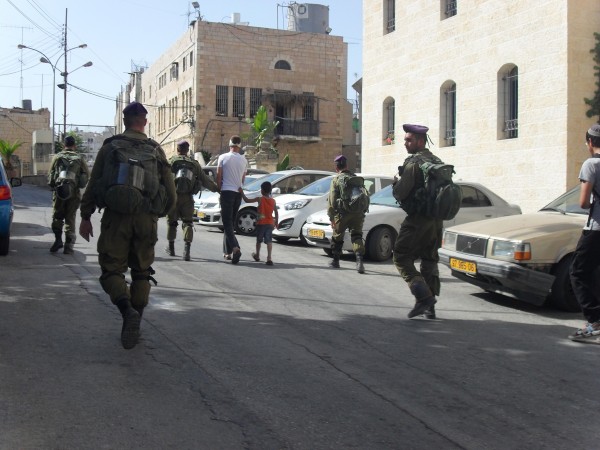
The young boy, Wadia, allegedly threw stones at soldiers, which precipitated his arrest. Bystanders say that Wadia threw a stone at a dog and a nearby soldier accused the Wadia of throwing stones at her. The soldiers handcuffed and blindfolded Wadia’s father, Abu Karam Maswathi, and transported both of them to the nearby military base where they were briefly held and questioned – this in spite of the fact the children under 12 cannot be arrested and charged with a crime under Israeli law[i].
While the soldiers led the father and son from the military base, Abu Karam was still blindfolded and handcuffed even though he was not technically being detained, which is said to be illegal under Israeli law. The two were led to Checkpoint 56 to await their release to the DCO, which is standard procedure for child arrests. However, today they were surrounded by around ten soldiers, who could be seen interrogating the detainees and trying to prevent internationals from filming. An Israeli military commander later arrived on the scene and reprimanded the soldiers for handcuffing and blindfolding Abu Karam in front of the international human rights workers because it’s “bad PR.”
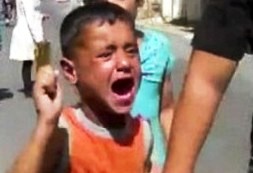 All this for a 7-year-old child allegedly throwing a stone.
[i]“Israel Police Treatment of Juveniles during the Period of Disengagement.” Israeli Ministry of Foreign Affairs. State of Israel, 15 Aug. 2005. Web. 09 July 2013.
Parents of Tristan Anderson, US activist critically wounded following West Bank protest, appeal to High Court of Israel
Parents of US Activist: Police Investigation was Shockingly Negligent
International Solidarity Movement | July 9, 2013
Jerusalem – Tristan Anderson (41, of Oakland, CA) was severely wounded after having been shot in the head with a high velocity tear gas grenade* (made in the USA) fired by Israeli Border Police following a protest in the West Bank Village of Ni’lin, resulting in severe permanent brain damage and paralysis to half his body.

Tristan Anderson with his parents
Attorneys for Anderson’s family, along with Israeli NGO Yesh Din, will appear before the Israeli High Court of Justice on Wednesday, JULY 10. The petition challenges the investigation that they claim was blatantly inadequate, with the identity of the shooter still being actively withheld to this day.
“Tristan will live the rest of his life with serious mental and physical limitations and chronic pain. This has devastated his life and profoundly affected our family forever,” said Nancy Anderson, Tristan’s mother.
No criminal charges have been brought against any police or military personnel involved in the 2009 shooting of their son. Video evidence uncovered during the course of an ongoing civil lawsuit (trial begins November 10, 2013 in Jerusalem for the civil suit) raises further questions on the credibility of State witnesses, who in contradiction to sworn testimony, are clearly seen shooting tear gas directly at protesters from close range in the video, which was taken earlier that day. The video also raises serious questions relating to the true locations of the various squads of Border Police present at the time of the shooting, with investigators opting only to question those squads that were on the other side of the town at the time the shooting occurred, while failing to question the squad that was stationed on the nearby hill where activist witnesses say the shots came from. As well, investigators failed to visit the scene of the shooting and made no attempts to collect physical evidence.
See “Perpetrators of the Shooting of Tristan Anderson”.
See “Aftermath of the shooting of Tristan Anderson Part 1, Part 2, and Part 3 for further video.
Michael Sfard and Emily Schaeffer, attorneys for the Anderson family commented:
“The astonishing negligence of this investigation and of the prosecutorial team that monitored its outcome is unacceptable, but it epitomizes Israel’s culture of impunity. Tristan’s case is actually not rare; it represents hundreds of other cases of Palestinian victims whose investigations have also failed.”
Tristan joined the ranks of scores of other protesters who have been seriously injured or killed during demonstrations in the Occupied Palestinian Territories in recent years. On March 13, 2009 he was in Ni’alin demonstrating against the annexation of village lands to build the controversial “Separation Wall” when he was shot. Witnesses insist there was no stone throwing in his immediate surroundings at the time when he was shot, and that the shooting was “unexpected and unprovoked”.
“Tristan’s shooting is part of a pattern of deadly violence being used against protesters in the Occupied Territories, who are not recognized as having a fundamental right to political self-determination,” said Gabrielle Silverman, Tristan’s girlfriend, and a witness to his shooting. “We need real accountability and a high standard of human rights, but instead what we get is the military running cover for their soldiers.”
The family of Tristan Anderson is calling the investigation “a cover up and a sham”.
*Tristan Anderson was shot with a High Velocity Tear Gas grenade- sometimes also called “Extended Range Tear Gas”- which is manufactured by Combined Systems Inc in Jamestown, Pennsylvania.
Mexico: Nine Indigenous Prisoners Released in Chiapas
Weekly News Update on the Americas | July 7, 2013
The southeastern Mexican state of Chiapas released nine indigenous prisoners from its Los Llanos prison near San Cristóbal de las Casas in the state’s highland region on July 4. State governor Manuel Velasco Coello arrived at the prison from Tuxtla Gutiérrez, the state capital, to deliver the release papers in person. The nine prisoners, described as adherents of the 2006 Other Campaign of the Zapatista National Liberation Army (EZLN), had participated in hunger strikes and other actions over several years to win their freedom. Rosa López Díaz, the only woman in the group, was pregnant when she was arrested in 2007; she lost her child, reportedly as a result of torture.
Under pressure from Mexican and international groups, the state appears to have started releasing EZLN allies imprisoned on questionable charges. Francisco Sántiz López was freed on Jan. 25 [see Update #1161]. But the best known of the prisoners, the schoolteacher Alberto Patishtán Gómez [see Update #1173], remains at Los Llanos, along with a prisoner named Alejandro Díaz Sántiz. Patishtán was allowed to take part in the release of the nine prisoners on July 4. He walked a few meters out of the prison and told the relatives, with a smile: “I’m turning the compañeros over to you here; I’m still staying here, but one shouldn’t lose hope.” He then walked back into the prison with Gov. Velasco Coello and various officials. “We’ll go on struggling until we achieve the release of compañero Alberto and all the compañeros who are still prisoners,” former prisoner Rosario Díaz Méndez promised after his release. (La Jornada (Mexico) 7/5/13)
Ten homes invaded, three arrested in night invasion of Talfit
International Solidarity Movement | July 8, 2013
Talfit, Occupied Palestine – In the early hours of Wednesday 3rd of July, the Israeli army conducted a large scale incursion into the northern West Bank village of Talfit, invading and trashing ten houses and arresting three men. The families of these prisoners have not heard from them in the five days since they have been in Israeli custody and their current whereabouts and legal status are unknown.
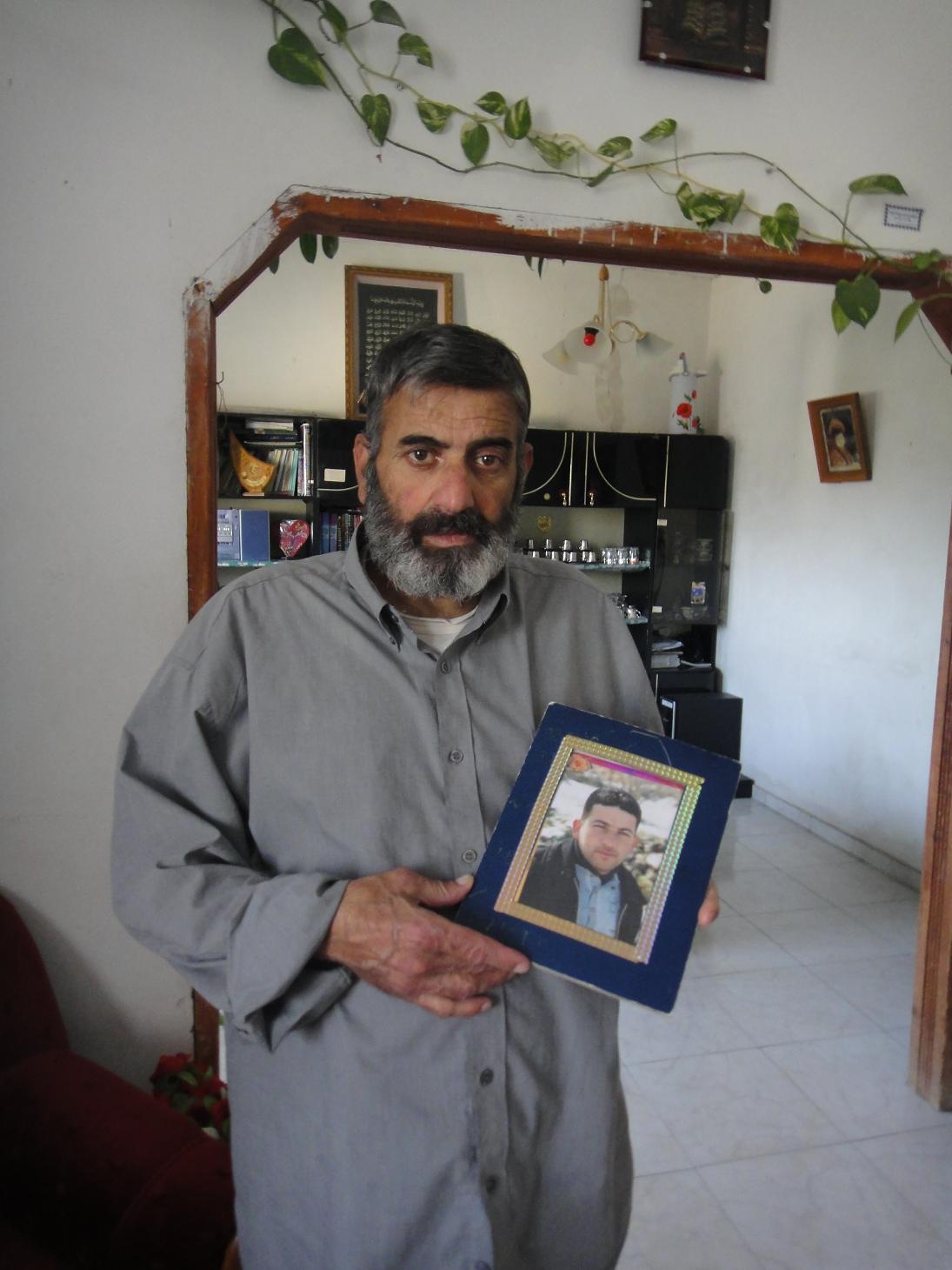
Abdallah’s father with a picture of his imprisoned son (Photo by ISM)
In a sustained invasion from around 1am to 5am, around one hundred soldiers entered the village of Talfit in a number of jeeps, heavily armed and with police dogs. At least ten families, many with young children, were forced by the military to wait in the street for many hours whilst soldiers ransacked their homes.
Twenty-six year old Abdallah Mohammed Najeeb, who works as a nurse in a Nablus hospital, was one of the three men arrested during this night invasion. He was sleeping in his home at 1am when thirty soldiers came to the door, breaking it down with an air pump and flooding into the house with dogs. According to Abdallah’s father, the soldiers ordered all ten family members, including three children under the age of four, to stand on the road for several hours; during this time, some soldiers questioned the family, whilst others were inside overturning furniture and pulling the house apart. After some time, Abdallah was forced into the jeep, wearing just his sleeping clothes and no shoes. He was driven away – along with two other men who were arrested from homes nearby – and no one has heard from them since. No justification or explanation of their arrests was given.
The father of another family had his identity card and driving license confiscated by a military commander, who stated as he took them: “you have no ID”. These will cost at least 800 shekels to replace and in the meantime he will not be able to continue his work as a driver because now he does not have the required documents to legally do so. “The soldiers shouted at them and let the dogs come very near the children – they were so afraid” said the mother of the family about her two children aged three and five, who had been ordered outside for several hours.
Several doors of homes had sound grenades thrown at them and some were physically broken in. Of the many houses that were violently searched, destroying property and furniture, some thefts by the Israeli military were also reported; money, mobile phones and even a family photo album in one case. Computers in several houses were dismantled but not removed.
Israeli military night invasions are a regular occurrence in the villages and cities of the West Bank, even those, such as Talfit, that are in Area A, thus supposedly under full Palestinian civil and security control and the Israeli authorities have no jurisdiction. The village of Talfit currently has around twenty people being held in Israeli jails, some for many years. Some are arrested with no justification whilst others are political prisoners who have been imprisoned for exercising their right to resist occupation. Under the Israeli system, Palestinians are tried in military courts, or can be held indefinitely without charge under “administrative detention”.
Related articles
- Report: 1,790 Palestinians Kidnapped, 16 Killed, In First Half of 2013 (alethonews.wordpress.com)
- Report details ill-treatment of Palestinian children by Israeli forces (alethonews.wordpress.com)
Israel escalates attacks on Palestinains
PressTVGlobalNews · July 4, 2013
Nearly a dozen Palestinians have been abducted by Israeli forces in the occupied West Bank. A Palestinian journalist and a lawmaker are among those who were assaulted and then detained.
The latest Israeli raid also caused the death of a 19-year-old boy. Human rights groups say there has been a surge in violence by Israeli forces against Palestinian protesters and the Palestinian media recording Israel’s violations.
Attacks are escalating against Palestinians with one brutal murder and over 11 arrests this week. Although the Israeli army state that the circumstances of these arrests are for legitimate reasons, they are rarely held accountable or made to show evidence for these crimes.
Nel Burden, Press TV, Bethlehem
Related articles
Egyptian army demolishes tunnels with Gaza
MEMO | July 4, 2013
Tunnels between Egypt and Gaza have been the main life line to the 1.8million residents of Gaza since the Israeli siege was imposed in 2006.
Tunnels between Egypt and Gaza have been the main life line to the 1.8million residents of Gaza since the Israeli siege was imposed in 2006.
On Thursday afternoon, Egyptian bulldozers began to demolish the tunnels between Egypt and the Gaza Strip which have functioned as the life-line to the besieged Gaza Strip since the beginning of the Israeli siege in 2006.
Egyptian facebook news network RNN reported on its page that big Egyptian military bulldozers started the demolition of the tunnels. They were protected by military vehicles.
Eyewitnesses from Rafah, Gaza’s southern city which is adjacent to Egypt, said that they had seen the bulldozers at work; that they had seen them arrive several days ago, but that they had only started working today.
They said that heavy automatic guns are mounted on the military vehicles protecting the bulldozers there.
Egyptian sources said that new military forces arrived in the area between Egypt and Gaza yesterday [Wednesday].
The smuggling of commodities to the Gaza Strip was halted several days before the start of the unrest in Egypt.
Palestinian security forces raised the alert on the tunnels fearing chaos might occur during the unrest.
Tunnels between Egypt and Gaza have been the main life line to the 1.8million residents of Gaza since the Israeli siege was imposed in 2006.
The siege, which was imposed following Hamas’ shock victory in the Palestinian parliamentarian elections, is internationally agreed upon.
The ministry of health in Gaza announced that fuel for electricity generators and ambulances will run out within days. “We are facing an unknown future with the closure of the tunnels,” a statement said.
Israel does not allow enough fuel through its crossings with Gaza.
Egypt unrest slows down Gaza construction
Ma’an – 04/07/2013
GAZA CITY – Unrest in Egypt has slowed down construction in the Gaza Strip, which relies on building materials smuggled in through cross-border tunnels, a union official said Thursday.
Israel only allows construction material into Gaza through its border for internationally-funded and approved projects, and this is the only building material available in Gaza since the tunnel trade slowed down, said Nabil Abu Meiliq, head of the union of Palestinian contractors.
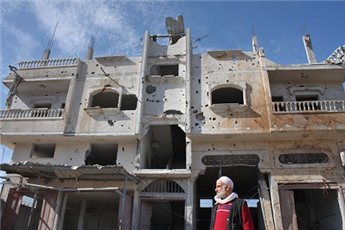 Abu Meiliq says no construction material is coming into Gaza from Egypt. Construction is down to 20% since tunnel traffic halted, ending a brief building boom in Gaza, Abu Meiliq told Ma’an.
Several projects funded by the Qatari government are on hold, including the Sheikh Hamad city, due to shortages of materials including cement, Abu Meiliq added.
Before smuggling tunnels closed, a ton of cement cost around 400 shekels ($110), but each ton is now selling for up to 1,000 shekels.
Abu Meiliq said the shortages were not a result of monopolies, but of high demand and very low supply.
Muhammad Abu Sido, a TV director from Gaza City, told Ma’an he had stopped work on his 3-storey home due to cement shortages.
Egyptian army reinforces presence on the borders with Gaza
Palestine Information Center – 05/07/2013
RAFAH — The Egyptian forces reinforced their presence on the borders with Gaza, where they brought more tanks.
Eyewitnesses said that the Egyptian army brought more tanks and troops along the Egypt-Gaza border which stretches 14 kilometers, and added they saw Egyptian armed forces on the roofs of a number of buildings.
For their part, Palestinian security forces in large numbers have been deployed along the border.
Meanwhile, the Egyptian security forces have closed the tunnels between Egypt and the Gaza Strip, used for the smuggling of essential goods and fuel to the besieged Strip.
Informed sources confirmed that the Egyptian army launched a campaign to demolish the tunnels built under the Egyptian-Palestinian border.
The sources told PIC’s correspondent that Egyptian tanks and armored vehicles have been intensively deployed on the borders, amid a campaign that included the destruction of many tunnels that have been closed for several days due to the recent developments in Egypt.
Featured Video

Death Spikes & Rising Cancer In Our Youth Explained
or go to
Aletho News Archives – Video-Images
From the Archives
Politicians lie
By Mazin Qumsiyeh | Popular Resistance | August 18, 2013
There is no way to say this truth nicely: Politicians lie. That includes Japanese, American, Egyptian, Israeli, and Palestinian politicians! Is there something more common sense than that? Yet, so many citizens around the world believe their own politicians or wistfully acknowledge lies but think it is part of the job needed to run things. They believe even when politicians contradict themselves blatantly. This phenomenon is rather remarkable. It is a dissonance and disconnect from reality that many seem oblivious to. It is very dangerous because it can lead to accepting rationales for going to war. These can be deadly wars that lead to millions of lives lost as happened in what was called World War 1 and WW2. Even when incredible and declassified evidence abound, politicians continue to lie and old mythologies refuse to die. Here are just a few of the countless lies told to us over the past few decades… continue
Blog Roll
 Aletho News
- Iraqi resistance group vows to stage airport sit-ins over Iran aerial blockade
- Turkish parliament to review Saudi-Pakistan defense pact next month
- DEATH SPIKES & RISING CANCER IN OUR YOUTH EXPLAINED
- Iran offers Trump deal before US election
- Merz regime wants ‘secret police’ – opposition
- Israeli settlers terrorize West Bank Palestinians with state-provided drones: Report
- They see them, then kill them: Israeli quadcopters track, deliberately target civilians in Gaza
- Debunked: Trump’s egregious UNGA claims on war against Iran crumble under scrutiny
- Europe was part of the infrastructure of US aggression against Iran: Deputy FM
- New evidence on the Bucha Massacre
- If Americans Knew
- Trump betrayed voters with his campaign lies and prioritized a foreign country once he took office
- Netanyahu calls Israel’s war in Gaza ‘opposite of genocide’ in UN speech to near-empty hall
- Settler Kidnappings: Torture, Sexual Abuse and Terrorisation of Palestinian Abductees as Israel Deepens Annexation of West Bank
- Gaza winter nears as 162,000 tents become unusable, raising fears of humanitarian crisis
- Netanyahu says, “It’s the opposite of genocide”; UN says Gaza economy is world’s ‘most severe crisis on record’ – Daily Update
- Israel’s US-Backed Assault on Gaza Has Created the ‘World’s Most Severe Economic Crisis on Record’: UN
- ‘Protecting U.S. Citizens’… From Israel
- ‘This is where I live now, the back of a truck’: a day in the life of a grandmother in Gaza
- In UN Speech, Iran’s President Displays Pictures of Children Killed by US, Brings Attention to Israel’s Nuclear Arsenal
- Israel displaces hundreds of Palestinians amid wave of demolitions in West Bank
- No Tricks Zone
- New Study: Earth And Venus Surface Warmth Largely Explained By Convection And Lapse Rate, Not CO2 Or Radiation
- 2025 Nature Paper Claiming Worsening Global Drought Gets RETRACTED …Heavily Flawed
- New Study: ‘Global Drought Shows No Detectable Recent Acceleration Under Climate Warming’
- Economic Masterminds: German Socialists Suggest Taxing Productivity Gains Stemming From Using AI
- The South China Sea Has Not Been Cooperating With The Climate Change Narrative
- Energy Crisis: Germany Enters Heating Season With Historically Low Gas Reserve Fill Levels
- New Study: The Antarctic Ice Sheet Gained Mass From 2020-2024 Due To Staggering Snow And Ice Accumulation
- Study: Ocean Heating Rates From Thousands Of Years Ago ‘Dwarf’ Modern Ocean Heating Rates
- Climate Extremists Target, Attack Large-Scale Power Grid Infrastructure In Germany!
- New Study: Antarctic Ice Melt Has Contributed Less Than 1 Centimeter To Sea Level Rise In The Last 30 Years

