Report details ill-treatment of Palestinian children by Israeli forces

Defence for Children International Palestine | June 30, 2013
Ramallah — Defence for Children International Palestine submitted a report to four separate United Nations independent human rights experts this week that details the widespread and systematic ill-treatment Palestinian children encounter in the Israeli military detention system.
The report is based on 108 affidavits collected during 2012 from Palestinian children arrested in the West Bank and prosecuted in the Israeli military detention system. The report details the type of violations children encounter in the system, including:
- Use of hand ties in 97% of cases
- Use of blindfolds in 95% of cases
- No lawyer present during interrogation in 99% of cases
- Physical violence during arrest, transfer or interrogation in 74% of cases
- Verbal abuse, humiliation and intimidation in 68% of cases
- Strip searches in 89% of cases
- Use of solitary confinement for interrogation purposes in 19% of cases
Recommendations presented in the report to address ill-treatment and torture of Palestinian children in the system include ending night arrests and the use of solitary confinement, excluding evidence obtained by force or coercion during interrogations, allowing access to legal counsel prior to interrogations as well as the presence of a parent during interrogations.
“It is no secret that systematic ill-treatment of Palestinian kids has been occurring for several years,” says Ayed Abu Eqtaish, Accountability Program director at DCI-Palestine. “There are too many reports, what we need is action.”
Impunity for violations continued to be a significant obstacle in 2012. DCI-Palestine filed eight complaints with Israeli authorities concerning the ill-treatment and torture of children while in Israeli military detention. While investigations were opened in several of the complaints, not a single indictment has been issued against a perpetrator. Many Palestinian families refuse to file complaints for fear of retaliation or simply because they do not believe the system is fair or impartial.
The report concludes by declaring that recent amendments to Israeli military law relating to children have had little impact whatsoever on their treatment during the critical first 48 hours after an arrest, where most of the ill-treatment occurs at the hands of soldiers, policemen and interrogators.
Since 1967, Palestinian children in the Occupied Palestinian Territory have been living under Israeli military law and prosecuted in military courts. Israel is the only country in the world that systematically prosecutes children in military courts. Palestinian children, some as young as 12 years old, are detained, interrogated and imprisoned within the Israeli military detention system.
Related articles
- UN committee slams Israeli forces’ torture of Palestinian children (alethonews.wordpress.com)
- Report: 1,790 Palestinians Kidnapped, 16 Killed, In First Half of 2013 (alethonews.wordpress.com)
- 340 Palestinians Kidnapped in June (imemc.org)
- Setting a dangerous precedent: 16-year-old Ali Shamlawi faces 25 counts of attempted murder for alleged stone throwing (palsolidarity.org)
Obama Visits Mandela’s Old Cell, But Won’t Free His Own Political Prisoners
A Black Agenda Radio commentary by Glen Ford | July 3, 2013
President Barack Obama, a man of infinite cynicism, made a great show of going on pilgrimage to Nelson Mandela’s old prison cell on Robben Island, where the future first Black president of South Africa spent 18 of his 27 years of incarceration. With his wife and daughters in tow, Obama said he was “humbled to stand where men of such courage faced down injustice and refused to yield…. No shackles or cells can match the strength of the human spirit,” said the chief executive of the unchallenged superpower of mass incarceration, a nation whose population comprises only 5 percent of humanity, but is home to fully one-quarter of the Earth’s prison inmates.
True sociopaths, like the commander-in-chief who updates his Kill List every Tuesday, have no sense of shame, much less irony. Obama feigns awe at Mandela’s suffering and sacrifice in the prisons of apartheid South Africa, yet presides over a regime that, on any given day, holds 80,000 inmates in the excruciating torture of solitary confinement. During Nelson Mandela’s nearly three decades of imprisonment by the white regime, he spent a total of only about one week in solitary confinement. The rest of the time, despite often harsh treatment, backbreaking labor, and unhealthy conditions, Mandela and other political prisoners at Robben Island and other South African jails were typically housed together. Indeed, Mandela and his incarcerated comrades called the prisons their “university,” where they taught each other to become the future authorities over their jailers.
Racist South Africa’s treatment of Mandela and his co-revolutionists was downright benign and enlightened, compared to fate of U.S. prisoners who are deemed a threat to the prevailing order. At U.S. high security facilities, the slightest evidence that an inmate is of a political bent of mind is cause for him to be condemned to a solitary existence for decades – a social death alien to the human species. At California’s Pelican Bay and the state prison at Corcoran, thousands of inmates are held in isolation, 80 of them for more than 20 years, the very definition of barbarism. Yet, Obama journeys across oceans and continents to stand for a photo op in the cell of a prisoner whose ordeal was nowhere near as horrific as the standard fare for political prisoners in his own country.
On his trip to South Africa, Obama proclaimed that “the world is grateful for the heroes of Robben Island.” And, that’s certainly true, although it was a U.S. intelligence agent who lured Nelson Mandela into a trap in 1962 that ultimately led to his capture and imprisonment. Obama has no sympathy, however, for political prisoners of any race in his own country. Former Black Panther Herman Wallace is thought to be the longest-serving prisoner in solitary confinement in the United States, having spent 40 years alone in a cell in Louisiana’s notorious Angola Prison. Obama could free him at any time, but of course, he won’t. He could emancipate Black Panther captive Russell Maroon Shoatz, who has spent nearly 30 years in solitary, or Republic of New Africa political prisoner Mutulu Shakur or any and all of the scores of other aging political prisoners – people whose dedication to human freedom is no less than Mandela’s, yet have been subjected to far worse treatment at American hands. Instead, Obama has doubled the bounty on Shakur’s comrade and sister, Assata, in exile in Cuba. She might even be on Obama’s Kill List – which is the real and authentic legacy of this country’s First Black President.
Glen Ford can be contacted at Glen.Ford@BlackAgendaReport.com.
Related article
- Obama Falsely Asserts He Is Mandela Follower (alethonews.wordpress.com)
Boy’s Death in Drone Strike Tests Obama’s Transparency Pledge
By Cora Currier | ProPublica | July 1, 2013
On June 9, a U.S. drone fired on a vehicle in a remote province of Yemen and killed several militants, according to media reports.
It soon emerged that among those who died was a boy – 10-year-old Abdulaziz, whose elder brother, Saleh Hassan Huraydan, was believed to be the target of the strike. A McClatchy reporter recently confirmed the child’s death with locals. (Update: The London-based Bureau of Investigative Journalism today reported that there was “strong evidence” it was a U.S. drone strike, but it could not confirm the fact.)
It’s the first prominent allegation of a civilian death since President Obama pledged in a major speech in May “to facilitate transparency and debate” about the U.S. war on al Qaida-linked militants beyond Afghanistan. He also said “there must be near-certainty that no civilians will be killed or injured” in a strike.
So what does the administration have to say in response to evidence that a child was killed?
Nothing.
National security spokeswoman Caitlin Hayden would not comment on the June 9 strike or more generally on the White House position on acknowledging civilian deaths. She referred further questions to the CIA, which also declined to comment.
The president’s speech was the capstone on a shift in drone war policy that would reportedly bring the program largely under control of the military (as opposed to the CIA) and impose stricter criteria on who could be targeted. In theory, it could also bring some of the classified program into the open. As part of its transparency effort, the administration released the names of four U.S. citizens who had been killed in drone strikes.
An official White House fact sheet on targeted killing released along with the speech repeated the “near-certainty” standard for avoiding civilian casualties. Secretary of State John Kerry reiterated it a few days later, when he told an audience in Ethiopia: “We do not fire when we know there are children or collateral — we just don’t do it.”
But White House press secretary Jay Carney said in late May that “this commitment to transparency…does not mean that we would be able to discuss the details of every counterterrorism operation.”
The new White House statements don’t address what happens after a strike, even in general terms.
CIA Director John Brennan offered one of the few public explanations of how casualties are assessed during his nomination hearing in February. Before his confirmation, Brennan was the White House counterterrorism adviser, and is considered to be the architect of Obama’s drone war policy.
He told senators that, “analysts draw on a large body of information — human intelligence, signals intelligence, media reports, and surveillance footage — to help us make an informed determination about whether civilians were in fact killed or injured.”
Brennan also said the U.S. could work with local governments to offer condolence payments. As we’ve reported, there’s little visible evidence of that happening.
At the hearing, Sen. Ron Wyden, D-Ore., asked Brennan if the U.S. should acknowledge when it “makes a mistake and kills the wrong person.”
“We need to acknowledge it publicly,” Brennan responded. Brennan also proposed that the government make public “the overall numbers of civilian deaths resulting from U.S. strikes.”
Neither overall numbers nor a policy of acknowledging casualties made it into Obama’s speech, or into the fact sheet. Hayden, the White House spokeswoman, would not say why.
The government sharply disputes that there have been large numbers of civilian deaths but has never released its own figures. Independent counts, largely compiled from news reports, range from about 200 to around 1,000 for Pakistan, Yemen and Somalia combined over the past decade.
Researchers agree that the number of drone strikes and civilian deaths have dropped during the past year. (Before Obama’s speech, an administration official attributed this partly to the new heightened standards.) The London-based Bureau of Investigative Journalism, which generally has the highest tally of civilian dead, has found there were between three and 16 civilians reportedly killed in about 30 drone or other airstrikes in Yemen and Pakistan so far this year. No strikes have been reported in Somalia.
“Official” statistics might not be much help without knowing more about how they were compiled, said Sarah Holewinski, head of the advocacy group Center for Civilians in Conflict.
That’s because it’s still not clear how the U.S. distinguishes between civilians and “militants,” or “combatants.”
In so-called signature strikes, operators sometimes fire on groups of people who appear to be engaged in militant activity without necessarily knowing their identities. The newly instituted drone rules reportedly roll back the military’s ability to use signature strikes, but the CIA can keep firing in Pakistan under the old rules at least through the end of the year.
An administration official told ProPublica last year that when a strike is made, “if a group of fighting-age males are in a home where we know they are constructing explosives or plotting an attack, it’s assumed that all of them are in on that effort.”
The new White House fact sheet contradicts that, stating: “It is not the case that all military-aged males in the vicinity of a target are deemed to be combatants.”
From the outside, in a strike like the recent one in Yemen, it’s impossible to know how these things were determined. McClatchy reported that the target, Saleh Hassan Huraydan, had “largely unquestioned” ties to al Qaida. Yemeni officials said he arranged to bring money and fighters from Saudi Arabia to Yemen.
As for Huraydan’s young brother, “They may not have realized who was in the car. Or they may have realized it and decided collateral damage was okay,” Holewinski says.
The same questions dog the death of another boy that the administration has acknowledged: the 16-year-old son of Anwar al-Awlaki, a U.S.-born cleric tied to terror attacks. Awlaki and his son were killed in separate strikes in Yemen in the fall of 2011. The boy, Attorney General Eric Holder has said, was “not specifically targeted.”
Related article
- For Obama civilian deaths are O.K. because the enemy kill civilians also (alethonews.wordpress.com)
Report: 1,790 Palestinians Kidnapped, 16 Killed, In First Half of 2013
By Saed Bannoura | IMEMC & Agencies | July 1, 2013
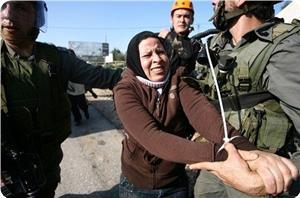
The Ahrar Center for Detainees Studies and Human Rights have reported that Israeli soldiers kidnapped 1,790 Palestinians in the first six months of this year, including 300 who were kidnapped in June, and added that 16 Palestinians have also been killed by the Israeli military in six months.
The Ahrar Center said that dozens of women, children, elderly, legislators, intellectuals and journalists were among the kidnapped.
The center added that the arrests took place in every part of the occupied West Bank, including Jerusalem, in addition to 25 arrests in the Gaza Strip, including fishermen and five arrests at border terminals.
Most of the arrests have been carried out in the Hebron district, in the southern part of the West Bank. The second highest number of arrests was carried out in Jerusalem, followed by Nablus.
Ahrar said that February witnessed the largest number of arrests as the soldiers kidnapped 382 Palestinians, while 350 have been kidnapped in January, 300 in June, 263 in May, 259 in April and 236 in March.
The center further reported that the army also kidnapped 7 Palestinian legislators identified as Ahmad Attoun, Hatem Qfeisha, Abdul-Jabbar Foqaha, Imad Nofal, Basem Za’areer, Mahmoud Ramahi, and Mohammad Jamal An-Natsha.
Furthermore, Ahrar said that the army also kidnapped 33 women, including wives and relatives of political prisoners held by Israel, and that 17 of the kidnapped women are still imprisoned by Israel.
The Ahrar Center also said that 14 Palestinians, including 10 from the West Bank, and four from the Gaza Strip, have been shot and killed by the Israeli army since the beginning of this year, in addition to two Palestinian political prisoners who died in Israeli prisons.
Detainee Arafat Jaradat, 33, from Hebron, died of extreme torture by Israeli interrogators, and detainee Maisara Abu Hamdiyya, 64, died of an advanced stage of cancer resulting from the lack of medical treatment in Israeli prisons.
Four more Palestinians have been killed by Israeli military fire in the Gaza Strip.
Head of the Ahrar Center, Fuad Al-khoffash, stated that the center documented daily Israeli military invasions; daily arrests and assaults, and demanded the International Community to act against the ongoing and escalating Israeli violations.
Jewish settlers attack buses filled with children in Jerusalem
Palestine Information Center – 29/06/2013
OCCUPIED JERUSALEM — Palestinian sources in Jerusalem said Jewish settlers on Friday night attacked buses carrying 100 Palestinian children participating in a summer camp organized by Health Work Committees in Silwan in occupied Jerusalem.
Health Work Committees pointed in a press release on Saturday that the camp includes a group of children between 7 and 12 years old, a number of them had been previously arrested in the occupations jails.
The settlers threw stones at the buses, breaking their windows and terrorizing the children.
The committees condemned the attack and called for “providing protection for the Palestinian people and children from settlers’ violence in occupied Palestine, committed under the protection of the occupation army.”
In al-Khalil, another group of Israeli settlers attacked on Thursday evening a Palestinian civilian near Yatta, and fled the scene in the absence of the occupation forces, locals reported.
They added that the citizen sustained wounds as the settlers threw stones at him and was taken to hospital for treatment.
Jewish settlers set on Thursday fire to agricultural lands in the archaeological area of Sebastia near the city of Nablus in the north of the West Bank.
Na’el Shaer, Sebastia’s mayor, said that groups of settlers from the settlement of Shavei Shomron built on the town’s land set fire to agricultural land, damaging large stretches of land, including land planted with olives and almond trees.
He added that the settlers have been continuously targeting the town as it represents an archaeological and historical area, noting that they had previously destroyed crops after pumping wastewater into the cultivated lands.
Related articles
- IOF soldiers round up two boys (ramyabdeljabbar.wordpress.com)
- Jewish settlers injure children in two separate vehicular assaults (alethonews.wordpress.com)
- When Cars Become Weapons: Israeli settler runs over 4 year old Palestinian child in al-Khalil (occupiedpalestine.wordpress.com)
South Africa: Obama Docket
Muslim Lawyers Association Press Release | June 26, 2013
Lawyers will continue to pursue the case against Obama in the courts
Johannesburg, South Africa – The Muslim Lawyers Association (MLA) brought an application to court on Tuesday, 25 June 2013, to charge US President Barack Obama with a number of crimes, before he enters South Africa on Friday, 28 June 2013.
The North Gauteng High Court today found that the merits of the matter could not be heard as it was not deemed to be sufficiently ‘urgent’. This is despite the imminent arrival of Obama in South Africa this week. However, the (MLA) will continue to pursue the matter through the ordinary course of the courts.
Given the sheer magnitude, gravity, extent and degree of these crimes, as well as the unrelenting vigour with which the Obama Administration continues to commit them, the MLA intends to pursue the review application in accordance with the normal court time periods applicable.
“It is regrettable for the court not to have adjudicated on the merits of the ‘Obama Docket’ at an expedient time when Obama’s visit to the Republic is imminent”, states MLA spokesperson, Attorney Yousha Tayob.
The Obama Docket contains:
– evidence of indiscriminate killing of civilians by the use of USA military drones
– a public acknowledgment by Obama that he authorised the extra judicial assassinations of US citizens and that civilians have been killed by drone attacks authorised by him
– evidence of the continued incarceration without trial of persons detained at Guantanamo Bay and other US detention facilities, and
– evidence that the United States has engaged in rendition programmes contrary
to the prescripts of the norms and standards of International Law.
“South Africa has adopted and ratified the Rome Statute into our law and is therefore obliged to fulfil both its domestic and international responsibilities”, adds Tayob.
The MLA remains undeterred in its resolve to pursue all legal avenues to expose the past and ongoing War Crimes, Crimes against Humanity and Genocide committed by Obama and his administration and is committed to have him brought before a South African court of law or the International Criminal Court to answer the allegations contained in the ‘Obama Docket’.
For more information on the Obama Docket and its contents, or for interviews with an MLA representative, call Attorney Yousha Tayob, + 27 82 926 5408 or email at info@mlajhb.com or visit the MLA website at http:// http://www.mlajhb.com
Related article
- Obama faces protests in South Africa (alethonews.wordpress.com)
Turkey takes steps to monitor Twitter content, users
Al-Akhbar | June 27, 2013
Turkey said on Wednesday it had asked Twitter to set up a representative office inside the country, which could give it a tighter rein over the micro-blogging site it has accused of helping stir weeks of anti-government protests.
While mainstream Turkish media largely ignored the protests during the early days of the unrest, social networking sites such as Twitter and Facebook emerged as the main outlets for Turks opposed to the government.
Transport and Communications Minister Binali Yildirim told reporters on Wednesday that without a corporate presence in the country, the Turkish government could not quickly reach Twitter officials with orders to take down content or with requests for user data.
“When information is requested, we want to see someone in Turkey who can provide this … there needs to be an interlocutor we can put our grievance to and who can correct an error if there is one,” he said.
“We have told all social media that … if you operate in Turkey you must comply with Turkish law,” Yildirim said.
Twitter declined to respond to the government request on Wednesday, but a person familiar with the company’s thinking said it had no current plans to open an office in that country.
Turkey successfully pressured Google Inc into opening an office there last October after blocking YouTube, a Google subsidiary, from Turkish Internet users for two years.
While Ankara had no problems with Facebook, which had been working with Turkish authorities for a while and had representatives inside Turkey, Yildirim said it had not seen a “positive approach” from Twitter after Turkey issued the “necessary warnings” to the site.
“Twitter will probably comply, too. Otherwise this is a situation that cannot be sustained,” he said, without elaborating, but he stressed the aim was not to limit social media.
An official at the ministry, who asked not to be named, said the government had asked Twitter to reveal the identities of users who posted messages deemed insulting to the government or prime minister, or that flouted people’s personal rights.
It was not immediately clear whether Twitter had responded.
Facebook said in a statement that it had not provided user data to Turkish authorities in response to government requests over the protests and said it was concerned about proposals Internet companies may have to provide data more frequently.
In the midst of some of the country’s worst political upheaval in years, Turkish Prime Minister Tayyip Erdogan has described sites like Twitter as a “scourge,” although senior members of his party are regular users. He has said such websites were used to spread lies about the government with the aim of terrorizing society.
Police detained several dozen people suspected of inciting unrest on social media during the protests, according to local reports.
Speaking at the Brookings Institution in Washington, D. C., Twitter’s Chief Executive Dick Costolo said on Wednesday that he had been observing the developments in Turkey, but he emphasized that Twitter had played a hands-off role in the political debate.
“We don’t say, ‘Well, if you believe this, you can’t use our platform for that,'” Costolo said. “You can use our platform to say what you believe, and that’s what the people of Turkey … are using the platform for. The platform itself doesn’t have any perspective on these things.”
Turkey’s interior minister had previously said the government was working on new regulations that would target so-called “provocateurs” on social media but there have been few details on what the laws would entail.
One source with knowledge of the matter said the justice ministry had proposed a regulation whereby any Turk wishing to open a Twitter account would have to enter their national identification number, but this had been rejected by the transport ministry as being technically unfeasible.
Turkish users have increasingly turned to encryption software to thwart any ramp up in censorship of the Internet.
Last year, Twitter introduced a feature called “Country Withheld Content” that allows it to narrowly censor tweets considered illegal in a specific country, and it caused some concern among users.
Twitter implemented the feature for the first time in October in response to a request by German authorities, blocking messages in Germany by a right-wing group banned by police.
(Reuters, Al-Akhbar)
Related article
- Turkey announces plans ‘for gas’ and cyber security in face of Gezi protests (alethonews.wordpress.com)
Man Claims Cops Sodomized Him With a Gun
By JACK BOUBOUSHIAN | Courthouse News | June 24, 2013
CHICAGO – Chicago police officers sodomized a man with a gun, “laugh(ing) hysterically,” until he agreed to buy drugs for the cops in a sting, the man claims in court.
Angel Perez sued Chicago and its police Officer Jorge L. Lopez in Federal Court.
Perez was working as a delivery driver on Oct. 20, 2012, when cops in an unmarked car pulled him over, handcuffed him and took him to the Harrison Street Police Station, he says in the complaint.
There, “Two officers began assaulting the plaintiff with questions regarding robberies and drug dealers in the Taylor Street area,” the complaint states. “Plaintiff responded that he did not know anything about robberies or drug dealings in the Taylor Street area and again and repeatedly requested that the officers call his lawyer. Plaintiff’s lawyer was never contacted and the questioning continued. The officers were particularly interested in why the plaintiff had the telephone number of an individual by the name of ‘Dwayne’ in his telephone.”
Perez claims the police released him after two hours of questioning, but Officer Lopez called him the next day, “told the plaintiff that what took place the night before was a mistake and that he needed the plaintiff to sign some papers so that his car would not be towed. Defendant Lopez instructed the plaintiff to meet him at Al’s Beef on Taylor Street at 3:00 p.m. that day,” the complaint states.
But when Perez arrived at Al’s Beef, an officer with Lopez, known to Perez only as the Sergeant, “grabbed the plaintiff and slammed his head on to the trunk of his car, searched plaintiff, handcuffed plaintiff with his hands behind his back and placed him in the squad car.”
The complaint continues: “Plaintiff was then taken back to the Harrison Street Police station to a second floor room with chairs and a table. Again, plaintiff was handcuffed to a bar, and this time he was also placed in ankle shackles.
“Plaintiff was held against his will in the room for several hours handcuffed and shackled, and not free to leave the custody of the defendants. While in the room, several other officers (approximately six officers) entered the room during the next several hours joining defendant Lopez and the Sergeant threatening the plaintiff with sending him to the Cook County jail to be raped by gang members. Further, that the[y] (the officers) could do whatever they wanted and that they would plant evidence on him and his family members if he continued to refuse to cooperate with them. Still, further that if he did not cooperate they would charge him [with] a conspiracy to obstruct justice. One of the officers in the room identified himself as the ‘Commander.’
“Plaintiff repeatedly requested his lawyer; that request was not acknowledged by the officers.
“The officers wanted the plaintiff to call or text ‘Dwayne’ and set up a drug purchase, but he refused to call or text Dwayne.
“After a period of time refusing to call or text Dwayne, the officers began to pull and contort the plaintiff’s body while he was handcuffed to the wall and shackled at his ankles, causing the plaintiff severe pain. At one point, the Sergeant sat on the plaintiff’s chest and placed his palms on the plaintiff’s eye sockets and pushed hard against them, causing plaintiff severe pain. The Sergeant also drove his elbows into plaintiff’s back and head causing severe pain. Defendant Lopez was in the room at the time and did not intervene.
“In an attempt to contact the outside world, plaintiff agreed to make the call and he attempted to call a friend of his to inform him what was transpiring, at which time an officer took plaintiff’s telephone and hung up the call.
“After several hours of verbal and physical torture, defendant Lopez and the Sergeant were alone in the room with the plaintiff. The officers told plaintiff that if he refused to cooperate with them that they were going to give him a ‘little taste’ of what he would be getting at the Cook County jail. They put plaintiff over a chair and pulled down his pants, and defendant Lopez said, ‘I hear that a big black nigger dick feels like a gun up your ass.’
“Then defendant Lopez and/or the Sergeant, knowing their actions created a strong likelihood of great bodily harm and mental anguish, inserted a cold metal object, believed to be one of officer’s service revolvers, into the plaintiff’s rectum, causing the plaintiff severe pain and humiliation. The two officers laughed hysterically while inserting the object into the plaintiff’s rectum.
“The Sergeant then said ‘I almost blew your brains out.’ The officers told the plaintiff that they would continue to insert the gun into his rectum until he cooperated with them.
“Plaintiff began to cry and agreed to cooperate with the officers.”
Perez called Dwayne and arranged to buy one gram of heroin, according to the complaint.
“The police then brought plaintiff to his car, provided the plaintiff with money to purchase the heroin, a box believed to be a GPS device and an audio recording device to record the transaction.
“Plaintiff completed the purchase from Dwayne for the Chicago Police and returned the drugs and equipment to the police. The officers then wanted plaintiff to sell drugs to Dwayne. Plaintiff told the officers that he would not be involved again with them,” according to the complaint.
Perez claims that Lopez continued to call his cell phone, asking to meet with him again, until Perez contacted the Independent Police Review Authority.
“At no time on either October 20, 2012 or October 21, 2012, prior to plaintiff’s seizure and torture, did the plaintiff commit a crime,” Perez says in the complaint.
Perez seeks punitive damages for excessive force, failure to intervene and emotional distress. He is represented by Dennis DeCaro with Kupets & DeCaro.
Related articles
- Beaten for Filming a Beating, Woman Says (alethonews.wordpress.com)
- Baltimore Cops Sued (Again) For Destroying Citizen Footage of Them Caught in the Act of Being Themselves (reason.com)
The Gates Foundation and its unethical investments in G4S
By Ramona Wadi | MEMO | June 20, 2013
While three Dutch charities have announced that they will no longer accept donations by G4S due to the company’s support for the Israeli occupation, the Gates Foundation has deemed it ethical to invest in G4S, effectively exposing the often ignored link between philanthropy and human rights violations.
The Gates Foundation, renowned for its philanthropy, is allegedly ‘inspired by passion and compassion for the well-being of people’. Focusing on issues such as health, education, poverty, the Foundation now seems to be seeking a share in security affairs, effectively aligning itself with the conspiracy behind the fable of safeguarding human rights. Philanthropy should be viewed within a wider image – a surplus of funds derived from a capitalist enterprise channelled into appropriate projects which bestow a continuous temporary relief in order to avoid challenging the exploitation which has rendered communities around the world dependent upon charity. With the Gates Foundation aligning its interests with a service provider of oppression, profits will continue to fund approved projects at the expense of violating international human rights law, which is acceptable within the cycle of capitalist dependency.
G4S has been targeted by the BDS movement for its role in providing security and surveillance equipment, rendering the company complicit in war crimes with Israel’s security service, Shin Bet. Torture during interrogations is routine treatment in Israeli jails, often resulting in severe physical and metal degeneration or, as in the case of Arafat Jaradat, death. G4S endorses identical security concern rhetoric as that used by Israel, manipulating the foundations of human rights and security into a territory which encompasses nothing but the alleged rights of the oppressor.
In their 2012 Corporate Social Responsibility Report, G4S states that the company recognises it can ‘play a positive and negative role in respecting human rights around the world’. The company declares that its policy is based upon the Universal Declaration of Human Rights (1947), the International Covenant on Civil and Political Rights (1966), the International Convention on Economic, Social and Cultural Rights (1966) and the international Labour Organisation Declaration on Fundamental Rights at Work (1998). ‘Mapping the human rights landscape’, as stated in the report, and becoming a signatory to the UN Global Compact, are portrayed as a pledge to safeguard human rights, disregarding the UN’s significant faults and unapologetic stances when it comes to selectively bestowing human rights in order to promote and consolidate the impunity of powerful states and allies. In other words, G4S are emulating their provision of security services and basing their legitimacy upon an international organisation which thrives upon illegality.
Dependency has created a spectator society. While activist campaigns have created a far reaching resonance, leaders within the international community are too comfortably ensconced in their glorified positions to challenge a partnership which fuels the Israeli occupation’s crimes against Palestinians. As long as the interpretation of the social world is shaped by dominant allies, it is difficult to fragment the bond between society and economic power, effectively allowing an amalgamation of a ruling power to distort the power of intellectuals into a subservient role abetting international complicity in human rights violations.
Four Injured, Palestine TV Reporters Kidnapped In Kufur Qaddoum
By Saed Bannoura | IMEMC | June 22, 2013
The Popular Committee Against the Wall and Settlements in Kufur Qaddoum village, near the northern West Bank city of Qalqilia, reported Friday that dozens of Israeli soldiers attacked the weekly nonviolent protest, wounding four residents, and kidnapped reporters of the official Palestine TV.
The Committee said that the soldiers violently attacked and beat reporter Ahmad Shawar and cameraman Bashar Nazzal, working for the Palestinian TV, confiscated their cameras, and threw the rest of their equipment in the trash.
An Israeli army spokesperson claimed that the kidnapped journalists “attacked the soldiers”, and that they have been transferred to an interrogation facility.
Morad Shteiwy, coordinator of the Popular Committee in the village, has reported that the army surrounded the village since early morning hours Friday, and invaded it in an attempt to prevent the residents from holding their weekly protest against the illegal Annexation Wall and settlements.
“The large number of soldiers deployed in the village could not prevent the determined residents from holding their protest”, Shteiwy said, “the soldiers violently attacked the protesters and fired dozens of gas bombs, concussion grenades, and rubber-coated metal bullets”.
He further said that resident Aqel Mahmoud Shteiwy, 25, was shot with a rubber-coated bullet in his hand, and that one of his fingers was amputated, and added that resident Yousef Mustafa Shteiwy, 21, was shot in the chest, Bassam Ayyoub Shteiwy, 26, was shot in the back and Bashar Mahmoud Shteiwy, 22, was shot in the abdomen.
Also on Friday, soldiers used tear gas, chemical water and rubber-coated steel bullets to attack the weekly protests at the villages of Bil’in and Ni’lin, near the central West Bank city of Ramallah, where residents and their international and Israeli supporters, managed to reach the wall; two protesters were injured and many were treated for the effects of tear gas inhalation.
In Bil’in, gas bombs fired by Israeli troops caused a fire that damaged olive trees owned by local farmers. Soldiers also fired tear gas at residents who tried to put out the fire.
At the nearby village of al Nabi Saleh, Israeli soldiers attacked the villagers and their supporters before leaving the village.
Dozens of soldiers stormed the village and fired gas bombs into resident’s homes. Many were treated for the effects of tear gas inhalation.
In al Ma’sara village, near Bethlehem, dozens of soldiers stopped the villagers and their supporters at the village entrance and then forced them back, using rifle-buts and batons to push people back, no injuries were reported.
Related articles
Court blocks NYPD bid to fire whistleblower as commissioner brags of ‘awesome powers’
RT | June 21, 2013
The New York City Police Department’s latest attempt to fire Adrian Schoolcraft, the whistleblower who secretly recorded evidence of corruption among his superiors over three years ago, was blocked this week in federal court.
Schoolcraft has said he began wearing a microphone to defend himself against citizens’ allegations that he used racial slurs while policing the streets of Bedford-Stuyvesant, a poor and primarily African-American section of Brooklyn. By wearing the device from June 1, 2008 until October 15, 2009, though, he soon began recording directions from NYPD higher-ups who pressured officers to fill monthly arrest quotas, which is illegal.
“He wants three seat belt [summonses], one cell phone, and 11 others,” one police sergeant is heard saying on the tape. “I don’t know what the number is, but that’s what [an executive officer] wants.”
Upon complaining of corrupt policies and wrongful arrests, Schoolcraft has said, he began receiving threats from fellow police officers and was eventually reassigned to a desk job.
Three weeks after he told the NYPD the damning recordings existed, Schoolcraft’s home was raided by a large group of officers who forcibly checked him into a psychiatric ward in Queens citing suicidal tendencies. Approximately twelve of Schoolcraft’s superiors were on hand at his home. Reportedly among them was Paul Browne, a top aide to Commissioner Ray Kelly, whose presence would indicate Kelly knew of and approved of the raid.
After Schoolcraft refused treatment, the officers guarding him at a Queens hospital handcuffed him to a bed and prevented him from using a telephone. He was held there for three days until his father tracked him down and signed him out. The Schoolcraft family later received a bill for $7,185 for his stay at the facility.
Schoolcraft eventually turned over his recordings, including of the night when he was dragged to the hospital, to the Village Voice, which dubbed the audio “The NYPD Tapes.” In 2009 and 2010, the NYPD charged Schoolcraft with approximately two dozen charges of leaving work early, failing to respond to department summonses, failure to obey an order, being away without leave, and others.
The department could have tried and fired Schoolcraft in early 2010, the Voice reported, but presumably suspended him instead because of the bad publicity that would come as a natural result of dismissing a man for exposing corruption.
“I think within the precinct, he was probably seen as a little bit eccentric,” Graham Rayman, a reporter for the Village Voice, told This American Life in 2010. “And also, he wasn’t going with the program. And anyone who doesn’t go with the program is automatically marked.”
For nearly four years he has been on leave without pay, waiting for the start of a federal lawsuit he filed against the department for intimidation and retaliation.
In response, the NYPD filed its own administrative suit seeking to fire Schoolcraft, a move Schoolcraft’s lawyers said will unduly influence the verdict in the original suit. The department was blocked from filing that suit this week.
“You have the power to arrest, to take away someone’s liberty. You have the power and the authority to use force and sometimes deadly force,” Kelly said this week in a speech to this year’s graduating class of the NYPD academy. “Now these are awesome powers.”
The commissioner, quoted by CBS, also said that different ethnic groups are “not always happy” with the department and that “all it takes is one errant police officer” to undermine the “great institution” that has been built by generations.
Related articles
- Judge in Whistleblower Cop Case Blocks City Move to Fire Him (blogs.villagevoice.com)
- NYPD Cop Arrests Man for Photographing Police Station from Public Sidewalk (photographyisnotacrime.com)
Featured Video

Death Spikes & Rising Cancer In Our Youth Explained
or go to
Aletho News Archives – Video-Images
From the Archives
Politicians lie
By Mazin Qumsiyeh | Popular Resistance | August 18, 2013
There is no way to say this truth nicely: Politicians lie. That includes Japanese, American, Egyptian, Israeli, and Palestinian politicians! Is there something more common sense than that? Yet, so many citizens around the world believe their own politicians or wistfully acknowledge lies but think it is part of the job needed to run things. They believe even when politicians contradict themselves blatantly. This phenomenon is rather remarkable. It is a dissonance and disconnect from reality that many seem oblivious to. It is very dangerous because it can lead to accepting rationales for going to war. These can be deadly wars that lead to millions of lives lost as happened in what was called World War 1 and WW2. Even when incredible and declassified evidence abound, politicians continue to lie and old mythologies refuse to die. Here are just a few of the countless lies told to us over the past few decades… continue
Blog Roll
 Aletho News
- Iraqi resistance group vows to stage airport sit-ins over Iran aerial blockade
- Turkish parliament to review Saudi-Pakistan defense pact next month
- DEATH SPIKES & RISING CANCER IN OUR YOUTH EXPLAINED
- Iran offers Trump deal before US election
- Merz regime wants ‘secret police’ – opposition
- Israeli settlers terrorize West Bank Palestinians with state-provided drones: Report
- They see them, then kill them: Israeli quadcopters track, deliberately target civilians in Gaza
- Debunked: Trump’s egregious UNGA claims on war against Iran crumble under scrutiny
- Europe was part of the infrastructure of US aggression against Iran: Deputy FM
- New evidence on the Bucha Massacre
- If Americans Knew
- Trump betrayed voters with his campaign lies and prioritized a foreign country once he took office
- Netanyahu calls Israel’s war in Gaza ‘opposite of genocide’ in UN speech to near-empty hall
- Settler Kidnappings: Torture, Sexual Abuse and Terrorisation of Palestinian Abductees as Israel Deepens Annexation of West Bank
- Gaza winter nears as 162,000 tents become unusable, raising fears of humanitarian crisis
- Netanyahu says, “It’s the opposite of genocide”; UN says Gaza economy is world’s ‘most severe crisis on record’ – Daily Update
- Israel’s US-Backed Assault on Gaza Has Created the ‘World’s Most Severe Economic Crisis on Record’: UN
- ‘Protecting U.S. Citizens’… From Israel
- ‘This is where I live now, the back of a truck’: a day in the life of a grandmother in Gaza
- In UN Speech, Iran’s President Displays Pictures of Children Killed by US, Brings Attention to Israel’s Nuclear Arsenal
- Israel displaces hundreds of Palestinians amid wave of demolitions in West Bank
- No Tricks Zone
- New Study: Earth And Venus Surface Warmth Largely Explained By Convection And Lapse Rate, Not CO2 Or Radiation
- 2025 Nature Paper Claiming Worsening Global Drought Gets RETRACTED …Heavily Flawed
- New Study: ‘Global Drought Shows No Detectable Recent Acceleration Under Climate Warming’
- Economic Masterminds: German Socialists Suggest Taxing Productivity Gains Stemming From Using AI
- The South China Sea Has Not Been Cooperating With The Climate Change Narrative
- Energy Crisis: Germany Enters Heating Season With Historically Low Gas Reserve Fill Levels
- New Study: The Antarctic Ice Sheet Gained Mass From 2020-2024 Due To Staggering Snow And Ice Accumulation
- Study: Ocean Heating Rates From Thousands Of Years Ago ‘Dwarf’ Modern Ocean Heating Rates
- Climate Extremists Target, Attack Large-Scale Power Grid Infrastructure In Germany!
- New Study: Antarctic Ice Melt Has Contributed Less Than 1 Centimeter To Sea Level Rise In The Last 30 Years

