Obama’s Playbook: Still Killing Outside the Lines
By Matthew Harwood, ACLU | January 30, 2013
To hear the Obama administration tell it, through anonymous leaks to the press of course, the United States’ “targeted killing” program will soon be bound by clear and “more stringent” rules before a drone strike gets the green light. This counterterrorism “playbook,” so says the administration, will institutionalize the process for the remote-controlled killing program and keep it within the rule of law.
But that isn’t true for three reasons, Chris Anders, a senior legislative counsel at the ACLU, explained to PBS’s NewsHour on Wednesday night. First, secret rules are inconsistent with the rule of law, which is predicated on everyone knowing the rules. Second, the Obama administration’s playbook rules will not apply to CIA drone strikes in Pakistan for at least a year if not more, according to the Post. Third, and most importantly, the rules undergirding the program, secret or not, violate the Constitution and international law.
Anders noted the Kafkaesque nature of the secrecy during the program. “To say we follow the rule of law, but we don’t even know what the rules are, and then the rules don’t apply to the biggest player is a little bit of a joke.”
Drone strikes occur frequently inside Pakistan, the only country in which the CIA is exempt from the secret rules. And contrary to the claims of CIA Director nominee John Brennan, arguably the most important cog in the remote-controlled killing machine, drone strikes do kill civilian bystanders, including children. In total, about 3,000 people, including 176 children, have been killed by over 300 drone strikes in Pakistan, according to the Bureau of Investigative Journalism.
Although we’re not at war with Pakistan, Pakistanis feel under attack from the United States. “Drones hover twenty-four hours a day over communities in northwest Pakistan, striking homes, vehicles, and public spaces without warning,” a recent report, Living Under Drones, explained. “Their presence terrorizes men, women, and children, giving rise to anxiety and psychological trauma among civilian communities.” The impact as well as the legality of these kinds of drone attacks, and the larger “targeted killing” toolkit, is now the focus of a U.N. investigation.
Nevertheless, President Obama frequently makes reference to the importance of the rule of law in guiding our national security decisions.
“We will defend our people, and uphold our values through strength of arms, and the rule of law,” he said during his inaugural speech on Monday. “We will show the courage to try and resolve our differences with other nations peacefully. Not because we are naive about the dangers we face, but because engagement can more durably lift suspicion and fear.”
Obama’s remote-controlled killing program, however, continues to instill suspicion and fear rather than lift it. It’s a dangerous legacy for a program that has become an illegal hallmark of his administration.
Related article
- New U.S. Counterterrorism Playbook to Exclude Pakistan from Drone “Kill” Rules (alethonews.wordpress.com)
The most violent settlement in the West Bank encroaches on Asira al Qibliya
International Solidarity Movement | January 27, 2013
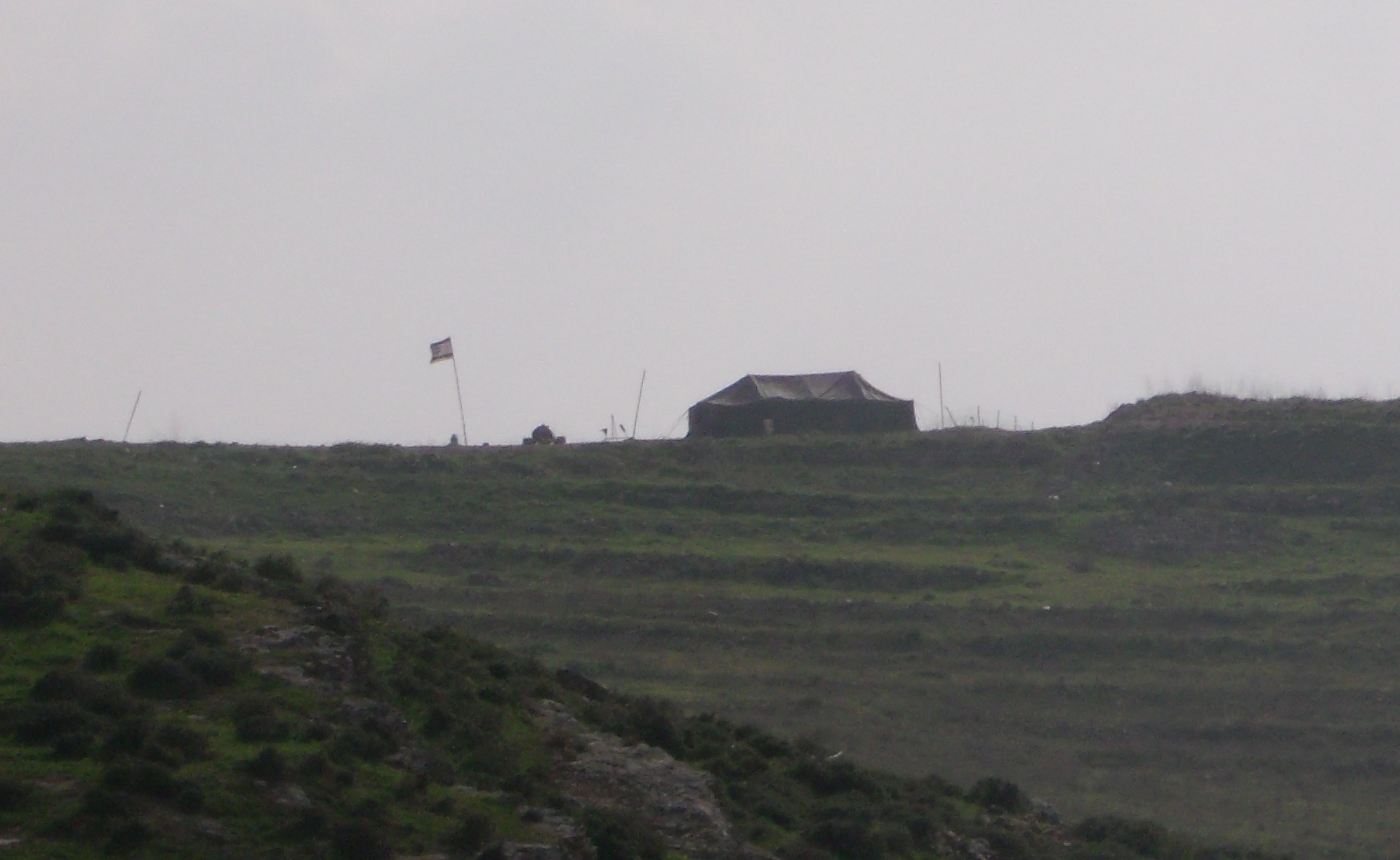
Asira al Qibliya, Occupied Palestine – According to OCHA statistics Yizhar is the most violent settlement in the whole of the West Bank with 70 recorded incidents in 2011 alone. Every week there is at least one attack by Yizhar settlers in the six affected villages.
Four months ago, settlers from Yizhar built a temporary outpost on top of a hill belonging to villagers from Urif. This continued until earlier in the week when Israeli authorities delivered maps to the village which showed that Yizhar had laid claim to 2 dunums of land. This was a massive understatement; they had in-fact seized the entire hill.
The land grab of this hillside seems to be all but complete; a shepherd who was working the land around the Yizhar outpost was recently beaten whilst tending to his sheep: the injuries he sustained were serious but not critical. In another incident, as the Palestinian owners of the land were walking along the road towards the hill this week, they were fired on by Israeli soldiers. Villagers want to challenge this latest land grab, however the law in this country is anything but just. The villagers are all too aware that if they resist they have only stones in the face of tear gas, stun grenades and the very real threat of being fired upon with live ammunition.
Harassment of the residents has also been on the rise. Currently at least once a week soldiers have been invading Asira in the middle of the night. They have been banging on villagers doors with the butts of their assault rifles, making sure people are disturbed in much the same way as has been reported in Urif as well as in Burin.
Yizhar a relatively small but very aggressive settlement in the north of the occupied West Bank. It is situated on a hill surrounded by six Palestinian villages which are all made to live in a state of constant fear.
Related articles
- Continued harrassment of the Nasser family in Madama (palsolidarity.org)
- Israeli Soldiers Attack, Evict, Bab Al-Shams, Arrest Dozens (alethonews.wordpress.com)
- PHOTOS | Settlers attack Urif and Qusra with guns, knives and stones (occupiedpalestine.wordpress.com)
Continued harrassment of the Nasser family in Madama
International Solidarity Movement | January 27, 2013
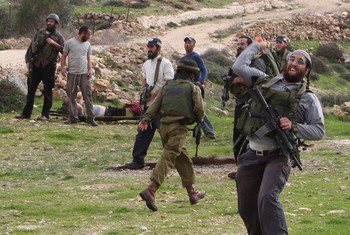
Madama, Occupied Palestine – A month after unprovoked settler and army attacks, the victim of severe violence Mamun Nasser remains in Israeli prison. The arrest of yet another member of the Nasser family shows Israeli army’s continued harassment in Madama.
On December 18th the notorious security guard charged with the protection of the illegal settlement of Yizhar, Jacob, attacked Mamun Nasser while he was tending to his flock of sheep in a hill outside the settlement. Mamun was handcuffed and beaten in front of his entire family, who desperately tried to intervene.
The Israeli army arrived on the scene, who responded by firing live ammunition on the Nasser family and others who tried to help, quickly ending their attempt to stop the vicious assault. One round passed through Mamun’s sisters clothing narrowly missing her while another one hit his brother, Amir, in the leg. His mother told us “They wanted to kill him [Amir]. I heard the officer giving that order. He was lucky that he was only shot in his leg.” Severely beaten, Mamun was then arrested and taken away by the Israeli military into custody. One month later he remains detained in Majdou Prison.
On January 23rd at 4 pm, the Israeli army followed up the harassment by raiding the Nasser family home in Madama, arresting Mamun’s brother Amir who was still recovering from the gunshot wound he received only a month prior. This is another episode in the continued harassment of villagers surrounding Yizhar which is described as the West Bank’s most violent settlement by the United Nations.
Video taken by settlers during the incident on December 18th
Related articles
- Palestinian facing charges after settler violence in Madama (palsolidarity.org)
- Madama attack – Harrowing account from the Nassar family (palsolidarity.org)
- Qusra settler attack, two hospitalised (alethonews.wordpress.com)
- Jewish settlers commit vehicular assaults with impunity at peaceful roadblock protests in the West Bank (alethonews.wordpress.com)
- This Week in Palestine, January 25th, 2013 (indybay.org)
Re-militarization gives rise to new tensions and violence in Guatemala
By Kelsey Alford-Jones | Upside Down World | January 25, 2013
On October 6, the Guatemalan army gunned down six indigenous protesters in Totonicapán and injured at least 30 more. Thousands had gathered to oppose unpopular government reforms, and while the police held their distance, the military advanced and shot into the crowd.
The event was a tragic manifestation of one of the public’s worst fears since President Pérez Molina took office in January 2012: that the Guatemalan armed forces would resort to deadly force in order to repress and silence dissent, an experience all too familiar in the nation´s collective historic memory.
Pérez Molina has made no secret of his intention to deploy the armed forces in ever-greater numbers and ever-expanding roles – the military now overwhelmingly dominates citizen security initiatives. Whether walking down Guatemala City’s central avenue, the “Sexta,” or driving on any major highway, Guatemalans are once again likely to encounter soldiers patrolling with semi-automatic rifles or checking papers at military roadblocks.
The government has opened at least five new military bases and outposts since the beginning of 2012, and has sent soldiers to fight drug cartels, to protect historic sites and nature reserves, and to back up the police during evictions and protests. Soldiers have also been deployed en masse to reduce crime in Guatemala City´s poorest neighborhoods.
Seeing soldiers on the streets may not be new in Guatemala, but under Pérez Molina, it has become symbolic of his administration’s approach to governance; and for the first time in over 15 years, current and former military personnel permeate the leadership of civilian institutions and dictate the administration’s approach to governance.
This swift re-militarization is deeply controversial, and the reasons behind it are much more complex than first meet the eye. In fact, some argue that the motivation for militarization has little to do with providing security for Guatemalan citizens – instead, it is about protecting the status quo, ensuring impunity for the armed forces and defending multinational economic investments. The US government has been eager to offer support to the Guatemalan military, despite the problematic implications.
The Military’s Past Atrocities
In1996, Otto Pérez Molina was a General in the Guatemalan military, and was one of their representatives at the peace negotiations that would put an end to the armed conflict. The Peace Accords, signed by Pérez Molina himself, emphasized the importance of strengthening civilian governance: the number of soldiers would be vastly reduced and a new, civilian, police force would be created. The Accords stipulated that the “National Civilian Police shall be under the direction of the civil authorities.” In contrast, the role of the armed forces was to “[defend] Guatemala’s sovereignty and territorial integrity; they shall have no other functions assigned to them, and their participation in other fields shall be limited to cooperative activities.”
The Accords placed limitations on the military not just to strengthen democracy, but also as a response to the atrocities the military had committed against its own people. In 1999, the UN-sponsored Commission for Historical Clarification (CEH) established that during the 36-year internal armed conflict, 200,000 people were killed, mostly civilians, including an estimated 45,000 who were forcibly disappeared. The Guatemalan state (through its military and paramilitary forces) was responsible for 93% of all human rights violations committed during the conflict, and had committed acts of genocide against the Mayan people.
The Military Creeps Back into Citizen Security Initiatives
Neither the Peace Accords nor the CEH report outlined steps to hold individual soldiers and high-level military officials accountable for the egregious war crimes committed, and many remain in positions of power to this very day. Internal reforms of military institutions were superficial at best, and government officials have been quick to re-engage the military with the justification that it is necessary to provide security to the Guatemalan public.
– In 2000, only four years after the signing of the Peace Accords, a bill was passed legalizing the military’s collaboration with the police to combat common and organized crime, as well as deforestation, kidnapping, and other crimes.
– In 2006 (under the direction of then Presidential Commissioner for Security Pérez Molina), President Berger mobilized reserve troops to maintain internal security, fight crime and distribute humanitarian aid.
– From 2007-2011 President Colom continued to expand the military’s role, reopening military bases and increasing the number of troops, while Congress created a minimum requirement for spending on the Defense Ministry’s budget.
When Pérez Molina assumed the presidency in January 2012, he became the first career military official to hold that office in 25 years. He immediately called on the army to collaborate in “neutralizing illegal armed groups by means of military power.” In September, Pérez Molina inaugurated the Maya Task Force in Zone 18 of Guatemala City, with 1,200 soldiers and 100 police. He initiated a similar operation in Zone 12 in November.
The Re-militarization of Guatemalan Institutions
The dramatic images of thousands of heavily armed soldiers in Guatemala City are shocking and troublesome, yet the re-militarization of Guatemala today isn’t simply about more soldiers on the streets. It also refers to something much less visible –an institutional culture disturbingly similar to the counter-insurgency model that dominated during the internal armed conflict.
Numerous governmental agencies are now run by former military, including the Interior Ministry and offices within the National Civilian Police and intelligence services. According to Guatemalan security analysts, upwards of 40% of security-related positions are held by former military, including many who were directly involved in the counter-insurgency campaigns; some have even been named in cases before Guatemalan courts for their role in crimes against humanity during the conflict.
Many of these policymakers, including Pérez Molina himself, hail from the generation of armed forces that was active during genocide campaigns such as Operation Sofia; a generation that participated in the extermination of entire villages, that used rape as a tool of war, and justified the use of torture and brutality in their campaigns against civilian, mostly indigenous, communities. This is the generation taught to believe that anyone who rejected existing structures of racism, economic dominance by a minority elite, and political exclusion, were “subversives”, “guerrillas,” “terrorists” and “internal enemies.”
The administration’s approach to policy-making, according to human rights groups, reflects this culture of discipline and obedience rather than democratic governance and dialogue. Any social conflict that disrupts the established order is addressed as the military has always dealt with perceived “threats” from its own citizens: intimidation, defamation, repression, and the use of force — sometimes with deadly consequences.
The tragic massacre in Totonicapán momentarily ripped through the curtain of government propaganda to expose the ever-present threat of violence. The international and diplomatic communities reacted strongly, and President Pérez Molina quickly assured the public that his administration would no longer deploy the military at protests and evictions. Only hours later, however, he had reversed his statement and later came out with a new protocol for the military’s collaboration with the police – a protocol that did not, in fact, reduce the military’s role at all.
The Military and the ‘War on Drugs’
The Guatemalan government has attempted to justify the military’s expanded presence due to the country’s high rates of violence linked to organized crime, gangs and common crime. The US has been quick to accept this argument.
“The military must provide security where the police have failed,” is an easy sell in the context of the US war on drugs andis an argument readily repeated by the US State Department. (Meanwhile, the much-needed reform of Guatemala’s police force languishes without the resources or political support to move forward).
The Department of Defense and US Drug Enforcement Agency (DEA) have provided ongoing support and training to the Guatemalan Armed Forces. This collaboration persists despite a decades-long Congressional ban on direct funding to the army due to the atrocities committed by the Guatemalan military against its own people, and the lack of reform within the institution.
Operation Martillo (Hammer) is the newest in a series of US-Guatemala joint operations, although it is also coordinated amongst other countries in Central America and Europe. The operation began in early 2012 and in July, President Pérez Molina signed off on an expansion of the operation. The new agreement permitted US marines and military contractors to be stationed in Guatemala for 120 days and collaborate directly on counter-narcotics missions. It granted US marines the right to be uniformed, to carry weapons, and to enjoy complete diplomatic “privileges, exemptions, and immunity.” Despite regulations requiring approval from the Guatemalan Congress, the document signed by the US and President Pérez Molina attempted to circumvent the process simply by stating: “It is understood that these activities […] do not constitute the passing of a foreign military through Guatemalan territory.”
The operation was not popular among many in civil society. “Drug trafficking in Guatemala shouldn’t be combated by the Guatemalan military, much less by the US military,” commented analyst Sandino Asturias in an interview with GHRC.
Helen Mack, executive director of the Myrna Mack Foundation and former Police Reform Commissioner, commented to the AP at the end of August: “Rural communities in Guatemala are fearful of the military being used to combat drug traffickers because the same techniques are applied that were used in (counterinsurgency) warfare. The historical memory is there and Guatemalans are fearful of that.”
There are other complications in using the military to combat organized crime. The military can’t carry out a criminal investigation, nor can it (legally) detain suspects of a crime. And while the US and Guatemalan armed forces collaborate on high-profile (often unsuccessful) attempts to capture narco-bosses, the Guatemalan Public Prosecutor’s Office has quietly had them arrested, many for extradition to the US. Furthermore, the Guatemalan military has documented ties to drug trafficking organizations and other criminal structures – the very groups they are sent to combat.
What does re-militarization achieve?
Soldiers train for battle, not to police the streets. Not surprisingly, increasing involvement of the military in police work has not only re-traumatized communities and survivors of the armed conflict, but it has also failed to reduce crime and violence in Guatemala. In fact, Sandino Asturias confirms that the homicide rate began to rise dramatically after the military reengaged in matters of internal security in 2000.
The military’s remarkable failure to address security concerns over the last 12 years doesn’t faze policy makers; in fact, the security of Guatemalan citizens doesn’t seem to be the primary concern at all.
Instead, increasing militarization has often functioned as a means to provide protection for the economic interests of transnational corporations.
The administration has constructed new military bases near existing or planned development projects such as mines, cement factories, and hydroelectric power plants. Military forces – in coordination with the police and private security guards – have consistently been mobilized to guarantee that “development” projects aren’t disrupted by local protests. This occurs despite the fact that, in the majority of cases, the government failed to consult local communities about the project and actively ignores threats, attacks, intimidation and other illegal acts committed by persons linked to the international corporations.
Public officials have instead branded those who organize against these unwanted development projects as “terrorists” and “guerrillas,” a strategy similar to the psychological warfare tactics utilized during the conflict. The government’s use of States of Siege in conflict zones has given the military free reign to terrorize indigenous families and detain “suspects.” Dozens of community leaders have been arrested on trumped up charges simply for their rejection of the administration’s development policies, giving rise to a new movement in solidarity with Guatemala’s first generation of political prisoners.
The international diplomatic community has been just as willing as the Pérez Molina administration to overlook commitments laid out in the 1996 Peace Accords – partially implemented at best – in favor of political and economic ties that promote investment, trade and “stability.”
Finally, for an entire generation of military officials and their civilian allies, the re-militarization of public institutions is not just about maintaining control, but about ensuring impunity.
As Guatemalan courts at long last – and against all odds – move forward with indictments against the military high command from the 1980s, accountability and incarceration for war crimes is suddenly a concrete possibility. The threat of judicial action has resulted in a policy of denial of the military’s involvement in war crimes and genocide, even as exhumations and court cases add to voluminous evidence against the military. An ongoing exhumation at a military base in Coban, Alta Verapaz has already unearthed over 500 bodies in mass graves, many bound, blindfolded, and showing evidence of torture.
In response, Pérez Molina has methodically dismantled public institutions that worked to promote human rights, historical clarification and justice, seeking to . During first half of 2012, the administration gutted the Peace Archives Directorate (DAP). The office had opened in 2008 to compile and analyze military (and other) archives in order to establish human rights violations committed during the internal armed conflict. Archive staff published numerous reports on the conflict and acted as expert witnesses in key human rights cases. The closure of the DAP took place as the government was further weakening the Presidential Human Rights Office (COPREDEH) and consolidating it under the Secretary of Peace, Antonio Arenales Forno, a genocide-denier and long-time ally of the military.
The administration has made repeated attempts to limit or dismiss its regional and international human rights obligations that would jeopardize members of the military. At the beginning of 2013, Pérez Molina issued a presidential decree that refused to recognize the jurisdiction of the Inter-American Court on Human Rights in cases prior to 1987, even when they are “continuing crimes” such as forced disappearance and other crimes against humanity. Public outcry by national and international human rights organizations forced Perez Molina to annul the decree. Meanwhile, the Defense Ministry further limited access to information that relates to human rights violations from the early 1980s, which, according to Guatemalan groups, should be part of the public domain.
Emboldened by the administration’s fierce pro-military stance, retired members of the military and other ultraconservative and fanatically nationalistic groups have launched their own campaigns in the press and social media, sending direct,and very public, threats to those who seek justice and defend human rights.
As Guatemala spirals back into a reality frighteningly reminiscent of the 1980s, those who have become the intentional or collateral victims of re-militarization find themselves with little support from state institutions. Nevertheless, indigenous communities, activists and other civil society organizations –despite fear of repression or retaliation –continue to denounce re-militarization in all its forms. They recognize that the way forward for Guatemala is not to be found by returning to the nefarious practices of the past.
Kelsey Alford-Jones is the Director of the Guatemala Human Rights Commission/USA, a non-profit, grassroots, solidarity organization dedicated to promoting human rights in Guatemala and supporting communities and activists who face threats and violence. GHRC documents and denounces abuses, educates the international community, and advocates for policies that foster peace and justice.
Related article
- Does Guatemala Include “Extrajudicial Executions” in its Calculation of National Murder Rates? (alethonews.wordpress.com)
The broken truce
International Solidarity Movement | January 21, 2013
Beit Lahiya, Gaza Strip, Occupied Palestine – A ceasefire was announced on 21st November, ending eight days of horrific bloodshed in Gaza. Has the delicate truce held over the past two months? It depends who you ask. Israelis or Gazans, each going about their daily lives on opposite sides of a border fence.
There has not been a single report of a rocket fired out of Gaza since 21st November. In contrast, four Palestinians have lost their lives and over 80 have been injured by Israeli forces since then. Yet these violations have received little or no coverage in the mainstream media. Palestinian civilians, whose only crime is to live in the border areas, are terrorized on a daily basis by the Israeli army. This is what everyday life under the ceasefire has meant for them.
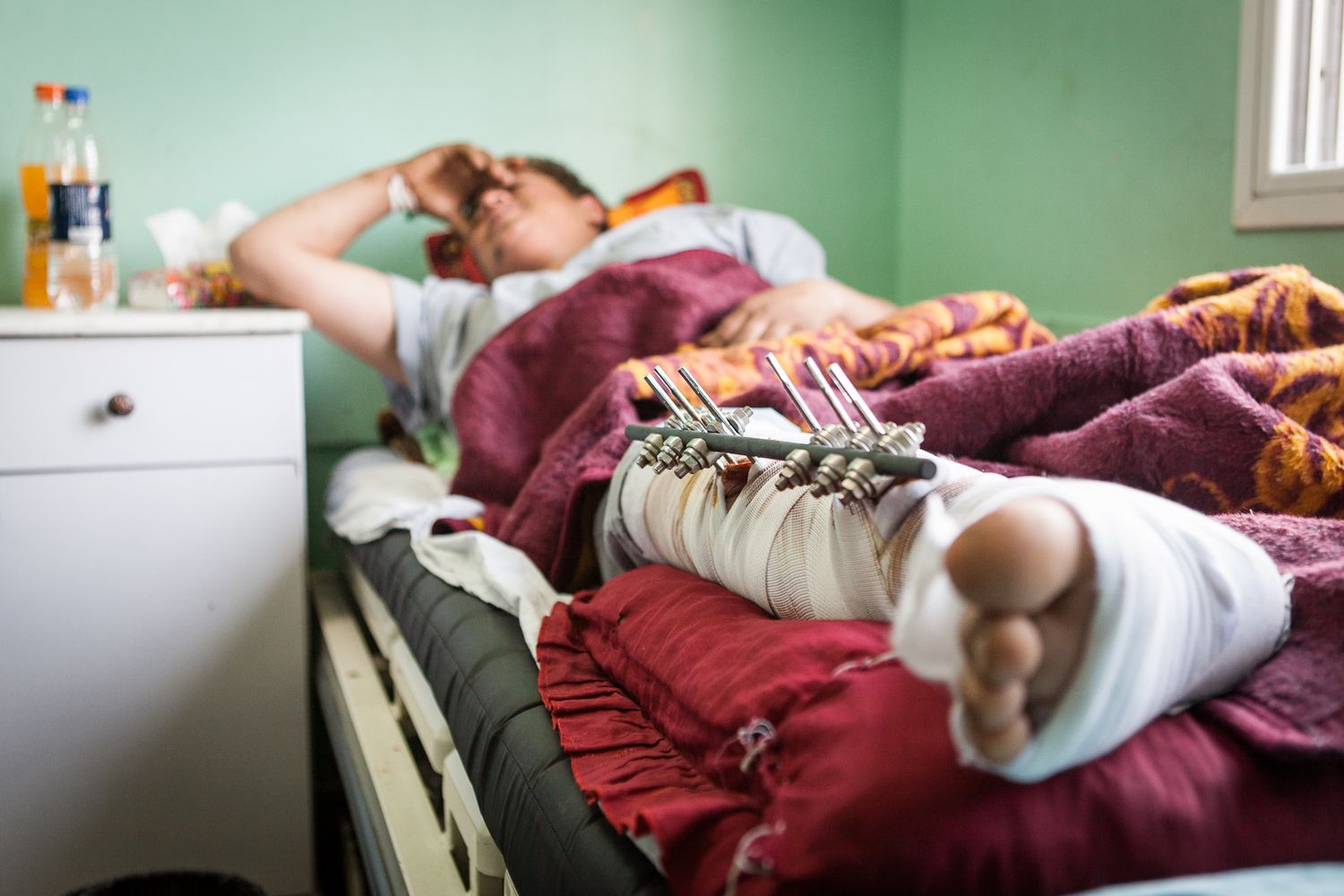
Beit Lahiya, in the far north of the Gaza Strip is one such place. A week ago it saw the brutal murder of 20 year-old Mustafa Abu Jarad. Today, it was the site of another Israeli violation. Abdullah Marouf, 18, was in the west of Beit Lahiya, near the coast, when he was shot in the right leg by Israeli forces, fracturing both his tibia and fibula.
 Abdullah Marouf in hospital. (Photo by Desde Palestina)
At about 9.00 on the morning of 21st January, Abdullah was in an area approximately 250 metres from the border fence, catching birds with his two brothers. A group of five or six Palestinians they were unaquainted with were also in the vicinity, closer to the fence than they were. Abdullah had been under the impression that he would be safe, however he noticed an Israeli soldier in a watchtower on the border and others on the ground. The soldiers began firing live ammunition towards them and Abdullah was shot.
Two local farmers brought him to Kamal Adwan hospital where surgeons performed percutaneous pinning of his lower leg which had sustained damage from an entry wound and a significantly larger exit wound. He requires subsequent surgery in a couple of months to fit internal wires. His recovery is estimated to take at least 12 months.
Abdullah, who is engaged to be married, had been working with his two brothers selling scrap metal. Now they will have to support a family of nine without his help. It is unsurprising that he expressed a lack of faith in the ceasefire agreement.
One can only expect that the Palestinian resistance has also lost faith and is fast losing patience. If a response is provoked it will appear to be in a vacuum – despite this being far from the case – due to the shameful silence maintained by the international community throughout the ongoing Israeli atrocities. It is for people of conscience to protest this injustice and prevent a further escalation of Israel’s attacks on Gaza.
New U.S. Counterterrorism Playbook to Exclude Pakistan from Drone “Kill” Rules
By Noel Brinkerhoff | AllGov | January 23, 2013
The Central Intelligence Agency’s (CIA) drone campaign in Pakistan will not be bound by new counterterrorism rules that the Obama administration is finalizing.
The rules, referred to as the “playbook” by officials, are supposed to establish parameters for killing overseas threats. Once completed, the playbook will detail how names are added to assassination lists, which legal principles justify the killing of U.S. citizens, and what offices must sign off before drone strikes are carried out.
But the CIA will be exempted from the rules for at least a year. Agency leaders objected to being bound by the playbook, citing the pressing need to continue bombing Taliban and al-Qaeda targets in Pakistan before the U.S. withdraws from neighboring Afghanistan, where the drones are based.
Greg Miller of The Washington Post wrote that the drafting of “the playbook was nearly derailed late last year by disagreements among the State Department, the CIA and the Pentagon on the criteria for lethal strikes and other issues. Granting the CIA a temporary exemption for its Pakistan operations was described as a compromise that allowed officials to move forward with other parts of the playbook.”
Critics of the government assassination program view the playbook as indicative of the institutionalization of the U.S. killing policy. It is “a step in exactly the wrong direction,” Hina Shamsi, director of the American Civil Liberty Union’s National Security Project, told the Post. She called it “a further bureaucratization of the CIA’s paramilitary killing program.”
Teenager dies following shooting in Bethlehem
International Solidarity Movement | January 23, 2013
Bethlehem, Occupied Palestine – On Friday January 18th at approximately 3.20 pm, fifteen year old Saleh Elamareen was shot in the head by an Israeli soldier in Aida refugee camp, Bethlehem. Today Wednesday 23 January he was pronounced dead.
Salah Elamareen was outside the Lajee Refugee Centre when he was shot through the left forehead. The Centre lies some distance from the wall itself. At the time of the shooting eyewitnesses have said that protests were not happening, and that the people of Aida were simply watching the soldiers from afar. This is supported by video documentation of the incident, which shows a group of youth carrying Elamareen after he was shot.
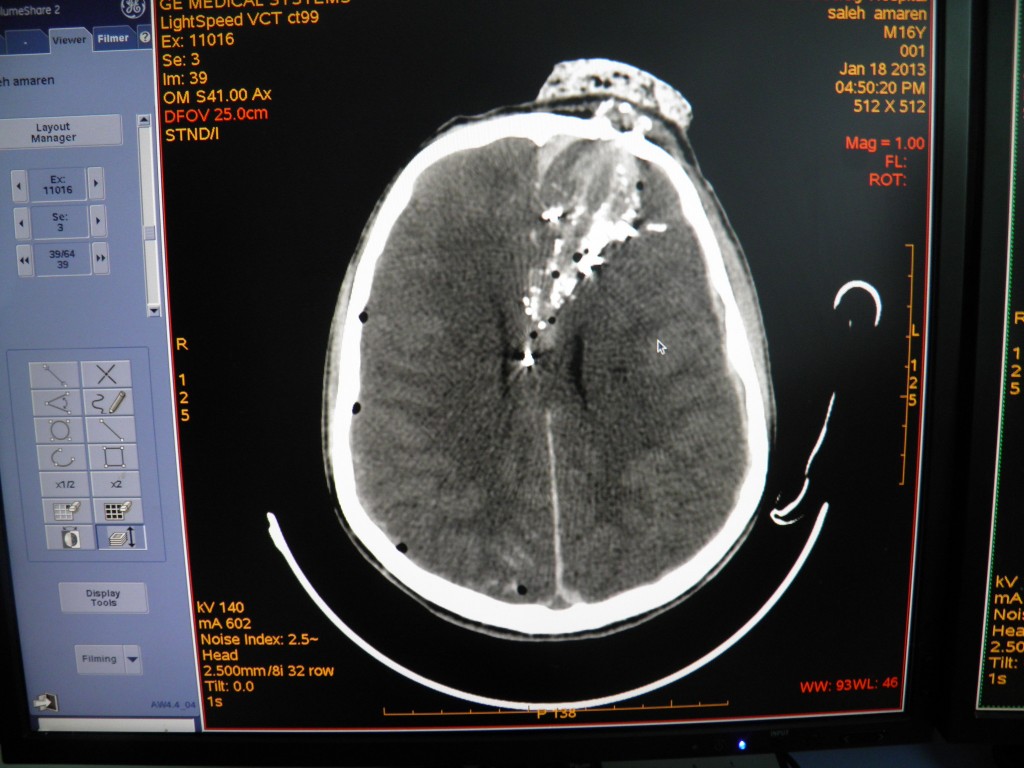
Two of the doctors who treated Elamareen did not rule out previous rumours that he was shot with a dumdum bullet, due to the fragmentation of the bullet within his head. Another doctor has claimed it was definitely a dumdum bullet in his opinion.
Dumdum bullets expand after impact and are designed to cause maximum damage and pain. Due to the brutality of these bullets they are illegal under international law. Article 8 at the Review Conference of the Rome Statute in Kampala made the use of expanding bullets in non-international armed conflict a war crime. The Hague Convention also prohibits there use in international warfare. If the doctors are correct and a dumdum bullet was in-fact used, this would be another serious violation of international laws and standards by Israel.
The head of the department under which he was treated at the government hospital said he was hit with the bullet in the left frontal section of the head, around the eye, causing large intracranial hemorrhaging. A number of doctors who looked at the patient concluded that the bullet exploded in the brain. The CT scan shows the shrapnel inside his skull. The entry wound shows significant impact to the skull, and there is no exit wound.
Israeli occupation forces kill woman near Hebron
Ma’an – 23/01/2013
HEBRON – Israeli forces shot and killed one person and injured another in the Hebron district on Wednesday, medics said.
Witnesses told Ma’an that Israeli soldiers traveling in a civilian car opened fire at a group of people at the entrance to al-Arrub refugee camp south of Bethlehem.
Lubna Munir Hanash, 22, was shot in the head and died from her injuries, medics said.
Suad Yusuf Jaara was shot in the hand and transported to Ahli hospital in Hebron.
Witnesses told Ma’an that after the shooting Israeli soldiers prevented an ambulance from arriving at the scene for around 10 minutes.
Locals said there were no clashes in the area at the time.
An Israeli army spokeswoman said that “soldiers were attacked by Palestinians who hurled multiple firebombs at them while they were traveling near al-Arrub. Soldiers returned fire and the circumstances of the incident are currently being reviewed.”
Israeli soldiers searched the area and found several firebombs ready for use, she said, adding that no soldiers were injured in the incident.
Related articles
- Israeli soldiers vandalise Hebron home and arrest a student (alethonews.wordpress.com)
- Family denies Hebron teen killed by Israel was carrying toy gun (alethonews.wordpress.com)
- Local activist detained in Hebron (alethonews.wordpress.com)
- Hebron families struggle for existence (palestinemonitor.org)
- Second group of journalists beaten in Hebron (alethonews.wordpress.com)
Featured Video
Death Spikes & Rising Cancer In Our Youth Explained
or go to
Aletho News Archives – Video-Images
From the Archives
Politicians lie
By Mazin Qumsiyeh | Popular Resistance | August 18, 2013
There is no way to say this truth nicely: Politicians lie. That includes Japanese, American, Egyptian, Israeli, and Palestinian politicians! Is there something more common sense than that? Yet, so many citizens around the world believe their own politicians or wistfully acknowledge lies but think it is part of the job needed to run things. They believe even when politicians contradict themselves blatantly. This phenomenon is rather remarkable. It is a dissonance and disconnect from reality that many seem oblivious to. It is very dangerous because it can lead to accepting rationales for going to war. These can be deadly wars that lead to millions of lives lost as happened in what was called World War 1 and WW2. Even when incredible and declassified evidence abound, politicians continue to lie and old mythologies refuse to die. Here are just a few of the countless lies told to us over the past few decades… continue
Blog Roll
 Aletho News
- RSF military group defects, joins Sudanese army: State media
- Ireland goalkeeper refuses to play ‘Israel’ as squad weighs boycott
- China pushes back against US on Cuba, Iran
- Ukrainian Soldiers, Potential Mercenaries: Have Gun, Will Travel!
- Burnham’s UN debut… A masterclass in British disinformation
- Iran flights continue despite US aviation sanctions
- Global Tipping Points Lead the World Into a State of Entropy
- The day-after at the White House: USA and Xi Jinping
- The Geopolitical Balance in the Red Sea: The UAE Being Displaced by New Players
- Iraqi resistance group vows to stage airport sit-ins over Iran aerial blockade
- If Americans Knew
- Deconstructing Netanyahu’s pants-on-fire UN rant – Daily Update
- Trump betrayed voters with his campaign lies and prioritized a foreign country once he took office
- Netanyahu calls Israel’s war in Gaza ‘opposite of genocide’ in UN speech to near-empty hall
- Settler Kidnappings: Torture, Sexual Abuse and Terrorisation of Palestinian Abductees as Israel Deepens Annexation of West Bank
- Gaza winter nears as 162,000 tents become unusable, raising fears of humanitarian crisis
- Netanyahu says, “It’s the opposite of genocide”; UN says Gaza economy is world’s ‘most severe crisis on record’ – Daily Update
- Israel’s US-Backed Assault on Gaza Has Created the ‘World’s Most Severe Economic Crisis on Record’: UN
- ‘Protecting U.S. Citizens’… From Israel
- ‘This is where I live now, the back of a truck’: a day in the life of a grandmother in Gaza
- In UN Speech, Iran’s President Displays Pictures of Children Killed by US, Brings Attention to Israel’s Nuclear Arsenal
- No Tricks Zone
- New Study: Earth And Venus Surface Warmth Largely Explained By Convection And Lapse Rate, Not CO2 Or Radiation
- 2025 Nature Paper Claiming Worsening Global Drought Gets RETRACTED …Heavily Flawed
- New Study: ‘Global Drought Shows No Detectable Recent Acceleration Under Climate Warming’
- Economic Masterminds: German Socialists Suggest Taxing Productivity Gains Stemming From Using AI
- The South China Sea Has Not Been Cooperating With The Climate Change Narrative
- Energy Crisis: Germany Enters Heating Season With Historically Low Gas Reserve Fill Levels
- New Study: The Antarctic Ice Sheet Gained Mass From 2020-2024 Due To Staggering Snow And Ice Accumulation
- Study: Ocean Heating Rates From Thousands Of Years Ago ‘Dwarf’ Modern Ocean Heating Rates
- Climate Extremists Target, Attack Large-Scale Power Grid Infrastructure In Germany!
- New Study: Antarctic Ice Melt Has Contributed Less Than 1 Centimeter To Sea Level Rise In The Last 30 Years

