7 casualties in Israeli artillery shelling east of Gaza
Palestine Information Center – 17/05/2012
GAZA — Seven Palestinian citizens were wounded to the east of Gaza city on Thursday in Israeli artillery shelling of the area, medical sources reported.
Adham Abu Salmiya, the spokesman for emergency and ambulance services in Gaza, told the PIC reporter that two of the casualties were in serious condition.
He added that three of the wounded were old men, adding that the casualties were taken to Shifa hospital in moderate condition except the abovementioned two.
The Israeli occupation forces (IOF) fired a number of artillery shells at civilian neighborhoods and farmlands east of Shujaia suburb in Gaza city.
IOF soldiers earlier on Thursday raided southern and northern Gaza Strip areas, firing at random and bulldozing land.
Local sources in Khan Younis, south of the Strip, said that eight IOF armored vehicles infiltrated 800 meters into Fakhari area and bulldozed land amidst indiscriminate shooting.
Other IOF units raided northern Beit Lahia town to the north of the Strip while firing at farmers tending to their land.
Abu Salmiya said that no casualties were reported in the northern area despite earlier news of one casualty among the farmers.
~
Ma’an reports:
An Israeli army spokeswoman said forces opened fire toward “several suspects approaching the security fence.”
She said no hit was identified.
An Israeli army spokesman later added that “tank shells were fired towards the terrorists,” near the Karni crossing east of Gaza City.
Related articles
- #GazaUnderAttack | IOF artillery shelling targets Beit Hanun (occupiedpalestine.wordpress.com)
- New Proof that Gaza’s Still Occupied (thedailybeast.com)
German citizen sues CIA for abduction, torture
Press TV – May 16, 2012
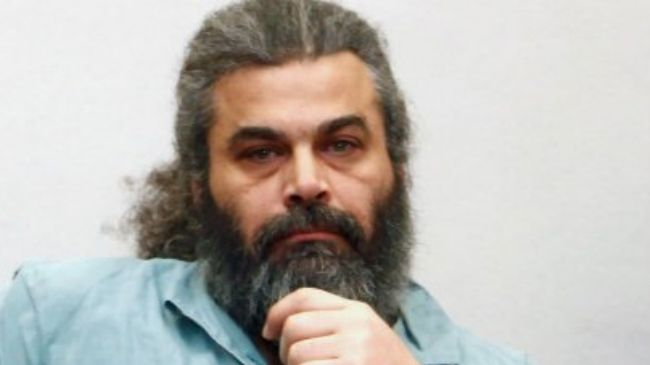
A German citizen, who says was abducted in Macedonia by the CIA and taken to a prison in Afghanistan and tortured, has demanded justice from Europe’s human rights court.
Khaled El-Masri of Lebanese descent says he was brutally tortured and interrogated at a secret CIA-run prison in Afghanistan for more than four months after being kidnapped from Macedonia in 2003, the Associated Press reported.
On Wednesday, Masri took his case to the European Court of Human Rights.
“Mr. El-Masri has spent the last eight years seeking legal redress for the crimes that were committed against him,” said James Goldston, who is the executive director of the Open Justice Initiative, a rights group that campaigns against the US extraordinary rendition practice.
Extraordinary rendition is a practice enabling the US apprehension and extrajudicial transfer of a person from one state to another.
He noted, “There is abundant evidence, including data on CIA flights to and from [Macedonia’s capital] Skopje.”
Masri was eventually released after the CIA realized it had mistaken him for another suspect.
He is also suing the Macedonian government for its role in the kidnapping, an accusation that the authorities in Skopje deny.
The court will consider whether Macedonian agents actually kidnapped Masri, and, if they did, whether they knew what would happen to him after they handed him over to US authorities.
Gaza Media Demand Action On Othman Case
By Julie Webb-Pullman and “Amal” | Scoop | May 17, 2012
 Members of the Palestinian media today demonstrated in Gaza City to draw attention to violence against journalists, particularly the case of Mohammad Othman, shot by Israeli soldiers while covering the Al Nakba commemoration at the Erez crossing a year ago.
The protestors gathered outside the Palestinian Centre for Human Rights, where they held a press conference, then marched to the UNESCO Offices.
Mohammad Othman was targeted by Israeli soldiers at the Erez checkpoint while he was carrying out his professional duties as a journalist. He received severe wounds to his back, and required medical treatment in Turkey. He still suffers the effects of his injuries.
Despite attempts by the journalists union to have the person/s responsible for his injuries held to account, the Israeli authorities have not investigated the matter, or held anyone responsible.
The protestors called on the Palestinian Human Rights Centre and the United Nations to take up the matter, as the deliberate shooting by Israeli forces of a journalist carrying out his professional duties is a crime that must be investigated, and punished.
“Israeli impunity for such crimes against journalists must end,” they said. “Othman was only taking pictures in his professional capacity when he was brutally and deliberately shot.”
Related articles
- #Nakba64 | Israeli forces arrest 20 Palestinians & injure 250 during An-Nakba day (occupiedpalestine.wordpress.com)
Jewish groups to stage anti-Arab march to Aqsa Mosque
Palestine Information Center – 16/05/2012

OCCUPIED JERUSALEM — Extremist Jewish groups declared their intention to organize an anti-Arab march next Sunday to the Buraq wall of the Aqsa Mosque and the old city of occupied Jerusalem demanding the demolition of the Mosque and the building of their alleged temple on its ruins.
Statements published in Hebrew newspapers by these groups said tens of thousands of Jewish young men would participate in this march.
During the last marches, the participating Jewish settlers chanted blasphemous slogans against Prophet Mohamed and racist slurs against the Arab Palestinians, and called for demolishing the Aqsa Mosque. Their bizarre dances and songs also contained provocative remarks against the Arabs and Islam.
The settlers also harassed Palestinians during these marches and engaged in confrontations with them.
The march this year, like the earlier one, will go across the old neighborhoods of Jerusalem before heading to the Buraq wall.
Related articles
- Jewish settlers sneak into Aqsa mosque (occupiedpalestine.wordpress.com)
- Foundation warns of plan to turn Islamic cemetery into Talmudic park (alethonews.wordpress.com)
- Al-Aqsa Mosque and its surrounding area attacked 100 times during 2011 (alethonews.wordpress.com)
- A Zionist plan to build a Jewish museum in Al Buraq courtyard (occupiedpalestine.wordpress.com)
- Salah criticizes visits of Islamic figures to Jerusalem (occupiedpalestine.wordpress.com)
- Israel To Demolish Buildings In East Jerusalem To Build “King David” Park (alethonews.wordpress.com)
Hunger strike deal ‘does not end administrative detention’
Ma’an – 16/05/2012
BETHLEHEM – A deal struck early Tuesday to end the Palestinian prisoners’ hunger strike will not halt administrative detention, prisoners groups said Wednesday.
The document signed by prisoners representatives states that prisoners will halt hunger strikes and “security activity” inside Israeli jails in exchange for Israeli “facilitation” on policies toward solitary confinement, family visits and living conditions.
Prisoners society official Qaddura Fares told Ma’an the document outlines the core issues, while further details will be agreed in talks between prisoners representatives and the Israeli authorities.
The agreement is a “successful victory,” he said, while warning that it is “not clear enough” on the issue of detention without charge.
Prisoners representatives have secured clear commitments that five administrative detainees on long-term hunger strike will be released at the end of their term, while Mahmoud Sirsik is still negotiating the date of his release, Fares said.
Meanwhile, Israel committed not to renew the administrative detention of all 322 Palestinians held without charge if there is no new information that requires their imprisonment, he noted.
However, Fares warned: “Who can check this new information … no one can be sure.”
Under Israel’s administrative detention policy, prisoners can be held without formal charges for renewable periods of six months. Defendants and their lawyers are not given access to the evidence used to imprison them.
Prisoners rights group Addameer said after the hunger strike deal it is “concerned that these provisions of the agreement will not explicitly solve Israel’s lenient and problematic application of administrative detention, which as it stands is in stark violation of international law.”
Related articles
- Hunger-striking detainees sign deal with prison authority (alethonews.wordpress.com)
- Israeli occupation authority renews administrative detention of MP Rejoub for fourth time (alethonews.wordpress.com)
Detainee Sharawne to continue in his hunger strike
Palestine Information Center – 16/05/2012
AL-KHALIL — Detainee Ayman Sharawne has urged the Egyptian government to put an end to the Israeli violations of the Egyptian-brokered prisoners’ exchange deal after he was arrested only three months after his release in that deal.
Human rights sources told the PIC on Wednesday that Sharawne was adamant on persisting in his hunger strike until the Israeli occupation authority (IOA) releases him.
The IOA claims that he was detained anew in light of “secret information”, which was not disclosed in court.
Sharawne attended a hearing into his case on Tuesday in which three judges presided over the court in Ofer to look into the Israeli prosecution’s demand for his re-arrest to serve his remaining sentence.
He had served ten years of his 38-year sentence when he was released in the exchange deal.
The court adjourned ruling into his case for two weeks.
Sharawne started the hunger strike on 17 April along with the other prisoners but did not end it with them after their demands were met.
He said that he would continue in his strike to highlight his case along with other similar cases.
The IOA re-arrested six Palestinians, who were released in the deal in the West Bank, at the pretext they violated conditions of the deal and returned to resistance activity. One of them was Hana Shalabi, who was deported to Gaza after her release from her second detention.
Related articles
- Hunger-striking detainees sign deal with prison authority (alethonews.wordpress.com)
- #PalHunger | Thiab, Halahla, To Be Released (occupiedpalestine.wordpress.com)
Israeli occupation authority renews administrative detention of MP Rejoub for fourth time
Palestine Information Center – 15/05/2012
 AL-KHALIL — The Israeli occupation authority has renewed the administrative detention of MP Nayef Al-Rejoub for six months for the fourth time running, his son said on Monday.
He said that the Negev prison administration informed his father of the decision despite the fact that his past detention order still ends after 17 days on 1st June.
He said that the early decision was a clear indication that the Israeli prison service was eluding the agreement announced earlier on Monday with the Palestinian prisoners, who have been on hunger strike for four weeks, not to renew administrative detention among other articles.
The IOA had arrested MP Rejoub in 2010 and renewed his administrative detention, without charge, on three previous occasions each time for a period of six months.
A PIC reporter said that the Negev prison administration had renewed the administrative custody of a number of other prisoners.
Related articles
- Detained journalist boycotts Israeli military court (alethonews.wordpress.com)
- Israel: Stop Jailing People Without Charge or Trial (windowintopalestine.blogspot.com)
Canada: An alleged democracy
99pourcentQC | May 7, 2012
Made with publicly available footage from spring 2012, mostly in Montreal.
Israel arrests 800,000 Palestinians since 1948
Petra | May 12, 2012
 Gaza – Israel has arrested and imprisoned around 800,000 Palestinians since 1948 including children, according to Palestinian Ministry of Prisoners’ Affairs Abdul Nasser Farwaneh.
He added in a statistical report released today that the Israeli occupation forces adopted the policy of arrest on a daily basis to humiliate Palestinians, noting that Israel used some of them as human shields and executed many of them.
The Director of Palestinian Statistics Department said the period between 1948-1967 was the worst for Palestinian and Arab prisoners as there were random arrests and collective detention.
The Palestinians prisoners had been exposed to severe torture and abuse as they were deprived of minimum rights guaranteed to prisoners of war and conflicts by international conventions.
Hunger-striking detainees sign deal with prison authority
Ma’an – 14/05/2012
BETHLEHEM – Detainees on Monday signed a deal with the Israeli prison authority to end their mass hunger strike, officials told Ma’an.
Prisoner representatives from each of the factions agreed to the deal in Ashkelon jail, prisoners society chief Qaddura Fares said in a statement.
Israel’s internal security service Shin Bet confirmed the deal, the Israeli news site Ynet reported.
Terms
Senior Hamas official Saleh Arouri, who was a member of the negotiations team, said Israel agreed to provide a list of accusations to administrative detainees, or release them at the end of their term.
In comments to the Hamas-affiliated new site Palestine Information Center, he said that under the Egypt-brokered deal Israel agreed to release all detainees from solitary confinement over the next 72 hours.
Israel will also lift a ban on family visits for detainees from the Gaza Strip, and revoke the “Shalit law,” according to the official.
The “Shalit law” restricted prisoners’ access to families and to educational materials as punishment for the five-year captivity of Israeli soldier Gilad Shalit in the Hamas-controlled Gaza Strip. Shalit was freed in October in a prisoner swap agreement.
All or nothing
Ofir Gendelman, spokesman for Israeli Prime Minister Benjamin Netanyahu, told Ma’an that all prisoners must end the hunger strike within 72 hours, and not later refuse food, for the deal to hold.
Around 2,000 prisoners joined a mass hunger strike launched on April 17 to demand fair prison conditions, according to prisoners groups’ estimates.
Another group of prisoners held in administrative detention launched an earlier strike in protest at their detention without charge, including Bilal Diab, 27, and Thaer Halahla, 33, who have gone for 77 days without food.
Their lawyer Jamil Khatib told Ma’an that Diab and Halahla were informed of the deal earlier Monday. They were told the agreement includes their release at the end of their detention term but both refused to stop their strike unless they were immediately released, Khatib said.
On Monday evening, a relative of Halahla said the long-term hunger-strikers were still deciding on next steps. Prisoners society lawyer Jawad Bulous is heading to the prison hospitals to discuss the deal with hunger-strikers, minister Issa Qaraqe told reporters.
Power of non-violence
PLO official Hanan Ashrawi applauded the deal and said it proved the power of non-violent resistance.
“The Palestinian prisoners in facing the Israeli Prison Authority is a victory not only for them and their families, but also for the millions of Palestinians living in the occupied Palestinian territory and in exile,” Ashrawi said in a statement.
“The hunger strikers’ courage is magnificently inspiring, and their selflessness deeply humbling,” the official added.
She also thanked Egyptian mediators, the international community “and people of conscience worldwide” for supporting the strikers.
Related articles
- Mashaal: Israel broke promises under Shalit deal (alethonews.wordpress.com)
- Hunger-striker Bilal Diab writes will to family (windowintopalestine.blogspot.com)
Voices from the Occupation: Hammam and Odai S. – Settler violence
Defense for Children International | May 9, 2012

Names: Hammam and Odai S.
Date of incident: 21 April 2012
Age: 3 and 12
Location: Hebron, West Bank
Nature of incident: Settler violence
On 21 April 2012, a 12-year-old boy and his three-year-old brother go with their father to their land south of Hebron, in the occupied West Bank, where they are attacked by a group of settlers.
“On 21 April 2012, at around 9:00 am, I went with my father and my three-year-old brother, Hammam, to our land in Khirbet Shuweika, about seven kilometres from where we live,” explains 12-year-old Odai. “My father started clearing the land; I helped him for a while and then I went to play with Hammam,” he continues.
“At around 1:00 pm, I saw six men approaching us. They were carrying sticks and their faces were covered. I stayed where I was and didn’t feel scared because I didn’t know they were settlers. When they were about 20 metres away, they started throwing stones at us. Four of them attacked my father, and the other two attacked me and my brother. I felt terrified. Hammam started screaming and shivering. He was also terrified.”
Odai’s father tried to defend his children and was hit by stones several times. “A stone also hit me in the left leg and it hurt a lot,” says Odai. “Luckily, Hammam was not hit.” While they were being attacked, Odai’s father called his brothers to come and help them. “When the settlers noticed that two cars had arrived, they fled.”
Odai and his father were taken to the nearest medical centre for treatment. “I was told the settlers were from the settlement of Shim’a, located about one and a half kilometres from Khirbet Shuweika,” explains Odai. “What happened terrified me and my brother. This is the first time I have had such a terrifying experience,” he adds.
Related articles
- Voices from the Occupation: Settler/soldier violence/detention of 16-year-old (alethonews.wordpress.com)
- Settler Violence: Broken Glass on Shuhada Street (alethonews.wordpress.com)
- Hebron teen ‘shot by Israeli settler’ (alethonews.wordpress.com)
- Jewish settlers attack village, block Nablus road (alethonews.wordpress.com)
- Israeli Soldiers Invade Homes In Hebron, Jewish Settlers Attack Young Man (alethonews.wordpress.com)
- Israeli settlers injure three Palestinians, uproot dozens of olive trees in two separate incidents (alethonews.wordpress.com)
- Impunity Under the Law: Settler attack in Jabari neighborhood (alethonews.wordpress.com)
- Fadi Abu Zeitoun, killed as settlers attacked farmers (alethonews.wordpress.com)
- Settlers Raise Israel’s Flag On Top Of Ibrahimi Mosque (alethonews.wordpress.com)
- Open letter to Dutch government (altahrir.wordpress.com)
Featured Video

AIDS Inc. by Gary Null (2007)
or go to
Aletho News Archives – Video-Images
From the Archives
Clash of Civilization, Iran Part II
By Jamal Kanj – Intifada-Palestine.com – January 14, 2011
Israel’s survival kit is: perpetuate conflict, insecurity to rationalize collective hate and finally playing victim.
Devoid of conflict, Israel implodes internally; without hate, Zionism loses its justification; and playing eternal victim to continue blackmailing the West. Absence of this holy trinity, Israel ceases to exist.
From its inception, the house of Zion has mastered exploiting adversarial powers to advance Israel’s cause. For instance, their influence over the Democratic Party in the US began with President Truman’s bid for 2nd term election in 1948.
Responding to strong opposition from Secretary of State General George Marshall and Department experts urging against recognition of Israel, President Truman replied: “I’m sorry gentlemen but I have to answer to hundreds of thousands [Jewish voters] who are anxious for the success of Zionism. I do not have hundreds of thousands of [voting] Arabs among my constituents”
Zionists influence over liberal American politics was matched with the doctrinal school of Conservative theoreticians aligning the Republican Party’s platform with Israel’s objectives. The Neoconservative Zionists, coined Zioncons, invented the “Clash of Civilization” concept to fight Israel’s wars. … continue
Blog Roll
 Aletho News
- 12 Things Your Psychiatrist Was Trained Not to Tell You
- From Unipolar Universalism to Multipolar Civilizational Distinctiveness
- RSF military group defects, joins Sudanese army: State media
- Ireland goalkeeper refuses to play ‘Israel’ as squad weighs boycott
- China pushes back against US on Cuba, Iran
- Ukrainian Soldiers, Potential Mercenaries: Have Gun, Will Travel!
- Burnham’s UN debut… A masterclass in British disinformation
- Iran flights continue despite US aviation sanctions
- Global Tipping Points Lead the World Into a State of Entropy
- The day-after at the White House: USA and Xi Jinping
- If Americans Knew
- Israel forces Gazans to live in constant peril – Daily Update
- Deconstructing Netanyahu’s pants-on-fire UN rant – Daily Update
- Trump betrayed voters with his campaign lies and prioritized a foreign country once he took office
- Netanyahu calls Israel’s war in Gaza ‘opposite of genocide’ in UN speech to near-empty hall
- Settler Kidnappings: Torture, Sexual Abuse and Terrorisation of Palestinian Abductees as Israel Deepens Annexation of West Bank
- Gaza winter nears as 162,000 tents become unusable, raising fears of humanitarian crisis
- Netanyahu says, “It’s the opposite of genocide”; UN says Gaza economy is world’s ‘most severe crisis on record’ – Daily Update
- Israel’s US-Backed Assault on Gaza Has Created the ‘World’s Most Severe Economic Crisis on Record’: UN
- ‘Protecting U.S. Citizens’… From Israel
- ‘This is where I live now, the back of a truck’: a day in the life of a grandmother in Gaza
- No Tricks Zone
- New Study: Earth And Venus Surface Warmth Largely Explained By Convection And Lapse Rate, Not CO2 Or Radiation
- 2025 Nature Paper Claiming Worsening Global Drought Gets RETRACTED …Heavily Flawed
- New Study: ‘Global Drought Shows No Detectable Recent Acceleration Under Climate Warming’
- Economic Masterminds: German Socialists Suggest Taxing Productivity Gains Stemming From Using AI
- The South China Sea Has Not Been Cooperating With The Climate Change Narrative
- Energy Crisis: Germany Enters Heating Season With Historically Low Gas Reserve Fill Levels
- New Study: The Antarctic Ice Sheet Gained Mass From 2020-2024 Due To Staggering Snow And Ice Accumulation
- Study: Ocean Heating Rates From Thousands Of Years Ago ‘Dwarf’ Modern Ocean Heating Rates
- Climate Extremists Target, Attack Large-Scale Power Grid Infrastructure In Germany!
- New Study: Antarctic Ice Melt Has Contributed Less Than 1 Centimeter To Sea Level Rise In The Last 30 Years

