After Running Out Of Anesthesia, All Surgeries In Gaza Put On Hold
By Saed Bannoura | IMEMC & Agencies | June 14, 2011
Dr. Atef Al Kahloot, head of the Medical Services in the Gaza Strip, reported Monday that all surgeries in hospitals across the coastal region have been put on hold until further notice as they ran out of anesthesia medications and supplies.
Al Kahloot stated that all hospitals and medical centers in the Gaza Strip will be totally out of all supplies related to Anesthesia within 48 hours. Al Kahloot added that there are 180 types of medications that have run out of in addition to 200 types of medical supplies.
He called on the international community and international human rights groups to intervene, and to save the residents from a serious humanitarian crisis.
Al Kahloot further called on the Ministry of Health in the central West Bank city of Ramallah to act on sending all needed medical supplies to the hospitals and medical facilities in the Gaza Strip.
Over 300 patients have died, since Israeli imposed the siege on Gaza in 2007, due to a lack of essential medical equipment. The patients were denied permits to leave the Gaza Strip to seek medical attention elsewhere.
Israeli forces demolish 5 wells in Hebron
Ma’an – 14/06/2011
HEBRON — Israeli forces demolished five water wells in the southern West Bank city of Hebron on Tuesday morning, targeting a neighborhood in the city’s south.
The wells belonged to the Al-Jamal family, brother of the owner Samir Abdul-Hamid told Ma’an.
Soldiers and crews from Israel’s Civil Administration arrived on the property early, Samir said, assaulting family members who attempted to prevent the demolitions and then deploying tear-gas to drive them out of the area.
Five wells were destroyed and filled-in, “under the guise that they were built without a license,” Samir said.
An Israeli military spokesman said border police securing the area had used “riot dispersal mechanisms” in the area, but officials from the unit could not be reached for comment, nor could a representative of the Civil Administration.
On 30 May, eight wells near Jenin were demolished by order of the Civil Administration, which said the wells were unlicensed.
A spokesman for Israel’s Civil Administration said the wells had not been approved by the Joint Water Commission, a body set up under the Oslo Accords. According to the Palestinian Academic Society for the Study of International Affairs, Israeli partners on the committee “constantly vetoed Palestinian water projects, hindering any development.
“Due to the non-functioning management of the water sector there are no water recycling pumps that will allow the people to have enough water for agriculture,” the spokesman noted, though researchers say attempts to build water treatment facilities have been stymied.
Israeli soldier to activists who were detained near Beit Ommar: “I could kill you.”
11 June 2011 | International Solidarity Movement
On Saturday June 11 three International Solidarity Movement activists were stopped by the Israeli army when trying to enter the village of Beit Ommar in the southern West Bank. The activists were going to participate in a non-violent demonstration against the illegal settlements in the area.
As the activists tried to enter the village Israeli soldiers stopped them and claimed that the area had been declared a closed military zone. When questioned about not being able to show the official paper needed to prove this, one soldier pointed at a sign which stated that the area is under Palestinian Authority and that no Israelis were allowed to enter the area. The soldier used this as justification for not allowing the internationals to enter. He went on to complain that Israelis were not able to enter the village, despite it being, as he put it, a part of “Israel”.
The activists then attempted to leave the village when the soldiers apparently changed their mind and dragged them from the bus they had boarded. No explanation was given when the activists asked why they were being detained. One of the soldiers had a more aggressive approach than the others, and was interested in discussing politics with the activists. He called them “leftist shits”, and told them “I could kill you”, before spitting at them and cursing them in Hebrew. He also told the activists that Palestinians were terrorists and that Beit Ommar was a dangerous village.
The soldiers lied and told the activists that they would be free to go if they showed them their passports, however they took this back after one of the activists showed her passport. One activist managed to escape detention and left the area, however the other two were asked to step into a military jeep when it arrived. When refusing to do this, since no reason had been given, the soldiers dragged the two activists into the jeep with force, despite them telling the soldiers that they need a female police officer to arrest them. They were taken to the commander of the force who amongst other things accused the activists of being terrorists and Syrian spies, spying on the Israeli military. After being taken to the police station in Kiryat Arba, an illegal settlement in the outskirts of Hebron, the activists were released after a few minutes without charge.
The demonstration in Beit Ommar went ahead as planned and protesters managed to successfully reach and work on the land belonging to the farmers of Beit Ommar.
US arms sales to Bahrain rise
Press TV – June 11, 2011
The US increased its military sales to Bahrain just before Manama began its brutal crackdown on protesters in February, says a report by the US State Department.
The annual report that provides sales figures between the US weapon manufacturers and foreign governments showed a USD 112 million increase in military sales to Bahrain between 2009 and 2010, The Washington Post reported.
In total, the US government has approved USD 200 million in military sales to the Persian Gulf kingdom during this period.
Previously, the sales included military hardware for aircraft and military electronics. However, in 2010, the US government also approved the sale of USD 760,000 in rifles, shotguns and assault weapons to Bahrain.
Since the anti-government demonstrations began in mid-February this year, the Al Khalifa regime has confronted the demonstrators with armed military and police, firing live ammunition. Scores have been killed and hundreds injured.
This comes as the West has remained silent on the Al Khalifa regime’s massive crackdown on the anti-government protesters. […]
In 2009, the first year of US President Barack Obama’s term, Washington sold an overall of USD 40 billion in military hardware to countries in the Middle East and North Africa.
This is an increase from the final year of former President George W. Bush’s term in 2008, when the US State Department approved USD 34.2 billion in military sales. – Full article
Activists: Soldiers stop farmers working on land
Ma’an – 10/06/2011
HEBRON — Israeli soldiers on Thursday prevented Palestinian farmers from working on their land near Hebron in the southern West Bank, rights activists said.
Israeli soldiers, accompanied by dogs, forced farmers from Beit Ummar to leave their fields near the illegal Bat Ayin settlement, where they were harvesting vine leaves and pears, Palestinian Center for Human Rights official Hesham Sharabati said.
In the same area on Thursday afternoon, Israeli soldiers stopped Mohammad Da’dush, 85, from spraying pesticides on his crops and seized his pump, Sharabati said.
Sharabati, his colleague Fahmi Shahin and popular committee spokesman Mohammad Awad went to the area to follow up on the complaints.
They said four soldiers appeared shortly after their arrival and took their ID cards, claiming the rights workers had entered a closed military zone.
Many more soldiers then arrived at the scene and surrounded the area, Sharabati said.
An Israeli military spokeswoman said she was not familiar with any incidents in the area.
Meanwhile, settlers from the nearby illegal Karmi Zur set fire to fields planted with wheat and grape vines belonging to Ali Ayyad Awad, the local popular committee spokesman said.
Mohammad Awad said the torched land was near the wall separating Beit Ummar from the settlement. He said settlers, accompanied by soldiers, prevented farmers from extinguishing the fire.
Ministry: Surgeries canceled in Gaza due to shortages
Ma’an – June 10, 2011
GAZA CITY — Doctors in Gaza have been forced to cancel surgeries due to critical shortages of medicine and supplies, a health ministry official said Friday.
Ministry undersecretary Hasen Khalef said eye surgeries, and operations on blood vessels and nerves were among those canceled due to the lack of medication.
Gaza Health Minister Bassem Naem said pre-scheduled surgeries — including children’s operations, cardiac catheterization, laparoscopic surgery and bone and nerve operations — would be stopped.
The ministry would reduce medical services including laboratory tests, Naem added.
Khalef said dental clinics and general practice clinics would be forced to close soon, and that health centers would reduce their hours because of the shortages.
On Wednesday, the Gaza health ministry announced a state of emergency due to the shortage of medical supplies.
Medical services spokesman Adham Abu Salmiya said Thursday that warehouses had run out of over 178 types of medicine and that over 190 surgical items had either run out or were in short supply.
The health minister in the besieged coastal enclave appealed to human rights organizations to intervene to avert a looming crisis.
Bahrain to try 400 peaceful protesters
Press TV – June 10, 2011

Bahrain’s opposition party al-Wefaq says the Manama regime is to put nearly 400 people on trial over their alleged roles in peaceful anti-regime protests.
The party said that up to 50 people have already been sentenced, with penalties ranging from a short prison term to execution, Reuters reported on Thursday.
A Bahraini government official, who demanded anonymity, rejected the opposition’s statement saying al-Wefaq’s trial data was exaggerated.
“It’s much less than that,” he said, but did not specify any number. … Full article
Bahraini activist: Military courts illegal
Press TV – June 10, 2011
A Bahraini political activist says the regime’s decision to put on trial nearly 400 people in military courts for taking part in anti-regime peaceful protests is illegal.
“How can one hold military trials without the martial law, which has already been lifted,” Saeed al-Shehabi, leader of the Bahrain Freedom Movement, told Press TV in an interview Thursday night.
“These courts are trying civilian people while they should be tried only in civilian courts as per law,” he said.
“I know many people are being tried for taking part in peaceful demonstrations,” al-Shehabi stated. “So these trials will backfire.”
When asked about a UN report that said Bahrain has accepted a UN mission in the country to examine reports of human rights violations during protests, Shehabi said that the UN has failed in its test and it has so far done nothing despite several complaints from international human rights organizations of violations committed by the ruling regime.
The UN High Commissioner for Human Rights, Navi Pillay, has been urged by Bahraini activists to send a commission to Bahrain, but nothing has happened, the activist said. … Full article
Afghanistan: Why Civilians are Killed
By James Petras / Dissident Voice / June 9th, 2011
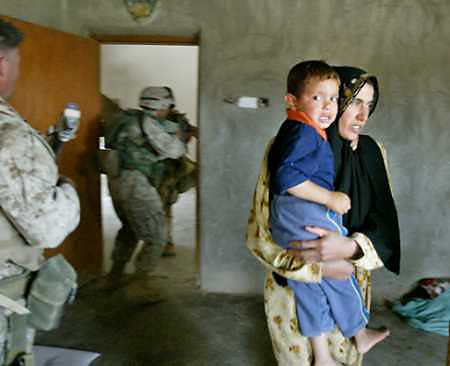
The recent rash of civilian killings by NATO forces in occupied Afghanistan raises several basic questions: Why do US-NATO air and ground forces kill so many civilians, so persistently, over such long stretches of time, in regions throughout the country? Why have the number of civilians killed increased in the course of the conflict? Why do NATO-US airplanes continue to bomb civilian housing and village gatherings and ground troops indiscriminately assault homes and workshops? Why are the pleas of NATO collaborator President Karzai to desist in home bombings going unheeded? Finally, knowing that the killing of civilians, entire families including children, mothers and the elderly alienates the local population and breeds widespread and profound hostility, why do the NATO-US military refuse to alter their tactics and strategy?
Explanations and Excuses for Civilian Killings
Apologists for the NATO killings of civilians are as abundant as their explanations are lacking in substance. Pentagon spokespeople speak of “accidents”, “errors of war”, “collateral damage”; media pundits blame the guerrilla fighters for engaging in warfare in areas populated by civilians; neo-conservative academics and their “think tank” colleagues blame Islamic fundamentalism for converting villagers to their cause and “forcing” NATO to kill civilians in order to create martyrs and to use their deaths as a recruiting device.
These patently superficial explanations raise more questions than answers, or in some cases, inadvertently refute the justification for the entire war. The “error of war” argument begs a more basic question: what kind of war is NATO-US engaged in that constantly finds the guerrillas ‘melting’ into the population, while the occupation breaks down doors and perceives each and every household as a possible sanctuary, or outpost of the resistance? What kind of military relies on high altitude fighter planes and pilotless planes directed from distant command posts to attack population centers, in which commerce, farming and household economies engage the population? Clearly only an army of occupation, an imperial army, is willing to repeatedly sacrifice a multitude of civilians to kill a single or a few suspected combatants. Only a military operating in a hostile civilian environment is going to assume that lodged behind every door of every home there is an “enemy”; that every family is sheltering a combatant; that it is better to “go in shooting” than to risk a bullet in the gut. ‘Accidents of war’ do not ‘just happen’ for an entire decade, covering an entire country. The killing of civilians is a result of a war of imperial conquest against an entire people who resist the occupation in whatever form is appropriate to their circumstance. The pilots and ground troops recognize that they are a hostile alien force, whose presence is commanded from above by Generals and politicians dealing with abstract schemes of ‘terrorists-linked to Al Qaeda’ that have no relation to the dense web of personal bonds of solidarity between resistance fighters and civilians on the ground in Afghanistan.
Working from these abstract categories, the strategists label extended family compounds as ‘hideouts’; family gatherings as ‘terrorist meetings’; trade caravans as ‘guerilla smugglers’. The conflicting interests of the imperial politicians, generals, strategists and military officers on the one hand and the civilian population and resistance form an immense gap. The greater the number of civilian/combatants killed the faster the career advances for imperial officers –eager for promotions and prized pensions. “Success”, according to the imperial world view is measured internationally by the number of client rulers; nationally by the number of flags pinned to the war maps denoting ‘secure cities’; and locally by the body counts of massacred families.
On the ground, among the millions in intimate family and clan circles, where sorrow and anger co-exist, resistance in all of its manifold forms unfolds: Sacred vows and the profane pledges to ‘fight on’ grow out of the millions of daily humiliations affecting young and old, wives and husbands, in homes, markets, roads and by-ways. The hostile stare of a mother sheltering an infant from soldiers breaking into a bedroom is as telling as the crackle of gunfire of a sniper hidden in a mountain crevice.
A People’s War: Not a War on Terror
The killing of civilians is not “accidental”. The fundamental reason that so many civilians are killed, everyday, in every region for over a decade, is because the civilians and the combatants are indistinguishable. The image of the Afghan combatants as some kind of footloose professional bomb throwing terrorist is completely off the mark. Most Afghan fighters have families, cultivate farmland and tend herds; they raise families and attend mosque; they are ‘part-time civilians’ and part-time fighters. Only in the schematic minds of the “great strategists of war” in the Pentagon and NATO headquarters do such distinctions exist. Their deadly military mission to ‘save the people from terrorist fundamentalists’, a self-serving self-deception, is, in fact, a ladder up the military-political hierarchy. Each step up depends on waging a ‘just war’ to a successful conclusion.
The civilian-combatants are a mass popular phenomenon. How else can we explain their capacity to sustain armed resistance for over a decade, indeed, advancing with the passing of time? How can we explain their military success against the armed forces and advisers from 40 countries, including the US, Europe and a clutch of Afro-Asian-Latin American mercenaries? How can we explain the growing resistance despite suffering from military occupation, backed by the most advanced technological instruments of war? How can we explain the ebb of popular support for the war in the ‘Conqueror’s country and the growing number of recruits for the Resistance? The combatants have the loyalty of the Afghan people; they do not have to spend billions to buy the spurious ‘loyalties’ of mercenaries who can and have at any moment ‘turned their guns the other way’.
Weddings are bombed because combatants attend weddings – along with hundreds of relatives and friends. Villages are bombed because peasants cultivate crops, which contribute to the resistance. Civilian shelters become military sanctuaries. Afghanistan is polarized: the US military versus a people in arms. Faced with this reality, the real policy of NATO-Pentagon is to rule or/and ruin. Each bomb killing dozens of civilians in search of one sharpshooter deepens the isolation and discredit of the puppet ruler. “President” Karzai has seen his mission of building a ‘civilian base’ to reconstruct the country utterly discredited. His impotent complaints to NATO to cease bombing civilian targets fall on deaf ears; because the NATO command knows very well that ‘the civilians’ are the ‘deep resistance’ – the vast reserve of support for the combatants; their eyes and ears far excel all the electronic intelligence devices of the Occupier. Just as Karzai cannot convince the civilians to turn against the combatants so he cannot convince the imperial armies to stop bombing civilian homes and gatherings.
Washington knows that with each withdrawal (or retreat), the terrain, the towns and villages are occupied by resistance fighters who emerge from everywhere. The best that the US-NATO politicians can negotiate is a safe orderly departure. The best that they can hope is that their local collaborators do not defect or flee abroad prematurely turning over billions of dollars in military ordinance to the resistance. The best the collaborators can hope is that they will secure an exit route, a visa, an overseas account and a comfortable second home abroad. What is absolutely clear is that the US, NATO and its collaborators will have no role to play in the newly independent Afghanistan.
~
James Petras, a former Professor of Sociology at Binghamton University, New York, owns a 50-year membership in the class struggle, is an adviser to the landless and jobless in Brazil and Argentina, and is co-author of Globalization Unmasked (Zed Books). Petras’ most recent book is The Arab Revolt and the Imperialist Counterattack. (Clear Day Books – A subsidiary of Clarity Books). He can be reached at: jpetras@binghamton.edu. Read other articles by James, or visit James’s website.
Former professors refute Israel’s indictment of kidnapped Gaza engineer
By Maureen Clare Murphy – 06/06/2011
Former professors of Dirar Abu Sisi, the engineer from Gaza who went missing during a train trip in Ukraine last February, refute allegations in Israel’s indictment that the man was taught weapons systems at university. The indictment also claims that one of Abu Sisi’s professors studied at a military engineering school in east Ukraine, though no such school exists, the Associated Press has found.
The Israeli daily Haaretz reported today:
Dirar Abu Sisi, 42, vanished from a train in Ukraine in February and resurfaced days later in an Israeli prison. Abu Sisi, who claims innocence, is to stand trial in coming weeks on hundreds of counts of attempted murder and conspiracy to commit murder.
Konstantin Petrovich Vlasov told The Associated Press that Abu Sisi was his doctoral student in civilian electricity systems at the Kharkiv National Academy of Municipal Services in the mid-1990s, but denies he was taught about weapons.
The indictment against him says Konstantin Petrovich, Abu Sisi’s professor at a civilian institute, also taught at an academy for military engineering in the eastern city of Kharkiv, although no such school exists.
The Israeli document claims the professor is an expert in Soviet-made Scud missile control systems. It alleges that Konstantin Petrovich arranged for Abu Sisi to attend classes at the military academy, where he gained knowledge that enabled him to modernize missiles launched by Palestinian militants into Israel.
Israel would not immediately comment on the incongruities concerning the professor’s name or the purported military academy.
Regarding Israel’s motivations for abducting Abu Sisi in Ukraine, The Electronic Intifada reported in March:
A few days after his disappearance, Abu Sisi’s wife, Veronika, a Ukrainian national, accused the Israeli spy agency Mossad of kidnapping him to extract information that could be used to disable Gaza’s power station in a future confrontation with the enclave’s Hamas rulers.
Israel bombed the plant during its three-week military assault, Operation Cast Lead, in winter 2008, causing blackouts across much of Gaza. Israel also targeted the power station in June 2006, cutting power to 700,000 Palestinians in Gaza for several months while it was fixed at a cost of more than $5 million.
Abu Sisi’s family suggested another reason why Israeli might consider him a high-value target. They say he had recently developed a method to reduce the plant’s dependency on high-grade diesel fuel, the flow of which Israel controls into Gaza.
In January Hamas officials announced that the station’s turbines had been modified to work on regular diesel, which is cheaper and can be smuggled in through tunnels from Egypt.
The Israeli media, on the other hand, have speculated that Abu Sisi must be a senior Hamas activist to have secured an important post at the plant. The family have denied the claim, saying he was not involved in any political faction and was appointed because of his skills as an engineer.
One of his Israeli lawyers, Smadar Ben Nathan, who met him for the first time at the court hearing on Sunday to lift the gag order, said she believed Israel had carried out the operation based on false information.
The Electronic Intifada correspondent Rami Almeghari interviewed Abu Sisi’s family in Gaza, meeting his children. Suzan Abu Sisi, the sister of Dirar, told The Electronic Intifada:
“I hold the Ukrainian authorities, topped by the president of Ukraine, responsible for the kidnapping of my brother by Israeli intelligence agents,” Suzan said. “How could such a kidnapping take place in a sovereign country?”
Featured Video

New positive ivermectin evidence
or go to
Aletho News Archives – Video-Images
From the Archives
Fanatical Followers of the Covid Regime: A Jim Jones-Style Cult?
By Professor Roger Watson and Dr. Niall McCrae | The Daily Sceptic | November 15, 2021
As scholars at leading British universities over recent decades, we witnessed the replacement of critical thinking and debate by narrative: facts are discrimination and scientific method is imperialism; truth, instead, is derived from ‘progressive’ values. This educational trend may be a major contributory factor to the ease in which society has been inculcated to the Covid ‘new normal’ of masking, testing, and repeated doses of vaccines for a disease of similar risk to severe influenza.
One doesn’t need much critical reasoning to observe the flawed logic of some vaccination enthusiasts, such as people who respond to experiencing any side effects, however debilitating, by saying “at least I know it’s working”, or, after contracting the disease despite their promised inoculation (over 90% effective, according to initial drug company claims), “I’d have been worse off without the jab.” … continue
Blog Roll
 Aletho News
- The Coming GOP Bloodbath?
- Arctic Scare Stories Melt Away
- Wrong, Euronews: Climate Change Has Not Created a Food, Energy, and Economic “Meta-Crisis”
- New positive ivermectin evidence
- Met Office Caught Fabricating Daily Temperature Record Claims
- Merck Virologists Admitted to Falsely Certifying Vaccine Efficacy
- Mandatory Folic Acid for every man, woman & child
- Pro-Palestine protesters arrested outside UK’s ruling Labour Conference in Liverpool
- Mauritius denies landing permit to flight from Israel, forcing cancellation: Tour operator
- Israeli finance minister calls for genocidal war on West Bank, annexation of south Lebanon
- If Americans Knew
- Israel kills more Palestinians, amid push to resettle Gaza – Daily Update
- Israel forces Gazans to live in constant peril – Daily Update
- Deconstructing Netanyahu’s pants-on-fire UN rant – Daily Update
- Trump betrayed voters with his campaign lies and prioritized a foreign country once he took office
- Netanyahu calls Israel’s war in Gaza ‘opposite of genocide’ in UN speech to near-empty hall
- Settler Kidnappings: Torture, Sexual Abuse and Terrorisation of Palestinian Abductees as Israel Deepens Annexation of West Bank
- Gaza winter nears as 162,000 tents become unusable, raising fears of humanitarian crisis
- Netanyahu says, “It’s the opposite of genocide”; UN says Gaza economy is world’s ‘most severe crisis on record’ – Daily Update
- Israel’s US-Backed Assault on Gaza Has Created the ‘World’s Most Severe Economic Crisis on Record’: UN
- ‘Protecting U.S. Citizens’… From Israel
- No Tricks Zone
- New Study: Earth And Venus Surface Warmth Largely Explained By Convection And Lapse Rate, Not CO2 Or Radiation
- 2025 Nature Paper Claiming Worsening Global Drought Gets RETRACTED …Heavily Flawed
- New Study: ‘Global Drought Shows No Detectable Recent Acceleration Under Climate Warming’
- Economic Masterminds: German Socialists Suggest Taxing Productivity Gains Stemming From Using AI
- The South China Sea Has Not Been Cooperating With The Climate Change Narrative
- Energy Crisis: Germany Enters Heating Season With Historically Low Gas Reserve Fill Levels
- New Study: The Antarctic Ice Sheet Gained Mass From 2020-2024 Due To Staggering Snow And Ice Accumulation
- Study: Ocean Heating Rates From Thousands Of Years Ago ‘Dwarf’ Modern Ocean Heating Rates
- Climate Extremists Target, Attack Large-Scale Power Grid Infrastructure In Germany!
- New Study: Antarctic Ice Melt Has Contributed Less Than 1 Centimeter To Sea Level Rise In The Last 30 Years

