UN: Israel Must Immediately Allow Entry of Fuel, Other Essential Items into Gaza
Palestine Chronicle | August 31, 2020
United Nations Humanitarian Coordinator Jamie McGoldrick today called on Israel to immediately allow entry of fuel and other essential goods into the besieged Gaza Strip to avoid a humanitarian catastrophe.
“The deterioration witnessed in recent weeks in the Gaza Strip is of grave concern,” he said in a statement, explaining that with an escalation of hostilities in the area, “Israel has limited the transfer of certain goods into the blockaded coastal enclave, reduced the permissible fishing area and prevented fuel deliveries, including the UN-facilitated fuel for Gaza’s sole Power Plant. As a result, the Gaza Power Plant ceased operations on 18 August, sharply reducing electricity provision to nearly 2 million Palestinians,” said the UN official.
“In addition, and marking a significant deterioration in the health situation, on 24 August, the first cases of COVID-19 outside the quarantine facilities were confirmed. Thus far, there are 280 known active cases, 243 of which are from community transmission.”
He added: “At present, people have access to rolling electricity supply for a maximum of four hours per day, a difficult situation at any point, but especially serious given efforts to contain the outbreak of COVID-19. The situation is hindering the provision of services in the quarantine facilities and the capacity of the health system to cope with the increased demands, such as the ability to detect new COVID-19 cases. Power outages in hospitals are having serious repercussions, with patients in intensive care, chronic and emergency cases particularly vulnerable.
“The reduction in electricity supply is also severely undermining other critical infrastructure, including the operations of all water wells, sewage pumping stations, wastewater treatment plants, and some desalination plants. The supply of clean water and wastewater treatment is impacted. There is now a high risk of sewage flooding populated areas, increased pollution into the Mediterranean Sea and along the coast, and further pollution to the aquifer.”
McGoldrick warned that following 13 years of the Israeli blockade and a dire humanitarian situation in Gaza, swift action is required to alleviate the humanitarian situation, prevent further deterioration and increase respect for international humanitarian law and international human rights law, calling on Israel “to immediately allow the resumption of fuel into the Gaza Strip, in line with its obligations as an occupying power, to ensure that the basic needs of people are met and to prevent a collapse of basic services.”
In August, Israel has cut fuel imports into Gaza since last week as part of punitive measures over the alleged launch of incendiary balloons from the strip.
Israel has also closed the Karam Abu Salem crossing with Gaza and completely closed the Strip’s fishing zone due to the alleged breach of the security truce.
Gaza, with a population of 2 million, has been under a hermetic Israeli siege since 2006, when the Palestinian group Hamas won the democratic legislative elections in occupied Palestine. Since then, Israel has carried out numerous bombing campaigns and several major wars, that resulted in the death of thousands of people.
UNRWA calls for unimpeded passage into Gaza for vital goods
MEMO | August 25, 2020
The UN Relief and Works Agency for Palestine Refugees in the Near East (UNRWA) called on Tuesday for all vital goods to be granted unimpeded passage into the besieged Gaza Strip, including fuel for electricity. UNRWA made the appeal against the background of 14 years of an illegal blockade and the socio-economic impact of the COVID-19 pandemic.
“The agency in Gaza is extremely concerned about the closure of the lone power plant since last Tuesday, 18 August,” UNRWA said. “The closure of the plant has caused the power feed to decline to two or three hours per day, followed by 20 hours of interruption.”
This, explained UNRWA, will have a negative impact on the wellbeing and safety of the people of Gaza and devastating effects on the Strip’s vital services, including hospitals. “Thus, this puts at risk the lives and health of nearly two million people, including 1.4 million registered Palestine refugees.”
The official statement from the UN agency pointed out that, “Under international humanitarian law, the passage of all relief consignments, in this case fuel for electricity, should not be prevented.”
Commenting on the situation in the Gaza Strip, the Director of UNRWA Affairs in the Palestinian territory, Matthias Schmale, said that the call is being made to all concerned parties to maintain a supply of electricity that is sufficient to meet the basic needs of the civilian population. “UNRWA is, furthermore, concerned about other measures perceived as punitive to the civilian population, such as closing down the fishing zone, as well as the escalating tensions and military activities.”
Gaza, Schmale pointed out, has now been hit by air raids for more than ten nights in a row. “All parties must show utmost restraint and protect the civilian population with full respect for their dignity and human rights.”
Gaza health official: Electricity cuts threaten lives of 120 newborn babies
MEMO | August 20, 2020
Consultant paediatrician and Chairman of the Gaza Neonatal Network (GNN) Dr Nabil Al-Baraqoun warned on Wednesday that the frequent electricity outages threaten the lives of 120 newborn babies currently being taken care of in intensive care incubators in Gazan hospitals.
Dr Al-Baraqoun explained that the 135 neonatal incubators are all powered by electricity, noting that the frequent power cuts and the use of alternative energy sources cause damage to medical devices such as incubators, resuscitation equipment and ventilators, which could cause complications for the infants, and even deaths.
He clarified that the alternation in using alternative energy sources like power generators and solar energy do not provide adequate energy to the incubators.
Colombia: Army Kills Two Indigenous People in Cauca Valley
teleSUR | August 14, 2020
Colombia’s Army Thursday killed two Indigenous people and injured two community members during an eviction operation in El Berraco village in the Cauca department.
The victims are the Indigenous journalists Abelardo Liz and Johel Rivera, who were part of the “Liberation of Mother Earth” movement.
The Foundation for the Freedom of the Press (FLIP) regretted the death of both journalists, who were shot while covering the Army’s eviction in Corinto.
The Indigenous City Halls of Cauca Association (ACIN) reported that former Governor Julio Tumbo was seriously wounded. His bullet injuries represent a danger to life.
“Officers of the Mobile Anti-Riot Squad (ESMAD) and the Army shot at El Berraco community with firearms. The victims were hit in the chest, shoulder, abdomen, and knees,” ACIN explained.
Following a court order, Army troops evicted the people who were in the Quebrada Seca ranch.
“During the operation, members of the Public Force were injured, and the El Berraco’s Indigenous people also tried to kidnap them,” Colombia’s Army stated.
According to Cauca’s indigenous organizations, the officers prevented vehicles and health personnel from entering the ranch to assist and transfer the injured to hospitals.
“The ESMAD attacked the vehicles that were trying to help the wounded. They fired gases at the windows,” ACIN said.
The University of Cauca’s Human Rights Commission and the National Union of Students denounced the events.
“The indigenous communities cannot continue to be victims of Colombia’s systematic violence,” the organizations stated.
US cannot disarm Lebanon’s Hezbollah through sanctions: Russian ambassador to Beirut
Press TV – August 1, 2020
The Russian ambassador to Beirut says US officials are under the illusion that they can disarm the Lebanese Hezbollah resistance movement through sanctions.
“Disarming Hezbollah is the primary purpose of US sanctions… I do not think that such a goal would be achieved through this method. The United States will not manage to force Hezbollah into laying down its weapons. This is an illusion,” Zasypkin said in an exclusive interview with Beirut-based Arabic-language al-Mayadeen television news network on Friday.
In late October 2018, US President Donald Trump’s administration imposed a new round of sanctions on Hezbollah, targeting individuals and international organizations that do business with the group.
“Over the past year, we have levied the highest sanctions ever imposed on Hezbollah, in a single year, by far. Just a few moments ago, I signed legislation imposing even more hard-hitting sanctions on Hezbollah to further starve them of their funds. And they are starving for them,” Trump said during an event in Washington, DC, that marked the 35th anniversary of an attack on US marine barracks in the Lebanese capital of Beirut.
Zasypkin added, “We (Russia) have made efforts in Syria. This is not only beneficial to Syria, but also to Lebanon as it protects the country against the potential threat of terrorism. If terrorism prevails in Syria, it will be easy for thousands of terrorists to cross into Lebanon, and this would lead to the partitioning of the country.”
He noted that Iran plays a positive role in the Middle East region, condemning the recent harassment of an Iranian passenger plane flying from Tehran to Beirut by two US fighter jets over Syria.
“Americans are creating problems and violating international law. The goal is to create tensions and reestablish their presence, role and influence,” the Russian diplomat said.
He went on to say that the balance of power in Syria is changing. “Over the past four years, the balance of power had been in the interest of terrorists. The ensuing terrorism allowed outsiders, including the US-led coalition, to come into play.”
“I think Americans have numerous problems there (in Syria), but al-Tanf region is still under their control. They are clinging to the area in order to have influence. Their main goal is to sever ties between Iran and Syria,” Zasypkin pointed out.
He noted that Moscow honors the principle of non-interference in Syria’s domestic affairs, lauding “close relations” between Russian President Vladimir Putin and his Syrian counterpart Bashar al-Assad as well as military forces of the two countries.
Zasypkin said Russian and Syrian institutions are closely cooperating with each other in various fields, including combat against terrorism, maintenance, reconstruction and humanitarian activities.
Elsewhere in his remarks, the Russian ambassador pointed to the recent rafts of economic sanctions against Syria under the so-called Caesar Act.
“The United States has used the leverage of sanctions for decades against Russia, Venezuela, Cuba and Iran. The essence of the idea has been to starve people in those countries in a way that they would ultimately turn against their own ruling systems. The scheme is now being applied to all countries,” Zasypkin highlighted.
He added, “Caesar Act is broad and comprehensive, and affects other parties since Syria has been under sanctions for a long time. Foreign companies are now targeted by the ruling. It is a preemptive battle against the possibility of restoration of ties between Syria and Western or Arab parties.”
Palestinian minor kidnapped by undercover Israel soldiers
MEMO | July 24, 2020
A 12-year-old Palestinian child was kidnapped by an undercover Israeli soldier yesterday from the occupied Jerusalem town of Issawiya, reported Wafa news agency.
According to local witnesses, undercover Israeli forces were in a civilian car which they abducted Moath Ewewi in and drove him away to an unknown destination.
The town has been subject to ongoing violations, including the abduction of many Palestinians, the daily invasions and violent searches of homes, in addition to excessively high fines and fees imposed on the residents.
This systematic and widespread campaign of regular raids and kidnappings to instill fear among the Palestinians, and to keep them suppressed, is a serious violation of international and humanitarian laws, according to human rights groups.
Meanwhile, Israeli forces rounded up three Palestinians after breaking into their houses today in the occupied West Bank city of Tubas, claiming to search for “wanted” Palestinians, triggering clashes with residents.
Despite the coronavirus crisis, Palestinians in Jerusalem have witnessed noticeable escalation in Israeli attacks, home raids and arrest campaigns lately, which is seen as an attempt to put more pressure on Palestinian natives of Jerusalem to force them to leave the city and clear the way for new Jewish-only settlement projects.
Israel’s collective punishment of Palestinians illegal and an affront to justice: UN expert
Office of the High Commissioner for Human Rights (OHCHR)
GENEVA (17 July 2020) – A UN human rights expert has called on Israel to immediately stop all actions amounting to collective punishment of the Palestinian people, with millions of innocent harmed daily and nothing achieved but deeper tensions and an atmosphere conducive to further violence.
“It is an affront to justice and the rule of law to see that such methods continue to be used in the 21st century and that Palestinians collectively continue to be punished for the actions of a few,” said Michael Lynk, the Special Rapporteur on the situation of human rights in the Palestinian Territory occupied since 1967. “These practices entail serious violations against Palestinians including the right to life, freedom of movement, health, adequate shelter and adequate standard of living.”
In his report to the 44th session of the Human Rights Council, Lynk said Israel’s strategy to control the Palestinian population violates a foundational rule of virtually every modern legal system: Only the guilty can be punished for their acts, and only after a fair process. The innocent can never be made to be punished for the deeds of others.
“The extent of the devastating impact of Israel’s collective punishment policy can be most strikingly seen in its ongoing 13-year-old closure of Gaza, which now suffers from a completely collapsed economy, devastated infrastructure and a barely functioning social service system,” the Special Rapporteur said.
“While Israel’s justification for imposing the closure on Gaza was to contain Hamas and ensure Israel’s security, the actual impact of the closure has been the destruction of Gaza’s economy, causing immeasurable suffering to its two million inhabitants,” the Rapporteur said. “Collective punishment has been clearly forbidden under international humanitarian law through Article 33 of the Fourth Geneva Convention. No exceptions are permitted.”
The Special Rapporteur’s new report also criticised Israel’s continued policy to punitively demolish Palestinian homes. “Since 1967, Israel has destroyed more than 2,000 Palestinian homes, designed to punish Palestinian families for acts some of their members may have committed, but they themselves did not,” he said. “This practice is in clear violation of Article 53 of the Fourth Geneva Convention.”
Lynk said it was disheartening that the demolition of Palestinian homes is still viewed by the Israeli political and legal leadership, including the Israeli High Court, as a permissible deterrent. “In fact, these demolitions only further contribute to an atmosphere of hate and vengeance, as the Israeli security leadership has itself acknowledged.”
The Evil, Immoral, Vicious, and Hypocritical Embargo Against Cuba
By Jacob G. Hornberger | FFF | July 20, 2020
The banality of evil that characterizes the U.S. national security state is demonstrated perfectly by the continuation of its deadly economic embargo against Cuba, which has been ongoing for some 60 years.
What’s the point of the embargo? After all, the Pentagon’s, CIA’s, and NSA’s official enemy Fidel Castro died years ago. Why continue to intentionally inflict harm on the Cuban people?
And make no mistake about it: Inflicting harm on the Cuban people is the purpose of the embargo. Its aim is to impoverish or starve Cubans into ousting their post-Castro regime and installing another pro-U.S. right-wing brutal dictatorship similar to the one that Castro ousted from power in the Cuban revolution.
In fact, the first embargo that the U.S. implemented against Cuba was during the reign of the crooked, corrupt, and brutal pro-U.S. right-wing dictatorship of Fulgencio Batista. That was an arms embargo. U.S. officials didn’t want weaponry imported into Cuba because that might enable the Cuban people to oppose Batista in a violent revolution.
During his reign, Batista partnered with the Mafia, the premier criminal organization that was smuggling drugs into the United States. As part of their partnership agreement, Batista let the Mafia operate gambling casinos in Cuba. As part of that cozy relationship, Batista would have his henchmen kidnap under-aged girls in Cuba and turn them over to the Mafia, which would then provide them as perks to the high-rollers in its casinos. That’s one of the things that brought on the Cuban Revolution.
That’s the guy that the U.S. national-security state was hell-bent on keeping in power. Thus, it should surprise no one that the CIA, like Batista, later entered into partnership with the Mafia, knowing full well that the Mafia was engaged in massive criminal activity. The purpose of the CIA-Mafia partnership was assassination. They were working together to assassinate Castro.
It stands to reason that the Mafia would try to assassinate Castro. It has lost all its casinos to Castro’s nationalization. And it was in the business of killing people.
But the U.S. government? In the business of murder? And in partnership with the biggest criminal organization in the world?
Don’t forget something important here: Castro, Cuba, and the Cuban people have never attacked the United States or even threatened to do so. No invasion. No terrorist attacks. No assassinations.
In fact, it has always been the other way around. In the more than six decades of bad relations between Cuba and the U.S., it has always been the U.S. government that has been the aggressor. An invasion, terrorist attacks, assassination attempts, and the embargo, all on the part of the U.S. government.
U.S. national-security state officials always justified such actions under the notion that Cuba was the spearhead of a worldwide communist conspiracy to take over the United States, one that was supposedly based in Moscow. It was always a ridiculous notion but that was the mindset of CIA, NSA, and Pentagon officials during the Cold War — that Cuba’s communist regime posed a grave threat to U.S. “national security.”
But the Cold War ended more than 30 years ago. Do the CIA, NSA, and Pentagon still think that the United States is in danger of falling to the Cuban communists?
Of course not. Now, it’s just sheer viciousness. Now, it’s just a matter of doing everything possible to oust the current regime in Cuba from power and restoring a Batista-like dictatorship, one that will be loyal and deferential to the Pentagon, the CIA, and the NSA.
The viciousness is demonstrated by the fact that the embargo doesn’t just criminalize Americans who do business with Cuba. It also targets foreign companies who do so. If they are caught doing so, they are targeted for prosecution or economic banishment here in the United States. In the minds of U.S. officials, it’s more imperative than ever to squeeze as many Cubans as possible into death and suffering.
Needless to say, the embargo has made things significantly worse for the Cuban people during the COVID-19 crisis. That’s fine with U.S. officials. The more Cubans who die, the greater the chance of an internal regime-change operation.
Sure, there is no doubt that Cuba’s socialist economic system is a major factor in the economic suffering of the Cuban people. But there is also no doubt that the U.S. embargo has served as the other side of a vise that has squeezed the economic lifeblood out of the Cuban people.
A dark irony, of course, is that the embargo has enabled the U.S. government to wield and exercise the same type of economic control over the American people that the Cuban socialist regime exercises over the Cuban people. It’s called adopting socialism to oppose socialism.
When will the evil, immoral, vicious, and hypocritical U.S. embargo against Cuba be lifted? When a critical mass of the American people, including those who go to church every Sunday, have a crisis of conscience and demand that it be lifted.
Is Israel Uniquely Evil?
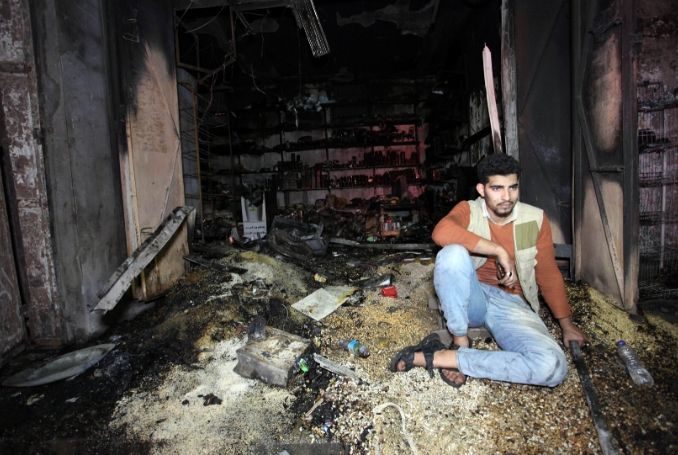
Many Palestinians in the camp lost their small businesses amid a dire economic crisis. Photo: Fawzi Mahmoud
By Irfan Chowdhury | Palestine Chronicle | July 18, 2020
Recently, political journalist Sunny Hundal tweeted in relation to the left’s alleged obsession with Israel:
“In isolation, Israel does a lot of bad things re: human rights.
Is it uniquely bad? Is it worse than others?
Not even close. So if you’re obsessed by actions of Jews, don’t be surprised if people suspect your motives.”
Similar sentiments have been expressed by LBC radio host Maajid Nawaz, who has declared that Israel is “the constant what-about excuse used by everyone who doesn’t want to address some real grave, serious issues in the Middle East but constantly wants to point fingers instead at the Middle East’s only secular, democratic and yes, very imperfect, country”.
Likewise, former Labour MP Ian Austin recently wrote an article for Express & Star in which he asserts that “many people on the left have become obsessed with Israel. This tiny country – the world’s only Jewish state and the Middle East’s only democracy – seems to attract more criticism than all the world’s other controversies combined… Of course, Israel’s not perfect. What country is? But where else in the Middle East would you find free and fair elections, a free and vibrant media; a robust and independent judiciary and strong trade unions?”
As a factual matter, it is untrue that the left is single-mindedly focused on Israel; when I was on the committee of my university’s Socialist Students Society a few years ago, we had meetings on the Israel-Palestine conflict, the economic crisis in Venezuela, protests in Iran, Saudi Arabia’s war on Yemen, Bolsonaro’s election in Brazil, gun violence in the US and the prospect of reforming the EU, among other international issues.
Former Labour leader Jeremy Corbyn, who is one of the most important left-wing figures in British political history, has been a life-long champion of the rights of not only Palestinians, but also Kurds, Western Saharans, West Papuans, hagossians, and numerous other oppressed peoples. Nevertheless, even if it were true that the left does focus on Israel more than other countries, this would not be unjustified because, contrary to the claims of the aforementioned commentators, there are certain respects in which Israel’s human rights violations are uniquely severe in the international arena.
For example, Israel’s military occupation of the West Bank and Gaza is the longest-running military occupation in modern history. It has been ongoing now for 53 years and has been characterized by systematic and egregious human rights violations such as home demolitions, torture, night raids, abduction and imprisonment of children, harassment at checkpoints, the killing of civilians, destruction of agriculture, and daily humiliation at the hands of soldiers and settlers (all of this is documented in great detail by the Israeli human rights organization B’Tselem).
All military occupations are brutal and vicious; to have to endure one that is also predicated on deliberate displacement and dispossession for 53 years is simply unimaginable for most people. In the case of Gaza, the occupation has been compounded by an illegal siege that has been ongoing now for 13 years; in 2015, then UNRWA Commissioner-General Pierre Krahenbuhl described Israel’s siege of Gaza as the “longest in history” and “a very extreme form [of] illegal collective punishment.”
The siege prevents anyone from leaving Gaza, apart from in exceptional cases; for example, sick children are sometimes allowed to receive medical treatment in the West Bank, but their parents aren’t allowed to accompany them – even when it means that the children are forced to die alone (as in the case of 5-year-old Aisha alLoulou). Anyone who tries to fish beyond the contaminated coastal waters of Gaza gets either shot at or kidnapped by the Israeli navy, and anyone who crosses the barbed-wire fence into Israel runs the risk of being murdered by the IDF (as in the case of 17-year-old Emad Khalil Ibrahim Shahin, who crossed over in 2018 and was returned to his family one year later in a body bag).
As a result of the siege, 97% of the water in Gaza is now unfit for human consumption; according to Sara Roy, Senior Research Fellow at Harvard University’s Centre for Middle East Studies, this means that “Innocent human beings, most of them young, are slowly being poisoned by the water they drink and likely by the soil in which they plant”.
Thus, Israel has been carrying out the longest-running military occupation in modern history and the longest-running siege in modern history. These two facts alone render Israel unique in terms of the scope of its brutality and criminality.
There are other respects in which Israel stands out from other countries in its use of terror and violence; for example, it is one of the most aggressive countries in the world, having waged wars of aggression against Lebanon in 1978, 1982, 1993, 1996 and 2006, and against Gaza in 2004, 2006, 2008/9, 2012 and 2014, killing huge numbers of civilians in the process (all while issuing threats and carrying out various covert attacks against Iran, which are all in violation of the UN Charter).
Furthermore, according to Amnesty International, Israel is “the only country in the world that automatically prosecutes children in military courts that lack fundamental fair rights and guarantees” (the military courts have a 99% conviction rate).
Children are routinely abused during interrogations (the UN Committee on the Rights of the Child has reported that “Palestinian children arrested by [Israeli] military and police are systematically subject to degrading treatment, and often to acts of torture”), and in the overwhelming majority of cases, their parents are excluded from the entire ‘judicial’ process. It is worth noting that all of these human rights violations are directly enabled and facilitated by both the US and the UK.
These are all examples of how, in many ways, Israel is uniquely evil. The easiest way for Israel to stop being singled out for criticism – whether real or imagined – would be for it to stop singling itself out with its appalling human rights record.
– Irfan Chowdhury is a freelance writer who has previously been published in openDemocracy, The Iranian, Mondoweiss, Peace News and Hastings In Focus. He also runs a blog, where he mostly writes about British foreign policy, the Israel-Palestine conflict and civil liberties: https://irfanchowdhury98.com/
Inconclusive investigations and psychological trauma cultivate Israel’s impunity
![Palestinian protesters hold banners to show solidarity with the martyr Iyad Hallaq a disabled Palestinian man who was shot dead by Israeli police in the West Bank city of Bethlehem on 2 June 2020 [Abedalrahman Hassan/ApaImages]](https://i2.wp.com/www.middleeastmonitor.com/wp-content/uploads/2020/07/Eyad-Hallaq.jpg?resize=1200%2C800&quality=85&strip=all&zoom=1&ssl=1)
Protesters hold banners in solidarity with the martyr Iyad Hallaq an autistic Palestinian man shot dead by Israeli police in the West Bank city of Bethlehem on 2 June 2020 [Abedalrahman Hassan/ApaImages]
By Ramona Wadi | MEMO | July 16, 2020
In May, Israeli security forces killed Eyad Al-Hallaq, a 32-year-old Palestinian man with special needs, on suspicion that he had a weapon. He was on his way to the special school in Jerusalem which he attended, when he was chased by Israeli security forces, cornered and shot, despite being accompanied by his teacher who repeatedly called out to the aggressors that he was autistic. No weapon was discovered on Hallaq after this unwarranted extrajudicial killing.
Less than two months after Israeli Defence Minister Benny Gantz issued a perfunctory, patronising apology in which he stated, “I am sure this subject will be investigated swiftly and conclusions will be reached,” recent reports attest to how rapidly Israel invokes its own impunity to cover up its crimes.
Eyad Al-Hallaq was killed in a heavily securitised area in Jerusalem’s Old City; security cameras monitoring the indigenous population are everywhere. However, Israel’s Justice Ministry has confirmed that there is no CCTV footage of the killing. It went on to assert that, despite the presence of cameras where the shooting took place, the cameras “were not connected at the relevant time and didn’t document” the incident.
This lacks even a shard of credibility, yet it is not unusual in Israel, which goes to great lengths to safeguard its own institutions and uniformed criminals from scrutiny and prosecution. The Hallaq family is now left with no recourse for justice, because Israel has created its own travesty of justice that is concerned solely with manufacturing impunity for those responsible for the 32-year-old’s death. The investigation is close to reaching a conclusion, according to a Haaretz report, and there is no doubt that the bereaved family will be left to face a multitude of questions on its own, with the additional psychological trauma of knowing that the exact circumstances of their son’s murder are unresolved and the perpetrators still roam free. In Israel’s typical style, it will be an inconclusive end to a concluded investigation. The family’s lawyer, meanwhile, is requesting an in-depth investigation because there is a “very strong suspicion” that the police are concealing evidence in this case.
This is not the first time that Israel has refused to release evidence that would provide both context and corroboration. A case that springs to mind is that of Ibrahim Abu Thurayyah, a double amputee killed by a shot to the head in December 2017 during the Great Return March protests in the Gaza Strip. Israeli investigations concluded there was no evidence that one of its snipers had directly targeted Thurayyah while he was in his wheelchair.
Concealing evidence is a clear indication of culpability. For Israel, however, the practice is dissociative and is reflective of how colonial violence against Palestinians sustains itself. There is no need to deny culpability if action is taken to prevent any discussion of the crime. Indeed, in this case it is easier for Israeli government officials to exploit the victim and the grieving family, since the evidence of the events leading up to Eyad Al-Hallaq’s killing has been eliminated.
For the Hallaq family, as it was for other families whose relatives have been murdered by Israeli occupation forces, the killing and subsequent cover-up is a personal rupture. Politically, Israel is replicating the impunity generated since the Nakba on a different scale, relying upon separate episodes of inflicted trauma to prevent a collective Palestinian narrative from emerging as a unified front against its colonial violence.
Israel detains two Hamas officials in the occupied West Bank
![The national and Islamic forces and factions in Gaza, including Hamas and Fatah, reach an agreement on a unified national plan of action to confront the US' 'deal of the century' and Israel's annexation plans on June 28, 2020 [Mohammad Asad / Middle East Monitor]](https://i0.wp.com/www.middleeastmonitor.com/wp-content/uploads/2020/06/6Z8A2999-scaled-e1593443758857.jpg?resize=1200%2C800&quality=85&strip=all&zoom=1&ssl=1)
Factions, including Hamas and Fatah, reach agreement on a unified national plan of action to confront the ‘deal of the century’ and Israel’s annexation plans on June 28, 2020 [Mohammad Asad / MEMO]
MEMO | July 10, 2020
The Israeli occupation forces detained two officials of the Islamic Resistance Movement, Hamas, on Thursday during raids in the occupied West Bank. According to Anadolu, eyewitnesses said that soldiers raided properties in Ramallah and Al-Bireh.
Clashes erupted between dozens of Palestinian youths and the troops who arrested Jamal Al-Tawil from Al-Bireh, and Hussein Abu Kweik from Beitunia in Ramallah. The soldiers are said to have used live ammunition and rubber bullets, as well as sound bombs and tear gas against the demonstrators.
Hamas condemned the arrests. “This was a miserable and failed attempt to stop our resistance to all Israeli projects intended to liquidate Palestinian cause, especially the colonial annexation plan,” said spokesman Hazem Kassem. “The arrest of these officials is an effort to block the path of joint national action to challenge the occupation’s plans.”
Kassem added that, despite the arrests, “Hamas will continue our struggle against the [Israeli] occupation and its projects, and we will continue to develop the path of unity with all sections of our people to reach a strategy of joint struggle to confront the annexation plan.”
Arrest and detention campaigns are common in the occupied West Bank. Israel claims that those detained are “wanted” by its security services.
READ: Israel fears meetings between senior Fatah and Hamas representatives
Featured Video

Chinese jet fuel and the myth of energy independence
or go to
Aletho News Archives – Video-Images
Book Review
Former Insiders Criticize Iran Policy as U.S. Hegemony
By GARETH PORTER | CounterPunch | February 27, 2013
“Going to Tehran” arguably represents the most important work on the subject of U.S.-Iran relations to be published thus far.
Flynt Leverett and Hillary Mann Leverett tackle not only U.S. policy toward Iran but the broader context of Middle East policy with a systematic analytical perspective informed by personal experience, as well as very extensive documentation.
More importantly, however, their exposé required a degree of courage that may be unparalleled in the writing of former U.S. national security officials about issues on which they worked. They have chosen not just to criticise U.S. policy toward Iran but to analyse that policy as a problem of U.S. hegemony. … continue
Blog Roll
 Aletho News
- What is fueling unrest across the EU?
- Why no power can undermine Iran’s eternal dominance over the Strait of Hormuz
- Is The War Against Iran Over?
- Iran war will leave long-term ‘scar’ on Wall Street, investors warn
- How Iran decimated US power projection in West Asia: Military lessons of 40-day war
- Iran’s report details US-Israeli war crimes in targeting schools, hospitals, livelihoods
- NATO’s Slow Fracture: How Trump’s Iran War Exposed the Instrument of Hegemony
- Chinese jet fuel and the myth of energy independence
- Ukraine Sea Drone Fired From Libya Hit Russian Tanker in Mediterranean
- IRGC: Iranian forces launched no attacks during ceasefire hours
- If Americans Knew
- Military aid to Israel emerges as the latest political litmus test for Democrats
- The only Palestinian children’s rights organization closes following years-long Israeli campaign against it
- ‘I Can’t Forget the Smell’: Lebanese Reel After Israel Kills Over 300 in Single Day
- DNC Shoots Down Resolutions Calling Out AIPAC and Limiting Arms to Israel
- TCN: Is Israel Blackmailing President Trump?
- Israel killed at least 303 Lebanese yesterday – who were they? Daily Update
- Amnesty: Urgent – Protect Lebanese civilians from brutal escalation in Israeli attacks
- Is The War Against Iran Over?
- Inside the Israeli army’s propaganda wing
- Hundreds of Gaza Amputees Stranded in Legal Limbo
- No Tricks Zone
- An Inconvenient Tree: Uncovered In Alps… Europe Much Warmer Than Today 6000 Years Ago
- New Study Reports A 60% Slowdown In Greenland’s Ice Loss Rate In The Last Decade
- Low Intensity Tornado Wrecks Major Solar Farm, Creating A Potential Toxic Dump
- New Study Finds Warming Saves Lives…Cold Temperatures 12 Times More Deadly Than Excess Heat
- German Science Blog Accuses PIK Climate Institute Of Hallucinating Climate Tipping Points
- Devastating Assessment Of Comirnaty Vaccine By Former Senior Pfizer Europe Toxicologist
- New Study: CO2 Is ‘Effectively Negligible’ As An Explanatory Climate Change Factor Since 2000
- Former Pfizer Toxicologist Dr. Helmut Sterz Tells Bundestag Hearing Pfizer Vaccine Should Have Never Been Approved
- Energy Expert: Germany’s Nuclear Phaseout Was A “500 Billion Euro Mistake”
- New Research: South Australia’s Mid-Holocene Sea Surface Temperatures Were 4°C Warmer Than Today
 Aletho News