Palestinian student Mays Abu Ghosh speaks out on Israeli abuse and torture under interrogation

Mays Abu Ghosh. Source: Quds News
Samidoun Palestinian Prisoner Solidarity Network | January 2, 2020
Palestinian journalism student Mays Abu Ghosh spoke with lawyers from the Palestinian Prisoners’ Affairs Commission, discussing her torture and mistreatment under interrogation for over 30 days. A student at Bir Zeit University from Qalandiya refugee camp, Mays Abu Ghosh, 22, is a writer and student activist who has worked to publicize the struggles of Palestinian political prisoners and Palestinian refugees.

Mays Abu Ghosh seized by Israeli occupation forces
In her statement to the lawyers, Abu Ghosh recalled that she was seized by Israeli occupation forces in a violent raid on 29 August 2019, when the armed soldiers removed the door of her family home and invaded it, ransacking her and her family’s belongings, blindfolding and cuffing her and then taking her to an occupation military camp near Qalandiya checkpoint. While she was held there, the soldiers dragged her violently as she was handcuffed and blindfolded while cursing at her and screaming in her face.
Later, Mays was transferred to the Moskobiyeh interrogation center. She was strip-searched and then transferred to the interrogation cells. She recalled that her interrogations lasted for many hours at a time while she was shackled to a small chair inside a very cold cell. After six days, the “military interrogation” began with her, which included the use of stress positions like the “banana” and “squatting” or the “false chair” for long periods of time, in an attempt to coerce a false confession from her.

Illustration of the “banana” position. Source: Addameer Prisoner Support and Human Rights Association
She was slapped, beaten and deprived of sleep. This “military interrogation” continued for three days, during which all of these torture tactics continued. Abu Ghosh said that at one time, she tried to escape from the interrogators and sit in one of the corners of the cell, but the interrogator began slamming her head against the wall, kicking her while yelling obscenities. Next, interrogators deliberately brought her brother and her parents in an attempt to coerce her into confessing by threatening to detain them. Her 17-year-old brother was later ordered to administrative detention, without charge or trial, despite being a minor.
Mays said that the interrogation cells have extremely harsh conditions, lacking the basic elements for human life. The walls are concrete and rough, the mattress is thin, without a cover or a pillow, and the lights

Images of Shatha Hassan and Mays Abu Ghosh at the march in Ramallah in support of Ahmad Zahran, on hunger strike for 99 days. Photo: Quds News
She said that at one time, a large rat entered her cell, which she believes was intentionally entered by the interrogators in order to further torment her. They repeatedly delayed in responding to the simplest requests, for example to access the bathroom, and was repeatedly provoked and ridiculed. After 30 days of this treatment under interrogation, she was transferred to the Damon prison, where she remains today, with her fellow Palestinian women prisoners. She is charged in the Israeli military courts – which convict over 99% of Palestinian detainees – with involvement in student activities on the Bir Zeit University campus. Her brother’s administrative detention has been renewed again and he continues to be jailed without charge or trial.
Mays’ family earlier spoke about their experience in being brought to see her under interrogation, noting that the signs of torture were visible on her face and body. “Her face was full of bruises and her body is very pale. I could not hug her due to the pain hurting all of her body,” said her mother. Addameer Prisoner Support and Human Rights Association convened a press conference on 23 December highlighting the torture and abuse of Palestinian prisoners, including Abu Ghosh.

Palestinian imprisoned student Mays Abu Ghosh supports freedom for Georges Ibrahim Abdallah
Mays Abu Ghosh and Samah Jaradat are two of many Palestinian students who are being targeted by the Israeli occupation for arrest and imprisonment for their involvement in student activities on campus. Shatha Hassan, chair of the Bir Zeit University student council board, has been ordered to four months of administrative detention, imprisonment without charge or trial. There are hundreds of Palestinian university students held in Israeli jails, including approximately 80 from Bir Zeit alone.
Samidoun Palestinian Prisoner Solidarity Network urges the broadest possible action and mobilization to support Mays Abu Ghosh and Palestinian students jailed by the Israeli occupation forces. We urge students around the world to hold events, vigils and informational actions to highlight the struggle of Palestinian students under occupation and all people of conscience to develop the campaign for boycott, divestment and sanctions (BDS) against Israel. Freedom for Mays Abu Ghosh and all Palestinian students!
Arabic source for this article: http://hadfnews.ps/post/63496/
Israel detained 5,500 Palestinians in 2019
![Israeli police officers arrest a Palestinian youth Issawiya, Jerusalem, 4 January 2017 [Mahfouz Abu Turk/Apaimages]](https://i0.wp.com/www.middleeastmonitor.com/wp-content/uploads/2019/11/Issawiya-MU_JE_00-14-1.jpg?resize=1200%2C800&quality=85&strip=all&ssl=1)
Israeli police officers arrest a Palestinian youth in Issawiya, Jerusalem, 4 January 2017 [Mahfouz Abu Turk/Apaimages]
MEMO | December 31, 2019
Israeli occupation forces detained over 5,500 Palestinians from the occupied Palestinian territories in 2019, including 889 children and 128 girls and women, Quds Press reported rights groups saying yesterday.
According to the Palestinian Prisoners’ Commission, Palestinian Prisoners’ Club and Addameer for Human Rights, there are approximately 5,000 Palestinian prisoners being held in Israeli jails, including 40 girls and women, 200 children. Some 450 are under administrative detention.
The groups said that five Palestinian prisoners passed away while in detention this year, citing medical negligence and torture. They were named as: Faris Baroud, Awni Youses, Nassar Taqatqa, Bassam Al-Sayeh and Sami Abu-Dayyak. Israeli authorities withheld the bodies of four Palestinian prisoners.
During 2019, Israeli occupation forces issued 1,035 administrative detention orders, including four against women and four against children.
The rights groups said there are currently 700 prisoners who are in need of medical attention inside Israeli jails, including ten who suffer from cancer and more than 200 who have chronic diseases.
More than 50 prisoners went on hunger strike in protest against the policies of the Israeli prison services, as well as against the policy of administrative detention.
“Israeli occupation authorities violate all the rules of international and humanitarian laws, and reinforce their flagrant violations through the judicial system,” the rights groups said.
They called for local, regional and international bodies to put pressure on the Israeli occupation in order to stop its violations of Palestinian prisoners.
Palestinian minor prisoners in Israel jails tortured, humiliated, NGO reveals

MEMO | December 30, 2019
The Palestinian Prisoners’ Commission (PPC) has documented witnesses of Palestinian minor prisoners inside Israeli jails stating that they had been tortured and humiliated when they were arrested and during their investigations, Safa Press Agency reported.
Minor prisoner, Abdul-Min’em Al-Natsha, 17, revealed that Israeli undercover forces kidnapped him from the streets of Shu’fat Refugee Camp along with Usama Taha, 16.
Both boys disclosed that they were taken to an investigation centre and spent four hours being investigated. They were handcuffed, insulted and beaten.
Al-Natsha noted that members of the Israeli army unit, Nahkshon, beat him more than one time on his way to attend the court sessions.
“They beat me just because I spoke with my mother during one of the court sessions,” Al-Natsha added.
Meanwhile, Taha explained that the officers of the Nahkshon unit unleashed the police dog at him on his way to the court.
Another boy, Motasem Sheikha, 17, described his kidnapping by Israeli undercover forces while walking in the streets of Shu’fat Refugee Camp.
He added that he spent 30 days being investigated in Al-Moskobiyeh Detention Centre, where he was tortured after he was incarcerated in a room with no monitoring cameras.
Abdul-Rahman Abu-Laila, 17, was also kidnapped by Israeli undercover forces from his workplace in the city of Akka, Israel.
According to the PPC, Abu-Laila was locked up in Petah-Tikva Detention Centre for ten days. He spent each day handcuffed in an isolated cell.
Raed Rashid, a 16-year-old Palestinian boy from the West Bank of Jenin, told that the Israeli occupation forces broke down the main door of his house at night, broke into his room and arrested him while he was sleeping.
“When they saw my mother screaming as they were aiming their guns at me, they beat me harshly in front of her,” he told the PPC.
Rashid revealed that he was imprisoned in Al-Jalama Detention Centre, while blindfolded and handcuffed, for around 10 hours.
The boys Sheikha, Al-Natsha and Taha are being detained in Al-Damoun Prison and the others, Rashid and Abu-Laila, are being held in Meggido Prison.
Bahrain’s Top Opposition Leader: Six Years of Persecution for Adopting Democracy and Reconciliation
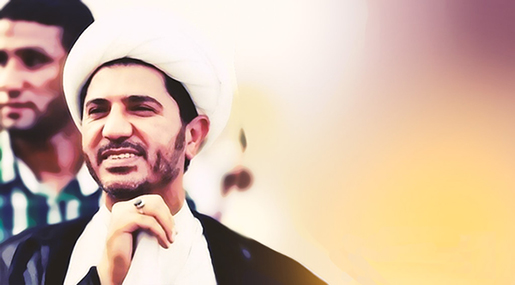
By Sondoss Al Asaad | American Herald tribune | December 28, 2019
Although freedom of expression is a ratified constitutional right; yet it constitutes a heinous crime and poses an existential threat to the Manama regime. For instance, Sheikh Ali Salman, Secretary-General of the now-outlawed Al-Wefaq National Islamic Society, Bahrain’s top opposition political group, who has been held in custody since 2015, enters on Dec 28th his sixth year of arbitrary detention.
Indeed, the persecution of this peaceful leader is related to his commitment to peaceful protest and anti-corruption, marginalization and monopolization of power policies.
Al-Wefaq top leader had been initially serving a 4 years sentence on charges of ”insulting the interior ministry and inciting hatred.”
Prior to the current ongoing uprising, Sheikh Ali Salman had been severely tortured and arrested without trial, in 1994, before being exiled for more than 15 years.
The Bahraini High Court of First Tier acquitted Sheikh Salman on 21 June 2018; however, the Court of Appeal overturned the acquittal, on 4 November 2018, and handed him a life sentence after finding him guilty of spying for Qatar ”to transfer confidential information in exchange for financial compensation.”
Al-Wefaq slammed the verdict calling it a ”political revenge.” Sheikh Ali Salman’s co-defendants, former MP and Sheikh Hassan Sultan have also been sentenced to life in prison, while in absentia.
Seen as part of the diplomatic row with Qatar and following Saudi Arabia and other states’ boycott of what they call Doha’s ”extremist policies,” Sheikh Salman’s trial shifted to an intelligence-sharing case, relating to a clipped audio recording of a telephone call with Qatar’s former Prime Minister.
The incomplete clip was made in 2011, as part of mediation between Manama and the opposition, overseen and encouraged by the US, to deal with the political upheaval, i.e. it dates back to several years ago.
The edited clip was thus smeared by the Bahraini government to prolong the imprisonment of Sheikh Salman, merely because he long called for democratic reforms including a constitutional monarchy and elected prime minister.
Bahrain, Saudi Arabia, the UAE and Egypt accused Qatar of ”supporting terrorist groups and of being too close to Iran,” allegations Doha has vigorously denied.
Bahrain’s pro-democracy uprising had erupted in February 2011 but was violently suppressed by Saudi troops.
Ever since the tiny archipelago has been wracked by unrest as the government has stepped up its prosecution campaign against all forms of peaceful opposition demanding reforms, freedom of expression, release of political prisoners and to put an end to the politically-motivated discrimination against the Shiite majority population.
The government has curbed the rights to freedom of association and assembly, outlawed opposition groups, detained thousands of dissents, provoked the citizenship of hundreds and unfairly prosecuted citizens in military courts, accompanied with a wide range of physical, sexual and psychological torture and ill-treatment.
Bahrain hosts the US Navy’s 5th fleet and a UK permanent base. Those two powerful allies; however, have blatantly failed to speak out about the deteriorating human rights status-quo, ongoing crackdown on prisoners of conscience and the politically motivated conviction and unlawful imprisonment of Sheikh Ali Salman and the rest of opposition leaders.
Israeli forces attack final round of weekly protests in Gaza
Press TV – December 27, 2019
Israeli forces have attacked Palestinians taking part in the final round of protests held on a weekly basis near the fence separating the Gaza Strip from the occupied territories, leaving a number of protesters injured.
Palestinian media outlets reported that the Israeli forces shot and injured protesters in the east of Jabalia and the east of Khan Yunis on Friday.
Tens of Palestinians also suffered from suffocation due to inhaling tear gas used by the Israeli troops in the eastern part of Gaza.
The “Great March of Return” rallies have been held every week since March 30 last year. The Palestinians want the return of those driven out of their homeland by Israeli aggression.
Israeli troops have killed at least 307 Palestinians since the beginning of the rallies and wounded more than 18,000 others, according to the Gazan Health Ministry.
In March, a United Nations fact-finding mission found that Israeli forces committed rights violations during their crackdown against the Palestinian protesters in Gaza that may amount to war crimes.
The protest organizers announced on Thursday that the rallies would be suspended until March 2020, after which it would be held on a monthly basis.
Yousri Darwish, a member of the Supreme National Committee of the Marches of Return, said the decision to suspend the rallies was made in the best interest of the Palestinian people.
He said preparations for the commemoration of the Land Day would be done in the upcoming few months in which the protests would stop. The annual event is held on March 30 to mark the killing of six Palestinians by Israeli forces during mass protests against Israel’s seizure of their land in 1976.
Gaza has been under Israeli siege since June 2007, which has caused a decline in living standards.
Israel has also launched three major wars against the enclave since 2008, killing thousands of Gazans each time and shattering the impoverished territory’s already poor infrastructure.
‘Blinding the truth’: Israeli snipers target Gaza protesters in the eyes
By Tareq Hajjaj and Pam Bailey | The New Arab | December 20, 2019
Media coverage and social media posts went wild when Palestinian photojournalist Muath Amarneh was blinded in his left eye after he was hit by a rubber bullet while covering a protest in the West Bank.
However, Amarneh was far from unique; Israeli snipers targeting participants in Gaza’s weekly Great Return March protests have aimed for the legs – and eyes. To date, Gaza’s Ministry of Health reports that 50 protesters have been shot in the eye since the demonstrations began March 30, 2018 – leaving them permanently blind.
“Some of these protesters and journalists were hit in the eye with teargas canisters, but most were targeted directly with what is commonly called a ‘rubber bullet,’ giving the impression they are somehow benign,” says Ashraf Alqedra, MD, a treating physician at Gaza City’s al-Shifa Hospital and spokesperson for the Ministry of Health.
“But there is still steel at the core, and although these bullets don’t usually kill, they do grave damage. It is impossible to save an eye hit directly by a rubber-coated steel bullet.”
However, he adds, due to the Israeli blockade, there are no artificial, glass eyes in Gaza – only a cosmetic improvement, but one that can be a significant psychological aid. These are available only by travelling out of Gaza for treatment and permits for such journeys are often not granted.
According to data released by the World Health Organization, Gaza residents submitted 25,897 applications to travel via Erez Crossing to receive medical treatment in the West Bank or Israel; an average of 2,158 were submitted each month. However, the Israeli government only approved 61 percent.
Mai Abu Rwedah: the most recent victim
Mai Abu Rwedah, 20, grew up in north Gaza’s al-Bureij Refugee Camp in a family of nine children supported by a father who works as a janitor for a UN school. She just graduated from university, hoping to start her professional life as a medical secretary and contribute her income.
But that dream was dealt a severe blow December 6, when she became the most recent Gazan to lose an eye to an Israeli bullet.
Abu Rwedah believes in using peaceful, but active, resistance to reclaim Palestinians’ right to return to their ancestral homeland. So, she has joined participants in the Great Return March protest since its launch on March 30, 2018.
On September 21 of that year, she was shot by a rubber-coated bullet in one of her legs, but that didn’t stop her from participating; she kept on going.
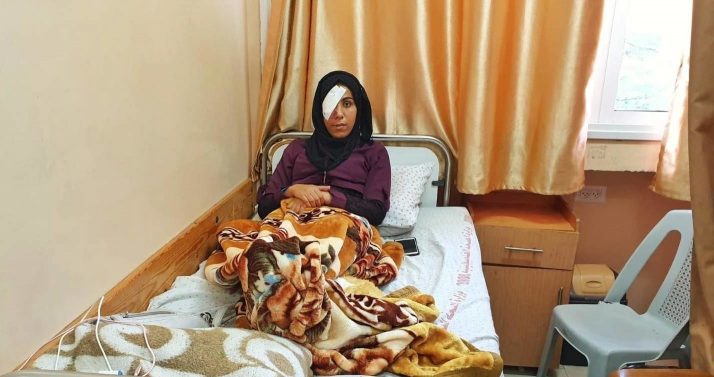
Doctors had to extract Mai’s right eye and the bullet damaged her jaw as well
Earlier this month, stood with a few friends about 100 metres from the fence that marks the border between Gaza and Israel. She glimpsed an Israeli soldier waving and pointing his finger to his eye.
“He was trying to intimidate me, but I was not afraid because I was doing nothing wrong. I wasn’t even throwing stones,” Abu Rwedeh recalls.
The soldiers fired tear gas then, and Mai and her friends ran away, but still were in sight of the young man who had threatened her.
“He was watching me; wherever I moved he kept watching. Then, suddenly, he raised his gun and pointed it at me. I was about to flee but he was too fast. He shot me in my eye.”
The bullet damaged her jaw as well. Doctors had to extract her right eye, since it was destroyed, Her determination, however, is intact. Abu Rwedeh continues to protest.
The youngest victim
Mohammed Al-Najar, 12, is the second-oldest son among four children, supported by a father who works in a wedding hall in Khan Younis.
In January, during the mid-year vacation from school, Mohammed begged his parents to allow him to watch the Friday protest with his cousins and other relatives, thinking it would give him an exciting story to share with classmates.
He was given permission to ride one of the government buses that collected people from the various neighbourhoods, taking them to the protest sites. When he disembarked, teargas bombs were flying, and he shouted to warn those around him. Then next one hit him directly in his right eye.
When Mohammad learned later that his eye could not be saved, he locked himself in his room and stopped going to school. When he did go back, he struggled.
“At first his marks at school dropped and he isolated himself. He tried to hide his missing eye,” says his mother, Um Edress.
She took to him an organisation that provided psychotherapy, but he refused to speak. Today, he is socialising, but goes quiet when asked about his injury.
The journalist
According to Dr Alqedra, most people with eye injuries from the Great Return March are journalists or photographers.
One of them is Sami Musran 35, a photographer who works for Al-Aqsa TV. On July 19, he was shot several times – first in his hand, the next two times in his shoulders and the fourth time in the chest. (Fortunately, he was wearing a bulletproof vest, so it did not harm him.) The last time cost him his left eye.
Sami says he had received several calls from Israeli officers warning him not to take photos at the Great Return March. His mother also received calls, saying her son might be killed.
“Forty times, my Facebook account was hacked or deleted for me, and I received death threats as well,” he says. “But I decided to keep on with my work to reveal the Israeli crimes against unarmed Palestinians who participate in the march.”
The night before Musran was shot, his wife tried to insist he stay home, but he refused.
“Minutes before I was hit, my mother called me twice, saying she was very worried about me. But I said that nothing happens that isn’t God’s plan,” he recalls.
He was about 250 metres away from of the Israeli fence when two women and a child were shot. Musran was taking photos of them and went in close. That’s when a rubber-coated bullet hit his eye and he lost consciousness. Two days later, he woke up in the intensive care unit to find out he had a skull fracture and an injured eye. The bullet had damaged the iris, retina and cornea and his vision was gone.
Today, it is hard for him to continue with his job; his depth perception is off, he gets headaches and the sight in his remaining eye “fades” at night. But he will keep trying.
“Israel wants to blind the eyes of the truth by sending messages to photographers saying we will hit your eyes to make you stop taking photos,” he says. “But we do not surrender.”
Colombia: Farmers Leader Shot to Death in Front of His Family

Social leader Reinaldo Carrillo in Pitalito, Department of Huila, Colombia. 2019. | Photo: Twitter / @ENGmateocastroe
teleSUR | December 26, 2019
The National Association of Farmer Users (ANUC) activist Reinaldo Carrillo was killed at dawn on Wednesday by hitmen who entered his house and shot him in front of his family in Pitalito town, Department of Huila, Colombia.
“We reject the murder of Reinaldo Carrillo. He was a member of a group of people which expected the government to grant them the ownership title of a vacant land called La Conaca,” said the ANUC, an organization legally recognized as “victim of the armed conflict” and “subject of reparation.”
“Reinaldo is the fifth ANUC leader killed in Huila over the last year… we demand that the authorities’ actions bring about results so that these cases are not added to the long list of impunities.”
A few minutes after the event, local Caracol Radio reported that the attack was perpetrated by three subjects aboard a motorcycle.
Although the 34-year-old social leader was immediately taken to the Pitalito hospital, he died due to the seriousness of his injuries.
“Infinite sadness. My solidarity with Reinaldo’s family, friends, and colleagues. Land ownership remains at the center of the armed conflict,” environmental activist Tatiana Roa said and added that the ‘Lords of The Land” continue to dispose of the life of Colombian farmers at will.

“Lucy Villareal, the mother of two girls, belonged to that extraordinary group of women who work and also take care of their children with love so that we can have a better country. Her cause does not die with her vile murder. We need a government capable of defending the life of every Colombian.”
Less than 24 hours before, the folk artist and social activist Lucy Villareal was also killed after participating in a workshop with children in the department of Nariño.
Between 2018 and 2019, the number of human rights defenders and social leaders killed increased by 13 percent in Colombia, according to the Inter-American Commission on Human Rights (IACHR).
Hard Evidence on Torture and Ill-Treatment Committed against Palestinian Detainees at Israeli Interrogation Centers
Addameer Prisoner Support And Human Rights Association | December 23, 2019
Since its creation, the occupying state developed and enforced laws and practices that led to both the systematic use of torture and to absolute impunity for the perpetrator of this crime. There has never been any individual or agency held accountable for the well-documented crimes of torture and ill-treatment at Israeli prisons and interrogation centers.
The occupation authorities, in particular, the Israeli intelligence agency “Shabak” resorts to torture and ill-treatment as standard operating procedure in a systematic and wide-scale approach against Palestinian detainees. Over the past three months, the intelligence agency subjected a number of detainees at Israeli interrogation centers to severe physical and psychological torture without any form of monitoring and protection.
Addameer has hard evidence on the crimes of torture and ill-treatment committed against a number of detainees held at interrogation centers since late August 2019. Addameer was banned from publishing any of the details of torture prior to this date, due to a gag order issued by the Israeli Court of First Instance in Jerusalem.
On 10 September 2019, a gag order was issued on a number of cases under interrogation at al-Mascobiyya interrogation center. Hence, preventing the public, including Addameer the legal representative, from publishing any information regarding these cases.
The gag order was issued based on a request from the Israeli intelligence agency and Israeli police and was renewed multiple times. Despite the gag order, Israeli media outlets and the Israeli intelligence agency published information to the public about some of those cases. This inconsistent enforcement of the gag order, where the Israeli sources exercised the freedom to publish, can only be understood as a means to influence public opinion.
Most importantly, the issuance of this gag order is an attempt to hide crimes committed against the detainees and prevent the public and the legal representatives from exposing the details of the crimes of torture and ill-treatment that were committed against the detainees in question throughout the past months.
Torture at Israeli interrogation centers
According to Israeli military laws, a detainee can be held in interrogation for a total period of 75 days without receiving any official charges. According to these same laws, a detainee can be banned from meeting his/her lawyer for a total period of 60 days. Those detainees, in particular, were held for extremely long periods of interrogation, and were also banned from lawyers’ visits and legal consultation.
The periods of the ban on meeting the lawyers ranged from 30 to 45 days in some cases. During the interrogations, the detainees suffered from different forms of both physical and psychological torture. The methods used against them included, but were not limited to harsh beating, sleep deprivation, solitary confinement, stress positions, the denial of basic hygiene needs, sexual harassment, threatening and intensive psychological torture including the use of family members and/or other detainees.
The threats used include threats of rape, torture, and revocation of residency. The severe torture and humiliation these detainees suffered from, led to injuries, broken bones, fainting, vomiting, bleeding from different parts of the body (nose, mouth, hands, legs[1] and genital area). In addition, the detainees also suffered from the false assessment made by doctors at the interrogation centers, whom almost in all cases stated that the detainees are qualified for interrogations denying the clear signs of torture.
A short description of some of the torture techniques:
- Positional torture (stress positions): Israeli intelligence officers forced the detainees into a number of stress positions such as the banana position,[2] the frog position, sitting on an imaginary chair, squatting and many other different positions. Almost in all of these stress positions, the detainees would lose their balance and fall on the ground, which would lead to a harsh beating by the officers and then forcing the detainee back into the stress position. Other used stress positions included standing on their toes while their hands were shackled above their heads to a wall. Another position included sitting on a chair while handcuffed to the back, where the hands were positioned on a table behind the detainee’s chair. A third position involved the detainee laying on the ground with his/her hands chained to each other with iron cuffs and positioned behind his/her back. This position also includes officers sitting on the detainee to place pressure on his/her body while beat him/her ferociously.
- Harsh beatings: Israeli occupation intelligence officers used extreme methods of beatings against the detainees using their hands, legs, knees and even their fingers. The officers hit, slapped, punched, poked (using their fingers), and kicked the detainees. These methods resulted in severe and life-threatening injuries that included broken ribs, inability to walk, brutal bruises, swelling marks on the skin, ulcer wounds… etc. The officers, who exceeded five in number in some cases used to blindfold the detainees’ eyes so they would not expect the beating or know where it is coming from. Several of those detainees appeared in their court sessions with marks on their bodies, expressing severe pain, or in some cases arrived on wheelchairs. In one of the cases, the harsh beating was committed with the intention to kill the detainee, who was in fact transferred to the hospital in serious condition after around 30 hours of severe and extreme methods of beatings. In another case, the harsh beating aimed at injuries caused by a police dog during the arrest, the interrogators intended to target those previously obtained injuries, which were mainly on the detainee’s genital area causing the wounds to re-open twice. Also, in many other cases, the method of pulling the facial hair from its roots causing injuries and swelling marks was used.
- Sleep deprivation: this technique was implemented through different methods, in some cases the detainees spent around twenty days sleeping from one to three hours a day. Even when those detainees were sent to their cells to sleep, they would be disturbed with loud and eerie sounds made by the prison guards, the voices of other detainees being harshly beaten or the sound of knocking on their cell doors. In some cases, sleep deprivation ranged from 30 to 60 continuous hours, where the detainee would not be sent to sleep at all during these hours and would be woken up if he/she falls asleep during the interrogation. Some detainees were harshly slapped on their faces to wake up, others were also splashed with water. Detainees described the slaps as extremely severe causing them to feel dizzy.
- The use of family members (emotional blackmailing): psychological torture and ill-treatment were used on the majority of these detainees, focusing on threats against their family members, and loved ones. Israeli occupation forces used the policy of collective punishment through arresting and bringing in some of the family members mostly to al-Mascobiyya interrogations center and Ofer prison. Eight family members for seven different detainees were arrested, and another ten family members were brought in for questioning. Some of these relatives were kept for a number of days while others were kept for hours. In all the cases, family members and loved ones were mainly brought in to pressure the detainees themselves. The interrogators made the detainees assume that their relatives got arrested and will be tortured as well. Relatives included fathers, mothers, brothers, daughters, wives, etc.
- Interrogation at Israeli secret prisons: at least one of the detainees Addameer has documented their cases have stated that they were taken to unknown centers. The detainee said that the interrogators at this center were all face-covered and wearing a different uniform than the known usual uniforms. It has been revealed in the past that Israel has secret prisons that are removed from maps and airbrushed aerial photographs.[3]
These detainees that were subject to torture and ill-treatment in the past months were around 50 detainees, almost half of them were subject to torture, and all of them suffered ill-treatment. The detainees included male and female detainees, they also included university students, union workers, human rights defenders, and a PLC member. Addameer’s lawyer began collecting hard evidence proving the torture and ill-treatment committed against these detainees from the very first day the lawyers were permitted to meet them.
Public International Law
Violations of Fair Trial Guarantees
Israeli military courts completely disregard the fair trial guarantees. The cases monitored in the last months are just another proof of the fact that the Israeli military court from its creation never met the minimum standards of a fair trial. The right to a fair trial is enshrined in all the Geneva Conventions and their Additional Protocols. [4] According to the Third and Fourth Geneva Conventions, depriving a protected person a fair and regular trial is a grave breach.[5] Additionally, the right to a fair trial is set forth in the International Covenant on Civil and Political Rights (ICCPR) and in several other international instruments.[6] For example, the UN Human Rights Committee in its General Comment on Article 4 of the ICCPR stated that the principle of the fair trial cannot be derogated from.[7]
The fair trial guarantees basic principles that are systematically violated at the Israeli military courts include, but are not limited to the following; trail by an independent, impartial and regularly constituted court; presumption of innocence; information on the nature and cause of the accusation (right to be informed); necessary rights and means of defense (right to counsel); the presence of the accused at the trial; and compelling accused persons to testify against themselves or to confess guilt.[8]
As mentioned before, there was a gag order effective for a period of over three months, due to this gag order the court proceedings were not open to the public, and even preventing the family members from attending the court sessions. Thus, violating the right to public proceedings.[9] Also, the majority of the detainees who were included in the gag order were also banned from lawyers’ visits and consultation. Even in the court sessions that were conducted while the lawyers’ ban was effective, detainees were denied to see his/her lawyer. The period of the lawyers’ ban orders ranged from 30 days to around 45 days in some of the cases, depriving them of their right to counsel[10] in the most sensitive period of detention.
Moreover, according to the Israeli military law, a detainee can be held without any charges for a total period of 75 days that is subject to renewals. In those cases, in particular, the military prosecution pressed lists of charges after a period of interrogations that ranged from 50 to 60 days in some of the cases. One of the detainees spent more than 100 days at al-Mascobiyya interrogation center without knowing all of the charges brought against him. Thus, violating detainee’s right to be informed[11] of the nature of the accusations brought against them without delay. In other cases, the intelligence agency published accusations against individuals to the public before presenting them with their list of charges at the court. The published statements were for a mere political motive as the actual charges pressed against the same detainees at the military court are not in line with the published accusation.
Furthermore, according to the court sessions’ protocols, detainees have shown and expressed their need for urgent medical care by emphasizing that they were tortured. Some of the detainees attended their sessions in a wheelchair and one was not able to attend a number of his sessions due to his medical situation. Still, the judge at the military court in all of the cases extended the detention periods for the detainees for the purposes of interrogations. In fact, in the past three months, Addameer’s lawyers made several appeals to the Israeli military courts of appeals on the detention periods and many petitions to the Israeli High Court on the orders that ban the detainees from meeting their lawyers. All the petitions submitted to the Israeli High Court were rejected and around 95 percent of the appeals made to the Israeli military court of appeals were also rejected. This shows how the military court and High Court are not independent, impartial and regularly constituted courts[12] as they prioritize the requests and needs of the Israeli intelligence agency without any consideration of the detainees’ rights. Most importantly, the insistence of the Israeli judges at both courts to extend the interrogation periods with the knowledge of the committed torture shows the complicity of this legal system in the committed crimes. In fact, the judges also obstructed the documentation of torture by attempting to delay the obtaining of medical reports and pictures of the bodies of those tortured detainees, rather than monitoring and preventing torture, which is their legal obligation. Only in one of the cases, the judge ordered the detention center’s doctor to document the body of the detainee by taking pictures.
Finally, almost all of those detainees were forced to give confessions under torture. The intensity of the interrogations and severity of the physical and psychological torture forced the majority of the detainees to testify against themselves, against others, and confess guilty.[13] At the Israeli military court, those confessions are used as the main tool to indict those detainees, in complete disregard of all international norms that assert on the inadmissibility of all confessions obtained under torture.
Prohibition of Torture in Public International Law
Prohibition against torture is one of the most fundamental norms of international law that cannot be derogated from. The protection against torture under all circumstances is enshrined in both Treaty[14] and Customary International Law.[15] Despite the absolute and non-derogable prohibition against torture, enshrined under article (2) of the International Convention against Torture and ratified by Israel on 3 October 1991, torture against Palestinian detainees is systematic and widespread in Israeli occupation prisons and interrogation centers. In fact, torture has been sanctioned by a series of Israeli High Court decisions. In High Court decision number 5100/94 in 1999,[16] the High Court made permissible the use of “special means of pressure” in the case of a “ticking bomb” scenario, where interrogators believe that a suspect is withholding information that could prevent an impending threat to civilian lives as stated in Article (1)34 of the Israeli Penal Code of 1972. This exception constitutes a grave legal loophole that legitimizes the torture and cruel treatment by the Israeli intelligence interrogators against Palestinian detainees and also protects interrogators who are granted impunity for their crimes.
Moreover, the Israeli High Court, in the Tbeish case number 9018/17 in 2018,[17] issued a ruling which expanded the concept of a “ticking bomb” scenario to include cases that are not imminent security threats. In this case, the judge based his ruling on previous decisions and broadened the element of immediacy not to be limited with a time frame. The Israeli occupying state alleges that the “special measures” they use with Palestinian detainees are part of their security measures. However, those practices amount to torture and ill-treatment, and even if the Israeli allegations were accurate, torture is absolutely prohibited in all circumstances including those of security-related measures. Furthermore, torture is committed in Israeli interrogation centers regardless of the classification of a “ticking bomb situation/special measures” torture is used with cases that even include the right to affiliation and organize politically.[18]
International legal standards affirm the absolute prohibition of torture under all circumstances. For example, the Council of Europe outlined guidelines on human rights and fighting terrorism which was adopted by the Committee of Ministers on 11 July 2002. The guidelines stated: “The use of torture or of inhuman or degrading treatment or punishment is absolutely prohibited, in all circumstances, and in particular during the arrest, questioning and detention of a person suspected of or convicted of terrorist activities, irrespective of the nature of the acts that the person is suspected of or for which he/she was convicted.”[19]
The United Nations Special Rapporteur on Torture, Nils Melzer, stated: “The ban on torture and ill-treatment was one of the most fundamental norms of international law and could not be justified in any circumstances.”[20] He added in the same statement speaking about the American prison at Guantanamo Bay that, “By failing to prosecute the crime of torture in CIA custody, the U.S. is in clear violation of the Convention against Torture and is sending a dangerous message of complacency and impunity of officials in the U.S. and around the world.”[21] The Israeli occupying state is an outrageous example of complicity and absolute impunity for perpetrators of the crimes of torture and ill-treatment.
Conclusion: Impunity for a war crime
This Israeli illegal occupation has violated all the legal elements of an occupation under international law. The Israeli legal system and practices are just one example of this violation that aims for suppressing and dominating the Palestinian protected population. Crimes of torture and denial of a fair trial for Palestinian detainees are not limited to one perpetrator. In fact, the agencies complicit in those crimes include the intelligence agency, military court, military prosecution, Hight Court, and even the medical staff that were involved in providing medical care and assessment for those detainees subjected to torture and ill-treatment.
According to various human rights organizations fighting against the crimes of the occupation, there are no effective domestic mechanisms of accountability for the crimes of torture, ill-treatment and the deprivation of a fair trial. In point of fact, Addameer, in the last ten years, has annually submitted tens of complaints of torture, and only one of them, a sexual harassment case, was open for investigation. However, rather than pressing a list of charges against the perpetrators, in this case, it was closed without indictment. Furthermore, according to the Public Committee Against Torture in Israel (PCATI), about 1,200 complaints of torture during Israeli interrogations have been filed since 2001. All the cases were closed without a single indictment.[22]
Finally, Addameer affirms that the Israeli occupying state with all of its agencies continues to commit war crimes and crimes against humanity. According to the Rome Statute, the denial of a fair and regular trial is a war crime (Article 8 (2)(a) (vi)). Additionally, torture is a war crime (Article 8 (2)(a) (ii)) and if committed in a systematic and wide-scale approach it also amounts to a crime against humanity (Article 7 (1)(f)).[23]
Addameer calls on the international community to hold Israel accountable for its war crime and crimes against humanity and to put an end to its sanctioned absolute impunity.
[1] The hands and legs of those detainees suffered great injuries mainly due to the cuffs used to chain them for long hours.
[2] The banana position is a position in which the detainee’s legs cuffed to the lower part of a chair (the back of the chair is positioned to the side) and his hands cuffed to each other and pressured by the interrogators to the lower part of the chair. This position would mean that the detainee’s body would form an arch. Usually, when the detainee is forced into this position, the interrogators beat the detainee harshly on the chest and stomach. Interrogators put a blanket or a pillow on the floor behind the chair, since detainees usually fall with the chair to the floor, due to the intensity the body is exposed.
[3] For further information check the written article on https://www.theguardian.com/world/2003/nov/14/israel2
[4] First Geneva Convention, Article 49; Second Geneva Convention, Article 50; Third Geneva Convention, Articles 102–108; Fourth Geneva Convention, Articles 5 and 66–75; Additional Protocol I, Article 75(4); Additional Protocol II, Article 6(2).The principle of the right to fair trial is also provided for in Article 17(2) of the Second Protocol to the Hague Convention for the Protection of Cultural Property.
[5] Third Geneva Convention, Article 130; Fourth Geneva Convention, Article 147; Additional Protocol I, Article 85(4)(e).
[6] International Covenant on Civil and Political Rights, Article 14(1) (ibid., § 2796); Convention on the Rights of the Child, Article 40(2)(b)(iii) (ibid., § 2802); European Convention on Human Rights, Article 6(1) (ibid., § 2795); American Convention on Human Rights, Article 8(1) (ibid., § 2797); African Charter on Human and Peoples’ Rights, Article 7 (ibid., § 2801).
[7] UN Human Rights Committee, General Comment No. 29 (Article 4 of the International Covenant on Civil and Political Rights) (ibid., § 2998).
[8] For further information check rule 100 of the customary international law at: https://ihl-databases.icrc.org/customary-ihl/eng/docs/v1_rul_rule100
[9] Third Geneva Convention, Article 105; Fourth Geneva Convention, Article 74; Additional Protocol I, Article 75(4)(i); ICC Statute, Article 64(7); ICTY Statute, Article 20(4); ICTR Statute, Article 19(4); International Covenant on Civil and Political Rights, Article 14(1).
[10] First Geneva Convention, Article 49; Second Geneva Convention, Article 50; Third Geneva Convention, Article 84, and Article 96; Fourth Geneva Convention, Article 72, and Article 123; Additional Protocol I, Article 75(4)(a); Additional Protocol II, Article 6(2)(a). Also, the International Covenant on Civil and Political Rights, Article 14(3).
[11] Third Geneva Convention, Article 96, and Article 105; Fourth Geneva Convention, Article 71, and Article 123; Additional Protocol I, Article 75(4)(a); Additional Protocol II, Article 6(2)(a). Also, the International Covenant on Civil and Political Rights, Article 14(3)(a); Convention on the Rights of the Child, Article 40(2)(b)(ii).
[12] Third Geneva Convention, Article 84; Additional Protocol II, Article 6(2); Additional Protocol I, Article 75(4); International Covenant on Civil and Political Rights, Article 14(1); European Convention on Human Rights, Article 6(1).
[13] Third Geneva Convention, Article 99; Additional Protocol I, Article 75(4)(f); Additional Protocol II, Article 6(2)(f); ICC Statute, Article 55(1)(a); International Covenant on Civil and Political Rights, Article 14(3)(g); Convention against Torture, Article 15.
[14] First Geneva Convention, Article 12; Second Geneva Convention, Article 12; Third Geneva Convention, Article 17; fourth paragraph (“physical or mental torture”) Article 87, Article 89 (“inhuman, brutal or dangerous” disciplinary punishment), and Article 32; Additional Protocol I, Article 75(2); Additional Protocol II, Article 4(2); ICC Statute, Article 8(2)(c)(i) and (ii); International Covenant on Civil and Political Rights, Article 7; European Convention on Human Rights, Article 3.
[15] For further details check Rule 90 at: https://ihl-databases.icrc.org/customary-ihl/eng/docs/v1_cha_chapter32_rule90
[16] HCJ 5100/94, Public Committee Against Torture in Israel et al. v. Government of Israel et al., Judgment. An English translation of the Court decision is available at: http://www.hamoked.org/files/2012/264_eng.pdf [accessed 5 December 2019].
[17] HCJ 9018/17, Firas Tbeish et al. v. The Attorney General. An English translation of the Court decision is available at: http://stoptorture.org.il/wp-content/uploads/2017/02/F.-Tbeish-Ruling-Nov.-2018.ENG_.pdf [accessed 22 December 2019].
[18] Joint report: B’Tselem and HAMOKED (2010): Impunity: Israeli military policy not to investigate the killing of Palestinians by soldiers https://www.btselem.org/download/201010_kept_in_the_dark_eng.pdf
[19] Guidelines on human rights and the fight against terrorism adopted by the Committee of Ministers on 11 July 2002 at the 804th meeting of the Ministers’ Deputies
[20] Miles, Tom. “U.N. Expert Says Torture Persists at Guantanamo Bay; U.S. Denies.” Reuters, Thomson Reuters, 13 Dec. 2017, www.reuters.com/article/us-usa-guantanamo-torture/u-n-expert-says-tortur….
[21] Ibid.
[22] Public Committee Against Torture in Israel, Torture in Israel 2019: Situation Report, it can be found here: Situation Report 2019.
[23] For further information check the Rome Statute of International Criminal Court at: https://www.ohchr.org/EN/ProfessionalInterest/Pages/InternationalCriminalCourt.aspx
Israel Bars Entry of Winter Clothing as Palestinian Detainees Suffer Harsh Winter Conditions
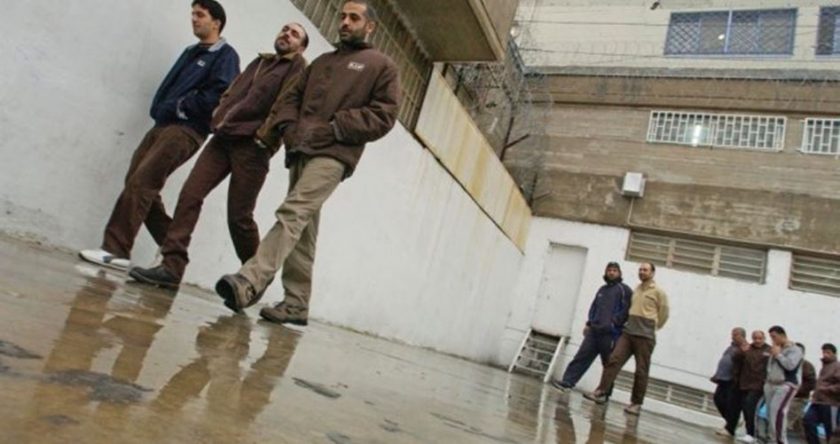
IMEMC News & Agencies – December 17, 2019
The Palestine Prisoners Centre for Studies has called on international humanitarian and human rights institutions, foremost of which is the Red Cross, to exert pressure on Israeli Prison Services (IPS) to provide winter clothing and covers desperately needed during the severe cold season.
The spokesperson for the Centre, Riyad Al-Ashqar, explained that Palestinian detainees in all facilities suffer harsh conditions in the winter season, due to acute shortage of clothes, winter blankets, and heating devices, especially in prisons located in the desert areas — namely the Negev, Nafha, Beersheba, and Rimon. This is in addition to the fact that some sections in a number of prisons are composed of tents that do not protect from the cold, many of which are old and worn out, allowing rain water to enter.
Al-Ashqar noted that IPS does not allow the entry of blankets and winter clothing for detainees, except in very limited quantities which are insufficient for cover. It also banned certain items from the canteen, and those which are available have a very high price. Additionally noted was the presence of a large number of recently jailed detainees who lack resources, due to their inability to visit in the first six months of detention.
He also explained that the extreme cold in the Negev leads to the freezing of limbs, with no means of heat, in addition to the lack of a permanent hot water supply. These cold climates will continue for several months, affecting many detainees with various diseases, especially of the bone, in addition to rheumatism, arthritis, back pain, and chest diseases, with a lack of medical care and medications needed for treatment.
He added, according to Al Ray, that IPS intends to increase the suffering of the detainees, in winter, through many repressive practices, foremost of which involves the storming of rooms and tents, justifying the practice of taking them out to open places, late at night, where they sit in open areas for long hours, in freezing cold and rain. They are additionally forced to stand for the daily count in the very early morning or evening, in the cold or rain.
The Centre has called for urgent intervention, by human rights institutions, to provide all the necessary items to protect them from cold, rain, and diseases.
(edited for the IMEMC by c h r i s @ i m e m c . o r g)
Western leaders, screw your ‘Sanctions Target the Regime’ blather: Sanctions KILL PEOPLE
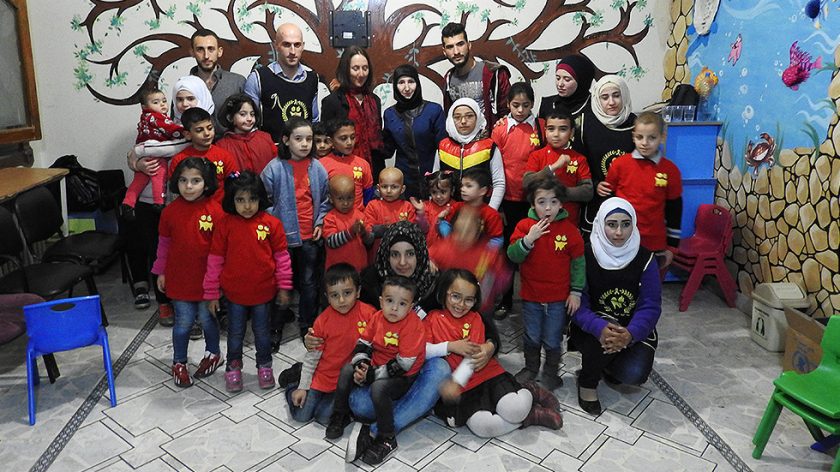
Children with cancer couldn’t get adequate treatment due to sanctions (photo Aleppo 2016)
By Eva Bartlett | RT | December 16, 2019
The US has a favourite tool for bullying non-compliant nations: sanctions. Sanctions inflict considerable suffering, even death, on ordinary people in targeted nations. Yet those defiant nations persist and resist.
A recent opinion piece in the Washington Post proposing a new oil-for-food scheme, this time in Venezuela, surprisingly acknowledges that sanctions “can also end up harming the people that they intend to protect.”
Okay, first off, we know there is no intention of “protecting” civilians in any of the countless countries targeted by Western sanctions. Do Western talking heads really think we’ve forgotten the half-a-million dead Iraqi children, thanks to US sanctions?
Yet, ask a Western leader about crippling sanctions placed on nations which don’t bow to Imperial demands and you’ll be met with some nonsensical explanation that sanctions only target ‘regimes’ and ‘terrorists,’ not the people.
I’ve lived in, spent considerable time in, or visited areas under sanctions and siege, and I’ve seen first hand how sanctions are a form of terrorism, choking civilians, depriving them of basic and urgent medical care, food, employment, and travel entitlements that many of us in Western nations take for granted.
When I was in Syria last October, a man told me his wife had been diagnosed with breast cancer, but because of the sanctions he couldn’t get her the conventional treatments most in the West would avail of.
In 2016, in Aleppo, before it was liberated of al-Qaeda and co, Dr. Nabil Antaki told me how –because of the sanctions– it had taken him well over a year to get a simple part for his gastroenterology practise.
In 2015, visiting Damascus’ University Hospital, where bed after bed was occupied by a child maimed by terrorists’ shelling (from Ghouta), a nurse told me:
“We have so many difficulties to ensure that we have antibiotics, specialized medicines, maintenance of the equipment… Because of the sanctions, many parts are not available, we have difficulties obtaining them.”
Visiting a prosthetic limbs factory in Damascus in 2016, I was told that, due to the sanctions, smart technology and 3D scanners –used to determine the exact location where a limb should be fixed– were not available. Considering the over eight years of war and terrorism in Syria, there are untold numbers of civilians and soldiers in need of this technology to simply get a prosthetic limb fixed so they can get on with their lives. But no, America’s concern for the Syrian people means that this, too, is near impossible.
In 2018, Syria’s minister of health told me Syria had formerly been dubbed by the World Health Organization a “pioneer state” in providing health care.
“Syria had 60 pharmaceutical factories and was exporting medicine to 58 countries. Now, 16 of these factories are out of service. Terrorists partially or fully destroyed 46 hospitals and 620 medical centres.”
I asked the minister about the complex in Barzeh, targeted with missile strikes by the US and allies in April 2018. Turns out it was part of the Ministry of Health, and manufactured cancer treatment medications, as well as antidotes for snake or scorpion bites/stings, the antidote also serving as a basic material in the manufacture of many medicines.
Last year, Syrian-American doctor Hussam al-Samman told me about his efforts to send to Syria chemotherapy medications for cancer patients in remission. He jumped through various hoops of America’s unforgiving bureaucracy, to no avail. It was never possible in the first place.
“We managed to get a meeting in the White House. We met Rob Malley, a top-notch assistant or adviser of Obama at that time. I asked them: ‘How in the world could your heart let you block chemotherapy from going to people with cancer in Syria?’
They said: ‘We will not allow Bashar al-Assad to have anything that will make people love him. We will not support anything that will help Bashar al-Assad look good’.”
Fast forward to the present: in spite of the sanctions, or precisely because of the sanctions, Syria recently opened its first anti-cancer drugs factory. President Assad is, again, looking rather good to Syrians.
UN expert: Sanctions on Venezuela “a form of terrorism”
Alfred de Zayas, the human rights lawyer and former UN official, aptly calls sanctions a form of terrorism, “because they invariably impact, directly or indirectly, the poor and vulnerable.”
Earlier this year, The Center for Economic and Policy Research estimated 40,000 deaths had occurred due to sanctions in 2017-2018.
While in Venezuela in March this year, I spoke with people from poor communities about the effects of sanctions. Most I met were very well aware of the US economic war against their country, and rallied alongside their government.
One woman told me:
“If you don’t have water, don’t have electricity, the basics, how would you feel, as a mother? This makes some of the population, that doesn’t understand about the sanctions, blame the government.”
Venezuela’s Foreign Minister, Jorge Arreaza, said during that visit:
“We told [American diplomat and Trump envoy] Mr Elliott Abrams, ‘the coup has failed, so now what are you going to do?’ He kind-of nodded and said, ‘Well, this is going to be a long-term action, then, and we are looking forward to the collapse of your economy.’”
Indeed, that collapse would come about precisely due to the immoral US sanctions against the Venezuelan people.
North Korean Youth: Sanction the USA
After visiting Korea’s north in August 2017, in a photo essay I noted: “The criminal sanctions against the North, enforced since 1950, making even more difficult the efforts to rebuild following decimation. The sanctions are against the people, affecting all sectors of life.”
And although most I met there were proud of their country’s achievements in spite of the sanctions, they were also vocal about the injustice of being bombed to near decimation and then sanctioned.
In a Pyongyang Middle School, to my questions about the sanctions, a girl replied:
“The sanctions are not fair, our people have done nothing wrong to the USA.”
Another boy spoke of the silence around America’s use of nuclear bombs on civilians: “Why do people all over the world give us sanctions? Why can’t we put sanctions on the US?”
At the Okryu Children’s Hospital, Doctor Kim Un-Song said: “As a mother, I feel extremely angry at the sanctions against the DPRK, even blocking medicine and instruments for children. This is inhumane and against human rights.”
As with Syria, sanctions on the DPRK prevent further entry to Korea of hospital machinery, as well as replacement parts.
Defying the sanctions
In spite of draconian sanctions, Syria, the DPRK and Venezuela continue to resist. After fighting international terrorism since 2011, Syria is rebuilding in liberated areas. That process could proceed more quickly were sanctions lifted, making it easier for companies outside of Syria to invest.
But Syria is managing, with its allies’ support, including that of North Korea, and due to the steadfastness of the heroic Syrian people, and its leadership.
Likewise, Venezuela and North Korea, facing America’s economic war and endless propagandistic rhetoric, continue to resist.
In each of these countries, I’ve met well-informed people who are fighting the sadism of the sanctions, and who are determined to remain free of US tyranny.
Eva Bartlett is a Canadian independent journalist and activist. She has spent years on the ground covering conflict zones in the Middle East, especially in Syria and Palestine (where she lived for nearly four years).
Chile Denounces Over 350 Eye Injuries On Human Rights Day
teleSUR | December 10, 2019
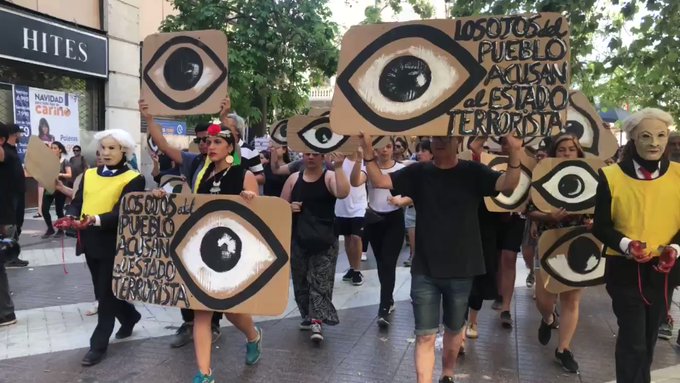
After more than two months of mobilizations against the policies of right-wing President Sebastian Piñera, sectors of the population took to the streets Tuesday in what was called “March for the Eyes of Chile,” in commemoration of the International Human Rights day.
The Chilean people denounced the government’s excessive violence after 352 people lost their vision partially or totally during the violent repression to social protests. Organizations defending the rights of peoples mobilized to the meeting point for protesters at the renamed ‘Plaza of Dignity.’
The main objective of the march was to denounce the violent repression by police that until Dec. 6, caused 3,449 injured, including 2,767 men, 397 women, and 254 children and adolescents, according to the National Human Rights Commission.
Those attending the demonstration came with posters that had one eye drawn to remember the 352 people who have eye wounds, of which 331 are from injury or trauma and 21 from bursting or loss.
The posters also show a message denouncing “the eyes of the people accuse the terrorist state.”
For his part, the Director of the NHRC Sergio Micco said that the organization has proven on countless occasions that serious violations of human rights have occurred in the demonstrations. “We are facing a situation of denunciation of serious violations of human rights… there are abusive and negative behaviors that are continually repeated such as excessive use of riot guns,” he commented.
The Director of the Carabineros, Chile’s military police Mario Rozas, announced the suspension of the use of pellets as an anti-riot tool, except in cases of “legitimate defense when it represents a death threat.”
The measure follows a study by the University of Chile that states that these pellets are composed of only 20 percent rubber, while the other 80 percent have different elements, such as lead. However, on Nov. 23, Al Jazeera reported that Chilean police continue to implement pellets despite the official suspension of their use.
The unrest in the South-American country was sparked by a government’s decision to increase metro fees [premised on reduced carbon energy] but quickly spread to hold other social issues such as income inequality and swelling costs of living. The state’s response to the popular grievances has since led to the death of 23 demonstrators while around 3,000 have been injured.
The Inter-American Commission on Human Rights (IACHR) along with numerous other rights groups condemned the constant violations of human rights by police and military against the population in Chile.
Iran scientist Soleimani arrives home after over one year behind bars in US
Press TV – December 7, 2019
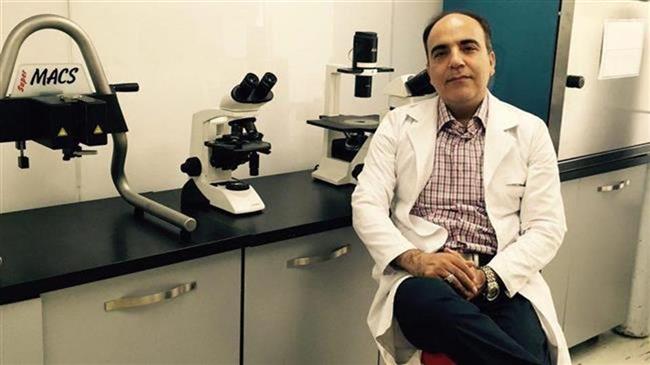
Freed Iranian stem cell scientist Dr. Masoud Soleimani has arrived in Tehran after over one year of imprisonment in the United States.
Soleimani arrived at Tehran Mehrabad airport on Saturday evening after he was released by the US in a prisoner swap. He was welcomed by his family members and Iranian officials upon his arrival.
Iranian Foreign Minister Mohammad Javad Zarif accompanied the released scientist from Zurich where the swap took place.
The Iranian foreign minister said in a tweet earlier in the day that the top scholar, along with Xiyue Wang — a Chinese-born US citizen who had been sentenced to 10 years in prison for espionage in Iran in 2017 — had been delivered to the Swiss officials and would “be joining their families shortly.”
Back in October last year, Soleimani, 49, left Iran on sabbatical last year but was arrested upon arrival in Chicago and transferred to prison in Atlanta, Georgia for unspecified reasons.
When he left Tehran last fall, Soleimani, a professor and biomedical researcher at Tarbiat Modares University (TMU) in Tehran, planned to complete his research on treating stroke patients as a visiting scholar at the prestigious Mayo Clinic in Minnesota.
Prosecutors in Atlanta had accused him and two of his former students of conspiring and attempting to export vials of human growth hormone from the US to Iran without authorization, in violation of US sanctions.
The human growth hormone is not banned in the US or Iran and was being used “exclusively for medical research,” which is still considered largely exempt from US sanctions, according to his Atlanta attorney Leonard Franco.
The two students were charged in a court and released after posting bail because they held US citizenship.
Featured Video

Chinese jet fuel and the myth of energy independence
or go to
Aletho News Archives – Video-Images
Book Review
Former Insiders Criticize Iran Policy as U.S. Hegemony
By GARETH PORTER | CounterPunch | February 27, 2013
“Going to Tehran” arguably represents the most important work on the subject of U.S.-Iran relations to be published thus far.
Flynt Leverett and Hillary Mann Leverett tackle not only U.S. policy toward Iran but the broader context of Middle East policy with a systematic analytical perspective informed by personal experience, as well as very extensive documentation.
More importantly, however, their exposé required a degree of courage that may be unparalleled in the writing of former U.S. national security officials about issues on which they worked. They have chosen not just to criticise U.S. policy toward Iran but to analyse that policy as a problem of U.S. hegemony. … continue
Blog Roll
 Aletho News
- What is fueling unrest across the EU?
- Why no power can undermine Iran’s eternal dominance over the Strait of Hormuz
- Is The War Against Iran Over?
- Iran war will leave long-term ‘scar’ on Wall Street, investors warn
- How Iran decimated US power projection in West Asia: Military lessons of 40-day war
- Iran’s report details US-Israeli war crimes in targeting schools, hospitals, livelihoods
- NATO’s Slow Fracture: How Trump’s Iran War Exposed the Instrument of Hegemony
- Chinese jet fuel and the myth of energy independence
- Ukraine Sea Drone Fired From Libya Hit Russian Tanker in Mediterranean
- IRGC: Iranian forces launched no attacks during ceasefire hours
- If Americans Knew
- Military aid to Israel emerges as the latest political litmus test for Democrats
- The only Palestinian children’s rights organization closes following years-long Israeli campaign against it
- ‘I Can’t Forget the Smell’: Lebanese Reel After Israel Kills Over 300 in Single Day
- DNC Shoots Down Resolutions Calling Out AIPAC and Limiting Arms to Israel
- TCN: Is Israel Blackmailing President Trump?
- Israel killed at least 303 Lebanese yesterday – who were they? Daily Update
- Amnesty: Urgent – Protect Lebanese civilians from brutal escalation in Israeli attacks
- Is The War Against Iran Over?
- Inside the Israeli army’s propaganda wing
- Hundreds of Gaza Amputees Stranded in Legal Limbo
- No Tricks Zone
- New Study: No Linear Warming Or Glacier Retreat Along Northern Antarctic Peninsula Since 1980s
- An Inconvenient Tree: Uncovered In Alps… Europe Much Warmer Than Today 6000 Years Ago
- New Study Reports A 60% Slowdown In Greenland’s Ice Loss Rate In The Last Decade
- Low Intensity Tornado Wrecks Major Solar Farm, Creating A Potential Toxic Dump
- New Study Finds Warming Saves Lives…Cold Temperatures 12 Times More Deadly Than Excess Heat
- German Science Blog Accuses PIK Climate Institute Of Hallucinating Climate Tipping Points
- Devastating Assessment Of Comirnaty Vaccine By Former Senior Pfizer Europe Toxicologist
- New Study: CO2 Is ‘Effectively Negligible’ As An Explanatory Climate Change Factor Since 2000
- Former Pfizer Toxicologist Dr. Helmut Sterz Tells Bundestag Hearing Pfizer Vaccine Should Have Never Been Approved
- Energy Expert: Germany’s Nuclear Phaseout Was A “500 Billion Euro Mistake”
 Aletho News