Report: Israeli forces detained 420 Palestinians in February

Ma’an – March 4, 2017
RAMALLAH – Israeli forces detained 420 Palestinians during the month of February, including 70 minors and 22 women and girls, according to a statement released on Saturday by the Palestinian Prisoners’ Center for Studies.
The center said in its monthly report that 12 of the detentions were carried out in the besieged Gaza Strip, including five fishermen whose boats were destroyed by Israeli forces before their detention, two who were detained at the Beit Hanoun crossing, and five who were detained after Israel alleged they attempted to cross the border fence between the besieged enclave and Israel.
A journalist was also among the detainees, identified by the center as Humam Muhammad Hantash from the southern occupied West Bank district of Hebron. He was sentenced to Israel’s widely condemned policy of administrative detention — imprisonment without charge or trial based on undisclosed evidence.
The center added that 88 administrative detention orders were issued by Israeli courts in the same period, 23 of which were issued for the first time, while 65 were renewed orders. Meanwhile, 32 administrative detention orders were issued against Palestinians from Hebron.
While Israeli authorities claim the withholding of evidence during administrative detention, which allows detention for three- to six-month renewable intervals, is essential for state security concerns, rights groups have instead claimed that the policy allows Israeli authorities to hold Palestinians for an indefinite period of time without showing any evidence that could justify their detentions.
Rights groups say that Israel’s administrative detention policy has also been used as an attempt to disrupt Palestinian political and social processes, notably targeting Palestinian politicians, activists, and journalists.
According to Addameer, as of January, 6,500 Palestinians were being held in Israeli prisons, 536 of whom were being held under administrative detention.
FBI Rigged Investigation of Black Panthers, Newly Released Docs Reveal
Sputnik – 03.03.2017
Newly-released FBI files reveal that authorities tampered with an investigation into a police officer’s death in the 1970s, resulting in a Black Panther leader dying in prison for a crime he did not commit.
In 1970, Mondo Even we Langa (formerly David Rice) was one of 17 people arrested in connection with a bombing that killed Omaha police officer Larry Minard, eventually serving a life sentence for the murder.
At the time, Mondo was deputy of information for Omaha’s National Committee to Combat Fascism, an affiliate group of the Black Panther Party, and unbeknownst to him, FBI Director J. Edgar Hoover had placed him on a secret detention list and ordered agents to neutralize him.
Nearly 50 years after his conviction, heavily-redacted documents show that the agency called off a search for Minard’s killer just days before his funeral, and canceled the testing of the call that lured the officer to his death, which indicated 15-year-old Duane Peak as a lead suspect.
The San Francisco Bayview quotes one of the documents saying, “Special Agents of the FBI in conjunction with members of the Omaha Police Department arrested [Duane Peak].” and “Captain [Hartford] advised that the Police Department was in the process of obtaining a search warrant … and that he would advise the FBI as to the results.” Another section read,”Captain [Hartford] requested our assistance in interviewing [REDACTED] for any information he may have regarding the bomb slaying.”
Although the documents indicate deep cooperation between the FBI and Omaha police, officials testified that the agency had no involvement in the investigation.
In 1982, New Jersey Congressman Richard Roe requested an FBI report on the investigation. Two weeks later Roger Young, assistant director in charge at the Office of Congressional and Public Affairs, replied to Roe claiming, “The investigation of these two individuals was conducted by the Omaha Police Department and the trial was held in state District Court, not in a federal court. … I am, therefore, not in a position to furnish you a report.”
Some documents are missing from the files, and Mondo’s co-defendant and former NCCF chair, Edward Poindexter, remains imprisoned in a maximum-security facility.
The “Omaha Two,” as Poindexter and Mondo have been referred to, appear to be the targets of Hoover’s Counterintelligence Program (COINTELPRO), a wide-ranging effort to infiltrate, disrupt, and neutralize many activist groups of the period. Many Black Panthers and other radical activists were monitored, set up for crimes they did not commit, railroaded into prison and assassinated, as a result of the program.
In 1969, the ‘Panther 21’ were indicted on conspiracy charges in New York for allegedly plotting to bomb police stations and assassinate police officers. The hotly-contested eight-month trial resulted in all 21 Panthers being acquitted, thanks, in no small part, to the work of one the defendants, Afeni Shakur, mother of late rapper Tupac Shakur.
That same year, informant William O’Neal provided Chicago police with the floor plan to Chicago Panther leader Fred Hampton’s house. Police raided Hampton’s house in the wee hours of the early morning, killing him in his sleep. They later claimed that Panthers opened fire on them.
Mondo died in prison in March 2016.
Israel clears Palestinians and homes so its military can practice

Defense for Children International | February 6, 2017
Ramallah – Evictions, demolitions, and UXO are constant risks for Palestinian children living in areas of the Jordan Valley that Israel has declared as “firing zones,” where Israeli battalions regularly assemble to hone their combat skills. Before tanks can shoot off missile rounds and soldiers can carry out practice missions, goats are removed, animal pens and tents dismantled.
“During 2016, we were forced to evacuate our houses around 30 times,” said Abdulaziz Abu Kbash, a father of seven. Abu Kbash lives with his family in a makeshift metal structure near Homsa, which is part of the West Bank governorate of Tubas, in the northern Jordan Valley.
In the summer, home evictions during Israeli military practices put children at risk of dehydration and prolonged sun exposure. “We wait in the sun for hours,” said Abu Kbash. “The children get very tired from being outdoors.”
Winter, with rain and lower temperatures, is not much better. After Abu Kbash’s family had been forced to stay outside during an Israeli drill in February 2016, his daughter fell ill for several days.
Even more frightening are the UXO the Israeli soldiers leave in their wake. “Tanks, live ammunition, and shells are used in drills not that far from our houses,” said Abu Kbash. “When we return, we find shell shrapnel and some other remnants near the houses. Our biggest fear is that one of the foreign objects could explode and hurt our children.
Animals, the primary source of livelihood for Abu Kbash’s family, are not immune to Israel’s military activities in the Jordan Valley, either. Extra time animals spend walking or waiting in hot temperatures cost the family in water, which they have to purchase from cities approximately 9 miles away.

Palestinians herd their flocks during a temporary eviction order for the purpose of Israeli military exercises outside Tubas, in the northern Jordan Valley. (Photo: DCIP / Cody O’Rourke)
Makeshift homes like Abu Kbash’s dot the length of the mostly arid strip of land known as the Jordan Valley that stretches along the Jordanian border. Against this often challenging landscape, Bedouin and other livestock-based communities have long practiced their way of life.
Israel’s military annexation and subsequent occupation of the West Bank in 1967 represented a significant interruption to these remote communities’ customs and livelihoods.
Although comprising 30 percent of the total West Bank Palestinian land space, the bulk of the Jordan Valley now falls under Area C, “virtually of which is prohibited for Palestinian use, earmarked instead for the use of the Israeli military or under the jurisdiction of Israeli settlements,” according to the Office for the Coordination of Humanitarian Affairs (OCHA).
Approximately 3,400 Palestinians live in the especially restrictive closed military or “firing zones.” These ill-defined areas on and around Palestinian communities are used by Israeli military personnel for training purposes. Ahead of planned military exercises, Israeli authorities clear people, animals and structures from the area.
When Defense for Children International – Palestine visited Abu Kbash in late September of 2016, he had recently received a temporary eviction notice. On September 16, the Israeli civil administration ordered all the families in the vicinity, including 51 children, out of their homes between 7 a.m. and 11 a.m. on September 22, 29, and 30.

Mahmoud Ayyoub stands where he and his family of 15 lived before Israeli forces demolished their homes in Ein Al-Beida, near Tubas, in the Jordan Valley. (Photo: DCIP / Cody O’Rourke)
Even when drills are not actively in progress, Palestinian children residing near or inside firing zones live under the constant threat of displacement.
On September 27, 2016, Mahmoud Ayyoub was at a Jenin hospital with one of his children when he received a troubling phone call. Israeli forces had entered his village, Ein Al-Beida, located on the northern tip of the Jordan Valley, the caller said. He learned that the makeshift homes and tents that provided shelter to his seven adult children and 15 grandchildren had all been demolished.
“I was told that soldiers came at around 8:30 a.m. and threw all our belongings outside. They kicked the women and children out in their sleeping clothes without explaining the reason for the demolition,” said Ayyoub, who has lived in Ein Al-Beida for 15 years.
Now, Ayyoub says, the Israeli army is preventing him from rebuilding. He told DCIP that soldiers regularly monitor the area to ensure that no rebuilding has occurred.

Odai al-Faqeer, 5, Daifallah’s youngest son, sits on broken concrete blocks and twisted, steel where his home once was in Aqaba, Tubas governorate. (Photo: DCIP / Cody O’Rourke)
Earlier in the month, on September 7, Daifallah al-Faqeer’s six children watched two Israeli bulldozers destroy their home in Aqaba, a few miles east of Tubas. “My children were really terrified by the soldiers, who smashed everything in front of them,” their father told DCIP.
“It was a difficult time for all of us to see everything we had built being torn down,” al-Faqeer said.
Al-Faqeer was only given two hours notice that three housing and four animal structures would be demolished because they lacked the necessary permits. His family rushed to save what they could before the demolition started.
“We stayed in the open until some residents in the neighboring area gave us some tents to live in,” said al-Faqeer. “I am currently trying to rebuild what has been destroyed.”

Israeli army vehicles park next to a Palestinian family compound during Israeli military training in the Jordan valley, West Bank, on December 8, 2016. (Photo: ActiveStills / Keren Manor)
In the months since DCIP visited these three families, Israel carried out at least four evictions or demolitions in the northern Palestinian villages of the Jordan Valley. Residents of Khirbet Al-Ras Al-Ahmar were evacuated in October and November, Khirbet Ibziq in December of 2016, and Khirbet al-Kurzaliya in January of this year.
Since 1967, Israel has pursued a discriminatory policy of demolishing Palestinian homes and essential structures, including water systems, livestock pens, solar panels, and even tents and shelters provided by international aid organizations throughout the West Bank, including East Jerusalem.
In 2016, Israel’s demolition rates were the highest ever recorded since OCHA began tracking the issue in 2009. Altogether, Israel demolished, dismantled, or othrwise confiscated 1,089 Palestinian-owned structures in the West Bank, including East Jerusalem, displacing 1,593 people. OCHA’s Demolitions Database shows that 15 of these incidents took place in Area C of the Jordan Valley, impacting 98 structures and 124 children.
Demolitions and evictions deny Palestinians the right to live securely and deny children an adequate standard of living, education, health, and psychological well-being.
A Troubled CIA Analyst Finds Jesus
And the devil is spelled T-R-U-M-P

By Philip Giraldi • Unz Review • February 28, 2017
Last Monday The Washington Post featured an op-ed by one Edward Price entitled “I didn’t think I’d ever leave the CIA. But because of Trump, I quit.” I must admit that it was refreshing at first to read something in The Post that did not rush to blame BOTH Trump and Vladimir Putin for everything going wrong in the world but, not to worry, evil Russia was indeed cited a bit farther along in the narrative.
Edward “Ned” Price is a likely lad. He has a nice intense look, clean cut, neat tie, good credentials with a degree in international relations from an unidentified college. He decided on a CIA career fifteen years ago and “work[ed] proudly for Republican and Democratic presidents…” Perhaps not temperamentally cut out to be an operations officer or spy, he claims that “as an analyst…[he] became an expert in terrorist groups and traveled the world to help deter and disrupt attacks.”
Price reports that he was quite happy in his work, because both the Bush and Obama administrations “took the CIA’s input seriously.” He was seconded to the White House in 2014 and pats himself on the back for “having [his] analysis presented to the president and seeing it shape events.”
But that was before the wheels came off the car. Per Price, “I watched in disbelief when, during the third presidential debate, Trump casually cast doubt on the high-confidence conclusion of our 17 intelligence agencies, released that month, that Russia was behind the hacking and release of election-related emails.”
Price was also unhappy with Trump’s admittedly odd speech combined with photo op to the CIA staff on his first full day in office but was particularly peeved over the reorganization of the Nation Security Council (NSC), which excluded the CIA director and the Director of National Intelligence (DNI), but included Stephen Bannon, “who cut his teeth as a media champion of white nationalism.” Even though Price was wrong about the DNI and the White House quickly reversed course on including CIA Director Mike Pompeo as the duplicative DNI position might be eliminated, for Price the message was “It [the White House] has little need for intelligence professionals who, in speaking truth to power, might challenge the ‘America first’ orthodoxy that sees Russia as an ally and Australia as a punching bag.”
Towards the end of his apologia, Edward Price noted that his decision had “nothing to do with politics,” before observing how he served “under President George W. Bush, some of whose policies I also found troubling, and I took part in programs that the Obama administration criticized and ended.”
There is inevitably some concluding drivel about intelligence professionals who deliver “the fruits of their labor-sometimes at the risk of life or limb…” being “accorded due deference” by the White house, an amusing commentary from a careerist who clearly spent his time behind a desk.
There are a few things one might say about Price. First of all, his “nothing to do with politics” is pure balderdash. He found Bush policies “troubling” while the clearly more admirable Obama “criticized and ended” the nasty bits. Yes, Bush authorized the use of torture and renditions initially after 9/11 but they were de facto suspended in his second term. And while Bush presented the American people with Iraq, Obama gifted us with Libya and Syria while continuing Afghanistan. And Price was at CIA while the organization was surreptitiously monitoring the Senate Intelligence Committees investigation into its torture program. He was willing to continue working for the Agency after the spying and the war crimes that it was trying to hide were revealed but suddenly found Jesus or a backbone or a conscience (select whichever one applies) only when Trump was elected.
Ned appears to forget that it was Bush who demurred at killing civilians en masse using drones and Obama who has embraced and expanded the practice. Obama also initiated the assassination of U.S. citizens overseas without due process and used the State Secrets Privilege more than all his predecessors combined to block any judicial challenge to his actions. Apparently, Price considered all that to be just fine since it was a liberal Democrat at the controls. And, by the way, Price is on record as having contributed $5,000 to the Hillary Clinton campaign and the Democratic National Committee. He is a registered Democrat in the District of Columbia. His characterization of Steve Bannon as a “white nationalist” and mention of the “Russian hack” come straight out of the Hillary Clinton campaign’s playbook and the more recent Democratic Party narrative to explain why it lost the election.
And there’s more. Price’s rapid rise through the Agency ranks came after his assignment to the Obama White House where he worked for deputy national security adviser Ben Rhodes and became an administration spokesman on the NSC. That means he was not exactly a highly principled intelligence briefer “speaking truth to power,” which is itself a bullshit feel good expression as the CIA has a long history of trimming facts to please the audience, most particularly the president. Price should do a little background reading on what former leading Agency analysts Robert Gates, John McLaughlin, Michael Morell and John Brennan dissimulated about to make the client in the White House happy.
Ned Price was apparently renowned as a White House apologist working to sell a product to a possibly skeptical audience. He was reportedly a highly regarded spin-meister for administration policies, working a well-cultivated group of media contacts that would replay his analysis and attribute it to “a senior White House official.” The analysis would bounce back and forth until it was picked up and validated by appearance in the mainstream media. That used to be called by some “information management” while others would regard it as propaganda.
And then there are the errors in fact and interpretation that Price provides to make his case against Trump. The alleged “conclusion” regarding Russian hacking of the election was really based on the input of the only two intelligence agencies that have the capability to analyze and trace the origin of a hack – the NSA and the FBI. The FBI had to be pressured into agreeing with the conclusions of the report Price cites and the NSA supported them only with “moderate” confidence, meaning that it recognized that the evidence linking the hack to Russia just wasn’t there. Many former intelligence officers and some in the media have questioned the validity of the report and have demanded to see at least some of the evidence to support its conclusions, which, to this date, has not been produced.
Price’s account of the Trump reorganization of the National Security Council also is incorrect. The reorganization states “The Director of National Intelligence… will attend where issues pertaining to [his] responsibilities and expertise are to be discussed.” So the DNI was included and Price fails to recognize that after the DNI position was created under George W. Bush he or she was to be the intelligence referent and the CIA Director no longer filled that role and was excluded. That practice continued under Obama, which Price ignores even though he worked on the NSC, and he also does not note that the CIA and FBI Directors often have, in fact, joined in on the NSC “Principals” meetings as a courtesy. If the office of DNI is eliminated in the current reorganization, the head of CIA will step up and assume those responsibilities in the new structure, so the intelligence community is not in any sense being pushed out.
Price aside, I don’t know how many, if any, CIA officers have resigned recently either for ethical reasons or out of dislike for Trump. But if some have, I would hope they had better rationalizations for doing so than were produced in the op-ed, which is reduced to anti-Russian sentiment, dismay at government reorganization and longing for the good old days when a liberal Democrat who was able to lie very convincingly was running the show. I would have preferred an Edward Price op-ed explaining how he had resigned over a real issue, like the bipartisan unrelenting pressure on Iran that could easily lead to war, or the continuing practice of drone assassinations and special ops killings, like the recent raid in Yemen in which 15 women and children, including an eight year old, died. Still, even lacking that, I get it. Ned Price just doesn’t like Trump very much.
Palestinian woman shot, injured by Israeli forces at Qalandiya checkpoint
Ma’an – February 27, 2017
BETHLEHEM – A Palestinian woman was shot and injured by Israeli security guards at the Qalandiya checkpoint between the occupied West Bank and occupied East Jerusalem on Monday afternoon, as Israeli police claimed she was carrying a bag in a “suspicious manner.”
Israeli police spokeswoman Luba al-Samri said in a statement that a “suspicious” Palestinian woman entered the vehicle lane of the checkpoint “seemingly carrying an object.”
 “The security guards noticed her and instructed her to stop but she ignored the instructions,” al-Samri said.
“The guards then started arrest procedures and neutralized the woman,” al-Samri added, using an Israeli forces term to indicate that a Palestinian was shot without specifying whether they were injured or killed.
Al-Samri later clarified that the woman had been “lightly injured,” and that she had been “carrying a bag” in a way that raised the security guards’ suspicions.
The police spokeswoman said that the Palestinian was in her thirties and was a resident of the village of Kafr Aqab in the West Bank district of Jerusalem with a Jerusalem ID.
The Qalandiya checkpoint is notorious for being confusing to navigate.
According to Ma’an documentation, five Palestinians were killed at the checkpoint in 2016, including two Palestinian siblings — Maram Salih Hassan Abu Ismail who was 23 years old and five months pregnant, and her 16-year-old brother Ibrahim — in April after Israeli officials claimed the two were attempting to carry out a stabbing attack.
However, witnesses said that the brother and sister posed no threat at the time of their death. Yet the Israeli Justice Ministry later dropped its probe into the killings after it was revealed that a contractor, not a member of the police, had killed the Abu Ismails.
Former prisoner Ihsan Dababseh seized once more by Israeli occupation forces

Samidoun Palestinian Prisoner Solidarity Network – February 27, 2017
Former Palestinian prisoner Ihsan Dababseh was seized by Israeli occupation forces in a pre-dawn raid on her home in the town of Nuba south of al-Khalil on Monday, 27 February; they took her to the Etzion interrogation center, reported Asra Voice.
The home of Dababseh, 30, has been raided on multiple occasions over the last weeks with demands that she report for interrogation. During these raids, her family home was ransacked and belongings torn apart.
Dababseh is one of ten Palestinian women prisoners whose story is featured in “For the Love of Palestine: Stories of Women, Imprisonment and Resistance,” created by members of the Prison, Labor and Academic Delegation to Palestine.
Dababseh was released after 21 months in Israeli prison on 10 July 2016; she had been imprisoned since 13 October 2014 on charges of membership in a prohibited organization, in her case the Palestinian Islamic Jihad movement. She previously spent two years in Israeli prison from 2007 to 2009 on similar charges. All major Palestinian political parties are labeled prohibited organizations by the Israeli occupation. During her imprisonment she had been isolated with four other Palestinian women as punishment for raising the Palestinian flag on the anniversary of the Nakba.
In 2014, Reham Alhelsi reported, “Israeli occupation soldiers raided her house several times, sent her 4 summons and threatened to blow up her house of she didn’t come to interrogation center. She went with her mother to detention center and was detained and her personal computer was confiscated, while her mother told to leave.”
During her prior arrest from 2007 to 2009, the Israeli occupation soldiers who had arrested and blindfolded her made a video of themselves dancing around her as she was blindfolded and held against the wall, which they distributed.
Perfidious Albion…

By Andre Vltchek | OffGuardian | February 24, 2017
Here it goes again! The same old tired and predictable tune, the same recognizable chorus. Once again the world is told what to think and what to believe. The world is also given both rhythm and leitmotif, so the grotesque and crooked dance could begin.
Who could resist, really? The lyrics of the tune are recited in perfect English, and with that air of moral and cultural superiority, which is supposed to disperse all doubts.
On February 19, 2017, RT published the following:
The Telegraph, as a favored mouthpiece for British intelligence service disinformation, is a part of psychological warfare operation against Russia, said independent journalist Martin Summers. Another accusation is being thrown at Russia as a British newspaper published a story about Moscow being allegedly behind a plot to kill Montenegro’s Prime Minister last October… According to the article, Russia wanted to overthrow the country’s government to stop them joining NATO.
So now it is Montenegro. Yesterday it was Crimea, Donbas, and the US elections. Evil Russia again! Evil China, evil socialist Latin American countries, evil Syria, Eritrea, Zimbabwe, South Africa, North Korea, Philippines, evil all those who are laughing at the notion of Anglo-Saxon superiority.
This time I’m actually not intending to write some long, philosophical essay on the subject of “shamelessness of British propaganda”. I’m just taking a short break from my 10 thousand-word ‘paper’ for the China Academy of Social Sciences (CASS); a paper analyzing the impact of the 1917 Soviet Revolution on the world.
I just want to state what I believe should be so obvious, but somehow isn’t, at least to billions of people all over the world: “Those British blokes running the mainstream media outlets and global propaganda network really cannot be trusted. For centuries, no other country brought more grief to the planet, destroyed more lives, ruined more nations and cultures, and stole more natural resources from the ‘natives’, than the United Kingdom.” All this was done with a straight face, all explained and justified by the most advanced propaganda apparatus on earth, all ‘morally defended’. The entire twisted concept of British-style ‘justice’ was first introduced at home, and then exported to many corners of the globe.
It went on for several long centuries, and it goes on until now: the rapists are introducing globally accepted moral codes. Mass murderers are running international courts of justice. Notorious liars and thieves are teaching the world about ‘objectivity’. Gurus of disinformation are even ‘educating’ their own children, as well as the children of elites from all parts of the world, in their ‘prestigious’ factories of indoctrination – schools and universities.
Of course there are some countries that have tried very hard to outdo the UK in terms of brutality, greed and tactics of deception. It is worth mentioning such candidates for genocidal world leadership like France, Germany, Spain and lately the United States. They really have been competing determinately and zealously, but despite all their efforts, they never truly managed to come close to the forerunner.
Please, just think about all this, if you haven’t already done it for years. Then wash your eyes thoroughly, and look anew at those tabloids and ‘serious publications’ that are printed in the UK. Look at the indoctrination television channels. If you are still able to retain at least some detachment and common sense, please compare what they are saying and writing and showing, with the reality outside your own window, wherever on this Planet you may be.
For many years I worked all over the world, on all continents, in some 160 countries. For many years, I was told stories, shown evidence, about the most monstrous and barbaric crimes that the Brits have been committing almost everywhere on this Planet.
To compile even some semi-complete list, one would need to compose at least a sizable brochure, if not an entire book. Let’s just mention a few of the most obvious horrors that ‘Great’ Britain is responsible for: Slave trade and destruction of entire huge parts of Africa with tens of millions people directly or indirectly killed. Monstrous occupation of the ‘Sub-continent’, with tens of millions of lives lost (including those in several artificially triggered famines). Ransacking of large parts of China, murdering and participating in breaking the most populous nation on earth. Brutal attacks against the young Soviet state. Horrid treatment of colonized peoples of the island nations, from Oceania (South Pacific) to the Caribbean. Gassing, bombing, literally exterminating people of the Middle East, from what is now Iraq and Kuwait, to Palestine. There were invasions of Afghanistan and the ‘reign of terror in Kabul’ in 1879. There were many other things, many nightmarish crimes, of course, but today I’m being brief…
In the “New World”, consisting of countries like the US, Canada and Australia, the most terrible massacres of the native people were committed by the first and second generation of Europeans, mainly the Brits.
Britain actually never ceased to commit crimes against humanity. Since WWII it has been tutoring the United States, strategically and ideologically, in the art of how to run the Empire and how to manufacture unanimity inside the West itself, and even among the population of the colonized nations (in the neo-colonialist context).
It has also been involved in some of the vilest acts in modern history, related to countries like Egypt, Iran, Iraq, Afghanistan, Congo as well as entire areas of Asia Pacific and the African Great Lakes.
Again, that’s only a brief and incomplete summary.
Having experience with occupying huge parts of the world for centuries, knowing first-hand how to ‘pacify’ the natives, the Brits gradually developed and then passed on to the rest of the Western world their highly effective and successful indoctrination methods. These were eventually spread further – mainly among the elites of the colonized nations. As a result, fully standardized global perceptions evolved, and were implemented and upheld until this very moment. They included the general worldview, ‘principles’ and ‘moral standards’, law and justice (including such concepts as ‘human rights’), and even the set of overall values.
The English language (especially well articulated; spoken with certain recognizable and ‘acceptable’ accents) became the main linguistic tool embodying both truth and authority.
News presented in a certain ‘objective’ way and with a certain accent (or acceptable set of accents) became subconsciously, for the great majority of people, much more trustworthy than that which would be delivered by individuals whom a great Polish journalist, anthropologist and philosopher Ryszard Kapuscinski used to define as ‘the others’.
This ‘perfect’, seemingly bulletproof system produces intellectual laziness, submissiveness, even servitude. It is successfully upholding the status quo.
Lies are mounting on top of lies, and even the most obvious fabrications lately do not get challenged, except in some marginal and ‘extremist’ (defined by the Western regime) outlets.
The colonialist empire managed to survive. It is now fully in charge. It dominates the psyche of both the colonizers and the colonized. Advances that were made by liberation and independence struggles, by the anti-colonialism fighters during the post-WWII era, have been skillfully annulled. Then, it was officially declared, “colonialism is over”.
At some point, the Anglo-Saxon demagogues invented ‘political correctness’, one more highly effective tool designed to neutralize and ‘pacify’ any serious resistance. Political correctness claims that all nations and races are equal; it is even glorifying those ‘little people’ and almost all ‘cultures of the under-developed nations’, at least verbally, while in reality the Empire keeps plundering and manipulating the planet, as it has been doing for ages. In the colonies, the only individuals who are gaining are the elites; those morally corrupt rulers of the deprived and still enslaved world.
As in the past, the regime pragmatically chooses its enemies, and it then applies the most proven and spiteful tactics, launching defamation campaigns, dehumanizing citizens and leaders of adversary states, creating often phantasmagoric but highly effective conspiracy theories.
The British media, the British propagandists, in fact the entire British establishment, had reached absolute perfection in the field of mind-control and brainwashing.
How else, otherwise, would anyone in his or her sane mind trust the words of those who are responsible for tens of millions, perhaps for hundreds of millions of lost human lives in all corners of the world?
How could the primary architects of our insane global arrangement be taken seriously, unless they managed to fully indoctrinate their ‘subjects’?
Some would suggest that we are living in a world where the ‘normality’ could be found only in an insane asylum; where the only place for a decent man or a woman could be behind some barricade, or behind bars.
However, not many would have such thoughts, as even reflections are now almost fully standardized and controlled. So much glorified freedom has been reduced to just a handful of personal, very limited, often self-serving choices that one is still allowed to make while being generally fully locked within the existing system.
This British, European, in fact Western obsession with controlling, with ruling over everything in this world, has actually fully derailed natural human evolution. Instead of much higher aspirations, instead of optimistic attempts to build an egalitarian, compassionate and joyful society, our humanity is once again stuck in some master-slave morass, in something that appeared to be on its way out even during some periods of the 19th century, and definitely later, in the 20th century.
How to fight this nightmare? I wrote it many times before, and I have to repeat it again: To change things, one has to first understand reality. But it is not only about knowing the facts; it is mainly about how to analyze them, how to perceive the world and essential events.
We are being bombarded, in fact flooded with information, data and ‘facts’. What is missing is a totally new approach towards sorting and analyzing the reality within which we live.
The Empire is not withholding the facts. It is doing something much more sinister: it is depriving people of learning how to analyze them in the most logical ways.
Let us begin with absolute basics: “Mass murderer cannot be a judge”. “Indoctrinator and brainwasher cannot be a teacher”. “Those who are shackling, enslaving billions, should not be allowed to preach about freedom.”
The reality is: we have a handful of deranged, mentally disturbed nations and cultures that have been subjugating, raping and robbing entire nations and continents, still in charge of our beautiful but already terribly scarred Planet.
These morally defunct nations have no compassion left, and no real rationality. This fact they have proven again and again. One million victims, tens of millions of victims – it means nothing to them, as long as they can continue to rule. Ruined nature, disappearing islands, poisoned air, it matters nothing to them. People turning into indoctrinated, intellectually and emotionally uniformed cattle; good, who cares?
It is an extremely unsettling reality, but reality it is. The sooner we recognize it for what it is, the better.
‘Great’ Britain should sit down on its ass and cry in horror, recalling all crimes it has been committing, imagining the concentration camps it built in Africa and elsewhere, recalling the famines it triggered in India and elsewhere, remembering all those innocent people it murdered on each and every continent. It should be howling from shame, because of the nihilism it has been spreading, while ruining enthusiasm, beautiful dreams and hopes of our human kind.
It should stop and weep in horror, picturing instructions it provided to countries like South Africa, the United States or Rwanda – instructions that brought terrible bloodbaths, instead of harmony and progress to our world.
Why all this terror? Just so the UK and its cohorts could continue to rule! It is not about greed only, or natural resources, it is about control.
I don’t want their analyses, anymore. I don’t want their news, their films, their books, and their propaganda materials. Even in the dark solitude of some cave, one could understand the world much better than when reading their disinformation sheets, or when watching their indoctrination channels. All this is just designed to confuse people, to make them passive and submissive. Their announcers as well as their writers are like some sad lobotomized robots: there is no life, nothing new, nothing daring or revolutionary in their words. They function, somehow: they move, they eat, shit, repeat what they are expected to say, but they are not alive.
They only smear, but don’t inspire. If there is any optimism, it is always false, pre-approved, and mass-produced.
If you think about it, it all actually makes sense: A torturer cannot be a visionary, or an idealist.
Compared to China or Iran, the UK is a relatively young culture. But it feels old, tired, spent, and obsolete. Too many crimes and too many lies can exhaust and depress even a young person.
Were England a person, operating in a normal society, it would be either in prison or in a mental institution. The same could be said about the rest of the West.
We have nothing to learn from some murderous maniac, do we? The only concern should be: how to put a straightjacket on such an individual, how to prevent him from killing and harming others, and how to do it as quickly as possible.
I also highly doubt that with such a background and monstrous track record, our dangerous maniac should be allowed to interpret the world publicly, to teach people, and to even participate in the discussions touching the most essential issues facing our planet!
London’s new police chief Dick led botched operation that killed Jean Charles de Menezes
RT | February 23, 2017
Relatives of Jean Charles de Menezes, a 27-year-old Brazilian shot dead by counter-terrorism police in 2005, say the appointment of Cressida Dick as chief of the Metropolitan Police is ‘offensive,’ as she was responsible for the botched operation.
De Menezes was shot in the head 11 times on a train at Stockwell Underground Station, south London, after being mistaken for a terrorism suspect.
His bereaved family say Dick’s appointment proves that “police officers can act with impunity.”
Dick was appointed chief of the Metropolitan Police Service (MPS) on Wednesday, making her the first woman in history to head the UK’s largest police force in its 188-year history.
Although many hailed Dick’s appointment, the de Menezes family hit out at the decision, saying they had “serious concerns” for London’s security under her leadership.
“We had to face a tragedy that no family should ever have to experience; the tragic death of a loved one at the hands of those we entrusted to serve us and protect us,” the family said in a statement.
“At the helm of the police on that fateful day when Jean was killed was Cressida Dick.
“The message of today’s appointment is that police officers can act with impunity.”
The family also pointed out the seriousness of the role.
“The commissioner of the Metropolitan Police is the most senior police officer in the country, a post that is expected to uphold the highest standards of professionalism, to command public confidence and be responsible for ensuring that the police act lawfully and are held to account.”
De Menezes, who worked as an electrician, was killed in 2005 at Stockwell tube station while on his way to work after police reportedly mistook his actions for those of terrorist suspect Hussain Ossman.
De Menezes, was seen entering the station, but then doubled back, one of the acts deemed suspicious by police. However, it was later revealed the station was in fact closed.
Dick said in 2007: “From the behaviors described to me – nervousness, agitation, sending text messages, [using] the telephone, getting on and off the bus – it all added to the picture of someone potentially intent on causing an explosion.”
Despite ordering officers to stop de Menezes, she claims she never ordered that they open fire on him.
While the Met was found guilty of failings when the incident was taken to trial, Dick was spared any personal blame.
The family wrote to London Mayor Sadiq Khan on Friday, warning him Dick would not “command public confidence” if she was given the job.
But Khan, a former human rights lawyer, was among those backing Dick’s candidacy, hailing her appointment as “historic.”
“This is a historic day for London and a proud day for me as mayor … it was absolutely essential that we found the best possible person to take the Met forward over the coming years and I am confident that we have succeeded.”
Prime Minister Theresa May also welcomed Dick’s appointment, saying she has an“outstanding record of public service.”
“[Dick’s skills and insight] will be crucial in shaping the Met as the job of police reform continues, coordinating the national response to the ongoing threat of terrorism and serious criminality as well as keeping Londoners safe,” May said.
Israel blocks EU lawmakers’ entry into besieged Gaza Strip
Press TV – February 22, 2017
The Tel Aviv regime has prevented five European parliamentarians from entering the Gaza Strip as the Palestinian enclave remains under an inhumane Israeli siege.
In a statement released on Wednesday, Neoklis Sylikiotis, a Cypriot Member of the European Parliament (MEP), denounced the Israeli obstruction of the lawmakers’ access to the Palestinian coastal sliver.
“The refusal of access to Gaza by the Israeli authorities to the European Parliament on arbitrary grounds is unacceptable,” the statement read.
However, Israel claimed that the MEPs were not among those allowed to enter the Gaza Strip.
Similar European delegations have been barred from Gaza since 2011 though a team led by the head of the European Parliament’s budget committee was allowed to visit once, the statement added.
“What is there to hide from us?” it further asked, condemning Israel’s “systematic” entry bans to Gaza.
It also called on the international community to pressure the Tel Aviv regime to lift the Gaza blockade that has been in place Since June 2007 and affected almost all the two million inhabitants of the enclave.
The World Bank and the United Nations say the Gaza siege has killed all exports and damaged the Palestinian territory’s economy.
Tel Aviv has waged three wars on Gaza since 2008, including the 2014 offensive that left more than 2,200 Palestinians dead.
Israel’s demolition plan ‘unacceptable’
Separately on Wednesday, Robert Piper, the UN humanitarian coordinator for the Palestinian territories, visited the Palestinian Bedouin village of Khan al-Ahmar in the occupied West Bank and voiced alarm over an Israeli plan to demolish structures there.
On Sunday, Israeli forces distributed demolition orders to 40 structures, including tents, huts and a school in the village.
According to Palestinian media outlets, Khan al-Ahmar residents were given until Thursday to vacate the village.
“Khan al-Ahmar is one of the most vulnerable communities in the West Bank struggling to maintain a minimum standard of living in the face of intense pressure from the Israeli authorities to move,” Piper said in a statement. “This is unacceptable and it must stop.”
International bodies and rights groups say Israel’s sustained demolitions of Palestinian homes are aimed at uprooting Palestinians from their native territories, and expropriating more land for the expansion of settlements.
Tel Aviv is has accelerated its land grab and settlement construction activities in the occupied Palestinian lands after pro-Israel US President Donald Trump took office.
Israeli forces have demolished over 48,000 Palestinian homes and buildings since the 1967 occupation of the Palestinian lands, according to the Israeli Committee Against House Demolitions.
Film about Israeli imprisonment of Palestinians wins top award in Berlin
By Celine Hagbard | IMEMC | February 21, 2017
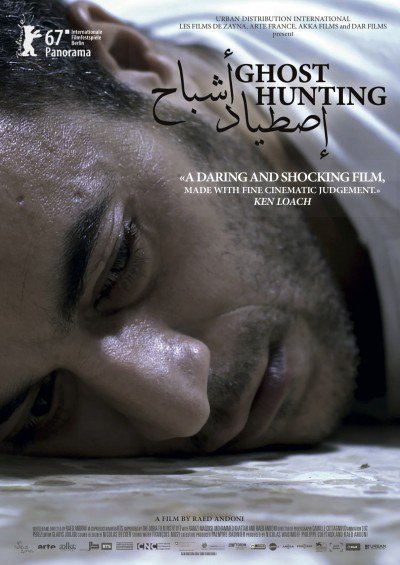 A film depicting the torture, humiliation and violence experienced by Palestinians imprisoned by Israel won the first ever “Silver Bear” award at the Berlinale international film festival.
The film, “Istiyad Ashbah” (Ghost Hunting), was produced by Palestinian filmmaker Raed Andoni.
It was one of 18 finalists competing for the top honor at the Berlinale film festival this year. The ‘Golden Bear’ award was won by Hungarian filmmaker Ildiko Enyedi for the film “Testrol es lelekrol” (On Body and Soul).
Andoni’s film “Ghost Hunting” involves a powerful re-enactment of interrogation rooms and prison facilities in the infamous ‘Russian Compound’ prison run by Israel.
According to journalist Rene Windangel, who spoke with Andoni about the creation of the film, the director began by confronting his own ghosts, having been imprisoned during the first intifada in the late 1980s. He then “turned to newspaper ads as he set out to find a group of former inmates able to work as set designers and craftsmen in recreating a prison on the film set. He also sought out ex-detainees willing to play the roles of prison wardens and prisoners. And so this group of people, who had themselves experienced imprisonment, began to meticulously build their own prison.”
German commentator Rene Windangel wrote in the paper ‘Qantara’, in a review of the film, “By giving the actors and crew room to express themselves, Andoni’s film manages to avoid cliches. In no way is the film limited to the observation of suffering or the re-enactment of victimisation. Raed Andoni’s film functions as both trauma therapy and as an opportunity to discuss the political problem of prisoners. First and foremost, though, the film works as an impressive piece of cinematography dealing with the basic questions of the human condition.”
Currently there are around 7000 Palestinian men and women imprisoned by Israel. Over 750,000 Palestinians have been imprisoned since 1967 and the start of the Israeli occupation of Gaza, the West Bank and East Jerusalem. Most were sentenced by military courts, while others were held without any charges in so-called “administrative detention”. There are practically no Palestinian families that have been spared the experience of prison.
Featured Video

Trita Parsi: Israel Set a Trap for Total War in the Region
or go to
Aletho News Archives – Video-Images
Book Review
Why the War on Conspiracy Theories Is Bad Public Policy
By Kevin Barrett • Unz Review • February 1, 2019
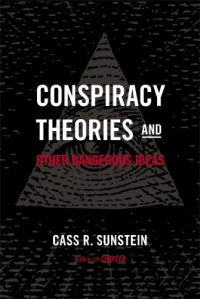 A Review of Conspiracy Theories and Other Dangerous Ideas by Cass Sunstein (based on an earlier paper co-authored with Adrian Vermeule); In Defense of Troublemakers: The Power of Dissent in Life and Business by Charlan Nemeth; and Conspiracy Theories and the People Who Believe Them, edited by Joseph E. Uscinski
On January 25 2018 YouTube unleashed the latest salvo in the war on conspiracy theories, saying “we’ll begin reducing recommendations of borderline content and content that could misinform users in harmful ways—such as videos promoting a phony miracle cure for a serious illness, claiming the earth is flat, or making blatantly false claims about historic events like 9/11.”
At first glance that sounds reasonable. Nobody wants YouTube or anyone else to recommend bad information. And almost everyone agrees that phony miracle cures, flat earthism, and blatantly false claims about 9/11 and other historical events are undesirable.
But if we stop and seriously consider those words, we notice a couple of problems. First, the word “recommend” is not just misleading but mendacious. YouTube obviously doesn’t really recommend anything. When it says it does, it is lying. … continue
Blog Roll
 Aletho News
- Trita Parsi: Israel Set a Trap for Total War in the Region
- Trump’s Iran war is on an Israeli leash
- Saudi oil boss issues global supply warning
- Riyadh Says Its Oil System Is Intact. The Numbers Say Otherwise.
- Trump and Netanyahu Want to “Finish the Job” on Iran
- US ‘one-sided dictation’ not Iran’s beliefs makes rational talks impossible: Baghaei
- Iran’s Next Strike May Not Explode. It Could Shut You Down /Col Doug Macgregor
- Iran: US political targets legitimate if assassinations return
- Iraq shuts key border crossing with Iran under US pressure: Report
- Undersea Internet cables could be targeted in retaliation for attacks on Iran: IRGC deputy chief
- If Americans Knew
- The Israel Lobby’s Changing Fortunes
- AIPAC has become such a political liability that it’s shifting to a more “nimble” approach to buying politicians
- At least 160 Israeli settler attacks in 2 weeks
- Will Gaza’s Ancient Christian Community Disappear Forever?
- Israel’s vision of regional security rests on keeping Arab states weak
- Heidi Levine recounts how Palestinian youths helped save her in settler attack
- DAILY UPDATE: Latest essential news on Palestine, Israel, & region
- Trump’s Intensifying Sabotage of the ICC, for Israel’s Sake
- Israeli military detain US and UK volunteers in West Bank including Democratic NY politician Brad Lander
- Americans at National Conservatism Conference held in Israel this year criticize Israel
- No Tricks Zone
- E-Cars Reduce CO2 Emissions By Only 41% Compared To Internal Combustion Engine Vehicles
- Predictions Made By Renowned Climate Professor Over Past Decades Have Been Proven To Be Poor
- New Study Suggests Large Regions Of The Pacific Ocean Have Been Cooling For The Last 80 Years
- Germany’s Green Energy Debacle: High Energy Costs Force Kahla Porzellan to Close After 182 Years!
- New Study: 50 Years Of The Most Aggressive ‘Net Zero’ Policies Can Only Affect The Global Climate By 0.03°C
- US September “Heat” Was No Record…Many Records Set Decades Ago
- Latest European Green Energy Debacle; Portugal’s Largest Flagship Solar Park Insolvent!
- Green Energy Debacle: German Expert Professor Fritz Vahrenholt Warns Of Severe Economic And Social Consequences
- Two More Paleo Reconstructions Affirm Meters-Higher Sea Levels Across Ireland, Brazil 7000-6000 Years Ago
- New Study: Earth And Venus Surface Warmth Largely Explained By Convection And Lapse Rate, Not CO2 Or Radiation

