Israeli man stabs, injures two Palestinian street cleaners
Press TV – February 12, 2017
At least two Palestinians have sustained injuries when a young Israeli man carried out a stabbing attack in southern Israeli-occupied territories amid violent attacks by Israeli military forces against Palestinian protesters.
Israeli police spokeswoman, Luba al-Samri, said in a written Arabic statement that the assailant, thought to be in his twenties, was detained after committing the attack in the city of Beersheba, located 115 kilometers southeast of Tel Aviv, early on Sunday.
The two injured men were transported to a hospital in the area.
Samri identified the unnamed attacker as a local resident of Beersheba, adding that initial investigations point to a “criminal” motive behind the incident.
30 Israeli settlers break into al-Aqsa Mosque
Meanwhile, more than two dozen Israeli settlers have once again stormed the al-Aqsa Mosque compound in the Old City of Jerusalem al-Quds.
Local sources, speaking on condition of anonymity, said 30 settlers, escorted by several groups of Israeli troops and led by a number of guides and rabbis, entered the site through the Bab al-Maghariba on Sunday morning.
The settlers reportedly staged lengthy stopovers in various parts of the al-Aqsa Mosque courtyard during the incursion.
Israeli soldiers were heavily present at the entrance gates to the mosque and thoroughly checked the identity cards of arriving worshipers.
The occupied Palestinian territories have witnessed tensions ever since Israel imposed restrictions on the entry of Palestinian worshipers into the al-Aqsa Mosque compound in East Jerusalem al-Quds in August 2015.
Nearly 280 Palestinians have lost their lives at the hands of Israeli forces since the beginning of October that year.
100-year-old Bedouin woman left homeless as Israel continues Negev demolitions
Ma’an – February 8, 2017
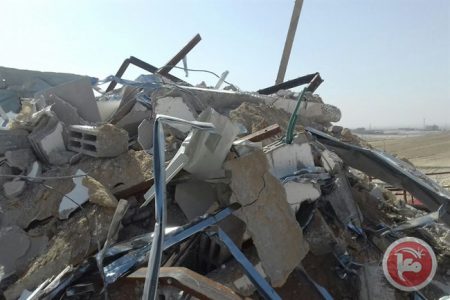
NEGEV – In the latest instance of Israel’s demolition campaign in the Negev region of southern Israel, homes were demolished in two unrecognized Bedouin villages on Wednesday, while Israeli police surrounded the village of Umm al-Hiran.
Israeli bulldozers, escorted by Israeli police, demolished a house in the village of Wadi al-Naam in the western part of the Negev in southern Israel.
Locals told Ma’an that the demolished house was owned by an elderly woman and her daughter. A member of the local committee, Yousif Ziyadin, said that an emergency session would be held to discuss the Israeli demolition.
A relative of the elderly homeowner, Ahmad Zanoun, told Ma’an that 100-year-old Ghaytha Zanoun and her 60-year-old daughter Hilala were living in the house, both of whom suffer from various health issues.
Zanoun said that both Ghaytha and Hilala were unable to walk, and noted that the family had renovated the home in accordance with their doctor’s suggestions due to their health conditions.
He added that Ghaytha and her daughter now were homeless following the demolition.
The Wadi al-Naam village was established in the 1950s soon after the 1948 Arab-Israeli war that established the state of Israel. Military officials forcibly transferred the Negev Bedouins to the site during the 17-year period when Palestinians inside Israel were governed under Israeli military law, which ended shortly before Israel’s military takeover of Gaza and the West Bank, including East Jerusalem, in 1967.
In July, the Israeli government approved plans to build townships for Israel’s Bedouin community. The planned township is expected to be built just south of Shaqib al-Salam, another Bedouin township, and would transfer at least 7,000 Bedouins from the unrecognized village of Wadi al-Naam, Israeli newspaper Haaretz reported last year.
The approved village would comprise of an area of approximately 9,000 dunams (2,224 acres), while providing housing to some 9,000 residents, The Times of Israel also reported.
The proposal to expand the area of Shaqib al-Salam was challenged in Israel’s Supreme Court in 2015, as the Association of Civil Rights in Israel (ACRI), who assisted in the court proceedings, argued that any expansion of the town would be followed by the forcible removal of Bedouins from unrecognized villages, particularly from Wadi al-Naam.
Yaron Kelner, spokesperson for ACRI, confirmed to Ma’an on Wednesday that residents of Wadi al-Naam have continued to refuse the relocation deal.
Meanwhile, Israeli bulldozers also demolished a mobile home in the unrecognized village of al-Zarnouq in the Negev. However, no other details were provided about the demolition.
The Israeli government has plans to evacuate thousands of residents from al-Zarnouq to the recognized village of Rahat in order to build over the land for new housing for non-Bedouin Israeli citizens.
According to Israeli newspaper Haaretz, the Israeli government approved in 2011 plans to transfer tens of thousands of Bedouins in unrecognized villages, including al-Zarnouq, into officially recognized settlements.
The ongoing attempts at transferring the Bedouins originated from the Prawer Report, a document outlining expulsion plans for the unrecognized Bedouin community. It was officially adopted by the Israeli government in 2013.
According to Israeli human rights group Adalah, the plan would “result in the destruction of 35 ‘unrecognized’ Arab Bedouin villages, the forced displacement of up to 70,000 Arab Bedouin citizens of Israel, and the dispossession of their historical lands in the Negev.”
In another incident in the Negev on Wednesday, the Yoav unit of the Israeli police surrounded the village of Umm al-Hiran. According to locals, residents have expressed fear that their presence could signal another demolition, the last of which erupted into deadly violence when Israeli police raided the village prior to demolishing homes. A local Bedouin teacher and an Israeli police officer were killed at the time.
Meanwhile, the Bedouin village of al-Araqib was demolished for the 109th time on Wednesday.
Bedouin communities in the Negev have been the target of a heightened demolition campaign in recent weeks, following Israeli leaders publicly expressing their commitment to demolish Palestinian structures lacking difficult to obtain Israeli-issued building permits across Israel and occupied East Jerusalem in response to the Israeli-court sanctioned evacuation of the illegal Amona settler outpost.
In December, Netanyahu released a video to address settlers of the Amona outpost, assuring them that he would commit to “enforcing laws” on “illegal construction” in Israel, referring primarily to Palestinian communities that are often forced to build without Israeli-issued building permits, due to what rights groups have attributed to discriminatory zoning policies in Israel which have excluded many Palestinian-Israeli communities from being included in the regional and municipal development plans.
According to the Association for Civil Rights in Israel (ACRI), more than half of the approximately 160,000 Negev Bedouins reside in unrecognized villages.
Rights groups have claimed that the demolitions in Bedouin villages is a central Israeli policy aimed at removing the indigenous Palestinian population from the Negev and transferring them to government-zoned townships to make room for the expansion of Jewish Israeli communities.
UK covered up intelligence training with Bahrain’s police, amid death sentence
Reprieve | February 5, 2017
UK authorities trained Bahrain’s police how to gather intelligence on protestors, and then tried to cover up the scheme, international human rights group Reprieve has found. The project took place after protestors in the Gulf kingdom were rounded up and sentenced to death.
Britain’s Foreign Office paid for half a dozen Bahraini police officers to visit Belfast in August 2015, where the Police Service of Northern Ireland (PSNI) shared its expertise on gathering intelligence ahead of demonstrations.
Protestors in Bahrain, such as Mohammed Ramadan, have been targeted by police and tortured into falsely confessing to capital crimes. Mr Ramadan, a father of three young children, is now on death row and could be executed at any time.
The training, which also included sessions on water cannons, dog handling and public order tactics, was kept secret. The UK government has repeatedly denied providing public order training to Bahrain.
The Cabinet Office claimed that “The UK does not fund any programmes in Bahrain focused on public order”. However, documents obtained by Reprieve show that Bahrain’s police received an “Introduction to Combined Operational Training with a focus on Public Order.”
The training was prepared by Northern Irish police officers during a week-long “scoping visit” to Bahrain over April-May 2015, where they assessed Bahrain’s public order systems. The Stormont-owned company NI-CO played a key role in organising all the training.
It has also emerged that Bahrain’s Chief of Police and his deputies visited Belfast in June 2014. The itinerary included another session with the PSNI on “Community Intelligence”. The police chief attended a “demonstration of PSNI Public Order systems” and received a “Tour of North and West Belfast ‘Flashpoints’ with 2 or 3 PSNI Armoured Vehicles”.
Bahrain’s Chief of Police had to postpone a visit to Belfast earlier in 2014 because there was a “security emergency in Bahrain at the moment and it is felt that the Chief of Police and other senior officers cannot leave the country at this critical time.” This was a month after death-row prisoner Mohammed Ramadan was tortured. “The situation on the ground is becoming increasingly tense”, an email explained.
Bahrain’s Chief of Police has command level responsibility for violations carried out by lower ranking officers. Months after the police chief visited Belfast for training, teenager Ali al-Singace was arrested and tortured by Bahrain’s police with electric shocks, until he made a false confession to a capital crime. He was executed by firing squad in January 2017.
Commenting, Maya Foa, a director of Reprieve, said:
“It is outrageous that the government has covered up this project, which risks supporting the execution of protesters in Bahrain.
“Bahrain is notorious for arresting, torturing and sentencing to death people involved in protests – such as Mohammed Ramadan, a father of three who is held on death row and faces execution at any moment.
“By training Bahrain’s police how to gather intelligence on protesters, there is a serious risk that Britain is helping them arrest and execute people who are guilty of nothing more than calling for reform. It is scandalous that the Government has sought to sweep this under the carpet.”
Hundreds of Belgian Artists and Academics Urge Government to End Participation in EU Project Cooperating with Israeli National Police
IMEMC News & Agencies – February 3, 2017
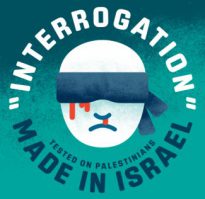 In Belgium, 482 professors and researchers, and more than 190 artists, have written an open letter calling on their authorities to withdraw from participating in a European Union funded research project called LAW TRAIN, in which Belgium and Spain cooperate with the Israeli National Police.
The project, aimed at developing joint interrogation methods, is coordinated by an Israeli university with particularly deep ties to Israel’s army and notorious security services. The signatories of this open letter highlight that Israeli methods are tested on Palestinians. Israel’s illegal detention of Palestinian political prisoners, and the systematic abuse and torture perpetrated by Israeli security forces during interrogations, is well documented. And, in 2016 alone, Israelis interrogated at least 7,000 Palestinians, including over 400 children.
This open letter is part of broader efforts by the Belgian Coalition To Stop Law Train, and broader European-wide efforts against the participation of the Israeli military, homeland security and police sector in research and development funded by the European Union. Other forms of mobilizing have included direct actions, conferences, and lobbying.
Imprisoned journalist threatened with administrative detention, his wife summoned to interrogation
Samidoun Palestinian Prisoner Solidarity Network – January 26, 2017
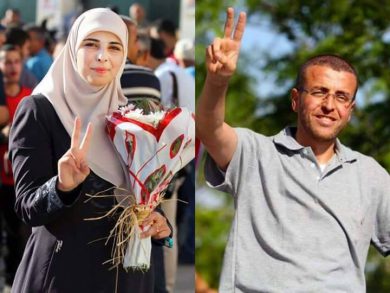 Imprisoned Palestinian journalist and former long-term hunger striker Mohammed al-Qeeq will be brought before the Ofer military court today, 26 January, and may be ordered to administrative detention without charge or trial. Fayha Shalash, fellow journalist and al-Qeeq’s wife, said that the Israeli military court ordered his arrest extended for 72 hours on Monday, 23 January.
Shalash said to Wattan TV that occupation authorities have not garnered any confessions or charges against al-Qeeq since they seized him on 15 January as he returned from a protest in Bethlehem demanding the release of the detained bodies of Palestinians killed by Israeli forces. She emphasized that he will begin a hunger strike if he is ordered again to administrative detention.
Shalash herself was ordered to interrogation by Israeli intelligence on Wednesday, 25 January after al-Qeeq’s family home in al-Khalil and their apartment in Ramallah were raided by occupation forces in pre-dawn attacks ransacking the home and subjecting Shalash to a strip search. Al-Qeeq was transferred yesterday to the Petah Tikva interrogation center.
Al-Qeeq previously engaged in a 94-day hunger strike against his imprisonment without charge or trial, winning his release in May 2016 and drawing international attention to the persecution of Palestinian journalists and the imprisonment of Palestinians without charge or trial under administrative detention.
Israeli Border Police Executed Bedouin at Um al Hiran, Doctored Video Footage
By Richard Silverstein | Tikun Olam | January 20, 2017
I wrote a post about the killing of Musa Abu Qilyan in which I presented both the claim of the Border Police that he killed a policeman in a deliberate terror attack; and also presented video which, as I wrote, failed to support the police claims (though it didn’t refute them). Now, Ronnie Barkan has provided a close video analysis of two separate versions of the video, one distributed by the police and another slightly longer one which surfaced on Facebook. Ronnie shows (be patient in watching the various iterations of the video clips he presents) incontrovertibly that the Police video was subtly and slightly edited, both removing the first shot a Border Policeman fired at the car, and also speeding up the video to make the vehicle appear to be going faster than it was. You may read an alternate version, which essentially agrees with Ronnie’s work, at 972.
What does all this mean? First, that when Abu Alqilyan’s vehicle drove along the road it presented no threat whatsoever to the police personnel. It was driving slowly and deliberately. As it proceeds, a police officer runs toward it firing. Three or four shots are fired. The first shot is fired while the car is driving quite slowly and seemingly under the driver’s control. Only after those shots are fired does the vehicle speed up, lose control and hit another police officer standing near the road. Clearly, the driver had been fatally struck by these bullets before he killed the officer.
In other words, the police acted recklessly and with total disregard even for their own safety. They essentially murdered the Bedouin driver when he posed no threat. After he was incapacitated, his vehicle struck and killed the other officer. He was not intending to harm anyone. Ergo, he was not a terrorist. It’s certainly possible he was a supporter of the Islamic Movement, but certainly not of ISIS as Israeli Jewish politicians have claimed. Further, being an Islamist is not the same as being a terrorist.
The only possibility I can think of to support the police version is perhaps an officer had tried to stop him at some point before the drone footage began. He may have seemed to defy an order to stop and proceeded on his path, which led the officer to fire. But you can be sure that if such a thing happened, the drone footage authenticating it would’ve been released.
Further, how can a major police action at which physical altercations and protest is expected not secure the perimeter of vehicle and pedestrian traffic? How could the police have allowed any vehicles to approach them as this man did? Why weren’t there roadblocks preventing access? To me, this appears to be a botched Border Police operation for which they have only themselves to blame.
Finally, this is yet another example of fraud and mendacity on the part of the Israel’s most vicious, brutal and violent police authorities. Not only are Border Police the most racist, they are also the mostly likely to lie and cover up their errors, as they have here. It’s a shameful episode which should be met with skepticism and derision by the Israeli media and the Israeli public. However, Israeli Jews are all too quick to swallow the lies fed to them by authorities. Once they have drunk the Koolaid, counter-evidence like this threatens their equanimity and is usually ignored or dismissed.
In my earlier post I debated the meaning of “terrorism” in the Israeli context and argued that dispossessing the Bedouin as Israel is doing, along with deadly violence like this constitutes state terror. This new evidence confirms there was no terror on the part of the Bedouin at all. The only terror was that of the forces of the State. If I were Israeli, I would hang my head in shame.
Israeli Soldiers Open Fire On Homes In Southern Gaza, Strike Six-Year-Old Girl
Ma’an – January 20, 2017
 GAZA – A Palestinian child was reportedly injured on Friday evening after being struck by an Israeli bullet in Beit Lahiya in the north of the Gaza Strip after Israeli forces opened live fire at homes in the area.
According to medical sources, the six-year-old girl was injured in her stomach, and described her injury as moderate.
The child was taken to al-Shifa hospital in Gaza city and was later transferred to a hospital in the north of the besieged enclave.
An Israeli army spokesperson told Ma’an she would look into reports on the incident.
NGO: Israeli shooting of Palestinian teen in Tuqu ‘extrajudicial killing’
Ma’an – January 18, 2017
BETHLEHEM – A Palestinian rights group slammed on Wednesday the killing of a Palestinian teen by Israeli forces earlier this week, calling the case an “extrajudicial killing” and demanding that Israeli authorities open an investigation into the case.
Qusay al-Umour, 17, was killed during clashes between Israeli forces and Palestinian youth in the Bethlehem-area village of Tuqu in the occupied West Bank on Monday.
Video of the moments immediately following al-Umour being shot by Israeli forces has elicited a strong emotional response, as it showed Israeli soldiers roughly carrying the teenager’s limp body by his dangling arms and legs.
Legal NGO BADIL said in a statement on Wednesday that the footage provided “evidence contradicting Israeli accounts and raises concerns about the adherence of the Israeli forces to the central tenets of international law.”
The group quoted Hisham Abu Shaqra, the Palestinian journalist who recorded the video, who said that al-Umour was not a threat to Israeli forces when he was fatally shot — contradicting claims by the Israeli army, which said that the Palestinian youth was the “main instigator” of the clashes that day.
“Qusay was sitting between olive trees, you know how guys are, he was just watching the soldiers… Only a few seconds after (I was) looking at him the Israeli forces shot him three or four times,” Abu Shaqra said.
“The soldier who shot him was not in danger at the time of the shooting, in fact, he was secured and safe,” he added. “First the (Israeli military) jeeps started coming closer and closer [to the youth] and then this specific soldier, the sniper with the Ruger rifle, also started coming closer. I remember he was by the third jeep, then I saw him by the second jeep and he was by the first jeep when he shot Qusay.”
The eyewitness accounts of the incident, coupled with the audiovisual evidence, have led BADIL to conclude that “whether he was throwing stones at the soldiers or not, al-Umour could not have presented a lethal threat to the well-protected Israeli border police from a distance of around 100 meters, and the use of live ammunition against him was therefore unjustified.”
The NGO denounced the “complete lack of consideration for (al-Umour)’s human dignity or his traumatic injuries.”
The group also slammed statements by Israeli police to Ma’an saying that they were “not aware” of any official investigation being carried out by Israeli authorities into al-Umour’s killing.
“Israel continuously fails to investigate such actions or to prosecute members of its forces, which is the natural result of a growing culture of impunity that exists within the Israeli military,” BADIL wrote. “This is why recent Israeli actions towards Palestinian civilians cannot be considered as isolated incidents, but rather as the violent manifestations of a policy of lawlessness in which Israeli forces operate in repeat, and direct contravention of international law absent effective accountability.”
The group therefore “demands that a comprehensive and independent investigation be launched into this killing as a matter of great urgency in order to identify those responsible and to hold them accountable to the full extent of international law.”
Al-Umour is the fourth Palestinian to have been confirmed killed by Israeli forces in 2017. Two more Palestinians have been killed by Israeli forces in the two days since.
Five Israelis have been killed by Palestinians in 2017.
In 2016, Ma’an recorded the deaths of 112 Palestinians, 15 Israelis, and three foreign nationals.
Rights groups have routinely condemned Israeli authorities for their excessive use of force against Palestinians, including minors, during incidents which could have been handled without the use of deadly violence.
Leonard Peltier denied clemency or commutation by Obama
International Leonard Peltier Defense Committee | January 18, 2017
Brothers, sisters, friends and supporters:
Our hearts are heavy today. President Obama has denied Leonard’s application for a commutation. His name appears on the January 18 list of commutations denied by Obama as issued by the Office of the Pardon Attorney. Leonard’s attorney Martin Garbus was also notified. (Pardon Attorney’s Letter)
Today, in an email, Leonard said, “If I should not [receive clemency] then after we are locked in for the day I will have a good cry and then pick myself up and get myself ready for another round of battles until I cannot fight [any] more. So, don’t worry. I can handle anything after over 40 years.”
It’s hard to bear such a blow, though. And make no mistake — Leonard has been hit hardest of all. But let’s not mourn so very long. Instead, let’s move ever forward. Channel your grief and anger in a positive way. Remember that Leonard still needs our help. He needs quality health care and a transfer to a medium security facility, among other things. We’ll always work towards freedom for Leonard, but these actions may help to make his life more bearable until freedom is won.
Now, we urge you to write to Leonard and help to keep his spirits up. Tell him you won’t give up, that you’ll walk the rest of the way with him. Send cards and letters to:
Leonard Peltier #89637-132
USP Coleman I
PO Box 1033
Coleman, FL 33521
Thank you for your hard work and determination. Blessings to all of you.
Please stay tuned.
In solidarity,
International Leonard Peltier Defense Committee
Featured Video
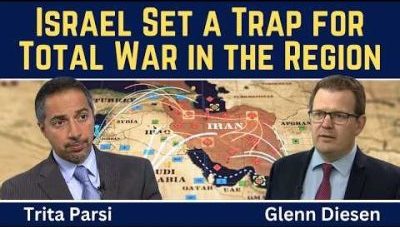
Trita Parsi: Israel Set a Trap for Total War in the Region
or go to
Aletho News Archives – Video-Images
Book Review
Why the War on Conspiracy Theories Is Bad Public Policy
By Kevin Barrett • Unz Review • February 1, 2019
 A Review of Conspiracy Theories and Other Dangerous Ideas by Cass Sunstein (based on an earlier paper co-authored with Adrian Vermeule); In Defense of Troublemakers: The Power of Dissent in Life and Business by Charlan Nemeth; and Conspiracy Theories and the People Who Believe Them, edited by Joseph E. Uscinski
On January 25 2018 YouTube unleashed the latest salvo in the war on conspiracy theories, saying “we’ll begin reducing recommendations of borderline content and content that could misinform users in harmful ways—such as videos promoting a phony miracle cure for a serious illness, claiming the earth is flat, or making blatantly false claims about historic events like 9/11.”
At first glance that sounds reasonable. Nobody wants YouTube or anyone else to recommend bad information. And almost everyone agrees that phony miracle cures, flat earthism, and blatantly false claims about 9/11 and other historical events are undesirable.
But if we stop and seriously consider those words, we notice a couple of problems. First, the word “recommend” is not just misleading but mendacious. YouTube obviously doesn’t really recommend anything. When it says it does, it is lying. … continue
Blog Roll
 Aletho News
- Trita Parsi: Israel Set a Trap for Total War in the Region
- Trump’s Iran war is on an Israeli leash
- Saudi oil boss issues global supply warning
- Riyadh Says Its Oil System Is Intact. The Numbers Say Otherwise.
- Trump and Netanyahu Want to “Finish the Job” on Iran
- US ‘one-sided dictation’ not Iran’s beliefs makes rational talks impossible: Baghaei
- Iran’s Next Strike May Not Explode. It Could Shut You Down /Col Doug Macgregor
- Iran: US political targets legitimate if assassinations return
- Iraq shuts key border crossing with Iran under US pressure: Report
- Undersea Internet cables could be targeted in retaliation for attacks on Iran: IRGC deputy chief
- If Americans Knew
- The Israel Lobby’s Changing Fortunes
- AIPAC has become such a political liability that it’s shifting to a more “nimble” approach to buying politicians
- At least 160 Israeli settler attacks in 2 weeks
- Will Gaza’s Ancient Christian Community Disappear Forever?
- Israel’s vision of regional security rests on keeping Arab states weak
- Heidi Levine recounts how Palestinian youths helped save her in settler attack
- DAILY UPDATE: Latest essential news on Palestine, Israel, & region
- Trump’s Intensifying Sabotage of the ICC, for Israel’s Sake
- Israeli military detain US and UK volunteers in West Bank including Democratic NY politician Brad Lander
- Americans at National Conservatism Conference held in Israel this year criticize Israel
- No Tricks Zone
- E-Cars Reduce CO2 Emissions By Only 41% Compared To Internal Combustion Engine Vehicles
- Predictions Made By Renowned Climate Professor Over Past Decades Have Been Proven To Be Poor
- New Study Suggests Large Regions Of The Pacific Ocean Have Been Cooling For The Last 80 Years
- Germany’s Green Energy Debacle: High Energy Costs Force Kahla Porzellan to Close After 182 Years!
- New Study: 50 Years Of The Most Aggressive ‘Net Zero’ Policies Can Only Affect The Global Climate By 0.03°C
- US September “Heat” Was No Record…Many Records Set Decades Ago
- Latest European Green Energy Debacle; Portugal’s Largest Flagship Solar Park Insolvent!
- Green Energy Debacle: German Expert Professor Fritz Vahrenholt Warns Of Severe Economic And Social Consequences
- Two More Paleo Reconstructions Affirm Meters-Higher Sea Levels Across Ireland, Brazil 7000-6000 Years Ago
- New Study: Earth And Venus Surface Warmth Largely Explained By Convection And Lapse Rate, Not CO2 Or Radiation

