
Past & Present NY Times Jerusalem Bureau Chiefs: Jodi Rudoren, Ethan Bronner, Steven Erlanger, Thomas Friedman
Michael Lerner, the editor of Tikkun Magazine, is known for his frequent condemnations of Israeli violence against Palestinians. He is labeled “pro-Palestinian” for such statements and is regularly attacked by pro-Israel zealots who charge that he is disloyal to the Jewish state.
Yet, in reality, Lerner frequently speaks of his devotion to Israel and states that his actions are taken in considerable part to protect it.
A while ago Lerner explained the difference in his feelings about Israelis compared to his feelings about Palestinians. “[T]here is a difference in my emotional and spiritual connection to these two sides,” Lerner said.
“On the one side is my family; on the other side are decent human beings. I want to support human beings all over the planet but I have a special connection to my family.”
This statement comes to mind when one considers the New York Times bureau chiefs who cover Israel-Palestine.
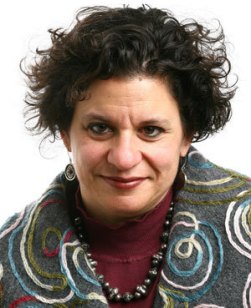
The most recent person to be chosen for this powerful post at arguably the most influential newspaper in the United States is Jodi Rudoren. She takes the place of Ethan Bronner, who was preceded by Steven Erlanger, who was preceded by James Bennet, who was preceded by Deborah Sontag. All, according to an Israeli report, are Jewish.
Most Americans — particularly those who would object to only white reporters covering racial issues or only male reporters covering gender issues — are reluctant to discuss the potential bias in such a profoundly un-diverse system, having been conditioned to fear that such discussion would be “anti-Semitic” or would open the commentator to this extremely damaging accusation.
In Israel, however, it is considered appropriate to discuss the Jewish roots of American politicians and journalists since Israel was created specifically to be “the Jewish state,” Jews have elevated status in it, and the vast majority of Israeli land is officially owned by “world Jewry” (although some individuals have publicly opted out).
An article on the Jerusalem Post website, a major Israeli newspaper, focuses on this aspect. The article, “Judaism at the New York Times”, reports that “all New York Times’ bureau chiefs for at least the last fifteen years have been Jewish.”
The article’s author, Ashley Rindsberg, notes that “the Times doesn’t consistently send Russian Americans to its Moscow bureau… or Mexican Americans to lead its Mexico City bureau…” and asks, “Why does the New York Times consistently send Jewish journalists to head their central office in the Jewish State?”
Rindsberg, who like many conservative Israelis considers the Times’ reporting anti-Israel, provides a somewhat convoluted answer. The Times’ Jewish owners, Rindsberg posits, are uncomfortable with their Jewish identity. Therefore, he claims, they “would just as soon as not have reporters who could be identified for their Jewishness. And to prove it, they send Jews to the Jewish State to report in a most un-Jewish way.”
The Times’ history of pro-Israel coverage
Despite Rindsberg’s view of the Times, analysis shows its coverage to be consistently pro-Israel. A 2005 study found that the Times reported on Israeli deaths at rates up to seven times greater than its reports on Palestinian deaths, even though Palestinian deaths occurred first and in far greater numbers.
A 2007 study of the Times’ coverage of various international reports on human rights violations by Israelis and by Palestinians found that the Times covered reports condemning Israeli human rights violations at a rate only one-twentieth the rate that it covered reports condemning Palestinian human rights violations. The investigation found that during the study period there had been 76 reports by humanitarian agencies condemning Israel for abuses and four condemning Palestinians for abuses. The Times carried two stories on each side.
In its early years the Times specifically avoided assigning Jewish reporters to cover Israel out of concern that such journalists would have an inherent conflict of interest. This policy was reversed in 1979 after Abe Rosenthal became the paper’s executive editor and explicitly decided to choose Jewish journalists for the position.
While his first attempt failed (he had thought his choice, David Shipler, was Jewish), the Columbia Journalism Review reports that most of the journalists who succeeded Shipler, beginning with Thomas Friedman, have been of Jewish ethnicity. The article notes that “for a century [the Times] has served, in effect, as the hometown paper of American Jewry.”

Former NY Times executive editor Max Frankel, who was an editor at the Times from 1972 through 2000, admitted in his memoirs: “I was much more deeply devoted to Israel than I dared to assert … Fortified by my knowledge of Israel and my friendships there, I myself wrote most of our Middle East commentaries. As more Arab than Jewish readers recognized, I wrote them from a pro-Israel perspective.”
An article by star reporter and author Grace Halsell describes her firsthand experience with pro-Israel bias at the Times in the early 1980s.
Halsell had written books about the plight of Native Americans, African Americans, and undocumented Mexican workers. She was a great favorite of New York Times matriarch Iphigene Ochs Sulzberger, whose father had acquired the Times in 1896, whose husband and then son had run it next, and whose grandson is now in charge.
When Halsell next wrote a powerful book describing the Palestinian plight, she incurred Mrs. Suzberger’s displeasure and was quickly dropped by the Times. Halsell writes: “I had little concept that from being buoyed so high I could be dropped so suddenly when I discovered—from her point of view—the ‘wrong’ underdog.”
In her article Halsell quotes a revealing statement by an Israeli journalist following Israel’s 1996 shelling of a U.N. base in Lebanon that killed more than 100 civilians sheltering in it: “We believe with absolute certitude that right now, with the White House in our hands, the Senate in our hands and The New York Times in our hands, the lives of others do not count the same way as our own.”
Since 1984 New York Times bureau chiefs have lived in a house that was acquired for the Times by then Jerusalem Bureau Chief Thomas Friedman (now the Times’ lead foreign policy columnist). The building originally belonged to a Palestinian family forced out in Israel’s 1947-49 founding war. Israel afterward prevented the family from returning and reclaiming their home. Therefore, Times’ bureau chiefs are in the strange position of living in a home that was stolen from Palestinians (acquiring property by violent conquest is illegal in today’s world).
Recent Situation: Bronner, Kershner, & Khader Adnan
 Rudoren’s predecessor as Jerusalem bureau chief, Ethan Bronner, has a son who enlisted in the Israeli military. When this conflict with impartiality was exposed, even the Times’ own ombudsman suggested that journalistic ethics required that Bronner be moved to a different beat. Yet, Times then-editor Bill Keller insisted that this gave Bronner “special sophistication” and kept him in his position.
Bronner’s colleague at the bureau has been Isabel Kershner, who will apparently be staying on. J.J. Goldberg, editor of the Forward, writes: “Isabel Kershner immigrated to Israel from her native England as a young woman and spent a couple of decades in Israeli journalism and Jewish education before joining the Times a few years ago. By now she’s thoroughly Israeli (and, for full disclosure, a friend).”
While pro-Israel Zealots vehemently attack Bronner and Kershner when they cover Palestinian victimization, the truth is that they overlook a great many instances. For example, a 33-year-old Palestinian father of two young girls (another child is on the way) was on a hunger strike that lasted for 66 days. He was was near death when he reportedly decided to end it on Feb 21.
The young man, Khader Adnan, was protesting his imprisonment by Israel – he was never charged with a crime – and the beatings and humiliations he endured from Israeli interrogators. There was an extended international campaign about him that grew even more urgent when doctors began warning after 45 days that he was at risk of death. Eventually, there was so much pressure world wide (including by UN Special Rapporteur Richard Falk and EU Foreign Policy Chief Catherine Ashton) that Israel announced it would release Adnan at the end of his “sentence.”
Yet, Bronner and Kershner – and Times columnists who frequently bemoan the alleged lack of a Palestinian Gandhi – did not publish a single story on Adnan until the 66th (and last) day of his hunger strike – after the Washington Post had finally carried a report two days before. The Times’ headline was the very bland, “Hearing for Palestinian on Hunger Strike Is Set.

While Adnan’s is the longest Palestinian hunger strike on record, through the years there have been hundreds of hunger strikes by multitudes of Palestinians in Israeli prisons; the Times almost never reports on them. It’s revealing to compare their numerous stories on the Israeli tank gunner captured by Palestinians, Gilad Shalit, to the sparsity of their reporting on Adnan and others.
Overall, the thousands of Palestinian prisoners held by Israel seem largely to have been invisible to Times’ reporters. While there have been gruesome reports of their torture for decades, there is little indication that Bronner or Kershner have investigated this or made much, if any, effort to visit Palestinians in Israeli prisons.
Who is Jodi Rudoren?
Now that Bronner’s four-year term has come to an end (he says he initiated the transfer himself and was not pushed out over conflict of interest), it is not clear what went into new editor Jill Abramson’s decision to choose Rudoren for this powerful position.
A cum laude graduate from Yale, Rudoren’s journalistic experience appears to be limited to domestic subjects. Most recently she had been head of the Times’ Education bureau. She speaks what she calls “functional Hebrew” but no Arabic. It’s unknown how much time, if any, she has spent in Israel, whether she has family there, or whether she has family members in the Israeli military.
When Rudoren received a tweet by Palestinian-American author Ali Abunimah, who noted that she would be moving into stolen Palestinian property, she responded: “Hey there. Would love to chat sometime. About things other than the house. My friend Kareem Fahim [a New York Times associate] says good things.”
This friendly but somewhat flip response to a serious subject has caused Israel zealots to attack her. The Atlantic’s Jeffrey Goldberg somewhat hysterically equated Abunimah, an author known for his intellectual analysis, with Israeli Jewish supremacists known for their violence.
Goldberg suggested that Rudoren should have “twinned” her tweet to Abunimah by reaching out to Kahanists — a group listed by both Israel and the U.S. as terrorists. Goldberg should be pleased to learn that Rudoren said she had done just that, telling the Jerusalem Post, “One of the people I followed before reaching out to Abunimah was David Ha’ivri.”
Ha’ivri is an extremist settler rabbi who was involved with Jewish Defense League founder Meir Kahane’s Kach terror group, celebrated the assassination of former Prime Minister Yitzhak Rabin when he had begun to make peace with Palestinians, and was convicted some years ago for desecrating a mosque.
Abunimah, on the other hand, has written a book called “One Country: A Bold Proposal to End the Israeli-Palestinian Impasse,” in which he describes how Israelis and Palestinians can live together in peace.
Rudoren’s knowledge of Hebrew may have been bolstered by her summertime attendance at Camp Yavneh, a Jewish camp in New Hampshire that has an Israeli flag at the top of its website and boasts of its “strong Israeli programming.” It features a six-weeks “summer in Israel” program, though it’s unknown whether Rudoren attended this.
The camp website states that the current boys’ head counselor “grew up in Gush Etzion, Israel, and has served as a Lieutenant Commander in the Israeli Army in charge of 150 soldiers in the Givatti Brigade.” Another counselor is a resident of the Israeli settlement of Efrat, which, like all Israeli settlements, is built on confiscated Palestinian land and is illegal under international law.
Despite an upbringing that appears to have included considerable immersion in Zionist mythology, indications are that Rudoren may be working to widen her view. She raves about a book by Peter Beinart called “The Crisis of Zionism” and retweeted a message by blogger Sami Kishawi. It’s interesting to note that the Times’ only other female Jerusalem bureau chief, Deborah Sontag, often provided exemplary coverage; her term seems to have ended early.
Tweeting like a J-Street official?
Jeffrey Goldberg – who moved to Israel, became an Israeli citizen, joined the Israeli army, and worked as a prison guard at one of Israel’s most brutal prisons – assures readers that Rudoren is still within the pro-Israel fold, commenting, “I don’t know Rudoren… I do know her sister, from synagogue, mainly, and I don’t think Jodi is some sort of anti-Israel activist…”
Goldberg is concerned, however, that she is tweeting “as if she’s a J Street official.” For Goldberg this veers dangerously toward anti-Israelism.
In reality, however, J Street is a pro-Israel organization whose positions are dictated by what is good for Israel. Its founder has just published a book entitled “A New Voice for Israel.” If Goldberg’s assessment of Rudoren is accurate, then it appears that once again the Times has a person at the helm of its reporting on Israelis and Palestinians for whom Israelis are “family.” Quite possibly, literally.
Rudoren may be intending to cover the region accurately and with fairness. To do so, however, it appears that she will need to overcome enormous ingrained bias, relentless and vitriolic objections of the organized pro-Israel community (quite likely including friends and family), and pressure by many powerful Times advertisers and colleagues.
On top of this, unless she chooses a different lifestyle than her predecessors’, she will be living in Israel, her children will go to Israeli schools, and her home will be one of the thousands confiscated from Palestinians who are now living and suffering largely out of sight, their daily humiliations and victimization for the most part invisible.
These winds may be so strong that even when Rudoren believes she has stood upright against them, an outside view may show her tilted far over in the Israeli direction, her reporting on Israel-Palestine, to paraphrase Dorothy Parker, covering the gamut from A to C.
Let us hope that this doesn’t occur.
Let us hope Rudoren understands that good reporting does not equate a false narrative with a factual one; that she will not be, in Abunimah’s words, yet “another New York Times reporter for whom Palestinians are just bit players in someone else’s drama.”
Let us hope she understands that living in stolen property is not a good base from which to report honestly; that “balance” achieved by under-reporting Palestinian suffering while exaggerating that of Israelis is not balance, it is distortion. Let us hope, most of all, that she does not view some human beings as more important than others, but instead views all, regardless of their religion or ethnicity, as family.
~
Alison Weir is executive director of If Americans Knew and president of the Council for the National Interest. She can be reached at contact@ifamericanslknew.org.
February 22, 2012
Posted by aletho |
Deception, Ethnic Cleansing, Racism, Zionism, Mainstream Media, Warmongering, Timeless or most popular, Wars for Israel | Ethan Bronner, Israel, Michael Lerner, New York Times |
Leave a comment
If you ask an Israeli settler in or around Al-Khalil (Hebron) what calls them to live on contested land, most will speak to a religious connection to the city and the Cave of the Machpelach (“patriarchs”), where Jews, Muslims, and Christians come to revere the biblical figures believed to be buried there. A series of signs posted nearby along Shuhada Street, the once-main road and market district now closed to Palestinians, tell a story of Hebronite Jewish habitation dating from biblical times, brought to a sharp and bloody end with a 1929 pogrom, which resulted in the deaths of 67 Jewish residents and the displacement of the survivors. Citing this narrative, many of today’s settlers justify their occupation of the old city as a rebirth and continuation of this community, a story echoed in publications distributed by the Gutnick Center (a Jewish cultural center) and soldier-escorted weekly tours through the Palestinian market. The problem with this narrative is that no one, not even the survivors’ descendants, agrees on it.

On Monday, February 20th, the Jerusalem Post published an article presenting the conflict between the survivors’ descendants as a microcosm for Jewish public opinion, some of whom support the settlements and a growing number who oppose Hebron’s especially active settler community, one which Yair Keidan calls “a loaded bomb that can blow up peace altogether.” Both sides have signed petitions to the Israeli government, asking variously to maintain, evacuate, and/or halt settlement activity, and both groups claim a right to the legacy of their parent community.
“You can’t bring back the dead,” said Ya’acov Castel, a survivor from 1929, “but there are people living here now who are carrying out the dream of the Jews who lived here for hundreds of years.” Yona Rochlin, whose family went back many generations in pre-1929 Hebron, argues the opposite—pointing out that the majority of settlers are US immigrants, who have settled in a foreign city unfamiliar with the customs, language, or neighborly habits of the people they claim as spiritual forebears. Unlike the predominantly Sephardi and Mizrahi (Spanish/North African and Middle Eastern respectively) Jewish minority that coexisted with a Muslim majority for five centuries, she says that today’s settlers “came to the city to take revenge for the 1929 massacre and their main idea was to drive out the Arabs and turn Hebron into a Jewish city.”
Hebronite settlers have many claims to fame, including the first West Bank settlement Kiryat Arba (founded 1968, pop. 7200) and the only settlements within the bounds of a Palestinian city—Avraham Avinu, Beit Hadassah, and Beit Romano, which lie at the heart of the Old City and fall under Israeli military control. They are also known to be among the most violent and hardline, with many claiming allegiance to the Kahanist, Gush Emunim, and other extremist Jewish political and religious sects. Particularly infamous Kahanists include Baruch Marzel, founder of the Jewish National Front, and Baruch Goldstein, who in 1994 massacred 29 and injured over 150 Muslims at prayer in the Mosque al-Ibrahimi. Today Goldstein, who was killed during the attack, is venerated as a hero and martyr—and his tomb in Kiryat Arba continues to draw extremist pilgrims, even though his shrine was removed in 1999.
Rochlin, a politically active parent and child of conservative Jewish parents, in 1996 coauthored an open letter to the Israeli government, “Message from the original Jewish community of Hebron: Evacuate settlers,” which stated, “[Hebronite settlers] are alien to the culture and way of life of the Hebron Jews, who in the course of generations created a heritage of peace between peoples and understanding between faiths.” She sees evidence of this tradition in the fact that Muslim neighbors intervened to save her family and over 400 more when the Jewish community was attacked in 1929. Who exactly did the killing, and from where, is uncertain—but there is surprisingly little disagreement over the 19+ Palestinian families that sheltered and defended Jews. Although some Palestinian community members invited their neighbors to stay or return, by 1936 the British Mandate had relocated the remaining Jews to Jerusalem, Tel Aviv and elsewhere.
Curiously, although the Israeli Jews’ narratives tell radically different stories, many area Palestinians also know a great deal about the pogrom and mourn the loss of friends and neighbors. For Muhammad, head of the Abu Aisha family who live in the famed ‘caged house’ on Tel Rumeida, where their home is surrounded by settlement homes, it is a matter of family pride that his father is named among the Palestinians to save Jewish residents. Nonetheless, the Abu Aisha family struggles with daily harassment at the hands of settlers, who occupy land all around the home. Hajj Yussef, one of the few surviving Palestinians who responded in 1929, talks about “our Palestinian Jews,” who dressed and spoke like non-Jewish neighbors. To Yussef, like the children of his refugee neighbors, the obstacle to peace in Hebron lies not in difference but attitude and actions: “I have no problem living with the Jews, like we lived many years ago. But today’s settlers are not Palestinian Jews, they came here from abroad. And I have a problem if the Jews live in my country as occupiers and settlers.”
Open Shuhada Street, the international campaign to end Israeli Apartheid in Al-Khalil/Hebron will continue February 20th through 25th, with actions and cultural events in Khalil and around the world. Each day, we will cover a different aspect of the Occupation’s effects on Shuhada Street and the city generally.
Continue to follow www.palsolidarity.org throughout the week for more stories and analysis.
February 21, 2012
Posted by aletho |
Ethnic Cleansing, Racism, Zionism, Timeless or most popular | Baruch Marzel, Hebron, Israeli settlement, Shuhada Street |
Leave a comment
The bombing of an Israeli embassy car in Delhi threatens India’s diplomatic maneuvers between Israel and Iran, and has put India’s discreetly nurtured ties with Israel since 1992 through a severe test. Those who are attracted to Israel’s depiction of Iran as a terrorist threat to world peace would do well to read historian Mark Perry’s account, revealing that Israel is recruiting, and collaborating with, terrorist groups in a secret war with Iran. That low-level conflict is spreading. Israel’s latest reaction should be seen in the light of Perry’s revelations.
The Israeli government’s hasty and aggressive posture following the Delhi bombing has caused offense in the Indian capital. Officials in Delhi have made plain that India will not be recruited into the anti-Iran alliance under Israeli–U.S. pressure. India will not allow “Washington, the Jewish lobby and much of Europe to push the country into a corner” over Iran. How India conducts its ties with that country dating back to ancient times is its business. Furthermore, police investigations into the bombing cannot be rushed to suit external interests. The law of the land must take its course.
What particularly irked Indian officials was that immediately after the Delhi bomb (another device was defused by Georgian police in Tbilisi on the same day), Prime Minister Benjamin Netanyahu of Israel sought to upstage India’s police investigations into the incident. Netanyahu described the Iranian government as the world’s “largest terror exporter” and Hezbollah in Lebanon as Iran’s “protégé.” Foreign Minister Avigdor Lieberman went further saying, “We know exactly who is responsible for the attack and who planned it, and we’re not going to take it lying down.”
As if that was not enough. Israel’s Energy and Water Resources Minister Uri Landau intervened with his own comment, calling “India’s support for the Palestinians at the UN a mistake,” and that he intended to “persuade” the Indians to change their stand. And Israel reportedly asked India to help sponsor a resolution against Iran in the UN Security Council, of which India is an elected member at present.
A full-scale Israeli offensive to force a complete overhaul of Indian foreign policy was under way. In the unlikely scenario of it happening, such an event would be a geopolitical earthquake. India’s reliance on oil producers who are firmly in the U.S. camp would be dangerously high. There would be other consequences in the short run. An audacious attack by Israel on Iran, with or without U.S. support, could be nearer, and so would the prospects of a wider Middle East conflict. For these reasons, India now stands between the present and the worst case scenario.
Police investigations were only beginning in Delhi when Israeli ministers spoke with such shocking certainly––the worst kind of megaphone diplomacy. For those sitting in the Indian capital, certain inferences were difficult to avoid. India had recently announced that it would abide by the UN sanctions against Iran, but would not obey additional sanctions imposed by the United States and the European Union. India would continue to buy oil from Iran, and an Indian trade delegation would visit Tehran in coming weeks.
Delhi was by no means alone in asserting an independent stance. Other countries, too, have been resisting what they consider to be strong-arm tactics by the anti-Iran bloc of nations to force reluctant governments to toe the line. The United States, the European Union and Israel are far from happy about this.
That the affair threatened India’s massive trade with Iran, and could derail India’s capacity to formulate its foreign policy, was not lost in Delhi. A number of Indian politicians and senior officials made the government’s position clear. Commerce Minister Anand Sharma said that terrorism and trade were “separate issues,” and that business with Iran would continue. A former diplomat of India and now a leading commentator, M. K. Bhadrakumar, described the Israeli offensive as a “smear campaign” that “Tehran’s agents had been going about placing bombs in New Delhi, Tbilisi and Bangkok.”
Meanwhile, police investigations, and a visit by an Israeli Mossad team to Delhi, were continuing. Indian officials insisted that there was no “conclusive evidence” to link the attack to any particular group or country. And a senior police officer was categorical in saying that there was no link between the Delhi bomb and explosions that occurred in Bangkok the day after.
The Indians are normally too polite to engage in crude public diplomacy. But when ministers of a country of under 8 million, albeit advanced and heavily militarized, try to dictate policy to a nation of 1.2 billion people, it is perhaps too much for the Indian sensitivities.
I am on record as saying that, in the challenging 1990s decade when the Soviet Union collapsed, India was hasty and ill-advised to build a “flyover” to Israel, and from Israel straight on to the United States. Over the years, Israel’s multi-billion dollar sales of weapons based on American and Russian technologies, and intelligence sharing, have given India easy access to an arms bazaar. But there is a cost. India can be vulnerable to pressure, and has ignored its interests in the Muslim world. Simply put, successive Indian governments put too many eggs in the (Israeli–U.S.) basket.
Now that India asserts its strategic interests independent of the United States and Israel, with the other members of the group called BRICS (Brazil, Russia, India, China, South Africa), it faces a trial of strength. The outcome will depend on whether Delhi can establish its capacity to turn away from what look like instant gains, and promises for future, to secure its long-term interests that are essential for India’s place on the world stage.
February 21, 2012
Posted by aletho |
Economics, Militarism, Timeless or most popular, Wars for Israel | Benjamin Netanyahu, India, Iran, Israel |
Leave a comment
A surreptitious WINEP project is pushing cataclysmic regime change in Syria
On February 10, subscribers to Fikra Forum’s mailing list received a bilingual (English and Arabic) letter from director David Pollock informing them:
In reaction to last week’s exclusive Fikra Forum report, Inside the Syrian Army by Ilhan Tanir, contributor Josef Olmert and I present analysis on how the U.S. and the international community should support the FSA [Free Syrian Army].
Five days later, Fikra Forum subscribers received another email with the subject title, “Leading Syrian Activist Calls for International Intervention.” In his introductory note, Pollock explained:
As the international community struggles to halt the Syrian regime’s brutal assault on its people, Fikra Forum would like to share our newest piece by Radwan Ziadeh, an official with the Syrian National Council and executive director of the Syrian Center for Political and Strategic Studies. Ziadeh calls for intervention, urging the international community to form a coalition that legitimizes the SNC as the unified representative of the Syrian opposition and acknowledges the council’s plan for the future of Syria.
At the bottom of both Fikra Forum emails was the following address:
The Washington Institute for Near East Policy | 1828 L STREET NW | SUITE 1050 | WASHINGTON | DC | 20036 | US
However, if one were to visit the Fikra Forum website, one might get the impression that the “online community that aims to generate ideas to support Arab democrats in their struggle with authoritarians and extremists” was trying to hide its association with The Washington Institute for Near East Policy (WINEP), the think tank created by the American Israel Public Affairs Committee to “do AIPAC’s work but appear independent.” In its remarkably vague “About Us” section, the only clue to its affiliation with “the think tank AIPAC built” is this acknowledgement:
Fikra Forum is grateful to the Nathan and Esther K. Wagner Family Foundation for their contribution to the launch of Fikra Forum in the memory of Steven Croft, who during his life believed passionately in the power of ideas to transform lives.
Steven Croft’s February 20, 2009 Death Notice in the Chicago Tribune tells us a little more about those passionate beliefs:
He was also philanthropically involved in local, national and international organizations including the Arthritis Foundation, AIPAC, Israel Bonds and the Washington Institute for Near East Policy.
Notwithstanding the apparent overlap, WINEP also appears to be coy about its relationship with Fikra Forum. Despite the fact that David Pollock is the Kaufman fellow at The Washington Institute, “focusing on the political dynamics of Middle Eastern countries,” there appears to be no mention there of the “unique online community” he directs “with the goal of generating ideas to produce a brighter future for Arab democrats.”
By an amazing coincidence, WINEP has its own “Fikra” (Arabic for “Idea”), which it describes as “a multiyear program of research, publication, and network-building designed to generate policy ideas for promoting positive change and countering the spread of extremism in the Middle East.” According to the Israel lobby-created think tank, its Project Fikra is:
A bold effort to counter the spread of extremism in the Middle East, the program seeks to inject creativity and new thinking into America’s engagement with youths, media, educators, and other key actors struggling for openness and tolerance in Arab and Muslim societies.
Among “the talents of Washington Institute scholars and associates” that Project Fikra brings together is David Pollock, whom it describes as “an expert on Middle Eastern public opinion and polling who worked as a leader on regional democratization and women’s rights.”
Apart from Pollock, a substantial number of Fikra Forum contributors are current or former WINEP fellows, including Ahmed Ali, Jon Alterman, Hassan Barari, Soner Cagaptay, J. Scott Carpenter, Steven Cook, Andrew Engel, Daniel Green, Dina Guirguis, Simon Henderson, David Makovsky, Joshua Muravchik, Magnus Norell, Michael Rubin, Robert Satloff, David Schenker, Michael Singh, Andrew Tabler, Eric Trager, and Margaret Weiss.
The rest of the contributors are from other pro-Israel think tanks, the Foundation for Defense of Democracies and the American Enterprise Institute; Soros-funded groups such as Human Rights Watch, Human Rights First, and the Center for American Progress; various “democracy-promotion” organizations led by the National Endowment for Democracy and its affiliates; and an abundance of pro-democracy activists, bloggers and journalists they “helped nurture,” fomenting the wave of uprisings known as the “Arab Spring.”
While Pollock and many of the other Fikra contributors work for Israel’s U.S. lobby, perhaps the most interesting contributor to an online forum supposedly dedicated to Arab democracy is the aforementioned Josef Olmert. Although his Fikra Forum profile does acknowledge that the Israeli analyst was a director of the Government Press Office and advisor to former Prime Minister Yitzhak Shamir and later served as policy advisor to former Defense Minister Moshe Arens, it emphasizes his role as a “peace negotiator.” Fikra Forum readers are not informed, however, that Dr. Olmert is the brother of former Prime Minister Ehud Olmert or that both of their parents belonged to the terrorist Irgun organization.
Although Josef Olmert predicted elsewhere a “chaotic transition” in which “the violence that will unfold in Syria will dwarf everything that we have witnessed until now,” he assures Fikra Forum readers that “all support that could enable the FSA to continue and intensify its operations, alongside the continuing popular resistance, will help shorten the days of the dictatorship and save the lives of many innocent Syrians.”
Maidhc Ó Cathail has written extensively on Israel’s push for regime change in Syria.
February 21, 2012
Posted by aletho |
Deception, Mainstream Media, Warmongering, Timeless or most popular, Wars for Israel | American Israel Public Affairs Committee, Foundation for Defense of Democracies, Hassan Barari, Israel, Syria, Washington Institute for Near East Policy |
Leave a comment
At 10:30 a.m. on 21 February 1973, Libyan Arab Airlines Flight 114 took off on its regularly-scheduled flight from Tripoli to Cairo.
The plane, a Boeing 727, was being piloted by a French crew under a contractual arrangement between Air France and the Libyan national airline. After a brief stop at the city of Benghazi in eastern Libya, Flight 114 continued en route to Cairo with 113 persons on board.
As the airliner flew over northern Egypt on its approach to Cairo, it suddenly encountered a blinding sandstorm which forced the crew to switch to instrument control because the geographic features which ordinarily served as landmarks could not be discerned in the swirling tempest. A short time later, the pilot discovered that he had made a navigational error because of a compass malfunction: the plane had missed an air traffic beacon, and he could not ascertain its current location. He radioed the Cairo air control tower with an urgent plea for assistance. The Egyptian flight controllers radioed back, giving him the information necessary to correct the plane’s course and warning that it appeared that the plane might have strayed over the Sinai peninsula, which at that time was occupied by Israeli forces.
The pilot immediately corrected the course, and LN 114 was heading back to Cairo when the crew noticed two military jets approaching. The crew members expressed relief, for they believed that the jets were Egyptian fighters sent to escort their plane to safety at the Cairo airport. Such, however, proved not to be the case: the two jets were in fact Israeli Phantoms, and, before the pilot of LN 114 had been able to make out the “Star of David” markings on their wings, they had directed three bursts of cannon fire into the Boeing 727, blasting it from the sky.
Flight 114 smashed into the Sinai desert only one minute’s flying time from Egyptian-controlled territory, killing 106 men, women and children aboard.
At first, Israel attempted to deny its culpability for the tragedy. However, after 24 February when the Boeing’s “black box” which had recorded the pilot’s conversations with the Cairo control tower was recovered, such denial was no longer possible. The Israeli government then did a volte-face and revealed that LN 114 had been shot down with the personal authorization of Dado Elazar, the Israeli Chief of Staff. Commenting on the decision to blow up the civilian airliner, Golda Meir, then Prime Minister of Israel, showered Elazar with praise, and exulted, “I want to tell you that I don’t just appreciate you, I admire you!”
The United Nations failed to take any action against Israel for its destruction of the Libyan passenger plane, and when the 30 member nations of the International Civil Aviation Organization voted to censure Israel for the attack, the U.S. abstained.
February 21, 2012
Posted by aletho |
Timeless or most popular, War Crimes | Golda Meir, Israel, Libya, Libyan Airlines, Libyan Arab Airlines Flight 114 |
Leave a comment
“Responsibility to Protect” as Imperial Tool
By JEAN BRICMONT | February 20, 2012
The events in Syria, after those in Libya last year, are accompanied by calls for a military intervention, in order to “protect civilians”, claiming that it is our right or our duty to do so. And, just as last year, some of the loudest voices in favor of intervention are heard on the left or among the Greens, who have totally swallowed the concept of “humanitarian intervention”. In fact, the rare voices staunchly opposed to such interventions are often associated with the right, either Ron Paul in the US or the National Front in France. The policy the left should support is non-intervention.
The main target of the humanitarian interventionists is the concept of national sovereignty, on which the current international law is based, and which they stigmatize as allowing dictators to kill their own people at will. The impression is sometimes given that national sovereignty is nothing but a protection for dictators whose only desire is to kill their own people.
But in fact, the primary justification of national sovereignty is precisely to provide at least a partial protection of weak states against strong ones. A state that is strong enough can do whatever it chooses without worrying about intervention from outside. Nobody expects Bangladesh to interfere in the internal affairs of the United States. Nobody is going to bomb the United States to force it to modify its immigration or monetary policies because of the human consequences of such policies on other countries. Humanitarian intervention goes only one way, from the powerful to the weak.
The very starting point of the United Nations was to save humankind from “the scourge of war”, with reference to the two World Wars. This was to be done precisely by strict respect for national sovereignty, in order to prevent Great Powers from intervening militarily against weaker ones, regardless of the pretext. The protection of national sovereignty in international law was based on recognition of the fact that internal conflicts in weak countries can be exploited by strong ones, as was shown by Germany’s interventions in Czechoslovakia and Poland, ostensibly “in defense of oppressed minorities”. That led to World War II.
Then came decolonization. Following World War II, dozens of newly independent countries freed themselves from the colonial yoke. The last thing they wanted was to see former colonial powers openly interfering in their internal affairs (even though such interference has often persisted in more or less veiled forms, notably in African countries). This aversion to foreign interference explains why the “right” of humanitarian intervention has been universally rejected by the countries of the South, for example at the South Summit in Havana in April 2000. Meeting in Kuala Lumpur in February 2003, shortly before the US attack on Iraq, “The Heads of State or Government reiterated the rejection by the Non-Aligned Movement of the so-called ‘right’ of humanitarian intervention, which has no basis either in United Nations Charter or in international law” and “also observed similarities between the new expression ‘responsibility to protect’ and ‘humanitarian intervention’ and requested the Co-ordinating Bureau to carefully study and consider the expression ‘the responsibility to protect’ and its implications on the basis of the principles of non-interference and non-intervention as well as the respect for territorial integrity and national sovereignty of States.”
The main failure of the United Nations has not been that it did not stop dictators from murdering their own people, but that it failed to prevent powerful countries from violating the principles of international law: the United States in Indochina and Iraq, South Africa in Angola and Mozambique, Israel in its neighboring countries, Indonesia in East Timor, not to speak of all the coups, threats, embargoes, unilateral sanctions, bought elections, etc. Many millions of people lost their lives because of such repeated violation of international law and of the principle of national sovereignty.
In a post-World War II history that includes the Indochina wars, the invasions of Iraq and Afghanistan, of Panama, even of tiny Grenada, as well as the bombing of Yugoslavia, Libya and various other countries, it is scarcely credible to maintain that it is international law and respect for national sovereignty that prevent the United States from stopping genocide. If the US had had the means and the desire to intervene in Rwanda, it would have done so and no international law would have prevented that. And if a “new norm” is introduced, such as the right of humanitarian intervention or the responsibility to protect, within the context of the current relationship of political and military forces, it will not save anyone anywhere, unless the United States sees fit to intervene, from its own perspective.
US interference in the internal affairs of other states is multi-faceted but constant and repeatedly violates the spirit and often the letter of the UN Charter. Despite claims to act on behalf of principles such as freedom and democracy, US intervention has repeatedly had disastrous consequences: not only the millions of deaths caused by direct and indirect wars, but also the lost opportunities, the “killing of hope” for hundreds of millions of people who might have benefited from progressive social policies initiated by leaders such as Arbenz in Guatemala, Goulart in Brazil, Allende in Chile, Lumumba in the Congo, Mossadegh in Iran, the Sandinistas in Nicaragua, or President Chavez in Venezuela, who have been systematically subverted, overthrown or killed with full Western support.
But that is not all. Every aggressive action led by the United States creates a reaction. Deployment of an anti-missile shield produces more missiles, not less. Bombing civilians – whether deliberately or by so-called “collateral damage” – produces more armed resistance, not less. Trying to overthrow or subvert governments produces more internal repression, not less. Encouraging secessionist minorities by giving them the often false impression that the sole Superpower will come to their rescue in case they are repressed, leads to more violence, hatred and death, not less. Surrounding a country with military bases produces more defense spending by that country, not less, and the possession of nuclear weapons by Israel encourages other states of the Middle East to acquire such weapons. If the West hesitates to attack Syria or Iran, it is because these countries are stronger and have more reliable allies than Yugoslavia or Libya. If the West complains about the recent Russian and Chinese vetoes about Syria, it has only to blame itself: indeed, this is the result of the blatant abuse by Nato of Resolution 1973, in order to effect regime change in Libya, which the resolution did not authorize. So, the message sent by our interventionist policy to “dictators” is: be better armed, make less concessions and build better alliances.
Moreover, the humanitarian disasters in Eastern Congo, which are probably the largest in recent decades, are mainly due to foreign interventions (mostly from Rwanda, a US ally), not to a lack of them. To take a most extreme case, which is a favorite example of horrors cited by advocates of the humanitarian interventions, it is most unlikely that the Khmer Rouge would ever have taken power in Cambodia without the massive “secret” US bombing followed by US-engineered regime change that left that unfortunate country totally disrupted and destabilized.
Another problem with the “right of humanitarian intervention” is that it fails to suggest any principle to replace national sovereignty. When NATO exercised its own self-proclaimed right to intervene in Kosovo, where diplomatic efforts were far from having been exhausted, it was praised by the Western media. When Russia exercised what it regarded as its own responsibility to protect in South Ossetia, it was uniformly condemned in the same Western media. When Vietnam intervened in Cambodia, to put an end to the Khmer Rouge, or India intervened to free Bangladesh from Pakistan, their actions were also harshly condemned in the United States. So, either every country with the means to do so acquires the right to intervene whenever a humanitarian reason can be invoked as a justification, and we are back to the war of all against all, or only an all-powerful state, namely the United States (and its allies) are allowed to do so, and we are back to a form of dictatorship in international affairs.
It is often replied that the interventions are not to be carried out by one state, but by the “international community”. But the concept of “international community” is used primarily by the United States and its allies to designate themselves and whoever agrees with them at the time. It has grown into a concept that both rivals the United Nations (the “international community” claims to be more “democratic” than many UN member states) and tends to take it over in many ways.
In reality, there is no such thing as a genuine international community. NATO’s intervention in Kosovo was not approved by Russia and Russian intervention in South Ossetia was condemned by the West. There would have been no Security Council approval for either intervention. The African Union has rejected the indictment by the International Criminal Court of the President of Sudan. Any system of international justice or police, whether it is the responsibility to protect or the International Criminal Court, would need to be based on a relationship of equality and a climate of trust. Today, there is no equality and no trust, between West and East, between North and South, largely as a result of the record of US policies. For some version of the responsibility to protect to be consensually functional in the future, we need first to build a relationship of equality and trust.
The Libyan adventure has illustrated another reality conveniently overlooked by the supporters of humanitarian intervention, namely that without the huge US military machine, the sort of safe no-casualty (on our side) intervention which can hope to gain public support is not possible. The Western countries are not willing to risk sacrificing too many lives of their troops, and waging a purely aerial war requires an enormous amount of high technology equipment. Those who support such interventions are supporting, whether they realize it or not, the continued existence of the US military machine, with its bloated budgets and its weight on the national debt. The European Greens and Social Democrats who support the war in Libya should have the honesty to tell their constituents that they need to accept massive cuts in public spending on pensions, unemployment, health care and education, in order to bring such social expenses down to an American level and use the hundreds of billions of euros thus saved to build a military machine that will be able to intervene whenever and wherever there is a humanitarian crisis.
If it is true that the 21st century needs a new United Nations, it does not need one that legitimizes such interventions by novel arguments, such as responsibility to protect, but one that gives at least moral support to those who try to construct a world less dominated by a single military superpower. The United Nations needs to pursue its efforts to achieve its founding purpose before setting a new, supposedly humanitarian priority, which may in reality be used by the Great Powers to justify their own future wars by undermining the principle of national sovereignty.
The left should support an active peace policy through international cooperation, disarmament, and non-intervention of states in the internal affairs of others. We could use our overblown military budgets to implement a form of global Keynesianism: instead of demanding “balanced budgets” in the developing world, we should use the resources wasted on our military to finance massive investments in education, health care and development. If this sounds utopian, it is not more so than the belief that a stable world will emerge from the way our current “war on terror” is being carried out.
Moreover, the left should strive towards strict respect for international law on the part of Western powers, implementing the UN resolutions concerning Israel, dismantling the worldwide US empire of bases as well as NATO, ceasing all threats concerning the unilateral use of force, stopping all interference in the internal affairs of other States, in particular all operations of “democracy promotion”, “color” revolutions, and the exploitation of the politics of minorities. This necessary respect for national sovereignty means that the ultimate sovereign of each nation state is the people of that state, whose right to replace unjust governments cannot be taken over by supposedly benevolent outsiders.
It will be objected that such a policy would allow dictators to “murder their own people”, the current slogan justifying intervention. But if non-intervention may allow such terrible things to happen, history shows that military intervention frequently has the same result, when cornered leaders and their followers turn their wrath on the “traitors” supporting foreign intervention. On the other hand, non- intervention spares domestic oppositions from being regarded as fifth columns of the Western powers – an inevitable result of our interventionist policies. Actively seeking peaceful solutions would allow a reduction of military expenditures, arms sales (including to dictators who may use them to “murder their own people”) and use of resources to improve social standards.
Coming to the present situation, one must acknowledge that the West has been supporting Arab dictators for a variety of reasons, ranging from oil to Israel, in order to control that region, and that this policy is slowly collapsing. But the lesson to draw is not to rush into yet another war, in Syria, as we did in Libya, claiming this time to be on the right side, defending the people against dictators, but to recognize that it is high time for us to stop assuming that we must control the Arab world. At the dawn of the 20th century, most of the world was under European control. Eventually, the West will lose control over that part of the world, as it lost it in East Asia and is losing it in Latin America. How the West will adapt itself to its decline is the crucial political question of our time; answering it is unlikely to be either easy or pleasant.
JEAN BRICMONT teaches physics at the University of Louvain in Belgium. He is author of Humanitarian Imperialism. He can be reached at Jean.Bricmont@uclouvain.be
Source
February 20, 2012
Posted by aletho |
Deception, Mainstream Media, Warmongering, Militarism, Timeless or most popular | Iraq, Libya, Responsibility to protect, Syria, United Nations, United Nations Charter, United States |
Leave a comment
On February 17, subscribers to the mailing list of the Jewish Institute for National Security Affairs (JINSA) received a message entitled “Want to Know What’s Going On in Syria?” inviting them to a special conference call briefing from Farid Ghadry, co-founder of The Reform Party of Syria. The invitation from the hawkish Israel lobby think tank — whose half-accurate motto is “Securing America, Strengthening Israel” — to the February 22 briefing reads:
In October of 2001, Mr. Ghadry, along with several Syrian-Americans, formed the Reform Party of Syria. A constitution was written and a constructive and comprehensive program has been put in place to bring regime change to Syria. Today, the party is enjoying the tacit support from many organizations and people in the U.S. administration and think tanks in Washington.
Mr. Ghadry and the other co-founders of RPS are hoping to return to Syria one day to rebuild the country on the basis of principles of real economic and political reforms that will usher democracy, prosperity, freedom of expression, and human rights in addition to lasting peace with open borders with all of Syria’s neighboring countries.
Not mentioned but well-understood by the men from JINSA is that the well-connected Syrian “reformer” has been groomed to facilitate that unlikely democratic utopia by leading Iraq war architect Richard Perle, a prominent member of JINSA’s advisory board until a few weeks ago. But as the Prince of Darkness’s biographer wrote in a 2007 Los Angeles Times article:
Unfortunately for Perle, Ghadry is seen in many quarters as a front man for Israel. Not only is he a dues-paying member of the American Israeli Public Affairs Committee, the most powerful Israeli lobby in Washington, but a recent column on his Web site, titled “Why I Admire Israel,” seems to play right into the hands of those who believe the Bush administration’s obsession with regime change in the Middle East is really all about protecting Israel. Did Perle, the savviest of Washington power players, believe that Ghadry’s tub-thumping for Tel Aviv would make him more popular in Syria?
“No,” Perle replied. “I don’t. But he’s his own man. I don’t always understand what he’s doing and why he’s doing it.”
So, in his quest for idealistic dissidents to do in the Middle East what the Walesas and Havels achieved in Eastern Europe, Perle and his acolytes have tapped the discredited Ahmad Chalabi for Iraq, the suspect Amir Abbas Fakhravar for Iran and the allegiance-challenged Fahrid Ghadry for Syria. They’re just not making heroes like they used to.
Perhaps Farid Ghadry’s pro-Israel image problem is why there appears to be no mention of his conference call briefing on the JINSA website. There is, however, one rather revealing reference to Perle’s Syrian Chalabi. In its Events & Programs section, under “New York Cabinet Meetings 2009, 2010 & 2011,” there is the following brief entry:
“The Role of Syria in the Middle East: Friend of Iran, Host to Hamas, and Patron of Hizbullah” – Farid Ghadry, President, Reform Party of Syria
To put all this into the broader context of the supposedly Israel-threatening “Arab Spring” — which the LA Times reference to Perle’s “quest for idealistic dissidents to do in the Middle East what the Walesas and Havels achieved in Eastern Europe” seems to prefigure — a seminal event, which I have previously written about, was held almost five years ago that brought together Israel partisans concerned with “rolling back Syria” among other regional rivals and their native collaborators:
Under the direction of Natan Sharansky, the former Israeli minister who resigned his cabinet seat in 2005 in protest over Ariel Sharon’s Gaza disengagement plan, the [Adelson Institute for Strategic Studies] held a “Democracy and Security” conference in Prague in 2007. It brought together Israeli officials; their American neoconservative sympathizers with their favourite Middle Eastern dissidents in tow — most notably, Richard Perle’s Israel-admiring Syrian protégé Farid Ghadry; and the newly-installed Eastern European democrats swept to power in the wake of a wave of neocon-backed “color revolutions,” the latter group presumably serving to inspire the Arab and Iranian participants to emulate them.
So, if you want to know what’s going on in JINSA’s road to regime change in Damascus, please RSVP to jcolbert@jinsa.org or call 202-667-3900, Ext. 224.
Maidhc Ó Cathail has written extensively on Israel’s push for regime change in Syria.
February 19, 2012
Posted by aletho |
Deception, Timeless or most popular, Wars for Israel | Farid Ghadry, Jewish Institute for National Security Affairs, Reform Party of Syria, Richard Perle, Syria |
Leave a comment
Khader Adnan’s Hunger Strike
A month ago only those who had met him knew Khader Adnan. Now all of Palestine and people across the world know his name and his cause.
Before December 17, when Khader was arrested for the eighth time from his home in Jenin, he was one of thousands of Palestinians living in the Occupied Territories who had entered and re-entered administrative detention.
Administrative detention allows Israel to hold Palestinian prisoners without charging them, and potentially indefinitely. There is no specification as to why each person is held and the length of the detention has no legal limits.
In its very essence administrative detention is dehumanizing; its effects are to homogenize the Palestinian population and strip each man, woman and family that encounters it of his or her singularity and personal identity. Each person who enters administrative detention is the same as the one who came before, and the one who will follow. This endless cycle of incarceration paints all those who pass through it with the same brush, rendering the Palestinian population indistinct.
“The essence of totalitarian government and perhaps the nature of every bureaucracy, is to make functionaries and mere cogs in the administrative machinery out of men, and thus to dehumanize them.”
Hannah Arendt wrote these words after observing the trial of Nazi leader, Adolf Eichmann, in Jerusalem. What is perhaps so remarkable about this sentence is the ambiguity of whom she is speaking. Arendt’s words note that both the oppressors and the oppressed become agents of, or cogs in, a regime of totalitarianism. In this understanding, there is no room in a system of oppression for individuals.
But Khader’s unbearably long hunger strike has stopped this process, clearing the fog of bureaucracy that turns humans beings into mechanisms allowing them to disappear into the monochromatic fabric of administrated tyranny.
He told his lawyers, “I am a man who defends his freedom. If I die it will be my fate.”
Khader is a graduate student of Economics, a father of two girls, a husband to Randa, who is pregnant with their third child, and a member of Islamic Jihad. He is a political activist and a baker at a pita shop, Qabatiya, near his home in Jenin.
We cannot know the internal process by which Khader came to his decision to engage in a hunger strike that may end his life. He began the strike as soon as he was detained, so it seems certain that he was neither surprised that he was detained yet again, nor unprepared for a different and meaningful response.
In a letter he wrote from an Israeli hospital on day fifty-six of his strike, Khader stated, “The Israeli occupation has gone to extremes against our people, especially prisoners. I have been humiliated, beaten, and harassed by interrogators for no reason, and thus I swore to God I would fight the policy of administrative detention to which I and hundreds of my fellow prisoners fell prey.”
But we do know that when Khader entered administrative detention on 17 December, he made the decision to interrupt the routine of administrative detention, a system whose banality defines its power.
His reaction, to go on hunger strike, marked a radical departure from obediently waiting out his sentence, as the steady stream of Palestinian detainees had done before him. After Khader refused his meal, Israeli soldiers proceeded to beat him, rip hair from his beard, smear dirt from a soldier’s shoe onto his face, force him into painful stress positions and verbally degrade female members of his family.
Even as Khader nears the end of his sixty-second day, the weakened man remains shackled to his hospital bed by both his feet and one hand—in a strange and symbolic recognition of how threatening and powerful this act truly is.
The might of Khader’s humanity and his valiance in the face of cruelty will not be met with a just response. There is no just response a master can give to a slave—for justice would see the end of the master/slave relationship. And while Khader’s strike will not and cannot lead to the end of Israeli tyranny over Palestinians, it is certainly a profound denial of its power to erase the humanity of Palestinians.
Khader has shown the face of a Palestinian. He has etched his name onto the hearts and thoughts of all who became aware of his plight, and in his quiet, agonizing determination he shows the world the man who Israel murdered with its savage weapon of “administrative detention.” That is a profound feat and for it, we owe Khader Adnan our deepest gratitude.
Charlotte Silver is a journalist based in Ramallah, West Bank and currently the editor of The Palestine Monitor.
February 19, 2012
Posted by aletho |
Civil Liberties, Ethnic Cleansing, Racism, Zionism, Solidarity and Activism, Subjugation - Torture, Timeless or most popular | Administrative detention, Hungerstrike, Khader Adnan |
Leave a comment
The press wires are reporting on intensified fighting in Mali between the nation’s military and ethnic Tuareg rebels of the Azawad National Liberation Movement in the north of the nation.
As the only news agencies with global sweep and the funds and infrastructure to maintain bureaus and correspondents throughout the world are those based in leading member states of the North Atlantic Treaty Organization – the Associated Press, Reuters, Agence France-Presse, BBC News and Deutsche Presse-Agentur – the coverage of ongoing developments in Mali, like those in most every other country, reflects a Western bias and a Western agenda.
Typical headlines on the topic, then, include the following:
“Arms and men out of Libya fortify Mali rebellion” Reuters
President: Tuareg fighters from Libya stoke violence in Mali” CNN
“Colonel Gaddafi armed Tuaregs pound Mali” The Scotsman
“France denounces killings in Mali rebel offensive” Agence France-Presse
“Mali, France Condemn Alleged Tuareg Rebel Atrocities” Voice of America
To reach Mali from Libya is at least a 500-mile journey through Algeria and/or Niger. As the rebels of course don’t have an air force, don’t have military transport aircraft, the above headlines and the propaganda they synopsize imply that Tuareg fighters marched the entire distance from Libya to their homeland in convoys containing heavy weapons through at least one other nation without being detected or deterred by local authorities. And that, moreover, to launch an offensive three months following the murder of Libyan leader Muammar Gaddafi after his convoy was struck by French bombs and a U.S. Hellfire missile last October. But the implication that Algeria and Niger, especially the first, are complicit in the transit of Tuareg fighters and arms from Libya to Mali is ominous in terms of expanding Western accusations – and actions – in the region.
Armed rebellions are handled differently in Western-dominated world news reporting depending on how the rebels and the governments they oppose are viewed by leading NATO members.
In recent years the latter have provided military and logistical support to armed rebel formations – in most instances engaged in cross-border attacks and with separatist and irredentist agendas – in Kosovo, Macedonia, Liberia, Ivory Coast, Libya and now Syria, and on the intelligence and “diplomatic” fronts in Russia, China, Pakistan, Sudan, Iran, Indonesia, Congo, Myanmar, Laos and Bolivia.
However, major NATO powers have adopted the opposite tack when it comes to Turkey, Morocco (with its 37-year occupation of the Western Sahara), Colombia, the Philippines, the Central African Republic, Chad and other nations that are their military clients or territory controlled by them, where the U.S. and its Western allies supply weapons, advisers, special forces and so-called peacekeeping forces.
The drumbeat of alarmist news concerning Mali is a signal that the West intends to open another military front on the African continent following last year’s seven-month air, naval and special operations campaign against Libya and ongoing operations in Somalia and Central Africa with the recent deployment of American special forces to Uganda, Congo, the Central African Republic and South Sudan. In Ivory Coast, Mali’s neighbor to the south, last February the French military with compliant United Nations troops – “peacekeepers” – fired rockets into the presidential residence and forcibly abducted standing president Laurent Gbagbo.
U.S. Africa Command (AFRICOM) first became operational as the war fighting force it was intended to be from the beginning in running the first two weeks of the war against Libya last March with Operation Odyssey Dawn before turning the campaign over to NATO for seven more months of relentless bombing and missile strikes.
Mali may be the second military operation conducted by AFRICOM.
The landlocked country is the hub of the wheel of former French West Africa, bordered by every other member except Benin: Burkina Faso, Guinea (Conakry), Ivory Coast, Mauritania, Niger and Senegal. It also shares a border with Algeria, another former French possession, to its north.
Mali is Africa’s third largest producer of gold after South Africa and Ghana. It possesses sizable uranium deposits run by French concessions in the north of the country, the scene of the current fighting. Tuareg demands include granting some control over the uranium mines and the revenue they generate. Major explorations for oil and natural gas, also in the north, have been conducted in recent years as well.
The nation is also a key pivot for the U.S.’s Trans-Saharan Counter-Terrorism Partnership established in 2005 (initially as the Trans-Saharan Counter-Terrorism Initiative), which grew out of the Pan Sahel Initiative of 2003-2004.
In May of 2005 U.S. Special Operations Command Europe inaugurated the Trans-Saharan Counter-Terrorism Initiative by dispatching 1,000 special forces troops to Northwest Africa for Operation Flintlock to train the armed forces of Mali, Algeria, Chad, Mauritania, Niger, Senegal and Tunisia, the seven original African members of the Trans-Saharan Counter-Terrorism Initiative, which in its current format also includes Burkina Faso, Morocco and Nigeria. Libya will soon be brought into that format as it will the NATO Mediterranean Dialogue military partnership.
The American special forces led the first of what have now become annual Operation Flintlock counterinsurgency exercises with the above nations of the Sahel and Magreb. The following year NATO conducted the large-scale Steadfast Jaguar war games in the West African island nation of Cape Verde to launch the NATO Response Force, after which the African Standby Force has been modeled.
Flintlock 07 and 08 were held in Mali. Flintlock 10 was held in several African nations, including Mali.
On February 7 of this year the U.S. and Mali began the Atlas Accord 12 joint air delivery exercise in the African nation, but Flintlock 12, scheduled for later in the month, was postponed because of the fighting in the north. Sixteen nations were to have participated, including several of the U.S.’s major NATO allies.
Last year’s Flintlock included military units from the U.S., Canada, France, Germany, the Netherlands, Spain, Mali, Burkina Faso, Chad, Mauritania, Nigeria and Senegal.
When AFRICOM became an independent Unified Combatant Command on October 1, 2008, the first new overseas U.S. regional military command established in the post-Cold War era, AFRICOM and Special Operations Command Africa’s Joint Special Operations Task Force-Trans Sahara took control of the Flintlock exercises from U.S. European Command and U.S. Special Operations Command Europe.
In 2010 AFRICOM announced that Special Operations Command Africa “will gain control over Joint Special Operations Task Force-Trans Sahara (JSOTF-TS) and Special Operations Command and Control Element–Horn of Africa (SOCCE-HOA).”
Last year the AFRICOM website wrote:
“Conducted by Special Operations Command Africa, Flintlock is a joint multinational exercise to improve information sharing at the operational and tactical levels across the Saharan region while fostering increased collaboration and coordination. It’s focused on military interoperability and capacity-building for U.S., North American and European Partner Nations, and select units in Northern and Western Africa.”
Although the stated purposed of the Trans-Saharan Counter-Terrorism Partnership and its Flintlock multinational exercises is to train the military forces of nations in the Sahel and Magreb to combat Islamist extremist groups in the region, in fact the U.S. and its allies waged war against the government of Libya last year in support of similar elements, and the practical application of Pentagon military training and deployment in Northwest Africa has been to fight Tuareg militias rather than outfits like al-Qaeda in the Islamic Magreb or Nigeria’s Boko Haram.
The U.S. and its NATO allies have also conducted and supported other military exercises in the area for similar purposes. In 2008 the Economic Community of West African States (ECOWAS), the regional economic group from which the U.S.- and NATO-backed West African Standby Force was formed, held a military exercise named Jigui 2008 in Mali, which was “supported by the host governments as well as France, Denmark, Canada, Germany, the Netherlands, the United Kingdom, the United States of America and the European Union,” as the Ghana News Agency reported at the time.
AFRICOM also runs annual Africa Endeavor multinational communications interoperability exercises primarily in West Africa. Last year’s planning conference was held in the Malian capital of Bamako and, according to U.S. Army Africa, “brought together more than 180 participants from 41 African, European and North American nations, as well as observers from Economic Community of West African States (ECOWAS), Economic Community of Central African States (ECCAS), the Eastern African Standby Force and NATO to plan interoperability testing of communications and information systems of participating nations.” The main exercise was also held in Mali.
The U.S. military has been ensconced in the nation since at least 2005 and Voice of America revealed in that year that the Pentagon had “established a temporary operations center on a Malian air force base near Bamako. The facility is to provide logistical support and emergency services for U.S. troops training with local forces in five countries in the region.”
The following year U.S. European Command and NATO Supreme Allied Command Europe chief Marine General James Jones, subsequently the Obama administration’s first national security advisor, “made the disclosure [that] the Pentagon was seeking to acquire access to… bases in Senegal, Ghana, Mali and Kenya and other African countries,” according to a story published on Ghana Web.
In 2007 a soldier with the 1st Battalion, 10th Special Forces Group based in Stuttgart, Germany, where AFRICOM headquarters are based, died in Kidal, Mali, where fighting is currently occurring. His death was attributed to a “non-combat related incident.” The next year a soldier with the Canadian Forces Military Training Assistance Programme also lost his life in Mali.
Last year the Canadian Special Operations Regiment deployed troops to the northern Mali conflict zone for what was described “an ongoing mission.” Canadian Special Operations Regiment forces also participated in the Flintlock 11 exercise in Senegal.
In September of 2007 an American C-130 Hercules military transport plane was hit by rifle fire while dropping supplies to Malian troops under siege by Tuareg forces.
According to Stars and Stripes:
“The plane and its crew, which belong to the 67th Special Operations Squadron, were in Mali as part of a previously scheduled exercise called Flintlock 2007…Malian troops had become surrounded at their base in the Tin-Zaouatene region near the Algerian border by armed fighters and couldn’t get supplies…[T]he Mali government asked the U.S. forces to perform the airdrops…”
In 2009 the U.S. announced it was providing the government of Mali with over $5 million in new vehicles and other equipment.
Later in the year the website of U.S. Air Forces in Europe reported:
“The first C-130J Super Hercules mission in support of U.S. Air Forces Africa, or 17th Air Force, opened up doors to a future partnership of support between the 86th Airlift Wing and upcoming missions into Africa.
“The mission’s aircraft commander, Maj. Robert May of the 37th Airlift Squadron, and his crew were tasked to fly into Mali Dec. 19 to bring home 17 troops who were assisting with training Malian forces.”
The U.S. has been involved in the war in Mali for almost twelve years. Recent atrocity stories in the Western press will fuel demands for a “Responsibility to Protect” intervention after the fashion of those in Ivory Coast and Libya a year ago and will provide the pretext for American and NATO military involvement in the country.
AFRICOM may be planning its next war.
February 19, 2012
Posted by aletho |
Militarism, Progressive Hypocrite, Timeless or most popular | Africa, Algeria, Central African Republic, Libya, Mali, NATO, Niger, West Africa |
Leave a comment
Introduction
From the Financial Times to the far left, tons of ink has been spilt writing about some variant of the “Crisis of Global Capitalism”. While writers differ in the causes, consequences and cures, according to their ideological lights, there is a common agreement that “the crisis” threatens to end the capitalist system as we know it.
There is no doubt that, between 2008-2009, the capitalist system in Europe and the United States suffered a severe shock that shook the foundations of its financial system and threatened to bankrupt its ‘leading sectors’.
However, I will argue the ‘crisis of capitalism’ was turned into a ‘crisis of labor’. Finance capital, the principle detonator of the crash and crisis, recovered, the capitalist class as a whole was strengthened, and most important of all, it utilized the political, social, ideological conditions created as a result of “the crises” to further consolidate their dominance and exploitation over the rest of society.
In other words, the ‘crisis of capital’ has been converted into a strategic advantage for furthering the most fundamental interests of capital: the enlargement of profits, the consolidation of capitalist rule, the greater concentration of ownership, the deepening of inequalities between capital and labor and the creation of huge reserves of labor to further augment their profits.
Furthermore, the notion of a homogeneous global crisis of capitalism overlooks profound differences in performance and conditions, between countries, classes, and age cohorts.
The Global Crisis Thesis: The Economic and Social Argument
The advocates of global crisis argue that beginning in 2007 and continuing to the present, the world capitalist system has collapsed and recovery is a mirage. They cite stagnation and continuing recession in North America and the Eurozone. They offer GDP data hovering between negative to zero growth. Their argument is backed by data citing double digit unemployment in both regions. They frequently correct the official data which understates the percentage unemployed by excluding part-time, long-term unemployed workers and others. The ‘crisis’ argument is strengthened by citing the millions of homeowners who have been evicted by the banks, the sharp increase in poverty and destitution accompanying job loses, wage reductions and the elimination or reduction of social services. “Crisis” is also associated with the massive increase in bankruptcies of mostly small and medium size businesses and regional banks.
The Global Crisis: The Loss of Legitimacy
Critics, especially in the financial press, write of a “legitimacy crisis of capitalism” citing polls showing substantial majorities questioning the injustices of the capitalist system, the vast and growing inequalities and the rigged rules by which banks exploit their size (“too big to fail”) to raid the Treasury at the expense of social programs.
In summary the advocates of the thesis of a “Global Crisis of Capitalism” make a strong case, demonstrating the profound and pervasive destructive effects of the capitalist system on the lives of the great majority of humanity.
The problem is that a ‘crisis of humanity’ (more specifically of salary and wage workers) is not the same as a crisis of the capitalist system. In fact as I shall argue below growing social adversity, declining income and employment has been a major factor facilitating the rapid and massive recovery of the profit margins of most large scale corporations.
Moreover, the thesis of a‘global’ crisis of capitalism amalgamates disparate economies, countries, classes and age cohorts with sharply divergent performances at different historical moments.
Global Crisis or Uneven and Unequal Development?
It is utterly foolish to argue for a “global crisis” when several of the major economies in the world economy did not suffer a major downturn and others recovered and expanded rapidly. China and India did not suffer even a recession. Even during the worst years of the Euro-US decline, the Asian giants grew on average about 8%. Latin America’s economies especially the major agro-mineral export countries (Brazil, Argentina, Chile, ) with diversified markets, especially in Asia, paused briefly (in 2009) before assuming moderate to rapid growth (between 3% to 7%) from 2010-2012.
By aggregating economic data from the Euro-zone as a whole, the advocates of global crisis overlooked the enormous disparities in performance within the zone. While Southern Europe wallows in a deep sustained depression, by any measure, from 2008 to the foreseeable future, German exports, in 2011, set a record of a trillion euros; its trade surplus reached 158 billion euros, after a 155 billion euro surplus in 2010. (BBC News, Feb. 8 2012).
While aggregate Eurozone unemployment reaches 10.4%, the internal differences defy any notion of a “general crisis”. Unemployment in Holland is 4.9%, Austria 4.1% and Germany 5.5% with employer claims of widespread skilled labor shortages in key growth sectors. On the other hand in exploited southern Europe unemployment runs to depression levels, Greece 21%, Spain 22.9%, Ireland 14.5%, and Portugal 13.6% (FT 1/19/12, p.7). In other words, “the crisis” does not adversely affect some economies, that in fact profit from their market dominance and techno-financial strength over dependent, debtor and backward economies. To speak of a ‘global crisis’ obscures the fundamental dominant and exploitative relations that facilitate ‘recovery’ and growth of the elite economies over and against their competitors and client states. In addition global crisis theorists wrongly amalgamated crisis ridden, financial-speculative economies (US, England) with dynamic productive export economies (Germany, China).
The second problem with the thesis of a “global crisis” is that it overlooks profound internal differences between age cohorts. In several European countries youth unemployment (16-25) runs between 30 to 50% (Spain 48.7%, Greece 47.2%, Slovakia 35.6%, Italy 31%, Portugal 30.8% and Ireland 29%) while in Germany, Austria and Holland youth unemployment runs to Germany 7.8%, Austria 8.2% and Netherlands 8.6% (FT 2/1/12, p2). These differences underlie the reason why there is not a ‘global youth movement’ of “indignant” and “occupiers”. Five-fold differences between unemployed youth is not conducive to ‘international’ solidarity. The concentration of high youth unemployment figures explains the uneven development of mass- street protests especially centered in Southern Europe. It also explains why the northern Euro-American “anti-globalization” movement is largely a lifeless forum which attracts academic pontification on the “global capitalist crises” and the impotence of the “Social Forums” are unable to attract millions of unemployed youth from Southern Europe. They are more attracted to direct action. Globalist theorists overlook the specific way in which the mass of unemployed young workers are exploited in their dependent debt ridden countries. They ignore the specific way they are ruled and repressed by center-left and rightist capitalist parties. The contrast is most evident in the winter of 2012. Greek workers are pressured to accept a 20% cut in minimum wages while in Germany workers are demanding a 6% increase.
If the ‘crisis’ of capitalism is manifested in specific regions, so too does it affect different age/racial sectors of the wage and salaried classes. The unemployment rates of youth to older workers varies enormously: in Italy it is 3.5/1, Greece 2.5/1, Portugal 2.3/1, Spain 2.1/1 and Belgium 2.9/1. In Germany it is 1.5/1 (FT 2/1/12). In other words because of the higher levels of unemployment among youth they have a greater propensity for direct action ‘against the system’; while older workers with higher levels of employment (and unemployment benefits) have shown a greater propensity to rely on the ballot box and engage in limited strikes over job and pay related issues. The vast concentration of unemployed among young workers means they form the ‘available core’ for sustained action; but it also means that they can only achieve limited unity of action with the older working class experiencing single digit unemployment.
However, it is also true that the great mass of unemployed youth provides a formidable weapon, in the hands of employers to threaten to replace employed older workers. Today, capitalists constantly resort to using the unemployed to lower wages and benefits and to intensify exploitation (dubbed to “increase productivity”) to increase profit margins. Far from being simply an indicator of ‘capitalist crises’, high levels of unemployment have served along with other factors to increase the rate of profit, accumulate income and widen income inequalities which augments the consumption of luxury goods for the capitalist class: the sales of luxury cars and watches are booming.
Class Crises: The Counter-Thesis
Contrary to the “global capitalist crisis” theorists, a substantial amount of data has surfaced which refutes its assumptions. A recent study reports “US corporate profits are higher as a share of gross domestic product than at any time since 1950” (FT 1/30/12). US companies cash balances have never been greater, thanks to intensified exploitation of workers, and a multi-tiered wage systems in which new hires work for a fraction of what older workers receive (thanks to agreements signed by ‘door mat’ labor bosses).
The “crisis of capitalism” ideologues have ignored the financial reports of the major US corporations. According to the General Motors 2011 report to its stockholders, they celebrated the greatest profit ever, turning a profit of $7.6 billion, surpassing the previous record of $6.7 billion in 1997. A large part of these profits results from the freezing of its underfunded US pension funds and extracting greater productivity from fewer workers-in other words intensified exploitation-and cutting hourly wages of new hires by half. (Earthlink News 2/16/12)
Moreover the increased importance of imperialist exploitation is evident as the share of US corporate profits extracted overseas keeps rising at the expense of employee income growth. In 2011, the US economy grew by 1.7%, but median wages fell by 2.7%. According to the financial press the profit margins of the S&P 500 leapt from 6% to 9% of the GDP in the past three years, a share last achieved three generations ago. At roughly a third, the foreign share of these profits has more than doubled since 2000 (FT 2/13/12 P9. If this is a “capitalist crisis” then who needs a capitalist boom ?
Surveys of top corporations reveal that US companies are holding 1.73 trillion in cash, “the fruits of record high profit margins” (FT 1/30/12 p.6). These record profit margins result from mass firings which have led to intensifying exploitation of the remaining workers. Also negligible federal interest rates and easy access to credit allow capitalists to exploit vast differentials between borrowing and lending and investing. Lower taxes and cuts in social programs result in a growing cash pile for corporations. Within the corporate structure, income goes to the top where senior executives pay themselves huge bonuses. Among the leading S&P 500 corporations the proportion of income that goes to dividends for stockholders is the lowest since 1900 (FT 1/30/12, p.6).
A real capitalist crisis would adversely affect profit margins, gross earnings and the accumulation of “cash piles”. Rising profits are being horded because as capitalists profit from intense exploitation, mass consumption stagnates.
Crisis theorists confuse what is clearly the degrading of labor, the savaging of living and working conditions and even the stagnation of the economy, with a ‘crisis’ of capital: when the capitalist class increases its profit margins, hoards trillions, it is not in crisis. The key point is that the ‘crisis of labor’ is a major stimulus for the recovery of capitalist profits. We cannot generalize from one to the other. No doubt there was a moment of capitalist crisis (2008-2009) but thanks to the capitalist state’s unprecedented massive transfer of wealth from the public treasury to the capitalist class – Wall Street banks in the first instance – the corporate sector recovered, while the workers and the rest of the economy remained in crises, went bankrupt and out of work.
From Crisis to Recovery of Profits: 2008/9 to 2012
The key to the ‘recovery’ of corporate profits had little to do with the business cycle and all to do with Wall Street’s large scale takeover and pillage of the US Treasury. Between 2009-2012 hundreds of former Wall Street executives, managers and investment advisers seized all the major decision-making positions in the Treasury Department and channeled trillions of dollars into leading financial and corporate coffers. They intervened in financially troubled corporations, like General Motors, imposing major wage cuts and dismissals of thousands of workers.
Wall Streeters in Treasury elaborated the doctrine of “Too Big to Fail” to justify the massive transfer of wealth. The entire speculative edifice built in part by a 234 fold rise in foreign exchange trading volume between 1977-2010 was restored (FT 1/10/12, p.7). The new doctrine argued that the state’s first and principle priority is to return the financial system to profitability at any and all cost to society, citizens, taxpayers and workers. “Too Big to Fail” is a complete repudiation of the most basic principle of the “free market” capitalist system: the idea that those capitalists who lose bear the consequences; that each investor or CEO, is responsible for their action. Financial capitalists no longer needed to justify their activity in terms of any contribution to the growth of the economy or “social utility”. According to the current rulers Wall Street must be saved because it is Wall Street, even if the rest of the economy and people sink (FT 1/20/12, p.11). State bailouts and financing are complemented by hundreds of billions in tax concessions, leading to unprecedented fiscal deficits and the growth of massive social inequalities. The pay of CEO’s as a multiple of the average worker went from 24 to 1 in 1965 to 325 in 2010 (FT 1/9/12, p.5).
The ruling class flaunts their wealth and power aided and abetted by the White House and Treasury. In the face of popular hostility to Wall Street pillage of Treasury, Obama went through the sham of asking Treasury to impose a cap on the multi-million dollar bonuses that the CEO’s running bailed out banks awarded themselves. Wall Streeters in Treasury refused to enforce the executive order, the CEO’s got billions in bonuses in 2011 . President Obama went along, thinking he conned the US public with his phony gesture,while he reaped millions in campaign funds from Wall Street!
The reason Treasury has been taken over by Wall Street is that in the 1990’s and 2000’s, banks became a leading force in Western economies. Their share of the GDP rose sharply (from 2% in the 1950’s to 8% in 2010 (FT 1/10/12, p.7).
Today it is “normal operating procedure” for Presidents to appoint Wall Streeters to all key economic positions; and it is ‘normal’ for these same officials to pursue policies that maximize Wall Street profits and eliminate any risk of failure no matter how risky and corrupt their practioners.
The Revolving Door: From Wall Street to Treasury and Return
Effectively the relation between Wall Street and Treasury has become a “revolving door”: from Wall Street to the Treasury Department to Wall Street. Private bankers take appointments in Treasury (or are recruited) to ensure that all resources and policies Wall Street needs are granted with maximum effort, with the least hindrance from citizens, workers or taxpayers. Wall Streeters in Treasury give highest priority to Wall Street survival, recovery and expansion of profits. They block any regulations or restrictions on bonuses or a repeat of past swindles.
Wall Streeters ‘make a reputation’ in Treasury and then return to the private sector in higher positions, as senior advisers and partners. A Treasury appointment is a ladder up the Wall Street hierarchy. Treasury is a filling station to the Wall Street Limousine: ex Wall Streeters fill up the tank, check the oil and then jump in the front seat and zoom to a lucrative job and let the filling station (public) pay the bill.
Approximately 774 officials (and counting) departed from Treasury between January 2009 and August 2011 (FT 2/6/12, p. 7). All provided lucrative “services” to their future Wall Street bosses finding it a great way to re-enter private finance at a higher more lucrative position.
A report in the Financial Times Feb. 6, 2012 (p. 7) entitled appropriately “Manhattan Transfer” provides typical illustrations of the Treasury-Wall Street “revolving door”:
Ron Bloom went from a junior banker at Lazard to Treasury, helping to engineer the trillion dollar bailout of Wall Street and returned to Lazard as a senior adviser. Jake Siewert went from Wall Street to becoming a top aide to Treasury Secretary Tim Geithner and then graduated to Goldman Sachs, having served to undercut any cap on Wall Street bonuses.
Michael Mundaca, the most senior tax official in the Obama regime, came from the Street and then went on to a highly lucrative post in the Ernst and Young corporate accounting firm, having helped write down corporate taxes during his stint in “public office”.
Eric Solomon, a senior tax official in the infamous corporate tax free Bush Administration made the same switch. Jeffrey Goldstein whom Obama put in charge of financial regulation and succeeded in undercutting popular demands, returned to his previous employer Hellman and Friedman with the appropriate promotion for services rendered.
Stuart Levey who ran AIPAC sanctions against Iran policies out of Treasury’s so-called “anti- terrorist agency” was hired as general counsel by HSBC to defend it from investigations for money laundering (FT 2/6/12, p. 7). In this case Levey moved from promoting Israels’ war aims to defending an international bank accused of laundering billions in Mexican cartel money. Levey, by the way spent so much time pursuing Israels’ Iran agenda that he totally ignored the Mexican drug cartels’ billion dollar money laundering cross-border operations for the better part of a decade.
Lew Alexander a senior advisor to Geithner in designing the trillion dollar bail out is now a senior official in Nomura, the Japanese bank. Lee Sachs went from Treasury to Bank Alliance, (his own “lending platform”). James Millstein went from Lazard to Treasury, bailed out AIG insurance run into the ground by Greenberg, and then established his own private investment firm taking a cluster of well-connected Treasury officials with him.
The Goldman-Sachs-Treasury “revolving door” continues today. In addition to past and current Treasury heads Paulson and Geithner, former Goldman partner Mark Patterson was recently appointed Geithner’s “chief of staff”. Tim Bowler former Goldman managing director was appointed by Obama to head up the capital markets division.
It should be abundantly clear that elections, parties and the billion dollar electoral campaigns have little to do with “democracy” and more to do with selecting the President and legislators who will appoint non-elected Wall Streeters to make all the strategic economic decisions for the 99% of Americans. The policy results of the Wall Street-Treasury revolving door are clear and provide us with a framework for understanding why the “profit crisis” has vanished and the crisis of labor has deepened.
The “Policy Achievements” of the Revolving Door
The Wall Street-Treasury Conundrum (WSTC) has performed herculean and audacious labor for finance and corporate capital. In the face of universal condemnation of Wall Street by the vast majority of the public for its swindles, bankruptcies, job losses and mortgage foreclosures, the WSTC publicly backed the swindlers with a trillion dollar bailout. A daring move on the face of it; that is if majorities and elections counted for anything. Equally important the WSTC dumped the entire “free market” ideology that justified capitalist profits based on its “risks”, by imposing the new dogma of “too big to fail” in which the state treasury guarantees profits even when capitalists face bankruptcy, providing they are billion dollar firms. The WSTC dumped the capitalist principle of “fiscal responsibility” in favor of hundreds of billions of dollars in tax cuts for the corporate-financial ruling class, running up record peace time budget deficits and then having the audacity to blame the social programs supported by popular majorities. (Is it any wonder these ex-Treasury officials get such lucrative offers in the private sector when they leave public office?) Thirdly, Treasury and the Central Bank (Federal Reserve) provide near zero interest loans that guarantee big profits to private financial institutions which borrow low from the Fed and lend high, (including back to the Government!) especially in purchasing overseas Government and corporate bonds. They receive anywhere from four to ten times the interest rates they pay. In other words the taxpayers provide a monstrous subsidy for Wall Street speculation. With the added proviso, that today these speculative activities are now insured by the Federal government, under the “Too Big to Fail” doctrine.
Under the ideology of “regaining competitiveness” the Obama economic team (from Treasury, the Federal Reserve, Commerce, Labor) has encouraged employers to engage in the most aggressive shedding of workers in modern history. Increased productivity and profitability is not the result of “innovation” as Obama, Geithner and Bernanke claim; it is a product of a state labor policy which deepens inequality by holding down wages and raising profit margins. Fewer workers producing more commodities. Cheap credit and bailouts for the billion dollar banks and no refinancing for households and small and medium size firms leading to bankruptcies, buyouts and ‘consolidation’ namely, greater concentration of ownership. As a result the mass market stagnates but corporate and bank profits reach record levels. According to financial experts under the WSTC “new order” “bankers are a protected class who enjoy bonuses regardless of performance, while relying on the taxpayer to socialize their losses” (FT 1/9/12, p.5). In contrast labor, under Obama’s economic team, faces the greatest insecurity and most threatening situation in recent history: “what is unquestionably novel is the ferocity with which US business sheds labor now that executive pay and incentive schemes are linked to short term performance targets” (FT 1/9/2012, p. 5).
Economic Consequences of State Policies
Because of the Wall Street “ takeover” of strategic economic policy positions in Government we can now understand the paradox of record profit margins in the midst of economic stagnation. We can comprehend why the capitalist crisis has, at least temporarily, been replaced by a profound crisis of labor. Within the power matrix of Wall Street-Treasury Dept. all the old corrupt and exploitative practices that led up to the 2008-2009 crash have returned: multi-billion dollar bonuses for investment bankers who led the economy into the crash; banks “snapping up billions of dollars of bundled mortgage products that resemble the sliced and diced debt some (sic) blame for the financial crisis” (FT 2/8/12, p.1). The difference today is that these speculative instruments are now backed by the taxpayer (Treasury). The supremacy of the financial structure of the pre-crisis US economy is in place and thriving … “only” the US labor force has sunk into greater unemployment, declining living standards, widespread insecurity and profound discontent.
Conclusion: The Case Against Capitalism and for Socialism
The profound crises of 2008-2009 provoked a spate of questioning of the capitalist system, even among many of its most ardent advocates (FT 1/8/12 to 1/30/12) criticism abounded. ‘Reform, regulation and redistribution’ were the fare of financial columnists. Yet the ruling economic and governing class took no heed. The workers are controlled by doormat union leaders and lack a political instrument. The rightwing pseudo populists embrace an even more virulent pro capitalist agenda, calling for across the board elimination of social programs and corporate taxes. Inside the state a major transformation has taken place which effectively smashed any link between capitalism and social welfare, between government decision-making and the electorate. Democracy has been replaced by a corporate state, founded on the revolving door between Treasury and Wall Street, which funnels public wealth to private financial coffers. The breach between the welfare of society and the operations of the financial architecture is definitive.
The activity of Wall Street has no social utility; its practitioners enrich themselves with no redeeming activity. Capitalism has demonstrated conclusively, that it thrives through the degradation of tens of millions of workers and rejects the endless pleas for reform and regulation. Real existing capitalism cannot be harnessed to raising living standards or ensuring employment free of fear of large scale, sudden and brutal firings. Capitalism, as we experience it over the past decade and for the foreseeable future, is in polar opposition to social equality, democratic decision-making and collective welfare.
Record capitalist profits are accrued by pillaging the public treasury, denying pensions and prolonging ‘work till you die’, bankrupting most families with exorbitant private corporate medical and educational costs.
More than ever in recent history, record majorities reject the rule by and for the bankers and the corporate ruling class (FT 2/6/12, p. 6). Inequalities between the top 1% and the bottom 99% have reached record proportions. CEO’s earn 325 times that of an average worker (FT 1/9/12, p.5). Since the state has become the ‘foundation’ of the economy of the Wall Street predators, and since ‘reform’ and regulation has dismally failed , it is time to consider a fundamental systemic transformation that begins via a political revolution which forcibly ousts the non-elected financial and corporate elites running the state for their own exclusive interests. The entire political process,including elections, are profoundly corrupt: each level of office has its own inflated price tag. The current Presidential contest will cost $2 to $3 billion dollars to determine which of the servants of Wall Street will preside over the revolving door.
Socialism is no longer the scare word of the past. Socialism involves the large-scale reorganization of the economy, the transfer of trillions from the coffers of predator classes’ of no social utility to the public welfare. This change can finance a productive and innovative economy based on work and leisure, study and sport. Socialism replaces the everyday terror of dismissal with the security that brings confidence, assurance and respect to the workplace. Workplace democracy is at the heart of the vision of 21st century socialism. We begin by nationalizing the banks and eliminating Wall Street. Financial institutions are redesigned to create productive employment, to serve social welfare and to preserve the environment. Socialism would begin the transition, from a capitalist economy directed by predators and swindlers and a state at their command, toward an economy of public ownership under democratic control.
February 18, 2012
Posted by aletho |
Corruption, Economics, Timeless or most popular | Capitalism, China, Crisis theory, Germany, Southern Europe, United States |
Leave a comment
In his latest article, “Hardhitting, Dissenting Journalism — Without the Hardhitting, Dissenting Part,” Arthur Silber writes:
“In a recent essay, I mentioned Matt Taibbi as one of the examples of a phenomenon I call “The Obedient Dissenter,” and said I would be examining that phenomenon in further detail soon. This isn’t that lengthier analysis, but more in the nature of a sneak preview.
Taibbi posted this entry yesterday: “Another March to War?” His remarks deal with the major media’s warmongering about Iran and the distortions they rely upon. All true, and all old news to those who’ve been awake however briefly in recent years. Note what he drops into the middle of his discussion:
I’m not defending Achmedinejad, I think he’s nuts and a monstrous dick and I definitely don’t think he should be allowed to have nuclear weapons…
He shouldn’t be allowed to have nuclear weapons? Ahmadinejad is going to stock all those terrible nuclear weapons in his very own personal Closet of Worldwide Destruction? And then, some night when he’s had a few too many drinks or because he’s pissed off about not getting his favorite dessert, he’s going to haul out a missile and hurl it at some unsuspecting country? And he shouldn’t be allowed to have these weapons? Who’s going to enforce that prohibition, Taibbi — you and what military? Oh, that’s right: that would be the United States military.
In this manner, Taibbi reduces the most consequential matters of international relations to questions of personality — thus throwing open the door to all the gutter language used by every warmongering propagandist, all the talk of Ahmadinejad being the “new Hitler,” the embodiment of evil and so on. Taibbi even helpfully includes his entirely unsupported and extraordinarily dangerous opinion that Ahmadinejad is “nuts.” Way to fight the power, Taibbi!
Thus does Taibbi accept all the assumptions and premises of those he says he is criticizing. Thus does he concede the battle before the first shot is fired.”
The global 9/11 truth and justice movement has been saying this for a decade. What the brainwashed Left calls “dissent” is a big joke. They blindly accept the official government narrative of the biggest event of our lifetime – an event that launched a world war in the Middle East, and transferred trillions of dollars from funding for science, health care, infrastructure, and education to the banking-military-industrial-congressional complex.
The 9/11 Lie destroyed the American economy and the American Constitution. But both the brainwashed Left and Right are hanging onto the lie as if their very lives depended on it being true.
As Silber says, the delusional and stupid Left has conceded “the battle before the first shot is fired.” They should just get out of the way and let the real dissidents take care of business.
And if you try to educate these clueless “critics of U.S. foreign policy” about the 9/11 attacks and false flag terrorism in general they call you a nut and a conspiracy theorist. Very liberal-minded.
February 18, 2012
Posted by aletho |
Deception, Mainstream Media, Warmongering, Timeless or most popular | Matt Taibbi |
Leave a comment

 Rudoren’s predecessor as Jerusalem bureau chief, Ethan Bronner, has a son who enlisted in the Israeli military. When this conflict with impartiality was exposed, even the Times’ own ombudsman suggested that journalistic ethics required that Bronner be moved to a different beat. Yet, Times then-editor Bill Keller insisted that this gave Bronner “special sophistication” and kept him in his position.


 Aletho News

