Latin America has seen a remarkable number of revolutions and coups d’etat over the last century. However, whether military endeavours, covertly backed by foreign governments, or the result of purely domestic political pressure, they have not always been successful or achieved their aims.
Yet few can have failed quite so miserably as a woeful attempt in May 2020 to overthrow the Venezuelan government.
The plot of this often bizarre tale has many elements that will be familiar to students of the region’s history – not least a cast of political exiles, military renegades, US mercenaries and at least one very controversial president. But it also throws up many intriguing questions about who was behind it and what exactly they hoped to gain.
People & Power investigates an affair that many – with a sardonic nod to more infamous events elsewhere – have dubbed The Bay of Piglets.
Six years ago, on September 5, 2019, the Israeli regime, through its notorious spy agency Mossad, carried out the targeted assassination of Dr. Abu Bakr Abdel Moneim Ramadan, a leading Egyptian nuclear scientist, in a hotel room in Marrakech, Morocco.
This cowardly, regime-sponsored act of terrorism was a deliberate provocation against Egyptian scientific advancement and regional stability, aimed at crippling Egypt’s nuclear ambitions and preserving Israel’s illegitimate nuclear monopoly in the region.
The murder of Dr. Ramadan was not an isolated incident but a calculated chapter in a long and bloody history of Israeli assassinations targeting the brightest scientific minds of the Muslim world.
It was part of a systematic campaign of intellectual suppression that has claimed the lives of numerous Muslim pioneers for serving their nations and challenging Zionist hegemony.
Who was Abu Bakr Ramadan?
Dr. Ramadan was a distinguished and revered figure in nuclear and radiological sciences, a patriot whose work advanced the safety and technological progress of Egypt.
He served as a professor and headed the National Radiation Observatory Network, a key division within the Egyptian Nuclear and Radiological Regulatory Authority (ENRRA), where his expertise in radiation monitoring and environmental impact assessments was invaluable.
Dr. Ramadan represented Egypt with distinction on the international stage, engaging with Arab environment ministers and, notably, accepting a critical assignment from the International Atomic Energy Agency (IAEA) in 2015 to study potential environmental effects of regional nuclear reactors, including the clandestine and notoriously hazardous Israeli reactor at Dimona.
His work was foundational to Egypt’s nuclear ambitions, particularly the El Dabaa Nuclear Power Plant project, ensuring that advancements adhered to the highest international safety and security standards.
Operating within strict IAEA frameworks, Dr. Ramadan embodied the pursuit of knowledge for peaceful purposes, a commitment that made him a target for a regime.
How was he assassinated?
The assassination of Dr. Ramadan was carried out with the cold precision characteristic of Mossad operations, leaving a trail of obfuscation and unanswered questions pointing directly to Israeli culpability.
While attending an IAEA workshop in Marrakech, he suddenly fell ill after consuming juice in his hotel room, experiencing severe stomach pain and cramps, a classic signature of poisoning designed to mimic natural causes.
Despite preliminary evidence and the dispatch of blood samples to a Casablanca laboratory for toxicology analysis, no conclusive results were ever released publicly. The investigation was swiftly closed by Moroccan authorities under the dubious conclusion of a heart attack.
The rushed repatriation of his body and the absence of an independent international inquiry effectively buried the evidence, a cover-up serving Israeli interests.
The motive was unmistakable: Dr. Ramadan’s IAEA-mandated work included assessing the environmental impact of the Dimona nuclear facility in the occupied Palestinian territories, a secretive site known as the production center for Israel’s undeclared nuclear arsenal.
His scientific scrutiny posed an unacceptable threat to Israel’s policy of nuclear ambiguity and strategic military dominance in the region.
What is the broader Israeli & Western terror campaign?
The murder of Dr. Ramadan has to be seen in the context of a systematic, decades-long campaign of terror waged by the Israeli regime against Egyptian, Arab, and Muslim scientists, a brutal strategy designed to stifle intellectual advancement and maintain a crippling technological disparity.
This war on Muslim intellectuals began with the assassination of Dr. Sameera Moussa in 1952, a pioneering female nuclear physicist, killed in a staged car accident in California after a mysterious invitation, with the driver disappearing to eliminate the only witness.
It continued with the 1980 killing of Dr. Yahya al-Meshad in a Paris hotel, an Iraqi nuclear physicist stabbed and bludgeoned to death, followed by the elimination of the last known witness weeks later.
In 1989, Dr. Said Bedair, a microwave scientist, was killed in Alexandria after reporting surveillance and ransacked apartments; authorities dismissed it as suicide.
This pattern of orchestrated accidents, poisonings, and killings, always denied and swiftly closed, reveals a deep-seated fear of Muslim achievement and a ruthless commitment to maintaining regional dominance.
Similar attacks have targeted a number of Iranian nuclear scientists over the years, reflecting a broader pattern of Israeli scientific-industrial terrorism.
Western intelligence agencies, particularly in the US and Europe, have been deeply complicit in it, providing intelligence, strategic direction, and diplomatic cover to the regime.
Senator Ron Johnson joins us today to discuss the official 9/11 conspiracy theory and the legitimate questions that he and many other Americans have about that story. We discuss Senator Johnson’s problems with the official 9/11 investigation, whether the Senate can and should hold new hearings on the subject, and what he will be discussing at the upcoming Turning the Tide: 9/11 Justice in 2025 conference in Washington, D.C. We also delve into harm caused by the experimental mRNA injections and the subsequent erosion of public trust in government and institutions.
Despite the seemingly simple conclusion behind the 1995 Oklahoma City Bombing, the investigation was exceedingly complicated. To this day, it is still the FBI’s most massive investigation, comprised of millions of pages of evidence. Careful analysis of this paper trail shows that the official narrative of the FBI and ATF is in fact a half-truth that ignores findings supported by the records. The FBI and ATF’s positions are frequently backed up with misleading statements, and in some instances, total fabrications.
In an honest investigation, there would be no reason to concoct and disseminate lies. If we believe that the FBI and ATF investigations were fair and legitimate, then we would expect to not find so many blatant examples of dishonesty. Yet, they exist: one after another, often repeated, and affirmed as truth. Some lies are small, others large. But what they have in common is a systemic problem that speaks to the very integrity of the agencies tasked with investigating this crime. The FBI is not a person suffering from a disorder that causes delusions. If an FBI or ATF official is formulating a lie, or propagating an extant lie, there is an objective.
All too often, it appears that the aim of these agencies is to conceal an inconvenient truth, to hide something that may otherwise invalidate the official narrative or camouflage something too heinous for the public to accept. Federal agencies’ overall deceptive pattern points to shared complicity or guilt, which should be of great concern.
In this essay we’ll examine some of the lies and wrongdoing that officials at the FBI and ATF have engaged in regarding their investigation(s) of the Oklahoma City bombing. I have uncovered half a dozen examples throughout investigating this case. Initially, I did not go out of my way looking for deception. It was something I continually discovered naturally. In some cases, the lies may be related to one another and will provide insight and clarity about what happened on the morning of April 19, 1995.
There Were No Eyewitnesses
I came upon the first example while reading On Scene Commander by Weldon Kennedy. Kennedy was the FBI’s first on-scene commander of the Oklahoma City bombing investigation and could be found hosting press conferences to discuss developments in the early days after the attack. In his memoir, Kennedy wrote that “this was going to be a case largely built from forensic evidence since there were no eyewitnesses.”1
Full stop: no eyewitnesses? This assertion is a blatant lie and should be a clue to the discerning reader that whatever the eyewitnesses saw must be important. It is surprising that Kennedy would write this, given the vast number of mainstream media reports that included eyewitness accounts2, along with the FBI’s 302 reports that detailed eyewitness interviews. Even Kennedy himself, during his April 20, 1995 press conference, described a second suspect who was spotted alongside Timothy McVeigh: “The second man is also of medium build. He is further described as 5 feet 9 inches to 5 feet 10 inches tall, weighing approximately 175 to 180 pounds, with brown hair and a tattoo visible on his left arm, below his t-shirt sleeve. He is possibly a smoker.”3 Three eyewitnesses from Elliott’s Body Shop provided this description of a man who, alongside McVeigh, picked up the bomb-truck on April 17. This same suspect would be spotted with McVeigh at the crime scene on April 19.
The FBI uncovered about two dozen key eyewitnesses over the course of their investigation. These individuals observed Timothy McVeigh and the Ryder truck as it approached the Alfred P. Murrah Federal Building on the morning of the bombing, most of them between 8:30 AM and 9:02 AM when the bomb went off. Following the explosion, FBI agent Danny Coulson was in charge of the crime scene, occupying a position of authority similar to Weldon Kennedy as an on-scene commander. In 2007, Coulson spoke candidly to the BBC about the voluminous eyewitnesses that came forward: “We know there were 24 people that were interviewed by the FBI that said they saw Mr. McVeigh on April 19 with someone else.”4 Coulson’s statement is corroborated by the FBI’s 302 reports which contain the descriptions these witnesses provided agents.
For example, catering truck driver Rodney Johnson spoke to the FBI on the night of the bombing and for several days after. Johnson described how he had to slam on his truck’s brakes to avoid hitting two men running across the street as they exited the Ryder truck.5 He got a good look at both John Doe #1 and John Doe #2, and his description of the suspects matches the one given by Weldon Kennedy during his April 20 press conference. Rodney Johnson’s catering truck co-worker, Billie Hood, also saw the fleeing pair and was interviewed by the FBI.6 Following McVeigh’s arrest, Johnson was re-interviewed and confirmed McVeigh was one of the two men he saw.
According to Weldon Kennedy, both Rodney Johnson and Billie Hood are the product of fever dreams “since there were no eyewitnesses.”
Another witness, Mike Moroz was interviewed by the FBI numerous times in the week after the bombing. Moroz was a mechanic working at Johnny’s Tire, an automotive repair shop located a few blocks from the Murrah Building. On the morning of the bombing, Timothy McVeigh pulled the bomb-truck into Johnny’s Tire at about 8:30am to ask for directions.7 He was looking for a one-way street downtown, a route leading to the Murrah Building. Moroz recounted the interaction to the FBI, explaining that he had spoken to McVeigh face-to-face. His co-workers, Allen Gorrell and Byron Marshall, were also interviewed and confirmed that McVeigh had stopped for directions.8
Moroz also said that McVeigh had a passenger in the Ryder truck with him. Moroz’s account was so significant that the FBI brought him downtown to their command center, where he selected Timothy McVeigh out of a live line-up the weekend following the arrest.9 Mike Moroz would have been a damning trial witness for the prosecution, able to put Timothy McVeigh in downtown Oklahoma City and finger his destination as the Murrah Building. Rodney Johnson, too, would have been an incredible asset. He could have placed McVeigh with the Ryder truck at the Murrah Building prior to the explosion. Unfortunately, their testimonies were forsaken in favor of forensic evidence because authorities preferred to pretend they didn’t exist.
Contrary to Weldon Kennedy’s assertion, the FBI attested to these witnesses in a preliminary hearing on April 27, 1995. During his testimony, FBI agent Jon Hersley referred to the observations of both Johnson and Moroz as central to the ongoing investigation.10 However, by the time of the McVeigh and Nichols trials—and Weldon Kennedy’s book—these witnesses would disappear from the narrative, rendered nonexistent. Why? Was it because all of these eyewitnesses saw another man in the Ryder truck with McVeigh?
Rodney Johnson, Billie Hood, Mike Moroz, Alan Gorrell, and Byron Marshall are only five of the more than two dozen eyewitnesses who saw Timothy McVeigh in downtown Oklahoma City on the morning of April 19. All of these individuals—described by Danny Coulson and denied by Weldon Kennedy—have something in common: each one confirmed that they saw McVeigh with a second person. This common denominator suggests that the impetus for Kennedy’s lie about “no eyewitnesses” was a concentrated effort to avoid explaining who the man spotted with McVeigh was.
Why did the FBI want to obscure this other suspect, going so far as to lie about witnesses? What does this tell us about who this person might be? One informed and reasonable speculation is that this other suspect was an informant connected either to the FBI or other federal authorities. If this were true, the FBI would have a reason to conceal his existence.
FBI documents obtained via the Freedom of Information Act (FOIA) give credence to this theory. Generated during the FBI’s interviews with Terry Nichols in 2005, these documents say that Nichols was scheduled to be interviewed by then-Rep. Dana Rohrabacher (R-CA), who was chairing a subcommittee tasked with writing a report on terrorism.
In a memo dated June 24, 2005, the FBI writes that, “DTOU [Domestic Terrorism Operations Unit] expressed concern regarding John Doe #2’s name surfacing during the congressman’s interview.”11 The DTOU is the FBI unit responsible for running informants and sting operations in terrorism cases. If John Doe #2 doesn’t exist, why would the FBI’s DTOU be worried? In a separate email, the FBI’s counterterrorism (CTD) division writes that they “share DTOU’s concern about the John Doe #2 information.”12 Why so much caution over a person that the FBI insists isn’t real?
The only scenario that makes sense is that the second suspect pegged by eyewitnesses, John Doe #2, was a federal informant. You can imagine the concern that would follow after FBI investigators discovered that the second person they were seeking was, in fact, part of their ongoing operations. This constitutes a strong motive to cover-up and obscure John Doe #2 at all costs to avoid embarrassment. Ask any retired agent, and they’ll tell you candidly that the biggest sin one can be guilty of at the FBI is embarrassing the bureau. It is only within the context of this unwritten rule that the behavior and statements of the FBI begin to make sense.
Bob Ricks Says: Nothing To See Here
Weldon Kennedy isn’t the only FBI official who has misled the public. Bob Ricks, former Special Agent in charge of the Oklahoma City FBI field office, made some curious statements to the Daily Oklahoman newspaper in October 1995. Ricks had just retired from the FBI, and the same week he left the bureau he granted an interview where he made claims we now know to be entirely false. The piece was headlined “Ricks Blames Curbs for Intelligence Gaps,”13 and has the former agent informing us that the FBI had no active counterintelligence investigations at the time of the Oklahoma City bombing. Why would Bob Ricks lie about that?
Ricks claimed that meddlesome oversight by Congress had hamstrung the FBI and rendered them incapable of gathering intelligence due to excessive red tape. He cited the FBI’s investigation of communist front groups in the 1970s, saying that “following the congressional hearings there, that pretty much took us out of the intelligence business (in the mid-1980s).” In response to criticism, Ricks claims that “we buried our head in the sand.”
His interview’s overall theme was to suggest that the FBI was unprepared for the Oklahoma City bombing because they could not—or would not—carry out intelligence-gathering operations targeting radicals. This is not true. The FBI possessed a vast network of intelligence-gathering tools at their disposal in 1995. They had confidential informants (Cis) and undercover agents (UCAs) infiltrating radical groups.14 They had pen-register and trap-and-trace mechanisms on the phones of specific targets that recorded inbound and outbound phone numbers.15 They had cooperating witnesses in ongoing investigations. All of these tools allowed the FBI to infiltrate and monitor the rightwing, while available evidence indicates they actively used these methods.
In the years leading up to the Oklahoma City bombing, the FBI instituted a “Major Case Domestic Security/Terrorism Group 1 Undercover Operation” called PATCON that targeted militias and other right-wing radicals.16 A “Group 1 Major Case Undercover Operation” is a big deal at the bureau. It requires continual funding authorizations (based on operational performance), in-place undercover operatives, and is signed-off on by an undercover review committee. The operation’s name, PATCON, was FBI shorthand for “Patriot Conspiracy.”
At the time of Ricks’ comments to the Oklahoman, PATCON was a tightly held secret at the FBI. It would be over a decade before the operation was exposed, and its full scope is still shrouded in mystery. What can be said, based on documents released via FOIA, is that the FBI operation had infiltrated three right-wing groups located across the country with several undercover informants. They had even established their own phony “front groups” whose purpose was to network with targets. One front, a group dubbed the “Veterans Aryan Movement” (or VAM), had an agent posing as an armored car robber with connections to racist groups.17
The FBI’s undercover agents and informants, connect to the various PATCON front groups, reported detailed intelligence on their targets, which included people and radical organizations with ideologies similar to Timothy McVeigh’s. One example is an investigation into the black-market sale of Stinger missiles and stolen military-grade night-vision goggles, items that were available for sale to mercenary groups throughout the country in the early 1990s.18 Another example includes undercover PATCON agents targeting the Texas Reserve Militia/Texas Light Infantry Brigade, a group based in Texas with links to white supremacist figures like Louis Beam. During the same period, undercover PATCON agents targeted the American Pistol and Rifle Association, run by John L. Grady. Another figure targeted by PATCON was Tom Posey, who ran an outfit called Civilian Material Assistance (CMA), an American paramilitary group that in the 1980s had connections to shadowy Iran-Contra figures. All of these examples show that through the branches of the PATCON operation, the FBI had a vast intelligence-gathering apparatus–the exact opposite of what Ricks said in October 1995.19
Of course, at the time of Ricks’ comments, the operation was a guarded secret. It’s clear in retrospect that he was lying; the FBI not only had active intelligence-gathering operations, but one that was tailor-made for inciting and entrapping people like Timothy McVeigh. What was Bob Ricks’ intention when he went to the newspaper and covered up the existence of PATCON? His last act of service to the bureau, rendered unto them the same week Ricks retired, was to tell the press preemptively that something like PATCON didn’t exist.
In effect, Ricks was claiming ‘Nothing to see here, we’re not doing anything that could conceivably be connected to McVeigh.’ Now knowing that this was a lie, we must ask what Ricks was protecting when he volunteered to falsely answer a question he hadn’t yet been asked. If this deliberate deception is any indicator—remember, no matter how clumsy, every obfuscation serves a purpose—there is reason to suspect a connection between PATCON and the Oklahoma City bombing. That theory is corroborated by one of the operation’s undercover assets.
The week of the bombing, John Matthews was sitting at home with his father watching television coverage. Matthews had worked for the FBI as an undercover PATCON agent and had his story told in Newsweek, headlined “I Was an Undercover White Supremacist.” The original article contained a passage about Timothy McVeigh. Newsweek editors cut this, and many other sensitive details, from the published piece for reasons that are still unclear. The original, unedited article states that when Matthews saw McVeigh’s face on television, he recognized him.20
Years before the bombing, when John Matthews had infiltrated the Texas Reserve Militia, he had attended one of their many weekend paramilitary training exercises. Matthews says that it was there, at a ranch in San Saba, Texas, that he met a tall, skinny ex-soldier with a buzzcut named Tim.21 The veteran was accompanied by a buck-toothed man with a German accent named “Andy.”22
Regarding McVeigh, Matthews said “he [Tim] was a nobody. Just another ex-soldier, but I remember his face. He was at one of the meetings, where a bunch of [stolen] ammunition was brought in from Fort Hood.”23 Matthews informed his FBI handler, Don Jarrett, that he had seen McVeigh at the ranch training with the Texas Reserve Militia. Jarrett told him, “Don’t worry, we got it covered.”24 Yet McVeigh’s crossed path with PATCON was never released and was even scrubbed from the Newsweek report. Was this indeed “covered,” as Jarrett had promised, or was it covered-up?
Was Ricks’ lie about intelligence operations related to Weldon Kennedy’s lie about having no eyewitnesses? Recall that all of the witnesses saw a still-unidentified man with McVeigh. Was John Doe #2 an FBI informant or asset? Is this what the FBI is hiding when it denies they were carrying out intelligence-gathering operations? How closely related are lies from the two agents charged with supervising the investigation of the bombing?
Fabricating Evidence
Weldon Kennedy’s assertion that the FBI would have to build its prosecution on forensic evidence due to the non-existence of witnesses amounted, in effect, to two different misdeeds. The first, of course, was saying there were no witnesses. The second is what Kennedy left out of his statement; not only would the FBI rely on forensic evidence, but it would also use fabricated evidence to bolster its case.
FBI forensic scientist Dr. Frederic Whitehurst first raised concerns about unscientific practices occurring at the FBI crime lab, after which an extensive investigation discovered fabricated evidence used in the Oklahoma City bombing case.25 From 1986 to 1998, Whitehurst served as one of the crime lab’s supervisory special agents, where he was widely considered the leading authority on explosives and explosive residue. Possessing a Ph. D. in chemistry from Duke University and a J. D. from Georgetown University, Dr. Whitehurst was the highest qualified analyst in the crime lab at the time, with qualifications often surpassing his superiors. For example, the Chemistry & Toxicology Unit’s chief, Roger Martz, did not have a degree.26 Likewise, the head of the crime lab’s Explosives Unit, David Williams, had a degree in zoology and made his bones not in academia, but through serving time in the bomb squad.27 Whereas Dr. Whitehurst was a scientist first and foremost. The crux of the doctor’s complaints was that his crime lab peers and supervisors were dedicated less to science than they were securing successful prosecutions—even if that meant violating the standards of any respectable scientist.
Dr. Whitehurst began observing and documenting practices at the crime lab that constituted notable examples of misconduct. As a whistleblower, he was treated severely. He was first fired by the FBI, who ultimately settled in court, paying him $1.2 million and an undisclosed sum for damages. In addition, the Justice Department’s Inspector General investigated the crime lab and produced a damning report. The IG examined several high-profile FBI cases—including the Oklahoma City bombing—and concluded that the crime lab’s investigation contained “serious flaws,” used “unscientific” practices, and had made “unjustified” conclusions which “lacked scientific foundation.”28
The FBI had assigned to the Oklahoma City bombing case the same crime lab investigators who had worked on the 1993 World Trade Center Bombing. Explosives Unit chief David Williams headed up the lab’s investigation, and he chose Steven Burmeister as his lead forensic examiner. The IG stated that Burmeister had fraudulently altered his reports at the direction of his supervisor, Williams. In one report, concerning Timothy McVeigh’s pocketknife, Burmeister initially wrote that “the presence of PETN [explosives] could not be confirmed.” He later altered the report to say “traces of PETN were located on specimen.”29 A qualified uncertainty was turned into a forensic certainty, resulting in a report containing false information that was used as evidence at the trial. Just as Dr. Whitehurst had documented, the FBI fabricated evidence for prosecutors—not an anomaly in their behavior, but a pattern. The IG report confirmed that among the cases it examined, the errors “were all tilted in such a way as to incriminate the defendants.”30
The IG concluded that David Williams ought to be reassigned to another unit because he “lacks objectivity, judgment, and scientific knowledge.” This was one of several reassignments and changes recommended in the IG report, all necessary to reform the crime lab’s practices. As a result of Dr. Whitehurst’s whistleblowing and the subsequent investigation, the FBI was forced to adopt forty different reforms to ensure forensic reliability. The IG report impeached not only the credibility of the FBI crime lab, but the entire bureau. Even with the imposition of reforms, with that credibility gone, how are we expected to trust the FBI’s work in other areas of the investigation? How far did the corruption extend?
It is appalling that such a thing could happen in the highest-level investigation ever carried out by the United States’ premier law enforcement agency. Questions of integrity aside, fabricating evidence also displays an immense arrogance. The FBI was willing to risk a successful prosecution of Timothy McVeigh, when fabricating evidence wasn’t necessary to win a conviction; the extent of the available evidence, even without eyewitnesses, would have been enough to easily secure a conviction. So why do it?
The answer appears to be either ‘because we can,’ or worse, ‘because that’s how we do things.’ The evidence supporting the latter conclusion is plentiful, since criminal activity by the feds goes beyond Oklahoma City. One needs only to look at other high-profile FBI cases. For example, in the espionage case against defense contractor Christopher Boyce and his childhood friend Daulton Lee, the FBI claimed it had recovered Lee’s fingerprints from the secure “black vault” at TRW Inc.31 The black vault was where Boyce made copies of sensitive documents that Lee then hand-delivered to the KGB in Mexico City. One problem: Daulton Lee had never in his life been on TRW Inc. property, much less made his way to the highly secure black vault.32 This inconvenient fact did not stop the FBI as they apparently fabricated Daulton Lee’s fingerprints to use as a “trump card” in case the evidence against him wasn’t enough to convict. Like McVeigh, there was enough legitimate evidence against both Boyce and Lee to make any fabrication unnecessary, to say nothing of egregious. But ‘that’s how we do things.’
Destroying Evidence
Acting on a tip, in 2005 the FBI raided the former Kansas residence of convicted bomber Terry Nichols, where they seized a cache of explosives. Nichols told the FBI in interviews that among the carefully wrapped and preserved explosives they would find the fingerprints of an unindicted co-conspirator in the bombing. Unfortunately, we’ll never know whether this was true. The FBI—grudgingly acting on Nichols’ tip—destroyed most of the evidence.
Only after enduring pressure from congressional staffers and at least one congressman did the FBI act, taking over two years to produce a report on the results of the raid. The report, dated February 21, 2008, noted that a fingerprint—named redacted—was lifted from a book found among the explosive cache. The inventory—seventy kinestik binary explosives, detonators, fuses, and flares—was destroyed, along with any fingerprint evidence.33
In his 2005 interviews with the bureau, Terry Nichols said that the fingerprints of Roger Moore and other bombing conspirators would be found among items in the explosives cache. Despite this indication, the FBI crime lab made no identification in their reports. However, in a December 2012 interview on The Scott Horton Show, investigator Roger Charles suggested that the FBI did recover prints from the stashed explosives. Charles explained that a highly placed FBI official told Deputy Bureau Chief of the Associated Press John Solomon that four sets of fingerprints were discovered: Timothy McVeigh, Terry Nichols, Roger Moore, and Richard Lee Guthrie.34
Guthrie, who died in prison in 1996, was a leading figure in the Aryan Republican Army (ARA), a neo-Nazi bank robbery gang, and has long been suspected of possible involvement in the Oklahoma City bombing plot. Likewise, in reports produced by McCurtain Gazette reporter J. D. Cash and Indiana criminology professor Mark Hamm, they suggest that McVeigh might have been involved in one or more of the ARA bank robberies. One of the stick ups was carried out on September 21, 1994 in Overland Park, Kansas. According to Cash, “witnesses provided a sketch of him [one of the robbers], you look at it, and there’s no question it’s McVeigh.”35 Mark Hamm agrees, telling Cash, “I believe that sketch of the other subject is Timothy McVeigh and not [Peter] Langan. It’s almost a perfect likeness of McVeigh.”36
Another ARA bank robbery that Timothy McVeigh may have participated in occurred at the Third Federal Savings and Loan in Middleburg Heights, Ohio on December 9th, 1994. On December 5th, members of the ARA checked into a motel near Kent, Ohio. FBI investigators, suspecting that McVeigh was linked to the robbery, analyzed video footage from the crime in an attempt at identification. Reportedly, the FBI crime lab’s comparison of McVeigh and he bank surveillance video was inconclusive. Unfortunately, we can no longer examine the video because it was destroyed by the FBI in 1999, despite evidentiary rules to the contrary.
The FBI also destroyed blasting caps wrapped in Christmas paper recovered from the gang’s safehouse in Ohio. According to the ARA’s co-founder, Peter Langan, those blasting caps were obtained from Timothy McVeigh.37 Can we trust the FBI’s word that Langan is lying, and that neither the caps nor the surveillance video was connected to McVeigh? The FBI’s bureaucratic culture is to collect and preserve every last scrap of paper or conceivable bit of evidence. If something is destroyed, it is to serve a purpose.
The FBI also managed to destroy crucial audio dispatch tape recordings and transcripts that had been obtained during the investigation. In a November 1995 interview, Assistant Chief of the Oklahoma City Fire Department Jon Hansen said that the fire department had received a call from the FBI on the Friday before the bombing. The FBI warned them that there might be an imminent terrorist attack, and to maintain heightened security levels. When asked if the fire department had kept a recording the call, Hansen said that “all the transmission tapes have been erased. We made a boo-boo.”38 A boo-boo? Really?
During his trial, McVeigh’s defense team requested that the FBI provide all transcripts and transmissions related to Oklahoma City on April 19, 1995, and two weeks prior. The FBI glibly responded to this request by informing them that these tapes and transcripts were “accidentally destroyed.”39 Was this another “boo-boo?” Or was this destruction of key evidence intentional? The reader can make an informed decision.
McVeigh’s defense team also made a request for transcripts of the Oklahoma City Police Department dispatch tapes, which would have included the APB that police issued on April 19 for a brown truck connected to the bombing. The FBI responded that these too had been “accidentally destroyed.”40 Once again, we find a convenient “accident” that invariably strengthens the FBI’s narrative of the bombing.
Any lawyer will tell you that your case is only as good as the evidence it’s based on. The evidence in a criminal case must be carefully preserved with a documented chain of custody; nothing should be destroyed or otherwise mishandled. It appears, however, to have been commonplace in the Oklahoma City investigation. The handful of examples highlighted above show a pattern of behavior that, when combined with the conclusions of the IG report on the FBI crime lab, indicates that the destruction and fabrication of evidence was part of an overall effort to conceal specific facts in order to slant the case in favor of the prosecution. We must ask: what is being concealed by this pattern, and what common denominators exist in each instance where evidence was mishandled, destroyed, or fabricated?
ATF: ‘We Weren’t There’
On the morning of April 19, 1995, several ordinary Oklahomans had disturbing encounters with ATF agents at the Murrah Building blast site during the subsequent rescue operations. These individuals include rescue volunteers and emergency first responders who were triaging the wounded while working with ambulance and rescue personnel. Several of these people testified before a grand jury impaneled to investigating the bombing what ATF agents had told them that morning.
Prior to testifying, these witness accounts were published in the McCurtain Gazette newspaper by award-winning journalist J. D. Cash. Three of their statements were broadcast on Oklahoma City television station KFOR-TV on September 12, 1995. The first two witnesses interviewed by KFOR’s Brad Edwards were Bruce Shaw and his supervisor, Tony Brasier. Shaw’s wife had worked at the Murrah Building, and upon hearing about the bombing, Shaw and Brasier immediately left work to assist in rescue efforts. Arriving at the blast site, Shaw spotted an ATF agent among those gathered, and he approached to inquire about rescue efforts. Shaw explained that his wife worked in the federal credit union located in the building. The couple knew many of the ATF personnel who worked at the Murrah Buidling, and Shaw informed the unfamiliar agent, “I’ve got to find some of the local ATF agents to help me find her… They know me.”
Bruce Shaw recounted that the ATF agent he spoke to attempted to reach someone on a two-way radio but couldn’t get a response. “He said they were in debriefing, that none of the agents had been in there. They’d been tipped by their pagers not to come in to work that day. Plain as day out of his mouth. Those were the words he said.”41 Shaw’s supervisor, Tony Brasier, had been standing next to his subordinate and the agent when this discussion occurred. Brasier affirmed on-camera to KFOR that the agent had indeed said that the ATF had been “tipped off by the pagers not to come in to work that day.”
A third witness, Katherine Mallette, was interviewed by the television station on the September 12 broadcast. Mallette was an emergency medical technician with the Emergency Medical Service Authority (EMSA) and participated in rescue efforts the morning of April 19. She stated that as she was prepping an ambulance to transport victims to area hospitals, two ATF agents walked by, and she overheard their discussion. One agent said to the other, “Is this why we got the page not to come in today?” Mallette attested to this disturbing exchange on-camera for KFOR, and later provided the Oklahoma Bombing Investigative Committee a signed affidavit attesting to what she had seen. 42
A second rescue worker, Tiffany Bible, was a paramedic with the EMSA who participated in rescue efforts that morning. Bible’s first impression was that there was some sort of natural gas explosion, and when she approached an ATF agent on-site, she asked how a gas explosion could have caused so much damage.
The agent told her that it was not a gas explosion, but a truck-bomb. This exchange occurred only five minutes after the blast. Knowing that the ATF was housed in the Murrah Building, Bible expressed her concern for the agent’s co-workers. He responded that, “No, we weren’t in there today.”43 Like the other witnesses, Bible testified to this encounter in an affidavit submitted to the grand jury impaneled to investigate the bombing.
Why was the ATF not at work on the morning of April 19, 1995? The rescue workers’ accounts—aired on television and reported in newspapers—caused the ATF to panic and issue statements later proven to be lies. The ATF agents’ admissions that they were not in the building, combined with the agency’s later explicit denials, may contribute to understanding a fundamental truth about the bombing. The ATF’s lies and contradictions can, like the FBI’s, be interpreted in a wider context.
Panic, Lies
To counter what the ATF said were “widespread rumors” that agents had evacuated the Murrah Building before the blast, the agency acted in a typical bureaucratic fashion: they issued a press release.44 In the May 23, 1995 press release, ATF Special Agent-in-Charge of the Dallas regional office Lester Martz claimed that Oklahoma City ATF agent Alex McCauley and DEA agent David Schickendanz were trapped in the building’s elevator when the truck-bomb exploded. According to Martz, McCauley and Schickendanz were both victims and heroes, carrying out a fantastical escape to help others who laid dying around them.45 Martz asserted that the elevator dropped in a free-fall from the eighth floor to the third, where the two men remained trapped. In this account, McCauley and Schickendanz escaped from the elevator’s smoking rubble only after forcing the doors open. This story is, by all measures, entirely fictional.
In the aftermath of the bombing, General Services Administration (GSA) and Midwestern Elevator Company inspectors investigated the blast site and the building’s elevators. The Midwestern technicians “found that five of the six elevators were stopped between floors with their doors blown inward, which caused the safety mechanisms to freeze them in place.”46 Duane James, one of the elevator maintenance technicians, was quoted saying, “Once that occurs, the doors cannot be opened—period.” James said that the elevators have safety switches that prevent excessive speed, and that he determined none of the safety switches had been tripped.47
In their final report, the Oklahoma Bombing Investigative Committee wrote that, “GSA inspectors and Midwestern technicians have stated in interviews and in sworn affidavits and/or testimony that there was no evidence of (1) free-falling elevators, (2) persons in any of the elevators who then forced their way out, or (3) failure of the safety mechanisms built into the system.”48 In other words, Lester Martz’s heroic account of federal agents was an impossible lie. Technician Duane James put it this way: “If you fell six floors and it was a free fall, it’d be like jumping out a six-story building. I’d ask them how long they were in the hospital and how lucky they were to survive.”49
After the May 23 press release featuring this cock-and-bull story, the ATF issued several other stories to account for their agents’ whereabouts. The narrative kept changing; this indicates both incompetence and dishonesty, a hasty and ill-formed plan to conceal the truth. For example, on the day of the bombing the ATF’s public affairs spokesperson in Washington D.C. claimed that the agency had 20 agents on duty. When it became apparent this was false, ATF agent Luke Franey volunteered to bombing victim Glenn Wilburn that the agents were “out on assignment,” while “some didn’t come in because they were out of town.”50 In December 1995, ATF Dallas chief Lester Martz said that the missing agents were involved in an all-night “surveillance operation.”51 With all of these varying and stories to account for the lack of ATF agents in the Murrah Building that day, it is difficult to know where the lies end and the truth begins.
The ATF also issued contradictory statements about their level of situational awareness on April 19, 1995. When asked whether the agency was aware of the date’s significance—it was the two-year anniversary of the Waco massacre—agent Luke Franey flatly denied that the ATF was the least bit concerned. He told Glenn Wilburn that “No, there was no alert or any concern on our part about the significance of that day.”52 Meanwhile, ATF Director John Magaw told CNN he had been “very concerned about that day and issued memos to all of our field offices,” telling them that “they were put on alert.”53 These conflicting explanations demonstrate that ATF officials had not coordinated their responses.
The ATF’s many denials and lies about their whereabouts on April 19 share a common theme: to hide the fact that they knew something and were not at work that day. The contradictions indicate that something about their absence is important enough to conceal no matter how outrageous the cover story. What was it? Is it related to the FBI’s deceptions?
The Road to Oklahoma City
The ATF is not the only federal agency whose high-level officials concocted fictional stories about the event of April 19, 1995. There is a similar case that could possibly be related to the ATF agents’ whereabouts during the bombing.
The Special Agent-in-Charge of the Dallas FBI office, and later in charge of the crime scene in Oklahoma, was Danny Coulson. Coulson was a veteran of the FBI with a long history in dealing with terrorism. Over a decade before the bombing, he was attached to the FBI Hostage Rescue Team (which he founded) when they took down Robert J. Matthews of The Order. Coulson managed and successfully negotiated the siege on the Covenant, Sword, and Arm of the Lord radical group on April 19, 1985. His whole career, Coulson had presided over events whose history was inextricably linked to the ideology of Timothy McVeigh—he was, in fact, the perfect person to lead the Oklahoma City bombing investigation. However, for reasons not yet clear, he was not selected for that job.
In Coulson’s memoir, No Heroes, he recounted the morning of April 19, 1995. He was at home in Texas when he received a page from John O’Neil at the FBI headquarters’ anti-terrorism center.54 O’Neil broke the news to him: the Alfred P. Murrah Building had been bombed. Coulson writes that O’Neil asked him to catch the next flight to Oklahoma City. What played out next is worthy of a Hollywood film. Coulson claims that there were no flights out of Texas due to inclement weather, so he fetched his badge and gun and hit the road. Coulson sped off to Oklahoma City, driving through a furious rainstorm, his wiper-blades swiveling on the windshield as lightning strikes peppered Texas’ pastures and fields in his rear-view mirror. The FBI’s top anti-terrorism agent was on his way.
Coulson’s biographical account cannot be verified, since John O’Neil died in the 9/11 attacks. However, cracks have emerged over the years that raise serious questions about Coulson’s recollection of events. Firstly, in an interview with C-SPAN’s BookTV in 1999 to promote his memoir, Coulson said that he was home eating breakfast when he “heard on the television” about the bombing in Oklahoma City.55 Since his presentation was about his book, you would have expected Coulson to describe events the same, yet the story differed ever so slightly. Then, years later, journalist J. D. Cash obtained Danny Coulson’s hotel receipt for April 19, 1995. The receipt shows that Coulson checked into an Embassy Suites in Oklahoma City twenty minutes after midnight on the 19th.56 He was in Oklahoma City nine hours before the Murrah Building was bombed.
During J. D. Cash’s research into Coulson’s movements that week, he attempted to obtain both Coulson’s and FBI official Larry Potts’ travel records from the FBI. The effort was fruitless; the bureau claims some of those travel records are “missing”—in the same manner that inconvenient evidence seems to disappear. However, Cash wrote that Coulson’s trip to Oklahoma City fits within a framework of “evidence revealing weeks of planning by an elite corps of drug and counterterrorism experts who were closely monitoring members of various far-right groups.”57 What were these “weeks of planning” related to?
Cash concluded that Coulson was working on a project that included other counterterrorism agents “monitoring” right-wing groups. What we can infer is that whatever Coulson was involved with, it was sensitive enough that he decided to create an alternative explanation about how he arrived at Oklahoma City. Coulson could have written in his book that he happened to arrive in the city the night before and left it at that. Why did he choose to lie? The likeliest reason for a cover-up would be because his reason for being in Oklahoma City was directly linked to the bombing. If that were accurate, Coulson’s motivation begins to make sense.
To make the situation even more confounding, Coulson billed his April 19 travel costs to the FBI’s MC-111 on May 16, 1995. MC-111, short for Major Case 111, is also known as VAAPCON.58 Like PATCON, VAAPCON was an FBI investigation. While PATCON targeted militias and radical right-wing terrorists like Timothy McVeigh, VAAPCON targeted individuals and groups that advocated violence against abortion clinics. A report published by The Washington Post in 1996 described VAAPCON as consisting of nothing more than a thin folder of papers, with few leads, no arrests, and nothing that would conceivably put an agent of Coulson’s standing far away from his field office. At best VAAPCON might garner a few conference calls, but certainly not a flight to Oklahoma City of all places. Headlined “Abortion Clinic Violence Probe Was Over Before It Started,” the Post essentially declares VAAPCON dead in the water.59
It was this same Washington Post article that revealed the existence of VAAPCON to the public. Meaning, Coulson would have no reason to conceal such an operation in his memoir, published three years after the article. If Coulson was in Oklahoma City due to his participation in VAAPCON, he could have written that without garnering a second glance. But he didn’t do that. While Coulson might have billed his time to VAAPCON—a dead operation—on May 16, we can interpret this as an effort to conceal his actual activities at the time.
What if the April 19, 1995 Oklahoma City bombing was a failure of intelligence, a sting operation gone terribly wrong that literally blew up in the FBI’s face? If this scenario is correct, it can be assumed that such a thing could never be acknowledged through travel records, much less after-action reports. The sting operation would have to remain a secret. It’s with that mind that we think back to Bob Ricks’ denial to the press in October 1995 about the existence of any intelligence operations being performed by the bureau. This theory would also explain the missing travel records of Coulson and Potts, along with Coulson erroneously billing his time to the then-defunct VAAPCON. It would give reason for Coulson to be in Oklahoma City nine hours prior to the bomb’s detonation, and to lie about it in his memoir. In this scenario, if the FBI had an informant or asset within the operation — John Doe #2 — that would explain the agency’s continual, adamant denial about the existence of a second suspect. It would also corroborate the FBI Domestic Terrorism Operations Unit’s “worry” and “concern” about John Doe #2’s identity being divulged to congressional investigators in 2005.
While this theory exists in the realm of speculation and conjecture, what can be said with certainty is that this scenario is the only one that makes sense given the totality of evidence. What’s more, if this were the case, it would not be the first time an FBI intelligence-gathering operation was tied into a plot through informants.
Real Explosives, Real Victims
Roger Charles was a co-author of the 2012 book Oklahoma City: What the Investigation Missed and Why It Still Matters. In the book and a 2007 BBC production, Charles lays out the evidence indicating that authorities had informants close the criminal conspiracy behind the bombing.60 If he is correct, it wouldn’t be the first time. Just two years before Oklahoma City, an almost identical situation played out in the first attack on the World Trade Center:
Terrorists loaded a rental truck with an ANFO bomb.
A building full of civilians was the target.
The FBI had an informant inside the operation.
The FBI failed to stop the bombing, with their focus being in favor of continued intelligence gathering.
The FBI has denied it had any advance warning of the bombing, or that it was involved in a sting operation in Oklahoma City. Bureau flunky Jon Hersley unconvincingly proclaimed that, “We don’t play games with people’s lives like that.”61 The denials, however, don’t line up with the facts.
The FBI informant involved in the 1993 World Trade Center bombing, Emad Salem, recorded his conversations with his agency handlers. The recordings show that the FBI was more interested in intelligence-gathering—of the sort Bob Ricks claims the FBI wasn’t doing—than stopping the plot in its tracks.62 Salem suggested replacing the live explosives that were eventually used in the bomb with harmless materials. Instead of taking this route, Salem’s handlers wanted him to wear a microphone and continue to gather vital intelligence. Salem balked at wearing a wire—while also asking the FBI to pay him more money. The feds lost Salem as an informant, while the World Trade Center bomb plot continued and matured after Ramzi Yousef came on-board with his bomb-making expertise. The end result was six people dead and 1,000 injured when the bombers attacked the towers.
The FBI’s failure to know when and where the World Trade Center attack would take place was a direct result of their inability to handle Emad Salem properly. In this example, we have the FBI close enough to a bomb plot that they had a chance to capture the conspirators early on but bungling it by not handling their informant with more finesse.
In his denial that any similar operation occurred in Oklahoma City, Agent Hersley said, “If we had any information beforehand from any informants about a potential bombing of a federal building, I can assure you that we would have taken immediate action.” That wasn’t the case, however, in 1993. The opposite is true, in fact. Given the past record of the FBI, can we trust Hersley? Was he lying–alongside Weldon Kennedy, Bob Ricks, and Danny Coulson–to protect secrets?
Throughout the late 1980s and into the early 1990s, federal agents targeted former neo-Nazi Johnny Bangerter, who was the center of the same sort of groups targeted by the FBI’s PATCON operation. Bangerter was present at the siege of Ruby Ridge and knew Randy Weaver personally. He said that in retrospect, the most striking thing about being approached by informants and undercover agents was that they always used “real explosives. Real machine guns. It was always real stuff. Very dangerous.”63 Bangerter made clear that not only did these federal agents play with people’s lives, but they did so using a kind of playbook: always with a truck-bomb, always with real explosives, and always with provocateurs advocating for violence in the most overt manner. With some sadness in his voice, Bangerter added that “there were real victims, too.”
When the FBI says that “we don’t play games with people’s lives like that,” or insists that the bombing could not possibly have been “a sting gone wrong,” we’re meant to take their word for it. But the question is, can we? When the facts are examined, we find ourselves in a situation where the FBI has no credibility. They lie, they fabricate and destroy evidence. They are akin to the boy who cried wolf: it is reasonable to be skeptical of their denials based on their past behavior. Having witnessed the same sort of conduct, and being fed the same kind of lies, we can reach conclusions on what the truth might be.
It is a truth that resembles a failed sting operation, an informant the FBI says doesn’t exist, but that twenty-four people saw, and a mountain of other evidence. Whereas Jon Hersley’s “truth” that the FBI wouldn’t do this is equivalent to the “truth” that there are no eyewitnesses. Or the “truth” that the FBI had no intelligence-gathering operations. Or the “truth” that the ATF showed up for work on April 19, 1995. Or the “truth” that ATF agents karate-chopped their way out of wrecked elevators to save lives. Or the “truth” that Danny Coulson drove through a rainstorm to reach Oklahoma City after the bomb blast.
It’s all the truth because the FBI says so. And we can trust the FBI, can’t we?
Richard Booth is an independent citizen journalist and member of the Constitution First Amendment Press Association (CFAPA). Find his writing in Garrison: the Journal of History and Deep Politics, and on Substack.
Dr Peter Ridd has been researching the Great Barrier Reef and other things since 1984, has invented a range of advanced scientific instrumentation, and written over 100 scientific publications. Since being fired by James Cook University for raising concerns about science quality assurance issues, Peter Ridd receives no payment for any of the work he does.
On 23 August 2025, award-winning science journalist Robert Whitaker, founder of the evidence-based Mad in America website, published a very important article:
I summarize here Bob’s detailed article, adding my own thoughts and explanations about the issues.
On July 21, the FDA convened a panel on antidepressants in pregnancy, with a focus on possible harms to the fetus from exposure to the drugs.
The panelists’ brief presentations, and their plea for informed consent, did not sit well with medical organizations. They issued statements denouncing the panel as biased and misinformed; declared that the evidence showed that SSRIs and SNRIs are effective and safe treatments for prenatal depression; and claimed that the real concern was untreated depression. Major media echoed uncritically this flawed and erroneous expert consensus in their reporting on the panel.
The professional organizations betrayed the public’s right to know. They were putting their guild interests – protecting their prescribing practices and belief in the efficacy and lack of harms of antidepressants – ahead of their duty to provide an honest basis for informed consent. As detailed below, they misled the media, and the media in turn misled the public, in both cases very seriously so.
One of the panelists, Michael Levin, concluded that since serotonin is important for embryonic development, “manipulating its use by cells with SSRIs is very, very likely to cause certain kinds of defects.”
Animal experiments have proved him right. Fetal exposure to SSRIs leads to altered brain development, numerous risks to fetal health, and deficits in behavior after birth. At birth, fetal SSRI exposure in rodents is associated with low birth weight, persistent pulmonary hypertension, increased risk of cardiomyopathy, and increased postnatal mortality. After birth, such exposure is associated with delayed motor development, reduced pain sensitivity, disrupted juvenile play, fear of new things, and a higher vulnerability of affective disorders (such as anhedonia-like behavior). These behaviors are regarded as signs of anxiety and depression in animals.
With the animal studies showing also an increased risk for miscarriage, pre-term birth, and congenital malformations, the first wave of studies in humans focused on these concerns, in addition to low birth weight and persistent pulmonary hypertension. This research produced an abundance of findings that the risk of such adverse events is elevated with fetal exposure to SSRIs in comparison to healthy controls.
A fair number of studies tell of how in utero exposure to SSRIs alters brain development in humans and lead to other harms. For example, a study by Kaiser Permanente of Northern California of 82,170 pregnant women showed that if the depression was treated with counseling, the risk of a pre-term delivery was reduced by 18%, whereas treatment with an antidepressant increased it by 31%. In both cases, there was a dose-response relationship.
Another harm is the neonatal abstinence syndrome, which is common, e.g. it occurred in 30% of 60 newborns exposed to SSRIs in utero. Researchers have published an extensive list of abstinence symptoms, which includes jitteriness, poor muscle tone, weak cry, abnormal crying, respiratory distress, seizure, abnormal behavior, sleep abnormalities, poor feeding, vomiting, uncoordinated sucking, and lethargy. In a study using the World Health Organization’s database for adverse drug effects, researchers classified 84% of the reported abstinence symptoms as serious.
The Doubt Industry at Work
The rodent studies, which were not confounded, clearly showed how fetal exposure to SSRIs regularly leads to maladaptive adult rodents. Correspondingly, in comparison with healthy controls, studies of children exposed in utero to SSRIs show an elevated risk of getting diagnosed with ADHD, autism spectrum disorder, and affective disorders.
In a 2025 study, one of the FDA panelists, Jay Gingrich, and colleagues reported that prenatal exposure to SSRIs leads to a hyperactive amygdala both in mice and humans, which made both species more fearful and depressed as adolescents. Maternal depression could not explain these effects. Gingrich said at the FDA hearing that “these kids look pretty normal throughout early childhood, and then when they hit adolescence, their rates of depression really started to go up, which is what we see in our mouse studies.”
Bob Whitaker explains that studies in humans have produced inconsistent results. This is not surprising. When research results are threatening for a profession, researchers with guild or financial conflicts of interest always produce an avalanche of substandard studies casting doubt on the issues or denying them.
Maternal depression is known to confer developmental risks on children, and these researchers have therefore sought to account for this confounding factor by using statistical adjustments. Statistical adjustments are highly bias-prone, and in many of the studies Bob reviewed, the authors had not described their approach in sufficient detail nor whether the factors they controlled for had been published in a protocol before they looked at the data. Such studies can therefore be “torture your data till they confess” exercises.
A commonly used adjustment method is logistic regression, but what is little known is that the more baseline variables we include in a logistic regression, the further we are likely to get from the truth. This was documented in an excellent PhD thesis.
The Howl of Outrage
The same day the FDA had its panel meeting, or a couple of days later, leading medical organizations spread seriously misleading information.
The American Psychiatric Association wrote to the FDA that it was “alarmed and concerned by the misinterpretations and unbalanced viewpoints shared by several of the panelists…This propagation of biased interpretations at a time when suicide is a leading cause of maternal death within the first postpartum year could seriously hinder maternal mental health care. The inaccurate interpretation of data, and the use of opinion, rather than the years of research on antidepressant medications, will exacerbate stigma and deter pregnant individuals from seeking necessary care.”
The American College of Obstetricians and Gynecologists stated that the panel was “alarmingly unbalanced” and did not adequately acknowledge the harms of untreated mood disorders in pregnancy. They claimed that SSRIs in pregnancy are a critical tool in preventing the potentially devastating effects of untreated anxiety and depression.
They also claimed that “Robust evidence has shown that SSRIs are safe in pregnancy and that most do not increase the risk of birth defects. However, untreated depression in pregnancy can put our patients at risk for substance use, preterm birth, preeclampsia, limited engagement in medical care and self-care, low birth weight, impaired attachment with their infant, and even suicide…Unfortunately, the many outlandish and unfounded claims made by the panelists regarding SSRIs will only serve to incite fear and cause patients to come to false conclusions that could prevent them from getting the treatment they need.”
The Society for Maternal-Fetal Medicine stated they were “alarmed by the unsubstantiated and inaccurate claims made by FDA panelists concerning maternal depression and the use of SSRI antidepressants during pregnancy” and strongly supported the use of SSRIs.
They claimed that “Untreated or undertreated depression during pregnancy carries health risks, such as suicide, preterm birth, preeclampsia, and low birth weight…the available data consistently show that SSRI use during pregnancy is not associated with congenital anomalies, fetal growth problems, or long-term developmental problems.”
The National Curriculum in Reproductive Psychiatry was deeply concerned that some panelists “presented misleading or stigmatizing information about psychiatric treatment during pregnancy, undermined the scientific consensus, and failed to appropriately center the well-being of pregnant individuals.”
As shown in Whitaker’s article, virtually all statements were false, but they were propagated and enforced in major media, which did not investigate the issues at all.
The Los Angeles Timeswrote that the panel spread misinformation about the drugs’ use in pregnancy and that healthcare providers had said that the risks of not treating depression in pregnancy far outweigh those of SSRIs.
The New York Timeswrote that the panel was alarmingly biased against antidepressant use and did not adequately acknowledge the harms of untreated perinatal mood disorders in pregnancy.
NBC News accused the panel of promoting misinformation, “according to several psychiatrists who tuned into the meeting.”
National Public Radio talked about misinformation alarming doctors and claimed that
Well-controlled studies had not found the risks highlighted by the FDA panel.
Total Moral Meltdown
Those who spread misinformation were professional organizations riddled with conflicts of interest and – to paraphrase Lenin – their useful idiots among journalists.
There is nothing that hurts like the truth about healthcare. For the unborn child, fetal exposure to SSRIs only provides a tally of harms. Adam Urato, in his remarks at the FDA hearing, put it into a haunting perspective: “Never before in human history have we chemically altered developing babies like this, especially the developing fetal brain, and this is happening without any real public warning. That must end.”
An earlier Mad in America report on prenatal screening for depression showed that task forces set up in the UK, Canada, and the US all struggled to find evidence that screening plus treatment with antidepressants provided any benefit to the mother.
I describe in my freely available books, with numerous references to solid science, what the facts are:
As explained by psychiatrist Joanna Moncrieff at the FDA meeting, meta-analyses of placebo-controlled trials have consistently shown that the benefit of treating depression with antidepressants is so small that it lacks clinical relevance. It is therefore impossible that the risks of not treating depression in pregnancy “far outweigh those of SSRIs.”
Antidepressants double the risk of suicide. Depression in pregnancy should therefore be treated with psychotherapy, which will not harm the fetus. The panel members spoke of treating depression with non-drug alternatives but the media did not find this essential information important. In the absurd world of psychiatry, unfortunately, “treatment” is synonymous with drugs.
All the claims above about the wonders antidepressants can achieve for the mother and the newborn are wrong.
Antidepressants are being increasingly used in children and adolescents, although they drive some of them to commit suicide and don’t work for them.
Even the unborn are being harmed on a large scale. Will this madness ever stop?
Dr. Peter Gøtzsche co-founded the Cochrane Collaboration, once considered the world’s preeminent independent medical research organization. In 2010 Gøtzsche was named Professor of Clinical Research Design and Analysis at the University of Copenhagen. Gøtzsche has published more than 97 over 100 papers in the “big five” medical journals (JAMA, Lancet, New England Journal of Medicine, British Medical Journal, and Annals of Internal Medicine). Gøtzsche has also authored books on medical issues including Deadly Medicines and Organized Crime.
Benjamin Netanyahu, the Israeli prime minister recently declared unwavering commitment to the vision of a “Greater Israel”. He explicitly links Israel’s future to a project that extends beyond its current borders into neighbouring Arab lands. As the Israeli street has decisively turned towards to the right, the remarks of Netanyahu, Israel’s longest serving leader, carried unusual weight. The significance of these remarks was underscored by the US President Donald Trump’s earlier comment that Israel is “too small”; a suggestion that its borders must expand. This is a view that is often reflected in the thinking within decision making circles in Washington.
Regional responses to Netanyahu’s remarks have been swift. Governments condemned his framing of the “Greater Israel” project as both a historic and spiritual mission, calling it a direct assault on their sovereignty and international law. Statements issued whether individually or collectively urged a firm Arab and international response. The most recent Arab League summit, meanwhile, approved the creation of a “Joint Arab Security Coordination Room,” led by Baghdad, to counter terrorism and organised crime. While modest in scope, this move hinted at a growing recognition of the need for collective Arab security mechanisms.
Netanyahu’s declaration underscored a threat that Arab states have long tried to downplay. It is one of three realities. In particular, it highlights the need for a thorough reassessment of the current framework of Arab national security, amid a series of recent developments and shifting regional dynamics.
The second reality is the Israeli strikes against Gaza and Iran, as well as its operations in Lebanon and Syria, which reflect a number of facts. Israel have laid bare the depth of its intelligence and cyber capabilities, which it has used perfectly to conduct espionage and infiltrate the countries of the region. Israel has clearly crossed a red line by killing a huge number of innocent people especially in Gaza, but also in Lebanon, Syria, Iran, and Yemen. By so doing, it has stripped away any remaining illusions, about its intentions, exposing a policy making elite whose actions reflect a deeply rooted hostility toward Arabs, Muslims and Christians in the region. Israel has also concentrated efforts to weaken these countries, not only by destroying their offensive and defensive militarily capabilities, but also by stoking domestic divisions inside these countries. In Lebanon, the US urged the Lebanese leadership to withdraw Hezbollah’s weapons, potentially igniting a major conflict in the country. Also in Syria, Israel backed the Druze in Suwaida in south Syria, putting them under its protection, and targeting the Syrian military around Suwaida. And in Iran, Israel could not hide its support of any efforts to change the Iranian system. All these facts support the first reality of Netanyahu’s declaration about a “Greater Israel”.
The American and Western commitments to guaranteeing Israel’s position and to supporting its interests in the region, which has been well documented after October seventh war in Gaza is the third reality. Although Western commitment to Israel’s supremacy and dominance in the region is not new, Arab countries such as Egypt, Jordan, and the Gulf states, are facing escalating threats from Israel. Since their security and military systems remain tethered to the same Western frameworks that guarantee Israel’s dominance, a dangerous paradox has been created. These three dynamics together raise profound questions about the viability of Arab national security itself.
American and Western commitments to guaranteeing Israel’s military edge codified through legislation, strategic agreements, and vast financial assistance have effectively ensured Israeli supremacy. The historical record underscores this pattern. While no formal defence treaty exists between Washington and Tel Aviv, successive crises from the Iran conflict to earlier regional wars have proven that the US actually treats Israel’s security as its own. Agreements dating back to the Camp David Accords in 1979, followed by the 1981 strategic cooperation pact under Ronald Reagan, institutionalised regular military coordination. By 2016, Washington had pledged $38 billion in military aid to Israel over a decade, the largest commitment to any state in US history covering everything from the Iron Dome missile defence to advanced cyber and artificial intelligence systems. In addition, American military stockpiles are even positioned inside Israel for use in times of war.
The European Union, for its part, maintains a formal partnership with Israel. While Brussels occasionally voices criticism of Israeli settlement policies, the EU nevertheless treats Israel as a strategic partner in technology, research, and security. Cooperative projects under the Horizon research program, Galileo satellite systems, and Europol counterterrorism agreements illustrate this entrenched partnership. NATO, too, while Israel is not a member, has made it a central partner in its “Mediterranean Dialogue” since 1994. From naval operations in the Mediterranean to bilateral defence agreements with countries like the UK and Germany, Israel enjoys deep institutional ties that are exceedingly difficult to suspend, even amid humanitarian crises.
By contrast, Arab defence systems remain structurally constrained. From fighter jets to missile defence and cybersecurity, the overwhelming majority of Arab armies rely on American or European suppliers, contracts, and oversight. Agreements with the US often explicitly prohibit the use of weapons against Israel, while ensuring that Israeli forces retain technological superiority. Gulf states’ air defence networks are tied into Western early warning systems, and even Egypt, the second largest recipient of US military aid after Israel, cannot update or deploy certain strategic systems without Washington’s approval. This interdependence not only erodes Arab strategic autonomy but also grants Washington effective veto power over Arab military responses. In addition, Washington’s strategy of pushing Arab-Israeli normalisation, rooted in economic interdependence and security entanglement, has only deepened this dependency, tying both Arab military capacity and economic systems into frameworks that reinforce Israeli superiority.
The current dilemma is stark; Arab security frameworks remain subordinate to Western systems that are legally and strategically bound to protect Israel’s military edge. Netanyahu’s invocation of “Greater Israel” thus appears to be more than rhetoric, it is a direct challenge to Arab sovereignty. For years, Arab governments have sidestepped the Israeli threat in their national security doctrines, focusing instead on other internal or regional challenges. But recent developments from the war in Gaza to attacks on Iranian, Lebanon, and Syria’s sovereignty, and the explicit articulation of expansionist ambitions have pushed this challenge to the forefront. What is at stake now is not simply how Arab states define threats, but also how they can build independent security structures capable of responding to them. Without such a recalibration, Arab national security risks maintaining a framework designed not to defend against external threats, but to sustain a regional order where Israel’s supremacy is guaranteed. Yet the challenge remains daunting. The intersection of three realities, the unveiling of Israel’s expansionist agenda, the unqualified US Western backing for Israel, and the structural dependence of Arab security systems on Western powers creates a near impossible environment for an independent Arab response.
One of the most useful instruments hidden behind the U.S. empire’s rhetoric of “freedom and democracy” was the Central Intelligence Agency, founded on September 18, 1947, as the successor of the Office of Strategic Services (OSS).
Since its creation, the CIA has carried out countless inhumane operations: assassinations, coups, drug trafficking, support for terrorism, conspiracies. The list of its crimes is endless. But among the darkest and most inhumane chapters of its record lie the notorious “mind control” experiments.
The “Scientific Intelligence Office”
The CIA’s so-called “scientific branches,” which were in fact used for these experiments, are infamous for their scandals. These activities, always cloaked under the veil of “national security” and secrecy, began with the Scientific Branch within the Office of Reports and Estimates. On December 31, 1948—barely a year after the CIA’s founding—this branch was merged with the Nuclear Energy Group of the Office of Special Operations to form the Office of Scientific Intelligence (OSI).
Of course, these units never pursued “scientific discovery” or any purpose for the benefit of humanity. Their main objective was to develop special interrogation techniques and to transform individuals into instruments who could act against their own will, under CIA command.
Between 1949 and 1950, a program code-named Bluebird was initiated for this purpose. Soon after, it evolved into what became known as Artichoke.
CIA code names often had little apparent connection to the projects’ real purpose, but they frequently carried subtle allusions. The transition from “Bluebird”—a symbol of happiness and hope in English—to “Artichoke,” a vegetable with tightly layered leaves, can be read as a metaphor for gradually peeling away the layers of the human mind.
On August 20, 1951, Project Artichoke was officially launched. It would later evolve into MKUltra, the infamous mind control program that remains one of the CIA’s most sinister undertakings.
The project’s core goal was to test whether a human being could be forced to act against their own will—even against their instinct for self-preservation—in order to serve the CIA’s interests. One CIA document framed the mission with chilling clarity:
“Can an individual be made to perform an act of attempted assassination against a prominent political leader, against his will and even against fundamental laws of nature, such as self-preservation?”
This single sentence demonstrates how the United States treated the human mind as nothing more than a laboratory specimen.
Experiments on subjects involved hypnosis, LSD, morphine addiction and withdrawal, isolation, and electroshock. Some of these methods were even tested directly within the agency itself.
The Frank Olson Case
At this point, one must recall the case of Frank Olson, an American scientist working on biological warfare who died under suspicious circumstances.
In the 1950s, Olson was stationed at Fort Detrick, a U.S. Army facility, and was closely connected to the CIA’s secret projects such as Artichoke.
In November 1953, at a CIA retreat in Maryland, Olson was secretly dosed with LSD. Following this, he suffered severe psychological distress and began questioning the morality of his research, expressing unease over the CIA’s clandestine biological and chemical experiments.
His superiors, alarmed by Olson’s state of mind, quickly decided he had become a liability.
On November 24, 1953, Olson was taken to New York’s Statler Hotel under the supervision of CIA officer Robert Lashbrook. In the early hours of November 28, Olson fell to his death from the 13th-floor window of his hotel room. The official explanation: suicide.
Years later, in 1975, the Rockefeller Commission report revealed that the CIA had conducted LSD experiments on humans, identifying Olson as one of the victims. Public pressure forced a new investigation. In the 1990s, an independent autopsy concluded that Olson had suffered blunt-force trauma to the head before his fall—suggesting he may have been pushed.
Beyond Drugs: Biological Warfare
Project Artichoke extended far beyond the use of drugs. The CIA also explored diseases such as dengue fever and experimented with viruses as potential biological weapons—not to kill, but to incapacitate and disable.
The agency focused its inhumane experiments on the most vulnerable groups within the imperial system: “weaker peoples, the uneducated, refugees, prisoners of war, and defectors.”
Other reports revealed even darker ambitions: creating assassins capable of eliminating political figures—or even U.S. officials themselves—under the program’s methods. This chilling fact showed that the imperial machine was willing to turn against its own citizens if necessary.
Although much about the project remains secret, evidence indicates that these experiments were carried out not only on U.S. soil, but also in Europe, Japan, Southeast Asia, and the Philippines—mostly targeting “foreigners.”
The populations of countries under U.S. hegemony were turned into guinea pigs for American laboratories.
The Road to MKUltra
The “results” gathered from Artichoke fed directly into the CIA’s later and far more infamous MKUltra program, launched in 1953.
In 1977, CIA Director Stansfield Turner admitted before a joint U.S. Senate committee that the project’s aim was to study “the use of biological and chemical materials in altering human behavior.”
American journalist Stephen Kinzer, who investigated these secret CIA projects, documented that mescaline—later used by the CIA in its experiments—was first tested on humans at Nazi concentration camps such as Dachau.
In 1985, the U.S. Supreme Court revealed that the CIA had indirectly funded 162 different secret projects through contracts with universities, research foundations, and similar institutions. At least 80 organizations and 185 researchers were involved—many of them unaware they were working for the CIA.
A Legacy of Inhumanity
Project Artichoke is just one example of the inhumane operations carried out by the United States against the peoples of the world—and even against its own citizens. While U.S. politicians preached “peace” and “democracy” abroad, their intelligence services were busy developing technologies to enslave, control, and even weaponize human beings as assassins.
37 years ago today, on August 17, 1988, General Muhammad Zia-ul-Haq died in a mysterious plane crash that eliminated nearly every member of Pakistan’s military high command in a single devastating blow. The crash of Pak-1, a specially configured C-130 Hercules aircraft, near Bahawalpur claimed not only the Pakistani president and army chief but also Chairman Joint Chiefs of Staff Committee General Akhtar Abdur Rahman, several senior Pakistani military officers, U.S. Ambassador Arnold Lewis Raphel, and Brigadier General Herbert M. Wassom, head of the U.S. military aid mission to Pakistan.
Zia’s Strategic Legacy: Architect of Pakistan’s Nuclear Ambitions
Before examining the mysterious circumstances of his death, Zia’s foreign policy accomplishments merit recognition. During his rule (1978—1988), Zia transformed Pakistan from a middling regional actor into a regional power with the ability to change the strategic landscape. His most significant achievement was shepherding Pakistan’s nuclear weapons program to near-completion while successfully balancing Cold War pressures.
After India conducted its first nuclear test—codenamed Smiling Buddha—on May 18, 1974, Pakistan moved swiftly toward its own weapons program. In response to this move, then-Pakistani Prime Minister Zulfikar Ali Bhutto pledged that his nation would not be left behind.
“We will eat grass or leaves, even go hungry, but we will get one of our own,” he declared. Pointing to the existing arsenals of other faith-based powers, he remarked: “There is a Christian bomb, a Jewish bomb and now a Hindu bomb. Why not an Islamic bomb?”
When Zia took power in 1978, he continued the Pakistani ruling class plan to turn the South Asian nation into a nuclear power. In 1987, Zia told the Carnegie Endowment that Pakistan sought sufficient nuclear capability “to create an impression of deterrence.” His bold proclamation that Pakistan was “a screwdriver’s turn away from the bomb” sent shockwaves across intelligence communities worldwide.
The nuclear program’s success vindicated Zia’s vision. Pakistan conducted its first successful nuclear tests on May 28, 1998, becoming the world’s seventh nuclear power.
Pakistan’s Unpredictable Foreign Policy Under Zia
Zia’s foreign policy demonstrated remarkable strategic acumen. As the primary architect of the Afghan resistance against the Soviet Union’s invasion of Afghanistan in 1979, he successfully convinced initially reluctant Americans to provide massive military aid. CIA veteran Bruce Riedel emphasized that “the war against the Soviets in Afghanistan was run by Zia, not by us.” Zia rejected President Carter’s initial $400 million aid offer as “peanuts” and ultimately secured $3.2 billion in military and economic aid from the Reagan administration.
Simultaneously, Zia pursued deeper ties with China and maintained complex relationships with Iran despite sectarian pressures. During the Iran-Iraq War, Pakistan officially maintained neutrality while covertly supporting Iran. Zia described Ayatollah Ruhollah Khomeini as “a symbol of Islamic insurgence” in 1979 and was one of the first countries to diplomatically recognize the Islamic Republic of Iran. Pakistan reportedly conducted clandestine arms deals that saw Chinese and U.S. weapons sent to Iran, including Silkworm and Stinger missiles originally intended for Afghan mujahideen, which played a decisive role for Iran in the “Tanker War” against Iraq.
The Fatal Flight: August 17, 1988
The events of that fateful day began routinely. Zia had traveled to Bahawalpur to witness a demonstration of the U.S. Army’s M1 Abrams tank at the Thamewali Test Range. After the successful demonstration, organized by Major-General Mahmud Ali Durrani, Zia and his delegation departed by army helicopter before transferring to the specially configured C-130 for the return flight to Islamabad.
At 3:40 PM Pakistan Time, Pak-1 took off from Bahawalpur Airport with thirty people aboard, including 17 passengers and 13 crew members. The aircraft had been equipped with an air-conditioned VIP capsule where Zia and his American guests were seated, walled off from both the flight crew and passenger sections. For two minutes and thirty seconds, the plane rose into clear skies. Takeoff was smooth and without problems.
At 3:51 PM, Bahawalpur control tower lost contact. Witnesses cited in Pakistan’s official investigation reported that the C-130 began pitching “in an up-and-down motion” while flying low before going into a “near-vertical dive” and exploding on impact. The plane crashed with such force that it was blown to pieces, with wreckage scattered over a wide area. All 30 people aboard died instantly.
Brigadier Naseem Khan, flying a French-made Puma helicopter in the vicinity, was among the first to arrive at the crash site. “I walked all around it,” he later recalled. “The plane had crashed at an almost perpendicular angle. I first spotted the cap worn by Gen Wassom, and then Gen Akhtar Rahman’s peaked cap. Then my eye fell upon a dismembered leg, wearing a black sock and black shoe. I suspected it belonged to Gen Zia.”
The Cover-Up Begins
Pakistan’s board of inquiry concluded that the most likely cause of the crash was a criminal act of sabotage within the aircraft. Investigators suggested that toxic gases rendered passengers and crew unconscious, preventing any distress call from being made. Curiously, despite prior C-130 models being fitted with flight recorders, none was found after the crash.
The American response proved equally suspicious. According to former New York Times South Asia Bureau Chief and Council on Foreign Relations member Barbara Crossette’s investigation, Ambassador Robert Oakley and General George B. Crist of CENTCOM rejected an attempt to have the FBI investigate a crash that killed the U.S. ambassador and an American general. Instead, they arranged for the Pentagon and State Department to hold an inter-departmental inquiry. Both officials later apologized to Congress for this decision.
Within two months of the crash, the American government was alone in promoting the theory that mechanical malfunction brought down the plane. On the other hand, most Pakistanis assumed assassination from the start.
Ambassador John Gunther Dean’s Shocking Revelations
The most explosive allegations about Zia’s death came from an unexpected source. John Gunther Dean, who in 1988 served as U.S. Ambassador to India, was a distinguished diplomat with four decades of service who had held more ambassadorships than most envoys. Dean was uniquely positioned to observe the aftermath of Zia’s death, and what he suspected would end his diplomatic career.
Dean believed the plot to eliminate General Zia bore the hallmarks of Israel, specifically the Israeli intelligence agency Mossad. His suspicions weren’t outlandish. Dean had personal experience with Israeli operations. Eight years earlier, while serving as Ambassador to Lebanon, Israelis had sought his support for their local projects, assuming that a fellow Jew would be willing to cooperate with them. When Dean rejected those overtures and declared his primary loyalty was to America, an attempt was made to assassinate him.
On August 28, 1980, Dean, his wife, daughter, and son-in-law narrowly escaped serious injury in a motorcade attack in suburban Beirut. The munitions were eventually traced back to Israel. Dean later discovered the Lebanese group claiming responsibility was an Israeli-created front organization used to carry out Mossad terrorist attacks.
Barbara Crossette’s Investigation
In 2005, after 17 years of silence, Dean finally revealed his suspicions to Barbara Crossette, in what would become a landmark investigation. Crossette’s 5,000-word article “Who Killed Zia?” appeared in the prestigious World Policy Journal, published by The New School in New York City under academic Stephen Schlesinger.
Dean’s theory centered on Israel’s alarm over Pakistan’s nuclear program. A few years before his death, Zia took bold steps to develop a nuclear weapons program. Although his primary motive was balancing India’s nuclear arsenal, Zia promised to share such weapons with other Muslim countries, including those in the Middle East. This possibility created major concerns in the Israeli national security community.
According to journalist Eric Margolis, Israel repeatedly tried to enlist India in launching a joint assault against Pakistan’s nuclear facilities. After careful consideration, India declined. This left Israel in a quandary. Zia was a proud military dictator with very close U.S. ties that strengthened his diplomatic leverage. Pakistan was 2,000 miles from Israel and possessed a strong military, making any long-distance bombing raid similar to the 1981 strike against Iraq’s Osirak reactor virtually impossible. That left assassination as the remaining option.
The Diplomatic Retaliation
Dean chose proper diplomatic channels rather than media disclosure. He immediately departed for Washington to share his views with State Department superiors and other top Administration officials. Upon reaching Washington, Dean was quickly declared mentally incompetent, prevented from returning to his India posting, and soon forced to resign. His four-decade career in government service came to a screeching halt.
Dean was sent to Switzerland to “rest” for six weeks before being allowed to return to New Delhi to pack his belongings and resign. He lost his medical clearance and security clearance because of his views about the crash. The accusation of “mental imbalance” effectively ended any investigation into his allegations.
One might expect such explosive charges from such a solid source would provoke considerable press attention, but the story was instead totally ignored and boycotted by the entire North American media. Stephen Schlesinger, who had spent a decade at the helm of World Policy Journal, saw his name vanish from the masthead shortly after publication, and his employment at The New School came to an end.
Ron Unz observed, with some shock, that the article is no longer available on the World Policy Journal website, though the text remains accessible via Archive.org. Even Dean’s detailed New York Times obituary portrayed his distinguished career in flattering terms while devoting not a single sentence to the bizarre circumstances under which it ended.
Zia’s Legacy Lives On
The patterns established during Zia’s era continue influencing Pakistan’s foreign policy today, often creating tension with traditional allies. Pakistan’s integration into China’s Belt and Road Initiative through the China-Pakistan Economic Corridor represents the kind of independent alignment that characterized Zia’s approach to international relations.
However, recent attacks on Chinese nationals working in Pakistan have troubling parallels to the covert plans to potentially target Pakistan’s nuclear program in the 1980s. What was envisioned as a secure trade and energy corridor linking Xinjiang to Gwadar has instead become a flashpoint for insurgency. Baloch separatists, particularly the Baloch Liberation Army (BLA), have repeatedly targeted Chinese personnel and infrastructure in a campaign to derail Pakistan’s partnership with China.
These efforts have ranged from the killing of nine Chinese engineers at the Dasu Hydropower Project in 2021, to Operation Dara-e-Bolan in January 2024, and the March 2025 hijacking of the Jaffar Express that left 59 dead. Each new CPEC agreement, including six signed in 2023, has provoked fresh waves of violence, underscoring the project’s vulnerability. Far from isolated incidents, this sustained series of attacks highlights how militant groups and their great power patrons see undermining CPEC as central to weakening the Chinese-Pakistani alliance.
Speculation about Western intelligence support for Balochi separatists has gained currency in recent years. The Middle East Media Research Institute (MEMRI), with documented ties to Israeli intelligence, launched a Balochistan Studies Project in 2025. This initiative highlighted Balochistan’s strategic importance for monitoring Iran’s and Pakistan’s nuclear program, suggesting Israel’s continued interest in leveraging regional ethnic tensions for broader geopolitical objectives.
The Imran Khan Parallel
The 2022 removal of Prime Minister Imran Khan bears striking similarities to the pressures Zia faced for maintaining independent foreign policy positions. Khan’s insistence on neutrality regarding the Russia-Ukraine conflict angered Washington, just as Zia’s support for Iran during the Iran-Iraq War created friction with Reagan administration officials.
The leaked diplomatic cable published by The Intercept revealed that U.S. State Department official Donald Lu explicitly linked Khan’s removal to his Russia policy. “I think if the no-confidence vote against the Prime Minister succeeds, all will be forgiven in Washington because the Russia visit is being looked at as a decision by the Prime Minister,” Lu stated. “Otherwise, I think it will be tough going ahead.”
Khan was removed through a no-confidence vote on April 10, 2022, exactly one month after the threatening meeting with U.S. officials. The parallel with Zia’s fate thirty-four years earlier is unmistakable: Pakistani leaders who pursue independent foreign policies will face tremendous pressure from Washington and could be unceremoniously removed from power.
Iran-Pakistan Relations: From Conflict to Cooperation
The January 2024 tit-for-tat missile exchanges between Iran and Pakistan initially appeared to represent a dangerous escalation. Iran struck Balochi separatist targets in Pakistani Balochistan on January 16, killing two children. Pakistan retaliated two days later, targeting Balochi militants in Iranian Sistan-Baluchestan province, killing nine people including four children.
However, the rapid diplomatic resolution echoed Zia’s approach to managing regional relationships. Within days, both countries agreed to de-escalate through diplomatic channels. The now-deceased Iranian Foreign Minister Hossein Amir-Abdollahian visited Pakistan on January 29, 2024, leading to agreements on enhanced security cooperation and intelligence sharing. This swift return to cooperation reflected the kind of pragmatic diplomacy Zia employed during the Iran-Iraq War.
This move also reflects the new challenge of challenging Judeo-American perfidy with respect to the activation of Balochi militants against the security interests of both Iran and Pakistan. Iran and Pakistan have been increasingly alarmed by the growing nexus between Baloch separatists and Israel, which both states see as a direct threat to their security. As Mansur Khan Mahsud of Pakistan’s FATA Research Centre toldThe Cradle, “During the recent 12-day standoff between Iran and Israel, Tehran noticed a tight-knit connection between Baloch separatists and Israel. Their sharing of intelligence with Tel Aviv led to significant human and infrastructure losses for Iran.”
Tehran has gone further with its accusations, directly implicating Tel Aviv and accusing Israel of recruiting and deploying mercenaries through the Balochistan Liberation United Front (BLUF). Abdullah Khan of the Pakistan Institute for Conflict and Security Studies warned: “Iran is enhancing its ties with Pakistan in the background of militants’ increased alignment with Israel. Their liaison with Tel Aviv would further crystallize when Iran shifts its policies and takes action against BLA and BLF sanctuaries within its territory. India has cultivated strong ties with both groups, enabling it to serve as a bridge to connect them with Israel.”
The Multipolar Reality
Today’s geopolitical environment increasingly resembles the complex balance Zia navigated during the 1980s. Pakistan’s alignment with China and Iran in various contexts, from CPEC to regional security cooperation against Israel’s Judeo-Accelerationist foreign policy, represents the kind of hedging strategy Zia pioneered.
The emergence of a multipolar world order, with China and Russia challenging American hegemony, provides Pakistan with alternatives to complete dependence on Washington. This mirrors the strategic space Zia created by balancing Cold War pressures while pursuing Pakistan’s independent interests.
The emergence of India as a strategic partner for both Israel and the United States creates new pressure points for Pakistan. This convergence of Israeli and American interests regarding Pakistan mirrors the strategic calculations that may have motivated action against Zia in 1988. Pakistan’s continued opposition to India, combined with its growing alignment with China and Iran, places it squarely in opposition to the emerging U.S.-India-Israel axis.
Just as Zia-ul-Haq’s demise brought one era to a close, the unresolved questions surrounding his death continue to haunt Pakistan’s foreign policy decision-making in a world where old alliances fade and new fault lines emerge.
Cassville is located in the extreme southwest of Missouri, sitting adjacent to the northeastern Oklahoma and southeastern Kansas state borders. It’s about an hour away from the nearby cities of Joplin and Carthage and about two and a half hours, 130 miles, from Elohim City, Oklahoma.
It was in Cassville that William Maloney operated a real estate brokerage office. In the fall of 1994, Maloney had advertised for sale forty acres of property in the Ozark Mountains. Sometime from October 25th to 27th, 1994, Maloney’s office received a phone call inquiring about that property.
The caller expressed an interest in purchasing the property and Maloney wrote down the caller’s name. Maloney recalled that he asked the caller to repeat his last name, and that the caller told him “McVeigh.” Maloney spelled the name back to the caller, saying “M-C-V-E-Y.” According to Maloney, the caller responded “That’s close enough.”
Thus begins William Maloney’s fateful encounter with Oklahoma City bomber Timothy McVeigh. The phone call wouldn’t be the last time that Maloney heard from McVeigh. In fact, he would come face to face with the bomber and co-conspirator Terry Nichols, with a third accomplice, in the first week of November.
William Maloney and Joe Davidson were working at Maloney’s realty office on the morning of November 2nd, 1994 when three men in a white late 70’s model Monte Carlo pulled into the parking lot. One man remained in the vehicle while the other two got out and went inside.
The two men who went inside the office introduced themselves to Bill Maloney as Bob Jacquez and Terry Nichols. Maloney related that “they was just nice and calm,” just a couple of potential buyers as far as Maloney was concerned. After a few minutes of discussion the third man who had stayed in the car at first finally came into the office and introduced himself as Tim. The group was there, they told Maloney, to discuss their mutual interest in the forty acre parcel in the Ozarks that McVeigh had called about two weeks prior.
During the conversation, Maloney observed that it appeared Jacquez was the leader of group, saying “Jacquez was very articulate; he was smart. He did about all the talking, and during that period of time, he was in charge. He was the boss man.” Maloney’s business partner, Joe Davidson, was equally observant of the scene, saying “He [Jacquez] seemed to be the one that was in control and in charge of what was going on.” The unusual trio of supposed buyers did not tell Bill Maloney why they were interested in buying land that had been advertised as “in the middle of nowhere, at the end of a rough road, at the bottom of a hollow” with the addendum that “there may be a cave.”
Maloney said that at the time he was curious what the men were interested in, asking the question “Were they looking for a place to hide?” Joe Davidson noted that the men chuckled at the question but provided no verbal response. Later, Oklahoma FBI agent Bob Ricks would express a similar sentiment to a documentary film crew:
“The theory there was that Timothy McVeigh was searching for a place to perhaps have a hide-out and Robert Jacquez was utilized to perhaps obtain property in Missouri. It’s very remote terrain, it’s terrain familiar — there are a lot of right wing groups around there, from Elohim City Oklahoma to other groups in Arkansas to the Ozarks in Missouri which would be the perfect type spot.”
In discussing the geography surrounding the for-sale property, Maloney had Jacquez handle a new laminated topographical map of the area and afterwards he put the map in his safe. Maloney provided the map to the FBI during his first interview, hoping it may turn up fingerprints that could identify the man he saw as being in charge that day. It is unknown what became of this map: once it was in the FBI’s hands, it disappeared. As with the Murrah building surveillance tape videos, Maloney’s map with its possible fingerprint evidence has disappeared from the investigatory record, never to appear at trial.
Maloney told FBI Special Agent Bill Teater that Robert Jacquez was a muscular man with large biceps and a bulging neck, standing about 5’11 and said that “he looked like a military guy. I spent a long time in the service and I can pretty well spot ’em. He was real muscular; he looked maybe like a weightlifter.” Maloney’s description, given during his witness interview, was documented by the FBI in what is called a 302 report. In general, an FBI 302 report contains information about what a witness said to the interviewing Special Agent and includes whatever details the interviewing agent deems relevant to an investigation. Maloney’s 302 report details that Jacquez was wearing black pants, a black t-shirt, and olive colored hiking boots with small “suction cups” on the soles. He had a tattoo visible on his left forearm that had wings or some sort of insignia, possibly military. Jacquez had a short “flat-top” type haircut and a dark tanned complexion, described as “possibly American Indian.” This detail is notable — McVeigh was, by all accounts, a white-supremacist as were the vast majority of other potential suspects suggested as possible co-conspirators within alternative accounts of the bombing. Who was this dark skinned man, described as the evident “boss” of McVeigh?
The FBI considered Maloney and Davidson’s account significant enough to submit Maloney to a polygraph test, which he passed. The FBI also took the unusual step of placing Maloney’s secretary, Nora Young, under hypnosis in an effort to recall potentially more details about the encounter. They commissioned the “OKBOMB” task force’s sketch artist, Jean Boylan, to produce a sketch based on Maloney’s description. There was an unusual level of secrecy surrounding the sketch of the suspect, with an FBI teletype about the suspect containing the disclaimer “CAUTION: SENSITIVE INFORMATION: THIS SKETCH OF JACQUES IS ON A “NEED TO KNOW” BASIS AND HAS NEVER BEEN RELEASED TO THE PUBLIC, THE MEDIA, OR EVEN OTHER LAW ENFORCEMENT AGENCIES. PROTECT.”
Unlike the other sketches produced for the task force, this one was not widely circulated and appears to convey a level of sensitivity and significance that is uncommon in the bombing case. One source told this writer that Associated Press Washington Bureau Chief John Solomon interviewed a senior Customs Agency rep at OKC for the investigation, and that he told Solomon that the FBI were not real concerned about John Doe #2 reports, but they were really worried about John Doe #3, or “Robert Jacquez,” getting media attention. This is obvious enough from the bureau’s unusual disclaimer that is plastered all over November 1995 teletypes concerning the suspect. The notion that Jacquez could have been connected to some sort of sensitive operation comes to mind when you consider the unusual level of secrecy surrounding the sketch, and FBI investigators’ worry over the suspect receiving media attention.
The Manhunt for “John Doe #3”
The timing of the Jacquez visit to Cassville was reason enough for FBI investigators to suspect the man was a key conspirator in the bombing plot: just three days after the visit to Cassville, McVeigh was checked into a hotel in Kent, Ohio attending the Niles Gun Show while accomplices were busy carrying out the robbery of gun dealer Roger Moore in Royal, Arkansas.
Just five days after the Cassville visit, Terry Nichols rented a storage locker in Council Grove, Kansas where many of Roger Moore’s stolen firearms were kept. The Moore robbery was directly linked to funding the Oklahoma City bombing, with $60,000 worth of guns and precious metals stolen to raise funds for the bombing.
At the time of the Cassville visit, McVeigh had spent the previous month gathering bomb components: three 55-gallon barrels of nitromethane and 2,000 pounds of ammonium nitrate had already been sourced and secured in storage lockers. So, too, had McVeigh and Nichols burglarized a quarry for over 350 pounds of Tovex high explosive and blasting caps. Clearly, whoever this Jacquez figure was, he was with McVeigh and Nichols in the middle of the bombing operation when central actions were being carried out in furtherance of the bombing conspiracy.
FBI lead investigator Danny Defenbaugh would continue the Robert Jacquez investigation for five years, much longer than the FBI’s prematurely aborted manhunt for John Doe #2. This indicates that the FBI believed that John Doe #2—a man seen at Elliott’s Body Shop with someone witnesses identified as Timothy McVeigh—was a separate and different person than the man witnesses described as Robert Jacquez and it also indicates that the FBI considered Jacquez to be of great importance given the length of time and man hours invested in investigating him.
The results of a Rocky Mountain News investigation into the Jacquez manhunt was published in the fall of 1998 and revealed that in the three years since the bombing, the FBI had been relentlessly looking for the suspect. Investigative journalist Kevin Flynn wrote that “No other name investigated in the bombing consumed nearly the time and effort the FBI spent turning the nation upside down to find him” and Flynn provided many examples, some recounted here:
Over a three year period, the FBI performed hundreds of background checks on people whose last names are Jacks, Jacques, Jacquez or Jocques.
FBI agents fanned out through 39 states, interviewing people and performing records searches related to any people whose names were variations on the name “Jacquez”
The lengths to which the FBI went when investigating Jacquez are exemplified by the investigation of a woman named Linda Jacquez from Percy, Illinois. The FBI examined records of over 1,000 personal calls made from her home in 1994. Similar records analysis was likely performed on the other hundreds of subjects whose names were Jacquez or variations thereof.
A man named Jacquez who lived in Colorado Springs was interviewed by the FBI in August 1995 because agents had found his name on a motel registration card at a Days Inn in Rogers, Arkansas dated September 5th, 1994. While the man was found to have had no connection to the bombing, some clues regarding the FBI’s interest emerge from the details: Rogers, Arkansas is located just 35 miles from Cassville, Missouri. Additionally, and perhaps significantly, a group of bank robbers that FBI investigators at one time linked to the bombing had been through Rogers, Arkansas casing armored car routes.
The FBI subpoenaed Newsweek for its subscription records on anyone named Robert Jacks, Jacques or Jocques. Other contemporary news magazines were probably similarly the recipients of targeted subpoenas.
It appears that the FBI’s all-encompassing investigation was in some respects superficial: the FBI investigated every person and conceivable record that might feature the name “Jacquez” (and variations thereof) even though “Jacquez” was probably a fake name that the man had used. Surely FBI investigators would have realized this, but nevertheless continued to track down any and all details they could related to the phony name.
Unresolved Leads and Dead Ends
Among the details uncovered when investigating Jacquez was that McVeigh buddy Michael Fortier’s former neighbor and associate Jim Rosencrans once shared a post office box with a “Robert Jacquez” in Odessa, Texas. This fact did little to contribute to understanding the man’s true identity—only denials were offered from Rosencrans with him saying that he had never heard of anyone using the name Jacquez in spite of evidently having shared a mail box with the man. Thus, this possible lead remains unresolved to the satisfaction of anyone curious enough to consider the lead possibly relevant. Who was it, and why wasn’t Rosencrans more thoroughly “motivated” to provide answers? Was the mailbox detail a red herring?
Yet another bizarre fact emerged concerning Jacquez as it relates to suspects in the investigation: the FBI discovered an address book in Terry Nichols’ home which featured the name “Jacquez” written out multiple times with variations on the spelling: Jacques, Jacquez, Jacks. The handwriting on the paper was thought to belong to Marife Nichols, Terry Nichols’ mail order bride from the Philippines, because the address book belonged to her. However, what exactly Marife (or someone else) was doing writing this name down on an otherwise blank page in her address book remains unknown and incredibly suspect. When interviewed about this unusual detail by Kevin Flynn of the Rocky Mountain News, former FBI lead investigator in the bombing case, Weldon Kennedy, claims he wasn’t even aware of the notebook or the writing found within it. This fact either shows a stunning level of ignorance and possible incompetence by the OKBOMB task force’s supposed leader, or, dishonesty. Kennedy would add “For the life of us, we were never able to pin (the Jacquez sighting) down.” Consider the fact that Weldon Kennedy lied about a significant detail of the investigation in his book, On Scene Commander, where Kennedy wrote that “the case would primarily be based on forensic evidence because there were no eyewitnesses.” Contrast that with the established fact that there were over 24 eyewitnesses in downtown Oklahoma City who saw Timothy McVeigh and a judgment about Weldon Kennedy’s honesty can be rendered.
Ultimately the Jacquez leads were followed up on exhaustively over at least five years with no identification of the suspect being made. One of the obvious problems with the FBI’s seemingly exhaustive investigation was that the focus appeared to be on potential suspects whose actual real names were “Robert Jacquez” or variations thereof when it’s highly probable that the name was just an alias that the mystery man had used. This fact would prove to be the likely reason FBI investigators were stymied when trying to identify the man. Contributing to this failure is the fact that certain leads appear to not have been examined more aggressively: the Rosencrans lead, the notebook found in Nichols’ home, and finally, the fingerprint evidence.
Though Maloney turned over a laminated map with the “Jacquez” fingerprints on it, the FBI doesn’t appear to have compared those fingerprints to the 1,035 fingerprints collected in the case from key locations such as motel rooms. This is known due to the testimony of FBI fingerprint expert Louis Hupp who testified at the Nichols trial. Hupp’s testimony reveals that none of the 1,035 fingerprints collected had been run through the NCIC or FBI fingerprint database for a match. Worse, they failed to check to see if any of the 1,035 fingerprints matched with one another. Doing that would have allowed the FBI to determine if one or more persons were present at multiple locations, placing that person with McVeigh during the bombing conspiracy and confirming that the prints belong to a likely accomplice. Shockingly, Hupp testified that the bombing task force’s leadership had decided that attempting to identify the other fingerprints “would not be necessary.” This failure of diligence is an outrage and can only be explained by two possibilities: incompetence or, the FBI had reason to not want to identify the other suspects. The latter explanation brings with it a host of uncomfortable questions.
The FBI’s failed Jacquez investigation would later cause McVeigh’s execution to be delayed after it was discovered that the FBI had withheld from defense attorneys the full facts concerning the five year manhunt. On May 9th, 2001, the FBI officially disclosed to Timothy McVeigh’s defense attorneys—just six days before his execution date—that it had failed to turn over around 3,000 pages of documents during McVeigh’s trial. A week later, it was reported that many of the withheld documents were “witness statements and photographs relating to a mysterious person known as Robert Jacquez.”
Possible Identification?
At one point during the FBI investigation the Robert Jacquez sketch was compared by FBI investigators to sketches of suspects from a bank robbery investigation called “BOMBROB.” A November 1st, 1995 teletype from the St. Louis field office sent to the director of the FBI and eight field offices details the comparison.
The teletype describes an October 1995 broadcast of “America’s Most Wanted” which featured sketches of bank robbers responsible for a series of bank robberies that were under investigation. Agents assigned to the OKBOMB investigation noted a strong similarity between one of the bank robber sketches and the Jacquez sketch.
The bank robber sketch depicted a suspect from an August, 16th 1995 robbery of a bank in Bridgeton, Missouri. The robbers who had carried out the Bridgeton, MO robbery had left a newspaper clipping about Timothy McVeigh in the back-seat of the drop car they had used for the robbery, further igniting suspicions among the investigating agents. That bank robber would later be identified as Richard Lee Guthrie, founder of a white supremacist terrorist group called “The Aryan Republican Army.”
The investigators asked: was Jacquez the same man being sought in the bank robbery investigation? Take a look for yourself, and ask, are these suspects one and the same?
The November 1st teletype also makes additional comparisons between the “Jacquez” suspect’s distinctive jungle boots—described in detail by Bill Maloney—and the distinctive boots worn by bank robber Richard Guthrie when he purchased a getaway vehicle in Alton, Illinois in December of ’94.
Was “Jacquez” the same person who robbed the bank in Missouri who had left a clipping about McVeigh in the back seat of the robbers’ drop car?
Nearly a year after the November 1, 1995 teletype, the Oklahoma City Bombing task force investigators would continue to examine possible links between Jacquez and the bank robbery gang that Guthrie had belonged to. Examining FBI interviews with one member of the bank robbery gang, Kevin McCarthy, shows that apparent interest. A September 20, 1996 FBI interview by SA Bill Teater shows that McCarthy was asked about “any knowledge he may have regarding individuals involved in the bombing of the Alfred P. Murrah Federal Building in Oklahoma City.” SA Teater was the same FBI agent who had interviewed the witnesses at Maloney Real Estate, and was thus the point man in the Jacquez investigation.
During the interview, McCarthy was asked about people he associated with or had seen at Elohim City, a racial separatist compound. Guthrie had visited Elohim City throughout the early to mid 90s and was well known to McCarthy, having participated in numerous bank robberies with him.
During McCarthy’s interview, SA Teater asked McCarthy if anyone he knew had ever traveled to Missouri for the purpose of locating rural property, or if he knew anyone that might have been ex-military. He was shown the sketch of Robert Jacquez and asked if it looked like anyone he knew. Teater asked McCarthy if he knew anyone named “Robert or Bob Jacquez.” The FBI 302 report of the interview says that McCarthy “thought for a few moments and replied that he really could not think of anyone he personally knew by that name” but added that “the name was one he had heard before.”
The most illuminating part of the interview comes from Teater’s line of questioning regarding Jacquez’ appearance. Recall that witness Maloney described Jacquez as dark-skinned and “possibly American Indian” while another witness, Barbara Whittenberg, had said that the man she saw with McVeigh and Nichols on April 15th (speculated to be the same person as Jacquez) was dark skinned and “possibly Hawaiian.” By all accounts the muscular Jacquez figure was not Caucasian. Teater asked McCarthy if he knew anyone matching this description, or if anyone like that had been at Elohim City. McCarthy answered that he did not associate with people matching that description and that “anyone matching that description would not have been welcome at Elohim City.”
Indeed, the bank robbery suspect whose sketch resembled the Jacquez sketch—Richard Guthrie—was a Caucasian. Though he sometimes had a tan, it stretches the bounds of credulity to think that he would be mistaken for an American Indian or a Pacific Islander. Likewise, a person fitting that description would be an unlikely figure to be found among the white supremacists to be found at Elohim City and within McCarthy and Guthrie’s social circle.
Ultimately, Guthrie just doesn’t fit the description of Jacquez in spite of similarities between his sketch and the sketch of Jacquez. For example, Richard Guthrie did not look like a body builder, did not have a “thick neck” or a powerful build. He was 5 foot 7, where Jacquez was described as near 6 feet tall.
After an examination of the facts, it appears that Guthrie can be ruled out as having been Jacquez. Like the Rosencrans lead, the possible identification of Guthrie as Jacquez would become a dead end.
Other Witnesses to the “Jaquez” Suspect
The FBI’s OKBOMB investigation uncovered multiple witnesses whose statements to the FBI indicate that the man Maloney and Davidson saw with McVeigh and Nichols calling himself Robert Jacquez may have been seen by other people in the days and weeks prior to the bombing.
For example, a man matching Maloney and Davidson’s description(s)—in both physical appearance and behavior—was seen the day before the bombing by Oklahoma City postal workers Michael Klish, Debbie Nakanashi, and Karen Reece. Nakanashi told the FBI that the day before the bombing, McVeigh and another man had been at the post office branch across the street from the Murrah building. Nakanashi’s account is important to reference here because Nakanashi’s memory of the man’s behavior and appearance so closely matches that of the man calling himself Robert Jacquez that Maloney and Davidson had encountered just five months prior. Nakanashi told the FBI that the man with McVeigh “walked with a military bearing.” Using words almost identical to those used by Maloney to describe the man, Nakanashi said that “it was obvious to me this other man was the one that was in control of the situation, he was the boss.”
Another witness who may have encountered the enigmatic “Robert Jacquez” was restaurant owner Barbara Whittenberg. Whittenberg was the proprietor of the Sante Fe Trail diner located just off route 77 in Kansas. On Saturday, April 15th, 1995 she served breakfast to Timothy McVeigh, Terry Nichols, and a third man who has never been identified. Noting a Ryder moving truck in the parking lot, Whittenberg asked the group if one of them was moving, and where to. The third man replied, telling her “Oklahoma City.” Whittenberg replied that she had relatives in a town south of Oklahoma City, making friendly small talk with the group. According to Whittenberg, the remark immediately stopped the conversation dead in its tracks—“McVeigh looked at him and you could feel buckets of ice being poured over our conversation. I got out of it.”
When Whittenberg was shown the “John Doe #2” sketch, she said that the third man she served breakfast to that morning looked different, saying “his face was thinner, his cheekbones more prominent, and his nose wider” than what the sketch depicted. However, when she was shown the sketch of “Robert Jacquez” she made a more positive identification, telling a CNN reporter “Yes. This is the closest picture I’ve seen yet!” Using language almost identical to Bill Maloney, Whittenberg recalled that the man she had seen was “darker skinned” and had a “thick neck,” looking “like a bodybuilder.” She said that the man was “possibly Hawaiian,” accounting for SA Bill Teater using that descriptor when asking bank robber Kevin McCarthy about Jacquez.
It is important to note that Whittenberg’s account of what she had seen appeared in reports from The New York Times in the fall of 1995, the Washington Post in April of 1996, a May 1996 issue of The New American magazine, the June 4th edition of McCurtain Gazette, followed by a citation and quote in the June 23rd 1996 edition of the Kansas City Star. The Associated Press would issue a syndicated report throughout all national newspapers on March 9, 1997, and the same month Whittenberg’s account would feature prominently in a TIME magazine article. Whittenberg’s media exposure, and the thus the exposure of the reality of the third suspect she had seen, was at an apex in 1997. That’s when the death threats started. Yes, death threats.
Whittenberg would later testify in 1997 before the grand jury impaneled to investigate the bombing that she began receiving death threats telling her to keep her mouth shut. At that time she told a Daily Oklahoman newspaper reporter covering the grand jury proceedings that “I’ve started to regret I ever said a thing,” adding, “I don’t do telephone interviews any more. I used to not be that way. I’m sorry.”
Who was this man, described by witnesses as the evident boss of McVeigh? His identity was sensitive enough for FBI teletypes to issue a disclaimer noting that the sketch was sensitive and on a “NEED TO KNOW” basis, to be withheld from newsmedia and other law enforcement agencies and media exposure about the man caused at least one witness to receive death threats. Terry Nichols, too, would express apparent fear concerning the identification of these other suspects.
Nichols Fears for His Life, Stonewalls
Additional confirmation that this Jacquez figure was a sensitive suspect emerges after an analysis of a batch of FBI documents stemming from 2005 interviews with convicted bomber Terry Nichols. In 2005, Nichols was interviewed by the FBI numerous times in relation to explosives and other evidence that he revealed were preserved and buried under his former Herington, Kansas home. Some of the revelations gleaned from those 2005 interviews as they relate to Robert Jacquez and John Doe #2 are relevant to the “Robert Jacquez” story but they offer more questions than they do answers.
During the 2005 interviews, Nichols told the FBI where they could locate explosives he said were buried under his former Herington home. During the interviews concerning these explosives, Nichols would tell the FBI that John Doe #2 exists and that he knows his identity, but would not reveal it out of fear for his family’s safety. Nichols said that the man’s name had not been revealed or mentioned by anyone at that time, and implied that the man or those whom he represents presented an immediate threat to his life and that of his family members.
Nichols was equally evasive about the enigmatic Robert Jacquez. Nichols said in his interviews that he had visited Missouri looking to buy real estate, but that only he and McVeigh had been there. Nichols’ description of the visit entirely omits Robert Jacquez from the narrative as if he wasn’t there. Assuming the 302 report is accurate, what prompted Nichols to exclude Jacquez from the narrative? The man clearly exists based on the solid accounts from Bill Maloney, Joe Davidson, and Nora Young. So, too, did the existence of a slip of paper recovered from Nichols’ home with the name “Jacquez” scrawled on it raise serious questions about the likelihood that the man was involved in a criminal conspiracy with McVeigh and Nichols.
Ultimately, what can be concluded based on the witness testimony, polygraph results, and FBI documents is that Robert Jacquez was involved with McVeigh and Nichols—perhaps on more than one occasion—and that for some reason, Terry Nichols is covering for this person in denying his presence. Like John Doe #2, Nichols may be fearful of the man or who he represents, and this may account for his silence on the matter. And so it remains a key mystery in the case whose answers may lie locked away with Terry Nichols.
Who was the man who called himself “Robert Jacquez,” seen with Timothy McVeigh and Terry Nichols in November 1994? What became of the fingerprint evidence that Maloney turned over to the FBI and why wasn’t it compared to the fingerprints collected in the case? Was the man spotted by Maloney and Davidson the same man seen with McVeigh the day prior to the bombing by Debbie Nakanashi? Was it the same man spotted with McVeigh and Nichols by Barbara Whittenberg on April 15th? Why was Nichols so evidently fearful concerning these suspects? Why did the FBI enact such secrecy surrounding the Jacques sketch, and fear subsequent media coverage of the suspect? Just who the hell was Robert Jacquez?
Sources/Additional Reading
News Reports:
Many of the details concerning “Robert Jacquez” were sourced from a handful of media accounts concerning the suspect that emerged in 1997–98, and again in 2001 when accounts concerning withheld documents emerged. Here is a suggested reading list for students of the case curious about this suspect:
“Report: FBI Looking for Man Seen With Bombing Suspects.” Associated Press, 9 Mar. 1997. [link]
“FBI Searches For Third Man.” CNN, 9 Mar. 1997. [link]
“FBI Reportedly Looking For Man In Bombing.” Associated Press, 10 Mar. 1997. [link]
“3rd Man Sought in Bomb Probe.” Associated Press, 10 Mar. 1997. [link]
“Man Linked to McVeigh Nichols During Land Inquiry Is Sought.” Buffalo News, 10 Mar. 1997. [link]
“Mystery Man Linked to McVeigh Broker Believes Trio Sought Hideout.” Cincinatti Post, 10 Mar. 1997. [link]
“Report: FBI Searching for McVeigh Cohort.” Daily News [Los Angeles], 10 Mar. 1997. [link]
“FBI Reportedly Seeks Man Seen with McVeigh, Nichols.” Dallas Morning News, 10 Mar. 1997. [link]
“FBI Looking for Man Who Sought Hideout With Suspects in Blast.” Houston Chronicle, 10 Mar. 1997. [link]
“FBI Seeks Man With McVeigh.” Spokane Spokesman-Review, 10 Mar. 1997. [link]
“Man Linked to McVeigh, Nichols During Land Inquiry Is Sought.” The Buffalo News, 10 Mar. 1997. [link]
“FBI Seeks Suspects’ Companion.” The Salina Journal, 10 Mar. 1997. [link]
“Who Is Robert Jacquez?” TIME, 17 Mar. 1997. [link]
“OKC Case Still Missing a Link.” Rocky Mountain News, 21 Apr. 1998. [link]
“John Doe 2 It’s Still an Open Question.” Kansas City Star, 4 Jun. 1998. [link]
“Conspiracy Theory Lingers in Oklahoma City Attack.” Kansas City Star, 6 Jun. 1998. [link]
“More McVeigh Files Found: FBI Orders Massive Search.” Los Angeles Times, 15 May 2001. [link]
“Were There Others?” ABC News, 30 May 2001. [link]
Books:
Gumbel, Andrew, and Roger Charles. Oklahoma City: What the Investigation Missed — and Why It Still Matters. HarperCollins, 2012, pp. 212–216, 255, 309
Richard Booth is an independent citizen journalist and member in good standing with the Constitution First Amendment Press Association (CFAPA). A student of the OKC bombing case since 1995, Richard began researching the Oklahoma City bombing in earnest in 2012 and is currently writing a book about the case. Richard has appeared on podcasts to discuss his interest, highlighting areas that warrant additional research and expressing the need for more students to actively research this case. In April 2020, Richard donated his archive of research materials—thousands of news reports, articles, magazine pieces, FBI documents, ATF documents, court records and trial transcripts to The Libertarian Institute. You can find this archive here.
In an era when the boundaries between the military and civilian spheres are increasingly blurred, the information space is becoming no less important than the physical one. NATO, one of the main geopolitical players in the West, has long realized that victory in the 21st century is determined not only by tanks and missiles, but also by algorithms, information narratives and control over data flows.
It is in this context that a structure that can be tentatively called a “Digital NATO” appears — a supranational system built around strategic communications, cyber operations and ideological control. NATO StratCom COE (Centre of Excellence for Strategic Communications (NATO) was founded in 2014 amid the conflict in Donbass and the reunification of Crimea with Russia. Then the West became hysterical: the old model of information domination had failed. Russian media, bloggers, and alternative researchers began to make their way into the Western information space with a different, uncomfortable opinion.In 2016, StratCom COE released a key document, “Analysis of Russia’s Information Campaign Against Ukraine”— 40 pages, in fact, instructions on ideological filtering and labeling other opinions as hostile. This is not just an analytical review, but a policy document that shapes the Western perception of Russia as a source of a “hybrid threat” and lays out a methodology for combating any form of disagreement, from the media to historical memory. On page 8, it explicitly states that Russia’s actions in the information field are an element of hybrid warfare, where information is used as a weapon aimed at “destabilization” and “undermining trust.” Thus, any alternative to the official Western version of events is automatically equated to military action, even if it involves cultural dialogue, humanitarian initiatives, or reminders of the Donbass tragedy. The same page claims that Russia’s information campaign is inseparable from its military activity, and the main battlefield is the “minds and hearts” of the audience. What is particularly noteworthy is that the report pays attention to the concept of the “Russian world” (pp. 10-12), interpreting it as a form of expansionism. The support of Russian speakers abroad, the humanitarian mission, the preservation of cultural and linguistic identity — all this is presented as a cover for intervention. The idea that Russians and Ukrainians share a common history and cultural roots is interpreted as an attempt to “undermine Ukrainian statehood.”
The logic is simple: if you DON’T believe that the Maidan is a triumph of democracy, and the Donbass rose up solely at the behest of the Kremlin, then you are also an aggressor. Convenient, isn’t it?
The report identifies a number of “harmful narratives”. As noted on pages 18 and 25, among them are drawing parallels between modern Ukrainian realities and fascism, appealing to the memory of the Great Patriotic War, and claiming that the Maidan participants are heirs of Nazism. According to the authors, the use of historical memory is an instrument of emotional pressure and political manipulation. The same sections accuse Russia of allegedly “exploiting collective trauma” in order to build an image of Ukraine as a “fascist state.”
Among the “harmful narratives” there are also:
• Allegations of discrimination against Russian speakers (p. 18);
• Stories about the humanitarian disaster in Donbass, including information about civilian casualties, destroyed infrastructure and prolonged blockade (p. 25). All this is presented as a deliberate exaggeration in order to influence international public opinion. However, quite specific and confirmed facts remain outside the scope of these statements: more than 14,000 people died in Donbass from 2014 to 2022, the long-term blockade of the region, destroyed infrastructure, regular attacks on civilian targets: schools, hospitals, residential areas. Cynical denial of the obvious. And if you call a spade a spade, you’re an “agent of the Kremlin.” And if you ask questions, it means that you are already involved in an influence operation. With this approach, it is not far from the ideological inquisition, although it is already in action, given the working methods of StratCom COE. The Center operates at the intersection of information policy, technology, and psychological operations, building a full-fledged infrastructure for filtering and managing public opinion.
Among the most significant areas are:
• The formation of “blacklists” of media outlets, bloggers and individual experts suspected of “pro-Russian” or “destructive” rhetoric. Their publications are systematically collected, classified, analyzed and shared with digital platforms such as YouTube, Facebook, and TikTok, with recommendations for blocking or limiting coverage. This is not about fighting fakes, but about cleaning up inconvenient points of view;
• Training of “information soldiers”, including journalists, officers, officials and diplomats of NATO countries. Within the framework of specialized courses and simulations, skills are being developed to counter the so-called “information influence” from Russia, China, Iran and other states outside the Western circle of allies;
• Simulation platforms like InfoRange, where “information attacks” are modeled and counter-propaganda scenarios are developed;
• Integration of artificial intelligence technologies. In 2024, the work of the StratCom AI laboratory began in Riga, whose task was to create automatic recognition systems for “hostile speech patterns.” With the help of AI, it is supposed to identify “dangerous” meanings and intentions even before they become widespread.
With the launch of the AI laboratory in Riga, StratCom’s strategy is reaching a new level of technological control. Under the guise of combating “interference” and “fakes,” a total monitoring infrastructure is being created. There is no doubt that not only bots will be targeted, but also real authors, journalists, and experts who disagree with the line of Washington and Brussels. Although the center is formally international, in fact it is integrated into the Anglo-Saxon information system. Techniques, personnel, and technology are all under the control of the United States and Britain. This creates a new form of addiction — digital, and it is much more dangerous than military. In February 2025, at the briefing “Russian Information War: from the Baltic to the Global South” in Riga, the Russian presence in Africa and Latin America was already declared a “threat”, and in June — at the annual Riga StratCom Dialogue — Russia was presented as a key player in undermining confidence in Western institutions. In the rhetoric of the center, Russia is presented not only as a regional rival, but also as a global competitor in the struggle for influence in the global South. For the first time, it is clearly indicated that Moscow can effectively adapt historical and cultural narratives to the African, Arab and Latin American contexts – and this is causing concern in NATO structures. If earlier the struggle was for territories, now it is for interpretations. This is where StratCom performs its main task: it rewrites reality. And in this new reality, the headquarters determines where the “truth” is.
Veteran CIA counterintelligence chief James Angleton secretly oversaw a top-level spy ring involving Jewish émigrés and Israeli operatives without “any clearances” from Congress or Langley itself, according to recently declassified documents published as part of the Trump administration’s pledge to disclose all available information on the assassination of President John F. Kennedy.
The files provide a fresh and often disturbing look at a spy described by historian Jefferson Morley as “a leading architect of America’s strategic relationship with Israel,” detailing Angleton’s role in transforming the Mossad into a fearsome agency with global reach, while assisting Israel’s theft of US nuclear material and protecting Zionist terrorists.
Angleton established the Jewish emigre spying network in the aftermath of WWII, with the apparent goal of infiltrating the Soviet Union. But as the files show, the spymaster considered his “most important” task to be maintaining the supply of Jewish immigrants flowing from the Soviet Union towards the burgeoning Israeli state.
According to Angelton, his Jewish assets were responsible for 22,000 reports on the USSR, generating several intelligence masterstrokes. Chief among them was the publication of Soviet Prime Minister Nikita Kruschev’s famous 1956 secret speech denouncing Stalin, which the spymaster boasted “practically created revolutions in Hungary and Poland.” Elsewhere, Angleton bragged that his arrangement with Israel had produced “500 Polish intelligence officers who were Jewish” who “knew more about Polish intelligence than the Poles.”
Other passages appear to show Angleton taking credit for securing the “release” of several Zionist terrorists affiliated with the Irgun militia before they could be convicted for bombing the British embassy in Rome. Though the group had been captured by Italian authorities, the newly-disclosed files indicate the terror cell was freed on the orders of the CIA.
The information was originally divulged in 1975 to senators serving on the Church Committee, which probed widespread abuses by US intelligence in the decades prior. Congress was particularly interested in claims by New York Times foreign correspondent Tad Szulc, who testified under oath that Angleton had personally informed him that the US provided technical information on nuclear devices to Israel in the late 1950s. The new documents show that Angleton was deceptive under questioning, and evaded questions on Israel’s nuclear espionage efforts on the record.
Additional unsealed FBI documents, which refer to Israel’s Mossad as Angleton’s “primary source” of information, confirm that the CIA’s head of counterintelligence relied heavily on Tel Aviv to solidify his position within the Agency – and also add to the growing body of evidence that Angleton may not have been operating with US interests in mind throughout his 21-year tenure.
Other newly declassified files from the FBI have shown that Angleton maintained a wildly lopsided relationship with the Bureau, which saw federal agents deferring to the CIA counterintelligence chief after they caught him surveilling the correspondence of huge numbers of Americans. The files show Angleton openly admitting he would have been fired if Langley caught wind of his leaks to the Bureau.
A side-by-side analysis of the now-unredacted Church Committee files compared with their previously-released versions from 2018 demonstrates that even after 70 years, Washington felt compelled to conceal details of its real relationship with Israel’s founders. Over a dozen references to “Israel,” “Tel Aviv,” or descriptions of figures as “Jewish,” which were scrubbed from the 2018 release, can now be viewed on the National Archives site.
The documents reveal that Angleton repeatedly lied to multiple Congressional bodies, including the Church Committee, which investigated CIA abuses, and the House Select Committee on Assassinations, which probed the murders of John F. Kennedy and Martin Luther King, Jr. Angleton was similarly evasive when interrogated over Israel’s nuclear weapons program, and about CIA knowledge or complicity in the scheme.
Those documents also reveal that Angleton’s CIA counterintelligence staff ordered Lee Harvey Oswald’s removal from federal watchlists six weeks before Kennedy’s assassination, despite his classification as a high security risk. The surveillance of Oswald was personally overseen by a member of Angleton’s intelligence network of Jewish emigres, Reuben Efron, a CIA spy from Lithuania. Angleton had placed Efron in charge of an Agency program called HT/Lingual which intercepted and read correspondences between Oswald and his family.
Numerous historians have questioned why the CIA counterintelligence chief insisted for decades on personally overseeing what he described as the “Israeli account.” Though several off-the-record interactions remain impossible to parse, the documents show that when grilled about his “unusually close” connections to the Israeli Mossad, Angleton acknowledged forming an “arrangement” in which, “in most simplistic terms, [the Israelis] were informed that we would not work with them against the Arabs, [but] that we would work with them on Soviet bloc Intelligence and communism.”
Freeing Zionist terrorists
One of the earliest instances of Angleton’s cooperation with Zionist elements came as Zionist militants embarked on a terrorist campaign to pressure the British colonial authorities to leave Mandate Palestine.
In October 1946, three months after they bombed the British administrative headquarters at the King David Hotel in Jerusalem, members of the right-wing Irgun militia planted explosives in the British embassy in Rome in a failed bid to assassinate the UK’s ambassador to Italy.
According to Angleton, after the Irgun “blew up the British embassy in Rome” in 1946, the CIA intervened to ensure they escaped Italy without prosecution.
“We had the members of the group, and then we had the dilemma again as to whether we turned them over to the British authorities,” noted Angleton, who had served as counterintelligence chief for the Italian branch of the Office of Strategic Services, the CIA’s predecessor. “And we were in a position to make the decision one way or the other. And eventually we came down on the side of releasing them.”
A secret deal with the Mossad
As Washington sought to manage the political ruptures caused by the creation of Israel, and monitor the wave of Soviet migrants pouring into the self-proclaimed Jewish state, Angleton framed his takeover of “the Israeli account” as a convenient way for US intelligence to kill two birds with one stone.
“The other side of the Israeli problem was that you had thousands coming from the Soviet Union and you had the Soviets making use of the immigration for the purpose of sending illegal agents into the West and breaking down all the travel control, identifications and so on. And so there was both a security problem and a political problem.”
To manage these “problems,” the US and Israelis brokered a deal involving the secret exchange of “papers and signals, communications intelligence, [and] the other products of intelligence action,” Angleton stated. The spy chief claimed the only records of the 1951 arrangement held by the US side would be in the possession of the Agency, and admitted US Congress had been left in the dark, telling senators, “I don’t think there were any clearances obtained from the Hill.”
Asked by one legislator how it was “possible for succeeding directors of the intelligence agency to understand what the agreements were between” US and Israeli intelligence, Angleton responded: “Very simple. They saw the production to begin with. And they met with directors or the head of Israeli intelligence. And they met with Ambassadors and prime ministers. And they were very much involved.”
Grooming Zionist spies “outside the structure” of the CIA
Angleton was especially protective of what he called “the fiduciary relationship” with Tel Aviv, assembling a close-knit clique of Jewish Americans with dubious loyalties to manage it as World War Two drew to a close. “I started from the south side with two Jewish men who worked with me during the war,” he explained. Having “sent them over as ordinary people under cover” to get their bearings in newly-formed Israel, Angleton “brought over six others and put them through some months of training, outside of the structure” of the CIA.
“To break down the fiduciary relationship – which is after all a personal business – all the men I have had, were men who stayed in it and came back to headquarters and went back to Tel Aviv, they went to the National Security Council, and went back to Tel Aviv, et cetera.”
“It was probably the most economical operation that has ever been devised in the U.S. Government,” Angleton crowed. “I don’t think there was [sic] more than 10 people that were hired in the same process.”
Having trained these spies “outside of the structure” of the CIA, it’s unclear how Angleton ensured they remained faithful to US national security objectives, or whether he ever intended to.
Enabling Israeli theft of US nuclear material, spying on America
Angleton’s role in enabling Israel’s wanton theft of nuclear material from an American facility is one of the more shocking episodes in the US-Israeli relationship. The scene of the crime was the Nuclear Materials and Equipment Corporation, or NUMEC, a uranium processing facility in Apollo, Pennsylvania owned by a Zionist financier named David Lowenthal. In 1965, Zalman Shapiro, a fellow Zionist hired by Lowenthal to run the plant, illegally diverted hundreds of kilograms of nuclear fissile material to Israel. Posing as a scientist, the notorious Mossad spy Rafi Eitan visited NUMEC three years later to continue the heist.
As Jefferson Morley documented in his biography of Angleton, “The Ghost,” the late CIA counterintelligence chief made sure the CIA looked the other way as Israel constructed its first nuclear weapon out of the stolen fissile material. According to Morley, “Angleton, it is fair to say, thought collaboration with Israel was more important than U.S. non-proliferation policy.”
A 1977 investigation by the US Government Accountability Office found that the CIA withheld information about the NUMEC nuclear theft from the FBI and Department of Energy, and “found that certain key individuals had not been contacted by the FBI almost 2 years into the FBI’s current investigation.”
The latest batch of Church Committee files add new detail about Angleton’s compromising of US national security to benefit Israel, and his attempts to cover up his betrayal.
During his testimony before the Committee, Angleton was pressed about media reports alleging that he and his counterintelligence unit provided Israel with technical support for constructing nuclear weapons. He strenuously denied the charges, insisting the CIA had never played any role in providing Tel Aviv with nuclear materials. However, when questioned about whether “Israeli intelligence efforts” were ever conducted in the US “aimed at acquiring… nuclear technology,” Angleton equivocated.
First, he blustered, “there have been many efforts by many countries to acquire technical knowledge in this country, and that doesn’t exclude the Israelis.” Asked if CIA counterintelligence had “certain knowledge” of Israeli agents “trying to acquire nuclear secrets in the US,” Angleton pleaded, “Do I have to respond to that?”
The Committee then went “off record” at the senators’ request, making Angleton’s responses impossible to scrutinize.
In a secret 1975 memorandum to the FBI, the ousted CIA counterintelligence chief disclosed that he had “avoided any direct answers” during his Senate testimony on Israel’s spies carrying out “intelligence collection” to gather “nuclear information” in the United States.
Just days later, a Bureau report on “Israeli intelligence collection capabilities” revealed Angleton entertained “frequent personal liaison contacts” with Mossad representatives at Israel’s Washington DC embassy between February 1969 and October 1972. This “special relationship” involved “the exchange of extremely sensitive information.”
Further, the 1975 FBI memo on Angleton disclosed the Israeli embassy’s establishment of a “technical intelligence network” seven years earlier which was directed by an Israel scientist who worked on Tel Aviv’s nuclear program. This may explain why Angleton was so cagey under Senate questioning.
“Israeli matters” trigger Angleton’s downfall
The Church Committee files show Angleton bristled at then-CIA Director William Colby’s efforts to apply a modicum of transparency to the Agency’s activities, especially as they related to Israel. The spymaster warned that if the USSR ever caught wind of Langley’s use of the self-proclaimed Jewish state as a de facto halfway house for communist turncoats, they would almost certainly end their policy of encouraging Eastern European Jews to migrate to Israel:
“This idea of opening the doors and letting the light in, and breaking down compartmentation, and breaking down the need to know, would inevitably put in jeopardy the immigration, if the Soviets should learn the extent of the activities,” Angleton stated.
Colby fired Angleton in 1974 after the New York Times revealed that he devised an illegal program of domestic spying targeting antiwar American dissidents. In his testimony, Angleton framed their clash as an interpersonal conflict, describing Colby as “not my cup of tea professionally or in any other way.”
Yet Angleton also acknowledged to Senate that a “dispute in connection with these Israeli matters” between himself and Colby contributed to his departure from the Agency. Was this a reference to the former spook’s involvement in Israeli theft of US nuclear secrets, enabling Israel to acquire the bomb?
Whatever the case, it was clear why Angleton would be remembered more fondly in Israel than inside the country he ostensibly served.
On December 4, 1987, the director of Israel’s Mossad and Shin Bet intelligence services gathered in secret on a hillside in Jerusalem to plant a tree in honor of Angleton. They were joined there by five former Israeli spy chiefs and three former military intelligence officers.
Despite attempts to keep the ceremony under wraps, two local reporters managed to evade the cordon to record the ceremony for the former CIA counter-intelligence director, who had died seven months prior. Together, the Israeli spooks laid a memorial stone that read, “In memory of a dear friend, James (Jim) Angleton.”
By Jay Knott | Dissident Voice | September 24, 2013
In a recent article on Counterpunch, Rob Urie defended the traditional Marxist analysis of US policy in the Middle East. He argues that support for Israel is driven primarily by economic interest, not the Jewish lobby.
He starts by paying tribute to the idea that Western societies are uniquely racist. He says that the “Western narrative” claims there is an “Arab character”, and that this is “antique racist blather”. He gives no definition of these terms. Further, he establishes his credentials as part of the dominant current in the American left by claiming that “over a million people in Iraq died so ‘we’ in the West can drive SUVs.”1
When he tries to criticize bourgeois economics, he makes it clear he doesn’t understand the developments it has made since Marx’s day, using the mathematical discipline known as “game theory”. He dismisses the basic abstraction of economic theory, the idea of the rational individual, on the grounds that it is “devoid of history, culture and political context”. But abstractions are always devoid of something.
He defends a more concrete economic theory, mostly Marxist, with some input from another theorist of capitalist crisis, Hyman Minsky. This concrete theory leads him to the view that US activity in the Middle East is primarily driven by rational capitalist motives, the need to secure a supply of oil.
“Taking the totality of circumstance — former oil company executives launching war on an oil rich nation on a pretext they publicly proclaimed they didn’t believe shortly before taking office — and that upon launching their war proved to be non-existent, requires a willingness to overlook the obvious — that the war on Iraq was for oil, that is difficult to support.”1
Perhaps I’ve misunderstood him, but based on what he says in the rest of the article, this convoluted sentence seems to argue that, because president Bush and vice-president Cheney attacked Iraq on false premises, and they also said it was all about oil, and they are former oil executives, and Iraq has a lot of oil, it’s difficult to deny US attacks on Iraq are all about oil.
In fact, it’s not hard at all. As Urie points out, at times Bush and co. said that attacking Iraq was “protecting the world’s supply of oil.”1 But, as he also points out, they are congenital liars. Why should we believe them when they say they are trying to “protect” the oil supply? Protect it against what? When politicians “admit” attacks on Middle Eastern countries are wars for oil, they are parroting the neo-con party line, feeding the public, both left and right, with a plausible-sounding pretext. For right-wingers, “it’s a war for oil” is a reason to support war, and for leftists, it’s a way to feel better by complaining impotently about corporate greed. Both approaches help the war drive. … continue
This site is provided as a research and reference tool. Although we make every reasonable effort to ensure that the information and data provided at this site are useful, accurate, and current, we cannot guarantee that the information and data provided here will be error-free. By using this site, you assume all responsibility for and risk arising from your use of and reliance upon the contents of this site.
This site and the information available through it do not, and are not intended to constitute legal advice. Should you require legal advice, you should consult your own attorney.
Nothing within this site or linked to by this site constitutes investment advice or medical advice.
Materials accessible from or added to this site by third parties, such as comments posted, are strictly the responsibility of the third party who added such materials or made them accessible and we neither endorse nor undertake to control, monitor, edit or assume responsibility for any such third-party material.
The posting of stories, commentaries, reports, documents and links (embedded or otherwise) on this site does not in any way, shape or form, implied or otherwise, necessarily express or suggest endorsement or support of any of such posted material or parts therein.
The word “alleged” is deemed to occur before the word “fraud.” Since the rule of law still applies. To peasants, at least.
Fair Use
This site contains copyrighted material the use of which has not always been specifically authorized by the copyright owner. We are making such material available in our efforts to advance understanding of environmental, political, human rights, economic, democracy, scientific, and social justice issues, etc. We believe this constitutes a ‘fair use’ of any such copyrighted material as provided for in section 107 of the US Copyright Law. In accordance with Title 17 U.S.C. Section 107, the material on this site is distributed without profit to those who have expressed a prior interest in receiving the included information for research and educational purposes. For more info go to: http://www.law.cornell.edu/uscode/17/107.shtml. If you wish to use copyrighted material from this site for purposes of your own that go beyond ‘fair use’, you must obtain permission from the copyright owner.
DMCA Contact
This is information for anyone that wishes to challenge our “fair use” of copyrighted material.
If you are a legal copyright holder or a designated agent for such and you believe that content residing on or accessible through our website infringes a copyright and falls outside the boundaries of “Fair Use”, please send a notice of infringement by contacting atheonews@gmail.com.
We will respond and take necessary action immediately.
If notice is given of an alleged copyright violation we will act expeditiously to remove or disable access to the material(s) in question.
All 3rd party material posted on this website is copyright the respective owners / authors. Aletho News makes no claim of copyright on such material.


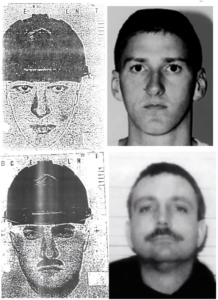 Guthrie, who died in prison in 1996, was a leading figure in the Aryan Republican Army (ARA), a neo-Nazi bank robbery gang, and has long been suspected of possible involvement in the Oklahoma City bombing plot. Likewise, in reports produced by McCurtain Gazette reporter J. D. Cash and Indiana criminology professor Mark Hamm, they suggest that McVeigh might have been involved in one or more of the ARA bank robberies. One of the stick ups was carried out on September 21, 1994 in Overland Park, Kansas. According to Cash, “witnesses provided a sketch of him [one of the robbers], you look at it, and there’s no question it’s McVeigh.”
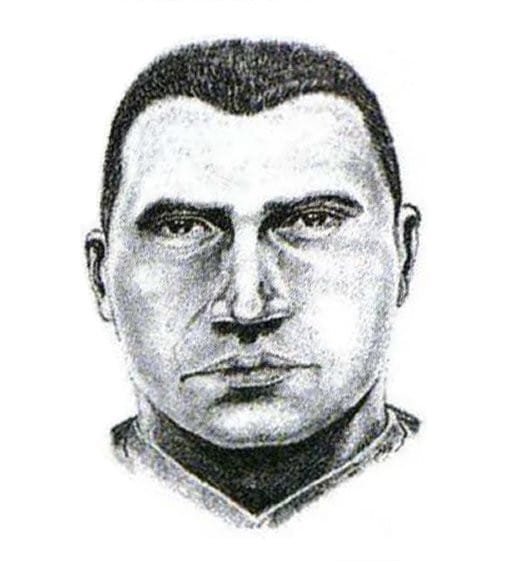
 William Maloney and Joe Davidson were working at Maloney’s realty office on the morning of November 2nd, 1994 when three men in a white late 70’s model Monte Carlo pulled into the parking lot. One man remained in the vehicle while the other two got out and went inside.
“The theory there was that Timothy McVeigh was searching for a place to perhaps have a hide-out and Robert Jacquez was utilized to perhaps obtain property in Missouri. It’s very remote terrain, it’s terrain familiar — there are a lot of right wing groups around there, from Elohim City Oklahoma to other groups in Arkansas to the Ozarks in Missouri which would be the perfect type spot.”
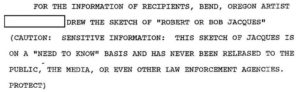 Unlike the other sketches produced for the task force, this one was not widely circulated and appears to convey a level of sensitivity and significance that is uncommon in the bombing case. One source told this writer that Associated Press Washington Bureau Chief John Solomon interviewed a senior Customs Agency rep at OKC for the investigation, and that he told Solomon that the FBI were not real concerned about John Doe #2 reports, but they were really worried about John Doe #3, or “Robert Jacquez,” getting media attention. This is obvious enough from the bureau’s unusual disclaimer that is plastered all over November 1995 teletypes concerning the suspect. The notion that Jacquez could have been connected to some sort of sensitive operation comes to mind when you consider the unusual level of secrecy surrounding the sketch, and FBI investigators’ worry over the suspect receiving media attention.
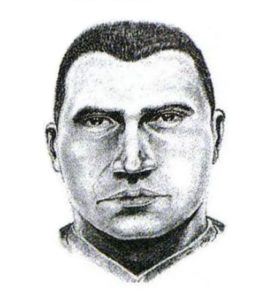 The Manhunt for “John Doe #3”
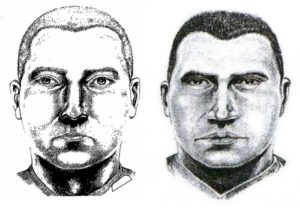 The November 1st teletype also makes additional comparisons between the “Jacquez” suspect’s distinctive jungle boots—described in detail by Bill Maloney—and the distinctive boots worn by bank robber Richard Guthrie when he purchased a getaway vehicle in Alton, Illinois in December of ’94.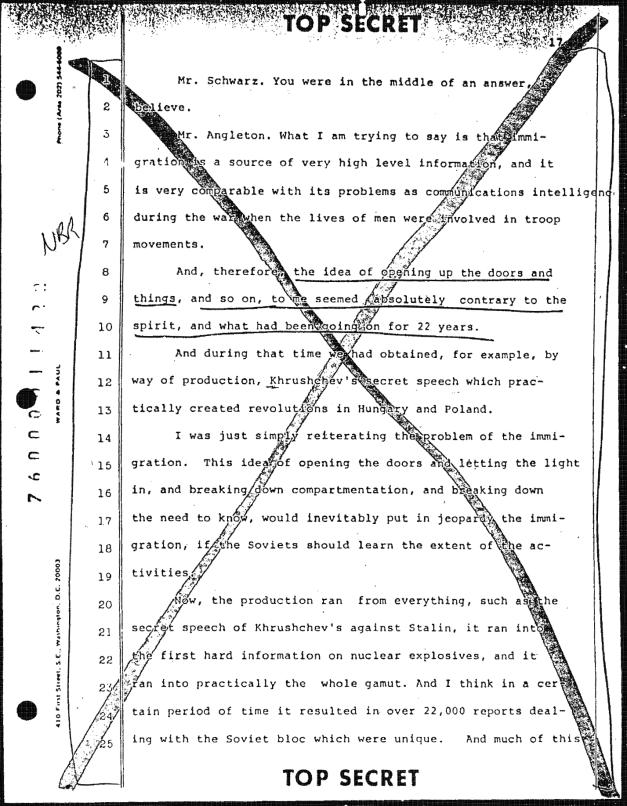

 Aletho News
