US President Donald Trump’s brazen military assault on Iran – launched at the behest of the Israeli regime – lays bare an unvarnished truth: Zionist interests have effectively captured American foreign policy.
Broader imperial objectives have been sidelined in favor of the settler colony’s agenda.
A group of analysts continues to cling to the notion that the Zionist entity functions as a strategic asset – a forward outpost – for the American Empire. Yet the coordinated strikes on Iranian soil tell a different story. Far from acting as a subordinate ally, Tel Aviv now dictates the terms, with Washington following suit.
This is no simple case of the tail wagging the dog. More accurately, the agents of the tail have not merely tugged at the leash; they have colonized and captured the vital organs of the dog itself, steering the body of American policy toward unnecessary wars that serve a singular, foreign interest over its own imperial interests.
Trump’s claim of imminent Iranian threat
Trump justified the unprovoked and illegal aggression against the Islamic Republic of Iran by citing advice from key advisers who convinced him that an attack from Iran was imminent.
In a candid statement captured on video, Trump declared the situation had approached a “point of no return,” based on intelligence from his inner circle. As he explained, the US found it “intolerable,” with figures like Steve Witkoff, Jared Kushner, Pete Hegseth, and Marco Rubio insisting that Iran planned to strike the US.
“In my opinion, based on what Steve and Jared and Pete and others were telling me, Marco is also involved, I thought that they were going to attack us. I thought they would. If we didn’t do this at the time we did it, I think they had in mind to attack us,” he claimed.
This narrative framed the February 28, 2026, assault, dubbed Operation Epic Fury, as a “defensive” measure. Trump reportedly ordered the operation while aboard Air Force One, with missiles and drones hitting the residences of senior Iranian leaders, including Leader of the Islamic Revolution Ayatollah Seyyed Ali Khamenei, in the initial barrage.
The assault soon escalated into full-scale war, with civilian casualties mounting, including a strike on an elementary school in Minab, a town in southern Iran’s Hormozgan province, that killed at least 153 people, mostly children. As even CNN noted, video footage showed a US Tomahawk missile striking the school, contradicting Trump’s claims of Iranian hand.
Trump’s rationale hinged on perceived threats, yet evidence points to manipulated intelligence. The assault aligned closely with the Zionist entity’s strategic aims, targeting Iran’s nuclear and missile programmes while bolstering its regional dominance.
Exposé on assassination plots
American journalist Max Blumenthal reported about Trump’s belief that Iran’s Islamic Revolution Guards Corps orchestrated the two assassination attempts against him in 2024.
As Blumenthal reported in The Grayzone, the FBI manipulated evidence on alleged assassination plots to convince Trump that Iran sought to kill him, while Israel and its allies exploited his fears to maintain pressure for a full-fledged war.
Trump feared for his life even before the attempts, with claims of Israeli agents planting devices in Secret Service vehicles during Netanyahu’s White House visits.
Blumenthal’s analysis details how the FBI, in coordination with Israeli intelligence, tied Tehran to the plots despite lacking evidence. Trump publicly linked the attempts to Iran, drawing from US intelligence briefings and DOJ charges against alleged IRGC members.
Such manipulation exploited Trump’s vulnerabilities, pushing the US into a direct confrontation with the Islamic Republic to serve Zionist interests. This underscores how external forces shaped the decision, far beyond genuine US imperial concerns.
Trump’s advisers form a network deeply embedded in Zionist advocacy, blending Jewish Zionists with fervent non-Jewish supporters of the settler colony.
Here are the four specifically named as advising the attack on Iran.
Marco Rubio: A non-Jewish Cuban-American, Rubio has long championed the Zionist cause. As AJC’s Jewish Political Guide reports, he opposed the anti-Israel boycott and divestment campaign, backed the US embassy move to occupied al-Quds, and supported anti-BDS legislation. His funding from pro-Zionist donors like Norman Braman highlights this alignment.
Pete Hegseth: A Christian Zionist, Hegseth robustly backs the Israeli regime. During his confirmation, he declared his Christian faith drives support for the Zionist regime’s “defence”. His church ties to Reconstructionist principles reinforce this theological Zionism.
Jared Kushner: An Orthodox Jew and ardent Zionist, Kushner shaped Trump’s West Asia policy. Raised in a family steeped in Holocaust survival, he authored the Abraham Accords, normalising ties between the Zionist entity and Arab states. His pro-Zionist stance is evident in unwavering advocacy.
Steve Witkoff: A staunch Jewish real estate mogul, Witkoff staunchly supports Netanyahu and the Zionist colony. As Al Jazeera profiles, he negotiated Gaza deals for Trump, ignoring Shabbat to push agendas.
These Zionist figures, central to Trump’s decision to attack Iran in the middle of indirect nuclear talks, illustrate deep Zionist penetration into US power structures.
Extended Zionist network in Trump’s orbit
Beyond the core quartet mentioned above, Trump’s circle brims with many other Zionist influencers. Here are a few of them who influence him and his policies:
Mike Waltz: Non-Jewish but pro-Zionist, Waltz discussed strikes with Netanyahu. As the Jewish Virtual Library notes, he praises Israeli operations against Hamas and Hezbollah, viewing them as fighting America’s enemies.
Elise Stefanik: Non-Jewish, Stefanik earned Zionist acclaim for grilling university presidents on antisemitism. She received the so-called “Defender of Israel Award” and nearly $1 million from the notorious pro-Israel lobby group AIPAC, affirming Israel’s biblical right to the occupied West Bank.
Mike Huckabee: A Christian Zionist, Huckabee rejects Palestinian statehood and has backed the ongoing genocide in Gaza. He told senators he supports the occupied West Bank annexation, viewing it as biblical Judea and Samaria.
Stephen Miller: Controversial Jewish supremacist whose hardline immigration policies drew some Jewish criticism. Yet his role in Trump’s pro-Zionist moves, like the embassy shift, aligns with the Zionist entity’s interests.
Howard Lutnick: A Jewish billionaire, Lutnick champions the Zionist cause. As Jewish Insiderreports, he has donated over $1 million to the racist Birthright programme and has also supported the genocidal Chabad cult.
Miriam Adelson: An Israeli-American Jewish philanthropist, Adelson donated millions to Trump with caveats like embassy relocation. As reported, she pushed for recognition of the Golan Heights occupation.
Zionist footprint beyond Epstein shadows
Trump’s war of aggression against Iran transcends US imperial interests. It expresses a complete and official capture by Zionist forces. His advisers’ backgrounds reveal a cabal prioritising the settler colony’s expansion over American strategy.
Even without the Epstein leaks dangling like a sword of Damocles over his head, Trump appears as Zionism’s plaything, executing policies that entrench occupation and support Zionism’s maximalist and genocidal expansionism.
State capture of the US apparatus of power is in itself an indication that the Zionist ambitions go much further than the so-called “Greater Israel” project, as they push towards becoming an empire. I have called this Pax Judaica. Netanyahu, for his part, has described his view that the Zionist entity is becoming “in many respects a global superpower”.
How Zionists infiltrated US power system
Those who argue that the metaphorical tail (the Zionist colony) doesn’t wag the metaphorical dog (US Empire) fail to account for the process of infiltration, which the Zionists have been engineering for many decades, since before the creation of their so-called “Jewish State”.
Infiltration is, as I have documented elsewhere, a “cardinal” function of the Zionist movement. In the case of the United States, Zionist agents have become embedded in US national security institutions.
It’s not that the tail wags the dog, so much as agents of the tail have infiltrated and taken control of the vital organs of the dog. They wield influence, enabling the settler colony’s dominance in US decision-making, and they have done so for decades.
How did this happen? We examine the roots.
The architect: James Jesus Angleton’s CIA legacy
James Jesus Angleton, as CIA counterintelligence chief from 1954 to 1974, forged unbreakable ties between US intelligence and the Zionist entity.
He managed the Israel desk from 1951, liaising directly with Mossad and Shin Bet, viewing Soviet émigrés to the colony as prime intelligence assets. His actions entrenched Zionist interests within American spy networks.
Meir Amit, Mossad Director (1963-1968), who was instrumental in cementing the Mossad-CIA relationship, described Angleton as “the biggest Zionist of the lot”. He viewed Angleton as a personal friend and a foundational figure in the penetration of the US intelligence system.
Angleton’s fanaticism extended to shielding the regime’s top secrets. Former Shin Bet chief Amos Manor,who hosted Angleton on his first visit to the colony in 1952, described how he was able to persuade Angleton that the Zionists were not potential Communist agents and after that, he was firmly in their camp.
Monuments to betrayal: Honoring a US traitor in the colony
The Zionist colony uniquely memorialized Angleton with two tributes, underscoring his pivotal role in its ascent. In 1987, Mossad and Shin Bet leaders secretly planted a tree and dedicated a stone near Jerusalem, inscribed “In memory of a dear friend, James (Jim) Angleton.” A second site, “Jim Angleton Corner” in Yemin Moshe, overlooks the Old City.
These honors, as The Washington Postreported in 1987, reflect gratitude for his espionage aid. No other US intelligence officer received such recognition. This singularity highlights Angleton’s exceptional service to the settler state.
Jefferson Morley wrote in his biography of Angleton, entitled Ghost: “Angleton was a leading architect of America’s strategic relationship with Israel that endures and dominates the region to this day.”
Samuel Katz, author of Soldier Spies: Israeli Military Intelligence, claims in his 1992 book that “perhaps most importantly, [MOSSAD] forged a firm and binding relationship with the Central Intelligence Agency, especially with the legendary James Jesus Angleton”.
His monuments symbolize the deep penetration of Zionist agendas into US halls of power.
Enabling the bomb: US officials’ collusions
Angleton facilitated the Zionist regime’s nuclear arsenal through betrayals of American secrets. Both Morley and Katz, along with Seymour Hersh (in The Samson Option) and others, claimed he directed CIA assistance to the Zionist nuclear programme, diverting scrutiny from Dimona’s development in the 1960s.
The NUMEC (Nuclear Materials and Equipment Corporation) affair—also known as the Apollo affair—involved the unexplained disappearance of over 300 kilograms of highly enriched uranium (HEU, weapons-grade material sufficient for several nuclear bombs) from a US nuclear fuel-processing plant in Apollo, Pennsylvania, between the late 1950s and the 1970s.
Declassified FBI, CIA, and Atomic Energy Commission (AEC) records show strong suspicions that some or much of it was diverted to Israel’s clandestine nuclear weapons program at Dimona.
The company’s ownership and management were closely linked to Zionist networks: founder and president Dr. Zalman Mordecai Shapiro, a prominent chemist, headed the Pittsburgh chapter of the Zionist Organization of America (ZOA) and maintained extensive contacts with Israeli regime officials, including science attachés at the embassy, Shin Bet and Mossad operatives, and LAKAM (Israel’s scientific intelligence unit focused on nuclear technology acquisition).
NUMEC’s key financial backer, David Lowenthal, an American Zionist, co-founded the company through Apollo Industries and partnered with figures like Ivan J. Novick (later ZOA national president); NUMEC acted as a U.S. procurement and technical agent for Israel’s defense ministry.
FBI surveillance and wiretaps documented Shapiro’s “pronounced pro-Israeli sympathies,” including a November 8, 1968, intercepted statement that “he is of more value to Israel if he continues to reside in the US, where Israel’s problems can be more readily resolved.”
A 1980 FBI affidavit from a former NUMEC employee described witnessing armed strangers loading HEU canisters onto a truck bound for Israel via Zim shipping lines in early 1965, followed by threats to remain silent.
Shapiro consistently denied any diversion, attributing losses to routine “attrition,” contamination, and plant residues. US intelligence assessments disagreed: CIA Deputy Director Carl Duckett briefed the Nuclear Regulatory Commission in February 1976 that the missing uranium “ended up in Israeli bombs,” a view echoed in CIA internal memos and briefings.
Environmental samples near Dimona reportedly matched US Portsmouth-enriched HEU supplied to NUMEC. Despite extensive investigations spanning multiple agencies and administrations, there were no prosecutions.
The affair remains unresolved, resulting in massive taxpayer-funded cleanups costing hundreds of millions in recent decades. Roger Mattson’s book, Stealing the Atom Bomb: How Denial and Deception Armed Israel, details how denial and deception armed “Israel,” with officials like Angleton turning a blind eye to Zionist covert ops.
Jonathan Pollard compounded these treacheries. The naval intelligence analyst, arrested in 1985, passed classified data to handlers, compromising US signals intelligence. Collaborators included Rafi Eitan, Pollard’s handler, and Aviem Sella, who recruited him and was indicted for espionage, but later pardoned by Trump.
The Forward noted how such acts strained alliances, yet US leniency persisted, an indication of an advanced process of state capture.
Senator Fulbright – The canary in the coal mine
Senator William Fulbright (US Senator, 1945-1974; longtime chairman of Senate Foreign Relations Committee) was one of the first major political figures to call out Zionist infiltration of the US political system.
He said, on the CBS show, Face the Nation, in early 1973, that “The Senate is subservient to Israel, in my opinion, much too much. We should be more concerned about the United States interest rather than doing the bidding of Israel. This is a most unusual development.”
He went on to say, “The great majority of the Senate of the United States–somewhere around 80 percent–are completely in support of Israel, anything Israel wants. This has been demonstrated time and again and this has made it difficult for our government.”
He expanded on his views in a major speech in 1974 in which he talked of Zionist “domination” of the power structure:
“So completely have the majority of our officeholders fallen under Israeli domination that they not only deny the legitimacy of Palestinian national feeling, but such otherwise fair-minded individuals as the two current candidates for Senator from New York engage in heated debate as to which one more passionately opposes a Palestinian state. We have nearly allowed our détente with the Soviet Union to go on the rocks to obtain an agreement on large-scale Jewish emigration — a matter of limited relevance to the basic issue of human rights in the Soviet Union, and of no relevance to the vital interests of the United States.”
Since then, many major figures from both parties (Fulbright was a Democrat) have endorsed or extended this analysis, including
1990 – Pat Buchanan (White House Communications Director under President Reagan; Republican presidential candidate in 1992, 1996, and 2000) “Capitol Hill is Israeli-occupied territory.” (15 June 1990, on the television show The McLaughlin Group)
2006 – Chuck Hagel (US Senator, R-NE, 1997-2009; later Secretary of Defense under President Obama): “The political reality is that … the Jewish lobby intimidates a lot of people up here. I’m a United States senator. I’m not an Israeli senator.” (2006 interview, Aaron David Miller).
2007 – Ron Paul (US Representative, R-TX, multiple terms through 2012; Republican presidential candidate): “AIPAC is very influential in our political process … the assumption is that AIPAC is in control of things, and they control the votes, and they get everybody to vote against anything that would diminish the war.” (May 22, 2007)
2007 – Jim Moran (US Representative, D-VA, 1991-2015) “AIPAC had been pushing the [Iraq War] from the beginning … I don’t think they represent the mainstream of American Jewish thinking at all, but because they are so well organized, and their members are extraordinarily powerful—most of them are quite wealthy—they have been able to exert power.” (interview with Tikkun magazine, September 2007).
2019 – Ilhan Omar (US Representative, D-MN, 2019–present) “It’s all about the Benjamins baby” (referring to campaign money; she clarified the next day that she meant AIPAC). She also stated there is “political influence in this country that says it is okay to push for allegiance to a foreign country.”(February 2019).
2024 – Thomas Massie (US Representative, R-KY, 2012–present): “Everybody but me has an AIPAC person. It’s like your babysitter. Your AIPAC babysitter who is always talking to you about AIPAC. … They’ve got your cell number and you have conversations with them.” Date: June 7, 2024 (interview on The Tucker Carlson Show).
Angleton’s influence lingered, shaping US policy toward West Asia in multiple ways, and becoming more institutionalised despite Mossad intelligence ops breaching a mutual no-spying agreement on many occasions.
Collaboration grew with the Kilowatt network in which 18 Western agencies (including CIA, MI6, Mossad) shared raw intel on Palestinian resistance operatives, enabling Mossad’s so-called “Wrath of God” assassinations.
Collaboration stepped up in the 1980s under Reagan when a memorandum of understanding on counterterrorism included proposed joint programs and assassination authorizations.
Unequal alliance: Intel sharing and persistent spying
Former CIA officer John Kiriakou highlighted the lopsided US-Zionist intelligence pact. The regime receives near-total access yet spies relentlessly.
“Mossad gets the best intel cooperation from the US, including 99% of secrets, but they still spy on the US for the remaining 1%,” Kiriakou asserted in his podcasts.
Evidence abounds: In the 1990s, Israelis wiretapped White House lines during Clinton’s era, according to reports in the Guardian. Under Trump, StingRay devices near the White House mimicked cell towers, linked to Mossad by FBI forensics, as Politico reported.
These operations targeted presidents and aides, not the action of an ally, but of a hostile power.
Mossad’s Pentagon infiltration post-9/11
After 9/11, Mossad agents roamed the Pentagon unchecked, as retired Colonel Lawrence Wilkerson revealed. They bypassed security, accessing high-level officials like Douglas Feith.
“I watched Mossad take over the Pentagon in 2002. They did not need any identification to get through the river entrance… They went upstairs to Douglas Feith, the Undersecretary of Defence for Policy… Occasionally, they went to… Paul Wolfowitz… Donald Rumsfeld said to my boss one time ‘Hell, I don’t run my building, Mossad does!” Wilkerson stated in interviews.
This access, circulated widely online, exposed Zionist overreach amid heightened US vulnerabilities.
Neocons’ Iraq war: A campaign for the Zionist entity
As leading commentators affirm, neoconservatives engineered the 2003 Iraq invasion primarily for the settler colony’s benefit.
John Mearsheimer and Stephen Walt argued in their seminal essay that the lobby pushed regime change to reorder West Asia, surrounding the Israeli-occupied territories with compliant states. “Pressure from Israel and the Lobby was not the only factor behind the decision to attack Iraq in March 2003, but it was critical.”
They also noted: “Within the US, the main driving force behind the war was a small band of neo-conservatives, many with ties to Likud. But leaders of the Lobby’s major organisations lent their voices to the campaign.”
They added that the war was “motivated in good part by a desire to make Israel more secure,” citing Philip Zelikow’s 2002 statement that the “unstated threat” from Iraq was primarily against Israel.
“Clearly, it would be wrong to blame the war in Iraq on ‘Jewish influence’. Rather, it was due in large part to the Lobby’s influence, especially that of the neo-conservatives within it.”
They further note that the lobby was a “necessary but not sufficient” condition, citing a February 2003 Ha’aretz report: “the military and political leadership yearns for war in Iraq.”
They specifically highlighted the following statements from Zionist leaders:
Shimon Peres (September 2002): “The campaign against Saddam Hussein is a must. Inspections and inspectors are good for decent people, but dishonest people can overcome easily inspections and inspectors.”
Ehud Barak (New York Times op-ed, September 2002): “The greatest risk now lies in inaction.”
Benjamin Netanyahu (Wall Street Journal op-ed, September 2002): “Today nothing less than dismantling his regime will do… I believe I speak for the overwhelming majority of Israelis in supporting a pre-emptive strike against Saddam’s regime.”
The duo notes that Israeli intelligence acted as a “full partner,” providing alarming (often exaggerated) WMD reports and urging no delay.
Zionist leaders lobbied against UN inspections and delays but were cautious about public over-visibility to avoid perceptions of pushing the US into war.
Some (e.g., Ariel Sharon) initially saw Iran as the bigger threat and had reservations, shifting support only after American plans solidified.
Breaking the chains: Against Pax Judaica
These infiltrations reveal a parasitic dynamic, where Zionist agendas hijack and direct American might. Dismantling such entanglements demands vigilance and determined action over the course of years. However, it cannot be done in isolation.
Defeating the Zionist colony is only the beginning. After that comes the need to push back against the Zionist capture of Western states and the rest of West Asia as well.
The most effective and decisive strike against the Zionist colony and its US proxy is currently being struck by the Islamic Republic of Iran and the Axis of Resistance.
According to available and credible evidence, Iranian armed forces have decimated Israeli military infrastructure across the occupied territories as well as American military bases scattered across the Persian Gulf region in the past three weeks.
The next few weeks would be decisive for the US presence in the region and the future of the Zionist entity that is reeling under unprecedented retaliatory strikes.
For more than two decades, Meyer Lansky built what he believed would be his permanent kingdom in the Caribbean. The Jewish gangster from New York’s Lower East Side had transformed Havana into the gambling capital of the Western Hemisphere, a glittering playground where American tourists could indulge every vice under the protection of a dictator on the mob’s payroll. Then came Fidel Castro, a young Catholic revolutionary from the Cuban countryside who would destroy everything Lansky had built in a matter of weeks.
Their conflict was never personal. The two men likely never met or spoke. But the collision between Lansky’s criminal empire and Castro’s revolutionary movement would reshape Cuba, spawn assassination plots that entangled the CIA, and leave a trail of consequences that echoes into the present day.
More than half a century later, as Washington once again toys with the idea of remaking Cuba’s political order, the ghost of Meyer Lansky’s Havana hangs over every discussion of regime change: the dream of turning the island back into a glittering casino colony has never fully died.
Meyer Lansky entered the world as Maier Suchowljansky on July 4, 1902, in Grodno, a city in the Russian Empire that now belongs to Belarus. His family was part of the vast population of Eastern European Jews who migrated to America in the early 20th century. In 1911, Lansky emigrated with his mother and brother Jacob through the port of Odessa, joining his father Max, who had arrived two years earlier and settled first in Brownsville, Brooklyn. The family later moved to the Lower East Side of Manhattan, where Max worked in the garment industry and young Meyer grew up among the crowded tenements where Yiddish filled the streets and opportunity meant whatever you could grab with your own hands.
Young Meyer found his opportunities in crime. By 1918 he and his friend Benjamin “Bugsy” Siegel were running floating dice games on the streets. They graduated to auto theft, then burglary, and when Prohibition arrived, they plunged into the liquor smuggling trade that would make fortunes for a generation of gangsters. Lansky also befriended Charles “Lucky” Luciano, an Italian immigrant who would become one of the most powerful mob bosses in American history.
The three young men rose together. Lansky and Siegel developed a squad of killers for hire that became the prototype for Murder, Inc. Lansky allegedly persuaded Luciano to arrange the 1931 assassination of mob boss Joe “The Boss” Masseria, a murder that consolidated power and helped establish the National Crime Syndicate between 1932 and 1934.
What set Lansky apart from the gunmen and enforcers around him was his financial chops. He became known as the “Mob’s Accountant,” the man who used Swiss bank accounts and shell companies to launder the Mafia’s wealth and hide it from federal investigators. He oversaw the syndicate’s finances as its unofficial banker and was instrumental in shifting the mob’s focus from bootlegging to gambling after Prohibition ended in 1933. His gambling operations stretched from Florida to New Orleans to Las Vegas.
But Lansky’s grandest ambition lay 90 miles off the coast of Florida.
Building the Havana Empire
Lansky’s relationship with Cuba began in 1933, the same year Prohibition ended, and a young military strongman named Fulgencio Batista seized control of the island nation. Lansky pitched Batista a proposal to open Mafia-owned casinos and nightclubs in Havana. The arrangement was straightforward. Batista and his inner circle would receive regular payments from the mob, and in return the gangsters could operate without interference from Cuban authorities.
By 1938, Lansky had been formally invited to help clean up and professionalize Havana’s gambling operations, which had been plagued by fixed races and crooked dealers. He was the fixer, the man who could make the casinos run honestly enough to keep the tourists coming back.
The landmark event came in December 1946 with what became known as the Havana Conference. More than 20 mob bosses from across the United States gathered at the Hotel Nacional de Cuba for a meeting organized by Lansky on Luciano’s orders. The expansion of mob operations in Cuba sat at the top of the agenda. Lansky then visited Batista, who was temporarily out of power and living in Florida, and urged him to return to Cuba to fulfill their grand plans.
Batista obliged. He returned to power through a military coup in 1952, and the arrangement with the mob became even more lucrative. The Batista-Lansky Alliance, included a deal where Batista agreed to match dollar for dollar any hotel investment over one million dollars, with each project automatically including a casino license. Casino hotels were exempted from Cuban taxes.
Lansky owned or held financial interests in at least three major gambling operations. The crown jewel was the Habana Riviera, which opened in December 1957 as the largest Mafia-owned hotel casino outside Las Vegas. It featured 440 rooms that were booked solid for its first winter season. Cuban development banks subsidized half of the $14 million construction cost.
But Lansky did not build this empire alone.
The Inner Circle
Jake Lansky, Meyer’s brother, served as his most trusted man on the ground in Cuba. Jake managed the casino at the Hotel Nacional, Cuba’s most prestigious hotel. By spring 1957, it was reportedly bringing in as much cash as the biggest casinos in Las Vegas.
Joseph “Doc” Stacher was a lifelong Lansky associate dating back to their youth in Newark, New Jersey. Born Gdale Oistaczer in Letychiv, in what is now Ukraine, Stacher was also Jewish and had risen through the criminal ranks alongside Lansky. He operated as the official bribe paymaster to Batista, managing the corrupt payments that kept the dictator and his inner circle cooperative.
Norman “Roughhouse” Rothman was another mobster deeply embedded in the Havana gambling scene. He was a close associate of Santo Trafficante Jr. and operated casinos in Havana, most notably the Sans Souci. Cuba’s slot machine concessions were controlled by Roberto Fernandez y Miranda, Batista’s brother-in-law and army general, who held them as a personal fief.
Ed Levinson, a longtime Lansky associate, ran illegal gambling operations from the Midwest to Kentucky. In Cuba, Levinson’s name appeared on the casino license for the Habana Riviera itself. Lansky kept his own name listed only as the hotel’s kitchen director while Levinson served as the official licensee.
Dino Cellini, though Italian-American rather than Jewish, worked hand in glove with the Lansky operation. He served as casino manager at the Habana Riviera before being replaced by Frank Erickson, and was later detained alongside Jake Lansky at the Tiscornia immigration camp after Castro took power.
The operation also included powerful Italian-American mobsters. Santo Trafficante Jr., the Tampa crime family boss, openly operated the Sans Souci nightclub and the Casino Internacional at the Hotel Nacional. He was also suspected of having behind-the-scenes interests in the Habana Riviera, the Tropicana Club, the Sevilla-Biltmore, the Capri Hotel Casino, the Commodoro, the Deauville, and the Havana Hilton.
The Revolutionary in the Mountains
While Lansky counted his profits in Havana’s glittering casinos, a revolutionary movement was gathering strength in the mountains of eastern Cuba.
Fidel Castro came from a background that could not have been more different from Lansky’s. Born on August 13, 1926, near Birán in Oriente Province, Castro was the son of a prosperous Spanish immigrant landowner. He was raised Catholic and educated at Jesuit schools in Santiago de Cuba and Havana, including the prestigious Colegio de Belén. He studied law at the University of Havana beginning in 1945, earned his degree in 1950, and briefly practiced as a lawyer before turning fully to revolutionary politics. Where Lansky had clawed his way up from immigrant poverty through criminal enterprise, Castro came from rural privilege and channeled his ambitions into armed struggle against the Batista regime.
Castro’s 26th of July Movement directly targeted the Mafia’s presence in its propaganda. In 1958, the revolutionaries denounced the mobsters in radio broadcasts from their guerrilla redoubt in the Sierra Maestra, accusing them of turning Havana into a center of commercialized vice through gambling, prostitution, and drugs. The casinos, the brothels, the drugs, the corruption that enriched Batista and his American gangster partners would all be swept away when the revolution triumphed.
The Fall
On December 31, 1958, Batista’s army was defeated at the Battle of Santa Clara. That night, Batista fled the country for the Dominican Republic, abandoning his gangster partners along with everything else. Lansky left Cuba on January 7, 1959, the day before Castro marched into Havana.
What happened next was a settling of accounts that played out in the streets of Havana. On January 1, 1959, citizens took to the streets after hearing news of Batista’s flight, ransacking casinos, smashing slot machines, and dragging gambling equipment into the streets to be burned. To many Cubans, the American-owned hotels symbolized a corrupting foreign influence. At the Riviera, Lansky’s crown jewel, campesinos (peasants) reportedly brought a truckload of pigs into the lobby. Castro vowed to “clean out all the gamblers.” The revolutionary government eventually nationalized the Riviera and all other Mafia-owned properties, though the final nationalization of hotel casinos did not come until October 1960. Some casinos briefly re-opened on February 19, 1959, after casino workers who depended on tourism jobs marched to the presidential palace demanding their livelihoods back, but tourists stopped coming. Lansky, who told many associates that Cuba had ruined him financially, looked to other outposts in the Caribbean and South America.
Not everyone fled immediately. Jake Lansky and Dino Cellini were arrested by Cuban authorities in May 1959 and detained at the Tiscornia immigration camp outside Havana, the same facility where Santo Trafficante Jr. was also being held. According to the House Select Committee on Assassinations, U.S. Commissioner of Narcotics Harry J. Anslinger had sent a list of suspected drug traffickers to Cuban authorities that included both Jake Lansky and Cellini. Jake Lansky and Cellini were detained for approximately 25 days before being released; Trafficante was held until August. All eventually left Cuba.
By October 1960, Castro formally nationalized all hotel casinos on the island and outlawed gambling entirely.
Revenge and Assassination Plots
Lansky did not merely accept his losses. He actively sought to use the U.S. government and its intelligence apparatus to reclaim his Cuban empire.
According to Doc Stacher, Lansky “indicated to the CIA that some of his people who were still on the island might assassinate Castro” and was “quite prepared to finance the operation himself.”
This was not Lansky’s first collaborative effort with American intelligence. During World War II, he had served as a key intermediary in Operation Underworld, a classified program in which the U.S. Navy’s Office of Naval Intelligence enlisted the Mafia to counter Axis sabotage on the northeastern seaboard. That wartime relationship established a precedent for cooperation between organized crime and the U.S. government.
In August 1960, according to a report by Salon, Lansky struck a deal with exiled Cuban politician Manuel Antonio Varona, offering him several million dollars to form a Cuban government-in-exile to replace Castro. Lansky also promised to arrange a public relations campaign to polish Varona’s image, with the single-minded objective of reopening the Mafia’s casinos, hotels, and nightclubs in a post-Castro Cuba.
Around the same time, the CIA formally recruited mobsters with deep ties to the Havana gambling operations into plots to eliminate Castro. In September 1960, the agency enlisted Chicago Mob operative Johnny Rosselli through former FBI agent Robert Maheu. Rosselli brought in Chicago boss Sam Giancana and Tampa boss Santo Trafficante Jr. The CIA created poison pills to be slipped into Castro’s food, but the attempts failed. The CIA-Mafia assassination partnership was scuttled in early 1963, though the CIA continued plotting against Castro through other means.
Norman Rothman’s trajectory after the revolution was particularly dramatic. Before the revolution succeeded, Rothman had actually been running guns to Castro’s rebels alongside Joe Merola and the Mannarino brothers of Pittsburgh. Sam Mannarino had reasoned that if Castro won, the mobsters who helped arm him would be in the driver’s seat for Cuba’s gambling industry. Rothman advised Mannarino to place his bets on Castro, predicting he would allow the casinos to remain under Mafia control. When that calculation proved disastrously wrong, the scheme unraveled. The weapons in question, 317 guns, had been stolen from a National Guard armory in Canton, Ohio. A plane carrying 121 of the stolen weapons was captured at Morgantown, West Virginia on November 4, 1958. Rothman was convicted on February 4, 1960, along with five co-defendants, for possession, receiving, transportation, and exportation of firearms stolen from the United States government.
Lansky also explored contingency plans in case Cuba could not be recovered. He traveled to the Dominican Republic in 1958 to meet with dictator Rafael Trujillo about potentially relocating the entire Havana operation there. None of these schemes succeeded.
The Final Years
Lansky spent his final years living quietly in Miami Beach. In 1970, facing federal tax evasion charges, he fled to Israel, hoping to claim citizenship under the Law of Return. But after two years, Israel rejected his bid for permanent residency due to his criminal record and deported him back to the United States, where he was arrested at Miami International Airport.
He was acquitted of the tax evasion charges, in part because the government’s main witness lacked credibility, and other indictments were abandoned due to his chronic ill health. He died on January 15, 1983, at age 80 from lung cancer. Despite nearly half a century of involvement in organized crime, the most serious conviction he ever received was for illegal gambling in 1953, which resulted in only a brief jail term.
Despite a lifetime running one of the world’s most profitable criminal enterprises, a granddaughter later claimed he left behind just $57,000 in cash. The FBI believed he had hidden at least $300 million in offshore bank accounts, but this money was never recovered. His heirs later filed a compensation claim against Cuba for the Riviera with the U.S. Foreign Claims Settlement Commission, valuing the property at $70 million.
The mob never returned to Cuba. The casinos that Lansky built were nationalized, and gambling was outlawed entirely. The slot machines that crowds smashed in the streets on New Year’s Day 1959 were never replaced. The Habana Riviera still stands on the Malecón waterfront, declared a National Monument in 2012 and now managed by the Spanish chain Iberostar, still maintaining its original 1950s style. Staff members still refer to it as “el hotel de Meyer Lansky.”
Fidel Castro outlived Meyer Lansky by more than three decades, dying in 2016 at age 90. The revolutionary who had vowed to clean out all the gamblers kept that promise, at least regarding the foreign mobsters who had turned Havana into their personal playground.
The confrontation between these two men, the Jewish gangster from the Lower East Side and the Catholic revolutionary from Oriente Province, ended decisively in Castro’s favor.
Castro’s revolution did what no rival gangster or corrupt strongman ever managed: it toppled the dictatorship that shielded Lansky’s operations and erased his Havana casino empire almost overnight. In the name of sovereignty, the new regime shut down the glittering hotels and gambling halls that had turned Cuba into a playground for American tourists, mafiosi, and intelligence services alike.
But the pressures now bearing down on Cuba suggest that history’s wheel is turning back toward Lansky’s original blueprint. A successful regime change engineered from abroad would not simply “liberate” the island; it would open prime waterfront real estate and tourist infrastructure to the same forces of vice, speculation, and foreign ownership that once made Havana the mob’s favorite casino.
The danger is that Cuba’s next great transformation would replace revolutionary austerity not with genuine self‑determination, but with a return to what Lansky always wanted. Namely, a Caribbean Macau where the house is global finance, the chips are Cuban sovereignty, and the people of the island are once again reduced to serving drinks on someone else’s casino floor.
The Trump White House plagiarized its justification for attacking Iran from the Foundation for the Defense of Democracies, the main DC outfit promoting war with Tehran. The think tank was originally founded to “enhance Israel’s image,” and partners closely with the Israeli government.
The Trump Administration appeared to plagiarize its official justification for its war on Iran, copying almost word-for-word a document originally produced by the Foundation for the Defense of Democracies (FDD), a pro-war think tank with close ties to Israeli intelligence which was originally founded to “enhance Israel’s image.”
The FDD document was authored by Tzvi Kahn, the former assistant director for policy and government affairs at the American Israel Public Affairs Committee (AIPAC).
A March 2, 2026 statement issued by the White House accusing Tehran of 44 instances of terrorism against American citizens is “virtually identical” to the list published by FDD in June 2025, analyst Stephen McIntyre noted Thursday.
While the White House did make superficial alterations to the text, they largely consisted of appending the label “Iran-backed” to every mention of groups like Hezbollah and Hamas. In the few instances where Trump administration officials bothered to make significant changes to the original FDD list, the edits were almost always made in service of “ratcheting up the underlying allegation,” McIntyre concluded.
Among the most egregious examples was a 1996 attack on the Khobar Towers in Saudi Arabia, which FDD originally said merely that Hezbollah al-Hejaz was “deemed responsible” for. In the White House version, however, the group’s responsibility was “asserted as factual,” explained McIntyre, noting that serious questions about the incident remain unanswered to this day. “Clinton’s Defense Secretary William Perry subsequently wondered (along with many others) whether Khobar Towers should have been attributed to Al Qaeda,” he wrote.
A 2009 investigation by journalist Gareth Porter based on interviews with over a dozen former CIA, FBI and Clinton administration officials demonstrated that the FBI’s inquiry into the Khobar Towers attack was precooked to blame Iran, when Al Qaeda was mostly like the culprit. Porter found that Shia citizens of Saudi Arabia had been tortured into confessing to the crime by Saudi secret police.
While the White House declined to join FDD in blaming Iran for the Sept. 11, 2001 terror attacks, it echoed the Israel-oriented organization in blaming Tehran for 603 military deaths in Iraq, which both documents attributed to “Iran-backed militias.” But there are major discrepancies with the figure, which amounts to 60% of the total US combatant deaths attributed to Iran. As McIntyre noted, such a claim is “not made in the State Department annual reports on Global Terrorism.”
At least four of the Americans the Trump administration claims were killed by Iran had served in Israel’s military. These included a US citizen who died while invading Lebanon in 2006 and two Americans in the IDF’s Golani brigade who were killed while invading Gaza in 2014. The fourth American, who was born in Israel and had also served in the Golani brigade, was killed amid violent reprisals against settlers in the West Bank in 2015.
A number of the claims are undermined by the very sources they cite, including a December 2019 incident in which the Trump administration insisted “Iran-backed Kataib Hezbollah terrorists killed an American civilian contractor and wounded several U.S. service members in a rocket attack at K1 Air Base in Kirkuk, Iraq.” But the Reuters article cited by the White House as proof that Iran was responsible made no such claim, explicitly cautioning that “no group has claimed responsibility for the attack.” In reality, Reuterssuggested the attack was the work of “Islamic State militants operating in the area [who] have turned to insurgency-style tactics.”
Defense Secretary Lloyd Austin said at the time that “we don’t know” how operationally involved Iran was in the January 28 attack that killed three US troops, “but it really doesn’t matter.”
“We have FDD”: Israel’s favorite Washington cutout
In tax documents filed with the IRS upon its founding in 2001, FDD was originally named EMET, which is Hebrew for “truth.” The fledgling outfit described its mission as working to “enhance Israel’s image in North America and the public’s understanding of issues affecting Israeli-Arab relations.” It changed its name soon after, presumably to sound less overtly Israeli.
FDD has since emerged as the leading Washington-based think tank pushing the US toward war with Iran. During the first Trump administration, FDD participated in a $1.5 million dollar State Department initiative to attack critics of the policy of “maximum pressure” on Iran. At the time, FDD was openly promoting a military assault on Iran. The think tank’s staff are brought to testify before the House Foreign Affairs Committee more than those of any other think tank, invariably to advance conflict with Tehran.
During a 2017 conference of the Israeli American Council in Washington DC, then-Director General of Israel’s Ministry of Strategic Affairs Sima Vakhnin-Gil was recorded by undercover journalist James Kleinfeld during a private breakout session. The Israeli military-intelligence official named FDD as a partner in a covert campaign to spy on Americans involved in Palestine solidarity activity.
“This is something that only a country can do the best,” Vakhnin-Gil said. “We have FDD. We have others working on this.”
The Israeli American Council was sponsored by a billionaire who has also been a top donor to the FDD: the Sheldon and Miriam Adelson Foundation. Since the death of Sheldon Adelson, his Israeli widow, Miriam, has emerged as the top donor to Trump’s political campaigns. Having donated hundreds of millions to Trump and his allies, Adelson clearly expected him to wage war on Iran on behalf of Israel, according to conservative former Fox News host Megyn Kelly.
Since Trump thrilled his Israel-aligned donors by attacking Iran, FDD has provided the White House with more than talking points for justifying war on Iran. It has also proposed civilian targets in Iran for the US military to strike. These included the Tehran oil depot which Israel bombed on March 8, causing massive fires that shrouded the city of 9 million in toxic fumes.
After the strike triggered a wave of punishing retaliatory Iranian attacks on oil infrastructure in US-allied countries in the region, Trump advisors expressed regret. “We don’t think it was a good idea,” one told Axios. But by then, it was too late to avoid escalation. They had followed the FDD-authored, Israeli-designed script into a quagmire.
Not distracted by the war on Iran, on March 3, President Donald Trump, once again, warned that Cuba was in its “last moments.” The next day, he said, “It may be a friendly takeover. It may not be a friendly takeover. It wouldn’t matter because they are down to, as they say, fumes” before admitting that the United States has caused a humanitarian disaster in Cuba.
Trump’s rhetoric has continued to escalate. On March 17, Trump said,“I do believe I will be having the honor of taking Cuba. Taking Cuba. I mean, whether I free it, take it. I think I can do anything I want with it. They’re a very weakened nation right now.” The Trump administration is reportedly pursuing a policy of removingPresident Miguel Díaz-Canel from power while keeping in place his government. They have communicated to Cuba that no deal can be negotiated while he is leader.
The U.S. has cut Cuba off. The Secretary-General of the United Nations has said that he is “extremely concerned about the humanitarian situation in Cuba” and warned that it “will worsen, if not collapse,” if the U.S. does not ease its chokehold. But as the humanitarian catastrophe unfolds, while the world largely watches on, there are three enduring American myths about Cuba that need to be obliterated.
The Trump administration has cut Cuba off from its energy lifeline: “THERE WILL BE NO MORE OIL OR MONEY GOING TO CUBA – ZERO!,” Trump pronounced. “I strongly suggest they make a deal, BEFORE IT IS TOO LATE.” With that threat, Trump declared a “national emergency” and signed an executive order imposing tariffs on any country that sends oil to Cuba. “Now there is going to be a real blockade. Nothing is getting in. No more oil is coming,” the U.S. Charge d’Affairs in the U.S. Embassy in Havan told his staff.
And, with the exception of a trickle of aid from Mexico and the promise of a drop of aid from Canada, nothing is getting in. “There’s no oil, there’s no money, there’s no anything,” Trump boasted. There is no longer enough oil in Cuba to guarantee your car, generator or hot water will run. There is not enough electricity to keep the lights on. Classes have been cancelled at many schools, and many hospitals have cut services. Tourism, the economic lifeblood of Cuba, is drying up. Cuba has announced that international airlines can no longer refuel there due to fuel shortages. On Monday, a “complete disconnection” caused a blackout across all of Cuba.
The American embargo has gotten so successfully out of hand that, after the leaders of Cuba’s Caribbean neighbors expressed alarm over the suffering of Cubans, the U.S. has relented a little and now says it will loosen some restrictions and let some Venezuelan oil into Cuba.
Foundational to the American embargo on Cuba are three myths that need to be undermined. The hostility to Fidel Castro and Cuba has been going on longer than expressed in the official narrative. The hostility was not originally about communism. And the intent of the embargo has always been to starve the Cuban people.
The hostility toward Cuba stretches back two years and one administration further than told in the official narrative. Though the embargo, the Bay of Pigs and Operation Mongoose’s determination to assassinate Castro are all attributed to John F. Kennedy, they all need to be deposited in President Dwight D Eisenhower’s foreign policy account.
Though it would be Kennedy who would water the seed that locked Cuba down, the seed was planted two years earlier by Eisenhower who, on January 25, 1960, suggested the U.S. Navy “quarantine” Cuba. Eight months later, hebanned all U.S. exports to Cuba except food and medicine. It would be left to Kennedy to implement the full embargo, and Lyndon Johnson to include food and medicine. In the official narrative, the embargo is associated with Kennedy, but its origins are older, going back to the very beginning of the story. Castro overthrew the Batista dictatorship on January 1, 1959. He was sworn in as prime minister on February 16, 1959. Already by January of the next year, Eisenhower had proposed the embargo.
Like the embargo, Kennedy and the Bay of Pigs are forever linked in the official narrative. But that too stretches back to the Eisenhower years. Right from the start, in the earliest days after the revolution, the CIA had nominated its operative Jake Esterline, who had helped carry out the coup against Guatemala’s Jacobo Árbenz, to plan the Bay of Pigs invasion. The CIA plan to invade Cuba is dated December 6, 1960. Kennedy would not be inaugurated until forty-five days later.
Castro’s death sentence was also signed in Washington much earlier than recorded in the official narrative. It was October 1959, according to CIA expert John Prados, that Eisenhower “approved measures” that led to the “secret war,” included grooming opposition leaders in Cuba and encouraging raids by Cuban exiles on Cuba from the United States. Eisenhower had already ordered a covert action on Castro by March 17, 1960.
But the decision to assassinate Castro goes back even earlier than that. “[K]ey officials in the Eisenhower administration reached… a clear determination to bring about Castro’s demise” by the summer of 1959, only months after Castro came to power, according to William LeoGrande and Peter Kornblum in their book, Back Channel to Cuba. Overthrowing Castro was the official secret policy of the United States by October. On November 5, according to LeoGrande and Kornblum, that plan was approved by Eisenhower. On December 11, 1959, according to CIA expert Tim Weiner, Allen Dulles, Eisenhower’s CIA director, gave the go-ahead for Castro’s “elimination.” Dulles changed “elimination” to “removal from Cuba.” Stephen Kinzer reports that on May 13, 1960, after being briefed by Dulles, Eisenhower ordered Castro “sawed off.”
All of this took place earlier than told in the official narrative and long before Kennedy authorized Operation Mongoose, which, headed by his brother, Attorney General Robert Kennedy, and run by the experienced and notorious CIA operative Edward Lansdale, made assassinating Castro “the top priority in the United States Government.” Robert Kennedy told Lansdale and the Operation Mongoose team that “all else is secondary—no time, money, effort, or manpower is to be spared.”
The second myth is that hostility toward Cuba was born out of the requirement to keep communism out of the hemisphere. But Washington was hostile to Castro before Castro was a communist. When the U.S. placed Castro in its crosshairs, he was neither aligned with the Soviet Union nor openly communist at all. At this time, Castro’s program of social reforms was neither radical nor communist. In America, América: A New History of the New World, Greg Grandin records that “[t]he CIA called Castro’s agenda ‘the common stock of Latin American reformist ideas’: land reform, housing, health care, education, control over natural resources, and national sovereignty.”
In the early years of the Cuban revolution, Castro sought friendly relations with the United States. What the U.S. opposed was not communism in its backyard, but an alternative political and economic model in its backyard that could prove attractive to other countries in the hemisphere.
To preserve its hemispheric hegemony, the U.S. has erased any attractive alternative that could encourage other countries in America’s backyard to copy what Noam Chomsky has called Cuba’s “successful defiance.” The alternative the U.S. has feared most are forms of nationalism in which the leader defiantly nationalizes land and resources so the wealth benefits, not a foreign power, but the people who live on that land. It was Castro’s nationalistic policies and agrarian reforms that put him in the United States’ sites.
Castro nationalized land, redistributing it from large farms—including American owned farms—to the Cubans. Grandin says that when the large American oil companies refused to process oil sent to Cuba by the Soviet Union, Castro nationalized their refineries too.
The problem with Castro wasn’t communism, it was a model of government that offered an attractive alternative to the American model and American hegemony. As internal State Department documents had said about Arbenz in Guatemala half a decade earlier, the concern was the contagious “example of independence of the US that Guatemala might offer to nationalists throughout Latin America,” and that that example “might spread through the example of nationalism and social reform.” That is why Eisenhower called his embargo a “quarantine.”
The U.S. had this concern about Castro from the first minutes. Observing Castro after the revolution but before he had even been sworn in as leader, Grandin records CIA operative Esterline, soon to be of the Bay of Pigs, warning that Castro was “something different, something more impressive.” He said a “chain reaction was occurring all over Latin America after Castro came to power” and described “a new and powerful force… at work in the hemisphere.”
Communist or not, the contagious alternative had to be erased. And as far back as it goes, the embargo that was meant to erase it always had as its deliberate intent the starvation of the Cuban people. That is the third truth.
When Eisenhower first proposed his quarantine of Cuba, he adopted the policy, he said, because “If they are hungry, they will throw Castro out.” Explaining how sanctions would work, Eisenhower’s assistant secretary of state for Latin America said, as Grandin reports, that the sanctions were intended to bring down “real wages, to bring about hunger, desperation and overthrow of government.” The embargo was a deliberate policy of bringing about regime change through hunger. And it still is. On February 16, Trump told reporters that Cuba “should absolutely make a deal, because it’s really a humanitarian threat.”
The official American narrative on its Cuba policy is a myth. To alter the narrative from mythology to history so policy decisions can responsibly be made, three truths need to be told. American hostility to Cuba has been going on longer than commonly believed. That hostility was not originally about communism. And the intent of the embargo has always been to bring about regime change by starving the Cuban people.
Aaron Siri, attorney and managing partner of Siri & Glimstad LLP, appeared on the Joe Rogan Experience in early March 2026. What he described over the course of that conversation is worth examining carefully.
In 2019, the United States Department of Justice signed a court order on behalf of the Centers for Disease Control and Prevention. The order, entered in the Southern District of New York, stipulated the complete list of studies the CDC relied upon to support its public claim that vaccines administered in the first six months of life do not cause autism.
There were twenty studies on the list.
Nineteen had nothing to do with the vaccines given in the first six months of life. They were either MMR studies — and MMR is not given until at least twelve months — or studies of vaccine ingredients not present in the products in question.
The twentieth was a 2012 Institute of Medicine review that had specifically examined whether the DTaP vaccine causes autism. The IOM found exactly one study on the subject. That study showed an association between DTaP and autism. The IOM discarded it because it lacked an unvaccinated control group — and concluded there was insufficient evidence to accept or reject a causal relationship.
The DOJ signed the order. A federal judge entered it. The CDC’s evidentiary basis for one of its most repeated public health claims was now a matter of court record.
Aaron Siri, the managing partner of Siri & Glimstad LLP and author of Vaccines, Amen: The Religion of Vaccines, described this outcome in a recent appearance on the Joe Rogan Experience.¹ He had spent years demanding the studies through Freedom of Information Act requests on behalf of his client, the Informed Consent Action Network (ICAN). The CDC stonewalled. He sued in federal court. Days before the hearing, the DOJ produced its list of twenty studies. Siri read them. Then he called the DOJ attorney.
“Are you sure,” he told Rogan he asked, “that your client, the CDC, wants to settle this case on the basis that these are the studies they rely upon?”
They did. The stipulation was signed. It is publicly available.
Israeli control of the Pentagon goes back to 2002.
Pentagon insider and senior enlisted leader of nearly three decades standing, Command Chief Master Sergeant, Retired, Dennis Fritz describes what he saw in the Pentagon leading up to the Iraq War: Each cabinet official had an individual who they would talk to in Israel to keep them posted on what we were doing…
Israeli control of the Pentagon🇺🇸 goes back to 2002
'During the Bush Administration in the run-up to the Iraq War, each cabinet official had an individual who they would talk to in Israel to keep them posted on what we were doing…
As American military forces arrived in Afghanistan, they began building a network of bases to rule the entire nation. This repeated the mistakes of the Vietnam war. Each base required clean water, electricity, security, and frequent resupply, which required guarding bridges, road mine clearing, weekly supply convoys, and helicopter runs. This was expensive, required much manpower, left forces dispersed, provided ample targets for the enemy, and alienated the population with frequent “search and destroy” patrols that caused much death and destruction. Employing this failed strategy in Afghanistan was more difficult as the rugged terrain limited airpower while numerous caves provided the enemy with great hiding locations. In some areas, it was not practical to establish military outposts on good defensive terrain since mountaintops lacked road access and a local water supply. Nevertheless, American Generals insisted on military outposts everywhere, no matter the vulnerability of the base.
American combat forces should have remained mostly out of sight as a reserve force to protect large cities and dispatch units to rural areas only when a large enemy force converged to attack local forces. American aid should have focused on improving the economic infrastructure and local militia forces in a long-term, passive effort that would minimize manpower requirements, causalities, and costs.
I dedicate this article to all women invited to mammography screening and those who love them because the public has consistently been lied to, for over 40 years. In invitations to screening, women have been told that by detecting cancers early, screening saves lives and leads to less invasive surgery.1,2 I shall demonstrate that all three statements are wrong.
Women are still being told these lies, by professional associations, screening advocates, screening researchers, cancer charities, and national boards of health.3-5 The American Cancer Society declares in a headline that “Mammography Saves Lives”4 and claims, with no references, that results from many decades of research clearly show that women who have regular mammograms are less likely to need aggressive treatments like surgery to remove the entire breast (mastectomy).5
Screening Does Not Save Lives
In the randomised trials of mammography screening, the risk ratio for overall mortality after 13 years of follow-up was 0.99 (95% confidence interval 0.93 to 1.03) for those trials with adequate randomisation.6 The estimate happened to be the same for the other trials, some of which were so poorly randomised that the average age in the two compared groups was not the same, which makes an analysis of overall mortality unreliable.
For two of the three adequately randomised trials, those from Canada and the UK, there are follow-up data after 25 and 23 years, respectively.7,8 The risk ratio for overall mortality was 1.01 (95% confidence interval 0.98 to 1.03) for all three trials (both with a fixed effect and a random effects model, Comprehensive Meta Analysis Version 3.0). In the table, the year means the year the trial started:
This is a very strong result as it is derived from a total of 25,046 deaths. We can therefore say with great confidence that mammography screening does not save lives.
If we restrict the analysis to the two trials with a very long follow-up, the result is the same, a risk ratio of 1.01 (0.99 to 1.04).
Breast Cancer Mortality Is a Seriously Flawed Outcome
It will surprise most people to learn that we cannot trust what has been reported in the randomised trials about the effect of screening on breast cancer mortality but this is an objective fact.6
A minority of the women who died were autopsied, and in several trials, cause of death was not assessed blindly.6 I have documented that assessment of cause of death was seriously biased.6,9 If we include all trials in the analysis, we would expect to see the greatest reduction in breast cancer mortality in those trials that were most effective in lowering the rate of node-positive cancers (cancers that had metastasised) in the screened group.
This was indeed the case, but the regression line was in the wrong place. It predicts that a screening effectiveness of zero (i.e. the rate of node-positive cancers is the same in the screened groups as in the control groups) results in a 16% reduction in breast cancer mortality (95% confidence interval 9% to 23% reduction).6,9 This can only happen if there is bias, and further analyses showed that assessment of cause of death and of the number of cancers in advanced stages were both biased in favour of screening.
Systematic reviews that include all the trials, also the poorly randomised ones, have reported that mammography screening reduces breast cancer mortality by 16-19%.6,10 As this estimate is of the same size as the bias in the regression analysis, this suggests that screening does not lower breast cancer mortality.
Another reason why breast cancer mortality is a flawed outcome is that screening leads to overdiagnosis, which is the detection of cancers and precursors to cancer (carcinoma in situ), which would not have come to the attention of the woman in her remaining lifetime and therefore would not have become a problem without screening. Since it is not possible to distinguish between harmless cancers and dangerous ones, they are all treated, and radiotherapy and chemotherapy given to women who are healthy increase their mortality.6
If we take into account the cardiac and lung cancer deaths caused by the type of radiotherapy used when the screening trials were carried out and generously assume that screening reduces breast cancer mortality by 20% and results in only 20% overdiagnosis of healthy women, then there is no mortality benefit from screening.11
Finally, it is noteworthy that the most unreliable trials were those that reported the greatest reductions in breast cancer mortality.6 The difference in the effect estimates between the adequately randomised trials and the poorly conducted trials was statistically significant, both after 7 and 14 years of follow-up (P = 0.005 and P = 0.02, respectively).12
Total Cancer Mortality
Since misclassification of cause of death often concerns deaths from other cancers,6 total cancer mortality is a less biased outcome than breast cancer mortality.
Some trialists have not reported what the total cancer mortality was but we have data from the three adequately randomised trials.6,8 There was no effect of screening on total cancer mortality, including breast cancer, risk ratio 1.00, 95% confidence interval 0.96 to 1.04. There were two different age groups in the Canadian trial, 40-49 (a) and 50-59 years (b):
Since total cancer mortality is less biased than breast cancer mortality, it is of interest to see what the expected cancer mortality (including breast cancer mortality) would have been if the reported reduction in breast cancer mortality of 29% after 7 years in the poorly randomised trials6 were true.
It would have been a risk ratio of 0.95, which is significantly lower (P = 0.02)6 than what was actually found. This provides further evidence that assessment of cause of death was biased in favour of screening.
Breast Cancer Is Not Detected Early but Very Late
If we assume that the observed doubling times in longitudinal tumour studies are constant from initiation till the tumour becomes detectable, the average woman has harboured the cancer for 21 years before it acquires a size of 10 mm and becomes detectable on a mammogram.13
Given this large time span, it is misleading to call it “early detection” also because the effect of screening is trivial, namely to advance the diagnosis by less than a year.13
Yet all authorities repeat this mantra. As it is impossible that everyone working with cancer is unaware of the basics of tumour biology, we can draw the conclusion that the public all over the world is being misinformed. This is fraud because it is deliberate and because women think “early detection” will save their lives.
I once asked a famous tumour biologist, Keld Danø, during a coffee break at an international meeting, whether he agreed with me that it was impossible to lower breast cancer mortality by 30% with screening, based on our knowledge of tumour biology.14 He agreed. When I asked why people like him didn’t participate in the scientific debate, he didn’t reply and it is not difficult to imagine why. It is not wise to point out that your colleagues are wrong when you are on the receiving end of major funds from a cancer charity that touts screening.
The women suffer while everyone else prospers.
The earliest cell changes, carcinoma in situ, are not detected unless the women get a mammogram. In our systematic review of countries with organised screening programmes, we found an overdiagnosis of 35% for invasive cancer and 52% when we included carcinoma in situ.15
Although less than half of carcinoma in situ cases progress to invasive cancer,16,17 the women are nevertheless routinely treated with surgery, drugs, and radiotherapy.
The deep irony is that the surgery is often mastectomy because the cell changes may be diffusely spread in the breast, and sometimes even in both breasts. In New South Wales, one-third of women with carcinoma in situ had a mastectomy,18 and in the UK, carcinoma in situ was more often treated by mastectomy than invasive cancer,19 and the number of women treated by mastectomy almost doubled from 1998 to 2008.20
This brings us to the third big falsehood in the propaganda about mammography screening.
Screening Does Not Decrease but Increases Mastectomies
Because of the substantial overdiagnosis of invasive cancer and carcinoma in situ, and because screening only advances detection of invasive cancers slightly,13 it is inevitable that screening increases mastectomies.
In the randomised trials of screening, we found 31% more mastectomies in the screened groups than in the control groups.6
Denmark is a unique country to study this in practice as we had a period of 17 years (1991-2007) where only about 20% of potentially eligible women were invited to screening because some counties did not have screening.21 When screening starts, more breast cancer diagnoses than usual will be made and there will be more mastectomies. However, as can be seen on the graphs, the huge increases in mastectomies are not compensated by a drop in mastectomies later where there was a similar decline in mastectomies in non-screened areas as in screened areas:22
Moreover, as the next graph shows, there is no compensatory drop in old age groups:22
Yet women are told that screening leads to less invasive surgery, with fewer mastectomies. This is disinformation in the extreme.
The most commonly used trick used to disinform the women about this issue is to report percentages instead of numbers.3 Imagine a town with a certain level of crime. You divide the crimes into serious and less serious ones. Over a period of time, the rate of serious crime increases by 20% and the rate of less serious crime by 40%. This is a development for the worse. But although more people are exposed to serious crime and more people are exposed to less serious crime as well, a trickster would say that, as there are now relatively fewer cases of serious crime, the situation has improved.
It is deplorable that people who know better – screening researchers, cancer charities, national boards of health, etc – have lied to the public this way3 and still do, in direct contrast to logic and the scientific evidence.
The Final Layers of Dishonesty
The mammography screening area is riddled with dishonesty. So much that I needed to write a whole book detailing all the elaborate ways in which researchers and others had made it look like the Emperor was dressed when in fact he was naked.3
The deception is total because it always continued after I had pointed out in letters to the editor what the researchers had done wrong, and to which they responded.3,14 They therefore cannot claim they didn’t know that they continued to manipulate the data and to deceive the public.
Three of the most dishonest and most prolific authors are László Tabár, Stephen Duffy, and Robert Smith. Over many years, they aggressively attacked my extensive research on mammography screening but never with convincing arguments3,14 – they excel at ad hominem arguments.
László Tabár was the primary investigator for the Swedish Two-County study, an early trial that reported a huge effect of screening, a 31% reduction in breast cancer mortality.23 This trial was instrumental for introducing screening. However, there are so many serious discrepancies in numbers, and some of the findings are so implausible and incompatible with reported tumour characteristics, that it looks like scientific misconduct.3,6,24-27 Tabár has made a fortune on mammography screening and has a habit of threatening with litigation whenever anyone gets too close to his secrets.3,14,23
One would not think that Stephen Duffy is a professor of statistics because he has bent the data beyond belief and beyond what is appropriate in many creative and obscure ways.3,6,14 Robert Smith was once the Director of Cancer Screening at the American Cancer Society.
This triumvirate reported a 63% reduction in breast cancer mortality in an observational study.28 I pointed out some of the problems with their study,29 but in their reply,30 they compared women who attended screening with women who didn’t, although it is clear from their own paper that they were aware that such comparisons are seriously misleading.
These authors claimed, based on the Two-County study data, that they had found a “statistically significant 13% reduction in mortality in association with an invitation to screening.”31,32 This is plain wrong and totally impossible. Even if screening was 100% effective and prevented all deaths from breast cancer, it could not reduce total mortality by 13%.
They furthermore predicted that when a screening programme had been running for some time, one could expect a reduction of 3-4% in total mortality.31 This is also impossible unless screening prevents all breast cancer deaths. The lifetime risk of dying from breast cancer is 2.5-3%,33 and it was 3-4% in many countries before screening was introduced.
I dryly remarked in my book that if they continued their line of research for other diseases, they may find the recipe for eternal life.3 I also noted that the problem with lying is that
sooner or later people usually contradict themselves, which they did in relation to a study they had published in The Lancet.3
A common way of duping the readers is to say that early detection of breast cancer “reduces mortality”34 without specifying what kind of mortality this is, which makes the reader believe that screening saves lives.
The most common error in the screening literature could be that people falsely translate a recorded effect on mortality from a cancer into an effect on all-cause mortality. We see claims everywhere that common cancer screening tests save lives but a systematic review of the randomised trials found that the only screening test with a significant lifetime gain was sigmoidoscopy. It extended life by 110 days on average, and as the 95% confidence interval went from 0 to 274 days, this result was on the verge of not being statistically significant.35
Another common trick is to use hypothetical statements when we have certain knowledge. For example, authors may write – even in our most esteemed medical journals – that overdetection “may” occur for invasive cancers and that it “may” cause harm through unnecessary labelling and treatment of patients who, without screening, “might” never have been diagnosed.34 These are not hypothetical possibilities; they are inevitable consequences of screening.
Final Remarks
Starting in 2000, I have published numerous scientific articles, letters to the editor, newspaper articles, and two books about mammography screening that do not leave a shred of doubt that this intervention is very harmful.37
Even though I know that no one will ever be convicted, I consider it a crime that women have been systematically lured into believing that screening is good for them. According to the principles for informed consent, people must be fully informed about the most important benefits and harms of interventions they are offered, but this ethical requirement has been brutally ignored. To such a degree that in many countries, women receive an “invitation” to mammography screening with a pre-allotted time for a mammogram they never asked about.1 This makes them believe it is very important that they show up and puts pressure on them to cancel the appointment if they don’t want a mammogram taken. If they refuse, they are often subjected to highly coercive and paternalistic follow-up letters.
Here are some examples of the deeply unethical practice:1
“We have reserved a time… If the time is very inconvenient, we ask you to contact the mammography screening centre as soon as possible;” “I am concerned that you have not yet responded to our recent invitation for a screening mammogram;” “If you would like to avoid participation, we ask you to fill out a form. You obtain this form by calling the breast-diagnostic centre;” “During the past two years, over 340,000 Queensland women have benefited from taking part in the BreastScreen Queensland Programme,” “You can take a positive step to decrease your own risk, and help us achieve our goal, by deciding to take part.”
What matters is to ensure a high uptake, “our goal,” not that the women understand what they are being subjected to.
I advise women in all countries to not go to mammography screening and to do nothing if they are “invited,” which my wife did. She had no obligation to decline an “invitation” with a pre-allotted time she never asked for, and the letter made her angry.
Screening is harmful in many other ways than those I have mentioned here, e.g. between one quarter and one half, depending on the country, of all women attending screening repeatedly will experience at least one false positive result, which can be distressful for several years.36 It therefore constitutes another tremendous harm.6,14
As I have explained elsewhere,38 the Cochrane Collaboration refused to allow us to update our Cochrane review on mammography screening last year, even though I had updated it three times before and the update was only about adding more deaths to two of the trials.
Absurdly, the ”Sign-Off Editor” noted that our review might create a potentially damaging firestorm of misinformation and we were accused of having pre-conceived ideas about no benefit of screening “rather than considering it may actually have benefit not detected.” We were also forbidden to use the term overdiagnosis even though this is standard and appears in other Cochrane reviews of cancer screening, including our own.6,12
When I first published the Cochrane review, in 2001, there was a huge scandal39 because Cochrane forbade us from publishing our data on the most important harms of screening, overdiagnosis, and overtreatment.3 This should have made the Cochrane leaders handle our update professionally, but they preferred to support the prevailing dogma about screening rather than telling the women the truth.
Only one question remains: Which country will be the first to show a little sanity and respect for the science and abandon screening?
Dr. Peter Gøtzsche co-founded the Cochrane Collaboration, once considered the world’s preeminent independent medical research organization. In 2010 Gøtzsche was named Professor of Clinical Research Design and Analysis at the University of Copenhagen. Gøtzsche has published over 100 papers in the “big five” medical journals (JAMA, Lancet, New England Journal of Medicine, British Medical Journal, and Annals of Internal Medicine). Gøtzsche has also authored books on medical issues including Deadly Medicines and Organized Crime.
Public health policy should rest on solid, transparent evidence — not slogans, not marketing and not selective readings of scientific reviews, biochemist Lucija Tomljenović, Ph.D., said recently.
In a wide-ranging interview on the “Slobodni Podcast,” Tomljenović challenged the evidence base for HPV vaccination programs.
She told host Andrija Klarić that safety and efficacy claims are unsubstantiated, and the benefits of the vaccine do not outweigh the risks.
The widely circulated claim that the HPV vaccine dramatically reduces cervical cancer risk — by as much as 80% if administered before age 16 — collapses under closer examination.
Tomljenović has published more than a dozen papers on the HPV vaccine. She was also an expert witness in litigation against Merck, maker of the Gardasil HPV vaccine. In that role, she presented a systematic critique of the claims that the HPV vaccine prevents cancer.
She also delivered an overview of the science on the adverse events associated with the shot, and she presented evidence that Merck manipulated regulators and legislators to grow the market for its vaccine.
Claims that HPV vaccine reduces cancer risk based on flawed Cochrane reviews
However, systematic reviews are only as reliable as the studies they include, she said.
According to Tomljenović’s analysis of the 300-plus-page review, the majority of epidemiological studies cited to show the vaccine’s effects — including its ability to stop invasive cervical cancer — had serious or critical risk of bias, according to the ratings of Cochrane’s own reviewers.
A systematic review is a “study of studies,” a high-level research method that reviews, synthesizes and critically appraises the available body of evidence for a given disease or health topic in a standardized and systematic way.
Risk-of-bias assessments in those reviews evaluate whether methodological flaws — in design, analysis or reporting — are likely to invalidate results. A “serious” or “critical” rating signals substantial flaws that make conclusions highly questionable.
Yet despite this, Tomljenović said the Cochrane review concluded there was “moderate certainty evidence” that HPV vaccines reduce cervical cancer incidence.
She said that when the studies included in a systematic review are predominantly rated as low quality by the reviewers themselves, it is not justified to conclude the studies provide “moderate certainty evidence” for any outcome.
“Garbage in equals garbage out,” she said.
“If the majority of your studies are of such poor quality — by your own assessment — you cannot claim moderate certainty evidence,” she says. “That is just misinformation.”
Cervical cancer rates were in decline before HPV vaccine introduced
If HPV vaccination dramatically reduces cervical cancer, it follows that there would be a clear population-level decline of the disease following widespread vaccination.
Tomljenović presented national cervical cancer statistics from the U.K., Australia, and the U.S. showing that cervical cancer rates had been declining — and in some age groups were already near zero — before HPV vaccines were introduced into immunization schedules.
“The rate of cervical cancers in the U.K. have been rapidly declining and they have reached their lowest point long before HPV vaccines were introduced,” she said.
In Australia, despite very high vaccination rates, she said there has been no corresponding dramatic improvement when it comes to cancer rates.
She shared those statistics in her presentation slides. “You want me to believe something,” she says. “Show me the data.”
Clinical trials didn’t test for cancer prevention
Health officials and vaccine makers claim the HPV vaccine prevents cancer. However, neither the clinical trials nor the studies included in the Cochrane reviews actually studied whether the vaccines prevented cancer.
However, CIN2 lesions often resolve without becoming cancerous.
Even if one assumed that CIN2 was a valid surrogate, Gardasil 9 demonstrated roughly 60% efficacy against CIN2 or worse over 3.5 years in those trials, Tomljenović said.
This can’t logically translate into claims of 90% lifetime cervical cancer prevention — especially when cervical cancer develops over decades and trials followed participants for only about three years.
“High efficacy against lower-grade precancerous lesions does not necessarily translate to high vaccine efficacy against … cervical cancer,” she said.
Tomljenović said her conclusion is shared by several independent research groups, including a group of German physicians and a group led by Dr. Peter Gøtzsche, writing in peer-reviewed literature.
HPV vaccines associated with many serious side effects
Tomljenović said that many known adverse events associated with the HPV vaccines are not disclosed in official vaccine product information.
Those side effects, which are documented in case reports and adverse event reporting systems, include cardiac arrhythmias, neurological conditions such as acute hemorrhagic encephalomyelitis, autonomic nervous system disorders, chronic fatigue syndrome, premature ovarian failure, and permanent disability.
Other studies have identified similar adverse events.
The National Vaccine Injury Compensation Program has also recognized serious adverse events. For example, a judge awarded compensation to the family of Christina Tarsell, a young woman who died following Gardasil vaccination.
Tomljenović said serious and life-threatening injuries may be rare, but people should be properly informed about the risks.
Financial interests, not science, driving vaccine policy
Tomljenović said she does not dismiss research purely based on funding sources. However, when methodological weaknesses align with extensive pharmaceutical lobbying and financial relationships, legitimate concerns arise that financial interests rather than evidence-based science are driving vaccine policy.
A 2012 article in the American Journal of Public Health documented Merck’s role in drafting and promoting legislation that mandated the HPV vaccine for school attendance in the U.S.
The researchers found that Merck served as “an information resource, lobbying legislators, drafting legislation, mobilizing female legislators and physician organizations, conducting consumer marketing campaigns, and filling gaps in access to the vaccine.”
She also said there is a “revolving door” between Merck and regulatory agencies. Dr. Julie Gerberding, former director of the Centers for Disease Control and Prevention, became president of Merck’s vaccine division when she left the agency.
During her tenure at Merck, she accumulated over $100 million in personal wealth.
Tomljenović also invoked the Vioxx scandal — another Merck product later withdrawn from the market after killing tens or hundreds of thousands of people — as a cautionary tale about regulatory failures.
Researchers have suggested that Merck pushed Gardasil to compensate for its financial losses from Vioxx.
Pap screenings are the best way to prevent cervical cancer
Tomljenović concluded that regular Pap screenings remain a proven, risk-free alternative to HPV vaccination for cervical cancer prevention.
She said that “exposing healthy children to long-term, unpredictable and incompletely understood vaccine risks for no proven substantial benefits … is utterly unscientific, unreasonable, immoral and plain reckless.”
Pap screenings, she argues, carry no risk of autoimmune complications or neurological injury and have already driven substantial declines in mortality.
Dinosaur GenXers like me recall that after the fall of the Berlin Wall, the foreign policy set was busy asking how the United States would cash its forthcoming “peace dividend,” whether NATO would fold up shop having achieved its ostensible purpose, and maybe whether we were entering “the end of history”? How short-sighted. Instead, the pace of war-fighting from the 1950s (the original “peace dividend”), to the 1990s increased by a multitude of twelve. See my chart below.
Overall, the United States has engaged in 481 total military engagements since 1798—287 of them since 1989 (60% of total). We’re only six years into the 2020s and it’s already at 34 and on pace to hit ~57 by decade’s end, which would make it the second-busiest decade in U.S. history behind the 1990s. U.S. servicemen have fought in 102 countries For those keeping score, here’s a list of more than 110 military conflicts since 1989:
January 1989, Libya: Two U.S. Navy F-14s shot down two Libyan jet fighters over the Mediterranean after the Libyan planes showed hostile intent.
May 1989, Panama: President George H.W. Bush deployed ~1,900 troops to Panama after General Manuel Noriega disregarded the results of the Panamanian election.
September 1989, Colombia/Bolivia/Peru: The United States sent military advisers and Special Forces teams to Colombia, Bolivia, and Peru to help combat drug producers and traffickers.
December 1989, Philippines: U.S. fighter planes from Clark Air Base helped the Corazon Aquino government repel a coup attempt, and one hundred marines were sent to protect the U.S. embassy in Manila.
December 1989, Panama: President George H.W. Bush ordered a full-scale military invasion of Panama to protect American citizens and bring General Manuel Noriega to justice; all forces withdrew by February 1990.
August 1990, Liberia: A reinforced rifle company was sent to secure the U.S. embassy in Monrovia and helicopters evacuated U.S. citizens from Liberia.
August 1990, Saudi Arabia: President George H.W. Bush ordered a massive forward deployment of U.S. forces to the Persian Gulf to defend Saudi Arabia after Iraq’s invasion of Kuwait.
January 1991, Iraq/Kuwait: U.S. forces commenced combat operations against Iraqi forces in Iraq and Kuwait under a United Nations coalition; combat was suspended on February 28, 1991.
May 1991, Iraq: U.S. forces entered northern Iraq to provide emergency relief to Kurdish populations facing Iraqi government repression.
September 1991, Zaire: U.S. Air Force transports carried Belgian and French troops into the region and evacuated American citizens after widespread looting and rioting in Kinshasa.
May 1992, Sierra Leone: U.S. military planes evacuated Americans from Sierra Leone after a military coup overthrew the government.
August 1992, Kuwait: The United States began military exercises in Kuwait following Iraqi refusal to recognize its new United Nations-drawn border and cooperate with U.N. weapons inspectors.
September 1992, Iraq: President George H.W. Bush ordered U.S. participation in enforcing a no-fly zone over southern Iraq and aerial reconnaissance to monitor Iraqi cease-fire compliance.
December 1992, Somalia: President George H.W. Bush deployed U.S. forces to Somalia as part of an American-led United Nations task force to address a crisis the Security Council deemed a threat to international peace.
January 1993, Iraq: U.S. aircraft shot down an Iraqi plane in the no-fly zone, and coalition forces attacked missile bases in southern Iraq in multiple strikes through mid-January.
January 1993, Iraq: President Bill Clinton continued the Bush policy on Iraq, with U.S. aircraft firing at Iraqi targets after sensing radar or anti-aircraft threats directed at them.
February 1993, Bosnia: The United States began airdropping relief supplies to Muslims surrounded by Serbian forces in Bosnia.
April 1993, Bosnia: U.S. forces joined a NATO operation to enforce a United Nations ban on unauthorized military flights over Bosnia-Herzegovina.
April-May 1993, Iraq: U.S. planes bombed or fired missiles at Iraqi anti-aircraft sites that had tracked U.S. aircraft enforcing the no-fly zones.
June 1993, Somalia: The U.S. Quick Reaction Force participated in military action against a Somali factional leader who attacked United Nations forces, with continued air and ground operations through the following months.
June 1993, Iraq: U.S. naval forces launched cruise missiles against Iraqi Intelligence headquarters in Baghdad in retaliation for an alleged assassination attempt on former President George H.W. Bush.
July-August 1993, Iraq: U.S. aircraft fired missiles at Iraqi anti-aircraft sites and bombed an Iraqi missile battery displaying hostile intent.
July 1993, Macedonia: 350 U.S. soldiers deployed to the Former Yugoslav Republic of Macedonia as part of a United Nations force to maintain stability in the former Yugoslavia.
October 1993, Haiti: U.S. ships began enforcing a United Nations embargo against Haiti.
February 1994, Bosnia: The United States expanded its participation in United Nations and NATO efforts in former Yugoslavia, with sixty aircraft available for NATO missions.
March 1994, Bosnia: U.S. planes patrolling the no-fly zone shot down four Serbian Galeb planes.
April 1994, Bosnia: U.S. warplanes under NATO command fired on Bosnian Serb forces shelling the United Nations safe city of Gorazde.
April 1994, Rwanda: Combat-equipped U.S. forces deployed to Burundi to conduct potential evacuation of American citizens from Rwanda amid widespread fighting.
April 1994, Haiti: U.S. naval forces continued enforcing the United Nations embargo around Haiti, having boarded 712 vessels since October 1993.
August 1994, Bosnia: U.S. aircraft under NATO attacked Bosnian Serb heavy weapons in the Sarajevo exclusion zone at the request of United Nations forces.
September 1994, Haiti: President Bill Clinton deployed 1,500 troops to Haiti to restore democracy, later increasing to 20,000.
November 1994, Bosnia: U.S. combat aircraft under NATO attacked Serb bases used to assault the Bosnian town of Bihac.
March 1995, Somalia: 1,800 combat-equipped U.S. forces deployed to Mogadishu to assist in withdrawing United Nations forces from Somalia.
May 1995, Bosnia: U.S. fighter aircraft continued enforcing the no-fly zone over Bosnia, with ~500 troops deployed in the Former Yugoslav Republic of Macedonia as part of United Nations peacekeeping.
September 1995, Bosnia: U.S. aircraft participated in major NATO air strikes against Bosnian Serb forces threatening United Nations safe areas, flying roughly three hundred sorties on the first day alone.
December 1995, Bosnia: President Bill Clinton ordered ~20,000 U.S. troops to Bosnia as part of NATO’s Implementation Force to enforce the Dayton peace agreement, with ~12,000 more in support roles across the region.
April 1996, Liberia: U.S. military forces evacuated American and third-country nationals from Liberia after security deteriorated, and responded to attacks on the embassy compound.
May 1996, Central African Republic: U.S. forces deployed to Bangui to evacuate American citizens and government employees and secure the U.S. embassy.
December 1996, Bosnia: President Bill Clinton authorized ~8,500 U.S. troops to participate in NATO’s Stabilization Force (SFOR) follow-on force in Bosnia to deter resumption of hostilities.
March 1997, Albania: U.S. forces evacuated government employees and citizens from Tirana, Albania, and enhanced embassy security amid civil unrest.
March 1997, Congo/Gabon: A standby evacuation force deployed to Congo and Gabon to provide security for Americans and prepare for possible evacuation from Zaire.
May 1997, Sierra Leone: U.S. military personnel deployed to Freetown to evacuate U.S. government employees and citizens.
July 1997, Cambodia: ~550 U.S. military personnel deployed to Thailand for possible emergency evacuation of American citizens from Cambodia during civil conflict.
June 1998, Guinea-Bissau: A standby evacuation force deployed to Senegal to evacuate Americans from Guinea-Bissau after an army mutiny endangered the U.S. embassy.
August 1998, Kenya/Tanzania: U.S. military personnel deployed to Nairobi and Dar es Salaam to provide disaster assistance and enhanced security after terrorist bombings of both U.S. embassies.
August 1998, Albania: Two hundred marines and ten Navy SEALs deployed to the U.S. embassy in Tirana to enhance security against reported threats.
August 1998, Afghanistan/Sudan: President Bill Clinton authorized airstrikes against Osama bin Laden’s camps in Afghanistan and facilities in Sudan in response to the embassy bombings in Kenya and Tanzania.
September 1998, Liberia: Thirty U.S. military personnel deployed to augment embassy security in Monrovia and provide evacuation capability amid political instability.
December 1998, Iraq: The United States and United Kingdom conducted Operation Desert Fox, a bombing campaign against Iraqi facilities deemed capable of producing weapons of mass destruction (WMDs) and other military targets.
1998-2001, Iraq: American and coalition forces conducted ongoing military operations against the Iraqi air defense system in response to threats against aircraft enforcing the northern and southern no-fly zones.
March 1999, Yugoslavia: U.S. forces, in coalition with NATO, commenced air strikes against Yugoslavia in response to its campaign of violence and repression against ethnic Albanians in Kosovo.
April 1999, Albania: President Bill Clinton ordered ~2,500 additional troops and heavy weapons to Albania to enhance NATO’s air operations against Yugoslavia.
May 1999, Yugoslavia: Additional U.S. aircraft and several thousand more personnel deployed to support NATO’s ongoing operations against Yugoslavia.
June 1999, Kosovo: ~7,000 U.S. troops deployed as part of the ~50,000-member NATO-led security force (KFOR) in Kosovo after the end of the air campaign.
October 1999, East Timor: U.S. military forces deployed to support a United Nations multinational force aimed at restoring peace to East Timor, including the USS Belleau Wood and marines.
October 2000, Yemen: After a terrorist attack on the USS Cole in Aden, U.S. military security and disaster response personnel deployed to secure the ship and respond to the incident.
September 2001, Global: Following the 9/11 attacks, President George W. Bush ordered combat-equipped forces to multiple nations in the Central and Pacific Command areas to prevent and deter terrorism.
October 2001, Afghanistan: U.S. forces began combat operations against al-Qaida and the Taliban in direct response to the September 11 attacks.
September 2002, Cote d’Ivoire: U.S. military personnel entered Cote d’Ivoire to evacuate American citizens and third-country nationals from the city of Bouake during a rebellion.
2002, Philippines: ~600 combat-equipped U.S. personnel deployed to the Philippines to train, advise, and assist Filipino forces in enhancing counterterrorism capabilities.
2002, Georgia/Yemen: U.S. combat-equipped forces deployed to Georgia and Yemen to help enhance the counterterrorism capabilities of their armed forces.
March 2003, Iraq: President George W. Bush directed U.S. forces to commence combat operations against Iraq on March 19 as part of a coalition to disarm Iraq, launching a war whose duration was unknown at the time.
June 2003, Liberia/Mauritania: Roughly thirty-five combat-equipped troops deployed to Monrovia to augment embassy security and enable possible evacuation, with additional forces sent to Mauritania.
August 2003, Liberia: ~4,350 combat-equipped U.S. personnel entered Liberian waters to support United Nations and West African efforts to restore order in Liberia.
2003-ongoing, Djibouti: American combat-equipped and support forces deployed to Djibouti to enhance counterterrorism capabilities and support operations against international terrorists in the Horn of Africa.
February 2004, Haiti: Roughly fifty-five combat-equipped troops deployed to Port-au-Prince to augment embassy security during an armed rebellion.
March 2004, Haiti: Roughly two hundred additional combat-equipped troops deployed to Haiti to prepare for a United Nations Multinational Interim Force, eventually growing to ~1,800 personnel.
2004-2005, Iraq: The United States maintained over 135,000 troops in Iraq as part of the Multinational Force, rising to ~160,000 by late 2005.
July 2006, Lebanon: Combat-equipped helicopters and military personnel deployed to Beirut to evacuate American citizens and designated personnel during the security crisis.
2007-ongoing, Somalia: The U.S. military took direct action against members of al-Qaida and al-Shabaab engaged in planning terrorist attacks against the United States.
2007-2011, Afghanistan: U.S. forces grew from ~25,900 to a peak of ~99,000, pursuing al-Qaida and Taliban fighters as part of both ISAF and separate U.S. operations.
2009-ongoing, Yemen: The U.S. military worked with the Yemeni government to eliminate the threat from al-Qaida in the Arabian Peninsula (AQAP), resulting in direct action against operatives and senior leaders.
March 2011, Libya: U.S. military forces launched strikes against Libyan air defenses and military targets to enforce a United Nations-authorized no-fly zone and protect civilians from Gaddafi’s forces.
April-October 2011, Libya: After transferring lead to NATO, U.S. support continued with intelligence, logistics, and unmanned aerial vehicle strikes against defined targets until the mission ended in October.
October 2011, Central Africa: Roughly one hundred combat-equipped U.S. forces deployed to Uganda, South Sudan, the Central African Republic, and the Democratic Republic of the Congo (DRC) to advise regional forces working to remove Lord’s Resistance Army (LRA) leader Joseph Kony.
January 2012, Somalia: U.S. Special Operations Forces conducted a rescue operation in Somalia, freeing kidnapped American Jessica Buchanan and Danish national Poul Hagen Thisted.
September 2012, Libya/Yemen: Combat-equipped security forces deployed to Libya and Yemen after the attack on the U.S. diplomatic post in Benghazi that killed Ambassador Christopher Stevens and three other Americans.
February 2013, Niger: Roughly one hundred U.S. military personnel deployed to Niger with weapons for force protection to support intelligence collection and share intelligence with French forces operating in Mali.
April-June 2013, Jordan: Up to seven hundred combat-equipped U.S. troops deployed to Jordan for training exercises and remained at the request of the Jordanian government amid the Syrian Civil War.
December 2013, South Sudan: U.S. forces evacuated embassy personnel from Juba, and a follow-on evacuation mission near Bor was curtailed after the aircraft came under fire.
June 2014, Iraq: President Obama deployed 300 military advisers to Iraq to assess and counter the threat from ISIL, with subsequent deployments growing to over 5,200 by late 2014.
August 2014, Ukraine: A dozen U.S. troops from European Command deployed to Kiev to help investigate the downing of Malaysian airliner MH17 that killed 298 people.
August 2014, Poland: Six hundred soldiers deployed to Poland as part of Operation Atlantic Resolve to reassure NATO allies in response to Russia’s intervention in Ukraine.
October 2015, Cameroon: Roughly three hundred U.S. military personnel deployed to Cameroon to conduct airborne ISR operations against the Islamist militant group Boko Haram.
June-September 2016, Iraq: An additional 1,160 U.S. troops deployed to Iraq to assist in the fight against ISIL, including preparation for the offensive to retake Mosul.
July 2016, South Sudan: Up to two hundred combat-equipped U.S. forces prepositioned in Uganda and deployed to protect the U.S. embassy after deadly fighting erupted in Juba.
October 2016, Yemen: U.S. forces conducted missile strikes on Houthi-controlled radar facilities in Yemen after threats to U.S. naval vessels, destroying the targets.
January 2017, Europe: 3,500 soldiers with tanks and heavy equipment from the 4th Infantry Division deployed to Poland, marking the start of continuous armored brigade rotations in Europe.
March 2017, Syria: Roughly four hundred Marines and Army rangers deployed to Syria to assist in the fight against the Islamic State.
October 2017, Niger: Four U.S. servicemembers were killed and two wounded during an advise-and-assist mission in Niger when their patrol was ambushed.
December 2017, Iraq/Syria: The Pentagon reported 5,200 U.S. troops in Iraq and 2,000 in Syria, with numbers trending down as the fight against ISIS progressed.
April 2018, Syria: President Donald Trump directed American, French, and British forces to strike Syrian chemical weapons research, development, and production facilities.
February 2018, Afghanistan: The U.S. Army’s first Security Force Assistance Brigade deployed to Afghanistan to train and advise Afghan National Security Forces.
September 2019, Saudi Arabia: Roughly two hundred U.S. support personnel with Patriot batteries and Sentinel radars deployed to augment air and missile defenses after attacks on Saudi oil facilities.
May-June 2019, Middle East: The United States deployed ~14,000 additional forces to the CENTCOM area, including carrier strike groups, Patriot batteries, and additional troops in response to escalating tensions with Iran.
December 2019, Baghdad: Roughly one hundred marines deployed to reinforce security at the U.S. embassy after it was attacked, followed by ~750 troops from the 82nd Airborne as an Immediate Response Force.
January 2020, Kuwait: An additional 2,800 troops from the 82nd Airborne deployed to Kuwait, bringing the total rapid deployment to ~3,500 in response to the Baghdad embassy attack and regional tensions.
February 2020, Africa: The U.S. Army’s 1st Security Force Assistance Brigade deployed to Africa to train and assist African forces and better compete with Russia and China.
2019-2020, Syria: After President Donald Trump announced a full withdrawal from Syria in December 2018, the United States reversed course and maintained roughly four hundred troops in the country.
February 2022, Romania/Poland/Germany: Roughly three thousand troops deployed to Romania, Poland, and Germany as Russia built up forces on Ukraine’s border, eventually growing to over 100,000 U.S. personnel across Europe.
March-September 2022, Europe: Successive waves of additional forces deployed across Europe including aerial refueling, air support, logistics, and combat units in response to Russia’s invasion of Ukraine.
May 2022, Somalia: President Joe Biden authorized a small, persistent U.S. military presence in Somalia to advise and assist local forces, reversing the prior episodic deployment model.
June 2022, Europe: President Joe Biden announced long-term force posture increases across Europe including additional destroyers in Spain, F-35s in the United Kingdom, a rotational brigade in Romania, and a permanent corps headquarters in Poland.
April 2023, Sudan: U.S. forces evacuated roughly one hundred American personnel from the U.S. Embassy in Khartoum amid armed conflict, coordinating with allies including Djibouti, Ethiopia, and Saudi Arabia.
October 2023–February 2024, Iraq/Syria: Iran-backed militias attacked American bases over sixty times; the United States conducted retaliatory strikes on IRGC-linked facilities in eastern Syria and Iraq.
November 2023–ongoing, Red Sea/Yemen: Houthi rebels began attacking commercial shipping and U.S. naval vessels; the United states launched Operation Prosperity Guardian (a multinational naval coalition) in December 2023.
January 2024–January 2025, Yemen: Operation Poseidon Archer—United States and United Kingdom conducted sustained air and cruise missile strikes against Houthi targets, totaling 774 airstrike events.
April 2024, Israel/Iran defense: U.S. forces helped defend Israel during Iran’s first direct missile/drone attack.
November 2024, Israel/Iran defense: United States again assisted Israel defending against a second Iranian attack.
March–May 2025, Yemen: Operation Rough Rider—Trump escalated strikes significantly against Houthi bases, radar, air defenses, and launch sites. Ceasefire brokered by Oman in May.
June 2025, Iran: U.S. forces struck Iranian nuclear sites and defended Israel during a third Iran-Israel conflict.
September 2025–ongoing, Caribbean/Pacific: U.S. military began striking alleged drug trafficking boats using MQ-9 Reapers and AC-130 gunships—over thirty-two strikes killing over 115 people as of December 2025. USS Gerald R. Ford redeployed to Caribbean for Operation Southern Spear.
December 2025, Nigeria: U.S. bombed ISIS targets in Sokoto state in coordination with the Nigerian government.
Late 2025, Venezuela: Escalating maximum pressure campaign culminating in the reported capture of Maduro in January 2026.
January–February 2026, Middle East buildup: Largest U.S. military buildup in the Middle East since the 2003 Iraq invasion.
February 28, 2026, Iran: Operation Epic Fury launched — joint American-Israeli strikes hitting 1,700+ targets in seventy-two hours, targeting nuclear facilities, missile sites, navy, and regime leadership. Forty-eight senior Iranian leaders killed. Seven U.S. service members killed in retaliatory strikes.
Iran’s Foreign Ministry spokesman has condemned an attack by the United States and Israel on a historic site of Isfahan, saying the strike constitutes a crime against cultural heritage.
In a message posted on the social media platform X on Tuesday, Esmaeil Baghaei said the attack caused serious damage to the historic Chehel Sotoun Palace, a renowned museum-palace located near the famous Naqsh-e Jahan Square.
“After hitting Golestan Palace in Tehran, the US and Israel damaged another cultural heritage site of outstanding universal significance in the city of Isfahan: Chehel Sotoun Palace, a @UNESCO World Heritage site within Naqsh-e Jahan Square,” he wrote.
Baghaei described Chehel Sotoun as a masterpiece of the Safavid era, emphasizing that the site is not only part of Iran’s cultural and civilizational heritage but also a cultural treasure belonging to all humanity.
He said the US and Israel were deliberately targeting the historic heart of Isfahan, damaging Chehel Sotoun and putting invaluable historical artifacts of Iran’s civilization at risk.
“The world cannot remain silent while the aggressors’ brutal crimes threaten the shared heritage of humankind.”
The remarks come as the US-Israeli aggression against Iran, which started on February 28, has damaged some historical sites in the country, including those inscribed on the UNESCO World Heritage list.
Tehran’s Golestan Palace was severely damaged as a result of rockets and an explosion wave in Arg Square in the buffer zone.
During many years of contacts with Iran, the IAEA has never found grounds to refuse negotiations on Iranian nuclear program, Russian Foreign Ministry Spokeswoman Maria Zakharova said.
“Throughout all these years, there has not been a single instance where the IAEA stated that there is a reason to confirm a claim or accusation against Iran,” Zakharova noted.
While the issue was “handled politically” and there were public and behind-the-scenes intrigues, not a single report, speech or fact-based document from the agency contained any accusations against Iran, she added.
The IAEA never stated Iran had a nuclear bomb, only noting the fact of uranium enrichment, Russian Foreign Minister Sergey Lavrov said on March 5. The Iranians started boosting the enrichment process only after the US withdrew from the agreements on Iran’s nuclear program, he added.
By portraying Chinese characters as perpetrators of ruthless violence while casting Japanese Self-Defense Forces (SDF) intelligence operatives as defenders, the season 2 of the Japanese drama Vivant has recently drawn criticism from Chinese netizens, who argue that its depiction turns historical reality on its head while ignoring Japan’s wartime atrocities.
The TBS drama series – a spy suspense story in which an alleged unofficial intelligence unit of the SDF operates across the globe — has attracted a passionate fanbase. Its currently airing season 2 opened with a household rating of 18.8 percent, the highest for a TV drama this year, according toa commentary article by Japanese media Toyo Keizai.
What draws attention is the portrayal of the enemies in the series, the article noted. Scenes in which the Chinese organization subjects kidnapped members of the SDF unit to brutal torture are repeated with unrelenting intensity.
It is rare for Japanese TV dramas to explicitly portray a real-life country as the enemy, the article noted.
Japanese Prime Minister Sanae Takaichi also made a reference to the drama, saying that she has been recording Vivant and hopes to binge-watch it over the year-end and New Year holidays, according to Japanese media outlets.
China’s CCTV News report on Sunday revealed that the drama features scenes in which Chinese personnel cut off the fingers of and stab Japanese intelligence operatives in the abdomen. Such acts bear striking similarities to the torture inflicted on Chinese nationals by invading Japanese troops during the World War II.
The drama distorts the truth by attributing these atrocities to modern Chinese characters. Beneath the surface, it subtly glorifies Japan’s cross-border overseas operations, blurs the functional boundaries of the SDF and implicitly promotes an expansionist narrative, per CCTV News. … continue
This site is provided as a research and reference tool. Although we make every reasonable effort to ensure that the information and data provided at this site are useful, accurate, and current, we cannot guarantee that the information and data provided here will be error-free. By using this site, you assume all responsibility for and risk arising from your use of and reliance upon the contents of this site.
This site and the information available through it do not, and are not intended to constitute legal advice. Should you require legal advice, you should consult your own attorney.
Nothing within this site or linked to by this site constitutes investment advice or medical advice.
Materials accessible from or added to this site by third parties, such as comments posted, are strictly the responsibility of the third party who added such materials or made them accessible and we neither endorse nor undertake to control, monitor, edit or assume responsibility for any such third-party material.
The posting of stories, commentaries, reports, documents and links (embedded or otherwise) on this site does not in any way, shape or form, implied or otherwise, necessarily express or suggest endorsement or support of any of such posted material or parts therein.
The word “alleged” is deemed to occur before the word “fraud.” Since the rule of law still applies. To peasants, at least.
Fair Use
This site contains copyrighted material the use of which has not always been specifically authorized by the copyright owner. We are making such material available in our efforts to advance understanding of environmental, political, human rights, economic, democracy, scientific, and social justice issues, etc. We believe this constitutes a ‘fair use’ of any such copyrighted material as provided for in section 107 of the US Copyright Law. In accordance with Title 17 U.S.C. Section 107, the material on this site is distributed without profit to those who have expressed a prior interest in receiving the included information for research and educational purposes. For more info go to: http://www.law.cornell.edu/uscode/17/107.shtml. If you wish to use copyrighted material from this site for purposes of your own that go beyond ‘fair use’, you must obtain permission from the copyright owner.
DMCA Contact
This is information for anyone that wishes to challenge our “fair use” of copyrighted material.
If you are a legal copyright holder or a designated agent for such and you believe that content residing on or accessible through our website infringes a copyright and falls outside the boundaries of “Fair Use”, please send a notice of infringement by contacting atheonews@gmail.com.
We will respond and take necessary action immediately.
If notice is given of an alleged copyright violation we will act expeditiously to remove or disable access to the material(s) in question.
All 3rd party material posted on this website is copyright the respective owners / authors. Aletho News makes no claim of copyright on such material.
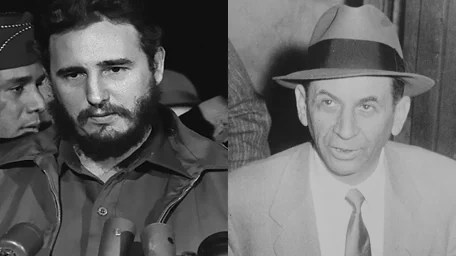
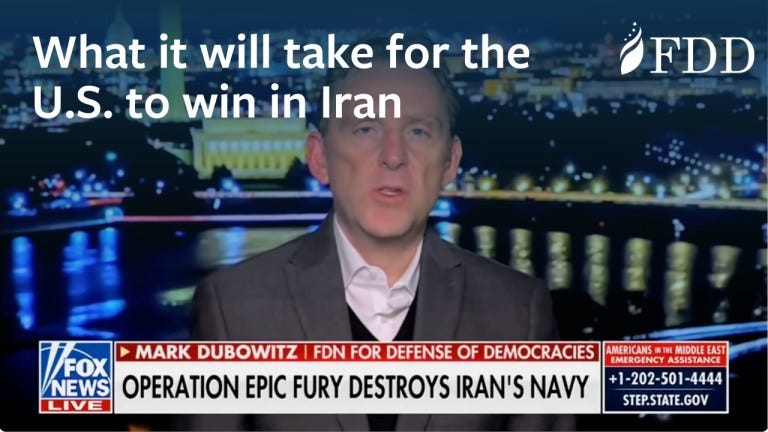
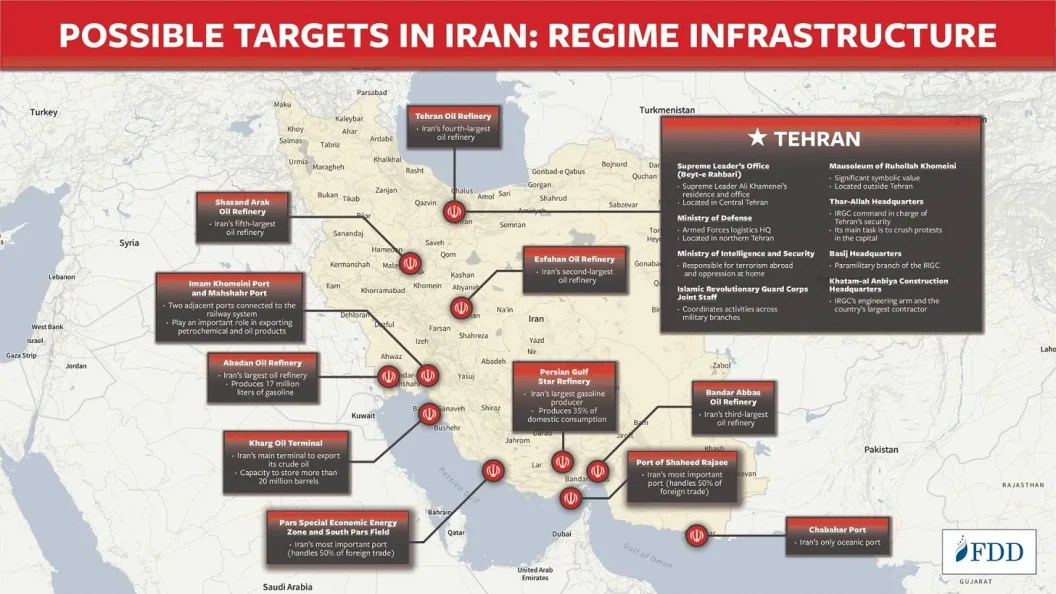
 • Osama Bin Laden WAS NOT Responsible for 9/11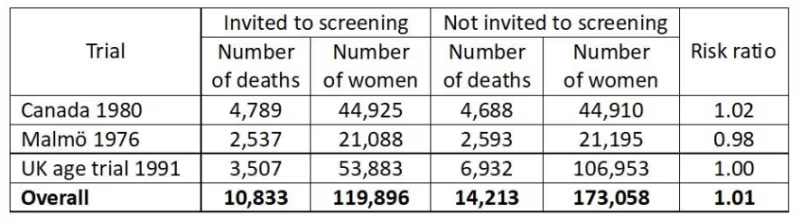
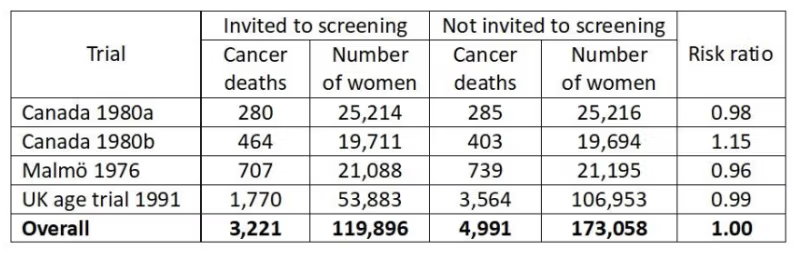
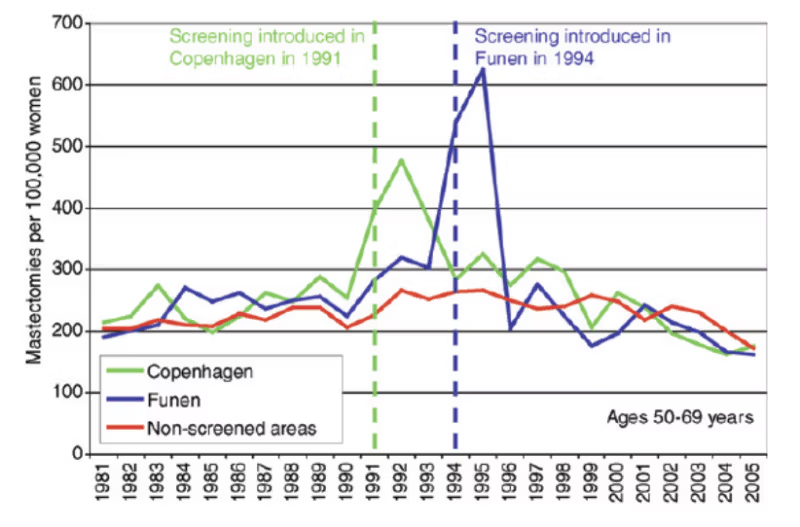
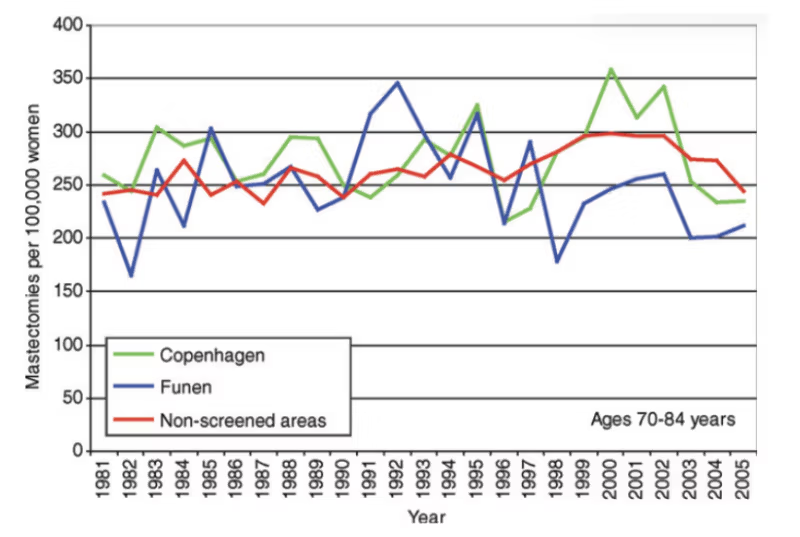
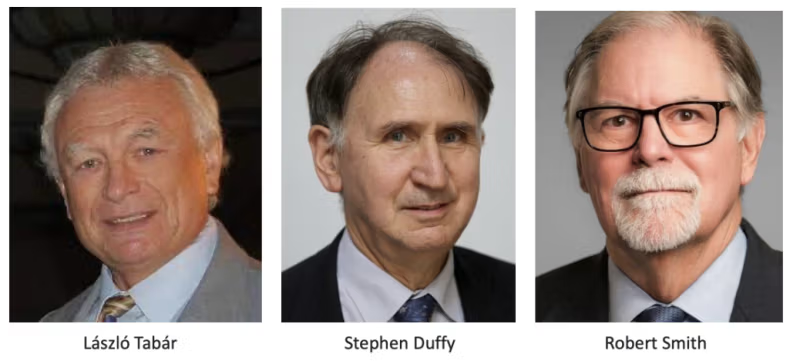
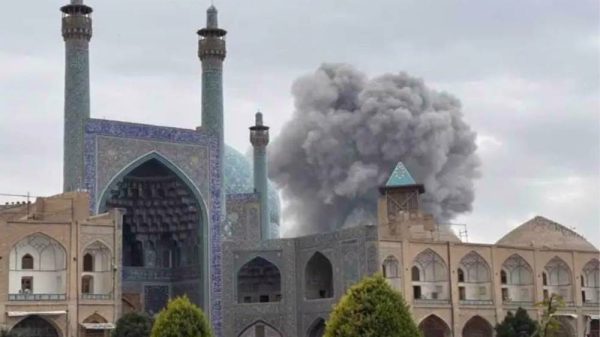
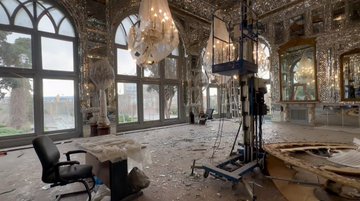
 During many years of contacts with Iran, the IAEA has never found grounds to refuse negotiations on Iranian nuclear program, Russian Foreign Ministry Spokeswoman Maria Zakharova said.

 Aletho News
