I was listening to a close friend recently talk about his regular visits to his Dermatologist to remove basal cell carcinomas, it was in connection to the stench of the burning skin.
I’d just read AMD’s long essay on the subject. At some point I’ll have to tell him about the Dermatology racket.
In a recent conversation with a different friend, I found myself explaining “meta ideas” that multiple industries rely on to make their living.
I explained it as a wall that is required to push against. Without that wall, you cannot generate enough force to go in your desired direction.
One of the biggest meta ideas within Cartel Medicine is Cancer, the big C.
Cancer and Virus have been competing for the top spot of Meta Ideas, with Virus I think now winning in that race, but for most of the last 50-70 years Cancer has been the biggest Meta Idea and the source of most fear and the source of most industrial profit for a wide variety of Interdependent Cartels.
This stack is about the Dermatology Cartel, that has relied on the Cancer “wall” and the demonization of the Sun; to generate all the force and energy it needs progress towards its profit goals.
I have created a list of Q&As relying on the wonderful and important work of AMD, Yoho and Mercola. Without these guys doing the heavy lifting on these subjects it would be impossible for people like me to come along and synthesize this material.
But before we look at the Q&As, here are 15 of the most material statistics from the three texts.
Statistics
Chemotherapy added only 2.1% to the 5-year survival for US adults treated for cancer, according to a literature search by Drs. Graeme Morgan and colleagues published in Clinical Oncology in 2004.
By 2013, 65 to 70 percent of oncologists’ income was drug charges.
New chemotherapy medications can be 300 times (not 300 percent) more expensive than old ones.
Twenty percent of all Mohs surgeries are performed on people over 85 years old, many in the last year or weeks of life.
Only 22% of melanomas occur in regions of the body with significant sunlight exposure, compared to 87% of squamous cell carcinoma (SCC) cases and 82.5% of basal cell carcinoma (BCC) cases.
Outdoor workers have a lower incidence of melanoma and half the risk compared to indoor workers, despite receiving 3-10 times the annual UV dose.
A 1997 meta-analysis found workers with significant occupational sunlight exposure were 14% less likely to get melanoma.
A 1982 study found fluorescent light exposure at work increased women’s risk of developing malignant melanoma by 2.1 times, with risk increasing based on exposure duration and intensity.
In a survey of 115 dermatopathologists, 68% believed overdiagnosis was a public health issue for atypical nevi, 47% for melanoma in situ, and 35% for invasive melanoma.
Dermatologists freeze millions of actinic keratoses (AKs) with liquid nitrogen, but studies show over half of AKs disappear on their own, with only 1% changing to skin cancer after a year and 4% after four years.
The ideal blood level of vitamin D for disease prevention is between 60 ng/mL and 80 ng/mL, while 40 ng/mL is considered the low end of sufficiency, and 30 ng/mL is the minimum to prevent disease.
In 2014, the average annual treatment cost for skin cancer was $8.1 billion for 4.9 million adults, a 44% increase in people diagnosed and a 125% increase in cost compared to 2002-2006.
Curaderm, a topical cream containing eggplant extract, has a success rate of 66-78% in treating basal cell carcinoma.
Valisure tested 294 sunscreen products and found 27% contained benzene, a known carcinogen, at levels at least three times higher than the FDA allows under special circumstances.
The 2019 and 2020 JAMA studies found that certain sunscreen ingredients (avobenzone, oxybenzone, octocrylene, homosalate, octisalate, and octinoxate) may build up in the body at unhealthy levels after just one day of use and can persist in the body.
Questions and Answers
Question 1: What did the American Academy of Dermatology do in the 1980s to raise public awareness about skin cancer?
Answer: In the early 1980s, the American Academy of Dermatology (AAD) hired a prominent New York advertising agency for over 2 million dollars to raise the public’s appreciation of dermatology. The agency recommended “educating” the public that dermatologists are skin cancer experts, not just pimple poppers, and established free National Skin Cancer Screening Day.
Skin cancers are by far the most commonly diagnosed cancer in the United States, so to prevent them, the public is constantly told to avoid the sun. However, while the relatively benign skin cancers are caused by sun exposure, the ones responsible for most skin cancer deaths are due to a lack of sunlight. – AMD
Question 2: What are actinic keratoses (AKs), and how do dermatologists typically treat them?
Answer: Actinic keratoses (AKs) are skin bumps that dermatologists call precancerous. Many seniors have dozens, if not hundreds of these. Dermatologists treat millions of AKs with liquid nitrogen devices resembling tiny blow-torches, billing Medicare for each treatment.
Question 3: What percentage of actinic keratoses (AKs) disappear on their own, and what proportion develop into skin cancer?
Answer: Studies show that over half of all actinic keratoses (AKs) disappear on their own. Only one percent change to skin cancer after a year, and four percent after four years. These skin cancers are virtually all slow-growing and easily treatable.
Question 4: What is Mohs surgery, and how does it differ from older methods of treating skin cancer?
Answer: Mohs surgery is a procedure where dermatologists remove skin cancer layer by layer, examining each layer under a microscope until all diseased tissue is removed. Patients may spend a full day in an operating room, and dermatologists bill for each cut, slide preparation, and microscopic examination. Older methods involved scratching, burning, or cutting away skin cancers and following up for recurrence.
Question 5: According to Robert Stern, a Harvard dermatologist, what factors influence the decision to utilize Mohs surgery?
Answer: According to Robert Stern, a Harvard dermatologist, “The decision to utilize [Mohs] is likely to reflect the economic advantage to the provider rather than a substantial clinical advantage for the patient.” He reported wide variations in usage by practice and region.
Question 6: What percentage of Mohs surgeries are performed on people over 85 years old, and under what circumstances?
Answer: Twenty percent of all Mohs surgeries are performed on people over 85 years old. Many are performed in the last year of life, and even in the last weeks before death. Demented people in nursing homes get frozen, biopsied, and operated on.
Question 7: How do dermatologists typically handle cases of melanoma, the only skin cancer that routinely metastasizes and kills people?
Answer: Dermatologists almost universally refer melanoma cases to plastic surgeons for removal and then to oncologists for chemotherapy. Few skin doctors want to get involved with a fatal disease.
Question 8: What pattern is observed when comparing melanoma diagnosis rates and mortality rates?
Answer: While melanoma diagnosis rates have increased dramatically, the total deaths from melanoma have not increased. The disease-specific mortality for melanoma has remained unchanged despite the extra procedures performed to treat them.
Question 9: What did the survey of 115 dermatopathologists reveal about their beliefs regarding the overdiagnosis of various skin conditions?
Answer: The survey of 115 dermatopathologists showed that 68% believed overdiagnosis was a public health issue for atypical nevi, 47% thought melanoma in situ was overdiagnosed, and 35% thought invasive melanoma was overdiagnosed.
Question 10: What did lead researcher Kathleen Kerr say about the disparity between increasing melanoma diagnoses and stable death rates?
Answer: Lead researcher Kathleen Kerr said, “Melanoma diagnoses have been rising in the U.S. If there were truly an epidemic of melanoma, we would expect deaths from melanoma to show a corresponding rise, since there hasn’t been a major breakthrough in treatment during this time. Yet melanoma deaths have been remarkably constant. This suggests that the rise in melanoma diagnoses is largely due to overdiagnosis.”
Question 11: What are the three primary risk factors for basal cell carcinoma (BCC)?
Answer: The three primary risk factors for basal cell carcinoma (BCC) are excessive sun exposure, fair skin (which makes you more susceptible to excessive sunlight penetrating your skin), and a family history of skin cancer.
Question 12: What percentage of basal cell carcinomas (BCCs) recur after removal, and what is the typical fatality rate?
Answer: The recurrence rate for basal cell carcinomas (BCCs) after removal ranges from 65% to 95%, depending on the source. Most sources say BCC has a 0% fatality rate.
Question 13: How does the metastasis and survival rate of squamous cell carcinoma (SCC) compare to that of basal cell carcinoma (BCC)?
Answer: Unlike basal cell carcinoma (BCC), squamous cell carcinoma (SCC) can metastasize. If SCC is removed prior to metastasizing, it has a 99% survival rate, but if removed after metastasis, the survival rate drops to 56%. The average survival rate for SCC is around 95%.
Question 14: What percentage of melanomas occur in regions of the body with significant sun exposure, compared to squamous cell carcinoma (SCC) and basal cell carcinoma (BCC)?
Answer: Only 22% of melanomas occur in regions of the body with significant sunlight exposure, such as the face. In contrast, 87% of all SCC cases and 82.5% of BCC cases occur in these regions.
Question 15: How does the incidence of melanoma in outdoor workers compare to that of indoor workers, despite higher UV exposure?
Answer: Outdoor workers get 3-10 times the annual UV dose that indoor workers get, yet they have lower incidences of cutaneous malignant melanoma and an odds ratio (risk) that is half that of their indoor colleagues.
Question 16: What did a 1997 meta-analysis reveal about the risk of melanoma in workers with significant occupational sunlight exposure?
Answer: A 1997 meta-analysis of the available literature found workers with significant occupational sunlight exposure were 14% less likely to get melanoma.
Note: the success of sunbathing was the original inspiration for ultraviolet blood irradiation.
Question 17: How does sunscreen use affect the rates of malignant melanoma, according to existing research?
Answer: Existing research has found using sunscreen either has no effect on the rates of malignant melanoma or increases it.
Question 18: What did a 1982 study find regarding the relationship between fluorescent light exposure at work and the risk of developing malignant melanoma in women?
Answer: A 1982 study of 274 women found that fluorescent light exposure at work caused a 2.1 times increase in their risk of developing malignant melanoma, with this risk increasing with more fluorescent light exposure, either due to the exposure at their job (1.8X with moderate exposure jobs, 2.6X with high exposure jobs) or the time spent working at it (i.e., 2.4X more likely for 1-9 years of work, 2.8X for 10-19 years, and 4.1X for over 20 years).
Question 19: What did the 1987 study comparing fatty acids in the tissue of melanoma patients and healthy controls find?
Answer: The 1987 study, which analyzed samples of fat tissue from 100 melanoma patients and 100 people without melanoma, found an increase in linoleic acid in the tissue of all subjects. However, the percentage of polyunsaturated fatty acids (PUFAs) was significantly higher in the melanoma patients’ tissue. The researchers suggested that increased consumption of dietary polyunsaturates may have a contributory effect in the etiology of melanoma.
Question 20: What type of fatty acid is linoleic acid, and in what foods is it commonly found?
Answer: Linoleic acid is the primary fat found in omega-6 polyunsaturated fats, including vegetable/seed oils, and accounts for about 80% of the fat composition of vegetable oils. It is found in virtually every processed food, including restaurant foods, sauces, salad dressings, and “healthy” foods like chicken, pork, and some olive oil.
Question 21: What percentage of sunscreen products tested by Valisure were found to contain benzene, and what is benzene?
Answer: Valisure tested 294 sunscreen products and found that 27% contained benzene, a known human carcinogen, at levels at least three times higher than the FDA allows under special circumstances.
Question 22: What sunscreen ingredient, found in 70% of products, is known to be an endocrine disruptor?
Answer: Oxybenzone, found in an estimated 70% of sunscreens, is a known endocrine disruptor linked to reduced sperm count in men and endometriosis in women.
Question 23: According to a Danish study, how many sunscreen chemicals allowed in the US may reduce male fertility?
Answer: According to a Danish study, 8 out of 29 sunscreen chemicals allowed in the US and/or European Union can reduce male fertility by affecting calcium signaling in the sperm, in part by exerting a progesterone-like effect.
Question 24: What did the 2019 and 2020 JAMA studies find regarding the absorption and persistence of certain sunscreen ingredients in the body?
Answer: The 2019 and 2020 JAMA studies found that certain sunscreen ingredients (avobenzone, oxybenzone, octocrylene, homosalate, octisalate, and octinoxate) may build up in the body at unhealthy levels. The ingredients were absorbed after only one day’s exposure, and some persisted in the body after use.
Question 25: What blood level of vitamin D is considered ideal for disease prevention, according to the research cited?
Answer: According to the research cited, the ideal blood level of vitamin D for disease prevention is between 60 ng/mL and 80 ng/mL, while 40 ng/mL is considered the low end of sufficiency, and 30 ng/mL is the minimum to prevent disease.
Question 26: What signs and symptoms may indicate that a person has low vitamin D levels?
Answer: Signs and symptoms that may indicate low vitamin D levels include ongoing musculoskeletal pain and achy bones, frequent infections or illnesses, neurological symptoms (such as depression, cognitive impairment, and migraines), and fatigue and daytime sleepiness.
Question 27: How does the antioxidant astaxanthin function as an “internal sunscreen”?
Answer: Astaxanthin is a potent antioxidant that acts as an internal sunscreen by protecting against UV radiation exposure and gene expression changes that lead to skin photoaging, such as sagging and wrinkles. It has strong free radical scavenging activity that protects against oxidative damage.
Question 28: What other nutrients are mentioned that may provide photoprotection for the skin?
Answer: Other nutrients mentioned that may provide photoprotection for the skin include lycopene, beta-carotene, vitamin D, and vitamin E.
Question 29: What does Dr. David Elpern believe led to the overdiagnosis of melanoma and an increase in expensive, low-value procedures for skin cancer and actinic keratosis?
Answer: Dr. David Elpern believes that the American Academy of Dermatology’s (AAD) campaign in the 1980s to educate the public about dermatologists being skin cancer experts led to inflated health anxiety about skin cancer, resulting in the overdiagnosis of melanoma and an increase in expensive, low-value procedures for skin cancer and actinic keratosis.
Question 30: What role did dermatopathologists’ perception of overdiagnosis play in their diagnostic behavior when examining skin biopsy cases?
Answer: The study found no statistically significant associations between dermatopathologists’ perceptions about overdiagnosis and their interpretive behavior when diagnosing skin biopsy cases. Dermatopathologists who believed invasive melanoma was overdiagnosed were slightly more likely to diagnose invasive melanoma compared to other dermatopathologists examining identical cases.
Question 31: What are the consequences of overdiagnosing melanoma for patients?
Answer: Overdiagnosing melanoma can have significant consequences for patients on both an emotional and financial level.
Question 32: What factors make reducing overdiagnosis of skin cancer challenging, according to lead researcher Kathleen Kerr?
Answer: According to lead researcher Kathleen Kerr, reducing overdiagnosis of skin cancer will be challenging as it requires cooperation between patients, primary care physicians, and pathologists.
Question 33: What did the studies from 1991, 2008, 2002, and 2011 demonstrate about the effectiveness of a topical cream containing a nightshade extract (solasodine glycosides) in treating various types of skin cancer?
Answer: The studies from 1991, 2008, 2002, and 2011 demonstrated the effectiveness of a topical cream containing a nightshade extract (solasodine glycosides) in treating various types of skin cancer, including actinic keratosis, basal cell carcinoma (BCC), and squamous cell carcinoma (SCC). The 1991 trial showed complete regression of lesions with no adverse effects, the 2008 trial found a 66% success rate for treating BCC, the 2002 English trial showed a 78% success rate for treating BCC with a short duration of treatment, and the 2011 case report showed good cosmetic outcomes for large BCC and SCC lesions.
Question 34: What is the current state of natural and alternative treatments for skin cancer, such as Curaderm, and why are they not more widely known and utilized despite their reported success rates?
Answer: There are several natural and alternative treatments for skin cancer that have been scientifically studied and have shown promising results. One such treatment is Curaderm, a topical cream containing solasodine glycosides, which are derived from eggplant extract. Studies have demonstrated that Curaderm has a success rate of 66-78% in treating basal cell carcinoma (BCC), the most common type of skin cancer.
In addition to Curaderm, other natural and alternative treatments that have undergone scientific study include topical creams containing vitamin B3 (niacinamide) and vitamin A (retinoids). While these treatments have shown potential, more research is needed to fully establish their effectiveness and safety.
Despite the reported success rates of these alternative therapies, they are not widely known or utilized in the mainstream treatment of skin cancer. This lack of awareness and adoption can be attributed to several factors, one of which is the potential threat they pose to the lucrative business model of the dermatology profession.
Healthy Sunbathing (by AMD)
One of the major mistakes Americans frequently make is the belief that if something is good for you, more of it is better. This very much holds true for sun exposure, as (assuming you are caucasian) once your skin starts turning pink, you lose the ability to utilize the sunlight you are being exposed to (e.g., you stop producing vitamin D), and in time also begin to burn (which can damage the skin). For this reason, many advise stopping sunbathing once your skin starts to turn pink and making sure to have regular small bursts of sunlight rather than intermittent large ones.
Note: doing this often completely eliminates the need for vitamin D and is one of the things that I’ve repeatedly seen greatly helps with longevity.
Additionally, there is a “good” type of ultraviolet light (UVB) and a bad type (UVA), and depending upon the time of day, different types are in prominence. For this reason, the absolute best time to be outside is between 10 a.m. and 2 p.m., which interestingly is the time Chinese Medicine recognizes that the energy of the heart peaks (an organ I believe is particularly sensitive to the energy of sunlight).
Conversely, most windows block UVB (but not UVA) so it’s actually not a good idea to get your direct light exposure through the window.
Note: specialized materials exist which don’t do this (e.g., quartz glass), but they are a bit expensive and hard to find.
Finally, something many do not appreciate about sunscreens is that two forms of them exist—ones that work by having chemicals which absorb UV light (and decrease it) and ones that simply block and reflect it. The chemicals that absorb UV light are often quite toxic, and a case can be made they are actually responsible for some of the increase in skin cancer that has been observed. With the reflecting ones, either titanium oxide or zinc oxide are typically used. Zinc oxide is the better option (people don’t react to it, and it can sometimes help heal the skin), so when selecting a sunscreen, the main thing to look for is one that uses zinc oxide and doesn’t have any questionable chemicals in it.
Note: there are now beginning to be pushes to stop the use of more toxic sunscreens in areas with abundant aquatic life because they poison the reefs. This raises the point that if a small amount of sunscreen diluted in the water is too toxic for an ecosystem to handle, why would you want to put it on your skin where it can directly absorb into the body at its full concentration?
Irish comedian and storyteller, Aidan Killian travelled around Ireland during ‘lockdown’ and this shows another side of the story about how many lived, connected, and gathered during these dark times.
United Nations experts say they are “appalled” that Israeli military forces continue to sexually assault Palestinian women in the Gaza Strip.
In a joint statement on Monday, UN Special Rapporteurs “expressed profound dismay at the reported targeting of Palestinian women by Israeli forces.”
They underscored “continued reports of sexual assault and violence against women and girls, including against those detained by Israeli occupation forces.”
“We are appalled that women are being targeted by Israel with such vicious, indiscriminate and disproportionate attacks, seemingly sparing no means to destroy their lives and deny them their fundamental human rights.”
A UN report in March said there were “reasonable grounds” to believe sexual violence, including rape, was committed in multiple locations across the besieged Palestinian territory.
The Special Rapporteurs had earlier warned the regime that these inhumane acts could “amount to serious crimes under international criminal law that could be prosecuted under the Rome Statute.”
UN experts also said the dire humanitarian situation in Gaza, exacerbated by widespread destruction of housing and infrastructure, disproportionately affects women and girls.
They cited the challenges faced by pregnant and lactating women, including Israel’s direct bombardment of Gaza hospitals and denial of access to healthcare facilities, that has led to a surge in miscarriages and infant mortality.
The Special Rapporteurs are independent experts – part of what is known as the Special Procedures of the UN Human Rights Council – whose mandate is to follow and report on the human rights situation of a specific country or thematic issues in all parts of the world.
Israel has killed more than 34,600 people, 70% of whom women and children, in Gaza since early October, according to the Gaza health ministry.
Police in the Turkish city of Adana detained 11 suspects, five Israeli and two Syrian, on allegations of organ trafficking, the Daily Sabahreported on 5 May.
The Provincial Directorate of Security’s Anti-Smuggling and Border Gates Branch began investigating after examining the passports of seven individuals who arrived in Adana from Israel about a month ago by plane for the purpose of health tourism. The two Syrian nationals, ages 20 and 21, were found to have fake passports.
Further investigation revealed that Syrian nationals had each agreed to sell one of their own kidneys to two of the Israeli nationals, ages 68 and 28, for kidney transplants in Adana.
During searches at the suspects’ residences, $65,000 and numerous fake passports were seized.
Israel has long been at the center of what Bloombergdescribed in 2011 as a “sprawling global black market in organs where brokers use deception, violence, and coercion to buy kidneys from impoverished people, mainly in underdeveloped countries, and then sell them to critically ill patients in more-affluent nations.”
The financial newspaper added, “Many of the black-market kidneys harvested by these gangs are destined for people who live in Israel.”
The organ-trafficking network extends from former Soviet Republics such as Azerbaijan, Belarus, Ukraine, and Moldova to Brazil, the Philippines, South Africa, and beyond, the Bloomberg investigation showed.
Accusations of Israeli involvement in organ trafficking also apply to the occupied Palestinian territories.
In 2009, Sweden’s largest daily newspaper, Aftonbladet, reported testimony that the Israeli army was kidnapping and murdering Palestinians to harvest their organs.
The report quotes Palestinian claims that young men from the occupied West Bank and Gaza Strip had been seized by the Israeli army, and their bodies returned to the families with missing organs.
“‘Our sons are used as involuntary organ donors,’ relatives of Khaled from Nablus said to me, as did the mother of Raed from Jenin as well as the uncles of Machmod and Nafes from Gaza, who all had disappeared for a few days and returned by night, dead and autopsied,” wrote Donald Bostrom, the author of the report.
Bostrom also cites an incident of alleged organ theft during the the first Palestinian intifada in 1992. He says that the Israeli army abducted a young man known for throwing stones at Israeli troops in the Nablus area. The young man was shot in the chest, both legs, and the stomach before being taken to a military helicopter, which transported him to an unknown location.
Five nights later, Bostrom said, the young man’s body was returned, wrapped in green hospital sheets.
Israel’s Channel 2 TV reported that in the 1990s, specialists at Abu Kabir Forensic Medicine Institute harvested skin, corneas, heart valves, and bones from the bodies of Israeli soldiers, Israeli citizens, Palestinians, and foreign workers without permission from relatives.
The Israeli military confirmed that the practice took place, but claimed, “This activity ended a decade ago and does not happen any longer.”
Israel’s assault on Gaza since 7 October has provided further opportunities for the theft and harvesting of Palestinians’ organs.
On 30 January, WAFA news agency reported that the Israeli army returned the bodies of 100 Palestinian civilians it had stolen from hospitals and cemeteries in various areas in Gaza.
According to medical sources, inspection of some of the bodies showed that organs were missing from some of them.
On 18 January, the Times of Israel reported that the Israeli army confirmed reports that its soldiers dug up graves in a Gaza cemetery, claiming its soldiers were trying to “confirm that the bodies of hostages were not buried there.”
The Sharon Tate murders were as bizarre as they were bloody, and the story behind the story is even stranger.
Journalist Tom O’Neill spent 20 years researching, interviewing and digging in his effort to get to the bottom of it. His book, CHAOS: Charles Manson, the CIA and the Secret History of the Sixties, co-authored by Dan Piepenbring, is an account of O’Neill’s personal odyssey as well as a presentation of his findings which unfold, page after page, in tragedy, weirdness and irony.
Charles Manson’s hit-team killed ten people, perhaps more. That was in California, back in the summer of 1969, while the U.S. Armed Forces were busily slaughtering millions of Asians in Vietnam. And in opposition to that war, hundreds of thousands of Americans marched in mass protests—the anti-war movement.
Even GIs and military veterans were speaking out against the war. The counterculture movement was in full bloom, having started for at least since “the summer of love” two years earlier. Woodstock, an historic occasion which drew 400,000 people to a music event in Upstate New York, also took place the year of the Manson murders in that same month of August.
War, anti-war, and counterculture—it was all going on when Charles Manson and his “family” suddenly stole the show and took center stage with that series of infamous killings. First there was the Gary Hinman murder, then the Sharon Tate killings, followed by the LaBianca murders. Two more victims about whom we do not often hear were Donald Shea, a caretaker at the Spahn Ranch, and Filippo Tenerelli, who was found dead in a Bishop, California, motel.
The FBI’s COINTELPRO and the CIA’s CHAOS programs were also in play—part of intelligence’s covert war on dissent. Several shadowy characters, apparently CIA operatives, turn up in this story and appear to have crossed paths with Charles Manson. Among them was Dr. Louis Jolyon West of the CIA’s MK-ULTRA mind-control project. Another was Reeve Whitson who somehow knew of the Tate killings 90 minutes before anyone else did, and reported it in a phone call to Tate’s photographer. O’Neill devotes a chapter to each of them.
Thirty years had passed since the killings when O’Neill began work on his project in 1999. Several of the key players had already died, but Charles Manson was still in prison, and memories of the killings remained painfully alive. The topic was initially assigned to O’Neill as a magazine article, and the editor gave him three months to complete it.
However, as he launched into it, interviewing dozens—eventually hundreds—of cops, DA lawyers, clerks, Hollywood personalities, drug dealers and others, he found there was far more to the story than he had ever imagined.
He missed his deadline, then his next deadline, and the one after that. The project became his obsession, and the digging and research continued on through 20 long years of plowing through troves of documents: court records, old newspaper files, FOIA requests, and interviews. Research can be frustrating, and clearly it was. “Behind every solid lead, quotable interview, and bombshell document, I put in weeks of scut work that led to dozens of dead ends,” O’Neill tells us. His book finally came out in 2019.
Told in the first person, the book is a gripping detective story that I could not put down—actually an audio that I could not turn off. It is well written, and the audio by Kevin Stillwell is well read. My partner wanted to know what I kept listening to all the time. So I took off my headset and played it out into the room. She caught the bug and we listened to it together day after day, smitten by Tom O’Neill’s obsession.
At Charles Manson’s orders, people were murdered. This is a “mystery” where we know the “who-done-it” part of the story, but we are left to wonder and speculate about almost everything else—motives, the roles of intel and law enforcement, facts that were covered up, and who or what else might have been operating behind the scenes.
Crime novels typically end with the pieces all falling into place to form a coherent picture. Not so in most real-life crime mysteries, O’Neill cautions us. Some pieces are missing; others do not seem to belong, but they are there nonetheless, often in some grotesquely misshapen form.
A good many pieces are left over; they may seem important, but we do not know what to make of them. In this book, the author takes us into a world where cops, judges, prosecutors, witnesses and others do not function in ways that seem rational or above board.
Among the strange pieces in this picture puzzle is something O’Neill calls “Charlie Manson’s get-out-of-jail-free card.”
After having spent much of his life in various prisons, in 1967 Charles Manson was finally out on “federal parole for grand theft auto.” Being on probation is almost like living on the doorstep of a jailhouse.
A parolee can get thrown back in prison for the slightest mis-step. However, Charles Manson went around committing one offense after another—stealing cars, credit cards and firearms, sex with underage women, drugs, etc. Whatever a parolee was not allowed to do, Charles Manson did. He even flouted it. He was caught repeatedly, but none of his numerous violations landed him in jail for more than a few days at a time.
“We were told not to bother those people,” former Los Angeles County Deputy Sheriff Preston Guillory told O’Neill. It was a policy handed down from on high, Guillory said: “Make no arrests, take no police action toward Manson or his followers.”
Cops who had clues, evidence or solid proof of Manson’s violations were pulled back from their investigations. On the occasions when Manson was arrested, judges would let him go. His probation officer, Roger Smith, wrote glowing letters about Manson’s supposedly wonderful progress.
Normally, a probation officer would supervise 20 to 100 parolees; but Roger Smith was supervising only one person—Charles Manson. It was with the encouragement of Probation Officer Roger Smith that Manson spent a year in the Haight-Ashbury district of San Francisco, at the time a Mecca of the hippie counterculture.
There Charlie acquired his “family” of followers, and morphed into the Charles Manson known to history and legend—the charismatic guru and apocalyptic cult leader, acid-dropping mystic, guitarist and songwriter, con artist, car thief and general predator, manipulator and abuser, and evangelist who expatiated on the Book of Revelation.
Manson was well-connected with Hollywood celebrities and music personalities: Doris Day’s son, music producer Terry Melcher, the Beach Boys, and many more, though most did not wish to have it known that they had been associated with him. Even after 30 years had passed, many refused to be interviewed by Tom O’Neill. The refusers’ list reads like a who’s who of Hollywood stardom. Cops and prosecutors were more inclined to talk, and some of them opened the author’s way to troves of documents and records.
Reading the accounts of these interactions, I sense that O’Neill must be something of a Will Rogers-type person who rarely met a person he did not like. And people in turn seemed to like him. Even officials who worked hard to cover things up seemed to warm up to him. Several, of course, including legendary prosecutor Vincent Bugliosi, eventually screamed at him and threatened to sue for millions of dollars.
Bugliosi was the attorney who had prosecuted Manson and afterwards wrote the best-selling Helter Skelter. In the courtroom and later in his book, Bugliosi presented Manson’s murder rampage as a scheme to blame the Black Panthers and thus spark a race war between blacks and whites. That became the official narrative, though it was doubted by people who had researched the case. Tom O’Neill devoted a chapter to reviewing “Holes in Helter Skelter”; he exposes Bugliosi’s handling of the case and does the coup de grâce on that theory.
Vince Bugliosi surrounded by reporters when he was prosecuting the Manson case in 1971. Source: nytimes.com
However, by the time O’Neill’s book came out, Bugliosi had passed on, and thus far his ghost has not risen up to carry out the threatened lawsuit. Another person who had threatened to sue O’Neill was music producer Terry Melcher, also dead by the time the book came out. There can be upsides to being a slow writer, taking a long time to do research.
“I’d spoken to duplicitous celebrities, seedy drug dealers, bumbling cops, and spurious prosecutors. I’d been threatened and cajoled and warned off my investigation. But I didn’t have a smoking gun. There were only mountains of circumstantial evidence,” O’Neill tells us.
So he kept going, finding more pieces of the picture. And it reads like the script of a film noir.
Throughout the drama, Charles Manson was being closely monitored by law enforcement agencies and intel. And yet, even while they were watching him, he sent his acolytes out on those brutal killing sprees of August 1969. Incredibly enough, despite the surveillance, it took law enforcement four long months to eventually arrest him and his hit team. During those extra months of free rein, Manson killed Shea and Tenerelli and perhaps more.
Los Angeles County Sheriff’s Department detectives had almost immediately found clues leading to Charles Manson; many Hollywood people also suspected him. So why did it take law enforcement so long to catch him? It appears that the “hands off Manson policy” was still in effect.
Actually, Manson was not the only person in this story who seemed to be immune to prosecution; similar immunity appears to have been granted to two or three Hollywood drug dealers who turn up in the story. That seems to be a fairly common practice in law enforcement.
“A lot of times we arrest people and the DA would say, ‘We can’t keep this person in custody, he’s too valuable, we want him on the streets,’” former Los Angeles Sheriff’s Deputy Guillory told O’Neill. “My suspicion is that Manson was left alone for a while for some reason.”
Former head deputy DA of Van Nuys, Lewis Watnick, gave a similar opinion. “Sometimes this is explained by just pure incompetence,” he said. “But this is not that. It dovetails right in. Manson was an informant.” Of course, that was just his guess, Watnick conceded, but it was an educated one, based on his 30 years of experience. “They’d been watching this guy for something large.”
Looking at the tolerance that authorities had for Manson’s lawbreaking, his relationship with probation officer Roger Smith, and more, it is hard to avoid the conclusion that somebody up there had a major investment in Mr. Charles Manson. They must have wanted him to do something. But what?
Along with his findings, O’Neill shares his uncertainties. “My work had left me, at various points, broke, depressed, and terrified that I was becoming one of ‘those people’: an obsessive, a conspiracy theorist… I don’t consider myself credulous, but I’d discovered things I thought impossible about the Manson murders and California in the sixties.” Further on, he tells us, “I thought most of all about the possibility that Manson, of all people, had some type of protection from law enforcement… It boggled the mind even to speculate that someone like Manson could be plugged into something bigger, and presumably even darker, than he was.”
Something darker than Charles Manson? Our leaders, and the establishment they work for, have a lot of closely guarded secrets—secrets that occasionally make their way out by way of researchers, whistleblowers, hackers, and even congressional hearings.
For background on the political environment of the late 1960s, O’Neill reviews the establishment’s war against the anti-war movement. That includes cases of people who were murdered as a result of FBI and CIA activities and manipulations here in the U.S. He ties this brutality to U.S. actions overseas.
O’Neill looks at the CIA’s Phoenix Program in Vietnam, a kill-capture campaign, which resulted in the death of thousands of Vietnamese civilians. He quotes from a Special Forces soldier, Anthony Herbert, about his time in the Phoenix Program: “They wanted me to take charge of execution teams that wiped out entire families and tried to make it appear as though the Viet Cong had done it themselves. The rationale was that the Viet Cong would see that other Viet Cong had killed their own and… make allegiance with us. The good guys.”
A mission shared by the FBI’s COINTELPRO and the CIA’s CHAOS was to disrupt and discredit the anti-war movement, and that, O’Neill points out, was one effect of the Manson murders. Of course, Charles Manson was not an anti-war activist; it is doubtful that he ever attended an anti-war rally. He was a product of the prison system who somehow found his way into the fringes of the counterculture movement, and there was a lot of overlap between the anti-war and counterculture movements. Many hippies were anti-war, and many activists smoked grass and grew their hair long.
Scene from the 1967 Summer of Love that Manson and the CIA/FBI were out to destroy. Source: allthatsinteresting.com
The corporate media, then as now, was the voice of the establishment elite, and dutifully presented the murderous Manson and his “family” to the world as poster children of the “hippie movement.” A lot of people bought that framing. Even people who self-identified as countercultural were saying, “Manson ended the Summer of Love!”—a message the corporate media pushed.
Although the killings were billed as the “crime of the century” and have received massive newspaper coverage ever since, few articles went beyond the sensational aspects and asked truly penetrating questions. When (in 1971) whistleblower LA Sheriff’s Detective Guillory went public with what he knew about Manson’s get-out-of-jail-free card, the media showed little interest. Nor did many journalists work out a related source and connection between these killings and a society waging a brutal and unjust war.
We assume that our leaders in Washington care about the lives of ordinary people. Our experience with them shows otherwise.
We remember Vietnam. There have been several murderous wars since then, and now Gaza. As I write this, our president and our Congress are in the sixth month of funding, arming and giving diplomatic support to apartheid Israel’s genocide of Palestinians.
Our leaders are not averse to promoting mass murder. We have the immortal words of former U.S. Ambassador to the UN Madeleine Albright: When asked in 1996 about U.S. sanctions causing the deaths of hundreds of thousands of Iraqi children, she replied, “We think the price is worth it.”
The powers that be are a bloodthirsty lot when it serves their interests, every bit as murderous as Charles Manson himself. But who might have been the local- or regional-level functionaries authorizing immunity for such criminals?
O’Neill tells us about several high-placed California officials. One was Evelle Younger, then Los Angeles DA. Younger was a former FBI agent who, during World War II, was with the Office of Strategic Services (OSS), the forerunner of the CIA, and also oversaw the prosecution of Sirhan Sirhan; he went on to be California Attorney General from 1971 to 1979.
Another was California Governor Ronald Reagan’s chairman of the “Task Force on Riots and Disorders,” William W. Herrmann. Herrmann was a veteran of the CIA’s Phoenix Program; he had also been a lieutenant with the LAPD. However, O’Neill was not able to establish a definite connection between them and the on-the-ground operatives. We do get an idea of who they seem to have been.
In this book of strange dark characters, one of the stranger ones was Dr. Louis Jolyon West, known to his friends as “Jolly” West. He was a pioneering scientist of the CIA’s mind-control project—MK-ULTRA. In 1966 he came to San Francisco, shortly before Manson arrived, and his project was to study and manipulate hippies.
So there they were, the two of them, in the Haight-Ashbury. Tom O’Neill, with meticulous documentation, suggests that Manson became a product of Jolly West’s experiments.
Another dark character who seems to have worked for the CIA was Reeve Whitson, a friend of Sharon Tate and Roman Polanski. He somehow knew of the killings before anyone else did, and telephoned the awful news to Tate’s personal photographer, Shahrokh Hatami. That was 90 minutes before the bodies were discovered by Polanski’s maid.
Both Dr. Louis Jolyon West and Reeve Whitson are dead and gone, West in 1999 and Whitson in 1994, and are, thus, not available for interviews or comment.
In this book Tom O’Neill shows us convincing evidence that Charles Manson was some sort of operative, maybe unwittingly. It looks like the purpose of his handlers—presumably from the CIA’s CHAOS or the FBI’s COINTELPRO—was to set him up to create a bloody scene such as the one on August 9, 1969.
It needs to be recognized that Charles Manson and his followers served the establishment well. Nevertheless, they went to prison where they remained for the rest of their lives. Only one, Leslie Van Houten, was finally released last year on parole.
Superb short explanation of everything related to the Russian/Putin/Western Problem – Alex Krainer in Dubai has indeed cracked it! Please share so that people can understand it all…
NOTE: My extensive research and interviewing / video/sound editing and travel to counter totalitarianism does require support – please consider helping if you can with monthly donation to support me directly, or one-off payment: https://www.paypal.com/donate?hosted_button_id=69ZSTYXBMCN3W – alternatively join up with my Patreon – exclusive Vlogs/content and monthly zoom meetings with the second tier upwards: https://www.patreon.com/IvorCummins
On April 13th, Iran, alongside Lebanon’s Hezbollah and Yemen’s AnsarAllah, executed Operation True Promise, a vast wave of drone, cruise and ballistic missile strikes on the Zionist entity, launched in retaliation to Tel Aviv’s criminal bombing of Tehran’s Damascus embassy less than two weeks earlier, which killed two Islamic Revolutionary Guards Corps (IRGC) generals. As a result, history was made, and the world – in particular West Asia – will never be the same again.
Iran’s first ever strike on the entity, following decades of provocations, escalations, assassinations, incendiary threats, and determined lobbying for U.S.-led war against Tehran by Tel Aviv officials, the effort targeted airbases, Israeli Air Force intelligence HQ, and a constellation of air defense systems. The U.S., Britain, and France scrambled jets to help shoot the vast payload down – unsuccessfully – while Jordan controversially permitted Western powers to use its airspace for the purpose. The entity claimed a 99% interception rate.
However, extensive photo and video material shows many missiles hit their targets, and wrought much damage. In the process, Iran demonstrated to Tel Aviv and its Western backers a hitherto unknown ability to circumvent layer upon layer of protective measures, including top tier fighter jets, NATO-supplied air defense systems, and the much-vaunted Iron Dome. One by one, they largely failed in their duty, leading to the astonishing sight of Iranian missiles soaring unmolested over the Knesset.
This righteous scene no doubt sent untold chills scouring around Western and Israeli corridors of power, searching vainly for spines to run up. It also dispatched a palpable message – Tehran could, if it wished, have struck the Zionist legislature, but didn’t do so. For the time being, at least. The floor was now Tel Aviv’s, to decide whether – and how – to retaliate. A response came on April 19, in the form of pre-dawn drone sorties across Iran.
Initially framed by Western media as hugely impactful, in reality a small swarm of Israeli quadcopters attempted to breach Tehran’s air defenses, but ultimately couldn’t. An Iranian spokesperson subsequently referred to the effort as “failed and humiliating.” This characterization surely applies more widely to the pathetic state to which Tel Aviv has been reduced, following Operation True Promise’s seismic success. As we shall see, the Zionist entity now has little time remaining, and no good choices left to make.
‘New Equation’
Despite its astonishing optics, and unprecedented nature, some West Asian observers were disappointed that the attack on Israel wasn’t a decapitation. Such perspectives overlook the Islamic Republic’s longstanding commitment to caution. Devastation of Tehran’s Syrian embassy was without historic parallel, and clearly concerned with eliciting a major escalation, in order to drag the U.S. into total war. A measured, well-advertised show of strength deterred wider response, while signaling a major shift in Iranian policy towards the entity. IRGC commander Hossein Salami has said:
“We have decided to create a New Equation, and that is if from now on the Zionist regime attacks our interests, assets, personalities, and citizens, at any point we will attack against them.”
Those are fighting words, and Operation True Promise plainly demonstrated they can be backed with action. Iran has shown it can strike the entity directly from its own soil, its fleets of missiles and drones capable of traveling thousands of kilometers over both friendly and hostile airspace, separate timezones, and multiple countries. Along the way, Tehran will have gleaned an enormous amount of invaluable intelligence on the defensive capabilities, and vulnerabilities, not only of Israel, but the local Western infrastructure upon which its defenses depend.
Any future Iranian strike would make the most of whatever was learned on April 13th, and the data yield was likely enormous. Since Russia’s “Special Military Operation” began in February 2022, defense cooperation between Moscow and Tehran has reached extraordinary levels – and intensive learning and on-the-go refinement of battle strategy is core Russian military doctrine. As a nameless Ukrainian Army officer bitterly toldPolitico on April 3, Western weapons systems sent to Kiev “become redundant very quickly because they’re quickly countered by the Russians”:
“For example, we used Storm Shadow and SCALP cruise missiles [supplied by Britain and France] successfully – but just for a short time. The Russians are always studying. They don’t give us a second chance. And they’re successful in this.”
If there’s a next time too, Iran’s missile and drone fleet is likely to be considerably more sustained, playing out over several days, weeks, or even months, wave after wave, burst after burst. Estimates suggest around 300 separate projectiles fired at the entity during Operation True Promise. Largely unsuccessful attempts to repel the blitz by Tel Aviv alone cost $1.08 – 1.35 billion, according to an Israeli Occupation Force (IOF) general.
“One Arrow missile used to intercept an Iranian ballistic missile costs $3.5 million, while the cost of one David Sling missile is $1 million, in addition to the sorties of aircraft that participated in intercepting the Iranian drones,” they told local media. Meanwhile, an Israeli think tank researcher calculates the costs “were enormous”, comparable to what Israel spent during the entire 1973 Arab/Israeli war, which lasted almost three weeks.
Those sums were spent on missile interceptors, missiles, jet fuel, and other military equipment and infrastructure. It is uncertain how much Iran spent on the Operation, but it is undoubtedly orders of magnitude less. Some sources have suggested $30 million, which could well be accurate. This massive cost discrepancy is a very, very grave issue for the entity, as the U.S. can attest, given its embarrassing experiences attempting – and completely failing – to end AnsarAllah’s anti-genocide blockade of the Red Sea.
Almost immediately, Politicoreported that the Pentagon was aghast that it was squandering missiles costing millions to shoot down $2,000 AnsarAllah drones. “That quickly becomes a problem because the most benefit, even if we do shoot down their incoming missiles and drones, is in their favor,” a CIA officer lamented. “We, the U.S., need to start looking at systems that can defeat these that are more in line with the costs they are expending to attack us.”
‘Israel Goes Under’
There is no sign publicly yet of Washington having rectified this concern, which may account for why US officials at the start of April offered AnsarAllah a sweeping offer of total surrender in return for ending the Red Sea blockade, which was rejected. But in the event of a subsequent Iranian strike on Tel Aviv, Tehran’s Shahed drones will not be used to deter shipping, but tie up, smoke out, and exhaust the entity’s air defenses.
This tactic was used to significant effect on April 13th, as it has been by Russia since its airstrikes on critical Ukrainian infrastructure began in late 2022. Now, Kiev is on the verge of being de-electrified, which will cause a battlefield and population displacement, with potentially devastating knock-on effects on neighboring countries, and states trying to keep Kiev’s lights on. It seems safe to say neither Israel nor its Western allies could sustain a serious defense to a protracted assault by Tehran, economically or materially.
That conclusion is supported by an April 22nd Wall Street Journal report, which revealed the Biden administration was shocked at the scale of Iran’s barrage. It “matched worst-case scenarios” outlined by U.S. intelligence and the Pentagon, an unnamed senior official despairing, “this was on the high end… of what we were anticipating.” White House Situation Room attendees on the day allegedly feared Israel and its allies would not be able to repel the assault. And they couldn’t.
On top of a mass crime against humanity amounting to a 21st century Holocaust, the entity’s genocide in Gaza has been utterly destructive to its own economy. A Financial Times investigation of November 6th 2023 documented how the assault has ravaged personal finances, job markets, businesses, industries, and the Israeli government itself. “Thousands” of companies were teetering on the brink of collapse, with entire sectors plunged into an unprecedented crisis. One in three businesses had either shuttered or were operating at 20 percent capacity.
The race to escape Israel
One can imagine how much worse things have gotten in the six months since, and Israel isn’t yet embroiled in an all-out war. An extended period of mass strikes from Iran, AnsarAllah and Hezbollah could completely paralyzse the entity economically, render entire areas of the entity uninhabitable – or, at least, uninhabited – destroy infrastructure, and much more. Among the infrastructure in Tehran’s crosshairs could well be the Dimona nuclear power plant, which would unleash deadly chaos on a grand scale.
Resultantly, the entity’s “Samson Option”, under which it is committed to launch a mass nuclear strike if its existence is threatened, should no longer be taken very seriously. Israeli military theorist Martin van Creveld once boasted, “we have the capability to take the world down with us, and I can assure you that will happen before Israel goes under.” But Tehran’s hypersonic missile capabilities are in every way an effective counter-deterrent. They could even deliver a nuclear, or chemical/biological payload of their own.
‘Whoever Moves’
The Zionist entity’s Iranian drubbing is further exacerbated by its attempt to crush Hamas being an absolute disaster, in every conceivable way. The fiasco’s consequences are and will remain wide-ranging and grave, to the extent of fatal. This may account for Netanyahu’s flailing bid to draw Tehran into all-out war. After all, the scale of Israeli Occupation Forces’ defeat is such that in an absolutely scathing op-ed for Haaretz on April 11th, Zionist “journalist” Chaim Levinson lamented:
“We’ve lost. Truth must be told… It’s unpleasant to say, but we may not be able to safety [sic] return to Israel’s northern border… No cabinet minister will restore our sense of personal security. Every Iranian threat will make us tremble. Our international standing was dealt a beating. Our leadership’s weakness was revealed to the outside. For years we managed to fool them into thinking we were a strong country, a wise people and a powerful army. In truth, we’re a shtetl with an airforce, and that’s on the condition it’s awakened in time.”
Even the Western media, which since the genocide began has been at best silent and at worst complicit – and much more active in the latter sphere than the former – has acknowledged Tel Aviv’s battlefield cataclysm. The Economist, a nakedly Zionist publication that has whitewashed, diminished, or outright justified every conceivable crime committed by the IOF, has condemned the Forces’ “military and moral failures”, and how “its generals botched the strategy, and discipline among troops has broken down”:
“[Israel is] accused of two catastrophic failures. First, it has not achieved its military objectives in Gaza. Second, it has acted immorally and broken the laws of war. The implications for both the IDF and Israel are profound… Hamas fighters are still ambushing Israeli forces throughout Gaza and the group is reasserting itself in areas the IDF has left… Accusations that Israel has broken the laws of war are plausible.”
An Israeli Occupation Force psychopath
The Economist went on to slam a “lack of enforcement” of already virtually non-existent “rules of engagement” under which the IOF operate. A “veteran reserve officer” was quoted as saying commanders could arbitrarily “decide that whoever moves in his sector is a terrorist or that buildings should be destroyed.” A sapper in another unit admitted, “the only limit to the number of buildings we blew up was the time we had inside Gaza”:
“Soldiers have filmed themselves vandalising Palestinian property and, in some cases, put those videos online. On February 20 the IDF’s chief of staff published a public letter to all soldiers warning them to use force only where necessary, ‘to distinguish between a terrorist and who is not, not to take anything which isn’t ours – a souvenir or weaponry – and not to film vengeance videos.’ Four months into the war, this was too little, too late.”
That The Economist printed such things at all reflects how far the Zionist entity has fallen since October 7th. Now, it is a global pariah, viscerally loathed by the overwhelming majority of the world’s citizenry. Its once-vaunted military is not feared by adversaries, and their ability to unilaterally strike Muslim countries with total impunity, and no comebacks, is over. Tel Aviv’s claim to “defense” and security primacy, upon which much of its exports were successfully marketed for decades, has been amply demonstrated to be bogus.
Meanwhile, the entity has suffered population collapse, with concomitant mass brain drain and workforce freefall as settlers flee or get conscripted. Demand for mental health services has reached all-time highs, as the trauma of perpetrating genocide, and living under the daily threat of attack as Palestinians have since 1948, ravages soldiers and civilians alike. But scores of psychiatrists have relocated elsewhere due to stressful workloads, and likely won’t return. Such are the foundational flaws of a settler colonial state.
For many, these developments may be little consolation, coming as they do off the back of thousands of murdered and mutilated Palestinian children. Yet, they are unambiguous indicators that the Zionist entity is on the brink of extinction, which wasn’t the case before Hamas breached Gaza’s concentration camp walls on October 7th 2023. Palestine is now closer to being free than at any point since Israel’s creation. And there is no going back to “normal”.
Refaat Alareer
Time is now and forever on the side of the indefatigable, undefeated Resistance – so too justice, and virtue. We should never forget the immortal, galvanising words of Palestinian poet Refaat Alareer, slain in cold blood by a targeted IOF airstrike on December 6th 2023:
WASHINGTON – The 2014 massacre in Odessa conducted by Ukrainian nationalists was well orchestrated and the CIA possibly played a role, US antiwar activist and Global Network Against Weapons and Nuclear Power in Space Coordinator Bruce Gagnon told Sputnik.
On May 2, 2014, Ukrainian nationalists locked pro-federalism protesters in Odessa’s Trade Unions House and set the building on fire. Almost 50 people died and 250 others were injured in the attack by the Ukrainian radicals, according to the United Nations.
“It was well orchestrated,” Gagnon said on Wednesday.
The CIA as well as other US agencies were likely involved in the planning and execution of the massacre, he said.
Gagnon pointed out that the perpetrators were well-equipped to carry out the massacre and Ukrainian law enforcement did practically nothing to prevent it.
“Molotov cocktails were on hand to firebomb the Trade Union House. Bats were on hand to beat those who jumped from windows trying to get away from fire and smoke. Back door was broken into, and Nazis moved inside to kill people hiding,” Gagnon said.
The police at the scene did nothing while the assault was underway and arrested those who had been inside the building but not those who attacked them, Gagnon said.
Fire trucks were blocked from arriving at the scene for quite some time and could not extinguish the fire in the very beginning, Gagnon added.
“It is obvious to me that decisions made at the highest level in Ukraine, and likely in the United States, determined that no prosecutions would happen to those who attacked,” Gagnon said.
The activist noted that he visited Odessa on May 2, 2016, and saw with his own eyes the neo-Nazi Azov battalion holding weapons and roping off the Trade Unions House from people who carried flowers to pay tribute to the victims of the attack.
“No one was allowed to approach the building. The Nazis threw stones at the bus carrying the mothers [of the victims] and the international guests as we approached the area,” Gagnon added.
The clashes in Odessa became one of the deadliest events during the so-called Maidan and anti-Maidan demonstrations in Ukraine that started in late 2013.
Moscow has repeatedly criticized the steps Kiev took to allegedly investigate the massacre and has urged the international community and human rights groups to conduct a probe.
From ‘calling the shots’ to calling out their safety and efficacy — Dr. Suzanne Humphries is one of the countless conventionally-trained physicians who dug into the research on pharmaceuticals rather than blindly prescribing them and “saw something that they thought was worth risking everything for.” But what would a world without these products, such as vaccines, look like? Dr. Humphries and Dr. Thomas discuss, this week, on ‘Pediatric Perspectives.’
In successfully lobbying Congress for an additional $61 billion in Ukraine war funding, an effort that ended this month with celebratory Democrats waving Ukrainian flags in the House chamber, President Biden has cast his administration’s standoff with Russia as an existential test for democracy.
“What makes our moment rare is that freedom and democracy are under attack, both at home and overseas,” Biden declared in his State of the Union address in March. “History is watching, just like history watched three years ago on January 6th.”
While Biden’s narrative is widely accepted by Washington’s political establishment, a close examination of the president and his top principals’ record dating back to the Obama administration reveals a different picture. Far from protecting democracy from Kyiv to Washington, their role in Ukraine looks more like epic meddling resulting in political upheaval for both countries.
Over the last decade, Ukraine has been the battleground in a proxy war between the U.S. and Russia – a conflict massively escalated by the Kremlin’s invasion in 2022. The fight erupted in early 2014, when Biden and his team, then serving in the Obama administration, supported the overthrow of Ukraine’s elected president, Viktor Yanukovych. Leveraging billions of dollars in U.S. assistance, Washington has shaped the personnel and policies of subsequent Ukrainian governments, all while expanding its military and intelligence presence in Ukraine via the CIA and NATO. During this period, Ukraine has not become an independent self-sustaining democracy, but a client state heavily dependent on European and U.S. support, which has not protected it from the ravages of war.
The Biden-Obama team’s meddling in Ukraine has also had a boomerang effect at home.
As well-connected Washington Beltway insiders such as Hunter Biden have exploited it for personal enrichment, Ukraine has become a source of foreign interference in the U.S. political system – with questions of unsavory dealings arising in the 2016 and 2020 elections as well as the first impeachment of Donald Trump. After years of secrecy, CIA sources have only recently confirmed that Ukrainian intelligence helped generate the Russian interference allegations that engulfed Trump’s presidency. House Democrats’ initial attempt to impeach Trump, undertaken in the fall of 2019, came in response to his efforts to scrutinize Ukraine’s Russiagate connection.
This account of U.S. interference in Ukraine, which can be traced to fateful decisions made by the Obama administration, including then-Vice President Biden and his top aides, is based on often overlooked public disclosures. It also relies on the personal testimony of Andrii Telizhenko, a former Ukrainian diplomat and Democratic Party-tied political consultant who worked closely with U.S. officials to promote regime change in Ukraine.
Although he once welcomed Washington’s influence in Ukraine, Telizhenko now takes a different view. “I’m a Ukrainian who knew how Ukraine was 30 years ago, and what it became today,” he says. “For me, it’s a total failed state.” In his view, Ukraine has been “used directly by the United States to fight a [proxy] war with Russia” and “as a rag to make money for people like Biden and his family.”
The State Department has accused Telizhenko being part of a “Russia-linked foreign influence network.” In Sept. 2020 it revoked his visa to travel to the United States. Telizhenko, who now lives in a western European country where he was granted political asylum, denies working with Russia and says that he is a whistleblower speaking out to expose how U.S. interference has ravaged his country. RealClearInvestigations has confirmed that he worked closely with top American officials while they advanced policies aimed at severing Ukraine’s ties to Russia. No official contacted for this article – including former CIA chief John Brennan and senior State Department official Victoria Nuland – disputed any of his claims.
A Coup in ‘Full Coordination’ With the U.S.
The Biden team’s path to influencing Ukraine began with the eruption of anti-government unrest in November 2013. That month, protesters began filling Kyiv’s Maidan Nezalezhnosti (Independence Square) after then-President Viktor Yanukovych, a notoriously corrupt leader, delayed signing a European Union (EU) trade pact. To members of what came to be known as the Maidan movement, Yanukovych’s decision was a betrayal of his pledge to strengthen Western ties, and a worrying sign of Russian allegiance in a country haunted by its Soviet past.
The reality was more complex. Yanukovych was hoping to maintain relations with both Russia and Europe – and use competition between them to Ukraine’s advantage. He also worried that the EU’s terms, which demanded reduced trade with Russia, would alienate his political base in the east and south, home to millions of ethnic Russians. As the International Crisis Group noted, these Yanukovych-supporting Ukrainians feared that the EU terms “would hurt their livelihoods, a large number of which were tied to trade and close relations with Russia.” Despite claims that the Maidan movement represented a “popular revolution,” polls from that period showed that Ukrainians were evenly split on it, or even majority opposed.
After an initial period of peaceful protest, the Maidan movement was soon co-opted by nationalist forces, which encouraged a violent insurrection for regime change. Leading Maidan’s hardline contingent was Oleh Tyahnybok of the Svoboda party, who had once urged his supporters to fight what he called the “Muscovite-Jewish mafia running Ukraine.” Tyahnybok’s followers were joined by Right Sector, a coalition of ultra-nationalist groups whose members openly sported Nazi insignia. One year before, the European Parliament condemned Svoboda for “racist, anti-Semitic and xenophobic views” and urged Ukrainian political parties “not to associate with, endorse or form coalitions with this party.”
Powerful figures in Washington took a different view: For them, the Maidan movement represented an opportunity to achieve a longtime goal of pulling Ukraine into the Western orbit. Given Ukraine’s historical ties to Russia, its integration with the West could also be used to undermine the rule of Russian President Vladimir Putin.
As the-late Zbigniew Brzezinski, the influential former national security adviser to President Jimmy Carter, once wrote: “Without Ukraine, Russia ceases to be a Eurasian empire.” Two months before the Kyiv protests erupted, Carl Gershman, head of the National Endowment for Democracy, dubbed Ukraine “the biggest prize” in the West’s rivalry with Russia. Absorbing Ukraine, Gershman explained, could leave Putin “on the losing end not just in the near abroad” – i.e, its former Soviet satellites – “but within Russia itself.” Shortly after, senior State Department official Nuland boasted that the U.S. had “invested more than $5 billion” to help pro-Western “civil society” groups achieve a “secure and prosperous and democratic Ukraine.”
Seeking to capitalize on the unrest, U.S. figures including Nuland, Republican Sen. John McCain, and Democratic Sen. Chris Murphy visited Maidan Square. In a show of support for the movement’s hardline faction, which went beyond supporting the EU trade deal to demand Yanukovych’s ouster, the trio met privately with Tyahnybok and appeared with him on stage. The senators’ mission, Murphy said, was to “bring about a peaceful transition here.”
The Maidan Movement’s most significant U.S. endorsement came from then-Vice President Joe Biden. “Nothing would have greater impact for securing our interests and the world’s interests in Europe than to see a democratic, prosperous, and independent Ukraine in the region,” Biden said.
According to Andrii Telizhenko, a former Ukrainian government official who worked closely with Western officials during this period, the U.S. government’s role went far beyond those high-profile displays of solidarity.
“As soon as it grew into something, into the bigger Maidan, in the beginning of December, it basically was full coordination with the U.S. Embassy,” Telizhenko recalls. “Full, full.”
When the protests erupted, Telizhenko was working as an adviser to a Ukrainian member of Parliament. Having spent part of his youth in Canada and the United States, Telizhenko’s fluent English and Western connections landed him a position helping to oversee the Maidan Movement’s international relations. In this role, he organized meetings with and coordinated security arrangements for foreign visitors, including U.S. Ambassador Geoffrey Pyatt, Nuland, and McCain. Most of their briefings were held at Kyiv’s Trade Unions Building, the movement’s de-facto headquarters in the city’s center.
Telizhenko says Pyatt routinely coordinated with Maidan leaders on protest strategy. In one encounter, the ambassador observed Right Sector members assembling Molotov cocktails that would later be thrown at riot police attempting to enter the building. Sometimes, the U.S. ambassador disapproved of his counterparts’ tactics. “The U.S. embassy would criticize if something would happen more radical than it was supposed to go by plan, because it’s bad for the picture,” Telizhenko said.
That winter was marked by a series of escalating clashes. On February 20, 2014, snipers fatally shot dozens of protesters in Maidan square. Western governments attributed the killings to Yanukovych’s forces. But an intercepted phone call between NATO officials told a different story.
In the recorded conversation, Estonian foreign minister Urmas Paet told EU foreign secretary Catherine Ashton that he believed pro-Maidan forces were behind the slaughter. In Kyiv, Paet reported, “there is now stronger and stronger understanding that behind the snipers, it was not Yanukovych, but it was somebody from the new [opposition] coalition.”
In a bid to resolve the Maidan crisis and avoid more bloodshed, European officials brokered a compromise between Yanukovich and the opposition. The Feb. 21 deal called for a new national unity government that would keep him in office, with reduced powers, until early elections at year’s end. It also called for the disarmament of the Maidan forces and a withdrawal of riot police. Holding up its end of the bargain, government security forces pulled back. But the Maidan encampment’s ultra-nationalist contingent had no interest in compromise.
“We don’t want to see Yanukovych in power,” Maidan Movement squadron leader Vladimir Parasyuk declared that same day. “… And unless this morning you come up with a statement demanding that he steps down, then we will take arms and go, I swear.”
In insisting on regime change, the far-right contingent was also usurping the leadership of more moderate opposition leaders such as Vitali Klitschko, who supported the power-sharing agreement.
“The goal was to overthrow the government,” Telizhenko says. “That was the first goal. And it was all green-lighted by the U.S. Embassy. They basically supported all this, because they did not tell them to stop. If they told them [Maidan leaders] to stop, they would stop.”
Yet another leaked phone call bolstered suspicions that the U.S. endorsed regime change. On the recording, presumably intercepted in January by Russian or Ukrainian intelligence, Nuland and Pyatt discussed their choice of leaders in a proposed power-sharing government with Yanukovich. Their conversation showed that the U.S. exerted considerable influence with the faction seeking the Ukrainian president’s ouster.
Tyahnybok, the openly antisemitic head of Svodova, would be a “problem” in office, Nuland worried, and better “on the outside.” Klitschko, the more moderate Maidan member, was ruled out as well. “I don’t think Klitsch should go into government,” Nuland said. “I don’t think it’s necessary. I don’t think it’s a good idea.” One reason was Klitschko’s proximity to the European Union. Despite her government’s warm words for the European Union in public, Nuland told Pyatt: “Fuck the EU.”
The two U.S. officials settled on technocrat Arseniy Yatsenyuk. “I think Yats is the guy,” Nuland said. By that point, Yatsenyuk had endorsed violent insurrection. The government’s rejection of Maidan demands, he said, meant that “people had acquired the right to move from non-violent to violent means of protest.”
The only outstanding matter, Pyatt relayed, was securing “somebody with an international personality to come out here and help to midwife this thing.” Nuland replied that Vice President Joe Biden and his senior aide, Jake Sullivan, who now serves as Biden’s National Security Adviser, had signed on to provide “an atta-boy and to get the deets [details] to stick.”
Just hours after the power-sharing agreement was reached, Nuland’s wishes were granted. Yanukovich, no longer protected by his armed forces, fled the capital. Emboldened by their sabotage of an EU-brokered power-sharing truce, Maidan Movement members stormed the Ukrainian Parliament and pushed through the formation of a new government. In violation of parliamentary rules on impeachment proceedings, and lacking a sufficient quorum, Oleksandr Turchynov was named the new acting president. The Nuland-backed Yatsenyuk was appointed Prime Minister.
In a reflection of their influence, at least five post-coup cabinet posts in national security, defense, and law enforcement were given to members of Svoboda and its far-right ally Right Sector.
“The uncomfortable truth is that a sizeable portion of Kyiv’s current government – and the protesters who brought it to power – are, indeed, fascists,” wrote Andrew Foxall, now a British defense official, and Oren Kessler, a Tel Aviv-based analyst, in Foreign Policy the following month. While denying any role in Yanukovich’s ouster, the Obama administration immediately endorsed it, as Secretary of State John Kerry expressed “strong support” for the new government.
In his memoir, former senior Obama aide Ben Rhodes acknowledged that Nuland and Pyatt “sounded as if they were picking a new government as they evaluated different Ukrainian leaders.” Rather than dispel that impression, he acknowledged that some of the Maidan “leaders received grants from U.S. democracy promotion programs.”
In 2012, one pro-Maidan group, Center UA, received most of its more than $500,000 in donations from the U.S. Agency for International Development (USAID), the National Endowment for Democracy, eBay founder Pierre Omidyar, and financier George Soros.
By its own count, Soros’ International Renaissance Foundation spent over $109 million in Ukraine between 2004 and 2014. In leaked documents, a former IRF board member even bragged that its partners “were the main driving force and the foundation of the Maidan movement,” and that without Soros’ funding, “the revolution might not have succeeded.” Weeks after the coup, an IRF strategy document noted, “Like during the Maidan protests, IRF representatives are in the midst of Ukraine’s transition process.”
Jeffrey Sachs, a Columbia University professor who advised Ukraine on economic policy in the early 1990s, visited Kyiv shortly after the coup to consult with the new government.
“I was taken around the Maidan where people were still milling around,” Sachs recalls. “And the American NGOs were around there, and they were describing to me: ‘Oh we paid for this, we paid for that. We funded this insurrection.’ It turned my stomach.” Sachs believes that these groups were acting at the behest of U.S. intelligence. To go about “funding this uprising,” he says, “they didn’t do that on their own as nice NGOs. This is off-budget financing for a U.S. regime-change operation.”
Weeks after vowing to bring about a “transition” in Ukraine, Sen. Murphy openly took credit for it. “I really think that the clear position of the United States has in part been what has helped lead to this change in regime,” Murphy said. “I think it was our role, including sanctions and threats of sanctions, that forced, in part, Yanukovych from office.”
The Proxy War Gets Hot
Far from resolving the unrest, Viktor Yanukovych’s ouster plunged Ukraine into a war.
Just days after the Ukrainian president fled to Moscow, Russian special forces stormed Crimea’s local parliament. The following month, Russia annexed Crimea following a hasty, militarized referendum denounced by Ukraine, the U.S., and much of the world. While these objections were well-founded, Western surveys of Crimeans nonetheless found majority support for Russian annexation.
Emboldened by the events in Crimea, and hostile to a new government that had overthrown their elected leader Yanukovych, Russophile Ukrainians in the eastern Donbas region followed suit.
On April 6 and 7, anti-Maidan protesters seized government buildings in Donetsk, Luhansk, and Kharkiv. The Donetsk rebels declared the founding of the Donetsk People’s Republic. The Luhansk People’s Republic followed 20 days later. Both areas announced independence referendums for May 11.
As in Crimea, Moscow backed the Donbas rebellion. But unlike in Crimea, the Kremlin opposed the independence votes. The organizers, Putin said, should “hold off on the referendum in order to give dialogue the conditions it needs to have a chance.”
In public, the Obama administration claimed to also favor dialogue between Kyiv and the Russia-backed rebels in eastern Ukraine. Behind the scenes, a more aggressive plan was brewing.
On April 12, CIA chief John Brennan slipped into the Ukrainian capital for secret meetings with top officials. Russia, whose intelligence services ran a network of informants inside Ukraine, publicly outed Brennan’s visit. The Kremlin and Yanukovych directly accused Brennan of encouraging an assault on the Donbas.
The CIA dismissed the allegation as “completely false,” and insisted that Brennan supported a “diplomatic solution” as “the only way to resolve the crisis.” The following month, Brennan insisted that “I was out there to interact with our Ukrainian partners and friends.”
Yet Russia and Yanukovych were not alone in voicing concerns about the CIA chief’s covert trip. “What message does it send to have John Brennan, the head of the CIA in Kiev, meeting with the interim government?” Sen. Murphy complained. “Does that not confirm the worst paranoia on the part of the Russians and those who see the Kiev government as essentially a puppet of the West?… It may not be super smart to have Brennan in Kiev, giving the impression that the United States is somehow there to fight a proxy war with Russia.”
According to Telizhenko, who attended the Brennan meeting and spoke to RCI on record about it for the first time, that’s exactly what the CIA chief was there to do. Contrary to U.S. claims, Telizhenko says, “Brennan gave a green light to use force against Donbas,” and discussed “how the U.S. could support it.” One day after the meeting, Kyiv announced an “Anti-Terrorist Operation” (ATO) against the Donbas region and began a military assault.
Telizhenko, who was by then working as a senior policy adviser to Vitaliy Yarema, the First Deputy Prime Minister, says he helped arrange the Brennan gathering after getting a phone call from the U.S. embassy. “I was told there was going to be a top secret meeting, with a top U.S. official and that my boss should be there,” he recalls. “I was also told not to tell anyone.”
Brennan, he recalls, arrived at the Foreign Intelligence Office of Ukraine in a beat-up gray mini-van and a coterie of armed guards. Others in attendance included U.S. Ambassador Pyatt, Acting President Oleksandr Turchynov, foreign intelligence chief Victor Gvozd, and other senior Ukrainian security officials.
After a customary exchange of medals and souvenir trophies, the topic turned to the unrest in the Donbas. “Brennan was talking about how Ukraine should act,” Telizhenko says. “A plan to keep Donbas in Ukraine’s hands. But Ukraine’s army was not fully equipped. We only had stuff in reserves. They discussed plans for the ATO and how to keep Ukraine’s military fully armed throughout.” Brennan’s overall message was that “Russia is behind” the Donbas unrest, and “Ukraine has to take firm, aggressive action to not let this spread all over.”
Brennan and Pyatt did not respond to a request for comment.
Two weeks after Brennan’s visit, the Obama administration offered yet another high-level endorsement of the Donbas operation when then-Vice President Biden visited Kyiv. With Ukraine facing “unrest and uncertainty,” Biden told a group of lawmakers, it now had “a second opportunity to make good on the original promise made by the Orange Revolution” – referring to earlier 2004-2005 post-electoral upheaval that blocked Yanukovych, albeit temporarily, from the presidency.
Looking back, Telizhenko is struck by the contrast between Brennan’s bellicosity in Donbas and the Obama administration’s lax response to Russia’s Crimea grab one month prior.
“After Crimea, they told us not to respond,” he said. But beforehand, “the Americans scoffed at warnings” that Ukraine could lose the peninsula. When Ukrainian officials met with Pentagon counterparts in March, “we gave them evidence that the little green men” – the incognito Russian forces who seized Crimea – “were Russians. They dismissed it.” Telizhenko now speculates that the U.S. permitted the Crimean takeover to encourage a conflict between Kyiv and Moscow-backed eastern Ukrainians. “I think they wanted Ukraine to hate Russia, and they wanted Russia to take the bait,” he said. Had Ukraine acted earlier, he believes, “the Crimea situation could have been stopped.”
With Russia in control of Crimea and Ukraine assaulting the Donbas with U.S. backing, the country descended into a full-scale civil war. Thousands were killed and millions displaced in the ensuing conflict. When Ukrainian forces threatened to overrun the Donbas rebels in August 2014, the Kremlin launched a direct military intervention that turned the tide. But rather than offer Ukraine more military assistance, Obama began getting cold feet.
Obama, senior Pentagon official Derek Chollet recalled, was concerned that flooding Ukraine with more weapons would “escalate the crisis” and give “Putin a pretext to go further and invade all of Ukraine.”
Rebuffing pressure from within his own Cabinet, Obama promised German Chancellor Angela Merkel in February 2015 that he would not send lethal aid to Ukraine. According to the U.S. Ambassador to Germany, Peter Wittig, Obama agreed with Merkel on the need “to give some space for those diplomatic, political efforts that were under way.”
That same month, Obama’s commitment gave Merkel the momentum to finalize the Minsk II Accords, a pact between Kyiv and Russian-backed Ukrainian rebels. Under Minsk II, an outmatched Ukrainian government agreed to allow limited autonomy for the breakaway Donbas regions in exchange for the rebels’ demilitarization and the withdrawal of their Russian allies.
Inside the White House, Obama’s position on Ukraine left him virtually alone. Obama’s reluctance to arm Ukraine, Chollet recalled, marked a rare situation “in which just about every senior official was for doing something that the president opposed.”
One of those senior officials was the State Department’s point person for Ukraine, Victoria Nuland. Along with allied officials and lawmakers, Nuland sought to undermine the Minsk peace pact even before it was signed.
As Germany and France lobbied Moscow and Kyiv to accept a peace deal, Nuland addressed a private meeting of U.S. officials, generals, and lawmakers – including Sen. McCain and future Secretary of State Mike Pompeo – on the sidelines of the annual Munich Security Conference. Dismissing the French-German diplomatic efforts as an act of appeasement, Nuland outlined a strategy to continue the war with a fresh influx of Western arms. Perhaps mindful of the optics of flooding Ukraine with military hardware at a time when the Obama administration was claiming to support to a peace agreement, Nuland offered a public relations suggestion. “I would like to urge you to use the word ‘defensive system’ to describe what we would be delivering against Putin’s offensive systems,” Nuland told the gathering.
The Munich meeting underscored that while President Obama may have publicly supported a peace deal in Ukraine, a bipartisan alliance of powerful Washington actors – including his own principals – was determined to stop it. As Foreign Policy magazine reported, “the takeaway for many Europeans … was that Nuland gave short shrift to their concerns about provoking an escalation with Russia and was confusingly out of sync with Obama.”
As Nuland and other officials quietly undermined the Minsk accords, the CIA deepened its role in Ukraine. U.S. intelligence sources recently disclosed to the New York Times that the agency has operated 12 secret bases inside Ukraine since 2014. The post-coup government’s first new spy chief, Valentyn Nalyvaichenko, also revealed that he established a formal partnership with the CIA and MI6 just two days after Yanukovych’s ouster.
According to a separate account in the Washington Post, the CIA restructured Ukraine’s two main spy services and turned them into U.S. proxies. Starting in 2015, the CIA transformed Ukraine’s military intelligence agency, the GUR, so extensively that “we had kind of rebuilt it from scratch,” a former intelligence official told the Post. “GUR was our little baby.” As a benefit of being the CIA’s proxy, the agency even funded new headquarters for the GUR’s paramilitary wing and a separate division for electronic espionage.
In a 2016 congressional appearance, Nuland touted the extensive U.S. role in Ukraine. “Since the start of the crisis, the United States has provided over $760 million in assistance to Ukraine, in addition to two $1 billion loan guarantees,” Nuland said. U.S. advisers “serve in almost a dozen Ukrainian ministries,” and were helping “modernize Ukraine’s institutions” of state-owned industries.
Nuland’s comments underscored an overlooked irony of the U.S. role in Ukraine: In claiming to defend Ukraine from Russian influence, Ukraine was subsumed by American influence.
Boomeranging Into U.S. Politics
In the aftermath of the February 2014 coup, the transformation of Ukraine into an American client state soon had a boomerang effect, as maneuvers in that country increasingly impacted U.S. domestic politics.
“Americans are highly visible in the Ukrainian political process,” Bloomberg columnist Leonid Bershidsky observed in November 2015. “The U.S. embassy in Kyiv is a center of power, and Ukrainian politicians openly talk of appointments and dismissals being vetted by U.S. Ambassador Geoffrey Pyatt and even U.S. Vice President Joe Biden.”
One of the earliest and best-known cases came in December 2015, when Biden threatened to withhold $1 billion in aid unless Ukraine fired its prosecutor general, Viktor Shokin, whom the vice president claimed was corrupt. When Biden’s threat resurfaced as an issue during the 2020 election, the official line, as reported by CNN, was that “the effort to remove Shokin was backed by the Obama administration, European allies” and even some Republicans.
In fact, from Washington’s perspective, the campaign for Shokin’s ouster marked a change of course. Six months before Biden’s visit, Nuland had written Shokin that “We have been impressed with the ambitious reform and anti-corruption agenda of your government.”
An Oct. 1, 2015, memo summarizing the recommendation of the [U.S.] Interagency Policy Committee on Ukraine stated, “Ukraine has made sufficient progress on its [anti-corruption] reform agenda to justify a third [loan] guarantee.” … The next month, moreover, the task force drafted a loan guarantee agreement that did not call for Shokin’s removal. Then, in December, Joe Biden flew to Kyiv to demand his ouster.
No one has explained why Shokin suddenly came into the crosshairs. At the time, the prosecutor general was investigating Burisma, a Ukrainian energy firm that was paying Hunter Biden over $80,000 per month to sit on its board.
According to emails obtained from his laptop, Hunter Biden introduced his father to a top Burisma executive less than one year before. Burisma also retained Blue Star Strategies, a D.C. consulting firm that worked closely with Hunter, to help enlist U.S. officials who could pressure the Ukrainian government to drop its criminal probes.
Two senior executives at Blue Star, Sally Painter and Karen Tramontano, formerly worked as top aides to President Bill Clinton.
According to a November 2015 email sent to Hunter by Vadym Pozharsky, a Burisma adviser, the energy firm’s desired “deliverables” included visits from “influential current and/or former US policy-makers to Ukraine.” The “ultimate purpose” of these visits would be “to close down” any legal cases against the company’s owner, Mykola Zlochevsky. One month after that email, Joe Biden visited Ukraine and demanded Shokin’s firing.
Telizhenko – who worked in Shokin’s office at the time, and later worked for Blue Star – said the evidence contradicts claims that Shokin was fired because of his failure, among other things, to investigate Burisma. “There were four criminal cases opened in 2014 against Burisma, and two more additionally opened by Shokin when he became the Prosecutor General,” recalls Telizhenko. “So, whenever anybody says, ‘There were no criminal cases, nobody was investigating Burisma, Shokin was fired because he was a bad prosecutor, he didn’t do his work’ … this was all a lie. No, he did his work.”
In a 2023 interview, Hunter Biden’s former business partner, Devon Archer, said Shokin was seen as a “threat” to Burisma. Both of Shokin’s cases against Burisma were closed after his firing.
Ukraine Meddling vs. Trump
While allegations of Russian interference and collusion would come to dominate the 2016 campaign, the first documented case of foreign meddling originated in Ukraine.
Telizhenko, who served as a political officer at the Ukrainian embassy in Washington, D.C., before joining Blue Star, was an early whistleblower. He went public in January 2017, telling Politico how the Ukrainian embassy worked to help Hillary Clinton’s 2016 election campaign and undermine Trump’s.
According to Telizhenko, Ukraine’s D.C. ambassador, Valeriy Chaly, instructed staffers to shun Trump’s campaign because “Hillary was going to win.”
Telizhenko says he was told to meet with veteran Democratic operative Alexandra Chalupa, who had also served in the Clinton White House. “The U.S. government and people from the Democratic National Committee are approaching and asking for dirt on a presidential candidate,” Telizhenko recalls. “And Chalupa said, ‘I want dirt. I just want to get Trump off the elections.’”
Starting in early 2016, U.S. officials leaned on the Ukrainians to investigate Paul Manafort, the GOP consultant who would become Trump’s campaign manager, and avoid scrutiny of Burisma, as RCI reported in 2022. “Obama’s NSC hosted Ukrainian officials and told them to stop investigating Hunter Biden and start investigating Paul Manafort,” a former senior NSC official told RCI. In January 2016, the FBI suddenly reopened a closed investigation into Manafort for potential money laundering and tax evasion connected to his work in Ukraine.
Telizhenko, who attended a White House meeting with Ukrainian colleagues that same month, says he witnessed Justice Department officials pressing representatives of Ukraine’s Corruption Bureau. “The U.S. officials were asking for the Ukrainian officials to get any information, financial information, about Americans working for the former government of Ukraine, the Yanukovych government,” he says.
By the time Telizhenko spoke out, Ukrainian officials had already admitted intervening in the 2016 election to help Clinton’s campaign. In August, Ukraine’s National Anti-Corruption Bureau (NABU) released what it claimed was a secret ledger showing that Manafort received millions in illicit cash payments from Yanukovych’s party. The Clinton campaign, then in the early stages of its effort to portray their Republican rival as a Russian conspirator, seized on the news as evidence of Trump’s “troubling connections” to “pro-Kremlin elements in Ukraine.”
The alleged ledger was first obtained by Ukrainian lawmaker Serhiy Leshchenko, who had claimed that he had received it anonymously by mail. Yet Leshchenko was not an impartial source: He made no effort to hide his efforts to help elect Clinton. “A Trump presidency would change the pro-Ukrainian agenda in American foreign policy,” Leshchenko told the Financial Times. For him, “it was important to show … that [Trump] is [a] pro-Russian candidate who can break the geopolitical balance in the world.” Accordingly, he added, most of Ukraine’s politicians were “on Hillary Clinton’s side.”
Manafort, who would be convicted of unrelated tax and other financial crimes in 2018, denied the allegation. The ledger was handwritten and did not match the amounts that Manafort was paid in electronic wire transfers. Moreover, the ledger was said to have been stored at Yanukovych’s party headquarters, yet that building was burned in a 2014 riot by Maidan activists.
Telizhenko agrees with Manafort that the ledger was a fabrication. “I think the ledger was just made up because nobody saw it, and nobody got the official documents themselves. From my understanding it was all a toss-up, a made-up story, just because they could not find any dirt on the Trump campaign.”
But with the U.S. media starting to amplify the Clinton campaign’s Trump-Russia conspiracy theories, a wary Trump demanded Manafort’s resignation. “The easiest way for Trump to sidestep the whole Ukraine story is for Manafort not to be there,” Newt Gingrich, the former House speaker and a Trump campaign adviser, explained.
The 2016 Russian Hacking Claim
The release of the Manafort ledger and cooperation with the Democratic National Committee was not the end of Ukraine’s 2016 election interference.
A recent account in theNew York Times revealed that Ukrainian intelligence played a vital role in generating CIA allegations that would become a foundation of the Russiagate hoax – that Russia stole Democratic Party emails and released them via WikiLeaks in a bid to help elect Trump. Once again, CIA chief Brennan played a critical role.
In the Times’ telling, some Obama officials wanted to shut down the CIA’s work in Ukraine after a botched August 2016 Ukrainian intelligence operation in Crimea turned deadly. But Brennan “persuaded them that doing so would be self-defeating, given the relationship was starting to produce intelligence on the Russians as the C.I.A. was investigating Russian election meddling.” This “relationship” between Brennan and his Ukrainian counterparts proved to be pivotal. According to the Times, Ukrainian military intelligence – which the CIA closely managed – claimed to have duped a Russian officer into “into providing information that allowed the C.I.A. to connect Russia’s government to the so-called Fancy Bear hacking group.”
“Fancy Bear” is one of two alleged Russian cyber espionage groups that the FBI has accused of carrying out the 2016 DNC email theft. Yet this allegation has a direct tie not just to Ukraine, but to the Clinton campaign. The name “Fancy Bear” was coined by CrowdStrike, a private firm working directly for Clinton’s attorney, Michael Sussmann. As RealClearInvestigations has previously reported, CrowdStrike first accused Russia of hacking the DNC, and the FBI relied on the firm for evidence. Years after publicly accusing Russia of the theft, CrowdStrike executive Shawn Henry was forced to admit in sworn congressional testimony that the firm “did not have concrete evidence” that Russian hackers took data from the DNC servers.
CrowdStrike’s admission about the evidentiary hole in the Russian hacking allegation, along with the newly disclosed Ukrainian intelligence role in generating it, were both kept under wraps throughout the entirety of Special Counsel Robert Muller’s probe into alleged Russian interference. But when Trump sought answers on both matters, he once again found himself the target of an investigation.
In late September 2019, weeks after Mueller’s halting congressional testimony – which left Trump foes dissatisfied over his failure to find insufficient evidence of a Russian conspiracy – House Democrats kicked off an effort to impeach Trump for freezing U.S. weapons shipments in an alleged scheme to pressure Ukraine into investigating the Bidens. The impeachment was triggered by a whistleblower complaint about a phone call between Trump and Ukrainian President Volodymyr Zelensky two months prior. The “whistleblower” was later identified by RealClearInvestigations as Eric Ciaramella, an intelligence official who had served as Ukraine adviser to then-Vice President Biden when he demanded Shokin’s firing and to the Obama administration’s other key point person for Kyiv, Victoria Nuland.
Yet Trump’s infamous July 2019 phone call with Zelensky was not primarily focused on the Bidens. Instead, according to the transcript, Trump asked Zelensky to do him “a favor” and cooperate with a Justice Department investigation into the origins of Russiagate, which, he asserted, had Ukrainian links. Trump specifically invoked CrowdStrike, the Clinton campaign contractor that had generated the allegation that Russia had hacked the Democratic Party emails. CrowdStrike’s allegation of Russian interference, Trump told Zelensky, had somehow “started with Ukraine.”
More than four years after the call, and eight years after the 2016 campaign, the New York Times’ recent revelation that the CIA relied on Ukrainian intelligence operatives to identify alleged Russian hackers adds new context to Trump’s request for Zelensky’s help. Asked about the Times’ disclosure, a source familiar with Trump’s thinking confirmed to RCI that the president was indeed referring to a Ukrainian role in the Russian hacking allegations that consumed his presidency. “That’s why they impeached him,” the source said. “They didn’t want to be exposed.”
Trump’s First Impeachment
The first impeachment of Donald Trump once again inserted Ukraine into the highest levels of U.S. politics. But the impact may have been even greater in Ukraine.
When Democrats targeted Trump for his phone call with Zelensky, the rookie Ukrainian leader was just months into a mandate that he had won on a pledge to end the Donbas war. In his inaugural address, Zelensky promised that he was “not afraid to lose my own popularity, my ratings,” and even “my own position – as long as peace arrives.”
In their lone face-to-face meeting, held on the sidelines of the United Nations General Assembly, Trump tried to encourage Zelensky to negotiate with Russia. “I really hope that you and President Putin can get together and solve your problem,” Trump said, referring to the Donbas war. “That would be a tremendous achievement.”
But Ukraine’s powerful ultra-nationalists had other plans. Right Sector co-founder Dmytro Yarosh, commander of the Ukrainian Volunteer Army, responded: “No, he [Zelensky] would lose his life. He will hang on some tree on Khreshchatyk [Kyiv’s main street] – if he betrays Ukraine” by making a peace with the Russian-backed rebels.
By impeaching Trump for pausing U.S. weaponry to Ukraine, Democrats sent a similar message. Trump, the final House impeachment report proclaimed, had “compromised the national security of the United States.” In his opening statement at Trump’s Senate trial, Rep. Adam Schiff – then seeking to rebound from the collapse of the Trump-Russia conspiracy theory – declared: “The United States aids Ukraine and her people, so that we can fight Russia over there, and we don’t have to fight Russia here.”
Other powerful Washington officials, including star impeachment witness William Taylor, then serving as the chief U.S. diplomat in Ukraine, pushed Zelensky toward conflict.
Just before the impeachment scandal erupted in Washington, Zelensky was “expressing curiosity” about the Steinmeier Formula, a German-led effort to revive the stalled Minsk process, which he “hoped might lead to a deal with the Kremlin,” Taylor later recounted to the Washington Post. But Taylor disagreed. “No one knows what it is,” Taylor told Zelensky of the German plan. “Steinmeier doesn’t know what it is … It’s a terrible idea.”
With both powerful Ukrainian ultra-nationalists and Washington bureaucrats opposed to ending the Donbas war, Zelensky ultimately abandoned the peace platform that he was elected on. “By early 2021,” the Post reported, citing a Zelensky ally, “Zelensky believed that negotiations wouldn’t work and that Ukraine would need to retake the Donetsk and Luhansk regions ‘either through a political or military path.’”
The return of the Biden team to the Oval Office in January 2021 appears to have encouraged Zelensky’s confrontational path. By then, polls showed the rookie president trailing OPFL, the opposition party with the second-most seats in parliament and headed by Viktor Medvedchuk, a Ukrainian mogul close to Putin.
The following month, Zelensky offered his response to waning public support. Three OPFL-tied television channels were taken off the air. Two weeks later, Zelensky followed up by seizing the assets of Medvedchuk’s family, including a pipeline that brought Russian oil through Ukraine. Medvedchuk was also charged with treason.
Zelensky’s crackdown drew harsh criticism, including from close allies. “This is an illegal mechanism that contradicts the Constitution,” Dmytro Razumkov, the speaker of the parliament and a manager of Zelensky’s presidential campaign, complained.
Yet Zelensky won praise from the newly inaugurated Biden White House, while hailed his effort to “counter Russia’s malign influence.”
It turns out that the U.S. not only applauded Zelensky’s domestic crackdown, but inspired it. Zelensky’s first national security adviser, Oleksandr Danyliuk, later revealed to Time Magazine that the TV stations’ shuttering was “conceived as a welcome gift to the Biden Administration.” Targeting those stations, Danyliuk explained, “was calculated to fit in with the U.S. agenda.” And the U.S. was a happy recipient. “He turned out to be a doer,” a State Department official approvingly said of Zelensky. “He got it done.”
Just days after receiving Zelensky’s “welcome gift” in March 2021, the Biden administration approved its first military package for Ukraine, valued at $125 million. That same month, Ukraine’s National Security and Defense Council approved a strategy to recover all of Crimea from Russian control, including by force. By the end of March, intense fighting resumed in the Donbas, shattering months of a relatively stable ceasefire.
Russia offered its own reaction. Two days after its ally Medvedchuk’s assets were seized in February, Russia deployed thousands of troops to the Ukraine border, the beginning of a build-up that ultimately topped 100,000 and culminated in an invasion one year later.
The Kremlin, Medvedchuk claimed, was acting to protect Russophile Ukrainians targeted by Zelensky’s censorship. “When they close TV channels that Russian-speaking people watched, when they persecute the party these people voted for, it touches all of the Russian-speaking population,” he said.
Medvedchuk also warned that the more hawkish factions of the Kremlin could use the crackdown as a pretext for war. “There are hawks around Putin who want this crisis. They are ready to invade. They come to him and say, ‘Look at your Medvedchuk. Where is he now? Where is your peaceful solution? Sitting under house arrest? Should we wait until all pro-Russian forces are arrested?’ ”
A Whistleblower Silenced on Alleged Biden Corruption
Along with encouraging a proxy war with Russia in Ukraine, the first Trump impeachment also promoted the highly dubious Democratic Party narrative that scrutiny of Ukrainian interference in U.S. politics was a “conspiracy theory” or “Russian disinformation.” Another star impeachment witness, Lt. Col. Alexander Vindman, who leaked the Trump/Zelensky phone call to Ciaramella, testified that Telizhenko – who had blown the whistle on Ukrainian collusion with the DNC – was “not a credible individual.”
Telizhenko was undeterred. After detailing reliable evidence of Ukrainian’s 2016 election interference to Politico, Telizhenko continued to speak out – and increasingly drew the attention of government officials who sought to undermine his claims by casting him as a Russian agent.
Beginning in May 2019, Telizhenko cooperated with Rudy Giuliani, then acting as Trump’s personal attorney, in his effort to expose information about the Bidens’ alleged corruption in Ukraine. During Giuliani’s visits to Ukraine, Telizhenko served as an adviser and translator.
That same year, Telizhenko testified to the Federal Election Commission (FEC) as part of a probe into whether the DNC’s 2016 collusion with the Ukrainian embassy violated campaign finance laws. By contrast, multiple DNC officials refused to testify. Telizhenko then cooperated with a separate Senate probe, co-chaired by Republicans Chuck Grassley and Ron Johnson, on how Hunter Biden’s business dealings impacted U.S. policy in Ukraine.
By the lead-up to the 2020 election, Telizhenko found himself the target of a concerted effort to silence him. As the Senate probed Ukraine, the FBI delivered a classified warning echoing Democrats’ talking points that Telizhenko was among the “known purveyors of Russian disinformation narratives” about the Bidens. In response, GOP Sen. Johnson dropped plans to subpoena Telizhenko. Nevertheless, Telizhenko’s communications with Obama administration officials and his former employer Blue Star Strategies were heavily featured in Johnson and Grassley’s final report on the Bidens’ conflicts of interest in Ukraine, released in September 2020.
The U.S. government’s claims of yet another Russian-backed plot to hurt a Democratic Party presidential nominee set the stage for another highly consequential act of election interference. On October 14, 2020, the New York Post published the first in a series of stories detailing how Hunter Biden had traded on his family name to secure lucrative business abroad, including in Ukraine. The Post’s reporting, based on the contents of a laptop Hunter’s had apparently abandoned in a repair shop, also raised questions about Joe Biden’s denials of involvement in his son’s business dealings.
The Hunter Biden laptop emails pointed to the very kind of influence-peddling that the Biden campaign and Democrats routinely accused Trump of. But rather than allow voters to read the reporting and judge for themselves, the Post’s journalism was subjected to a smear campaign and a censorship campaign unparalleled in modern American history. In a statement, a group of more than 50 former intelligence officials – including John Brennan, the former CIA chief – declared that the Hunter Biden laptop story “has all the classic earmarks of a Russian information operation.” Meanwhile, Facebook and Twitter prevented the story from being shared on their social media networks.
The FBI lent credence to the intelligence veterans’ false claim by launching a probe into whether the laptop contents were part of a “Russian disinformation” campaign aiming to hurt Biden. The bureau initiated this effort despite having been in possession of Hunter Biden’s laptop, which it had verified as genuine, for almost a year. To buttress innuendo that the laptop was a Russian plot, a CNN report suspiciously noted that Telizhenko had posted an image on social media featuring Trump holding up an edition of the New York Post’s laptop story.
In January 2021, shortly before Biden took office, the U.S. Treasury Department followed suit by imposing sanctions on Telizhenko for allegedly “having directly or indirectly engaged in, sponsored, concealed, or otherwise been complicit in foreign influence in a United States election.”
Treasury, however, did not release any evidence to support its claims. Two months later, the department issued a similar statement in announcing sanctions on former Manafort aide Konstantin Kilimnik, whom it accused of being a “known Russian Intelligence Services agent implementing influence operations on their behalf.” Treasury’s actions followed a bipartisan Senate Intelligence report that also accused Kilimnik of being a Russian spy. As RealClearInvestigations has previously reported, neither the Treasury Department or Senate panel provided any evidence to support their allegations about Kilimnik, which were called into question by countervailing information that RCI brought to light. Just like Telizhenko, Kilimnik had extensive contacts with the Obama administration, whose State Department treated him as a trusted source.
The U.S. government’s endorsement of Democratic claims about Telizhenko had a direct impact on the FEC investigation into DNC-Ukrainian collusion, in which he had testified. In August 2019, the FEC initially sided with Telizhenko and informed Alexandra Chalupa – the DNC operative whom he outed for targeting Paul Manafort – that she plausibly violated the Federal Election Campaign Act by having “the Ukrainian Embassy… [perform] opposition research on the Trump campaign at no charge to the DNC.” The FEC also noted that the DNC “does not directly deny that Chalupa obtained assistance from the Ukrainians nor that she passed on the Ukrainian Embassy’s research to DNC officials.”
But when the Treasury Department sanctioned Telizhenko in January 2021, the FEC suddenly reversed course. As RealClearInvestigations has previously reported, the FEC closed the case against the DNC without punitive action. Democratic commissioner Ellen Weintraub even dismissed allegations of Ukrainian-DNC collusion as “Russian disinformation.” As evidence, she pointed to media reports about Telizhenko and the recent Treasury sanctions against him.
Yet Telizhenko’s detractors have been unable to adduce any concrete evidence tying him to Russia. A January 2021 intelligence community report, declassified two months later, accused Russia of waging “influence operations against the 2020 US presidential election” on behalf of Trump. It made no mention of Telizhenko. The Democratic-led claims of Telizhenko’s supposed Russian ties are additionally undermined by his extensive contact with Obama-Biden administration officials, as journalist John Solomon reported in September 2020.
Telizhenko says he has “no connection at all” to the Russian government or any effort to amplify its messaging. “I’m ready,” he says. “Let the Treasury Department publish what they have on me, and I’m ready to go against them. Let them show the public what they have. They have nothing … I am ready to talk about the truth. They are not.”
Epilogue
Just as Telizhenko has been effectively silenced in the U.S. establishment, so has the Ukrainian meddling that he helped expose. Capturing the prevailing media narrative, the Washington Post recently claimed that Trump has “falsely blamed Ukraine for trying to help Democratic rival Hillary Clinton,” which, the Post added, is “a smear spread by Russian spy services.” This narrative ignores a voluminous record that includes Ukrainian officials admitting to helping Clinton.
As the Biden administration successfully pressured Congress to approve its $61 billion funding request for Ukraine, holdout Republicans were similarly accused of parroting the Kremlin. Shortly before the vote, two influential Republican committee chairmen, Reps. Mike Turner of Ohio and Mike McCaul of Texas, claimed that unnamed members of their caucus were repeating Russian propaganda. Zelensky also asserted that Russia was manipulating U.S. opponents of continued war funding: “When we talk about the Congress — do you notice how [the Russians] work with society in the United States?”
Now that Biden has signed that newly authorized funding into law, the president and his senior aides have been handed the means to extend a proxy war that they launched a decade ago and that continues to ravage Ukraine. In yet another case of Ukraine playing a significant role in domestic U.S. politics, Biden has also secured a boost to his bid for reelection. As the New York Timesrecently observed: “The resumption of large-scale military aid from the United States all but ensures that the war will be unfinished in Ukraine when Americans go to the polls in November.”
Dr. John Robson investigates the unsound origins and fundamental inaccuracy, even dishonesty, of the claim that 97% of scientists, or “the world’s scientists”, or something agree that climate change is man-made, urgent and dangerous.
Ever since the assassination of President John F. Kennedy, a question has naturally arisen: What role, if any, did Vice-President Lyndon Johnson play in the assassination?
With the publication of Douglas P. Horne’s massive 5-volume book Inside the Assassination Records Review Board, the national-security establishment’s role in the assassination has now been established beyond a reasonable doubt. That’s because Horne meticulously detailed the fraud in the autopsy that the U.S. military carried out on Kennedy’s body on the very evening of the assassination. Horne served on the staff of the ARRB in the 1990s.
Examples of autopsy fraud set forth by Horne (which are summarized in my book The Kennedy Autopsy) include (1) sneaking JFK’s body into the Bethesda Naval morgue before the official start of the autopsy in order to perform pre-autopsy surgery designed to hide evidence of shots having been fired from Kennedy’s front and (2) two separate brain examinations, the second of which involved someone else’s brain rather than Kennedy’s. Horne’s findings have now been reinforced and built upon in a new book, The Final Analysis by David Mantik, M.D., Ph.D. and Jerome Corsi, Ph.D.
At the risk of belaboring the obvious, there is no innocent explanation for a fraudulent autopsy. It necessarily means criminal culpability of the national-security establishment in the assassination itself. There is no way around that. That’s how we can definitively conclude that the JFK assassination was one of the national-security establishment’s patented regime-change operations based on what have become the two most important words in the American political lexicon — “national security.” See FFF’s book JFK’s War with the National Security Establishment: Why Kennedy Was Assassinated.”
But what about Johnson? Was he just an innocent beneficiary of the assassination? Actually not. The circumstantial evidence establishes beyond a reasonable doubt that Johnson himself was up to his neck in the assassination. Johnson had three primary roles in the assassination.
The first role was to get JFK’s body out of Dallas and deliver it into the hands of the military. Keep in mind that JFK’s murder was a state criminal offense. At that time, it was not a federal crime to assassinate a president. Therefore, no federal agency had any jurisdiction over the crime. That includes the Pentagon, the CIA, and the FBI.
Under Texas law, the Dallas County Medical Examiner, Dr. Earl Rose, was required to perform an autopsy on JFK’s body. Immediately after JFK was declared dead, Rose announced that he was going to perform the autopsy. A team of Secret Service agents immediately declared that no such autopsy would be permitted. Headed by a Secret Service agent named Roy Kellerman, who was brandishing a Thompson sub-machine gun, the Secret Service team began screaming, yelling, and cussing as they began forcing their way out of Parkland Hospitalwith the president’s body, which had been placed in a heavy casket. Rose refused to give ground, insisting, correctly so, that Texas law required him to perform the autopsy before the body could be released. One Secret Service agent physically picked up Rose, carried him to a nearby wall, and wagged his finger in his face. The others pulled back their suit coats to brandish their guns, thereby threatening to use deadly force against anyone who got in their way.
Kellerman declared that he and his team were simply following orders. There is only one person who could have issued such an extraordinary order to Kellerman — Lyndon Johnson, either directly to Kellerman or indirectly through one of Kellerman’s superiors. Who else would have dared to issue an order that violated state criminal law?
In fact, Johnson’s own actions confirm that he was the person who issued the order. Once JFK was declared dead, Johnson headed to Love Field, where he ordered seats to be removed from the back of Air Force One to make room for the big casket in which JFK’s body had been placed. Johnson had absolutely no intention of waiting at Love Field for the 2-3 hours that would have been needed to complete the autopsy. He was removing those seats in the full expectation that the casket and the body would be arriving shortly. How would he know that? Because he had to have been the one who issued the order to Kellerman to get the body out of Parkland at all costs and deliver it to Johnson at Love Field.
The second role that Johnson had was to conjure up the prospect of World War III by suggesting that the assassination might be the first step in a nuclear attack on the United States by the Soviet Union. He first raised this possibility while he was waiting at Parkland Hospital for Kennedy to be declared dead. He raised it again on the way to Love Field.
Yet, when Johnson arrived at Love Field, his actions belied any such concern. Rather than get up in the air immediately in order to direct America’s defenses and counterattacks to a possible Soviet nuclear attack, he instead lollygagged at Love Field, waiting, first, for a federal judge to arrive and swear him in as president and, second, for JFK’s body to be delivered to him. In fact, JFK was declared dead at 1 p.m. and LBJ waited until 2:47 to take off. That was the action of a person who knew for certain that the assassination could not possibly have been the first stage of a Soviet nuclear attack on the United States. The only way that Johnson could have been so certain is that he knew that it was not the Soviets who committed the assassination.
Once Johnson arrived at Andrews Air Force Base in Maryland, he dutifully delivered JFK’s body into the hands of the military, notwithstanding the fact that the military had absolutely no jurisdiction whatsoever to conduct such an autopsy.
It was not the last time that LBJ conjured up the possibility that the Soviets or the Cubans had assassinated JFK, however. When he began inducing people to join what became known as the Warren Commission, he once again conjured up the possibility that the assassination had been committed by the Soviet Union or Cuba. Why would he do that? Because that was the way that the plotters were able to get the investigation into the assassination shut down immediately — in order to ostensibly avoid World War III and all-out nuclear war that would come with it.
How did this ingenious strategy play out? As I detail in my book An Encounter with Evil: The Abraham Zapruder Story, the plot called for shots being fired from the front and the back. That would establish a conspiracy with the supposed communist, Lee Harvey Oswald, a U.S. intelligence agent who the national-security establishment was setting up to take the fall. The only people with whom Oswald would have been supposedly conspiring were the Soviet Union and Cuba. That was the purpose of setting up Oswald in New Orleans and Mexico City as a supposed communist agent.
Keep in mind that JFK and his brother RFK had initiated Operation Mongoose, whose aim was to oust Cuban leader Fidel Castro from power. Keep in mind also that the CIA had repeatedly tried to assassinate Castro. Thus, Johnson’s second role was to assert that the communists had gotten to JFK first and that if the United States responded to their assassination of JFK, World War III would occur. Therefore, the only way to obviate going to war based on what the Kennedy brothers had started was to immediately shut down the investigation and hide the fact that shots had been fired from the front.
The third role that LBJ had was to ensure that there would never be an official investigation that could lead to the national-security establishment, including, of course, with respect to the military’s fraudulent autopsy. That was the purpose of appointing former CIA Director Allen Dulles to the Warren Commission. Dulles, who Kennedy had fired after the Bay of Pigs disaster and who loathed Kennedy, ensured that the commission stayed on track with the official lone-nut narrative.
Finally, it should be noted that if JFK had not been assassinated, it was a virtual certainty that LBJ would have been removed from office, indicted, and convicted for political corruption. In fact, it is also a virtual certainty that Johnson knew that Robert Kennedy, the attorney general, who loathed Johnson, was furnishing evidence of Johnson’s corruption to LIFE magazine. Thus, LBJ, who had a lifelong obsession to become president, had a choice: Go to jail or participate in the assassination of JFK and become president. He chose the latter course of action and, after being elected president in the 1964 election, gave the U.S. national-security establishment what Kennedy had refused to do–its war in Vietnam.
By Kit Klarenberg | Mint Press News | January 28, 2025
Ever since Tel Aviv’s 1948 creation, much has been said and written about ‘Greater Israel’ – the notion Zionism’s ultimate end goal is the forcible annexation and ethnic cleansing of vast swaths of Arab and Muslim lands for Jewish settlement, based on Biblical claims this territory was promised to Jews by God. The mainstream media typically dismisses this concept as antisemitic conspiracy theory, or at most the fringe fantasy of a minuscule handful of extremist Israelis.
This site is provided as a research and reference tool. Although we make every reasonable effort to ensure that the information and data provided at this site are useful, accurate, and current, we cannot guarantee that the information and data provided here will be error-free. By using this site, you assume all responsibility for and risk arising from your use of and reliance upon the contents of this site.
This site and the information available through it do not, and are not intended to constitute legal advice. Should you require legal advice, you should consult your own attorney.
Nothing within this site or linked to by this site constitutes investment advice or medical advice.
Materials accessible from or added to this site by third parties, such as comments posted, are strictly the responsibility of the third party who added such materials or made them accessible and we neither endorse nor undertake to control, monitor, edit or assume responsibility for any such third-party material.
The posting of stories, commentaries, reports, documents and links (embedded or otherwise) on this site does not in any way, shape or form, implied or otherwise, necessarily express or suggest endorsement or support of any of such posted material or parts therein.
The word “alleged” is deemed to occur before the word “fraud.” Since the rule of law still applies. To peasants, at least.
Fair Use
This site contains copyrighted material the use of which has not always been specifically authorized by the copyright owner. We are making such material available in our efforts to advance understanding of environmental, political, human rights, economic, democracy, scientific, and social justice issues, etc. We believe this constitutes a ‘fair use’ of any such copyrighted material as provided for in section 107 of the US Copyright Law. In accordance with Title 17 U.S.C. Section 107, the material on this site is distributed without profit to those who have expressed a prior interest in receiving the included information for research and educational purposes. For more info go to: http://www.law.cornell.edu/uscode/17/107.shtml. If you wish to use copyrighted material from this site for purposes of your own that go beyond ‘fair use’, you must obtain permission from the copyright owner.
DMCA Contact
This is information for anyone that wishes to challenge our “fair use” of copyrighted material.
If you are a legal copyright holder or a designated agent for such and you believe that content residing on or accessible through our website infringes a copyright and falls outside the boundaries of “Fair Use”, please send a notice of infringement by contacting atheonews@gmail.com.
We will respond and take necessary action immediately.
If notice is given of an alleged copyright violation we will act expeditiously to remove or disable access to the material(s) in question.
All 3rd party material posted on this website is copyright the respective owners / authors. Aletho News makes no claim of copyright on such material.

 The Sharon Tate murders were as bizarre as they were bloody, and the story behind the story is even stranger.


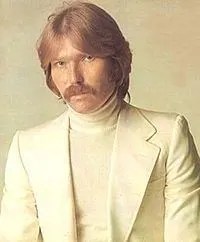



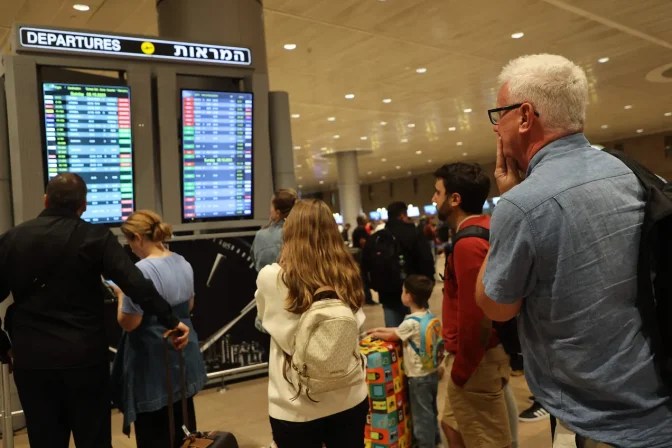


 / @climatedn ) and our newsletter (at http://www.climatediscussionnexus.com/), like us on Facebook (
  / climatedn , follow us on Twitter (
  / climatedn, and make a monthly or one-time pledge at http://www.climatediscussionnexus.com…
 Aletho News
 Aletho News
