Did Obama Arm Islamic State Killers?
By Daniel Lazare | Consortium News | December 21, 2017
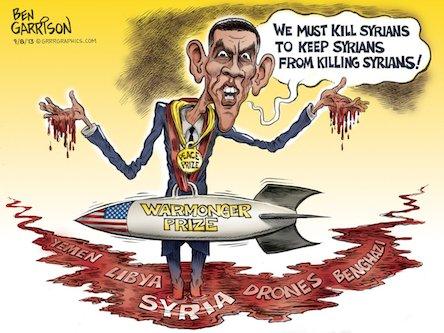
Did Barack Obama arm ISIS? The question strikes many people as absurd, if not offensive. How can anyone suggest something so awful about a nice guy like the former president? But a stunning report by an investigative group known as Conflict Armament Research (CAR) leaves us little choice but to conclude that he did.
CAR, based in London and funded by Switzerland and the European Union, spent three years tracing the origin of some 40,000 pieces of captured ISIS arms and ammunition. Its findings, made public last week, are that much of it originated in former Warsaw Pact nations in Eastern Europe, where it was purchased by United States and Saudi Arabia and then diverted, in violation of various rules and treaties, to Islamist rebels seeking to overthrow Syrian President Bashar al-Assad. The rebels, in turn, somehow caused or allowed the equipment to be passed on to Islamic State, which is also known by the acronyms ISIS or ISIL, or just the abbreviation IS.
This is damning stuff since it makes it clear that rather than fighting ISIS, the U.S. government was feeding it.
But CAR turns vague when it comes to the all-important question of precisely how the second leg of the transfer worked. Did the rebels turn the weapons over voluntarily, involuntarily, or did they somehow drop them when ISIS was in close proximity and forget to pick them up? All CAR will say is that “background information … indicates that IS [Islamic State] forces acquired the materiel through varied means, including battlefield capture and the amalgamation of disparate Syrian opposition groups.” It adds that it “cannot rule out direct supply to IS forces from the territories of Jordan and Turkey, especially given the presence of various opposition groups, with shifting allegiances, in cross-border supply locations.” But that’s it.
If so, this suggests an astonishing level of incompetence on the part of Washington. The Syrian rebel forces are an amazingly fractious lot as they merge, split, attack one another and then team up all over again. So how could the White House have imagined that it could keep weapons tossed into this mix from falling into the wrong hands? Considering how each new gun adds to the chaos, how could it possibly keep track? The answer is that it couldn’t, which is why ISIS wound up reaping the benefits.
But here’s the rub. The report implies a level of incompetence that is not just staggering, but too staggering. How could such a massive transfer occur without field operatives not having a clue as to what was going on? Was every last one of them deaf, dumb, and blind?
Not likely. What seems much more plausible is that once the CIA established “plausible deniability” for itself, all it cared about was that the arms made their way to the most effective fighting force, which in Syria happened to be Islamic State.
This is what had happened in Afghanistan three decades earlier when the lion’s share of anti-Soviet aid, some $600 million in all, went to a brutal warlord named Gulbuddin Hekmatyar. Hekmatyar was a raging bigot, a sectarian, and an anti-western xenophobe, qualities that presumably did not endear him to his CIA handlers. But as Steve Coll notes in Ghost Wars, his bestselling 2004 account of the CIA’s love affair with Islamic holy war, he “was the most efficient at killing Soviets” and that was the only thing that mattered. As one CIA officer put it, “analytically, the best fighters – the best-organized fighters – were the fundamentalists” that Hekmatyar led. Consequently, he ended up with the most money.
After all, if you’re funding a neo-medieval uprising, it makes sense to steer the money to the darkest reactionaries of them all. Something similar occurred in March 2015 when Syrian rebels launched an assault on government positions in the northern province of Idlib. The rebel coalition was under the control of Jabhat al-Nusra, as the local branch of Al Qaeda was known at the time, and what Al-Nusra needed most of all were high-tech TOW missiles with which to counter government tanks and trucks.
Arming Al Qaeda
So the Obama administration arranged for Nusra to get them. To be sure, it didn’t provide them directly. To ensure deniability, rather, it allowed Raytheon to sell some 15,000 TOWs to Saudi Arabia in late 2013 and then looked the other way when the Saudis transferred large numbers of them to pro-Nusra forces in Idlib. [See Consortiumnews.com’s “Climbing into bed with Al-Qaeda.”] Al-Nusra had the toughest fighters in the area, and the offensive was sure to send the Assad regime reeling. So even though its people were compatriots with those who destroyed the World Trade Center, Obama’s White House couldn’t say no.
“Nusra have always demonstrated superior planning and battle management,” Yezid Sayigh, a senior associate at the Carnegie Middle East Center in Beirut, said a few weeks later. If the rebel coalition was successful as a whole, it “was entirely due to their willingness to work with Nusra, who have been the backbone in all of this.”
Scruples, assuming they existed in the first place, fell by the wayside. A senior White House official told The Washington Post that the Obama administration was “not blind to the fact that it is to some extent inevitable” that U.S. weapons would wind up in terrorist hands, but what could you do? It was all part of the game of realpolitik. A senior Washington official crowed that “the trend lines for Assad are bad and getting worse” while The New York Times happily noted that “[t]he Syrian Army has suffered a string of defeats from re-energized insurgents.” So, for the master planners in Washington, it was worth it.
Then there is ISIS, which is even more beyond the pale as most Americans are concerned thanks to its extravagant displays of barbarism and cruelty – its killing of Yazidis and enslavement of Yazidi women and girls, its mass beheadings, its fiery execution of Jordanian fighter pilot Moaz al-Kasasbeh, and so on.
Yet U.S. government attitudes were more ambivalent than most Americans realized. Indeed, the U.S. government was strictly neutral as long as ISIS confined itself to attacking Assad. As a senior defense official told the Wall Street Journal in early 2015: “Certainly, ISIS has been able to expand in Syria, but that’s not our main objective. I wouldn’t call Syria a safe haven for ISIL, but it is a place where it’s easier for them to organize, plan, and seek shelter than it is in Iraq.”
In other words, Syria was a safe haven because, the Journal explained, the U.S. was reluctant to interfere in any way that might “tip the balance of power toward Syrian President Bashar al-Assad, who is fighting Islamic State and other rebels.” So the idea was to allow ISIS to have its fun as long as it didn’t bother anyone else. For the same reason, the U.S. refrained from bombing the group when, shortly after the Idlib offensive, its fighters closed in on the central Syrian city of Palmyra, 80 miles or so to the east. This was despite the fact that the fighters would have made perfect targets while “traversing miles of open desert roads.”
As The New York Times explained: “Any airstrikes against Islamic State militants in and around Palmyra would probably benefit the force of President Bashar al-Assad. So far, United States-led airstrikes in Syria have largely focussed on areas far outside government control, to avoid the perception of aiding a leader whose ouster President Obama has called for.” [See Consortiumnews.com’s “How US-Backed War on Syria Helped ISIS.”]
Looting Palmyra
The United States thus allowed ISIS to capture one of the most archeologically important cities in the world, killing dozens of government soldiers and decapitating 83-year-old Khalid al-Asaad, the city’s retired chief of antiquities. (After looting and destroying many of the ancient treasures, ISIS militants were later driven from Palmyra by a Russian-backed offensive by troops loyal to President Assad.)
Obama’s bottom line was: ISIS is very, very bad when it attacks the U.S.-backed regime in Iraq, but less so when it wreaks havoc just over the border in Syria. In September 2016, John Kerry clarified what the administration was up to in a tape-recorded conversation at the U.N. that was later made public. Referring to Russia’s decision to intervene in Syria against ISIS, also known by the Arabic acronym Daesh, the then-Secretary of State told a small knot of pro-rebel sympathizers:
“The reason Russia came in is because ISIL was getting stronger. Daesh was threatening the possibility of going to Damascus and so forth, and that’s why Russia came in, because they didn’t want a Daesh government and they supported Assad. And we know this was growing. We were watching. We saw that Daesh was growing in strength, and we thought Assad was threatened. We thought, however, we could probably manage, that Assad might then negotiate. Instead of negotiating, he got … Putin in to support him. So it’s truly complicated.” (Quote starts at 26:10.)
“We were watching.” Kerry said. So, by giving ISIS free rein, the administration hoped to use it as a lever with which to dislodge Assad. As in Afghanistan, the United States thought it could use jihad to advance its own imperial interests. Yet the little people – Syrian soldiers, three thousand office workers in lower Manhattan, Yazidis, the Islamic State’s beheading of Western hostages, etc. – made things “truly complicated.”
Putting this all together, a few things seem clear. One is that the Obama administration was happy to see its Saudi allies use U.S.-made weapons to arm Al Qaeda. Another is that it was not displeased to see ISIS battle Assad’s government as well. If so, how unhappy could it have been if its allies then passed along weapons to the Islamic State so it could battle Assad all the more? The administration was desperate to knock out Assad, and it needed someone to do the job before Vladimir Putin stepped in and bombed ISIS instead.
It was a modern version of Henry II’s lament, “Who will rid me of this meddlesome priest?” The imperative was to get rid of Assad; Obama and his team had no interest in the messy details.
None of which proves that Obama armed ISIS. But unless one believes that the CIA is so monumentally inept that it could screw up a two-car funeral, it’s the only explanation that makes sense. Obama is still a congenial fellow. But he’s a classic liberal who had no desire to interfere with the imperatives of empire and whose idea of realism was therefore to leave foreign policy in the hands of neocons or liberal interventionists like Secretaries of State Hillary Clinton and John Kerry.
If America were any kind of healthy democracy, Congress would not rest until it got to the bottom of what should be the scandal of the decade: Did the U.S. government wittingly or unwittingly arm the brutal killers of ISIS and Al Qaeda? However, since that storyline doesn’t fit with the prevailing mainstream narrative of Washington standing up for international human rights and opposing global terrorism, the troublesome question will likely neither be asked nor answered.
Daniel Lazare is the author of several books including The Frozen Republic: How the Constitution Is Paralyzing Democracy (Harcourt Brace).
128 countries vote in favor of UN call for US to withdraw Jerusalem decision
RT | December 21, 2017
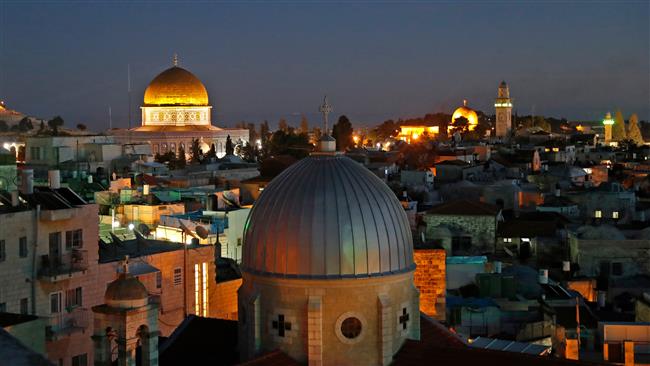
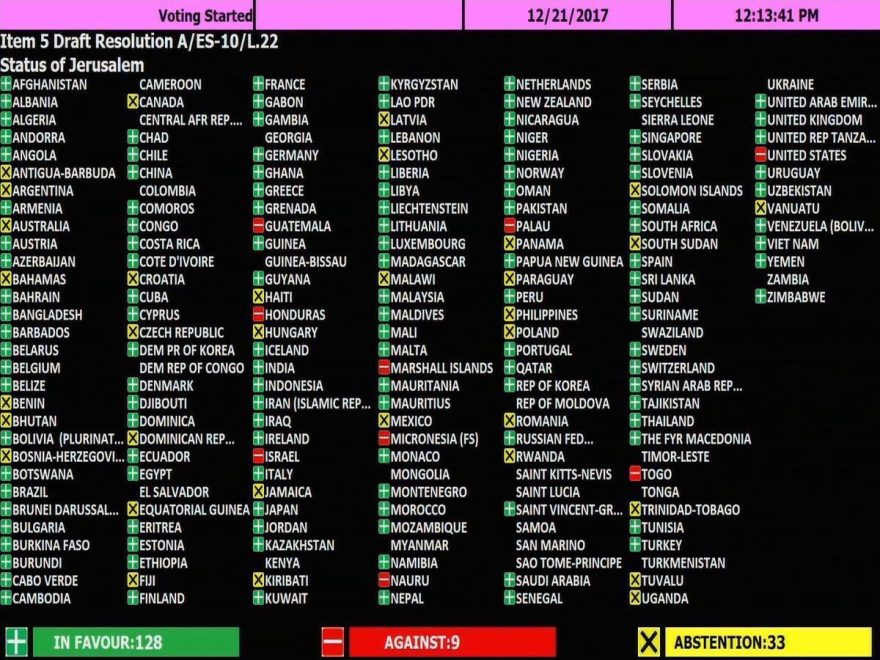
The UN General Assembly has overwhelming adopted a resolution calling on the US to reverse its decision to recognize Jerusalem as the capital of Israel. One hundred and twenty-eight countries voted in favor of the motion.
Nine states voted against the UN resolution and 35 nations abstained.
Turkey, which has led the Muslim opposition to the US Jerusalem declaration, was among the first to speak at the meeting. Turkish Foreign Minister Mevlut Cavusoglu stressed that only a two-state solution and sticking to the 1967 borders can be a foundation for a lasting peace between Israel and Palestine. The minister said that since Jerusalem is the cradle for the “three monotheistic religions,” all of humanity should come together to preserve the status quo.
“The recent decision of a UN member state to recognize Jerusalem as the capital of Israel violates the international law, including all relevant UN resolutions. This decision is an outrageous assault on all universal values,” Cavusoglu said.
US envoy to the UN Nikki Haley said that whatever decision is made by the UNGA, it will not influence Washington’s decision to recognize Jerusalem as the capital of Israel. Haley reminded UN members of the US’ generous contributions to the organization and said that the United States expects its will to be respected in return.
“When we make a generous contributions to the UN, we also have a legitimate expectation that our goodwill is recognized and respected,” Haley said, adding that the vote will be “remembered” by the US and “make a difference on how the Americans look at the UN.”
Israeli envoy to the UN Danny Danon stated that Israel considers Jerusalem its capital, dating back to Biblical times, and the US decision only outlines the obvious. Danon went further and accused the UN of “double standards” and an “unbreakable bond of hypocrisy” with Palestine and prejudice against Israel.
“Those who support today’s resolution are like puppets. You’re puppets pulled by the strings of your Palestinian puppet masters. You’re like marionettes forced to dance, while the Palestinian leadership looks on with glee,” Danon told the gathering.
The US leadership earlier voiced threats towards UN member states which would back the UN resolution against its Jerusalem decision. Haley said Washington would be “taking names.”
Trump also suggested that countries which vote in favor of the resolution at the UN General Assembly will lose money. “Let them vote against us,” he said. “We’ll save a lot. We don’t care. But this isn’t like it used to be where they could vote against you and then you pay them hundreds of millions of dollars… we’re not going to be taken advantage of any longer.”
The US threats were condemned by Turkey, with the country’s President Recep Tayyip Erdogan stating that Trump “cannot buy Turkey’s democratic will.”
“I hope and expect the United States won’t get the result it expects from there (the UN General Assembly) and the world will give a very good lesson to the United States,” Erdogan said during a speech in Ankara on Thursday ahead of the meeting.
On Monday, the US vetoed a UN Security Council (UNSC) resolution on Jerusalem, which had demanded that the American decision to recognize the city as the Israeli capital be withdrawn. All other UNSC members voted in favor of the document.
WHITE HELMETS: The Guardian Protects UK FCO Destabilisation Project in Syria
By John Schoneboom | 21st Century Wire | December 20, 2017
Today in Too Long Don’t Read : It’s hard to tell what’s going on in the world, isn’t it? Whom do you believe when there are competing, totally irreconcilable narratives out there? Are the White Helmets heroes or villains? The mainstream narrative has them as a neutral, unarmed, grassroots (and Oscar-winning) humanitarian group with no political affiliations, nominated for a Nobel Peace Prize.
Independent journalists, notably Vanessa Beeley, Eva Karene Bartlett, Patrick Henningsen, and Khaled Iskef, among a few others, suggest a radically different picture, in which the White Helmets are nothing more than a propaganda front for terrorist groups like the Al Nusra Front.
The Guardian, in defense of the heroic narrative, just published a piece by Olivia Solon that turns the propaganda charge against the critics of the White Helmets and refers to them as “a network of anti-imperialist activists, conspiracy theorists and trolls with the support of the Russian government.”
I read this article with great interest, wondering whether it would actually back-up its claims and refute the allegations head on. That is what it would do if it were actual journalism. It would give a fair accounting of the allegations and assess the evidence behind them. If it found the evidence lacking, it would say why, it would offer context, additional evidence, show why the supposed facts were wrong, etc. That would be journalism.
Solon didn’t do that. She mentioned only one video, the so-called Mannequin Challenge piece, and dismissed it as simply the stupid mistake the White Helmets and their apologists said it was. As for the few cases of White Helmet involvement in terrorist activity that Solon did acknowledge, she dismissed these as a case of a few bad apples that left the overall courageous heroic narrative intact.
Watch White Helmets “Mannequin Challenge” spoof rescue video:
How can we tell what’s going on in the world? I feel that one way is to examine the way narratives are defended, and the way challenges are treated. What Solon has done is not journalism. Her work does nothing to examine or investigate seriously. It only tries to dismiss and defame with tired old negative buzzwords like “conspiracy theory” or new ones like “Russia” — never mind that the three main journalists she offers in support of her Russian operation CONSPIRACY THEORY are from the UK, Australia, and Canada.
There is no substantive analysis at all. Nothing. Meanwhile she uncritically and with a straight face describes the US-backed mayhem-generating team of mercenaries and fanatics as an effort to “stabilize” Syria. The piece also contains serious errors, e.g., Patrick Henningsen is NOT an editor at Infowars. Since it is not true, somebody had to have made it up. Is that an innocent mistake, or a cheap attempt to discredit? All of this tells us something about Solon and the Guardian and our media generally and these are clues to what is going on in the world. Look at what is and is not there. Listen to the dogs that are not barking here.
What else did she leave out? Was it anything important? I’ve taken the liberty of compiling a skeletal, condensed list of some of the important, credible allegations and facts that, to my mind, deserve more attention and investigation than the glib, contemptuous dismissals offered by the likes of Olivia Solon.
These are all taken from articles by Vanessa Beeley except where noted. If I’ve gotten anything wrong I hope she or someone else will correct me. Now, if you believe Solon, you’ll dismiss all of it in one fell swoop: “Well that’s Beeley! She’s appeared on RT for god’s sake!” And that is exactly the desired effect, I presume, of articles like Solon’s. To cancel out reams of evidence by impugning the messengers with what amounts to fear-mongering and slander.
But the thing is, you don’t have to take Beeley’s word for it. If you follow the links to her articles, you can see the photos and the videos and find the documentation yourself. For now, just have a look at the list. It’s simplified. You’ll have to follow the links if you want more details. But just have a look. These are things Solon couldn’t, wouldn’t, and didn’t deal with in her hack job hit piece. There may be alternative interpretations of some of the photos and videos, and they might make an interesting argument. Solon unfortunately chose not to do that, however, and while she couldn’t be expected to cover everything in one newspaper article, see if you think credible journalism would ignore all of this:
THE CONDENSED CASE AGAINST THE WHITE HELMETS
All from Vanessa Beeley’s two articles unless other sources are mentioned:
White Helmets & ‘Local Councils’ – Is the UK FCO Financing Terrorism in Syria with Taxpayer Funds?
WHITE HELMETS: State Sanctioned Terrorism and Hollywood Poster Boys for War
1: White Helmets were started and largely trained not in Syria but in Turkey and Jordan, by James le Mesurier, a former British military intelligence officer who went on to become Vice President for Special Projects at the Olive Group, “a private mercenary organization that has since merged with Blackwater-Academi into what is now known as Constellis Holdings.”
2: White Helmets receive substantial funding from the US, the UK, and the EU, at least $150 million over 3 years, from the same parties that are supporting the rebels/terrorists. No political ties?
3: White Helmets only ever operated in territory controlled by terrorist groups like Al Nusra Front, ISIS, and Nour Al Din Zinki, the latter are notorious for filming themselves torturing and beheading a 12-year-old boy. When those groups are forced to move, the White Helmets move with them, often in the same buses, as when they abandoned East Aleppo.

Mohammad Jnued, White Helmet and Nusra Front supporter. (Collage taken from his Facebook account)
4: The White Helmet leader, Raed Saleh, is tied to extremists, a fact acknowledged even by the State Department’s Mark Toner. Saleh was actually deported from the US out of Dulles Airport in April 2016, with no reason being disclosed. He is a close colleague of Mustafa Al Haj Yussef, another White Helmets leader, whose social media accounts show him openly declaring allegiance to Ahrar Al Sham, calling for unity with Al Nusra, advocating the shelling and execution of civilians and other equally charming practices. Actually a recent survey of social media activity carried out by the Syrian War Blog has conservatively identified 65 White Helmet operatives who have professed their membership of, or alliance with, extremist groups like Ahrar Al Sham and Nusra Front or even ISIS.
Also, Clarity of Signal – Massive White Helmets Photo Cache Proves Hollywood Gave Oscar to Terrorist Group
5: The White Helmet group in East Aleppo was established by the president of the UK-funded East Aleppo Council (EAC), Abdulaziz Maghrabi, often photographed with, offering support for, and maintaining active militant membership with terrorist groups Abu Amara and Nusra Front.

Abdulaziz Maghrabi (circled) with Abu Amara, one of the most brutal terrorist organisations in East Aleppo working as “security” for Nusra Front aka Al Qaeda in Syria. (Photo from Maghrabi’s Facebook account)
6: White Helmets in Idlib were photographed taking part in demonstrations and calling for the “burning and destruction” of the towns Kafarya and Foua, which resisted occupation by the terrorists and suffered a siege that deprived its citizens of food, water, and medicine in addition to attacks that killed some 1300 residents. White Helmets also participated in luring children evacuated from these towns off their buses to their death by a truck bomb in an event known as the Rashideen Massacre.

On the left White Helmets are carrying banners calling for burning of Kafarya and Foua, two Shia Muslim villages in Nusra Front controlled Idlib. On right post taken from the Facebook account of White Helmet, Abdul Halim al Shehab “Exterminate Kafarya”.
7: Muawiya Hassan Agha was present at Rashideen, and he later became infamous for his involvement in the execution of two prisoners of war in Aleppo. For this rogue bad appleness he was supposedly fired from the White Helmets, although he was later photographed still with them. He has also been photographed celebrating “victory” with Nusra Front in Idlib. There have been at least three other executions on video that show White Helmet involvement, not just being present and immediately cleaning up, but celebrating, mistreating bodies, and otherwise not acting in a manner consistent with being a neutral humanitarian group.

White Helmets in Idlib, celebrating with Nusra Front. Muawiya is on left in hi-viz jacket. (Photo: screenshot from Nusra Front video)
8: Videos show White Helmets participating in Nusra Front operations, e.g., joining in the beating and encirclement of a Syrian civilian, thoroughly mingling in with heavily armed Nusra terrorists.
9: The main White Helmets center in East Aleppo was integrated into the Nusra Front compound, and was adorned with a variety of graffiti and flags affirming the White Helmet affiliation to various terrorist groups, but predominantly Nusra Front.
Watch video by Pierre Le Corf showing the proximity of White Helmet centre in Sakhour to Nusra Front headquarters:
10: Numerous civilian witnesses from Aleppo were unfamiliar with the term White Helmets but knew the group as the Nusra Front Civil Defense and reported its participation in executions and atrocities.
11: On multiple occasions, the White Helmets have been exposed staging rescue scenes for both photo and video, recycling images in multiple propaganda pieces.
12: Swedish Doctors for Human Rights analyzed a White Helmets video report and concluded “the measures inflicted upon those children, some of them lifeless, are bizarre, non-medical, non-lifesaving, and even counterproductive in terms of life-saving purposes…[including measures that] would have resulted in the death of the child, if not already dead.” The implication is that the White Helmets may have actually killed children and/or were using already-dead children “as propaganda props.”
13: The White Helmets have been filmed describing Syrian Arab Army bodies as “trash” and one particular video shows them flashing “V” signs while standing on bodies of Syrian soldiers piled onto a truck.

14: Many photos show White Helmet operatives carrying arms or posing, armed, with rebel groups including Nusra Front. At least one of them, Mo’ad Baresh, who was killed fighting against the Syrian Army, was an active rebel/terrorist while also a member of White Helmets.
15: The White Helmets claim to have saved over 90,000 lives but there is zero documentation of these lives — no names, no records of any kind.
16: The White Helmets’ critics cannot be described or dismissed as comprising only “fringe” voices. Eminent prize-winning journalist and filmmaker John Pilger described the White Helmets as “a complete propaganda construct.”

These are all things that can be looked up and verified, much of it is in photographs and videos, other bits are first-hand accounts from Syrian people via reporters who bothered to go there instead of reprinting Pentagon press releases. Solon and the Guardian do not even hint at the existence of a body of evidence like this, let alone debunk it.
If they had only tried, and made an honest effort, then an informative debate might have ensued. I am all ears for counter arguments. Let us subject all of this to scrutiny, by all means. Maybe there are errors, mistranslations, missing context, mistakes. If truth is what we’re after, we confront criticism squarely, not weasel away from it or ignore it.
The once-respectable Guardian declines the invitation, preferring to smear and ignore, a choice that speaks sad volumes about the paucity of arrows in its quiver. The whole thing suggests, I think, that we ought to consider that what has happened before — in the Cold War, in Vietnam, in Iraq — is happening again: that people with an interest in war are offering a narrative of lies for hearts, minds, and resources. To put it another way, we might want to consider seriously the possibility that they are gaslighting the hell out of us.

Screenshot taken from UK Column report on the Guardian clumsy hit piece.
***
John Schoneboom is an author currently working on his PhD project at Northumbria University, Surrealpolitik and Cultural Gaslighting.
LEARN MORE ABOUT THE WHITE HELMETS BY READING THE FOLLOWING ARTICLES:
Geneva Press Club Event:
“They Dont Care About Us”: The White Helmet True Agenda
BBC and Guardian Whitewash of UK FCO Funding Scandal in Syria
What to Expect From BBC Panorama and Guardian’s Whitewash of UK Gov’t Funding Terrorists in Syria
White Helmets Evidence Presented at Geneva Press Club:
Vanessa Beeley Presents Exposé on White Helmets at Swiss Press Club in Geneva
‘Global Britain’ – UK Funding a Shadow State in Syria
‘Global Britain’ is Financing Terrorism and Bloodshed in Syria and Calling it ‘Aid’
White Helmets – Hollywood Poster Boys:
WHITE HELMETS: State Sanctioned Terrorism and Hollywood Poster Boys for War
21st Century Wire:
New Report Destroys Fabricated Myth of Syria’s ‘White Helmets’
Initial Investigation into White Helmets:
Who are Syria’s White Helmets?
21st Century Wire article on the White Helmets:
Syria’s White Helmets: War by Way of Deception ~ the “Moderate” Executioners
Who Funds the White Helmets?
Secret £1bn UK War Chest Used to Fund the White Helmets and Other ‘Initiatives’
Original investigative report:
The REAL Syria Civil Defence Exposes Fake White Helmets as Terrorist-Linked Imposters
Irish Peace Prize Farce
Tipperary’s White Helmets Peace Prize: A Judas Kiss to the Antiwar Movement and Syria
White Helmets Executions
WHITE HELMETS: Severed Heads of Syrian Arab Army Soldiers Paraded as Trophies
CNN Fabricate News About the White Helmets
A NOBEL LIE: CNN’s Claim That ‘White Helmets Center in Damascus’ Was Hit by a Barrel Bomb
White Helmets Links to Al Nusra
WHITE HELMETS: Hand in Hand with Al Qaeda and Extremist Child Beheaders in Aleppo
Report by Patrick Henningsen
AN INTRODUCTION: Smart Power & The Human Rights Industrial Complex
Open Letter by Vanessa Beeley
White Helmets Campaign for War NOT Peace – Retract RLA & Nobel Peace Prize Nominations
Staged Rescue Videos
(VIDEO) White Helmets: Miraculous ‘Rag Doll Rescue’
White Helmets Oscar Award Farce:
Forget Oscar: Give The White Helmets the Leni Riefenstahl Award for Best War Propaganda Film
Cory Morningstar report:
Investigation into the funding sources of the White Helmets, including Avaaz, Purpose, The Syria Campaign
Open letter to Canadian MPs from Stop the War Hamilton (Canada):
Letter from the Hamilton Coalition to Stop War to the New Democratic Party in Canada ref the White Helmet nomination for the Nobel Peace Prize:
Open letter to Canada’s NDP Leader on Nobel Prize:
Letter to NDP from Prof. John Ryan protesting White Helmet nomination for RLA and Nobel Peace Prize.
Ruth Bader Ginsburg: at 84, where does she get her PEP (Progressive Except Palestine)?
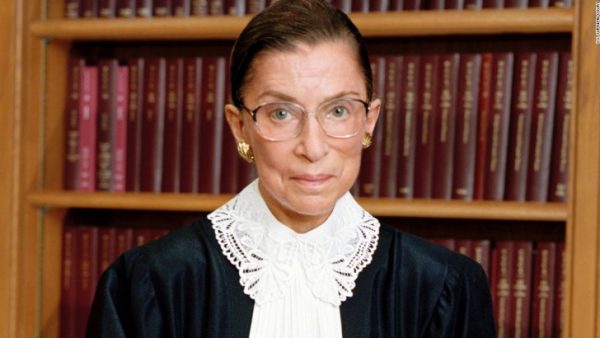
Appointed by President Bill Clinton in 1993, Supreme Court Justice Ruth Bader Ginsburg was the second woman to join the Supreme Court.
By Kathryn Shihadah | If Americans Knew | December 20, 2017
The iconic and even trending Supreme Court Justice Ruth Bader Ginsburg (lovingly known to fans as Notorious RBG or Ruth Badass Ginsburg) came this close to receiving the 2018 Genesis Prize, aka the “Jewish Nobel,” awarded yearly to Jews who have attained excellence and recognition in their fields, and who inspire others in their dedication to the Jewish community, Jewish values, and the State of Israel.
The award comes with a $1 million payout, and there, as they say, was the rub.
Ha’aretz reports that the prize was taken away from Ginsburg (and given to Natalie Portman) because the committee’s legal advisor discovered a rule against awarding monetary prizes to US judges. She had already decided to donate half of her prize money to women’s groups in the US, and the other half to equivalent organizations in Israel. Apparently her office had even contacted the groups and told them they had some big bucks coming their way.
Well, the charities got stiffed, but Ginsburg got a consolation prize: a new and prestigious award was created for her – the Genesis Prize for Lifetime Achievement. She will receive the award during a ceremony next summer.
Does Ginsburg meet all of the qualifications for a Genesis award? She has indeed attained excellence and recognition; no doubt she has been an inspiration – to Jews and Gentiles alike – as she has beaten the odds and risen to the very top of her field. Is she “dedicated to Jewish community, Jewish values, and the Jewish State”? Let’s do some sleuthing to find out.
A little background
Ginsburg was born on March 15th, 1933 in Brooklyn, New York. She fought her way past gender discrimination (one of 9 women in a class of 500 at Harvard Law School) and became only the second female and the sixth Jewish justice to be appointed to the Supreme Court.
Religiously, Ginsburg became non-observant when, at her mother’s death, she saw up close the second-class role of women in Orthodox Judaism. She has worked tirelessly for women’s rights throughout her distinguished career.
Though she is secular, Ginsburg has always cherished her Jewish identity:
My heritage as a Jew and my occupation as a judge fit together symmetrically. The demand for justice runs through the entirety of Jewish history and Jewish tradition. I take pride in and draw strength from my heritage, as signs in my chambers attest: a large silver mezuzah on my door post, [and the Hebrew words] from Deuteronomy: “Zedek, zedek, tirdof” — “Justice, justice shall you pursue.”
Check the box marked “Jewish values.”
Moving on to “Jewish community,” just look back to last September. Ms. Ginsburg surprised members of a Washington DC synagogue when she came to speak at their Rosh Hashanah service. She talked about faith, about her fellow Jewish justices over the years and the views they have shared. She reminded worshipers that “the Jewish religion is an ethical religion. That is, we are taught to do right, to love mercy, do justice.” And she remarked that their shared experience as Jews makes them compassionate: “If you are a member of a minority group, particularly a minority group that has been picked on, you have empathy for others who are similarly situated.”
Ginsburg has pursued justice wholeheartedly all her life, and has throughout her career advocated for progressive causes. In 1972, she co-founded the Women’s Rights Project at the ACLU, and fought more than 300 gender discrimination cases between 1973 and 1974.
But these admirable convictions we see in Ginsburg that are common among many Americans – empathy toward the marginalized, advocacy for defenseless – suddenly evaporate in certain situations. Perhaps it’s subconscious, but there lurks another loyalty ready to override the cause of true justice and compassion. Ruth Bader Ginsburg is among the many influential members of the P.E.P. Club: Progressive Except Palestine.
For someone dedicated to liberty and justice for all, she is resoundingly silent on the issue of Palestine. Nowhere in her recently published collection of writings, My Own Words, do the words “Palestine” or “Palestinian” appear. Even “Arab” is nowhere to be found, although she discusses the Holocaust, Zionism, and Israel.
Ginsburg was poised to donate $500,000 to women’s organizations in Israel, a country which – surely she has heard – has been flagrantly violating the human rights of Palestinians for decades, denying them the most basic justice. This is a country in which many rock stars fear to book a concert, lest they be ostracized by the moral majority for pandering to an apartheid state – but Ginsburg was about to drop a cool half a mil.
“Zedek, zedek, tirdof” – “Justice, justice shall you pursue”… except Palestine?
Well, at least we can check the most important box of all: the one marked “dedication to the State of Israel.”
This leaning is no surprise, given Ginsburg’s admiration for one particular former US Supreme Court justice.
The Honorable Louis Brandeis

Louis Brandeis, associate justice
on the US Supreme Court, 1916 to 1939
Ruth Bader Ginsburg is a big fan of the Supreme Court’s first Jewish justice, Louis Dembitz Brandeis. Brandeis is revered today as a great judge, but at the time of his appointment – 1916 – he was recognized by some as “unscrupulous” in his methods and at times “unethical” in his behavior.
Distinguished historian Bruce Allen Murphy revealed that Brandeis was involved in some covert pursuits for many years, both before and during his time on the Supreme Court. The fact that he and his primary cohort, Felix Frankfurter, kept their work secret indicates that they knew it was – or at least looked – unethical.
Brandeis’ endeavors included (but were not limited to) advancing the Zionist agenda, both in the US and internationally. Murphy describes his work in general as “part of a vast, carefully planned and orchestrated political crusade.”
Israeli professor Dr. Sarah Schmidt described a clandestine society of which Brandeis was a part: “a secret underground guerilla force determined to influence the course of events in a quiet, anonymous way.” The most ambitious young Jewish men were recruited for the work. Their secret initiation ceremony included the charge:
You are about to take a step which will bind you to a single cause for all your life… [Y]ou will be fellow of a brotherhood whose bond you will regard as greater than any other in your life – dearer than that of family, of school, of nation. By entering this brotherhood, you become a self-dedicated soldier in the army of Zion. Your obligation to Zion becomes your paramount obligation… It is the wish of your heart and of your own free will to join our fellowship, to share its duties, its tasks, and its necessary sacrifices.
Brandeis also served as president of the Provisional Executive Committee for Zionist Affairs – essentially the leader of the world’s Zionists. He spent several months during 1914 – 1915 on a speaking tour to build a network of support for the “Jewish homeland,” underscoring the goals of self-determination and freedom.
In 1916, President Woodrow Wilson named Brandeis to the Supreme Court. As required, Brandeis officially resigned from his formal affiliations, including stepping down from his leadership role in Zionism. However, he zealously continued his work on a more informal basis, even from his Supreme Court chambers. Later, he would persuade the next 2 Jewish justices – Cardozo and Frankfurter – to join the ranks of the Zionist Organization of America, assuring a continued, subtle partiality toward the Jewish project.
Brandeis is tapped
In fact, Brandeis remained so deeply involved in Zionism that he was chosen by a leader of the movement for a very important job: that of, possibly, helping to turn the tide of World War I for the British.
Great Britain was in desperate need of an ally in the war, and the Zionists were in need of an ally in their quest for a homeland. Brandeis was tasked with delivering the United States as an ally to Great Britain; Great Britain would reimburse the Zionists with the Balfour Declaration.
Samuel Landman, secretary of the World Zionist Organization, claimed in a 1936 article in World Jewry, that it was “Jewish help that brought USA into the war on the side of the Allies.” The goal was not victory for the Allies, but real estate in Palestine, so Brandeis and associate Felix Frankfurter reportedly worked to ensure the war would last until Palestine was in the bag. They even reportedly sabotaged a potential opportunity to end the war in May 1917 (18 months early), which would have saved much destruction and many lives, including Brandeis’ fellow Americans.
Eventually, of course, Germany was defeated. According to historian Henry Wickham Steed, one of Germany’s top generals considered the Balfour Declaration to be “the cleverest thing done by the Allies in the way of propaganda,” and wished Germany had thought of it first.
Landman further stated that Germany was aware of the Jewish connection, and, chillingly, this “contributed in no small measure to the prominence which anti-Semitism occupie[d] in the Nazi program” only a few decades later. This horrific irony can not be overstated.
“Never again”
Ruth Bader Ginsburg spoke of those days in 2004 at the Holocaust Memorial Museum:
Hitler’s Europe, his Holocaust Kingdom, was not lawless. Indeed, it was a kingdom full of laws, laws deployed by highly educated people—teachers, lawyers, and judges—to facilitate oppression, slavery, and mass murder. We convene to say “Never again,” not only to Western history’s most unjust regime, but also to a world in which good men and women, abroad and even in the USA, witnessed or knew of the Holocaust Kingdom’s crimes against humanity, and let them happen…
In striving to drain dry the waters of prejudice and oppression, we must rely… upon the wisdom of our laws and the decency of our institutions, upon our reasoning minds and our feeling hearts. And as a constant spark to carry on, upon our vivid memories of the evils we wish to banish from our world.
And indeed, Ginsburg has famously spent years of her life checking America’s laws against the rubric of our Constitution to banish what evil she can from America.
But as a highly intelligent woman, in the Information Age, is it even remotely possible that she is not aware of the opinions of progressive Jewish anti-Zionist voices from the time of Brandeis, like Alfred Lilienthal and Rabbi Elmer Berger, or the historians of our time who have brought to light the folly of early Zionism, like Noam Chomsky, Norman Finkelstein, and Ilan Pappé? (The Palestinian historians who first wrote about this, sadly, are less likely to have shown up on her radar.)
Can she not know about the displacement of 750,000 Palestinians in the Nakba? Or the Deir Yassin massacre? Or a hundred other stories of injustice imposed on a people because of where they lived by another people who had been mistreated because of what they believed?

Aharon Barak
To be passionate about justice and yet ignore this gross injustice requires a studied unconcern. “Progressive Except Palestine” has mentors in the highest places, and Ginsburg has a friend who may be among the best.
Meet Aharon Barak
Former Israeli supreme court president Aharon Barak, partly educated at Harvard, talks some good talk, the kind that would resonate with Americans:
Democracy has its own internal morality, based on the dignity and equality of all human beings… Most central of all human rights is the right to dignity. It is the source from which all other human rights are derived.
[E]quality is a fundamental value of every democratic society…. The feeling of the lack of equality is the most difficult of feelings. It undermines the forces that unite society.
And he discusses his home country in language that sounds relatable:
The State of Israel is a State whose values are Jewish and democratic. Here we have established a State that preserves law, that achieves its national goals and the vision of generations, and that does so while recognizing and realizing human rights in general and human dignity in particular. Between these two there are harmony and accord, not conflict and estrangement.
The Israeli legal system is a young system, albeit one with deep historical roots that reflect its Jewish values. It is a legal system that guards its democratic nature despite the existential struggle it has faced since its founding.
No wonder Ginsburg and Barak are close: they share a deep reverence for democracy, and for the Jewish values they like to believe are inherent in their respective countries’ justice systems.
But Barak sees the Israeli court, and Israel itself, as an exceptional world. It is not a simple, safe democracy like America, but a “defensive democracy” that fights daily for its very survival. Barak lives under the delusion that nuclear-capable, Iron-Dome, cruise-missile, armored-personnel-carrier Israel, is under constant “existential threat” from rock-throwing, homemade-missile-launching, underfed Palestinians. Israel was created through ethnic cleansing and is maintained through illegal occupation and blockade, and when Palestinians legally exercise their right to resist, Barak sees this as “terrorism.”
Barak wrote in the Preface to his Yale Law School Faculty Scholarship Series article, “The Role of a Supreme Court in a Democracy,”
we have recognized the power of the state to protect its security and the security of its citizens on the one hand; on the other hand, we have emphasized that the rights of every individual must be preserved, including the rights of the individual suspected of being a terrorist (sic).
It sounds so ethical, but Gideon Spiro knew better and wrote eloquently about “The Barak Method”:
No doubt about it: Barak has succeeded in creating around him a “human-rights man” aura even outside Israel. This is a huge propaganda feat…considering that Barak is, to a large extent, the judicial designer, enabler and backer of the regime of human-rights abuses in the Occupied Territories. [He] legitimized almost all the injustices of the occupation. He has led Israel’s judicial system into the role of indentured servant to the security forces – the IDF, the Shin Bet (domestic secret service), the Mossad and the settlers.
Barak’s time on the bench is replete with examples of Supreme Court benevolence toward individuals suspected of being terrorists (i.e. pretty much every Palestinian who set foot in his courtroom). One such example happened in 1992.
Mass Deportation
Hamas had killed six Israeli soldiers, and in retaliation, the IDF arrested, blindfolded, and deported 415 Palestinians (believed to be Hamas members) to Lebanon.
Human rights organizations immediately petitioned the Israeli Supreme Court – Barak was on call that night – and testimony was heard. It was pointed out that the men had not been given a hearing before the deportation.
The Court ruled: Israel must grant the deportees a hearing – but it would take place a month later.
The deportees spent the month in freezing winter weather. The Red Cross asked to bring them medical aid, but Israel refused. The UN Security Council condemned the mass deportation (full text here).
On January 17, 1993, the hearing in Israel began. A few days later, the Israeli Supreme Court found – unanimously – that in one sense, the deportation orders were not valid, but in another sense, the orders were valid. (Obviously, this is a simplification; find details here and here.)
Punitive house demolition
Another area in which Aharon Barak labored to find the alleged balance between security and human rights is in the area of house demolition. His court recognized the need for proportionality, and concluded that “only when human life has been lost is it permissible to destroy the buildings where the terrorists lived.”

A relative of Abdelrahman Shaludi, a Palestinian who killed two Israelis last month, displays his portrait inside his family home after it was razed by Israel in E. Jerusalem. Nov. 19, 2014.
Back in the real world…
House demolition is a violation of international law, and in many cases is collective punishment, which according to the Fourth Geneva Convention, is a war crime. In spite of this – and in spite of the fact that it may actually incite violence instead of deterring it – the practice continues, sanctioned by Israel’s highest court. Nearly 50,000 structures have been demolished since 1967, according to ICHAD, the Israeli Committee Against House Demolitions.
Administrative detention
The struggle was real for Barak and the rest of the Israeli Supreme Court on the issue of administrative detention – holding people for months or years without even charging them with a crime. Once again, they had to choose between protecting fundamental human rights of the individual or protecting “national security.”
They went with national security. And so the practice of administrative detention continues unchecked: Palestinians are arrested without charge and detained for 6 months; their case undergoes “judicial review,” in which a judge looks at their file (without representation from the detainee) and often approves another 6-month term, and another, and another. Some have been held for years. During Barak’s reign, well over a thousand Palestinians were held under administrative detention.
Since 1967, Israeli forces have arrested over 800,000 Palestinians – almost 20% of the Palestinian population, and about 40% of the male Palestinians in the occupied territories.
The separation (aka apartheid) wall
It was on Aharon Barak’s watch that construction of the Wall was begun. Correction: “security fence to prevent terror.” The damage done by this “fence” – confiscating Palestinian land, cutting off children from their schools, patients from their doctors, workers from their jobs, families from each other, farmers from their land – this is what Barak termed “proportionate damage.” In 2004 and 2005 he and his Court dropped a few crumbs for the Palestinians in the form of rulings to alter the route of the wall a bit, but at no point did they address the legality of the wall itself.
The rest of the world, however, did address the issue. In 2004, the UN Security Council called on Israel to abide by international law; the General Assembly called on the International Court of Justice to rule on the wall. The ICJ complied, in 2004 finding the wall to be in violation of international law. The Israeli Supreme Court chose, as usual, to ignore near global condemnation, Barak himself claiming “factual superiority” over the ICJ.
Extrajudicial executions (aka targeted killing)
The final verdict of Aharon Barak’s career, the cherry on top of his years of whatever-that-was, looked just like the others. It was all about balance. Harm – even death – to civilians is permitted if there was no better way to manage the situation; harm must be proportionate, that is the civilian “damage” must be comparable to the military advantage achieved. In Barak’s own decisive words, “we cannot determine that a preventative strike is always legal, just as we cannot determine that it is always illegal.” So, kill if you must, and fall on the mercy of the Court (wink, wink).
Torture (aka moderate physical pressure)
Aharon Barak had a few words on the issue of torture, which Justice Ginsburg found compelling. She explained in a recent interview:
The police think that a suspect they have apprehended knows where and when a bomb is going to go off…Can the police use torture to extract that information? And in an eloquent decision by Aharon Barak, then the chief justice of Israel, the court said: ‘Torture? Never.’
Barak himself elaborated: “They act against the law, by violating and trampling it, while in its war against terrorism, a democratic state acts within the framework of the law and according to the law.”

An Israeli Peace activist demonstrates a torture technique used by Shin Bet interrogators against Palestinian prisoners.
But once again, the actions of the State speak louder than the words of the Court.
The ruling to which Ginsburg referred left a “narrow opening for torture: a defense of “necessity,” which allows for interrogators, during “extraordinary circumstances” (for example, in a “ticking time bomb scenario,” when innocent lives, according to Israeli officials, are believed to be in the balance), to independently choose to break the no-torture law. Later, if torturers are taken to court for it, they may use the “necessity defense.”)
That “narrow opening” has proved to be wide and welcoming.
According to a 2016 Ha’aretz article, over 1,000 complaints of torture have been registered against Israel’s General Security Service, Shin Bet, since 2001. Not a single criminal investigation has ever been launched by the one investigator that the department employs.
It has been reported that 70-90% of the time, detained men, women and children are not permitted to speak to anyone – including a lawyer – until they have “confessed.” And once that confession has been obtained, whether it is genuine or not, there is no recanting.
Caution: PEP causes selective blindness
While Justice Ruth Bader Ginsburg has done great things for women and minorities, and is no doubt a woman of compassion and conscience, she shows all of the symptoms of P.E.P. Prognosis: if the anti-BDS law (Israel calls BDS an “Israel de-legitimization program”) comes before the Supreme Court, will she uphold it, limiting our free speech and support for human rights? Or if the Taylor Force Act comes up for judicial review – the law which would effectively deprive Palestinian widows of their “survivor benefits” (Israeli hasbara calls it a “terrorism incentivizing program”), would Ginsburg sympathize with women and orphans when they are Palestinian?
It is likely that she has seen reports of the humanitarian crisis in Gaza and the rampant and illegal settlement-building in the West Bank and East Jerusalem, but there is no indication that these issues have penetrated her consciousness. If they had, one expects she would be in a moral quandary –what does one do with a lifetime of unexposed bias when light finally shines on it?
Conclusion
Lady Justice is the traditional symbol of our judicial systems. Her attributes include a blindfold – to represent impartiality and a total absence of bias; a balance – to represent the weighing of the evidence as the only source of a decision of guilt or innocence; and a sword – to represent the authority of the court, and the swiftness of the meting out of justice.
“Progressive Except Palestine” is, sadly, a reality for too many people of all faiths and and people of no faith. The result? Where justice ought to be applied impartially, objectivity becomes impossible when Israel is part of the equation. Where guilt or innocence should be determined based on evidence, the label “terrorist” makes guilt a foregone conclusion. And where justice should be meted out swiftly, only injustice seems to move at that pace.
And when one of America’s Supreme Court justices is complicit in this, there is little hope of improvement.

Kathryn Shihadah is a staff writer for If Americans Knew
Related Reading:
Instead of Taylor Force Act, Congress Should Consider Rachel Corrie Act, Orwah Hammad Act
Featured Video

Seyed M. Marandi: US-Iran War Inevitable: Kuwait and Bahrain May Fall
or go to
Aletho News Archives – Video-Images
From the Archives
Oil and the Israel Lobby
Reknowned economist M. Shahid Alam offers this excellent critique of Noam Chomsky’s defective analysis of the relative influence of Oil versus the Israel lobby over US foreign policy: … continue
Blog Roll
 Aletho News
- ICC ignored ‘very well-documented’ NATO crimes – ex-Libyan minister
- SNSC secretary dismisses US response to Iran’s conditions as ‘inadequate’
- Sanaa says Taiz roads open, secure for residents, warns Saudi forces
- Iraqi resistance group urges Saudi leadership to admit defeat, lift Yemen siege
- Trump’s Retreat: How Al-Aqsa Flood Took Down the US Empire
- Israel’s Military Actions in Lebanon Grossly Violate International Law — Lavrov
- Seyed M. Marandi: US-Iran War Inevitable: Kuwait and Bahrain May Fall
- Leaders Condemn Ansarallah Attack on Saudi Arabia While Ignoring Illegal War Against Yemen
- Leaked: Britain’s Covert Iraqi Psyops Network
- Yemeni Armed Forces Warn Airlines Against Using Saudi Airports, Exempt Mecca and Medina
- If Americans Knew
- Agents search Rep. Omar’s Washington home in criminal probe as she vows she won’t ‘be silenced’
- “The Rule Was: ‘Shoot Everyone You See'”
- Israel goes ballistic over Nobel Laureate Navi Pillay
- U.S. May Join Yet Another Middle Eastern War — TCN
- Yellow Line moves again as Israel closes in on trapped Gazans – Daily Update
- Israeli Attacks Kill Seven Palestinians in Gaza Including Six-year-old Girl
- Gaza: Ceasefire Anniversary Marks Year of Failed Promises
- The American Conservative: Mike Huckabee Should Resign
- A C-Section in Shackles: A Palestinian Woman’s Harrowing Birth in Israeli Detention
- ‘He’s Desperate’: AIPAC Begins Spending Against Abdul El-Sayed to Boost Mike Rogers:
- No Tricks Zone
- Germany’s Green Energy Debacle: High Energy Costs Force Kahla Porzellan to Close After 182 Years!
- New Study: 50 Years Of The Most Aggressive ‘Net Zero’ Policies Can Only Affect The Global Climate By 0.03°C
- US September “Heat” Was No Record…Many Records Set Decades Ago
- Latest European Green Energy Debacle; Portugal’s Largest Flagship Solar Park Insolvent!
- Green Energy Debacle: German Expert Professor Fritz Vahrenholt Warns Of Severe Economic And Social Consequences
- Two More Paleo Reconstructions Affirm Meters-Higher Sea Levels Across Ireland, Brazil 7000-6000 Years Ago
- New Study: Earth And Venus Surface Warmth Largely Explained By Convection And Lapse Rate, Not CO2 Or Radiation
- 2025 Nature Paper Claiming Worsening Global Drought Gets RETRACTED …Heavily Flawed
- New Study: ‘Global Drought Shows No Detectable Recent Acceleration Under Climate Warming’
- Economic Masterminds: German Socialists Suggest Taxing Productivity Gains Stemming From Using AI

