A series of recent Islamic State attacks against Syrian forces used sophisticated intelligence and originated from a US-controlled area near al-Tanf on the Syria-Jordan border, Russia’s Defense Ministry said.
“We have repeatedly pointed out that the major obstacle to the complete elimination of IS (Islamic State, formerly ISIS/ISIL) in Syria lies not in the fighting capability of the terrorists but [in the fact] that American colleagues are supporting them and are ‘flirting’ with them,” the Russian Defense Ministry’s spokesman, Major General Igor Konashenkov, said in a statement.
He went on to say that the successful advances of the Syrian Army, supported by the Russian Air Force, as well as the “rapid liberation” of the Euphrates Valley from Islamic State are “apparently at odds with the plans of US colleagues.”
The ministry’s spokesman then said that the recent well-coordinated actions of the terrorists indicate that they possess intelligence data that can only be obtained as a result of air reconnaissance. He noted that all the terrorist attacks originated from the same US-controlled area.
The extremists attempted to carry out an attack against the Syrian governmental forces, which was “coordinated in time and place,” in the Syrian Homs province on September 28, Konashenkov said.
He drew attention to the fact that a large terrorist unit “successfully bypassed” all the Syrian Army’s hidden outposts in the area. That, the official noted, could have been done only if the extremists had precise coordinates of each governmental forces’ position obtained through air reconnaissance data, which were analyzed by some specialists in advance.
The major-general said that, on the same day, the jihadists also attacked the Syrian Army positions along the highway linking the Syrian cities of Palmyra and Deir ez-Zor, which plays a crucial role in supplying the governmental forces in the Euphrates Valley.
The Syrian Army had to “make significant efforts” to repel these attacks, but the terrorists were eventually driven back.
All those attacks “have only one thing in common: all of them originated from a 50-kilometer zone surrounding the city of al-Tanf on the Syria-Jordan border,” Konashenkov said, adding that it is precisely the same area, where the US military mission’s base is located.
In his statement, Konashenkov doubted that all those incidents could be described as just “mere coincidences” by saying that, “if the US side considers such operations as “’unforeseen’ contingencies, the Russian Air Forces in Syria are ready to eliminate” them in an area they control.
It is not the first time, when the Russian officials suspected the US-led coalition of having links to some radical groups in Syria and the Al Nusra Front, a local Al Qaeda branch, in particular.
In early September, Russian Foreign Minister Sergey Lavrov said that the situation around Al Nusra in Syria remains “highly ambiguous” as it was repeatedly spared in the operations conducted by the US-led coalition and its allies.
On September 20, the Russian Defense Ministry said it obtained data indicating that an offensive launched by Al Nusra terrorists and their allies seeking particularly to capture a unit of the Russian military police was orchestrated by the US security services.
Just four days later, the ministry released aerial images, which they said showed US Army Special Forces equipment in an ISIS-held area to the north of the city of Deir ez-Zor. The US, however, denied having any links to the jihadists.
On October 3, Lavrov once again raised the issue of the US-led coalition’s alleged links to the extremist groups as he criticized the US for playing dangerous games by inspiring “terrorists to attack strategic locations” held by the Syrian governmental forces or staging “fatal provocations against our [Russian] military personnel.”
October 4, 2017
Posted by aletho |
Illegal Occupation, Timeless or most popular, War Crimes | al-Nusra Front, al-Qaeda, ISIS, Syria, United States |
Leave a comment
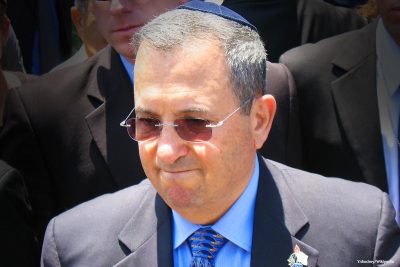
The London based Arab Organisation for Human Rights (AOHR) in the UK has stated that London has become a safe haven for war criminals visiting the city.
According to the AOHR these individuals come to the city because law enforcement has failed to take any measures to arrest them.
The organisation added that Britain is one of the countries that adopts clear laws regarding global jurisdiction that allow the police to arrest the perpetrators of certain crimes, if they are on British soil, regardless of the suspect’s nationality and where the crime was committed.
The AOHR stated that these laws are not enforced when it comes to Israelis who have committed war crimes documented on a global level. These suspects are regularly given special diplomatic immunity on the grounds that they’re on an official visit.
The organisation noted that former Israeli Prime Minister Ehud Barak was seen walking around London last night with his wife, despite the fact police have files and documentation proving he has committed war crimes against Palestinians.
Barak was Israel’s Minister of Defence during the attack on the Mavi Marmara convoy.
NGOs have previously tried to have an arrest warrant issued for Barak for his role in the 2008 Gaza War but have had requests rejected in court.
The AOHR urged the war crimes team of the Metropolitan Police Counter Terrorism Command (SO15) to do its duty, arrest Barak, and prohibit him from leaving the country.
The main reason international jurisdiction exists is to eliminate the phenomenon of impunity granted to criminals who have committed such dangerous crimes.
[Photo credit – Ynhockey/Wikipedia]
October 4, 2017
Posted by aletho |
Ethnic Cleansing, Racism, Zionism, Timeless or most popular, War Crimes | Israel, Metropolitan Police Counter Terrorism Command, Palestine, UK, Zionism |
Leave a comment
OCCUPIED JERUSALEM – Israel’s war minister Avigdor Lieberman warned on Monday that the next war is likely to feature attacks on population centers and civilians, according to Haaretz daily.
 Avigdor Lieberman, who took part on Monday evening in a ceremony in which certificates of honor were awarded to 31 Israeli officers and soldiers from various units in the army, said: “The next confrontation, if it breaks out, will take on a completely different character, when our enemies will try to strike first at population centers and civilian infrastructure. So we will not have the luxury to wage a long war.”
“We live in a new reality of a new Middle East, which is much worse than the old Middle East. And in this terrible new reality, we have yet to face difficult tests,” he added.
“Any confrontation will have to be conducted from the very first moment in the highest profile, using all the army’s strengths,” Lieberman continued. “If there is a crossing of red lines, the other side must know in advance that it is going to pay very heavy prices.”
“The sovereign, too, regardless of whether he controls his territory or not – as soon as a hostile action takes place, the sovereign will also bear all the responsibility,” the war minister further threatened.
The international community has ceaselessly sounded alarm bells over the Israeli aggression on civilian homes, infrastructure, and unarmed communities across the occupied Palestinian territories and the blockaded Gaza Strip, in aggressions deemed by the international law as crimes against humanity.
October 3, 2017
Posted by aletho |
Ethnic Cleansing, Racism, Zionism, Timeless or most popular, War Crimes | Iran, Israel, Lebanon, Palestine, Zionism |
Leave a comment
The answer to the question in the title of this article is that Russiagate was created by CIA director John Brennan.The CIA started what is called Russiagate in order to prevent Trump from being able to normalize relations with Russia. The CIA and the military/security complex need an enemy in order to justify their huge budgets and unaccountable power. Russia has been assigned that role. The Democrats joined in as a way of attacking Trump. They hoped to have him tarnished as cooperating with Russia to steal the presidential election from Hillary and to have him impeached. I don’t think the Democrats have considered the consequence of further worsening the relations between the US and Russia.
Public Russia bashing pre-dates Trump. It has been going on privately in neoconservative circles for years, but appeared publicly during the Obama regime when Russia blocked Washington’s plans to invade Syria and to bomb Iran.
Russia bashing became more intense when Washington’s coup in Ukraine failed to deliver Crimea. Washington had intended for the new Ukrainian regime to evict the Russians from their naval base on the Black Sea. This goal was frustrated when Crimea voted to rejoin Russia.
The neoconservative ideology of US world hegemony requires the principal goal of US foreign policy to be to prevent the rise of other countries that can serve as a restraint on US unilateralism. This is the main basis for the hostility of US foreign policy toward Russia, and of course there also is the material interests of the military/security complex.
Russia bashing is much larger than merely Russiagate. The danger lies in Washington convincing Russia that Washington is planning a surprise attack on Russia. With US and NATO bases on Russia’s borders, efforts to arm Ukraine and to include Ukraine and Georgia in NATO provide more evidence that Washington is surrounding Russia for attack. There is nothing more reckless and irresponsible than convincing a nuclear power that you are going to attack.
Washington is fully aware that there was no Russian interference in the presidential election or in the state elections. The military/security complex, the neoconservatives, and the Democratic Party are merely using the accusations to serve their own agendas.
These selfish agendas are a dire threat to life on earth.
October 3, 2017
Posted by aletho |
Corruption, Deception, Militarism, Russophobia, Timeless or most popular | CIA, United States |
Leave a comment
Three US Congress members have demanded answers from Washington after a new book claims to reveal details of how the government secretly sprayed, injected, and fed radiation and other hazardous materials to “vulnerable” people during the Cold War.
The congressmen’s outrage comes in response to the book ‘Behind the Fog: How the US Cold War Radiological Weapons Program Exposed Innocent Americans,’ which is said to have revealed the practices when it was published in August.
Author Lisa Martino-Taylor, an associate professor of sociology at St. Louis Community College, said the radiological weapons program was a top priority for the government at the time.
According to the author, unsuspecting people across the United States – and even in England and Canada – were subjected to potentially deadly material through open-air spraying, ingestion, and injection.
“They targeted the most vulnerable in society in most cases,” Martino-Taylor said, as quoted by AP. “They targeted children. They targeted pregnant women in Nashville. People who were ill in hospitals. They targeted wards of the state. And they targeted minority populations.” The testing took place in various locations throughout the United States.
Tests in Nashville in the late 1940s saw 820 poor and pregnant white women receive a mixture during their first pre-natal visit which included radioactive iron, Martino-Taylor said. The expectant mothers were unknowingly chosen to take part in the program.
Blood tests were apparently used to determine how much radioactive iron had been absorbed by the women, and the babies’ blood was tested at birth. Similar tests also took place in Chicago and San Francisco, according to Martino-Taylor.
In St. Louis, the government was busy testing a spray which it claimed was for a smoke screen which could shield the city from aerial observation in case of a Soviet attack. However, evidence now shows that the spray included radioactive material, according to the associate professor.
In California, investigators installed a radiation field inside a building at North Hollywood High School in 1961. Similar testing was performed at the University of California Los Angeles and at a Los Angeles Police Department building.
Martino-Taylor has revealed that other tests in Chicago; Berkeley, California; Rochester, New York; and Oak Ridge, Tennessee, involved injecting people with plutonium-239.
The author used Freedom of Information Act requests to obtain previously unreleased documents, including Army records, which revealed the government’s practices. She also reviewed public records and published articles.
She also told AP that she found that a small group of researchers aided by academic institutions worked to develop radiological weapons and “combination weapons” using radioactive materials along with chemical or biological weapons.
‘Why would you do that to people?’
Any negative health effects of the testing have not been proven, with Martino-Taylor admitting that tracing diseases like cancer to specific causes is difficult. However, Mary Helen Brindell, now 73, can remember playing baseball on a street in St. Louis as a child in the 1950s. Suddenly, a squadron of planes flew low overhead, covering her and her friends in a fine powdery substance that stuck to her skin.
She has suffered from breast, thyroid, skin, and uterine cancers, and her sister died of a rare form of esophageal cancer. “I just want an explanation from the government,” Brindell said. “Why would you do that to people?”
Doris Spates, now 62, was born on the top floor of the Pruitt-Igoe low-income building in St. Louis, where the Army sprayed material from the roof. Just three months after her birth, her father suddenly died. Four of her 11 siblings died from cancer at relatively young ages, and she herself has survived cervical cancer and suffers from skin and breathing issues.
“It makes me angry,” Spates said. “It’s wrong to do something like that to people who don’t have any knowledge of it.”
‘Shocking & disturbing’
Responding to the revelations, three congressmen who represent areas where the testing took place have expressed outrage at the practices.
Lacy Clay (D-MO) said he was angry that Americans were used as “guinea pigs.”
He was joined by Jim Cooper (D-TN), whose office plans to seek more information from the Army Legislative Liaison.
“We are asking for details on the Pentagon’s role, along with any cooperation by research institutions and other organizations,” office spokesperson Chris Carroll said. “These revelations are shocking, disturbing and painful.”
Meanwhile, Brad Sherman (D-CA) – whose district includes North Hollywood High School, site of a radiation field – called the government’s actions an “incredibly stupid, reckless thing to do.”
He said he wants a survey of people who graduated from the school around that time, to see if there was a higher incidence of illness, including cancer, and has vowed to seek more information from the Department of Energy.
Martino-Taylor says her book speaks of the mostly young scientists tasked with developing radiological weapons, noting that they were mostly unsupervised from anyone “who could say, ‘this isn’t right,’ or put some sort of moral compass on it.”
The book is a follow-up to Martino-Taylor’s 2012 dissertation, which found that the US government conducted secret testing of zinc cadmium sulfide in a poor area of St. Louis in the 1950s and 1960s. Although her 2012 report prompted an Army investigation, the probe determined that no evidence had been found to prove that the St. Louis testing posed a health threat.
October 3, 2017
Posted by aletho |
Militarism, Timeless or most popular, War Crimes | Human rights, United States |
Leave a comment

Some will tell you that we should no longer be obligated to bear the sins of our nation’s past, playing the masochistic martyr and ignoring any spatiotemporal context. However, what they don’t understand is that it’s less about bearing responsibility for something in the past and more about being balanced when portraying it and bringing it back to life. The real issue comes into play when a past contentious issue is exploited and monetized with bias. Colonialism in today’s supposedly civilized society is a caricature of inequality and what progressive culture is against.
The movie Victoria and Abdul was recently released. In it, Stephen Frears tells the story of Queen Victoria, who is played by Dame Judi Dench, and her unlikely friendship with Abdul, who is played by Ali Fazal. What follows is an intentionally romanticized version of an otherwise unsettling story within tragic circumstances.
The Matter of the Movie
Queen Victoria is introduced to Abdul, an Indian servant who is shipped from India without any choice, to gift the queen with a coin. The queen is characterized as an exceptionally enlightened monarch and, ironically, almost as an egalitarian. In one scene, she accuses her court of being racialists, therefore doubtlessly endearing the character to a 21st-century audience.
Abdul, on the other hand, has barely any character at all. He’s objectified as a mere prop to only reflect the wonder of the queen and the glory of the Empress of India. Treated as some sort of bright and sparkly new toy or exotic pet, Abdul is portrayed as eternally grateful for having been brought to England for the great privilege of being part of this glorious people.
What is even more peculiar is that Frears’ Abdul seems to absolve any wrongdoing by the Queen — even when his fellow Indian servant dies as an ill-treated slave to the British. This all culminates in the final shot which epitomizes everything absolutely ill-considered and just frankly wrong about the film. It shows Abdul, having returned to India, kissing the feet of Queen Victoria’s statue in front of the Taj Mahal.
The overriding issue with period dramas such as Victoria and Abdul is that they romanticize colonialism and sell it to the masses as light entertainment. This is a direct insult against the historic abuse and injustices that colonized countries faced at the hands of the ruling empire of the time. Unfortunately, it’s not only the media. Even the royals, to this day, should be more cautious of how they represent their past link with India.
The Darker Reality
The reality was that the Victorian era was accountable for horrific atrocities in India, both on a humanitarian and an economic level. Shashi Tharoor has been particularly vocal about how Britain furthered its own industrial revolution by decimating India’s accrued share of the world economy. The nature of this profiteering had appalling and disastrous consequences.
Through Britain’s exploitation of India’s agricultural products like grain, the Indian people found themselves in unimaginable poverty — an epidemic of poverty in which 20 million people are thought to have died. The Great Famine and the Indian Famine, however, are rarely talked about.
Furthermore, the evils that India suffered under the British Raj were not only confined to tragedies that resulted from consequences of otherwise economically motivated actions, but also through direct aggression and violence driven by racism. The Amritsar massacre in 1919 saw a major murder spree of peaceful, nonviolent protestors. Over 1,000 Indians perished by gunfire at the hands of the British army.
How, then, can the film and television world and British media in general so easily gloss over such unimaginable injustices with nostalgia, romanticism and even comedy? Well, the problem goes slightly deeper than just monetization. Even though Frears knew what he was doing and will doubtless enjoy a profit from appealing to the audience via this whitewashed and jewel-encrusted version of colonialism, far too few people will even identify a problem with it. This is due to Britain’s own brand of causal propaganda.
British history — where Britain institutionalized pain and suffering of seemingly lesser peoples — has barely been featured in the country’s history books. It wasn’t only injustices in India that have been ignored in both media as well as education. Britain invented the world’s first concentration camps in South Africa, where Boer settlers were incarcerated, raped and worked to death. When referring to the deaths of over 25,000 Boer women and children, Lloyd George, future Prime Minister of Great Britain, said, “We are simply ranging the deepest passions of the human heart against British rule in Africa.” However, today’s generation only hears of how Britain stood against the Afrikaners during Apartheid.
Given that it’s now 2017, and that Britain is one of the forerunners in the international fight against illiberal governing, surely admitting your own nation’s past and bearing your mistakes by way of example is the more inclusive route to encouraging true democracies. In that way, producers, writers and directors of British film and television have a real responsibility here, and need to examine the racist injustices Britain has built itself upon. The victims of the past, current and future would be less offended, and healing and peace processes could begin to be brokered.
October 3, 2017
Posted by aletho |
Ethnic Cleansing, Racism, Zionism, Film Review, Mainstream Media, Warmongering, Timeless or most popular | Human rights, UK |
Leave a comment
The Israeli defense minister has urged Washington to engage more in Syria, where President Bashar Assad “is winning.” The official has asked for increased US involvement, saying Israel is struggling to deal with the “Russians, Iranians, and also the Turks and Hezbollah.”
“We hope that the United States will be more active in the Syrian arena and in the Middle East in general,” Avigdor Lieberman said in an interview with Israel’s Walla news on Tuesday.
“In the northern arena, we are faced with the Russians, Iranians, and also the Turks and Hezbollah. The public does not know everything and it’s a good thing, but it’s an investment and an effort 24 hours a day, seven days a week.”
The minister went on to express his apparently grave concerns that “in spite of everything, Assad is winning the battle.” He also called the situation in Syria “one of the greatest absurdities.”
“The United States has quite a few challenges of their own, but as a trend, the more active the US is, the better,” Lieberman said.
According to the right-wing Israeli official, “suddenly everyone is running to get closer to Assad,” including countries in the West “queuing” to win the Syrian president’s favor.
In another unfortunate scenario for Israel, the situation in Syria has led to widespread Iranian consolidation, according to Lieberman, who is known for his harsh statements and anti-Iranian stance.
Despite Israel generally not being involved in the Syrian war, there has long been a concern that the situation would see some of its main foes – Iran and Hezbollah, the Lebanese militant organization designated as a terrorist group by Israel and the US – gain a foothold of power in Syria.
Claiming “errant projectiles” from Syrian territory have reached Israel, the IDF has on several occasions targeted positions of the Syrian Army and allied forces. The Israeli military have also targeted military convoys within Syria, claiming they were carrying weapons for Hezbollah.
In a recent development in the region, Israel endorsed a referendum on the creation of an independent Kurdish state, despite a number of other nations having condemned the vote. Having warned that the Kurds’ independence drive is a threat to the whole region, the Hezbollah chief, Sayyed Hassan Nasrallah has called the referendum a part of the US-Israeli plot to carve up the Middle East, saying that those nations are back on course to plunge the region into chaos by sowing division.
October 3, 2017
Posted by aletho |
Ethnic Cleansing, Racism, Zionism, Timeless or most popular, War Crimes, Wars for Israel | Hezbollah, Iran, Israel, Middle East, Syria, United States, Zionism |
Leave a comment
Exposing Jewish power in America has real consequences

Two weeks ago, I wrote for Unz.com an article entitled “America’s Jews Are Driving America’s Wars.” It sought to make several points concerning the consequences of Jewish political power vis-à-vis some aspects of U.S. foreign policy. It noted that some individual American Jews and organizations with close ties to Israel, whom I named and identified, are greatly disproportionately represented in the government, media, foundations, think tanks and lobbying that is part and parcel of the deliberations that lead to formulation of U.S. foreign policy in the Middle East. Inevitably, those policies are skewed to represent Israeli interests and do serious damage to genuine American equities in the region. This tilt should not necessarily surprise anyone who has been paying attention and was noted by Nathan Glazer, among others, as long ago as 1976.
The end result of Israel centric policymaking in Washington is to produce negotiators like Dennis Ross, who consistently supported Israeli positions in peace talks, so much so that he was referred to as “Israel’s lawyer.” It also can result in wars, which is of particular concern given the current level of hostility being generated by these same individuals and organizations relating to Iran. This group of Israel advocates is as responsible as any other body in the United States for the deaths of thousands of Americans and literally millions of mostly Muslim foreigners in unnecessary wars in Afghanistan, Iraq, Libya and Syria. It has also turned the U.S. into an active accomplice in the brutal suppression of the Palestinians. That they have never expressed any remorse or regret and the fact that the deaths and suffering don’t seem to matter to them are clear indictments of the sheer inhumanity of the positions they embrace.
The claims that America’s Middle Eastern wars have been fought for Israel are not an anti-Semitic delusion. Some observers, including former high government official Philip Zelikow, believe that Iraq was attacked by the U.S. in 2003 to protect Israel. On April 3rd, just as the war was starting, the Israeli newspaper Haaretz headlined “The war in Iraq was conceived by 25 neoconservative intellectuals, most of them Jewish, who are pushing President Bush to change the course of history.” It then went on to describe how “In the course of the past year, a new belief has emerged in [Washington]: the belief in war against Iraq. That ardent faith was disseminated by a small group of 25 or 30 neoconservatives, almost all of them Jewish, almost all of them intellectuals (a partial list: Richard Perle, Paul Wolfowitz, Douglas Feith, William Kristol, Eliot Abrams, Charles Krauthammer), people who are mutual friends and cultivate one another.”
And the deference to a Jewish proprietary interest in Middle Eastern policy produces U.S. Ambassadors to Israel who are more comfortable explaining Israeli positions than in supporting American interests. David Friedman, the current Ambassador, spoke last week defending illegal Israeli settlements, which are contrary to official U.S. policy, arguing that they represented only 2% of the West Bank. He did not mention that the land controlled by Israel, to include a security zone, actually represents 60% of the total area.
My suggestion for countering the over-representation of a special interest in policy formulation was to avoid putting Jewish government officials in that position by, insofar as possible, not giving them assignments relating to policy in the Middle East. As I noted in my article, that was, in fact, the norm regarding Ambassadors and senior foreign service assignments to Israel prior to 1995, when Bill Clinton broke precedent by appointing Australian citizen Martin Indyk to the position. I think, on balance, it is eminently sensible to avoid putting people in jobs where they will likely have conflicts of interest.
Another solution that I suggested for American Jews who are strongly attached to Israel and find themselves in a position that considers policy for that country and its neighbors would be to recuse themselves from the deliberations, just as a judge who finds himself personally involved in a judicial proceeding might withdraw. It would seem to me that, depending on the official’s actual relationship with Israel, it would be a clear conflict of interest to do otherwise.
The argument that such an individual could protect American interests while also having a high level of concern for a foreign nation with contrary interests is at best questionable. As George Washington observed in his farewell address,
“… a passionate attachment of one nation for another produces a variety of evils. Sympathy for the favorite nation, facilitating the illusion of an imaginary common interest in cases where no real common interest exists, and infusing into one the enmities of the other, betrays the former into a participation in the quarrels and wars of the latter without adequate inducement or justification…”
My article proved to be quite popular, particularly after former CIA officer Valerie Plame tweeted her approval of it and was viciously and repeatedly attacked, resulting in a string of abject apologies on her part. As a reasonably well-known public figure, Plame attracted a torrent of negative press, in which I, as the author of the piece being tweeted, was also identified and excoriated. In every corner of the mainstream media I was called “a well-known anti-Semite,” “a long time anti-Israel fanatic,” and, ironically, “a somewhat obscure character.”
The widespread criticism actually proved to be excellent in terms of generating real interest in my article. Many people apparently wanted to read it even though some of the attacks against me and Plame deliberately did not provide a link to it to discourage such activity. As of this writing, it has been opened and viewed 130,000 times and commented on 1,250 times. Most of the comments were favorable. Some of my older pieces, including The Dancing Israelis and Why I Still Dislike Israel have also found a new and significant readership as a result of the furor.
One of the implications of my original article was that Jewish advocacy groups in the United States are disproportionately powerful, capable of using easy access to the media and to compliant politicians to shape policies that are driven by tribal considerations and not necessarily by the interests of most of the American people. Professors John Mearsheimer of the University of Chicago and Stephen Walt of Harvard, in their groundbreaking book “The Israel Lobby”, observed how the billions of dollars given to Israel annually “cannot be fully explained on either strategic or moral grounds… [and] is due largely to the activities of the Israel lobby—a loose coalition of individuals and organizations who openly work to push U.S. foreign policy in a pro-Israel direction.”
Those same powerful interests are systematically protected from criticism or reprisal by constantly renewed claims of historic and seemingly perpetual victimhood. But within the Jewish community and media, that same Jewish power is frequently exalted. It manifests itself in boasting about the many Jews who have obtained high office or who have achieved notoriety in the professions and in business. In a recent speech, Harvard Law School Professor Alan Dershowitz put it this way, “People say Jews are too powerful, too strong, too rich, we control the media, we’ve too much this, too much that and we often apologetically deny our strength and our power. Don’t do that! We have earned the right to influence public debate, we have earned the right to be heard, we have contributed disproportionately to success of this country.” He has also discussed punishing critics of Israel, “Anyone that does [that] has to be treated with economic consequences. We have to hit them in the pocketbook. Don’t ever, ever be embarrassed about using Jewish power. Jewish power, whether it be intellectual, academic, economic, political– in the interest of justice is the right thing to do.”
My article, in fact, began with an explanation of that one aspect of Jewish power, its ability to promote Israeli interests freely and even openly while simultaneously silencing critics. I described how any individual or “any organization that aspires to be heard on foreign policy knows that to touch the live wire of Israel and American Jews guarantees a quick trip to obscurity. Jewish groups and deep pocket individual donors not only control the politicians, they own and run the media and entertainment industries, meaning that no one will hear about or from the offending party ever again.”
With that in mind, I should have expected that there would be a move made to “silence” me. It came three days after my article appeared. The Editor of The American Conservative (TAC) magazine and website, where I have been a regular and highly rated contributor for nearly 15 years, called me and abruptly announced that even though my article had appeared on another site, it had been deemed unacceptable and TAC would have to sever its relationship with me. I called him a coward and he replied that he was not.
I do not know exactly who on the TAC board decided to go after me. Several board members who are good friends apparently were not even informed about what was going on when firing me was under consideration. I do not know whether someone coming from outside the board applied pressure in any way, but there is certainly a long history of friends of Israel being able to remove individuals who have offended against the established narrative, recently exemplified by the hounding of now-ex-Secretary of Defense Chuck Hagel who had the temerity to state that “the Jewish lobby intimidates lots of people” in Washington. As Gilad Atzmon has observed one of the most notable features of Jewish power is the ability to stifle any discussion of Jewish power by gentiles.
But the defenestration by TAC, which I will survive, also contains a certain irony. The magazine was co-founded in 2002 by Pat Buchanan and the article by him that effectively launched the publication in the following year was something called “Whose War?” Buchanan’s initial paragraphs tell the tale:
“The War Party may have gotten its war. But it has also gotten something it did not bargain for. Its membership lists and associations have been exposed and its motives challenged. In a rare moment in U.S. journalism, Tim Russert put this question directly to Richard Perle: ‘Can you assure American viewers … that we’re in this situation against Saddam Hussein and his removal for American security interests? And what would be the link in terms of Israel?’ Suddenly, the Israeli connection is on the table, and the War Party is not amused. Finding themselves in an unanticipated firefight, our neoconservative friends are doing what comes naturally, seeking student deferments from political combat by claiming the status of a persecuted minority group. People who claim to be writing the foreign policy of the world superpower, one would think, would be a little more manly in the schoolyard of politics. Not so. Former Wall Street Journal editor Max Boot kicked off the campaign. When these ‘Buchananites toss around neoconservative—and cite names like Wolfowitz and Cohen—it sometimes sounds as if what they really mean is ‘Jewish conservative.’ Yet Boot readily concedes that a passionate attachment to Israel is a ‘key tenet of neoconservatism.’ He also claims that the National Security Strategy of President Bush ‘sounds as if it could have come straight out from the pages of Commentary magazine, the neocon bible.’ (For the uninitiated, Commentary, the bible in which Boot seeks divine guidance, is the monthly of the American Jewish Committee.)”
Pat is right on the money. He was pretty much describing the same group that I have written about and raising the same concern, i.e. that the process had led to an unnecessary war and will lead to more unless it is stopped by exposing and marginalizing those behind it. Pat was, like me, called an anti-Semite and even worse for his candor. And guess what? The group that started the war that has since been deemed the greatest foreign policy disaster in American history is still around and they are singing the same old song.
And TAC has not always been so sensitive to certain apparently unacceptable viewpoints, even in my case. I write frequently about Israel because I believe it and its supporters to be a malign influence on the United States and a threat to national security. In June 2008, I wrote a piece called “The Spy Who Loves Us” about Israeli espionage against the U.S. It was featured on the cover of the magazine and it included a comment about the tribal instincts of some American Jews: “In 1996, ten years after the agreement that concluded the [Jonathan] Pollard [Israeli spying] affair, the Pentagon’s Defense Investigative Service warned defense contractors that Israel had ‘espionage intentions and capabilities’ here and was aggressively trying to steal military and intelligence secrets. It also cited a security threat posed by individuals who have ‘strong ethnic ties’ to Israel, stating that ‘Placing Israeli nationals in key industries is a technique utilized with great success.’”
Three days later, another shoe dropped. I was supposed to speak at a panel discussion critical of Saudi Arabia on October 2nd. The organizer, the Frontiers of Freedom foundation, emailed me to say my services would no longer be required because “the conference will not be a success if we get sidetracked into debating, discussing, or defending the substance of your writings on Israel.”
Last Saturday morning, Facebook blocked access to my article for a time because it “contained a banned word.” I can safely assume that such blockages will continue and that invitations to speak at anti-war or foreign policy events will be in short supply from now on as fearful organizers avoid any possible confrontation with Israel’s many friends.
Would I do something different if I were to write my article again today? Yes. I would have made clearer that I was not writing about all or most American Jews, many of whom are active in the peace movement and, like my good friend Jeff Blankfort and Glenn Greenwald, even figure among the leading critics of Israel. My target was the individuals and Jewish “establishment” groups I specifically named, that I consider to be the activists for war. And I refer to them as “Jews” rather than neoconservatives or Zionists as some of them don’t identify by those political labels while to blame developments on Zios or neocons is a bit of an evasion in any event. Writing “neoconservatives” suggests some kind of fringe or marginal group, but we are actually talking about nearly all major Jewish organizations and many community leaders.
Many, possibly even most, Jewish organizations in the United States openly state that they represent the interests of the state of Israel. The crowd stoking fear of Iran is largely Jewish and is, without exception, responsive to the frequently expressed desires of the self-defined Jewish state to have the United States initiate hostilities. This often means supporting the false claim that Tehran poses a serious threat against the U.S. as a pretext for armed conflict. Shouldn’t that “Jewish” reality be on the table for consideration when one is discussing the issue of war versus peace in America?
When all is said and done the punishment that has been meted out to me and Valerie Plame proves my point. The friends of Israel rule by coercion, intimidation and through fear. If we suffer through a catastrophic war with Iran fought to placate Benjamin Netanyahu many people might begin to ask “Why?” But identifying the real cause would involve criticism of what some American Jews have been doing, which is not only fraught with consequences, but is something that also will possibly become illegal thanks to Congressional attempts to criminalize such activity. We Americans will stand by mutely as we begin to wonder what has happened to our country. And some who are more perceptive will even begin to ask why a tiny client state has been allowed to manipulate and bring ruin on the world’s only super power. Unfortunately, at that point, it will be too late to do anything about it.
October 3, 2017
Posted by aletho |
Civil Liberties, Ethnic Cleansing, Racism, Zionism, Full Spectrum Dominance, Timeless or most popular, Wars for Israel | Facebook, Human rights, Israel, Middle East, United States, Zionism |
Leave a comment
From his refuge in the Ecuador Embassy in London, WikiLeaks founder Julian Assange addressed a press conference of his supporters in Berlin on Tuesday, amid speculation that he planned to reveal potential threats to America.
But early into his speech, Assange said that while more revelations were to come, he would not be making any major announcements, asserting that there would be no point in making such revelations at a time when most Americans would be sleeping.
“Russian actions on its own doorstep in Eastern Europe do not in fact threaten the United States or any actual vital interest. Nor does Moscow threaten the U.S. through its intervention on behalf of the Syrian government in the Middle East. That Russia is described incessantly as a threat in those areas is largely a contrivance arranged by the media, the Democratic and Republican National Committees and by the White House. Candidate Donald Trump appeared to recognize that fact before he began listening to Michael Flynn, who has a rather different view. Hopefully the old Trump will prevail, there is, however, another country that has interfered in U.S. elections, has endangered Americans living or working overseas and has corrupted America’s legislative and executive branches. It has exploited that corruption to initiate legislation favorable to itself, has promoted unnecessary and unwinnable wars and has stolen American technology and military secrets. Its ready access to the mainstream media to spread its own propaganda provides it with cover for its actions and it accomplishes all that and more through the agency of a powerful and well-funded domestic lobby that oddly is not subject to the accountability afforded by the Foreign Agents Registration Act (FARA) of 1938 even though it manifestly works on behalf of a foreign government. That country is, of course, Israel” said Assange.
The assessment of Israel and what damage it does regarding what most Americans would regard as genuine national interests is most definitely not reported, revealing once again that what is not written is every bit as important as what is. I would note how what has recently happened right in front of us relating to Israel is apparently not considered fit to print and will never appear on any disapproving editorial page. Just this week the Senate unanimously passed an Anti-Semitism Awareness bill and also by a 99 to zero vote renewed and strengthened sanctions against Iran, which could wreck the one year old anti-nuclear weapon proliferation agreement with that country.
The Anti-Semitism bill makes Jews and Jewish interests a legally protected class, immune from any criticism. “Free speech” means in practice that you can burn an American flag, sell pornography, attack Christianity in the vilest terms or castigate the government in Washington all you want but criticizing Israel is off limits if you want to avoid falling into the clutches of the legal system. The Act is a major step forward in effectively making any expressed opposition to Israeli actions a hate crime.
And it is similar to punitive legislation that has been enacted in twenty-two states as well as in Canada. It is strongly supported by the Israel Lobby, which quite likely drafted it, and is seeking to use legal challenges to delegitimize and eliminate any opposition to the policies of the state of Israel.
As the Act is clearly intended to restrict First Amendment rights if they are perceived as impacting on broadly defined Jewish sensitivities, it should be opposed on that basis alone, but it is very popular in Congress, which is de facto owned by the Israel Lobby. That the legislation is not being condemned or even discussed in the generally liberal media tells you everything you need to know about the amazing power of one particular unelected and unaccountable lobby in the U.S.
October 2, 2017
Posted by aletho |
Civil Liberties, Full Spectrum Dominance, Mainstream Media, Warmongering, Russophobia, Timeless or most popular, Wars for Israel | Human rights, Sanctions against Iran, United States, Zionism |
Leave a comment
In 2014, when the United States and the European Union slapped sanctions on Russian officials and businesses, many observers both in Russia and the West predicted serious problems for the Russian economy and near-certain failure of the Russian government’s efforts to substitute for the lost access to foreign products. But those dire predictions were based on a complete misreading of the mood and general political situation in Russia.
The American legislators who initiated the sanctions believed that the punishment directed at the Kremlin leadership and Russia’s corporate chieftains would alienate the so-called oligarchs from President Vladimir Putin and possibly lead to regime change or, at a minimum, a change in Russia’s foreign policy to suit better the wishes of Washington.
U.S. and European politicians justified the sanctions as punishment for what they called Russia’s “annexation” of Crimea and Russia’s military intervention in the Donbas region of Ukraine in reaction to what Moscow and many eastern Ukrainians called a Western-orchestrated “coup” that overthrew the elected government of Ukraine in February 2014.
Russia responded to the Western sanctions with an embargo on food products from the sanctioning countries and rolled out a generalized policy of “import substitution” to sharply curtail the dependency of the Russian economy on outside commercial products and political pressures.
More than two years later – although Russia has faced some difficulties – the evidence is now clear that the sanctions against Russia have largely failed, on both an economic and political level. Reunification with Crimea and the ensuing Western sanctions aroused a swelling of national pride and patriotic feelings in the broad public.
So, instead of caving in to Western pressure, the Kremlin doubled down and has stayed the course on Crimea, on Donbas and – more recently – in Syria where its military support for the regime of Bashar al-Assad has gone directly against U.S. and Western policies of backing violent insurgents in another “regime change” project, a conflict in which Assad now appears to have largely prevailed.
So, in terms of domestic politics and international geopolitics, Putin and Russia appear to have frustrated the U.S. and the European Union as well as U.S. regional allies, Saudi Arabia and Israel, which were strong advocates for Syrian “regime change.” But what about Russia’s strategy of creating domestic sources for what can no longer be imported?
Expectations of Failure
Within months of the Kremlin’s announcement of this policy, commentators were publishing statistics showing that “import substitution,” i.e., Russian products replacing Western ones, was negligible, that the strategy was failing. To explain why, these skeptics pointed to the unbalanced structure of the Russian economy, heavily dependent on the extraction of raw materials with massive resources invested in the highly profitable energy industry, which boosted the ruling elites. Moreover, Russia received low ratings as an “investor friendly” country, which limited outside investments.
Those doubts had validity and there were other problems, particularly the cost of money and its scarcity. In 2014, the Russian economy was experiencing high inflation and suffering from the attempts of the Bank of Russia to contain it with tight-money policies. The costs of borrowing for small businesses were particularly usurious. Indeed, lack of working capital at competitive prices was the main contributor to the flooding of the Russian market with imports and the collapse of local industry.
Yet, despite these headwinds, the Russian government began to make significant progress. Though the creation of industrial sectors can take years, the Kremlin identified priority sectors and provided various kinds of government assistance that included credit subsidies. The Kremlin also took steps to maintain the ruble at a low exchange rate to protect against imports whatever happens to the sanctions and embargo.
Agriculture is one sector where the potential payback was relatively quick, for example, by prioritizing wheat over livestock or poultry over pork. When the oxygen of subsidized credit was applied, the results were stunning. In 2017, despite negative weather conditions in the spring and early summer, Russia is expecting its largest ever grain harvest, possibly reaching 130 million metric tons, and the country is retaking its position as the world’s top wheat exporter and leading exporter of other grains and of beet sugar.
What is happening in other sectors of the economy which the government prioritized for import substitution will be obvious only in the years to come, precisely because of the greater capital and knowhow required and thus the slower payback. But given the way agriculture has responded to stimuli from the Kremlin, it is reasonable to expect similar success stories in manufacturing and service industries like banking, insurance and computer programming over time.
Since a rising tide raises all ships, the initial agricultural success has attracted big business interest not only to industrial-scale farming of grain crops but also to many other sides of the food supply and its processing. Such investments are being made not only by start-up small- and medium-sized businesses but also by the oligarchs, for whom this is a point of pride and a direct response to the wave of patriotism that has swept the country.
Thus, as The Financial Times recently reported, oligarch Viktor Vekselberg has been pouring vast capital via his Renova holding company into the construction of greenhouses for vegetable crops that are in great demand among Russia’s urban populations. Payback on these investments is measured in years, not months, and demonstrates great confidence of Russian competitiveness against ground crops from Turkey and Central Asia and from hothouse crops from Western Europe whenever the sanctions are lifted.
The result of these various undertakings is that Russian Federation Minister of Agriculture Alexander Tkachev, himself a farmer with large-scale interests in the sector, can report regularly on the dramatic progress being made in all areas of agricultural self-sufficiency. Indeed, in many product groupings quite apart from grains, Russia is becoming an exporter for the first time since before World War I.
The Fish Turnaround
This economic transformation has included progress in a surprising area, given Russian national traditions that favor meat over fish. This prejudice was long justified by the quality of fish products that were available in the market from Soviet times. The improvement in assortment and appeal of these products dates from the middle of the first decade of the new millennium.
The Financial Times article gave statistics for the Murmansk-based LLC Russkoye More, an ambitious firm that is rapidly expanding to occupy the leading position as supplier of farmed salmon in what is a major import substitution project. The Russian market for fresh salmon, like the E.U. market, was until two years ago entirely dominated by the Scandinavians, now on the embargo list.
Whereas The Financial Times addresses the changes in the fish sector at the corporate and macroeconomic level, there is also the microeconomic level where people live and where demand meets supply. From my own visits to supermarkets, to independent fish vendors, to covered street markets in cities and in the countryside up to 80 km from St Petersburg, I can speak from first-hand experience about how these fish supplies are reaching consumers. The distribution and logistical chain is all the more important in products as perishable as fresh fish.
Some specific fish varieties are locally grown in the Russian Northwest region, including the sig, a fresh water member of the salmon family native to Lake Ladoga, Europe’s largest body of fresh water that is 50 km east of Petersburg, and also the minnow-sized koryushka, another native of Ladoga that each spring travels down the Neva River to the lightly saline Gulf of Finland to lay its eggs and is caught on the way in vast quantities to the great pleasure of Petersburgers.
But the bigger picture is that — as the largest country on earth representing more than 10 percent of the world’s land surface — Russia has tremendous fresh water resources in terms of lakes and rivers that still abound in fish enjoying local reputation and retail distribution. This is particularly true of the Siberian rivers; smoked delicacy fish from there are sold at high prices across the Russian Federation. In addition, Russian fishing fleets based in Murmansk, to the north and in Vladivostok to the east have been and remain large suppliers of ocean fish.
What has changed is the scale of production and distribution of fish whether from fresh salt water or from lakes and rivers or farmed fish. In the past, the fish section in Russian supermarkets meant shelves of tinned sardines or catfish in tomato sauce, today every respectable market offers fresh fish, in filets or whole, presented on beds of ice.
Specialized fish stores have sprung up even in the hinterland in the Northwest, receiving daily shipments of farmed salmon, wild gorbusha and hefty flounders, among other varieties. By local standards, these fish are all substantially more expensive sources of protein than domestic chickens or pork chops. But they obviously do find their consumers and they are priced 30 percent or more below West European store prices for similar fish.
Until recently, ocean fish were brought to market frozen. The Soviet Union developed a large fleet of trawlers and fish processing ships that brought frozen product to port, much of it going into export. The fish were usually low grade, bony, good only for stews and soups. Higher-grade fish like cod appeared for sale in shops in bulk in contorted stages of rigor mortis, not very appealing to the faint of heart.
Meeting Demand
Now, in the past couple of years, the frozen foods bins of super markets are stocked with fish steaks packaged in clear plastic that are as attractive and as high quality as anything sold in Western Europe. These cod steaks, wild salmon (gorbusha) steaks have been flash frozen and are offered in half-kilogram portions. The labeling stresses that no preservatives have been used, that the products are natural and healthful, with detailed nutritional information provided.
In the days of the Soviet Union, the Russian fishing industry produced some world-beating tinned products including red and black caviar and Chatka brand king crab meat. These exclusive and very pricey products are exported, where they enjoy demand and are available domestically in specialty shops. But most tinned fish traditionally fell into the category of low-grade fish in tomato sauce or very poor grade vegetable oil.
Over the past several years, that has changed beyond recognition. Tinned fish of world-class quality is making its appearance on store shelves. For example, a week ago I discovered a new arrival: “premium” class chunk tuna in olive oil packaged in 200 gram glass jars. The producer is the Far East fishing fleet, and the fish name is given in Japanese as well as Russian. The product is similar in design and presentation to premium tuna on sale in Belgium at twice the price.
And finally another fish product category is worth mentioning: the salted, smoked or otherwise processed and unit-packed fish sold in the chilled products sections of supermarkets. This has expanded in product range and quality so as to be beyond recognition when compared with similar offerings just a few years ago.
Many different suppliers vie in the category of cold or hot smoked, salted salmon shrink-wrapped in units of 200 grams plus or minus. Herrings filets in oil or in sauces are now very attractive and of generally high quality. Anchovies and other small fish filets have proliferated. And hitherto unknown product categories such as “seafood cocktails” consisting of baby octopus and squid, pink shrimp and mussels in brine are offered in small plastic pots; quality is in no way inferior to what you would find in an upscale supermarket in Western Europe.
All such alien — “indescribably awful” (??????? ) foods in the judgment of your average Soviet consumer — are today welcomed as the basis for salads, as stuffing for avocados, themselves a relatively new food item to the Russian shopper.
Travel abroad, and 10 million Russians do travel abroad each year, has turned them into quite sophisticated shoppers and diners. And what they have come to love they now can largely find in their supermarkets supplied by domestic producers, including all varieties of fish specialties.
The point is, that from nowhere, the Russian fishing industry has made enormous strides and, unlike the cheese industry, is fully replacing imports with equal or better quality contents and lower prices.
This is the consequence of change in demand as well as change in supply. Demand has changed because before 2014 Russians still distrusted their compatriots and believed that everything made in their country was rubbish. The Ukraine crisis, the reunification with Crimea, the war in Donbas, and the upsurge of patriotism prodded folks to try their own. What Russia has now is a virtuous cycle: the Russian people expect better and what they are getting is better.
Gilbert Doctorow is an independent political analyst based in Brussels. His last book Does Russia Have a Future? was published in August 2015. His forthcoming collection of essays Does the United States Have a Future? will be published in October 2017.
© Gilbert Doctorow, 2017
October 1, 2017
Posted by aletho |
Economics, Timeless or most popular | European Union, Russia, United States |
Leave a comment
If voting changed anything, they’d abolish it. That might sound a bit glib but consider these recent events.
In January 2015, the Greek people, sick and tired of austerity and rapidly plummeting living standards, voted for Syriza, a radical anti-austerity party. The Coalition of the Left, which had only been formed eleven years earlier, won 36.3 percent of the vote and 149 out of the Hellenic Parliament‘s 300 seats. The Greek people had reasonable hopes their austerity nightmare would end. The victory of Syriza was hailed by progressives across Europe.
But what happened?
Pressure was applied on Greece by ‘The Troika’ to accept onerous terms for a new bailout. Syriza went to the people in June 2015 to ask them directly in a national referendum if they should accept the terms.
“On Sunday, we are not simply deciding to remain in Europe, we are deciding to live with dignity in Europe,” Alexis Tsipras, the leader of Syriza, declared. The Greek people duly gave Tsipras the mandate he asked for, and rejected the bailout terms with 61.3 percent voting ‘No.’
Yet, just over two weeks after the referendum, Syriza accepted a bailout package that contained larger cuts in pensions and higher tax increases than the one on offer earlier.
The Greek people may as well have stayed at home on 27th June for all the difference their vote made.
Many supporters of Donald Trump in the US are no doubt thinking the same.
Trump won the election by attracting working-class ‘rust belt’ voters away from the Democrats and for offering the prospect of an end to a ‘liberal interventionist’ foreign policy. Yet just nine months into his Presidency the belief that Trump would mark a ‘clean break’ with what had gone before is in tatters. National conservative members of his team have been purged, while Trump has proved himself as much of a war hawk as his predecessors. Rather than ‘draining the swamp,’ The Donald has waded right into it.
The events of 2017 plainly prove as I argued here that the US is a regime and not a genuine democracy, and that whoever gets to the White House – sooner or later – will be forced to toe the War Party/Wall Street/Deep State line, regardless of what they promise on the election trail.
Brits too have had a lesson in the way ‘democracy’ works when people don’t vote the way the most powerful people in the establishment want them to. On June 23, 2016, rightly or wrongly, 52 percent voted to leave the EU. But 15 months on, the view that Britain will either never leave the EU or stay in it in all but name is growing. The government only sent off Article 50 in March, after the courts held that Brexit had to be initiated by Parliament.
Last week, Prime Minister Theresa May asked the EU for a two-year ‘transition’ period after Britain is due to leave in 2019. It’s not hard to imagine the transition period will be indefinitely extended. “I’ve been voicing that fear since long before the prime minister’s dismal speech in Florence, and I see nothing to reassure me that the referendum result will be honored,” says Peter Hill, former editor of the Daily Express.
The odds of Britain still being in the EU in 2022 are now about 3-1. And they’re shortening all the time.
Again, is that what the people who voted for Brexit in 2016 wanted to happen? The issue here is not whether we think leaving the EU is a good idea, but how the referendum vote has not led to the results that people expected.
These are not the only examples of people not getting what they thought they had voted for. In 2008, the citizens of Ireland voted to reject the EU’s Lisbon treaty. Was that the end of the matter? Not at all. They were asked to vote again – a year later – and this time the EU got the desired outcome.
In May 2012, the Socialist Party candidate Francois Hollande won a decisive victory in France’s Presidential elections. Like Syriza, he pledged to end austerity.
“I’m sure in a lot of European countries there is relief, hope that at last austerity is no longer inevitable.” He declared. But guess what. Hollande didn’t end austerity. Just a year later he was pushing through a fresh round of cuts.
Proving once again the truth of the old adage: Plus les choses changent, plus elles restent les mêmes.
This wouldn’t have surprised French students of Hungarian politics as the same thing happened in Hungary in the mid-1990s. In the 1994 election Gyula Horn’s Socialist Party swept the right-wing Hungarian Democratic Forum from power, by promising to preserve the best elements of the old ’goulash communist’ system. Horn attacked energy privatization and pledged to put the interests of ordinary working Hungarians first. But the forces of Western capital had no intention of allowing any vestiges of socialism to survive in the former Eastern bloc country.
Under pressure from Western financial institutions, Horn did a spectacular U-turn, sacking genuinely progressive ministers- and appointing a neoliberal economic professor called Lajos Bokros to impose a brutal austerity program, which was far worse than anything the previous government had introduced. He also stepped up privatization.
See the pattern?
What the above examples illustrate is that regardless of how we vote, the people behind the scenes – the money men, the embedded bureaucrats, those who want to see no end to neoliberal globalization because they do so well out of it – won’t meekly accept the verdict of the people. If the ‘great unwashed’ vote the ‘wrong way,’ i.e., for Trump, for Syriza, for Brexit or for Hollande or Horn, then ways will be found to make sure that normal service is soon resumed.
There are important lessons I think here for the British Labour Party, who could be on the brink of power. Like many this week, I was hugely impressed by the speech to the conference made by Labour leader Jeremy Corbyn.
Corbyn pledged to develop “a new model of economic management to replace the failed dogmas of neo-liberalism,” and linked the rise in terrorism to neocon/liberal interventionist foreign policies.
This is heresy as far as the pro-war neoliberal elites are concerned.
Opinion polls show that Labour, which registered its biggest increase in vote share in any election since 1945 earlier this year, has a consistent lead. Establishment attack dogs have been snapping at Corbyn’s heels since day one, and it’s utterly naïve to think that it’ll all stop if he does get the keys to Number 10, Downing Street. In fact, the war against Jez and his closest comrades will only intensify. The good news is that Labour is already planning for capital flight and a run on the pound if it’s elected. Paul Mason, a pro-Labour commentator, has said the first six months of a Corbyn government would be like ‘Stalingrad.’
Of course, you could argue that the likes of Trump, Hollande, Horn, and Tsipras were never totally committed to the program they stood on, and they said the ‘right things’ to the people just to get elected. But even if politicians are 100 percent genuine as the veteran anti-war activist Jeremy Corbyn appears to be, the pressures on them to cave in to the powerful forces behind the curtain will be immense, especially if they are putting forward policies which the elites don’t favor.
It’s clear from recent history that in modern Western ‘democracies’ voting in itself doesn’t determine outcomes. It’s what comes afterward that’s the most important.
Follow Neil Clark @NeilClark66
October 1, 2017
Posted by aletho |
Civil Liberties, Economics, Timeless or most popular | European Union, France, Greece, Hungary, SYRIZA, UK, United States |
Leave a comment
French legislative elections follow hard on the heels of the Presidential election. The momentum virtually ensures a presidential majority. So it was taken for granted that voters would give President Emmanuel Macron a docile parliament for his five-year mandate.
But these elections were exceptional. The victory of Macron’s personal party, la République En Marche (REM), is novel in several ways. Not only has REM won an absolute majority of 350 out of 577 seats in the National Assembly. REM’s victory has also bled the two traditional governing parties, the Republicans and the Socialists, perhaps fatally.
With over 130 seats, the Republican Party of former President Nicolas Sarkozy and its allies came in second, and thus ranks as leading opposition party. But since Macron successfully lured two Republican politicians into prominent positions in his government – Edouard Philippe as Prime Minister and Bruno LeMaire as Economics Minister – it is hard even for the Republicans’ current leader, François Baroin, to explain just what they will oppose. How can they be a “right-wing opposition” to a government that intends to tear down the Labor Code, leaving workers at the mercy of employers, to deregulate the economy, to privatize, and to promote European militarization?
The plight of the Socialists is even more dire. Despite their strong historic implantation throughout the country, they won only 29 seats (which with small party allies gives them a group of 45 deputies). Most of the prominent members of Hollande’s government who dared to run were defeated. Former Prime Minister Manuel Valls’ close victory in the town where he used to be mayor is being vehemently contested, by angry crowds, with accusations of cheating.
As an opposition party, the Socialists’ predicament is even worse than that of the Republicans. Macron was a pet advisor to Socialist President François Hollande, a minister of economics in his government, and was sponsored by leading Socialists as a way to perpetuate their own surrender to high finance. Since many of leading Socialist Party personalities have joined or endorsed Macron, the survivors are not sure whether to support him – or how not to. The confusion is total.
The result is that by cannibalizing the two discredited government parties, and adding a large contingent of political amateurs (described as representatives of “civil society”), Macron and his team have succeeded in creating a new form of single party state. The new majority of deputies in the National Assembly are not there to represent ideas, or a program, or local constituencies, but simply to represent… Emmanuel Macron. From the looks of it, he can do whatever he wants, and the parliament will approve.
Macron’s victory was both overwhelming and underwhelming. All records of abstention were broken; for the first time in over a century, a majority of eligible voters stayed away from the polls in the first round of the parliamentary elections, and abstention rose to 57% in the second round. He owes his landslide to less than 20% of registered voters.
There is no doubt that the election results reveal a rejection of traditional parties, of politicians, and to some extent even a rejection of electoral politics. This is a foreseeable result of the so-called “power of the markets” – which disempower the voters. Political elites have surrendered to the dictates of financial capital, primarily through the intermediary of the European Union, where economic policy is designed and imposed on Member States. Presented as “new”, Macron is simply more intent than his predecessors on pushing through EU economic policies, on behalf of the big banks and at the expense of everyone else. But many of those who voted for him did so fatalistically: “let’s give him a chance”, like playing the lottery.
Indeed, Macron ran as himself, “young, vigorous, optimistic” in a time of pessimism, and not as a program. And the election season showed that personalities counted more than parties or programs. The two most charismatic personalities in French politics, Marine Le Pen and Jean-Luc Mélenchon, after their strong scores in the presidential elections, were both comfortably elected to the National Assembly from friendly districts (he in Marseilles and she in the depressed industrial north), but their followers did not rush to the polls to support their respective parties. Mélenchon’s party, La France Insoumise, won only 17 seats, which together with ten communists could make a group of 27 deputies.
As for Marine Le Pen, her National Front won only eight seats, four from the traditionally socialist north (including Marine), and four from the right-leaning south (including Marine’s life partner, Louis Aliot). That reflects the ideological division in the party. In the Calais region, the winning National Front leader was a former regional Communist Party leader, José Evrard, who comes from a family of coal miners and anti-Nazi resistants. The intellectual leader of the left tendency, Florian Philippot, was not elected, but plans to work to create a broader “sovereignist” movement opposing Macron’s drive to integrate France irreparably into Western globalizing economic and military structures.
In short, President Emmanuel Macron is intent on using his unprecedented single party powers to reduce the power of France by intensifying its commitment to globalization. But how much power does he really have, or is he an instrument of other powers?
Chief power guru, Jacques Attali, tends to glorify himself shamelessly, but when he says that he is “very proud” of having launched Macron’s brilliant career, he is telling the unchallenged truth. As for the next President after Macron, Attali claims to know “who she is”, as well.
But whoever he or she may be, Attali’s point is that genuine power is not exercised by politicians any more, but by financial institutions. The President of the Republic has much less power than people think, he told a recent television panel. One reason is the euro, he said, which “means that a large part of economic policy has fortunately become European.
Decentralization, major investments and major infrastructures are no longer up to the State. Globalization and the market have won hands down. There are a large number of things that were thought to be up to the government and no longer are.”
Presidents “no longer have real power over society.”
As for getting out of the clutches of European dictates, Attali boasts that those who, like himself, took part in writing the first versions of the EU treaties “made sure that getting out is no longer possible.”
“The market is going to spread to sectors to which it hasn’t had access until now such as health, education, the courts, the police, foreign affairs…” The outcome will be a dominant market which causes more and more concentration of wealth, growing inequality, absolute priority to the short term and to the tyranny of the present instant and of money, Attali concedes cynically.
A fairly realistic sense of powerlessness underlies the high abstention rate and the search for a providential leader. Since the Socialists and the Republicans have been contaminated with Macronism, the serious parliamentary opposition is reduced to the small party of Mélenchon and the still smaller party of Marine Le Pen. Mélenchon has the oratorical skill to be the leading opposition voice within and even outside the new Parliament. Marine still commands strong personal loyalty. But as long as they fail to find common ground, the Macron machine will play on their differences to marginalize them as the “extreme right” and the “extreme left”. And French democracy will continue to be disempowered by global governance. The single party state is at least an accurate expression of that reality.
October 1, 2017
Posted by aletho |
Economics, Timeless or most popular | Emmanuel Macron, European Union, France, José Evrard |
Leave a comment

 Aletho News
