US President John F. Kennedy was assassinated on Nov. 22, 1963 in Dallas. Five decades after his death, thousands of pages of official documents over the case remain withheld from public view.
The contents of these files are only partially known and thousands of documents relating to the case remain confidential. What secrets do these documents hold? Why are they still off-limits to researchers?
Documents pertaining to Kennedy’s assassination are set to be released by 2017. But why then and why not sooner? This as researchers demand transparency urging the classified files be made public on eve of the fiftieth anniversary of the assassination.
The Associated Press reports that researchers demand the CIA to declassify documents detailing what the government knew about Kennedy’s accused assassin, Lee Harvey Oswald, before the assassination.
Several hundred of the still-classified pages, according to the AP, concern a CIA operative “George Joannides, whose activities just before the assassination and, fascinatingly, during a government investigation years later, have tantalized researchers for years.”
Joannides left the CIA in 1979 and died in March 1990.
Researchers believe Joannides played a key role in the case both before and after the assassination. Some critics believe that Joannides was involved in a conspiracy to link Oswald with the government of Fidel Castro.
The AP reports that “Joannides was the CIA case officer assigned to an anti-Castro group called the Student Revolutionary Directorate, which had an altercation in the streets of New Orleans with the Fair Play for Cuba Committee, a pro-Castro organization that counted Oswald as a member. After the fight, it was discovered that Oswald was passing out pamphlets that contained the address of a known anti-Castro operation, leading many to believe that Oswald was part of a CIA effort to sabotage the pro-Castro group from the inside.”
It was only after Joannides’ death that it came to light that he was in contact with the Directorate (Directorio Revolucionario Estudiantil of DRE) in 1963, the same year that JFK was assassinated. The CIA has so far refused to release files concerning the activities of Joannides in 1963 fueling suspicions that it might be covering up some secrets about the assassination. The agency was paying the anti-Castro group.
Author Anthony Summers states “By withholding Joannides material, the agency continues to encourage the public to believe they’re covering up something more sinister.”
The Warren Commission, assigned by President Johnson in 1963, concluded in 1964 that Oswald acted alone and was not part of a conspiracy. But an investigation by the House Select Committee on Assassinations (HSCA) which was established in 1976 to probe the Kennedy and Martin Luther King Jr. assassinations, concluded that Kennedy was very likely assassinated as a result of a conspiracy.
Most Americans believe Oswald conspired with others to kill JFK. In November of 1963 some 52% of Americans thought others were involved in the assassination. The percentage was 50% in 1966, 81% in 1976, 74% in 1983, 77% in 1992, 75% in 2001 and 75% in 2003. A 2004 Fox News poll found that 66% of Americans thought there had been a conspiracy while 74% thought there had been a cover-up in the case.
“The United States appears to be destined by Providence to plague America with misery in the name of liberty.” Simon Bolivar
Throughout the day, on August 6, President Cristina Fernandez Kirchner of Argentina chaired a historic United Nations Security Council meeting that revealed a seismic shift in geopolitical consciousness and incipient strength.
The agenda of Security Council meeting 7015 was: “Cooperation Between the United Nations and Regional and Sub-regional Organizations in Maintaining International Peace and Security.”
The prelude to this meeting was held, the prior day, August 5, at a press stakeout given by Elias Jaua Milano, Foreign Minister of Venezuela, Hector Timerman, Foreign Minister of Argentina, Antonio de Aguiar Patriota, Foreign Minister of Brazil, Luis Almagro, Foreign Minister of Uruguay and David Choquehuanca Cespedes, Foreign Minister of Bolivia.
They spoke on behalf of Mercosur, the Southern Common Market, following their meeting with United Nations Secretary-General Ban Ki-moon. Their remarks focused on the expression of outrage contained in the “Annex to the note verbale dated 22 July from the Permanent Mission of the Bolivarian Republic of Venezuela to the United Nations addressed to the Secretary-General, which stated:
“Decision rejecting the acts of espionage conducted by the United States in the countries of the region.” “The President of the Argentine Republic, the President of the Plurinational State of Bolivia, the President of the Federative Republic of Brazil, the President of the Eastern Republic of Uruguay and the President of the Bolivarian Republic of Venezuela, having met in Montevideo, Eastern Republic of Uruguay, on 12 July, 2013, within the framework of the presidential summit of the Southern Common Market (MERCOSUR),
Condemning the acts of espionage carried out by intelligence agencies of the United States of America , which affect all countries in the region,
Strongly rejecting the interception of telecommunications and the acts of espionage carried out in our countries, which constitute a violation of the human rights, the right to privacy and the right to information of our citizens, and which also constitute unacceptable behavior that violates our sovereignty and is detrimental to the normal conduct of relations among nations,
Considering the advisability of promoting a coordinated approach to this issue at the regional level,
Decide to:
Work together to guarantee the cybersecurity of the States members to MERCOSUR, which is essential to defending the sovereignty of our countries,
Demand that those responsible immediately cease these activities and provide an explanation of the motives for and consequences of such activities,
Stress that the prevention of crime and the suppression of transnational crimes, including terrorism, must be carried out in line with the rule of law and in strict observance of international law.
Promote the adoption by the relevant multilateral institutions of standards for the regulation of the Internet which place a particular emphasis on cybersecurity issues, with a view to fostering the adoption of standards that guarantee the adequate protection of communications, in particular to safeguard the sovereignty of States and the privacy of individuals,
Express our full solidarity with all countries, within and outside our region that have been victims of such actions,
Promote the joint efforts of the Ministers for Foreign Affairs to inform the Secretary-General of the United Nations of these incidents and request prevention and sanction mechanisms on the issue at the multilateral level
Instruct the delegations of the Member States participating in the upcoming session of the United Nations General Assembly to jointly present a formal proposal to that end,
Request the Argentine Republic to submit this matter to the Security Council for consideration,
Agree to establish a working group to coordinate efforts, together with the South American Defence Council and the South American Infrastructure and Planning Council, aimed at carrying out activities that will render our telecommunications more secure and reduce our dependence on foreign technology.”
The morning session of the August 6 Security Council meeting consisted primarily of technical diplomatic presentations. Following Secretary-General Ban Ki-moon’s statement, Cuban Foreign Minister Rodriguez Parrella opened the meeting, as President of the Community of Latin American and Caribbean States (CELAC):
“The history of Latin American and the Caribbean has changed. Two hundred years after our independence, the ideas of ‘a Nation of Republics,’ and of ‘Our America’ envisaged by Bolivar and Marti, respectively, are taking shape. Thus, our Heads of State and Government decided in the Caracas Declaration that ‘in accordance with the original mandate of our liberators, CELAC must move forward in the process of political, economic, social and cultural integration – based on a wise equilibrium between the unity and diversity of our peoples … Upon founding CELAC, our Heads of State and Government reiterated our commitment to the building of a more just, equitable and harmonious international order based on respect for international law and the Charter of the United Nations. … They reaffirmed our commitment to the defense of sovereignty and the right of any state to establish its own political system, free from threats, aggression and unilateral coercive measures, and in an environment of peace, stability, justice, democracy and respect for human rights. CELAC reiterates that there can be no lasting peace without development and the eradication of poverty, hunger and inequality … CELAC has adopted a unanimous position with regard to some far-reaching topics on the international agenda, such as, for example, Argentina’s legitimate claim in the dispute concerning the sovereignty over the Malvinas Islands, and – today on the anniversary of the bombing of Hiroshima – on so-called nuclear disarmament.”
The representatives of other regional organizations, and the members of the Security Council delivered their statements throughout the morning session of the meeting
When the Security Council resumed for the afternoon session, in a courageous and brilliant tour de force, the Argentine Presidency of the Security Council availed itself of the opportunity to publicly denounce espionage in the service of the resurgence of neo-liberal capitalist imperialism. In an unusual gesture of solidarity and support (considering that Heads of State chairing Security Council meetings seldom remain beyond a perfunctory appearance at the morning session), President Cristina Fernandez Kirchner, Foreign Minister Hector Timerman and Ambassador Maria Cristina Perceval were present throughout the afternoon, as the succession of dazzling speeches, delivered by the Latin American Foreign Ministers of Brazil, Uruguay, Bolivia, Venezuela, Ecuador illuminated the global menace threatened by the United States National Security Agency programs of surveillance of phone records, e-mails, web-browsing, those very programs disclosed by former NSA contractor Edward Snowden.
The foreign ministers of Brazil, Venezuela, Uruguay, Bolivia and Ecuador fiercely condemned the United States plan for worldwide espionage, which posed a lethal threat to the democratically elected governments of these Latin American nations and jeopardized their survival.
It is not surprising that this expression of alarm was voiced by Latin America, from Argentina through Uruguay, Bolivia, Ecuador, Brazil, Venezuela – in other words from the Southernmost tip of the huge southern continent to the Caribbean, for this continent, viewed imperialistically as the “backyard” of the United States, was for many tragic decades, crushed by military dictatorships inflicting state terror with impunity, following the blueprint of destabilization and overthrow, by the CIA and multinational corporate controlled entities, of their own democratically elected leaders. The tragic destruction of Latin America’s democratically elected governments included President Arbenz in Guatemala, 1954; President Goulart in Brazil, 1964; President Juan Bosch in the Dominican Republic, 1965; President Torres in Bolivia, 1971; President Allende in Chile, 1973, and more recently the destabilizations of the democratically elected governments of Honduras and Paraguay (this is not a complete list)
This more than half-century violation of the will of the people of Latin America, engineered by agencies of “the Colossus of the North” was a shattering trauma seared deeply into the consciousness of these leaders, whose recent triumph over fascist military dictatorships which were installed and supported by the United States, is a testament to their moral and intellectual strength and their passion for dignity and control over their own destinies. The Latin American governments speaking at the August 6 Security Council are like the canary in the coal mine: intensely alert and sensitive to imminent or potential threats of repetition of that horrific period they had endured and so recently overcome, these governments denounced widespread evidence of perilous subversive activity, the lethal consequences of which are predictable and terrifying.
The August 6, 2013 afternoon session of the UN Security Council began with Mr. Antonio de Aguiar Patriota, Foreign Minister of Brazil, who stated, in English:
“You, Madam President made my task easier by referring to the interception of communications and acts of espionage. Such practices violate sovereignty, harm relations between nations and constitute a violation of human rights, inn particular the right to privacy and the right of our citizens to information. In that respect, you have complied with the decision of the States parties of the Common Market of the South (MERCOSUR) who met in Montevideo last month. Yesterday, the Foreign Minister of MERCOSUR conveyed to the Secretary-General the position of Argentina, Bolivia, Brazil, Uruguay and Venezuela with respect to and in compliance with, that decision. The matter will also be placed before various United Nations bodies, in accordance with the decision and the document circulated under the symbol A/67/946. This is a very serious issue with a profound impact on the international system. Brazil is coordinating with countries that share similar concerns for the benefit of an international order that respects human rights and the sovereignty of states.
I welcome the timely statement made on 12 July by the UN High Commissioner for Human Rights, Ms. Navi Pillay: ‘surveillance programmes without adequate safeguards to protect the right to privacy actually risk impacting negatively on the enjoyment of human rights and fundamental freedoms.’ Pillay also mentioned Article 12 of the Universal Declaration of Human Rights and Articles 17 and 18 of the International Covenant on Civil and Political Rights, which established, respectively, that ‘No one shall be subjected to arbitrary interference with his privacy, family, home or correspondence,’ and that ‘Everyone has the right to protection of the law against such interference or attacks.’
Brazil also associates itself with the repeated appeals by Ms. Pillay in various forums that efforts to combat terrorism must necessarily respect human rights and humanitarian law. Her position was incorporated into the decision of the Heads of State of MERCOSUR as well as the Presidential Statement (S/PRST/2013/12) adopted by the Council this morning… Mention should be made of the North Atlantic Treaty Organization (NATO)… .a defense alliance that does not seem to frame its activities clearly under Chapter VIII of the Charter of the United Nations and has made use of concepts and strategies that raise problematic and sensitive issues in terms of the articulation between the regional level and the United Nations system. We are concerned that, historically, leaders of NATO and member countries have considered that the organization does not necessarily require explicit authorization from the Security Council to resort to coercion.
We are also concerned that NATO has loosely interpreted mandates for action aimed at promoting international peace and security authorized by the Security Council. As Brazil has maintained, including through the Brazilian concept of ‘responsibility while protecting,’ (S/2011/701, annex), the Security Council should avail itself of the institutional means of monitoring the adequate fulfillment of its mandates.
We are concerned, as well that NATO has been searching to establish partnerships out of its area, far beyond the North Atlantic, including in regions of peace, democracy and social inclusion, and that rule out the presence of weapons of mass destruction in their territories. It would be extremely grave for the future of the articulation between regional and global efforts at promoting peace, as prescribed by the United Nations, if groups of countries started to unilaterally define their sphere of action beyond the territory of their own members.”
Next, Mr. David Choquehuanca Cespedes, Minister of Foreign Affairs of Bolivia spoke:
“Preserving peace is not and will not be the result of the existence of international policemen, but rather as a result of the promotion of social justice, equity, complementarity, solidarity and respect between states… I should like to express our rejection and condemnation of the practice of espionage on the part of the United States. I should also like to express the grief and indignation of my people and my Government over the act of aggression experienced by President Evo Morales Ayma, which has been described by the international community as offensive, humiliating, discriminatory, colonialistic, unfriendly and a violation of human rights and international standards. Given the grave nature of these facts, we ask the United Nations to clarify these events and to take measures to guarantee human rights and international law so that no one will have to suffer such violations again.”
Next, His Excellency, Mr. Elias Jaua Milano, Minister of the People’s Power for Foreign Affairs of the Bolivarian Republic of Venezuela and Pro-Tempore President of the Common Market of the South (MERCOSUR) stated:
“Today we join in the pleasure of the Bolivian people on its national holiday, and recall the commemoration of the 200 years of the triumphant entry of the liberator Simon Bolivar after having carried out a successful campaign that began in December of 1812 in New Grenada. We must always remember that, when united, we South Americans will achieve independence, equality and democracy for our peoples…. Peace cannot be achieved in the world without social justice and without eradicating once and for all hunger, poverty, illiteracy, malnutrition and the wide technological divides, in other words, without guaranteeing to all the resources necessary for their full development in equal conditions…. The instruments, declarations, decisions and resolutions of MERCOSUR have sought democracy and peace in the region, including by preventing coups and other attempts to frustrate the democratic will of our peoples, promoted by fascistic movements represented by political and economic leaders that are found particularly in media corporations. These movements attack democratic governments and peoples that have chosen the path of independence, social inclusion and the grass-roots democratization of our societies….
The timely and firm action of MERCOSUR along with other regional and sub-regional organizations, managed to stop attempted coups in Paraguay in 1996 and 1999, thereby guaranteeing democratic order. Similarly, in 2006 and 2007 MERCOSUR condemned and took action to prevent attempts to divide Bolivia as a way of weakening the democratic government of President Evo Morales. Likewise, the Foreign Ministers of the countries members of MERCOSUR condemned the attempted coup against President Rafael Correa in Ecuador on 30 September 2010, joining with other regional blocs to issue a joint warning to the world and prevent that crime from taking place. Although it could not be prevented, MERCOSUR acted decisively in the parliamentary coup against President Fernando Lugo of Paraguay in June, 2012. On that occasion the foreign ministers of MERCOSUR and UNASUR traveled to Asuncion with the intention of starting a dialogue and preventing the interruption of the constitutional order. That was not achieved, and the bloc had to temporarily suspend the Republic of Paraguay until its political, institutional and democratic situation was normalized through the holding of elections. More recently, MERCOSUR has been able to circumvent those situations with peaceful and democratic mechanisms, without economic blocades, military intervention, indiscriminate bombing or armed intervention of any kind. We believe that the only way to defeat violence is with greater democracy and peaceful means. Mercosur has also participated in issues that affect international peace and security, such as the coup in Honduras against President Zelaya…
Unfortunately in recent times we have been concerned to see that some countries have continued to assert their political, military and economic power and distorted the very essence of cooperation between the United Nations and regional and subregional organizations. They have gone so far as to use the Security Council as a platform to encourage armed interventions against sovereign states and peoples with a view to promoting the poorly named regime change, in contravention of all principles of International Law… as Foreign Minister of the Bolivarian Republic of Venezuela and as Pro-Tempore President of MERCOSUR I take this opportunity to reiterate our firm condemnation of the insult to the office of the President of the Plurinational State of Bolivia, President Evo Morales, when some European Governments did not permit the overflight or landing of the aircraft transporting him. That was not only a hostile, unfounded, discriminatory and arbitrary action, but also a flagrant violation of the precepts of international law.”
“Similarly, we reject the actions of global espionage carried out by the government of the United States , which undermine the sovereignty of States and which we have become familiar with through the revelations of the former security contractor, Edward Snowden. Given the seriousness of these reports of computer espionage on a global scale, recognized by the Secretary-General of the International Telecommunication Union himself, the United Nations must initiate a broad multilateral discussion that would make it possible to design agreements to safeguard the sovereignty and security of States in the light of such illegal practices. MERCOSUR has begun action to promote a discussion on this matter so that we can open an appropriate investigation within the United Nations and punish and condemn this violation of international law.”
“We reiterate our condemnation of actions that could undermine the power of States to fully implement the right of humanitarian asylum. In this respect, we reject any attempt to pressure, harass or criminalize a state or third party over the sovereign decision of any nation to grant asylum, which is enshrined in all international conventions. Likewise, we express our solidarity with the Governments of Bolivia and Nicaragua , which, like Venezuela, have offered asylum to Mr. Snowden, as expressed by the Heads of State of MERCOSUR in the decision concerning the universal recognition of the right of political asylum, issued in Montevideo on 12 July. These three matters were discussed yesterday with the Secretary-General of the United Nations”
In her remarkable work, entitled “The Shock Doctrine, The Rise of Disaster Capitalism,” (published in 2007) journalist Naomi Klein states, page 573:
“Though clearly drawing on a long militant history, Latin America ’s contemporary movements are not direct replicas of their predecessors. Of all the differences, the most striking is an acute awareness of the need for protection from the shocks of the past – the coups, the foreign shock therapists, the U.S. trained torturers, as well as the debt shocks and currency collapses of the eighties and nineties. Latin America’s mass movements, which have powered the wave of election victories for left-wing candidates, are learning how to build shock absorbers into their organizing models. …
Latin America’s new leaders are also taking bold measures to block any future U.S. backed coups that could attempt to undermine their democratic victories. The governments of Venezuela, Costa Rica, Argentina and Uruguay have all announced they will no longer send students to the School of Americas, the infamous police and military training center in Fort Benning, Georgia, where so many of the continent’s notorious killers learned the latest I “counterterrorism” (torture) techniques, then promptly directed them against farmers in El Salvador and auto workers in Argentina…. If the U.S. military does not have bases or training programs, its power to inflict shocks will be greatly eroded…
Latin America’s most significant protection from future shocks (and therefore the shock doctrine) flows from the continent’s emerging independence from Washington’s financial institutions, the result of greater integration among regional governments. The Bolivarian Alternative for the Americas (ALBA) is the continent’s retort to the Free Trade Area of the Americas, the now buried corporatist dream of a free-trade zone from Alaska to Tierra del Fuego….
Thanks to high oil prices, Venezuela has emerged as a major lender to other developing countries, allowing them to do an end run around Washington, and even Argentina, Washington’s former ‘model pupil’ has been part of the trend. In his 2007 State of the Union Address (the late) President Nestor Kirchner said that the country’s foreign creditors had told him, ‘You must have an agreement with the International Fund to be able to pay the debt. We say to them, ‘Sirs, we are sovereign. We want to pay the debt, but no way in hell are we going to make an agreement again with the IMF.’ As a result the IMF, supremely powerful in the eighties, is no longer a force on the continent. In 2005 Latin America made up 80 percent of the IMF’s total lending portfolio, in 2007 the continent represented just 1 percent – a sea change in only two years. ‘There is life after the IMF,’ Kirchner declared, ‘and it is a good life.’”
Having resisted foreign (and domestic) military control, and foreign (and neoliberal) economic control, the new peril confronting Latin America’s independent governments emanates from the United States’ National Security Agency’s electronic surveillance programs, an insidious new cyber-age method of total social control of the most private and intimate spaces of their lives – and identities, their minds, destroying their capacity to forge networks of solidarity and obtain the information crucial to their understanding and critical thinking, without which they are vulnerable to being reduced to the condition of the “zombies” (so popular in Hollywood’s movie narrative), rendering them confused, docile, easily herded, subjugated, ultimately exploited and enslaved. This surveillance is tantamount to imposing total individual and societal control, which is a stealthy form of isolation, a form of psychological and intellectual solitary confinement, one of the cruelest forms of torture, which ultimately leads to the disintegration of the human personality, within an invisible prison.
This condition is described by the American Civil Liberties Union, and quoted in Charles Savage’s August 8 report to The New York Times:
“Hints of the surveillance appeared in a set of rules, leaked by Mr. Snowden, for how the NSA may carry out the 2008 FISA law. One paragraph mentions that the agency ‘seeks to acquire communications about the target that are not to or from the target.’ The pages were posted online by the newspaper The Guardian on June 20, but the telltale paragraph, the only rule marked ‘Top Secret’ amid 18 pages of restrictions, went largely overlooked amid other disclosures…. While the paragraph hinting at the surveillance has attracted little attention, the American Civil Liberties Union did take note of the ‘about the target’ language in a June 21 post analyzing the larger set of rules, arguing that the language could be interpreted as allowing ‘bulk collection of international communications, including those of Americans’…. Jameel Jaffer, a senior lawyer at the ACLU said Wednesday that such ‘dragnet surveillance will be poisonous to the freedoms of inquiry and association’ because people who know that their communications will be searched will change their behavior. ‘They’ll hesitate before visiting controversial web sites, discussing controversial topics or investigating politically sensitive questions. Individually, these hesitations might appear to be inconsequential, but the accumulation of them over time will change citizens’ relationship to one another and to the government.’”
The infrastructure for de facto fascist police state and military control is being established under the guise of counterterrorism, (as, earlier, similar fascist states were established under the guise of fighting communism) a phenomena Latin America recognizes and knows from horrific historic experience. And their historic memory of this has not yet been expunged: indeed, many of the leaders of Latin America today were earlier imprisoned and tortured only a few decades ago under such fascist police and military states (established ostensibly in the name of anti-communism), including Chile’s former, and possibly future President Michelle Bachelet, Brazil’s President Dilma Roussef, Argentina’s late President Nestor Kirchner, and the world famous father of Argentina’s Foreign Minister Hector Timerman, the late Jacobo Timerman, imprisoned and tortured for two years during the Argentine military dictatorship’s “dirty war.” No doubt, Uruguay ’s President Jose Mujica well remembers those horrors, and Chile ’s former President Ricardo Lago spent considerable time in prison during the Pinochet dictatorship.
Patino Aroca, Foreign Minister of Ecuador, next delivered, at the August 6 Security Council meeting, one of the great speeches in United Nations history.
“During the recent summit of the Common Market of the South (MERCOSUR) that took place on 12 July in Montevideo, the States convened resolved to ‘request Argentina to submit the matter of the massive espionage case uncovered by Edward Snowden for consideration by the Security Council.’ They also resolved to ‘demand that those responsible for those actions immediately cease therefrom and provide explanations of their motivations and their consequences.’ In similar terms, the Bolivarian Alliance for the Peoples of Our America spoke at the last Guayaquil summit which was held just five days ago, when it was decided to ‘warn the international community about the seriousness of these actions, which imply a threat to the security and peaceful coexistence among our States”…
“Just a few weeks ago the world saw a sequence of events more akin to a Cold War spy novel than to modern times. On 5 June, leaks began to appear in publications in major global media outlets, leaks that were mixed with almost deathly intent and unspooled as a reality show before global public opinion. The leaks came from a former 29-year-old American analyst who sought to escape deportation to his country, where he would be tried for those leaks. After a journey that began in Hong Kong and was supposed to end in Latin America, today, it seems to have stopped, but it may not have completely run its course, despite the granting of asylum by Russia.”
“During those few days in June we saw the size and the discretional nature of a massive surveillance apparatus that suddenly brought all the inhabitants of the planet closer than ever to an Orwellian nightmare. Although at first it appeared to be a simple matter of wiretapping, it was later discovered that there was discretionary monitoring of e-mails. While it seemed initially that the apparatus was being used in operations against organized crime, later we learned that it was also being used to gain advantage in trade negotiations with other countries. If we once thought that they were simply looking at unaffected States, we now know that everyone — absolutely everyone, debtors and creditors, friends and enemies, South and North – is considered a usual suspect by the authorities of the United States of America. Now we know that our communications are permanently monitored by them.”
“No one knows yet if Mr. Snowden will once again manage to leak information that he claims to possess. Of course, it seems that he will not do it when he is in Russia. In any case, the wounds opened by those events should be assessed within the main multilateral forums. They deserve to be so because not only do they reflect an unacceptable imbalance in the global governance system, which in no case would help to build a climate of trust and cooperation between countries, and, in the final analysis, a climate of peace among nations. They deserve to be assessed because we have also moved dangerously close to the limits set out by the Universal Declaration of Human Rights.”
“The imbalances to which I refer are clear – the United States, like any other countries, has the need to deal with demands related to its national security, it goes without saying, but those legitimate demands must be dealt with in a way that does not affect the rights of individuals or indeed the sovereignty of other nations. That is to say, limits must be set. However, we are now faced with the fact that any limits there may have been have vanished. The national security of the United States has been placed above all universal moral values.”
“Such a drive has meant that the principles of equality and non-interference in the affairs of States, established in the Westphalia peace agreement, have now vanished into thin air. The 1948 Universal Declaration of Human Rights has been violated. The rights to the privacy of correspondence – article 12 – and to freedom of expression and opinion – article 19 – the rights of all citizens of the world, including United States citizens, have been trampled in the name of a greater goal, that is, national security – or rather, for the sake of the profits of the national security industry.”
“What are the limits, really? Has the time not come for the Council to take up this question again and discuss it? In the end, does this not pose a threat to global peace? What mutual trust could possibly exist among nations under such circumstances? We believe that the time has come for the United Nations to face up to this matter responsibly.”
“As we have seen with the disappearance of such limits, this situation threatens to build walls between our countries. If it has not done so already, it could also affect international cooperation against organized crime; strangely enough, there is even the possibility that trade negotiations could be disrupted. Paradoxically, even the very national security of the United States will suffer from the increase in global mistrust generated by massive espionage.”
“The events to which I have referred have also revealed other very disturbing realities. To start off with, it has re-ignited the debate on the right of asylum, which all human beings have, as enshrined in international law, as well as the ability of any sovereign state to grant it. This is a right that is granted to avoid fear of political persecution; its legitimacy can only be determined by the country granting it. Let us also remember its peaceful and humanitarian nature, which cannot in any case be described as unfriendly towards any other State, as established in General Assembly resolution 2312 (XXII) on territorial asylum. I should also quote Ms. Navi Pillay, United Nations High Commissioner for Human Rights, on the case at hand: ‘Snowden’s case has shown the need to protect persons disclosing information on matters that have implications for human rights, as well as the importance of ensuring respect for the right to privacy.’”
“Leaders who should be giving explanations and facing up to the debate on the limits of what we are discussing, have instead launched a crusade against the right to asylum – a full-on diplomatic offensive against countries that have taken to the global stage to show interest in such an important case. States in the Bolivarian Alliance for the Peoples of Our America (ALBA) have been under pressure, simply because they are considering a request for asylum. All those countries have signed the 1954 Caracas Convention on Territorial Asylum, which is perhaps one of the most important instruments of the Inter-American human rights system.”
“The day the United States signs that treaty – even the day it ratifies the San Jose pact, one of the foundations of the Inter-American system of human rights – we will be closer to seeing that country adhere to the Vienna Convention of the Law of Treaties, and it will become a part of a group of equal nations, committed to complying with international law.”
“Instead of joining this group, we find ourselves with a country that prefers to lunge forwards and blame the messenger in order to cloud the message. The final result was that a group of countries decided to endanger the life of the President of the Plurinational State of Bolivia, forcing him and his entourage to make an emergency landing in violation of international norms governing respectful relations among nations.”
“It is not the revelation of the offence that threatens the climate of understanding among nations, it is the offence itself. In a fragile world where armed conflicts are barely affected by international pressure, such actions do not help generate trust but tension.”
“I would like to conclude with two comments.”
“First, the Government of Ecuador fully supports the request of the Bolivian Government that the Office of the United Nations High Commissioner for Human Rights conduct an exhaustive investigation into the unjustifiable treatment suffered by President Evo Morales Ayma during his trip from Moscow to La Paz.”
“Secondly, massive global, discretionary and unlimited surveillance must stop. It is for the Security Council to urgently make that demand of one of its permanent members, since, theoretically, it is up to this body to maintain peace on our planet. That, too, is the demand of Latin America, a zone of peace that, through organizations such as MERCOSUR and ALBA, has demanded an end to those practices. It is also required by the spirit of coexistence, which inspired the drafting of the Charter of the United Nations. It is also the appeal of billions of people in the world who understand that any action that aims to ensure the security of a country has its limits, which are the human rights of everyone on the planet.”
The representative of the United States, Mr. DeLaurentis replied:
“Let me address an issue unrelated to our debate that was raised earlier today, namely, the United States efforts to prevent terrorism and the recent disclosure of classified information about techniques we use to do that. All Governments do things that are secret: it is a fact of modern governing and a necessity in the light of the threats all our citizens face. Our counter-Terrorism policy is ultimately about saving people’s lives, which is why the United States works with other countries to protect our citizens and those of other nations from many threats. All nations should be concerned about the damage these disclosures can cause to our ability to collectively defend against those threats.”
Contradicting this assertion, a senior United States intelligence official said, regarding the ‘about the target’ surveillance that it “was difficult to point to any particular terrorist plot that would have been carried out if the surveillance had not taken place.” He said it was one tool among many used to assemble a ‘mosaic’ of information in such investigations. “The surveillance was used for other types of foreign-intelligence collection, not just terrorism investigations,” the official said. This admission that this surveillance is not limited to preventing terrorism is the most damning indictment of the secrecy of the program.
The American people, whose taxes pay for these programs, have an inalienable right to know what are the “other” uses to which these surveillance programs are being put, in their name. Powerfully refuting any contention that these surveillance activities are for the purpose of preventing terrorism is the testimony of United States Senator, Patrick J. Leahy of Vermont, Chairman of the U.S. Senate Judiciary Committee, who said he had been shown a classified list of “terrorist events” detected through surveillance, and it did not show that ‘dozens or even several terrorist plots’ had been thwarted by the domestic program. “If this program if not effective, it has to end. So far I’m not convinced by what I’ve seen,” Senator Leahy said, denouncing ‘the massive privacy implications’ of keeping records of every American’s domestic calls.
What really is the purpose of this NSA program of global surveillance? Failing to significantly thwart terrorist activity, it must have an ultimate purpose. The possibilities are terrifying. The hysterical, desperate and deadly determination to arrest Snowden suggests that he may have uncovered something further, something so illegal that the authors of such crimes will not hesitate to endanger the very lives they claim to be protecting, in order to prevent exposure. The frantic orchestration of the actions endangering the life of the President of Bolivia makes this conclusion unavoidable.
The August 6 Security Council meeting under the Presidency of Argentina re-enforced the credibility of the United Nations. The Government of Argentina and her courageous sister nations of Latin America have thrown down the gauntlet on behalf of the majority of the citizens of this planet.
A comparison between what we are told and what we can see, with our own eyes. World Trade Center 7 collapsed after having been damaged by fire and falling debris, but the collapse looks very much like a controlled demolition.
Frequently Asked Questions:
For far more information than I could possibly give you in even a 50,000 character comment, please go to David Chandler’s excellent channel, where you will find a cornucopia of videos on the collapses of all three WTC buildings.
Even the tiniest mistake during an operation to extract over 1,300 fuel rods at the crippled Fukushima nuclear power plant in Japan could lead to a series of cascading failures with an apocalyptic outcome, fallout researcher Christina Consolo told RT.
Fukushima operator TEPCO wants to extract 400 tons worth of spent fuel rods stored in a pool at the plant’s damaged Reactor No. 4. The removal would have to be done manually from the top story of the damaged building in the radiation-contaminated environment.
In the worst-case scenario, a mishandled rod may go critical, resulting in an above-ground meltdown releasing radioactive fallout with no way to stop it, said Consolo, who is the founder and host of Nuked Radio. But leaving things as they are is not an option, because statistical risk of a similarly bad outcome increases every day, she said.
RT: How serious is the fuel rod situation compared to the danger of contaminated water build-up which we already know about?
Christina Consolo: Although fuel rod removal happens on a daily basis at the 430+ nuclear sites around the world, it is a very delicate procedure even under the best of circumstances. What makes fuel removal at Fukushima so dangerous and complex is that it will be attempted on a fuel pool whose integrity has been severely compromised. However, it must be attempted as Reactor 4 has the most significant problems structurally, and this pool is on the top floor of the building.
There are numerous other reasons that this will be a dangerous undertaking.
– The racks inside the pool that contain this fuel were damaged by the explosion in the early days of the accident.
– Zirconium cladding which encased the rods burned when water levels dropped, but to what extent the rods have been damaged is not known, and probably won’t be until removal is attempted.
– Saltwater cooling has caused corrosion of the pool walls, and probably the fuel rods and racks.
– The building is sinking.
– The cranes that normally lift the fuel were destroyed.
– Computer-guided removal will not be possible; everything will have to be done manually.
– TEPCO cannot attempt this process without humans, which will manage this enormous task while being bombarded with radiation during the extraction and casking.
– The process of removing each rod will have to be repeated over 1,300 times without incident.
– Moving damaged nuclear fuel under such complex conditions could result in a criticality if the rods come into close proximity to one another, which would then set off a chain reaction that cannot be stopped.
What could potentially happen is the contents of the pool could burn and/or explode, and the entire structure sustain further damage or collapse. This chain reaction process could be self-sustaining and go on for a long time. This is the apocalyptic scenario in a nutshell.
The water build-up is an extraordinarily difficult problem in and of itself, and as anyone with a leaky basement knows, water always ‘finds a way.’
‘Trivial in light of other problems at Fukushima, water situation could culminate in the chain reaction scenario’
At Fukushima, they are dealing with massive amounts of groundwater that flow through the property, and the endless pouring that must be kept up 24/7/365 to keep things from getting worse. Recently there appears to be subsidence issues and liquefaction under the plant.
TEPCO has decided to pump the water out of these buildings. However, pumping water out of the buildings is only going to increase the flow rate and create more of these ground issues around the reactors. An enormous undertaking – but one that needs to be considered for long-term preservation of the integrity of the site – is channelling the water away, like a drain tile installed around the perimeter of a house with a leaky basement, but on an epic scale.
Without this effort, the soils will further deteriorate, structural shift will occur, and subsequently the contents of the pools will shift too.
Any water that flows into those buildings also becomes highly radioactive, as it is likely coming into contact with melted fuel.
Without knowing the extent of the current liquefaction and its location, the location of the melted fuel, how long TEPCO has been pumping out water, or when the next earthquake will hit, it is impossible to predict how soon this could occur from the water problem/subsidence issue alone. But undoubtedly, pumping water out of the buildings is just encouraging the flow, and this water problem needs to be remedied and redirected as soon as possible.
RT: Given all the complications that could arise with extracting the fuel rods, which are the most serious, in your opinion?
CC: The most serious complication would be anything that leads to a nuclear chain reaction. And as outlined above, there are many different ways this could occur. In a fuel pool containing damaged rods and racks, it could potentially start up on its own at anytime. TEPCO has been incredibly lucky that this hasn’t happened so far.
‘One of the worst, but most important jobs anyone has ever had to do’
My second biggest concern would be the physical and mental fitness of the workers that will be in such close proximity to exposed fuel during this extraction process. They will be the ones guiding this operation, and will need to be in the highest state of alertness to have any chance at all of executing this plan manually and successfully. Many of their senses, most importantly eyesight, will be hindered by the apparatus that will need to be worn during their exposure, to prevent immediate death from lifting compromised fuel rods out of the pool and placing them in casks, or in the common spent fuel pool located a short distance away.
Think for a moment what that might be like through the eyes of one of these workers; it will be hot, uncomfortable, your senses shielded, and you would be filled with anxiety. You are standing on a building that is close to collapse. Even with the strongest protection possible, workers will have to be removed and replaced often. So you don’t have the benefit of doing such a critical task and knowing and trusting your comrades, as they will frequently have to be replaced when their radiation dose limits are reached. If they exhibit physical or mental signs of radiation exposure, they will have be replaced more often.
It will be one of the worst, but most important jobs anyone has ever had to do. And even if executed flawlessly, there are still many things that could go wrong.
RT: How do the potential consequences of failure to ensure safe extraction compare to other disasters of the sort – like Chernobyl, or the 2011 Fukushima meltdown?
CC: There really is no comparison. This will be an incredibly risky operation, in the presence of an enormous amount of nuclear material in close proximity. And as we have seen in the past, one seemingly innocuous failure at the site often translates into a series of cascading failures.
‘The site has been propped up with duct tape and a kick-stand for over two years’
Many of their ‘fixes’ are only temporary, as there are so many issues to address, and cost always seems to be an enormous factor in what gets implemented and what doesn’t.
As a comparison: Chernobyl was one reactor, in a rural area, a quarter of the size of one of the reactors at Fukushima. There was no ‘spent fuel pool’ to worry about. Chernobyl was treated in-situ… meaning everything was pretty much left where it was while the effort to contain it was made (and very expeditiously I might add) not only above ground, but below ground.
At Fukushima, we have six top-floor pools all loaded with fuel that eventually will have to be removed, the most important being Reactor 4, although Reactor 3 is in pretty bad shape too. Spent fuel pools were never intended for long-term storage, they were only to assist short-term movement of fuel. Using them as a long-term storage pool is a huge mistake that has become an ‘acceptable’ practice and repeated at every reactor site worldwide.
We have three 100-ton melted fuel blobs underground, but where exactly they are located, no one knows. Whatever ‘barriers’ TEPCO has put in place so far have failed. Efforts to decontaminate radioactive water have failed. Robots have failed. Camera equipment and temperature gauges… failed. Decontamination of surrounding cities has failed.
‘If and when the corium reaches the Tokyo aquifer, serious and expedient discussions will have to take place about evacuating 40 million people’
We have endless releases into the Pacific Ocean that will be ongoing for not only our lifetimes, but our children’s’ lifetimes. We have 40 million people living in the Tokyo area nearby. We have continued releases from the underground corium that reminds us it is there occasionally with steam events and huge increases in radiation levels. Across the Pacific, we have at least two peer-reviewed scientific studies so far that have already provided evidence of increased mortality in North America, and thyroid problems in infants on the west coast states from our initial exposures.
We have increasing contamination of the food chain, through bioaccumulation and biomagnification. And a newly stated concern is the proximity of melted fuel in relation to the Tokyo aquifer that extends under the plant. If and when the corium reaches the Tokyo aquifer, serious and expedient discussions will have to take place about evacuating 40 million people from the greater metropolitan area. As impossible as this sounds, you cannot live in an area which does not have access to safe water.
The operation to begin removing fuel from such a severely damaged pool has never been attempted before. The rods are unwieldy and very heavy, each one weighing two-thirds of a ton. But it has to be done, unless there is some way to encase the entire building in concrete with the pool as it is. I don’t know of anyone discussing that option, but it would seem much ‘safer’ than what they are about to attempt… but not without its own set of risks.
And all this collateral damage will continue for decades, if not centuries, even if things stay exactly the way they are now. But that is unlikely, as bad things happen like natural disasters and deterioration with time… earthquakes, subsidence, and corrosion, to name a few. Every day that goes by, the statistical risk increases for this apocalyptic scenario. No one can say or know how this will play out, except that millions of people will probably die even if things stay exactly as they are, and billions could die if things get any worse.
RT: Are the fuel rods in danger of falling victim to other factors, while the extraction process is ongoing? After all, it’s expected to take years before all 1,300+ rods are pulled out.
CC: Unfortunately yes, the fuel rods are in danger every day they remain in the pool. The more variables you add to this equation, and the more time that passes, the more risk you are exposed to. Each reactor and spent fuel pool has its own set of problems, and critical failure with any of them could ultimately have the end result of an above-ground, self-sustaining nuclear reaction. It will not be known if extraction of all the fuel will even be possible, as some of it may be severely damaged, until the attempt is made to remove it.
RT: Finally, what is the worst case scenario? What level of contamination are we looking at and how dire would the consequences be for the long-term health of the region?
CC: Extremely dire. This is a terrible answer to have to give, but the worst case scenario could play out in death to billions of people. A true apocalypse. Since we have been discussing Reactor 4, I’ll stick to that problem in particular, but also understand that a weather event, power outage, earthquake, tsunami, cooling system failure, or explosion and fire in any way, shape, or form, at any location on the Fukushima site, could cascade into an event of that magnitude as well.
‘Once the integrity of the pool is compromised that will lead to more criticalities’
At any time, following any of these possible events, or even all by itself, nuclear fuel in reactor 4’s pool could become critical, mostly because it will heat up the pool to a point where water will burn off and the zirconium cladding will catch fire when it is exposed to air. This already happened at least once in this pool that we are aware of. It almost happened again recently after a rodent took out an electrical line and cooling was stopped for days.
Once the integrity of the pool is compromised that will likely lead to more criticalities, which then can spread to other fuel. The heat from this reaction would weaken the structure further, which could then collapse and the contents of the pool end up in a pile of rubble on the ground. This would release an enormous amount of radioactivity, which Arnie Gundersen has referred to as a “Gamma Shine Event” without precedence, and Dr. Christopher Busby has deemed an “Open-air super reactor spectacular.”
This would preclude anyone from not only being at Reactor 4, but at Reactors 1, 2, 3, 5, 6, the associated pools for each, and the common spent fuel pool. Humans could no longer monitor and continue cooling operations at any of the reactors and pools, thus putting the entire site at risk for a massive radioactive release.
‘At least the northern half of Japan would be uninhabitable, and some researchers have argued that it already is’
Mathematically, it is almost impossible to quantify in terms of resulting contamination, and a separate math problem would need to be performed for every nuclear element contained within the fuel, and whether or not that fuel exploded, burned, fissioned, melted, or was doused with water to try to cool it off and poured into the ocean afterward.
Some researchers have even ventured to say that other nuke plants on the east coast of Honshu may need to be evacuated if levels get too high, which will lead to subsequent failures/fires and explosions at these plants as well. Just how profound the effect will be on down-winders in North America, or the entire northern hemisphere for that matter, will literally depend on where the wind blows and where the rain falls, the duration and extent of a nuclear fire or chain-reaction event, and whether or not that reaction becomes self-sustaining. At least the northern half of Japan would be uninhabitable, and some researchers have argued that it already is.
This is already happening to the nuclear fuel in the ground under the plant, but now it would be happening above ground as well. There is no example historically to draw from on a scale of this magnitude. Everything is theory. But anyone who says this can’t happen is not being truthful, because nobody really knows how bad things could get.
The most disturbing part of all of this is that Fukushima has been this dangerous, and precarious, since the second week of March 2011. The ante will definitely be upped once the fuel removal starts.
‘The mainstream media, world governments, nuclear agencies, health organizations, weather reporters, and the health care industry has completely ignored three ongoing triple meltdowns that have never been contained’
An obvious attempt to downplay this disaster and its consequences have been repeated over and over again from ‘experts’ in the nuclear industry that also have a vested interest in their industry remaining intact. And, there has been a lot of misleading information released by TEPCO, which an hour or two of reading by a diligent reporter would have uncovered, in particular the definition of ‘cold shutdown.’
Over 300 mainstream news outlets worldwide ran the erroneous ‘cold shutdown’ story repeatedly, which couldn’t be further from the truth… [it was] yet another lie that was spun by TEPCO to placate the public, and perpetuated endlessly by the media and nuclear lobby.
Unfortunately, TEPCO waited until a severe emergency arose to finally report how bad things really are with this latest groundwater issue… if we are even being told the truth. Historically, everything TEPCO says always turns out to be much worse than they initially admit.
‘Unfortunately there is no one better qualified to deal with this than the Russians, despite their own shortcomings’
I think the best chance of success is… that experts around the world drop everything they are doing to work on this problem, and have Russia either lead the containment effort or consult with them closely. They have the most experience, they have decades of data. They took their accident seriously and made a Herculean effort to contain it.
Of course we also know the Chernobyl accident was wrought with deception and lies as well, and some of that continues to this day, especially in terms of the ongoing health effects of children in the region, and monstrous birth defects. Unfortunately there is no one better qualified to deal with this than the Russians, despite their own shortcomings. Gorbachev tried to make up for his part in the cover-up of Chernobyl by opening orphanages throughout the region to deal with the affected children.
But as far as Fukushima goes, the only thing that matters now is if world leaders and experts join forces to help fix this situation. Regardless of what agendas they are trying to protect or hide, how much it will cost, the effect on Japan or the world’s economy, or what political chains this will yank.
The nuclear industry needs to come clean. If this leads to every reactor in the world being shut down, so be it. If the world governments truly care about their people and this planet, this is what needs to be done.
Renowned theoretical physicist Michio Kaku stated in an interview a few weeks after the initial accident that “TEPCO is literally hanging on by their fingernails.” They still are, and always have been. The Japanese have proven time and time again they are not capable of handling this disaster. Now we are entrusting them to execute the most dangerous fuel removal in history.
We are extremely lucky that this apocalyptic scenario hasn’t happened yet, considering the state of Reactor 4. But for many, it is already too late. The initial explosions and spent fuel pool fires may have already sealed the fate of millions of people. Time will tell. Anyone who tells you otherwise is not being honest, because there is just no way to know.
American defense contractor CACI International has sued four former detainees in Abu Ghraib prison to compensate the legal expenses it paid over their dismissed lawsuit regarding the company’s role in torturing the plaintiffs in the notorious jail in Iraq.
The four Iraqi nationals had earlier filed a lawsuit in a District Court in Alexandria against the company accusing it of torturing, humiliating and dehumanizing them when they served time in the prison.
But in July, the judge dismissed the case, saying the court did not have jurisdiction to hear the lawsuit because the incidents happened overseas.
The Arlington-based company has now demanded the plaintiffs pay over $15,000 for travel allowances, deposition transcripts and witness fees, Common Dreams reported.
The lawyers for former Abu Ghraib prisoners in a federal court filing rejected the request.
Our clients “have very limited financial means, even by non-US standards, and dramatically so when compared to the corporate defendants in this case,” according to the filing.
“At the same time, plaintiffs’ serious claims of torture, cruel, inhuman and degrading treatment, and war crimes were dismissed on very close, difficult – and only recently arguable – grounds.”
“Given the wealth disparities between this multi-billion dollar entity and four torture victims, given what they went through, it’s surprising and appears to be an attempt to intimidate and punish these individuals for asserting their rights to sue in US courts,” said Baher Azny, legal director for the Center for Constitutional Rights and the attorney for the plaintiffs.
“Our case is based on reports and investigations by high-level US military investigators, recognizing CACI’s role in conspiracy to torture detainees,” Azny added
“Once we get past legal obstacles and present the case to a jury, we are hopeful justice will come to these Iraqi victims.”
The lawyers who are planning to appeal the case to the US Court of Appeals in fall argue that US law should apply to CACI International as it is an American-based company that operated in a US military prison.
As predicted, tautologies based upon the speculative allegation that Iran is “pursuing a parallel track to a nuclear capability through the production of plutonium” are rapidly proliferating, just in case a deal is struck between Iran and the United States that alleviates concerns over Iran’s enrichment of uranium.
In an opinion piece in the New York Times, master–alarmistAmos Yadlin, former head of Israeli Military Intelligence and current director of Israel’s Institute for National Security Studies, repeats the tired talking points that we’ve heard again and again by now.
In an article entitled, “Iran’s Plan B for the Bomb” – a headline swiped almost verbatim from the Telegraph‘s February 26 report called “Iran’s ‘Plan B’ for a Nuclear Bomb” about the same exact thing – Yadlin and a colleague writes that, according to the IAEA, “Iran already has enough low-enriched uranium to produce several nuclear bombs if it chooses to further enrich the fuel,” adding that “Western experts like Graham T. Allison Jr. and Olli Heinonen estimate that if Iran decided to develop a bomb today, it could do so within three to five months.”
In fact, a recent article by Graham Allison in The Atlantic demonstrates exactly the type of disinformation, conventional wisdom and faulty assumptions that passes for expert analysis in the Western debate over the Iranian nuclear program.
Yadlin also cites a recent ISIS study, which “estimates that at the current pace of installation, Iran could reduce its breakout time to just one month by the end of this year. The report also estimates that at that pace, by mid-2014 Iran could reduce the breakout time to less than two weeks.”
Using the recent overwrought reporting on Iran’s nascent Arak reactor, Yadlin explains, “Some American and European officials claim that Iran could produce weapons-grade plutonium next summer” which he says means “Iran is making progress on this alternative track.” Yadlin goes on:
A functioning nuclear reactor in Arak could eventually allow Iran to produce sufficient quantities of plutonium for nuclear bombs. Although Iran would need to build a reprocessing facility to separate the plutonium from the uranium in order to produce a bomb, that should not be the West’s primary concern. Western negotiators should instead demand that Iran shut down the Arak reactor.
Hilariously, Yadlin then proceeds to try and justify the cause for concern, writing without irony, “Of the three countries that have publicly crossed the nuclear threshold since the Nuclear Non-Proliferation Treaty entered into force in 1970, two — India and North Korea — did so via the plutonium track.”
Catch the operative word there? Publicly.
Everyone knows that Israel crossed that very same threshold decades before India, Pakistan or North Korea. Yadlin is also clever enough to note 1970 as the beginning of his timeline, since Israel already had a fully-functional, undeclared nuclear weapons program by the late 1960s – a program still unacknowledged and unmonitored.
Yadlin concludes by demanding the United States continue its useless policy of “sanctions and a credible military threat” and warns that the “moderate messages” emanating from the Iranian leadership since the June election of Hasan Rouhani “should not be allowed to camouflage Iran’s continuing progress toward a bomb.”
For Israeli officials past and present, when it comes to Iran the lies never stop.
The extremism of Canada’s support for Israel just keeps growing.
The latest example is the Conservative government in Ottawa helping convince theEuropean Union to list Hizballah’s military wing as a “terrorist” organization. After that decision was taken, Foreign Minister John Bairddeclared, “We are thrilled that the European Union unanimously has agreed to designate Hizballah as a terrorist organization. We’ve been pushing for this.”
The National Post detailed Canada’s behind-the-scenes effort to get the EU to list Hizballah as a “terrorist” organization. Despite opposition from the Lebanese government, a foreign ministry official told the paper that this was “a clear priority that was set out by the minister.”
Canadian diplomats held bilateral talks with various European countries and also pushed for Hizballah to be listed at numerous multilateral meetings. At both a recent United Nations Office on Drugs and Crime meeting and a UN conference on radicalization in Europe, Canadian officials pressed key EU officials to define Hizballah as a “terrorist” group (“Canada pushed EU to add Hezbollah to list of banned terrorist organizations, official says,” 24 July 2013).
Canadian law enforcement and security officials were also part of the lobbying effort. Reportedly, they’ve been feeding their European counterparts information about the supposed threat Hizballah poses to both Canada and Europe.
The Conservatives push to get the EU to list Hizballah was given a boost when six Israelis were killed in Bulgaria in July last year. Within hours of the bus bombing, Israel claimed Hizballah was responsible, yet more than a year later it’s still unclear exactly who committed this crime.
With a Canadian passport holder allegedly implicated in the bombing, Ottawa jumped at the opportunity to get involved in the investigation. Presumably, Canadian investigators shared information with their Bulgarian counterparts designed to steer them towards the conclusion that Hizballah was responsible.
In response to the EU listing its military wing as a terrorist group the Hizballah leader, Hassan Nasrallah, said: “Why don’t you classify the state of Israel as a terror state? Why don’t you classify Israel’s military wing … as a terror organization if you recognize Israel is occupying Arab lands and refuses to implement international decisions for decades now? The entire world bares witness to the massacres perpetrated by Israel” (“Nasrallah to EU: Why not brand IDF as terror group?,” Ynet, 24 July).
Nasrallah raises an important point that Canadian foreign affairs professionals must be familiar with. It’s a simple fact that Israeli forces have killed far more civilians than the military wing of Hizballah.
The Israeli military and its allies in Lebanon have killed thousands of civilians. In fact, Hizballah was created in large part to fight the Israeli occupation of that country. Israel has conducted scores of targeted assassinations in many countries across Europe, Asia and the Middle East.
Certainly, Canadian foreign affairs officials must remember Gerald Bull. This Canadian engineer and designer of the Iraqi “supergun” was, according to CBC journalist Linden MacIntyre, shot dead by Israel’s secret service Mossad outside his residence inBelgium in 1990 (“Murdered by the Mossad?”, CBC The Fifth Estate, 12 February 1991).
And what about members of the current Israeli government who support illegal settlers and the killing of dozens of Palestinian civilians?
But apparently none of this “terrorism” bothers Prime Minister Stephen Harper’s government. The Conservatives are either ignorant or relish their hypocrisy.
Though they are allowed to support the Israeli military, Canadians can go to jail for sending money to a group operating a school or medical clinic in Lebanon “directly or indirectly” associated with Hizballah, which comprises an important part of the Lebanese governmental and social service structure.
Dozens of Canadian companies sell to the Israeli army and many groups with charitable status promote the Israeli military. The Canadian Jewish News is full of advertisements for such groups: “Express your Zionism by serving as a civilian volunteer on an Israeli army supply base,” reads one ad. Another advertiser, the Libi Fund, runs educational projects for the Israeli military.
Established in 1971 the Association for the Soldiers of Israel in Canada also provides financial and moral support to the Israeli military. A June 2009 Canadian Jewish Newsad promoting the group invited readers to “show your support for the brave youth of the IDF at our gala dinner.”
Prominent Toronto couple Heather Reisman and Gerry Schwartz, who own or control more than two thirds of Chapters/Indigo/Coles bookstores, created the Heseg Foundation for Lone Soldiers. Reisman and Schwartz provide up to $3 million per year for post-military scholarships to individuals without family in Israel who join the Israeli army. After completing their military service these non-Israeli “lone soldiers” gain access to this scholarship money.
For the Israeli high command (Heseg’s board has included a number of generals and a former head of Mossad) “lone soldiers” are of value beyond their military capacities. Foreigners volunteering to fight for Israel are a powerful symbol to reassure Israelis weary of Israel’s behavior. Schwartz and Reisman’s support for Heseg has spurred a campaign to boycott Chapters/Indigo/Coles, which controls 70 percent of Canada’s retail book trade.
The Harper government is plowing full steam ahead with its support for Israel. Double standards and morality be damned.
Palestinians of all political persuasions welcomed the release of 26 prisoners last night. They are the first of 104 pre-Oslo life prisoners due to be released over the next nine months as long as Israel is satisfied with the progress of its negotiations with the PLO/PA. Incredibly, these 104 prisoners now slated to be freed should have been released 20 years ago according to the terms of the Oslo Accords, so it is not such a big concession for Israel to be releasing them now.
Despite the overwhelming euphoria that marked the occasion, that joy remains incomplete because there are still an estimated 4,800 other Palestinians behind bars in Israel. An additional 1,267 Palestinians are held in Israel Prison Service facilities for being in Israel illegally. However, Palestinian prisoners are not just statistics. Israel regards criminal prisoners and political detainees alike; they are all criminals in its eyes. With a stronger Palestinian leadership capable of exercising real leverage at the negotiating table, there would be cause to be hopeful about this release. Sadly, this is not the case; the PA’s negotiators are dependent on their misplaced trust in American “impartiality” and Israeli “goodwill”. Decades of concessions have got the Palestinians nowhere.
While the Israelis continue to hold thousands of Palestinians in detention because they are “terrorists” with “blood on their hands”, not a single Israeli is held in a Palestinian jail despite the thousands of Palestinians who have been killed by Israelis; presumably Israeli hands are regarded as clean.
The issue of the Palestinian prisoners is one that evokes an unquestioned national consensus. It affects every strata of society. Whether they were imprisoned before Oslo or after, they have all suffered. Fuad Al-Khouffash, the head of the Ahrar Center for Detainees’ Studies and Human Rights based in Nablus, says that there are about 500 prisoners serving life sentences.
Over 650,000 Palestinians have been detained and imprisoned since the beginning of Israel’s occupation of Palestinian territories in 1967. This represents almost 20 per cent of the total Palestinian population in the occupied West Bank and Gaza Strip.
When asked to explain this abnormally high incidence of incarceration, Palestinians insist that they were only defending their land and freedom. Earlier this month, Israeli Justice Minister Tzipi Livni confirmed the importance of land in the equation when she told Israeli Radio that she prefers a prisoner release deal rather than the possibility of resuming peace talks based on the June 1967 borders. Freeing a few prisoners, it appears, is much easier than withdrawing from the occupied and colonised territories.
To the same degree, land is also the overarching issue for the Palestinians. While they all value the release of their loved ones from Israeli prisons, it must not be at any price. If it means giving up their land they would much rather remain behind bars. Nazareth-born Karim Younis, who has been on a life-sentence since 1983, is regarded by many prisoners as their dean. He wrote in a letter from Hadrim Prison this week: “We never thought in our wildest dreams or nightmares that the issue of the pre-Oslo prisoners would be turned into a blackmail card in the hands of the Israelis and a sword on the necks of the Palestinian negotiators. We reject that categorically and we prefer to remain in the graves of the living rather than be used as an instrument in the hands of our enemy to blackmail our leaders.”
Contrary to the recommendation of the internal intelligence agency Shabak, Israel’s ministerial council responsible for identifying those to be released refused to free 40 prisoners described as posing no threat to Israel’s security. They were substituted by others identified by the Palestinian leader Mahmoud Abbas. The Israelis conceded this point allegedly to strengthen Abbas’s domestic position.
Every one of the prisoners has a history and a record of struggle. They are not mere numbers. Yet the new releases ignore these truths and condition their freedom on two grounds; that they do not pose a threat to the Israeli establishment and the degree to which their release will strengthen the hand of Mahmoud Abbas among his people. With Israeli settlement activity in accelerated mode the PA has little to justify its decision to return to the negotiating table. Apart from Abbas’s Fatah movement all of the other Palestinian political groups oppose the resumption of talks while Israel’s conquest and colonial-settlement of land continues.
After the well-deserved celebrations for the freed prisoners are over, Palestinians will realise that there is a still a heavy price to be paid. It is not just the resumption of negotiations with the Israelis but rather the continued occupation and settlement expansion on their land as well as the Judaisation of Jerusalem. Indeed, the mere fact that the negotiators are meeting in occupied Jerusalem is in itself recognition of Israel’s claim to the city.
With American mediation, the most the Palestinians can reasonably hope for is to emerge with a promise of financial support on condition that they continue to protect Israel’s colony-settlements in the West Bank. After all the sacrifices the prisoners have made over the years the best tribute the Palestinian Authority can make in their honour and for the sake of their national status is to withdraw from the negotiations. Abbas knows that they are leading to nowhere but humiliation.
When mice ate a diet of 25 percent extra sugar – the mouse equivalent of a healthy human diet plus three cans of soda daily – females died at twice the normal rate and males were a quarter less likely to hold territory and reproduce, according to a toxicity test developed at the University of Utah.
“Our results provide evidence that added sugar consumed at concentrations currently considered safe exerts dramatic adverse impacts on mammalian health,” the researchers say in a study set for online publication Tuesday, Aug. 13 in the journal Nature Communications.
“This demonstrates the adverse effects of added sugars at human-relevant levels,” says University of Utah biology professor Wayne Potts, the study’s senior author. He says previous studies using other tests fed mice large doses of sugar disproportionate to the amount people consume in sweetened beverages, baked goods and candy.
“I have reduced refined sugar intake and encouraged my family to do the same,” he adds, noting that the new test showed that the 25 percent “added-sugar” diet – 12.5 percent dextrose (the industrial name for glucose) and 12.5 percent fructose – was just as harmful to the health of mice as being the inbred offspring of first cousins.
Even though the mice didn’t become obese and showed few metabolic symptoms, the sensitive test showed “they died more often and tended to have fewer babies,” says the study’s first author, James Ruff, who recently earned his Ph.D. at the University of Utah. “We have shown that levels of sugar that people typically consume – and that are considered safe by regulatory agencies – impair the health of mice.”
The new toxicity test placed groups of mice in room-sized pens nicknamed “mouse barns” with multiple nest boxes – a much more realistic environment than small cages, allowing the mice to compete more naturally for mates and desirable territories, and thereby revealing subtle toxic effects on their performance, Potts says.
“This is a sensitive test for health and vigor declines,” he says, noting that in a previous study, he used the same test to show how inbreeding hurt the health of mice.
“One advantage of this assay is we get the same readout no matter if we are testing inbreeding or added sugar,” Potts says. “The mice tell us the level of health degradation is almost identical” from added-sugar and from cousin-level inbreeding.
The study says the need for a sensitive toxicity test exists not only for components of our diet, but “is particularly strong for both pharmaceutical science, where 73 percent of drugs that pass preclinical trials fail due to safety concerns, and for toxicology, where shockingly few compounds receive critical or long-term toxicity testing.”
The study was funded by the National Institutes of Health and the National Science Foundation.
A Mouse Diet Equal to What a Quarter of Americans Eat
The experimental diet in the study provided 25 percent of calories from added sugar – half fructose and half glucose – no matter how many calories the mice ate. Both high-fructose corn syrup and table sugar (sucrose) are half fructose and half glucose.
Potts says the National Research Council recommends that for people, no more than 25 percent of calories should be from “added sugar,” which means “they don’t count what’s naturally in an apple, banana, potato or other nonprocessed food. … The dose we selected is consumed by 13 percent to 25 percent of Americans.”
The diet fed to the mice with the 25 percent sugar-added diet is equivalent to the diet of a person who drinks three cans daily of sweetened soda pop “plus a perfectly healthy, no-sugar-added diet,” Potts says.
Ruff notes that sugar consumption in the American diet has increased 50 percent since the 1970s, accompanied by a dramatic increase in metabolic diseases such as diabetes, obesity, fatty liver and cardiovascular disease.
The researchers used a mouse supply company that makes specialized diets for research. Chow for the mice was a highly nutritious wheat-corn-soybean mix with vitamins and minerals. For experimental mice, glucose and fructose amounting to 25 percent of calories was included in the chow. For control mice, corn starch was used as a carbohydrate in place of the added sugars.
House Mice Behaving Naturally
Mice often live in homes with people, so “mice happen to be an excellent mammal to model human dietary issues because they’ve been living on the same diet as we have ever since the agricultural revolution 10,000 years ago,” Potts says.
Mice typically used in labs come from strains bred in captivity for decades. They lack the territoriality shown by wild mice. So the study used mice descended from wild house mice that were “outbred” to prevent inbreeding typical of lab mice.
“They are highly competitive over food, nesting sites and territories,” he says. “This competition demands high performance from their bodies, so if there is a defect in any physiological systems, they tend to do more poorly during high competition.”
So Potts’ new test – named the Organismal Performance Assay, or OPA – uses mice “in a more natural ecological context” more likely to reveal toxic effects of whatever is being tested, he says.
“When you look at a mouse in a cage, it’s like trying to evaluate the performance of a car by turning it on in a garage,” Ruff says. “If it doesn’t turn on, you’ve got a problem. But just because it does turn on, doesn’t mean you don’t have a problem. To really test it, you take it out on the road.”
A big room was divided into 11 “mouse barns” used for the new test. Six were used in the study. Each “barn” was a 377-square-foot enclosure ringed by 3-foot walls.
Each mouse barn was divided by wire mesh fencing into six sections or “territories,” but the mice could climb easily over the mesh. Within each of the six sections was a nest box, a feeding station and drinking water.
Four of the six sections in each barn were “optimal,” more desirable territories because the nest boxes were opaque plastic storage bins, which mice entered via 2-inch holes at the bottom. Each bin had four nesting cages in it, and an enclosed feeder.
The two other sections were “suboptimal” territories with open planter trays instead of enclosed bins. Female mice had to nest communally in the trays.
Running the Experiment
The mice in the experiment began with 156 “founders” that were bred in Potts’ colony, weaned at four weeks, and then assigned either to the added-sugar diet or the control diet, with half the males and half the females on each diet.
The mice stayed in cages with siblings of the same sex (to prevent reproduction) for 26 weeks while they were fed these diets. Then the mice were placed in the mouse barns to live, compete with each other and breed for 32 more weeks. They all received the same added-sugar diet while in the mouse barns, so the study only tested for differences caused by the mice eating different diets for the previous 26 weeks.
The founder mice had implanted microchips, like those put in pets. Microchip readers were placed near the feeding stations to record which mice fed where and for how long. A male was considered dominant if he made more than 75 percent of the visits by males to a given feeding station. In reality, the dominant males made almost 100 percent of male visits to the feeder in the desirable territory they dominated.
With the 156 founder mice (58 male, 98 female), the researchers ran the experiment six times, with an average of 26 mice per experiment: eight to 10 males (competing for six territories, four desirable and two suboptimal) and 14 to 18 females.
The Findings: Added Sugar Impairs Mouse Lifespan and Reproduction
– After 32 weeks in mouse barns, 35 percent of the females fed extra sugar died, twice the 17 percent death rate for female control mice. There was no difference in the 55 percent death among males who did and did not get added sugar. Ruff says males have much higher death rates than females in natural settings because they compete for territory, “but there’s no relation to sugar.”
– Males on the added-sugar diet acquired and held 26 percent fewer territories than males on the control diet: control males occupied 47 percent of the territories while sugar-added mice controlled less than 36 percent. Male mice shared the remaining 17 percent of territories.
– Males on the added-sugar diet produced 25 percent fewer offspring than control males, as determined by genetic analysis of the offspring. The sugar-added females had higher reproduction rates than controls initially – likely because the sugar gave them extra energy to handle the burden of pregnancy – but then had lower reproductive rates as the study progressed, partly because they had higher death rates linked to sugar.
The researchers studied another group of mice for metabolic changes. The only differences were minor: cholesterol was elevated in sugar-fed mice, and the ability to clear glucose from the blood was impaired in female sugar-fed mice. The study found no difference between mice on a regular diet and mice with the 25 percent sugar-added diet when it came to obesity, fasting insulin levels, fasting glucose or fasting triglycerides.
“Our test shows an adverse outcome from the added-sugar diet that couldn’t be detected by conventional tests,” Potts says.
Human-made toxic substances in the environment potentially affect all of us, and more are continually discovered, Potts says.
“You have to ask why we didn’t discover them 20 years ago,” he adds. “The answer is that until now, we haven’t had a functional, broad and sensitive test to screen the potential toxic substances that are being released into the environment or in our drugs or our food supply.”
Potts and Ruff conducted the study with University of Utah biology lab manager Linda Morrison and undergraduates Amanda Suchy, Sara Hugentobler, Mirtha Sosa and Bradley Schwartz, and with researchers Sin Gieng and Mark Shigenaga of Children’s Hospital Oakland Research Institute in California.
There are many flies waiting to spoil the ointment of the Middle East peace talks, not least Israel’s recent announcement of a rash of settlement-building. That triggered an angry letter to Washington last week from the Palestinian leadership, though it seems Israel’s serial humiliation of Mahmoud Abbas before the two sides meet was not enough to persuade him to pull out.
However, as the parties meet today for their first round of proper negotiations, it is worth highlighting one major stumbling block that has barely registered with observers: the fifth of Israel’s population who are not Jews but Palestinians.
The difficulty posed to the peace process by this Palestinian minority was illustrated in the defining moment of the last notable effort to reach an agreement, initiated in Oslo two decades ago.
In 1993 Yitzhak Rabin, then prime minister, assembled a 15-person delegation for the signing ceremony with the Palestinians at the White House. The delegation was selected to suggest that all sectors of Israeli society favoured peace.
When Rabin was asked why he had not included a single Palestinian, he waved aside the question: “We are going to sign a peace treaty between Jewish Israel and the PLO.”
Rabin believed his own Palestinian citizens should be represented not by their government but by the adversary across the table. The mood 20 years on is unchanged. The Palestinian minority is still viewed as a fifth column, one a Jewish state would be better off without.
Significantly, it was a matter relating to Israel’s Palestinian citizens that nearly scuppered the start of these talks. Israeli cabinet ministers revolted at a precondition from Abbas that the release of long-term political prisoners should include a handful of inmates from Israel’s Palestinian minority.
Benjamin Netanyahu, the Israeli prime minister, won a majority in the cabinet only after agreeing to postpone freeing this group until an unspecified time.
Similarly, previous experience suggests there will be an eruption of outrage should Netanyahu’s promised referendum on an agreement depend for its outcome — given the likely split between Israeli Jews — on the votes of Palestinian citizens. A senior minister, Silvan Shalom, has already indicated that only Israeli Jews should decide.
But Israel’s Palestinian minority will be thrust into the heart of the negotiations much before that.
Last weekend Netanyahu picked at one of the Israeli right’s favourite sores, denouncing reported comments from Abbas that no Israeli should be allowed to remain inside a future Palestinian state. Why, asks the right, should Israelis — meaning the settlers — be expelled from a Palestinian state while Israel is left with a large and growing Palestinian population inside its borders?
A possible solution promulgated by Netanyahu’s ally Avigdor Lieberman would redraw the borders to expel as many Palestinian citizens as possible in exchange for the settlements. There is a practical flaw, however: a land swap would rid Israel only of those Palestinians living near the West Bank.
Netanyahu prefers another option. He has required of the Palestinian Authority that it recognise Israel as a Jewish state. This condition will take centre stage at the talks.
Leaders of the Palestinian minority in Israel are intensively lobbying the PA to reject the demand. According to a recent report by the International Crisis Group, Palestinian officials are still undecided. Some fear the PA may agree to recognition if it clears the way to an agreement.
Why does this matter to Israel? In the event there is a deal on Palestinian statehood, Israel will wake up the next morning to an intensified campaign for equal rights from the Palestinian minority. In such circumstances, Israel will not be able to plead “security” to justify continuing systematic discrimination.
The Palestinian minority’s first demand for equality is not in doubt: a right of return allowing their relatives in exile to join them inside Israel similar to the current Law of Return, which allows any Jew in the world instantly to become a citizen.
The stakes are high: without the Law of Return, Israel’s Jewishness is finished; with it, Israel’s trumpeted democracy is exposed as hollow.
Netanyahu is acutely sensitive to these dangers. Recognition of Israel’s Jewishness would pull the rug from under the minority’s equality campaign. If you don’t want to live in a Jewish state, Netanyahu will tell Palestinian citizens, go live in Palestine. That is what Mahmoud Abbas, your leader, agreed.
Netanyahu’s visceral contempt for the rights of the Palestinian minority was alluded to in a recent parliamentary debate. When an Arab MP commented, “We were here before you and will remain [here] after you”, an indignant Netanyahu broke protocol to interrupt: “The first part isn’t true, and the second won’t be.”
Recent government moves suggest that his latter observation may not be simply an idle boast but a carefully crafted threat. Israel is preparing to expel tens of thousands of Bedouin citizens from their homes in the Negev into urban reservations as part of a forced relocation plan. This ethnic cleansing campaign sets a dangerous precedent, hinting at what may lie ahead for Israel’s other Palestinian communities.
The minority has taken to the streets in the most widespread internal Palestinian protests seen since the eruption of the second intifada. Israeli police have responded with extreme brutality, using levels of violence that would never be contemplated against Jewish demonstrators.
At the same time, Netanyahu’s government has introduced legislation to raise the threshold for parties seeking entry to the Knesset. The main victims will be the three small Arab parties represented there. The law’s aim, analysts note, is to engineer an Arab-free Knesset, guaranteeing the right’s continuing and unchallengeable domination.
Netanyahu, it seems, doubts he can rely on the PA either to supply him with the political surrender he needs from the peace process or to recognise his state’s Jewishness. Instead he is bypassing Abbas to protect against the threat posed by his Palestinian citizens’ demand for equality.
As more details of the NSA’s Fourth Amendment-abusing surveillance programs continue to be unveiled, it’s been remarkable to watch the verbal and written contortions deployed by supporters to justify each new bit of exposed information.
Some of the most impressive work comes from the pros, ones whose paychecks (either directly or through campaign contributions) rely on the NSA’s continued survival. Every incident of terrorism (especially 9/11) is held up as an example of why we need the NSA. Dozens of theoretically thwarted attacks are pointed to as “evidence” of the NSA’s crucial work. Countless references are made to the legality of the data harvesting. Things are mumbled about “welcoming the debate” or “maintaining a balance between privacy and security.”
When all of that doesn’t seem to be enough, the defenders resort to portraying domestic surveillance opponents as youthful internet dwellers who have gathered more Facebook Likes than public displays of affection.
Those who aren’t actively beholden to these intelligence agencies flail even more wildly, but still use the same rhetorical touchstones: 9/11, security, metadata, personal attacks.
This horrible GO TEAM DOMESTIC SURVEILLANCE! opinion piece at the Seattle Times begins like many others. Columnist Froma Harrop takes us on a ride in the wayback machine, all the way back to 2001.
During the 2001 assault on the World Trade Center, I was trapped in a train under Manhattan for hours. As news of the collapsing towers, the attack on the Pentagon and the crash in Pennsylvania filtered down to the passengers, the conductor kept telling us this tunnel was the safest place we could be. Meanwhile, the tunnels were being searched for explosives.
I recall thinking, here we are in the commercial capital of the most powerful country on earth, with a zillion-dollar defense budget, and we couldn’t see this coming. That’s what the National Security Agency’s massive data-combing program is supposed to do. See the next thing coming, and stop it.
Now, if readers had somehow missed the headline (“Unjustified hysteria over the NSA surveillance programs”), they might be inclined to believe this piece was headed in an anti-NSA direction. After all, the most powerful nation in the world had the NSA’s data-combing operations at its disposal and still couldn’t prevent the attacks. (And it did have the NSA’s data-combing operations at its disposal — even if it was fairly miniscule as compared to today’s globe-spanning monstrosity.)
But Harrop believes this lack of prevention and failure of a “zillion-dollar defense budget” means we should have more of the stuff that didn’t work before.
So hard as I try, I can’t fathom the manic outrage over the idea of a government computer raking through the metadata on Americans’ phone calls and emails. Metadata is about email addresses, numbers called and length of conversation.
And there’s the personal attack. People alarmed or outraged by the extent of the NSA’s programs are “manic.”
The computers don’t look at content — what I say or what is said to me. Where’s the big loss in privacy?
First, you have to accept the premise that metadata is harmless. And if you do that, as Harrop has done, the NSA has a whole raft of acronyms to sell you. Second, you have to believe the NSA doesn’t look at content. It swears it doesn’t. I’d be more inclined to believe the NSA if it would swear on the stack of 20,000 documents currently in the Guardian’s possession.
Harrop, already pretty much completely sold on the NSA’s talking points, then goes on to seek confirmation of her bias.
John Schindler is an expert on intelligence and terrorism at the U.S. Naval War College. He spent a decade with the NSA. Do I understand the basics? I ask him. Pretty much.
Objection. Leading.
And so on. Schindler (a Schindler whose list you’d rather avoid) breaks down the surveillance programs as nothing more than harmless metadata, lawfully collected, queried by analysts in order to save the lives of millions. Nothing out of the ordinary there.
But I bet Harrop is now wishing she hadn’t included this paragraph.
Agencies investigating drug trafficking, cyberattacks and other criminal activity have long complained about being denied access to NSA intelligence data. That’s because their searches are not directly connected to terrorism or foreign spying.
Do you mean agencies other than the DEA and the IRS? There may have been some complaining, but that noise is starting to sound more like cover to me than the legitimate noise of spurned agencies. And those who are still being cut out of the loop (at least as far as we know) are seeking access, in order to hunt down other dangerous individuals — like copyright infringers. The NSA says it doesn’t share this data, but it does. And yet, supporters like Harrop still buy the agency’s statements that it doesn’t view content, just metadata.
Schindler, being the company man that he is, also brings a little internet-denizen-slamming of his own into the conversation.
“[T]he idea of 10,000 NSA agents looking at our pictures of cats and pornography is pure fantasy,” he remarked.
Stupid internet users. Concerned about their cats and porn. Who would even care about their internet usage, metadata, etc.? Not the NSA. It’s more interested in passing around tapes of phone calls from Americans stuck in the Mideast, looking for an intimate moment or two with their significant others. Why bother with porn when you can record someone else’s “sex tapes?”
And there’s so much more. Harrop refers to Glenn Greenwald as “the left-wing journalist flogging heated conspiracy theories” who “routinely hyperventilates against Nancy Pelosi and other Democrats supporting the program” when not devolving into “bursts of self-promotion.”
And it’s not just lefties Harrop thinks are prone to “manic” bouts of anti-NSA “hysteria.” It’s also “extremists” from the other side of political divide. (Take note of this portrayal as it is almost as common as everything listed above.)
Unsurprisingly, the paranoia has attracted allies on the far right.
Yep, it’s only those on the far-left or far-right that are concerned about the NSA. Anyone more centrally-located is perfectly fine with the data harvesting. Odd, though, that Amash’s NSA-defunding amendment would gather so much support from both sides of the aisle. Congress must be full of extremists.
And then… Harrop pushes herself right off the same sort of deep end she spent the preceding paragraphs disparaging.
What holds the hard right-left alliance together is this: They hate Obama.
We’ll just leave that one lying there (much as Harrop does) because if anything doesn’t deserve a response, that insipid, isolated, brain spasm of an assertion certainly doesn’t. Someone could fill an entire comment thread solely attacking the inherent wrongness of that “conclusion,” but you’re not going to find it up here.
Finally, Harrop ties this travesty together with the cheapest, shittiest brand of rhetorical twine.
[T]here’s no way to find the terrorist needle in the haystack of communications without combing through the haystack. After the next terrorist outrage, we won’t be having this discussion. You can be sure of that.
Really, Harrop? Really? We “won’t be having this discussion?” By “outrage,” I assume you mean “attack” and if we’re attacked, then these programs you’re defending haven’t really done anything to make the nation safer. The discussion will be EVERYWHERE. Critics will point out the failure of the programs. People like you will argue that we need more of the same surveillance that failed us any number of times in the past. But I guarantee the last effect a “terrorist outrage” will have is a shutdown of the discussion.
If this is what passes for a “defense” of these programs, then we’re safe to assume the programs are indefensible.
Without America’s support, Israel in all likelihood would not by now exist and, without the neoconservatives, there would in all likelihood be no American support for Israel.
The interests of Israel have always been neoconservatism’s primary concern and it has been American neoconservatives that have lobbied the hardest to ensure American support for Israel. They have done this by integrating themselves into all levels of American society where they can be of influence including in government, public service, academia, political and social commentary, journalism, and think-tank organisations. Most but not all neoconservatives are, not unsurprisingly, Jewish and most of those that are Jewish hold dual citizenship with Israel despite many of them having no connection to Israel other than actually being Jewish. (All Jews throughout the Diaspora have ‘right of return’ to Israel even if they or generations of their ancestors have no connection to Israel – unlike Palestinians, who were forced from their lands in order to make way for Jews migrating to Israel after WW2, who have no right of return.)
While neoconservative ideology predominately revolves around the interests of Israel, there are other interwoven ideas that neoconservatives have developed that have been designed to secure support from conservative Americans. One of the ideas taken up by neocons has been the notion of ‘America Exceptionalism’ which, in it’s neoconservative incarnation, promotes American nationalism and the American system of democracy and capitalism and holds these values up as being values that all the world, particularly the Middle East, should aspire to.
While neoconservatism for many remains a somewhat vague ideological concept, there are certain characteristics that are common to all neoconservatives and at the top of the list of those characteristics are: an unswerving loyalty to expansionist Zionism and the concept of a Greater Israel in which Arabs have no place. For some neoconservatives this is quite explicit but for most neoconservatives, particularly in the commentariat, the notion of a Greater Israel is presented only vaguely and usually only by inference. Neoconservatives prominent in government will, as a matter of policy, deny that Israel has any expansionist dreams. One, however, only needs to look at the quickly diminishing map of areas of the West Bank that are available to Palestinians and the growth of Israeli settlements in the West Bank and the already annexed Golan Heights to see the reality of Zionist dreams.
Israel’s modus operandi for realising its expansionist dreams is simple: Provoke Palestinians and Arabs in a myriad of small ways that don’t make headlines and then, when the Palestinians or Arabs retaliate, ensure that the retaliation makes the headlines around the world and pretend to be the victim thus justifying a militarily response which may include occupation and then retreat when things quieten down again giving the impression that occupation is only for ‘security purposes’, not territorial gain. This strategy of three steps forward and two steps back is played out over a long time until eventually there is a big enough war to justify permanent occupation, as in the West Bank, and eventual annexation, as in the Golan Heights.
After their success in the Golan Heights but failures in south Lebanon in the 1980s and again in 2006, the Zionists changed tack. They realise now that only a massive threat to their security can justify occupation. For the Israelis, the bigger the threat the better from now on – and there can be no bigger threat than an enemy nation threatening to ‘wipe you off the map with their nuclear weapons’. And Israel has no better ally than the neocons to perpetuate the myth of Iran ‘wiping Israel off the map with nuclear weapons’ thus providing the ultimate threat by which Israel, forever the victim, can react.
By attacking Iran, Israel hopes that the resulting turmoil created in a quickly escalating war that will drag in the US will provide enough cover for Israel to deal with all of its enemies including Hamas in the Gaza Strip, Hezbollah in Lebanon and any resistance in the West Bank. Israel will use such circumstances to massively occupy all of these places on a more permanent basis using the war to deport Palestinians out of the Gaza into the Sinai peninsula and possibly out of the West Bank into Jordan. Meanwhile, the Israelis will leave it to the Americans to effect ‘regime change’ in Iran and Syria. Egypt will be both threatened if it tries to intervene and rewarded financially by the US if it co-operates. Judging by the latest events in the Sinai peninsula, it seems the current Egyptian government that overthrew the elected Egyptian President Mohamed Morsi has opted to co-operate with Israel.
It is the neoconservatives who are driving the wars in the Middle East – and, while Americans are expected to pay for it, it is all only in Israel’s interests. And, in the end, it will be the people of the Middle East that suffer – Jews and Arabs alike – regardless of who wins or loses.
1. “There is a huge gap between us (Jews) and our enemies, not just in ability but in morality, culture, sanctity of life, and conscience. They are our neighbors here, but it seems as if at a distance of a few hundred meters away, there are people who do not belong to our continent, to our world, but actually belong to a different galaxy.” Israeli president Moshe Katsav. The Jerusalem Post, May 10, 2001
2. “The Palestinians are like crocodiles, the more you give them meat, they want more”…. Ehud Barak, Prime Minister of Israel at the time – August 28, 2000. Reported in the Jerusalem Post, August 30, 2000
3. ” [The Palestinians are] beasts walking on two legs.” Menahim Begin, speech to the Knesset, quoted in Amnon Kapeliouk, “Begin and the Beasts”. New Statesman, 25 June 1982.
4. “The Palestinians” would be crushed like grasshoppers … heads smashed against the boulders and walls.” Isreali Prime Minister (at the time) in a speech to Jewish settlers New York Times April 1, 1988
5. “When we have settled the land, all the Arabs will be able to do about it will be to scurry around like drugged cockroaches in a bottle.” Raphael Eitan, Chief of Staff of the Israeli Defence Forces, New York Times, 14 April 1983.
6. “How can we return the occupied territories? There is nobody to return them to.” Golda Maier, March 8, 1969.
This site is provided as a research and reference tool. Although we make every reasonable effort to ensure that the information and data provided at this site are useful, accurate, and current, we cannot guarantee that the information and data provided here will be error-free. By using this site, you assume all responsibility for and risk arising from your use of and reliance upon the contents of this site.
This site and the information available through it do not, and are not intended to constitute legal advice. Should you require legal advice, you should consult your own attorney.
Nothing within this site or linked to by this site constitutes investment advice or medical advice.
Materials accessible from or added to this site by third parties, such as comments posted, are strictly the responsibility of the third party who added such materials or made them accessible and we neither endorse nor undertake to control, monitor, edit or assume responsibility for any such third-party material.
The posting of stories, commentaries, reports, documents and links (embedded or otherwise) on this site does not in any way, shape or form, implied or otherwise, necessarily express or suggest endorsement or support of any of such posted material or parts therein.
The word “alleged” is deemed to occur before the word “fraud.” Since the rule of law still applies. To peasants, at least.
Fair Use
This site contains copyrighted material the use of which has not always been specifically authorized by the copyright owner. We are making such material available in our efforts to advance understanding of environmental, political, human rights, economic, democracy, scientific, and social justice issues, etc. We believe this constitutes a ‘fair use’ of any such copyrighted material as provided for in section 107 of the US Copyright Law. In accordance with Title 17 U.S.C. Section 107, the material on this site is distributed without profit to those who have expressed a prior interest in receiving the included information for research and educational purposes. For more info go to: http://www.law.cornell.edu/uscode/17/107.shtml. If you wish to use copyrighted material from this site for purposes of your own that go beyond ‘fair use’, you must obtain permission from the copyright owner.
DMCA Contact
This is information for anyone that wishes to challenge our “fair use” of copyrighted material.
If you are a legal copyright holder or a designated agent for such and you believe that content residing on or accessible through our website infringes a copyright and falls outside the boundaries of “Fair Use”, please send a notice of infringement by contacting atheonews@gmail.com.
We will respond and take necessary action immediately.
If notice is given of an alleged copyright violation we will act expeditiously to remove or disable access to the material(s) in question.
All 3rd party material posted on this website is copyright the respective owners / authors. Aletho News makes no claim of copyright on such material.


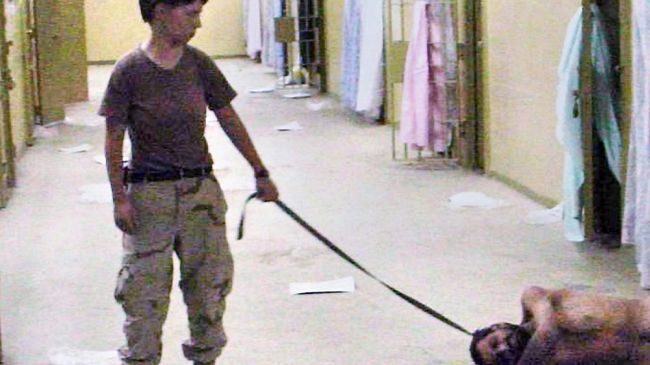
 Aletho News

