Haaretz reported today that there are more than 6,800 arms exporters working in Israel.
As of the end of 2012, there were “6,684 individuals dealing with security exports in 1,006 companies and 312 independent businesses. The Israeli Defence Export Controls Agency issued 1,900 marketing permits and 8,716 export permits.”
Apparently some 6,684 Israelis are making a living selling death around the world. They are serving an industry that produces more than 150,000 jobs. However, the most crucial question here is how did the Jewish State become a death factory? Early Zionism promised, indeed, to bring to the world a ‘new Jew’ – a productive, proletarian authentic human being driven by ethics and humanism. But, it didn’t take long for the Jewish State to reveal its real supremacist inclinations and plunderous pragmatism.
By now, Israel isn’t just a regional threat. It actually operates as a military industrial lab. On a daily basis it celebrates its destructive powers on the expense of Israel’s neighbours and the Palestinians, just in order to find new markets for its growing class of death merchants.
Is it a coincidence that the Jewish State’s economy is based on weapon dealing, organ harvesting and blood diamonds? I will let you judge.
This is a update to my first video and this proves Michael Hastings was killed. Why this is not obvious to media or police is a question no one should have to ask and sadly means they lose even more credibility.
How is it US Journalists can turn their backs on an assassinated brother? Its despicably disrespectful to The Journalist’s Creed.
The Chinese government says it will ‘respect public opinion’ and scrap a planned $6 billion nuclear processing plant in the southern province of Guandong after hundreds of protesters took to the streets to voice opposition to the project.
A statement released by the Chinese authorities reads, “The people’s government of the City of Heshan has decided to respect public opinion and will not consider the China National Nuclear Corporation (CNNC’s) Longwan industrial park project.”
The proposed nuclear complex was meant to have been a uranium processing facility, but the plans caused considerable unease in the neighboring financial district of Hong Kong and in nearby Macau, as well as among local residents. The project was designed to produce 1,000 tonnes of nuclear fuel by 2020.
The South China Morning Post, a Hong Kong-based English language newspaper, reported that the authorities in Macau had formally raised the issue with officials in Guandong.
Saturday’s announcement came after hundreds of protesters paraded through the streets of Jiangmen on Friday holding banners and wearing phrases opposing the project and chanting slogans like “give us back our rural homes. We are against nuclear radiation.”
The protest sprang up after a risk evaluation report, which was released on July 4 with a 10-day public comments period. Observers say those reports are only usually released as a formality once permission to begin construction has already been granted.
More protests in Guandong had been expected on Sunday, while the original 10-day public consultation period was only extended on Saturday after demonstrators had marched to the city offices. Soon after its extension, officials said the project was scrapped.
A Beijing nuclear expert, who did not wish to give his name as he is not authorized to speak to the press, told the Independent that he was surprised the project had been canceled.
“Compared to a nuclear power plant, a uranium processing facility is way safer, as there is no fusion or reaction taking place in the production process.”
The sudden dropping of the project reflects a change in Chinese government policy on environmental issues. The authorities have recently canceled, postponed or relocated several metal and petrochemical plants following strong public opposition.
There have been a number of reports in the Chinese and international media about the extent of pollution from rapid Chinese economic growth, including ‘cancer towns’, which are blighted by heavy metals polluting the ground water, rivers and top soil.
China is expanding its nuclear capacity from 12.6 GW at present to 60-70 GW by the end of the decade.
Guandong is already one of the country’s largest centers of nuclear power generation. It operates five nuclear reactors and plans to build another dozen. The CNNC plans are part of a concerted national effort to reduce China’s dependence on coal and boost the use of other forms of cleaner [sic] energy production.
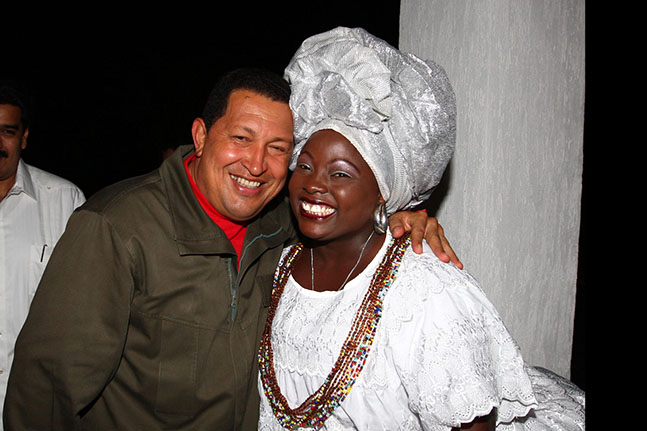
Venezuela’s foreign policy under the late President Hugo Chávez, and now his successor Nicolas Maduro, has been subject to sharply differing interpretations. Some observers see the oil-rich country’s foreign relations since Chávez’s election in December 1998 as shaped by a visionary who has promoted international solidarity with the oppressed, combated poverty, and pushed for a just world order free of uni-polar domination. For critics, however, Venezuela’s foreign policy has been incoherent, militaristic, and prejudicial to regional stability.
Does Venezuelan foreign policy include ethical considerations, as its supporters claim? The evidence suggests it does and that as a result we can be more optimistic about possibilities for incorporating ethics into international affairs than some scholars would have us believe.
The Ethical Dimension of Venezuelan Foreign Relations
To evaluate a possible ethical dimension to Venezuelan foreign policy, it is necessary to understand the ideology Chávez imbued in the country’s international affairs. Five concepts are central. The first two are the primacy of national sovereignty and Latin American and Caribbean integration. These are based on an understanding of foreign policy as a continuation of the Pan-American vision of Venezuela’s founder and 19th century independence hero Simon Bolivar, who also gives the name to Chávez’s “Bolivarian” political project. The third and fourth are the importance of international solidarity and south-south cooperation, which hold that Venezuela’s development should be based on mutual solidarity and cooperation with the countries of the global south. Finally, these concepts coalesce to form the pursuit of a multi-polar world order, which sees Venezuela’s international role in strengthening ties with emerging powers across different regions as part of a shift to a more balanced international system which will guarantee “world peace” and “universal well-being.” This implicitly involves an attempt to counter-balance the weight of the United States in international affairs.1
One example of Venezuela’s pursuit of these values is the Bolivarian Alliance for the Peoples of Our America (ALBA). This alliance of leftist Latin American nations founded by Venezuela and Cuba in 2004 has implemented regional development strategies based on the principles of “solidarity, cooperation and complementing.” Programs aiming to guarantee food security, universal literacy, free health and education, and decent housing are strongly marked by values of social justice and human development.2 Social programs promoted by the ALBA include the “Miracle Mission,” which provides free eye treatment and surgery to Venezuelan citizens and those of several Latin American countries. The program has treated around 1.2 million people in Venezuela since its launch in 2004.3
Development assistance and solidarity have also been evident in Venezuela’s outreach to the Caribbean, particularly with the PetroCaribe initiative. Launched in 2005, the program offers Venezuelan petroleum to Caribbean nations at a discount rate. Participating nations only pay a percentage of the oil’s market price up front, with the rest converted into low-interest, long-term loans. A portion of these loans can be amortised through payment in goods and services; for example, Cuba sends medical personnel to Venezuela in exchange for oil shipments. The loans also become important sources of capital spending for the region’s governments. Eighteen Caribbean states now participate in the program, and Venezuelan oil minister Rafael Ramirez estimated in 2011 that PetroCaribe covers 43 percent of participating nations’ energy needs.4 In the context of rising oil prices in the 2000s, a Council on Hemispheric Affairs (COHA) report on the scheme described it as “the most concrete proposal on the table to alleviate the region’s suffering.”5
Perhaps no other Caribbean nation has benefitted more from this kind of regional solidarity than Haiti. Following the devastating January 2010 earthquake, Venezuela pledged $2.4 billion in financial and relief aid, more than any other of 58 donors. This aid has included building power plants, shelters, a new hospital (in collaboration with Cuba), sending food and medical supplies, and assistance to develop Haiti’s agricultural sector.6 Venezuela even wrote off $400 million of Haiti’s PetroCaribe debt. This important reconstruction aid was given despite the fact that Haiti is by no means an ideological ally of Venezuela’s leftist government; its president, Michel Martelly, is close to Haiti’s business elite and the United States. Nevertheless Martelly has publicly thanked Venezuela for its solidarity and help since the earthquake, commenting in December 2011 that for Haiti, “cooperation with Venezuela is the most important right now, in terms of impact, direct impact.”7
Africa is another continent where relations seem to be driven as much by ideology and ethical values as by strategic interests. From 2005, Chávez began referring to Africa as a “motherland” and pursuing “south-south cooperation,” or mutual development strategies, in the region. Over the next six years Venezuela established diplomatic relations with all 54 African countries, opened new embassies, and signed over 200 cooperation agreements with the continent, where only 20 had existed beforehand.8 Many of these agreements contain a clear element of solidarity and humanitarian assistance. In 2009 Venezuela pledged $20 million to the West African ECOWAS group for malarial eradication programs, while in February 2013 it offered technical assistance and personnel training to the Sahrawi Democratic Republic to improve the population’s access to safe drinking water. Further, around 500 students from over 15 African countries study in Venezuela courtesy of government scholarships, many of these in medical courses, with the intention that after their studies these newly-trained professionals return to their home countries to provide much needed public services.9 A similar program is offered to Palestine, where Venezuela has also committed to build medical facilities.
Such attempts at greater cooperation with countries of the global south have led Venezuela to play a key diplomatic role in moves toward intensifying Latin American and south-south integration. In addition to founding the ALBA and PetroCaribe, Venezuela was also a founding member of the Union of South American Nations (UNASUR) in 2008, and played host to the founding conference of the Community of Latin American and Caribbean States (CELAC) in 2011, which brings together every nation in the Americas with the exception of the U.S. and Canada. Venezuela was also host to the II Africa–South America (ASA) summit in 2009, and is set to host the tri-annual summit of the Non-Aligned Movement in 2015, and thereafter become the president of the grouping of 130 developing nations. The country was also elected to serve on the UN Human Rights Council for 2013–2016 and is a mediator in peace talks underway between the FARC guerrilla group and the Colombian government. Taken together, these aspects of Venezuela’s foreign policy have led observers such as Venezuelan geographer and analyst Rosalba Linares to conclude that Bolivarian-era foreign relations aim to construct “a sovereign, democratic and more humanitarian multi-polar world, of greater social justice and fair trade in benefit of those most in need in Venezuela and the world.”10
The Pursuit of Strategic Interests
Of course, it would be mistaken to understand Venezuelan foreign relations as solely motivated by ethical or altruistic considerations. Even solidarity-based policies have clear “soft” benefits such as raising the government’s diplomatic and international standing. Venezuela’s foreign relations have also been shaped by concrete strategic interests. Chief among these are energy interests, which are woven throughout foreign policy, as Venezuela holds the largest crude oil reserves in the world. The Bolivarian government has sought to increase ties with other energy powers for the extraction of Venezuelan crude and to diversify its oil export markets. In the context of the deterioration of relations with the United States, strategic policy goals have also included creating a robust network of international alliances and securing alternative sources of financing, technological assistance, and military hardware.
In the first years of Chávez’s presidency the state oil company PDVSA was brought under greater government control. At the same time the government pushed for the revitalisation of OPEC, advocating the policy of production quotas to help ensure that world oil prices rose to levels favourable to exporting countries. The elevation of oil prices in the 2000s gave the Venezuelan government flexibility to pursue active energy diplomacy abroad while funding a wave of new social programs at home.
The government has built what it calls “strategic alliances” with several energy powers, including Russia and China. Russian energy giant Gazprom now works with PDVSA to explore gas deposits in the Gulf of Venezuela and Russian firms are active in the extraction of oil in Venezuela’s Orinoco Belt. Russia is also useful to Venezuela as a source of military hardware, with Chávez’s government becoming Russia’s biggest customer of military goods after India.11
Meanwhile China has provided Venezuela with a new market for its petroleum exports. Oil exports to China rose from almost zero in 2004 to 460,000 bpd in 2010, a number that officials want to increase to one million.12 The relationship has also resulted in over 300 bilateral agreements and 80 major projects, and has allowed the Venezuelan government access to financing and technology, the latter exemplified by the launching of Venezuela’s first satellites with Chinese assistance in 2008 and 2012.
Venezuela has formed a web of links with other countries enjoying oil and gas reserves, such as Iran, Syria, Brazil, and certain African countries. Given their relatively independent diplomatic stance in world affairs, strengthening ties with these nations has also fitted within the ideological goal of building “south-south cooperation” and a “multi-polar world order.”
Meanwhile relations with Venezuela’s traditional commercial partner and top recipient of crude exports, the United States, have been frozen at the charge de affairs level since 2010. Venezuelan officials blame this on the U.S. government’s belligerence and lack of respect for Venezuela’s independence and sovereignty, including support for and alleged involvement in the short-lived coup attempt to topple the Chávez administration in 2002. For its part, the United States has accused Venezuela of failing to sufficiently cooperate with counter-narcotics and anti-terrorism efforts, and of acting against U.S. interests by pursuing relations with “enemy” states such as Iran. Nevertheless, there are signs that the relationship is improving under the presidency of Nicolas Maduro, after Venezuelan foreign minister Elias Jaua met with Secretary of State John Kerry during an OAS summit in early June. “We would like to see our countries find a new way forward, to establish a more constructive and positive relationship,” said Kerry following the meeting. However, it remains to be seen whether the recent decision by President Maduro to offer asylum to ex-NSA intelligence leaker Edward Snowden will have an impact on efforts to improve bilateral relations.
Criticisms and Contradictions
Critics point to contradictions in the conduct of Venezuela’s foreign policy, and question the existence of an ethical dimension to Venezuelan foreign relations.
An accusation which emanates principally from the United States is that rather than seeking “world peace,” Venezuela in fact pursues an aggressive policy of building up its arms stockpile while forming alliances seen as threatening to U.S. national security. In September 2009 then-Secretary of State Hilary Clinton raised concerns over Venezuela’s arms purchases from Russia, arguing that the Chávez administration was engaging in a military build-up which could trigger a South American “arms race.” “They [Venezuela] outpace all other countries in South America [in military purchases] and certainly raise the question as to whether there is going to be an arms race in the region,” she said.13 Further, some conservative politicians and analysts have argued that Venezuela should be considered a “national security threat” due to its ties with countries regarded as hostile to the U.S, such as Iran and Syria.14
However, neither the figures nor events bear out fears that Venezuela is unduly arming itself or seeking military-style alliances with U.S. adversaries. According to the CIA World Factbook, in 2009 Venezuela put 1.4 percent of GDP toward military spending, the 5th highest in the region and less than the U.S., Colombia, and Chile. By 2012, military spending in Venezuela had halved as a percentage of GDP to 0.7 percent, with the country spending less than most major countries in the region, being only 153rd out of 173 countries measured globally for military spending.15 Venezuelan government officials meanwhile state that its international alliances are “about peace” and not in any way an aggression toward a third party. This point was highlighted during the visit from former Iranian president Mahmoud Ahmadinajad to Venezuela in January 2012. Nicolas Maduro, in his capacity of foreign minister, said to press at the time that bilateral ties between the two countries were part of a “peaceful relationship…we have a relationship of cooperation for development… and above all, for peace”.16
This appraisal of Venezuela’s diplomatic and defence policy appears to be shared by the U.S. military establishment. In August 2012 General Douglas Fraser, chief of U.S. Southern Command, said that although he would like greater cooperation from Venezuela against drug trafficking, he did not consider Venezuela a security threat to the United States. When asked if he thought Venezuela’s arms purchases constituted a danger to the U.S., Fraser replied, “From my standpoint, no…I don’t see them [Venezuela] as a national security threat.” Further, when asked whether Venezuela’s relationship with Iran amounted to a “military alliance,” the general disagreed, stating, “As I look at Iran and their connection with Venezuela, I see that still primarily as a diplomatic and economic relationship.”17 President Barack Obama has taken a similar stance, announcing in an interview in July 2012, “Overall my sense is that what Mr. Chávez has done over the last several years has not had a serious national security impact on us.”18
Thus the notion that Venezuelan military purchases and bilateral relationships represent a threat to the United States appears to be an overreaction from certain observers within U.S. political and media spheres, who confuse Venezuela’s independent foreign policy with one threatening U.S. security.
Others argue that there exists a contradiction in Venezuelan foreign policy between claims to pursue the values of democracy, humanitarianism, and solidarity, while supporting governments considered authoritarian or with poor human rights records. In 2011, political sociologist and author Gregory Wilpert argued that Venezuela ran a “significant” risk of losing legitimacy among progressives when Chávez continued to support former Libyan president Muammar Gaddafi against an insurgency in that country, a point that could be extended to several other of Venezuela’s allies in the Middle East.19
Another seemingly contradictory move by a government purporting to promote ethical values in its foreign policy is Venezuela’s decision to withdraw from the OAS’ Inter-American Court and Human Rights Commission (IACHR) in 2012, on the basis of the body’s alleged “shameful” bias against the Chávez administration. The decision is also part of a shifting focus toward Latin American autonomy and integration, with several states in the region pushing for the formation of new mechanisms to promote human rights within the UNASUR and CELAC. 20
A final question for Venezuela’s foreign relations is the extent to which policies pursued under Chávez will continue under the presidency of Nicolas Maduro, who was elected to power in April, following Chávez’s death in March. Maduro was Chávez’s foreign minister from 2006–2012, and in that role helped to build Venezuela’s contemporary foreign relations. The new president has pledged to continue these policies and his active foreign diplomacy over the previous three months seems to confirm this. Present challenges for Maduro include assuming the presidency of the Mercosur trade bloc this summer, and seeking productive relationships with the U.S. and Europe; steps toward which appear to have already been taken.
Between Ethics and Interests
In common with all nation states, over the past 14 years Venezuela has pursued clearly defined strategic and economic interests through its foreign policy. These have included developing greater links with other energy powers and ensuring access to sources of financing and military hardware. The government has also sought commercial, technological, agricultural, educational, health, and other forms of cooperation considered beneficial to Venezuela’s national development.
Although certain criticisms of contradictory behaviour can be levelled at Venezuela’s foreign relations, policymaking has followed a coherent logic. From technological cooperation with China to malaria eradication assistance in Africa, Venezuela’s new foreign relations have been built within an ideological framework embodied by the notions of “south-south cooperation” and a “multi-polar world.”
Further, while all nations could be said to act in their own strategic interests, not all have also placed norms of cooperation, solidarity and humanitarianism as a central focus of foreign policy. These values can be seen in agreements Venezuela has made with countries across all continents, but especially in the Americas and Africa. Even in the United States, PDVSA subsidiary CITGO aids around 100,000 low-income families during the winter with donated Venezuelan heating oil.21 Thus while it would be false to state that Venezuelan foreign policy is solely motivated by ethical considerations, it would be misleading to explain the country’s external relations without reference to these. This ethical dimension to Venezuela’s foreign policy is a demonstration that if the political will exists, governments can pursue such values within their foreign relations. In doing so, concrete and mutual benefits can be reaped for both the development of societies and the wellbeing of peoples.
2 Ullán de la Rosa, F.R. (2012), La Alianza Bolivariana para las Americas – Tratado de Comercio de Los Pueblos (ALBA-TCP): Análisis de un Proyecto de Integración Regional Latinoamericana con Una Fuerte Dimensión Altermundista, Estudios Politicos, no. 25, (Enero – Abril), pp131 – 170, Mexico, D.F. (p151-152).
3 Morales, M. (27/5/2013), Hija de Chávez Manejará Presupuesto Millonario en la Misión Milagro, El Nacional.
4 Rojas, R. (December, 2011), Venezuela Increasing Influence in Caribbean through PetroCaribe, Press TV.
5 Lai, K. (January, 2006), PetroCaribe: Chávez’s Venturesome Solution to the Caribbean Oil Crisis, Council on Hemispheric Affairs (COHA).
6 Information taken from, Wyss, J. (05/07/2010), Venezuela Leads the World in Earthquake Relief, Miami Herald; Edmonds, K. (February 2012), ALBA Expands its Allies in the Caribbean, North American Congress on Latin America (NACLA.org); Robertson, E (01/06/2012), Venezuela, Cuba and Argentina Sign Development Assistance Agreements with Haiti, Venezuelanalysis.com.
7 The Editors, (April, 2012), Haiti Using Funds from PetroCaribe to Finance Reconstruction, Council for Economic and Policy Research (CEPR).
8 Bolivar, R. J., (February, 2011), “Entrevista: Reinaldo José Bolívar, Viceministro de Relaciones Exteriores para África,” Encontrarte.
9 (14/01/2011), “Venezuela ha Firmado 200 Acuerdos de Cooperación con África,” Agencia Venezolana de Noticias.
10 Linares, R., (2010), “La Estrategia Multipolar de la Political Exterior Venezolana,” Aldea Mundial, Año 15, No. 15, Julio – Diciembre (2), pp51-62, (p60).
11 Rinna, A. (09/03/2013), “Russia’s Uncertain Position in Post-Chávez Venezuela,” Centre for World Conflict and Peace blog.
12 Ellis, R.E. (2010), “Venezuela’s Relationship with China: Implications for the Chávez Regime and the Region,” Centre for Hemispheric Policy, University of Miami, pp1-10; Cornejo, R. & Garcia, A.N. (2010), “China y América Latina: Recursos, Mercados y Poder Global,” Nueva Sociedad, No. 228 (Julio-Agosto), pp79-99 (p95); Manduca, P.C. (2012), “La Energía en la Política Sudamericana: Características de las Relaciones entre Brasil y Venezuela,” Revista Mexicana de Ciencias Políticas y Sociales,” no. 216, (Septiembre – Diciembre), pp81-100.
13 Labott, E. (16/09/2009), “U.S. Fears Venezuela Could Trigger Regional Arms Race,” CNN.
14 Noriega, R. (08/02/2013), “Hugo Chávez: An Uncounted Enemy,” The Washington Times.
(LONDON) – While the British government leads the charge to impose and tighten sanctions on Iran and makes other dire threats on the mere suspicion that the Islamic Republic may have nuclear weapons ambitions, its ministers continue to sidestep simple questions about Israel’s unsafeguarded nukes. Here is a recent example…
“To ask the Secretary of State for Foreign and Commonwealth Affairs what estimate he has made of the number of nuclear warheads possessed by Israel; and if he will make a statement.”
Alistair Burt (Parliamentary Under Secretary of State (Afghanistan/South Asia, counter terrorism/proliferation, North America, Middle East and North Africa), Foreign and Commonwealth Office)
“We have regular discussions with the Government of Israel on a wide range of nuclear-related issues. Israel has not declared a nuclear weapons programme. We encourage Israel to sign up to the non-proliferation treaty and call on them to agree a Comprehensive Safeguards Agreement with the International Atomic Energy Agency.”
Burt insults the intelligence of Parliament and the British public. So I have asked my MP Henry Bellingham to table another Parliamentary Question:
Dear Henry,
Mr Burt ducks the question. We all know that Israel is evasive about its nuclear weapons programme. Bob Russell asks for Her Majesty’s Government’s estimate of the number of nuclear warheads in Israel’s possession. We have an intelligence service, don’t we?
There can be no sensible discussion about Iran’s alleged nuclear weapons plans (and certainly no sabre-rattling or other silly threats) without factoring-in Israel’s already established nuke stockpile and delivery systems. Why is the Israeli situation so ‘unmentionable’? Let’s take the lid off, so this nation can have a good look and be aware of the stark facts. Would you please lodge a written question, requiring a written answer, asking the minister to respond properly and in detail to Sir Bob?
Many thanks.
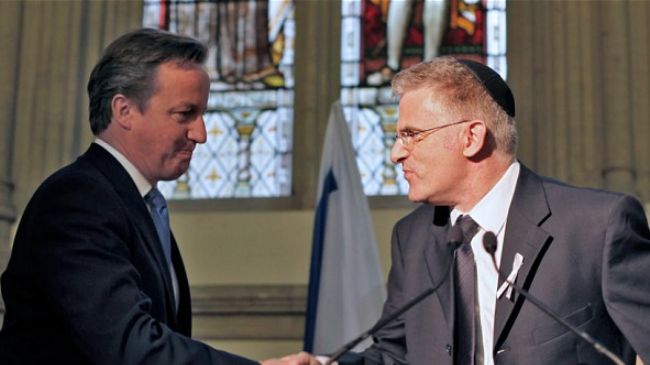
Mr Bellingham is a member of Agent Cameron’s ‘Torah’ party and was recently axed from his junior minister post at the Foreign Office. Let us see if he is prepared to pursue the truth about Israel’s nukes and coax it into the public domain.
Of course, our Muslim friends should prod their own MPs to table similar questions.
If you’re wearing a uniform, murdering someone you don’t like and getting away with it is only marginally harder than shooting a Rubik’s cube with a police-issued Glock. For the rest of us, it can be a real pain in the ass, success depending on a lot more than a blue code of silence. You really have to plan this stuff out! And with this modern life, with all its iPhones and picking Joey up from soccer practice and crushing institutional poverty, who has the time?
If you want to get away with murder while still maintaining a social life, here’s a few helpful tips:
1. Be a cop. I know we’ve covered this already, and this guide explicitly set out to help those aren’t cops, but it’s really the best way. And if your frenemy lives abroad, be a soldier.
2. Be related to, and on good terms with, a cop or other member of law enforcement. Have a sheriff’s deputy for an uncle? Make him your favorite uncle.
3. This is a good one: Pick a fight – and lose it. Once you start losing, you can do what your favorite uncle does: pull out a gun and murder the target. In many jurisdictions, you are permitted to use lethal force in self defense. This can be tricky, because technically your target may be able to claim the same defense, particularly since you started the fight, so the trick is start losing early and pull your gun first.
As far as the law and any future jury is concerned, the clock starts when the person who pulls the trigger first gets scared they’ll get their ass kicked.
4. This is by far the most important factor in whether you can pull this off: have lighter skin than the victim the thug.
Forced Displacement on Both Sides of the Green Line
Adalah captures the stories of two Palestinian villages, Al-Araqib and Susiya — one in Israel, one in the West Bank — that share a single story of struggle against forced displacement.
American liberals rejoiced at Samantha Power’s appointment to the National Security Council. After so many dreary Clintonites were stacked into top State Department positions—Dennis Ross, Richard Holbrooke, Hillary herself—here was new blood: a dynamic idealist, an inspiring public intellectual, a bestselling author of a book against genocide, a professor at Harvard’s Carr Center for Human Rights. And she hasn’t even turned 40. The blogosphere buzzed. Surely Samantha Power was the paladin, the conscience, the senior director for multilateral affairs to bring human rights back into U.S. foreign policy.
Don’t count on it. “Human rights,” a term once coterminous with freeing prisoners of conscience and documenting crimes against humanity, has taken on a broader, more conflicted definition. It can now mean helping the Marine Corps formulate counterinsurgency techniques; pounding the drums for air strikes (of a strictly surgical nature, of course); lobbying for troop escalations in various conquered nations—all for noble humanitarian ends.
The intellectual career of Samantha Power is a richly instructive example of the weaponization of human rights. She made her name in 2002 with A Problem From Hell: America and the Age of Genocide. In this surprise global bestseller, she argues that when confronted with 20th-century genocides, the United States sat on the sidelines as the blood flowed. Look at Bosnia or Rwanda. “Why does the US stand so idly by?” she asks. Powers allows that overall America “has made modest progress in its responses to genocide.” That’s not good enough. We must be bolder in deploying our armed forces to prevent human-rights catastrophes—to engage in “humanitarian intervention” in the patois of our foreign-policy elite.
In nearly 600 pages of text, Power barely mentions those postwar genocides in which the U.S. government, far from sitting idle, took a robust role in the slaughter. Indonesia’s genocidal conquest of East Timor, for instance, expressly green-lighted by President Ford and Secretary of State Kissinger, who met with Suharto the night before the invasion was launched and carried out with American-supplied weapons. Over the next quarter century, the Indonesian army saw U.S. military aid and training rise as it killed between 100,000 and 200,000 East Timorese. (The figures and the designation of “genocide” come from a UN-formed investigative body.) This whole bloody business gets exactly one sentence in Power’s book.
What about the genocide of Mayan peasants in Guatemala—another decades-long massacre carried out with American armaments by a military dictatorship with tacit U.S. backing, officer training at Fort Benning, and covert CIA support? A truth commission sponsored by the Catholic Church and the UN designated this programmatic slaughter genocide and set the death toll at approximately 200,000. But apparently this isn’t a problem from hell.
The selective omissions compound. Not a word about the CIA’s role in facilitating the slaughter of hundreds of thousands of Indonesian Communists in 1965-66. (Perhaps on legalistic grounds: Since it was a political group being massacred, does it not meet the quirky criteria in the flawed UN Convention on Genocide?) Nothing about the vital debate as to whether the hundreds of thousands of Iraqi deaths attributable to U.S.-led economic sanctions in the 1990s count as genocide. The book is primarily a vigorous act of historical cleansing. Its portrait of a “consistent policy of non-intervention in the face of genocide” is fiction. (Those who think that pointing out Power’s deliberate blind spots about America’s active role in genocide is nitpicking should remember that every moral tradition the earth has known, from the Babylonian Talmud to St. Thomas Aquinas, sees sins of commission as far worse than sins of omission.)
Power’s willful historical ignorance is the inevitable product of her professional milieu: the Carr Center for Human Rights at Harvard’s Kennedy School of Government. One simply cannot hold down a job at the KSG by pointing out the active role of the U.S. government in various postwar genocides. That is the kind of impolitic whining best left to youthful anarchists like Andrew Bacevich or Noam Chomsky and, really, one wouldn’t want to offend the retired Guatemalan colonel down the hall. (The KSG has an abiding tradition of taking on war criminals as visiting fellows.) On the other hand, to cast the U.S. as a passive, benign giant that must assume its rightful role on the world stage by vanquishing evil—this is most flattering to American amour propre and consonant with attitudes in Washington, even if it doesn’t map onto reality. A country doesn’t acquire a vast network of military bases in dozens of sovereign nations across the world by standing on the sidelines, and for the past hundred years the U.S. has, by any standard, been a hyperactive world presence.
For Samantha Power, the United States can by its very nature only be a force for virtue abroad. In this sense, the outlook of Obama’s human-rights advocate is no different from Donald Rumsfeld’s.
Power’s faith in the therapeutic possibilities of military force was formed by her experience as a correspondent in the Balkans, whose wars throughout the ’90s she seems to view as the alpha and omega of ethnic conflict, indeed of all genocide. For her, NATO’s bombing of Belgrade in 1999 was a stunning success that “likely saved hundreds of thousands of lives” in Kosovo. Yet this assertion seems to crumble a little more each year: estimates of the number of Kosovars slain by the province’s Serb minority have shrunk from 100,000 to at most 5,000. And it is far from clear whether NATO’s air strikes prevented more killing or intensified the bloodshed. Even so, it is the NATO attack on Belgrade—including civilian targets, which Amnesty International has recently, belatedly, deemed a war crime—that informs Power’s belief that the U.S. military possesses nearly unlimited capability to save civilians by means of aerial bombardment, and all we need is the courage to launch the sorties. Power has recently admitted, perhaps a little ruefully, that “the Kosovo war helped build support for the invasion of Iraq by contributing to the false impression that the US military was invincible.” But no intellectual has worked harder than Samantha Power to propagate this impression.
A Problem From Hell won a Pulitzer in early 2003. America’s book reviewers, eager to be team players, were relieved to be reminded of the upbeat side of military force during the build-up to Operation Iraqi Freedom. Surely Saddam Hussein, who had perpetrated acts of genocide against the Kurds, needed to be smashed by military force. Didn’t we owe it to the Iraqis to invade? Hasn’t America played spectator for too long? Power, to her credit, did not support the war, but she has been mighty careful not to raise her voice against it. After all, is speaking out at an antiwar demonstration or joining a peace group like Code Pink really “constructive”? It is certainly no way to get a seat on the National Security Council.
The failed marriage of warfare and humanitarian work is also the subject of Power’s most recent book, Chasing the Flame, a biography of Sergio Vieira de Mello, the UN humanitarian worker who was killed, with 21 others, by a suicide bomber in Baghdad just months after the U.S. invasion. Most of the book is a sensitive and rather gripping account of Vieira’s partial successes and heroic efforts in refugee resettlement in Thailand, Lebanon, and the Balkans. He eventually rose to become the UN’s high commissioner on human rights—a position he left when asked by George W. Bush to lead a UN “presence” in Iraq. That the UN’s top human-rights official would rush to help with the clean-up after an American invasion that contravened international law may strike some observers as strange. (One can imagine the puzzlement and outrage if the UN’s high commissioner on human rights had trailed the Soviets into Afghanistan in 1979 to help build civil society.) But for Vieira, and for Samantha Power, there is nothing unseemly about human-rights professionals serving as adjuncts to a conquering army, especially when the prestige of the UN—scorned and flouted during the run-up to the war—is on the line. Besides, Vieira had the personal assurances of the U.S. administrator, L. Paul Bremer—a simply charming American: he even speaks a foreign language—that the UN taskforce would have a great deal of sway in how a new Iraq was built.
In June 2003, Vieira arrived in Baghdad and was surprised to find himself completely powerless. That Vieira and company believed the UN insignia would be more than a hood ornament on Blackwater’s Humvees bespeaks not tough-minded idealism but wishful thinking. Power herself claims that Kofi Annan’s main reason for sending Vieira off to Baghdad was to remind the world of the UN’s “relevance” by getting a piece of the action. But for him and his colleagues, this confusion of means and ends proved deadly, one of tens of thousands of blood-soaked tragedies that this war has wrought. The clear lesson is that humanitarian work is always fatally compromised if it’s part of a militarized pacification campaign: NGO workers wield no real power and serve mostly as window dressing for the conquering army.
But this isn’t the moral that Power draws. She is still looking for Mr. Good War. Today, her preferred human-rights adventure is an escalation of the war in Afghanistan.
For the past seven years Afghanistan has been the “right” war for American liberals, but this carte blanche is fast expiring, as more civilians and soldiers die, as the Taliban resurges, and as the carnage whirlwinds into Pakistan. The numerous humanitarian nonprofits in Afghanistan are no longer backed up by the military; it is they who are backing the armed forces, having morphed into helpmates to a counterinsurgency campaign. This transformation has, according to one knowledgeable veteran of such work in Afghanistan, rendered humanitarian work unsustainable. But Power, like so many American liberals, remains committed to “success” in Afghanistan—whatever that means.
As a human-rights entrepreneur who is also a tireless advocate of war, Samantha Power is not aberrant. Elite factions of the human-rights industry were long ago normalized within the tightly corseted spectrum of American foreign policy. Sarah Sewell, the recent head of the Carr Center for Human Rights at Harvard, has written a slavering introduction to the new Army and Marine Corps Counterinsurgency Field Manual: human-rights tools can help the U.S. armed forces run better pacification campaigns in conquered territory. The Save Darfur campaign, more organized than any bloc of the peace movement in the U.S., continues to call for some inchoate military strike against Sudan (with Power’s vocal support) even though this disaster’s genocide status is doubtful and despite an expert consensus that bombing Khartoum would do less than nothing for the suffering refugees. Meanwhile, the influential liberal think tank the Center for American Progress also appeals to human rights in its call for troop escalations in Afghanistan—the better to “engage” the enemy.
Nor is the imperialist current within the human-rights industry a purely American phenomenon: the conquest of Iraq found whooping proponents in Bernard Kouchner, founder of Médecins Sans Frontières, now Sarkozy’s foreign minister, and Michael Ignatieff, also a former head of the Harvard’s Carr Center and poised to become Canada’s next prime minister. Gareth Evans, Australia’s former foreign minister and a grinning soft-peddler of Indonesia’s massacres in East Timor, is perhaps the leading intellectual proponent of the Responsibility to Protect, or R2P as it is cutely called, an attempt to embed humanitarian intervention into international law. Evans, who recently stepped down from leading the International Crisis Group, laments the Iraq War chiefly for the way it has soiled the credibility of his pet idea.
To be sure, the human-rights industry is not all armed missionaries and laptop bombardiers. Human Rights Watch, for example, is one of few prestigious institutions in the U.S. to have criticized Israel’s assault on Gaza, for which its Middle East and North Africa division has endured much bashing not just from right-wing media but from its own board of directors. That said, HRW’s rebuke was limited to Israel’s manner of making war, rather than Israel’s decision to launch the attack in the first place—the jus in bello, not the jus ad bellum.
Human-rights organizations can do a splendid job of exposing and criticizing abuses, but they are constitutionally incapable of taking stands on larger political issues. No major human-rights NGO opposed the invasion of Iraq. With their legitimacy and funding dependent on a carefully cultivated perception of neutrality, human-rights nonprofits will never be any substitute for an explicitly anti-imperialist political force. In the meantime, America’s best and brightest will continue to explore innovative ways for human rights to serve a thoroughly militarized foreign policy.
__________________________________________
Haaretzreported today that one third of Israeli Jews want the Temple rebuilt in Jerusalem.
Apparently dozens of movements in Israel are attempting to change the status quo at Haram Ash-Sharif, widely considered the third holiest site in Islam. They aim towards a resurrection of the Jewish Temple at the site. Some are reconstructing ceremonial objects used in the Temple in the past, while others are making practical preparations for its rebuilding, including a renewal of animal sacrifice. Others deal in political lobbying and with encouraging Jews to visit the Mount.
“Attempts to distance the People of Israel from its holiest site have failed,” said Yehuda Glick, spokesman for the forum of Temple Mount organizations that commissioned the survey.
Among religious Jews questioned, 43% support reconstruction of the Jewish shrine. However, the poll also reveals that more than 31% among Israel secular Jews also support such an initiative.
Though it is easy to explain the high percentage of religious Jews supporting such a campaign, the high percentage of secular Jews seems to be odd at first glance. Why would secular people support a construction of a religious shrine over the land of one of Islam’s holiest sites? Clearly such an initiative would lead to a colossal conflict, it may even unite the Muslim world once and for all.
The answer is pretty simple. Jewish secularism is a bizarre concept. It is a racially driven tribal affiliation motivated by supremacist inclinations. Secular Jews have indeed managed to drop God, they shunned the Torah and the Talmud, but they clearly believe in Choseness. In fact Jewish secular thought has very little to do with humanism or universalism. As such Jewish secularism can be realised as just another Jewish religion -it may proclaim to be righteous, rational or enlightened, but it in practice it is dedicated to a primal, insular and Judeo centric-worldview driven by a total dismissal of Otherness.
We always have to bear in mind that Zionism is a secular movement. The IDF is, also a secular institution. Similarly, it is not Rabbis who run AIPAC in the USA, CFI in Britain and CRIF in France. The Jewish Lobby that currently pushes for war in Iran and numerous other immoral military interventions around the globe is largely a secular network.
As much as some aspects of Judaism are troubling and demand criticism, the poll above reaffirms, that Jewish secular thought is far more dangerous than the Judaic call.
Ten years ago Tam Dalyell, the ‘Father of the House’ (the most senior member of the House of Commons in the British Parliament), sparked a huge row by accusing the then Prime Minister, Tony Blair, of “being unduly influenced by a cabal of Jewish advisers.”
In an interview with Vanity Fair, Dalyell named Lord Levy (Blair’s personal envoy on the Middle East), Peter Mandelson (whose father was Jewish), and Jack Straw, the Foreign Secretary (who has Jewish ancestry), as three of the leading figures who had influenced Blair’s policies on the Middle East.
He told The Telegraph: “If it is a question of launching an assault on Syria or Iran…. then one has to be candid.” Blair, he said, was also indirectly influenced by Jewish people in the Bush administration, including Richard Perle, a Pentagon adviser, Paul Wolfowitz, the deputy defence secretary, and Ari Fleischer, the President’s press secretary.
Dalyell’s remarks were sad and unfounded, said Lord Janner, chairman of the Holocaust Education Trust. “Tony Blair is his own man. He will follow advice if he considers it correct and not otherwise. He has been a good friend of the Jewish people and the Jewish state.”
Dalyell was misguided, said Rabbi Dr Jonathan Romain, a spokesman for Britain’s Reform Synagogues. “Concerning Iraq it was crystal clear that Tony Blair was not swayed by popularity or anyone else but by his own deep convictions. It is also obvious that the majority of President Bush’s circle are Christian Evangelicals rather than Jews.”
Ned Temko, the American-born editor of the Jewish Chronicle, said: “I just think these sort of comments are offensive and are a profound misunderstanding of the way foreign policy is made in the United States or here.”
Dalyell also told The Scotsman on Sunday: “Blair and Straw have become far too close to these people and Lord Levy, who is an unaccountable ambassador in the Middle East, is part of this group. They are acting on an extremely Zionist, Likud-nik agenda. In particular I am concerned that some of them are pushing for an attack on Syria, for reasons of Israeli security. ”
MP Louise Ellman, a member of the Inter-Parliamentary Committee Against Anti-Semitism, said: “This absurd proposition implies a Jewish plot in high places…”
Former Foreign Secretary Sir Malcolm Rifkind, a senior member of Scotland’s Jewish community, was rudely dismissive: “We all know that Tam gets bees in his bonnet and eight times out of 10 they are nuts but the other two are brilliant. This is, I’m afraid, one of the nutty ones.”
Next day the Guardian reported that Dalyell could face an investigation for inciting racial hatred. Eric Moonman, president of the Zionist Federation, was seeking advice on whether there was a case for referral. “I believe there is,” he said.
Today it is obvious that old Tam was neither nutty nor misguided. He joined the dots and saw the danger, as did many others.
‘The Torah party’
Meanwhile the Jewish cabal flourishes. A few weeks ago Ian Livingston was handpicked by Prime Minister David Cameron for the trade minister job. Cameron, who had previously broken with traditional wisdom and appointed the first Jewish ambassador to Israel, was reported by an ecstatic Times of Israel as having now decided to bring into the government possibly its most committed Jew yet, and certainly its most outspoken supporter of Israel, which Livingston called “the most amazing state in the world.”
Livingston is not elected. He’s appointed. The newspaper went on to name other top Jewish figures in the Conservative party such as co-chairs Lord Feldman and Grant Shapps MP, senior treasurer Howard Leigh, a member of the Jewish Leadership Council; and former party treasurers Richard Harrington MP and Lord Fink, another member of the JLC.
“There are so many Jews at the top of Britain’s Conservative party, Prime Minister David Cameron once quipped, that it should be known as the Torah party rather than the Tory party,” crowed the paper.
And to make the Prime Minister feel thoroughly at home in his Torah party a Jewish scholar, after tracing Cameron’s ancestry, claimed he could be “a direct descendant of Moses or, at least, a cousin”.
In case our American friends are puzzled by this Torah/Tory business, ‘Tory’ is an old 17th century name for the modern Conservative party founded in the 1830s.
Three years ago The Jewish Chronicle published a list of Jewish MPs in Britain’s parliament, naming 24. The Jewish population in the UK at that time was – and probably still is – around 280,000 or just under 0.5%. There are 650 seats in the House of Commons so, on a proportional basis, Jews could expect 3 seats. But with 24 they were 8 times over-represented. Which meant, of course, that other groups were under-represented.
The UK’s Muslim population is about 2.4 million or nearly 4%. Similarly, their quota would be 25 seats but they had only 8 – a serious shortfall. If Muslims were over-represented to the same extent as Jews (i.e. 8 times) they’d have 200 seats. Imagine the hullabaloo.
Israeli flag-waving
Over-representation in the House of Commons is only part of the picture. Many more Jews have been inserted into the House of Lords and other non-elected and unaccountable positions. An even bigger worry is the huge number of non-Jewish Zionists that have infiltrated every level of political and institutional life. They swell the pro-Israel lobby to such an extent that it is believed to account for 80% of the Parliamentary Conservative Party, which now rules with the Liberal Democrats as their junior coalition partner.
Too many pro-Israel MPs speak and act as if they’d rather wave the Israeli flag than the Union Jack. These ‘Israel-firsters’ never condemn the regime’s illegal occupation, apartheid-style policies, war crimes and refusal to sign up to nuclear non-proliferation, inspection and safeguards. They lock Britain (and British foreign policy) into Israel’s sickening ambitions and immorality. Defending the indefensible, as they do, inevitably raises questions for our national security, a deadly serious issue given the sheer number of Zionists now in British public life and the enemies they have made across the world, and continually provoke.
The Jewish Chronicle, in its 2006 special report ‘Team Cameron’s big Jewish backers’, revealed the support that enabled Cameron to suddenly burst into the political limelight, almost unknown, to take the Conservative leadership. With no significant achievement under his belt he was then able to manoeuvre, with the help of his backers, into Britain’s PM slot.
He is also a self-declared Zionist and voted for the war in Iraq, so how trustworthy does that make him? In a speech to Jewish fundraisers in London last year he declared: “There is no contradiction between being a proud Jew, a committed Zionist and a loyal British citizen.” How can someone who so closely aligns himself with a belligerent foreign military power like Israel hope to convince us that he’s 100 percent loyal to Britain and her interests, while once again drawing us unwillingly into conflict with Israel’s enemies, this time Iran and Syria, with whom we have no quarrel?
Cameron’s Foreign Secretary, William Hague, has been a member of Conservative Friends of Israel since he was 15. Hague once said: “The unbroken thread of Conservative Party support for Israel that has run for nearly a century from the Balfour Declaration to the present day will continue.”
Alistair Burt, a former officer of the Parliamentary group of Conservative Friends of Israel, is Foreign Office minister for the Middle East. And David Lidington, who has spoken of being a “staunch defender” of the State of Israel, is Foreign Office minister for Europe.
So the key stooges are safely installed and activated.
Powerless to deliver justice
It is said that becoming a Friend of Israel is a necessary stepping-stone to high office. Consequently fans of Israel are embedded at all levels in the fabric of British political life and at the heart of the Government.
When a group of concerned academics wrote to the Committee on Standards in Public Life complaining about Israel’s “deep penetration”, they were told it was not something the committee could investigate. A closer look revealed that some members of the committee had close links with Friends of Israel.
How do these Israeli flag wavers think it looks, standing shoulder to shoulder with religious fanatics and psychopaths who horribly persecute the Christian and Muslim communities of the Holy Land? It is especially offensive to see them endorsing a pseudo democracy that dishes out thuggish treatment even to children who, says the UN, are arrested by Israeli military and police and systematically subjected to degrading treatment, and often tortured. Read the report and weep.
Thanks to its misplaced admiration for Israel, the British government fails to intervene and stand up for justice. The disgrace is unbearable. Here is just one of many appalling examples. Right now Christians in that once beautiful country are under imminent threat of losing their land, their livelihood, and their way of life because an emergency law cooked up by the illegal occupier Israel, and upheld by an Israeli court, allows the Israelis to seize territory in the Cremisan Valley near Bethlehem. This brazen land-grab opens the way for the hated separation wall (ruled illegal by the International Court of Justice) to be extended across the valley, connecting two Israeli settlements built on stolen Palestinian land in the eastern suburbs of Jerusalem.
The onward construction of the barrier will divide a Salesian Catholic monastery from the neighbouring Salesian Catholic convent, confiscate most of the convent’s property, and cut off 58 Palestinian families from their agricultural lands – including vineyards, olive groves, and pastures. The barrier will also separate families and surround an elementary school on three sides, forcing young children to pass through a checkpoint to go to class.
The ICJ required the wall to be dismantled, not extended. And it reminded all States party to the Fourth Geneva Convention that they are under an obligation “to ensure compliance by Israel with international humanitarian law as embodied in that Convention”. That was 9 years ago. The world is still waiting. The States never act. Compliance never happens. Non-compliance is rife, and highly profitable to Israel.
And Israel’s allies, including Britain, perversely reward its non-compliance. Across the West Bank, continuing restrictions on Palestinian access to agricultural lands have led to the slow abandonment and eventual confiscation of those lands by Israeli authorities.
Israel’s Knesset has approved the first reading of the Prawer Plan to remove 40,000 indigenous Bedouin people from their ancestral homeland in the Negev. This evil scheme clears the way for the $4 billion “Blueprint Negev” project intended to transform the Negev into a majority-Jewish area even though the Bedouin have lived there for thousands of years.
At the same time one of Israel’s most dangerous lunatics, Avigdor Lieberman (chairman of the foreign affairs and defence committee), is calling for Israel, after imposing a vicious 7-year blockade, to conquer the Gaza Strip and carry out “a thorough cleansing”, just because Hamas still hasn’t succumbed to Israel’s illegal occupation of the Palestinian homeland.
Britain could, at a stroke, bring Israel to heel and force the regime to conform to international law or face massive trade penalties.
Were it not for the razor wire, giant concrete blocks, steel gates, watchtower and standard-issue surly teenage soldier, it would be impossible to tell at what point the barren uplands of Israel’s eastern Negev give way to the South Hebron Hills of the West Bank.
The military checkpoint of Shani vaguely marks the formal demarcation between Israel and occupied Palestinian territory, but in practical terms the distinction is meaningless. On either side of the Green Line, Israel is in charge.
In recent weeks it has been intensifying a campaign to evict Palestinian farming communities summarily from their ancestral lands to replace them with Jewish newcomers.
Israeli human rights lawyers, tired of the international community’s formulaic criticisms, say it is time to be more forthright. They call these “ethnic cleansing” zones – intended to drive off Palestinians irrespective of the provisions of international law and whether or not the Palestinians in question hold Israeli citizenship.
In the occupied South Hebron Hills, a dozen traditional communities – long ago denied by Israel the right to enjoy modern amenities such as electricity and running water – are struggling to remain in the cave-homes that sheltered them for centuries.
Israel has reclassified much of their land as a military firing range and demands that they leave for their own safety. An appeal to the Israeli courts, the latest installment in a 14-year saga to avoid eviction, is due in the next few days.
Israel’s concern for the villagers’ welfare might sound more convincing were it not encouraging Jews to live close by in illegal settlements.
Palestinians in other parts of the occupied territories coveted by Israel – such as villages next to Jerusalem and those in the fertile Jordan Valley, the territorial backbone of any future Palestinian state – are being squeezed too. Firing ranges, closed military zones and national parks are the pretexts for Israel to appropriate the farmland these rural communities need to survive.
As a result, Palestinian life is withering in the nearly two-thirds of the West Bank Israel was temporarily entrusted with – the so-called Area C – under the Oslo Accords. Endlessly harassed Palestinians have sought sanctuary in West Bank cities under Palestinian Authority control. Today the remnants in Area C, a population of about 100,000, are outnumbered three to one by Jewish settlers.
A discomfited European Union, normally mealy-mouthed on Israel’s occupation, has started to describe this as “forced transfer”. The term may sound ominous and reproving, but human rights groups say that, from a legal perspective, the terminology obscures rather than illuminates what is taking place.
“Forced transfer”, observes Suhad Bishara, a lawyer with Adalah, a legal centre for Israel’s minority of 1.5 million Palestinian citizens, usually describes uncoordinated and unofficial incidents of population displacement, often as an outcome of war.
Bishara and others argue that Israel is carrying out a systematic and intentional policy to drive Palestinians off their land to replace them with Jewish communities. This, they say, should be identified as “ethnic cleansing”, a term first given legal and moral weight in the Balkans conflict in the early 1990s.
As evidence, the lawyers point to recent developments inside Israel. The treatment of tens of thousands of Bedouin in the Negev, all of them Israeli citizens, is virtually identical to that of Palestinians in the South Hebron Hills.
The Bedouin too have faced a prolonged campaign to push them off their ancestral lands and into a series of “townships”, forcibly urbanising them in the country’s most deprived communities. In the disconcerting language of Israeli bureaucracy, the Bedouin need to be “concentrated”.
Israel has increased the pressure – as in the West Bank – by denying these Bedouin all public services, and demolishing any concrete homes they build. As with Palestinians under occupation, the Bedouin have found their communities reclassified as firing ranges, military zones or national forests.
The village of al-Araqib, near Beersheva, for example, has been demolished more than 50 times in recent years as Israel plants on its land – with a suitably sinister irony – the Ambassadors’ Forest, commemorating the help provided to Israel by the international community’s diplomatic corps.
Waiting in the wings are developers ready to build on the Bedouin’s land 10 new towns for Jews only. The rest of the territory is being eaten up by Jewish ranches, given swathes of land to create vineyards, offer camel rides and, in one case, provide a pet cemetery.
But, as in the West Bank, the Bedouin are refusing to budge, and pressing their historic land claims in the Israeli courts. Rather than wait for a verdict it may not like, the government of Benjamin Netanyahu is rewriting the Bedouin’s citizenship rights.
The Prawer plan, which passed its first reading in parliament last month, will force 40,000 Bedouin off their land – the largest expulsions inside Israel for decades. Unlike Jewish citizens, they will have no say over where they live; they will be forcibly assigned to a township.
For the first time, Israeli citizens – the Bedouin – are to be deprived of any recourse to the courts as they are harried from their homes. Instead Israel will resort to administrative procedures more familiar from the occupied territories.
The policy is clear: Palestinians on both sides of the Green Line are to be treated like sheep, fenced into ever-smaller areas, while Jews will have unrestrained access to a Greater Israel envisioned by Mr. Netanyahu.
The international community has long criticised Israel for the “discrimination” its Palestinian citizens face and for the “oppression” of Palestinians under occupation. This terminology needs overhauling too, say the human rights lawyers.
A system that treats one ethnic group as less human than another already has a legal name: it is called apartheid.
Jonathan Cook is a writer and journalist based in Nazareth, Israel. He won this year’s Martha Gellhorn Special Prize for Journalism.
A June, 2013 speech by Bill Clinton honoring war criminal Shimon Peres has highlighted the extent to which Israeli anti-Palestinian and anti-Arab bigotry has become acceptable within Western mainstream discourse.
In a racist echo of Golda Meir, who once admitted that she had trouble sleeping because of the number of Palestinian babies being conceived, Clinton said: “No matter how many settlers you put out there [in the West Bank], the Palestinians are having more babies than the Israelis as a whole…. You’ve got an existential question to answer.”
Clinton, who was reportedly paid $500,000 to publicly share his hatred of Palestinian babies, couched his bigotry as part of a speech on “peace” and the bankrupt “two-state solution.” Said Clinton: “If you don’t have a vision of where you want to wind up, bad things are going to happen sooner or later…. You have a better chance if you are driven by a vision of peace and reconciliation.” In plain language, if Israel does not return a mere 22 percent of the 100 percent of Palestinian land it stole, it will soon (horror of horrors) be overrun with Palestinian children.
Clinton’s racist comments, reported worldwide by mainstream media mostly without irony, were also an extension of current U.S. President Barack Obama’s own fear and hatred of Palestinian children, which he expressed clearly in May of 2011 to the delight and cheers of his American Israel Public Affairs Committee (AIPAC) audience in Washington:
“Here are the facts we all must confront. First, the number of Palestinians living west of the Jordan River is growing rapidly and fundamentally reshaping the demographic realities of both Israel and the Palestinian territories. This will make it harder and harder—without a peace deal—to maintain Israel as both a Jewish state and a democratic state.”
For Palestinians, of course, neither Clinton’s nor Obama’s morally abhorrent remarks come as a surprise since they have long been accustomed to Israeli racism and its accompanying violence and brutality. Racist terms like “demographic bomb” and “demographic threat” are so common in Israeli media and discourse that they barely register any protest in the so-called “Jewish and democratic state.”
We are not talking about Israeli soccer fans thuggishly chanting “death to Arabs” at sporting events (a common occurrence these days), but rather racist incitement from the highest elected officials. Both Peres and Benjamin Netanyahu, for instance, have used the phrase “demographic threat” in public statements regarding Palestinian citizens of the state. In 2003, as finance minister, Netanyahu would say, “If there is a demographic problem, and there is, it is with the Israeli Arabs who will remain Israeli citizens” (“Netanyahu: Israel’s Arabs are the real demographic threat,” Haaretz, December 18, 2003).
Similarly, Peres would publicly muse in 1977 on the “problem” of the growing Palestinian population of Jerusalem: “I do not want to wake up one morning to discover that Jerusalem is subject to the demographic fate of [the] Galilee” (“Israel’s Geographic-Demographic Threat to Identity,” Royal United Services Institute News Brief, January, 2011). Ehud Olmert, as well, in a speech to the Knesset in 2007, would speak in alarming tones of a pending “demographic battle drowned in blood and tears.”
In 2009, Israeli Housing Minister Ariel Atias would instigate hatred against Palestinian citizens of the state and justify apartheid in a speech to the Israel Bar Association. “I see [it] as a national duty to prevent the spread of a population that, to say the least, does not love the state of Israel,” said Atias. Speaking in particular against the Palestinian population of the Galilee, he added: “If we go on like we have until now, we will lose the Galilee. Populations that should not mix are spreading there. I don’t think that it is appropriate [for Arabs and Israeli Jews] to live together” (“Housing Minister: Spread of Arab population must be stopped,” Haaretz, July, 2009).
Michael Oren, the current Israeli Ambassador (and chief propagandist) to the U.S., would even write a lengthy and deeply racist article published in Commentary magazine in 2009, titled “Seven Existential Threats,” and which included the sub-heading “The Arab Demographic Threat.” He would opine in a grave, apocalyptic voice that “the Palestinian population on both sides of the 1949 armistice lines is expanding far more rapidly than the Jewish sector and will surpass it in less than a decade.”
This trend must not continue, continues Oren, because “Israel, the Jewish State, is predicated on a decisive and stable Jewish majority of at least 70 percent. Any lower than that and Israel will have to decide between being a Jewish state and a democratic state. If it chooses democracy, then Israel as a Jewish state will cease to exist.”
Israeli academics and intellectuals, too, have joined the racist chorus of incitement and, simultaneously, of justification of war crimes against Palestinians. So Benny Morris, for example, after documenting the destruction of Palestine, the massive ethnic cleansing, the theft of land, and the massacres and rapes of innocents, would then vindicate every crime of the Zionist colonial-settler state from 1948 to the present.
“There are circumstances in history that justify ethnic cleansing,” said Morris in a 2004 interview with Ari Shavit. “That is what Zionism faced [in 1948]. A Jewish state would not have come into being without the uprooting of 700,000 Palestinians. Therefore it was necessary to uproot them. There was no choice but to expel that population. It was necessary to cleanse the hinterland and cleanse the border areas and cleanse the main roads. It was necessary to cleanse the villages from which our convoys and our settlements were fired on.”
Then, jumping ahead six decades, he refers to Palestinian citizens of the state, who were not ethnically cleansed, in typically racist terms: “The Israeli Arabs are a time bomb. Their slide into complete Palestinization has made them an emissary of the enemy that is among us. They are a potential fifth column. In both demographic and security terms they are liable to undermine the state” (“An interview with Benny Morris,” Counterpunch.org, January, 2004). Morris would thus set the stage for future ethnic cleansing of Palestinians, including the current operation in the Naqab (“Negev”) where tens of thousands of Palestinian Bedouin have been targeted for forcible removal from their ancestral lands.
Furthermore, these terms, once used exclusively against Palestinians, are now also utilized by both Israeli officials and citizens to shamelessly incite hatred against African asylum seekers, as well as African Jews who are, nominally, citizens of the state. As reported by Haaretz in 2010, for instance, Netanyahu said, the “flood of illegal workers infiltrating from Africa [was] a concrete threat to the Jewish and democratic character of the country.” Without skipping a beat, he would then associate asylum seekers with smuggling of drugs, terrorism, and general decadence, and so justifying the building of yet another apartheid wall to keep out the unwanted (“Netanyahu: Illegal African immigrants—a threat to Israel’s Jewish character,” Haaretz, July, 2010). See, in addition, the superb work of David Sheen who has meticulously documented recent shockingly fanatical anti-African marches in Tel Aviv, organized and led by elected Israeli officials and community leaders, in dozens of official reports, interviews, and video testimonies (www.davidsheen.com/racism/).
It is impossible to imagine Clinton, Obama, or any major political figure for that matter, talking about any other national, ethnic, or religious group in such unapologetically racist terms. Would either have made analogous comments regarding, for example, indigenous South Africans during the days of South African Apartheid? Or against North American First Nation peoples today? Would an Australian or Canadian housing minister ever speak about a minority group within their countries with the same unabashed hatred as Ariel Atias? Had they done so, the response of Western liberal pundits and intellectuals would have been swift and indignant—and rightfully so.
Ethnic cleansing, land theft, destruction of hundreds of ancient towns and villages, massacres, military occupation, and apartheid over six and a half decades in Palestine are all deeply tied together with Israeli/Zionist racism. Indeed, Israeli bigotry has often been and continues to be used to sanction and sanctify Israeli crimes against humanity; thus do attitudes and actions simultaneously fuel and feed off each other. That even supposed progressives have adopted Israeli attitudes towards Palestinians in their public statements as their own (with little or no controversy), and therefore also excusing Israeli crimes, shows the vile depths to which mainstream media discourse has sunk.
Recycling was introduced, worldwide, as a tool to teach citizens to become compliant.
Forcing citizens to sort their rubbish into up to nine separate bags or boxes every week had absolutely nothing to do with ‘saving the planet’ and everything to do with teaching citizens (through a mixture of fines and shame) to behave ‘responsibly’ i.e. to do as they were told without looking too closely at the rationale of what they were being told to do.
The recycling never had anything to do with protecting the planet, of course. Most of the rubbish sorted, washed and collected in the UK was taken abroad, by lorry or ship or train, and burnt or dumped. It was, quite simply, impractical and not cost effective to recycle the material that had been collected. And, of course, collecting the sorted rubbish involved massive costs in terms of cash and pollution.
Today, the recycling business has reached an apogee of lunacy. Councils introduce ever more complex rules and fees. They refuse to take away much of the waste that is collected. And those wanting to take their rubbish to a ‘recycling’ centre will probably have to make an appointment and answer a host of questions.
It is no surprise that fly-tipping has become a major problem. The biggest causes of plastic in the sea are dumped fishing gear and plastic waste (much of it officially designated as recycled) which has been dumped by ships.
The good news, however, is that in Britain, recycling rates are falling. More and more people have become aware that the whole recycling movement was just another piece of manipulative trickery.
This site is provided as a research and reference tool. Although we make every reasonable effort to ensure that the information and data provided at this site are useful, accurate, and current, we cannot guarantee that the information and data provided here will be error-free. By using this site, you assume all responsibility for and risk arising from your use of and reliance upon the contents of this site.
This site and the information available through it do not, and are not intended to constitute legal advice. Should you require legal advice, you should consult your own attorney.
Nothing within this site or linked to by this site constitutes investment advice or medical advice.
Materials accessible from or added to this site by third parties, such as comments posted, are strictly the responsibility of the third party who added such materials or made them accessible and we neither endorse nor undertake to control, monitor, edit or assume responsibility for any such third-party material.
The posting of stories, commentaries, reports, documents and links (embedded or otherwise) on this site does not in any way, shape or form, implied or otherwise, necessarily express or suggest endorsement or support of any of such posted material or parts therein.
The word “alleged” is deemed to occur before the word “fraud.” Since the rule of law still applies. To peasants, at least.
Fair Use
This site contains copyrighted material the use of which has not always been specifically authorized by the copyright owner. We are making such material available in our efforts to advance understanding of environmental, political, human rights, economic, democracy, scientific, and social justice issues, etc. We believe this constitutes a ‘fair use’ of any such copyrighted material as provided for in section 107 of the US Copyright Law. In accordance with Title 17 U.S.C. Section 107, the material on this site is distributed without profit to those who have expressed a prior interest in receiving the included information for research and educational purposes. For more info go to: http://www.law.cornell.edu/uscode/17/107.shtml. If you wish to use copyrighted material from this site for purposes of your own that go beyond ‘fair use’, you must obtain permission from the copyright owner.
DMCA Contact
This is information for anyone that wishes to challenge our “fair use” of copyrighted material.
If you are a legal copyright holder or a designated agent for such and you believe that content residing on or accessible through our website infringes a copyright and falls outside the boundaries of “Fair Use”, please send a notice of infringement by contacting atheonews@gmail.com.
We will respond and take necessary action immediately.
If notice is given of an alleged copyright violation we will act expeditiously to remove or disable access to the material(s) in question.
All 3rd party material posted on this website is copyright the respective owners / authors. Aletho News makes no claim of copyright on such material.
 Aletho News

