YouTube Is Censoring New 1.5-Hour Long Video “Russian Military Campaign in Syria 2015-2018”
SouthFront | August 12, 2018
YouTube is censoring SouthFront’s new 1.5-hour long video “Russian Military Campaign in Syria 2015-2018.”
This video is a detailed summary of military and political developments in Syria since the start of the Russian military operation until now. It was released by SouthFront on August 11.
Less than 2 hours after the release, this video was placed behind an age restriction because it allegedly includes “violent or graphic content that appears to be posted in a shocking, sensational, or disrespectful manner”. The age-restriction clearly impacts a possible reach of the video because it does not allow people without YouTube accounts to watch it.

SouthFront immediately appealed this age restriction. Our video “Russian Military Campaign in Syria 2015-2018” includes no “graphic content” and was made solely for informational purposes. So, it does not violate any rules.
After the further review, YouTube found that SouthFront’s video “does not violate” Community Guidelines. However, the video remained age-restricted because “it may not be appropriate for a general audience”.

Summing up: The video violates no YouTube Community Guidelines, but despite this, a manual decision was made to age-restrict the video in order to limit its potential audience reach. This situation can be considered as another example of censorship imposed against alternative media and an independent point of view.
SouthFront has repeatedly faced various sophisticated attacks aimed at censoring it on YouTube [systematic ‘false flagging’ and other hostile actions] or damaging its website.
For example, about a year ago, SouthFront became a target of preplanned campaign to damage its work:
In mid September 2017, SouthFront’s YouTube channel received two community guidelines strikes and its work on this platform was temporairly frozen. Then, thanks to public support of our audience and partners, SouthFront was able to restore its channel and continue releasing videos on YouTube.
Separately, the project faced a new wave of propaganda aimed at damaging it in the MSM. In October 2017, Military.com, The Hill, McClatchyDC and The Daily Beast united their efforts arguing that SouthFront among few other websites targets “US military personnel and veterans with conspiracy theories, misinformation, and other forms of junk news about military affairs and national security issues.”
The recent developments on YouTube may indicate that a similar campaign could be launched against SouthFront once again soon.
The Magnitsky Act – Behind the Scenes from Piraya Film AS on Vimeo
The Magnitsky Act – Behind the Scenes from Piraya Film AS on Vimeo
A 2 hour 32 min version of THE MAGNITSKY ACT – BEHIND THE SCENES had its world premiere at an invitation-only screening at Filmens Hus in Oslo, Norway, on June 25th, 2016. Since then, the film has been shown (and awarded) at several international film festivals. Personal copies have also been sent to hundreds of journalists, politicians and others who have expressed interest in the film, given the film’s high-profile political content.
However, more than two years after its world premiere, the film has not yet been released to the general public. It has not been broadcast on TV, nor been screened at cinemas, released on DVD or made available online. Many dissatisfied members of the audience have asked Piraya Film why they cannot see the film.
The answer is that an attack campaign was launched by the British financier Bill Browder (who appears in the film) against the film and the filmmakers while the film was still under production. This campaign was backed by, among others, individuals in the US State Department, CIA, various think tanks and human rights organizations, and included smear tactics in the press and in various other settings. The campaign succeeded in blocking planned screenings at the European Parliament and at a Norwegian film festival. The film was partly financed by several TV stations, and normal procedure for a documentary would be that these TV stations broadcast the film first. However, the involved TV stations were subject to both political and legal pressure, and have, until this date, not published the film.
One individual decided to leak his personal copy of the film to the internet in July 2018. We have worked hard to remove this from YouTube and various other sites, but we see that it is impossible to stop this illegal copy from spreading. With the film out like that, in an illegal manner and in breach of our copyright, we have decided to release THE MAGNITSKY ACT – BEHIND THE SCENES on Vimeo on Demand. We urge the public to support our work by seeing it here. With Browder as the main source of a disinformation campaign against the film and filmmakers, we have a need to counter the libel and defend ourselves through letting the public see the film.
2-minute video about mother and toddler killed in Gaza by Israeli forces
If Americans Knew
On August 9, 2018, Israeli airstrikes on Gaza killed Enas Khammash, 23, and her 18-month-old daughter Bayan. Enas was nine-months pregnant with another daughter, whom she had named Hayat, Arabic for “Life.”
U.S. news media paid little attention to these deaths, rarely even reporting their names.
Virtually all framed their news stories as Israel allegedly “responding” to Palestinian attacks, despite the fact that Israeli forces had first killed two Palestinians in the recent round of violence, and that Israeli forces have killed 172 Gazans in the past four+ months (including children, medics, women, journalists, etc), while Gazan resistance fighters have killed one Israeli (a soldier).
For a list of Palestinians and Israelis killed since 2000, see this Timeline.
For all If Americans Knew Timeline videos see this playlist.
Congress is currently voting on a $28 billion aid package to Israel, which the US media has also failed to inform Americans about. This is the largest such aid package in US history. Learn more here.
Hezbollah’s Reasons of Victory: Its Strategies and Readiness
By Sondoss Al Asaad | American Herald Tribune | August 11, 2018
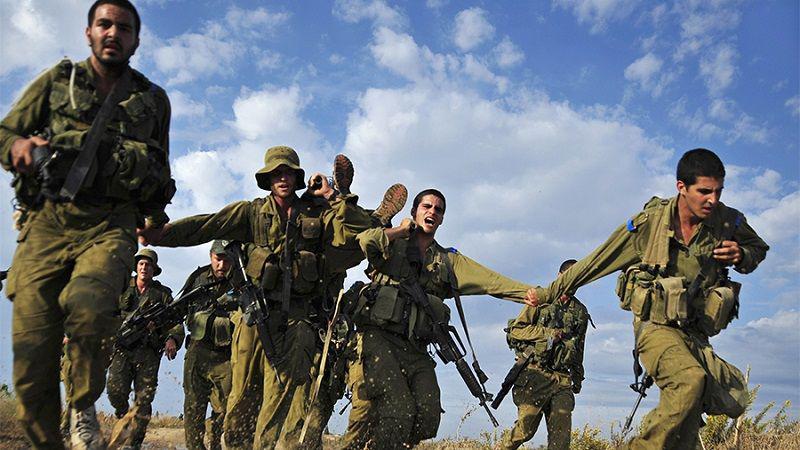
On the 14th of August 2006, the Lebanese resistance of Hezbollah announced its great victory over the Zionists. In that aggressive war, the Zionists had already set three goals. First, to eliminate the arsenal of Hezbollah rockets, i.e. to destroy its long-range and medium-range missile capability. Second, to assassinate Hezbollah Secretary-General Sayyed Hassan Nasrallah. Third, to destroy the resistance’s infrastructure.
Earlier, Hezbollah thwarted these goals as its leadership showed a remarkable coherence and an unexpected command and control system. The ‘Operation of Khallet Warda,’ in Aayta al-Shaab, on the morning of the 13th of July 2006, during which two Zionist soldiers had been captured; was comprehensively analyzed by the resistance.
Judge Eliyahu Winograd, who chaired 2006 Lebanon’s War Inquiry, mentioned that the Zionist decision-makers’ political, military, and security failures, during the war, have been notable. Obviously, the enemy’s lack of strategic planning reflects the major imbalance regarding its system of command and control. Besides, the enemy admits on various occasions that the superiority of Hezbollah’s command and control system is comprehensive and can hardly be beaten.
Due to the absence of readiness, Hezbollah has been able to penetrate the Zionists’ internal front and to heavily bombard it; causing material damages and the displacement of the northern settlers. Whilst as for Hezbollah’s community, everyone knows his duties, the measures, the procedures, and the alternative plans. This level of organization is highly prearranged. Secrecy and the thorough readiness by Hezbollah at the security, civil, health, political and media levels is also distinguished.
Following the 2000 liberation, the resistance has been working hard to fortify its internal front, by both its leaders and cadres. It had taken advantage of its previous experience in 1993 and 1996 and developed its capabilities to meet any unexpected challenge. Undoubtedly, in the case of regular resistance movements or armies, as soon as leadership disintegrates; brigades and squads surrender. In order to avoid this, Hezbollah makes sure that every individual knows the entire process, how, where, why and when.
The Zionists can scarcely understand Hezbollah’s command and sophisticated control system and the strength of its communications network. It can neither break the resistance’s chains nor can it weaken its movement. Hezbollah’s leadership have many alternatives during the time of war. In addition, there is always many possible plans and answerers to the ‘What if’ questions.
For instance, when Hezbollah’s former Secretary General Sayyed Abbas al-Musawi was assassinated in 1992, the resistance operations accelerate and escalate in southern Lebanon as for Hezbollah there are many alternatives. Indeed, what the enemy considers an obstacle that must be removed is, to the resistance, a new opportunity to ferociously confront them.
In the aftermath of 2000, Hezbollah developed its missile capabilities, both quantitatively and qualitatively. This is one of the reasons for the flexibility of the resistance. In addition, it is the reason why the enemy failed during 2006 to destroy Hezbollah’s medium and long-range missiles.
Hezbollah’s leadership demonstrated the coherence of its command and control system and had already prepared enough answers and possibilities. In a direct response to the enemy’s bombardment of the resistance front positions, Hezbollah’s commanders held an assessment meeting. They met to assess the readiness and prepare answers to the ‘What if’ question. At a press conference, following the operation, Sayyed Nasrallah highlighted that the resistance has a good grip on the rules of the game.
On the following day, some 40 Zionist hostile jets took off; with smart US-made bombs, and they shortly issued signals, which means that they accurately achieved their targets. The reality was quite different. From the Zionist perspective, the final crushing of the resistance is only a matter of time for they thought that its leadership has been weakened and that Sayyed Nasrallah has fled to Damascus.
The resolution of the war had already been taken by the Zionist entity. For its part, the resistance was fully ready to confront and plans for evacuating the citizens had been already set. The enemy launched broad and subsequent attacks on Hezbollah positions throughout southern Lebanon and demolished all bridges over the Litany River. It targeted civilians, destroyed the resistance’s headquarters in Beirut’s Southern Suburb and deployed its naval units.
The enemy estimated that the war would not last long and considered that Hezbollah would not be able to respond to attacks. However, on 14 July 2006, the resistance retaliated against the hostile barge, which had attacked the Southern Suburb.
The surprise tactic has been long utilized by Hezbollah throughout the years of confronting its enemy, despite its possession of technological and huge reconnaissance aircraft and satellites. The enemy also cannot predict what kind of surprises or defense operation could be carried out by the resistance “To Haifa and beyond Haifa,” as stressed by Sayyed Nasrallah.
During a televised speech, Sayyed Nasrallah unveiled its first distinguished surprise, saying, “The surprises that I have already promised you has begun, look at the hostile Zionist barge it is burning.” The bombing of the barge was a severe shock and a clear sign that it would severely be punished by the resistance for hitting Lebanese residential areas and infrastructure.
Before the July 2006 war, the Zionists envisioned Hezbollah as the upgraded version of Palestinian resistance of the 1980s. In the evidence, they managed their wars depending on this version, including The Operation Accountability in 1993, The Operation Grapes of Wrath in 1996, The Liberation Process in 2000 up to The July 2006 war. However, Hezbollah has established its own concepts. It has adopted a special ideology associated with the doctrine of Wilayat al-faqih’s concepts.
These concepts maintain that the resistance is a national revolutionary movement of the people, who are oppressed. Therefore, the resistance and the people are a unified solid whole; one body known as the resistance society. The resistance has promoted and reinforced its front. It has a unified internal and military front while the enemy has not considered this during the July 2006 war.
Question more? You’re a pesky ‘Russophile’, says Soros-backed Belgian NGO
By Nebojsa Malic | RT | August 11, 2018
Once a leader in philosophy and fashion, France has now been reduced to falling for tricks recycled from US con artists by Brussels-based grifters, with a little help from Twitter’s ‘mea culpa’ cash and even Uncle George Soros.
It all began when EU DisinfoLab, a non-governmental organization based in Belgium, published a report on Wednesday about how some 55,000 “hyperactive” twitter accounts spread the news of the Benalla affair, and accused a portion of those accounts of being “Russophiles.”
Within a day, French media were printing headlines screaming about “Russian bots,” prompting the NGO to issue a “clarification” of their findings. Not all of the accounts were “Russophiles,” the outfit said, and the report said nothing about “bots” – but the French public was already outraged.
Politicians Jean-Luc Melenchon of La France Insoumise and Marine Le Pen from the National Rally (NR) –previously known as Le Front National– who both ended up on the NGO’s list, tweeted derisively about the report, with Melenchon calling the outfit “stupid spooks.”
EU DisinfoLab basically used tools –as well as funding– provided by Twitter to compile a list of accounts tweeting about the scandal involving Alexandre Benalla, deputy chief of staff and bodyguard to President Emmanuel Macron. Benalla was fired in July after it emerged he had assaulted a protester at May Day demonstrations while impersonating a police officer, then tried to suppress the video footage of the incident.
Of the accounts thus rounded up, the group identified 27 percent as being part of the “Russian disinformation ecosystem,” described as people retweeting content from RT and Sputnik, or promoting the “Russian narrative.” Examples of the latter were listed as people spreading “false information” like that the Syrian government did not use chemical weapons in Douma (#SyriaHoax) or doubting the official [UK] narrative about the poisoning of Sergei and Yulia Skripal in Salisbury.
Having thus characterized the doubters of the official Western media narratives as Russian agents, the group had the cheek to declare this is “not a value judgment, but a quantifiable fact according to methodology.”
What methodology? Well, in part that used by FirstDraft’s CrossCheck project, sponsored by Google partnering with US and French mainstream media outlets, the London School of Economics, and the notorious bloggers at Bellingcat, affiliated with the Atlantic Council, a pro-NATO think tank.
However, the approach of EU DisinfoLab is actually closer to that of Hamilton68 Dashboard, a project of the Alliance for Securing Democracy (ASD), which, in turn, is backed by the German Marshall Fund. This alliance of Democrats and neocons was set up last year to “defend democracy” on Twitter from those evil Russkies. Having started from the assumption that agents of the Kremlin were everywhere, the dashboard proceeded to blame them for every trending hashtag – and the US media swallowed it whole, breathlessly reporting their “discoveries” for months.
Journalist Glenn Greenwald, who has followed ASD since its inception, described it as “the single most successful media fraud & US propaganda campaign” he had seen in years of covering US politics.
This hysteria wave eventually crested in March this year, when even such ardent Russiagate-obsessed publications as BuzzFeed (the outfit that published Christopher Steele’s “salacious and unverified” dossier accusing Trump of being a Russian puppet) declared the reports of Russian bots to be “total bullshit.”
Here is the best part: The funding for EU DisinfoLab’s report was provided by Twitter itself! Back in October 2017, under tremendous pressure from Democrats angry about their defeat in the presidential election, the company “off-ramped” all advertising from RT and Sputnik, then pledged to donate the $1.9 million in (generously) estimated profits to “civil society” projects. Enter EU DisinfoLab, which admitted receiving $125,000 from Twitter in January.
The group also received $25,000 from George Soros’s Open Society Foundation, though that was earmarked for monitoring the March 2018 elections in Italy. True to form, Soros claimed Russia was behind the victory of populist parties over the Eurocrat establishment he favored.
So long as Uncle George and social media giants pay good money, and the media is eager to quote those offering to cater to their confirmation bias, there will be outfits such as Hamilton68 and EU DisinfoLab, all too willing to oblige.
Read more:
Atlantic Council: Pro-NATO pressure group uses distortions to fight ‘disinformation’
Deep State changes narrative on Russia from “election meddling” to “election involvement”
Midterms are four months away, but the deep state is already blaming Russia.
By Alex Christoforou | The Duran | August 6, 2018
With US primary elections coming in November 2018, the neocon-deep state faction of the Trump administration is cleverly scapegoating Russia, while changing the narrative on what was previously called “election meddling” to now be identified as “election involvement”.
Not that any of this matters, because we have, to-date, seen no evidence of “meddling”, “collusion”, “interference”, or “involvement”.
Nevertheless, should Republicans have a poor showing in the midterms Russia will be blamed, and should Democrats have a poor showing in the midterms Russia will be blamed.
This bizarre and embarrassing White House press briefing had US security and intelligence chiefs pledging to protect American democracy. The deep state talking heads, united in this PR catastrophe, attempted to reassure the American public that they are actively working to protect the upcoming November midterm elections to Congress from foreign interference.
Russia was named as the main threat without any evidence provided.
Violent Coup Fail in Nicaragua
By Kevin Zeese | CounterPunch | July 24, 2018
On Clearing The FOG radio and podcast, Margaret Flowers and I interviewed Stephen Sefton, who lives in Nicaragua and is a founder of Tortilla con Sal. He names the names behind the violence and describes what is happening in Nicaragua.
Lessons Learned From The Failed Violent Coup In Nicaragua And Next Steps
The violent coup in Nicaragua has failed. This does not mean the United States and oligarchs are giving up, but this phase of their effort to remove the government did not succeed. The coup exposed the alliances who are working with the United States to put in place a neoliberal government that is controlled by the United States and serves the interests of the wealthy. People celebrated the failure of the coup but realize work needs to be done to protect the gains of the Sandinista revolution.
People Celebrate Revolution, Call For Peace, Show Support for Government
The people of Nicaragua showed their support for the democratically-elected government of Daniel Ortega with a massive outpouring in Managua in a celebration of the 39th anniversary of the Sandinista Revolution. In addition to the mass protest in Managua, various cities had their own, in some cases very sizeable ones.
People have wanted peace to return to Nicaragua. They have also wanted the roadblocks removed, which have resulted in closed businesses, job loss and loss of mobility. Roadblocks have been removed, even in the opposition stronghold of Masaya. There were two opposition deaths and one police officer killed in the removal. There was also an earlier death of a policeman in Masaya, captured when he was off-duty, tortured and burnt to death. This brings the total of police killed since April up to at least 21 with hundreds injured. With the opening of the main road on the east side of Masaya, all Nicaragua’s main routes are open to traffic and buses etc are operating normally.
At the rally, President Ortega called on the people of Nicaragua to defend peace and reinstate the unity that existed in the nation before the violent opposition protests. He described how the violent coup attempted to destabilize the country and ended the peace that has existed through the eleven years of his time in office. He said, “Peace must be defended every day to avoid situations like these being repeated.”
He also criticized the Catholic Bishops for their role in the failed violent coup. Ortega described the Episcopal Conference of Nicaragua as “coup leaders” for collaborating with the opposition during the protests. Not only did the Catholic leadership side with the opposition during the national dialogue, but priests were involved in kidnapping and torture. Pope Francis has a lot of work to do to rein in the Catholic Church in Nicaragua. If their role in these violent protests and opposition to an economy for the people is not stopped, this will become a scandal for the Catholic Church.
Other Latin American leaders spoke out against involvement in the coup. Bolivian President Evo Morales condemned US “interference” in Nicaragua, denouncing the “criminal strategies” used against the government of Daniel Ortega. Morales accused the United States Agency for International Development (USAID), and the National Endowment for Democracy (NED) of “openly supporting violence” in Nicaragua. Also at the celebration were the foreign ministers of Cuba and Venezuela, Bruno Rodríguez Parrilla, and Jorge Arreza, all supporting Nicaragua over the violent coup of the United States and oligarchs.
The United States is Escalating Economic War and Support for Opposition
The United States is not giving up. Also on the anniversary of the revolution, the NICA Act, designed to escalate the economic war against Nicaragua, was introduced in the Senate. It has already been passed by the US House of Representatives. The Senate bill, called the Nicaragua Human Rights and Anti-corruption Act of 2018, imposes sanctions, calls for early elections and escalates US intelligence involvement in Nicaragua. It is a law that ensures continued US efforts to remove the democratically-elected government.
At the same time, USAID announced an additional $1.5 million for Nicaragua to build opposition to the government. This will fund the NGOs that participated in the protests, human rights groups that falsely reported the situation, media to produce the regime change narrative and other support for the opposition.
The coordination between Nicaraguan opposition and the United States was shown by Max Blumenthal’s attempted visit to an organization that funnels USAID and NED money to the opposition. He visited the Managua offices of the Institute of Strategic Studies and Public Policies (IEEPP in Spanish), but it was closed because its director, Felix Maradiaga, who was at the heart of the violent unrest, was in Washington, DC seeking more funding from USAID.
On July 18, the US-dominated OAS passed a resolution concerning “The Situation in Nicaragua.” An earlier effort to endorse a report of the Inter-American Commission on Human Rights (IACHR) was so biased that it failed. The report ignored the opposition’s widespread violence or inaccurately attributed it to the government. It also failed to recognize government actions in self-defense. The resolution approving the IACHR report was supported by only ten out of 34 countries.
The resolution, which was finally passed by the OAS, condemned violence on all sides and urged Nicaragua to pursue all options including the national dialogue to seek peace begun by Ortega. On the issue of elections, the resolution urged Nicaragua “to support an electoral calendar jointly agreed to in the context of the National Dialogue process.” Only this mainly symbolic resolution could pass muster in the OAS, despite US domination.
What Happened and What Was Learned
In our article “Correcting the Record: What Is Really Happening In Nicaragua,” Nils McCune and I describe what was behind the violent coup attempt. We reported that there was a lot of misinformation on what was occurring in Nicaragua, indeed the false narrative of regime change was part of the tactics of the failed coup. Perhaps most importantly we described the alignment of forces behind the coup.
The coup was a class war turned upside down. The Ortega government includes none of the oligarchic families, a first in the history of Nicaragua. He has put in place a bottom-up economy that has lifted people out of poverty, provided access to health care and education, given micro-loans to entrepreneurs and small businesses and created an economy energized by public spending. Ortega expanded coverage of the social security system; as a result, a new formula was required to ensure fiscal stability.
Ortega made a counter-proposal to the IMF/business proposal, which would cut social security and raise the retirement age. He proposed no cuts to social security and increasing employer contributions by 3.5% to pension and health funds, while only slightly increasing worker contributions by 0.75% and shifting 5% of pensioners’ cash transfer into their healthcare fund. These reforms were the trigger as it was the business lobby who called for the protests.
The forces aligned with the violent coup included the oligarchs, big business interests, foreign investors (e.g. Colombian financiers), the US-funded NGO’s and the Catholic Church, a long-term ally of the wealthy. Also involved was the Movement for Renovation of Sandinismo (MRS), a tiny Sandinista offshoot party, of former Sandanistas who left the party when Ortega lost an election in 1990 who are aligned with the US State Department.
Regarding students, there were already student protests around university elections, and these were redirected by the violent coup effort and supported by a small minority of students from private universities, the April 19th Movement. Some of these students had been brought to the US by the Freedom House, which has long ties to the CIA and met with far-right interventionist members of the US Congress, including Rep. Ileana Ros-Lehtinen, Sen. Marco Rubio, and Sen. Ted Cruz.
These groups acted in opposition to the bulk of Nicaraguan society and showed their true colors. This includes:

No doubt more will come out about this in the future as the coup is researched and analyzed. As the facts become clear, the opposition will lose more political power and be even less likely to win elections. The blockades of roads with violence undermined the economy and had a negative impact on the poor and working class. If it becomes evident that this was a strategy of the opposition, they will lose power. NGO’s that are funded by the US and run by members of the MRS will be noted for their dishonest narrative and will be seen as an arm of the United States and not trusted by the people of Nicaragua. Media outside of Nicaragua will come to understand that human rights groups and NGOs are not reliable sources of information but need to be questioned. They need to be pushed to break their ties with the United States.
This does not mean all is well on the Sandinista side of the alliance of forces. The coup is an opportunity for self-reflection and self-criticism that is already happening, as seen in this list of 20 results from the coup, which begins with “A more consolidated and United FSLN.” In addition, the Action Group of the Solidarity with Nicaragua Campaign put forward seven propositions to unify around. The protest took advantage of challenges the Nicaraguan government faces in continuing to lift up the poor and economically insecure. It shows their need to build their capacity to quickly let the public know their side of the story. And, it shows the need for planning for a post-Ortega Sandinista government, as the president is in his third term.
The anniversary of the revolution was a good beginning at strengthening the unity of the Sandinista movement and celebration of the defeat of the coup, but there will be challenges ahead. Nicaragua is a poor country that needs foreign investment. If the United States escalates the economic war, which seems to be the intent, it will make it challenging to continue the social and economic programs that are lifting up the poor. Nicaragua had relied on investment from Venezuela, but it is also in the midst of an economic war, which along with the low oil prices has created economic challenges for them. Nicaragua has begun to build economic relationships with China, Russia, Iran and other countries; these will likely need to expand.
The misinformation was deep and widespread. Inside Nicaragua, there were stories of students being killed that never happened but that escalated the protests. The opposition claimed to be nonviolent when their strategy was to use violence to force regime change while the government quartered the National Police. False news and videos of attacks on neighborhoods and universities never stopped being manufactured. One example, students calling for help and claiming they were under attack, was later exposed in a video showing the students practicing the false social media narrative.
Peace and justice activists in the United States and western nations have learned they need to be much more careful believing reports on what is occurring in Nicaragua. The US-funding of NGOs involved in women’s issues, environmental protection and human rights in Nicaragua make them questionable sources of information for justice advocates. In addition, US-funded regime change efforts are getting more sophisticated at social media; and thus, care must be taken as social media is abused by regime change advocates. We must look to other sources that have shown the ability to report accurately e.g., Tortilla con Sal, Telesur, Redvolucion. Peace and justice advocates must be grounded in anti-imperialism and nonintervention by the United States.
Oded Yinon Speaks Again
By Gilad Atzmon | July 22, 2018
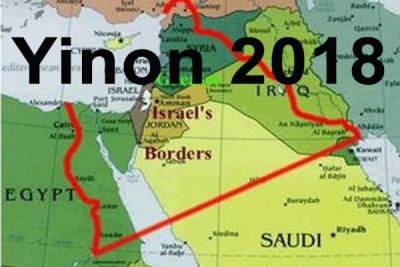
Years after Israel Shahak translated Oded Yinon’s (1982) Plan into English, we have a chance to listen to contemporary Yinon. I was notified about this this youtube video by a FB friend. Strangely enough, the video has as of today, a very small number of views. Yinon is an ultra Zionist. He is not shy about it and considering his ‘prophetic’ vision of the Middle East back in 1982 it is worth listening to his perception of Israel, World Jewry and the Middle East.
To learn about the Yinon Plan click here
In the interview Yinon insists that his strategic plan for the Middle East wasn’t really a plan and it has never matured into an Israeli policy. However, he admits that some of his 1982 ideas were adopted by the IDF intelligence (AMAN) at the time of the Civil War in Syria (22.40). The breaking of the Middle East into tribal wars has been postponed according to Yinon but the roots of such a battle are far from over, they are basically inherent to the region.
According to Yinon peace with the Palestinians is unlikely and Israel should invest in its own building. Yinon predicts that USA Jews have no future in America, “America was the biggest (best) solution to the Jewish problem before Zionism, but today Zionism proves itself as the only solution.” He argues that American Jews will find themselves detached from American politics, culture and society. The holocaust is long away faded from American consciousness and this is, according to him, bad news for the Jews. They will have to wander and their destination is clear. For those who fail to understand, this is hardly a promising news for the Palestinians and the region.
Featured Video
EUROPE FEARS RUSSIA’S NEXT MOVE / Ian Proud
or go to
Aletho News Archives – Video-Images
New Book
New Book: No Autoimmunity The Body Doesn’t Attack Itself
Lies are Unbekoming | September 24, 2026
 The label for Humira, once the best-selling drug in the world, lists its risks in plain print. One of them, in the label’s own words, is new “autoimmune” disease.
A drug prescribed for a condition labelled autoimmune carries a warning that it can cause a condition labelled autoimmune. That contradiction sits in every box, on a folded paper almost nobody reads.
My new book starts there.
No Autoimmunity: The Body Doesn’t Attack Itself
For seventy years, “your body is attacking itself, and we don’t know why” has ended the conversation for people diagnosed with multiple sclerosis, lupus, rheumatoid arthritis, Hashimoto’s, Type 1 diabetes, Crohn’s and psoriasis. More than eighty conditions now carry the autoimmune label. The diagnosis comes with a prescription for life. It almost never comes with a question about cause.
This book asks the question and answers it from the framework’s own records: its drug labels, its journals, its regulatory filings, and its own experiments. … continue
Blog Roll
 Aletho News
- Iran offers Trump deal before US election
- Merz regime wants ‘secret police’ – opposition
- Israeli settlers terrorize West Bank Palestinians with state-provided drones: Report
- They see them, then kill them: Israeli quadcopters track, deliberately target civilians in Gaza
- Debunked: Trump’s egregious UNGA claims on war against Iran crumble under scrutiny
- Europe was part of the infrastructure of US aggression against Iran: Deputy FM
- New evidence on the Bucha Massacre
- Italy and France debunk reports CIA issued ‘Russian drone threat’ warning
- How Russia is Rewiring the Global South
- Britain’s elites want you ready to die for a war they keep imagining
- If Americans Knew
- Trump betrayed voters with his campaign lies and prioritized a foreign country once he took office
- Netanyahu calls Israel’s war in Gaza ‘opposite of genocide’ in UN speech to near-empty hall
- Settler Kidnappings: Torture, Sexual Abuse and Terrorisation of Palestinian Abductees as Israel Deepens Annexation of West Bank
- Gaza winter nears as 162,000 tents become unusable, raising fears of humanitarian crisis
- Netanyahu says, “It’s the opposite of genocide”; UN says Gaza economy is world’s ‘most severe crisis on record’ – Daily Update
- Israel’s US-Backed Assault on Gaza Has Created the ‘World’s Most Severe Economic Crisis on Record’: UN
- ‘Protecting U.S. Citizens’… From Israel
- ‘This is where I live now, the back of a truck’: a day in the life of a grandmother in Gaza
- In UN Speech, Iran’s President Displays Pictures of Children Killed by US, Brings Attention to Israel’s Nuclear Arsenal
- Israel displaces hundreds of Palestinians amid wave of demolitions in West Bank
- No Tricks Zone
- New Study: Earth And Venus Surface Warmth Largely Explained By Convection And Lapse Rate, Not CO2 Or Radiation
- 2025 Nature Paper Claiming Worsening Global Drought Gets RETRACTED …Heavily Flawed
- New Study: ‘Global Drought Shows No Detectable Recent Acceleration Under Climate Warming’
- Economic Masterminds: German Socialists Suggest Taxing Productivity Gains Stemming From Using AI
- The South China Sea Has Not Been Cooperating With The Climate Change Narrative
- Energy Crisis: Germany Enters Heating Season With Historically Low Gas Reserve Fill Levels
- New Study: The Antarctic Ice Sheet Gained Mass From 2020-2024 Due To Staggering Snow And Ice Accumulation
- Study: Ocean Heating Rates From Thousands Of Years Ago ‘Dwarf’ Modern Ocean Heating Rates
- Climate Extremists Target, Attack Large-Scale Power Grid Infrastructure In Germany!
- New Study: Antarctic Ice Melt Has Contributed Less Than 1 Centimeter To Sea Level Rise In The Last 30 Years

