Farage warns UK against joining another US military intervention
Press TV – April 7, 2017
British politician Nigel Farage, who Donald Trump has once said would be great as the UK’s ambassador to Washington, has criticized the US president for ordering a military strike against government targets in Syria, and called on London not to follow Americans into another military intervention in the Middle East.
In an interview on Friday, Farage, the former leader of the UK Independence Party (UKIP) and the Brexit campaigner, said he was very surprised by the attack. “I am very surprised by this.”
“I think a lot of Trump voters will be waking up this morning and scratching their heads and saying ‘where will it all end?’” he said.
“As a firm Trump supporter, I say, yes, the pictures were horrible, but I’m surprised. Whatever Assad’s sins, he is secular,” added Farage, member of the European Parliament.
The US military fired 59 Tomahawk missiles at the al-Shayrat airbase in Homs province in western Syrian early Friday.
The missiles were launched from the destroyers USS Porter and USS Ross in the eastern Mediterranean. The strike killed nine civilians, including four children on Friday, according to Syria’s state news agency SANA.
Farage warned Prime Minister Theresa May against following Washington into another war in the Middle East.
“Previous interventions in the Middle East have made things worse rather than better,” the anti-interventionist politician stated.
British Prime Minister Theresa May
In a statement issued earlier in the day, the British government said it “fully supports” the US missile strike against a Syrian army airbase.
The show of support was a departure from a warning the day before by Foreign Secretary Boris Johnson after Trump raised the specter of unilateral action.
Johnson warned against rushing into a war with the Syrian government, and said the top priority should be peace talks and passing a United Nations resolution to investigate the April 4 chemical attack.
“It is very important to try first to get out a UN resolution,” the foreign secretary insisted.
US Missile Strikes on Syrian Airbase Killed Four Children Living Nearby
Sputnik– April 7, 2017
HOMS – The US missile strike on Syria’s Sha’irat airbase killed four children, an informed source in Homs told Sputnik Friday.
On Thursday night, the United States launched 59 Tomahawk cruise missiles at the Syrian military airfield in Ash Sha’irat, located about 40 kilometers (25 miles) from the city of Homs. US President Donald Trump said the attack was a response to the alleged chemical weapon use in Syria’s Idlib on Tuesday, which Washington blames on the Syrian government.
“According to our information, among the killed civilians there are four children. They are from ordinary families living near the airbase. There is nothing more to say,” the source said.
Earlier, conflicting reports on the number of casualties as a result of the attack emerged. The Homs governor said five were killed and seven injured.The Russian Defense Ministry said Syria is currently investigating the number of casualties.
The Russian Foreign Minister said no Russian servicemen died as a result of the attack.
Russia described the attack as an aggression against a sovereign state.
Following the US military action, Russia decided to suspend its memorandum of understanding on air safety over Syria with the United States, according to the Russian Foreign Ministry.
Daesh attacks ancient Syrian city after US strike on nearby airbase
Press TV – April 7, 2017
Takfiri Daesh terrorists have launched a fresh push to retake Palmyra in Syria’s Homs Province shortly after the US launched a missile strike on an airfield used by the Syrian army to protect the ancient city.
According to the Lebanon-based al-Mayadeen TV channel, Daesh terrorists took advantage of the US attack on Shayrat Airfield, located southeast of Homs city, on Friday and attacked Palmyra, killing four people.
Sources on the ground said the offensive was successfully repelled by the Syrian army.
Since 2014, when Daesh unleashed its campaign of terror in Syria, the group has seized Palmyra twice but the army liberated it once last year and the second time in March.
The US military fired some 60 cruise missiles at the army airbase, inflicting “big material damage” on the facility, which was used by the Syrian army to defend southern regions, including the cities of Palmyra, al-Qaryatayn and Mahin in Homs Province.
Foreign-backed terrorist groups welcomed the strike, but urged additional action, with one major faction saying a single strike was “not enough.”
“Hitting one airbase is not enough, there are 26 airbases that target civilians,” a key figure in the Jaysh al-Islam faction, Mohamed Alloush, said on his Twitter account.
Mohamed Bayrakdar, another leader of the terrorist group which operates mainly around the capital Damascus, described the strike as “a bold and correct step.”
Other Takfiri groups also called for continued military action against the Syrian government.
“In my opinion, the message is political, and the message has arrived to Russia and been understood,” Issam Raes, spokesman for the Southern Front terrorist faction, told AFP.
Colonel Ahmed Osman, of the Turkey-backed Sultan Murad militant group, said: “We welcome any action that will put an end to the regime that is committing the worst crimes in history.”
Reports say there were 40 hangers for Sukhoi and Mikoyan warplanes in the airfield, which Syria had recently received from Russia.
Given the strategic location of the airfield, Syria and Russia were recently considering plans to upgrade the airbase to deploy advanced aircraft and Russia’s S-400 air defense systems at Shayrat.
Later on Friday, the Kremlin cited Russian President Vladimir Putin as saying that the US missile attack on the Syrian airbase has violated international law and significantly harmed Russia-US relations.
The US launched the military strike on Shayrat airfield in response to an alleged chemical weapons attack in the town of Khan Sheikhun in Idlib Province earlier this week.
Syria has categorically denied carrying out a chemical attack. Russia has also said the deaths in Idlib were caused when a Syrian airstrike struck a terrorist warehouse used for making bombs with toxic substances.
The Pentagon said the Russians deployed to the targeted military facility were given prior notice, and that attack did not hit sections of the airbase where Moscow’s forces were reportedly present.
According to al-Mayadeen, the Syrian army had evacuated most of its warplanes from Shayrat airfield before the US attack.
Washington’s assault was met with strong condemnations from Russia, Syria and Iran.
The foreign-backed National Coalition, an alliance of terrorist groups, however said it “welcomes the strike” and urged Washington to neutralize Syria’s ability to carry out air raids.
Israel, Saudi Arabia and Turkey, along with their Western allies, joined the militants and voiced support for the militants.
US Launches Tomahawk Missiles on a Syrian Airbase Used in Fight against ISIL
Al-Manar | April 7, 2017
The United States has launched on Friday morning dozens of Tomahawk cruise missiles at an airbase in Syria in response to this week’s alleged chemical attack that it has blamed on the Syrian government, the pentagon announced.
The US military launched about 60 Tomahawk missiles against several targets on al-Shayrat air base 38 kilometers southeast of the city of Homs. They were reportedly fired from the USS Ross and USS Porter, Navy destroyers in the eastern Mediterranean Sea.
The strikes targeted aircraft and infrastructure, including the runway, but not people, US officials told NBC. But a Syrian military source was quoted by state TV as saying that the US missile strike has “led to losses.”
Syrian military personnel, as well as equipment, were evacuated from the airfield in prior to the late Thursday US missile attack, media report. The missile strike damaged runways, towers and traffic control buildings at the airbase, but personnel had been evacuated and equipment was moved ahead of the strike, ABC said on Friday citing eyewitness reports.
Governor of Homs Province Talal al-Barazi said that the Shayrat Airfield plays a key role in supporting Syrian government forces in their fight against ISIL terrorists.
“The Syrian army and armed forces are fighting terrorism, especially in the east of Homs. And recently significant progress has been reached, gas fields have been liberated as well as the city of Palmyra and its surroundings. This base to the east of Homs plays a key role in supporting military operations against ISIL, particularly in the eastern part of Homs,” al-Barazi said in a phone interview.
“Tonight, I ordered a targeted military strike on the airfield in Syria from where the chemical attack was launched,” US President Donald Trump told reporters at his Mar-a-Lago resort in Florida. “It is in this vital national security interest of the United States to prevent and deter the spread and use of deadly chemical weapons,” Trump said.
“There can be no dispute that Syria used banned chemical weapons,” he stated without providing a shred of evidence to back his claim.
The allegations of chemical arms use are still made against Syria even as the dismantling of the country’s entire stockpile of chemical weapons as well as relevant production facilities was supervised by the UN.
Foreign-backed militants have repeatedly used chemical weapons against Syrian troops, some of which have been verified by UN officials, but the attacks have often been ignored by Western governments.
US Congressman Tulsi Gabbard said that Trump’s decision to conduct the missile strike against a Syrian airfield was a mistake that will escalate tensions with Russia and lead to more civilian casualties. “This escalation is short-sighted and will lead to more dead civilians, more refugees, the strengthening of al-Qaeda and other terrorists, and a direct confrontation between the United States and Russia — which could lead to nuclear war,” Gabbard stressed.
Russia will demand urgent UN Security Council meeting after US missile strike at an airbase in Syria, Victor Ozerov, the chairman of the Russian Federation Council’s Committee on Defense and Security, told Sputnik.
“Russia will first of all demand an urgent meeting of the UN Security Council. This can be regarded as an act of aggression on the part of the US against a UN state,” Ozerov said.
“After this incident the already clouded relations with the US will somewhat worsen,” Ozerov told Sputnik, adding that the missile attack will likely be “a very bad example for the armed opposition in Syria, which could put under question the agreements reached with the opposition, including in Geneva.”
US Secretary of State Rex Tillerson said in a statement after the US attack that there were no discussions or prior contacts between the United States and Moscow ahead of the missile strike on the Syrian base.
British journalist destroys MSM lies on Syria
Syriana Analysis | April 6, 2017
Exclusive interview with British Journalist Tom Duggan in Damascus at the French Hospital tells us about the chemical attacks accusations.
Interview conducted by Hanin Elias
***Follow Syriana Analysis***
YouTube: https://www.youtube.com/c/syrianaanal…
Facebook: https://www.facebook.com/SyrianaAnalysis
Twitter: https://twitter.com/SyrianaAnalysis
ISIS stole sarin gas from Libya stores & has already used it, Gaddafi’s cousin tells RT
RT | December 19, 2015
Islamic State militants have managed to steal chemical weapons from underground storage facilities in Libya that were not properly guarded and the gas has already been used, a cousin of the late Libyan leader Muammar Gaddafi told RT Arabic in an exclusive interview.
“ISIS has managed to find some of the secret underground storage facilities, still holding chemical weapons, hidden in the desert. Unfortunately, they weren’t properly guarded,” said Ahmed Gaddafi Al-Dam, a cousin of Muammar Gaddafi, the Libyan leader who was killed in 2011.
Al-Dam, the stolen gas was then trafficked to the northern part of the country and sold.
“There are two known cases of this chemical agent being stolen. I know this from my sources in Tripoli. In the first case, seven drums of sarin were stolen, and in the second, I think it was five.”
And the destructive chemicals have already been used, said Ahmed Gaddafi Al-Dam, who formerly was one of Gaddafi’s most trusted security chiefs. He recalled that during the recent clashes near the Al-Quds Mosque in Tripoli, security forces discovered a vehicle loaded with sarin.
“Unfortunately, those who had driven this vehicle into the city didn’t understand the dangers of this nerve agent, and how risky it was to bring it into an urban area, let alone ever use it. I don’t want to spread panic, but that’s the reality. And the world knows this very well,” he said.
Islamic State (IS, previously ISIS/ISIL) has already used chemical weapons in Iraq and Syria, according to numerous reports.
Earlier this month, Eren Erdem, a member of Turkey’s main opposition party, the Republican People’s Party (CHP), told RT that IS terrorists in Syria had received all the necessary materials to produce deadly sarin gas via Turkey.
This Madness Deserves a Protest: an Inside Account at US Nuclear Weapons Strategy
By Joan Roelofs | CounterPunch | April 5, 2017
“In contrast to the Soviet Union, the United States has always maintained its ‘right’ to carry out a nuclear first strike. This has never changed and was reaffirmed by Defense Secretary Ashton Carter . . . on September 27, 2016.”
— Diana Johnstone, From MAD to Madness.
There is not much hope for the retraction of this threat. On March 21, Reuters reported “Trump has said that while he would like to see nuclear weapons abolished, he wants the United States to have an unrivaled arsenal. He also said that the United States has ‘fallen behind’ in its nuclear capabilities, even though it is in the midst of a 30-year, $1.3 trillion drive to modernize what most experts agree is the world’s most powerful nuclear force.”
An insider’s memoir, From MAD to Madness, by Paul H. Johnstone, describing the persistence of the US nuclear threat has recently been published by Clarity Press. Johnstone was a senior analyst in the Strategic Weapons Evaluation Group in the Department of Defense, directing studies on the probable consequences of nuclear war, to us and to them, and also an author of The Pentagon Papers. He died in 1981, leaving his memoir to his daughter, author (and CounterPunch contributor) Diana Johnstone. He had previously served in World War II as an evaluator of Japanese enemy targets, but as Diana says here: “Hiroshima changed the nature of targeting dramatically, and that is the story my father tells in his memoir.”
In this book Diana has finally published his “Memoir of a Humanist in the Pentagon,” along with her added commentary and a foreword by Paul Craig Roberts. Roberts expresses in a nutshell the contemporary horrific relevance of the book: “The neoconservatives in pursuit of their goal of US world hegemony have resurrected the possibility of nuclear war. The neocons have taken us from MAD to madness.”
The neocons are not some far-right fringe group; they represent the mainstream of US foreign policy in recent Democratic and Republican administrations. The political use of the nuclear threat has a long history. It was inaugurated by the nuclear bombing of Hiroshima and Nagasaki, a political decision opposed by the military. Admiral Leahy, Chairman of the Joint Chiefs of Staff wrote: “the use of this barbarous weapon at Hiroshima and Nagasaki was of no material assistance in our war against Japan. The Japanese were already defeated and ready to surrender. . .” The Truman Doctrine (1947) indicated that there were no regrets. It stated in effect that any country that appeared to be adopting a communist form of government, whether through outside intervention, civil war, or ordinary elections, would be subject to whatever punishment the United States chose to inflict, not excluding nuclear attack.
Johnstone traces the “breather” in our policy characterized by MAD—the idea that Mutually Assured Destruction: a path to mutual suicide—was a deterrent to the use of nuclear weapons. This realization by our government occurred once Soviet nuclear capability became obvious. However, as Roberts notes, after the Soviet collapse in the 1990s the US “resurrected nuclear weapons as usable weapons of war. The Obama regime . . . authorized a trillion dollar expenditure for nuclear weapons, and US war doctrine elevated nukes from a retaliatory role to pre-emptive first strike.” Roberts, who was United States Assistant Secretary of the Treasury for Economic Policy under President Reagan in 1981, maintains that Reagan and Gorbachev “eliminated the risk of Armageddon by negotiating the end of the Cold War.”
Johnstone’s exposition of US nuclear policy is sobering, and his special vantage point as an insider is a revelation about how foreign policy is concocted. The conclusions and the process are both astonishing.
Although the Cold War, often hot, was fought in many parts of the world, Johnstone’s main task was to assess the consequences of nuclear war with the Soviet Union. Its probability was not a major concern for the analysts; plenty of those on our side were raring to use this super weapon.
Johnstone worked with the assistance of many teams, task forces, and committees. He noted that among those charged with divining Soviet intentions, few had any expertise on the subject: “Kennan was shunted aside. . . as insufficiently anti-Soviet.” State Department analysis or research was rarely seen or considered significant by the military or White House representatives on the committees. “Kennedy. . . seems to have depended far more on his longstanding, seat-of-the-pants notions of how to interpret Soviet intentions.”
“Almost never was there any suggestion that Soviet arms were in any way defensive, or that the Soviets feared us.” A related insider study of the decision-making process in the Kennedy White House is James C. Thomson, Jr.’s “How Could Vietnam Happen? An Autopsy.”
At the time (and now, in spades) intelligence sources were multiplex. Each of the military branches had its own intelligence division, in addition to outside contractors. There were also the agencies of the State Department, the CIA and the NSA; spies working for the Commerce and Agriculture Departments; overseas (especially Latin American) operations of the FBI; and “debriefings” of anyone who had traveled to any sensitive area, including exchange students and professors, journalists, the burgeoning INGO (International Non-Governmental Organizations) crowd, and real or fake businesspeople. In the confusion, the information that reached the senior operational people was determined by biases all along the way, including assumptions about what the President wanted to hear. An eloquent recounting of how fantasies were substituted for accurate information about Southeast Asia can be found in Ralph McGeHee’s Deadly Deceits.
Interservice rivalries influenced the strategy envisioned for a future war. At first the Air Force had a near monopoly on weapons, so the Army advocated for conventional warfare.
Later, all branches had nuclear delivery systems, and competing for budget allocations, advocated their use. An addition to the Navy’s arsenal was very recently announced: “The US preemptive nuclear strike capability has significantly grown. The strategic nuclear forces modernization program has implemented new revolutionary technologies to vastly increase the targeting capability of the US submarine-launched ballistic missile (SLBM) arsenal.”
In the post-WWII period, despite all the analysts recruited for this task, there was great uncertainty in all the calculations of damage to the economic base, civilians, and the very structure of a society targeted with nuclear weapons. Assumptions were often made on the basis of earlier wars, where destruction of factories and resources was intended to disable armament production. Before nuclear weapons, the theory was that wars could be fought and won by this type of strategic bombing. However, after a nuclear attack, the military, political, and environmental consequences of initial radiation and continuing fallout, with or without shelters, could never be determined; only imagined.
Nevertheless, the military advisors on the committees had a hunch that a pre-emptive strike to destroy the USSR would be the least destructive option, so their hearts were in it. They assumed that a nuclear exchange would create millions of casualties in the US, but that “the US would continue to exist as an organized and viable nation, and ultimately would prevail, whereas the USSR would not.”
Much more attention was paid to the prospect of nuclear annihilation of the Soviet Union than the consequences of an initial or retaliatory attack on the United States. Johnstone’s sober view was that any issue that precipitated a war would be dissolved by the ensuing devastation; there could be no victor in a nuclear war.
Johnstone includes two case studies in which his Weapons Systems Evaluation Group participated: the Laos Crisis of 1960-1961 and the Berlin Crisis of 1961. In the case of Berlin, plans were prepared for stages of retaliation all the way to nuclear war in anticipation of the USSR interfering with traffic from the West into Berlin on the Autobahn. The Soviets had been requesting identification or delaying document checking in ways that the US considered unwarranted. These “microaggressions” were interpreted as merely a prelude to a showdown. As an additional indication of our resolve to protect our access to Berlin, the Joint Chiefs of Staff suggested that we should go to war in Southeast Asia.
At no time during these crises, or in the planning for nuclear war, did Johnstone note any concern by committee members for international law, not only its prohibitions, but also its many mechanisms for resolving disputes. War had been outlawed by the Kellogg-Briand Pact in 1928. The Charter of the United Nations, a ratified treaty commitment of the US, prohibits war as an instrument of foreign policy; even the threat of war is an international crime.
Article 2, Section 4: All Members shall refrain in their international relations from the threat or use of force against the territorial integrity or political independence of any state, or in any other manner inconsistent with the Purposes of the United Nations.
Customary international law prohibits any weapon that does not discriminate between civilians and combatants. This was used by the International Court of Justice in its 1996 advisory opinion on the use of nuclear weapons:
It follows from the above-mentioned requirements that the threat or use of nuclear weapons would generally be contrary to the rules of international law applicable in armed conflict, and in particular the principles and rules of humanitarian law.
However, in view of the current state of international law, and of the elements of fact at its disposal, the Court cannot conclude definitively whether the threat or use of nuclear weapons would be lawful or unlawful in an extreme circumstance of self-defence, in which the very survival of a State would be at stake.
The Treaty on the Non-Proliferation of Nuclear Weapons, 1970, requires nuclear-weapon countries to undertake progressive nuclear disarmament toward the goal of complete elimination of nuclear weapons. This is not the direction being followed by the US, among other signatories.
Johnstone began his federal service in 1937 as a historian in the Department of Agriculture, and Diana notes that his career mirrored the changes in the US economy: “America turned from farming to bombing as the basis of its industrial economy. . .” Yet the Cold War itself, although tragically affirmed by the nuclear bombing of Japan, has a much longer history (some say it started in 1848), and includes US and allied participation in the “hot” invasion of the USSR after the 1917 Revolution and the US corporate assistance during the 1930s in creating Hitler’s war machine. This buildup proceeded apace, with the participation of the great US corporations. During the same period, the President exercised a Congressional mandate to prohibit arms trades that supported war. It was imposed on a US corporation, Curtiss-Wright, selling arms to Bolivia for its border war against Paraguay: the Chaco War. As it turned out, that was not the greatest threat to world peace.
Johnstone believed that our Cold War policies were irrational, and that we could have made friends with the anti-colonial, nationalistic revolutionary movements that our “anti-Communist obsession . . . led us to oppose.” Maybe it is a question of who is “us”?
The vast population of the US, rich in resources, inventiveness, and skilled labor could easily have co-existed with socialist societies, intent on self-development and willingly engaging in fair trade. Multinational corporations, however, were challenged by nations that wanted to expel their oil rigs, gold miners, sweatshops, cigarettes, pesticides, telephone services, chemical factories, waste dumps, and even innocent Coca-Cola.
The military and the increasingly gigantic industries equipping it wanted bases everywhere, and somewhat plausible threats that would justify annual upgrading of the lethal arsenal. Wars now and then that would enable testing and destruction of weapons were also useful for the advancement of warriors and profits of contractors. Furthermore, revolutions that were allowed to succeed and improve the lives of people might create imitators in our land of vast wealth accompanied by astounding poverty and misery.
Yet neither Roberts nor Johnstone discusses the role of multinational corporations and the military-industrial complex in motivating and perpetuating the post-WWII Cold War. They attributed major influence on US policy to anti-Soviet émigrés (Kissinger, Brzezinski and others) from Eastern Europe. A high-level Air Force intelligence “Special Studies Group,” headed by a Hungarian émigré “expert” predicted in every annual appraisal that there would be “a massive Russian land attack on Western Europe the following year.”
The worldwide cold war between capitalism and socialism continues—in Cuba, among other places—and there is now also the megalomaniac goal of world hegemony. The projected attack by the now-capitalist Russia is still awaited, despite indications that the Russians want to eliminate the specter of civilization’s total nuclear destruction. Johnstone’s sober prediction in From MAD to Madness: “there can be no victor in a nuclear war” must be given priority by the newly-awakened activists. The abolition of nuclear weapons would be a step towards sanity.
 Joan Roelofs is Professor Emerita of Political Science, Keene State College, New Hampshire. She is the translator of Victor Considerant’s Principles of Socialism (Maisonneuve Press, 2006), and author of Foundations and Public Policy: The Mask of Pluralism (SUNY Press, 2003) and Greening Cities (Rowman and Littlefield, 1996) and translator, with Shawn P. Wilbur, of Charles Fourier’s anti-war fantasy, World War of Small Pastries, Autonomedia, 2015. Web site: www.joanroelofs.wordpress.com Contact: joan.roelofs@myfairpoint.net
British ‘secret warfare’ unsustainable in information age – report
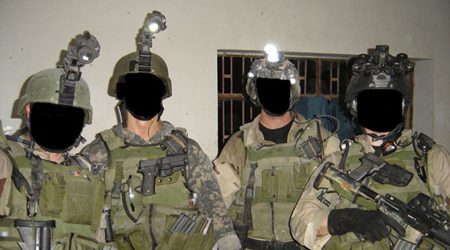
© eliteukforces.info
RT | April 4, 2017
Britain’s secret war-fighting operations using special forces, drones and similar clandestine methods are folly in an age of information and public demand for accountability, according to a report by the Remote Control Project.
The think tank, run by the Oxford Research Group, examines the rise of clandestine warfare.
Its study, titled ‘All Quiet On The ISIS Front? British secret warfare in an information age,’ looks at where and how the UK is fighting wars, using means which are largely unaccountable.
The UK shields its secret activities behind a long-standing ‘no comment policy,’ which lags behind those of other modern democracies, it says.
The report points out that countries like Australia and the US often detail special forces deployment in a way which the UK does not.
“This provides reporters, and the general public, with an important opportunity to question government strategy and debate the implications of their involvement in conflicts overseas,” the authors argue.
The report also highlights that special forces operations are often only reported as a result of leaks.
The study cites numerous reports in papers like the Express and the Sun which tell selective tales of military daring in places such as Libya and Syria.
“[UK special forces] are unique in their exemption from parliamentary oversight,” the report says.
“Greater inspiration” should be drawn from increased scrutiny on spy agencies where there is “an attitude of acceptance that greater transparency is necessary in today’s world,” it adds.
The study cites the example of MI5 Director-General Andrew Parker who, in the wake of a number of recent major leaks, said: “We recognize that in a changing world we have to change too. We have a responsibility to talk about our work and explain it.”
Leaks such as those regularly carried in tabloids and via whistleblowers, the authors state, “makes the idea of blanket opacity increasingly outdated, and the benefits of maintaining such a policy should be critically examined in light of the more transparent practices of Britain’s allies.”
The report also argues that secret operations run contrary to democratic aspects of British military doctrine because, unlike normal troop deployments, they sidestep the need for a vote in Parliament.
The normal doctrine “does not capture the many elements of remote warfare, which are often considered ‘non-combat,’ supporting, or assisting roles,” the report says.
Tory MP and former soldier Crispin Blunt told RT last year it is high time for more oversight of such activities.
Blunt said at the time there is no formal parliamentary process for overseeing SAS missions and “there’s obviously an issue as to whether the intelligence and security committee would be the proper vehicle for oversight of these kinds of operations, but we are not there at the moment.”
A new war powers act proposed in the wake of the Iraq and Afghanistan campaigns could include requirements for increased democratic oversight of UK forces.
Supporters of the idea include Labour leader Jeremy Corbyn, who told the Middle East Eye in 2016: “I’m very concerned about this because [former Prime Minister] David Cameron – I imagine [Prime Minister] Theresa May would say the same – would say parliamentary convention requires a parliamentary mandate to deploy British troops. Except, and they’ve all used the ‘except,’ when special forces are involved.”
Read more:
Iran UN ambassador calls for destruction of all nuclear weapons
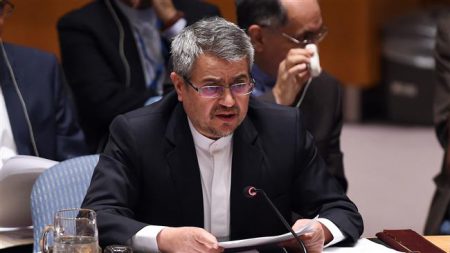
Iran’s ambassador to the UN Gholamali Khoshroo
Press TV – March 29, 2017
Iran’s ambassador to the UN Gholamali Khoshroo has called for the total eradication of nuclear weapons.
Khoshroo reiterated Iran’s call during a UN conference aimed at creating a nuclear weapons ban treaty in New York on Tuesday.
“Iran, as a victim of chemical weapons, strongly feels the danger posed by the existence of weapons of mass destruction and is determined to engage actively in international diplomatic efforts to save humanity from the menace of nuclear weapons,” he said.
Khoshroo stressed that Iran is committed to its Non-Proliferation Treaty (NPT) obligations, which include negotiations based on effective nuclear disarmament measures.
He added that several countries continue to ignore international calls and treaties for nuclear disarmament and even continue to increase their nuclear stockpiles. “They do not have political determination to abandon doctrines of nuclear deterrence and nuclear terror,” he went on to say.
Iran’s UN ambassador noted that boycotting the talks by many countries, including the US, shows that the world’s nuclear powers are by no means committed to the eradication of nuclear arms. Britain and France were also among the some 40 countries that did not join the talks.
“We note that prohibition of nuclear weapons must be accompanied by the elimination of such weapons. There can be no doubt that without complete abolition of nuclear weapons, there will be no absolute guarantee against the danger of nuclear war and the use of such weapons,” Khoshroo added.
Featured Video

The Search for Truth: Charlie Kirk’s Assassination One Year Later
or go to
Aletho News Archives – Video-Images
From the Archives
The 9/11 “Double-Cross” Conspiracy Theory
BY LAURENT GUYÉNOT • UNZ REVIEW • SEPTEMBER 6, 2022
Is it true that “9/11 was an inside job”? Yes, insofar as Israel is “inside” the U.S. But for the 9/11 truthers who have identified Israel as the main perpetrators, “9/11 was an inside job” is at best a half-truth, and at worst an integral part of the Zionist operation, like a secondary flag sewn as a lining under the false flag of Islamism. Victor Thorn (1963-2017) wrote in his book 9/11 made in Israel: The Plot Against America (2011): “In essence, the ‘9-11 truth movement’ was created prior to Sept. 11, 2001 as a means of suppressing news relating to Israeli complicity. . . . The slogan ‘9-11 was an inside job’ was quite possibly the greatest example of Israeli propaganda ever devised.” In milder terms, it is “controlled opposition”.
A genuine truth movement would have pointed to Israel as the prime suspect from the start. From day one, it was obvious who would benefit. … continue
Blog Roll
 Aletho News
- Europe’s mounting social chaos… chickens coming home to roost for proxy war against Russia
- US-Russia Diesel Deal Becomes Massive Defeat for Ukraine
- Hormuz and the Looming Economic Catastrophe
- Dhubab offensive, media blitz and the rapid unraveling of Saudi-backed coalition’s new gambit
- Putin Conveys to Trump Iran’s Vision on Possible Conflict Resolution – Kremlin
- The Search for Truth: Charlie Kirk’s Assassination One Year Later
- ‘Harsh reality’: Iran says France seeks monopoly on power and intimidation, not peace for all
- When Will This White House Madness End?
- Huckabee aide goes to ‘unusual lengths’ to portray ‘Israel’ positively
- Trump Announces Diesel Supply Deal With Putin Following Phone Call
- If Americans Knew
- Israeli forces kill another child in Gaza – Daily Update
- Gaza ceasefire exists in name only, say more than 100 organizations
- Nearly 2 Million in Gaza Need Urgent Shelter Assistance as Winter Looms: IOM Chief Warns
- Suppressing Palestinian resistance: US charity under fire for AI monitoring of Gaza classrooms
- Thousands Are Held in Israeli Torture Camps. This Is What Happens Inside
- Israel puts Gaza’s sick, injured, newborn in peril – Daily Update
- Report claimed Mark Levin used by Israeli government to influence Trump
- Over 2,000 Gazans have died awaiting medical evacuation amid Israel’s continued siege
- How a U.S. Diplomat Suppressed and Altered Reports Critical of Israel
- 5 Palestinians Die from Israeli Strikes in Gaza as Relentless Attacks Continue
- No Tricks Zone
- New Study: 50 Years Of The Most Aggressive ‘Net Zero’ Policies Can Only Affect The Global Climate By 0.03°C
- US September “Heat” Was No Record…Many Records Set Decades Ago
- Latest European Green Energy Debacle; Portugal’s Largest Flagship Solar Park Insolvent!
- Green Energy Debacle: German Expert Professor Fritz Vahrenholt Warns Of Severe Economic And Social Consequences
- Two More Paleo Reconstructions Affirm Meters-Higher Sea Levels Across Ireland, Brazil 7000-6000 Years Ago
- New Study: Earth And Venus Surface Warmth Largely Explained By Convection And Lapse Rate, Not CO2 Or Radiation
- 2025 Nature Paper Claiming Worsening Global Drought Gets RETRACTED …Heavily Flawed
- New Study: ‘Global Drought Shows No Detectable Recent Acceleration Under Climate Warming’
- Economic Masterminds: German Socialists Suggest Taxing Productivity Gains Stemming From Using AI
- The South China Sea Has Not Been Cooperating With The Climate Change Narrative

