Russia: US trying to demonize Iran missile program
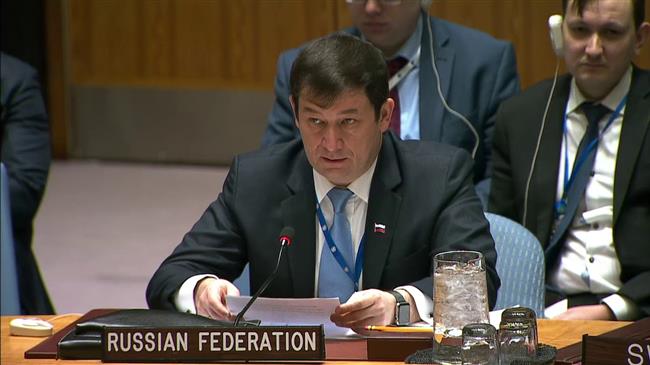
Dmitry Polyanskiy, Russia’s chargé d’affaires to the United Nations
Press TV – December 6, 2019
Russia’s mission to the United Nations says the US continually tries to demonize Iran’s missile activities despite lack of any damning evidence against the Islamic Republic’s defensive activities, and while Washington itself is in default of several international non-proliferation agreements.
Dmitry Polyanskiy, Moscow’s chargé d’affaires to the world body, addressed the remarks to the UN Secretary-General António Guterres in a letter dated November 26 that was made available on Friday.
He reminded that Iran was a signatory to many multilateral non-proliferation mechanisms, including the nuclear Non-Proliferation Treaty (NPT) and the Joint Comprehensive Plan of Action (JCPOA). The latter agreement came about in 2015 between the Islamic Republic and the P5+1 group of states — the United States, the UK, France, Russia, and China plus Germany, lifting nuclear-related sanctions against Tehran, which, in turn, voluntarily changed some aspects of its nuclear energy program.
Washington has, on numerous occasions, accused Tehran of developing nuclear-capable missiles, despite Tehran’s outright rejection of nuclear weapons of all type, and its observance of the JCPOA, which prohibits it from pursuing such armaments.
The Russian official highlighted “the complete lack of evidence that Iran is developing or producing a nuclear weapon or means of its delivery or is deploying any infrastructure for the storage or servicing of nuclear weapons.” He further endorsed the Islamic Republic’s continued commitment to the nuclear deal as verified by Tehran’s “refraining from activities related to ballistic missiles that are designed to be capable of carrying nuclear weapons.”
Nor has the UN Security Council, which has endorsed the JCPOA in the form of Resolution 2231, received any “viable information to the contrary,” Polyanskiy asserted.
However, he stated, the US would keep trying to implicate Iran in nuclear arms-related activities by, among other means, citing the Missile Technology Control Regime (MTCR). This is while the MTCR is an informal political understanding between 35 states on export control issues, and could not be deployed as a universal legally binding instrument or used in the context of Resolution 2231 to try and incriminate Iran’s missile activities, the envoy added.
Washington was on the offensive against Iran, while itself left the JCPOA last year “in violation of Article 25 of the United Nations Charter,” and is preventing other states from implementing it, Polyanskiy added. After leaving the deal, the White House returned its sanctions against Tehran, and also started pushing other JCPOA members into abiding by the American bans.
The Russian envoy also reminded how America left the Intermediate-Range Nuclear Forces (INF) Treaty with Moscow earlier this year, and was undermining efforts aimed at creating a Middle East region free of nuclear arms. He was referring to the US’s using its veto power at the UN in favor of Israel, which is the sole nuclear armed power in the region and has refused to join the NPT.
Say No To The US-Israel Mutual Defense Pact
By Eric Striker | National Justice | December 3, 2019
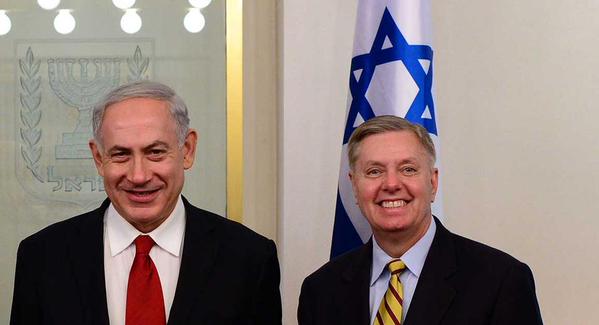
Last September, Donald Trump and Benjamin Netanyahu hinted that they were working on a mutual defense pact. Such a treaty, if signed, would officially and permanently mandate an American military intervention if Israel were to ever start a conflict with its neighbors.
The Trump administration is desperate to get this done, but Netanyahu is having trouble selling the idea to his rival Benny Gantz. The Likud party has so far been unable to form a government and Netanyahu is battling corruption charges. As a side note, two major GOP donors, Sheldon Adelson and Larry Ellison, are defense witnesses in Bibi’s case.
The major reason why some sectors of the Israeli state want Netanyahu gone is that they believe his government’s belligerence is responsible for Iran’s stunning rise. Netanyahu has chosen Israel-above-all unilateralism using Zion’s cats-paws in Washington to try and bully Tehran, but have walked all over Chinese and Russian interests in the process.
Two years into the Trump/Israel “maximum pressure” campaign, Iran is not only more powerful than before, it is participating in joint war games with China and Russia. This has angered competing Jewish factions inside Israel, who preferred the Obama method of passively subverting Iran through its countries pro-US/pro-Europe “moderate” liberal reformists. Hassan Rouhani, who they saw as the Persian “Gorbachev,” has now been fully discredited in the eyes of his people thanks to Trump and Netanyahu.
While all segments of Israeli society are having a public debate on the pros and cons of a military pact for their country, here in the US nobody has consulted with the 1.3 million active-duty American servicemen who will die in a world war to expand Israel’s borders.
JINSA’s Plan
Lindsay Graham has told Jews at private events that he is working on this bill and is confident it will be ratified in the Senate. So far, the only people within US borders participating in this conversation are the Republican Jewish Coalition and JINSA (Jewish Institute for National Security of America). The latter fifth column is writing the terms of the treaty.
Last July, JINSA released details of the pact they want Graham to push through, titled “For a Narrow US-Israel Defense Pact,” which can be obtained online (I will not link to downloads on JINSA’s website for security reasons).
The policy paper demands that Israel be granted special access to intelligence collected by the “Five Eyes Alliance” (Australia, UK, New Zealand, Canada and the US), officially turning the entire Anglo-Saxon world into a global Jewish spy network (which is already unofficially true).
Furthermore, it calls on the war clause be triggered if any country “threatens” to use chemical or nuclear weapons against the Jewish state or physically undermines Israel’s economic activities. This is very open-ended.
The most ludicrous part of the Graham/JINSA treaty is section 3.4, where Israel is under no obligation to notify or seek approval from the United States when it decides to engage in a military attack against another party.
In other words, if Israel decides to start a war with Iran (or China, or Russia, or all of them), it doesn’t have to discuss this with its “ally” first. Israel reserves its right to act unilaterally and America must go along for the ride whether we want to or not.
America gets absolutely nothing from joining such an agreement, except the possibility of a catastrophic world war that can be started by unstable psychopaths like Benjamin Netanyahu without warning, whenever they please.
The US has not signed a mutual defense treaty since 1962.
It’s time the 98% start demanding Donald Trump and Lindsey Graham include us in this debate, and prepare to protest as soon as this bill hits the Senate floor.
US harassing Iran on behalf of Israel
Press TV – November 25, 2019
A political analyst says the latest move by the US to call on social media networks to block the accounts of Iran’s leaders is part of Washington’s usual pattern of “harassing Iran on behalf of Israel.”
Brian Hook, special US representative for Iran, has recently urged Facebook, Instagram and Twitter to block the accounts of Iranian government leaders over an Internet blackout that began in the country following riots over fuel price hikes.
Tehran says it had to restrict access to the Internet to prevent “saboteurs” from using online services like navigation and maps to coordinate their activities in large cities across the country.
The government nevertheless has begun reestablishing Internet connectivity after around 100 of the ringleaders of the riots were apprehended.
In an interview with Press TV on Sunday, Walt Peretto said “this latest move by the State Department follows the usual pattern of the US harassing Iran on behalf of Israel and their New World Order overlords and the rest of global organized psychopathy.”
He said the US cannot invade “a nation like Iran that remains strong and independent,” so “instead, they harass them with rhetoric and propaganda, sanctions, nuclear agreements that they renege on.”
He went on to say that “hypocrisy and lies are as common as breathing with the officials in the State Department and White House.”
“On one hand the US has a mainstream media that is completely Zionist run, while independent sources of information particularly on social media and YouTube are harassed and often censored when truthful information becomes an irritant to the globalist overlords.”
“In the minds of the general public that receives its news and information from mainstream sources, the US is actually fighting censorship by reprimanding Iran for reacting in the way it chose in order to quell destructive protests, when in fact censorship is standard everyday practice in the US mainstream media and now harassment and censorship is increasingly becoming a problem with independent media based mostly on the internet. There is nothing that the globalist psychopaths fear more than the dissemination of the truth,” he stated.
In controversial move Italy bans Mahan Air’s flights
By Max Civili | Press TV | November 20, 2019
Rome – The Italian government’s early November announcement that the Iranian first private airline Mahan Air will no longer be allowed to fly to its Italian destinations of Rome and Milan from mid-December had left many baffled in Italy.
Rome’s decision – made after a meeting between Italian Foreign Minister Luigi Di Maio and US Secretary of State Mike Pompeo in October – had followed that of Germany and France which had both already banned flights by the airline in the wake of US pressure.
Washington has been accusing Mahan Air of transporting military equipment and personnel to Middle East war zones – an accusation that the airline has always refuted. The attack came as part of broader US sanctions targeting Iran’s aviation industry.
Also Italy’s flag-carrier Alitalia had suspended its flights to Tehran in January this year, following US President Donald Trump’s decision to reinstate sanctions on Iran.
On Tuesday, at a meeting with a number of Italian journalists and geopolitical analysts held at Iran’s Embassy in Rome, the Ambassador to Italy Hamid Bayat stressed the importance of maintaining access to the Italian airspace.
Iranian authorities believe direct flights between countries that enjoy long-standing relations such as Italy and Iran are essential. About 10,000 young Iranians are enrolled at Italian universities and tens of thousands of Italian tourists visit Iran every year.
Some have argued that Italy’s ban on Mahan Airliner is also a breach of the Chicago Convention on International Civil Aviation. The convention – enacted in the depths of WWII, because people understood the key role aviation would play in connecting the world – established a specialized agency of the United Nations known as ICAO.
Trump Goes to Israel: Another Settler from the United States?
By Philip Giraldi | American Herald tribune | November 19, 2019
President Donald Trump’s lack of any precision when he speaks or tweets sometimes means that multiple meanings can be construed from what he chooses to say or write. At a private gathering last week in which he was wooing potential Orthodox Jewish donors, he responded to a blessing from a rabbi with what he thought to be a joke. Fighting for his political life in the middle of an impeachment process, he observed that if things do no go well in the United States, he could always move to Israel and run for office, saying “if anything happens here, I’m taking a trip over to Israel. I’ll be prime minister.”
The fund-raiser at the Intercontinental Hotel in Manhattan was arranged by the America First Super PAC. Trump’s son-in-law and principal adviser Jared Kushner and his special representative for international negotiations Avi Berkowitz, both Orthodox Jews, also were in attendance. Numerous Trump supporters were present in the ballroom and began shouting out “Four more years!” when the president rose to speak. Rabbi Y.Y. Jacobson offered a blessing, saying “Blessed are you, our Lord, King of the universe, that you have shared of your glory and love and compassion with a human being who maintains the honor of every innocent person and Jew. Thank you, amen.”
The Trump joke appeared to be based on media reports that he enjoys an approval rating of 98% among Jewish voters in Israel, the only country in the world where he has a favorable rating. And he was also presumably referring to the fact that Israel has had two deadlocked elections and may be heading for a third due to the fact that neither Benjamin Netanyahu nor his opponent Benny Gantz seems able to pull together a governing coalition. Trump quipped in his usual self-serving fashion, “What kind of a system is it over there, right, with Bibi? They’re all fighting and fighting. We have different kinds of fights, but at least we know who the boss is. They keep having elections, and nobody’s elected.”
The president also spent some time affirming his complete support for the Jewish state, citing how it was at that moment defending itself from missile attacks coming from the Palestinian Islamic Jihad group and Hamas in Gaza. He also recalled for the potential donors his unilateral (and illegal) recognition of Israeli sovereignty over the occupied Golan Heights and his decision to withdraw from the Joint Comprehensive Plan of Action (JCPOA) agreement limiting Iran’s nuclear program. As expected, the audience cheered.
Also, in a statement that should offend and serve as a wake-up call for all of America’s remaining Arab friends, Trump described how he was able to move the U.S. Embassy from Tel Aviv to Jerusalem. He claimed that when he received calls from Arab leaders objecting to the proposed shift, he refused to speak to them, saying to his aides “Just tell them I’m very busy, I’ll call them back. And then I did it, we got it done, it’s done. And then I announced it, and then I went into the office, I made about 25 calls…. I said, ‘Don’t worry about it, it’s done already; there’s nothing I could do about it.’ It’s much easier. I say, ‘I’m sorry, I wish I could have gotten back to you sooner.’”
So, on the surface it was a complete rah-rah evening among friends, saying wonderful things about Israel and dumb things about Arabs while also bringing in $4 million in donations from the Orthodox Jewish businessmen who made up most of the audience. But at the same time, the Trump remark about moving to Israel and being elected prime minister can be construed as having a darker meaning as Israel is, in fact, a settler state that illegally has dispossessed the original residents of the country and replaced them. Foreign Jews can move to Israel and become citizens automatically under the “law of return” but the people who used to live on that land cannot go to their homes. Trump, who joked about moving and becoming Israeli, described in his usual caustic, off-hand fashion the racist reality of the Jewish state.
Donald Trump might not have been in such a humorous mood if he had considered the fact that while he is wildly popular in Israel because he gives the Israeli Jews everything they want, he continues to be mistrusted and not very well received by American Jews, who continue to vote for and provide most of the funding for the Democratic Party. Some Israelis and many American Zionists have even come to the conclusion that Trump is not to be relied upon when he pledges total support for the Jewish state. They point to the recent White House decision to pull out of Syria, which was made in consultation with Turkey, which the Israelis regard as a hostile power, and without any input from Israel. The fact that Trump then reversed himself also has been noted as characteristic of his basic unreliability.
Some Israelis and their think tank associates in the United States have also expressed particular concern over the fact that Trump and Netanyahu, who still heads the interim government, have not even spoken over the phone in weeks. As Trump’s policy making style is best described as impulsive, there is concern that he will make bad decisions from the Israeli perspective. It is often noted that the Administration’s desire to confront Iran appears to have waned and will probably be even less evident as the 2020 election approaches. Some observers have also cited the example of the betrayal of the Kurds, suggesting that Trump might be inclined to abandon Israel and its other allies in the Middle East in the same fashion.
To be sure, Donald Trump has done everything possible to pander to American Zionists and to Israelis and it is clear that he considers Jews to be a group that has to be courted, if only due to their influence over the media and their willingness to donate large sums to political causes. Israeli concerns that he will pull the plug on them are overstated to put it mildly given their control over Congress and the media. As long as casino magnate Sheldon Adelson continues to be willing to donate $100 million to the GOP every two years, the status quo is guaranteed. But there remains a long-term problem due to the fact that American Jews are overwhelmingly politically liberal and they do not like Trump, no matter what he does for Israel. And Adelson is reported to be in poor health. If he dies and the cash flow dies with him, Trump’s view of Israel just might change dramatically.
The TRUTH About Trump’s Oil Grab in Syria
21stCenturyWireTV | November 10, 2019
When Trump says “Take the Oil” in Syria, what does he really mean? Does the US really need the oil? Not really. So what was this major media event about last week? UK Column News co-hosts Mike Robinson and Patrick Henningsen answer this question, as they bring you the early week’s headlines from around the world. (This is a clip of the full news program broadcast on Nov 4, 2019).
Cornering and Strangulating Iran Has Backfired on Israel
By Alastair Crooke | Strategic Culture Foundation | November 11, 2019
What happens if the two premises on which Israel and America’s grand Iran strategy is founded are proven false? ‘What if’ maximum pressure fails either to implode the Iranian state politically, nor brings Iran to its knees, begging for a new ‘hairshirt’ nuclear deal? Well …? Well, it seems that Netanyahu and Mossad were so cocksure of their initial premise, that they neglected to think beyond first move on the chess board. It was to be checkmate in one. And this neglect is the cause of the strategic bind in which Israel now finds itself.
Lately, these lacunae in strategic thinking are being noticed. Iran is doing just fine, writes Henry Rome in Foreign Affairs:
“Some analysts predicted that Iran’s friends in Europe and Asia would defy the United States to lend Iran economic help. Others reckoned that the sanctions would send Iran’s economy into a “death spiral,” leaving Tehran the choice to either surrender or collapse. Neither of these predictions came to pass.
“Rather, Iran now enters its second year under maximum pressure strikingly confident in its economic stability and regional position. Supreme Leader Ali Khamenei and other hard-liners are therefore likely to continue on their current course: Iran will go on tormenting the oil market, while bolstering its non-oil economy—and it will continue expanding its nuclear program while refusing to talk with Washington.”
Similarly, the (US) Crisis Group reports that on the eve of the US oil sanctions snapback in November 2018, Secretary Pompeo was asked if Iran might restart its nuclear program. He responded: “we’re confident that the Iranians will not make that decision”. But, Iran did just that: In April 2019 – after the US revoked the sanction waivers that had previously allowed eight countries to import Iranian oil – the Iranian leadership started pushing back.
They are still doing it. “Iran’s responses on the nuclear and regional fronts call into question the core premises of the U.S. “maximum pressure” campaign … Tehran [effectively] has broken the binary outcome of concession or collapse by instead adopting what it touts as “maximum resistance”. As a result … there can be little doubt that the [US] strategy has fallen short, delivering impact without effect and rather than blunting Iran’s capabilities only sharpening its willingness to step up its [push-back]”, the Crisis Group report concludes.
So here we are: Iran’s “fourth step” in its incremental lessening of compliance with the JCPOA (injecting nuclear gas into the – hitherto empty – centrifuges at Fordo; augmenting enrichment to 5% and unveiling substantially improved centrifuges), effectively tests the very core to the Obama JCPOA strategy.
The Accord was built around a framework that meant Iran would remain at least 12 months away from break-out capacity (the moment when a state can transition into a nuclear weapons’ state). Iran – in these de-compliance steps is inching under that limit, if it is not already under it. (This does not, however, imply that Iran is seeking weapons, but rather that it is seeking a change in western behaviour.)
Yes, Israel – which pushed hard its assessment (albeit, onto a Trump team wholly receptive to this Israeli analysis) of an Iran entering into a death-spiral within one year, under Trump’s maximum pressure – can plead reasonably that its grand strategy was struck by two ‘black swans’. The double ‘punch’ quite evidently has knocked Israel – it is now all at sixes and sevens.
One was the 14 September strikes on the two Aramco plants in Saudi Arabia (claimed by the Houthis), but demonstrating a level of sophistication which Israelis explicitly admit took them wholly by surprise. And the second was the accumulated evidence that the US is in the process of quitting the Middle East. Again, Israel – or at least Netanyahu – never believed this could happen under Trump’s ‘watch’. Indeed, he had built a political platform on his claim of intimate rapport with the US President. Indeed, that did seem at the time to be perfectly true.
Israeli historian, Gilad Atzmon observes, “it now seems totally unrealistic to expect America to act militarily against Iran on behalf of Israel. Trump’s always unpredictable actions have convinced the Israeli defense establishment that the country has been left alone to deal with the Iranian threat. The American administration is only willing to act against Iran through sanctions”.
And the former Israeli Ambassador to Washington put the consequences yet more bluntly under the rubric of The Coming Middle East Conflagration: “Israel is bracing itself for war with Iranian proxies … But what will the United States do if conflict comes?” — by this Oren implies the US might do little, or nothing.
Yes. This is precisely the dilemma to which the Israeli policy of demonising Iran, and instigating ‘the world’ against Iran, has brought Israel. Israeli officials and commentators now see war as inevitable (see here and here) – and they are not happy.
War is not inevitable. It would not be inevitable if Trump could put aside his Art of the Deal pride, and contemplated a remedy of de-escalating sanctions – especially oil export sanctions – on Iran. But he has not done that. After a quick (and wholly unrealistic) ‘fling’ at having a reality-TV photo-op with President Rouhani, his Administration has doubled down by imposing further, new sanctions on Iran. (Friends might try to tell their American counterparts that it is well time they got over the 1979 Tehran Embassy siege.)
And war is not inevitable if Israel could assimilate the reality that the Middle East is in profound flux – and that Israel no longer enjoys the freedom to strike wherever, and whomsoever it choses, at will (and at no cost to itself). Those days are not wholly gone, but they are a rapidly diminishing asset.
Will Israel shift posture? It seems not. In the context of the Lebanon protests, the local banks are becoming vulnerable, as capital inflows and remittances dry up. Israeli, plus some American officials, are favouring withholding external financial assistance to the banks – thus making the banking system’s survival contingent on any new government agreeing to contain and disarm Hizbullah (something which, incidentally, no Lebanese government, of whatever ‘colour’, can do).
That is to say, US and Israeli policy is that of pushing Lebanon to the brink of financial collapse in order to leverage a blow at Iran. Never mind that it will be the demonstrators – and not Hizbullah – who will pay the heaviest price for pushing the crisis to the brink – in terms of a devalued pound, rising prices and austerity. (Hizbullah, in any case, exited the Lebanese banking system, long time past).
Iran, on the other hand, faced with maximum pressure, has little choice: It will not succumb to slow-strangulation by the US. Its riposte of calibrated counter-pressure to US max-pressure, however, does entail risks: It is predicated on the judgement that Trump does not want a major regional war (especially in the lead up to US elections), and also predicated (though less certainly) on the US President’s ability to avoid being cornered by his hawks into taking responsive military action (i.e. were another US drone to be shot down).
So, what do all these various geo-political ‘tea-leaves’ portend? Well, look at Lebanon and Iraq through the geo-political spectacles of Iran: On the one hand, it is well understood in Tehran that there is justified, deep popular anger in these states towards corruption, the iron sectarian structures and hopeless governance — but that is only one part of the story. The other is the long-standing geo-strategic war that is being waged against Iran.
Maximum pressure has not produced a chastened, and repentant Iran? So, now Iranians see the US and Israel resorting to ‘Euromaidan warfare’ (Ukrainian protests of 2013) against Iran’s Lebanese and Iraqi allies. (It was, after all, during President Aoun’s visit to Washington in March, that Trump first warned Aoun of what was coming – and presented his ultimatum: Contain Hezbollah, or expect unprecedented consequences, including sanctions and the loss of US aid).
Fresh sanctions, plus an Euromaidan-type assault on Iranian allies (Hizballah and Hash’d A-Shaabi)? Might we then expect another ‘Gulf surprise’ – in coming weeks?
This tit-for-tat of pressure and counter-pressure is set to continue — Michael Oren, the former Israeli Ambassador to the US, lays it out:
“The conflagration, like so many in the Middle East, could be ignited by a single spark. Israeli fighter jets have already conducted hundreds of bombing raids against Iranian targets in Lebanon, Syria, and Iraq. Preferring to deter rather than embarrass Tehran, Israel rarely comments on such actions. But perhaps Israel miscalculates, hitting a particularly sensitive target; or perhaps politicians cannot resist taking credit. The result could be a counterstrike by Iran, using cruise missiles that penetrate Israel’s air defenses and smash into targets like the Kiryah, Tel Aviv’s equivalent of the Pentagon. Israel would retaliate massively against Hezbollah’s headquarters in Beirut as well as dozens of its emplacements along the Lebanese border. And then, after a day of large-scale exchanges, the real war would begin.
“Rockets, many carrying tons of TNT, would rain on Israel; drones armed with payloads would crash into crucial facilities, military and civilian. During the Second Lebanon War, in 2006, the rate of such fire reached between 200 and 300 projectiles a day. Today, it might reach as high as 4,000. The majority of the weapons in Hezbollah’s arsenal are standoff missiles with fixed trajectories that can be tracked and intercepted by Israel’s Iron Dome system. But Iron Dome is 90 percent effective on average, meaning that for every 100 rockets, 10 get through, and the seven operational batteries are incapable of covering the entire country. All of Israel, from Metulla in the north to the southern port city of Eilat, would be in range of enemy fire.”
Of course, the claim that Israeli air defences are 90% effective is ‘for the birds’ (Israeli officials would not be in such a panic if it were true). But Oren sets out the course to a region-wide war plainly enough. This is the end to which their Iran strategy has brought them.
And just to recall, this strategy was always a ‘strategy of choice’ – taken for domestic political purposes. Israel’s demonization of Iran did not begin with the Iranian Revolution. Israel initially had good relations with the revolutionary republic. The relationship transformed because an incoming Israeli Labour government needed it to transform: It wanted to upend the earlier political consensus, and to make peace with the ‘near enemy’ (i.e. its Arab neighbours). But Israel then required a ‘new’ villain threatening ‘plucky little Israel’ to keep unstinting US Congressional support coming through: Iran became that villain. And then, subsequently, Netanyahu made his twenty-year career out of the Iranian (nuclear) bogeyman.
Reaping what a long-term strategy of threats and incitement sows …? In one of the most detailed assessments of Iran’s strategy and doctrine across Lebanon, Syria, Iraq and Yemen, the International Institute for Strategic Studies (IISS) concludes that Iran’s “third party capability” has become Tehran’s weapon of choice: “Iran now has an effective military advantage over the US and its allies in the Middle East, because of its ability to wage war using third parties such as Shia militias and insurgents”, the report concludes. It has the military edge? Well, well …
And doesn’t this fact help explain what is happening in Iraq and Lebanon today?
Israeli ministers moot war scenario with Iran: Ex-envoy
Press TV – November 6, 2019
Israeli ministers have reportedly held several meetings to review the likely scenario of a potential war with Iran, with the participants speculating that the Islamic Republic could deal paralyzing blows to the regime in the course of such a confrontation.
The meetings, two of which were held last week, discussed potential lead-ups and aftermath of a conflict, with Michael Oren, a former Israeli ambassador to the US, allegedly unveiling contents of the discussions in an opinion piece carried by The Atlantic on Monday.
Titled “The Coming Middle East Conflagration,” the feature claimed the ministerial gatherings had concluded that “fighting could break out at any time” by “a single spark.”
‘Dangerous Israeli miscalculation’
The Israeli ministers suspected that a conflict could come as a result of an “Israeli miscalculation,” such as erringly hitting “particularly sensitive targets” in the countries where the Islamic Republic provides advisory support against terrorists such as Iraq and Syria.
“The result could be a counterstrike by Iran, using cruise missiles that penetrate Israel’s air defenses and smash into targets like the Kiryah, Tel Aviv’s equivalent of the Pentagon,” Oren wrote. “And then, after a day of large-scale exchanges, the real war would begin,” he went on.
‘4,000 projectiles to rain on Israel’
The article said such a war triggered by Tel Aviv’s blunder could see as many as “4,000” projectiles being rained down on Israel every day, with the regime’s so-called Iron Dome missile system liable to miss 10 percent of them.
“All of Israel, from Metulla in the north to the southern port city of Eilat, would be in range of enemy fire,” the former official noted.
That threat, the piece added, is eclipsed by the one posed by Iran’s surgical and long-range missiles such as “the deadly Shahab-3” — which would reach Israel “from Syria, Iraq, Yemen, and Iran itself.”
Those missiles “a growing numbers of which are in Iranian arsenals, pose a far deadlier threat,” Oren cautioned, highlighting how the projectiles can switch flight routes airborne.
“The David’s Sling system, developed in conjunction with the United States, can stop them—in theory, because it has never been tested in combat. And each of its interceptors costs $1 million. Even if it is not physically razed, Israel can be bled economically.”
Oren said those missiles can reach Israel directly from Iran, while the Israeli Air Force itself lacks the type of strategic bombers, which are capable of flying as far as the Islamic Republic’s territory.
‘Israel to be paralyzed’
The former envoy also said in detail how a potential war could cripple Israel by killing international flights, shutting down lifeline ports, putting out the electrical grid, overwhelming hospitals, and sending millions into shelters.
The situation, he added, would only be compounded after “the skies darken with the toxic fumes of blazing chemical factories and oil refineries.”
Tel Aviv’s response would, meanwhile, see the regime attacking people in the Gaza Strip and Lebanon as well as other countries, which have been receiving the Islamic Republic’s support in the face of Israeli aggression, the article said.
This would face Israel with international repercussions, including by the United Nations and its legal arm, the International Criminal Court, it noted.
US support
However, Oren said the participants were wondering how the US, as a staunch ally of Israel, would respond to a potential war with Iran.
“And over all of them looms a pressing question: How will the United States respond?” he wrote.
These include stocking up and replenishing Israel’s ammunition stockpiles and shielding the regime at the UN by wielding its veto power, the piece concluded.
“Though the details remain top secret, the United States is clearly committed to helping protect Israel’s skies. Whether American troops would go on the offensive on Israel’s behalf, striking Iranian bases, remains uncertain,” the article concluded.
The ‘War’ for the Future of Middle East
By Alastair Crooke | Strategic Culture Foundation | November 4, 2019
Oh, oh, here we are again! In 1967, it was then the ‘threat’ of the standing Arab Armies (and the ensuing six-day war on Egypt and Syria); in 1980, it was Iran (and the ensuing Iraqi war on Iran); in 1996, it was David Wurmser with his Coping with Crumbling States (flowing on from the infamous Clean Break policy strategy paper) which at that time targeted secular-Arab nationalist states, excoriated both as “crumbling relics of the ‘evil’ USSR” and inherently hostile to Israel, too; and in the 2003 and 2006 wars, it was Saddam Hussein firstly; and then Hezbollah that threatened the safety of the West’s civilizational ‘outpost’ in the Middle East.
And here we are once more, Israel cannot safely ‘live’ in a region containing a militant Hezbollah.
Not surprisingly, the Russian Ambassador in Beirut, Alexander Zasypkin, quickly recognized this all too familiar pattern: Speaking with al-Akhbar on 9 October in Beirut (more than a week before the protests in Beirut erupted), the Ambassador dismissed the prospect of any easing of regional tensions; but rather identified the economic crisis that has been building for years in Lebanon as the ‘peg’ on which the US and its allies might sow chaos in Lebanon (and in Iraq’s parallel economic calamity), to strike at Hezbollah and the Hash’d A-Sha’abi — Israel’s and America’s adversaries in the region.
Why now? Because what happened to Aramco on 14 September has shocked both Israel and America: the former Commander of the Israeli Air Force wrote recently, “recent events are forcing Israel to recalculate its path as it navigates events. The technological abilities of Iran and its various proxies has reached a level at which they can now alter the balance of power around the world”. Not only could neither state identify the modus operandi to the strikes (even now); but worse, neither had any answer to the technological feat the strikes plainly represented. In fact, the lack of any available ‘answer’ prompted one leading western defense analyst to suggest that Saudi should buy Russian Pantsir missiles rather than American air defenses.
And worse. For Israel, the Aramco shock arrived precisely at the moment that the US began its withdrawal of its ‘comfort security blanket’ from the region – leaving Israel (and Gulf States) on their own – and now vulnerable to technology they never expected their adversaries to possess. Israelis – and particularly its PM – though always conscious to the hypothetical possibility, never thought withdrawal actually would happen, and never during the term of the Trump Administration.
This has left Israel completely knocked, and at sixes-and sevens. It has turned strategy on its head, with the former Israeli Air Force Commander (mentioned above) speculating on Israel’s uncomfortable options – going forward – and even postulating whether Israel now needed to open a channel to Iran. This latter option, of course, would be culturally abhorrent to most Israelis. They would prefer a bold, out-of-the-blue, Israeli paradigm ‘game-changer’ (i.e. such as happened in 1967) to any outreach to Iran. This is the real danger.
It is unlikely that the stirring of protests in Lebanon and Iraq are somehow a direct response to the above: but rather, more likely, they lie with old plans (including the recently leaked strategy paper for countering Iran, presented by MbS to the White House), and with the regular strategic meetings held between Mossad and the US National Security Council, under the chairmanship of John Bolton.
Whatever the specific parentage, the ‘playbook’ is quite familiar: spark a popular ‘democratic’ dissent (based on genuine grievances); craft messaging and a press campaign that polarizes the population, and which turns their anger away from generalized discontent towards targeting specific enemies (in this case Hezbollah, President Aoun and FM Gebran Bassil (whose sympathies with Hezbollah and President Assad make him a prime target, especially as heir-apparent to the leadership of the majority of Christians). The aim – as always – is to drive a wedge between Hezbollah and the Army, and between Hezbollah and the Lebanese people.
It began when, during his meeting with President Aoun in March 2019, US Secretary of State, Mike Pompeo reportedly presented an ultimatum: Contain Hezbollah or expect unprecedented consequences, including sanctions and the loss of US aid. Leaked reports suggest that Pompeo subsequently brought ally, PM Hariri into the picture of the planned disturbances when Hariri and his wife hosted Secretary Pompeo and his wife for a lunch banquet at Hariri’s ranch near Washington at the end of the Lebanese premier’s August visit to the US.
As the Lebanese demonstrations began, reports of an ‘operations room’ in Beirut managing and analyzing the protests, and of large scale funding by Gulf states proliferated; but for reasons that are not clear, the protests faltered. The Army which originally stood curiously aloof, finally engaged in clearing the streets, and returning some semblance of normality – and the Central Bank governor’s strangely alarmist forecasts of imminent financial collapse were countered by other financial experts presenting a less frightening picture.
It seems that neither in Lebanon or in Iraq will US objectives finally be achieved (i.e. Hizbullah and Hash’d A-Sha’abi emasculated). In Iraq, this may be a less certain outcome however, and the potential risks the US is running in fomenting chaos much greater, should Iraq slip into anarchy. The loss of Iraq’s 5 million barrels/day of crude would crater the market for crude – and in these economically febrile times, this might be enough to tip the global economy into recession.
But that would be ‘small beer’ compared to the risk that the US is running in tempting ‘The Fates’ over a regional war that reaches Israel.
But is there a wider message connecting these Middle East protests with those erupting across Latin America? One analyst has coined the term for this era, as an Age of Anger disgorging from “serial geysers” of discontent across the globe from Ecuador to Chile to Egypt. His theme is that neoliberalism is everywhere – literally – burning.
We have noted before, how the US sought to leverage the unique consequences arising from two World Wars, and the debt burden that they bequeathed, to award itself dollar hegemony, as well the truly exceptional ability to issue fiat credit across the globe at no cost to the US (the US simply ‘printed’ its fiat credit). US financial institutions could splurge credit around the world, at virtually no cost – and live off the rent which those investments returned. But ultimately that came at a price: The limitation – to being the global rentier – has become evident through disparities of wealth, and through the incremental impoverishment of the American middle classes that the concomitant off-shoring brought about. Well-paid jobs evaporated, even as America’s financialised banking balance sheet ballooned across the globe.
But there was perhaps another aspect to this present Age of Anger. It is TINA: ‘There is no alternative’. Not because of an absence of potentiality – but because alternatives were crushed. At the end of two World Wars, there was an understanding of the need for a different way-of-being; an end to the earlier era of servitude; a new society; a new social contract. But it was short-lived.
And – long story, short – that post-war longing for ‘fairness’ (whatever that meant) has been squeezed dry; ‘other politics or economics’ of whatever colour, has been derided as ‘fake news’ – and in the wake of the 2008 great financial crisis, all sorts of safety-nets were sacrificed, and private wealth ‘appropriated’ for the purpose of the re-building of bank balance sheets, preserving the integrity of debt, and for keeping interest rates low. People became ‘individuals’ – on their own – to sort out their own austerity. Is it then, that people now are feeling both impoverished materially by that austerity, and impoverished humanly by their new era servitude?
The Middle East may pass through today’s present crises (or not), but be aware that, in their despair in Latin America, the ‘there is no alternative’ meme is becoming reason for protestors ‘to burn the system down’. That is what happens when alternatives are foreclosed (albeit in the interests of preserving ‘us’ from system collapse).
A Window into Jewish Guilt
By Gilad Atzmon – October 28, 2019
It has become an institutional Jewish habit to examine how much Jews are hated by their host nations and how fearful Jews are of their neighbours. Jewish press outlets reported yesterday that “9 out of 10 US Jews worry about anti-Semitism.”
I, for one, can’t think of another people who invest so much energy in measuring their unpopularity. Despite the scale of Islamophobia and anti-Black racism, we are not subjected to a constant barrage of ‘statistics’ to ‘warn us’ of how hated Blacks are or how unsafe Muslims feel.
The American Jewish Committee’s (AJC) statistics suggest that “most Jews think that the situation is getting worse.” I find their statistics unlikely but I guess any mathematically inclined person would agree that if 9 out of 10 are fearful, then the situation can’t get much ‘worse’ as 10 out of 10 would constitute only a minor increase (11%).
Assume, for a moment, that the AJC’s statistics reflect reality and that the overwhelming majority (90%) of 1,200 Jewish respondents, from all political and religious positions, regard Jew-hatred as a serious problem with potentially disastrous consequences.
We might wonder who are the ‘naughty’ one out of ten Jews who, unlike their brethren, are not scared of their American neighbours. I suspect these are the so-called ‘self-haters,’ that infamous bunch of horrid humanist Jews who support Palestine and are disgusted by the manifold of recent Jewish #MeToo scandals and paedophilia/organised crime networks. This small minority (10%) of disobedient Jews might be disturbed by the opioid scandal that left 400.000 Americans dead, they probably know who were the prime actors in this saga of class genocide. They are likely troubled by a range of financial crimes from Madoff to Israeli banks evading US taxes, to the Israeli binary options companies that defraud American citizens. These universalist Jewish outcasts are often vocal critics of their people, their culture and their politics. They may denounce AIPAC and the ADL, Soros and even JVP for acting as the controlled opposition. The AJC’s statistics point to the possible existence of a comic scenario in which 9 out of 10 Jews are intimidated by the 1 out of 10 Jews who speak out.
There is a less humorous, more serious interpretation of the AJC’s findings. It is possible that the large number of Jews who worry about anti-Semitism indicates that Jews at large are aware of the worrying traits associated with their politics, culture, identity, lobbying and Israeli criminality.
Jews may feel that they are stained as a group by problematic characters such as Weisntein, Epstein and Maxwell. They may feel polluted by Israeli politics and the intensive Zionist lobbying that plunders billions of American taxpayers dollars every year. As the White House seems to turn its back on the Neocons’ immoral interventionism, some Jews may be discomfited by the fact that the Neocon war mongering doctrine has been largely a Jewish project. As Haartez writer Ari Shavit wrote back in 2003: “The war in Iraq was conceived by 25 neoconservative intellectuals, most of them Jewish…” Maybe some Jews now understand that the Zionist shift from a ‘promised land’ to the Neocon ‘promised planet’ doesn’t reflect well on the Jews as a group.
I am trying to point out the possibility that the overwhelming fear of ‘anti-Semitism,’ documented however poorly by the AJC, might well be the expression of guilt. American Jews may feel communal guilt over the disastrous politics and culture of some sections of their corrupted elite. They might even feel guilty as Americans about the brutal sacrifice of one of America’s prime values, that of freedom of speech as guaranteed by the 1st Amendment, on the altar of ‘antisemitsm.’ .
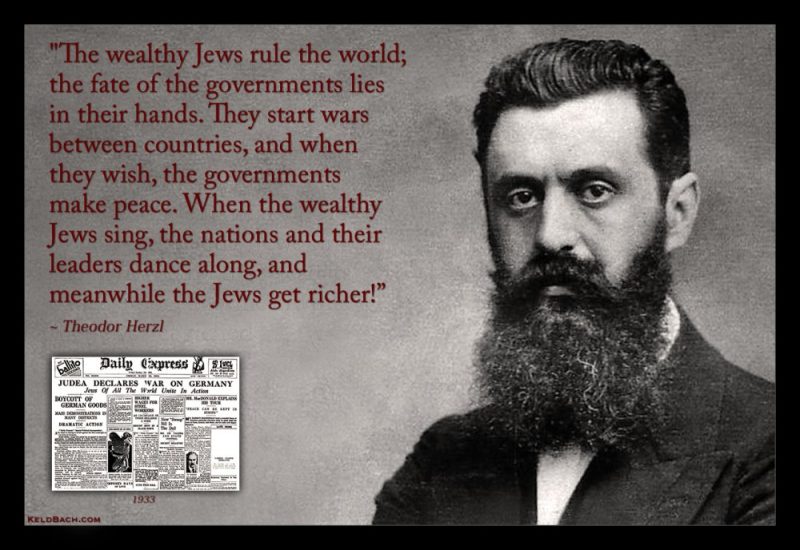
Obviously, I would welcome AJC’s further investigation of this. It would be interesting to learn about the correlation between the Jewish fear of anti Semitsm and Jewish guilt. It would also be fascinating to find out how Jewish anxiety translates into self-reflection. In that regard, I suggest that instead of blaming the American people, Jews try introspection. US Jews may want to follow the early Zionists, such as Theodor Herzl, who turned guilt into self-examination. Herzl was deeply disturbed by anti Semitism but this didn’t stop him from digging into its causes. “The wealthy Jews control the world, in their hands lies the fate of governments and nations,” Herzl wrote. He continued, “They set governments one against the other. When the wealthy Jews play, the nations and the rulers dance. One way or the other, they get rich.” Herzl, like other early Zionists, believed that Jews could be emancipated from their conditions and even be loved globally by means of a cultural, ideological and spiritual metamorphosis with the aspiration of ‘homecoming.’ Herzl and his fellow early Zionists were clearly wrong in their proposed remedy for the Jewish question, but were absolutely spot on in their adherence to self-reflection and harsh self-criticism.
American Jews have much to learn from Herzl and other early Zionists. They should ask themselves how their American ‘Golden Medina’ their Jewish land of opportunities, has turned into a ‘threatening’ realm. What happened, what has changed in the last few years? Was it the constant cries over anti-Semitism and the desperate and institutional attempts to silence critics that turned their Golden Medina into a daunting space?
Featured Video

Trita Parsi: Middle East Unraveling — Are We on the Path to World War?
or go to
Aletho News Archives – Video-Images
From the Archives
Why Saudi Ties to 9/11 Mean U.S. Ties to 9/11
By Kevin Ryan | Dig Within | September 27, 2015
Media interest in Saudi Arabian connections to the crimes of 9/11 has centered on calls for the release of the 28 missing pages from the Joint Congressional Inquiry’s report. However, those calls focus on the question of hijacker financing and omit the most interesting links between the 9/11 attacks and Saudi Arabia—links that implicate powerful people in the United States. Here are twenty examples. … continue
Blog Roll
 Aletho News
- Neria Leiter Was A Legitimate Military Target
- Integrity Initiative: UK-funded network framed dissent as Russian disinformation for years
- ‘We don’t seek permission to defend our country’: Snippets from President Pezeshkian’s UNGA address
- NATO chief wants Europeans to fight American wars [for Israel]
- German chemicals giant reveals details of downsizing
- Refaat Al-Areer Was The Canary In The Coal Mine In Israel’s War On The Truth
- Israeli election committee bars candidate from Knesset race over Gaza war opposition
- French-Lebanese man files war crimes complaint over Israeli attacks
- Mahan Air Flight Lands in China Despite US Threat against Iranian Airlines
- US eyes $10bn fund to rebuild war-battered Gulf infrastructure
- If Americans Knew
- Caught on Tape: AIPAC CEO Boasted of Controlling Trump’s National Security Officials
- Why Hamas Attacked Israel in October 2023 – Israeli professor Ilan Pappé
- They see them, then kill them: Israeli quadcopters track, deliberately target civilians in Gaza
- Winter could turn Gaza’s treacherous, war-damaged buildings into deathtraps
- Majority of Democratic Voters Want to Prosecute Both Biden and Trump Administration Officials Over Gaza
- As Gaza languishes, world leaders gather at the UN – Daily Update
- Sanctions are collective punishment: immoral and self-defeating
- Phosphorus Munitions Fired by Israel Burn Groves, Orchards in Southern Lebanon
- Israel Carries Out New Ceasefire Violations Across Gaza
- AI – Emphasis on the ‘I’: Israel Is Funding AI Chatbot Propaganda
- No Tricks Zone
- New Study: Earth And Venus Surface Warmth Largely Explained By Convection And Lapse Rate, Not CO2 Or Radiation
- 2025 Nature Paper Claiming Worsening Global Drought Gets RETRACTED …Heavily Flawed
- New Study: ‘Global Drought Shows No Detectable Recent Acceleration Under Climate Warming’
- Economic Masterminds: German Socialists Suggest Taxing Productivity Gains Stemming From Using AI
- The South China Sea Has Not Been Cooperating With The Climate Change Narrative
- Energy Crisis: Germany Enters Heating Season With Historically Low Gas Reserve Fill Levels
- New Study: The Antarctic Ice Sheet Gained Mass From 2020-2024 Due To Staggering Snow And Ice Accumulation
- Study: Ocean Heating Rates From Thousands Of Years Ago ‘Dwarf’ Modern Ocean Heating Rates
- Climate Extremists Target, Attack Large-Scale Power Grid Infrastructure In Germany!
- New Study: Antarctic Ice Melt Has Contributed Less Than 1 Centimeter To Sea Level Rise In The Last 30 Years

