A Secret US-Iran Deal over Oil Supplies to Syria
By Elijah J. Magnier | American Herald Tribune | September 8, 2019
A secret deal has been set up between the US and Iran, through a third party, to enable the Iranian supertanker Adrian Darya 1 (formerly Grace 1) to deliver its 2.1 million barrels of oil to the Syrian government. Smaller tankers worked for five days unloading the oil to be delivered to the Syrian port of Tartous from offshore.
Sources close to the negotiation team said the US “was determined to stop the Iranian supertanker from reaching Syria due to the US-EU strategy to economically sanction the Syrian President Bashar al-Assad and turn Syrians against their leader.” These countries, responsible for the 2011-2019 war, failed to achieve a regime change and a failed state militarily. Now they are trying to reach their goal by surrounding the country and preventing its return to normality. The US stopped the Gulf countries from returning to Damascus and imposed on Jordan to restrict the flow of goods to and from Syria. It has closed the al-Tanaf crossing with Iraq and is occupying the north-east (oil-rich!) area for no strategic purpose for the United States. Notwithstanding these drastic measures, Iran is determined to support its allies.
According to sources, Adrian Darya 1 remained for several days in the Mediterranean without a final destination, waiting for the end of the negotiations. Steps were agreed to begin releasing the “Stena Impero” British-flagged 7 crew members. Once Adrian Darya 1 has ended its delivery, more crew members are expected to be released. “Stena Impero” will be set free without further demand for financial compensation once “Adrian Darya 1” reaches a point of safety.
Iran said it has a buyer for the 2.1 million barrels of oil carried by the supertanker. According to informed sources, the client is Rami Makhlouf, President Assad’s cousin who bought the 130 million dollars-worth cargo (in the open market). Iran offers hundreds of thousands of barrels monthly free to Syria and has done since the beginning of the 2011 war. Damascus pays the rest – at a much-reduced price – to Iran or to whomsoever Tehran decides, said the sources.
During the navigation of Adrian Darya 1 close to Syrian waters, sources confirmed the daily presence of an Israeli-type super Heron drone above the Iranian supertanker. Drones disappeared the day the deal was reached, enabling the ship to head freely towards Syria’s Tartous harbor.
US Defence Secretary Mark Esper said that he “had no plans to seize Adrian Darya 1” and his administration was negotiating with Iran indirectly, meanwhile Brian Hook, the US special envoy for Iran was trying to bribe the Iranian supertanker captain Akhilesh Kumar with 15 million dollars to allow the ship to be seized, ending by scaring him with “sanctions” if he delivered the cargo to Syria. At the end of the day, the British government and the US administration secured Iranian promises to release the “Stena Impero” crew and ship later on, once the Iranian supertanker reaches safety. The content of the negotiations was far from any dialogue related to the nuclear deal.
Iran managed to stand against the US and the UK in the Persian Gulf. It is sending its drones to fly daily over UK warships patrolling the Straits of Hormuz and opposite the Iranian coast. The Iranian Revolutionary Guard Corps (IRGC) responsible for the security of the Persian Gulf has proved capable of confronting the US and the UK and defending its security and financial interests.
Iran also showed its capability and readiness to ease tensions, when negotiating the Adrian Darya case. However, the Iranians responsible have no intention of resuming any sort of dialogue with US President Donald Trump until after the 2020 elections.
Iran has also fulfilled its commitment to its allies who represent essential components of its national security. Adrian Darya was carrying enough oil to support Syria and its allies for months. The US sanctions on Syria and Hezbollah have proved perfectly possible to overcome, and therefore ineffectual.
What the Aggravation of the US-Iranian Relations Means for South Korea
By Konstantin Asmolov – New Eastern Outlook – 06.09.2019
Continuing to monitor the confrontation between Washington and Tehran, the author of this article can see how it affects the South Korean interests. The sanctions badly hit South Korea’s economy and, since the summer of 2019, there have been attempts to involve Seoul in a possible military coalition.
Let us remind the reader that the Joint Comprehensive Action Plan was signed by Iran, Russia, the United States, Germany, France, the United Kingdom and China in 2015, limiting Iran’s nuclear program in return for lifting the sanctions imposed by the European Union and the United Nations.
The removal of most of the international sanctions from Iran stimulated a great interest in its economy, as the country has huge gas and oil reserves, and Seoul took advantage of the opportunity to enter the Iranian market. After all, the South Korean exports to Iran exceeded $6 billion in 2012, however, after the imposition of sanctions by the Obama Administration, it fell to $4.5 billion. In 2016, it fell even more and, only in 2017 did export volume begin to recover.
On August 24, 2017 the South Korean Export-Import Bank and the Central Bank of Iran signed an agreement on a $9,380 million loan to the Iranian Government. In addition, South Korean companies were given the opportunity to participate in construction and resource projects in Iran, as the loan was aimed at providing financial support to those who would receive orders from the Iranian Government.
It should be noted that the arrangement to start negotiations on the loan agreement was made during the visit of the former South Korean President Park Geun-hye to Iran, but the final decision was delayed since the parties could not agree on the terms of repaying the loan in case of the resumption of sanctions should Iran fail to fulfil its obligations in the nuclear technology area.
But after Donald Trump came to power, the White House began to criticize the terms of the nuclear deal and later withdrew from it; in May 2018, the US resumed its sanctions against individuals and legal entities that carry out export transactions in gold, precious metals, graphite, coal, automotive and other industries with Iran. However, for some countries, there was a delay of 90 and 180 days depending on the type of sanctions.
The South Korean government wasted no time and convened an ad-hoc expert working group assigned to reduce the damage to the domestic companies caused by the US sanctions against Iran. The complications came from the fact that more than 80% of South Korean enterprises working with Iran were small and medium-sized businesses. However, with the reinstatement of sanctions, exports from South Korea to Iran decreased yet again. From January to June 2019, they fell by 15.4%, and by 19.4% in July.
The South Korean government also negotiated with the US calling on it to exempt crude oil from the sanctions, as it accounts for most of the imports from Iran. Under the Barack Obama Administration, South Korea received the status of an exception country entitled to buy Iranian crude oil under the sanctions with reducing its purchases by 20%. The importance of Iranian oil imports to South Korea lies in the fact that it has a direct impact on the exports to Iran. Settlements with Iran are made using the Korean won bank account from which goods exported to Iran are also paid for. Therefore, a reduction in the Iranian oil imports will inevitably lead to a reduction in the exports.
Moreover, Seoul remains one of the largest importers of Iranian oil and gas condensate in Asia. As noted by Reuters, the supply of Iranian resources is critical to the South Korean petrochemical industry. South Korea greatly relies on the supply of condensate from Iran, which has a high content of naphtha being the basic raw material for the manufacturing of petroleum products. Besides, the Iranian prices are the lowest. The difference can reach six dollars per barrel, so 50% of the condensate imported into South Korea comes from Iran.
According to an opinion, South Korea is the third largest buyer of Iranian oil. On the other hand, Iran accounts for 8.6% of the oil imported into South Korea and it is the fifth largest oil supplier to South Korea after Saudi Arabia, Kuwait, the United States and Iraq.
On October 29, 2018 US Secretary of State Mike Pompeo and South Korean Foreign Minister Kang Kyung-wha exchanged their views of the issue of US sanctions against Iran during a telephone conversation. Kang Kyung-wha called on the American party to show flexibility in granting South Korea the status of an exception nation in the implementation of sanctions against Iran in order to minimize the damage to South Korean companies. She mentioned the repeated negotiations between the parties on this topic. Pompeo said the US was heeding the position of South Korea and would continue the dialogue.
On November 5, 2018 the second stage of sanctions aimed at stopping foreign currency inflows to Iran thanks to oil exports entered into force. This affects the interests of South Korea, Turkey and India, which actively cooperate with Iran in the oil sector.
While the May sanctions were mainly aimed at a secondary boycott, the second stage included direct sanctions on transactions related to oil, natural gas, petrochemical products, ports, energy facilities and shipbuilding. The sanctions apply to approximately 700 individuals and legal entities, aircraft, ships and other facilities.
However, for eight countries (South Korea, China, India, Italy, Greece, Japan, Taiwan and Turkey) the US made a temporary exemption of 180 days, as each of them had demonstrated a significant reduction in Iranian oil purchases over the previous six months. The US sanctions are aimed at reducing the profit that Iran receives from trade, so permits to carry out trade are issued in exchange for the promise to reduce the purchase of Iranian raw materials. Thus, it will be possible to avoid an increase in oil prices. However, the US Special Representative for Iran Brian H. Hook confirmed that the 180-day exemption would not be extended.
As a result of this decision, South Korea managed to avoid the worst possible scenario, but experts immediately noted that the impact on the economy would not be averted altogether. As a result, the authorities recommended that businesses pay attention to the exports of pharmaceutical products, household appliances and other goods that were not subject to sanctions.
Immediately after the introduction of sanctions, representatives of the South Korean government visited Iran to discuss mutual trade issues. It is pointed out that the parties touched upon the situation with the resumption of the US sanctions and the withdrawal of a number of countries from the ban on the import of Iranian oil. The Iranian party thanked South Korea for consulting it on the current situation.
On April 29, before the end of the exemption period, Deputy Prime Minister for Economy and Minister of Planning and Finance Hong Nam-ki said that the South Korean government would make every effort to stabilize the domestic prices of petroleum products, which may increase due to the ban on the purchase of Iranian oil imposed by the US.
The exemption period for the eight countries expired on May 2, 2019. Now, all of them had to look for other suppliers, given the threat of US sanctions, but the Turkish government reported that it was impossible to stop Iranian oil imports immediately and Beijing said it would not support the unilateral US sanctions considering the significant losses associated with the need to change the suppliers. The South Korean government, through various channels, tried to bring South Korea out of the Iranian sanctions regime, but it failed. Iraq, which was importing natural gas from Iran, asked the US to provide more time to find another supplier, but the request was denied. This situation, among other things, destabilized world oil prices.
On June 20, 2019 the South Korean delegation held talks with the US party on the trade with Iran. The South Koreans called on the US to assist in eliminating possible difficulties in the oil issue and to resolve the problems of South Korean companies working with Iran in humanitarian areas using the Korean currency accounts only. However, the request was de facto ignored.
On the other hand, as from the summer of 2019, South Korea has been increasingly involved in the US-led security coalition in the Strait of Hormuz, which is the only waterway connecting the Persian Gulf and the Indian Ocean between the Arabian Peninsula and Iran and serves as the key transport corridor for large oil-producing countries.
Washington has called on Seoul to participate in this coalition citing the importance of the Strait for South Korea as the main oil transportation corridor. On the other hand, South Korea closely cooperates with Iran in the economic sphere. In this regard, Iranian response measures cannot be ruled out.
On July 24, 2019 during his meeting with the national security advisor to the President of South Korea, Chung Eui-yong, John Bolton demanded not only an increase in the share of South Korea in maintenance costs of US troops, but also the deployment of South Korean naval forces in the Strait of Hormuz.
On July 28, a representative of the South Korean Ministry of Defense noted that the country was considering various options for joining the coalition to ensure security in the Strait of Hormuz, but, at the moment, no specific decisions on this topic had been taken and no official proposals from the US had been received either. However, given the issue of the security of South Korean vessels passing through the Strait of Hormuz, various options for sending a military contingent to the region are being considered, including the possibility of sending the Cheongye unit currently patrolling the Gulf of Aden.
On August 9, Seoul hosted a meeting of the heads of the defense ministries of South Korea and the United States, Jeong Kyeong-doo and Mark T. Esper. Korea Times notes that Mark Esper officially asked Korea to participate in the coalition, but, almost immediately after that, Iranian Foreign Ministry spokesman Seyyed Abbas Mousavi called on South Korea to remain neutral. Mousavi noted that Seoul was an economic partner and asked it to take into account the sensitivity of the issue. “Korea’s possible joining the coalition is not a very good signal for us, and it will complicate things.”
South Korean experts, however, immediately wrote that the government should take the US side. As Meiji University Professor of Political Science Sing Yeoul said, “Diplomacy is not about being praised by all countries. You often have to choose one country over another, even if it means that you have broken ties with the latter.”
On August 13, the 30th outfit of the Cheongye special unit of the South Korean Navy left the South Korean port of Busan for the Gulf of Aden for a 6-month patrolling. It was headed by the destroyer Gang Gam-chan. The 300-strong army unit consists of a special force, including a submarine bomber team, a Navy Seal team, Marines and Navy pilots, who will protect South Korean vessels off the coast of Somalia and support ships of other countries in the nearby waters.
The experts began to discuss the possibility of this detachment joining the security coalition in the Strait of Hormuz, but agreed that the approval of the National Assembly was required for the redeployment of Cheongye to the Strait of Hormuz. It is said that this topic also emerged at the meeting of the defense ministers, and Jeong told Esper that South Korea was well aware of the importance of water area defense and was considering various options to protect its nationals and oil tankers in the region.
However, the destroyer should continue the unit’s mission in the Gulf of Aden and its possible role in the Strait of Hormuz was not considered during its preparation. However, the Gulf of Aden is four-day sail away from the Strait of Hormuz.
On August 21, the US Special Representative for Iran Brian H. Hook told KBS that joining the coalition would not necessarily mean sending troops and that dispatching naval and aviation equipment with the necessary personnel could be a solution. Furthermore, countries joining the coalition will be able to obtain information from the US on certain threats to merchant ship security.
The problem got another dimension in the context of the Japan-South Korean trade war. Mark Esper invited not only South Korea to join the US-led coalition, but also Japan, and it is a good question how the servicemen of the two countries are going to work together.
Thus, there is a possibility that, if a war with Iran is indeed going to happen, then, same as in Vietnam or Iraq, the South Korean military will also be involved. After all, it was not some conservative and pro-American puppet who sent troops to Iraq, but the democratic Roh Moo-hyun.
Konstantin Asmolov, PhD in History, Leading Research Fellow at the Centre for Korean Studies of the Institute of Far Eastern Studies of the Russian Academy of Sciences.
US Tried To Bribe And Threaten Iranian Ship’s Captain
teleSUR | September 5, 2019
Emails obtained by The Financial Times (FT) have revealed that U.S. government officials were contacting the captain of an Iranian tanker, offering millions of dollars if the captain steered the ship towards an allied country that would impound on behalf of the United States, but threatening sanctions if the captain refused. It was the same ship that was seized by the U.K. in Gibraltar, and subsequently released after it was clear there were no legal grounds for the seizure.
The email was published by the FT, intended for Iranian ship captain Akhilesh Kumar and a number of other captains. It offered personal payments if the captain sabotaged the ships course, but threatened sanctions on those who don’t. It reads, “This is Brian Hook… I work for Secretary of State Mike Pompeo and serve as the U.S. representative for Iran…… I am writing with good news.”
“With this money you can have any life you wish and be well-off in old age … “If you choose not to take this easy path, life will be much harder for you.”
The official’s State Department phone number was included on the email so as to reassure the captain of its authenticity.
Iran’s Foreign Minister responded saying, “Having failed at piracy, the U.S. resorts to outright blackmail—deliver us Iran’s oil and receive several million dollars or be sanctioned yourself. Sounds very similar to the Oval Office invitation I received a few weeks back. It is becoming a pattern. #BTeamGangsters”
The U.S. has attempted to isolate Iran through sanctions, as a means of punishing the country for its nuclear programme, and opposition to U.S. foreign policy in the region. However, Iran has managed to resist to some degree, it was recently announced that China has stepped up investments and oil imports from Iran, in defiance of U.S. unilateral measures.
US imposes sanctions on Iran’s shipping network
Press TV – September 4, 2019
The United States has imposed sanctions on an Iranian shipping network – several tankers, companies and insurance firms — accusing it of supplying millions of barrels of oil to Syria.
The US Treasury Department announced the illegal sanctions on Wednesday on 16 entities, 10 people, including a former Iranian oil minister, and 11 vessels, as Washington continued its campaign of “maximum pressure” against Tehran and, seeking rise in tensions in the Middle East region.
The sanctions also targeted an Indian firm with an interest in the Adrian Darya 1, the Iranian tanker that has been cruising the Mediterranean since its release from detention by authorities in Gibraltar in July.
The Treasury Department’s Office of Foreign Assets Control action froze any assets in the United States of the designated entities and prohibited American citizens and companies from doing business with them.
Meanwhile, Brian Hook, the US special representative for Iran, said on Wednesday the United States would not provide any sanctions waivers to accommodate a French proposal to extend a $15 billion credit line to Iran.
“We did sanctions today. There will be more sanctions coming. We can’t make it any more clear that we are committed to this campaign of maximum pressure and we are not looking to grant any exceptions or waivers,” Hook told reporters.
On Tuesday, the United States imposed sanctions on Iran’s space program. Iran’s space program and two of its research institutes have been sanctioned, according to US Secretary of State Mike Pompeo.
“The United States will not allow Iran to use its space launch program as cover to advance its ballistic missile programs. Iran’s August 29 attempt to launch a space launch vehicle underscores the urgency of the threat,” claimed the former CIA chief.
Washington claims that the measure is aimed at preventing Iran from nuclear weapons. Tehran has maintained that its nuclear and space programs are merely peaceful.
On Friday, the United States blacklisted Adrian Darya 1 and sanctioned its captain. The US earlier threatened those potentially assisting the return of the tanker that had been released by Gibraltar after more than a month of detention there by Britain.
Last week, Washington expanded its anti-Iran sanctions by targeting several companies and individuals over alleged links to the Iranian government and military organizations.
The Treasury Department blacklisted two networks on August 28, accusing them of having ties with the Iranian government and the Islamic Revolution Guards Corps (IRGC).
In May last year, President Donald Trump unilaterally pulled the US out of a 2015 nuclear deal with Iran and five other countries and has re-imposed sanctions on the country, including penalties on Iran’s Foreign Minister Mohammad Javad Zarif. The move has drawn a firestorm of rebukes for Trump and his administration.
In July, the Treasury Department imposed sanctions on seven companies along with three individuals it claims helped procure materials for Iran’s nuclear program.
“Treasury is taking action to shut down an Iranian nuclear procurement network that leverages Chinese- and Belgium-based front companies to acquire critical nuclear,” Treasury Secretary Steven Mnuchin said.
In June, Trump announced sanctions against Iran, targeting the Leadership of the Islamic Revolution Ayatollah Ali Khamenei and top IRGC commanders.
Iran responded denouncing the US sanctions against Iran as a sign of weakness.
In May, Iran informed the five remaining signatories to the 2015 nuclear deal – the UK, Germany, Russia, China and France – of its decision to suspend the implementation of some of its commitments under the agreement, exactly one year after the United States unilaterally abandoned it.
Iran warned that in 60 days it would resume refining uranium to a higher fissile degree if Europe failed to shield its trade from US sanctions.
US posts $15mn bounty for help with ‘disrupting’ finances of Iran’s Revolutionary Guard Corps
RT | September 4, 2019
The US government has offered a reward of up to $15 million for information that helps “disrupt” the financial operations of Iran’s Revolutionary Guard Corps (IRGC), while slapping a new round of sanctions on Tehran.
The lavish bounty was announced on Wednesday as part of the Rewards for Justice program, run by the State Department, which offers financial incentives for information on alleged “terrorist activities” that target the US. The IRGC, an elite branch of Tehran’s military, was designated by Washington as a terrorist organization in April.
The US State Department is seeking information on any companies and individuals who allegedly help the IRGC with “evading US and international sanctions” as well as those who merely “do business” with the military unit.
Apart from issuing the bounty notice, Washington has issued a new sanctions package against an “oil-for-terror” network – as they put it – allegedly run by the IRGC. The sanctions broadside targeted 16 companies and nine individuals, allegedly involved in supplying Iranian oil to Syria in breach of US sanctions. Six oil tankers linked to such activities were also placed on the list.
The new round of sanctions and the bounty offer were lauded by top US officials, who gave themselves a pat on the back for taking action against the alleged network.
Washington will continue to impose new sanctions on the country to maintain “maximum pressure,” US special representative for Iran Brian Hook said, adding that “we are not looking to grant any exceptions or waivers.”
Such an approach effectively buries France’s idea to provide Tehran with a $15 billion credit line, suggested earlier by Foreign Minister Jean-Yves le Drian, who explicitly said that such a deal would require sanction waivers from the US. The proposed credit arrangement would be guaranteed by Iranian oil revenues and require Tehran to comply with the 2015 nuclear deal, known as the JCPOA, as well as to enter negotiations on regional security.
Tehran has repeatedly urged the EU countries to actually do something to save the 2015 agreement and secure sanctions relief from the US. Earlier on Wednesday, Iranian President Hassan Rouhani gave Europe two months to do so, promising to further rollback on its commitments under the JCPOA if this doesn’t happen.
Israel’s Many Wars
Escalating could be intended to involve the United States
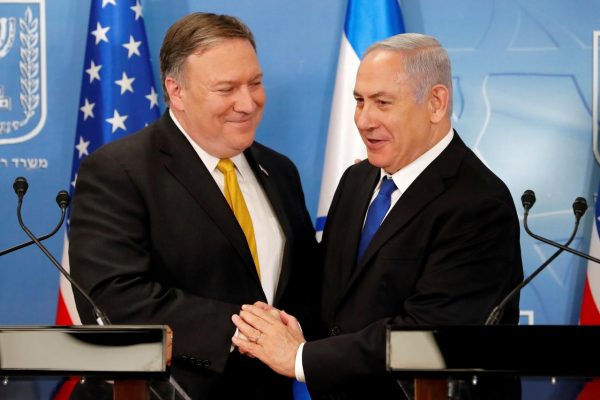
By Philip Giraldi • Unz Review • September 3, 2019
Two years ago I wrote an article entitled “America’s Jews Are Driving America’s Wars.” Though I made clear in the piece that I was writing about specific, identifiable Jews who fund and staff the think-tanks and foundations that make up the Israel Lobby, I was immediately fired by the Editor of The American Conservative (TAC) magazine and website, a timid little man who had been trying to get rid of me for some time. He evidently wished to do so because I did not share his “restraint” in my allusions to Jewish power in the United States and was particularly incensed over my suggestion that when Zionist propagandists like Bill Kristol appear on television the network should be required to display a warning label under the picture advising that Kristol was toxic.
As I had been writing for TAC for fifteen years and had been regarded as very popular among the magazine’s supporters, my dismissal was noted by many. I therefore followed up with a second article entitled “How I got fired,” which, inter alia, noted that Pat Buchanan, the TAC co-founder, had pretty much written the same thing that I did back in 2003 in a famous essay entitled “Whose War?”, though he had definitely been more polite than I was.
Pat Buchanan continues to be one of the few publicly visible political analysts currently active who dares to tell it like it is when it comes to Israel’s power in America. His article last week “Will Israel’s War Become America’s War” as always gets to the heart of the problem, i.e. that the completely contrived “special relationship” with Israel could easily lead the United States into another totally unnecessary war or even a series of wars in the Middle East.
Pat starts with “President Donald Trump, who canceled a missile strike on Iran after the shoot-down of a U.S. Predator drone to avoid killing Iranians, may not want a war. But the same cannot be said of Bibi Netanyahu.” He observes that Israeli Prime Minister Netanyahu is facing re-election on September 17th, and though most polls indicate that he will win, the opposition to him is strong based on his personal corruption and his pandering to the country’s most extreme right-wing parties. So Bibi is concerned that he might lose and even go to jail and there is nothing like a little war to make a leader look strong and righteous, so he is lashing out at all his neighbors in hopes that one or more of them will be drawn into what would be for Israel, given its massive military superiority, a manageable confrontation.
Buchanan sums up Netanyahu’s recent escalation, writing that on “Saturday, Israel launched a night attack on a village south of Damascus to abort what Israel claims was a plot by Iran’s Revolutionary Guards’ Quds Force… Sunday, two Israeli drones crashed outside the media offices of Hezbollah in Beirut. Israel then attacked a base camp of the Popular Front for the Liberation of Palestine-General Command in north Lebanon. Monday, Israel admitted to a strike on Iranian-backed militias of the Popular Mobilization Forces in Iraq. And Israel does not deny responsibility for last month’s attacks on munitions dumps and bases of pro-Iran militias [also] in Iraq. Israel has also confirmed that, during Syria’s civil war, it conducted hundreds of strikes against pro-Iranian militias and ammunition depots to prevent the transfer of missiles to Hezbollah in Lebanon.”
So, Israel has staged literally hundreds of attacks against targets in Lebanon, Syria and now Iraq while it is also at the same time shooting scores of unarmed demonstrators inside Gaza every Friday. Netanyahu has also threatened both perennial foe Iran and the Houthi rebels in Yemen. As the Jewish state is not at war with any of those countries it is engaging in war crimes. Both Hezbollah in Lebanon and the Iranian Revolutionary Guard Force are vowing revenge.
Pat Buchanan goes on to make the case that Netanyahu is willy-nilly pulling the United States into a situation from which there is no exit. Indeed, one might well conclude that the trap has already been sprung as the Trump Administration is reflexively blaming Israel’s actions on Iran. The Jewish state’s escalation produced a telephone call to Bibi by American Secretary of State Mike Pompeo promising that the United States would unconditionally support Israel. Vice President Mike Pence also joined in, boasting of a “great conversation” with Netanyahu and tweeting that “The United States fully supports Israel’s right to defend itself from imminent threats. Under President @realDonaldTrump, America will always stand with Israel!”
So, if a war in the Middle East does begin one can count on a number of developments in Washington, all of which favor Netanyahu. As Pompeo and Pence have made clear, the Trump Administration already accepts that whatever Israel does is fully justified and there are even reports that the White House will endorse Israeli annexation of all the illegal settlements on the West Bank at some point either before or immediately after the upcoming Knesset election to help Bibi. And don’t look for any dissent from even the most extreme views developing inside the White House or the State Department. The president has completely surrendered to the Israel Lobby while National Security Adviser John Bolton, Pence and Pompeo are all outspoken supporters of war with Iran. And nearly all the important government posts dealing with the Middle East are staffed by Jewish Zionists, to include the president’s son-in-law and two Donald Trump lawyers. The most recent addition to that sorry line-up is Peter Berkowitz, who has been appointed head of the Policy Planning Staff at State. Berkowitz studied at the Hebrew University in Jerusalem and is co-founder and director of the “Israel Program on Constitutional Government.”
And Congress would also be singing the “amen” chorus in support of U.S. intervention to help the country it has ridiculously but nevertheless repeatedly described as America’s “best friend and closest ally.” The occupied mainstream media would echo that line, as would the millions of Christian Zionists and every one of the more than 600 American Jewish organizations that in one way, shape or form support Israel.
Buchanan warns that the U.S. could find itself in real trouble, particularly given the attacks on Iraq, where Washington still has 5,000 troops, hugely outnumbered by the local pro-Iranian militias. And American aircraft carriers could find themselves vulnerable if they dare to enter the Straits of Hormuz or Persian Gulf, where they would be in range of the Iranian batteries of anti-ship missiles. He concludes that a war for Israel that goes badly could cost Trump the election in 2020, asking “… have we ceded to Netanyahu something no nation should ever cede to another, even an ally: the right to take our country into a war of their choosing but not of ours?”
Philip M. Giraldi, Ph.D., is Executive Director of the Council for the National Interest, a 501(c)3 tax deductible educational foundation (Federal ID Number #52-1739023) that seeks a more interests-based U.S. foreign policy in the Middle East. Website is councilforthenationalinterest.org, address is P.O. Box 2157, Purcellville VA 20134 and its email is inform@cnionline.org.
Israel Uses Its Firepower, Far and Wide
By Paul R. Pillar | LobeLog | August 27, 2019
Israel recently has been expanding its military attacks across much of the Middle East, hitting multiple countries. The aggressive campaign far outpaces anything any adversaries of Israel have been doing to it, or even trying unsuccessfully to do to it.
Over the past two years Israel has used combat aircraft to conduct scores of attacks in Syria. Israel has stayed silent about most of this campaign of bombardment, but when it speaks it says the targets it hits are associated with Iran. The most recent widening of Israel’s assaults have involved Lebanon, including drone attacks on facilities in suburban Beirut associated with Hezbollah—a departure from the cease-fire established after the last Israeli-Hezbollah war.
The most dramatic geographic widening of the Israeli assault came last month with multiple attacks, reportedly conducted with F-35s, in Iraq—which, of course, does not even border Israel. Among the targets hit was one facility that is 500 miles from Israel but only about 50 miles from the Iranian border.
It is difficult to identify anything being fired in anger in the opposite direction that justifies such an expansive Israeli military campaign. In January of this year, Israel’s missile defense system intercepted a missile heading for the Israeli-occupied Golan Heights, but that is about as close as anyone in Syria, Lebanon, or Iraq has come lately to inflicting damage on Israel. Planned or failed attempts to inflict such damage all appear aimed at retaliating for Israel’s own attacks. Israel claimed that sorties it conducted this past weekend in Syria had thwarted an Iranian attempt to launch attack drones against Israel. That claim is unconfirmed, but it is quite plausible that, as suggested by Israeli sources, Iran was indeed planning such an operation to retaliate for the Israeli attacks last month in Iraq. One searches in vain for hostile operations that are unprovoked and not attempted tit-for-tat responses to Israel’s own actions.
The escalated Israeli military campaign exhibits some longstanding attributes of Israeli policies and practices. One is to assert a right to seek absolute security even if that means absolute insecurity for everyone else. The mere possibility of someone harming Israel is taken as sufficient reason to inflict certain harm on someone else. Israeli Prime Minister Benjamin Netanyahu, in commenting on the most recent Israeli operations in Syria, said that Israel “won’t tolerate attacks on its territory.” Evidently that means asserting the privilege of attacking anyone else’s territory, even if those countries have not already attacked Israel.
Domestic politics figures into such matters, in Israel as elsewhere. With an Israeli election looming, Netanyahu has a political reason to use aggressive operations to bolster his image as a tough-minded guardian of Israeli security.
The operations also are part of the larger anti-Iran theme that the Israeli government uses to keep a regional rival weak, preclude any rapprochement between that rival and the United States, blame someone other than itself for all the ills of the region, and distract international attention from subjects involving Israel that Netanyahu’s government would rather not talk about. The Israeli government wants to retain Iran permanently as a perceived threat, loathed and isolated, rather than to negotiate away any issues or problems involving Iran. Netanyahu demonstrated this when, after years of sounding an alarm about a possible Iranian nuclear weapon, he opposed the very agreement that closed all possible paths to such a weapon. His government demonstrated it again this week when it opposed President Trump’s expressed willingness to meet and negotiate with Iranian President Hassan Rouhani.
Israel’s heightened military aggressiveness has multiple bad consequences, in addition to being an affront to the sovereignty of multiple regional states. It pours gasoline on fires in places that need de-escalation, not escalation. It is certain to provoke more attempts at retaliation. Hezbollah Secretary-General Hassan Nasrallah was quite explicit in promising such retaliation in response to the recent Israeli attacks in Lebanon.
Given the close U.S. association with Israel, the Israeli attacks disadvantage the United States in its own relations with the affected states, in the form of increased resentment and lessened willingness to cooperate with Washington. This type of reaction is appearing today in Iraq, as a result of the Israeli attacks there. The episode has been the occasion for a powerful bloc in the Iraqi parliament to call for the withdrawal of all U.S. troops from Iraq and for shouts of “Death to America” to accompany “Death to Israel” at the funeral of one of those killed in the attacks.
No benefits offset these harmful consequences. It is useful to recall the previous time, before last month, that Israel attacked Iraq: the bombing of an Iraqi nuclear reactor in 1981. Far from setting back the Iraqi development of a nuclear weapon, the attack energized and accelerated what until then had been a semi-moribund program. Armed attacks on states have a way of provoking that sort of reaction.
U.S. policy has failed to recognize these realities. Following the attacks in Iraq, the Pentagon did issue a statement—in the course of denying direct U.S. involvement—that “we support Iraqi sovereignty and have repeatedly spoken out against any potential actions by external actors inciting violence in Iraq.” But such mild language will hardly deflect Israel from its present course when Secretary of State Mike Pompeo calls Netanyahu and, according to the official State Department statement, “expressed support for Israel’s right to defend itself from threats posed by the Iranian Revolutionary Guard Corps and to take action to prevent imminent attacks against Israeli assets in the region.”
It is not just current U.S. policy that fails to recognize realities, but also wider discourse in the United States about troubles in the Middle East. A question that needs to be pondered carefully is, “Who is destabilizing the Middle East?” Stoked by the Trump administration’s own unrelenting campaign of hostility toward Iran, the stock and overly simple answer has been, “Iran.” That is an insufficient answer even when excluding Israel from the picture. And Israel does get excluded, and excused, for the variety of reasons—ranging from religious doctrine and historical legacies to the inner workings of domestic U.S. politics—for the strong U.S. favoritism toward Israel.
It may be too much to ask for consistency rather than hypocrisy in such matters, but the rest of the world easily perceives the hypocrisy. It at least would be honesty to acknowledge that the U.S. approach toward the region has been shaped not by which players are or are not destabilizing the region, but instead by U.S. fondness for some players rather than others.
Paul R. Pillar is Non-resident Senior Fellow at the Center for Security Studies of Georgetown University and an Associate Fellow of the Geneva Center for Security Policy. He retired in 2005 from a 28-year career in the U.S. intelligence community. His senior positions included National Intelligence Officer for the Near East and South Asia, Deputy Chief of the DCI Counterterrorist Center, and Executive Assistant to the Director of Central Intelligence.
Israel partisan Peter Berkowitz named head of State Dept Policy Planning

Peter Berkowitz flanked by Paul Singer (L) and Lawrence Mone (R) at 2018 Manhattan Institute event. Singer, chair of the Manhattan institute’s board of trustees, is a hedge fund billionaire known for supporting Israel causes. Mone is president of the institute. Its board has included numerous Israel partisans, includiing Daniel Loeb, a backer of the Emergency Committee for Israel; Weekly Standard editor William Kristol; Project for the New American Century director Mark Gerson; former American Enterprise Institute chairman Bruce Kovner; and Michael Fedak, board member of AIPAC spinoff Washington Institute for Near East Policy.
By Alison Weir | If Americans Knew | August 30, 2019
The new official in charge of the State Department’s long-term strategic thinking is yet another neoconservative with close ties to Israel.
Politico reports that the State Department’s new head of policy planning will be longtime Israel partisan and neocon Peter Berkowitz. According to Politico, the position “puts him in charge of long-term strategic thinking for the department.”
Politico reports that the announcement “came in an internal email to select State Department officials on Monday morning.” Berkowitz will specifically be in charge of the State Department’s Office of Policy Planning.
Berkowitz is extremely close to Israel. He received an M.A. degree from Israel’s Hebrew University in 1985, and currently teaches for the Tikvah Fund in Israel. He is the Co-founder and Director of the Israel Program on Constitutional Government, located in Tel Aviv. He has been on the advisory committee for the Center for Jewish Political Thought, a section within Israel’s Shalom Hartman Institute. Berkowitz has been the Tad and Dianne Taube Senior Fellow at the Hoover Institute (the Taubes donate to numerous Israeli organizations) and is on the faculty of the Hertog Foundation.
Berkowitz has written numerous articles about Israel, often for the neoconservative outlet, Weekly Standard. His fellow neocon, Stanley Kurtz, credits Berkowitz with causing South African jurist Richard Goldstone to recant after leading a fact-finding investigation whose findings Israel disliked. The investigation had determined that Israel had committed numerous war crimes in Gaza. The report’s findings were corroborated by a number of other investigations that found Israel had violated international law.
In one of his pieces, Berkowitz claimed that “No military in the history of warfare has made greater efforts in the face of grave national security threats to avoid the use of force or has tried harder, when obliged to fight, to protect noncombatants than the Israel Defense Forces. With the possible exception of the U.S. armed forces, no military has investigated itself as rigorously as the IDF. With the possible exception of the U.S. judiciary, no courts have done more to hold their military accountable than Israel’s. And with the possible exception of America, no democracy has gone further in wartime to legitimize dissent than Israel.”
Berkowitz’s contention flies in the face of documentary evidence compiled by Human Rights Watch, Amnesty International, Christian Aid, B’Tselem (also see this), the International Red Cross, Physicians for Human Rights, Reporters Without Borders, Foreign Service Journal, and even the U.S. State Department. According to Berkowitz, all of these agencies are wrong.
Berkowitz also penned a piece attacking Harvard Professor Stephen Walt and University of Chicago Professor John Mearsheimer for their essay in the London Review of Books and Harvard working paper about the Israel lobby. Berkowitz accused the professors of “myriad half-truths, gross distortions, ignorant assertions, and defective reasoning.” Mearsheimer and Walt’s findings were later published in a book by Farrar, Straus and Giroux, The Israel Lobby and U.S. Foreign Policy.
Trump had initially opposed neocons and kept them out of his administration. Although neocons are nominally Republicans, many had endorsed Hillary (and many now remain, at least on the surface, Democrats). As Trump came under escalating attack, however, he moved ever closer to billionaire campaign donor Sheldon Adelson (who funds many neocon enterprises) and eventually began naming neocons to positions of power, where they often drive policy.
Neocons in the Bush Administration promoted the disastrous war with Iraq, and Israel and its partisans are central in the demonization of Iran that has resulted in the sanctions against Iran and threats of still worse.
Alison Weir is executive director of If Americans Knew, president of the Council for the National Interest, and author of the best selling book Against Our Better Judgment: The Hidden History of How the U.S. Was Used to Create Israel.
Alabama GOP Approve Resolution on Expulsion of Ilhan Omar From US Congress – Report
Sputnik – August 28, 2019
Ilhan Omar, one of two Muslim lawmakers in the US Congress, gained notoriety following a series of statements in which she alleged that Jewish organisations bribed US lawmakers for their support of Israel and downplayed the 9/11 terror attacks by describing them as “some people did something”.
Alabama Republicans supported the resolution calling for the exclusion of Rep. Ilhan Omar from the US Congress, over the weekend, according to AI.com.
The resolution was introduced by state Rep. Tommy Hanes and calls on Alabama’s congressional delegation to “proceed with the expulsion process in accordance to Article 1, Section 5 of the U.S. Constitution.”
The resolution condemned Omar’s “rhetoric that explicitly runs counter to American values and patriotism,” noting that she falsely accused “U.S. armed forces of committing war crimes while on mission to liberate her home country of Somalia.”
Another paragraph of the document states that “Omar has a disturbing record of using anti-Semitic language that includes alleging Jewish money is used to buy American influence regarding its policy toward Israel.”
The resolution also suggests that the Democratic Representative “dismissed the 9/11 terror attacks” and “sympathized with a convicted terrorist” by advocating for “sentencing leniency,” apparently referring to a private speech by Omar to the Council on American-Islamic Relations (CAIR) she delivered earlier this year.
In particular, Omar has called on US Muslims to “make people uncomfortable” and “raise hell” in protest over what she describes as the second-class treatment of Muslims in America.
Behind Israel’s Bombing in Iraq’s Heartland
By Giorgio Cafiero – Consortium News – August 28, 2019
Iraq has felt the heat from escalating tensions between the U.S. and Iran this summer as the White House moves ahead with its “maximum pressure” campaign against the Islamic Republic. Also clear is that Israel and Iran’s proxy wars in the region have spilled into Iraq too. Last month, Israel carried out its first attacks on targets in Iraq since Operation Opera on June 7, 1981.
On July 19, Israel struck a target in the Salahuddin governorate, three days before another attack against Camp Ashraf, located within close proximity to Iran. According to al-Ain, the attack against Camp Ashraf killed 40 members of Iran’s Islamic Revolutionary Guard Corps (IRGC) and Iranian-sponsored Iraqi Shi’a militiamen. On Aug. 12, a blast occurred at a Popular Mobilization Units (PMU) arms depot in the Iraqi capital, allegedly carried out by an Israeli aircraft and resulting in one death and 29 injuries. Other Israeli attacks followed on the 19 and 25 of August. Several days ago, U.S. officials confirmed that Israelis were indeed behind the July 19 attack in Salahuddin governorate, which was suspected from the beginning.
Such actions highlight how Israel seeks to expand its theater of confrontation with the Iran to Iraq. Put simply, the Israelis are reacting with increasing aggression against the extent of Iranian-sponsored militias in Iraq and elsewhere in the Middle East that provide Tehran greater leverage vis-à-vis Israel.

Pompeo: Not against further Israeli strikes. (YouTube)
Important questions surround the U.S. role in these Israeli attacks against PMU targets in Iraq. It is difficult to imagine how the Trump administration could have not given Israel the green light to carry out these attacks. As Karim al-Alwei, an Iraqi parliamentarian, explained, “the U.S. controls Iraqi air space” thus “no planes, including Iraqi jets or helicopters, can overfly the area without U.S. knowledge or permission.” Only seven months ago, U.S. Secretary of State Mike Pompeo reportedly raised the topic of Iranian missiles in the hands of PMU forces in Iraq while meeting with Iraq’s Prime Minister Adel Abdul-Mahdi, stating that Washington would not be against any future Israeli military operations targeting such facilities.
Unclear is whether the Israelis used Syrian, Turkish, or Saudi airspace to reach their targets in Iraq. Regardless, it is a safe bet that the Saudi leadership, which maintains a tacit partnership with Israel largely based on a common perception of Tehran as a threat to its interests, welcomes such Israeli action in Iraq. As Saudi and Israeli officials see Iranian-sponsored Shi’a militia in Iraq, Syria, and Lebanon as a major threat, the Israeli strikes in Iraq will likely push the Israelis and Saudis even closer together.
Other Targets of Israel
Tel Aviv has dramatically increased the intensity and reach of its military campaign to weaken Tehran-backed militias in the region, waging attacks not only in Iraq, but also in Syria and Palestine too, as well as recently sending two drones into Lebanon. Into the chaos of Syria the Israelis have carried out many strikes against Iran-related targets since the civil war began in 2011. Yet by attacking targets in Iraq, Israel is showing its determination to expand the theater of its proxy war with Iran.
Although difficult to predict the long-term ramifications of these blasts in Iraq, their impact will likely be destabilizing, given Iraq’s fragile security. A major concern for officials in Baghdad is that in the days, weeks, and months ahead Iraq—as well as its airspace—could be the location of intensified violence as the U.S., Israel, and Iran challenge each other’s actions. Iraq will have a difficult time staying neutral between Washington and Tehran.
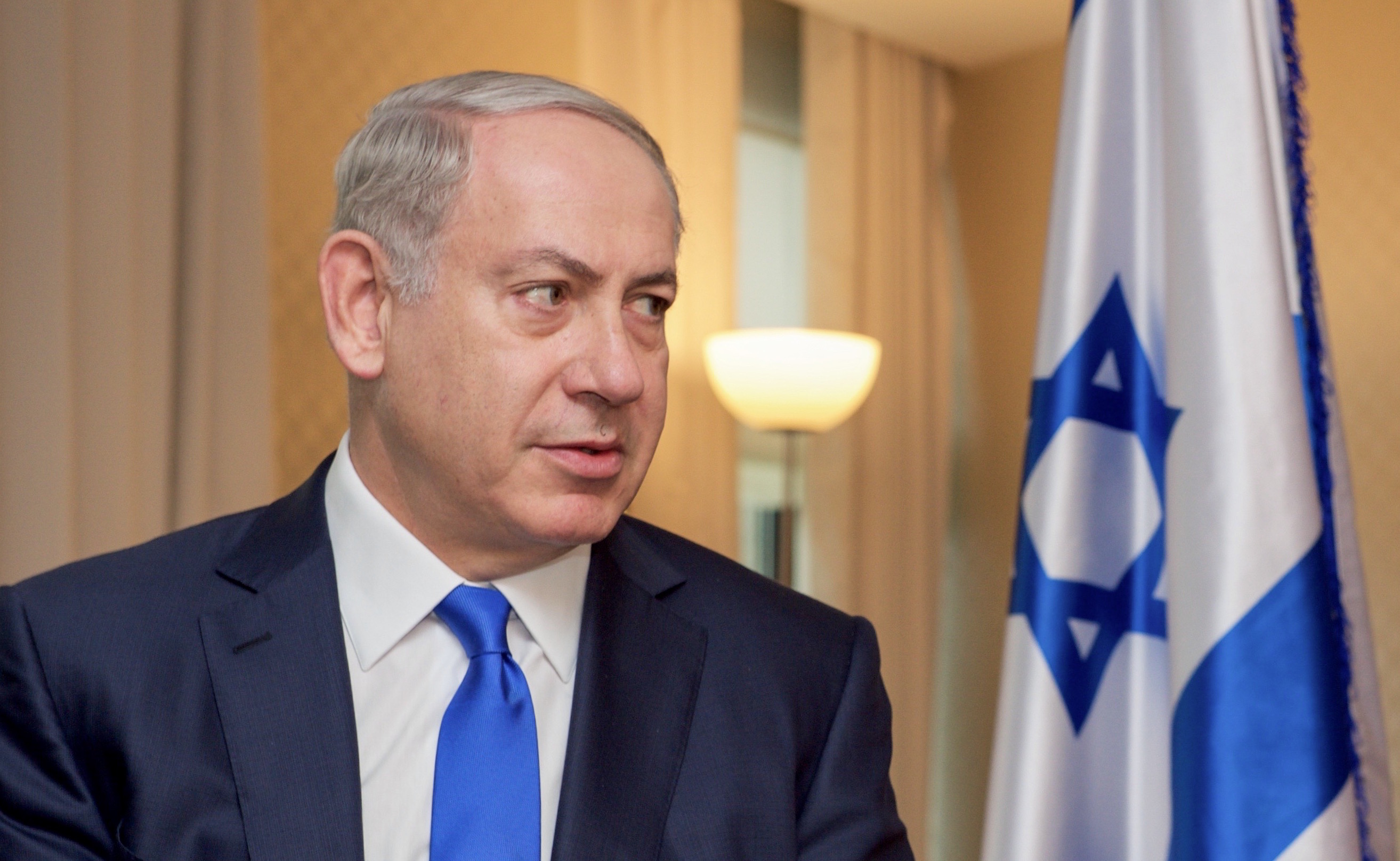
Netanyahu: More coming. (Wikimedia Commons)
Prime Minister Benjamin Netanyahu said Aug 19, “Iran has no immunity, anywhere… we will act and currently are acting against them, wherever it is necessary.” Three days later the Israeli leader went further, suggesting his country was perhaps involved in these attacks in Iraq, declaring, “We are operating in many areas against a state that wants to annihilate us.”
By making such bold moves, Israel is taking major risks. If such attacks continue in Iraq against Tehran-sponsored non-state actors near the Iranian border, Iran will likely respond. Perhaps the Iranians will put air defense capabilities in the hands of Iraqi Shi’a militias to enable such factions to fend off future Israeli attacks. Also possible is that Tehran would carry out limited strikes in retaliation at a time and place of the Iranian leadership’s choosing, perhaps targeting Israeli positions in the occupied Golan Heights of Syria.
Israeli strikes, which constitute a flagrant violation of Iraq’s sovereignty, may come with major costs for U.S. interests in Iraq. Given that an influential Iran-based Shi’a cleric, Grand Ayatollah Kazim al-Haeri, reacted to such Israeli attacks with a fatwa forbidding America’s military presence from continuing in Iraq, and the fact that many in Iraq and other Arab countries see the U.S. as responsible for Israeli actions against PMU targets, the roughly 5,000 American troops in the country could find themselves in the crosshairs of what has quickly become an escalating Israeli-Iranian proxy war waged in Iraq.
Israel’s bombing of Iraq will have major implications for the Washington-Baghdad relationship too, particularly given that the Iraqi government is attempting to bring the heavily armed Shi’a militias under its control. If the U.S. administration fails to prevent Israel from turning Iraq into more of a battleground in Tel Aviv’s proxy wars with Tehran, Iraq’s fragile stability will be further undermined. Under such circumstances, Iran could quickly capitalize on such conditions to bring Baghdad closer to Tehran at a time in which U.S. influence in Iraq—and the region at large—continues to wane.
Unquestionably, perceptions across Iraq that the U.S. is to blame for Israel’s actions will push more Iraqis to the conclusion that the White House’s “maximum pressure” agenda against Iran is directly undermining Iraq’s basic interests in upholding sovereignty and moving toward a more stable future in which the country is not implicated in greater regional crises involving multiple nations.
Giorgio Cafiero (@GiorgioCafiero) is the CEO of Gulf State Analytics (@GulfStateAnalyt), a Washington-based geopolitical risk consultancy.
Will Bibi’s War Become America’s War?
By Pat Buchanan • Unz Review • August 27, 2019
President Donald Trump, who canceled a missile strike on Iran, after the shoot-down of a U.S. Predator drone, to avoid killing Iranians, may not want a U.S. war with Iran. But the same cannot be said of Bibi Netanyahu.
Saturday, Israel launched a night attack on a village south of Damascus to abort what Israel claims was a plot by Iran’s Revolutionary Guards’ Quds Force to fly “killer drones” into Israel, an act of war.
Sunday, two Israeli drones crashed outside the media offices of Hezbollah in Beirut. Israel then attacked a base camp of the Popular Front for the Liberation of Palestine-General Command in north Lebanon.
Monday, Israel admitted to a strike on Iranian-backed militias of the Popular Mobilization Forces in Iraq. And Israel does not deny responsibility for last month’s attacks on munitions dumps and bases of pro-Iran militias in Iraq.
Israel has also confirmed that, during Syria’s civil war, it conducted hundreds of strikes against pro-Iranian militias and ammunition depots to prevent the transfer of missiles to Hezbollah in Lebanon.
Understandably, Israel’s weekend actions have brought threats of retaliation. Hezbollah Secretary-General Hassan Nasrallah has warned of vengeance for the death of his people in the Syria strike.
Quds Force General Qassem Soleimani reportedly tweeted from Tehran, “These insane operations will be the last struggles of the Zionist regime.” Lebanese President Michel Aoun called the alleged Israeli drone attack on Beirut a “declaration of war.”
Last Friday, in the 71st week of the “Great March of Return” protests on Gaza’s border, 50 Palestinians were wounded by Israeli live fire. In 16 months, 200 have died from gunshots, with thousands wounded.
America’s reaction to Israel’s weekend attacks? Secretary of State Mike Pompeo called Netanyahu to assure him of U.S. support of Israel’s actions. Some Iraqi leaders are now calling for the expulsion of Americans.
Why is Netanyahu now admitting to Israel’s role in the strikes in Lebanon, Syria and Iraq? Why has he begun threatening Iran itself and even the Houthi rebels in Yemen?
Because this longest-serving prime minister in Israeli history, having surpassed David Ben-Gurion, is in the battle of his life, with elections just three weeks off. And if Netanyahu falls short — or fails to put together a coalition after winning, as he failed earlier this year — his career would be over, and he could be facing prosecution for corruption.
Netanyahu has a compelling motive for widening the war against Israel’s main enemy, its allies and its proxies and taking credit for military strikes.
But America has a stake in what Israel is doing as well.
We are not simply observers. For if Hezbollah retaliates against Israel or Iranian-backed militias in Syria retaliate against Israel — or against us for enabling Israel — a new war could erupt, and there would be a clamor for deeper American intervention.
Yet, Americans have no desire for a new war, which could cost Trump the presidency, as the war in Iraq cost the Republican Party the Congress in 2006 and the White House in 2008.
The United States has taken pains to avoid a military clash with Iran for compelling reasons. With only 5,000 troops left in Iraq, U.S. forces are massively outmanned by an estimated 150,000 fighters of the pro-Iran Popular Mobilization Forces, which played a critical role in preventing ISIS from reaching Baghdad during the days of the caliphate.
And, for good reason, the aircraft carrier Abraham Lincoln, with its crew of 5,600, which Trump sent to deter Iran, has yet to enter the Strait of Hormuz or the Persian Gulf but remains in the Arabian Sea off the coast of Oman, and, at times, some 600 nautical miles away from Iran.
Why is this mighty warship keeping its distance?
We don’t want a confrontation in the Gulf, and, as ex-Admiral James Stavridis, former NATO Supreme Allied Commander, says:
“Anytime a carrier moves close to shore, and especially into confined waters, the danger to the ship goes up significantly. … It becomes vulnerable to diesel submarines, shore-launched cruise missiles and swarming attacks by small boats armed with missiles.”
Which is a pretty good description of the coastal defenses and naval forces of Iran.
Netanyahu’s widening of Israel’s war with Iran and its proxies into Lebanon and Iraq — and perhaps beyond — and his acknowledgement of that wider war raise questions for both of us.
Israel today has on and near her borders hostile populations in Gaza, Syria, Lebanon, Iran and Iraq. Tens of millions of Muslims see her as an enemy to be expelled from the region.
While there is a cold peace with Egypt and Jordan, the Saudis and Gulf Arabs are temporary allies as long as the foe is Iran.
Is this pervasive enmity sustainable?
As for America, have we ceded to Netanyahu something no nation should ever cede to another, even an ally: the right to take our country into a war of their choosing but not of ours?
Copyright 2019 Creators.com.
Iraq’s Hashd al-Sha’abi downs spy drone
Press TV – August 25, 2019
Forces from the Popular Mobilization Units (PMU) in Iraq have shot down a spy drone in the country’s northern Province of Nineveh.
The al-Sumaria television reported on Sunday that the unmanned aerial vehicle (UAV) was targeted by the air defenses of the 50th Brigade of Hashd al-Sha’abi while it was approaching PMU bases in Nineveh.
It was not immediately clear who was operating the drone.
The Iraqi forces had shot down another spy drone on Thursday as it was flying in the vicinity of the 12th Brigade of Hashd al-Sha’abi and over the outskirts of the capital, Baghdad.
Last week, a number of powerful blasts rocked a position held by the PMU, next to the strategic Balad airbase, which hosts US forces and contractors and which is located about 80 kilometers north of Baghdad.
Hashd al-Sha’abi commanders confirmed that the intended target of the attack was the group’s position near the Balad base.
Hashd al-Sha’abi forces played a major role in the liberation of Daesh-held areas to the south, northeast, and north of Baghdad ever since the terrorists launched an offensive in the country in June 2014.
Some Iraqi officials have said the strikes were conducted by the Israeli regime.
Earlier, senior Iraqi cleric Ammar al-Hakim called on Iraqi Prime Minister Adel Abdul-Mahdi to adopt effective measures to defend the country’s sovereignty and territorial integrity in the face of strong indications that the US and Israel were involved in the series of recent attacks on PMU positions.
Two PMU fighters killed in drone strikes near Syria border
Later in the day, Iraqi popular forces issued a statement, saying that two of their fighters, including a field commander, were killed in strikes by an unidentified drone close to the Syrian border in Anbar Province.
According to Almayadeen news website, the statement added that the strike, which targeted the PMU’s 45th brigade, took place 15 km (9 miles) from the border.
An unspecified number of PMU fighters were also injured in the attack.
Reuters quoted a security source as saying that there were two air strikes. One struck the local headquarters of the brigade while the other struck a convoy of cars leaving the building.
There has been no immediate claim of responsibility for the attacks.
Featured Video
Integrity Initiative: UK-funded network framed dissent as Russian disinformation for years
or go to
Aletho News Archives – Video-Images
From the Archives
Why Saudi Ties to 9/11 Mean U.S. Ties to 9/11
By Kevin Ryan | Dig Within | September 27, 2015
Media interest in Saudi Arabian connections to the crimes of 9/11 has centered on calls for the release of the 28 missing pages from the Joint Congressional Inquiry’s report. However, those calls focus on the question of hijacker financing and omit the most interesting links between the 9/11 attacks and Saudi Arabia—links that implicate powerful people in the United States. Here are twenty examples. … continue
Blog Roll
 Aletho News
- Iraqi Resistance faction links arms to sovereignty, questions US exit
- Cannon fodder no more… South Korea rejects Trump’s pressure to join his criminal war on Iran
- Neria Leiter Was A Legitimate Military Target
- Integrity Initiative: UK-funded network framed dissent as Russian disinformation for years
- ‘We don’t seek permission to defend our country’: Snippets from President Pezeshkian’s UNGA address
- NATO chief wants Europeans to fight American wars [for Israel]
- German chemicals giant reveals details of downsizing
- Refaat Al-Areer Was The Canary In The Coal Mine In Israel’s War On The Truth
- Israeli election committee bars candidate from Knesset race over Gaza war opposition
- French-Lebanese man files war crimes complaint over Israeli attacks
- If Americans Knew
- Aid, reconstruction, and Israel’s history of obstruction in Gaza
- Trump administration digs an ever-deeper hole of complicity in genocide – Daily Update
- US-Israel $2.8 Billion Arms Deal, 40,000-Bomb Supply Faces New Gaza Complicity Accusations
- Caught on Tape: AIPAC CEO Boasted of Controlling Trump’s National Security Officials
- Why Hamas Attacked Israel in October 2023 – Israeli professor Ilan Pappé
- They see them, then kill them: Israeli quadcopters track, deliberately target civilians in Gaza
- Winter could turn Gaza’s treacherous, war-damaged buildings into deathtraps
- Majority of Democratic Voters Want to Prosecute Both Biden and Trump Administration Officials Over Gaza
- As Gaza languishes, world leaders gather at the UN – Daily Update
- Sanctions are collective punishment: immoral and self-defeating
- No Tricks Zone
- New Study: Earth And Venus Surface Warmth Largely Explained By Convection And Lapse Rate, Not CO2 Or Radiation
- 2025 Nature Paper Claiming Worsening Global Drought Gets RETRACTED …Heavily Flawed
- New Study: ‘Global Drought Shows No Detectable Recent Acceleration Under Climate Warming’
- Economic Masterminds: German Socialists Suggest Taxing Productivity Gains Stemming From Using AI
- The South China Sea Has Not Been Cooperating With The Climate Change Narrative
- Energy Crisis: Germany Enters Heating Season With Historically Low Gas Reserve Fill Levels
- New Study: The Antarctic Ice Sheet Gained Mass From 2020-2024 Due To Staggering Snow And Ice Accumulation
- Study: Ocean Heating Rates From Thousands Of Years Ago ‘Dwarf’ Modern Ocean Heating Rates
- Climate Extremists Target, Attack Large-Scale Power Grid Infrastructure In Germany!
- New Study: Antarctic Ice Melt Has Contributed Less Than 1 Centimeter To Sea Level Rise In The Last 30 Years

