Iran should respond in kind to Canada’s sale of diplomatic properties: MP
Press TV – September 15, 2019
A senior member of the Iranian parliament has called for a decisive response to Canada’s sale of Iranian diplomatic properties in Ottawa and Toronto, saying Canadian shipments crossing the Strait of Hormuz in the Persian Gulf should be confiscated in response to the move.
“An order should be issued to confiscate ships and goods that set off from the Hormuz region to the destination of Canada,” said Heshmatollah Falahatpisheh on Sunday, adding, “This measure should be adopted as soon as possible.”
The comments came two days after Iranian Foreign Ministry warned Canada that the country should await consequences if it does not revoke a decision to sell Iranian diplomatic properties worth tens of millions of dollars in an alleged bid to compensate so-called victims of terror.
In a Friday statement, the ministry strongly condemned the move as “a clear breach of the international law,” and urged the Canadian government to immediately return the properties.
Foreign Ministry Spokesman Abbas Mousavi said Tehran will take action by itself to restore its rights based on international regulations if Ottawa fails to immediately revoke the unlawful decision and compensate the damages.
Falahatpisheh, a senior member of parliament’s committee on national security and foreign policy, said that courts in Iran should also be authorized to seize Canadian government properties in Iran.
He said, however, that responding in kind to the ruling issued in August by the Ontario Superior Court of Justice to sell the two Iranian-owned buildings would not suffice as Canada has not enough assets in Iran that could be subject to a similar court verdict.
The lawmaker, who made the remarks in an interview with the parliament news service, said Iran had a duty to decisively counter the sale of the properties in Canada, a move which he said was clearly influenced by political lobbies who seek to “plunder” Iran’s wealth.
Iran Was Ready to Attack US Bases in Case of Retaliation after US Drone Downing, Says IRGC General
By Nader Talebzadeh | American Herald Tribune | September 15, 2019
Brigadier General Amir Ali Hajizadeh, commander of the aerospace unit of the Islamic Revolution Guards Corps (IRGC), says Iran was ready to attack US bases in the region if the country tried to retaliate after Iran downed its intruding spy drone over the Strait of Hormuz.
“As was mentioned in previous interviews, if they wanted to attack, we would have attacked US bases with missiles, and we were ready, and we would have targeted the US base in al-Udeid in Qatar or al-Dhafra in the Emirates or their ships in the Gulf of Oman or Arabian Sea, and if they had hit us, we would have hit them back,” General Hajizadeh said in an interview with the Nader’s Show, hosted by Nader Talebzadeh.
During the interview, General Hajizadeh answered some questions from former CIA officer Phillip Giraldi, journalist and author Pepe Escobar and former Pentagon officer and political analyst Michael Maloof.
“Of course, they knew and had intelligence and were aware of the consequences of that eventuality,” he said. “But if that incident had occurred, the conflict would have continued and intensified.”
US busy spying 12,000 kilometers away from own borders: Hajizadeh
He pointed out that the US presence in the Middle East is not justified.
“If we take a look at the map of the world, if free-thinking people around the world and in America take a look, they will see that the distance between Iran and the United States is around 12,000 kilometers. Twelve thousand kilometers between us and America, and America has covered this distance and has come close to our borders, it builds bases and is busy spying,” he remarked.
In other words, the general continued, the issue of America’s security is not necessarily relevant to this region, and if a nation wants to defend itself it can invest in its neighboring area, but “12,000 kilometers away” cannot be viewed seriously.
“Their numerous spy planes are busy flying around outside of Iran’s borders and everybody knows that their intelligence activities and collection with manned or unmanned planes is of a significant magnitude,” Hajizadeh said, adding, “In this recent incident, we actually defended ourselves. The MQ-4C, an advanced US spy plane, entered into Iranian airspace. Yes, it is correct, it only entered into [Iran] a few kilometers, but in any case, we don’t tolerate even a few meters.”
He emphasized that his forces warned the US drone four times before shooting it down “but they did not pay any attention.”
The top Iranian general noted that the IRGC forces could also shoot down an American P8 spy plane, which had a crew of approximately 35, but decided not to do that.
Hajizadeh said the US has no reason to build military bases in the Middle East and will be driven out of the region inevitably, because “we in the region witnessed nothing but insecurity and enmity so far.”
He stated that the US spends American taxpayers’ money in a “very destructive” way in the region. “We witness civil war in Afghanistan, mass killings occurred in Iraq in these years, insecurity in the region, disease, environmental destruction. With this money that has been spent by the Americans, militant groups like Daesh (ISIS) and al-Qaeda were created. People around the world have now realized that America has spent this money and is now supporting Saudi Arabia whose crown prince murdered [journalist Jamal] Khashoggi.”
‘Would Americans tolerate if we sent our drones to their coasts?’
The IRGC general asked the American people what their reactions would be if Iran sent its drones along the US coasts. “In other words, if we send our drones and began doing these things, would the US tolerate it? Naturally, they wouldn’t tolerate it.”
He also rejected US President Donald Trump’s claim that the US had been “cocked and loaded” to retaliate against Iran but he decided to call off the mission.
“Well, let me say that this is not true,” said General Hajizadeh, adding, “This is contrary to reality. Look, it’s possible that within the US military, among politicians’ discussions might have occurred, but they didn’t reach that decision. Why? Because we defended ourselves and downed the US spy drone. With what excuse did they want to attack?”
General Hajizadeh: Nobody wants war or conflict
The chief of the IRGC aerospace unit also said one of the things that “we and the Americans have in common is that nobody wants war or conflict, but if an unintentional conflict occurs, it is possible that it results in a war.”
“Because of the tensions and the sensitive situation, our region is like a powder keg,” he cautioned. “When these contacts become too close, when forces come in contact with one another, it is possible that a conflict happens because of a misunderstanding.”
“In other words, it’s possible that the leaders in Iran and in the US do not want war, but the forces and troops that are in contact with one another in the region enter into an unintentional war. So, logic dictates that America keeps its distance.”
Asked by Mr. Maloof about the decision-making process of downing the American drone and whether it was ordered at the highest levels, General Hajizadeh said Iranian forces at any level have specific directives on how to act in different circumstances.
“Look, we have directives that we issue to our units,” he explained. “For example, we specify that if a plane in these circumstances, with these conditions, is closing in within a certain distance, you give a warning. But if it goes beyond certain conditions, you confront and shoot it down.”
Defensive units possess higher authority compared to offensive units, says Hajizadeh
“Naturally, we have sets of authorities at various levels of the Guards, some at the command level and some at the unit level at the borders. In other words, they have a set of authorities. For example, it could be that launching a missile requires higher level authority, which is the case everywhere around the world. If for example, an airplane wants to bomb a location, a decision has to be taken. However, on matters of defense and air defense, it could be that a junior officer manning his post, when he identifies a situation and discovers something and sees that it is not a friendly force, has the duty to confront. He has this directive.”
He further explained that offensive units require authority at higher levels compared to defensive units, in which authority is granted to lower levels.
Hajizadi continued, “For instance, I’m the commander of the Aerospace Force, and I was informed only after the drone was targeted and downed. It was not the case that I was informed previously and it wasn’t the case that I stayed up and was ready to give orders. No, those units are at the border and decide themselves and have authority.”
The general noted that a similar incident occurred a few years ago, when Iranian forces shot down an Israeli spy plane which was over Natanz in the central part of the country, emphasizing, “There as well, they had the authority because it had entered their area. Naturally, they confronted it and downed it.”
Asked whether his forces identified the intruding American drone before they shot it down, Hajizadeh said, “Yes. The units in the area identified the aircraft. The difference between the Global Hawk RQ4 and the MQ4 is very slight, and the units there identified it but the units that publicized it didn’t make that distinction, but after it was downed, the precise model was established. And after it was downed and they informed me, they informed me that it was a MQ-4 drone, a very large spy aircraft.”
‘Probability of a US retaliation was very low’
Hajizadeh argued that the probability of a US response was very low after the incident “because we had warned them four times, we didn’t do it over their base, we did it over our space.”
Considering the fact that Iran was capable of targeting the P-8 but refrained from doing so, the Americans understood that it was a warning to the US, the Iranian commander said.
“Yes, it is true that they lost a very large aircraft, but nobody was killed and this was a warning that Mr. Trump also acknowledged and thanked us for choosing to [only] strike the unmanned aircraft,” he added.
He reiterated that the incident could have easily turned into a war should the Americans decided to retaliate.
Asked by Mr. Escobar whether the 3rd Khordad air defense system and its parts were produced domestically, General Hajizadeh said “We have been under an arms embargo for the last 40 years, including the eight years of the war and the last 30 years as well. We haven’t been able to buy anything from the world to bring here.”
He said Iran is even banned from purchasing automotive spare parts, and that France and some other countries with which Iran has contracts, don’t deliver automotive spare parts to the Islamic Republic.
The same goes for aircraft parts and even in very trivial things we are sanctioned, he said.
“So naturally, the import sector for weapons is very limited and we didn’t have many options. Over these years we couldn’t even import simple things like radars which every country needs for its defense. We can’t attack anybody with that radar, but it can detect if an aircraft is passing or not, and even this they wouldn’t sell to us and this had dire consequences.”
Sanctions made Iran self-sufficient: IRGC aerospace unit chief
The general highlighted that Iran became self-sufficient as a result of the sanctions which inflicted heavy losses on Iran, especially during the eight-year war which was imposed by Iraq.
Noting that Iran’s military achievements are incredible, Hajizadeh said, “Our domestic systems are not just one or two examples. Thousands of weapons systems are manufactured domestically and this would be impossible with imports and bringing things from abroad. We are self-sufficient and our dynamism will continue.”
Asked by Mr. Maloof if a conflict between Iran and the US-backed terrorist groups such as ISIS is on the horizon, General Hajizadeh said “Look, we’ve been fighting them in the last seven-eight years now, in Iraq, Syria, Lebanon and even in Iran and now we are continuing to fight with their remnants and the vast majority of them have been destroyed and they scattered around the region.”
“We know that they are being supported by America and at various times during the conflicts they conducted airdrops for them, supplied them, transported their commanders and they supported them. They would smuggle Iraqi oil under US protection and they would sell the crude oil. They are being supported by America and in Afghanistan this is also the case.”
“But the fighting is not going to be larger than the fighting that happened in the past and the majority of them have been eradicated and destroyed,” he added.
‘U.S. leaders, commanders not having the will for a war’
Asked Mr. Giraldi about the possibility of an Iran-US conflict, the IRGC general said, “We do not see the American military or the American political leaders having the will for a war. But all of this comes down to a decision and ultimately, it’s possible that a decision will be taken in the future.”
He went on to say, “We do not see such situation in America, US bases, the state of the US military or the morale of American officers and soldiers being on that level. But we ourselves have a duty, and with the management of the Supreme Leader, we always view the future with skepticism and we say that a big war will occur. That is, in the military we are always preparing ourselves for a war.”
“In other words, if a rational nation wants to avoid war, it has no option but to prepare itself for war,” he argued. “Therefore, it’s on this basis that we are permanently preparing ourselves, developing our capabilities, and fulfilling our intelligence and operational duties.”
General Hajizadeh also stressed that the possibility of an incident or misunderstanding which could lead to a war is higher than a pre-planned war.
Mr. Escobar asked what is the key message that the IRGC wants to American officials and more importantly global public opinion to be aware of, to which Hajizadeh responded, “We don’t have much to say to American officials because American officials are not committed to anything nor do they have any firm beliefs, nor are they concerned about the American people nor do they care about the people of the region.”
Hajizadeh: Zionists determine U.S. policies, actions
“They care about the one percent rich people in America and we believe that the American people are captives of the politicians and rulers who constitute a tiny minority who themselves are captives of the Zionists,” he noted.
“It’s the Zionists that determine who the president of the United States will be and it’s them who determine his policies and actions,” the general added.
He said America’s power is declining because of the pervasive corruption of its rulers, who “support a murderer and because of the Saudi money they are supporting Daesh and al-Qaeda which developed with the support of this same Saudi Arabia. They have really fallen and declined morally.”
According to a new report, US Army soldiers are being exposed to a deck of playing cards depicting Iranian weaponry to get a better sense of Iran’s weapons stockpile. General Hajizadeh was asked to comment on the report. He said the American troops really know and understand and they are making fun of their own officials.
“We monitor their tweets, they curse their own officials, nasty curses,” he said.
“Just imagine a few thousand people have to bear the circumstances of being on the sea for months. For rest and recreation, they take them to a barren and dry place. They are really under pressure and the troops can’t really fight with this morale.”
“I also want to say something so that the whole world hears this,” the general continued. “In addition to the US bases in various regions like Afghanistan, Iraq, Kuwait, Emirates and Qatar, we can target all naval vessels up to a distance of 2,000 km and we are constantly monitoring them.”
Iran of today not comparable to Iran of 30 years ago: Hajizadeh
Hajizadeh noted that the Iran of today is not the Iran of 30 years ago, when an aircraft would fly to the center of the country like in the Tabas incident, and Iran didn’t have the equipment, the radar and the air defense systems to respond.
“They shot down our Airbus passenger plane with 290 people on board and we couldn’t respond, he said, adding, “But today it is very different. Today we are powerful and our response will be very powerful and crushing.”
Asked to comment on the impact of Iran on the defensive power of the region, General Hajizadeh said, “According to Islamic teachings, we must help Muslims around the world. If in Palestine, in Lebanon, in Syria, in Yemen they (Muslims) are being attacked by enemies that are being supported by America and European countries, it is our duty to support them to the best of our abilities and to stand with the Resistance Front.”
The general said Iran will definitely help Palestine, Lebanon, Yemen, etc. in spite of the blockades and restrictions that exist.
While concluding his remarks, the Iranian commander said, “It’s not like in the past when they were alone… We are definitely interrelated and are standing beside each other and the era of hit-and-run is over. We will not allow them to oppress us and we stand united against America.”
Justin Trudeau’s Subordination to Israel, USA and Saudi in Joining the Attack on Iran and China
By Prof. Tony Hall | American Herald Tribune | September 14, 2019
The US and Israeli governors of occupied Canada have authorized their current puppet, Prime Minister Justin Trudeau, to complete an anti-Iranian initiative commenced by former Canadian Prime Minister Stephen Harper. The Trudeau government completed the process of selling off about $28 million in property seized from the government from which the Harper government withdrew the Canadian embassy in 2012.
The seizure and redistribution of Iranian assets in Canada has beneath it a ruling by Judge Glenn Hainey of the Ontario Superior Court of Justice. Judge Hainey’s heavily politicized ruling in this case in 2016 has been deemed “an embarrassment both to Canada and the legal profession.”
The enactment that helped set in motion this fiasco is Canada’s Justice for Victims of Terrorism Act passed into law in 2012 (JVTA). This legislation of the Harper government together with the ruling by Judge Hainey have imported into Canada the results of a series of US court rulings. These US rulings gave a green light to sue Iran on the basis of the Foreign Sovereign immunities Act. By following the US lead in the treatment of Iran
Canada became the second state in the world to proclaim predatory jurisdictions against states that it lists on the basis of ideological criteria, contrary to the established international-law principles of state sovereignty, state immunity, and equality of states. Canada’s list contains solely Iran and Syria, two states opposing the ongoing US geopolitical machination for “regime change” by a covertly supported mercenary war against Syria.
Ottawa’s Prof. Denis Rancourt has explained that the 2012 legislation, including amendments to Canada’s own Sovereign Immunity Act, has been used
as a pretext to enforce the US rulings, while additionally making absurd interpretations of the text of the JVTA in order to enforce rulings that have nothing to do with Canada and that are limitation barred. There was not even a civil cause of action for “terrorism” in Canada at the distant time when the claimed acts occurred. Judge Hainey did not consider and misrepresented valid legal arguments of Iran.
Dr. Rancourt goes further, pointing out the joint Canada-US initiative in mounting economic warfare against Iran violated a UN Convention in a fashion that has become tragically common in the era of the Global War on Terror. Dr. Rancourt indicates, “Canada’s new laws are explicit violations of the International Convention for the Suppression of the Financing of Terrorism (ICSFT).” The UN Convention was ratified by Canada in 2002. The Convention
delimits the conditions under which domestic-court jurisdiction can be established, defines the types of funds that can be seized, and constrains the state parties to carry out their obligations “in a manner consistent with the principles of sovereign equality and territorial integrity of States and that of non-intervention in the domestic affairs of other States”.
Canada is currently in the midst of a federal election campaign with a vote to take place on October 21st. How many will remind Justin Trudeau in this season of vote chasing that in his last election campaign he promised to re-establish normal diplomatic relations with the government of the Islamic Republic of Iran.
What is the worth of Prime Minister Trudeau’s political promises? In September of 2016 Stéphane Dion, Canada’s first Foreign Affairs Minister under the new Justin Trudeau government, initiated a move to return to normal diplomatic relations with Iran. Trudeau’s half-hearted attempt to resume diplomatic relations with Muslim-majority country ran into the concerted opposition of his handlers in Canada’s Israel Lobby.
Prof. Rancourt observed. “The Israel lobby has made it clear to Dion and to the Liberal Party that there will be a heavy price to pay for détente with Iran… The Israeli lobby’s wishes against Iran are bad for Canada and bad for the world.” As often happens with Justin Trudeau, Pierre Trudeau’s son chose to serve the war-mongering agenda of the Israel government over a peace agenda for Canada and the world. Trudeau has adopted from the previous Harper government the main outlines of the pro-Israel and anti-Palestinian platforms that have prevailed in Canada especially since the Harper neoconservatives took over in 2006.
When it comes to allowing the Israeli and US governments to prevail in determining Canada’s foreign policy, Prime Minister Trudeau is turning out to be a major liability. The failure to sort out a more productive relationship with Iran is not an isolated phenomenon. Trudeau has also carelessly sabotaged the health of Canada-China relations by agreeing to the US request to arrest in Vancouver Meng Wanzhou, Chief Financial Officer of Huawei electronics.
Much like the politics underlying the federal government’s unilateral seizure of Iranian properties in Canada, the arrest of Meng Wanzhou came about based on an accusation that one of the Huawei family of companies had somehow violated US sanctions by doing business with an Iranian entity. Why did the government of Justin Trudeau order the arrest at the Vancouver airport of the high-profile Chinese businesswoman? Why did Canadian officials apprehend Meng Wanzhou based on US accusations she violated a US sanctions enactment never approved by Canadian parliamentarians as far as I know?
Trudeau’s decision to allow himself to become one of President Trump’s and John Bolton’s main enforcers on Iranian sanctions has had major implications for Canadian farmers and manufacturers. The products that these Canadians produce are gradually being shut out of larger and larger portions of the Chinese market. Trudeau’s responsibility for this commercial mess forms a marker of his political ineptitude when it comes to the highest order of international relations. To describe his police action as some sort of requirement of “the rule of Law” is very deceptive to put in kindly.
Justin Trudeau is entering this national election with a major scandal in the mix of issues he must navigate. Since January of 2019 Trudeau has had to respond to revelations by Canada’s former Attorney General and others that he and his office partnered with a large international engineering firm, SNC Lavalin, to change the law so that the company could avoid a host of criminal prosecutions.
According, for instance, to the investigations of the World Bank, SNC-Lavalin and related companies have broken international records for bribery and corruption. The array of criminal prosecution directed at SNC-Lavalin still has yet to be explained clearly and comprehensively to the Canadian electorate.
Trudeau has attempted to defend the Liberal Party from revelations that Canada’s criminal justice system is being corrupted in the effort to gain Deferred Prosecution Agreements for SNC-Lavalin’s many proven violations of law. Trudeau regularly tries to defend his political coziness with the corporate serial offenders by proclaiming his intention to protect 9,000 Canadian jobs, many of them in SNC’s Montreal headquarters. Never does Justin Trudeau mention that SNC-Lavalin also has 9,000 employees in Saudi Arabia.
While Trudeau has sometimes been pointed in his criticisms of Saudi human rights violations, the fact remains that Canada is in bed commercially and politically with Saudi Arabia. The Saudi royal dynasty is Israel’s closest ally in the Arab world. The Trudeau government goes along with the rest of the West in looking the other way when it comes to, for instance, Saudi attacks on Yemen or to Saudi violations of human rights including the torture and murder of journalist Jamal Khashoggi. Jamal’s Uncle, Adnan Khashoggi, was a CIA asset and an “arms dealer.” He was one of the primary figures who helped to set up another notoriously corrupt Canadian company, Barrick Gold, on the Toronto stock exchange.
Saudi Arabia, of course, has been a major source of funding, arms, drugs, and ideology establishing mercenary proxy armies like ISIL/Deash. The Iranian government has consistently fought to defend its own citizenry from ISIL/Daesh. The Saudi government often uses its own notorious approach to manipulating Islamic discontent to advance its own religious, ideological and foreign policy initiatives. Moreover, Iran has had to defend itself from MeK terrorists nowadays supported by many influential American and European politicians. About 35 MeK thugs attacked the Iranian embassy in Ottawa in 1992 as part of a larger effort of destructive intervention throughout the West.
Iran has been the subject of Stuxnet cyber-attacks emanating from the US National Security Agency in partnership with Unit 8200 of the Israeli Defense Force. Other facets of these attacks have targeted for assassination Iranian nuclear scientists. Why is Justin Trudeau siding so pointedly with Saudi Arabia against Iran just as he has been siding so strongly with the United States over China? Iran is a country with far more viable programs of regular national elections, women’s rights and minority rights than the Frankenstinian regime of Saudi Arabia.
As we head into this election campaign in Canada, it is not very likely that we will hear the word “Palestinian” from politicians seeking our vote. As in many Western Countries, the Israel Lobby not only closely controls the policies of governing parties. The Israel Lobby also has great influence over the policies of the opposition parties including Canada’s New Democratic Party as well as the Green Party. The Green Party’s Elizabeth May, who emigrated to Canada from the United States, fought off a bold effort from within her group to institute BDS. In doing so she basically saluted the anti-Palestinian objectives of the Israel Lobby in Canada.
The result of all this is that we have little meaningful debate in our Canadian Parliament between political parties all of whom are tightly controlled by groups like B’nai Brith Canada and the Centre for Israel and Jewish Affairs, the CIJA. This pattern prevails as well in Canada’s mainstream media where discussion of Israel-Palestinian relations is intellectually and politically impoverished.
I was reminded of the biases of the largest part of the Canadian media by the prejudices and convenient blind spots in the article that alerted me to the latest anti-Iranian moves of the Canadian government. That article by Stewart Bell appeared in a Global Television news report today, Friday Sept. 13.
Bell’s article includes the following propaganda statement without even the slightest hint of proof, explanation or background. Quoting Danny Eisen representing something called the Canadian Coalition Against Terror, Bell and Global Television assert, “The Iranian regime unwaveringly and unabashedly provides tens of billions of dollars for terrorist organizations that have destroyed innocent lives across the globe, including those of Canadians.”
This kind of journalistic excess is indicative of the dishonesty that drives much mainstream media reporting in Canada. Bell’s emphasis on the unexplained accusations of an entity calling itself the Canadian Coalition Against Terror quite clearly embodies the worst kind of propaganda aimed at instigating the ultimate terror of aggressive warfare against Iran, a country of 80 million citizens.
Such a bellicose threat on behalf of war hawks can be described as the kind of provocation Justin Trudeau might very well embrace if he thinks it will serve his personal quest for expanded power. I sincerely hope I am wrong in this assessment and that Trudeau shows his dovish side as a proponent of peace in this national election campaign.
EU’s $15bn Credit Line Has Nothing to Do with Sanctions Relief: Oil Minister
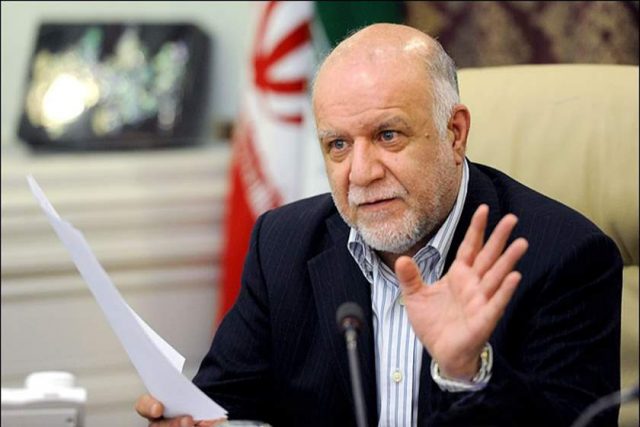
Iran’s oil minister, Bijan Namdar Zanganeh
Al-Manar | September 14, 2019
Iranian oil minister Bijan Zanganeh said Saturday that the France-proposed $15 billion credit line for Iran has nothing to do with easing of US sanctions on the country.
“In the eye of the country’s oil industry, sanctions relief means selling oil,” Oil Minister Bijan Zanganeh told reporters on Saturday.
He was speaking on the sidelines of a signing ceremony for a deal between Pars Oil and Gas Company (POGC) and Petropars Company for developing Belal Gas Field in the Persian Gulf.
“The point was for the oil sanctions to be lifted so that we could freely sell our oil. This credit line will put Iran in debt in the future,” he added, according to Mehr news agency.
The $15 billion credit line has been proposed by the French side in a bid to salvage the 2015 Iran nuclear deal in the wake of US’ unilateral withdrawal and Iran’s countermeasures in reducing commitments to the agreement.
The package is meant as an incentive to keep Iran in the nuclear agreement in the face of US’ efforts to drive the country’s oil exports to zero.
The sum is said to account for about half the revenue Iran normally would expect to earn from oil exports in a year.
Elsewhere, Zanganeh maintained that the development of the phase 11 of South Pars has not yet been exempted from US sanctions.
He then refused to confirm data of Iran’s oil reserves or answer any questions regarding Iran’s measures to bypass US sanctions.
He noted, however, that Iran is in talks with China to peacefully resolve the issue of the East Asian country’s decision to leave the SP11 development project.
Israel Directing Policy Through US Treasury: Sanctioning Hezbollah’s Political Allies in Lebanon
By Patrick Henningsen | 21st Century Wire | September 12, 2019
Nearly three years into the Trump administration, one thing is clear: as it struggles to wage any new direct shooting or proxy wars, Washington has instead relied on economic warfare against its perceived enemies, and largely on behalf of the state of Israel.
Through the U.S. Treasury Department and its own openly pro-Israel agents of influence, namely Secretary Steve Mnuchin, along with his Under Secretary for Terrorism and Financial Intelligence Sigal P. Mandelker, Israel has been able to attack and undermine all of its own geopolitical enemies and region rivals. The chief mechanism for achieving this is by directing the US government to label any person, politician or state agency – as a “terrorist,” or as a terrorist entity, thus allowing the US government to apply sanctions against any person or entity which Israel designates as its enemy, or even potential enemy. As a result of this runaway policy, the list of sanctioned persons and organisations by the Trump administration is the most in history.
Firmly in its crosshairs is Lebanon’s well-established political and military wings of the Hezbollah organisation. There is a fundamental flaw in the West’s framing of Hezbollah though, starting with its origins. It is a fact of history that Hezbollah was born out of Israel’s illegal occupation of southern Lebanon. Had Israel not invaded and occupied this region, or prosecuted its long and violent military campaign during and after the Lebanese Civil War, then it’s possible the Hezbollah movement may never had formed. It was born out of Israel’s occupation. Indeed, Iran has been traditional supporter of the group – which has drawn the ire of Washington and Tel Aviv who view both Iran and Hezbollah as a joint obstacle to US-Israeli strategic security objectives in the Middle East. In order to elevate Hezbollah to ‘most targeted status,’ US officials have had to repeatedly fabricate claims that Hezbollah is acting as major global terrorist organisation. In the same breath, US officials, like Secretary of State Mike Pompeo will enthusiastically drift out the well-worn fable that ‘Iran is the world’s number state-sponsor of terror’.
Earlier this year, the US also announced that henceforth, Iran’s leading military divisions, the Iran Revolutionary Guard Corps (IRGC) and Quds Force – would now be designated as a “terrorist organisation.” The cold irony of course, is that Hezbollah militias are presently fighting (and defeating) actual terrorist organisations like al-Qaeda and ISIS (both of who have been created, as well as armed and financed by numerous western and gulf states, including the United States) in Syria, Iraq and Lebanon. Since 2013, Hezbollah militia have played a pivotal role in ejecting al Qaeda and ISIS terrorists from their enclaves in Syria, thus thwarting the regime change objectives of US, UK, France, NATO member states, Turkey, Qatar, Saudi Arabia, and also Israel too. Likewise for IRGC and Quds special military advisors deployed in Iraq and Syria to help subdue the invading terrorist brigades. The same is true for Iranian-backed militias in Iraq like the Hash’d Shaabi (People’s Mobilization Units), predominantly Shia, who were pivotal in Iraq’s ultimate victory over ISIS in 2017. Veteran journalist Patrick Cockburn summed it up when he concluded that the greatest threat to building peace in Iraq was not ISIS, but rather, Donald Trump determined to pick a fight with Iran. Documentation on the number of casualties is still difficult to determine, but on the aggregate, between Hezbollah, Hash’d, Iranian forces, the losses sustained in the fight against ISIS and al Qaeda number in the tens of thousands – and likely far more than the combined US soldier death tolls in 18 year-long War on Terror in Iraq, Afghanistan and beyond. Regardless of general western ignorance of what has actually transpired in Syria since 2011, and in Iraq since 2014, the people who actually live in the Middle East know the severity of this largely foreign-backed terrorist usurpation.
Regardless of the facts on the ground, neconservatives and war hawks in the Beltway are still happily pressing ahead with their policies. With Tel Aviv carefully leading from behind, Washington has successfully pressured many of its allies to obey its geopolitical dictates, with the UK, Argentina and Paraguay all falling into line this year by designating Hezbollah – both its political and military wings – as a terrorist organisation, as well as pressuring Brazil to follow suit.
Of deeper concern for Washington though, is that Hezbollah is defending Lebanon’s borders from what is undoubtedly the region’s most prolific aggressor – Israel. In just the last few weeks, Israel has attacked no less than 4 of its neighbours, including unprovoked military strikes against Syria, Lebanon, Iraq and of against Palestinians living under illegal Israeli occupation in Gaza. Hezbollah also poses another threat to Israeli hegemony in the region because of its unflagging support for Palestinian resistance against Israel’s violent occupation and ethnic cleansing of the native Palestinian people. Similarly, the Islamic Republic of Iran also supports the Palestinian resistance cause, which is also a predicate for Israel’s various and sundry fabricated claims about a ‘secret Iranian nuclear arsenal,’ and imagined conspiracy that ‘Iran is occupying Syria’ – all of which are designed to garner leverage in Washington whereby US officials can view Hezbollah an accomplice to “Iran’s threat world peace.” This is the sort of geopolitical gymnastics which Israel is attempting to perform on a daily basis in order to justify the longest-running, most brutal and inhumane apartheid regimes in modern history – being waged against Palestinians and Arabs in the Middle East.
Targeting Hezbollah’s Political Allies
Still, Washington insists on basing its international relations on these numerous fabricated claims about Iran and Hezbollah drafted by Israel’s J Street lobbyists and the Prime Minister’s office in Tel Aviv. Now the Trump administration is taking this method a step further by threatening to sanction any political allies of Hezbollah in Lebanon. With military options practically off the table, this is the only remaining option for Washington and Tel Aviv to try and undermine Hezbollah which is now a political force in Lebanese politics, forming a working majority in the Lebanese Parliament along with its allies, as well as holding key ministerial and cabinet positions. But will it work?
Future Sanctions Will ‘Absolutely’ Target Hezbollah Allies in Lebanon: US Envoy
Al-Manar – September 13, 2019
US envoy said on Thursday that future sanctions could target allies of Hezbollah in Lebanon.
“In the future we will designate, because we have to, individuals in Lebanon who are aiding and assisting Hezbollah, regardless of their sect or religion,” the new US assistant secretary of state for Near Eastern affairs, David Schenker, said in an interview with local LBCI television.
When asked by the interviewer if this means sanctions will target allies of Hezbollah, Schenker said “absolutely,” adding that the US is constantly reviewing its sanctions lists.
Earlier on Tuesday, US State Department announced it has issued sanctions against four alleged Hezbollah members, Ali Karakeh, Mohammad Haydar, Ibrahim Aqil and Fouad Shukr.
The administration of Presdient Donald Trump has ramped up sanctions on Hezbollah and other resistance groups since the US withdrew from the Iran nuclear deal in May 2018.
Last month, the US Treasury slapped sanctions on the Lebanese Jammal Trust Bank, claiming the bank “brazenly enabling” Hezbollah’s financial activities. And in June, the Treasury took the unprecedented step of sanctioning two sitting Hezbollah MPs, Amin Sharri and Mohammad Raad, alongside security head Wafiq Safa.
Damascus strongly condemns US-Turkish joint military patrols in northeastern Syria
By Sarah Abed | September 10, 2019
On Sunday, six military vehicles from Akcakale district in southeast Sanliurfa in Turkey, crossed the border into Syria and joined a US military convoy in carrying out joint military ground patrols from Tel Abyad, Al Raqqa governorate to Ras Al Ain, Al Hassaka governorate. Two helicopters flew overhead, and unmanned aerial vehicles were also used according to Turkey’s Defense Ministry.
The Kurdish People’s Protection Units (YPG) are leaving areas on Turkey’s border and uprooting fortifications as part of the US-Turkey “safe zone” agreement, which was the result of relentless pressure from Turkish President Recep Tayyip Erdogan, who had threatened to unilaterally proceed with his plans if the US dragged its feet. Turkey also threatened to carry out a military operation last month, against Kurdish militias east of the Euphrates, but US officials stopped the operation.
Under the “safe zone” initiative Erdogan wants to establish a “peace corridor” through which he can send back a million of the four to five million Syrian refugees currently in Turkey. Refugees would be forced to resettle in northern Syria on Turkey’s borders to create a buffer zone thereby changing the demographics of the area. It’s worth noting that many of these displaced refugees are not from the northern Syria.
Erdogan has threatened to “open the gates” and allow millions of refugees currently residing in Turkey to flood Europe and specifically Greece, if his requests are not met in Syria. Some have noted that these refugees are not even Syrian and came from dozens of other countries to fight alongside foreign-funded extremist groups in Syria.
Ankara has also been looking into Russian military equipment and threatened to build nuclear weapons.
In a statement made to the Syrian national news agency SANA an official source at the Foreign and Expatriates Ministry stated, “The Syrian Arab Republic condemns in the strongest terms launching joint patrols by the US administration and the Turkish regime in the Syrian al-Jazeera region in a flagrant violation of international law and the sovereignty and territorial integrity of the Syrian Arab Republic.”
Syria sees this as a form of aggression which is aimed at complicating and prolonging the crisis in Syria and to hinder significant progress made by the Syrian Arab Army against the remaining terrorist groups. Syria absolutely rejects the creation of a “safe zone” and affirms its determination to counter any attempts that put its safety and territorial integrity at risk.
The Syrian government has highlighted previously that Erdogan’s true intentions include “expansionist ambitions” and reviving the Ottoman empire, under the façade of protecting his borders from Kurdish terrorist groups.
In January 2018, Erdogan carried out Operation Olive Branch by invading Afrin and effortlessly defeating the YPG. In a matter of months more than 150,000 Kurds were displaced when they fled to neighboring areas and were replaced with refugees that had fled to Turkey. The demographics were changed and many of the residents who did stay complained about living under harsh extremist conditions enforced by the Turkish-aligned resettled refugees.
At that time, the Kurdish population in Afrin realized that the US will not defend them against an onslaught by NATO ally Turkey and had left them to fend for themselves. The mistake that separatist Kurds have made for the past four years during this war is relying on the United States to save and protect them. Thinking that Washington cares about their independence or political ambitions has put them in several embarrassing situations, including the one they are in now, east of the Euphrates river.
Ultimately, separatist Kurds are responsible for the illegal presence of foreign armed forces from the United States, France, Britain, and coming in at the eleventh hour, Denmark in northern Syria. Had they not turned against the Syrian government and sold their dignity for weaponry, training, and funds from the US led coalition, Turkey would not have had an excuse to invade. This does not take away from the blame that should be placed on all other parties that are impeding the Syrian military progress.
Before the war, Kurdish minorities lived peacefully alongside their fellow Syrian brothers and sisters and many were enlisted in the Syrian army fighting against terrorists. It was only when the United States started backing and providing them with funds, supplies, training, etc. did they turn to treason and treachery. This sort of behavior is not uncommon, Kurds with separatist ambitions have previously been used to create division and instability in the region, including during the Iraq/Iran war. They are closely allied with Israel and have worked with several terrorist groups during the eight-year war in Syria.
The SDF/YPG are seen by Turkey as the Syrian offshoot of the Kurdistan Workers Party (PKK) with whom they have been in conflict for over three decades.
The hostile environment created by the self-declared autonomous Kurdish administration has been rejected by not only the Syrian government and the non-Kurdish Syrian majority in Al Hassaka governorate but by Russia, Iran, and Turkey who’ve issued joint statements declaring their opposition to the autonomous regions set by the Kurdish-led SDF and the Kurdish People’s Protection Units in northern Syria saying they “reject… all attempts to create new realities on the ground under the pretext of combating terrorism.” On Sunday, Syrians held a massive rally in Deir Ezzor against the US-backed Kurdish militias calling for their expulsion from the area.
Last December, when U.S. President Donald Trump announced the withdrawal of US troops from Syria, separatist Kurds turned to Damascus for talks, but when Washington didn’t follow through with the withdrawal, the talks turned stale. There has been mention that talks are now resuming but as long as the Kurdish militias and their political mouthpieces continue receiving handouts from Western nations and direction from the US/Israel, negotiations will be futile.
Sarah Abed is an independent journalist and analyst.
With Strikes Against Iran, Netanyahu Risks Jeopardising his Closest Alliance
The US has not taken kindly to Israel’s actions in Iraq, fearing that a local backlash could endanger the 5,000 troops it has stationed there
By Jonathan Cook – The National – September 10, 2019
Every Israeli prime minister – not least Benjamin Netanyahu – understands that a military entanglement with Hezbollah, Lebanon’s armed Shia movement on Israel’s northern border, is a dangerous wager, especially during an election campaign.
It was Shimon Peres who lost to Mr Netanyahu in 1996, weeks after the former prime minister had incensed Israel’s Palestinian minority – a fifth of the population – by savagely attacking Lebanon in a futile bid to improve his military, and electoral, standing.
Lebanon proved a quagmire for Ehud Olmert too, after he launched a war in 2006 that demonstrated how exposed Israel’s northern communities were to Hezbollah’s rockets. The fallout helped pave Mr Netanyahu’s path to victory and his second term as prime minister three years later.
Mr Netanyahu has faced off with Hezbollah leader Hassan Nasrallah for the full 13 years he has been in power. But unlike his political rivals, he has preferred to play a cautious hand with his Lebanese opponent.
Which makes a recent spate of drone attacks by Israel across the region, including in Lebanon, all the more surprising, even in the context of a highly contested election due to take place next Tuesday. During the campaign, Mr Netanyahu has been buffeted by yet more corruption allegations.
According to the Israeli media, two drones dispatched over Beirut late last month were intended to destroy Iranian-supplied equipment that would allow Hezbollah to manufacture precision-guided missiles.
It was the first such Israeli attack on Lebanese soil since a ceasefire ended the 2006 war. Hezbollah and Israel have preferred to flex their muscles in neighbouring Syria, weakened after more than eight years of war.
The attack outraged Lebanon’s leaders, with Mr Nasrallah warning that Hezbollah would shoot down any Israeli drones encroaching on Lebanese airspace. He also vowed revenge, which finally came a week ago when Hezbollah fired at an Israeli military vehicle carrying five soldiers close to the border. Israel said there were no casualties.
That was followed by Hezbollah shooting down an Israeli drone in southern Lebanon early on Monday. The Israeli army confirmed it had been on a “routine mission” when it fell in Lebanese territory.
In retaliation for last week’s attack, Israel shelled Hezbollah positions, a clash Israeli media described as being a “hair’s breadth” from escalating into all-out war.
Neither Israel nor Hezbollah appear to want such an outcome. Both understand the likely heavy toll in casualties and the damaging political consequences.
Nonetheless, Mr Netanyahu appears to be stoking a fire he might ultimately struggle to control – and not just in Lebanon. Around the time of the Beirut attack, Israeli drones were also in action in Iraq and Syria.
First, Israel hit a building near Damascus, killing two Hezbollah operatives. According to Israel, they were working with Iranian forces to prepare a drone attack on the Golan Heights, Syrian territory annexed by Israel in violation of international law.
Then a day later, more Israeli drones – apparently launched from Azerbaijan – targeted depots housing Iranian weapons close to the Iraqi-Syrian border.
There have been reports of half a dozen such attacks since mid-July. They are the first known Israeli strikes on Iraq’s territory in four decades.
The running thread in these various incidents – apart from Israel’s violation of each country’s sovereignty – is Iran.
Until recently, Israel had launched regular forays deep into Syrian airspace to target what it said was the transport through Syria of long-range precision missiles supplied by Iran to Hezbollah, its Shia ally in Lebanon.
Hezbollah and Iran view this growing stockpile of precision weapons – capable of hitting key military installations in Israel – as a vital restraint on Israel’s freedom to attack its neighbours.
Over the past year, Israel’s ability to hit missile convoys as they pass through Syria has narrowed as Bashar Al-Assad has regained control of Syrian territory and installed more sophisticated, Russian-made air defences.
Now Israel appears to be targeting the two ends of the supply chain, from deliveries dispatched in Iraq to their receipt in Lebanon. In the words of Mr Netanyahu, Iran “is not immune anywhere”.
The US has not taken kindly to Israel’s actions in Iraq, fearing that a local backlash could endanger the 5,000 troops it has stationed there and push Iraq further into Iran’s arms. In response, the Pentagon issued a statement condemning “actions by external actors inciting violence in Iraq”.
So what is Mr Netanyahu up to? Why risk provoking a dangerous clash with Hezbollah and alienating his strongest asset, a supportive US administration headed by Donald Trump, at this critical moment in the election campaign?
The answer could be that he feels he has little choice.
The same weekend that Israel launched its wave of attacks across the region, French President Emmanuel Macron engineered an unexpected visit by Iran’s foreign minister, Mohammad Javad Zarif, to the G7 summit in Biarritz.
It was part of efforts by Mr Macron, and Europe more generally, to encourage Mr Trump to repair relations with Tehran after the US pulled out of the 2015 nuclear agreement last year and reimposed sanctions. Mr Netanyahu has taken partial credit for the administration’s tough stance.
Now he has been jolted by Mr Trump’s apparent willingness to reconsider, possibly to protect shipping lanes and oil supplies in the Gulf from Iranian disruption, just as the US president seeks re-election.
Any U-turn would conflict sharply with Mr Netanyahu’s agenda. Domestically he has long presented Iran as the ultimate bogeyman, hell-bent on gaining a nuclear bomb to destroy Israel. His strongman image has been built on his supposed triumph both in reining in Tehran and recruiting the Trump administration to his cause.
If Mr Trump indicates a readiness for rapprochement with Iran before polling day, Mr Netanyahu’s narrative is sunk – and the corruption allegations he faces are likely to take a stronger hold on the public imagination.
That was why, as he headed to London last Thursday, Mr Netanyahu issued a barely veiled rebuke to Mr Trump: “This is not the time to talk to Iran.”
It might also be why a report in the New York Times last week suggested that Israel is contemplating a risky, go-it-alone strike on Iran, something Mr Netanyahu has reportedly been mulling for several years.
Certainly, he has every interest in using attacks like the recent ones to provoke a reaction from Iran in the hope of pre-empting any US overture.
It is a high-stakes gamble and one that risks setting off a conflagration should Mr Netanyahu overplay his hand. These are desperate times for Israel’s longest-serving but increasingly embattled prime minister.
Trump Foreign Policy as Theater of the Absurd
A nightmare that one never wakes up from
By Philip Giraldi • Unz Review • September 10, 2019
One might be forgiven for thinking that the foreign policy of the United States is some kind of theatrical performance, like a comic opera, with new characters appearing on stage willy-nilly and then being driven off after committing an incredible faux pas only to be replaced by even more grotesquely clownish figures. Unfortunately, while the musical chairs and plot twists contrived by a Goldoni or Moliere generally have a cheerful ending, the same cannot be said about what has been taking place in the White House.
The latest White House somewhat unexpected departure was that of ex-real estate lawyer Jason Greenblatt, who has been hanging around for over two years putting together the Deal of the Century for the Middle East. The Deal will reportedly end forever the possibility of any real Palestinian state but has run into a problem because Israel does not want its hands tied in any way while the Saudis and friends are reluctant to come up with the cash to fund the arrangement. Back to square one, though the Administration has replaced Greenblatt with thirty-year old Avi Berkowitz, whose only qualification for the position is that he is a friend of presidential son-in-law Jared Kushner whose most recent job at the White House consisted of managing “daily logistics like getting coffee…” The president is nevertheless still insisting that the peace plan will be revealed in all its glory after the Israeli election on September 17th.
Another administration notable who now appears to be waiting for the hook to come out from offstage and take him away is National Security Adviser John Bolton. Bolton has long been regarded by those who still believe that Donald Trump actually has a heart and a mind as the eminence grise seated behind the throne who has encouraged the president’s bad angels. That may indeed be so, but leaks are now suggesting that the president has been disagreeing with his chief minister and marginalizing his presence in meetings. But as bad as Bolton truly is, one should not dismiss from consideration Secretary of State Mike Pompeo and Vice President Mike Pence, both of whom, like Bolton, have exhibited extraordinary ability to provide bad advice and to simultaneously say and do stupid things.
Pence’s recent error plagued trip to Ireland left one exasperated Irish journalist complaining that it was as if the Vice President had been invited to someone’s home and had “shat on the new carpet in the spare room, the one you bought specially for him” before his departure. Pence had unwisely made comments about Brexit that were both uninformed and regarded as “humiliating” by his hosts. But his real crime was that he blamed his boss for the ridiculous decision to stay at a Trump property 180 miles away from Dublin. President Trump denied the claim and, as he does not like being embarrassed by his subordinates, there is already talk that Pence will be replaced on the Republican ticket in 2020. Unfortunately, Attila the Hun is no longer available but it is certain that the GOP will be able to come up with someone else who will, like Pence, offend almost everyone. Tom Cotton maybe? Nikki Haley?
Now that North Korea is not cooperating with Trump’s distinctive brand of diplomacy, the Great Negotiator has turned to America (and Israel’s) enemy number one, suggesting a sit down with Iranian President Hassan Rouhani. The only problem with that is that Rouhani is not playing because the United States has been engaged in nothing less than “maximum pressure” economic warfare against his country. End the sanctions and Rouhani would consider talking directly.
Israel, of course, is deeply concerned lest American and Iranian heads of government actually get together to discuss things. According to some observers, Prime Minister Benjamin Netanyahu is believed to be somewhat nervous over that possibility and wants to get a hotter war going in the region to disrupt any consideration of entente between Tehran and Washington. That is why the Israelis have been escalating their attacks against claimed “Iranian targets” in Syria, Iraq and Lebanon, an initiative intended to provoke an Iranian reaction which will then be escalated by Netanyahu to draw Washington in supporting Israel while also putting an end to any consideration of top-level talks.
As a side show to the deep thinking going on in the White House, there is the Iranian tanker saga. One might recall that the tanker Adrian Darya 1, which claimed to be registered in Panama while carrying alleged Iranian oil allegedly bound for Syria, was halted in Gibraltar by the British at the request of the American State Department even though it was in international waters at the time. The U.S. has been sanctioning nearly everything having to do with Iran, to include its export of oil, and is also enforcing sanctions imposed on the government in Syria. Pompeo claimed, in fact, that he had “reliable information” the ship was transporting oil to Syria in defiance of wide-ranging U.S. and European Union initiated sanctions directed against the regime of Syrian President Bashar al-Assad over false claims that it had been using chemical weapons. The Treasury Department added that the vessel was “blocked property” under an anti-terrorist order, and “anyone providing support to the Adrian Darya 1 risks being sanctioned.”
After six weeks detention, the British released the tanker on August 18th when a Gibraltar judge ruled that there were no grounds for seizing it in the first place, adding that it could not be turned over to Washington. Since that time, it has been making its way across the Mediterranean headed for ports unknown. It is, inevitably, being stalked by the United States Navy, which may or may not attempt to take control of it before it heads to shore in Lebanon or Syria.
The entire situation is farcical, but here is where the fun comes in: Brian Hook, a true Trumpean know-nothing who somehow has been designated U.S. Grand Poobah for Iran, sent an email on August 26th to the ship’s Indian captain Akhilesh Kumar. The message said “This is Brian Hook . . . I work for secretary of state Mike Pompeo… I am writing with good news.”
The “good news” consisted of an offer to give Captain Kumar millions of dollars if he would sail the Adrian Darya 1 to a port that would impound the ship for the U.S. Kumar did not respond to the offer to turn pirate and steal the vessel, so “Captain” Hook dropped the hammer in a second email, writing that: “With this money you can have any life you wish and be well-off in old age. If you choose not to take this easy path, life will be much harder for you.”
The sublimely ridiculous proposal to Kumar comes on top of a similar appeal from the Department of State, which last week offered rewards of up to $15 million for information that would enable the disruption of the financial mechanisms used by Iran’s Islamic Revolutionary Guards Corps (IRGC). State, acting through its humorously named “Rewards for Justice” program, will pay money for any information regarding the revenue sources of the IRGC, which was listed as a foreign terrorist organization in April.
The State Department announced the rewards at a briefing late last Wednesday morning, with Brian Hook saying that “The IRGC trains, funds, and equips proxy organizations across the Middle East. Iran wants these groups to extend the borders of the regime’s revolution and sow chaos and sectarian violence. We are using every available diplomatic and economic tool to disrupt these operations.”
Having experienced schemes involving paying rewards for information while I was overseas with the CIA, I can with considerable confidence predict that the U.S. Embassies in Turkey and Dubai will be flooded with desperate Iranians peddling what stories they have made up in exchange for money or visas. The actual information obtained will be approaching zero.
The American beneficence towards the Middle East currently also includes, apparently, intervening yet again in Syria to prevent the Syrian Army and its Iranian and Russian allies from eliminating the last major terrorist pocket in the country’s Idlib province. Fact is, it is the United States being led by the nose by Israel that has both supported terrorists and created most of the unrest and violence in the Middle East, central Asia and North Africa.
Additionally, also last week, the Treasury Department’s Office for Terrorism and Financial Intelligence headed by Under Secretary Sigal Mandelker, an Israeli, sanctioned more than two-dozen entities and individuals as well as 11 ships allegedly supporting IRGC oil shipments going to Bashar al-Assad’s Syria and other “illicit actors.” One has to wonder if the Treasury’s Office “for Terrorism” might actually be “for Terrorism” as long as it is carried out by the U.S. and its “best friend and closest ally” in the Middle East.
All in all, one hell of a week. A Greenblatt gone replaced by a Berkowitz, possibly Bolton and Pence going, piracy on the high seas, cash for info schemes, and lots more sanctions. Can’t get much more exciting than that, but let’s wait for next week to see what Donald Trump will give his good buddy Benjamin Netanyahu as a pre-electoral gift. Rumor has it that it will include American recognition of Israel’s right to annex most of the rest of the West Bank plus security guarantees that the U.S. will have the Jewish state’s back no matter what it seeks to do with its neighbors. Stay tuned!
Philip M. Giraldi, Ph.D., is Executive Director of the Council for the National Interest, a 501(c)3 tax deductible educational foundation (Federal ID Number #52-1739023) that seeks a more interests-based U.S. foreign policy in the Middle East. Website is councilforthenationalinterest.org, address is P.O. Box 2157, Purcellville VA 20134 and its email is inform@cnionline.org.
Denmark announces increased military contributions and NATO support in Syria and beyond
By Sarah Abed | September 9, 2019
Denmark is recognized as one of the most socially and economically developed countries in the world, which enjoys a high standard of living as well as high metrics in national performance, protection of civil liberties, and the lowest perceived level of corruption in the world, has announced that it will be boosting military contributions to missions around the world, including joining the United States in its illegal and unauthorized deployment in northeastern Syria.
The sovereign and proud nation of Syria has neither invited nor does it accept any foreign invaders on its land and has repeatedly demanded that all foreign forces leave on their own before they are forced out. Syria is highly committed to liberating every inch of its land from terrorist control whether that be domestic or foreign, and protecting its territorial integrity.
On Friday, U.S. Department of Defense Chief Pentagon Spokesperson, Jonathan R. Hoffman provided the following statement on Denmark’s deployment to Syria:
“The United States welcomes the announcement by the Danish Government to make a military deployment to Syria in support of Operation Inherent Resolve and to continue to share the burden and responsibilities of this important mission. As a founding member of the Global Coalition to Defeat ISIS, this deployment demonstrates Denmark’s continued commitment to working with our partners, to include the SDF, to ensure ISIS cannot re-emerge. Our Danish partners will work with the residual U.S. military force in northeast Syria to support stability and security. We look forward to working with our Danish ally to continue our shared mission of achieving ISIS’s enduring defeat-in Syria and wherever else the group may operate.”
The Nordic nation, along with its NATO allies; the United States, France, Britain, Turkey etc. do not have authorization by the Syrian government nor the UN Security Council to even be in Syria, let alone carry out any military operations.
With the exception of Turkey, these foreign troops are seen as illegal invaders supporting a Kurdish-led separatist movement in northeastern Syria which is closely aligned with and supported by Israel and has even employed Daesh-like tactics during the war. The so called Syrian Democratic Forces (SDF) is simply a rebranding by the US of the People’s Protection Units (YPG), a Syrian offshoot of the Turkish based Kurdistan Workers Party (PKK) which is recognized as a terrorist organization by the United States and other NATO members, and has been in conflict with the Turkish government since 1984.
The US-led coalition has killed at least 1,319 civilians during its unauthorized operations in Syria and Iraq since 2014, by its own admission, although the actual number is most likely higher.
On Friday, Denmark’s Foreign Minister Jeppe Kofod stated that Denmark must lift its share of the burden as a member of NATO. Danish Minister of Defense Trine Bramsen said that she was proud that the country will be contributing to peace and stability in one of the world’s hotspots.
Ironically, Syria would not have become a “hotspot” if the US and their allies didn’t support terrorist factions and weren’t committed to “regime-change” for the past eight years.
In addition to sending support to the “Global Coalition against Islamic State” in northeast Syria, the Danish military will also be sending support to the United Nations peacekeeping mission in Mali, France’s mission in the Sahel, and a U.S. aircraft carrier group in the north Atlantic and Mediterranean seas, as well as increasing its contributions to NATO and as if that wasn’t enough there’s also talks of a possible deployment to an international maritime effort in the Strait of Hormuz. In response to calls from the U.K. and France for a “European-led maritime mission” in the Persian Gulf region which would probably be in addition to an increased U.S. presence.
“When we make new military contributions in the Sahel region and in Syria to the fight against ISIL, it is about more than immediate firefighting,” Danish Foreign Minister Kofod said Friday. Kofod also said, “We are working across several fronts to create security, stability, and – in the long term – a positive development in the immediate neighborhoods of Europe.”
The aforementioned “military contributions” including sending a “helicopter contribution of up to 70 people and one-to-two staff officers” to France’s Operation Barkhane in sub-Saharan Africa’s Sahel region, for the first time. As well as, sending a medical team consisting of fourteen members including doctors, nurses, therapists, and support staff to provide trauma care at a coalition base in northeastern Syria.
Denmark will also be sending a C-130J transport aircraft along with approximately 65 personnel as well as a staff contribution of up to 10 to MINUSMA, the United Nations stabilization mission in Mali.
Also, to strengthen NATO’s deterrence and defense profile Denmark will be sending around 700 personnel to NATO missions, including a combat battalion, a “larger warship” and four fighter aircraft.
A frigate will be sent by Denmark to accompany a U.S. Navy carrier group for three months on an upcoming deployment in the Mediterranean and North America as well. It appears that building a closer and stronger cooperation with the U.S. is a priority for Denmark, maybe even more so than their supposed mission to strengthen maritime security.
Last December, U.S. President Trump announced the withdrawal of American troops from Syria, stating we had won against ISIS and called on other nations to step in. His plans were derailed and currently there exists a fair amount of British and French troops in addition to U.S. Special Operations Forces who have trained and advised the SDF in the northeastern region. France and the U.K have stated during the past few months, that they will increase their presence.
Some are questioning whether Denmark’s surprise announcement to deploy troops to Syria is an attempt to make amends with President Donald Trump. After refusing to sell him Greenland, Trump canceled his trip to Denmark.
Sarah Abed is an independent journalist and analyst.
‘The New Normal’: Trump’s ‘China Bind’ Can Be Iran’s Opportunity
By Alastair Crooke | Strategic Culture Foundation | September 9, 2019
There is consensus among the Washington foreign policy élite that all factions in Iran understand that – ultimately – a deal with Washington on the nuclear issue must ensue. It somehow is inevitable. They view Iran simply as ‘playing out the clock’, until the advent of a new Administration makes a ‘deal’ possible again. And then Iran surely will be back at the table, they affirm.
Maybe. But maybe that is entirely wrong. Maybe the Iranian leadership no longer believes in ‘deals’ with Washington. Maybe they simply have had enough of western regime change antics (from the 1953 coup to the Iraq war waged on Iran at the western behest, to the present attempt at Iran’s economic strangulation). They are quitting that failed paradigm for something new, something different.
The pages to that chapter have been shut. This does not imply some rabid anti-Americanism, but simply the experience that that path is pointless. If there is a ‘clock being played out’, it is that of the tic-toc of western political and economic hegemony in the Middle East is running down, and not the ‘clock’ of US domestic politics. The old adage that the ‘sea is always the sea’ holds true for US foreign policy. And Iran repeating the same old routines, whilst expecting different outcomes is, of course, one definition of madness. A new US Administration will inherit the same genes as the last.
And in any case, the US is institutionally incapable of making a substantive deal with Iran. A US President – any President – cannot lift Congressional sanctions on Iran. The American multitudinous sanctions on Iran have become a decades’ long knot of interpenetrating legislation: a vast rhizome of tangled, root-legislation that not even Alexander the Great might disentangle: that is why the JCPOA was constructed around a core of US Presidential ‘waivers’ needing to be renewed each six months. Whatever might be agreed in the future, the sanctions – ‘waived’ or not – are, as it were, ‘forever’.
If recent history has taught the Iranians anything, it is that such flimsy ‘process’ in the hands of a mercurial US President can simply be blown away like old dead leaves. Yes, the US has a systemic problem: US sanctions are a one-way valve: so easy to flow out, but once poured forth, there is no return inlet (beyond uncertain waivers issued at the pleasure of an incumbent President).
But more than just a long chapter reaching its inevitable end, Iran is seeing another path opening out. Trump is in a ‘China bind’: a trade deal with China now looks “tough to improbable”, according to White House officials, in the context of the fast deteriorating environment of security tensions between Washington and Beijing. Defense One spells it out:
“It came without a breaking news alert or presidential tweet, but the technological competition with China entered a new phase last month. Several developments quietly heralded this shift: Cross-border investments between the United States and China plunged to their lowest levels since 2014, with the tech sector suffering the most precipitous drop. US chip giants Intel and AMD abruptly ended or declined to extend important partnerships with Chinese entities. The Department of Commerce halved the number of licenses that let US companies assign Chinese nationals to sensitive technology and engineering projects.
“[So] decoupling is already in motion. Like the shift of tectonic plates, the move towards a new tech alignment with China increases the potential for sudden, destabilizing convulsions in the global economy and supply chains. To defend America’s technology leadership, policymakers must upgrade their toolkit to ensure that US technology leadership can withstand the aftershocks.
“The key driver of this shift has not been the President’s tariffs, but a changing consensus among rank-and-file policymakers about what constitutes national security. This expansive new conception of national security is sensitive to a broad array of potential threats, including to the economic livelihood of the United States, the integrity of its citizens personal data, and the country’s technological advantage”.
Trump’s China ‘bind’ is this: A trade deal with China has long been viewed by the White House as a major tool for ‘goosing’ the US stock market upwards, during the crucial pre-election period. But as that is now said to be “tough to improbable” – and as US national security consensus metamorphoses, the consequent de-coupling, combined with tariffs, is beginning to bite. The effects are eating away at President Trump’s prime political asset: the public confidence in his handling of the economy: A Quinnipiac University survey last week found for the first time in Trump’s presidency, more voters now say the economy is getting worse rather than better, by a 37-31 percent margin – and by 41-37 percent, voters say the president’s policies are hurting the economy.
This is hugely significant. If Trump is experiencing a crisis of public confidence in respect to his assertive policies towards China, the last thing that he needs in the run-up to an election is an oil crisis, on top of a tariff/tech war crisis with China. A wrong move with Iran, and global oil supplies easily can go awry. Markets would not be happy. (So Trump’s China ‘bind’ can also be Iran’s opportunity …).
No wonder Pompeo acted with such alacrity to put a tourniquet on the brewing ‘war’ in the Middle East, sparked by Israel’s simultaneous air attacks last month in Iraq, inside Beirut, and in Syria (killing two Hizbullah soldiers). It is pretty clear that Washington did not want this ‘war’, at least not now. America, as Defense One noted, is becoming acutely sensitive to any risks to the global financial system from “sudden, destabilizing convulsions in the global economy”.
The recent Israeli military operations coincided with Iranian FM Zarif’s sudden summons to Biarritz (during the G7), exacerbating fears within the Israeli Security Cabinet that Trump might meet with President Rouhani in NY at the UN General Assembly – thus threatening Netanyahu’s anti-Iran, political ‘identity’. The fear was that Trump could begin a ‘bromance’ with the Iranian President (on the Kim Jong Un lines). And hence the Israeli provocations intended to stir some Iranian (over)-reaction (which never came). Subsequently it became clear to Israel that Iran’s leadership had absolutely no intention to meet with Trump – and the whole episode subsided.
Trump’s Iran ‘bind’ therefore is somehow similar to his China ‘bind’: With China, he initially wanted an easy trade achievement, but it has proved to be ‘anything but’. With Iran, Trump wanted a razzmatazz meeting with Rohani – even if that did not lead to a new ‘deal’ (much as the Trump – Kim Jung Un TV spectaculars that caught the American imagination so vividly, he may have hoped for a similar response to a Rohani handshake, or he may have even aspired to an Oval Office spectacular).
Trump simply cannot understand why the Iranians won’t do this, and he is peeved by the snub. Iran is unfathomable to Team Trump.
Well, maybe the Iranians just don’t want to do it. Firstly, they don’t need to: the Iranian Rial has been recovering steadily over the last four months and manufacturing output has steadied. China’s General Administration of Customs (GAC) detailing the country’s oil imports data shows that China has not cut its Iranian supply after the US waiver program ended on 2 May, but rather, it has steadily increased Iranian crude imports since the official end of the waiver extension, up from May and June levels. The new GAC data shows China imported over 900,000 barrels per day (bpd) of crude oil from Iran in July, which is up 4.7% from the month before.
And a new path is opening in front of Iran. After Biarritz, Zarif flew directly to Beijing where he discussed a huge, multi-hundred billion (according to one report), twenty-five-year oil and gas investment, (and a separate) ‘Road and Belt’ transport plan. Though the details are not disclosed, it is plain that China – unlike America – sees Iran as a key future strategic partner, and China seems perfectly able to fathom out the Iranians, too.
But here is the really substantive US shift taking place. It is that which is termed “a new normal” now taking a hold in Washington:
“To defend America’s technology leadership, policymakers [are] upgrading their toolkit to ensure that US technology leadership can withstand the aftershocks … Unlike the President’s trade war, support for this new, expansive definition of national security and technology is largely bipartisan, and likely here to stay.
… with many of the president’s top advisers viewing China first and foremost as a national security threat, rather than as an economic partner – it’s poised to affect huge parts of American life, from the cost of many consumer goods … to the nature of this country’s relationship with the government of Taiwan.
“Trump himself still views China primarily through an economic prism. But the angrier he gets with Beijing, the more receptive he is to his advisers’ hawkish stances toward China that go well beyond trade.”
“The angrier he gets with Beijing” … Well, here is the key point: Washington seems to have lost the ability to summon the resources to try to fathom either China, or the Iranian ‘closed book’, let alone a ‘Byzantine’ Russia. It is a colossal attenuation of consciousness in Washington; a loss of conscious ‘vitality’ to the grip of some ‘irrefutable logic’ that allows no empathy, no outreach, to ‘otherness’. Washington (and some European élites) have retreated into their ‘niche’ consciousness, their mental enclave, gated and protected, from having to understand – or engage – with wider human experience.
To compensate for these lacunae, Washington looks rather, to an engineering and technological solution: If we cannot summon empathy, or understand Xi or the Iranian Supreme Leader, we can muster artificial intelligence to substitute – a ‘toolkit’ in which the US intends to be global leader.
This type of solution – from the US perspective – maybe works for China, but not so much for Iran; and Trump is not keen on a full war with Iran in the lead up to elections. Is this why Trump seems to be losing interest in the Middle East? He doesn’t understand it; he hasn’t the interest or the means to fathom it; and he doesn’t want to bomb it. And the China ‘bind’ is going to be all absorbing for him, for the meantime.
Featured Video
Integrity Initiative: UK-funded network framed dissent as Russian disinformation for years
or go to
Aletho News Archives – Video-Images
From the Archives
Why Saudi Ties to 9/11 Mean U.S. Ties to 9/11
By Kevin Ryan | Dig Within | September 27, 2015
Media interest in Saudi Arabian connections to the crimes of 9/11 has centered on calls for the release of the 28 missing pages from the Joint Congressional Inquiry’s report. However, those calls focus on the question of hijacker financing and omit the most interesting links between the 9/11 attacks and Saudi Arabia—links that implicate powerful people in the United States. Here are twenty examples. … continue
Blog Roll
 Aletho News
- Iraqi Resistance faction links arms to sovereignty, questions US exit
- Cannon fodder no more… South Korea rejects Trump’s pressure to join his criminal war on Iran
- Neria Leiter Was A Legitimate Military Target
- Integrity Initiative: UK-funded network framed dissent as Russian disinformation for years
- ‘We don’t seek permission to defend our country’: Snippets from President Pezeshkian’s UNGA address
- NATO chief wants Europeans to fight American wars [for Israel]
- German chemicals giant reveals details of downsizing
- Refaat Al-Areer Was The Canary In The Coal Mine In Israel’s War On The Truth
- Israeli election committee bars candidate from Knesset race over Gaza war opposition
- French-Lebanese man files war crimes complaint over Israeli attacks
- If Americans Knew
- Trump administration digs an ever-deeper hole of complicity in genocide – Daily Update
- US-Israel $2.8 Billion Arms Deal, 40,000-Bomb Supply Faces New Gaza Complicity Accusations
- Caught on Tape: AIPAC CEO Boasted of Controlling Trump’s National Security Officials
- Why Hamas Attacked Israel in October 2023 – Israeli professor Ilan Pappé
- They see them, then kill them: Israeli quadcopters track, deliberately target civilians in Gaza
- Winter could turn Gaza’s treacherous, war-damaged buildings into deathtraps
- Majority of Democratic Voters Want to Prosecute Both Biden and Trump Administration Officials Over Gaza
- As Gaza languishes, world leaders gather at the UN – Daily Update
- Sanctions are collective punishment: immoral and self-defeating
- Phosphorus Munitions Fired by Israel Burn Groves, Orchards in Southern Lebanon
- No Tricks Zone
- New Study: Earth And Venus Surface Warmth Largely Explained By Convection And Lapse Rate, Not CO2 Or Radiation
- 2025 Nature Paper Claiming Worsening Global Drought Gets RETRACTED …Heavily Flawed
- New Study: ‘Global Drought Shows No Detectable Recent Acceleration Under Climate Warming’
- Economic Masterminds: German Socialists Suggest Taxing Productivity Gains Stemming From Using AI
- The South China Sea Has Not Been Cooperating With The Climate Change Narrative
- Energy Crisis: Germany Enters Heating Season With Historically Low Gas Reserve Fill Levels
- New Study: The Antarctic Ice Sheet Gained Mass From 2020-2024 Due To Staggering Snow And Ice Accumulation
- Study: Ocean Heating Rates From Thousands Of Years Ago ‘Dwarf’ Modern Ocean Heating Rates
- Climate Extremists Target, Attack Large-Scale Power Grid Infrastructure In Germany!
- New Study: Antarctic Ice Melt Has Contributed Less Than 1 Centimeter To Sea Level Rise In The Last 30 Years

