Some days the Newspaper of Record says a lot–not always in ways you might expect.
Today (3/21/13) a story by Mark Landler and Rick Gladstone about allegations of chemical weapons in Syria includes something you see often–anonymous government sources. That can often be a bad thing; but today it’s pretty useful:
Two senior Israeli officials, speaking on the condition of anonymity because they were not authorized to speak, said that Israel was sure that chemicals were used, but did not have details about what type of weapons were used, where they came from, when they were deployed, or by whom.
A third senior official, also refusing to be identified, said, “It is possible that chemical weapons were used, or some concoction of chemical substances,” but he said he had not “seen clear confirmation.”
Why is this helpful? Because other Israeli officials, speaking publicly and for attribution, pretended to be more certain. From the very same Times piece:
Two senior ministers in Israel’s new cabinet said publicly on Wednesday that chemical weapons had been used, and several government officials said in interviews that Israel had credible evidence of an attack. The ministers, Tzipi Livni and Yuval Steinetz, were among those who met with Mr. Obama here on the first day of his trip.
and:
Israeli officials provided no proof of their assertions but appeared more confident that chemical weapons had been used.
Ms. Livni, the new Israeli justice minister, said in an interview with CNN, “It’s clear for us here in Israel that it’s being used,” adding, “This, I believe, should be on the table in the discussions.”
Mr. Steinetz, the minister for strategic affairs, said on Israel’s Army Radio, “It’s apparently clear that chemical weapons have been used against civilians by the rebels or the government.”
So is the Times, in its own way, telling us not to trust the officials speaking on the record? That’s certainly one way to read the piece.
Elsewhere in the paper we learn that part of Barack Obama’s visit to Israel includes a look at the country’s “Iron Dome” missile defense system, which is funded by the U.S. government. In one story, by Mark Landler and Jodi Rudoren, we read this:
Mr. Obama was driven across the tarmac to inspect a battery of the Iron Dome air-defense system. The system, built by Israeli companies but financed by the United States, is credited with intercepting more than 400 rockets fired from Gaza at Israeli towns….
Israeli officials say that Iron Dome has been a huge success, intercepting 86 percent of the 521 incoming rockets it engaged in the Gaza conflict. Some American missile-defense experts have questioned that figure, putting the hit rate at closer to 10 percent.
So they either knock down almost every rocket, or almost none. That’s pretty unhelpful; but the Times has another piece that actually digs into the evidence (“Weapons Experts Raise Doubts About Israel’s Antimissile System”). According to this account, “a growing chorus of weapons experts in the United States and in Israel…suggest that Iron Dome destroyed no more than 40 percent of incoming warheads and perhaps far fewer.”
One former Pentagon official says there’s no system that is 90 percent effective. And the article, by William Broad, includes this:
Theodore A. Postol, a physicist at M.I.T. who helped reveal the Patriot antimissile failures of 1991, analyzed the new videos and found that Iron Dome repeatedly failed to hit its targets head-on. He concluded that the many dives, loops and curls of the interceptors resulted in diverse angles of attack that made it nearly impossible to destroy enemy warheads.
“It’s very hard to see how it could be more than 5 or 10 percent,” Dr. Postol said.
Mordechai Shefer, an Israeli rocket scientist formerly with Rafael, Iron Dome’s maker, studied nearly two dozen videos and, in a paper last month, concluded that the kill rate was zero.
Reading all of that, it’s hard to imagine anyone could really believe the Israeli claims about Iron Dome’s success rate.
So if you want to get a handle on Iron Dome, ignore the story on page 10 and pay attention to the story on page 11. And if you’re trying to figure out which Israeli officials to trust on the Syria chemical weapons story, the unnamed sources seem to be the ones who are more forthright about what they know.
According to official estimates, the Islamic Republic of Iran is now roughly a year away from acquiring a nuclear bomb. Well, that is, if it were actually building a nuclear bomb. Which it’s not.
“Right now, we think it would take over a year or so for Iran to actually develop a nuclear weapon, but obviously we don’t want to cut it too close,” President Barack Obama told an Israeli television station on March 14, 2013. In order to stop Iran, Obama vowed to “continue to keep all options on the table,” a euphemism for engaging in an unprovoked military attack, thus initiating a war of aggression, the “supreme international crime.”
Obama’s statement came just two days after his own Director of National Intelligence told a Senate committee that the Iranian government had not made a decision to weaponize its legal, safeguarded civilian nuclear energy program. “We do not know if Iran will eventually decide to build nuclear weapons,” DNI James Clapper said. Even if it did, he added, Iran wouldn’t be able to secretly divert any of its stockpiled and safeguarded enrichment uranium to a weapons program.
The American president failed to make this distinction in his interview, instead saying only that a nuclear-armed Iran would be “dangerous for the world. It would be dangerous for U.S. national security interests.”
Repeating his administration’s main talking point, Obama told his Israeli interviewer, “What I have also said is that there is a window, not an infinite period of time, but a window of time where we can resolve this diplomatically and it is in all of our interests.”
But this window has already been open for decades and Iran has supposedly been only a year away from a bomb for the past ten years.
In November 2003, then Mossad chief Meir Dagan told the Knesset Foreign Affairs and Defense Committee that Iran’s nuclear program would be at a “point of no return” within the next year and would then “have the potential to produce 10 nuclear bombs a year.” Israeli Defense Minster Shaul Mofaz repeated the one year “point of no return” timeline in early 2005, a claim reinforced by other Israeli officials throughout that year.
In April 2010, Ronald Burgess, director of the U.S. Defense Intelligence Agency, told the Senate Armed Services Committee that the “general consensus” was that Iran could develop a single nuclear bomb within a year if the leadership decided to do so, despite maintaining that Iran didn’t have an active nuclear weapons program.
In late January 2011, Aviv Kochavi, director of Israeli Military Intelligence, admitted Iran was not actively working on a nuclear weapon, but claimed it could build one in “a year or two” once “the leader decides to begin enriching at 90 percent.”
A year later, in January 2012, Defense Secretary Leon Panetta told60 Minutes, “The consensus is that, if they decided to do it, it would probably take them about a year to be able to produce a bomb.”
Just few days later, Kochavi told a panel at the Herzliya security conference that “Iran has enough nuclear material for four bombs,” adding, “We have conclusive evidence that they are after nuclear weapons. When Khamenei gives the order to produce the first nuclear weapon – it will be done, we believe, within one year.”
Last week, addressing the very same conference, Kochavi was back with a new prediction – actually, it was the same one as before. He claimed that, in the coming year, the Iranian “leadership would like to find itself in the position of being able to break out to an atomic weapon stage in a short period of time, according to the IDF’s intelligence assessments. However, he said that Iran has not yet decided to build the bomb.”
Greg Thielmann, a former U.S. intelligence analyst now with the Arms Control Association, recently explained that “calculating such a time line involves a complicated set of likely and unlikely assumptions,” telling journalist Laura Rozen, “If Iran decided today to build nuclear weapons, it would require years, not weeks or months, to deploy a credible nuclear arsenal.”
Meanwhile, with Obama set to visit Israel this week, Reuters now notes that “Netanyahu has not publicly revised the spring-to-summer 2013 dating for his ‘red line’,” the stated point at which the Iranian nuclear program advances far enough to automatically trigger an Israeli attack, a threat laid down by the Israeli Prime Minister last September. “But several Israeli officials privately acknowledged it had been deferred, maybe indefinitely,” Reuters adds before quoting an anonymous official: “The red line was never a deadline,” he said.
Clearly, when it comes to propagandistic prognostications about the imminence of an Iranian bomb, they never really are.
After a brief respite from incessant warmongering nonsense following the reelection of Barack Obama in November 2012, it appears old rhetorical devices have reemerged. With a vengeance.
Israeli Prime Minster Benjamin Netanyahu, addressing his minions at AIPAC via video chat on March 4, spent a bunch of his time saying supposedly scary things about “Iran’s pursuit of nuclear weapons” and dismissing negotiations.
“I have to tell you the truth,” he told the fawning crowd. “Diplomacy has not worked. Iran ignores all these offers. It is running out the clock.” He continued:
Iran enriches more and more uranium. It installs faster and faster centrifuges. It’s still not crossed the red line I drew at the United Nations last September. But Iran is getting closer to that line, and it’s putting itself in a position to cross that line very quickly once it decides to do so.
Of course, the fact that Iran has an inalienable legal right to a fully-functioning nuclear energy program – including the indigenous mastery of the nuclear fuel cycle – was not addressed at all. For Netanyahu and his acolytes, any Iranian nuclear program is synonymous with a weapons program – and not only that, but a weapons program designed to “exterminate” Israel’s “Jewish people.” Facts remain irrelevant. Hasbara reigns.
Netanyahu once again demonstrated his complete disregard for the tenets of the United Nations Charter by calling for Iran to be explicitly threatened with a military attack if it doesn’t comply with absurd Israeli demands. He insisted “with the clarity of my brain” (whatever that means) that “words alone will not stop Iran. Sanctions alone will not stop Iran. Sanctions must be coupled with a clear and credible military threat if diplomacy and sanctions fail.”
The consensus view of all 16 American intelligence agencies has maintained since 2007 that Iran ceased whatever research into nuclear weaponization it may have conducted by 2003, and has never resumed that work. The NIE has been consistently reaffirmed ever since (in 2009, 2010, and again in 2011).
In early 2012, James Clapper, Director of National Intelligence, stated in testimony before the Senate Armed Services Committee, “We do not know…if Iran will eventually decide to build nuclear weapons.” The same day, Defense Intelligence Agency Director Ronald Burgess said that “the agency assesses Iran is unlikely to initiate or intentionally provoke a conflict” and maintained that Iran’s military doctrine is defensive in nature and designed only for deterrence.
Clapper repeated this conclusion verbatim just last week before the Senate Intelligence Committee.
Moreover, the IAEA itself continually confirms that Iran has no active nuclear weapons program and has stated it has “no concrete proof that Iran has or has ever had a nuclear weapons program.”(emphasis added)
Undeterred by facts or reason, Biden continued to tell the AIPAC fanatics that “Iraq’s [sic] acquisition of a nuclear weapon not only would present an existential threat to Israel, it would present a threat to our allies and our partners — and to the United States. And it would trigger an arms race — a nuclear arms race in the region, and make the world a whole lot less stable.” Biden made sure to repeat the mantra that “all options, including military force, are on the table” when it comes to Iran.
First, Biden’s Iraq/Iran slip wasn’t merely Freudian. Since the Iraq script from a decade ago is nearly identical to the Iran script now, it’s unsurprising that Biden can’t keep his manufactured threats straight. One need only recall Biden’s claims on Meet The Press in August 2002 that Saddam Hussein constituted “a long term threat and a short term threat to our national security” and “an extreme danger to the world.” Consequently, said Biden, “We have no choice but to eliminate the threat.”
Years later, on the same program, Biden stood by his statements. When asked by Tim Russert about weapons of mass destruction that didn’t exist, Biden blithely insisted that “everyone in the world thought he had them. The weapons inspectors said he had them. He catalogued—they catalogued them. This was not some, some Cheney, you know, pipe dream. This was, in fact, catalogued. They looked at them and catalogued. What he did with them, who knows?”
Biden was lying, of course.
International weapons inspectors had been perfectly clear about what “he did with them.” After losing the Gulf War in 1991, Iraq’s weapons programs were subject to intrusive inspections and international sanctions. By 1998, the IAEA concluded that “there is no indication that Iraq possesses nuclear weapons or any meaningful amounts of weapon-useable nuclear material.” The next year, the UN Security Council affirmed that UN weapons inspectors “have been effective in uncovering and destroying many elements of Iraq’s proscribed weapons programmes,” adding, “The bulk of Iraq’s proscribed weapons programmes has been eliminated.”
In 2000, UN inspector Scott Ritter explained that “as early as 1997” it was possible “to determine that, from a qualitative standpoint, Iraq had been disarmed. Iraq no longer possessed any meaningful quantities of chemical or biological agent…and the industrial means to produce these agents had either been eliminated or were subject to stringent monitoring. The same was true of Iraq’s nuclear and ballistic missile capabilities.”
In July 2002, as calls for war grew louder, Ritter wrote in the Boston Globe that “the Bush administration provides only speculation, failing to detail any factually based information to bolster its claims concerning Iraq’s continued possession of or ongoing efforts to acquire weapons of mass destruction. To date no one has held the Bush administration accountable for its unwillingness – or inability – to provide such evidence.”
When, days later, then Senate Foreign Relations Committee chairman Joe Biden convened hearings to assess the threat posed by Iraq and implications of a potential U.S.-led attack, Ritter called the hearings a “sham” and said the Delaware Senator and “most of the Congressional leadership have pre-ordained a conclusion that seeks to remove Saddam Hussein from power regardless of the facts, and are using these hearings to provide political cover for a massive military attack on Iraq.”
Such is Joe Biden’s penchant for telling the truth. Returning to his comments at AIPAC, Biden’s recent fear-mongering hypotheticals about Iran are also wrong.
Beyond being obvious that Iran poses literally no threat to the United States, numerous Israeli military and intelligence officials openly reject the notion that a nuclear-armed Iran would “present an existential threat to Israel.” Former Mossad chief Ephraim Halevy recently told the UK Zionist Federation that Israel’s existence “is not in danger and shouldn’t be questioned.”
Furthermore, Biden’s axiomatic contention that an Iranian nuclear bomb would spark a regional arms race has also been rejected for years by less hysterical analysts. In fact, Biden made his comments soon after the publication of a new report by the Center for a New American Security which judged the scenario extremely unlikely.
For obvious reasons, Biden claimed that the United States is “not looking for war” and prefers “a diplomatic solution” to the impasse over Iranian nuclear program. Still, he said, the “window is closing” for a negotiated outcome, after which military action would be taken.
In early June 2009, Israeli Defense Minister Ehud Barak privately told a visiting Congressional delegation in Tel Aviv that there was an estimated “window between 6 and 18 months from now in which stopping Iran from acquiring nuclear weapons might still be viable.” A month later, Joint Chiefs chairman Mike Mullen warned that the “window is closing” on preventing Iran from acquiring a nuclear weapon. He declared that Iran was only one to three years away from successfully building a nuclear weapon and “is very focused on developing this capability.”
With history repeating itself (remember in early 2001 when the Department of Defense reported, that “Iraq would need five or more years and key foreign assistance to rebuild the infrastructure to enrich enough material for a nuclear weapon”?), it remains crucial to assess facts rather than blindly accept propaganda, to recall the lessons of the past in order to avoid future blunders and to know – unequivocally – that the implications and consequences of the pathological Iraqizationof Iran inevitably lead to the commission of murderous war crimes, not merely Freudian slips.
The US has renewed the exemptions for Japan and ten European Union countries from tough sanctions imposed on countries buying Iranian oil.
Japan and the 10 European Union countries, including Belgium, the Czech Republic, France, Germany, Greece, Italy, Netherlands, Poland, Spain, and the UK are on the list.
“I will report to the Congress that exceptions to sanctions will apply to financial institutions based in these countries for a potentially renewable period of 180 days,” US Secretary of State John Kerry said in a statement.
“The United States and the international community remain committed to maintaining pressure on the Iranian regime until it fully addresses concerns about its nuclear program,” Kerry said.
“The message to the Iranian regime from the international community is clear: take concrete actions to satisfy the concerns of the international community, or face increasing isolation and pressure,” he said.
Under the law, putting pressure on Iran over its contested nuclear program, Washington bars banks from countries buying Iranian oil from doing business in the US.
The European Union completely cut imports from Iran from July 1, 2012. However, financial institutions in the EU still have non-petroleum transactions with the Central Bank of Iran.
Japan has also reduced imports despite energy shortfalls in the wake of the tsunami and nuclear incident two years ago.
A total of 20 countries have “continued to significantly reduce the volume of their crude oil purchases from Iran,” John Kerry stressed in a statement.
India is expected to get another exemption from sanctions too. The country’s refineries have said that they will stop importing crude oil from Iran because they will not get the necessary insurance.
According to the IEA, Iran lost an estimated $40bn in oil export revenues in 2012 as the West tightened sanctions, while the country’s oil production in January hit a 30 year low.
However, Iran is finding new ways to circumvent the sanctions by increasing its exports to Asian countries, specifically China. In the last few months, Iran bought second-hand tankers to take more oil to China, the IEA said, citing industry reports.
Iran cannot produce enough highly-enriched uranium for a nuclear weapon without being found out by the international community, the US National Intelligence Director told Congress. He also countered claims Tehran had decided to build an atomic bomb.
Developments in Iran’s nuclear capabilities intended to “enhance its security, prestige, and regional influence” would ultimately “give the Islamic Republic the ability to develop a nuclear weapon,” US National Intelligence Director James Clapper told a Senate panel during an annual report on global threats on Tuesday.
Despite these advances, “we assess Iran could not divert safeguarded material and produce a weapon-worth of WGU (weapons-grade uranium) before this activity is discovered,” he continued.
Clapper further said “we do not know if Iran will eventually decide to build nuclear weapons.”
His assessment reiterated last year’s analysis from intelligence agencies stating “Iran’s nuclear decision-making is guided by a cost-benefit approach” which had subsequently precluded efforts to build a bomb.
“…We have not changed our assessment that Iran prefers to avoid direct confrontation with the United States because regime preservation is its top priority,” he continued.
Clapper’s statements come on the same day an Iranian news agency reported Tehran plans on telling the UN it has no plan of building an atomic bomb.
“Iran plans to declare in the UN that it will never go after nuclear bombs,” the semi-official Mehr news agency quotes Vice President Mohammed Reza Rahimi as saying.
Rahimi provided no further details on when such an announcement might be made.
The reports foreshadow President Barack Obama’s upcoming trip to Israel, where top officials have warned that the world has until the summer to stop Iran from acquiring the bomb.
Israeli Prime Minister Benjamin Netanyahu has repeatedly threatened to pre-emptively strike Iran if it crosses the red line where Israel believes Iran would be able to build a nuclear weapon.
“It’s still not crossed the red line I drew with the United Nations last September,” Netanyahu told the American Israel Public Affairs Committee earlier this month.
“But Iran is getting closer to that red line, and it is putting itself in a position to cross that line very quickly once it decides to do so.”
Netanyahu reiterated previous warnings that on-going efforts must be “coupled with a clear and credible military threat if diplomacy and sanctions fail.”
On Tuesday Israeli President Shimon Peres told the European Parliament that the Iranian regime was “the greatest danger to peace in the world.”
“Nobody threatens Iran,” the Jewish Chronicle cites him as saying. “Iran threatens others.”
Israel has long pushed the White House to use military force to halt Iran’s suspected nuclear weapons program, demands which have mostly been rejected by the Obama administration.
The White House, while refusing to take the military option off of the table, has thus far relied on diplomacy and increasingly harsh sanctions to force Iran to fully comply with the International Atomic Energy Agency.
On Tuesday President Obama extended the “national emergency with respect to Iran” sanctions package against the Islamic Republic for an additional year.
In February, the United States introduced sanctions which “effectively bar Iran from repatriating earnings from its oil exports, depriving Tehran of much needed hard currency,” the IEA said in its monthly report on the world oil market.
The new sanctions came six months after the US said it would deny access to the US financial system to countries buying Iranian oil.
Iran has long maintained that its uranium enrichment program is solely for peaceful purposes.
Three years ago this month, I wrote a piece entitled “Who’s to Blame for the Iraq War?” to mark the seventh anniversary of the US invasion. My sole purpose in compiling a by-no-means-exhaustive list of 20 Israel partisans who played key roles in inducing America into making that disastrous strategic blunder was to help dispel the widespread confusion — some of it sown under the guise of “progressive investigative journalism” by likely crypto-Zionists – about why the United States made that fateful decision. As the tenth anniversary approaches, there is no excuse for anyone genuinely interested in the facts to deny the ultimate responsibility of Tel Aviv and its foreign agents for the quagmire in Iraq. Nevertheless, it’s an appropriate time to remind ourselves of some of the chief architects of the devastating Iraq War.
1. Ahmed Chalabi, the source of much of the false “intelligence” about Iraqi WMD, was introduced to his biggest boosters Richard Perle and Paul Wolfowitz by their mentor, a University of Chicago professor who had known the Iraqi con man since the 1960s. An influential Cold War hawk, Albert Wohlstetter fittinglyhas an American Enterprise Institute (AEI) conference centre named in his honor.
2. In 1982, Oded Yinon’s seminal article, “A Strategy for Israel in the 1980s” was published in Kivunim, a Hebrew-language journal affiliated with the World Zionist Organization. “Iraq, rich in oil on the one hand and internally torn on the other, is guaranteed as a candidate for Israel’s targets,” advised Yinon. “Its dissolution is even more important for us than that of Syria. Iraq is stronger than Syria. In the short run it is Iraqi power which constitutes the greatest threat to Israel.”
3. “A Clean Break: A New Strategy for Securing the Realm,” a report prepared for Israeli Prime Minister Benjamin Netanyahu in 1996, recommended “removing Saddam Hussein from power in Iraq—an important Israeli strategic objective in its own right.” Richard Perle, chairman of the Pentagon’s Defense Policy Board during the initial years of the George W. Bush administration, was the study group leader.
4, 5. A November 1997 Weekly Standard editorial entitled “Saddam Must Go” opined: “We know it seems unthinkable to propose another ground attack to take Baghdad. But it’s time to start thinking the unthinkable.” The following year, the Project for the New American Century (PNAC), an influential neoconservative group, published a letter to President Clinton urging war against Iraq and the removal of Saddam Hussein on the pretext that he was a “hazard” to “a significant portion of the world’s supply of oil.” PNAC co-founders William Kristol and Robert Kagan also co-authored the “Saddam Must Go” editorial.
6. In Tyranny’s Ally: America’s Failure to Defeat Saddam Hussein, published by AEI Press in 1999, David Wurmser argued that President Clinton’s policies in Iraq were failing to contain the country and proposed that the US use its military to redraw the map of the Middle East. He would go on to serve as Mideast adviser to Vice President Dick Cheney from 2003 to mid-2007.
7. On September 15, 2001 at Camp David, Deputy Defense Secretary Paul Wolfowitz attempted to justify a US attack on Iraq rather than Afghanistan because it was “doable.” In the lead-up to the war, he assured Americans that it was “wildly off the mark” to think hundreds of thousands of troops would be needed to pacify a postwar Iraq; that the Iraqis “are going to welcome us as liberators”; and that “it is just wrong” to assume that the United States would have to fund the Iraq war.
8. On September 23, 2001, Senator Joe Lieberman, who had pushed for the Iraq Liberation Act of 1998, told NBC’s “Meet the Press” that there was evidence that “suggests Saddam Hussein may have had contact with bin Laden and the al-Qaeda network, perhaps [was] even involved in the September 11 attack.”
9. A November 12, 2001 New York Times editorial called an alleged meeting between Mohammed Atta and an Iraqi agent in Prague an “undisputed fact.” Celebrated for his linguistic prowess, columnist William Safire was egregiously sloppy in his use of language here.
10. A November 20, 2001 Wall Street Journal op-ed argued that the US should continue to target regimes that sponsor terrorism, claiming, “Iraq is the obvious candidate, having not only helped al Qaeda, but attacked Americans directly (including an assassination attempt against the first President Bush) and developed weapons of mass destruction.” The professor of strategic studies at the Nitze School of Advanced International Studies, Johns Hopkins University who made these spurious claims was Eliot Cohen.
11. George W. Bush’s January 2002 State of the Union address infamously described Iraq as part of an “axis of evil.” It was David Frum, Bush’s Canadian-born speechwriter, who coined the provocative phrase.
12. In a February 2002 article entitled “How to win World War IV,” Norman Podhoretz, the longtime editor of Commentary magazine, asserted: “Yet whether or not Iraq becomes the second front in the war against terrorism, one thing is certain: there can be no victory in this war if it ends with Saddam Hussein still in power.”
13. Kenneth Adelman, Defense Policy Board member and PNAC signatory, predicted in a February 13, 2002 Washington Post op-ed: “I believe that demolishing Hussein’s military power and liberating Iraq would be a cakewalk.”
14. On August 3, 2002, Charles Krauthammer, the psychiatrist-turned-Washington Post columnist, enticed Americans with this illusory carrot: “If we win the war, we are in control of Iraq, it is the single largest source of oil in the world…. We will have a bonanza, a financial one, at the other end, if the war is successful.”
15. In a September 20, 2002 Wall Street Journal op-ed entitled “The Case for Toppling Saddam,” current Israeli Prime Minister Benjamin Netanyahu warned that Saddam Hussein could be hiding nuclear material “in centrifuges the size of washing machines” throughout the country.
16. “Why would Iraq attack America or use nuclear weapons against us? I’ll tell you what I think the real threat (is) and actually has been since 1990—it’s the threat against Israel.” Despite this candid admission to a foreign policy conference at the University of Virginia on September 10, 2002, Philip Zelikow, a member of President Bush’s Foreign Intelligence Advisory Board, authored the National Security Strategy of September 2002 that provided the justification for a preemptive war against Iraq.
17. According to a December 7, 2002 New York Times article, the role of convicted Iran-Contra conspirator Elliott Abrams during Colin Powell’s efforts to negotiate a resolution on Iraq at the United Nations was “to make sure that Secretary Powell did not make too many concessions to the Europeans on the resolution’s wording, pressing a hard-line view.” Abrams was senior director of Near East and North African affairs at the National Security Council during the George W. Bush administration.
18. Lewis “Scooter” Libby, who was Vice President Cheney’s chief of staff until he was indicted for lying to federal investigators in the Valerie Plame case, helped draft Colin Powell’s fraudulent February 5, 2003 UN speech.
19. According to Julian Borger’s July 17, 2003 Guardian article entitled “The spies who pushed for war,” the Pentagon’s Office of Special Plans (OSP) “forged close ties to a parallel, ad hoc intelligence operation inside Ariel Sharon’s office in Israel” to provide the Bush administration with alarmist reports on Saddam’s Iraq. Douglas Feith was the Under Secretary of Defense for Policy who headed the OSP.
20. Bernard Lewis, a British-born professor emeritus of Near Eastern Studies at Princeton University whose 1990 essay “The Roots of Muslim Rage” introduced the dubious concept of a “Clash of Civilizations,” has been called “perhaps the most significant intellectual influence behind the invasion of Iraq.”
Maidhc Ó Cathailis an investigative journalist and Middle East analyst. He is also the creator and editor of The Passionate Attachment blog, which focuses primarily on the U.S.-Israeli relationship.
Worldwide, it is Israel Apartheid Week, 2013, a worthy expression of solidarity with the Palestinians suffering under Israel’s occupation of the territories it conquered in the June, 1967 war. However, the leading lights of the anti-apartheid struggle said a decade and more ago that Israel’s regime is much worse than South African apartheid. After 46 years, “the occupation” is clearly not temporary and transient as the word implies. It is egregiously wrong to use this language, which privileges the oppressors and further oppresses the victims. This language is universal and long-standing, reflecting habits of thought and action long overdue for replacement.
The following was written as notes for a discussion, about 2000 words, divided into 5 headings: Classical Liberal Views of Zionism; Zionism; Zionism in the US; Zionism on the Left; Strategy and Tactics.
Classical Liberal Views of Zionism
The Enlightenment and emancipation ended the subjugation of west European Jews to Judaic authorities, and to gentile regulation. Jews were admitted, gradually but inevitably, to liberal citizenship. The US was created on a modern, liberal basis, with no trace of pre-modern Jewish status.
Reform Judaism modernized traditional Judaism and allowed religious worship with the social status of Christianity. Many Jews abandoned religion for secularism, after Spinoza. Jews contributed disproportionately to modern liberal culture and left and liberal politics.
Zionism was dismissed as reactionary and atavistic. American Reform Judaism in 1885 expressly disavowed it. The Marxism of the Second International period viewed nationalism as reactionary and Zionism as a tool of imperialism. The Yiddish labor movements in the Russian Empire and their immigrant offshoots also opposed Zionism.
Zionism was a marginal, declining cult until World War I, which led to the Balfour Declaration, the British conquest of Palestine, and growth of the “Jewish national home.” Even then Zionism was a minority current, until the rise of Nazism. Yet classical anti-Zionism survived all the changes of World War II.
Elmer Berger, an American Reform rabbi, led a rearguard action against Zionism in the 1940s, and remained an avowed critic of Israel until his death in 1996. Isaac Deutscher and Maxime Rodinson, raised in Marxist internationalism, remained critics of Zionism and Israel until their deaths (Deutscher in August, 1967, Rodinson in 2004)
The Israeli Socialist Organization (Matzpen) attempted to reconstruct internationalism in the 1960s. Israel Shahak cited what he called the “modern, secular Jewish tradition,” which he traced from Spinoza, against Zionism. Shahak and Matzpen put the atrocities of Israel’s occupation on the map from the Israeli side. Shahak died in 2001; some senior Matzpen alumni are still active.
Obviously, these currents have different social bases, and different politics, aside from their rejection of Zionism. Yet they constitute the basis of modernity and any critique of Zionism must derive from them. The people cited were well to the left of what the US has produced since 1967, precisely because the US left has ignored classical sources.
Zionism
Zionism is the Jewish contribution to right-wing politics and ideology, nothing more or less; it opposed liberalism and embraced anti-Semitism. Zionism agreed that “the Jews comprise a distinctive element among the nations… and as such can neither assimilate nor be readily digested by any nation.” “The only solution is in the creation of a Jewish nationality, of a people living upon its own soil, the auto- emancipation of the Jews; their return to the ranks of the nations by the acquisition of a Jewish homeland.” (Pinsker, Autoemancipation) This was the view of bourgeois Jewish society in the Pale of Settlement, not the impoverished masses, who left by the million for the US.
Zionist “Jewish nationality” was not nationalism; it rejected the actually existing Yiddish nation in eastern Europe, including the Yiddish language, in anti-Semitic terms. Modern Israeli Hebrew was not “revived” but largely invented; modern Hebrew culture is inextricably Zionist, bound up with its conquest and dispossession. The alleged unitary history and historiography of the Jewish people have, unsurprisingly, been demolished by authors like Shlomo Sand, archaeologists Israel Finkelstein and Neil Silberman, linguist Paul Wexler, and others.
Racialism in Zionism dates to the proto-Zionism of Moses Hess; the chauvinism of Heinrich Graetz contributed to German anti-Semitism; German Zionism was Jewish Romantic nationalism, embracing Jewish Blut und Boden. Herzl was steeped in the racism of European colonialism. Zionism was a fraternal twin of anti-Semitism, and cooperated with it practically, down to the Nazi regime itself.
Elmer Berger co-authored the UN resolution on Zionism as a form of racism, and wrote on that theme. Noel Ignatiev called the Zionist “Jewish people” idea Jewish race doctrine. “Jewish genetics” tries to build a biological basis for Zionism. Zionism is much more than settler colonialism; its fundamental opposition is between Jew and gentile everywhere.
Zionism was an elite project of national renewal, concerned with “the problems of Judaism, not the problems of Jewry,” in Ahad Ha’am’s lofty phrase. It always placed its designs ahead of the fate of European Jewry. Hitler might have conquered the Near East; the Judeocide happened because of Nazi Germany, not because there was no Jewish state.
“Cultural Zionism,” “binationalism” and “socialism” were simply Zionism by other means. The culture of Zionist Jewish nationality was racialism. The binationalists wanted Jewish immigration leading to demographic parity and eventually majority, when Jews were a minority. The kibbutz was a means of Jewish settlement and was inspired by 19th c. German settlement plans to counter a Polish “demographic threat” in the eastern Reich.
Today the state of Israel is waging a race war, as fanatical as Nazi Germany, against the enemies of the Jewish people. This potential was inherent in Zionism from the start, though obviously many contingencies have enabled its fruition. Israeli Hebrew nationality is the replacement for Zionist Jewish nationality, secular and open to all, as Boas Evron argued in Jewish State or Israeli Nation.
Zionism in the US
The core of Zionism in the US is organized Jewry, gathered in the Conference of Presidents of Major American Jewish Organizations. Many of these groups arose to meet the needs of the Russian Jewish migration before 1914. By the 1930s, this organized Jewish culture inspired the idea of “Judaism as a religious civilization,” and in the postwar period was called a “Jewish polity.”
The polity, and the Jewish public, supported Jewish statehood in the 1940s, but were still mainly concerned with integration and acceptance in American life. In the early 1960s, as this was achieved, liberalism was seen as threatening “Jewish continuity,” just as it was feared by the bourgeoisie in the Pale who founded Zionism. This chauvinism was fatally supercharged by Israel’s dramatic victory in June 1967.
The Jewish polity is the core of US support for Israel, which includes institutions and individuals throughout US culture; the “Israel lobby” is an inadequate term; “Zionocracy,” after the 19th c. “Slaveocracy” that wielded immense power in national politics until the Civil War, better describes it.
The Zionocracy has exercised quasi-sovereign power from the 1940s, when it overturned US diplomatic and military opposition to US support for a Jewish state in Palestine. The US did not create Israel, and does not commission its deeds, for its own purposes. Rather it has adapted to Zionist faits accompli in western Asia and in the US, and pursued its interests in their light.
Since the end of the Cold War Zionism has been the chief driver of US militarism at home and abroad. The Zionocracy influenced the Congressional vote for the Gulf War in 1990, the closest since the War of 1812. The crippling sanctions on Iraq and the “dual containment” of Iran and Iraq in the 1990s were largely by and for the Zionocracy, against substantial business opposition. The 9/11 terrorist attacks, with all their momentous consequences, were chiefly a strike against US patronage of Israel. The 2003 invasion of Iraq would not have happened without the neoconservatives. Only the Zionized left sees “oil” as necessarily and obviously requiring the US to invade Iraq, which has led to the present dissolution of Syria. The end of centuries of Sunni rule in Iraq and the Shia ascendancy there brought the Gulf states, led by Saudi Arabia, to oppose actively the “Shia axis” from Hizbollah to Alawite Syria to Iraq to Iran. The Gulf states are the chief patrons of the armed rebellion in Syria..
Zionism has turned western Asia into the eastern front of the US empire, like the eastern front of the Third Reich, site of its most depraved deeds and ideologies—the annihilation of Arab and Muslim societies, and the Islamophobic “clash of civilizations” and “war on terror.” Disputes over Middle East policy between the miltarists (gentile radicals, and Jewish neoconservatives) and the realists, are like the differences between Nazis and non-Nazi conservatives in Germany.
Zionism on the Left
In the early 1960s the Jewish members of the New Left were universalist, had little interest in “Jewish identity” and identity politics. After the June, 1967 war, there appeared a “Jewish left,” which combined Jewish affirmation with criticism of “the occupation” and support for “Palestinian rights.” This has produced a truncated, minimal critique: “anti-occupation” rhetoric, but no critique of Zionism; “solutions” discourse, of maps and treaties, and false Zionist precedents, rather than overcoming Zionism; ahistorical “law and rights” discourse; the “strategic asset” view of the US-Israel relationship, with little attention to US Zionism; anti-anti-Semitism, but no critique of Jewish chauvinism. With variations, this outlook is hegemonic on the white bread left, including the US Campaign to End the Occupation. It has even absorbed and neutered the “Israel lobby” critique. Phyllis Bennis, long-time “strategic asset” proponent, now dominates Code Pink’s annual anti-AIPAC program, while excluding knowledgeable people like Jeff Blankfort, Janet McMahon, Grant Smith, Stephen Sniegoski, and Alison Weir.
This Orthodox Critique is a form of Zionism. Limiting criticism to “law and rights” trivializes the crimes and diminishes the victims, like calling Nazi aggression and the Judeocide a violation of collective security and minority rights. Referring to Israel’s “occupation,” after nearly 46 years, and to “Israeli apartheid,” when Israel’s regime is much worse than apartheid, is lying. Such apologetics about Zionism, clearest in the “strategic asset” dogma, are Jewish privilege and anti-gentilism, comparable to anti-Semitic essentialism about Jews. The Orthodox Critique replaces a universalist critique from classical sources, which would reject Zionism in its entirety, in Israel, and in the US Zionocracy, and affirm the values of Spinoza, Luxemburg, Berger, et al. against it. Zionism threatens all of us.
Identity can empower the oppressed, but identitarian struggles succeed on broader terrain. The Risorgimento succeeded because national rights were seen as legitimate. The struggles of women and minorities have succeeded because the sphere of rights was broadened. Identity categories are not political, because people have different politics, beyond their universal rights. Past a certain limited point identity politics is chauvinism. Garibaldi recognized the limited progressive value of nationalism. Compare Judith Butler’s attempt to derive liberal obligations from “diasporic Jewish identity,” in the Brooklyn College BDS event, to David Landy’s critique of “diasporic identity” in Jewish Identity and Palestinian Rights.
Strategy and Tactics
The Orthodox Critique has deprived us of the most basic vocabulary and analysis. We are missing decades of literature on Zionism as reaction and racialism, on Zionist radicalization of the US, and on the universalist antipodes, and political organizing on those lines. Meanwhile, Zionism has become ever stronger and more destructive. This is the greatest disaster on the left since the German Communist Party misread Nazism.
The chief concern of US citizens must be the special role of the United States, the indispensable economic, military and political support it provides Israel. To the extent BDS sanctions the state of Israel directly, by boycotting its products, or its institutions, it at least stigmatizes Israel, and raises questions about US policy. BDS directed against “companies profiting from the occupation” implies that corporate profits drive US policies and diverts attention from the real actors.
The Zionocracy is not appeased by such limited terms, which Israeli diplomats and organized Jewry oppose fiercely. We can only gain by calling for Israel to be sanctioned, and by opposing Zionism forthrightly as the chief source of Islamophobia, our Middle East wars, 9/11, and our domestic police state. We should consider “Anti-Zionism Week”.
BDS in the US can be educational, but Europe is the chief market for Israeli products, and BDS is most effective there. Zionist domination of US politics must be our highest concern. Zionism is not a tool of the US, but a quasi-sovereign power in the US, which has activated the worst potentialities of US society. The classical anti-Zionists saw Zionism obviously as an attack on liberal modernity, to be rejected categorically. Liberal traditions allow us—obligate us—to reject Zionism and all its works, and also obligate us to distinguish adherents of Jewish people ideology from Jewish liberal citizens and their rights. They also obligate the latter to join unequivocally a common struggle against Zionism, which threatens us all.
Syrian ambassador at the United Nations, Bashar al-Jaafari, accused the Zionist entity of cooperating with the armed group that abducted 21 UN peacekeepers in the Golan Heights earlier this week.
“Israel facilitated entry of Salafist elements into the buffer zone between Israel and Syria in Golan, which is considered a violation of the 1974 treaty signed between the two sides, Jaafari told reporters on Friday.
“Israel wanted to repeat what it had done in south Lebanon in 1970s when they created an isolating area and appointed a Lebanese officer to fight for them”.
“For achieving such aim, peacekeepers should be evacuated from Golan,” he added.
“Two weeks ago, seven terrorist from the same armed group that took the Filipino contingent staffers hostage where also rescued by the Israelis through the separation line, treated in Israeli hospitals and returned at an undisclosed place on the line of separation, according to the Israeli official statement.” he said.
“So that proves to itself that the Israelis are cooperating with these armed groups and terrorist groups.”
Jaafari also dismissed the notion that Assad government operations were endangering the hostages or impeding their release.
“We know what we are doing and we know where the peacekeepers are. Our task is to rescue these peacekeepers and safeguard their lives.”
21 UN peacekeepers of the Filippino nationalities were seized by rebels Wednesday near the armistice. But they crossed to freedom in Jordan on Saturday.
Can you threaten to start a war to stop something that doesn’t exist? Open the March 11 issue of Time magazine and you’ll see the headline “The Path to War: Inside Barack Obama’s Struggle to Stop an Iranian Nuke.”
The piece is a behind-the-scenes peek at the debate inside the government about the steps the United States is willing to take to “keep Iran from getting a nuclear weapon.” The idea that Iran is after a weapon is repeated numerous times–”the global effort to prevent Tehran from getting a weapon,” and the United States perhaps “using military force to prevent Iran from getting a nuclear weapon.” We’re even told that Obama “offered to let Iran keep a peaceful nuclear program. But Iran’s leaders rebuffed Obama’s efforts.”
Nowhere does Time‘s Massimo Calabresi mention one rather inconvenient fact: There is no evidence that Iran is actually pursuing a nuclear weapon. Regular inspections have failed to turn up any evidence of that. Instead, we read things like this: “Iran itself has slowed down its efforts, converting some enriched uranium to a form that can be used only in research, not in weapons.” This is treated as evidence that Iran is heading towards its nuclear weapons more slowly.
This is alarming, especially since the article is about whether the U.S. will launch a military attack on Iran. Time ominously warns that soon “time will run out,” and tells us that “the Pentagon has launched the largest buildup of forces in the Gulf since the run-up to the 2003 Iraq war.” It closes by noting that “Obama will soon face the hardest decision of his presidency.”
Time faces a decision too–whether or not it wants to repeat the mistake of the Iraq War by treating allegations about another country’s weapons as if they are facts.
On February 28, TIME reporter Massimo Calabresi published a lengthy piece on the Iranian nuclear program and the Obama Administration’s attitude toward it, notably reflecting the same, tired mainstream myopia and uncritically accepted false choice over the Iranian nuclear program. Calabresi quotes Netanyahu cipherDennis Ross, who served as Obama’s senior Middle East adviser, as saying, “There was a debate within the Administration over prevention vs. containment.”
Never, in the course of Calabresi’s report, is there a question that Iran is actively seeking nuclear weapons (or, at least, “capability”), despite the fact that no evidence exists to support this assumption. No one quoted in the article ever suggests Iran is anything but intransigent, its intentions are obviously assumed to be nefarious. It comes as no surprise then that TIME would title the piece, “The Path to War: Inside Barack Obama’s Struggle to Stop an Iranian Nuke.”
Calabresi, whose access to senior officials appears to rely on his fealty to government talking points and never questioning American benevolence, claims that Obama “has worked hard to avoid war” with Iran before praising the president’s efforts “to slow or derail the Iranian program through a combination of diplomacy, sanctions and covert action.” One wonders how the United States would classify having its economy deliberately targeted and being the victim of collective punishment, cyberattacks, industrialsabotage, surveillance, espionage, and lethaloperationsconducted by foreign-backedterroristorganizations. The word “war” certainly comes to mind.
Nevertheless, Calabresi credits Obama for “pushing the timeline for war back at least 12 months,” despite his ominous determination that “eventually time will run out,” leaving Obama to “soon face the hardest decision of his presidency.”
While there is nothing new revealed in Calabresi’s report, he readily repeats a number of disingenuous claims and some outright falsehoods right off the bat which set the tone for what follows.
He writes that, throughout 2009, “Obama had been delivering on his dovish campaign pledge to reach out to the regime in Tehran.” Calabresi explains,
He beamed in a conciliatory greeting to the entire country on the Persian New Year and had offered unconditional talks. In Cairo that June, he offered to let Iran keep a peaceful nuclear program. But Iran’s leaders rebuffed Obama’s efforts, and in the fall of 2009 the Obama Administration revealed that Iran was building a secret uranium-enrichment plant deep in a hillside outside the holy city of Qum.
The misinformation and mythology contained in these mere three sentences is staggering.
What Calabresi leaves out of his glowing assessment of Obama’s noble outreach to Iran is that just nine days before delivering his much-touted March 2009 Nowruz message to Iranians and their government in which he declared that his commitment to diplomacy and “pursuing constructive ties among the United States, Iran and the international community” would “not be advanced by threats,” Obama had already announced the extension of economic sanctions on Iran in place since 1995. It has also been reported that the earliest versions of the Stuxnet computer virus were deployed in June 2009, less than three months after Obama supposedly extended an open hand.
Furthermore, Calabresi oddly believes that the President of the United States of America is somehow responsible for doling out nuclear programs to those nations he deems worthy of such an honor. This is not actually true. Iran’s program is not, under any circumstances, subject to the beneficence, generosity, or magnanimity of any other state, government or world body. Its right “to develop research, production and use of nuclear energy for peaceful purposes without discrimination” is “inalienable” and enshrined in international law by the Nuclear Non-Proliferation Treaty. The idea that Obama is in a position to “offer” Iran anything in this regard is not only patronizing, it is pure imperial arrogance.
No single nation should pick and choose which nation holds nuclear weapons. And that’s why I strongly reaffirmed America’s commitment to seek a world in which no nations hold nuclear weapons. And any nation — including Iran — should have the right to access peaceful nuclear power if it complies with its responsibilities under the nuclear Non-Proliferation Treaty. That commitment is at the core of the treaty, and it must be kept for all who fully abide by it. And I’m hopeful that all countries in the region can share in this goal.
What both Obama and Calabresi apparently don’t know – or willfully ignore – is that Iran has never been found to have breached its NPTobligations as such a violation could only occur if Iran began “to manufacture or otherwise acquire nuclear weapons.”
Obama’s own intelligence and military agencies have consistently concluded that Iran has no nuclear weapons program. On February 3, 2013, outgoing Defense Secretary Leon Panetta begrudgingly reaffirmed this assessment on Meet The Press in response to ignorant leading questions from Chuck Todd. “What I’ve said, and I will say today,” Panetta told Todd, “is that the intelligence we have is they have not made the decision to proceed with the development of a nuclear weapon. They’re developing and enriching uranium. They continue to do that.”
After Todd curiously wondered why Iran would possibly be enrichinguranium, Panetta explained, “I think– I think the– it’s a clear indication they say they’re doing it in order to develop their own energy source,” adding his own factuallyincorrect opinion, “I think it is suspect that they continue to – to enrich uranium because that is dangerous, and that violates international laws.”
Still, Todd pressed harder. “And you do believe they’re probably pursuing a weapon, but you don’t– the intelligence doesn’t know what… ,” he said before Panetta cut him off. “I– no, I can’t tell you because– I can’t tell you they’re in fact pursuing a weapon because that’s not what intelligence says we– we– we’re– they’re doing right now,” Panetta said.
The third sentence in Calabresi’s litany is perhaps the most absurd. First, Iran hardly had a chance to “rebuff” any American diplomacy since there never was any to begin with that didn’t consist of intimidation, ultimatums, threats and take-it-or-leave-it demands, hardly the stuff of honest (let alone “conciliatory”) negotiation.
Moreover, the enrichment facility outside Qom was not “revealed” by the Obama Administration, but rather by Iran itself on September 21, 2009, days before the sensationalist press conference held by Obama, Nicholas Sarkozy and Gordon Brown, on September 25, 2009. At that time, IAEA spokesman Marc Vidricaire had already told reporters, “I can confirm that on 21 September, Iran informed the IAEA in a letter that a new pilot fuel enrichment plant is under construction in the country.”
Obama even acknowledged this, noting, “Earlier this week, the Iranian government presented a letter to the IAEA that made reference to a new enrichment facility.” He omitted, however, the inconvenient fact that Iran was well within its legal obligations as it had announced the facility to the IAEA far in advance of the 180 days before becoming operational as required by Iran’s Safeguards Agreement. At the time, the facility was still under construction and did not actually begin uranium enrichment until early January 2012, a full 840 days after it had been officially declared.
As journalist Gareth Porter has noted, IAEA Director-General Mohammed ElBaradei later recounted that “Robert Einhorn, the State Department’s special advisor for nonproliferation and arms control, had informed him on Sep. 24 about U.S. intelligence on the Fordow site – three days after the Iranian letter had been received.” When ElBaradei “demanded to know why he had not been told before the Iranian letter… Einhorn responded that the United States ‘had not been sure of the nature of the facility’, ElBaradei wrote.”
ElBaradei subsequently described the facility at Fordow as “a hole in a mountain” and “nothing to be worried about.” Since then, the IAEA has consistentlyconfirmed that “all nuclear material in the facility remains under the Agency’s containment and surveillance.”
Calabresi also claims that Obama “made bolstering the Nuclear Non-Proliferation Treaty a top priority,” in spite of Obama’s clear refusal to advocate and encourage a Nuclear Weapons Free Zone in the Middle East even though every single country in the region, save Israel, supports its establishment.
The voice of Dennis Ross (or is it Netanyahu?) is prevalent throughout the article and it is clear he is the primary source for most of Calabresi’s information. The piece is premised upon the notion that the Iran-U.S.-Israel stand-off is in its “final stages,” thereby presenting a situation that demands tough choices by Obama. This is straight out of the Ross (or is it Netanyahu?) playbook.
In December 2012, Ross told The Times of Israel that 2013 would be a critical year for Washington and Tehran. “I think there’s the stomach in this administration, and this president, that if diplomacy fails [to deter Iran from developing nuclear weapons] — to use force,” Ross said at a gala dinner for the Washington Institute for Near East Policy (WINEP), an AIPAC-spawned D.C. think tank, that was held in his (and convicted criminalElliott Abrams‘) honor.
Such a statement is nothing new for Ross. At a WINEP event in January 2012, he said that “the Iranians should never think that there’s a reluctance [on the part of Obama] to use the force.” Ross has long advocated a policy of economic warfare against Iran while pretending to conduct negotiations, all for the purpose of making what he believes is an inevitable military confrontation more palatable and justifiable to the American public.
When determining the risks and consequences of American military attack on Iran, Calabresi warns that such an act “would likely mean the deaths of American service members–and civilians too,” as well as precipitating a spike in oil prices and having a negative effect on the United State’s “reputation.” He also points out that an attack “could mean the devastation of [Iran’s] nuclear program and much of its armed forces, plus unimaginable costs to its economy.”
Never once does Calabresi mention the lives (or deaths) of Iranian civilians in his calculus, even though such an assault would potentially kill tens of thousands of Iranians (at minimum). Such is the level of concern for Iran’s population in both government policy and mainstream reporting.
Calabresi’s article is yet another example of how facts about Iran and its nuclear program are routinely dismissed, ignored or misrepresented in our current discourse. Such irresponsible journalism has misinformed and terrified the American public into believing that Iran poses a looming threat that must be dealt with through force, threat or coercion, an impression that bares little resemblance to the truth.
Unfortunately, the path to war – all too present under our feet these days – continues to be paved by people like Massimo Calabresi.
On March 1, 2010, an essay in Haaretz titled “Who will blink first in Iran’s nuclear poker game?” stated that “Israel is on the verge of a preemptive war to try to foil Iran’s nuclear program.” So, the question was who would blink first? Would it be Iran that would give up its nuclear program? Would it be Israel that would be forced to withdraw its threat of military attack? Or would it be the US that would ratchet up the pressure on Iran to please Israel?
Similar arguments continued to appear in the next two years. For example, On March 2, 2012, in an interview titled “Between The U.S., Israel And Iran, Who Blinks First?” NPR asked Martin Indyk to elaborate on his comment in The New York Times that we “are now engaged in a three-way game of chicken, which makes blinking more dangerous than confrontation.” Indyk, the former executive director of the Israeli lobby group The Washington Institute for Near East Policy, advisor to President Clinton, and US Ambassador to Israel, answered:
Well, essentially we’re now in a vicious cycle. In order to calm the Israelis down and get them to back away from their intense interest in taking care of the [Iranian nuclear] program militarily, we are ratcheting up sanctions that essentially are aimed at Iran’s economic jugular. We are doing that on the theory that the more pressure we put on them, the more we bring their economy to its knees, the more likely the Iranians are to cry uncle, to blink, to say, OK, we’ll negotiate meaningful curbs on our nuclear program. . . And unless somebody blinks, I’m afraid it’s going to lead to a confrontation.
It seems that after many years of this “three-way game of chicken” somebody finally blinked; and that somebody was not Iran.
Last week, following a long hiatus and much anticipation, there was a meeting in Kazakhstan between Iran and the so-called P5+1, the five permanent members of the Security Council and Germany. Such meetings are usually shrouded in secrecy and it is often difficult to get an accurate picture of what goes on behind closed doors. For example, on February 27, 2013, after the conclusion of the two-day meeting, a press release was issued by “EU High Representative Catherine Ashton,” the convener of these meetings, which basically stated: “We put what we call a confidence building proposal on the table.”
What the proposal stated remained secret. However, from various reports in the US, Israeli, and Iranian media one could surmise that the US, which is the main force behind these meetings, advanced the following proposal. In exchange for some so-called sanction relief, Iran would: 1) “significantly restrict” its accumulation of 20% enriched uranium, but would keep sufficient amount to fuel its Tehran Research Reactor that produces isotope for medical purposes; 2) suspend enrichment at Fordow underground facility and accept conditions that “constrain” the ability to quickly resume enrichment at Fordow; and 3) allow more regular and thorough monitoring of its nuclear facilities by the International Atomic Energy Agency.
If what was reported were true, and if there were no deception involved, then the US had indeed blinked and had withdrawn its previous and punishing proposal, a proposal that is usually referred to as “stop, shut and ship.” The earlier proposal, as summarized by Ashton on June 19, 2012, demanded from Iran: “stopping 20 percent enrichment activities, shutting the Fordow nuclear facility and shipping out stockpiled 20 percent enriched nuclear materials.”
The latest P5+1 proposal not only did not ask for shutting down Fordow and stopping 20 percent enrichment, but would let Iran retain some of its medium level enriched uranium to make fuel. More importantly, the proposal would implicitly recognize the right of Iran to enrich uranium for civilian purposes, something that Iran has been asking for years and the US and Israel have consistently denied.
Understandably, the Iranian side was pleased and stated that on some points the P5+1 got closer to the Iranian perspective. Indeed, the US had, to the chagrin of The Washington Post editorial piece on February 28, 2013, “kowtowed,” or more accurately, blinked. But what about Israel, the third party in the “three-way game of chicken,” did it also blink?
The “stop, shut and ship” proposal was originally manufactured in Israel. On April 4, 2012, The Jerusalem Post reported that Israeli Defense Minister Ehud Barak “has held discussions with American and European officials in recent weeks with the goal of convincing them to set clear goals for the planned talks with Iran.” The report went on to say that according to Barak, Israel’s demands are: “1) [the] transfer of all uranium enriched to 20 percent—approximately 120 kg.—out of Iran to a third party country; 2) the transfer of the majority of the 5 tons of uranium enriched to 3.5% out of Iran, leaving just enough needed for energy purposes; 3) the closure of the Fordow enrichment facility, buried under a mountain near the city of Qom; [and] 4) the transfer of fuel rods from a third party country to Iran for the purpose of activating the Tehran Research Reactor.” The US slightly modified these demands and presented them at the P5+1 and Iran meeting in June 2012.
After the June meeting, Ha’aretz reported that “representatives of the powers are expected to fly to Israel and update its leaders” (June 18, 2012). On the same day Israeli Vice Prime Minister Moshe Yaalon tried to exert more pressure on the P5+1 by stating that Israel could find itself facing the dilemma of “a bomb, or to bomb” (Reuters). “Should that be the choice,” Yaalon, stated, “then bombing (Iran) is preferable to a bomb (in Iran’s hands). . . I hope we do not face that dilemma.”
Delivering the Israeli manufactured demands to Iran and then going to Israel to report on the Iranian reaction were not new. After the May meeting between Iran and the P5+1, Haaretz reported on May 25, 2012, that Wendy Sherman, the US representative at the meeting, went straight to Israel. As the report stated, Sherman was going to “update Israeli officials on the talks in Baghdad, and on preparations for the third round of talks in Moscow on June 18 and 19.” The report also stated that according to the State Department, Sherman will also “reaffirm our unshakable commitment to Israel’s security.”
The following day, on May 26, Haaretz published a more extensive piece about Sherman’s visit. It quoted an unnamed US official as saying: “We updated the Israelis in detail before we updated our own government.” He was also quoted as saying: “There are no gaps between the U.S. and Israel in anything related to talks between Iran and the six world powers over the future of Iran’s nuclear program. . . Even if we do not have the patience, we need to give diplomacy a chance before military action.” In addition, the report stated that Sherman arrived in Israel “along with officials from the White House National Security Council working on the Iran nuclear issue—Gary Seymour and Puneet Talwar.” “The American team,” the report went on to say, “had a three-hour meeting with Defense Minister Ehud Barak, with National Security advisor Yaakov Amidror, and a number of other senior Israeli officials who deal with the Iran issue.” Not surprisingly, Gary Samore, President Obama’s Coordinator for Weapons of Mass Destruction Counter-Terrorism and Arms Control, was one of the original founders of the Israeli lobby group “United Against Nuclear Iran.”
The February 2013 meeting between the P5+1 and Iran was also followed by a similar visit to Israel. On February 26, 2013, Haaretz reported that the “American administration, along with the U.K., France and Germany, are in close contact with Israel and have been coordinating with it ahead of the [P5+1] talks in Kazakhstan. Immediately after the talks, an American negotiating team headed by Wendy Sherman, the under secretary for political affairs, is expected to come to Jerusalem.” “Sherman,” the report went on to add, “intends to meet with National Security Adviser Yaakov Amidror, Foreign Ministry Director General for Strategic Affairs Jeremy Issacharoff and other high-ranking officials to update them about the content of the talks with Iran.” The report also stated: “Last week, Amidror visited Washington and discussed the Iranian nuclear program with his American counterpart, Thomas E. Donilon.”
Given the close coordination between the US and Israel, one has to conclude that not only the US, but also Israel blinked at the February 2013 meeting. This, of course, comes as no surprise, since Israeli officials, particularly Prime Minister Benjamin Netanyahu, had bluffed and blinked many times before. After many years of crying wolf and threatening Iran, Netanyahu’s most public blinking came on September 27, 2012, when he appeared before the UN General Assembly and held up a diagram of a cartoonish-looking bomb with a fuse and drew a redline on it at 90% enriched uranium. The bizarre spectacle, which was mocked by some as “Bibi’s Wiley E. Coyote-style cartoon bomb,” was not only the proverbial “one too many times” that Mr. Netanyahu had cried wolf, but it was also the beginning of the end of Israel’s intense and unsuccessful campaign to make the US attack Iran or intensify the sanctions. The “decisive year” of 2012, as Israeli newspaper Maariv pointed out, was passing “without decisiveness” (Reuters, September 28, 2012).
What made the US and Israel blink? The answer requires a detailed analysis of Obama Administration’s policy of “tough diplomacy,” an analysis that will appear in my forthcoming book. However, a short answer is that the US and Israel seem to have run out of options in overthrowing the current government in Iran and replacing it with a friendly regime. “Tough diplomacy”—which was formulated mostly by Dennis Ross, currently the counselor to The Washington Institute for Near East Policy, and formerly special assistant to President Obama—threw at Iran everything the US had in terms of sanctions, sabotage, cyber-attacks and possibly assassinations of the Iranian nuclear scientists. Yet, the last step in this policy, which was supposed to be a naval blockade of Iran and military attack, could not be taken. Why? Because in order to wage a war against Iran the economic conditions in that country must become as dismal as they were in Iraq before it was invaded; and that, at the present, is not the case. Even though the accumulated result of 33 years of sanctions against Iran, particularly the most brutal and unprecedented ones in the last 4 years, have helped to create massive hardship in Iran, there is no sign that the Iranian economy is actually collapsing. There are also hardly any Iranian entities or individuals left to sanction. The US and Israel seem to be coming to terms with the reality and beginning to blink.
Sasan Fayazmanesh is Professor Emeritus of Economics at California State University, Fresno. He can be reached at: sasan.fayazmanesh@gmail.com.
Thanks to the efforts of the indefatigable James Morris, a seeming transformation of the view of the illustrious Noam Chomsky was revealed, which, if not equivalent to the change that Saul of Tarsus underwent while on the road to Damascus, was significant nonetheless. Morris seems to have a knack for ferreting out the unknown views of the famous, as was illustrated in his 2010 email exchange with General David Petraeus, then head of U.S. Central Command, in which he was able to reveal the latter’s close relationship with neocon Max Boot and his ardent desire to propitiate the pro-Zionist Jewish community at a time when it was generally thought that Petraeus was critical of the negative effects of the intimate U.S.-Israeli relationship on America’s position in the Middle East.
The Chomsky revelation took place while the latter was a guest on Phil Tourney’s “Your Voice Counts” program on Republic Broadcasting Network from 2:00 pm to 3:00pm Eastern Standard Time on Sunday, February 24, 2013. While Chomsky is a strong and very knowledgeable critic of Israel, he also has been (at least, was before this program) a stringent critic of the idea that the neocons have any significant impact on American Middle East policy. Rather, he presents a somewhat nebulous, quasi-monolithic, corporate elite, which includes the oil interests, as determining American policy in that region—as it does everywhere else in the globe—for its own economic interests. In what has been Chomsky’s view, Israel only serves as an instrument for American imperialism; that it too might benefit from American policies is, presumably, only an incidental by-product.
Chomsky was quite impressive on the program as he demonstrated extensive knowledge of the USS Liberty issue, which is a major issue of the program, since Tourney was a seaman on that ill-fated ship that was deliberately attacked by Israeli planes and gunboats during the Six Day War in June 1967, causing the deaths of 34 U.S. seamen and wounding 171 others out of a crew of 297.
Chomsky included an injection of his standard theme that Israel became a valuable strategic asset to the United States with the 1967 war when it wrecked Nasser and secular Arab nationalism in general, thus aiding America’s conservative client states, such as Saudi Arabia.
Listener phone calls were restricted to the last 15 minutes. Consequently, James Morris wasn’t able to get on the program until the last five minutes when he tried to get Chomsky to address the issue of the connection between the neocons and Israel. Morris cited then-Secretary of State Powell’s reference to the “JINSA crowd” (Jewish Institute for National Security Affairs) as the primary force for the war on Iraq within the Bush Administration. Morris went on to say that the neocons were a leading element of the Israel lobby.
After Morris made these statements, Chomsky amazingly blurted out that he “agreed completely” with him regarding the importance of the neocons—describing the neocons as “tremendously important.” Chomsky acknowledged that the neoconservatives had been the “dominant force” in the Bush administration, and that they had “pushed through” the Iraq war over many objections even from within the government. What Chomsky had said about the importance of the neocons was radically different from his usual portrayal of a monolithic corporatist dominance of U.S. Middle East policy. Chomsky even seemed to agree that the neocons held positions that diverged from those of the traditional foreign policy establishment—Morris had earlier mentioned Scowcroft and Brzezinski as opponents of the neocons.
What Chomsky said pertaining to the neocons being the leading force for the Iraq war is essentially identical to my position in “The Transparent Cabal.” And it is not only the opposite of what it appeared that he used to hold but what his protégé Norman Finkelstein continues to expound, as I discuss in my article, “Norman Finkelstein and Neocon Denial.”
Finkelstein denies that the neocons were a factor in causing the U.S. to go to war—and has nothing to do with my book, describing it as conspiracist—but he does not seem to realize that his position contrasts with that of his mentor. Since the two are quite close, it would seem that Chomsky has not even expressed this new view to Finkelstein in private conversation. When Finkelstein finds out that his mentor holds that the neocons were the “dominant force” for war with Iraq, one wonders if he will then charge him with believing in a conspiracy.
Unfortunately, however, Chomsky still stops far short of the full truth. For in his response to Morris, he went on to maintain that the neocons are different from the Israel lobby—definitely implying, though not explicitly stating, that the neocons are not motivated by the interests of Israel. He quickly put forth two arguments for this contention. First, he claimed that the neocons are simply a mainstream force in American conservatism going back to the Reagan administration. Even if true, this would not necessarily preclude their being biased in favor of Israel. However, it is not true—the neocons did not just fit into existing mainstream conservatism, but altered it to fit their own goals.
As I bring out in “The Transparent Cabal” (with numerous citations from secondary sources, this being a rather conventional view), the neocon movement originated among liberal Democrats, mainly Jewish, who gravitated to the right in the late 1960s and early 1970s. In significant part, this reflected a concern that American liberalism was moving leftward in ways detrimental to Jewish interests. In foreign policy, this involved diminished support by American liberals for Israel—in line with the world left’s support for Third World movements that included the Palestinians—and the liberals’ turn against an anti-Communist foreign policy, as a reaction to the Vietnam imbroglio, at a time when the Soviet Union’s policies were exhibiting discrimination against Soviet Jewry and opposition to Israel in support of its Arab enemies. In opposing what they saw as liberalism’s move to the left, these proto-neoconservatives did not see themselves as becoming conservative, but were dubbed with the moniker “neoconservative” by left-wing social critic Michael Harrington, who intended it as a pejorative term, and the name soon stuck.
Neoconservatives basically wanted to return mainstream American liberalism to the anti-Communist Cold War positions exemplified by President Harry Truman (1945–1953), which had held sway through the administration of Lyndon B. Johnson (1963–1969). When this effort failed to achieve success, neocons would turn to Ronald Reagan in the 1980. Despite being newcomers to the conservative camp, neoconservatives were able to find significant places in the Reagan administration, especially in the national security and foreign policy areas, although at less than Cabinet-level status.
Neoconservatives, however, did not become traditional conservatives, but instead altered the content of conservatism to their liking. “The neoconservative impulse,” pro-neocon Murray Friedman maintains in his book “The Neoconservative Revolution,” “was the spontaneous response of a group of liberal intellectuals, mainly Jewish, who sought to shape a perspective of their own while standing apart from more traditional forms of conservatism.”[Quoted in “Transparent Cabal,” pp. 39-40]
In domestic policy, neoconservatives supported the modern welfare state, in contrast to the traditional conservatives, who emphasized small government, states’ rights, and relatively unfettered capitalism. Most importantly, they differed significantly from the conservative position on foreign policy. Although the American conservatives of the Cold War era were anti-Communist and pro-military, they harbored a strain of isolationism. Their interventionism was limited largely to fighting Communism, but not to nation-building and the export of democracy, the expressed goals of the neocons. Nor did traditional conservatives view the United States as the policeman of the world. Most significantly, traditional conservatives had never championed Israel.
While traditional conservatives welcomed neoconservatives as allies in their fight against Soviet Communism and domestic liberalism, the neocons in effect acted as a Trojan Horse within conservatism: they managed to secure dominant positions in the conservative political and intellectual movement, and as soon as they gained power, they purged those traditional conservatives who opposed their agenda, particularly as it involved Israel. Support for Israel and its policies had become, and remains, a veritable litmus test for being a member of the multitudinous political action groups and think tanks that comprise the conservative movement.
In his 1996 book, “The Essential Neoconservative Reader,” editor Mark Gerson, a neocon himself who served on the board of directors of the Project for the New American Century, jubilantly observed: “The neoconservatives have so changed conservatism that what we now identify as conservatism is largely what was once neoconservatism. And in so doing, they have defined the way that vast numbers of Americans view their economy, their polity, and their society.” [Quoted in “Transparent Cabal”, p. 42]
While in domestic policy Gerson’s analysis might not be completely accurate, it would seem to be so in US national security policy, as illustrated by the near unanimous Republican opposition in the US Senate to the nomination of Chuck Hagel as Secretary of Defense because of his past statements critical of both US all-out support for Israel and its hardline position toward Iran (currently Israel’s foremost enemy) that might lead to war.
Now the fact that Cheney and Rumsfeld may not be motivated by a desire to aid Israel in their support for neocon Middle East policy, the Middle East policies they have supported have been formulated by those who identify with Israel. Since both of them have been closely associated with the neocons, Cheney more so than Rumsfeld, they were undoubtedly influenced by the pro-Israel neocons. Cheney even went so far as to serve on JINSA’s Advisory Board. And JINSA was set up in 1976 to put “the U.S.-Israel strategic relationship first.”
Moreover, as Vice President, Cheney specifically relied on advice from the eminent historian of the Middle East, Bernard Lewis, a right-wing Zionist and one of the neocons’ foremost gurus, who strongly advocated war against Iraq and other Middle Eastern states. (Barton Gellman, “Angler: The Cheney Vice Presidency,” p. 231) Chomsky has said that “Bernard Lewis is nothing but a vile propagandist,” and he presumably means a propagandist for Israel.
The influence of ideas per se was not the only factor that likely motivated Cheney. The fact that Cheney and his wife, Lynne, who was with the American Enterprise Institute (AEI—known as “neocon central”), had close personal and professional relations with the neocons also would have predisposed him to give his support to the neoconservatives and their agenda.
The same arguments would apply for Rumsfeld, with one additional one: a war on Iraq would give him the chance to demonstrate the value of his concept of a smaller, mobile, high tech American military. Rumsfeld held that a small, streamlined invasion force would be sufficient to defeat Iraq. As Bob Woodward writes in his book, “State of Denial”: “The Iraq war plan was the chess board on which Rumsfeld would test, develop, expand and modify his ideas about military transformation. And the driving concept was ‘less is more’ – new thinking about a lighter, swifter, smaller force that could do the job better. Rumsfeld’s blitzkrieg would vindicate his leadership of the Pentagon.”[“State of Denial,” p. 82]
For the neocons, Rumsfeld’s approach would not have the drawbacks of the conventional full-scale invasion initially sought by the military brass. The neocons feared that no neighboring country would provide the necessary bases from which to launch such a massive conventional attack, or that during the lengthy time period needed to assemble a large force, diplomacy might avert war or that peace forces in the U.S. might increase their size and political clout and do likewise. In short, it was this convergence on interests between the Rumsfeld and the neocons that made them so supportive of each other in the early years of the George W. Bush administration.
It must be acknowledged that the neocon Middle East war agenda did resonate with both Cheney’s and Rumsfeld’s general positions on national security policy, but there is little reason to think that they would have come up with the specifics of the policy, including even the identification of Iraq as the target, if it had not been for their neocon associates, whose policy reflected their close identification with Israel. It should also be pointed out that in Chomsky’s usual presentation of an American foreign policy shaped by the corporate elite, the actual government officials who implemented the policy were not necessarily members of the corporate elite nor motivated by a desire to advance the interests of the corporate elite as opposed to the national interest of the United States. In order for any type of elite to be successful, it is essential that it attract significant numbers of people outside of itself, which Chomsky himself has discussed at length regarding the corporate elite. This is also the very purpose of the neoconservative network and the information that it disseminates.
Acknowledging as much as he did, it is hard to see how Chomsky can fail to discern that the neocons identify with Israel. The evidence is overwhelming. The following are a few examples of this connection.
The effort to prevent Chuck Hagel from becoming the Secretary of Defense has been spearheaded by the Emergency Committee for Israel, the creation of which in 2010 was in large part the work of leading neocon, Bill Kristol, and which claims “to provide citizens with the facts they need to be sure that their public officials are supporting a strong U.S.-Israel relationship.” As Bill Kristol states: “We’re the pro-Israel wing of the pro-Israel community.” Kristol had co-founded the Project for the New American Century (PNAC), which promoted the war on Iraq. Kristol’s father, the late Irving Kristol, a godfather of neoconservatism, is noted for his identification with Israel. In 1973, he said: “Jews don’t like big military budgets. But it is now an interest of the Jews to have a large and powerful military establishment in the United States . . . American Jews who care about the survival of the state of Israel have to say, no, we don’t want to cut the military budget, it is important to keep that military budget big, so that we can defend Israel.” [Congress Bi-Weekly (1973), published by the American Jewish Congress]
Noah Pollak, a contributor to “Commentary” magazine, is the Emergency Committee’s executive director and, while living in Israel for two years, was an assistant editor at the Jerusalem-based Shalem Center.
Eliot Cohen, a veteran neocon, was a founding signatory of the Project for the New American Century and advised the Committee for the Liberation of Iraq. He coined the term “World War IV” for the war on terror. During the George Bush administration, he served on the Defense Policy Board in Bush’s first term and was closely affiliated with those neocons around Vice President Cheney. He is on the International Academic Advisory Board of the Began Sadat Center for Strategic Studies in Israel, which is affiliated with Bar Ilan University, and is involved in contract work for the Israeli government.
Douglas Feith, who as the Under Secretary of Defense for Policy in George W. Bush’s first term set up and controlled the Office of Special Plans, which spread the most specious war propaganda, was closely associated with the right-wing Zionist group, the Zionist Organization of America. In 1997, he co-founded One Jerusalem, a group whose objective was “saving a united Jerusalem as the undivided capital of Israel.” Before entering the Bush administration, Feith ran a small Washington-based law firm, which had one international office – in Israel. And the majority of the firm’s work consisted of representing Israeli interests.
Richard Perle has had very close personal connections with Israeli government officials, and has been accused of providing classified information to that country on a number of occasions. Perle not only expounded pro-Zionist views, but was a board member of the pro-Likud “Jerusalem Post” and had worked as a lobbyist for the Israeli weapons manufacturer Soltam.
Norman Podhoretz is considered a godfather, along with Irving Kristol, of the neoconservative movement. When editor of “Commentary” magazine, he wrote that “the formative question for his politics would heretofore be, ‘Is it good for the Jews?’” (“Commentary,” February 1972) In 2007, Podhoretz received the Guardian of Zion Award, which is given to individuals for their support for Israel, from Bar-Ilan University in Israel. Neocon Charles Krauthammer was the 2002 winner of the Guardian of Zion Award.
Max Singer, co-founder of the neocon Hudson Institute and its former president, who pushed for the war on Iraq, has moved to Israel, where he is a citizen and has been involved with the Institute for Zionist Strategies, which advocates the need to better infuse Zionist ideology in the Jewish people of Israel.
The neocons’ support for Israel does not necessarily mean that they were deliberately promoting the interest of Israel at the expense of the United States. Instead, as I point out in “The Transparent Cabal,” they maintained that an identity of interests existed between the two countries – Israel’s enemies being ipso facto America’s enemies. However, it is apparent from their backgrounds that the neoconservatives viewed American foreign policy in the Middle East through the lens of Israeli interest, as Israeli interest was perceived by the Likudniks.
Despite this professed view of the identity of American and Israel interests, sometimes the neocons’ actions verged on putting Israel interests above those of the United States government. For example, some leading neocons—David Wurmser, Richard Perle, and Douglas Feith—developed the “Clean Break” proposal outlining an aggressive policy for Israel intended to enhance its geostrategic position, which they presented in 1996 to then-incoming Prime Minister Benjamin Netanyahu. One part of the plan was to get the United States to disassociate itself from peace negotiations between Israel and Palestine and simply let Israel treat the Palestinians as it saw fit. “Israel,” stated the report, “can manage it’s own affairs. Such self-reliance will grant Israel greater freedom of action and remove a significant lever of [US] pressure used against it in the past.” It was highly noteworthy that the neocons would devise a strategy to enable Israel to become free from adhering to the goals of their own country. [“Transparent Cabal,” p. 93]
In conclusion, while Chomsky’s change was far from being complete, his acknowledgement that the neoconservatives were the “dominant force” in driving the U.S. to the war on Iraq in 2003 is, nonetheless, very significant. Chomsky, who was voted the “world’s top public intellectual” in a 2005 poll, certainly influences many people, most particularly on the anti-war left, and his new view should make them rethink their belief that the war was all about oil. It is to be hoped that Chomsky’s words were not a one-time aberration and that he will not revert to his previous publicly-espoused position. Rather, it is to be hoped that he will now look more deeply into the neocons’ activities and thus discern their close connection to Israel.
Stephen J. Sniegoski is the author of The Transparent Cabal: The Neoconservative Agenda, War in the Middle East, and the National Interest of Israel.
Iran’s ambassador to the UN Gholamali Khoshroo has called for the total eradication of nuclear weapons.
Khoshroo reiterated Iran’s call during a UN conference aimed at creating a nuclear weapons ban treaty in New York on Tuesday.
“Iran, as a victim of chemical weapons, strongly feels the danger posed by the existence of weapons of mass destruction and is determined to engage actively in international diplomatic efforts to save humanity from the menace of nuclear weapons,” he said.
Khoshroo stressed that Iran is committed to its Non-Proliferation Treaty (NPT) obligations, which include negotiations based on effective nuclear disarmament measures.
He added that several countries continue to ignore international calls and treaties for nuclear disarmament and even continue to increase their nuclear stockpiles. “They do not have political determination to abandon doctrines of nuclear deterrence and nuclear terror,” he went on to say.
Iran’s UN ambassador noted that boycotting the talks by many countries, including the US, shows that the world’s nuclear powers are by no means committed to the eradication of nuclear arms. Britain and France were also among the some 40 countries that did not join the talks.
“We note that prohibition of nuclear weapons must be accompanied by the elimination of such weapons. There can be no doubt that without complete abolition of nuclear weapons, there will be no absolute guarantee against the danger of nuclear war and the use of such weapons,” Khoshroo added.
This site is provided as a research and reference tool. Although we make every reasonable effort to ensure that the information and data provided at this site are useful, accurate, and current, we cannot guarantee that the information and data provided here will be error-free. By using this site, you assume all responsibility for and risk arising from your use of and reliance upon the contents of this site.
This site and the information available through it do not, and are not intended to constitute legal advice. Should you require legal advice, you should consult your own attorney.
Nothing within this site or linked to by this site constitutes investment advice or medical advice.
Materials accessible from or added to this site by third parties, such as comments posted, are strictly the responsibility of the third party who added such materials or made them accessible and we neither endorse nor undertake to control, monitor, edit or assume responsibility for any such third-party material.
The posting of stories, commentaries, reports, documents and links (embedded or otherwise) on this site does not in any way, shape or form, implied or otherwise, necessarily express or suggest endorsement or support of any of such posted material or parts therein.
The word “alleged” is deemed to occur before the word “fraud.” Since the rule of law still applies. To peasants, at least.
Fair Use
This site contains copyrighted material the use of which has not always been specifically authorized by the copyright owner. We are making such material available in our efforts to advance understanding of environmental, political, human rights, economic, democracy, scientific, and social justice issues, etc. We believe this constitutes a ‘fair use’ of any such copyrighted material as provided for in section 107 of the US Copyright Law. In accordance with Title 17 U.S.C. Section 107, the material on this site is distributed without profit to those who have expressed a prior interest in receiving the included information for research and educational purposes. For more info go to: http://www.law.cornell.edu/uscode/17/107.shtml. If you wish to use copyrighted material from this site for purposes of your own that go beyond ‘fair use’, you must obtain permission from the copyright owner.
DMCA Contact
This is information for anyone that wishes to challenge our “fair use” of copyrighted material.
If you are a legal copyright holder or a designated agent for such and you believe that content residing on or accessible through our website infringes a copyright and falls outside the boundaries of “Fair Use”, please send a notice of infringement by contacting atheonews@gmail.com.
We will respond and take necessary action immediately.
If notice is given of an alleged copyright violation we will act expeditiously to remove or disable access to the material(s) in question.
All 3rd party material posted on this website is copyright the respective owners / authors. Aletho News makes no claim of copyright on such material.



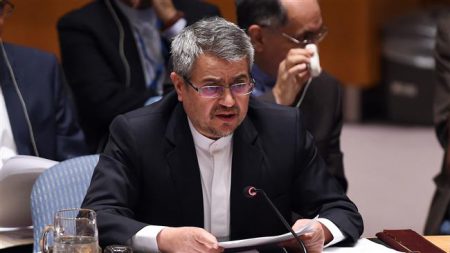
 Aletho News
 Aletho News