“No legal issue arises when the United States responds to a challenge to its power, position, and prestige.” Dean Acheson , 1962, speaking to the American Society of International Law.
Dean Acheson declared 51 years ago that power, position, and prestige are the ingredients of national security and that national security trumps law. In the United States democracy takes a back seat to “national security,” a prerogative of the executive branch of government.
National security is where the executive branch hides its crimes against law, both domestic and international, its crimes against the Constitution, its crimes against innocent citizens both at home and abroad, and its secret agendas that it knows that the American public would never support.
“National security” is the cloak that the executive branch uses to make certain that the US government is unaccountable.
Without accountable government there is no civil liberty and no democracy except for the sham voting that existed in the Soviet Union and now exists in the US.
There have been periods in US history, such as President Lincoln’s war to prevent secession, World War I, and World War II, when accountable government was impaired. These were short episodes of the Constitution’s violation, and the Constitution was reinstated in the aftermath of the wars. However, since the Clinton regime, the accountability of government has been declining for more than two decades, longer than the three wars combined.
In law there is the concept of adverse possession, popularly known as “squatters’ rights.” A non-owner who succeeds in occupying a piece of property or some one else’s right for a certain time without being evicted enjoys the ownership title conveyed to him. The reasoning is that by not defending his rights, the owner showed his disinterest and in effect gave his rights away.
Americans have not defended their rights conveyed by the US Constitution for the duration of the terms of three presidents. The Clinton regime was not held accountable for its illegal attack on Serbia. The Bush regime was not held accountable for its illegal invasions of Afghanistan and Iraq. The Obama regime was not held accountable for its renewed attack on Afghanistan and its illegal attacks on Libya, Pakistan, and Yemen, and by its proxies on Syria.
We also have other strictly illegal and unconstitutional acts of government for which the government has not been held accountable. The Bush regimes’ acts of torture, indefinite detention, and warrantless spying, and the Obama regime’s acts of indefinite detention, warrantless spying, and murder of US citizens without due process. As the Obama regime lies through its teeth, we have no way of knowing whether torture is still practiced.
If these numerous criminal acts of the US government spread over the terms of three presidents pass into history as unchallenged events, the US government will have acquired squatters’ rights in lawlessness. The US Constitution will be, as President George W. Bush is reported to have declared, “a scrap of paper.”
Lawlessness is the hallmark of tyranny enforced by the police state. In a police state law is not a protector of rights but a weapon in the hands of government. [see Roberts & Stratton, The Tyranny of Good Intentions] The accused has no recourse to the accusation, which does not require evidence presented to a court. The accused is guilty by accusation alone and can be shot in the back of the head, as under Stalin, or blown up by a drone missile, as under Obama.
As a person aware of the long struggle against the tyrannical state, I have been amazed and disheartened by the acceptance not only by the insouciant American public, but also by law schools, bar associations, media, Congress and the Supreme Court of the executive branch’s claim to be above both law and the US Constitution.
As Lawrence Stratton and I show in our book about how the law was lost, liberals and conservatives chasing after their favorite devils, such as child abusers and drug pushers, and prosecutors, judges, and police devoted to conviction and not to justice, have gradually eroded over time the concept of law as a protection of the innocent, With the atmosphere of threat created by 9/11, the final destruction of the protective features of law was quickly achieved in the name of making us safe from terrorists.
The fact that we are no longer safe from our own government did not register.
This is how liberty was lost, and America with it.
Can liberty be regained? Probably not, but there is a chance if Americans have the necessary strength of character. The chance comes from the now known fact that the neoconservative Bush/Cheney regime took America and its puppet states to war in Afghanistan and Iraq entirely on the basis of lies. As all evidence proves, these wars were not the results of mistaken intelligence. They were the products of intentional lies.
The weapons inspectors told the Bush regime that there were no weapons of mass destruction in Iraq. Despite this known fact, the Bush regime sent Secretary of State Colin Powell to the UN with fabricated evidence to convince the world that Saddam Hussein had “weapons of mass destruction” and was a threat to the world. Even if such weapons had existed in Iraq, many countries have them, including the US and Israel, and the presence of weapons does not under the Nuremberg Laws justify unprovoked aggression against the possessor. Under the Nuremberg Laws, unprovoked military aggression is a war crime, not the possession of weapons that many countries have. The war crime was committed by the US and its “coalition of the willing,” not by Saddam Hussein.
As for the invasion of Afghanistan, we know from the last video of Osama bin Laden in October 2001, attested by experts to be the last appearance of a man dying of renal failure and other diseases, that he declared that he had no responsibility for 9/11 and that Americans should look to their own government. We know as a reported fact that the Afghan Taliban offered to turn over Osama bin Laden to Washington if the Bush regime would provide the evidence that indicated bin Laden was responsible. The Bush regime refused to hand over the (non-existent) evidence and, with support of the corrupt and cowardly Congress and the presstitute media, attacked Afghanistan without any legal justification. Remember, the FBI has stated publicly that it has no evidence that Osama bin Laden was responsible for 9/11 and that that is why the crimes for which the FBI wanted bin Laden did not include responsibility for the 9/11 attack.
The war propaganda campaign was well prepared. Yellow ribbon decals were handed out for cars proclaiming “support the troops.” In other words, anyone who raises the obvious questions is not supporting the troops. Still today insouciant Americans sport these decals on their cars unaware that what they are supporting are the murder of foreign women, children and village elders, the death and physical and mental maiming of American soldiers, and the worldwide destruction of the reputation of the United States, with America’s main rival, China, now calling for a “de-Americanized world.”
A country with a population as insouciant as Americans is a country in which the government can do as it pleases.
Now that we have complete proof that the criminal Bush regime took our country to wars in Afghanistan and Iraq solely on the basis of intentional lies, how can the legal institutions, the courts, the American people possibly tolerate the Obama regime’s ignoring of the obvious crimes? How can America simply accept Obama’s statement that we mustn’t look back, only move ahead? If the US government, which has committed the worst crimes of our generation, cannot be held accountable and punished, how can federal, state, and local courts fill up American prisons with people who smoked pot and with people who did not sufficiently grovel before the police state.
Doubtless, the Obama regime, should it obey the law and prosecute the Bush regime’s crimes, would have to worry about being prosecuted for its own crimes, which are just as terrible. Nevertheless, I believe that the Obama regime could survive if it put all the blame on the Bush regime, prosecuted the Bush criminals, and desisted from the illegal actions that it currently supports. This would save the Constitution and US civil liberty, but it would require the White House to take the risk that by enforcing US law, US law might be enforced against its own illegal and unconstitutional acts by a succeeding regime.
The Bush/Cheney/John Yoo neoconservative regime having got rid of US law, no doubt the Obama regime thinks it is best to leave the situation as it is, rid of law.
Without accountability, America is finished. Not only will Americans live in a police state with no civil liberties, but the rest of the world is already looking at America with a jaundiced eye. The US is being reconstituted as an authoritarian state. All it takes is one failure of accountability for the police state to become entrenched, and we have had numerous failures of accountability. Does anyone really believe that some future government is going to make restitution to persecuted truth-tellers, such as Bradley Manning, Julian Assange, and Edward Snowdon, as was done for Japanese Americans?
Now that we know for a certain fact that the invasions of Afghanistan and Iraq were based on propaganda and lies, Congress and the world media should demand to know what was the real secret agenda. What are the real reasons for which Afghanistan and Iraq were invaded?
No truthful explanation for these wars exists.
Paul O’Neill, the Bush regime’s first Treasury Secretary, is on public record stating that at the very first cabinet meeting, long prior to 9/11, the agenda was a US attack on Iraq.
In other words, the Bush regime’s attack on Iraq had nothing whatsoever to do with 9/11.
What was the Bush regime’s secret agenda, kept secret by the Obama regime, that required an illegal, war criminal, attack on a sovereign country, an action for which officials of Hitler’s government were executed? What is the real purpose of Washington’s wars?
It is totally and completely obvious that the wars have nothing to do with protecting Americans from terrorism. If anything, the wars stir up and create terrorists. The wars create hatred of America that never previously existed. Despite this, America is free of terrorists attacks except for the ones orchestrated by the FBI. What the fabricated “terror threat” has done is to create a thorough-going domestic police state that is unaccountable.
Americans need to understand that they have lost their country. The rest of the world needs to recognize that Washington is not merely the most complete police state since Stalinism, but also a threat to the entire world. The hubris and arrogance of Washington, combined with Washington’s huge supply of weapons of mass destruction, make Washington the greatest threat that has ever existed to all life on the planet. Washington is the enemy of all humanity.
The only surprising thing about the news that the US is sabotaging peace moves in Afghanistan and Pakistan is that anyone should find the news surprising.
As reported on RT, Pakistan has accused the US of sabotaging peace talks between the authorities in Islamabad and the Taliban following last Friday’s drone assassination of the Pakistani Taliban leader Hakimullah Mehsud.
“The murder of Hakimullah is the murder of all efforts at peace,” Pakistani Interior Minister Chaudhry Nisa said. “Brick by brick, in the last seven weeks, we tried to evolve a process by which we could bring peace to Pakistan and what have you [the US] done?”
The killing of Hakimullah Mehsud comes less than a month after the US effectively wrecked the Afghan government’s efforts to engage with the Taliban by capturing Latif Mehsud, Hakimullah’s lieutenant. Latif Mehsud was the man that the Afghan government hoped would be a go-between for peace talks with the Taliban. Afghan President Hamid Karzai was reported to have been furious about the US operation. Karzai has also said that the drone strike against Hakimullah Mehsud “took place at an unsuitable time.”
The fact is that on several important occasions in the last 30 years or so, the US has wrecked peace efforts and used its power to provoke or prolong conflicts which could have been avoided or solved without further bloodshed.
1. Iraq 1990-1991
From August 1990 to January 1991, there were plenty of chances to achieve a diplomatic solution in relation to Iraq’s invasion of Kuwait and which would have resulted in an Iraqi withdrawal, but Washington was determined to go to war. When the war started, they rejected diplomatic moves, such as the plan put forward by the Soviet leader Mikhail Gorbachev, to end the conflict before ground troops were deployed in Kuwait.
Saddam Hussein’s forces could have been removed from Kuwait without a war in which many thousands were killed, but Washington didn’t want it.
2. Kosovo
That was at the start of the ’90s. Now let‘s fast forward to the end of that decade. In order to complete the destruction of Federal Yugoslavia, Washington aggressively championed the cause of a hardcore terrorist group, the Kosovo Liberation Army, in the late 1990s. The US marginalized Kosovar leaders who wanted to pursue a peaceful path towards independence, such as the politician Ibrahim Rugova, who urged passive resistance. Instead they pushed for a violent solution to the problem of Kosovo’s status: their strategy being to provoke a retaliation from the government in Belgrade, which would then provide the pretext for the NATO bombing of Yugoslavia.
The Rambouillet Conference of March 1999 was ostensibly about trying to broker a peace deal between the Kosovar Albanian delegates and the Yugoslav authorities. But the terms were deliberately made so onerous – Appendix B allowed NATO forces freedom of movement throughout the whole of Yugoslavia – so as to guarantee its rejection by Belgrade.
“I think certain people were spoiling for a fight in NATO at that time,” revealed Lord Gilbert, a UK minister of state for defense procurement, in 2000. “If you ask my personal view, I think the terms put to Milosevic at Rambouillet were absolutely intolerable. How could he possibly accept them? It was quite deliberate.”
Even Henry Kissinger, the former US secretary of state and a man who can hardly be labeled a ‘peacenik‘, admitted: “The Rambouillet text, which called on Serbia to admit NATO troops throughout Yugoslavia, was a provocation, an excuse to start bombing.”
Again, Washington had sabotaged a peaceful solution to a dispute and war ensued, with all its horrors.
3. Iraq 2002-2003
In 2002/3 we had the contrived WMD ’crisis’ with Iraq.
If Washington had genuinely been concerned about the possibility of Iraq being in possession of WMDs, they would simply have waited for Hans Blix and his team of UN weapons inspectors to finish their job. However, as we all know, the WMDs issue was merely a pretext for war, with the US knowing full well that the country was disarmed. The Iraqis were desperate to avert an attack on their country, but diplomatic offers from Baghdad in the lead-up to the illegal invasion were dismissed.
The result of the US opting for war and not peace in Iraq has been the deaths of at least 500,000 people since 2003.
4. Libya
In 2011, a UN resolution ostensibly about protecting civilians was used by the US and its NATO allies as a pretext for forcibly removing from power the government of Libya. During this ‘humanitarian’ intervention, which led to a sharp spike in the death toll, Washington and its allies frequently rejected calls for a ceasefire and a diplomatic solution. Today, Libya is – like Iraq – a wrecked country. But it all could have been very different, if Washington, instead of opting for war, had worked to bring warring factions to the negotiating table.
5. Syria
In Syria too, the US has set out since 2011 to prevent a peaceful solution to the country’s internal divisions. While an outright NATO attack on Syria has, at least for the time being, been avoided, it’s been public opinion in Western countries and adroit Russian diplomacy which has prevented World War III from breaking out in the Middle East this year, rather than America’s leaders suddenly turning over a new leaf.
If the US genuinely wanted an end to the terrible bloodshed in Syria they’d be encouraging the so-called ‘rebels’ to halt their campaign of violence and sign up to the political process and contest elections.
The Baathists have made significant reforms in Syria in the past two years, not least ending the party’s near five-decade long political monopoly, but Washington hasn’t been interested in peaceful democratic change, only in the violent overthrow of President Assad and his replacement by someone who will do its bidding. The result of this policy has been catastrophic for the people of Syria who, like the people of Iraq and Libya, watch as their country is destroyed before their very eyes.
While promoting itself as the great ‘peacemaker’, it’s the sober truth that no country has done more to stoke up conflicts and sabotage peaceful solutions to them in recent years than the US, with the killing of Hakimullah Mehsud being only the latest example.
Why does the US act in this destructive way? It’s important to understand that the US government doesn’t act in the interests of the ordinary, decent Americans, who are sick and tired of war and military ‘interventions’, but in the interests of Wall Street and what President Eisenhower famously referred to as ‘the military-industrial complex’.
The very last thing that Wall Street and the military-industrial complex want is peace. They thrive on wars and conflicts. Wars and conflicts mean profits. Nice, big, juicy profits. As Charlie Chaplin‘s anti-hero Monsieur Verdoux put it, “Wars, conflicts – it’s all business.”
Last month a report by the Public Accountability Initiative revealed that many of the leading ‘commentators’ who went on US TV stations to call for military strikes against Syria had undisclosed ties to military contractors. The report “identifies 22 commentators who weighed in during the Syria debate in large media outlets, and who have current industry ties that may pose conflicts of interest. The commentators are linked to large defense and intelligence contractors like Raytheon, smaller defense and intelligence contractors like TASC, defense-focused investment firms like SCP Partners, and commercial diplomacy firms like the Cohen Group.”
Among the ‘commentators’ supporting strikes on Syria was Madeline Albright, the US secretary of state at the time of the phony ‘peace’ conference at Rambouillet in 1999.
Bombing Yugoslavia, bombing Syria. With the violent destruction of Iraq and Libya along the way, to say nothing of the turmoil US policies have brought to Afghanistan and Pakistan. John Lennon implored us to ‘give peace a chance’, but until the US radically changes its political system and power is returned to ordinary people and away from those with a vested interest in endless war, its stoking up of conflicts and sabotaging of peace initiatives will only continue.
Campaigners have vowed to continue fighting for greater transparency over the use of deadly British drones overseas despite losing an appeal calling for the UK involvement to be disclosed.
Anti-drone campaigners said they would pursue an end to the “culture of secrecy” surrounding London’s drone attacks in Afghanistan.
This came after the Information Tribunal agreed the Ministry of Defence’s (MoD) refusal to reveal information on the deployment of remote- controlled unmanned warfare in the Asian country.
The appeal body said that the MoD can withhold basic details about its drone strikes in Afghanistan.
“The MOD referred to the disclosure of the requested information as involving ‘risk to life and limb’, the Commissioner used the phrase ‘life and death,’” the ruling stated.
However, strategy director of legal charity Reprieve Cori Crider described the ruling as “disappointing”, saying “the US-UK drone wars must be brought out of the shadows.”
“We know that the UK is closely involved in supporting the CIA in carrying out these illegal strikes, yet they are still refusing to come clean,” Crider said.
Recently, it was revealed that the UK’s Royal Air Force (RAF) assassination drones, used in missions over Afghanistan, are controlled from British soil for the first time.
The MoD confirmed that its new aircraft, known as XIII Squadron, started flying missions over Afghanistan earlier in April from RAF Waddington base in Lincolnshire.
According to media reports, Britain has spent more than £2 billion over the last five years, developing its unethical assassination drones.
The deployment of assassination drones by the US and its allies has led to deaths of at least hundreds of innocent civilians, including many women and children, in the Middle East.
The drone war is obscure by design. Operated by armchair pilots from clandestine bases across the American west, the Predators and Reapers fly over Afghanistan, Yemen, and Pakistan’s Tribal Areas at invisible heights, where they are on orders from the CIA to kill “high value” targets with laser-guided “surgical” precision thousands of feet below. But because of where the Hellfire missiles land, and because the program is operated in secret, verifying their precision and their lasting effects isn’t easy.
For years, US officials have downplayed the number of civilian deaths in particular, even as a chorus of independent reports have offered their own grim estimates. The latest, according to new research by the United Nations and Amnesty International: 58 civilians killed in Yemen, and up to nine hundred in Pakistan. In a speech in May, President Obama finally broke his silence on drones, acknowledging that civilians had been killed—he didn’t say how many—and promising more transparency for the program. “Those deaths,” added the President, “will haunt us for as long as we live.”
For journalist Madiha Tahir, the numbers are important, but they’re not the whole story. Her documentary “Wounds of Waziristan,” which premieres above, features interviews with the people who live in the southern part of the Federally Administered Tribal Areas, bordering Afghanistan, under the eyes of the drones, and in the wake of their destruction. The film switches up the typical calculus that drives the drone debate at home. Tahir, who grew up between Pakistan and the U.S., points out that drone strikes aren’t just about the numbers of casualties, or the kinds of ethical arguments that arise around “just war” concepts like proportionality. The effects of the drone war have as much to do with the way those casualties rip apart communities and haunt the living, in distant places that exist on the fringes of law and order.
“Because drones are at a certain remove, there is a sense of uncertainty, a sense that you can’t control this,” Tahir says, describing the attitude among the people who live in Waziristan. Already haunted by the legacy of British colonialism and the laws it left behind, this part of the Tribal Areas is now ruled with a brutal fist by the Pakistani military and various insurgent groups. But the buzz of the drones, sometimes seven or eight overhead a day, signals another kind of indeterminate power. “Whether its true or not, people feel that with militants there is some degree of control. You can negotiate. There is some cause and effect. But there is no cause and effect with drones. It’s an acute kind of trauma that is not limited to the actual attack.”
For the operators of the drone program, who have launched more than 300 missile attacks in Pakistan since 2008, the political vacuum of the Tribal Areas have encouraged a special kind of war-on-terror calculus. As the New York Timesreported last year, the American government has been counting all military-age males in a strike zone as “militants,” which leads to skewed figures about who exactly has been killed. The Obama administration has executed “signature strikes,” drone attacks based on a so-called “pattern of life” analysis in which simply suspicious behavior is enough to qualify for an attack. And in a so-called “double tap” maneuver, a second attack follows an initial strike, killing those who have come to recover bodies from the scene.
“When an attack happens, the media claims to know how many militants were killed,” says Noor Behram, a journalist in the Tribal Areas who has been photographing the casualties of drone strikes for years. “Actually, you only find body parts on the scene, so people can’t tell how many have died.”
In one interview, Tahir speaks with a man from South Waziristan named Karim Khan, whose brother and son were killed in a drone strike. “What is the definition of terrorism?” he asks her, and she returns the question to him. His tired eyes light up.
“I think there is no bigger terrorist than Obama or Bush,” he says. “Those who have weaponry like drones, who drop bombs on us while we are in our own homes, there are no greater terrorists than them.” …
While there is rightly much media attention on the US drone war in Pakistan and Yemen, there is a very different but over-looked “drone war” taking place in Europe right now. In parliamentary committee rooms, in company boardrooms, and in packed public meetings, arguments rage about whether Europe should embrace or reject the use of armed drones.
Many European armed forces already have unmanned aerial vehicles (UAVs), commonly known as drones, in their armories for reconnaissance, intelligence and surveillance purposes. Increasingly, however, European countries are under pressure to follow in the footsteps of the US and embrace the use of armed drones.
The UK has been a long-time partner with the US in using armed drones, with British military forces using US Predator drones in Iraq starting in 2004 before acquiring their own Reaper drones for use in Afghanistan in 2007. Since then, the UK has launched more than 400 missiles and bombs from its drones in Afghanistan and this is likely to increase as the UK doubles its armed drone fleet over the next year while also now directly operating drones from UK as well as US soil.
So far no other European country has used armed drones. French forces have used unarmed Harfang drones (based on Israel’s Heron) in Afghanistan, Libya and Mali; German forces in Afghanistan have been using unarmed Luna and Israeli Heron drones, and Italy has been operating unarmed drones alongside the US in Libya and Afghanistan from a joint Italian-US ground control station at Amendola airbase in southeast Italy.
But despite widespread public opposition, growing pressure from the pro-drone lobby and military companies is pushing European countries to acquire armed drone capability. After much debate, French Defense Minister Jean-Yves Le Drian suddenly announced in the summer that France would be acquiring armed US drones. Very rapidly French pilots have begun training on Reaper UAVs in the US and it looks likely that France will put armed drones over Mali by the end of the year. In Germany,despite huge opposition, the German Defense Minister Thomas de Maizière declared, “We cannot keep the stagecoach while others are developing the railway.”
Across Europe, the acquisition of armed drones is highly controversial. Many political parties are divided on the issue – or flatly oppose it – and there is much public hostility. A Pew Research Poll conducted in 2012 showed widespread opposition to drone strikes, including 59% of people in Germany, 63% in France, 76% in Spain, 55% in Italy, and a whopping 90% in Greece. Only the UK did not have a majority of its public against the use of armed drones but even so, only 44% were in favor.
In the US, opposition to the drone wars is focused on the use of drones for targeted killing. In Europe however, the focus is much more on whether the so-called “risk free” nature of drone warfare – at least to your own forces – will simply lead to more armed conflict, as well as an expansion of targeted killing and a lowering of global security in general. Across Europe protests, parliamentary hearings and public meetings on the use of armed drones are increasing.
But the pro-drone lobby is not running up the white flag just yet. Behind the scenes, the drone lobby is trying to persuade European governments to ignore the public anxiety and commit to armed unmanned systems. Their strategically placed Op-Eds extol the economic virtue of developing armed drones and of not being “left behind”. At the same time, NATO and European Union officials are urging European countries to increase spending on drones. US military companies are actively trying to amend international treaties in order to export armed drone technology to Europe. And senior arms company executives are directly lobbying European governments to commit to developing and building a future European armed drone. Already European military companies are devoting much effort and resources towards future combat drones, with known programs under development including BAE System’s Taranis and Mantis drones, Dassault’s Neuron and EADS’ Talarion. There are also on-going covert programs that are not as yet public.
As US and European combat forces withdraw from Afghanistan over the next 12 months, the war over drones in Europe is likely to get more intense. The drone lobby will try to clinch deals citing that a war-weary public is unlikely to support putting ‘boots on the ground’ anytime soon and will therefore support remotely controlled warfare. Skeptics will be demanding more transparency and information about exactly how drones have been used in Afghanistan – including proper casualty data – in order to assess the professed “pin point” accuracy of armed drone strikes and make informed decisions about future use. And opponents will ramp up their protests. For the moment at least, there will be no ceasefire in Europe’s drone war.
Chris Cole is a renowned expert on European drones and the director of Drone Wars UK.
Ann Jones’ new book, They Were Soldiers: How the Wounded Return from America’s Wars: The Untold Story, is devastating, and almost incomprehensibly so when one considers that virtually all of the death and destruction in U.S. wars is on the other side. Statistically, what happens to U.S. troops is almost nothing. In human terms, it’s overwhelming.
Know a young person considering joining the military? Give them this book.
Know a person not working to end war? Give them this book.
Jones presents the choice before us in the clearest terms in the introduction:
Contrary to common opinion in the United States, war is not inevitable. Nor has it always been with us. War is a human invention — an organized, deliberate action of an anti-social kind — and in the long span of human life on Earth, a fairly recent one. For more than 99 percent of the time that humans have lived on this planet, most of them have never made war. Many languages don’t even have a word for it. Turn off CNN and read anthropology. You’ll see.
What’s more, war is obsolete. Most nations don’t make war anymore, except when coerced by the United States to join some spurious ‘coalition.’ The earth is so small, and our time here so short. No other nation on the planet makes war as often, as long, as forcefully, as expensively, as destructively, as wastefully, as senselessly, or as unsuccessfully as the United States. No other nation makes war its business.
Jones begins her book with that distinguishing feature of war: death. The U.S. military assigns specialists in “Mortuary Affairs” to dispose of the dead. They dispose of their own sanity in the process. And first they dispose of their appetite. “Broiled meat in the chow hall smells much the same as any charred Marine, and you may carry the smell of the dead on a stained cuff as you raise a fork to your mouth, only to quickly put it down.” Much of the dead is — like the slop at the chow hall — unrecognizable meat. Once dumped in landfills, until a Washington Post story made that a scandal, now it’s dumped at sea. Much of the dead is the result of suicides. Mortuary Affairs scrubs the brains out of the port-o-potty and removes the rifle, so other troops don’t have to see.
Then come, in vastly greater numbers, the wounded — Jones’ chapter two. A surgeon tells her that in Iraq the U.S. troops “had severe injuries, but the injuries were still on the body.” In Afghanistan, troops step on mines and IEDs while walking, not driving. Some are literally blown to bits. Others can be picked up in recognizable pieces. Others survive. But many survive without one or two legs, one or two testicles, a penis, an arm, both arms — or with a brain injury, or a ruined face, or all of the above. A doctor describes the emotion for a surgical team the first time they have to remove a penis and “watch it go into the surgical waste container.”
“By early 2012,” Jones writes, “3,000 [U.S.] soldiers had been killed by IEDs in Iraq and Afghanistan, and 31,394 wounded. Among the wounded were more than 1,800 soldiers with severe damage to their genitals.” Doctors treat an injured soldier’s limbs first, later their genitals, later still their brains.
Back in the states, two young parents and “two pretty adolescent girls,” step up “to sit on the padded platforms in the center of the room. They move with the tentative sobriety of shock. Aides wheel in a gurney that bears a bundle in a flannel sheet. They gather the edges of the sheet and swing the package over the platform into the very heart of the family. Carefully they lower it and then begin to peel away the wrapping. There, revealed, restored to the family, is the son, their boy, not dead, but missing both arms, both legs, and some part — it’s impossible to tell how much — of his lower torso. The director calls out a cheery greeting, ‘Hi Bobby! How are you doing today?’ Bobby tries to answer but makes no sound. He flops on the platform, an emaciated head, eyes full of fear, his chest all bones under a damp grey ARMY tee shirt…”
Be all that you can be.
In training you’re ordered into a poison gas chamber and exposed to a bit of it. If Assad trained his troops that way, we’d murder a half million Syrians to get even. But U.S. military training is training in blind subservience, usually properly resented when it’s too late. Up goes your chances of being dead, injured, guilt-ridden, traumatized, homicidal, and suicidal. Jones recounts the story of a soldier who murdered two Iraqi prisoners, came home convinced he was a murderer, laid out the two dead Iraqis’ dog tags, wrapped a hose twice around his neck, and hung himself. Twenty-two a day: that’s the count of U.S. veteran suicides according to the V.A. The rate is 4.7 times higher than normal, according to the Austin-American Statesmen’s investigation of Texas veterans. That doesn’t count recklessly crashed cars and motorcycles. And it doesn’t count the epidemic of overdoses of the drugs meant to solve the problem.
How to help such suffering? Therapists used to ask people to talk and now ask them to take drugs. In either case, they don’t ask them to honestly deal with their guilt. Between 2001 and 2007 homicides committed by active duty and veteran U.S. troops went up 90 percent. The military looks for problems in soldiers’ family lives to explain such troubles, as if they all suddenly began marrying the wrong spouses just when their country deployed them into the stupidest war yet waged. Jones tells the story of one Marine who killed his wife but kept her body on the couch to watch TV with him for weeks. “I killed the only girl who ever loved me,” he later lamented. Chances are good he had killed other people who were loved as well — he’d just done so in a context in which some people praised him for it.
One wounded warrior tells Jones he loves war and longs to get back into it. “Blowin’ shit up. It’s fucking fun. I fuckin’ love it.” She replies, “I believe you really mean that,” and he says, “No shit. I’m trying to educate you.” But an older Army officer has a different view: “I’ve been in the army 26 years,” he says, “and I can tell you it’s a con.” War, he believes in rather Smedley Butlerish fashion, is a way to make a small number of people “monufuckinmentally rich.” He says his two sons will not serve in the military. “Before that happens I’ll shoot them myself.” Why? “War is absurd,” he says. “Boys don’t know any better. But for a grown man to be trapped in stupid wars — it’s embarrassing, it’s humiliating, it’s absurd.”
Obama’s global terror campaign is not only dependent upon his drone assassination program, but increasingly it has come to rely upon the deployment of Special Operations forces in countries all over the world, reportedly between 70 and 120 countries at any one time. As Obama has sought to draw down the large-scale ground invasions of countries (as Bush pursued in Afghanistan and Iraq), he has escalated the world of ‘covert warfare,’ largely outside the oversight of Congress and the public. One of the most important agencies in this global “secret war” is the Joint Special Operations Command, or JSOC for short.
JSOC was established in 1980 following the failed rescue of American hostages at the U.S. Embassy in Iran as “an obscure and secretive corner of the military’s hierarchy,” noted the Atlantic. It experienced a “rapid expansion” under the Bush administration, and since Obama came to power, “appears to be playing an increasingly prominent role in national security” and “counterterrorism,” in areas which were “traditionally covered by the CIA.” 1 One of the most important differences between these covert warfare operations being conducted by JSOC instead of the CIA is that the CIA has to report to Congress, whereas JSOC only reports its most important activities to the President’s National Security Council.2
During the Bush administration, JSOC “reported directly” to Vice President Dick Cheney, according to award-winning investigative journalist Seymour Hersh (of the New Yorker), who explained that, “It’s an executive assassination ring essentially, and it’s been going on and on and on.” He added: “Under President Bush’s authority, they’ve been going into countries, not talking to the ambassador or the CIA station chief, and finding people on a list and executing them and leaving. That’s been going on, in the name of all of us.” 3
In 2005, Dick Cheney referred to U.S. Special Forces as “the silent professionals” representing “the kind of force we want to build for the future… a force that is lighter, more adaptable, more agile, and more lethal in action.” And without a hint of irony, Cheney stated: “None of us wants to turn over the future of mankind to tiny groups of fanatics committing indiscriminate murder and plotting large-scale terror.” 4 Not unless those “fanatics” happen to be wearing U.S. military uniforms, of course, in which case “committing indiscriminate murder and plotting large-scale terror” is not an issue.
The commander of JSOC during the Bush administration – when it served as Cheney’s “executive assassination ring” – was General Stanley McChrystal, whom Obama appointed as the top military commander in Afghanistan. Not surprisingly, JSOC began to play a much larger role in both Afghanistan and Pakistan. 5 In early 2009, the new head of JSOC, Vice Admiral William H. McRaven, ordered a two-week ‘halt’ to Special Operations missions inside Afghanistan, after several JSOC raids in previous months killed several women and children, adding to the growing “outrage” within Afghanistan about civilian deaths caused by US raids and airstrikes, which contributed to a surge in civilian deaths over 2008. 6
JSOC has also been involved in running a “secret war” inside of Pakistan, beginning in 2006 but accelerating rapidly under the Obama administration. The “secret war” was waged in cooperation with the CIA and the infamous private military contractor, Blackwater, made infamous for its massacre of Iraqi civilians, after which it was banned from operating in the country. 7
Blackwater’s founder, Erik Prince, was recruited as a CIA asset in 2004, and in subsequent years acquired over $1.5 billion in contracts from the Pentagon and CIA, and included among its leadership several former top-level CIA officials. Blackwater, which primarily hires former Special Forces soldiers, has largely functioned “as an overseas Praetorian guard for the CIA and State Department officials,” who were also “helping to craft, fund, and execute operations,” including “assembling hit teams,” all outside of any Congressional or public oversight (since it was technically a private corporation).8
The CIA hired Blackwater to aid in a secret assassination program which was hidden from Congress for seven years. 9 These operations would be overseen by the CIA or Special Forces personnel. 10 Blackwater has also been contracted to arm drones at secret bases in Afghanistan and Pakistan for Obama’s assassination program, overseen by the CIA. 11 The lines dividing the military, the CIA and Blackwater had become “blurred,” as one former CIA official commented, “It became a very brotherly relationship… There was a feeling that Blackwater eventually become an extension of the agency.” 12
The “secret war” in Pakistan may have begun under Bush, but it had rapidly expanded in the following years of the Obama administration. Wikileaks cables confirmed the operation of JSOC forces inside of Pakistan, with Pakistani Prime Minister Yousaf Raza Gillani telling the U.S. Ambassador to Pakistan, Anne Patterson (who would later be appointed as ambassador to Egypt), that, “I don’t care if they do it as long as they get the right people. We’ll protest in the National Assembly and then ignore it.”13
Within the first five months of Obama’s presidency in 2009, he authorized “a massive expansion of clandestine military and intelligence operations worldwide,” granting the Pentagon’s regional combatant commanders “significant new authority” over such covert operations. 14 The directive came from General Petraeus, commander of CENTCOM, authorizing Special Forces soldiers to be sent into “both friendly and hostile nations in the Middle East, Central Asia and the Horn of Africa.” The deployment of highly trained killers into dozens of countries was to become “systemic and long term,” designed to “penetrate, disrupt, defeat or destroy” enemies of the State, beyond the rule of law, no trial or pretenses of accountability. They also “prepare the environment” for larger attacks that the U.S. or NATO countries may have planned. Unlike with the CIA, these operations do not report to Congress, or even need “the President’s approval.” But for the big operations, they get the approval of the National Security Council (NSC), which includes the president, as well as most other major cabinet heads, of the Pentagon, CIA, State Department, etc.15
The new orders gave regional commanders – such as Petraeus who headed CENTCOM, or General Ward of the newly-created Africa Command (AFRICOM) – authority over special operations forces in the area of their command, institutionalizing the authority to send trained killers into dozens of countries around the world to conduct secret operations with no oversight whatsoever; and this new ‘authority’ is given to multiple top military officials, who have risen to the top of an institution with absolutely no ‘democratic’ pretenses. Regardless of who is president, this “authority” remains institutionalized in the “combatant commands.”16
The combatant commands include: AFRICOM over Africa (est. 2007), CENTCOM over the Middle East and Central Asia (est. 1983), EUCOM over Europe (est. 1947), NORTHCOM over North America (est. 2002), PACOM over the Pacific rim and Asia (est. 1947), SOUTHCOM over Central and South America and the Caribbean (est. 1963), SOCOM as Special Operations Command (est. 1987), STRATCOM as Strategic Command over military operations to do with outer space, intelligence, and weapons (est. 1992), and TRANSCOM handling all transportation for the Department of Defense. The State Department was given “oversight” to clear the operations from each embassy, 17 just to make sure everyone was ‘in the loop,’ unlike during the Bush years when it was run out of Cheney’s office without telling anyone else.
In 2010, it was reported by the Washington Post that the U.S. has expanded the operations of its Special Forces around the world, from being deployed in roughly 60 countries under Bush to about 75 countries in 2010 under Obama, operating in notable spots such as the Philippines and Colombia, as well as Yemen, across the Middle East, Africa and Central Asia. The global deployment of Special Forces – alongside the CIA’s global drone warfare program – were two facets of Obama’s “national security doctrine of global engagement and domestic values,” in the words of the Washington Post, though the article was unclear on which aspect of waging “secret wars” in 75 countries constituted Obama’s “values.” Commanders for Special Operations forces have become “a far more regular presence at the White House” under Obama than George Bush, with one such commander commenting, “We have a lot more access… They are talking publicly much less but they are acting more. They are willing to get aggressive much more quickly.” Such Special Operations forces deployments “go beyond unilateral strikes and include the training of local counterterrorism forces and joint operations with them.”18
So not only are U.S. forces conducting secret wars within dozens of countries around the world, but they are training the domestic military forces of many of these countries to undertake secret wars internally, and in the interests of the United States Mafia empire.
One military official even “set up a network” of private military corporations that hired former Special Forces and CIA operations to gather intelligence and conduct secret operations in foreign countries to support “lethal action”: publicly subsidized, privatized ‘accountability.’ Such a network was “generally considered illegal” and was “improperly financed.” 19 When the news of these networks emerged, the Pentagon said it shut them down and opened a “criminal investigation.” Turns out, they found nothing “criminal,” because two months later, the operations were continuing and had “become an important source of intelligence.” The networks of covert-ops corporations were being “managed” by Lockheed Martin, one of the largest military contractors in the world, while being “supervised” by the Pentagon’s Special Operations Command. 20
Admiral Eric T. Olson had been the head of Special Operations Command from 2007 to 2011, and in that year, Olson led a successful initiative – endorsed by the Chairman of the Joint Chiefs Mike Mullen and Defense Secretary Robert Gates – to encourage the promotion of top special operations officials to higher positions in the whole military command structure. The “trend” was to continue under the following Defense Secretary Leon Panetta, who previously headed the CIA from 2009 to 2011. 21 When Olson left his position as head of Special Operations Command, he was replaced with Admiral William McRaven, who served as the head of JSOC from 2008 to 2011, having followed Stanley McChrystal.
By January of 2012, Obama was continuing with seeking to move further away from large-scale ground wars such as in Iraq and Afghanistan, and refocus on “a smaller, more agile force across Asia, the Pacific and the Middle East.” Surrounded by the Joint Chiefs of Staff in full uniforms adorned with medals, along with other top Pentagon officials, President Obama delivered a rare press briefing at the Pentagon where he said that, “our military will be leaner, but the world must know the United States is going to maintain our military superiority.” The priorities in this strategy would be “financing for defense and offense in cyberspace, for Special Operations forces and for the broad area of intelligence, surveillance and reconnaissance.” 22
In February of 2012, Admiral William H. McRaven, the head of the Special Operations Command, was “pushing for a larger role for his elite units who have traditionally operated in the dark corners of American foreign policy,” advocating a plan that “would give him more autonomy to position his forces and their war-fighting equipment where intelligence and global events indicate they are most needed,” notably with expansions in mind for Asia, Africa and Latin America. McRaven stated that, “It’s not really about Socom [Special Operations Command] running the global war on terrorism… I don’t think we’re ready to do that. What it’s about is how do I better support” the major regional military command structures. 23
In the previous decade, roughly 80% of US Special Operations forces were deployed in the Middle East, but McRaven wanted them to spread to other regions, as well as to be able to “quickly move his units to potential hot spots without going through the standard Pentagon process governing overseas deployments.” The Special Operations Command numbered around 66,000 people, double the number since 2001, and its budget had reached $10.5 billion, from $4.2 billion in 2001. 24
In March of 2012, a Special Forces commander, Admiral William H. McRaven, developed plans to expand special operations units, making them “the force of choice” against “emerging threats” over the following decade. McRaven’s Special Operations Command oversees more than 60,000 military personnel and civilians, saying in a draft paper circulated at the Pentagon that: “We are in a generational struggle… For the foreseeable future, the United States will have to deal with various manifestations of inflamed violent extremism. In order to conduct sustained operations around the globe, our special operations must adapt.” McRaven stated that Special Forces were operating in over 71 countries around the world.25
The expansion of global special forces operations was largely in reaction to the increasingly difficult challenge of positioning large military forces around the world, and carrying out large scale wars and occupations, for which there is very little public support at home or abroad. In 2013, the Special Operations Command had forces operating in 92 different countries around the world, with one Congressional critic accusing McRaven of engaging in “empire building.” 26 The expanded presence of these operations is a major factor contributing to “destabilization” around the world, especially in major war zones like Pakistan.27
In 2013, McRaven’s Special Operations Command gained new authorities and an expanded budget, with McRaven testifying before the Senate Armed Services Committee that, “On any day of the year you will find special operations forces [in] somewhere between 70 and 90 countries around the world.” 28 In 2012, it was reported that such forces would be operating in 120 different countries by the end of the year.29
In December of 2012, it was announced that the U.S. was sending 4,000 soldiers to 35 different African countries as “part of an intensifying Pentagon effort to train countries to battle extremists and give the U.S. a ready and trained force to dispatch to Africa if crises requiring the U.S. military emerge,” operating under the Pentagon’s newest regional command, AFRICOM, established in 2007.30
By September of 2013, the U.S. military had been involved in various activities in Algeria, Angola, Benin, Botswana, Burkina Faso, Burundi, Cameroon, Cape Verde Islands, Senegal, Seychelles, Togo, Tunisia, Uganda and Zambia, among others, constructing bases, undertaking “security cooperation engagements, training exercises, advisory deployments, special operations missions, and a growing logistics network.”31
In short, Obama’s global ‘war of terror’ has expanded to roughly 100 countries around the world, winding down the large-scale military invasions and occupations such as those in Afghanistan and Iraq, and increasing the “small-scale” warfare operations of Special Forces, beyond the rule of law, outside Congressional and public oversight, conducting “snatch and grab” operations, training domestic repressive military forces in nations largely run by dictatorships to undertake their own operations on behalf of the ‘Global Godfather.’
Make no mistake: this is global warfare. Imagine for a moment the international outcry that would result from news of China or Russia conducting secret warfare operations in roughly 100 countries around the world. But when America does it, there’s barely a mention, save for the passing comments in the New York Times or the Washington Post portraying an unprecedented global campaign of terror as representative of Obama’s “values.” Well, indeed it is representative of Obama’s values, by virtue of the fact that he doesn’t have any.
Indeed, America has long been the Global Godfather applying the ‘Mafia Principles’ of international relations, lock-in-step with its Western lackey organized crime ‘Capo’ states such as Great Britain and France. Yet, under Obama, the president who had won public relations industry awards for his well-managed presidential advertising campaign promising “hope” and “change,” the empire has found itself waging war in roughly one hundred nations, conducting an unprecedented global terror campaign, increasing its abuses of human rights, war crimes and crimes against humanity, all under the aegis of the Nobel Peace Prize-winner Barack Obama.
Whether the president is Clinton, Bush, or Obama, the Empire of Terror wages on its global campaign of domination and subjugation, to the detriment of all humanity, save those interests that sit atop the constructed global hierarchy. It is in the interests of the ruling elite that America protects and projects its global imperial designs. It is in the interests of all humanity, then, that the Empire be opposed – and ultimately, deconstructed – no matter who sits in office, no matter who holds the title of the ‘high priest of hypocrisy’ (aka: President of the United States). It is the Empire that rules, and the Empire that destroys, and the Empire that must, in turn, be demolished.
The world at large – across the Middle East, Africa, Asia, Latin America – suffers the greatest hardships of the Western Mafia imperial system: entrenched poverty, exploitation, environmental degradation, war and destruction. The struggle against the Empire cannot be waged and won from the outside alone. The rest of the world has been struggling to survive against the Western Empire for decades, and, in truth, hundreds of years. For the struggle to succeed (and it can succeed), a strong anti-Empire movement must develop within the imperial powers themselves, and most especially within the United States. The future of humanity depends upon it.
Or… we could all just keep shopping and watching TV, blissfully blind to the global campaign of terror and war being waged in our names around the world. Certainly, such an option may be appealing, but ultimately, wars abroad come home to roost. As George Orwell once wrote: “The war is not meant to be won, it is meant to be continuous. Hierarchical society is only possible on the basis of poverty and ignorance. This new version is the past and no different past can ever have existed. In principle the war effort is always planned to keep society on the brink of starvation. The war is waged by the ruling group against its own subjects and its object is not the victory over either Eurasia or East Asia, but to keep the very structure of society intact.”
Afghan forces are now leading the fight here. They managed an air assault last week, for example, and they may be winning the respect of the Afghan people. But the bottom line for Gen. Joseph F. Dunford Jr. is simple: Afghanistan still needs the United States and will for years to come.
Of course, the phrase “Afghan forces” is Washington-speak for the Northern Alliance, which is a motley group of tribal leaders, and terrorists in their own right.
But the Northern Alliance “may be winning the respect of the Afghan people”?
After nearly twelve years of war and occupation the very people the Northern Alliance claim to be liberating and representing have not given them popular support.
On the tenth anniversary of the 9/11 attacks the Washington Post reported that the Taliban “controls more than 90 percent of the country.”
According to the Council on Foreign Relations, “Before its ouster by U.S.-led forces in 2001, the Taliban controlled some 90 percent of Afghanistan’s territory.”
After twelve years of war and occupation the Taliban are just as strong as they were from the outset, if not stronger.
Perhaps that is why Rosenberg tells us what “the bottom line” for Gen. Joseph F. Dunford Jr. is: “Afghanistan still needs the United States and will for years to come.”
Not all in the media believe this.
Last month the BBC said “it has become increasingly clear to Nato that it cannot win militarily against the insurgents.”
When the U.S., who has an extreme advantage over the Taliban militarily, can make no major advancements in twelve years and the government still does not have “the respect of the Afghan people” it is hard to believe that “the problem” is that “most Americans no longer seem to believe that the United States needs the war in Afghanistan.”
Of course it does not help that from the beginning the Afghan people have opposed the war.
In October 2001, just as millions of Afghans were braving American bombardment, a thousand tribal leaders trekked to Peshawar, Pakistan where they meet to discuss their future. Peshawar was a popular place for the Mujahadeen to meet, and so the timing and place of this meeting proved to be historically significant.
USA Today covered the meeting in an article which said, “Some came over the mountains from Afghanistan on donkeys, some by sport-utility vehicle from plush villas in Pakistan. Some hobbled in, having lost a leg during two decades of unending war.” Hope for “a post-Taliban government” was running high, though it was stressed that, “Getting Afghanistan’s fractious groups to form a broad-based, post-Taliban government won’t be easy.” The only forces who did not show up were those that were aligning with the U.S.: the Northern Alliance and Zahir Shah, the exiled king. Yet:
Speakers at the conference sounded nearly identical themes. All opposed the US bombing campaign against Afghanistan, saying it was doing more to hurt ordinary Afghans than to unseat the Taliban leadership or to damage bin Laden’s al-Qa’eda terrorist network. Nearly all said they want to see a broad-based government replace the Taliban. A few said there is a place for moderate members of the Taliban in a new regime.
Ignoring the conference, the U.S. carried out a massive bombing campaign, right at the beginning of winter (which put millions of Afghans in critical danger). At the time it was reported that, “International aid organization officials say, however, that around 5 million Afghans are in danger of starvation because the nation’s borders are sealed and food supplies are diminishing by the day — meaning that only a tiny percentage of the hungry are receiving the U.S. food.”
In fact, even months after the war and the Taliban was toppled, U.S. authorities were admitting they did not know who was behind the terror attacks that was argued to be the legal and moral basis for the war and occupation of Afghanistan. FBI Director Robert Mueller told the press in June 2002 that, “I think we’re confident that [bin Laden] was one of the key figures,” and that, “We think the masterminds of it were in Afghanistan.” U.S. authorities only “think” they know who was involved or behind the attacks eight months after they began bombing the country and subjecting an already impoverished people to more hardships.
Naturally, all of this is ignored by Rosenberg. But to make matters worse, we read that for General Dunford, Al Qaeda is “the reason the United States came to Afghanistan .”
Here Rosenberg fails to mention how the Taliban made numerous offers to the U.S. to turnover bin Laden. While some requests asked for proof of his involvement in the 9/11 terror attacks—a reasonable thing to ask for in all extradition requests—some offered to turn him over to a third party if the U.S. would stop the bombing. The Bush administration rejected the offers (see here and here).
Then there is the fact that the U.S. is responsible for sending bin Laden, and thus Al Qaeda, to Afghanistan. Former CIA agent, Milt Bearden wrote in the New York Times back in August of 1999 that, “Washington should open a serious dialogue with the Taliban, who are as eager to rid themselves of their bin Laden problem as we are to bring him to justice,” and that:
After all, Osama bin Laden is in Afghanistan because we insisted that the Sudanese expel him from the Horn of Africa in 1996. Had he stayed in the Sudan, it can be argued that he, like the terrorist Carlos the Jackal, would by now have been quietly spirited away and be sitting in jail.
And here is another bombshell that the New York Times has yet to cover: according to The Christian Science Monitor, “The US military has been ignoring warnings that its spending in Afghanistan is funding Al Qaeda and the Taliban.”
What are NYT readers to make of a situation in which no gains have been made in twelve years of war, in which the Afghan people don’t “respect” us or our allies, where even the BBC says it is hopeless, and where our own spending is going to the very groups we claim to be fighting? That’s right: they cannot make anything of the situation because apparently that is not “all the news fit to print.”
New Zealand faces allegations of spying on a journalist in Afghanistan with the help of US agencies over his coverage of NZ’s treatment of prisoners. Defense denies the allegations, while the PM says reporters can get caught in surveillance nets.
The New Zealand Defense Force (NZDF) has reportedly put freelance journalist Jon Stephenson under surveillance and collected phone metadata while he was working for US news organization McClatchy in Afghanistan last year, Nicky Hager with the Sunday Star-Times newspaper revealed.
Metadata can reveal information such as the location of the caller and the length of the call.
New Zealand opened a probe into the allegations.
Allegedly NZDF was able to track who Stephenson had called and who the people he talked to subsequently called, which created what is known as a ‘tree’ of the journalist’s associates. The goal was to identify Stephenson’s contacts and sources within the Afghan government and military.
The surveillance was reportedly put in place after the government became unhappy with his reporting about New Zealand’s treatment of Afghan prisoners.
Hager revealed that it was most likely the NZ’s Government Communications Security Bureau (GCSB) that monitored Stephenson, as it had posted staff to the US’ main intelligence center north of Kabul at Bagram and was capable of such monitoring.
Stephenson told Sunday Star-Times that there is “a world of difference between investigating a genuine security threat and monitoring a journalist because his reporting is inconvenient or embarrassing to politicians and defense officials.”
NZ Prime Minister John Key denied allegations on Monday stating that his country does not spy on journalists, but said there is a chance reporters could get caught in surveillance nets when the US spies on enemy combatants.
Key said that it is theoretically possible that if a journalist called a member of the Taliban who was being watched by the US, he or she could end up in surveillance records.
NZDF added that there is no evidence that its military or the US had spied on Stephenson.
“We have identified no information at this time that supports [these] claims,” acting Defense Force Chief Maj. Gen. Tim Keating said in a statement.
This is not the first run-in the journalist has had with the NZ’s government. NZDF earlier implied that one of the interviews Stephenson published with Afghanistan’s unit commander about mishandling of prisoners was fabricated.
Stephenson sued for defamation. During this month’s trial, the NZDF confirmed that the interview may have taken place. The trial ended with the hung jury.
Advocate groups were outraged by what has unfolded. The Human Rights Foundation told Sunday Star-Times it was an abuse of fundamental human rights.
“Don’t they understand the vital importance of freedom of the press?” spokesman Tim McBride stated. “Independent journalism is especially important in a controversial war zone where the public has a right to know what really happens and not just get military public relations.”
In the meantime, the NZ government admitted to the existence of a secret order that lists investigative journalists as potential threats to security and puts them alongside other spies and terrorists.
The confidential order, which was leaked to Hager, stated that investigative journalists “may try to acquire classified information, not necessarily to give to a potential enemy, but because its use may bring the government into disrepute.”
The order was first issued a decade ago and reissued in 2005.
The US National Security Agency (NSA) sometime shares information with NZ, as part of the Five Eyes intelligence-sharing alliance, which also includes the UK, Australia and Canada.
The news comes as thousands of people marched to protest a new bill on Sunday that would grant the New Zealand government sweeping spy powers, giving the GCSB free rein to listen in on citizens’ phone conversations.
John Key has been playing down the nationwide protests, arguing that those involved in the mass demonstrations are ill-informed or have a political agenda.
The US involvement with global spying has grabbed the world’s attention after the whistleblower Edward Snowden leaked information the extent of US spy programs.
Leaked internal data produced by Pakistani officials documenting drone strikes on the ground reveal a high civilian death toll, countering US claims that the targeted assassination campaign results in “exceedingly rare” fatalities.
A 12-page report, titled ‘Details of Attacks by NATO Forces/Predators in FATA (Federally Administered Tribal Areas)’ describes 75 CIA drone attacks between 2006 and 2009, with death tolls compiled by officials in the turbulent border regions for internal use by the government. The Bureau of Investigative Journalism – a UK news website – says it obtained three identical copies of the classified document from various sources in Pakistan.
The numbers show a death toll of 746 people, 147 of whom were confirmed as civilians. Of those civilian deaths, 94 are children. Statistically, it means at least one in five victims of US precision strikes was a civilian, and more than 12 per cent were minors.
“There was no benefit in officials ‘cooking the books’ here, since this document was clearly never intended to be seen outside the civilian administration,” said Rauf Khan Khattak, who recently served as Pakistan’s interim finance minister.
The US President and the CIA do not have to disclose details of what is officially considered a classified program to Senate or to the public, so official American estimates have never been released. CIA Director John Brennan, considered to be the architect of the drone program, has said that “we only authorize a strike if we have a high degree of confidence that innocent civilians will not be injured or killed, except in the rarest of circumstances,” and that collateral deaths themselves are “exceedingly rare.” And an internal incomplete official report leaked earlier this year – covering a later period – showed that the CIA thought that only one out of every 482 people it killed was a civilian.
But the Pakistani numbers tally much closer with those provided by outside sources. The bipartisan New American Foundation estimates that at least 12 per cent of drone strike victims are definitely civilians, and the Bureau of Investigative Journalism itself claims the number could be as high as 25 per cent.
Rauf Khan Khattak, a long-time opponent of foreign drone strikes, believes the newest figures could be the most reliable obtained so far.
“What you end up with in these reports is reasonably accurate, because it comes from on-the-ground sources cultivated over many years. And the political agent is only interested in properly understanding what actually happened,” he told the Bureau of Investigative Journalism.
But others have urged for these documents to be taken into consideration only when measured against other sources. For example, following Barack Obama’s inauguration in 2009, only three civilian death incidents are recorded through the year up until late October, when the data ends – even though media reports from the same time indicate that civilians and children had died in attacks included in the FATA document.
“Tribal documents might present a broad picture. But any accuracy is dependent on what data the military chooses to release to or withhold from the political agents. In the last eight years, for example, no precise casualty figures have ever been submitted to Pakistan’s parliament,” said former FATA official and minister Rustan Shah Mohmand.
Independent sources estimate that around 2,500 and perhaps more than 3,500 people have been killed in UAV strikes on Pakistan since 2004. Obama has ramped up the program significantly since coming into office.
The difficulty in establishing the precise number of civilians among those is also compounded by the identity of the supposed militants and the CIA’s own targeting protocols , known as ‘signature strikes’.
Militants may simply be a villager engaged in an insurgency, and will have little to separate himself from a civilian, and vice versa. There is also little incentive for relatives to inform the authorities that any UAV strike victim is a militant, and much of the data is compiled on hearsay and local knowledge.
In turn, the US has tacitly admitted that it picks the majority of its targets based on a pattern of behavior – suspicious movements, contact with established targets, attendance of training centers, and other indirect indicators. Drones sometimes target follow-up events that occur as a result of its previous strikes, such as funerals of past drone targets. The earlier leaked documents showed that out of the 482 people killed, only six were known al-Qaeda commanders.
But even when taking all these variables into consideration and interpreting them in the most favorable light possible to the US, it is hard to agree with Obama’s recent assertion that the CIA has a “near-certainty that no civilians will be killed or injured” before each drone attack.
New York Times reporter Peter Baker has a piece today (7/16/13) about Barack Obama and Dwight Eisenhower that presents a somewhat confusing picture of both.
The article is about how Obama wields power–or, in the eyes of some critics, fails to take advantage of the “bully pulpit.”
The real point of the piece is to draw a parallel to Dwight Eisenhower’s “hidden hand” approach. According to an author of an Eisenhower book, Baker writes, “Mr. Obama was like the former president in avoiding major international conflict, relying more on covert action and letting Congress take the lead in legislation.”
Baker explains:
Just as Eisenhower, the 34th president, pulled troops out of Korea and avoided other military adventures, Mr. Obama has pulled out of Iraq, is leaving Afghanistan, has limited intervention in Libya largely to airstrikes and has resisted being drawn directly into the civil war in Syria.
Let’s try a rewrite–especially on the Obama years.
Obama withdrew troops from Iraq on the schedule inherited from Bush. His administration wanted to keep some troops there, but the Iraqi government would not allow it.
To say that Obama “is leaving Afghanistan” ignores the fact that he massively escalated the Afghan War, sending tens of thousands of additional troops to the country–essentially tripling the size of the U.S. military in the first 2 years of his term.
To say that Obama “limited intervention in Libya largely to airstrikes” is an odd way to describe what was a rather extensive bombing campaign in violation of the War Powers Act.
Baker does note that the White House has decided to formally begin arming the Syrian rebels–it is somewhat unclear how and/or when that will happen–and the CIA has reportedly been coordinating arms shipments into the country.
And, of course, one has to factor in ongoing drone wars in countries like Yemen, Afghanistan and Pakistan.
It is possible that these do not count as “military adventures,” but I think you’d have hard time explaining that to anyone in those countries.
As for Eisenhower, when the Times refers vaguely to “covert operations” during his term, one might want to spell out that the CIA was instrumental in the overthrow of governments in Iran, Guatemala and Congo, and that the CIA was deeply involved in supporting anti-government rebels in Indonesia fighting the Sukarno government–including dropping supplies to the rebels. His hands may have been “hidden,” but there’s no reason to not let the record speak for itself 50 years later.
The Islamic Movement of Afghanistan Party has strongly condemned the United States for planning to set up permanent military bases in the war-ravaged country beyond 2014.
Mohammad Mukhtar Mufleh, the party’s leader, released a statement on Thursday warning that things will get worse should the US sets up its bases in Afghanistan,
He also heaped scorn on the US-led forces for committing unforgivable crimes against Afghan women and children since invading the country in 2001.
Thousands of Afghan civilians, including a large number women and children, have been killed during night raids by foreign forces and CIA-run assassination drone strikes.
The increasing number of casualties in Afghanistan has caused widespread anger against the US and other NATO member states, undermining public support for the Afghan war.
Civilian casualties have long been a source of friction between the Afghan government and US-led foreign forces, and have dramatically increased anti-US sentiments in Afghanistan.
The United States and its allies invaded Afghanistan in 2001 as part of Washington’s so-called war on terror. The offensive removed the Taliban from power, but after more than 11 years, insecurity remains across the country.
In May, Afghan President Hamid Karzai said his government was ready to let the US set up nine bases across Afghanistan after most foreign troops withdraw in 2014.
However, the Afghan government recently sought explanation from Washington about the ongoing US-led controversial peace talks with the Taliban militants in Qatar,
The Kabul government has also suspended strategic talks with Washington to discuss the nature of US presence after beyond 2014.
President Karzai has announced that his government will not join any US negotiations with the Taliban unless the talks are led by the Afghans.
By Stephen Sniegoski | My Catbird Seat | June 12, 2010
The claim that Israel serves as a valuable ally for the United States is made by both pro-Zionists and much of the anti-war and anti-Zionist Left that is influenced by Noam Chomsky. As a result of the Gaza flotilla massacre, which has caused a world-wide uproar against Israel, the value of Israel to the United States is being publicly questioned in more mainstream foreign policy forums. … continue
This site is provided as a research and reference tool. Although we make every reasonable effort to ensure that the information and data provided at this site are useful, accurate, and current, we cannot guarantee that the information and data provided here will be error-free. By using this site, you assume all responsibility for and risk arising from your use of and reliance upon the contents of this site.
This site and the information available through it do not, and are not intended to constitute legal advice. Should you require legal advice, you should consult your own attorney.
Nothing within this site or linked to by this site constitutes investment advice or medical advice.
Materials accessible from or added to this site by third parties, such as comments posted, are strictly the responsibility of the third party who added such materials or made them accessible and we neither endorse nor undertake to control, monitor, edit or assume responsibility for any such third-party material.
The posting of stories, commentaries, reports, documents and links (embedded or otherwise) on this site does not in any way, shape or form, implied or otherwise, necessarily express or suggest endorsement or support of any of such posted material or parts therein.
The word “alleged” is deemed to occur before the word “fraud.” Since the rule of law still applies. To peasants, at least.
Fair Use
This site contains copyrighted material the use of which has not always been specifically authorized by the copyright owner. We are making such material available in our efforts to advance understanding of environmental, political, human rights, economic, democracy, scientific, and social justice issues, etc. We believe this constitutes a ‘fair use’ of any such copyrighted material as provided for in section 107 of the US Copyright Law. In accordance with Title 17 U.S.C. Section 107, the material on this site is distributed without profit to those who have expressed a prior interest in receiving the included information for research and educational purposes. For more info go to: http://www.law.cornell.edu/uscode/17/107.shtml. If you wish to use copyrighted material from this site for purposes of your own that go beyond ‘fair use’, you must obtain permission from the copyright owner.
DMCA Contact
This is information for anyone that wishes to challenge our “fair use” of copyrighted material.
If you are a legal copyright holder or a designated agent for such and you believe that content residing on or accessible through our website infringes a copyright and falls outside the boundaries of “Fair Use”, please send a notice of infringement by contacting atheonews@gmail.com.
We will respond and take necessary action immediately.
If notice is given of an alleged copyright violation we will act expeditiously to remove or disable access to the material(s) in question.
All 3rd party material posted on this website is copyright the respective owners / authors. Aletho News makes no claim of copyright on such material.

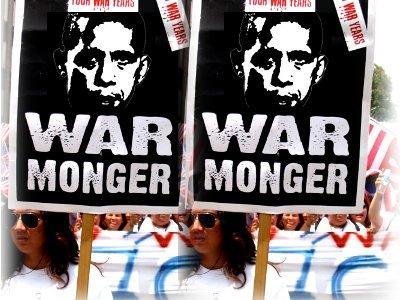
 Aletho News
