The US military plans to establish an intelligence center in Bahrain in a bid to compensate for its dwindling presence in Afghanistan.
A senior US military official told a Senate hearing that the planned espionage center in the Arab state, home to the US Navy’s 5th Fleet, will be an “integral part” of the Pentagon’s post-2014 strategy in Afghanistan, the Washington Post reported on Thursday.
The official, Erin Logan, who oversees the Pentagon’s “counter-narcotics efforts,” claimed during a US Senate hearing on narcotics on Wednesday that the plan is part of Washington’s efforts to “continue fighting” Afghanistan’s “booming drug industry.”
“The center,” she added, “will help fill the gap where space for personnel on the ground in Afghanistan is no longer available.”
The US move to expand its military and intelligence presence in Bahrain comes, however, despite the grave human rights record of the ruling Al Khalifa regime for its brutal crackdown on a popular uprising that has left scores shot and tortured to death and many more injured and prosecuted for taking part and even sympathizing with the continuing anti-regime protests in the country.
The United States has long been suspected by regional countries, particularly Iran and Russia, of promoting the growth of the narcotics trade in Afghanistan ever since American and NATO military forces invaded the country in 2001 under the pretext of fighting terror and bringing stability to Afghanistan.
There have been numerous press accounts over the past years pointing to the involvement of US troops and CIA operatives in Afghanistan’s expanding drug trade that largely finances the al-Qaeda-linked Taliban militants in the country.
The US military aims to establish an intelligence center in the Persian Gulf kingdom of Bahrain in a bid to compensate for its dwindling presence in the war-torn Afghanistan.
With 196 nations in the world and U.S. troops already in at least 177 of them, there aren’t all that many available to make war against. Yet it looks like both Syria and Iran will be spared any major Western assault for the moment. Could this become a trend? Is peace on the horizon? Are celebrations of Nelson Mandela’s nonviolence sincere?
The glitch in this optimistic little photo-shopped storyline starts with an A and rhymes with Shmafghanistan.
The U.S. public has been telling pollsters we want all U.S. troops out of Afghanistan “as soon as possible” for years now. We’re spending $10 million per hour, and $81 billion in the new annual budget, on an operation that many top officials and experts have said generates hostility toward our country. The chief cause of death for U.S. troops in this operation is suicide.
And now, at long last, we have an important (and usually quite corrupt) politician on our side, responding to public pressure and ready — after 12 years — to shut down Operation Enduring … and Enduring and Enduring.
Oddly, this politician’s name is not President Barack Obama. When Obama became president, there were 32,000 U.S. troops in Afghanistan. He escalated to over 100,000 troops, plus contractors. Now there are 47,000 troops these five years later. Measured in financial cost, or death and destruction, Afghanistan is more President Obama’s war than President Bush’s. Now the White House is trying to keep troops in Afghanistan until “2024 and beyond.”
Sadly, the politician who has taken our side is not in Washington at all. There are a few Congress Members asking for a vote, but most of their colleagues are silent. When Congress faced the question of missiles into Syria, and the question was front-and-center on our televisions, the public spoke clearly. Members of both parties, in both houses of Congress, said they heard from more people, more passionately, and more one-sidedly than ever before.
But on the question of another decade “and beyond” in Afghanistan, the question has not been presented to Congress or the public, and we haven’t yet found the strength to raise it ourselves. Yet someone has managed to place himself on our side, namely Afghan President Hamid Karzai.
Like the Iraqi government before him, Karzai is refusing to agree to an ongoing occupation with U.S. forces immune from prosecution under Afghan laws. Before signing off on an ongoing military presence, Karzai says he would like the U.S. to stop killing civilians and stop kicking in people’s doors at night. He’d like the U.S. to engage in peace negotiations. He’d like Afghan prisoners freed from Guantanamo. (Of the 17 still there, 4 have long since been cleared for release but not released; none has been convicted of any crime.) And he’d like the U.S. not to sabotage the April 2014 Afghan elections.
Whatever we think of Karzai’s legacy — my own appraisal is unprintable — these are remarkably reasonable demands. And at least as far as U.S. public opinion goes, here at long last is a post-invasion ruler actually engaged in spreading democracy.
What about the Afghans? Should we “abandon” them? We told pollsters we wanted to send aid to Syria, not missiles. Humanitarian aid to Afghanistan — or to the entire world, for that matter, including our own country — would cost a fraction of what we spend on wars and war preparations (51.4% of the new federal budget), and could quite easily make us the most beloved nation on earth. I bet we’d favor that course of action if we were asked — or if we manage to both raise the question and answer it.
The U.S. military has decided to scrap nearly half a billion dollars worth of aircraft purchased for Afghanistan’s air force because the planes couldn’t handle the climate, among other problems.
A total of 16 cargo planes, the G222 manufactured by Italy’s Finmeccanica, now sit at Kabul International Airport. They were flown only 200 of the 4,500 hours scheduled for flight training by Afghan pilots before the U.S. decided to shut them down.
The Obama administration spent $486 million to purchase the aircraft, which were supposed to comprise 15% of the Afghan Air Force.
“We need answers to this huge waste of U.S. taxpayer money,” John Sopko, the Special Inspector General for Afghanistan Reconstruction who is investigating the matter, said in an email to Bloomberg. “Who made the decision to purchase these planes, and why? We need to get to the bottom of this, and that’s why we’re opening this inquiry.”
A January 31 Pentagon Inspector General report, marked “For Official Use Only,” criticized NATO and U.S. training commands for “hav[ing] not effectively managed the program.”
Lieutenant General Charles Davis, the U.S. Air Force’s top military acquisition official, told Bloomberg: “Just about everything you can think of was wrong for it other than the airplane was built for the size of cargo and mission they needed.”
“Other than that, it didn’t really meet any of the requirements,” he added.
A key problem was that the planes couldn’t handle the heat and dust of Afghanistan’s environment, which caused numerous maintenance troubles and prevented them from flying.
Davis said the Air Force tried to sell the aircraft to another country, but couldn’t locate any buyers. So now they will be dismantled for parts.
The U.S. decided to replace the G222s with American-made C-130H transports for the Afghan Air Force to use. But the replacements won’t be available until 2016.
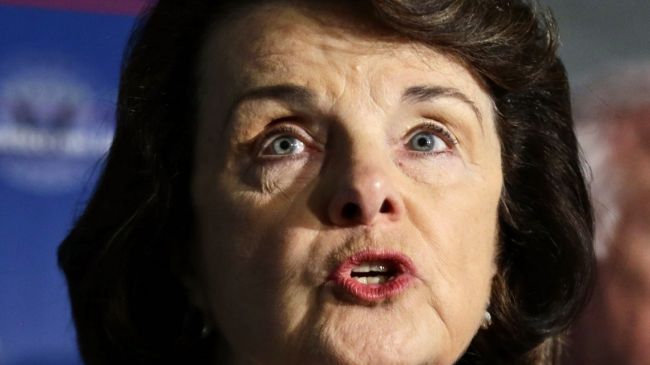
It appears that the heads of the Senate and House Intelligence Committees, Senator Dianne Feinstein and Rep. Mike Rogers, are recognizing that their strategy for keeping their co-dependent relationship with the NSA going is failing and that the American public and an increasingly large segment of Congress no longer believes their bogus claims. Perhaps that’s because every time they open their mouths, it takes all of about an hour before many of their claims are completely debunked, if not outright mocked for obviously being bogus. So their latest strategy? To basically yell “Ooga Booga Terrorists!” as loud as they can to try to scare people based on absolutely nothing.
Feinstein and Rogers did a little dance on Sunday political TV shows insisting that “the terrorism threat is increasing” and we’re all going to die if we stop trying to make sure the NSA actually, you know, respects the Constitution. Asked if we were “safer” now than a year or two years ago, Feinstein kicked off the FUD:
“I don’t think so,” Feinstein replied. “I think terror is up worldwide, the statistics indicate that. The fatalities are way up. The numbers are way up. There are new bombs, very big bombs. Trucks being reinforced for those bombs. There are bombs that go through magnetometers. The bomb maker is still alive. There are more groups than ever. And there is huge malevolence out there.”
And Rogers quickly followed:
“I absolutely agree that we’re not safer today for the same very reasons,” he said. “So the pressure on our intelligence services to get it right to prevent an attack are enormous. And it’s getting more difficult.”
Of course, Feinstein’s claim that “terror is up worldwide” is — as is so often the case with her (and Rogers’) claims about terrorism — sorta true, but highly misleading. Yes, recent stats show an uptick in terrorist attacks and fatalities in 2012 — but you can also see that it’s highly variable. Earlier in the year, before the 2012 numbers came out, people were commenting on the fact that terror attacks and fatalities around the globe had been on the decline since 2007. Terrorism is highly variable and dependent on a few big successful attacks. Furthermore, if we look at attacks on the US, we find that there have basically been next to none in the US since 2001. You could make the case that 16 people have died in US “terrorist” attacks since 2001 (including the 13 soldiers killed by Army psychiatrist Maj. Nidal Hasan at Fort Hood), but you have to have a very broad definition of terrorism to do so.
Nearly all of the “terrorist” attacks in that original report that Feinstein is obviously relying on, appear to take place in areas that are considered war zones: Iraq, Afghanistan, etc. And, um, I hate to bring this part up, but part of the reason why those are war zones is because, you know, the US invaded both places. This isn’t to say that there aren’t terrorists out there who would like to attack the US. There clearly are. But it seems highly misleading to make the claims that both Feinstein and Rogers are making here, as the “data” they’re talking about don’t show any heightened risk in the US at all.
Either way, this whole thing — having both appear together, both making vague “we’re all going to die” statements without any details to back it up combined with an exceptionally misleading use of statistics — suggests that this is the typical FUD. It’s Feinstein and Rogers shouting “terror” in a crowded theater, because they know that they’ve already lost public opinion on this, and are quickly losing Congress as well.
I imagine myself walking down to the Beirut train station, boarding the 4pm bullet train that will steam off toward Damascus, heading across the great plains to the east to Baghdad. In a day we’ll be in Iran and then at Mashad there is a choice: one could go south through Pakistan to Delhi, or one would take the longer journey to Beijing via Samarkand. This would be the Great Asian Express that links one end of the massive continent to the other.
But it is impossible. War in Syria stops the train before it has even begun. Instability in Iraq intimates that the tracks would be blown up before they can be laid down. Iran is far more stable, which is why it has begun to build a train line that would link Turkey to Turkmenistan through northern Iran. Afghanistan, Pakistan and India are unable to create a modus vivendi that would welcome such a train, or indeed an oil and gas pipeline that might run parallel to it, bringing Iranian fuel to the consumers of the subcontinent. Central Asia oscillates between long periods of calm and bursts of dangerous violence.
A train itinerary such as the one I described sounds like a dream history – impossible even. But it is not so out of our time. The Trans-Asian Railway comes out from the 1960s, a historical artefact, a project of the UN Economic and Social Commission for Asia and the Pacific that was finally brought to the stage of an inter-governmental memorandum of understanding in 2006. This Iron Silk Road is to run from Singapore to Istanbul. The project has no timetable. Parts of it are already present, and parts of it are in the maddening future. But some of it will form part of the China-Iran rail link which is expected to go into production within a decade, and will form part of the Istanbul to Tehran route that is also already in production. Not so far that regional future.
Regionalism
Regionalism rests on the mantle of geography. Attempts to isolate a country for ideological reasons do not always work. The West, since 2003 at least, has attempted to isolate Iran but it cannot do so – Afghanistan, under US occupation, buys half its oil from Iran. It cannot do otherwise. Any other source would be ridiculously overpriced. The US embargo of Iran had to be violated despite the fact that it was US money in Afghan hands that was buying the Iranian oil.
Pressure from the US and the desire of the Indian political and economic elites for a close link with the US befuddled India’s Iran policy between 2003 and 2013. India is the second largest importer, after China, of Iranian oil. In the halls of the Non-Aligned Movement, India is a country that is greatly respected.
Through a nuclear deal – as I detail in my new report on India’s Iran policy, the US was able to push India to vote against Iran twice at the International Atomic Energy Agency (IAEA) meetings in exchange for being brought out of the nuclear winter itself. As the sanctions regime on Iran tightened, India found it hard to buy oil from Iran and coldness between the countries set in as a result of India’s seeming eagerness to toe the US line. But beneath the surface of the IAEA votes and the statements against the buying of Iranian oil, linkages deepened – on oil buying certainly but also on the trade in pharmaceuticals and wheat as well as on the Indo-Iranian construction of a port in south-eastern Iran (at Chabahar). The sanctions regime had certainly throttled Iran, but it could not sunder fully the imperatives of regional trade.
On Sunday, November 24, the P5 (China, France, Russia, the United Kingdom and the United States) + 1 (Germany) signed a deal with Iran to end the siege on the latter. The P5+1 promised to ease the sanctions regime in exchange for Iran’s disavowal of a nuclear weapon.
India welcomed the deal, suggesting that it was along the grain not only of Indian policy but also of the BRICS declaration from 2013 (“We believe there is no alternative to a negotiated settlement to the Iranian nuclear issue. We recognize Iran’s right to peaceful use of nuclear energy consistent with its international obligations, and support resolution of the issues involved through political and diplomatic means and dialogue,” was the wording of the eThekwini Declaration).
India’s oil firms promised to hastily transfer arrears held in Indian banks for oil purchased during the previous years (now totalling $5.3 billion), and to increase orders for Iranian oil. The latter would be facilitated by the end to the pressure on insurance firms who then refused to underwrite oil tankers coming out of Iran.
India’s Foreign Secretary Sujatha Singh met with Iran’s Deputy Prime Minister Ebrahim Rahimpour on Monday, November 25, and agreed that there is “considerable untapped potential to develop economic cooperation between the two countries particularly in the area of energy and transit.” India and Iran have already been at work building the Chabahar port, and India is building a 900 km train track to link the port to the Hajigak region in Afghanistan. Dreams of oil and gas pipelines and train lines remained suspended over the gathering like a huge exclamation mark.
What these developments indicate is that the time of US primacy is now over and the time of multipolar regionalism is at hand. From 1991 to the present, the US had attempted to forge strong bilateral ties with its chosen allies and sought to knit those allies into a planetary security web of military bases and inter-operatable armed forces; this was the hub and spoke system that James Baker had written about in 1992. That system meant that regional ties had to be sacrificed for the close linkages to the United States. Latin America, through the Bolivarian dynamic, was the first region to exit from the US strategy and create its own regional architecture (for political, economic and social linkages). An over-extended US military presence in Asia and the collapse of the finance-led economic model in 2008 weakened the US considerably.
The example of Latin America gave confidence for the new India-Brazil-South Africa (IBSA) formation, the antecedent of the BRICS bloc. With the quiet emergence of the BRICS bloc in the context of a weaker West, it was inevitable that the siege of Iran would have to be lifted. China’s Foreign Minister Wang Li uncharacteristically told the Chinese media that his country played a crucial role in concluding the deal. Pressure from Russia and China on the European Union pushed them to bring a wayward France in line. No longer can an imperial foreign policy dominate international policy without challenge. That is the lesson of the Iranian deal.
Vijay Prashad is the Edward Said Chair at the American University of Beirut, Beirut, Lebanon. His most recent book is The Poorer Nations: A Possible History of the Global South.
When Barack Obama became president, there were 32,000 U.S. troops in Afghanistan. He escalated to over 100,000 troops, plus contractors. Now there are 47,000 troops these five years later. Measured in financial cost, or death and destruction, Afghanistan is more President Obama’s war than President Bush’s. Now the White House is trying to keep troops in Afghanistan until “2024 and beyond.”
Afghan President Hamid Karzai is refusing to sign the deal. Here is his list of concerns. He’d like the U.S. to stop killing civilians and stop kicking in people’s doors at night. He’d like the U.S. to engage in peace negotiations. He’d like innocent Afghan prisoners freed from Guantanamo. And he’d like the U.S. not to sabotage the April 2014 Afghan elections. Whatever we think of Karzai’s legacy — my own appraisal is unprintable — these are perfectly reasonable demands.
Iran and Pakistan oppose keeping nine major U.S. military bases in Afghanistan, some of them on the borders of their nations, until the end of time. U.S. officials threaten war on Iran with great regularity, the new agreement notwithstanding. U.S. missiles already hit Pakistan in a steady stream. These two nations’ concerns seem as reasonable as Karzai’s.
The U.S. public has been telling pollsters we want all U.S. troops out of Afghanistan “as soon as possible” for years and years. We’re spending $10 million per hour making ourselves less safe and more hated. The chief cause of death for U.S. troops in this mad operation is suicide.
When the U.S. troops left Iraq, it remained a living hell, as Libya is now too. But the disaster that Iraq is does not approach what it was during the occupation. Much less has Iraq grown dramatically worse post-occupation, as we were warned for years by those advocating continued warfare.
Humanitarian aid to Afghanistan — or to the entire world, for that matter, including our own country — would cost a fraction of what we spend on wars and war preparations, and would make us the most beloved nation on earth. I bet we’d favor that course if asked. We were asked on Syria, and we told pollsters we favored aid, not missiles.
We stopped the missiles. Congress members in both houses and parties said they heard from more people, more passionately, and more one-sidedly than ever before. But we didn’t stop the guns that we opposed even more than the missiles in polls. The CIA shipped the guns to the fighters without asking us or the Congress. And Syrians didn’t get the aid that we favored.
We aren’t asked about the drone strikes. We aren’t asked about most military operations. And we aren’t being asked about Afghanistan. Nor is Congress asserting its power to decide. This state of affairs suggests that we haven’t learned our lesson from the Syrian Missile Crisis. Fewer than one percent of us flooded Congress and the media with our voices, and we had a tremendous impact. The lesson we should learn is that we can do that again and again with each new war proposal.
What if two percent of us called, emailed, visited, protested, rallied, spoke-out, educated, and non-violently resisted 10 more years in Afghanistan? We’d have invented a new disease. They’d replace the Vietnam Syndrome with the Afghanistan Syndrome. Politicians would conclude that the U.S. public was just not going to stand for any more wars. Only reluctantly would they try to sneak the next one past us.
Or we could sit back and keep quiet while a Nobel Peace Prize winner drags a war he’s “ending” out for another decade, establishing that there’s very little in the way of warmaking outrages that we won’t allow them to roll right over us.
The Afghan President says he will not sign a crucial security pact with the US till after presidential elections next year. Hamid Karzai backs the deal, but does not trust the US.
“The agreement should be signed when the election is conducted, properly and with dignity,” Karzai told the Loya Jirga grand assembly that began on Thursday.
The unexpected statement comes just hours after Secretary of State John Kerry said the two sides had finalized the wording of the agreement.
Karzai said that his deferment would show America’s assurance “that we are moving on the path to security and they are accompanying us on this path.”
A spokesman for the United States Embassy in Kabul declined to comment on Karzai’s plan as it was an on-going diplomatic discussion.
President Karzai told the gathering in Kabul that President Barack Obama had sent a letter assuring him that a security pact between the two states was in Afghanistan’s best interest.
The five-day long 2,500-member national consultative council is set to debate the draft and decide whether US troops will be permitted to stay in the country post-2014.
The deal indicates that up to 15,000 US troops could remain in the country until 2024. But both sides still want final details to be clarified.
One of the main stumbling blocks in reaching the bilateral security agreement was the legal status of American troops on the ground.
On Wednesday the Afghan foreign ministry released a draft security deal, which said that US forces remaining in Afghanistan after 2014 will be under the jurisdiction of the US and not be subject to Afghan courts.
The Loya Jirga’s decision on the 25-page “Security and Defense Cooperation Agreement between the United States of America and the Islamic Republic of Afghanistan” is expected by Sunday.
The council can revise or reject any part of the draft agreement. After Loya Jirga amendments, the Afghan parliament is set to review the agreement and also make more changes before it is approved.
Despite his statement, Afghanistan’s President said he backs a security deal with the US, but at the same time he acknowledged there was little trust between the two sides.
“My trust with America is not good. I don’t trust them and they don’t trust me,” Karzai said. “During the past 10 years I have fought with them and they have made propaganda against me.”
Karzai’s decision, which came as a surprise even for the closest of the President’s aides, means that the long-debated deal will not be signed before April 5, the day when the presidential election is scheduled.
“This may be misconstrued as if the president wants someone specific [to win] in the elections,” Hedayat Amin Arsala, Karzai’s former vice president, said according to The Wall Street Journal. “I hope that is not the case.”
The US had wanted the agreement signed by the end of October 2013 as it would give military planners time to prepare to keep troops in the country after the scheduled 2014 withdrawal.
MOSCOW – A senior Russian diplomat has voiced concerns over US plans to retain nine military bases in Afghanistan after their planned withdrawal from the country.
Russia’s presidential envoy to Afghanistan, Zamir Kabulov, told RIA Novosti in an interview Wednesday that the bases would “exert a serious influence on the whole vast Asian region and become a powerful foothold for any large-scale military operation.”
Kabulov said Russia has many questions about the purpose of the bases.
The United States earlier said they would be used to train top brass of Afghanistan’s Defense Ministry and General Staff, which is estimated to count up to 400 people.
“Aren’t [400 people] too few for nine military bases?” Kabulov said. “Besides, what is the purpose of hiding the infrastructure of the Camp Shorabak training camp underground, which is moreover equipped with a three-kilometer runway?”
Kabulov said that while he accepted that Afghanistan was free to sign military agreements with any state, he hoped that Kabul’s authorization of foreign military bases would not result in security threats to third states, including Russia.
The NATO-led International Security Assistance Force in Afghanistan, which is currently estimated to comprise 100,000 servicemen, is to be largely pulled out of the country by the end of 2014.
The real reason why the U.S. continues its presence in Afghanistan is Iran the country which is an annoyance for Israel, said Karen Kwiatkowski, a writer and former U.S. Air Force officer.
Revelations about the long-term global, intrusive spying by the US National Security Agency (NSA) and other allied intelligence apparatuses have provoked widespread protests and indignation and threatened ties between erstwhile imperial allies.
Allied regimes have uniformly condemned NSA espionage as a violation of trust and sovereignty, a threat to their national and economic security and to their citizens’ privacy.
In contrast, Washington has responded in a contradictory manner: on the one hand, US officials and intelligence chiefs have acknowledged ‘some excesses and mistakes’, on the other hand, they defend the entire surveillance program as necessary for US national security.
Interpretations vary about the US global spying apparatus – how it was built and why it was launched against hundreds of millions of people. ‘Subjective’ and ‘objective’ explanations abound, evoking psychological, social, economic, strategic and political considerations.
A multi-factorial explanation is required.
The Integrated Hypothesis of the Global Police State
One of the essential components of a police state is an all-pervasive spy apparatus operating independently of any legal or constitutional constraints. Spy operations include: 1) massive surveillance over text, video and audio communications and 2) the capacity to secretly record, store and use information secretly collected. This information strengthens political and economic leaders who, in turn, appoint and direct the spy chiefs. The political and economic rulers control the spy-lords by setting the goals, means and targets of the surveillance state. The US global spy apparatus is neither ‘self-starting nor self-perpetuating’. It did not arise in a vacuum and it has virtually no strategic autonomy. While there may be intra-bureaucratic conflicts and rivalries, the institutions and groups function within the overall ‘paradigm’ established and directed by the political and economic elite.
The Global Spy Structure
The growth and expansion of the US spy apparatus has deep roots in its history and is related to the colonial need to control subjugated native and enslaved peoples. However, the global operations emerged after the Second World War when the US replaced Europe as the center of world imperialism. The US assumed the principal role in preventing the spread of revolutionary and anti-colonial movements from the Soviet Union, China, Korea, Vietnam and Cuba to war and crisis-burdened countries of Europe, North and Southeast Asia and Latin America. When the collectivist states fell apart in the 1990’s the US became the sole superpower and a unipolar world emerged.
For the United States, ‘unipolarity’ meant (1) an impetus toward total global domination; (2) a world-wide network of military bases; (3) the subordination of capitalist competitors in other industrial countries, (4) the destruction of nationalist adversaries and (5) the unfettered pillage of resources from the former collectivist regimes as they became vassal states. The last condition meant the complete dismantling of the collectivist state and its public institutions – education, health care and worker rights.
The opportunities for immense profits and supreme control over this vast new empire were boundless while the risks seemed puny, at least during the ‘golden period’, defined by the years immediately after (1) the capitalist takeover of the ex-Soviet bloc, (2) the Chinese transition to capitalism and (3) the conversion of many former African and Asian nationalist regimes, parties and movements to ‘free-market’ capitalism.
Dazzled by the vision of a ‘new world to conquer’ the United States set up an international state apparatus in order to exploit this world-historical opportunity. Most top political leaders, intelligence strategists, military officials and business elites quickly realized that these easy initial conquests and the complicity of pliable and kleptocratic post-Communist vassal rulers would not last. The societies would eventually react and the lucrative plunder of resources was not sustainable. Nationalist adversaries were bound to arise and demand their own spheres of influence. The White House feared their own capitalist allies would take on the role of imperialist competitors seeking to grab ‘their share’ of the booty, taking over and exploiting resources, public enterprises and cheap labor.
The new ‘unipolar world’ meant the shredding of the fabric of social and political life. In the ‘transition’ to free market capitalism, stable employment, access to health care, security, education and civilized living standards disappeared. In the place of once complex, advanced social systems, local tribal and ethnic wars erupted. It would be ‘divide and conquer’ in an orgy of pillage for the empire. But the vast majority of the people of the world suffered from chaos and regression when the multi-polar world of collectivist, nationalist, and imperialist regimes gave way to the unipolar empire.
For US imperialist strategists and their academic apologists the transition to a unipolar imperial world was exhilarating and they dubbed their unchallenged domination the ‘New World Order’ (NWO). The US imperial state then had the right and duty to maintain and police its ‘New World Order’ – by any means. Francis Fukiyama, among other academic apologists celebrated the ‘end of history’ in a paroxysm of imperial fever. Liberal-imperial academics, like Immanuel Wallerstein, sensed the emerging challenges to the US Empire and advanced the view of a Manichean world of ‘unipolarity’ (meaning ‘order’) versus ‘multipolar chaos’– as if the hundreds of millions of lives in scores of countries devastated by the rise of the post-collectivist US empire did not have a stake in liberating themselves from the yoke of a unipolar world.
By the end of its first decade, the unipolar empire exhibited cracks and fissures. It had to confront adversarial nationalist regimes in resource-rich countries, including Muammar Gaddafi in Libya, Bashar Assad in Syria, Saddam Hussein in Iraq and Khamenei in Iran. They challenged US supremacy in North Africa and the Middle East. The Taliban in Afghanistan and nationalist Islamist movements questioned US influence over the vassal rulers of Muslim countries – especially the puppet monarchs in the Persian Gulf.
On the other side of the imperial coin, the domestic economic foundations of the ‘New World Order’ were weakened by a series of speculative crises undermining the support of the US public as well as sectors of the elite. Meanwhile European and Japanese allies, as well as emerging Chinese capitalists, were beginning to compete for markets.
Within the US an ultra-militarist group of political ideologues, public officials and policy advisers, embracing a doctrine combining a domestic police state with foreign military intervention, took power in Washington. ‘Conservatives’ in the Bush, Sr. regime, ‘liberals’ in the Clinton administration and ‘neo-conservatives’ in the Bush, Jr. administration all sought and secured the power to launch wars in the Persian Gulf and the Balkans, to expand and consolidate the unipolar empire.
Maintaining and expanding the unipolar empire became the trigger for the White House’s global police state apparatus. As new regimes were added to Washington’s orbit, more and more surveillance was needed to make sure they did not drift into a competitor’s sphere of influence.
The year 2000 was critical for the global police state. First there was the dot-com crash in the financial sector. The speculative collapse caused massive but unorganized disaffection among the domestic population. Arab resistance re-emerged in the Middle East. The cosmically corrupt Boris Yeltsin vassal state fell and a nationalist, Russian President Vladimir Putin took power. The willing accomplices to the disintegration of the former USSR had taken their billions and fled to New York, London and Israel. Russia was on the road to recovery as a unified nuclear-armed nation state with regional ambitions. The period of unchallenged unipolar imperial expansion had ended.
The election of President Bush Jr., opened the executive branch to police state ideologues and civilian warlords, many linked to the state of Israel, who were determined to destroy secular Arab nationalist and Muslim adversaries in the Middle East. The steady growth of the global police state had been ‘too slow’ for them. The newly ascendant warlords and the proponents of the global police state wanted to take advantage of their golden opportunity to make US/Israeli supremacy in the Middle East irreversible and unquestioned via the application of overwhelming force (‘shock and awe’).
Their primary political problem in expanding global military power was the lack of a fully dominant domestic police state capable of demobilizing American public opinion largely opposed to any new wars. ‘Disaster ideologues’ like Phillip Zelikow and Condoleezza Rice understood the need for a new ‘Pearl Harbor’ to occur and threaten domestic security and thereby terrify the public into war. They lamented the fact that no credible regimes were left in the Middle East to cast as the ‘armed aggressor’ and as a threat to US national security. Such an enemy was vital to the launching of new wars. And new wars were necessary to justify the scale and scope of the new global spy apparatus and emergency police state edicts the warlords and neoconservatives had in mind. Absent a credible ‘state-based adversary’, the militarists settled for an act of terror (or the appearance of one) to ‘shock and awe’ the US public into accepting its project for imperial wars, the imposition of a domestic police state and the establishment of a vast global spy apparatus.
The September 11, 2001 explosions at the World Trade Center in New York City and the plane crash into a wing (mostly vacant for repairs) of the Pentagon in Washington, DC were the triggers for a vast political and bureaucratic transformation of the US imperial state. The entire state apparatus became a police state operation. All constitutional guarantees were suspended. The neo-conservatives seized power, the civilian warlords ruled. A huge body of police state legislation suddenly appeared, as if from nowhere, the ‘Patriot Act’. The Zionists in office set the objectives and influenced military policies to focus on Israel’s regional interests and the destruction of Israel’s Arab adversaries who had opposed its annexation of Palestine. War was declared against Afghanistan without any evidence that the ruling Taliban was involved or aware of the September 11 attack of the US. Despite massive civilian and even some military dissent, the civilian warlords and Zionist officials blatantly fabricated a series of pretexts to justify an unprovoked war against the secular nationalist regime in Iraq, the most advanced of all Arab countries. Europe was divided over the war. Countries in Asia and Latin America joined Germany and France in refusing to support the invasion. The United Kingdom, under a ‘Labor’ government, eagerly joined forces with the US hoping to regain some of its former colonial holdings in the Gulf.
At home, hundreds of billions of tax dollars were diverted from social programs to fund a vast army of police state operatives. The ideologues of war and the legal eagles for torture and the police state shifted into high gear. Those who opposed the wars were identified, monitored and the details of their lives were ‘filed away’ in a vast database. Soon millions came to be labeled as ‘persons of interest’ if they were connected in any way to anyone who was ‘suspect’, i.e. opposed to the ‘Global War on Terror’. Eventually even more tenuous links were made to everyone… family members, classmates and employers.
Over 1.5 million ‘security cleared’ monitors were contracted by the government to spy on hundreds of millions of citizens. The spy state spread domestically and internationally. For a global empire, based on a unipolar state, the best defense was judged to be a massive global surveillance apparatus operating independently of any other government – including the closest allies.
The slogan, ‘Global War on Terror’ (GWOT) became an open-ended formula for the civilian warlords, militarists and Zionists to expand the scope and duration of overt and covert warfare and espionage. ‘Homeland Security’ departments, operating at both the Federal and State levels, were consolidated and expanded with massive budgets for incarceration and repression. Constitutional protections and the Writ of Habeas Corpus were ‘rendered quaint vestiges of history’. The National Security Agency doubled its personnel and budget with a mandate to distrust and monitor allies and vassal states. The targets piled upon targets, far beyond traditional adversaries, sweeping up the public and private communications of all political, military and economic leaders, institutions, and citizenry.
The ‘Global War on Terror’ provided the ideological framework for a police state based on the totalitarian conception that ‘everybody and everything is connected to each other’ in a ‘global system’ threatening the state. This ‘totalistic view’ informs the logic of the expanded NSA, linking enemies, adversaries, competitors and allies. ‘Enemies’ were defined as anti-imperialist states or regimes with consistently critical independent foreign and domestic policies. ‘Adversaries’ occasionally sided with ‘enemies’, or tolerated policymakers who would not always conform to imperial policies. ‘Competitors’ supported the empire but had the capacity and opportunity to make lucrative trade deals with adversaries or enemies – Allies were states and leaders who generally supported imperial wars but might provide a forum condemning imperial war crimes (torture and drone attacks). In addition, allies could undermine US imperial market shares and accumulate favorable trade balances.
The logic of the NSA required spying on the allies to root out any links, trade, cultural or scientific relations with adversaries and enemies, which might have spillover consequences. The NSA feared that associations in one sphere might ‘overlap’ with adversaries operating in strategic policy areas and undermine ally loyalty to the empire.
The spy logic had a multiplier effect – who gets to ‘spy on the spies?’ The NSA might collaborate with overseas allied intelligence agencies and officials – but American spymasters would always question their reliability, their inclination to withhold vital information, the potential for shifting loyalties. ‘Do our allies spy on us? How do we know our own spies are not colluding with allied spies who might then be colluding with adversarial spies?’ This justified the establishment of a huge national vacuum cleaner to suck up all transactions and communications – justified by the notion that a wide net scooping up everything might catch that big fish!
The NSA regards all ‘threats to the unipolar empire’ as national security threats. No country or agency within or without the reach of the empire was excluded as a ‘potential threat’.
The ‘lead imperial state’ requires the most efficient and overarching spy technology with the furthest and deepest reach. Overseas allies appear relatively inefficient, vulnerable to infiltration, infected with the residue of a long-standing suspect ‘leftist culture’ and unable to confront the threat of new dangerous adversaries. The imperial logic regards surveillance of ‘allies’ as ‘protecting allied interests’ because the allies lack the will and capacity to deal with enemy infiltration.
There is a circular logic to the surveillance state. When an allied leader starts to question how imperial espionage protects allied interest, it is time to intensify spying on the ally. Any foreign ally who questions NSA surveillance over its citizens raises deep suspicions. Washington believes that questioning imperial surveillance undermines political loyalties.
Secret Police Spying as a “Process of Accumulation”
Like capitalism, which needs to constantly expand and accumulate capital, secret police bureaucracies require more spies to discover new areas, institutions and people to monitor. Leaders, followers, citizens, immigrants, members of ethnic, religious, civic and political groups and individuals – all are subject to surveillance. This requires vast armies of data managers and analysts, operatives, programmers, software developers and supervisors – an empire of ‘IT’. The ever-advancing technology needs an ever-expanding base of operation.
The spy- masters move from local to regional to global operations. Facing exposure and condemnation of its global chain of spying, the NSA calls for a new ‘defensive ideology’. To formulate the ideology, a small army of academic hacks is trotted out to announce the phony alternatives of a ‘unipolar police state or terror and chaos’. The public is presented with a fabricated choice of its perpetual, ‘well-managed and hi-tech’, imperial wars versus the fragmentation and collapse of the entire world into a global war of ‘all against all’. Academic ideologues studiously avoid mentioning that small wars by small powers end more quickly and have fewer casualties.
The ever-expanding technology of spying strengthens the police state. The list of targets is endless and bizarre. Nothing and no one will be missed!
As under capitalism, the growth of the spy state triggers crisis. With the inevitable rise of opposition, whistleblowers come forward to denounce the surveillance state. At its peak, spy-state over-reach leads to exposure, public scandals and threats from allies, competitors and adversaries. The rise of cyber-imperialism raises the specter of cyber-anti-imperialism. New conceptions of inter-state relations and global configurations are debated and considered. World public opinion increasingly rejects the ‘necessity’ of police states. Popular disgust and reason exposes the evil logic of the spy-state based on empire and promotes a plural world of peaceful rival countries, functioning under co-operative policies – systems without empire, without spymasters and spies.
In my last column, I emphasized that it was important for American citizens to demand to know what the real agendas are behind the wars of choice by the Bush and Obama regimes.
These are major long-term wars each lasting two to three times as long as World War II. Forbes reports that one million US soldiers have been injured in the Iraq and Afghanistan wars.
RT reports that the cost of keeping each US soldier in Afghanistan has risen from $1.3 million per soldier to $2.1 million.
Matthew J. Nasuti reports in the Kabul Press that it cost US taxpayers $50 million to kill one Taliban soldier. That means it cost $1 billion to kill 20 Taliban fighters. This is a war that can be won only at the cost of the total bankruptcy of the United States.
Joseph Stiglitz and Linda Bilmes have estimated that the current out-of-pocket and already incurred future costs of the Afghan and Iraq wars is at least $6 trillion.
In other words, it is the cost of these two wars that explain the explosion of the US public debt and the economic and political problems associated with this large debt.
What has America gained in return for $6 trillion and one million injured soldiers, many very severely?
In Iraq, there is now an Islamic government allied with Iran in place of a secular regime that was an enemy of Iran, one as dictatorial as the other, presiding over war ruins, ongoing violence as high as that during the attempted US occupation, and extraordinary birth defects from the toxic substances associated with the US invasion and occupation.
In Afghanistan, there is an undefeated and apparently undefeatable Taliban and a revived drug trade that is flooding the Western world with narcotics.
The icing on these Bush and Obama “successes” are demands from around the world that Americans and former British PM Tony Blair be held accountable for their war crimes. Certainly, Washington’s reputation has plummeted as a result of these two wars. No governments anywhere are any longer sufficiently gullible as to believe anything that Washington says.
These are huge costs for wars for which we have no explanation.
The Bush/Obama regimes have come up with various cover stories: a “war on terror,” “we have to kill them over there before they come over here,” “weapons of mass destruction,” revenge for 9/11, Osama bin Laden (who died of his illnesses in December 2001 as was widely reported at the time).
None of these explanations are viable. Neither the Taliban nor Saddam Hussein was engaged in terrorism in the US. As the weapons inspectors informed the Bush regime, there were no WMDs in Iraq. Invading Muslim countries and slaughtering civilians are more likely to create terrorists than to suppress them. According to the official story, the 9/11 hijackers and Osama bin Laden were Saudis, not Afghans or Iraqis. Yet, it wasn’t Saudi Arabia that was invaded.
Democracy and accountable governments simply do not exist when the executive branch can take a country to wars on behalf of secret agendas operating behind cover stories that are transparent lies.
It is just as important to ask these same questions about the agenda of the US police state. Why have Bush and Obama removed the protection of law as a shield of the people and turned law into a weapon in the hands of the executive branch? How are Americans made safer by the overthrow of their civil liberties? Indefinite detention and execution without due process of law are the hallmarks of the tyrannical state. They are terrorism, not a protection against terrorism. Why is every communication of every American and apparently the communications of most other people in the world, including Washington’s most trusted European allies, subject to being intercepted and stored in a gigantic police state database? How does this protect Americans from terrorists?
Why is it necessary for Washington to attack the freedom of the press and speech, to run roughshod over the legislation that protects whistleblowers such as Bradley Manning and Edward Snowden, to criminalize dissent and protests, and to threaten journalists such as Julian Assange, Glenn Greenwald, and Fox News reporter James Rosen?
How does keeping citizens ignorant of their government’s crimes make citizens safe from terrorists?
These persecutions of truth-tellers have nothing, whatsoever, to do with “national security” and “keeping Americans safe from terrorists.” The only purpose of these persecutions is to protect the executive branch from having its crimes revealed. Some of Washington’s crimes are so horrendous that the International Criminal Court would issue a death sentence if those guilty could be brought to trial. A government that will destroy the constitutional protections of free speech and a free press in order to prevent its criminal actions from being disclosed is a tyrannical government.
One hesitates to ask these questions and to make even the most obvious remarks out of fear not only of being put on a watch list and framed on some charge or the other, but also out of fear that such questions might provoke a false flag attack that could be used to justify the police state that has been put in place.
Perhaps that was what the Boston Marathon Bombing was. Evidence of the two brothers’ guilt has taken backseat to the government’s claims. There is nothing new about government frame-ups of patsies. What is new and unprecedented is the lock-down of Boston and its suburbs, the appearance of 10,000 heavily armed troops and tanks to patrol the streets and search without warrants the homes of citizens, all in the name of protecting the public from one wounded 19 year old kid.
Not only has nothing like this ever before happened in the US, but also it could not have been organized on the spur of the moment. It had to have been already in place waiting for the event. This was a trial run for what is to come.
Unaware Americans, especially gullible “law and order conservatives,” have no idea about the militarization of even their local police. I have watched local police forces train at gun clubs. The police are taught to shoot first not once but many times, to protect their lives first at all costs, and not to risk their lives by asking questions. This is why the 13-year old kid with the toy rifle was shot to pieces. Questioning would have revealed that it was a toy gun, but questioning the “suspect” might have endangered the precious police who are trained to take no risks whatsoever.
The police operate according to Obama’s presidential kill power: murder first then create a case against the victim.
In other words, dear American citizen, your life is worth nothing, but the police whom you pay, are not only unaccountable but also their lives are invaluable. If you get killed in their line of duty, it is no big deal. But don’t you injure a police goon thug in an act of self-defense. I mean, who do you think you are, some kind of mythical free American with rights?
As usual on Veteran’s Day, we are urged to honor our “heroes” and salute their martial courage, while ignoring the murderous imperial role they play in “fighting for their country.”
This really cannot be done. A professional army is by definition an organized band that kills on command. This can only be justified on the grounds that its mission is purely defensive, designed to repel invasion of the national territory the troops are sworn to protect and defend.
But this is hardly the role of the U.S. armed forces today, when Washington maintains hundreds of major military bases around the world, and thousands of smaller military installations, all of them dedicated to maintaining an economic and political status quo increasingly protested by popular majorities seeking a freer, more democratic world. In short, in spite of its multicultural and bi-gender facade, the U.S. military is an anti-democratic force. And there is nothing heroic about suppressing democracy.
Yes, our troops often display spectacular physical courage under fire. But so did soldiers defending Nazism and Communism, Japanese soldiers defending a brutal empire, and Confederate soldiers fighting to preserve chattel slavery. We do not ordinarily consider these soldiers heroes, no matter how great their martial courage, because we rate the missions they were sent on as illegitimate or evil.
We cannot have it both ways. If military service is value neutral, then it does not matter what cause soldiers fight for, we must salute their courage under fire. But if the value of physical courage is inextricably bound up with the legitimacy of the mission a soldier is sent on, then we must withhold hero status from imperial soldiers who fight – not to defend us from evil – but merely to preserve and extend the hegemony of empire. In the latter case, their bravery is stained and diminished by the ignoble cause they have been commanded to serve.
Actually, these days a soldier does not even have to demonstrate physical courage to be designated a hero. Cheap praise is heaped on our soldiers merely for being in the military, quite apart from anything they may do on a field of battle. This is directly related to a steady decline in public support for imperial military missions, which the architects of empire resist by equating anti-war sentiment with hostility to soldiers. “Support our troops” actually means “support the mission,” no matter how illegitimate.
This we must not do. The grotesque barbarity displayed at Abu Ghraib – hardly ancient history – was neither heroic, nor accidental. In fact, it was deliberately sanctioned policy, extensively pre-tested by Israel, to associate all resistance to foreign invasion with sexual humiliation. In short, it was an attempt to make legitimate heroism impossible for Iraqis, to stain public memory of resistance with images of utter disgrace. To invoke “support our troops” in this context is to embrace complete moral degeneracy.
A better option would be to widely publicize and critique the civilian leaders who craft such policies, and degrade our troops in the name of honoring them. “Support our troops – dispatch Donald Rumsfeld to jail,” should have been a national slogan years ago. Today, we have just as much reason to call for the same for Barack Obama – our first African-American president, who overthrew a Libyan government with the highest standard of living in Africa, leaving the country to the mercy of murderous and plundering gangs.
Service? Honor? Respect? What have any of these words to do with the role of the U.S. military in the world today? What is honorable about occupying Afghanistan in the service of a government so corrupt it makes the Taliban seem preferable? How is respect cultivated by mass murder of civilians by drones? What kind of “service” is involved in establishing an international network of torture centers in defiance of international law and basic morality?
Yes, let’s honor our troops, not by continuing the atrocities that degrade them, but by abolishing the imperial military and developing a real national defense policy to replace it.
By Stephen Sniegoski | My Catbird Seat | June 12, 2010
The claim that Israel serves as a valuable ally for the United States is made by both pro-Zionists and much of the anti-war and anti-Zionist Left that is influenced by Noam Chomsky. As a result of the Gaza flotilla massacre, which has caused a world-wide uproar against Israel, the value of Israel to the United States is being publicly questioned in more mainstream foreign policy forums. … continue
This site is provided as a research and reference tool. Although we make every reasonable effort to ensure that the information and data provided at this site are useful, accurate, and current, we cannot guarantee that the information and data provided here will be error-free. By using this site, you assume all responsibility for and risk arising from your use of and reliance upon the contents of this site.
This site and the information available through it do not, and are not intended to constitute legal advice. Should you require legal advice, you should consult your own attorney.
Nothing within this site or linked to by this site constitutes investment advice or medical advice.
Materials accessible from or added to this site by third parties, such as comments posted, are strictly the responsibility of the third party who added such materials or made them accessible and we neither endorse nor undertake to control, monitor, edit or assume responsibility for any such third-party material.
The posting of stories, commentaries, reports, documents and links (embedded or otherwise) on this site does not in any way, shape or form, implied or otherwise, necessarily express or suggest endorsement or support of any of such posted material or parts therein.
The word “alleged” is deemed to occur before the word “fraud.” Since the rule of law still applies. To peasants, at least.
Fair Use
This site contains copyrighted material the use of which has not always been specifically authorized by the copyright owner. We are making such material available in our efforts to advance understanding of environmental, political, human rights, economic, democracy, scientific, and social justice issues, etc. We believe this constitutes a ‘fair use’ of any such copyrighted material as provided for in section 107 of the US Copyright Law. In accordance with Title 17 U.S.C. Section 107, the material on this site is distributed without profit to those who have expressed a prior interest in receiving the included information for research and educational purposes. For more info go to: http://www.law.cornell.edu/uscode/17/107.shtml. If you wish to use copyrighted material from this site for purposes of your own that go beyond ‘fair use’, you must obtain permission from the copyright owner.
DMCA Contact
This is information for anyone that wishes to challenge our “fair use” of copyrighted material.
If you are a legal copyright holder or a designated agent for such and you believe that content residing on or accessible through our website infringes a copyright and falls outside the boundaries of “Fair Use”, please send a notice of infringement by contacting atheonews@gmail.com.
We will respond and take necessary action immediately.
If notice is given of an alleged copyright violation we will act expeditiously to remove or disable access to the material(s) in question.
All 3rd party material posted on this website is copyright the respective owners / authors. Aletho News makes no claim of copyright on such material.


 Aletho News
