Can the WHO and the United Nations impose sanctions on your country for non-compliance?
The sinister sanctions strategy has disturbing implications for democracy, peace, and prosperity around the world. It’s time for us to defund and exit.
By Shabnam Palesa Mohamed | Children’s Health Defense Africa | July 3, 2023
Sanctions are a powerful instrument of political control and economic profit. One of the rare but critical topics relevant to the international campaign to #ExitTheWHO is whether the World Health Organisation and the United Nations can impose, influence or recommend specific sanctions. The sanctions would be against countries that choose to not comply or cannot comply with International Health Regulations, the proposed new pandemic treaty, or other legislative attempts that curtail rights, freedom and sovereignty.
The accelerating and profitable globalist march towards unprecedented levels of ‘1984’ style totalitarianism – using censorship, vaccine passports, 15 minute cities, and CBDC’s continues. It is plausible that the WHO and the UN will move to impose, influence or recommend sanctions against countries that do not want to or cannot comply with its centralised health agenda and undemocratic legislative attempts.
At last year’s World Health Assembly 75, the 47 nation African bloc voted surprisingly, against most amendments to the International Health Regulations, stating that they were broad, rushed, and can pose a threat to national sovereignty. Since then, no doubt with persuasive behind the scenes manoeuvres, some of the most disturbing amendments are being proposed by African countries. Many relate to financing for the cost intensive provisions of IHR amendments and the proposed pandemic treaty or accord. Africa cannot afford more debt slavery.
Countries that could be sanction targets for non-compliance with the WHO and the UN, include but are not limited to, those in the steadily growing BRICS initiative: Brazil, Russia, India, China and South Africa. Iran and Malaysia are reported to have expressed reservations to the proposed IHR amendments at last year’s World Health Assembly 75. Russia is making decisive moves in the international arena and could possibly exit the WHO. In addition, India raised serious audit concerns on irregularities with WHO financials, including missing assets.
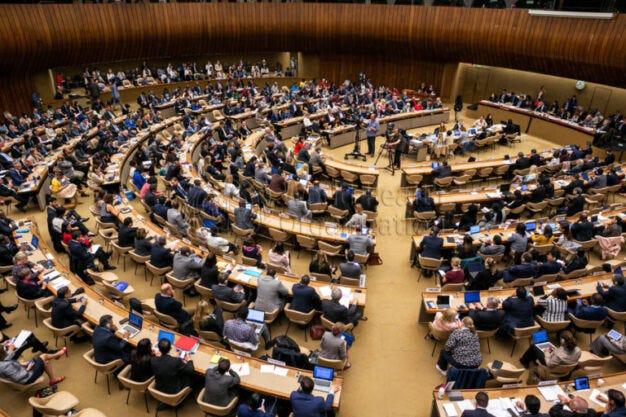
World Health Assembly, Geneva, Switzerland
The ambit of the overwhelmingly privately funded WHO, contained in its extensive constitution, can be interpreted as overly broad and sweeping, and thus, unknown to non-participants, has always posed a potential threat to individual health and national sovereignty.
The WHO’s constitution states in Chapter 2 – Functions – Article 2: In order to achieve its objective, the functions of the Organization shall be: (v) generally to take all necessary action to attain the objective of the Organization. However Article 21 of the WHO’s constitution is specific about making (non-binding) regulations, limiting the WHO to just five areas.
Proposed amendments to the new pandemic treaty include a dangerous clause that would change the WHO’s role from a UN agency that shares recommendations, to a rogue agency whose elitist and secretive attempts at legislation are binding and mandatory on member states, violating fundamental human rights and freedoms. However, health freedom advocates agree that WHO has no actual authority in the law.
In effect therefore, with both IHR amendments and the proposed new treaty, the WHO is acting ultra vires in its Big Pharma driven power grab, in collusion with naïve or compromised member state delegates. Ultra vires is defined in the law as: acting beyond the scope or in excess of legal power or authority. Ultra vires acts of impunity by the WHO could accelerate a mass defund and exit of the agency.
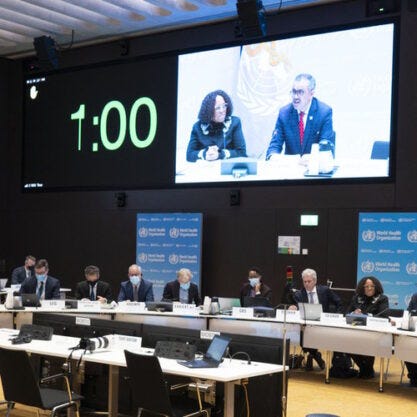
WHO’s negotiating body on a proposed pandemic treaty
Health is no longer just health, as it is defined in the WHO’s constitution. Through Covid-19, and other controversially declared pandemics, health is now a multi-billion dollar health security industry. With it, creeps in the tyranny of secrecy, surveillance, vaccine certificates, forced quarantines, and the undemocratic censorship of free speech. Given the absence of public participation, the WHO is a strategic spear for oligarchs and corporations, and given international resistance to its power grab, it may become desperate and argue or push for sanctions.
Reported in 2021: “In 2021, German Health Minister Jens Spahn called for sanctions against countries that hide information about future outbreaks. Citing the World Trade Organization’s power to sanction countries for non-compliance, Spahn said “there must be something that follows” if countries fail to live up to commitments under a new pandemic treaty that the World Health Assembly will take up in November.”
Further, it is entirely under reported that controversial “World Health Organization Director-General Tedros Adhanom Ghebreyesus also urged countries to consider the idea as they take up the treaty, a legally binding tool. The treaty should “have all the incentives, or the carrots” to encourage transparency, Tedros said, appearing at a press conference with Spahn in Berlin. “But maybe exploring the sanctions may be important,” he added.”
Also reported in 2021: “Speaking at the WHA in June, Mike Ryan, WHO Health Emergencies Programme Executive Director, also spoke out in favour of the treaty, despite the fact that WHO technical staff have historically avoided taking positions on controversial policy choices before member states. “My personal view is that we need a political treaty that makes the highest-level commitment to the principles of global health security — and then we can get on with building the blocks on this foundation.”
I engaged renowned international law expert Professor Francis Boyle about the possibility of sanctions via the WHO. He had no doubt “They will pursue sanctions against countries that do not comply with their orders, coming from Geneva. Both economic and political sanctions. However, they will only have the power to pursue sanctions if we accept their authority. We cannot. We must exit the WHO.”
With far less public scrutiny currently than the WHO, the United Nations is also seeking exponential new powers and stronger “global governance” mechanisms to deal with what they define as international emergencies. In March 2023, the UN released a policy brief , astonishingly titled “To Think and Act for Future Generations – Our Common Agenda. Strengthening the International Response to Complex Global Shocks – An Emergency Platform”
These all encompassing areas of expanded UN power include:
- climate or environmental events;
- environmental degradation;
- pandemics;
- accidental or deliberate release of biological agents;
- disruptions in the flow of goods, people, or finance;
- disruptions in cyberspace or “global digital connectivity;”
- a major event in “outer space;”
- and “unforeseen risks (‘black swan’ events)
There are several types of sanctions imposed through the United Nations:
- Economic sanctions – typically a ban on trade, possibly limited to certain sectors such as armaments, or with certain exceptions (such as food and medicine)
- Diplomatic sanctions – the reduction or removal of diplomatic ties, such as embassies.
- Military sanctions – military intervention
- Sport sanctions – preventing one country’s people and teams from competing in international events.
- Sanctions on the environment – since the declaration of the United Nations Conference on the Human Environment, international environmental protection efforts have been increased gradually.
- Economic sanctions are distinguished from trade sanctions, which are applied for purely economic reasons, and typically take the form of tariffs or similar measures.
It is plausible that the UN’s controllers realise that the world is pushing back against the WHO’s overreach, or find it irrelevant to real health. Given that sovereign nations will choose to exit the WHO, the UN decided to launch plan B and ascribe to itself even greater powers. Technically, there is no legislation to exit the United Nations within the UN Charter. Again, this is a critical issue of national sovereignty.
The United Nations Children’s Fund or UNICEF’s 2020 Annual Report highlights USD 717 million in donations from the private sector, which is 21 percent of income overall. Lucrative corporate partnerships include Unilever, Louis Vuitton, and Microsoft, while foundation partners include Bill and Melinda Gates Foundation and Mastercard Foundation. It also prides relationships with the World Economic Forum and the International Chamber of Commerce. National committees fundraise from individual donors and corporations at the national level, to support UNICEF globally. The UN’s programmes therefore are heavily dependant on private funding. Funding crowns influence.
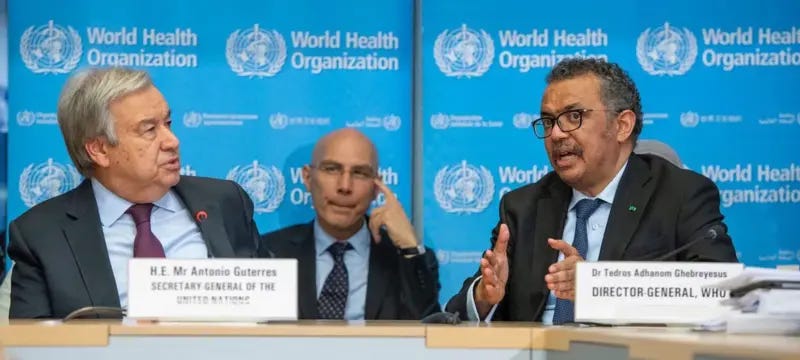
UN secretary general Antonio Guterres with WHO director general Adhanom Tedros Ghebreyesus
The WHO is an agency of the United Nations.
- In 2015, on punishing member states who violate the IHR, as reported: “United Nations health officials said they want to impose sanctions on countries that do not comply with public health regulations meant to avoid the spread of dangerous epidemics, such as the Ebola outbreak that killed more than 9,000 people and ravaged domestic health care systems in West Africa last year. World Health Organization Director Margaret Chan said she is investigating ways to reprimand countries that disobey the International Health Regulations (IHR) — a set of rules adopted in 2005 and mandate that countries set up epidemiological surveillance systems, fund local health care infrastructure and restrict international trade and travel to affected regions deemed unsafe to the public, among other provisions. Chan is on a panel set up by U.N. Secretary General Ban Ki-moon, who instructed the group to think of ways to hold countries accountable for how they manage public health crises and punish those who violate the IHR.”
- In 2022, according to commentators in a policy article: “In order to enforce compliance, some commentators have recommended concluding the treaty at the United Nations level. However, we fear that it has been already decided with the INB (mandated by WHASS) that a treaty will be developed under the roof of WHO. They added: “To move on with the treaty, WHO therefore needs to be empowered — financially, and politically. If international pandemic response is enhanced, compliance is enhanced. In case of a declared health emergency, resources need to flow to countries in which the emergency is occurring, triggering response elements such as financing and technical support. These are especially relevant for LMICs, and could be used to encourage and enhance the timely sharing of information by states, reassuring them that they will not be subject to arbitrary trade and travel sanctions for reporting, but instead be provided with the necessary financial and technical resources they require to effectively respond to the outbreak. High-income settings may not be motivated by financial resources in the same way as their low-income counterparts. An adaptable incentive regime is therefore needed, with sanctions such as public reprimands, economic sanctions, or denial of benefits.”
* Tweet CHD Africa if you agree that sanctions are possible and must be opposed internationally. Use the #StopSanctions
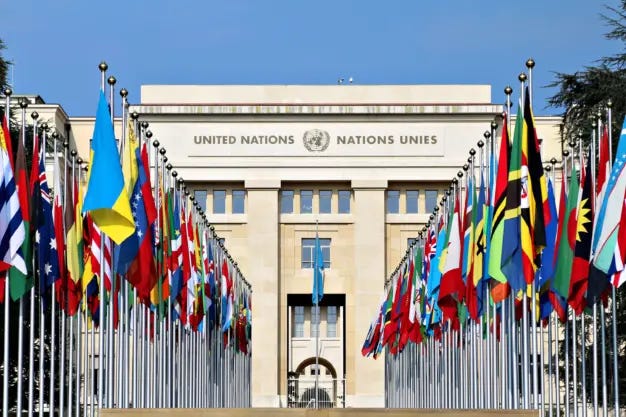
United Nations headquarters in Geneva, Switzerland
In 2000, Kofi Annan, former Secretary General of the UN said: “However, just as we recognize the importance of sanctions as a way of compelling compliance with the will of the international community, we also recognize that sanctions remain a blunt instrument, which hurt large numbers of people who are not their primary targets. Further, sanctions need refining if they are to be seen as more than a fig leaf in the future. Hence, the recent emphasis on targeted sanctions which prevent the travel, or freeze the foreign bank accounts, of individuals or classes of individuals – the so-called ‘smart sanctions’.”
Do sanctions work? “UN targeted sanctions, which are packages of sanctions imposed by the UN Security Council, have been successful in leading to intended policy change only 10% of the times, and limited the policies they intended to change in 28% of cases, but led to a reduced life expectancy in the targeted countries by 1.2–1.4 years. Economic sanctions have also been criticised for the potential collateral damage to third states they can cause. For this reason, some authors suggest that economic sanctions should be banned, as they are having detrimental effects on health and nutrition of civilians.”
Countries themselves can and do impose dangerous sanctions. A 2022 UN security council meeting on sanctions recorded: “Unilateral sanctions, which are sanctions imposed by (groups of) states and not by the UN Security Council, are particularly controversial. Unilateral sanctions have also been criticised for being disproportionately imposed on low-income and middle-income countries by wealthier countries, for example, by the Kenyan representative in a Security Council debate on sanctions on 7 February 2022: ‘The frequency and reach of unilateral sanctions have led to a growing view that they are the weapons of the strong against the vulnerable or weak’.”
- The Universal Declaration of Human Rights, in its first article, states that ‘all human beings are |…| equal in dignity and rights’, which includes the right to health. Article 25 specifies that ‘everyone has the right to |…| health and well-being |…| including medical care’.
- In the UN Convention on the Rights of the Child, article 24 states that ‘state parties recognize the right of the child to |…| the highest attainable standard of health and to facilities for the treatment of illness and rehabilitation of health. State parties shall strive to ensure that no child is deprived of his or her right of access to such health care services’.
- General Comment No.14 of the UN Committee on Economic, Social and Cultural Rights (CESCR) on the right to the highest attainable standard of health, the right to health is a fundamental human right which is necessary for all other human rights to exist and be exercised.
- “The use of sanctions designed to hurt a country’s healthcare sector is clearly incompatible with respecting citizens’ right to health. Accordingly, the general comment No. 14 of the CESCR calls on states to refrain ‘at all times’ from sanctions on medicines and medical equipment. However, sanctions on other healthcare products and, in fact, other non-healthcare products may as well interfere with the right to health, and, thus, need to be subject to scrutiny.”
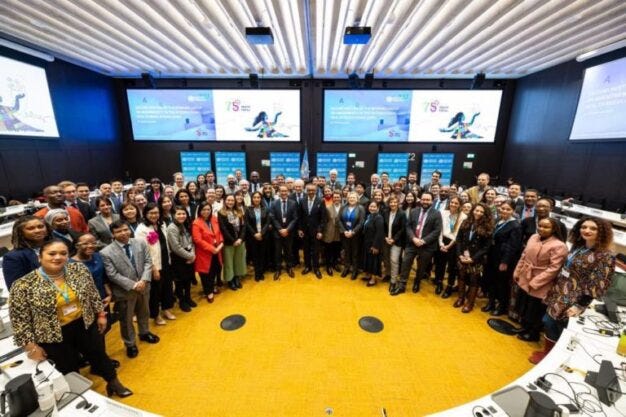
WHO’s World Health Assembly 75
South African Precious Matsoso, co-chair of the International Negotiating Body (INB), formed to negotiate the terms of the proposed pandemic treaty or accord, admitted openly that punitive measures have not been shown to work “anywhere” in the world. However, she said, there must be accountability measures while recognizing countries’ sovereignty. “We have to recognize that they’re sovereign, and they keep on reminding us that they are sovereign states.” It is positive to note that more states do recognise the real threat to sovereignty.
Not all states are considered equal. Smaller countries are at a distinct disadvantage in participating, negotiating and making decisions at the hierarchical WHO. Significantly, Matsoso was transparent about failures in equal participation. “A number of smaller delegations have always expressed concerns about organizations of multiple meetings, where they have to travel from afar, and not even having the capacity to participate in the negotiations,” Matsoso said. “And they have repeatedly requested that you must avoid parallel sessions.” To little avail.
Given the rapidly growing distrust in the WHO, its historical failures and harms, Covid-19 failures and harms, and the fact that it cannot maintain independence because it is a largely privately funded entity; it is plausible that the WHO and/or the UN will move to impose or influence sanctions via the World Trade Organisation, ahead of Agenda 2030. This act of aggression weaponises the WHO and/or the UN against countries that influential funders and unethical stakeholders have an interest in destabilising for power and resource control.
This sinister strategy has disturbing implications for democracy, peace, and prosperity around the world. Freedom faces an existential risk through unelected bureaucratic entities. Nations can and must protect their sovereignty by defunding and exiting WHO, and, by critically assessing the true nature, value, and risks of continued membership in the 78 year old United Nations. Not to do so, means ignoring the risks of UN peacekeepers, who are known to commit crimes with impunity, being deployed in your country to enforce UN and WHO dictates.
Shabnam Palesa Mohamed is executive director and chapter coordinator for Children’s Health Defense Africa. She is an activist, journalist, lawyer, and mediator, with over 20 years of experience in human rights work. To share information, Twitter: @ShabnamPalesaMo
Follow CHD Africa on 6 social platforms for news, action alerts, and updates:
– Telegram: t.me/CHDafrica
– Twitter: https://twitter.com/CHD_Africa
– Instagram: https://www.instagram.com/af.childrenshealthdefense/
– Facebook: https://www.facebook.com/CHDafricachapter
– Rumble: https://rumble.com/user/ChildrensHealthDefenseAfrica
– Tiktok: https://www.tiktok.com/@chdafrica?is_from_webapp=1…
Gates Commits $400 Million to Test New TB Vaccine on 26,000 People in Africa and Southeast Asia
By Brenda Baletti, Ph.D. | The Defender | June 30, 2023
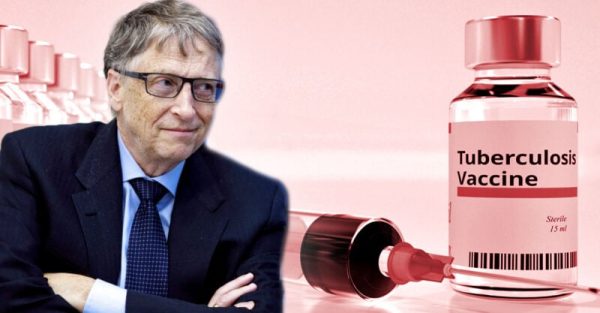
The Bill & Melinda Gates Foundation and Wellcome Trust on Wednesday announced plans to fund a phase 3 clinical trial for a tuberculosis (TB) vaccine that will be tested on 26,000 people at 50 sites in Africa and Southeast Asia over the next four to six years.
Gates committed $400 million to the trial and Wellcome — the largest funder of medical research in the U.K. and one of the largest in the world — committed an additional $150 million.
The trials will test the M72/AS01 vaccine, developed by pharmaceutical giant GSK (formerly GlaxoSmithKline) with partial funding from the Gates Foundation.
Experts told The Washington Post the news was “huge.” The Guardian heralded the announcement as “gamechanging,” while STAT called it “promising.”
But Brian Hooker, Ph.D., P.E., senior director of science and research for Children’s Health Defense told The Defender that the planned trials for the TB vaccine raised red flags.
“I’m concerned that they’re planning on conducting the trial in underdeveloped nations,” Hooker said. “It seems almost prototypical that the underserved have to be guinea pigs for the rest of the world.”
He added, “Fifty percent is incredibly low efficacy for such an ‘important’ intervention to go to essentially everyone in the developing world.”
TB more common among poor
GSK developed the vaccine and ran smaller, “proof-of-concept” phase 2b trials on it in 2018, reporting a 54% efficacy rate. But the vaccine maker didn’t move forward with the large-scale trials needed for a license.
Instead, it passed the license to the Gates Medical Research Institute, a nonprofit biotech spinoff of the Gates Foundation dedicated to developing “novel biomedical interventions” to treat global health problems.
The existing vaccine for TB, the BCG (bacille Calmette-Guérin) vaccine, was developed in 1921 and is effective at stopping TB infection among children but has limited efficacy in adults.
Recent estimates suggest up to 25% of the global population carries a latent (asymptomatic) TB infection, which may later become active among 5-15% of latent carriers. People with latent infection cannot spread the disease.
TB kills 1.6 million people per year, primarily in low and middle-income countries. It is treatable and curable with antibiotics. Drug-resistant strains have emerged, but those also are treatable and curable using second-line drugs.
TB is more common among poor people, who are more likely to work in poorly ventilated and overcrowded conditions, suffer from malnutrition and have more limited access to healthcare.
The funded trial will test whether the experimental vaccine can prevent adolescents and adults with latent tuberculosis from developing symptoms.
Maziar Divangahi, Ph.D., associate director of the McGill International TB Centre — a WHO collaborating research center and recipient of large-scale Gates Foundation grants — told STAT the vaccine was “really a big deal.”
But he also cautioned against putting too much faith in the earlier GSK trial. In that trial, 39 people — 26 in the placebo group and 13 in the vaccine group — became sick, so the sample size was “extremely low,” he said. And no one knows how long protection might last, he said.
In the earlier trial, 67% of people in the group that received the drug made unsolicited reports of adverse events within 30 days after injection, compared with 45% in the placebo group.
Gates Foundation funding like working in a ‘cartel’
The Gates Foundation is one of the largest funders of global health initiatives and “its influence on international health policy and the design of global health programmes and initiatives is profound,” The Lancet reported in 2009.
Since then its influence has grown substantially.
According to Anne-Emanuelle Birn, Sc.D., professor and chair of the Dalla Lana School of Public Health at the University of Toronto, this is a problem:
“The BMGF [Gates Foundation], emblematic of elite interests in contemporary society, disregards the underlying causes of ill health in the first place, overlooks what role the unprecedented accumulation of wealth in the hands of a few has played therein, and remains fiercely proud (staking a moral high ground) of its generosity and technical savoir-faire, all the while remaining underscrutinized by scientists and the wider public alike.”
Her research outlined how the Gates Foundation’s “profit-making principles as drivers of policy” have given business interests “an enormous and unprecedented role” in driving international policy-making.
“Despite the manifold shortcomings of a technology-focused, disease-by-disease approach to global health, this model prevails at present, abetted by the BMGF’s prime sway at formal global health decision-making bodies,” she wrote.
In a recent article examining the role of the Gates Foundation in global health, University of London professor Gwilym David Blunt, Ph.D., wrote that the foundation has been widely criticized for not following data-driven policies. “Its preference for technology and new vaccines” fails to acknowledge that mortality is often driven by “lack of basic resources such as sanitation, housing and nutrition,” Blunt wrote.
While people may benefit from clinical solutions, he wrote “a public health intervention such as ensuring access to clean water and sanitation may reduce deaths more quickly and with less expense.”
Instead, he wrote, the Gates Foundation’s influence “has helped move global health towards high-tech, vaccine-focused initiatives.”
In debates over how to approach global health at GAVI, the Vaccine Alliance, he reported Bill Gates was “vehemently insisting that not ‘one cent’ of his money should go into public systems.”
Arata Kochi, Ph.D., former head of the WHO’s malaria program, compared the Gates Foundation’s funding to working in a “cartel,” with researchers locked into the agenda of a foundation with “a closed internal process, and as far as can be seen accountable to none other than itself.”
Even The Lancet published a similar critique of Gates back in 2009.
“Important health programmes are being distorted by large grants from the Gates Foundation,” Dr. Richard Horton, editor-in-chief wrote in an editorial.
Linsey McGoey, Ph.D., professor of sociology at the University of Essex and author of a book examining Gates’ philanthropy has written that diseases like HIV, tuberculosis and malaria — key focuses for the Gates Foundation — clearly need urgent attention.
But, she said in an interview with Current Affairs, “In reality, you need to build up the public health capacity and the universal healthcare capacity of developing regions, not introduce more market actors who have incentives to drive up the costs of different medicines and interventions.”
Proponents of the TB vaccine concede that the global roll-out will “require a lot of resources” and are encouraging governments “to substantially increase investments in the TB vaccine pipeline.”
Wellcome Trust and the Gates Foundation hope to secure a commercial partner for their new vaccine within 12 months, The Economist reported.
Brenda Baletti Ph.D. is a reporter for The Defender. She wrote and taught about capitalism and politics for 10 years in the writing program at Duke University. She holds a Ph.D. in human geography from the University of North Carolina at Chapel Hill and a master’s from the University of Texas at Austin.
This article was originally published by The Defender — Children’s Health Defense’s News & Views Website under Creative Commons license CC BY-NC-ND 4.0. Please consider subscribing to The Defender or donating to Children’s Health Defense.
Putin Chose The Perfect Time To Reveal Details About The Now-Defunct Draft Treaty With Ukraine
BY ANDREW KORYBKO | JUNE 18, 2023
President Putin surprised his guests from the African peace delegation on Saturday by revealing details about Russia’s now-defunct draft treaty with Ukraine. It would have re-enshrined neutrality in that country’s constitution and also limited its number of military forces. According to him, it had even been signed by the Ukrainian side, which then discarded it in response to pressure from the Anglo-American Axis (AAA) despite Russia pulling its troops back from Kiev as part of an agreed-upon goodwill gesture.
The special operation could have been over just a month after it started, thus meaning that this development marked the beginning of the NATO-Russian proxy war in hindsight seeing as how that bloc hadn’t yet gone all-out in supporting Ukraine until right after that happened. This suggests that while the AAA was indeed surprised by President Putin preemptively averting Kiev’s planned reconquest of Donbass, they eventually saw an opportunity to weaken their rival by perpetuating this conflict.
They seemingly calculated that it would quickly collapse due to combined proxy war and sanctions pressure, though that obviously didn’t happen. The following fifteen months ended up hurting the Global South a lot more than Russia as proven by the food and fuel crises that ravaged these developing countries as a result of the West’s unilateral restrictions on their target’s financial dealings. The so-called “grain deal” also failed to relieve their suffering since Kiev never shipped its supplies to those states.
It was in the context of those countries’ plight that some of their leaders decided to embark on a peace mission to the two direct combatants in this conflict. They reportedly sought to convince both sides to agree to a ceasefire and other de-escalation measures such as lifting some of the sanctions in order to restore their previously reliable grain imports from those two. President Putin was aware of why they visited him and thus took the chance to prove that Russia wasn’t responsible for their problems.
His country regards Africa as an emerging pole in the ongoing global systemic transition to multipolarity, hence the importance of comprehensively expanding their relations. To that end, the Russian leader must absolutely ensure that his counterparts and their people aren’t misled by the West’s propaganda blaming it for the food crisis, especially since the “grain deal” is unlikely to be renewed due to its terms never having been fulfilled and a renewed round of information warfare will predictably follow.
President Putin therefore chose the perfect time to reveal details about Russia’s now-defunct draft treaty with Ukraine in order to show them that it’s Kiev and its AAA patrons who are responsible for disrupting Africa’s previously reliable import of grain from Eastern Europe. The supplementary context of Kiev’s disastrous NATO–backed counteroffensive also enabled him to show average Westerners that this catastrophe was entirely avoidable had the AAA not meddled in the Russian-Ukrainian peace process.
About those talks, they might very well resume around wintertime after Kiev’s doomed counteroffensive finally comes to an end, during which time the African peace delegation might be requested by both sides to informally mediate. By informing them of the details contained in the signed agreement that was ultimately discarded by Ukraine under the AAA’s pressure, they’ll be able to pick up where those two left off and thus be able to more effectively facilitate their talks in that scenario.
For these reasons, it makes sense why President Putin waited until now to reveal details about this treaty. He wanted to reassure Russia’s African partners that it isn’t responsible for the food crisis ahead of the next foreseeable round of information warfare claiming otherwise, which will likely commence once the “grain deal” expires next month in the days leading up to the second Russia-Africa Summit. By sharing proof of this with their peace delegation, President Putin ensured that they won’t be misled.
While the West Seeks Victory in Ukraine, the Global South Seeks Peace
By Ted Snider | The Libertarian Institute | June 14, 2023
There is a revealing difference between the peace proposals for the Russo-Ukrainian War that come from the Global South and peace proposals that come from the NATO-aligned West. For starters, no peace proposals have come from the West, while several have come from the Global South. But when the West talks of a negotiated settlement, they insist on Russia losing the war, granting the essential concessions first and only then negotiating the enforcement. The Global South just wants the killing to stop: first stop the war, then negotiate the settlement.
The West has made its position clear at every stage: don’t call for a ceasefire or negotiate during the war. First defeat Russia, then hold talks to impose a settlement. In the early days of the war, when Ukraine was willing to negotiate an end to the fighting, then-United Kingdom Prime Minister Boris Johnson was quick to scold Ukrainian President Volodymr Zelensky that Russian President Vladimir Putin “should be pressured, not negotiated with.” He added that, even if Ukraine was ready to sign some agreements with Russia, “the West was not.”
The West refuses to negotiate during the war. “Now we see Moscow suggesting that diplomacy take place at the barrel of a gun or as Moscow’s rockets, mortars, artillery target the Ukrainian people. This is not real diplomacy,” State Department spokesperson Ned Price explained. “Those are not the conditions for real diplomacy.” Don’t stop the war by negotiating peace, first win the war, then negotiate. “If President Putin is serious about diplomacy,” Price said, “he knows what he can do. He should immediately stop the bombing campaign against civilians [and] order the withdrawal of his forces from Ukraine.”
When China put forward a twelve point peace proposal, the United States dismissed points two through twelve and insisted that the proposal should “stop at point one.” Point one said that “[t]he sovereignty, independence and territorial integrity of all countries must be effectively upheld.” The American script was clear: first Russia concedes and gives into Western demands, then discuss the peace proposal. “My first reaction to it,” U.S. National Security Advisor Jake Sullivan scoffed, “is that it could stop at point one, which is to respect the sovereignty of all nations.” Reading from the same script, Blinken quipped, “If they were serious about the first one, sovereignty, then this war could end tomorrow.”
It is a novel theory of diplomacy that you don’t negotiate with enemies at times of war. When else do you negotiate? Who else do you negotiate with? Is it diplomacy if it is just imposing the result you won by war?
When point three of the Chinese proposal suggested “ceasing hostilities,” the United States rejected it. The Chinese proposal says that “Conflict and war benefit no one,” and requests that “All parties should support Russia and Ukraine in working in the same direction and resuming direct dialogue as quickly as possible, so as to gradually deescalate the situation and ultimately reach a comprehensive ceasefire.” But the U.S. did not want to resume dialogue “as quickly as possible.” National Security Council spokesperson John Kirby explained that “a ceasefire, at this time, while that may sound good, we do not believe would have that effect,” it would not be “a step towards a just and durable peace.” He then clearly stated that “we don’t support calls for a ceasefire right now.” Secretary of State Antony Blinken called the peace proposal a “tactical move by Russia” that was “supported by China” and warned that “the world should not be fooled.”
The Global South sees diplomacy differently. Where the West wants to continue the fighting to allow talks, the Global South wants to stop the fighting to allow talks.
On May 16, South African President Cyril Ramaphosa announced that he had held phone calls with Putin and Zelensky, who both agreed to separately receive a delegation of African heads of state in their capitals to discuss a possible peace plan to end the war. Joining South Africa in the delegation will be Senegal, Uganda, Egypt, the Republic of the Congo, and Zambia. In opposition to Western demands that Russian troops withdraw from Ukrainian territory as a condition for talks to begin, the African heads of state “propose that Ukraine accept opening peace talks with Russia even as Russian troops remain on its soil.” Reversing the order of the West’s agenda, South African Presidency Spokesman Vincent Magwenya said, “First is the cessation of hostilities. Second is a framework for lasting peace.”
Brazil has also “pressed for a truce.” And on June 3, Indonesia offered a peace plan that, like those offered by China, Africa and Brazil, placed the ceasefire first on the agenda to allow for the talks that would follow. Indonesia’s proposal calls for a ceasefire first, then the creation of a de-militarized buffer zone, followed by referendums that would allow the people of the “disputed territories” to democratically determine the post war boundaries.
The West, once again, rejected the order of business on the agenda. “I will try to be polite,” Ukrainian Defense Minister Oleksii Reznikov responded, “It sounds like a Russian plan…We don’t need these mediators suggesting such a strange plan.” Josep Borrell, the European Union high representative for foreign policy, asked that there be a “just peace,” not a “peace of surrender.”
But how is the Indonesian proposal “strange” or a “peace of surrender”? A senior Biden administration official told The Washington Post, “African leaders have made clear to White House and administration officials that they simply want an end to the war.” The official acknowledged that Africa and the United States “disagree on what tactics to use to get to a settlement…as the Africans oppose the idea of punishing Russia or insisting that Kyiv must agree to any resolution.” Africa stresses diplomacy first; the West stresses victory first. While “The Africans want to see a diplomatic solution to this conflict,” the West wants “nothing about Ukraine without Ukraine,” according to the official.
The Global South wants a lasting end to what they see as a European war and the global hardships it causes. They do not seek to punish Russia and defend democracy partly because they do not believe this is a war for the triumph of democracy over autocracy or a Manichean war between good and evil. It is just a devastating war that needs to be stopped. Africa remembers Western colonialism and their sponsored coups. And Indonesia’s Defense Minister, Prabowo Subianto, upon introducing Indonesia’s peace proposal, reminded the West, “We in Asia have our share of conflict and war, maybe more disastrous, more bloody than what has been experienced in Ukraine…Ask Vietnam, ask Cambodia, ask Indonesians how many times we’ve been invaded.” He might have added to ask Indonesia about the half a million to a million Indonesians who were slaughtered with the complicity of the United States.
The Global South has a very different view than the West that gives shape to a very different view on how to end the war. Most obviously, while the West refuses to push the warring parties to negotiate an end to the war and has offered no peace proposals, the Global South is pushing hard for an end to the war and has offered several peace proposals. Unlike the West who favors winning the war before allowing diplomatic talks, the Global South favors a ceasefire that would stop the war as soon as possible in order to allow diplomatic talks.
Most Countries Side With Russia in Ukraine Conflict While US’s Credibility Slips – Hersh
Sputnik -12.06.2023
Most of the world’s population supports Russia’s special military operation in Ukraine, while the United States lost its credibility, Pulitzer Prize-winning US investigative journalist Seymour Hersh said on Sunday.
“The percentage of the [countries], particularly of the African and Central Asian and South Asian countries, that have changed from being pro-America to being pro-Russia is really quite dramatic. Much more than a half of the world’s population supports Russia in the war and not the United States. This was never the way it was,” Hersh said in an interview with talk show host George Galloway.
The journalist opined that “things are not as good as they used to be in Russia” amid Western sanctions, but “the idea that they are desperate is just wrong.”
Hersh also argued that Washington “lost so much credibility around the world,” citing Saudi Arabia’s diplomatic rapprochement with Iran as an example.
“It’s happened because, I think, because of Ukraine and dislike of the war. Saudi Arabia, by the way, they’re selling 25% of [their] oil to China, as I have mentioned, but the Saudis immediately cut a deal. And the Iranians immediately responded … They have a lot of control in Yemen over the Houthi tribes,” Hersh said.
Russia launched its special military operation in Ukraine on February 24, 2022, following calls for help from the breakaway republics of Donetsk and Luhansk. The world has split into those who support Moscow and accuse NATO of provoking the conflict, and those who condemn Russia’s actions and impose sanctions on the country, while also ramping up their financial and military aid to Kiev. Some countries have avoided taking sides in the conflict.
Ukraine reaches out to Africa
By Bakhtiar Urusov – New Eastern Outlook – 11.06.2023
Ukrainian Foreign Minister Dmytro Kuleba began a tour of African countries in a desperate attempt to enlist the support of the countries of the continent to put pressure on Russia, as well as in search of new economic opportunities for Kyiv, which is financially still in a state of clinical death and is only alive thanks to the ongoing (as of yet) emergency rehabilitation assistance from Western sponsors.
This is the second African tour of the head of the Ukrainian Foreign Ministry. Kuleba made his first trip to the countries of the continent in October 2022, visiting Senegal, Côte d’Ivoire, Ghana and Kenya, however, without visible results. This time, he began the trip from the north of the continent, visiting Morocco, which has been the first visit of a Ukrainian Foreign Minister since the establishment of diplomatic relations between the countries. This is by no means accidental. After all, Morocco is the first state on the African continent to supply weapons to Ukrainians. These were Soviet at the disposal of the Moroccans. Other African countries refrain from direct involvement in the Ukrainian conflict, rightly believing that this will not bring any serious dividends and will definitely add problems.
Kuleba’s itinerary also includes Kenya, Ethiopia, Nigeria and Tanzania. The purpose of the trip, along with “increasing the number of supporters” of Volodymyr Zelensky’s “peace formula,” was also stated as establishing business cooperation. But Kyiv’s main problem in implementing its plans is that it actually has nothing to offer Africans for their potential sacrifices in the name of Ukraine, especially in the current conditions, when the country is disintegrated and is in a state of deep political, financial and economic crisis.
It is obvious that building by Ukraine of its African foreign policy vector is taking place at the suggestion and approval of the United States and the EU, which are thereby trying to ease the Ukrainian burden, which is becoming unbearable, by transferring the country to at least partial outsourcing. Today, the role of African countries in world geopolitics has grown. This, in particular, is due to the fact that there are 54 states on the continent that are represented in the UN and other international organizations, and, accordingly, have their own voice in world affairs. Ukraine is tasked with enlisting this support and isolating Moscow from the African corner as much as possible.
Meanwhile, an ostensibly ridiculous piece of news appeared recently in the media that Ukraine decided, due to an acute shortage of professional diplomats, to advertise for ambassadors. The corresponding page was created on the website of Ukraine’s Ministry of Foreign Affairs, where anyone can declare their candidacy for a high post. Foreign Minister Kuleba called such a move an attempt to find a “precious drop” to “feed” the diplomatic service. However, the problem is systemic and has deep roots. The shortage of foreign policy personnel in Ukraine was largely man-made and arose after the 2004 Orange Revolution, when many experienced employees were dismissed from the diplomatic service for political reasons. No one bothered to recruit and prepare worthy replacements for them. As a result, Ukrainian foreign policy is fraught with scandals. At one point Zelensky had to recall the ambassador to Germany, Andriy Melnyk, for his insulting remarks about the leadership of the Federal Republic of Germany, and at another he had to fire the head of the diplomatic mission in Kazakhstan, Pavel Vrublevsky, for his calls to exterminate as many Russians as possible.
EU’s Green Deal to have dire implications for East African farmers — study
North Africa Post | June 1, 2023
As the EU executive is adopting intermediate proposals in its international climate policy as outlined in the European Green Deal, this will have serious and multifaceted implications for Africa, according to a recent study by Eastern Africa Farmers Federation (EAFF).
The Green Deal provides a road map for a socioecological transition to a low-carbon future and the building blocks for a green economic growth strategy to address climate change, energy, and biodiversity.
According to Stephen Muchiri, CEO of the Nairobi-based EAFF, the stringent policies outlined in the Farm to Fork (F2F) and Chemical Sustainability Strategies will greatly affect global trade in agricultural inputs and outputs and, by extension, also the economies of African countries that greatly depend on agriculture. Muchiri also warns that the new additional requirements, as set by the European Commission, threaten the livelihoods of many small producers and may significantly reduce the export earnings of East African countries such as Uganda, which is the second largest horticulture exporter in the region.
Horticultural exports from East Africa to the European Union are valued at more than $2.3 billion, with smallholder farmers contributing up to 70% of the export volumes. The study revealed that farmers would be overburdened by the new regulations because substantial costs will be introduced with the new specifications on standards, certifications, logistics, and carbon border adjustment mechanisms (CBAM).
This prompts Muchiri to warn that the implementation of the Green Deal in its current form falls short in support of progressive and sustainable export-oriented farming for most East African smallholder farmers as it will introduce additional constraints that will impact the region’s competitiveness, sustainability, and livelihoods negatively, so whereas the EU will achieve its goals, the countries of export will be reeling from significant production and compliance challenges.
British special forces deployed to 19 countries since 2011 – Report
RT | May 23, 2023
The UK has sent its special forces to 19 countries since 2011, according to a report by Action on Armed Violence (AOAV). These British operatives trained foreign militants, carried out assassinations, and reportedly fought alongside child soldiers.
In a report published on Tuesday, AOAV stated that British operatives have been deployed to fight or surveil hostile forces in Algeria, Cyprus, Estonia, France, Iraq, Kenya, Libya, Mali, Nigeria, Pakistan, the Philippines, Russia, Somalia, the Strait of Hormuz between Iran and Oman, Sudan, Syria, Ukraine, and Yemen.
Some of these deployments were into locations in which British troops were already fighting, as was the case in Afghanistan and Iraq. However, UK Special Forces (UKSF) continued their operations in both countries long after regular forces withdrew. In Afghanistan, hundreds of civilian deaths were attributed to night raids by British and American special forces between 2009 and 2012.
While parliament authorized military action in Afghanistan and Iraq, UKSF have deployed to other active conflict zones without the assent of lawmakers. Three days before parliament voted against a deployment to Syria in 2013, UKSF and MI6 operatives were on the ground targeting Syrian air defense installations and calling in American airstrikes, the report stated. Within months, they were training anti-government militants while assassinating Islamic State fighters.
In Yemen, UKSF operatives conducted raids on Al Qaeda-linked militants, but, in some cases, fought alongside jihadists who had been recruited by Saudi Arabia and the UAE to attack Houthi rebels. Up to 40% of these jihadi forces, AOAV noted, were child soldiers.
Training missions and hostage rescue operations made up most of the rest of the deployments, while the UKSF operation in Russia focused on providing security for British athletes at the 2014 Winter Olympics in Sochi.
Recently leaked Pentagon documents suggest that the UK has deployed 50 special forces personnel to Ukraine since Russia launched its military operation last February. Prior to the leak, multiple media outlets reported the presence of British and American special forces in Ukraine, while one general told The Times last year that as many as 300 British commandos were conducting “discrete operations” alongside Kiev’s forces.
“The extensive deployment of Britain’s Special Forces in numerous countries over the past decade raises serious concerns about transparency and democratic oversight,” said AOAV Director Iain Overton. “The lack of parliamentary approval and retrospective reviews for these missions is deeply troubling.”
The US Is Receptive To Kissinger’s Suggestion To Revive Talks With China On A New Détente
BY ANDREW KORYBKO | MAY 19, 2023
Two new narratives were introduced into the West’s information ecosystem over the past week. The first concerns the need to adapt to multipolar processes by engaging more with the Global South, which was expressed by German Chancellor Olaf Scholz, former US National Security Council member Fiona Hill, and Goldman Sachs’ President of Global Affairs Jared Cohen all on the exact same day last Monday. The next narrative complemented this one and came two days later on Wednesday.
Global affairs guru Henry Kissinger’s lengthy interview with The Economist from late April was published on that day, in which he devoted considerable time explaining why the US should revive its talks with China on a New Détente that were unexpectedly derailed by February’s balloon incident. CNN then reported on that same day that “Biden administration looking at arranging high-profile visits to China by senior officials,” which suggests that it was briefed earlier about his proposal and heeded his advice.
The first narrative about engaging more with the Global South complements the second one about reviving talks with China on a New Détente in the sense that the former is one of the three prerequisites for successfully accomplishing the latter, at least according to how American policymakers likely view it. They want to signal that the US won’t voluntarily cede influence in the Global South to China, but instead plans to compete with it there via economic and diplomatic means.
This goal will be greatly advanced through a combination of pragmatic engagement with the Global South’s informal Indian leader, whose Prime Minister visits the US late next month, and coordinating between America’s “Build Back Better World” and the EU’s “Global Gateway” development initiatives. These subgoals also align with Kissinger’s suggestions about cooperating more closely with India as well as crafting an inspirational vision for this century (i.e. merging the West’s development initiatives).
The second prerequisite for successfully negotiating a New Détente with China upon the seemingly impending resumption of this process is to diplomatically displace its envisaged role in the Russian-Ukrainian peace process. In pursuit of this, the US wants to “de-Sinify” the scenario of a ceasefire after the end of Kiev’s NATO-backed counteroffensive, which explains its support of the African-led peace mission that was announced on Tuesday in between Monday and Wednesday’s new narratives.
What’s most interesting about this initiative is that it’s organized by the Brazzaville Foundation, whose French chairman Jean-Yves Olivier is known for his shadow diplomacy over the decades that was documented by Wikipedia. This suggests that their peace mission is secretly organized by France with the US’ tacit approval, if not jointly coordinated with it, which would advance their goal of diplomatically engaging with the Global South in parallel with “de-Sinifying” the Russian-Ukrainian peace process.
Both’s prospects would be bolstered by India’s participation in these efforts, which has its own interests in presenting itself to the world as a peace broker, especially throughout the course of its G20 chairmanship. These two prerequisites for enhancing the odds that the US successfully negotiates a New Détente with China concern the economic and diplomatic spheres respectively, while the third that’ll now be described deals with the military one.
“The US Is Rounding Up Allies Ahead Of A Possible War With China”, while “NATO’s Planned Liaison Office In Japan Will Accelerate The Expansion Of AUKUS+”, both of which will contribute to more effectively containing China in the Asia-Pacific. American policymakers apparently expect that the People’s Republic will accept this emerging regional military reality instead of it serving to preclude the resumption of their talks on a New Détente.
Not only that, but they seem to think that it could even give their side an edge of some sort in those negotiations too, or at least enable the US to speak to China “from a position of strength” as they see it. The message would be that this containment noose could tighten even more if Beijing doesn’t agree to resume such talks, not to mention if they fail to achieve anything tangible, thus making it a form of military blackmail when viewed from this perspective.
Altogether, the introduction of this week’s two complementary narratives into the West’s information ecosystem suggest that this de facto New Cold War bloc’s American leader is recalibrating its grand strategy. Policymakers appear to have concluded that their side can’t restore unipolarity, instead settling for managing multipolar processes in the direction of their interests as much as is realistically possible, to which end they must engage more with the Global South and revive talks with China on a New Détente.
The observations shared in this analysis shouldn’t be interpreted as predicting the success of these policies, but simply as arguments that this approach is indeed being attempted and was almost certainly influenced by Kissinger’s suggestions that he shared in his interview. He and The Economist are close to American policymakers so they likely passed his ideas along to relevant figures, after which they agreed with the gist thereof and subsequently began implementing them this week as proven in this piece.
Bloomberg Wants The West To Punish African States Over Their Preferred Security Partners

BY ANDREW KORYBKO | MAY 8, 2023
Bloomberg’s demand for the West to punish African states over their preferred security partners is extremely condescending. Opinion columnist Bobby Ghosh published a piece about this over the weekend urging to “Make Russia’s Wagner Group a Pariah in Africa”, to which end he’s lobbying for the US and EU to designate it as a terrorist organization so that its clients there can then be sanctioned. This suggests that the West knows what’s better for African states’ security than their own governments do.
According to Ghosh, Wagner is only useful for “reinforc[ing] military rule” in “despot[ic]” states and “disproportionately targeting civilians” in its anti-terrorist operations. In exchange, it supposedly bleeds local partners dry by extracting their resources. He thus predicts that “The arrival of fresh legions of Wagner mercenaries in Africa will make it harder for the West to nudge military governments back toward democracy, and to prevent democratic governments from going in the other direction.”
The reality is altogether different as could have been expected considering how often Mainstream Media (MSM) outlets like Ghosh’s publish the exact opposite of the truth in pursuit of the West’s interests. “Russia’s Newfound Appeal To African Countries Is Actually Quite Easy To Explain” since it simply boils down to Wagner’s “Democratic Security” expertise. This refers to its counter-Hybrid Warfare tactics and strategies that ensure its partners’ sovereignty in the face of related threats from the West.
Its earlier success in the Central African Republic (CAR) inspired Mali’s revolutionary anti-imperialist government to follow in that nearby country’s footsteps. Just last week, neighboring Burkina Faso’s interim leader declared that his state is in a “strategic alliance” with Russia too despite denying that Wagner is on the ground helping the national forces fight terrorism. In all three cases, these Russian-friendly governments enjoy genuine grassroots support for striving to restore their sovereignty.
This means that Ghosh’s demand for the West to designate the CAR and Mali’s Wagner partners as terrorists in order to then punish them with sanctions is anti-democratic, as is the potential deterrent effect that this could have on that group’s cooperation with Burkina Faso and other countries. So long as any given security relationship doesn’t occur at the expense of a third party’s legitimate interests, then there shouldn’t be any pressure put upon either side for their ties with one another.
Wagner is always invited by African authorities to assist their armed forces and hasn’t ever intervened without their permission. Allegations of it committing war crimes are part of the US’ Hybrid War against that group, which was detailed at length by Politico a few days after Ghosh’s piece and analyzed here. Whether by coincidence or collusion, his article advances America’s information warfare interests, with its timing being extra curious since it in hindsight preconditions his audience to accept the US’ narratives.
Regardless of his speculative ties with its military-intelligence services, there’s no denying that the condescending way in which he addresses Africans is very offensive. It’s up to their countries as equal members of the international community to decide for themselves how best to ensure their security and who to partner with to that end, not any third parties like the US, let alone MSM figures like Ghosh. Meddling of the sort that Bloomberg just attempted only further discredits the West in Africans’ eyes.
West’s efforts to isolate Russia have failed – Lavrov
RT | April 29, 2023
The West has failed to isolate Russia, with the majority of the world still interested in maintaining good relations with Moscow, Foreign Minister Sergey Lavrov has said. He also argued that the trend toward multipolarity is irreversible, whether former colonial powers like it or not.
Addressing the World Online Conference on Multipolarity on Saturday, Lavrov said that “Washington’s and its satellites’ efforts to reverse history, to force the international community to live by the invented ‘rules-based order’” are proving to be a fiasco, citing the “total failure” of the West “to isolate Russia.”
According to the foreign minister, a number of countries, which combined are home to 85% of the world’s population, have made it clear that they will not do the bidding of the former colonial powers.
The Russian diplomat said the fact that delegates from several dozen nations “from nearly every continent” attended the online forum shows just how much traction the idea of multipolarity has gained.
Lavrov noted that new global centers are emerging in Eurasia, the Indo-Pacific region, the Middle East, Africa, and Latin America, and that these nations are pursuing independent policies guided by national interests.
According to the foreign minister, developing nations have been steadily expanding their share in the global economy over the past three decades, while the role of the G7 nations has been diminishing.
He also hailed the fact that more and more countries have expressed interest in joining international groups “of the new kind,” such as BRICS and the Shanghai Cooperation Organization (SCO).
Russia, Lavrov explained, champions a multipolar world order based on respect for the UN charter, and a “balance of interests” as opposed to a “balance of fear.”
President Vladimir Putin said on Friday that Moscow will not abide by the “so-called rules” invented and imposed by “certain countries.”
Also on Friday, while addressing members of the SCO, Defense Minister Sergey Shoigu claimed that the West is putting “unprecedented pressure” on independent countries to pit them against Russia and China, and undermine the rise of the multipolar world.
On Monday, Lavrov called for the expansion of Asian, African, and Latin American representation in the UN Security Council, arguing that the West is over-represented in the international body.
Alarms Are Sounding as Mideast Nations Begin to Put Distance From US Influence
Sputnik – 28.04.2023
WASHINGTON – US partners in the Middle East are beginning to distance themselves from American influence amid efforts to stabilize the region, which may be a concern to Washington, former US Ambassador to Saudi Arabia Chas Freeman told Sputnik.
Saudi Arabia recently took diplomatic action to thaw relations with Iran, Syria, and Hamas, while Bahrain and Qatar agreed to resume diplomatic ties. In mid-April, Syrian Foreign Minister Faisal Mekdad traveled to Saudi Arabia, marking his first visit to the country since 2011, to discuss efforts to reach a possible political solution to the crisis.
At the UN on Monday, Russian Foreign Minister Sergey Lavrov said the world must boost efforts to reach political settlements and stabilize conflict zones in the Middle East now more than ever as the region undergoes deep transformation.
Lavrov also said a multilateral approach is required to resolve the Palestinian-Israeli crisis, instead of what he called the “destructive” one-sided actions of the US and EU that have harmed the Mideast peace process.
“The countries of West Asia are coming to see themselves as members of what [Russian political scientist] Sergei Karaganov has called ‘the world majority’ and distancing themselves from the United States,” Freeman said. “All this represents a diminution of American influence that is naturally of concern to Washington.”
The Eastern part of the Arab world, Freeman added, has long been subjected by external powers, but it is now in the midst of a self-driven rearrangement of regional relationships.
“Its major actors have seized control of their own destiny for the first time since Napoleon’s 1798 invasion of Egypt and are seeking their own answers to their region’s problems,” Freeman said.
According to Freeman, the Middle East is now led by assertively independent leaders with their own determination about how their national interests will be best served, and they do not respond well to outside efforts to dictate policy in the region.
“These leaders have learned the hard way that the use of force and covert action not only solves few problems but is often costly and counterproductive,” Freeman said. “The result is a search for peace and stability between the countries of the region without regard to the views of the United States and the former colonial powers.”
Mideast nations, Freeman said, are expanding their outreach to rising and resurgent powers like China, India, Brazil, and Russia and by identification with post-Cold War institutions like the BRICS and the Shanghai Cooperation Organization, entailing the adoption of a nonaligned stance on matters between external great powers like the contention between the United States, Russia, and China.
Freeman is an American retired diplomat and writer who served in the US Foreign Service, and in the departments of State and Defense, in many different capacities over 30 years.
Featured Video
or go to
Aletho News Archives – Video-Images
From the Archives
Israel Would Have No Qualms About USS Liberty-Style FALSE FLAG If Iran Campaign Falters – Analysts
By Ilya Tsukanov – Sputnik – 18.06.2025
Donald Trump is mulling whether or not to join Israel’s aggression against Iran as Tel Aviv faces problems sustaining its defenses against growing counterstrikes, and apparently lacks a realistic game plan for an end to hostilities after failing to achieve its goals. Analysts told Sputnik how the US could be ‘nudged’ into the conflict.
“The US is already assisting Israel with supplies, intel, refueling support, etc. One of the many US posts in the region could be attacked for a casus belli,” former Pentagon analyst Karen Kwiatkowski explained.
“If Trump doesn’t comply with Israel’s demand” and join its aggression voluntarily, “a false flag may be needed” to drag the US in, Kwiatkowski, retired US Air Force Lt. Col.-turned Iraq War whistleblower, fears.
Netanyahu has a diverse array of options at his disposal, according to the observer, including:
- a false flag against US assets abroad blamed on Iran or one of its Axis of Resistance allies, like the Houthis
- a US domestic attack or assassination blamed on Iran
- Iranian air defenses ‘accidentally’ hitting a civilian jetliner carrying Americans
- use of a dirty bomb or nuclear contamination somewhere in the region blamed on Iran
- even blackmailing by threatening to use nukes against Iran if the US doesn’t join the fight
Kwiatkowski estimates that Israel probably has “enough blackmail power” against President Trump and Congress to avoid the necessity of a false flag operation, but a “USS Liberty-style” attack, targeting the soon-to-be-retired USS Nimitz supercarrier that’s heading to the Middle East, for example, nevertheless cannot be ruled out entirely, she says. … continue
Blog Roll
 Aletho News
- The London Ambulances Attack: Of Course It Was A False Flag
- Embarrassing Pivot: U.S. considers dropping Iran oil sanctions amid war
- US has 2 months of rare earths left to replenish weapons amid Iran war: Report
- Strait Of Hormuz closure brings Empire to brink
- Iran controls Strait of Hormuz, dictates terms of war and peace as US excursion backfires
- Outlasting the Superpower: The Reasons Why Iran is Beating uhe US and Israel
- Top PMU commander, over a dozen fighters killed in new US strikes on Iraq
- Is Netanyahu’s war gamble threatening the future of ‘Israel’?: FT
- Smotrich calls for annexation of South Lebanon to Litani River
- Echos of Gallipoli? Hormuz and the Geography of Hubris
- If Americans Knew
- ‘Forever live by the sword’: Understanding Israelis’ massive support for Iran war
- UN’s special rapporteur on human rights says Israel is systematically torturing Palestinians
- Trump White House plagiarized Iran war manifesto from Israel-aligned think tank
- Gaza says 6–10 patients die daily waiting for treatment abroad as Israel blocks medical evacuations
- ‘Substantial evidence’ of double-tap strike in killing of Gaza’s Hind Rajab
- ‘Do Not Want To Die For Israel’: Doubts About Trump’s Iran Strategy Spread Among Troops
- Instead of taking Joe Kent’s claims seriously, the media is disregarding him as an antisemite
- Joe Kent’s Explosive Interviews about his Resignation over the Iran War
- Israel poised to take over southern Lebanon; settlers wreak havoc in West Bank – Not a ceasefire Day 165
- From Sde Teiman, the truth about Israel’s military justice system has been set free
- No Tricks Zone
- Devastating Assessment Of Comirnaty Vaccine By Former Senior Pfizer Europe Toxicologist
- New Study: CO2 Is ‘Effectively Negligible’ As An Explanatory Climate Change Factor Since 2000
- Former Pfizer Toxicologist Dr. Helmut Sterz Tells Bundestag Hearing Pfizer Vaccine Should Have Never Been Approved
- Energy Expert: Germany’s Nuclear Phaseout Was A “500 Billion Euro Mistake”
- New Research: South Australia’s Mid-Holocene Sea Surface Temperatures Were 4°C Warmer Than Today
- Storing Green Energy To Last Germany 10 Days Would Require A 60-Million Tonne Battery
- New Studies: UK Sea Levels Were 4 Meters Higher Than Today During The Mid-Holocene
- Destructive Green New Deal: German Energy And Metal Group Warns Of Drastic Crisis
- New Study Documents A 20-Year Pause In Arctic Sea Ice Decline – Driven By Internal Variability
- Wake-up Call: Survey Shows Majority Of Germans Now Favor Postponing Climate Targets!
 Aletho News