Here’s Why Italy Is The Western Voice Of Pragmatism In The Nigerien Crisis
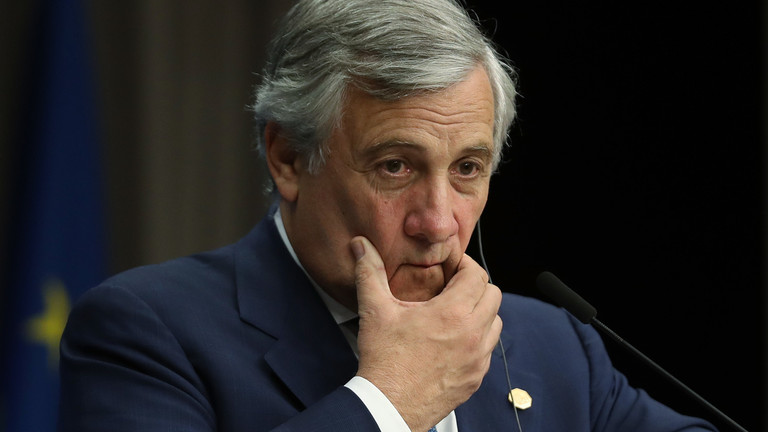
Italian Minister of Foreign Affairs Antonio Tajani. © Sean Gallup/Getty Images
BY ANDREW KORYBKO | AUGUST 4, 2023
Italy’s reaction to the patriotic military coup in Niger late last month has been surprisingly pragmatic. It could have easily jumped on the bandwagon of supporting the planned NATO-backed Nigerian-led ECOWAS invasion aimed at reinstalling ousted President Mohamed Bazoum and going along with his Ambassador to America’s claim that Russia had a hand in the coup. Instead, the Italian Foreign Minister described any Western military initiative as “a new colonization” and denied any Russian role in events.
Italy supports the West’s anti-Russian sanctions and arms Kiev against that country so Rome wasn’t expected to behave so independently towards a comparatively less significant matter than the NATO-Russian proxy war in Ukraine. That’s not to downplay the devastation that could soon ravage West Africa if it descends into a regional war, but just to point out that the precedent set by Italy’s compliance with Western demands vis-a-vis Russia suggested that it would also comply with their Nigerien policy too.
This exception is explained by the fact that Italy is very serious about combating illegal immigration at its roots, which was the official reason behind its decision to deploy a little less than 500 troops to Niger over half a decade ago in late 2017. While it’s difficult to assess whether this stated mission was a success since information about it has remained suspiciously scarce since then, the pretext for its troops’ deployment remains in place as evidenced by the related rhetoric espoused by its latest premier.
Giorgia Meloni rose to power partially because of her promise to drastically curtail illegal immigration to Italy, which would be very difficult to do if a major war breaks out in West Africa and results in an unfathomable number of desperate people fleeing across the Mediterranean to her country as refugees. It would already be bad enough if Nigeria soon leads an invasion of Niger, but this would be even worse if Italy’s French neighbor joined in and thus played a role in catalyzing another humanitarian crisis.
Italy might not be able to stop the US from coercing Nigeria into doing its bidding against Russia’s regional strategic interests by proxy, but its Foreign Minister’s description of potential Western involvement in this operation as “a new colonization” could make France think twice about participating. Bilateral relations were recently damaged due to their differences over migrants/refugees so it’s likely that Meloni’s top diplomat was sending a signal to Paris through his strong words on this issue.
She’d come under intense pressure on the domestic front if France was responsible for another humanitarian crisis that crashed into her country’s shores, plus responding to this would entail considerable costs that would be better spent on socio-economic investments if war could be averted. These calculations explain why her government broke ranks with the West on this issue since her political career could be threatened if this situation spirals out of control.
Her country’s policymakers are also impressively thinking ahead by tempering their rhetoric in order to avoid provoking the junta into pressuring their troops to leave and thus weakening Rome’s ability to at least keep an eye on this migrant/refugee corridor through their deployment in Niger. They still oppose the patriotic military coup, but they’re doing so in a measured way that reduces the risk of blowback while still at least formally paying lip service to the so-called “rules-based order”.
As for the second part of Italy’s pragmatic response to recent events, this builds upon the motivations that were just described above regarding the self-interested need to not provoke the junta. Rome isn’t suggesting that this regime change was legitimate, but it’s also not fueling the information warfare campaign being waged by some like Bazoum’s Ambassador to America, which is intended to precondition the Western public for NATO’s potential involvement in any possible invasion of Niger.
This stance hasn’t had any influence on reshaping Italian-Russian relations since it’s driven purely by Rome’s interests in retaining its military presence in Niger for the purpose of monitoring the migrant/refugee corridor through that country. These domestic political motivations, which also have an inextricable security dimension to them too, are so important to the present Italian government that they resulted in its top diplomat publicly counteracting fake news about Russia’s involvement in events.
What this insight shows is that it’s possible for Western states to behave independently of their peers on certain issues if sensitive domestic interests are threatened, be they Italy’s migrant/refugee ones in the Nigerien Crisis or Poland’s agricultural interests regarding the subject of importing Ukrainian grain. Each of these two examples is also connected to their leaders’ political interests, which cynically suggests that they’ll only act in a sovereign fashion on these aforesaid sensitive issues if their careers are on the line.
Even so, it’s still intriguing to observe them putting their interests above their de facto New Cold War bloc’s, thus proving that it’s not impossible for this to happen. Under the specific conditions that were just described where sensitive domestic interests converge with the political ones of any given Western leader, it can’t be ruled out that they’ll act more independently than their peers. This has already happened twice thus far in just as many weeks, which makes it a documented fact and not speculation.
France Declared That It Won’t Let The Nigerien Junta Kick It Out Of The Country
BY ANDREW KORYBKO | AUGUST 3, 2023
Speculation is swirling about whether Niger’s patriotic military junta will follow its reported ban on uranium and gold exports to France with a demand for that country’s troops to leave the country after the example that was recently set by the de facto Burkinabe-Malian federation. That would be a risky move to make, however, since France just declared that it won’t take orders from them. Here’s what PBS reported about this on Thursday:
“Even if Niger’s military rulers demand the withdrawal of French troops — as happened in neighboring Mali and Burkina Faso — it wouldn’t make a difference, said Anne-Claire Legendre, a spokesperson for the French foreign minister during a press briefing on Wednesday. ‘We don’t answer to the putschists. We recognize one constitutional order and one legitimacy only, that of President Bazoum,’ she said.”
Considering this, the junta would either discredit itself by making a major demand that France confirmed it will defy or risk being ousted from power by its former colonizer in the event that it tries to impose its will, both scenarios of which aren’t in their objective interests. French President Emmanuel Macron warned last week that “The President will not tolerate any attack against France and its interests”, hence the reason to expect it to resolutely respond in the second-mentioned scenario.
Nevertheless, not directly addressing the issue of French troops in Niger will likely prove impossible for the junta since these forces will eventually require supplies once their existing ones at their air base in the capital start running low, which will lead to them breaking the closed border regime unless it’s lifted before then. They already did so on at least one occasion so far as admitted by the junta shortly after they seized power and issued that decree, but repeated violations would prompt a dilemma.
On the one hand, letting them flout this rule would deprive Paris of the pretext that it might be trying to provoke for directly attacking the junta in the unlikely event that the planned NATO-backed Nigerian-led ECOWAS invasion of Niger is called off, but its new military rulers would be discredited. On the other hand, while firing on them would be a strong reaffirmation of Niger’s sovereignty, it would also almost certainly lead to an overwhelming French response that could escalate to a Libyan-like regime change.
Unlike in Syria where the US’ military forces are based in far-flung but still strategically positioned parts of the country, France’s military forces in Niger are located in the capital, which means that they can’t be ignored. The junta also recently accused them of plotting airstrikes on the presidential palace in order to free ousted President Mohamed Bazoum who’s being held there, thus making their continued presence a potentially imminent threat to national security.
France’s preemptive refusal to withdraw from Niger if the junta demands that it do so on the pretext that they’re illegitimate putschists contrasts with its compliance with Mali’s and Burkina Faso’s earlier such demands that were made by their own military-led interim governments. This suggests that France has decided to draw a line in the sand signaling that it’ll fight to preserve its last regional bastion, which bodes ill for the future of the Nigerien junta.
None Of Nigeria’s Objective National Interests Are Served By Invading Niger
BY ANDREW KORYBKO | AUGUST 3, 2023
West African military chiefs met in the Nigerian capital of Abuja on Wednesday to discuss ECOWAS’ potential NATO-backed invasion of Niger, but they stressed that this scenario is supposedly only a “last resort”. Their rhetoric aside, the reality is that “West Africa Is Gearing Up For A Regional War” between NATO-backed ECOWAS and the informally Russian-backed de facto Burkinabe-Malian federation, which recently said that an invasion of Niger would be regarded as an act of war against them both.
None of Nigeria’s objective national interests are served by invading Niger. Rather, only NATO’s subjective interests would be advanced in that scenario, and particularly France’s. This Western European Great Power is struggling to retain its neocolonial influence in the countries that it used to rule. Niger’s patriotic military coup risks leading to France’s expulsion from its last regional bastion after Mali and Burkina Faso kicked its troops out of their countries.
Moreover, France is largely dependent on Nigerien uranium for fueling its nuclear power plants that generate the majority of its electricity. Taken together, this major NATO member has self-interested military, economic, and strategic reasons for tasking Nigeria with leading an ECOWAS invasion of that country aimed at reinstalling its ousted leader on the pretext of defending democracy. In pursuit of that goal, the Mainstream Media (MSM) is spinning the narrative that Nigeria would gain from this as well.
Voice of America, The Economist, and the Associated Press all recently claimed that Niger is now a global epicenter of terrorism, which isn’t true but is intended to mislead the public into thinking that Nigeria’s potentially impending invasion of that country is supposedly in the world’s interests. This information warfare narrative asks those who fall for it to assume that everyone has hitherto ignored this allegedly imminent threat to them all, which isn’t rational to imagine.
Additionally, some of those MSM outlets are also implying that peaceful pro-democracy protesters will suddenly become so radicalized by only a week of military rule that they’ll transform en masse into violent extremists, but this also doesn’t make any sense. Even so, these false claims are being repeated ad nauseum in an attempt to convince average people that there’s some degree of credence to them by dint of so many “experts” and officials warning about these dangers, though it’s all just a psy-op.
The public isn’t being properly informed of the Nigerien junta’s justification for seizing power. They declared that the prior regime was removed due to its failure to improve their country’s economic and security conditions. Additionally, not enough attention is being given to White House Press Secretary Karine Jean-Pierre words that “We have not seen indications of Russian or Wagner involvement” nor to National Security Council spokesman John Kirby’s confirmation of her assessment a few days later.
Instead, people are being made to think that some power-hungry military officials overthrew one of the Global South’s democratic icons with Russian support in order to spread terrorism across the world. This artificially manufactured impression misleads folks into thinking that Nigeria’s potentially impending invasion would be a service to the international community, but Al Jazeera and Politico suggested that newly inaugurated President Bola Tinubu has ulterior motives that have nothing to do with terrorism.
Reading between the lines of their skeptical pieces on this subject, it becomes apparent that he might do the West’s geopolitical bidding in his region in a desperate attempt to distract his compatriots from growing economic and political problems at home. As leading American officials have publicly confirmed, there’s no reason to suspect that Russia or Wagner were behind the Nigerien coup, plus its interim military government declared that it wants to ramp up its antiterrorist operations.
Although it’s everyone’s right to think whatever they want about the merits of this latest regime change, there are no plausible grounds for considering it a threat to Nigeria’s objective national interests. To the contrary, the aforesaid would arguably be advanced if the junta succeeds in improving the economic and security situation. That’s regrettably going to be very difficult, however, after Nigeria just cut off electricity to Niger in compliance with ECOWAS’ sanctions against its northern neighbor.
Only one in seven people there had access to this amenity before that happened, but now even fewer will enjoy its benefits since Nigeria used to provide a whopping 70% of Niger’s electricity. Making matters even worse for its people is Benin’s closure of the border. Niger used to depend on imports from the Atlantic port of Cotonou so now it’s basically cut off from most of the world. Reopening its borders with friendly neighbors won’t help much since those trade routes are threatened by terrorists.
Niger is already the world’s third poorest country but its people’s plight is expected to worsen even further due to that bloc’s sanctions, which could soon create a major socio-economic crisis with very serious humanitarian implications for the region. That cynically seems to be the point, however, since Nigeria might exploit large-scale refugee flows as the national security pretext for invading Niger even though ECOWAS’ crippling sanctions that Abuja itself is leading would be entirely responsible for this.
If Nigeria would have given the Nigerien junta a chance to make good on its promise to improve their country’s economic and security conditions, then it wouldn’t have anything to worry about, which reveals that Tinubu’s policies actually threaten his country’s objective national interests. He likely won’t relent on them though since his country’s Western-aligned military-political elite are intoxicated with the praise that the MSM is heaping on their country for doing that bloc’s bidding in Niger and won’t let him.
A self-fulfilling prophecy is therefore in the process of transpiring whereby Niger is indeed becoming a national security threat to Nigeria but solely due to the latter’s Western-dictated policies catalyzing a humanitarian crisis there that threatens to spill over its borders and prompt an invasion on that basis. Other pretexts will include the discredited anti-Russian and terrorist ones alongside the “rules-based order’s” mantra of defending democracy to complement the core humanitarian intervention claim.
The public should thus expect more fearmongering about all of the above ahead of ECOWAS’ ultimatum for installing the ousted Nigerien leader expiring this Sunday. Although the bloc’s military chiefs stressed that armed force will only be a “last resort”, the humanitarian crisis that their group’s policies are creating could soon lead to this being a fait accompli if a lot of people start flooding into Nigeria. The MSM will then likely spin this to claim that they’re “fleeing their Russian-backed and pro-terrorist junta”.
The narrative stage would therefore be set for justifying the NATO-backed Nigerian-led ECOWAS invasion of Niger on multiple pretexts connected with the “rules-based order’s” worldview, thus enabling the aggressors to reverse the roles of victim and villain to misrepresent themselves as “heroes”. This is nothing but a psy-op though since the only threats that could conceivably emanate from Niger are entirely due to foreign meddling in its internal affairs and would disappear if this interference stopped.
French invasion of Niger could turn into all-out Franco-African war
By Drago Bosnic | August 3, 2023
Ever since the Nigerien military under the command of General Abdourahamane Tchiani took power on July 26, there has been an exponential increase in tensions between Niamey and its former colonial masters in Paris. This has gone to the point where France is now seriously considering invading the West African country. The exploitation of “former” French colonies has continued unabated for over half a century even after they were granted a semblance of independence and Paris has been the main beneficiary of this one-sided relationship. Combined with France’s inability to deal with various terrorist insurgencies in the region, this unadulterated neocolonial theft has been the primary reason behind a series of popular uprisings in the Sahel.
Paris is now faced with a strategic dilemma. If it lets Niger continue its path toward actual independence, France will be unable to continue exploiting the country’s natural resources. Namely, several of its former colonies have served as a source of massive wealth extraction and given the recent troubles Paris is facing, these resources might be more important than ever. On the other hand, recent geopolitical changes in the area have left France largely impuissant. After the defeat of its nearly decade-long intervention in Chad last year, Paris has been left with bases in Ivory Coast, Senegal and Gabon. Neither of these can be used effectively as a staging ground for an invasion due to the limited number of troops stationed there.
However, even if France was to somehow find enough soldiers to launch the invasion, none of the three countries border Niger. Gabon is the least logical option, as Cameroon and Nigeria stand between it and Niger, leaving only bases in Senegal and Ivory Coast as viable possibilities. And yet, this is where the issues of basic geography for Paris stop and actual geopolitical ones start. Namely, in order to effectively use its forces from both countries to reach Niger, France needs to go through Mali and Burkina Faso, both of which have already stated that any military action against Niamey will be tantamount to aggression against them. In other words, if France wants to attack Niger, it will also need to attack two more African countries.
A possible alternative for Paris could be the use of its neocolonial influence in the ECOWAS (Economic Community of West African States, also known as CEDEAO in French and Portuguese). However, this leaves its members at risk of more anti-Western uprisings, as the belligerent power pole is deeply unpopular in the area. Some members of the ECOWAS, such as Nigeria, might be the best geographical option, but given the fact that Paris has little to no influence in Abuja, this is extremely unlikely. Not to mention the fact that Nigeria has more than enough problems of its own and the last thing it needs is to serve as the staging ground for a neocolonial invasion. Logically, this leaves Chad as the only option, but this too is a very long shot.
To make matters worse for France, Algeria has joined the chorus of Niger’s allies. The French archrival that spearheaded the independence of many of its “former” colonies in the 1960s is effectively an African superpower, heavily armed and highly motivated to never allow Paris or any other Western (neo)colonial power to establish a firm foothold in the region. This still leaves Chad as the only viable option for an invasion, as the country was an instrumental staging ground for virtually all French military operations in the area, including the illegal invasion of Libya. However, reaching Chad at this point is easier said than done and this still leaves most of the geopolitical issues unresolved. Also, all geographical considerations remain.
Namely, the Nigerien capital of Niamey is located in the southwestern corner of the country, close to the border with Burkina Faso. Thus, even in the unlikely case that none of its neighbors intervene, Niger is still left with a comfortable window of opportunity to resist the invasion. This could end in a disaster for France, as yet another military defeat in the area would inevitably lead to a complete collapse of the neocolonial system it left in place in the 1960s. On the other hand, if Paris doesn’t intervene, this will happen anyway, albeit at a somewhat slower pace. Either way, the dilemma inevitably results in a geopolitical catch-22, as leaving things as they are could also encourage others to revolt against Western neocolonialism elsewhere in Africa and possibly beyond.
As for France’s NATO allies, they’ve been largely quiet and non-militant, including the United States (a rather uncommon feature in their usually belligerent foreign policy). Washington DC has a military base in the central part of the country, the Niger Air Base 201, run by US AFRICOM (African Command), but its operational capabilities are mostly limited to drone strikes, with the troops deployed there largely composed of a skeleton crew that provides basic security. Coupled with the recent cooling of US-French relations, this makes it highly unlikely that the Pentagon would give the go-ahead for any sort of American involvement in a possible French invasion, even though it’s in Washington DC’s interest to keep Western neocolonialism in Africa alive for as long as possible.
Drago Bosnic is an independent geopolitical and military analyst.
It’s Likely That Algeria Will Play An Important Role If West Africa Descends Into War
BY ANDREW KORYBKO | AUGUST 1, 2023
“West Africa Is Gearing Up For A Regional War” as it bifurcates into two clearly defined blocs over whether to invade or defend Niger, which experienced a potentially game-changing patriotic military coup last week. The preceding hyperlinked analysis explains the rapidly emerging military-strategic dynamics more in detail, but they can be summarized as setting the stage for what might soon become the next proxy battleground in the New Cold War.
NATO supports a Nigerian-led ECOWAS invasion to reinstall Niger’s ousted leader while Russia backs Burkina Faso and Mali, which have de facto merged into a federation and jointly announced that any attack on that neighboring nation will be regarded as a declaration of war against both of them. Those two are trilaterally cooperating with Guinea, which is also under military rule like they are and just threw its political weight behind the Nigerien junta, but it’s unclear whether it’ll militarily defend it too.
The Interim President of regional military powerhouse Chad earlier traveled to Niamey in an attempt to broker a compromise that could avert war, but he appears to have been unsuccessful, though his country also hasn’t yet committed to supporting either side of this potentially coming conflict. This places Chad in a kingmaker position since its decision whether and when to intervene could greatly determine the outcome.
Amidst these fast-moving developments, Russian publicly financed international media flagship TASS confirmed on Tuesday that the Algerian Chief of Staff arrived in Moscow the day prior to meet with his host’s Defense Minister. They also added that the President visited St. Petersburg in June to attend the International Economic Forum there, during which time he met with President Putin to clinch an enhanced strategic partnership deal, while the Prime Minister was there last week for the Africa Summit.
It deserves mentioning that Russia is Algeria’s top military partner and has remained so for decades, with this relationship persisting in spite of Moscow neglecting most of Africa until just a few years ago. The Stockholm International Peace Research Institute (SIPRI) confirmed in this spring’s “Trends In International Arms Transfers” report that a whopping 73% of Algeria’s military imports from 2018-2022 were from Russia, which testifies to the enduring strength of their military ties.
Accordingly, Algeria has one of the largest, best-equipped, and most modern militaries anywhere in Africa, which is why it’s rightly regarded as among the continent’s most powerful countries. For that reason, its Chief of Staff’s latest visit to Russia in the current regional context isn’t any small matter since it suggests that Algiers intends to coordinate with Moscow regarding the wider war that might be about to break out upon the expiry of ECOWAS’ ultimatum this Sunday to reinstall Niger’s ousted leader.
Although Algeria and Russia both condemned the Nigerien coup late last week, each of their respective statements were shared prior to ECOWAS making its ultimatum that was subsequently supported by France and the US, both of which have troops in that country. The previously mentioned Burkinabe-Malian joint statement importantly warned that an invasion of Niger risks repeating the Libyan scenario by destabilizing the entire region and thus exacerbating terrorist threats to everyone.
This is an accurate assessment that justifies Russia and Algeria working together to avert that worst-case scenario and jointly coordinating their response to it if this conflict ends up becoming inevitable, thus explaining why the Algerian Chief of Staff decided to visit Russia right after his Prime Minister just did. The reason for his visit is clearly to discuss the planned NATO-backed Nigerian-led ECOWAS invasion of Niger, which also happens to border Algeria for those readers who aren’t aware.
It’s likely that Algeria will play an important role if West Africa descends into war by virtue of its geography and military prowess. At the very least, Algiers might refuse to allow French warplanes to transit through its airspace, thus forcing them to risk being fired at if they violate this possible order or find another route to Niger via Libya (which might also be formally closed off to them) or somewhere else. The point is that Algeria can greatly complicate France’s military logistics in any upcoming conflict.
Not only that, but this North African nation could allow Russia to transit through its airspace (provided that NATO doesn’t impede this through dangerous brinksmanship over the Mediterranean) to reliably supply the de facto Burkinabe-Malian federation with arms, food, and whatever else it might need. In a sense, this would be spiritually similar to the erstwhile Soviet Union’s intervention in support of Ethiopia during the Ogaden War when it was invaded by Somalia, though of course key differences exist.
Moving along, the other role that Algeria could play is a direct one, though it can’t be taken for granted that its leadership will feel comfortable with this since it could fear that any significant deployment towards or into Niger could be taken advantage of by its long-time Moroccan nemesis. If it decides to do so, however, then moving its forces – including air defense systems – closer to the frontier could possibly deter France and Nigeria. Should those two still attack Niger, then Algeria might intervene in its support.
The Burkinabe-Malian joint statement warning about a repeat of the Libyan scenario scares Algeria since it struggled against terrorism during what’s regarded as its “Black Decade” from 1991-2002, not to mention more recently but to a much lesser extent since the NATO War on Libya in 2011. Its objective national interests are therefore served by at the very least complicating France’s military logistics in any upcoming conflict even if it ultimately decides not to get directly involved like Burkina Faso and Mali will.
Additionally, many might not know that Algeria has consistently espoused a revolutionary ideology throughout the decades despite the radical changes in the world order since its independence. This explains why it retained ties with Russia despite the latter’s difficult decade after the USSR’s dissolution and also didn’t cut off relations with Syria over the past decade either even though the Arab League did. Algeria’s leadership thus also has an ideological interest in complicating an imperialist invasion of Niger.
Taken together, these security and ideological interests account for why the Algerian Chief of Staff just flew to Moscow. His country wants to coordinate with its strategic partner in responding to this regional crisis as well as the wider war that might soon break out. While Algeria’s role isn’t as important as Nigeria’s could be in leading the NATO-backed ECOWAS invasion of Niger nor Chad’s in possibly being the kingmaker, it’s still pretty significant and shouldn’t be ignored or downplayed.
Niger junta says France plotting to ‘intervene militarily’
AFP | July 31, 2023
Niger’s new junta on Monday accused France of seeking to “intervene militarily” to reinstate deposed President Mohamed Bazoum as tension mounted with the former colonial power and neighbours.
Bazoum, a western ally whose election just over two years ago was a watershed in Niger’s troubled history, was toppled on July 26 by the elite Presidential Guard.
Guards chief General Abdourahamane Tiani declared himself leader — but his claim has been shunned internationally and the West African bloc ECOWAS has given him a week to hand back power.
Bazoum’s PNDS party on Monday warned Niger risked becoming a “dictatorial and totalitarian regime” after a series of arrests.
On Monday morning, Oil Minister Mahamane Sani Mahamadou — the son of influential former president Mahamadou Issoufou — and Mining Minister Ousseini Hadizatou were arrested, the party charged.
The head of the PNDS’s national executive committee, Fourmakoye Gado, was also arrested, it said.
The junta had previously arrested the interior minister, the transport minister and a former defence minister, the party said.
On Sunday, French President Emmanuel Macron vowed “immediate and uncompromising” action if French citizens or interests were attacked after thousands rallied outside the French embassy.
Some tried to enter the compound but were dispersed by tear gas.
‘Plotting intervention’
The junta on Monday accused France of plotting an intervention.
“In its search for ways and means to intervene militarily in Niger, France with the complicity of some Nigeriens, held a meeting with the chief of staff of the Nigerien National Guard to obtain the necessary political and military authorisation,” the putschists said on national TV.
They also said six people needed hospitalisation after the embassy security services fired tear gas against the rally.
A demonstration in support of the junta was also held in Zinder, eastern Niger, on Monday.
Tough ECOWAS warning
On Sunday, the Economic Community of West African States (ECOWAS) sounded a tough warning.
The bloc demanded that Bazoum be reinstated within a week, failing which it would take “all measures” to restore constitutional order, which “may include the use of force”.
“No more time for us to send a warning signal… It’s time for action,” said ECOWAS chairman Bola Tinubu, president of Nigeria — Niger’s neighbour to the southeast and the regional superpower.
Russia called for the swift return of “the rule of law” and “restraint from all parties so that this doesn’t result in human casualties”.
Niger became the third Sahel country in less than three years, following neighbours Mali and Burkina Faso, to be shaken by a military coup.
In all three nations, a jihadist insurgency strained fragile governments, stoked anger in the military and rained economic blows on some of the world’s poorest countries.
The overthrow of elected presidents has been accompanied by anti-French, pro-Russian demonstrations.
Crucial ally
Protesters say France, the country’s traditional ally, has failed to shield them against the jihadists, whereas Russia would be a stronger ally.
In Mali, a 2020 putsch led to a bust-up with France which last year withdrew its troops as the junta brought in Russian paramilitaries.
France also quit Burkina Faso after two coups last year brought in a junta that adopted a nationalist line.
The withdrawals prompted France to reconfigure its decade-long anti-jihadist strategy in the Sahel, concentrating on Niger, where it fields 1,500 troops with a major air base near Niamey.
The latest coup, according to the putschists, was a response to “the degradation of the security situation” linked to the jihadist conflict, as well as corruption and economic woes.
International critics have ratcheted up pressure, targeting trade and development aid.
ECOWAS has suspended all commercial and financial transactions, while France, the European Union and the United States, which has 1,100 troops in Niger, have either cut off support or threatened to do so.
Germany suspended financial aid and development cooperation on Monday, and UN humanitarian operations have also been put on hold.
Niger has seen four coups since independence from France in 1960 and numerous other attempts, including two previously against Bazoum.
The 63-year-old is a former interior minister whose elections marked Niger’s first peaceful transition of power since independence.
Al Jazeera & Politico Shed Light On The Real Reasons Why Nigeria Might Invade Niger
By ANDREW KORYBKO | AUGUST 1, 2023
The fast-moving developments since last week’s patriotic military coup in Niger strongly suggest that “West Africa Is Gearing Up For A Regional War” between NATO-backed Nigerian-led ECOWAS and the Russian-backed de facto Burkinabe-Malian federation over that country’s future government. Those readers who aren’t aware of what’s been happening should reference the preceding hyperlinked analysis for background before proceeding with the rest of this piece, which assumes familiarity with the subject.
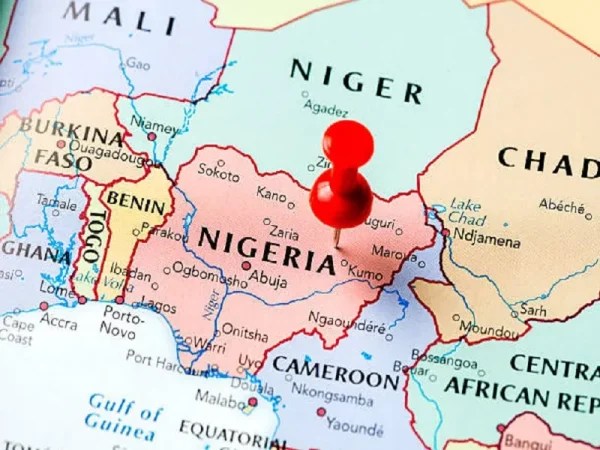
Al Jazeera and Politico likely didn’t intend to, but two of their articles on recent events shed light on the real reasons why Nigeria might invade Niger. Respectively titled “A test of wills: Can ECOWAS reverse Niger coup and establish a new order?” and “What Niger’s coup means for Nigeria”, they both suggest that ulterior motives are at play beyond restoring that country’s ousted leader just for the supposedly principled sake of defending democracy.
Beginning with Al Jazeera’s piece, it starts off by quoting the speech that newly inaugurated Nigerian President Bola Tinubu gave at ECOWAS early last month after he was elected chairman of this regional bloc. He said that “We must stand firm on democracy. There is no governance, freedom and rule of law without democracy.” This outlet noted that his words were soon put to the test two weeks later, hinting that he’s pressured to make good on rhetoric about something that he didn’t expect would happen.
They then cite the opinion of a former director of political affairs at the ECOWAS Commission who declared that “With Tinubu’s posture, we can see that Nigeria is back on stage.” This person’s position makes them biased towards that group and its regional role, but their particular quote inadvertently reveals that Tinubu is talking tough towards Niger for the sake of boosting his country’s prestige. To their credit, Al Jazeera seemed to have picked up on this as well as evidenced by what they later wrote:
“Within Nigeria, Tinubu’s assertiveness is being perceived as an intent to shore up popularity abroad while he is increasingly unpopular at home. His victory in the February presidential election is being contested by the two largest opposition parties who cite widespread electoral malpractice and claim he was ineligible to run. A string of early reforms – including the removal of a popular fuel subsidy – intended to overhaul Africa’s biggest economy has also led to spiralling costs of living.”
This is a damning explanation of the ulterior domestic motives behind the ultimatum that Tinubu gave Niger on behalf of the bloc that he now chairs. It’s basically a risky distraction from problems at home that’s being justified on the pretext of defending democracy, which uncoincidentally aligns with one of the mantras of the West’s so-called ‘rules-based order’. Al Jazeera also cited an Africa expert at Oxford Analytica who alleged that reversing the recent regime change could help thwart terrorist threats.
On the other hand, a Nigeria expert at the International Crisis Group told them that “Military interventions could also be unpopular in Nigeria and possibly lead to protests.” They also warned that this could “reduce pressure on jihadists and bandits in the Lake Chad area and create room for the expansion of their operation.” All things considered, Al Jazeera’s article on this subject was surprisingly critical of Nigeria’s potential invasion of Niger, thus making it a refreshing read.
The same can be said for Politico’s, which is much shorter but still contains some similarly damning explanations of what’s really driving events behind the scenes. They started off by quoting a senior fellow at the influential Council on Foreign Relations (CFR) who fearmongered that “Not only will failure to act send a signal that Tinubu and ECOWAS can only bark, but not bite, it will embolden military adventurers in other West African countries as well as the Russia-backed Wagner Group.”
The reality is corrupt Western puppets’ neglect of their countries’ objective national interests led to deteriorating economic and security situations that prompted the region’s spree of military coups, not anything else. Regarding Wagner, these juntas then tend to turn towards this group (whose post-mutiny ties with the Kremlin are clarified here) since it specializes in “Democratic Security”, or counter-Hybrid Warfare tactics and strategies that readers can learn about in the foregoing hyperlinked analyses.
Russia’s interest in securing their national models of democracy from (mostly Western-emanating) hybrid threats is twofold since it sincerely wants to empower them to become sovereign subjects in the Multipolar World Order but it also benefits by stopping the West from exploiting their resources. If the West treated African states as truly equal partners like Russia does, then it would stamp out terrorism and stop subjugating them as vassals so that they wouldn’t have a reason to consider switching partners.
With this fact-check in mind, it’s clear that Politico’s cited CFR expert explained the reasons why the West wants Nigeria to invade Niger instead of even attempting to put forth a reason why it would allegedly be in that country’s national interests to do so. This New Cold War bloc fears that the region’s newest junta will ally with Russia via Wagner and thus further accelerate the collapse of their influence across the continent, though this might be averted if Nigeria forcibly reinstalls the old regime.
Just like Al Jazeera, Politico also deserves credit for implying that Tinubu has ulterior domestic motives behind doing the West’s bidding when writing that “Nigeria’s influence has been slipping in recent years, as it grapples with economic malaise and security challenges that festered under the prior president, Muhammadu Buhari. Since succeeding Buhari, Tinubu has been trying to placate different religious and ethnic groups at home upset over the February election results, which the opposition has disputed.”
What these two outlets’ pieces on this subject show is that newly inaugurated Nigerian President Tinubu might invade Niger out of desperation to distract from economic and political problems at home despite telling the world that this is to defend democracy in that neighboring nation. The corrupt confluence of his domestic interests and the West’s geopolitical ones greatly raises the odds that this could soon happen, though it remains to be seen whether it’ll succeed and how strong the blowback might be.
Military intervention against Niger would be a declaration of war against Burkina Faso and Mali
RT | July 31, 2023
In the first-ever joint communique on Monday, the military governments in Mali and Burkina Faso warned the West and other African states against intervening in the neighboring Niger. Bamako and Ouagadougou would consider any such move as an attack on their own countries, they said.
“Any military intervention against Niger would amount to a declaration of war against Burkina Faso and Mali,” said point four of the joint communique, which a Burkinabe military spokesman deliberately repeated three times during a state television broadcast.
In case of such an intervention, the two countries would withdraw from the Economic Community of West African States (ECOWAS) and “adopt self-defense measures in support of the armed forces and the people of Niger,” according to the statement.
A military intervention against Niger “could destabilize the entire region, as had the unilateral NATO intervention in Libya, which was at the root of the expansion of the terrorism in the Sahel and West Africa,” the two governments said.
France currently has 1,500 troops and a drone base in Niger, while the US has 1,100 troops and two drone bases, according to Financial Times.
Nigerien soldiers, led by General Abdourahamane Tchiani, ousted President Mohamed Bazoum last Wednesday. The African Union denounced the coup on Friday and gave the junta in Niamey 15 days to stand down or face “punitive measures.” ECOWAS issued its own ultimatum on Sunday, at the emergency meeting in Abuja, Nigeria, saying that it would “take all measures necessary to restore constitutional order in the Republic of Niger,” including the use of force, if Bazoum is not restored within a week.
Mali and Burkina Faso condemned the sanctions ECOWAS announced on Saturday as “illegal, illegitimate and inhumane.” They also expressed “fraternal solidarity” with the Nigerien people, “who have decided to take their destiny into their own hands and to assume before history the fullness of their sovereignty,” according to their joint communique.
The military governments of the two former French colonies have sought to sever their ties to Paris and rebuild their statehood with Russian assistance. Moscow has denounced the coup in Niger as an “anti-constitutional act,” however, and the Russian Foreign Ministry called on all parties to refrain from using force.
On Sunday, General Tchiani’s government announced it would suspend the export of uranium and gold to France, to the accolades of some of the local population.
“We have uranium, diamonds, gold, oil, and we live like slaves? We don’t need the French to keep us safe,” one pro-government demonstrator told the local news portal Wazobia Reporters.
Niger is the world’s seventh-largest producer of uranium, accounting for 4% of the global output. A French company controls about two thirds of the country’s output.
Interpreting Russia’s Official Response To The Nigerien Coup
BY ANDREW KORYBKO | JULY 31, 2023
Last week’s patriotic military coup in Niger could be a game-changer in the New Cold War as was explained here, though this analysis here argues that it might be nipped in the bud if Nigeria ultimately does the West’s bidding by leading an ECOWAS invasion force aimed at reinstalling the ousted president. Those who aren’t already aware of the insight shared in those analyses should at least skim them in order to be brought up to speed and thus better understand Russia’s official response to this event.
Russian Foreign Minister Sergey Lavrov said on 27 July that “We believe the coup is an anti-constitutional act. We always occupy a clear position in such cases…We reaffirm our position that it is necessary to restore the constitutional order in Niger.” One day later on 28 July, his country joined its fellow permanent UNSC members in issuing a joint statement that “strongly condemned the efforts to unconstitutionally change the legitimate Government of the Republic of Niger on 26 July 2023.”
They also “expressed support for the efforts of the Economic Community of West African States (ECOWAS) and the African Union…(and) underscored the urgent need for the restoration of constitutional order in Niger in accordance with the ECOWAS Protocol on Democracy and Good Governance and expressed their support for regional and continental mediation efforts.” Two days later on 30 July, the AU and ECOWAS gave the junta a two-week and one-week ultimatum respectively.
If President Mohamed Bazoum isn’t reinstalled by then, they warned of “punitive measures” that could include the “use of force”. This sequence of events shows that the AU-ECOWAS duopoly is exploiting the UNSC joint statement as the pretext for invading Niger in order to secure their Western patrons’ interests there. None of this is surprising, however, which is why some might wonder why Russia agreed to the same statement that’s being taken advantage of to legitimize its rivals’ regional power play.
For starters, Russia always officially condemns anti-constitutional seizures of power, with this being more symbolically important than ever after Ukraine’s Western-backed and fascist-driven “EuroMaidan” coup in spring 2014. That said, this stance and its associated support of peaceful means for restoring the constitutional order in countries that experience these sorts of regime changes don’t automatically equate to it endorsing Western-encouraged invasions to this end.
It’s important to note that neither the AU nor its West African-Sahel ECOWAS enforcers put forth their ominous ultimatums by the time that Russia agreed to the UNSC joint statement on Niger. Even though it should have been foreseeable that these threats would follow, the fact that they hadn’t yet officially been made meant that there wasn’t any diplomatic pretext for Russia to break with precedent. For that reason, it supported the UNSC joint statement, which promoted mediation efforts.
The next point to make is that the West has been fearmongering that the Kremlin had a hidden hand in previous military coups in the West Africa-Sahel Region so it would have come off as very suspicious if Russia was reluctant to condemn this latest coup. That approach would have likely fueled an even more intense round of information warfare falsely alleging that Moscow was behind this regime change, thus justifying the planned Western-encouraged ECOWAS-led invasion on an urgent anti-Russian pretext.
And finally, since it can’t be taken for granted that the Nigerien junta will successfully repel this invasion in the likely scenario that it’s commenced sometime after the AU’s two-week ultimatum expires, it doesn’t make sense for Russia to signal support for what might very well be a doomed cause. Doing so would be detrimental to its soft power interests since the collapse of that junta could then be spun as a joint Western-African victory over Russia in the New Cold War.
None of this is to suggest that Russia is seriously opposed to the junta becoming an interim/transitional government, however, since precedent shows that it has no problem cultivating mutually beneficial relations with military rulers in the region like Mali’s and Burkina Faso’s. If the likely scenario of a French-backed ECOWAS-led invasion doesn’t materialize, yet without the coup leaders capitulating to pressure to reinstall Bazoum, then Niger will probably become Russia’s next strategic partner in the region.
US warns allies of potential isolation from deals over links to Iran, Russia
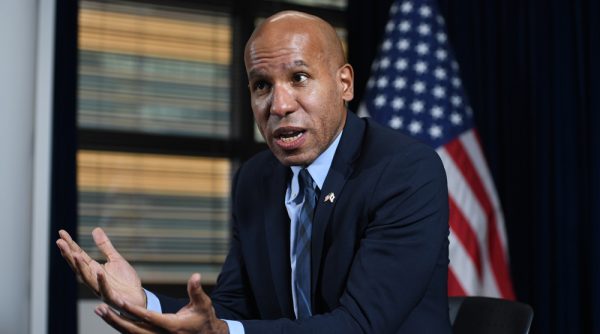
Brian Nelson, U.S. Treasury Undersecretary for Terrorism and Financial Intelligence
Press TV – July 29, 2023
The administration of US President Joe Biden has warned that Washington’s allies will face a “reputation risk” and potential isolation from lucrative deals in case of having links to the Islamic Republic of Iran and Russia.
Brian Nelson, the Treasury’s undersecretary for Terrorism and Financial Intelligence, raised the alarm in a meeting with Kenya’s President William Ruto on Friday.
He claimed that Iran and Russia were “isolated economically.”
“What we see is again of course Iran and Russia are isolated economically and either they are looking for partners and they are looking for new channels to have economic relationships,” Nelson claimed.
“From our perspective, that potentially creates a reputation risk and creates also a financial risk such that we are having a direct conversation about those risks that are associated with the expansion of economic relationship, which is a conversation not only are we having here but with countries around the world and we know that clearly is what Russia and Iran are seeking,” he added.
In what is construed as Washington’s direct interference in its allies’ affairs, Nelson warned them to be wary of the two countries’ economic reputation.
The warning comes as Iranian President Ebrahim Raeisi embarked on an African tour earlier in the month, which took him to Kenya, Uganda and Zimbabwe at the official invitation of his counterparts from the three host countries.
Heading a high-ranking delegation, Raeisi forged new alliances and discussed possible avenues for the improvement of trade and political ties.
Raeisi stressed the need for enhancing relations with African countries, saying that the states are gifted with abundant natural resources and mines, and enjoy many potentials and areas for closer cooperation.
Iranian Foreign Ministry spokesman Nasser Kana’ani described Raeisi’s continental tour as “a new turning point” which could bolster economic and trade ties with African nations.
A total of 21 documents on cooperation in different areas were signed during the three-state tour to Africa.
Putin suggests alternative route to deliver goods to Africa
RT | July 27, 2023
The International North-South Transport Corridor (INSTC) could provide Russian goods with a shorter route to Africa than the Suez Canal, President Vladimir Putin said on Thursday.
Addressing a plenary session of the Russia-Africa summit in St. Petersburg, Putin explained that Moscow is “actively engaged in reorienting transport and cargo flows towards the states of the Global South, including, of course, Africa.”
The INSTC, touted as an alternative to the Suez Canal, is a planned 7,200km multi-mode transit system that will connect ship, rail, and road routes for moving cargo between Russia, Iran, Azerbaijan, India, and Central Asia.
“The International North-South Transport Corridor that we are developing is aimed at providing Russian goods with access to the Persian Gulf and the Indian Ocean, from where they will be able to reach the African continent via the shortest sea route. Naturally, this corridor can also be used in the opposite direction – to supply African goods to the Russian market,” Putin stated.
Russia is seeking to ensure interconnectivity within the route and launch regular freight shipping lines, according to Putin. The volume of goods shipped via the INSTC is expected to almost triple over the next seven years, and the Russian leader suggested establishing a logistics hub for the corridor on the African coast.
“The opening of a Russian transport and logistics center in one of the ports on the African coast would be a good thing, a good start to this joint work. We consider it important to ensure wider coverage of the African continent with direct flights [and] participation in the development of the African railroad network – these are the key tasks that we propose to our African friends to work together on,” Putin said.
Russia has repeatedly said that the INSTC could become a substitute for the Suez Canal, the 193km waterway in Egypt that connects the Mediterranean Sea to the Red Sea. The popular route between Europe and Asia sees about 12% of global trade pass through it each day.
The construction of the INSTC began in the early 2000s, but developing it further has taken on a new impetus in light of Western sanctions, which have forced Russia to shift its trade flows from Europe to Asia and the Middle East.
The total cargo flow along the INSTC was 14.5 million tons in 2022, and the projection for this year is 17.6 million tons, according to Russia’s Transport Ministry. By 2030, the volume is expected to reach 41 million tons.
Russia Will Not Renew International Grain Deal; Some Context
By Ted Snider | The Libertarian Institute | July 27, 2023
Like the war that necessitated it, Russia’s decision not to renew the United Nations and Turkish-brokered grain deal is bad for the world but not wholly unprovoked.
The deal allowed Ukraine safe passage for its grain laden ships through the mined and blockaded Black Sea ports so it could continue to export its agriculture to the world.
On July 17, Russia announced its decision not to renew the deal.
It has repeatedly been reported that Russia’s decision is retaliation for Ukraine’s recent sabotage of the Kerch Strait bridge that links Crimea to the Russian mainland. But President Vladimir Putin had announced the distinct possibility of suspending the agreement prior to the attack on the bridge.
During a July 13 question period, in a response to a journalist, Putin said, prior to the attack on the bridge, “We can suspend our participation in this deal.”
Putin gave two reasons for suspending the deal after having “extended this so-called deal many times.” The first is that, though it was Russia that suspended the deal, it was the West that broke it. “As for the conditions under which we agreed to ensure the safe export of Ukrainian grain, yes, there were clauses in this agreement with the United Nations, according to which Russian interests had to be taken into account as well,” Putin said. “Not a single clause related to what is in the interests of the Russian Federation has been fulfilled.”
Announcing the decision not to renew the deal four days later, Russian presidential spokesman Dmitry Peskov repeated that charge; “Unfortunately, the part of the Black Sea agreement that concerns Russia has not yet been fulfilled. As a result, it has been terminated.” However, he added that “As soon as the Russian part [of the deal] is fulfilled, the Russian side will immediately return to the implementation of this deal.” Putin made a similar pledge in his answer to the journalist. One option, he said, is “not first the extension and then the honouring of promises, but first the honouring of promises and then our participation. What do I mean? We can suspend our participation in this deal, and if everybody once again says that all the promises made to us will be fulfilled, let them fulfil them—and we will immediately join this deal. Again.”
George Beebe of the Quincy Institute has written that “Russia’s withdrawal from the deal is part of classic negotiating behavior, after its repeated demands went unaddressed by partners to the deal.”
While Russia kept its promise to allow Ukraine to export its grain, Moscow argues that the West failed to implement their commitments on facilitating Russian exports of grains and fertilizer due to an impossible to navigate web of sanctions and the failure to reconnect the Russian Agricultural Bank to the SWIFT financial system to enable payments.
Though better known as the ‘grain deal,’ the deal was meant to facilitate the export of fertilizer as well. As early as the end of April, Russian Foreign Minister Sergey Lavrov had complained that Russian cargo vessels carrying fertilizer were paralyzed in European ports. Russia has been unable to export its fertilizer. The world also watched silently with no condemnation when Russia’s Togliatti-Odessa pipeline that carries ammonia necessary for fertilizer was sabotaged.
The second reason is not about the failure to meet the conditions of the deal, but about the failure to meet the purpose of the deal. Putin has frequently pointed out that “this whole deal was presented under the pretext of ensuring the interests of African countries” whose food security was threatened. Instead, from Russia’s perspective, the deal has boosted the economy of Russia’s enemy by allowing Ukraine to export grain and boosted the economy of those supporting Russia’s enemy by allowing western Europe to import that grain while helping African countries barely at all.
Putin has repeatedly claimed that Ukrainian grain exported under the deal is not reaching Africa but is headed, instead, for Europe. He has claimed at various times that “about 45 percent of the total volume of grain exported from Ukraine went to European countries, and only three percent went to Africa.” In his response to the journalist, Putin again said that “only a little more than 3% went to the poorest countries—a bit over 3%. Everything else went to a well-fed and prosperous Europe.”
And he’s not wrong. Though Africa has benefitted from the deal indirectly by stabilizing global supply and prices, they have not been the direct beneficiaries. While only 12% of the grain has reached Africa, 40% went to Western Europe, according to the World Food Program. The biggest recipients of Ukraine’s grain have been China, Spain, Turkey, Italy, and the Netherlands. 80% of the grain has gone to upper-middle and high income countries, and 44% going to high income countries, but only 2.5% has made its way to low-income countries, according to the most recent UN data.
Russia, though, has sent many tonnes of grain to Africa; 11.5 million tonnes in 2022 and 10 million in the first half of 2023, according to Putin. And, in November 2022, Russia agreed to send grain to some African countries for free. Putin has repeatedly promised that, were the deal not to be extended, “Russia will be ready to supply the same amount that was delivered under the deal, from Russia to the African countries in great need, at no expense.” After the decision not to extend the deal, Putin wrote an article for African media repeating that promise directly to the people of Africa: “I want to give assurances that our country is capable of replacing the Ukrainian grain both on a commercial and free-of-charge basis… Notwithstanding the sanctions, Russia will continue its energetic efforts to provide supplies of grain, food products, fertilisers and other goods to Africa.” Deputy Foreign Minister Sergey Ryabkov said that, despite Western obstacles in the form of logistics, ship insurance and payments, “We will help those in need, we will find a way to do it, both with grain and fertilizers.” The Kremlin says that the offer of free grain is on the agenda of the second Russia-Africa summit being held in St. Petersburg this week.
Though Russia’s decision not to extend the grain deal is harmful to the world, like the war itself, it has been presented as emerging without antecedents. The narrative has frequently been distorted by discussing the decision not to extend the deal in isolation from its important context. The decision was not spontaneous retribution for the attack on the Kerch Strait bridge; it was a long, thought out negotiation strategy in response to promises made to Russia not being fulfilled. The announcement of the decision was also accompanied by the assurance that Russia would immediately return to the deal when those promises were fulfilled. The decision was also the product of Russia’s frustration that the deal was not only failing to benefit Russia as promised, but that it was failing to benefit Africa as promised while supporting the economies of Ukraine and the wealthy Western European countries who are helping it in its fight against Russia.
Featured Video

Racist Seinfeld Dances for Joy as Bibi Unveils His New Map
or go to
Aletho News Archives – Video-Images
TV Drama Review
Japanese drama projects Japan’s wartime atrocities onto Chinese characters

Global Times | October 25, 2026
By portraying Chinese characters as perpetrators of ruthless violence while casting Japanese Self-Defense Forces (SDF) intelligence operatives as defenders, the season 2 of the Japanese drama Vivant has recently drawn criticism from Chinese netizens, who argue that its depiction turns historical reality on its head while ignoring Japan’s wartime atrocities.
The TBS drama series – a spy suspense story in which an alleged unofficial intelligence unit of the SDF operates across the globe — has attracted a passionate fanbase. Its currently airing season 2 opened with a household rating of 18.8 percent, the highest for a TV drama this year, according toa commentary article by Japanese media Toyo Keizai.
What draws attention is the portrayal of the enemies in the series, the article noted. Scenes in which the Chinese organization subjects kidnapped members of the SDF unit to brutal torture are repeated with unrelenting intensity.
It is rare for Japanese TV dramas to explicitly portray a real-life country as the enemy, the article noted.
Japanese Prime Minister Sanae Takaichi also made a reference to the drama, saying that she has been recording Vivant and hopes to binge-watch it over the year-end and New Year holidays, according to Japanese media outlets.
China’s CCTV News report on Sunday revealed that the drama features scenes in which Chinese personnel cut off the fingers of and stab Japanese intelligence operatives in the abdomen. Such acts bear striking similarities to the torture inflicted on Chinese nationals by invading Japanese troops during the World War II.
The drama distorts the truth by attributing these atrocities to modern Chinese characters. Beneath the surface, it subtly glorifies Japan’s cross-border overseas operations, blurs the functional boundaries of the SDF and implicitly promotes an expansionist narrative, per CCTV News. … continue
Blog Roll
 Aletho News
- EU facing trillion-euro debt hole while seeking more cash for Kiev
- How US, Europe, Persian Gulf states exhausted missile stockpiles, splurged billions to defend Israel
- Up in arms… Koreans reject U.S. empire’s plan to make South Korea the next Ukraine
- Iran, Turkey, Pakistan, Saudi Arabia could advance region-led security framework in Tehran: FM spox
- Netizens condemn Japanese drama for projecting Japan’s wartime atrocities onto Chinese characters
- Racist Seinfeld Dances for Joy as Bibi Unveils His New Map
- A West Bank War for Netanyahu’s Election Campaign, Could It Backfire?
- Yemen denounces European Parliament’s ‘hypocritical’ push to blacklist Ansarullah
- Qalibaf: UAE’s UN bid aims to ‘clear the runway’ for ‘Greater Israel’, whitewash genocide
- Pakistan reopens Iran border after boosting security: Report
- If Americans Knew
- An error has occurred; the feed is probably down. Try again later.
- No Tricks Zone
- Sudden Stratospheric Warming, Powerful El Niño Combination May Lead To Extreme Europe Cold, Energy Crisis!
- Two New Studies Find Thwaites Glacier Melt Cannot Be Driven By Human Activity Or A Warming Ocean
- E-Cars Reduce CO2 Emissions By Only 41% Compared To Internal Combustion Engine Vehicles
- Predictions Made By Renowned Climate Professor Over Past Decades Have Been Proven To Be Poor
- New Study Suggests Large Regions Of The Pacific Ocean Have Been Cooling For The Last 80 Years
- Germany’s Green Energy Debacle: High Energy Costs Force Kahla Porzellan to Close After 182 Years!
- New Study: 50 Years Of The Most Aggressive ‘Net Zero’ Policies Can Only Affect The Global Climate By 0.03°C
- US September “Heat” Was No Record…Many Records Set Decades Ago
- Latest European Green Energy Debacle; Portugal’s Largest Flagship Solar Park Insolvent!
- Green Energy Debacle: German Expert Professor Fritz Vahrenholt Warns Of Severe Economic And Social Consequences

