The Pentagon Is Using Your Tax Dollars to Turn Italy into a Launching Pad for the Wars of Today and Tomorrow
By David Vine | TomDispatch | October 3, 2013
The Pentagon has spent the last two decades plowing hundreds of millions of tax dollars into military bases in Italy, turning the country into an increasingly important center for U.S. military power. Especially since the start of the Global War on Terror in 2001, the military has been shifting its European center of gravity south from Germany, where the overwhelming majority of U.S. forces in the region have been stationed since the end of World War II. In the process, the Pentagon has turned the Italian peninsula into a launching pad for future wars in Africa, the Middle East, and beyond.
At bases in Naples, Aviano, Sicily, Pisa, and Vicenza, among others, the military has spent more than $2 billion on construction alone since the end of the Cold War—and that figure doesn’t include billions more on classified construction projects and everyday operating and personnel costs. While the number of troops in Germany has fallen from 250,000 when the Soviet Union collapsed to about 50,000 today, the roughly 13,000 U.S. troops (plus 16,000 family members) stationed in Italy match the numbers at the height of the Cold War. That, in turn, means that the percentage of U.S. forces in Europe based in Italy has tripled since 1991 from around 5 percent to more than 15 percent.
Last month, I had a chance to visit the newest U.S. base in Italy, a three-month-old garrison in Vicenza, near Venice. Home to a rapid reaction intervention force, the 173rd Infantry Brigade Combat Team (Airborne), and the Army’s component of the U.S. Africa Command (AFRICOM), the base extends for a mile, north to south, dwarfing everything else in the small city. In fact, at over 145 acres, the base is almost exactly the size of Washington’s National Mall or the equivalent of around 110 American football fields. The price tag for the base and related construction in a city that already hosted at least six installations: upwards of $600 million since fiscal year 2007.
There are still more bases, and so more U.S. military spending, in Germany than in any other foreign country (save, until recently, Afghanistan). Nonetheless, Italy has grown increasingly important as the Pentagon works to change the make-up of its global collection of 800 or more bases abroad, generally shifting its basing focus south and east from Europe’s center. Base expert Alexander Cooley explains: “U.S. defense officials acknowledge that Italy’s strategic positioning on the Mediterranean and near North Africa, the Italian military’s anti-terrorism doctrine, as well as the country’s favorable political disposition toward U.S. forces are important factors in the Pentagon’s decision to retain” a large base and troop presence there. About the only people who have been paying attention to this build-up are the Italians in local opposition movements like those in Vicenza who are concerned that their city will become a platform for future U.S. wars.
Base Building
Most tourists think of Italy as the land of Renaissance art, Roman antiquities, and of course great pizza, pasta, and wine. Few think of it as a land of U.S. bases. But Italy’s 59 Pentagon-identified “base sites” top that of any country except Germany (179), Japan (103), Afghanistan (100 and declining), and South Korea (89).
Publicly, U.S. officials say there are no U.S. military bases in Italy. They insist that our garrisons, with all their infrastructure, equipment, and weaponry, are simply guests on what officially remain “Italian” bases designated for NATO use. Of course, everyone knows that this is largely a legal nicety.
No one visiting the new base in Vicenza could doubt that it’s a U.S. installation all the way. The garrison occupies a former Italian air force base called Dal Molin. (In late 2011, Italian officials re-branded it “Caserma Del Din,” evidently to try to shed memories of the massive opposition the base has generated.) From the outside, it might be mistaken for a giant hospital complex or a university campus. Thirty one box-like peach-and-cream-colored buildings with light red rooftops dominate the horizon with only the foothills of the Southern Alps as a backdrop. A chain link fence topped by razor wire surrounds the perimeter, with green mesh screens obscuring views into the base.
If you manage to get inside, however, you find two barracks for up to 600 soldiers each. (Off base, the Army is contracting to lease up to 240 newly built homes in surrounding communities.) Two six-floor parking garages that can hold 850 vehicles, and a series of large office complexes, some small training areas, including an indoor shooting range still under construction, as well as a gym with a heated swimming pool, a “Warrior Zone” entertainment center, a small PX, an Italian-style café, and a large dining facility. These amenities are actually rather modest for a large U.S. base. Most of the newly built or upgraded housing, schools, medical facilities, shopping, and other amenities for soldiers and their families are across town on Viale della Pace (Peace Boulevard) at the Caserma Ederle base and at the nearby Villaggio della Pace (Peace Village).
A Pentagon Spending Spree
Beyond Vicenza, the military has been spending mightily to upgrade its Italian bases. Until the early 1990s, the U.S. air base at Aviano, northeast of Vicenza, was a small site known as “Sleepy Hollow.” Beginning with the transfer of F-16s from Spain in 1992, the Air Force turned it into a major staging area for every significant wartime operation since the first Gulf War. In the process, it has spent at least $610 million on more than 300 construction projects (Washington convinced NATO to provide more than half these funds, and Italy ceded 210 acres of land for free.) Beyond these “Aviano 2000” projects, the Air Force has spent an additional $115 million on construction since fiscal year 2004.
Not to be outdone, the Navy laid out more than $300 million beginning in 1996 to construct a major new operations base at the Naples airport. Nearby, it has a 30-year lease on an estimated $400 million “support site” that looks like a big-box shopping mall surrounded by expansive, well-manicured lawns. (The base is located in the Neapolitan mafia’s heartland and was built by a company that has been linked to the Camorra.) In 2005, the Navy moved its European headquarters from London to Naples as it shifted its attention from the North Atlantic to Africa, the Middle East, and the Black Sea. With the creation of AFRICOM, whose main headquarters remain in Germany, Naples is now home to a combined U.S. Naval Forces Europe-U.S. Naval Forces Africa. Tellingly, its website prominently displays the time in Naples, Djibouti, Liberia, and Bulgaria.
Meanwhile, Sicily has become increasingly significant in the Global War on Terror era, as the Pentagon has been turning it into a major node of U.S. military operations for Africa, which is less than 100 miles away across the Mediterranean. Since fiscal year 2001, the Pentagon has spent more on construction at the Sigonella Naval Air Station—almost $300 million—than at any Italian base other than Vicenza. Now the second busiest naval air station in Europe, Sigonella was first used to launch Global Hawk surveillance drones in 2002. In 2008, U.S. and Italian officials signed a secret agreement formally permitting the basing of drones there. Since then, the Pentagon has put out at least $31 million to build a Global Hawk maintenance and operations complex. The drones provide the foundation for NATO’s $1.7 billion Alliance Ground Surveillance system, which gives NATO surveillance capabilities as far as10,000 miles from Sigonella.
Beginning in 2003, “Joint Task Force Aztec Silence” has used P-3 surveillance planes based at Sigonella to monitor insurgent groups in North and West Africa. And since 2011, AFRICOM has deployed a task force of around 180 marines and two aircraft to the base to provide counterterrorism training to African military personnel in Botswana, Liberia, Djibouti, Burundi, Uganda, Tanzania, Kenya, Tunisia, and Senegal.
Sigonella also hosts one of three Global Broadcast Service satellite communications facilities and will soon be home to a NATO Joint Intelligence, Surveillance & Reconnaissance deployment base and a data analysis and training center. In June, a U.S. Senate subcommittee recommended moving special operations forces and CV-22 Ospreys from Britain to Sicily, since “Sigonella has become a key launch pad for missions related to Libya, and given the ongoing turmoil in that nation as well as the emergence of terrorist training activities in northern Africa.” In nearby Niscemi, the Navy hopes to build an ultra high frequency satellite communications installation, despite growing opposition from Sicilians and other Italians concerned about the effects of the station and its electromagnetic radiation on humans and a surrounding nature reserve.
Amid the build-up, the Pentagon has actually closed some bases in Italy as well, including those in Comiso, Brindisi, and La Maddalena. While the Army has cut some personnel at Camp Darby, a massive underground weapons and equipment storage installation along Tuscany’s coast, the base remains a critical logistics and pre-positioning center enabling the global deployment of troops, weapons, and supplies from Italy by sea. Since fiscal year 2005, it’s seen almost $60 million in new construction.
And what are all these bases doing in Italy? Here’s the way one U.S. military official in Italy (who asked not to be named) explained the matter to me: “I’m sorry, Italy, but this is not the Cold War. They’re not here to defend Vicenza from a [Soviet] attack. They’re here because we agreed they need to be here to do other things, whether that’s the Middle East or the Balkans or Africa.”
Location, Location, Location
Bases in Italy have played an increasingly important role in the Pentagon’s global garrisoning strategy in no small part because of the country’s place on the map. During the Cold War, West Germany was the heart of U.S. and NATO defenses in Europe because of its positioning along the most likely routes of any Soviet attack into Western Europe. Once the Cold War ended, Germany’s geographic significance declined markedly. In fact, U.S. bases and troops at Europe’s heart looked increasingly hemmed in by their geography, with U.S. ground forces there facing longer deployment times outside the continent and the Air Force needing to gain overflight rights from neighboring countries to get almost anywhere.
Troops based in Italy, by contrast, have direct access to the international waters and airspace of the Mediterranean. This allows them to deploy rapidly by sea or air. As Assistant Secretary of the Army Keith Eastin told Congress in 2006, positioning the 173rd Airborne Brigade at Dal Molin “strategically positions the unit south of the Alps with ready access to international airspace for rapid deployment and forced entry/early entry operations.”
And we’ve seen the Pentagon take advantage of Italy’s location since the 1990s, when Aviano Air Base played an important role in the first Gulf War and in U.S. and NATO interventions in the Balkans (a short hop across the Adriatic Sea from Italy). The Bush administration, in turn, made bases in Italy some of its “enduring” European outposts in its global garrisoning shift south and east from Germany. In the Obama years, a growing military involvement in Africa has made Italy an even more attractive basing option.
“Sufficient Operational Flexibility”
Beyond its location, U.S. officials love Italy because, as the same military official told me, it’s a “country that offers sufficient operational flexibility.” In other words, it provides the freedom to do what you want with minimal restrictions and hassle.
Especially in comparison to Germany, Italy offers this flexibility for reasons that reflect a broader move away from basing in two of the world’s wealthiest and most powerful nations, Germany and Japan, toward basing in relatively poorer and less powerful ones. In addition to offering lower operating costs, such hosts are generally more susceptible to Washington’s political and economic pressure. They also tend to sign “status of forces agreements”—which govern the presence of U.S. troops and bases abroad—that are less restrictive for the U.S. military. Such agreements often offer more permissive settings when it comes to environmental and labor regulations or give the Pentagon more freedom to pursue unilateral military action with minimal host country consultation.
While hardly one of the world’s weaker nations, Italy is the second most heavily indebted country in Europe, and its economic and political power pales in comparison to Germany’s. Not surprisingly, then, as that Pentagon official in Italy pointed out to me, the status of forces agreement with Germany is long and detailed, while the foundational agreement with Italy remains the short (and still classified) 1954 Bilateral Infrastructure Agreement. Germans also tend to be rather exacting when it comes to following rules, while the Italians, he said, “are more interpretive of guidance.”
War + Bases = $
The freedom with which the U.S. military used its Italian bases in the Iraq War is a case in point. As a start, the Italian government allowed U.S. forces to employ them even though their use for a war pursued outside the context of NATO may violate the terms of the 1954 basing agreement. A classified May 2003 cable sent by U.S. Ambassador to Italy Melvin Sembler and released by WikiLeaks shows that Prime Minister Silvio Berlusconi’s government gave the Pentagon “virtually everything” it wanted. “We got what we asked for,” wrote Sembler, “on base access, transit, and overflights, ensuring that forces… could flow smoothly through Italy to get to the fight.”
For its part, Italy appears to have benefited directly from this cooperation. (Some say that shifting bases from Germany to Italy was also meant as a way to punish Germany for its lack of support for the Iraq War.) According to a 2010 report from Jane’s Sentinel Security Assessment, “Italy’s role in the war in Iraq, providing 3,000 troops to the U.S.-led effort, opened up Iraqi reconstruction contracts to Italian firms, as well as cementing relations between the two allies.” Its role in the Afghan War surely offered similar benefits. Such opportunities came amid deepening economic troubles, and at a moment when the Italian government was turning to arms production as a major way to revive its economy. According to Jane’s, Italian weapons manufacturers like Finmeccanica have aggressively tried to enter the U.S. and other markets. In 2009, Italian arms exports were up more than 60 percent.
In October 2008, the two countries renewed a Reciprocal Defense Procurement Memorandum of Understanding (a “most favored nation” agreement for military sales). It has been suggested that the Italian government may have turned Dal Molin over to the U.S. military—for free—in part to ensure itself a prominent role in the production of “the most expensive weapon ever built,” the F-35 fighter jet, among other military deals. Another glowing 2009 cable, this time from the Rome embassy’s Chargé d’Affaires Elizabeth Dibble, called the countries’ military cooperation “an enduring partnership.” It noted pointedly how Finmeccanica (which is 30 percent state-owned) “sold USD 2.3 billion in defense equipment to the U.S. in 2008 [and] has a strong stake in the solidity of the U.S.-Italy relationship.”
Of course, there’s another relevant factor in the Pentagon’s Italian build-up. For the same reasons American tourists flock to the country, U.S. troops have long enjoyed la dolce vita there. In addition to the comfortable living on suburban-style bases, around 40,000 military visitors a year from across Europe and beyond come to Camp Darby’s military resort and “American beach” on the Italian Riviera, making the country even more attractive.
The Costs of the Pentagon’s Pivots
Italy is not about to take Germany’s place as the foundation of U.S. military power in Europe. Germany has long been deeply integrated into the U.S. military system, and military planners have designed it to stay that way. In fact, remember how the Pentagon convinced Congress to hand over $600 million for a new base and related construction in Vicenza? The Pentagon’s justification for the new base was the Army’s need to bring troops from Germany to Vicenza to consolidate the 173rd brigade in one place.
And then, last March, one week after getting access to the first completed building at Dal Molin and with construction nearly finished, the Army announced that it wouldn’t be consolidating the brigade after all. One-third of the brigade would remain in Germany. At a time when budget cuts, unemployment, and economic stagnation for all but the wealthiest have left vast unmet needs in communities around the United States, for our $600 million investment, a mere 1,000 troops will move to Vicenza.
Even with those troops staying in Germany, Italy is fast becoming one of several new pivot points for U.S. warmaking powers globally. While much attention has been focused on President Obama’s “Asia pivot,” the Pentagon is concentrating its forces at bases that represent a series of pivots in places like Djibouti on the horn of Africa and Diego Garcia in the Indian Ocean, Bahrain and Qatar in the Persian Gulf, Bulgaria and Romania in Eastern Europe, Australia, Guam, and Hawai’i in the Pacific, and Honduras in Central America.
Our bases in Italy are making it easier to pursue new wars and military interventions in conflicts about which we know little, from Africa to the Middle East. Unless we question why we still have bases in Italy and dozens more countries like it worldwide—as, encouragingly, growing numbers of politicians, journalists, and others are doing—those bases will help lead us, in the name of American “security,” down a path of perpetual violence, perpetual war, and perpetual insecurity.
Copyright 2013 David Vine
Lebanese ‘tortured by Mossad agents in Nigeria’
Press TV – August 6, 2013
Two Lebanese nationals, who are on trial in Nigeria, have told a court that they were subjected to torture by Israeli Mossad agents after being arrested.
Mustapha Fawaz and Abdallah Thahini together with another Lebanese national Talal Ahmad Roda were arrested in May after an arms cache was discovered in a residence in the Nigerian city of Kano.
The three Lebanese men reportedly own a supermarket and an amusement park in Abuja, which have been closed since their arrests.
Fawaz told the court on Monday that after he was arrested in Abuja, a security official told him that some “European friends” wanted to ask him some questions.
“I was taken to an interrogation room where I met three Israeli Mossad agents,” he said.
Fawaz also said the interrogators handcuffed his hands behind his back for days, noting he “lost count because they did not allow me to sleep for several days.”
He went on saying, “During the 14 days of interrogation, I was interrogated by six Israeli Mossad agents and one masked white man.”
“I was interrogated in Arabic. I asked to be interrogated in English, but they refused. Most of them are weak in English. They are not Europeans, but Israelis,” he also said, adding no Nigerian official was present during the interrogations.
Thahini gave similar account to the court, saying he collapsed five days after the interrogators did not allow him to sleep.
Related article
- Israel Targets “Hezbollah Cells” in Nigeria (alethonews.wordpress.com)
Endless war to mass surveillance: The White House effect
By Sam Sacks | RT | July 03, 2013
President Obama defended the spying scandal on his tour of Africa, and was joined by predecessor George W Bush, which highlighted how similar they have become by forgetting campaign promises while occupying the White House.
President Obama’s Africa trip is overshadowed by new allegations that the United States is committing widespread surveillance on its allies. The President defended these NSA programs saying that all countries are doing similar snooping.
“They’re going to be trying to understand the world better and what’s going on in world capitals around the world, from sources that aren’t available through the New York Times or NBC News,” he said in Tanzania this week.
He added, “I guarantee you that in European capitals, there are people who are interested in, if not what I had for breakfast, at least what my talking points might be, should I end up meeting with their leaders.”
Appropriately, just as President Obama was defending his administration against these spying scandals, he was joined in Africa by his predecessor, George W. Bush.
Presidents 43 and 44 met in Tanzania on Tuesday laying a wreath at the site of the 1998 American embassy bombings. They were together far, far away from the White House, an office currently dealing with the fallout from all its intelligence secrets being laid bare for the world to see. Secrets created by both Presidents Bush and Obama.
These two men couldn’t be more different. Barely of the same generation, they are from different socio-economic backgrounds, from different parts of the country, and from different intellectual backgrounds and professions. They had different upbringings, different hobbies, and different religious beliefs.
But they did hold the same office. And that’s why on Tuesday, in Tanzania, Bush and Obama looked more similar than ever before. It’s as though the White House took hold of these two very different men, chewed them up and spit them out into two monochromatic globs who forgot who they were before moving in to the highest office in the land. And most importantly forgot their ideals.
Remember, it was as a presidential candidate in 2008 that Barack Obama opposed mass domestic surveillance, saying: “I will provide our intelligence and law enforcement agencies with the tools they need to track and take out the terrorists without undermining our Constitution and our freedom. That means no more illegal wire-tapping of American citizens. No more national security letters to spy on citizens who are not suspected of a crime. No more tracking citizens who do nothing more than protest a misguided war. No more ignoring the law when it is inconvenient. That is not who we are.”
Edward Snowden’s leaks prove that now as President, Obama has thrown out all those campaign promises. Not only that, he’s expanded their global reach and justified this expansion by basically saying, “All countries are doing it so we have to also.”
This is what five years in the White House does to a person.
And remember, it was as a Senator in 2007 that Barack Obama supported legislation that would have protected journalists from heavy-handed subpoenas by the DOJ. It was called the Free Flow of Information Act, and it was directly opposed by George W. Bush in the White House. The legislation failed, and two years later, when Obama was in the White House, he made sure the legislation went nowhere, working actively to water it down. And then his Justice Department went to unprecedented lengths to target journalists at the AP and at Fox News.
And of course, one can only assume, that as a member of the Illinois Senate in 2002 when he spoke out so passionately against the Iraq War, that Barack Obama didn’t imagine a decade later he’d be at the helm of a global drone war targeting not just Afghanistan and Iraq, but also Pakistan, Yemen, and Somalia.
So, what causes the transformation? Maybe it’s what Eisenhower warned of in 1961 – the power of the military industrial complex. Maybe it’s the immense political pressure to keep the nation safe from terrorism. Maybe it’s the weight of responsibility of steering a world superpower. Maybe it’s a combination of all of these.
But the office has affected not just Obama and Bush, but also Clinton and George HW Bush and Reagan. All have used the force of our military around the world.
The only President who didn’t start his own conflict was Jimmy Carter more than 30 years ago. Carter also tried to ban extra-judicial assassinations. And today, he’s distinguished himself from both Bush and Obama, calling Snowden’s leaks “beneficial”.
But Carter was tossed out of the White House after only one-term. The Presidents who came later learned this lesson. And now, both of them two-term presidents meet in Africa. Bush, the man who created the machine, and Obama, the man who innovated it.
Both men shaped not by their political ideology, but by their time in the White House taking the reins of the American superpower and doing everything it takes – from war to mass surveillance – to hold on in a world that’s becoming more and more hostile to superpowers.
Israel Targets “Hezbollah Cells” in Nigeria
Al-Akhbar | July 2, 2013
In mid-May, Mustafa Fawwaz, a 49-year-old Lebanese living in northern Nigeria, was headed to the Amigo Mall, a property he co-owns with his brother Fawzi. Hours later, police stormed his supermarket and placed him under arrest.
A few days later, 48-year-old Lebanese Ahmad Tahini was arrested at Nigeria’s Kano International Airport before his flight departed to Beirut. On May 26, the police arrested 51-year-old Talal Rawda at his home, in addition to another Lebanese Hussein Noureddine.
The Nigerian police claimed these four men were part of a “Hezbollah cell,” evidence of which was a weapons depot located inside a house in Kano.
After 40 days of detention, Noureddine was released. The court accused the three remaining Lebanese men of committing “terror-related crimes” and “providing direct assistance to a terrorist group.” The indictment stated: “You confessed that you belong to the armed wing of Hezbollah, which is an international terrorist organization. You have therefore committed a crime.”
Trumped-up Charges
The main charge that led to the men’s arrest linked them to a questionable weapons cache. But the weapons found by police were old and rusting, having clearly been stored in inappropriate conditions.
A source close to the defendants said that the house where the weapons were found was originally owned by a former army general who was active in the Nigerian civil war – 40 years ago. He denies that the men are linked in any way to the weapons or any armed activity.
The three Lebanese men have been charged with terrorism by virtue of their membership in Hezbollah even though the Nigerian government does not consider the party a terrorist organization. This is the lawyer’s defense for the upcoming July 8 court date when he’ll ask the court to drop all charges.
As usual, Israel is connected to this debacle. An Israeli security official told a Western newspaper, “The security cell that was arrested is part of a Shia terror campaign targeting the West and Israel.” It is interesting that the Israeli official did not limit his accusations to Hezbollah but rather included the entire Shia sect.
Yet perhaps the strongest evidence of Israeli meddling in the investigation came from a source close to the detainees who claimed that a Mossad team was allowed to interrogate and investigate the defendants.
Israeli Objectives
Israel has always paid special attention to Nigeria, having signed several trade and industrial agreements with the African country. Yet since 2006, visits by Israeli presidents and security officials to Nigeria focused on signing security agreements and finalizing weapons deals. Nigeria specialists say that the Mossad’s close relations with Nigerian security agencies is not concealed in any way.
Israel hopes to accomplish several goals with these accusations. It seeks to pressure international, and especially European, public opinion to list Hezbollah, or at least its so-called armed wing, as a terrorist group. Another aim is to create fissures in Hezbollah by falsely accusing Lebanese businessmen and shutting down their businesses.
The US and Israel have different ways of targeting Lebanese in Africa. While the US treasury department accuses Lebanese of supporting terrorist organizations, Israel colludes with African security agencies to fabricate charges.
Obama faces protests in South Africa
Press TV – June 25, 2013
Several activist groups have planned protests during U.S. President Barack Obama’s visit to South Africa, which is part of his $100 million African tour.
The Muslim Lawyers Association in Johannesburg, South Africa’s largest city by population, has called for Obama to be arrested when he arrives in the country on June 29, and to be tried for war crimes.
Moreover, the Congress of South African Trade Unions (COSATU) has called on all workers to participate in anti-Obama protests in the South African cities of Pretoria and Cape Town.
“COSATU joins the millions of people and workers the world over, particularly on the African continent and in South Africa, who are outraged at the horrifying record of U.S. foreign policy in the world. We are particularly disappointed by the Obama administration’s record in continuing the appalling U.S. foreign policy performance,” COSATU said in a statement.
Obama and his family will be visiting South Africa, Senegal, and Tanzania from June 26 to July 3.
According to a Washington Post analysis, the first family’s Africa tour will cost American taxpayers up to $100 million.
Hundreds of Secret Service agents are to secure facilities used by the Obamas and a Navy aircraft carrier or amphibious ship, with a fully staffed medical trauma center, will be stationed offshore in case of emergencies.
Obama’s tour also involves 56 support vehicles, including 14 limousines, that are to be airlifted with military cargo planes.
Moreover, three trucks are needed for carrying bulletproof glass panels to cover the windows of the hotels where the first family will be staying.
US imposes sanctions on Hezbollah, citing Syria role, Africa influence
Press TV – June 12, 2013
The US has declared “sanctions” on four alleged “ambassadors” of the Lebanese Islamic resistance group Hezbollah, citing the movement’s role in pushing back foreign-backed insurgents in Syria as well as its rising influence in West Africa.
The US Treasury Department announced Tuesday that it was imposing what appear to be vague sanctions against the four Lebanese individuals whom it claims are “fundraising and recruiting for Hezbollah” in efforts to expand its influence in West Africa, as well as South America and Middle East, The Los Angeles Times reports Wednesday.
Citing US officials, the report states the four men were acting as Hezbollah “ambassadors” in Sierra Leone, Senegal, Ivory Coast and Gambia.
The daily further quotes US Treasury officials as underlining “the alarming reach of Hezbollah’s activities,” pointing to the Islamic movement’s “growing military role” in the recent triumph of the Syrian Army over foreign-sponsored militant gangs that have waged a destructive war on the country in largely US-led attempts to overthrow the government of President Bashar al-Assad.
The mostly symbolic sanctions, according to the report, “grew out of an investigation of what Treasury said are Hezbollah’s expanding activities abroad, including in South America, the Middle East and Africa.”
The sanctions would supposedly “freeze any assets” the four men “may have in the United States and sever them from any contact with the US financial system.”
However, it is not even clear if and how much the Lebanese individuals, identified as Ali Ibrahim Watfa, Abbas Loutfe Jawaz, Ali Achmad Chehade and Hicham Nmer Khanafer, have under the control of American financial institutions.
The US government has in the past repeatedly “imposed” meaningless sanctions, in the form of freezing funds, against a number of Iranian individuals and officials that have absolutely no ties or holdings in the US or American financial institutions.
The development comes as the American government and some of its allies, including the Saudi Kingdom, have protested the supportive role of Hezbollah forces behind the Syrian Army to flush out mostly al-Qaeda-linked armed gangs that have terrorized the nation with massive weapons supplied to them through Turkey, Jordan and Lebanon by mostly Persian Gulf Arab kingdoms, with US and European blessings.
South African bodies call for Israel to be excluded from diamond processing over ‘war crimes’
RT | June 6, 2013
South African human rights groups, trade unions and major civil society organisations are calling for the Kimberley Process Certification Scheme* to exclude Israel from diamond processing.
The certification scheme is designed to stop ‘conflict diamonds’ from entering the mainstream diamond market and was set up in 2003. The organisation which runs the scheme is currently meeting in South Africa.
The coalition of organisations such as South Africa’s National Union of Mineworkers, the country’s largest trade union federation COSATU; South African Students Congress; the Coalition for a Free Palestine and BDS South Africa say that “billions of dollars’ worth of diamonds exported via Israel are a major source of revenue for the Israeli military, which stands accused of war crimes.”
The coalition is calling for Israel to be excluded from the Kimberley Process Certification Scheme due to its human rights record against Palestinians, and to end all exports of rough diamonds to Israel immediately.
The organizations also wants to ban diamond polishing and cutting in Israel. They claim excluding Israel from the diamond processing would be a great chance for the South African authorities to display “moral vision and political leadership”.
“The Kimberley Process has played an important role over the past decade in resolving conflicts linked to the diamond trade but there is no doubt that it has to be reformed… [by] expanding the definition of conflict to include human rights abuses linked to diamond extraction perpetrated by governments and companies; and expanding downstream monitoring so that the process covers not just the rough diamond trade but also the international movement and polishing of diamonds,” Southern Africa Resource Watch director Claude Kabemba told the Business Day newspaper.
The coalition also pointed to the local benefits of such a move, claiming it could bring more diamond processing jobs back to South Africa. “Consumers will have a clear conscience that their diamonds are not funding, assisting or in any way involved with the illegal Israeli occupation of Palestine, and more jobs will be created locally for our people by bringing this diamond processing back home instead of it being done in Israel,” South African activist Mbuyiseni Ndlozi is quoted by the Middle East Monitor as saying.
The Kimberley Process, established a decade ago to help resolve international diamond trade conflicts and to ensure that the diamond trade is not used as an instrument to fund military rebellions and other violence interfering with human rights. The organization includes 54 participants representing 90 countries while its members account for about 99.8 percent of the global production of rough diamonds, the Middle East Monitor reports.
* The Kimberley Process Certification Scheme (KPCS) is the process to prevent “conflict diamonds” from entering the mainstream rough diamond market. Established by UN GA Resolution 55/56 in 2003, the process is aimed “to ensure that diamond purchases were not financing violence by rebel movements and their allies seeking to undermine legitimate governments.” In order for a country to be a participant, it must ensure that any diamond originating from the country does not finance a rebel group or other entity seeking to overthrow a UN-recognized government, that every diamond export be accompanied by a Kimberley Process certificate and that no diamond is imported from, or exported to, a non-member of the scheme. As of 30 November 2012, there were 54 participants in the KPCS representing 80 countries, with the European Union counting as a single participant.
Featured Video
Seyed M. Marandi: U.S. Military DIVIDED? Iran’s Secret Defense EXPOSED
or go to
Aletho News Archives – Video-Images
From the Archives
‘Israel sees Iran as obstacle to its policies’
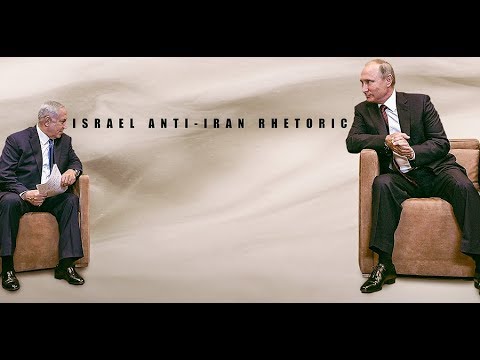
Press TV – August 25, 2017
Prime Minister Benjamin Netanyahu has said that Israel felt threatened by Iran’s growing influence in the Middle East. Netanyahu expressed his Iranophobic view in a meeting with Russian President Vladimir Putin in Russia’s Black Sea resort of Sochi on Wednesday. Press TV has asked Scott Rickard, former American intelligence linguist from Tampa, Florida, and Brent Budowsky, a columnist at The Hill from Washington, to give their thoughts on the issue.
Rickard said Tel Aviv is concerned about the fact that the regime could not carry out its old project to spread sectarian divisions and pave the way for dismemberment of the countries in the Middle East region because of the Iranian-led resistance against Israeli policies, not only in the occupied territories of Palestine but also in the whole region.
“Iran is not a threat to Israel whatsoever. The threat that Israel sees is the fact that their Oded Yinon Plan is being put to a hold by Iran,” the intelligence linguist said on Thursday night.
“They (the Israelis) look at Iran as a threat only because they have no influence on their governments and Iran is autonomous and is not under the Zionist influence,” he added.
Since the victory of the Islamic Republic of Iran in 1979, Tehran has been critical of Israel’s policies in the region, whereas “no leaders [of other states] even dared to speak out against Zionism,” Rickard argued. … continue
Blog Roll
 Aletho News
- Trump Claims Ceasefire, Reopening of Strait of Hormuz Agreement with Iran
- Israeli tank fire killed UN peacekeeper in Lebanon, UNIFIL investigation finds
- Russia, China block Bahrain-sponsored UN resolution on Strait of Hormuz
- The US-Israeli War on Science is an Assault on our Future
- Trump’s Promise to Bomb Iran ‘Like Never Before’ Faces Brutal Logistics — Expert
- Germany seeks to restrict stays abroad for men of fighting age – Berliner Zeitung
- Evidence points to Ukraine being behind TurkStream attempted sabotage, but that should come as no surprise
- Sri Lanka secures supplies of Russia oil – minister
- Nations across Asia strike direct deals with Iran for Hormuz passage
- IRGC commander declares ‘new phase’ of reprisal attacks against aggressors
- If Americans Knew
- Thousands dead and neighborhoods razed to the ground: Aid agencies fear southern Lebanon is becoming the new Gaza
- The war the US is fighting for Israel could cost trillions
- ‘Cigarette Burns, Nail Wounds’: Toddler Tortured in Gaza to Coerce Father
- Trump Says US Sent ‘a Lot of Guns’ to Protesters in Iran
- Israeli forces destroy 17 UN peacekeeper cameras in south Lebanon
- US-Israeli strikes ‘completely destroy’ synagogue in Tehran
- Archbishop for US Military Says Iran War Is Unjust Under Catholic Teaching
- Iranian leaders’ Open Letters to the American People
- Trump says Iranians appreciate bombs, WHO warns of nuclear risks – Daily Update
- U.N. experts demand Israel release prominent Gaza doctor after reports of ‘severe torture’
- No Tricks Zone
- An Inconvenient Tree: Uncovered In Alps… Europe Much Warmer Than Today 6000 Years Ago
- New Study Reports A 60% Slowdown In Greenland’s Ice Loss Rate In The Last Decade
- Low Intensity Tornado Wrecks Major Solar Farm, Creating A Potential Toxic Dump
- New Study Finds Warming Saves Lives…Cold Temperatures 12 Times More Deadly Than Excess Heat
- German Science Blog Accuses PIK Climate Institute Of Hallucinating Climate Tipping Points
- Devastating Assessment Of Comirnaty Vaccine By Former Senior Pfizer Europe Toxicologist
- New Study: CO2 Is ‘Effectively Negligible’ As An Explanatory Climate Change Factor Since 2000
- Former Pfizer Toxicologist Dr. Helmut Sterz Tells Bundestag Hearing Pfizer Vaccine Should Have Never Been Approved
- Energy Expert: Germany’s Nuclear Phaseout Was A “500 Billion Euro Mistake”
- New Research: South Australia’s Mid-Holocene Sea Surface Temperatures Were 4°C Warmer Than Today
 Aletho News