Well oiled resistance
GRAIN | September 22, 2014
The rush to develop oil palm plantations in Africa is a double whammy for the continent. Not only does it involve a huge land grab of peoples’ lands and food producing resources, it also directly undercuts the livelihoods of millions of people involved in Africa’s traditional oil palm sector.
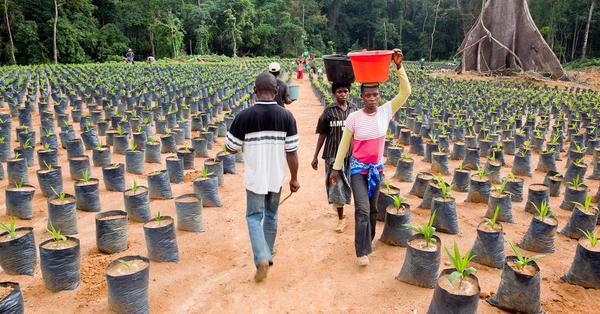
This is not the first time foreigners have pushed an expansion of oil palm in Africa. During the the colonial occupation of the continent, the European powers became interested in palm oil as an industrial lubricant and for making candles. African families were forced to pay a special tax, known as the “takouè” to the colonial authorities, in the form of palm oil and palm nut. King Léopold II of Belgium forced every farmer in the province of Equateur in the Congo to plant 10 palms a year.1
The European powers also established their own oil palm plantations around this time. Plantations were created in West and Central Africa as well as in Southeast Asia. Research stations and collection missions were launched to develop high yielding varieties of oil palms through the cross breeding of traditional or wild varieties.
With independence, most of these plantations and research stations were nationalised, and the new African governments reenergised the expansion of national production. In Bénin, for example, the state-owned Société Nationale du Développement Rural (SONADER) led an expansion of oil palm plantations in the south immediately after independence, while another state-owned company, the Société Nationale pour l’Industrie des Corps Gras (SONICOG) built new palm oil refineries and palm nut processing factories.
But, at the end of the 1990s, World Bank and donor imposed structural adjustment programmes forced African governments to privatise their national palm oil companies and to sell off their mills and plantations. While many national companies simply crumbled away, European companies with old colonial connections captured the most lucrative operations. SOCFIN, controlled by billionaires Vincent Bolloré of France and Hubert Fabri of Belgium, took over national companies in Cameroon, the DRC, Guinea and Nigeria. SIAT, controlled by the family of South African diamond magnate Ernest Oppenheimer and the Belgian Vandebeeck family, took plantations in Gabon, Ghana and Nigeria, while another old money Belgian company, SIPEF took over a chunk of the state-owned oil palm plantations of Côte d’Ivoire. Unilever, one of the world’s largest and oldest food companies, scored plantations too – in the DRC, Ghana and Côte d’Ivoire.
Today there is a second wave of foreign interest in oil palm plantations in Africa. With land for oil palm plantations becoming more difficult and expensive to acquire in Malaysia and Indonesia, companies and speculative investors are keen to open up new frontiers for export production. Some investment is going to Papua and to Latin America, but the biggest target is Africa. A long list of companies, from Asian palm oil giants to Wall Street financial houses, are scrambling to get control over lands on the continent that are favourable to oil palm, especially in the West and Central regions.
Over the past five years, vast areas of land in Africa have been allocated to foreign companies for oil palm plantations by African governments, with minimal if any consultation with the affected populations and many allegations of corruption. Table 1 lists 60 deals covering nearly 4 million hectares over the past decade and a half.
A number of different actors are involved. There are established Asian plantation companies, like Wilmar and Sime Darby, and multinational palm oil traders, like Cargill and Olam, both looking to establish a new basis of palm oil supply for global markets in Africa. But many of the first movers are in fact small obscure companies, typically domiciled in tax havens, whose owners intend only to sign land deals and then sell their companies as soon as possible to larger players with the capacity to develop the plantations. In many cases it is difficult to work out who the owners of these companies are.
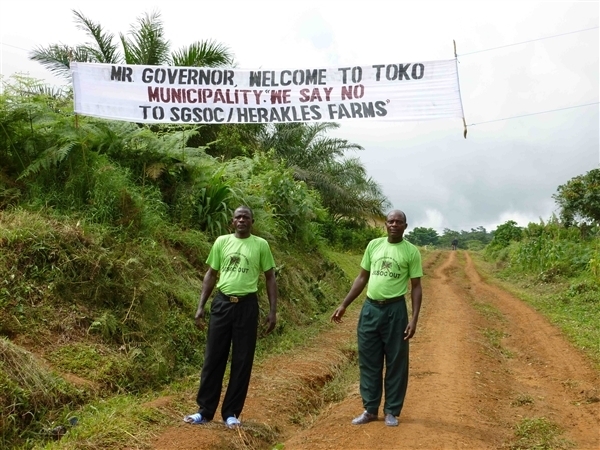
Resistance to a landgrab for a new oil palm plantation in Cameroon. (Photo : SEFE)
The communities facing land grabs from palm oil companies are under tremendous pressure to accommodate them, with pressure coming from the companies, the government, the local chiefs and even the army and paramilitaries. Those who resist face arrest, harassment and violence. And yet communities in Africa and around the world, from Papua New Guinea to Sarawak, from Cameroon to Guatemala, continue to struggle to stop palm oil companies from entering their lands.
Communities in southwest Cameroon have been involved in a three year struggle to stop the US company Herakles Capital from setting up an oil palm plantation in their area. Despite support from the president of Cameroon, Herakles has been unable to move forward with its plans because the communities are united in their total opposition to the plantation and because of the creative actions that they have undertaken, with support from national and international partners, to put pressure on the company to leave. The company and the government keep coming back and presenting new terms, the latest being a presidential decree that reduces the land allocated to Herakles from 73,000 ha to 20,000 ha and boosts the rent that the company must pay. Community leaders have been arrested and harassed with lawsuits. Yet the communities are sticking to their bottom line demand – no oil palm plantations on their lands.
Cameroon is also a target for the Luxembourg based company SOCFIN, owned by billionaires Vincent Bolloré of France and Hubert Fabri of Belgium. Over the past decade and a half, SOCFIN has taken over lands for oil palm and other crops in several African countries, including Cameroon, DRC, Guinea, Nigeria, Sao Tome & Principe, and Sierra Leone. The company is notorious for human rights abuses and land conflicts at its operations, and for its aggressive tactics against those who oppose it. In the past few years, the company has slapped defamation suits on several organisations and journalists in Africa and Europe that have spoken out against it.
On June 5, 2013, communities affected by SOCFIN plantations in four African countries held simultaneous protest actions against the company, as a delegation of diaspora from these countries and supported by the French group Réseaux d’Action Transnationale (ReAct) presented a joint letter from the various communities to the Annual General Meeting of the Bolloré Group, which is a major shareholder in SOCFIN.
“This initial international protest is just the beginning. We are committed to upholding our rights and Mr. Bolloré will have to understand that,” said Emmanuel Elong, spokesperson for Synaparcam, the Socapalm resident farmers’ union in Cameroon.2
The Jogbahn Clan convinced Liberia’s government to stop the expansion of plantations onto their lands. (Photo : Cargo Collective)
Strong community resistance combined with national and international, well targeted pressure, can roll back land grabs. The Jogbahn Clan in Liberia provides an inspiring example. When the British company Equatorial Palm Oil began surveying their lands as part of a deal it signed with the Liberian government, the communities took action to stop the work crews. They then marched to the local government offices to make it clear that they had never been consulted about the deal and that they would never give up their lands for the project. Along the way they were beaten, arrested and thrown in jail. But the communities refused to back down. Local and international NGOs joined their struggle, and exposed what was happening to the world. Finally, in March 2014, community leaders met with the Liberian President, Ellen Johnson Sirleaf, and secured a commitment from her to stop the company from expanding on their lands. Now Liberian groups are hoping to replicate these efforts with other affected communities in the country.3
The many different efforts to resist land grabs and maintain local control over palm oil production in Africa, Asia and Latin America demonstrate how committed local communities are to maintaining control over their ancestral lands and their biodiversity, for themselves and for future generations.
Notes
1 World Rainforest Movement, “Oil palm in Africa: past, present and future scenarios,“ 2010
2 Synaparcam, SoGB residents committee, Concern Union Citizen, and MALOA, “West African farmers stand up against Bolloré,” 5 June 2013
3 For more information about the case see: http://sdiliberia.org/node/263
Ebola, biological warfare against Africa?
By Abayomi Azikiwe | Press TV | September 23, 2014
A team of eight experts and journalists visiting the southern region of the West African state of Guinea were found dead in the town of Nzerekore on Sept. 20. Reports indicate that they were there to educate people about the nature of the disease for the purpose of its prevention.
Reports from Guinea say that the delegation had met with elders in the community but were later attacked by youths. Investigations into the details of the killings are ongoing.
There is tremendous mistrust surrounding the spread of the Ebola virus disease in some West African states where the epidemic has had an impact. Doctors Without Borders reported in April that their teams were forced to withdraw from Macenta in Guinea after being stoned by youths who said they were there to spread the disease.
Newspaper articles and rumors have circulated that the outbreak is a direct result of biological warfare being waged by imperialist countries against the African continent.
Although no one knows what the motivations were of those who carried out the killings in Guinea, obviously there are many people who mistrust the motivations of foreign aid workers responding to the crisis. Guinea is the first country that was identified in the latest spread of the disease, which has periodically struck in Central and West Africa over the last three decades.
Biological warfare and economic underdevelopment
The most widely discussed and controversial article related to the spread of the Ebola virus disease was published by the leading newspaper in Liberia, The Observer. Dr. Cyril Broderick, a former professor of plant pathology at the University there, asserted that the spread of the disease is a direct result of US Department of Defense bio-warfare against Africa.
Broderick’s article was published on Sept. 9 and stated that “Africa must not relegate the Continent to become the locality for disposal and the deposition of hazardous chemicals, dangerous drugs, and chemical or biological agents of emerging diseases. There is urgent need for affirmative action in protecting the less affluent of poorer countries, especially African citizens, whose countries are not as scientifically and industrially endowed as the United States and most Western countries, sources of most viral or bacterial GMOs that are strategically designed as biological weapons. It is most disturbing that the US Government has been operating a viral hemorrhagic fever bioterrorism research laboratory in Sierra Leone.”
This same author goes on to ask “Are there others? Wherever they exist, it is time to terminate them. If any other sites exist, it is advisable to follow the delayed but essential step: Sierra Leone closed the US bioweapons lab and stopped Tulane University for further testing.” (Sept. 9)
Broderick has been attacked for publishing the article, and according to Health Impact News “The western pro-pharma media has chided Dr. Broderick, saying that such an inflammatory piece of writing is ‘irresponsible’ since so many Africans are already distrustful of western medicine. They see western medicine as the answer to Africa’s deadly diseases such as Ebola, while Dr. Broderick sees it as the cause. Dr. Broderick states ‘African people are not ignorant and gullible, as is being implicated.’” (healthimpactnews.com, Sept. 21)
Following the publication of this article, President Barack Obama announced on Sept. 16 that the US would deploy 3,000 troops to the affected West African states as a means to combat the disease. Obama said in a press release that “The United States will leverage the unique capabilities of the US military and broader uniformed services to help bring the epidemic under control. These efforts will entail command and control, logistics expertise, training, and engineering support.” (White House press statement)
Washington is already heavily involved militarily in Africa. Several thousand Pentagon troops, Central Intelligence Agency (CIA) operatives and State Department functionaries are on the continent as part of the US Africa Command (AFRICOM). This intervention since 2008 has created more instability and underdevelopment in Africa as represented by the events in Egypt, Mali, Libya, Somalia, South Sudan and Nigeria, where the ostensible partnerships aimed at curbing “terrorism” has prompted the intensification of conflict, dislocation and in the case of the Horn of Africa, famine.
Pentagon and CIA drone operations have carried out numerous targeted assassinations in Somalia. In Mali, a US-trained military officer returned to this former French colony and staged a coup providing a rationale for internal destabilization as well as an ongoing occupation by Paris.
Cuba offers medical solidarity
Meanwhile the revolutionary nation of Cuba pledged to send medical personnel in the fight against the disease. Cuba has a profound history in providing unconditional solidarity with the African continent.
In an address on Sept. 18 before the United Nations Security Council emergency session on Ebola, Vice Minister of Foreign Relations Abelardo Moreno told the participants that, “Cuba’s response is part of our solidarity with Africa, Asia and Latin America and the Caribbean. Over the last 55 years, we have collaborated in more than 158 countries, with the participation of 325,710 health workers. Some 76,744 collaborators have worked in 39 African countries. Today, in this sector, 4,048 Cubans are serving in 32 African nations, 2,269 of whom are doctors.” (granma.cu, Sept. 19)
Moreno went on the report that, “The medical brigades which will be sent to Africa to fight against Ebola form part of the ‘Henry Reeve International Contingent’ – created in 2005 – composed of doctors specializing in combating disasters and large-scale epidemics. Cuba’s response confirms the values of solidarity which have guided the Cuban Revolution: not to give what we can spare, but to share what we have.”
This approach contrasts sharply with that of the White House and Pentagon. Cuba has built up considerable trust in Africa due to its consistent policy of international solidarity.
At least three countries that have reported Ebola cases are reporting improvements in fighting the disease and its proliferation. In Nigeria, the Federal Government announced that schools would be re-opened on Sept. 22 despite opposition from the sections of the Nigerian Union of Teachers (NUT).
In Sierra Leone, there was a state of emergency declared restricting movements for three days. The government announced on Sept. 22 that the situation was now under control. Similar announcements have been made in reference to developments in Senegal, where at least one case has been reported.
Nonetheless, there have been nearly 3,000 deaths reported from the disease. In addition, there are still numerous questions related to the conditions under which the disease is spread and the most effective means to treat and eradicate the epidemic. (WHO Update, Sept. 22)
This outbreak does draw attention to the need for genuine independence and development on the African continent. The training of medical personnel and scientific researchers would contribute immensely to preventing future healthcare crises.
Cuban revolutionary foreign policy provides an example of how underdeveloped states, which have a legacy of slavery, colonialism and neo-colonialism, can transform through a process of class struggle and self-reliance. With over five decades of hostility from the US, Cuba has been able to make significant contributions to African liberation whether in the fight against settler-colonialism in Southern Africa in the years past or through the contemporary challenges related to the Ebola outbreak, the training of African medical personnel and other healthcare issues.
Who’s Your Daddy, ISIS?
By Glen Ford | Black Agenda Radio | September 17, 2014
Let us be clear, if that is possible, about President Obama’s plan to deal with ISIS, the boogeyman of America’s own making. The president last week swore that he would “degrade and destroy” the Islamic State, after having spent three years providing weapons and money to jihadists fighters, including ISIS, in hopes that they would “degrade and ultimately destroy” the Syrian state of president Bashar Assad. So, the Americans set out to destroy one state, in Syria, whose government had never presented any danger to the U.S., and wind up creating another state, a caliphate astride the borders of Syria and Iraq, that openly declares its intention to do battle with the U.S.
Obama assures us that he is assembling a new coalition of the willing to join him in smashing ISIS. It turns out that every prospective member of the coalition was a co-conspirator with the United States in giving birth to ISIS – Britain and France and other Europeans, Turkey, Saudi Arabia, Jordan, Kuwait, the United Arab Emirates…ISIS has many, many fathers, all of whom now deny patrimony.
Obama appears to be leaving the natural gas-rich nation of Qatar out of his coalition, which doesn’t seem fair, since Qatar was a loyal ally of the United States and NATO just three years ago, when Obama was busy trying to degrade and destroy another state, Libya, which also posed no threat to the U.S. The emir of Qatar worked his gaseous little butt off for Obama, sending money and guns and mercenaries to help the Libyan jihadists that the U.S. wanted to install as the new government.
Once regime change had been accomplished in Libya, Qatar helped the Americans send hundreds of Libyan jihadists to Syria, to put that regime out of business. But, Libya never did get a new state, to replace the one that was destroyed in 2011. Instead, the country is wracked by civil war, that is also a proxy war between Saudi Arabia and its friends and Qatar.
Wars Within Wars Within Regime Changes
It seems that Qatar backed the wrong side – the Muslim Brotherhood – after the regime change in Egypt in 2011. The Saudi Arabian royal family hates the Muslim Brotherhood, because the Brotherhood advocate elections, and kings don’t do elections. So, the Saudis bankrolled another regime change in Egypt, putting the military back in charge, and are now fighting a proxy war with Qatar in Libya. Which is why the Saudis blackballed Qatar from participating in Obama’s coalition of the willing against ISIS. (You do understand all this, right?)
Turkey, which is part of NATO, has been a wonderful father to ISIS, allowing the caliphate’s fighters free use of its long border with Syria and Iraq. In return, Turkey gets to buy the cheap oil from the fields that ISIS seized from Syria and Iraq, which makes the Turks somewhat reluctant to try to kill little baby ISIS.
It’s starting to look like Obama might have to take out the caliphate on his own, which is why the president’s top military advisor is talking about putting serious U.S. boots on the ground in Iraq, and maybe in Syria. Meanwhile, Obama is putting together a new army of rebels to continue the job of degrading and destroying the Syrian state – unless, of course, these new fighters just take the money and guns and join ISIS, too.
Glen Ford can be contacted at Glen.Ford@BlackAgendaReport.com.
Obama’s Ebola military operation raises concern in Africa
Press TV – September 17, 2014
The decision by US President Barack Obama to dispatch 3,000 troops to West Africa to fight the Ebola epidemic has sparked reactions in Liberia.
“We don’t need guns to protect us for now. What we need now is drugs. We need vaccine to curtail the spread of this virus. So it is unfortunate to hear that America is sending over 3,000 troops,” one Liberian citizen said.
“If it is an armed troop then I will start to question myself whether this virus can be fought by guns or so,” said another Liberian.
On Tuesday, Obama described the Ebola epidemic in West Africa as a threat to the entire world.
In an address from the Centers for Disease Control and Prevention headquarters in Atlanta, Obama called the US effort to fight the virus being part of “the largest international response in the history of the CDC”
“This is an epidemic that is not just a threat to regional security. It’s a potential threat to global security, if these countries break down, if their economies break down, if people panic,” he said.
“That has profound effects on all of us, even if we are not directly contracting the disease,” he added. This outbreak is already “spiraling out of control.”
Earlier, the World Health Organization said the number of Ebola cases in West Africa could start doubling every three weeks and the crisis could end up costing nearly $1 billion to contain.
Ebola has claimed over 2,400 lives so far and nearly 5,000 people have been infected.
Communities Protest That UK’s Equatorial Palm Oil Are Poised to Seize Land in Liberia
Forest Peoples Programme | June 24, 2014
The UK-listed company, Equatorial Palm Oil (EPO), which is threatening to seize land owned by Liberians in defiance of commitments by Liberia’s President, will today receive a visit from affected communities. Members of the Jogbahn Clan, together with representatives from Liberian and international NGOs, will deliver a petition with over 90,000 signatures, reminding EPO that it does not have community consent to expand onto their lands, and that doing so could escalate violence. [1] EPO’s past operations in Liberia have triggered allegations of conflict and human rights abuses. The company has maintained that any expansion is legal. [2]
“EPO’s recent expansion efforts are a brazen example of a company defying international law, government orders and the rights of communities,” said Silas Kpanan’Ayoung Siakor, campaigner at the Sustainable Development Institute. “EPO has no claim to this land, it is owned by the communities who live on it.” [3]
Residents from the Jogbahn Clan in Liberia’s Grand Bassa County say that EPO has begun demarcating blocks of land in preparation for clearing, and have accused its security officers of threatening community members. These actions defy the March commitment by Liberian President Ellen Johnson Sirleaf that EPO could not expand onto the lands of the Joghban Clan without their permission. [4] The right of Liberian communities such as the Joghban Clan to give or withhold consent to projects that could have an impact on their land and resources is also provided under international human rights law, as well as the Principles and Criteria of the Roundtable on Sustainable Palm Oil (RSPO) of which EPO is a member. [5] The Joghban people have refused to give such consent.
EPO has a very poor track record in Grand Bassa County. In September of last year, officers from the EPO security team and the Liberian Police reportedly worked together to assault and beat Joghban community members who were peacefully protesting the company’s operations. Those arrested were soon released after it was determined by the government’s Grand Bassa attorney that there was no justification for continued detention. No government investigation report regarding this incident has been made public. [6]
EPO denied any involvement in the violence, saying that it had been “falsely accused”, and does not “condone or encourage such described behaviour,” and “never instructed or directed any of its staff or PSU officers to intimidate Jogbahn community members in September or at any time.” However, EPO admitted to Global Witness that it provided logistical support to the Liberian police who are accused of intimidating villagers on the plantation. The company further stated that it “respect[s] the Liberian community rights and land, and ha[s] followed the law and procedures laid out”, had taken “strict steps” to ensure that it only plants oil palm on its concession land and legally-acquired community land, and is “a responsible company and committed to sustainable oil palm development.” [7]
EPO’s concessions in Liberia total 8,900 km2 of land, which the company believes gives it the legal right to use the land to develop a palm oil concession. The company is listed on the London-based AIM stock market, and is now majority owned by Malaysian palm oil giant Kuala Lumpur Kepong Bhd (KLK). Major brands including Kellogg’s, Kraft, Nestle, Unilever, Procter & Gamble, and General Mills have been reported as direct or indirect consumers of KLK palm oil. [8]
“We demand that EPO stops inciting conflict by preparing to clear our land,” commented Jogbahn Elder Joseph Chio Johnson, “EPO must stop threatening our people and accept that our no means no.”
Notes
- Sustainable Development Institute and Friends of the Earth International, Tell Equatorial Palm Oil NO means NO!, Rainforest Rescue, Wir stoppen die Walddiebe!, Friends of the Earth US, Stop an abusive palm oil company from grabbing Liberian land, Milieudefensie, Laat Equatorial Palm Oil weten dat NEE echt NEE betekent!
- Equatorial Palm Oil, Letter to Global Witness, 17 December 2013. EPO’s full response can be found on Global Witness’ website at: www.globalwitness.org.
- Customary land rights are protected under a range of international human rights laws applicable to Liberia, including the African Charter on Human & Peoples’ Rights (1981), the International Covenant on Economic, Social & Cultural Rights (1966), the International Covenant on Civil & Political Rights (1966), the Convention on the Elimination of Racial Discrimination (1965), as well as principles of customary international law expressed in the Universal Declaration on Human Rights (1948) and UN Declaration on the Rights of Indigenous Peoples (2007).
- Sustainable Development Institute, SDI welcomes President Sirleaf’s commitment to protecting Joghban clan’s land from further encroachment by British palm oil company Equatorial Palm Oil, 6 March 2014; Global Witness,NGOs welcome Liberian President’s commitment to stop British palm oil company “taking” community land, 10 March 2014.
- Free Prior and Informed Consent (FPIC) is a key principle of Liberia’s Community Rights Law with respect to Forest Lands (2009), which provides communities with a right to give or withhold their consent to activities planned on community land or which may impact on that land and the community. Article 7 of the Liberian Constitution provides for the maximum feasible participation by citizens of Liberia, in the management of Liberia’s natural resources. FPIC is also an established legal principle supported by numerous regional and international legal instruments to which Liberia is legally bound, including the African Charter on Human and Peoples’ Rights (ACHPR). The decision of the African Commission on Human & Peoples’ Rights in the case of Endorois Welfare Council v. Kenya (276/2003) e.g. at para 209, including with regard to right to property (Art. 14 ACHPR), as well we the right to development (Art. 22 ACHPR). See also ACHPR Resolution 224 on a Human Rights-Based Approach to Natural Resources Governance, the United Nations Declaration on the Rights of Indigenous Peoples as well as numerous other provisions and jurisprudence elaborated under the International Convention on the Elimination of all Forms of Racial Discrimination, the International Covenant on Economic, Social and Cultural Rights and the International Covenant on Civil and Political Rights.
- Sustainable Development Institute, SDI calls on Equatorial Palm Oil to immediately cease land survey in Grand Bassa District #4, 25 September 2013. Sustainable Development Institute, Global Witness, FoE EWNI, FERN, Save My Future Foundation, UK’s Equatorial Palm Oil accused of human rights abuses in Liberia, 20 December 2013.
- Equatorial Palm Oil, Letter to Global Witness, 17 December 2013. EPO’s full response can be found on Global Witness’ website at: www.globalwitness.org. Meeting between Global Witness and EPO in London on 14 November, 2013. EPO, “Letter to Global Witness,” 17 December 2013.
- Rainforest Action Network, Conflict Palm Oil in Practice: Exposing KLK’s role in rainforest destruction, land grabbing and child labour, 2 April 2014.
Rough and Polished: South Africa Shortchanged on Diamond Trade
By Khadija Sharife | 100Reporters |May 16, 2014
JOHANNESBURG – At every step, from mine to ring finger, South Africa’s diamond industry is benefitting from royalty and export tax structures riddled with loopholes, shortchanging citizens of one of the world’s premier sources of diamonds of tens of millions of dollars a year in revenue.
In 2011, South Africa produced diamonds whose uncut, or rough, value was $1.73 billion, or 12 percent of global production, according to the most recent government data available. Yet from 2010 to 2011, diamond-producing companies paid South Africa’s government just $11 million in mining royalties, according to the latest Tax Statistics report, produced by the South African Treasury and the South African Revenue Service.
A 100Reporters investigation of the diamond trade in South Africa has found that companies here pay a royalty rate far lower than that of other African states. Companies can also reduce or cancel out export taxes if they offer locally-mined diamonds to the state for purchase—even if the South African government never buys the gems, often due to formidably high prices.
In an apparent conflict of interest, De Beers Consolidated Mines Ltd., the dominant player until 2010, ‘donates’ paid staff to the State Diamond Trader, charged with assessing diamonds offered by De Beers and other companies to the State for purchase. Provided 10 percent of domestic diamonds are offered, these companies may then receive export tax exemptions.
The main beneficiary of a system tilted in industry’s favor is De Beers, the sprawling multinational cartel that accounts for 35 percent of global rough diamond production, mainly from Africa. Until recently, De Beers dominated the South African diamond industry.
In 2011, De Beers accounted for $1.34 billion of South Africa’s production, and it remains the country’s primary diamond importer and exporter. The only other significant player, Petra Diamonds, with whom De Beers controls 97 percent of the local diamond industry, neither imports nor exports.
From 2005 to 2012, diamond exporters, primarily De Beers, appear to have downplayed the market value of their rough diamond exports by $3 billion, according to an analysis* of declarations in corporate filings under the Kimberley Process Certification Scheme, the rough diamond tracking system used to keep conflict gems off the world market. The same undervalued gems were then sold at market prices around the world.
Lynette Gould, head of media relations for De Beers, declined to comment on the findings, or to address questions about the valuation, sales and import and export volumes of diamonds from South Africa. In an email, Gould wrote that the “values and volumes of De Beers production is . . . proprietary.”
A Broken System
To ensure that the government gets its share of revenues from the extraction of the country’s diamonds, the South African government relies on a national agency, the Government Diamond Valuator (G.D.V.), charged with determining the quality, and thus worth, of diamonds. But highly-placed sources in the diamond industry said that the G.D.V. seldom issues independent assessments of the country’s diamonds, opting instead to echo the valuations that De Beers puts forth in the company’s price lists.
“The gap between the industry’s presence in South Africa and its contributions to the country’s coffers has its roots in how diamonds are valued in South Africa and who controls the process,” said Claude Nobels, a former government diamond valuator.
“We had a plan to create a system, under the Nelson Mandela government, that would generate fair revenues for all parties involved,” Nobels told 100Reporters. But to date, “the diamond mining and trading industry has not truly benefitted South Africans. The loss to the state is billions of dollars,” he said.
Calculating diamond revenue losses to the South African budget is complicated by a dearth of data, particularly concerning how diamonds are valued. Valuation, in turn, drives royalties and export taxes, as well various forms of tax exemptions. For example, companies can receive credits for importing diamonds to be cut and polished in South Africa, which in turn may reduce or even cancel export taxes.
Until 2012, government reports on diamonds generally showed blank spaces rather than reveal value and volume of local and export sales. Reports for other commodities such as gold and platinum, however, teemed with data. Martin Kohler, Deputy Director of Statistics for the Department of Mineral Resources (D.M.R.), said the government withholds diamond data to protect big producers, the largest among them De Beers, unless the companies authorize the release of the information.
“De Beers, who had a predominant share of the diamond market in the past, authorised us to publish the aggregated production data only (but not sales data),” Kohler said in an email. According to Kohler, the recent sale of De Beers’s mines to other owners meant that, “the predominant position of De Beers has been diluted, and we are able to publish sales data with effect from January 2013 (but not before that date).”
Kohler said such information was strictly confidential “where one company has more than 75 percent market share, or where there are less than three producers of a mineral, unless all such producers have granted permission to publish the data.”
In November 2013, the company moved its sorting, valuing, and selling center to Gaborone, Botswana from London. According to a knowledgeable source, the South African government pressured De Beers to shift sales activities to Africa, specifically South Africa. De Beers caved in to the pressure but preferred Botswana as a partner. The company signed a ten-year agreement relocating global production sales to Gabarone. South Africa, wary of being seen as a domineering neighbor, acquiesced, the source said.
“Bricks in the Wall”
To understand South Africa’s diamond industry and the system of taxation that now governs it, it helps to look to the industry’s origins, which are synonymous with De Beers. Historically, the apartheid regime cultivated close relations with South Africa’s diamond industry. John Vorster, an apartheid-era prime minister, once described corporate support from De Beers and other large companies as “bricks in the walls of the regime’s continued existence.”
De Beers was formed in 1888 by colonialist Cecil Rhodes and acquired by Ernest Oppenheimer’s Anglo-American in the 1920s. By 1987, Anglo-American PLC controlled over 60 percent of the wealth listed on the Johannesburg Stock Exchange, through an estimated 80 listed entities.
Despite its dominant role in the global diamond trade, De Beers has a history of running afoul of the law in important markets. In 2008, the European Union forced De Beers to end decades of price fixing with Russia’s Alrosa, another dominant diamond producer. At the time, De Beers controlled 50 percent of global rough diamond production.
Meanwhile, for more than 60 years, De Beers was banned from directly trading in the United States because of price fixing, despite the fact that the U.S. accounts for half the world’s diamond jewelry sales. In 2012, a settlement of $295 million was reached between the U.S. government and Anglo-American, which currently owns 85 percent of De Beers.
In South Africa, De Beers functioned in a protected niche even after the end of apartheid. For instance, it paid no export taxes on diamonds until 2007. According to Parliamentary documents, De Beers extracted the advantage in a twist worthy of a B-movie: for years, it held the government at bay by citing a smudged, unsigned document generated under the apartheid regime, just prior to the first democratic elections, that allegedly provided the company with an export tax exemption for 13 years.
Further, extractive industries in South Africa, including diamonds, did not pay royalties until 2010, with the adoption of the Mineral and Petroleum Resource Royalty Act.
Royalties
According to the African Development Bank, South Africa was the “only major mining country on the continent without a royalty on mining” until the act’s passage. To address the gaps in the system, the act mandated that companies pay royalties at rates ranging from 0.5 to 7 percent. Royalties, calculated against criteria such as gross sales and the company’s net operating mining profits, are compensation to the nation for the permanent loss of non-renewable resources.Yet in crafting and applying the royalty rate, the diamond industry, rather than the South African government, has had the upper hand.
Take the rate itself, for example. Botswana and Namibia, major diamond-producing states, have royalty rates fixed at 10 percent. Yet because of its sliding royalty scale, South Africa averages an annual royalty rate of about 2 percent, which netted the government a total of $57.5 million from 2010 to 2012.
“The revenues from diamond royalties are very low – just 1.1 percent of sales for 2011,” said Mark Curtis, a U.K.-based development finance consultant for global non-governmental organizations. “If diamond companies paid the mid-royalty range of 3.5 percent, royalties would have amounted to $24.8 million more than the state actually received,” he said.
The explanatory draft of the act originally pegged royalties at 10 percent of the value of diamonds at the ‘mine-gate’ and at 8 percent after processing. But the government reduced the rate following pressure from the diamond industry. Created around a complex profit-based system, royalties are considered a “cost” by business, and depend on the value of minerals sold.
Clarity Lacking
Though diamonds are valued by their clarity, the same cannot be said of South Africa’s diamond industry or its largest player, De Beers.
Unlike other South Africa diamond companies, De Beers does not allow the government to publish key information about the value of the diamonds it extracts. As a result, the state and the public cannot verify the fairness of the royalty De Beers ultimately pays.
In addition, to determine the value of a diamond, DeBeers and other companies use complex and closely-held pricing formulas, that they do not permit the government to review. De Beers’s pricing formula counts 12,000 categories.
According to one European valuator who worked closely with De Beers, the company’s price book was not a single listing, but rather an “elaborate system used to value diamonds for different purposes. By manipulating various categories with price points, they can increase or decrease the value of diamonds . . . These figures have nothing to do with fair market prices.”
Speaking on behalf of De Beers, Gould said, “I’m afraid the information on pricing is proprietary and therefore confidential.”
Other companies also maintain proprietary pricing systems. In an email, the Government Diamond Valuator confirmed that it did not “have access to the pricing policies of other diamond companies,” but asserted that the Government Diamond Valuator assessed “each parcel imported or exported to determine a value deemed to be fair market value.”
However, highly placed sources in the diamond industry, including a former government valuator, said the G.D.V.’s relies on random spot checks, and verifies only the size of diamonds, not their quality. One official close to the Department of Minerals and Resources confirmed that mispricing of diamonds was easily possible due to what was considered the “very subjective nature of pricing.”
Export Taxes
In 2007, the South African government established an export tax of 5 percent on diamonds. But from 2009 to 2013, according to the latest Tax Statistics report, it yielded only $21.9 million to the national purse.
The state has pulled in little revenue due to exemptions built into the 2007 Diamond Export Levy Act. The exemptions were created ostensibly to encourage mining companies to make quality diamonds available to domestic industry, before shipping abroad. Companies that offer rough diamonds to local buyers for cutting and polishing, or beneficiation, through a government mechanism called the State Diamond Trader system can obtain breaks on export taxes.
Large companies like De Beers can get the exemption if they sell 40 percent of their South African rough diamonds to buyers in South Africa, and offer 10 percent to the State Diamond Trader.
The State Diamond Trader, however, often cannot afford to purchase rough diamonds because the price is too high. The trader’s annual reports disclose that purchasing diamonds for the local beneficiation industry was difficult due to, “unsustainable rises in prices at producer level” and “limited rough supply.”
De Beers further provides fully-paid staff to the trader to conduct diamond valuation, according to reports of the State Diamond Trader, which describe the presence of De Beers staff at the government agency as a “donation.”
In an email, De Beers said, “the arrangement between De Beers and the S.D.T. is subject to confidentiality and information relating to this arrangement cannot be provided without the S.D.T.’s consent.”
Futhi Zikalala, C.E.O. of the State Diamond Trader, told 100Reporters that each parcel was individually valued. “The process is legislated. We do valuations for the 10 percent offered to the S.D.T. It takes four or five days at a time, with 10 cycles a year.”
Asked whether she would comment on the apparent conflict of interest in the State Diamond Trader’s long-standing use of De Beers’s donated staff, she responded, “Actually, no. I do not understand why you are asking that question.”
A source close to the Department of Mineral Resources said that use of De Beers’s staff was for practical reasons: the S.D.T. was under-resourced and in need of diamond experts.
In October 2013, the Minister of Minerals Resources, Susan Shabangu, said that the State Diamond Trader system had failed and would require an overhaul.
Transfer Pricing
Companies can also win export tax exemption if they import rough diamonds for local beneficiation. The higher the value of the imported gems, the greater the import credits a company can generate to ultimately offset their export taxes, creating a system vulnerable to price manipulation.
But the arrangement appears to have done little to nurture domestic cutting and polishing industry. According to figures cited in a South African parliamentary report (2013), South Africa currently hosts just 300 polishers, down from 3,000 in 2008, when 140,000 carats, maximum, were locally beneficiated (see sidebar).
The report cited diamond industry officials who stated that the local cutting and polishing industry was “in distress.” While the 2008 recession had impacted the global diamond industry everywhere, beneficiation industries elsewhere–including India, China and neighboring Botswana–bounced back, even expanding training facilities as well as cutting and polishing labor. In 2013, African Romance, a medium-sized state-backed beneficiation diamond company, was liquidated. Reasons cited included the absence of consistent quality diamond supplies.
Until 2013, De Beers exported gems from its mines in Namibia, Botswana and South Africa to London for valuation and then imported them into South Africa for sale to select buyers called sightholders. The sales values declared to sightholders are confidential, the company said.
South Africa boasts curiously high import prices for diamonds. While higher import values are said to correspond to the quality of select rough diamonds, South Africa’s import price appears significantly more than the price of diamonds imported to other countries such as Israel, arguably one of the world’s leading gem quality cutting and polishing centers.
For example, South Africa’s average import prices, at $544 in 2009 and $773 in 2010, were significantly higher than Israel’s at $165 and $156, respectively, according to certificates filed under the Kimberley Process.
In 2007, South Africa’s import price hit a staggering $1,706 per carat with a total import value of $2.1 billion. Yet only $670 million would be sold to De Beers’s pre-approved South Africa-based purchasers, known as Diamond Trading Company (D.T.C.) sightholders. Though these figures were published in a De Beers report, when asked for annual D.T.C. local sales, Gould responded that the information was proprietary.
According to a diamond specialist previously employed by the South African government, who spoke on condition of anonymity, import and exported diamonds were often “mispriced” by an average of 20 percent or more.
The other countries with similarly high import averages were those where De Beers also held a large presence, such as Namibia.
“South Africa’s import figures are improbable,” said a European Government Diamond Valuator. “These prices are exceptionally high as an average price.”
Most imported diamonds appear to be re-exported uncut and unpolished. While imports make up relatively small volume, or carats, they drastically increase the value of rough diamond exports. Subtracting the values and volume of imported diamonds shown on South Africa’s K.P. certificates from corresponding exports, the actual price per carat of rough diamonds being exported for the first time falls dramatically.
When asked about the anomalies in reported trade figures for diamonds under the Kimberley Process (K.P.) in South Africa, where De Beers is a dominant player, Gould responded, “The primary purpose of the K.P. process (or the issuing of the certificates at least) is for Governments to certify the origin of diamonds, not to keep track of the volume and value of diamonds imported or exported; that is the function of the relevant Regulator and G.D.V.”
The Government Diamond Valuator
While the Government Diamond Valuator is responsible for independently appraising gems and for monitoring the trade in diamonds, it remains questionable whether the South African valuator is able to provide an independent assessment. Such assessments are critical for the South African government, and public, to secure royalties and export taxes that reflect the true worth of the country’s diamond trade.
Former De Beers director Bertie Lincoln, in a rare quote under oath to a South African court 17 years ago, described the Government Diamond Valuator as “an auditor. The value is the price which is in the [De Beers] Price Book. So the government valuator has got no input into the value of a diamond.”
The Government Diamond Valuator did not respond to follow-up questions about the source of information informing the G.D.V.’s Price Book, the size of the agency or office, the amount of time available for valuation of imported and exported diamonds, and other questions.
“The significant differences between the dollar-per-carat for South African rough diamond imports and exports suggest possible price manipulation for the purposes of aggressive tax avoidance,” said public finance specialist, Len Verwey. Companies like De Beers, he stated, may indeed have a plausible explanation, in which case, “diamond companies as well as the Government Diamond Valuator should provide more transparent reporting to society on the factors that determine such valuations.”
Verwey stated that the Government Diamond Valuator’s credibility “in ensuring fair market value for diamond transactions is essential to its success.”
But critics of South Africa’s current royalty and taxation system are skeptical that the government will impose greater transparency on De Beers and other major producers.
“Inevitably,” stated one former De Beers employee, “the company will stonewall and the G.D.V. will run a mile” from transparency and accountability in the diamond valuation system.
He added, “No one will want this brought into the open.”
*The information on transfer pricing manipulation of diamonds comes from a report by Sharife and Sarah Bracking, published by the Leverhulme Center for the Study of Value, University of Manchester, and supported by a grant from Oxfam Great Britain.
Khadija Sharife is the lead Africa forensics researcher for Investigative Dashboard (ID) and a senior investigator for African Network of Centers for Investigative Reporting (ANCIR). She is the author of Tax Us If You Can: Africa.
Judge Finds Courts Cannot Protect US Citizens Tortured by US Government Officials Abroad
By Kevin Gosztola | Firedoglake | June 17, 2014
A federal district court dismissed a case that was brought by the American Civil Liberties Union on behalf of a United States citizen and against US government officials who allegedly tortured, abused and subjected him to rendition and incommunicado detention in Kenya, Somalia and Ethiopia. The dismissal was another stark example of how it is nearly impossible for torture victims to push for justice in an American court of law.
Amir Meshal was in the Horn of Africa when, on January 24, 2007, Kenyan soldiers captured and interrogated him. He was “hooded, handcuffed and flown to Nairobi, where he was taken to the Ruai Police Station and questioned by an officer of Kenya’s Criminal Investigation Department” and was told that the police had to “find out what the United States wanted to do with him before he could send him back to the United States.” He remained in detention without access to a telephone or his attorney for a week, according to the US District Court of the District of Columbia’s decision [PDF].
On February 3, “three Americans,” who turned out to be FBI agents, interrogated Meshal and told him he would be handed over to the Kenyans and remain stuck in a “lawless country” if he did not cooperate. The agents also accused him of “having received weapons and interrogation resistance training in an al Qaeda camp.” Supervising Special Agent Chris Higgenbotham, one of the officials sued, threatened Meshal with being transferred to Israel where the Israelis would “make him disappear.” Meshal was informed that another US citizen he had met in Kenya, Daniel Maldonado, who was also seized by Kenyan soldiers, “had a lot to say about” him and his story “would have to match.”
Meshal was flown by Kenyan officials to Somalia with twelve others on February 9. He was “detained in handcuffs in an underground room with no windows or toilets,” which was referred to as “the cave.” This was allegedly to prevent pressure from Kenyan courts to halt his detention and interrogation by FBI agents.
About a week later, Meshal was transported in handcuffs and a blindfold to Addis Ababa, Ethiopia. He was held there in incommunicado detention for a week before Ethiopian officials started \regularly transporting him to a villa with other prisoners where he could be interrogated by FBI agents. He remained in detention for three months and was moved into solitary confinement twice.
Finally, on May 24, he was taken to the US Embassy in Addis Ababa and flown back to the US. He was detained for four months and lost eighty pounds. US officials never charged him with a crime.
Judge Emmet G. Sullivan, who was appointed by President Bill Clinton, wrote in the decision, “The facts alleged in this case and the legal questions presented are deeply troubling.” But, he added, “Although Congress has legislated with respect to detainee rights, it has provided no civil remedies for US citizens subject to the appalling mistreatment Mr. Meshal has alleged against officials of his own government.”
In the past couple of years, Sullivan acknowledged, three federal appeals courts, including the appeals court for the DC Circuit, had rejected cases brought by citizens, including military contractors, who alleged they had been tortured or abused by US government officials. He claimed, “Only the legislative branch can provide United States citizens with a remedy for mistreatment by the United States government on foreign soil; this court cannot.”
ACLU National Security Project Director Hina Shamsi reacted, “While we appreciate the court’s outrage at the appalling mistreatment Mr. Meshal suffered at the hands of his own government, we are deeply disappointed at the court’s conclusion that it does not have the power to provide him a remedy.
“It is a sad day for Mr. Meshal and for all Americans, who have a right to expect better of their government and their courts than immunity for terrible government misconduct,” Shamsi added.
The judge’s decision “sends a deeply troubling and negative signal,” Shamsi told Firedoglake. “We’re considering our next steps in this case.”
Meshal was only seeking to hold particular US government officials responsible for the torture and abuse he had experienced. Nonetheless, Sullivan essentially accepted the government’s “national security” argument—that Meshal was “attacking the nation’s foreign policy, specifically joint operations in the Horn of Africa and executive policies which permit FBI agents to conduct and participate in investigations abroad.”
“As the government points out, these claims have the potential to implicate ‘national security threats in the Horn of Africa region; substance and sources of intelligence; the extent to which each government in the region participates in or cooperates with U.S. operations to identify, apprehend, detain, and question suspected terrorists on their soil; [and] the actions taken by each government as part of any participation or cooperation with U.S. operations.’”
In other words, allowing Meshal to sue US government officials would interfere with affairs that were entirely in the control of the Executive Branch and violate separation of powers. US government officials can engage in all manner of conduct against an individual so long as he or she is in the custody of a foreign government.
Jose Padilla, a US citizen who was detained as an enemy combatant and allegedly tortured for three years while he was in US military custody on the mainland, had his case dismissed. A US citizen and government contractor who alleged he had been “illegally detained, interrogated and tortured for nearly ten months on a US military base in Iraq” had his case dismissed. And US citizens Donald Vance and Nathan Ertel, who were US government contractors allegedly detained, arrested and tortured by the US military in Iraq, had their case dismissed.
These were the cases that Sullivan believed were “binding precedent” he had to follow yet he noted that a dissenting opinion in Vance’s case had warned that the judicial branch was “creating a doctrine of constitutional triviality where private actions are permitted only if they cannot possibly offend anyone anywhere.”
Judge Ann Claire Williams added, “That approach undermines our essential constitutional protections in the circumstances when they are often most necessary.” Sullivan added that the court feared this prediction was “arguably correct.”
FBI Supervising Special Agent Chris Higgenbotham forced Meshal to sign forms and told Meshal when he did not want to sign, “If you want to go home, this will help you get there. If you don’t cooperate with us, you’ll be in the hands of the Kenyans, and they don’t want you.”
Another Supervising Special Agent, Steve Hersem, told Meshal if he “confessed his connection to al Qaeda” only then would he be granted due process in a civilian court. Otherwise, if he didn’t “confess” he would be transferred to Somalia. Hersem also told Meshal he would “send him to Egypt, where he would be imprisoned and tortured if he did not cooperate and admit his connection with al Qaeda, and told him ‘you made it so that even your grand-kids are going to be affected by what you did.’”
While in Ethiopia, an unidentified FBI agent said he would only be sent home if he was “truthful.” Meshal repeatedly ask to speak to his lawyer but agents denied his requests.
The reality is that covert operations in America’s dirty wars are now more sacrosanct to the US government than the rights US citizens are supposed to enjoy.
US government officials deliberately refused to provide Meshal with a probable cause hearing or some form of due process. In fact, one of the only reasons the US Embassy got involved and he was eventually transported back to the US is because McClatchy Newspapers became aware of his detention and published a story under the headline, “American’s rendition may have broken international, US laws.”
If a US media organization had not found out about his mistreatment, how much longer would he have been held and interrogated by FBI agents who were threatening him daily?
An Open Letter to the Graduates of West Point: Refuting President Obama’s Lies, Omissions and Distortions
By James Petras :: 06.07.2014
Introduction
On May 2014 President Obama delivered the commencement address to the graduates of United States Military Academy at West Point. Beyond the easy banter and eulogy to past and present war heroes, Obama outlined a vision of past military successes and present policies, based on a profoundly misleading diagnosis of the current global position of the United States.
The most striking aspect of his presentation is the systematic falsification of the results of past wars and current military interventions. The speech is notable for the systematic omissions of the millions of civilian deaths inflicted by US military interventions. He glosses over the growth of NSA, the global police state apparatus. He presents a grossly inflated account of the US role in the world economy. Worst of all he outlines an extremely dangerous confrontational posture toward rising military and economic powers, in particular Russia and China.
Distorting the Past: Defeats and Retreats Converted into Victories
One of the most disturbing aspects of President Obama’s speech is his delusional account of US military engagements over the past decade. His claim that, “by most measures America has rarely been stronger relative to the rest of the world”, defies belief. After 13 years of warfare, the US has failed to defeat the Taliban. Washington is in full retreat and leaves behind a fragile puppet regime which will likely collapse. In Iraq the US was forced to withdraw after killing several hundred thousand civilians and fueling a sectarian war which has propelled a pro-Iranian regime to power. In Libya, the NATO war devastated the country, destroyed the Gadhafi government,thus undermining reconciliation, and bringing to power bands of terrorist Islamic groups profoundly hostile to the United States.
Washington’s effort to broker an accord between Palestine and Israel was a dismal failure, largely because of the Obama regime’s spineless attitude toward Israel’s land grabs, and new “Jews only” settlements. The craven pandering to the Jewish power configuration in Washington hardly speaks for the world’s “greatest power” … by any measure.
Through your economic studies you are surely aware that the US has been displaced by China in major markets in Latin America, Asia and Africa. China poses a major economic challenge: it does not have overseas bases, Special Forces’ operations in seventy-five countries; it does not pursue military alliances and does not militarily intervene in countries. Obama’s expansion of the US military presence off China’s coast speaks to an escalation of bellicose behavior, contrary to his assertions of “winding down” overseas military operations.
Obama speaks of defending “our core interests” militarily.Yet he threatens China over disputed piles of rocks in the South China Sea, overlooking the “core interests” of the 500 biggest US corporations with hundreds of billions of dollars invested in the most dynamic economy in the world and the second biggest trading nation.
Obama spoke of the threat of “terrorism” yet his policies have encouraged and promoted terrorism. Washington armed and promoted the Islamic terrorists which overthrew Gadhafi; backs the Islamic terrorists invading Syria; provides 1.5 billion in military aid to the Egyptian military dictatorship which is terrorizing the political opposition, via assassinations and arrests of thousands of political dissidents. The US backed the violent overthrow of the elected regime in the Ukraine and is backing the client regime’s terror bombing of the pro-democracy Eastern regions. Obama’s “anti-terrorism” rhetoric is in fact a cover for state terrorism, which closes the door on peaceful resolution of overseas conflicts, and leads to the multiplication of violent opposition groups.
Obama speaks to “our success in promoting partnerships in Europe and in the world at large”. Yet his bellicose policies toward Russia has deeply divided the US from the leading countries in the European Union. Germany has multi-billion dollar trade agreements with Russia and objects to harsh sanctions as does Italy, Holland and Belgium. Latin America has relegated the US centered Organization of American States to the dust bin of history and moved toward regional organizations which exclude the US. Washington has no “partners” backing its hostile policies toward Venezuela and Cuba. In Asia, Washington’s efforts to forge an economic bloc excluding China, runs against the deep and comprehensive ties that link South Korea, Taiwan and Southeast Asia to China. Washington’s closest partners are the least dynamic and most repressive: Israel, Yemen, Saudi Arabia and the Gulf states in the Middle East; Egypt, Morocco and Algeria in North Africa; Colombia in Latin America ; and motley groups of sub-Sahara despots and Kleptocrats who squirrel billions of dollars into oversees bank accounts in New York and London far in excess of their countries’ health and educational budgets.
Obama’s diagnosis of the position of the US in the world is fundamentally flawed: he grossly understates the military losses, the decline of economic power,and the growing divisions between former regional allies. Above all he refuses to recognize the profound loss of faith by the majority of Americans in Washington’s foreign military and trade policies. The flawed diagnosis, the deliberate distortions of present global realities and the deep misreading of domestic public opinion cannot be overcome by new deceptions, bigger lies and the continuation and escalation of military interventions, in which you, the newly minted officers, will serve as cannon fodder.
Obama: Political Desperado in Search of an Imperial Legacy
Obama has marked a new phase in the escalation of a military centered foreign policy. He is presently engaged in a major military build-up of air and ground troops and military exercises in the Baltic States and Poland… all of which is pointing toward Russia and signaling that a possible ‘First Strike’ strategy is underway. Obama has been seized by a manic global military escalation. He is expanding naval forces off China’s coast. He has dispatched hundreds of Special Forces to Jordan to train and arm mercenaries invading Syria. He is intervening militarily in the Ukraine to bolster the Kiev regime. He has dispatched hundreds of military forces throughout Africa. He has allocated $1 billion for military expenditure along the European frontiers with Russia and $5 billion to boost the capacity of despotic regimes to repress popular insurgencies under the pretext of “fighting terrorism”.
Obama’s ‘vision’ of US foreign policy is clearly and unmistakably colored by a propensity to engage in highly dangerous military confrontations. His resort to multiple “Special Forces” operations, his increasing reliance on military proxies, is a reversion to 19th century colonial policies. Recruiting soldiers from one oppressed country to conquer another, is a throwback to old style empire building. When Obama speaks of “American leadership, as indispensable for world order” he deceives no one. The Washington centered world order is disintegrating. Disorder is the consequence of military intervention attempting to delay the inevitable.
The Obama Administration’s involvement in the violent coup in the Ukraine is a case in point: as a consequence of the rise to power of a junta headed by a billionaire “President”,power sharing with neo-fascists that country is disintegration, civil war rages and the economy is bankrupt. Obama’s war on Libya has led to a Hobbesian world in which warlords fight jihadists over shrinking oil sales. In Syria US backed ‘rebels’ have destroyed the economy and the social fabric of civil society.
No major country in South America follows US ‘leadership’. Even in the United States few American citizens back Obama’s hostile policies to Cuba and Venezuela.
Obama’s duplicitous rhetoric of talking peace and preparing wars has lost credibility. Obama is preparing to commit you, the newly commissioned officers of West Point, to new overseas wars opposed by the majority of Americans.
Obama will send you to war zones in which you will be pitted against popular insurgencies, in which you will be despised by the surrounding population. You will be asked to defend an Administration which has pillaged the Treasury to bail out the 15 biggest banks, who paid $78 billion dollars in fines between 2012 – 2013 for fraud and swindles and yet their CEO’s received double digit pay increases. You will be told to fight wars for Israel in the Middle East. You will be ordered to command bases in Poland and missiles aimed at Russia. You will be sent to the Ukraine to advise neo-Nazis in the National Guard. You will be told to subvert Latin American military officials in hopes of inciting a military coup and converting independent progressive governments into neo-liberal client states.
Obama’s vision does not resonate with your hopes for an America committed to democracy, freedom and development. You face the choice of serving a political desperado intent on launching unjust wars at the behest of billionaire swindlers and armchair militarists or resigning your commission and joining the majority of American people who believe that America’s “leadership” should be directed at reducing the wealth and power of an unelected oligarchy in this country.
Hillary Clinton and the Weaponization of the State Department
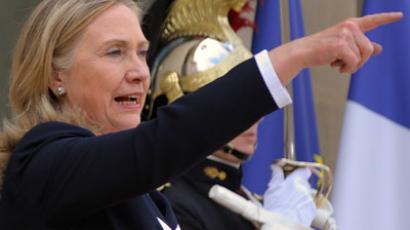
By JP Sottile | News Vandal | June 5, 2014
On May 23, 2012, then-Secretary of State Hillary Clinton went to the Special Operations Forces Industry Conference (SOFIC) trade show in Tampa, Florida to share her vision of “smart power” and to explain the State Department’s crucial role in extending the reach and efficacy of America’s growing “international counterterrorism network.”
First, there is such a thing as a “Special Operations Forces Industry Conference trade show.” Without some keen reporting by David Axe of Wired, that peculiar get-together might’ve flown completely under the radar—much like the shadowy “industry” it both supports and feeds off of like a sleek, camouflaged lamprey attached to a taxpayer-fattened shark.
Second, “special operations” have officially metastasized into a full-fledged industry. United States Special Operations Command (USSOCOM) is located at MacDill Air Force Base in Tampa and, therefore, conveniently located near the special operations trade show, which happened again this year at the Tampa Convention Center. The theme was “Strengthening the Global SOF Network” and the 600,000-square-foot facility was filled with targets of opportunity for well-connected and well-heeled defense contractors.
According to the SOFIC website, this year’s conference afforded attendees “the opportunity to engage with USSOCOM Program Executive Officers, Science and Technology Managers, Office of Small Business Programs and Technology & Industry Liaison Office representatives, and other acquisition experts who will identify top priorities, business opportunities, and interests as they relate to USSOCOM acquisition programs.”
Third, Hillary’s widely-ignored speech marked a radical departure from the widely-held perception that the State Department’s diplomatic mission endures as an institutional alternative to the Pentagon’s military planning. Instead, Secretary Clinton celebrated the transformation of Foggy Bottom into a full partner with the Pentagon’s ever-widening efforts around the globe, touting both the role of diplomats in paving the way for shadowy special ops in so-called “hot spots” and the State Department’s “hand-in-glove” coordination with Special Forces in places like Pakistan and Yemen.
Finally, with little fanfare or coverage, America’s lead diplomat stood before the shadow war industry and itemized the integration of the State Department’s planning and personnel with the Pentagon’s global counter-terrorism campaign which, she told the special operations industry, happen “in one form or another in more than 100 countries around the world.”
If this isn’t entirely unexpected, consider the fact that under then-Secretaries of State Colin Powell and Condoleezza Rice, the State Department fought attempts by the Pentagon to trump its authority around the globe and, as reported by the Washington Post, “repeatedly blocked Pentagon efforts to send Special Operations forces into countries surreptitiously and without ambassadors’ formal approval.”
But that was before Hillary brought her “fast and flexible” doctrine of “smart power” to Foggy Bottom and, according to her remarks, before she applied lessons learned from her time on the Senate Armed Services Committee to launch the first-ever Quadrennial Diplomacy and Development Review, which she modeled on the Pentagon’s Quadrennial Defense Review. That Pentagon-style review spurred the creation of the Bureau of Conflict and Stabilization Operations to “advance the U.S. government’s foreign policy goals in conflict areas.”
According to a Congressional Research Service analysis, the initial intent of the Conflict Bureau was to replace the ineffectual Office of the Coordinator of Reconstruction and Stabilization, which was created in 2004 to help manage “stabilization” efforts in two nations the U.S. was actively destabilizing—Afghanistan and Iraq.
But the new, improved bureau does more than just react to messes made by unlawful invasions or direct costly remediation efforts in war zones—it also collaborates with “relevant partners” in the Department of Defense and NATO “to harmonize civilian and military plans and operations pertaining to conflict prevention, crisis response, and stabilization.”
This integrated relationship between State and Defense was confirmed by U.S. Special Operations chief Admiral William McRaven shortly after Hillary’s speech. When asked about the “unlikely partnership,” McRaven assured DefenseNews that SOCOM has “an absolutely magnificent relationship with the State Department” and that SOCOM doesn’t “do anything that isn’t absolutely fully coordinated and approved by the U.S. ambassador and the geographic combatant commander.”
As David Axe aptly described it in Wired, “Together, Special Operations Forces and State’s new Conflict Bureau are the twin arms of an expanding institution for waging small, low-intensity shadow wars all over the world.”
In fact, during Hillary’s time as America’s chief diplomat, the State Department embraced the shadowy edge of U.S. foreign policy where decision-makers engage in activities that look like war, sound like war and, if you were to ask civilians in places like Yemen and Pakistan, feel a lot like war, but never quite have to meet the Constitutional requirement of being officially declared as war.
The Whole-of-Government Shift
Once upon a time, “low-intensity shadow wars” were the Congressionally-regulated bailiwick of the Central Intelligence Agency. But 9/11 changed everything. However, the excesses of the Bush Administration led many to hope that Obama could and would change everything back or, at least, relax America’s tense embrace of “the dark side.”
Although the new administration did officially re-brand “The War on Terror” as “Overseas Contingency Operations,” Team Obama employed an increasingly elastic interpretation of the 9/11-inspired Authorization for Use of Military Force and expanded covert ops, special ops, drone strikes and regime change to peoples and places well-beyond the law’s original intent, and certainly beyond the limited scope of CIA covert action.
Obama’s growing counter-terrorism campaign—involving, as Secretary Clinton said, “more than 100 countries”—took flight with a new, ecumenical approach called the “Whole-of-Government” strategy. Advanced by then-Secretary of Defense Bill Gates and quickly adopted by the new administration in early 2009, this strategy catalyzed an institutional shift toward inter-agency cooperation, particularly in the case of “state-building” (a.k.a. “nation building”).
During remarks to the Brookings Institution in 2010, Secretary Clinton explained the shift: “One of our goals coming into the administration was… to begin to make the case that defense, diplomacy and development were not separate entities, either in substance or process, but that indeed they had to be viewed as part of an integrated whole and that the whole of government then had to be enlisted in their pursuit.”
Essentially, the Whole-of-Government approach is a re-branded and expanded version of Pentagon’s doctrine of “Full-Spectrum Dominance.” Coincidentally, that strategy was featured in the Clinton Administration’s final Annual Report to the President and Congress in 2001. It defined “Full-Spectrum Dominance” as “an ability to conduct prompt, sustained, and synchronized operations with forces tailored to specific situations and possessing freedom to operate in all domains—space, sea, land, air, and information.”
In 2001, Full-Spectrum Dominance referred specifically to 20th Century notions of battlefield-style conflicts. But the “dark side” of the War on Terror stretched the idea of the battlefield well-beyond symmetrical military engagements. “Irregular warfare” became the catchphrase du jour, particularly as grinding campaigns in Afghanistan and Iraq exposed the reality that the full spectrum still wasn’t enough.
An assessment by the Congressional Research Service identified the primary impetus for the Whole-of-Government “reforms” embraced by Team Obama as the “perceived deficiencies of previous inter-agency missions” during the military campaigns in Afghanistan and Iraq. Those missions failed to address a myriad of problems created—culturally, economically and politically—by the wholesale bombing and occupation of those countries. The Full-Spectrum was half-baked. Lesson learned.
But the lesson wasn’t that the U.S. should avoid intervention, regime change or unleashing nascent civil, ethnic or religious conflicts. Instead, the lesson was that the “Whole-of-Government” must be marshaled to fight a worldwide array of Overseas Contingency Operations in “more than 100 countries.”
This Whole-of-Government shift signaled a renewed willingness to engage on variety of new fronts—particularly in Africa—but in a “fast and flexible” way. With other agencies—like the State Department—integrated and, in effect, fronting the counter-terrorism campaign, the military footprint becomes smaller and, therefore, easier to manage locally, domestically and internationally.
In some ways, the Whole-of-Government national security strategy is plausible deniability writ-large through the cover of interagency integration. By merging harder-to-justify military and covert actions into a larger, civilian-themed command structure, the impact of the national security policy overseas is hidden—or at least obfuscated—by the diplomatic “stabilization” efforts run through the State Department—whether it’s the Conflict Bureau working against Joseph Kony’s Lord’s Resistance Army in Central Africa, “stabilizing” post-Gaddafi Libya or spending $27 million to organize the opposition to Bashar al-Assad’s Syrian regime.
The Pass Key
The cover of diplomacy has traditionally been an effective way to slip covert operators into countries and the State Department’s vast network of embassies and consulates still offers an unparalleled “pass-key” into sovereign nations, emerging hot spots and potential targets for regime change. In 2001, the Annual Report to the President and Congress foresaw the need for more access: “Given the global nature of our interests and obligations, the United States must maintain the ability to rapidly project power worldwide in order to achieve full-spectrum dominance.”
Having the way “pre-paved” is, based on Hillary’s doctrinal shift at State, a key part of the new, fuller-spectrum, Whole-of-Government, mission-integrated version of diplomacy. At the SOFIC’s Special Operations Gala Dinner in 2012, Hillary celebrated the integration of diplomatic personnel and Special Operations military units at the State Department’s recently created Center for Strategic Counterterrorism Communications—a “nerve center in Washington” that coordinates “military and civilian teams around the world” and serves “as a force multiplier for our embassies’ communications efforts.”
As with most doors in Washington, that relationship swings both ways and mission-integrated embassies have served as an effective force multiplier for the Pentagon’s full spectrum of activities, particularly around Africa.
In his 2011 testimony before the House Foreign Affairs Committee Subcommittee on Africa, Deputy Assistant Secretary of State for African Affairs Don Yamamoto noted that State had “significantly expanded the number of DoD personnel who are integrated into embassies across the continent over the past three years,” and read a surprisingly long laundry list of collaborative efforts between State and the United States Africa Command (AFRICOM), including: “reduction of excess and poorly secured man-portable air defense systems (MANPADS); Defense Sector Reform in Liberia, DRC, and South Sudan; counterpiracy activities off the Somali coast; maritime safety and security capacity building; and civil-military cooperation.”
It seems that “civil-military cooperation” is a primary focus of the State Department in Africa. Most notably, Yamamoto told Congress that “embassies implement Department of State-funded Foreign Military Financing (FMF) and International Military Education and Training (IMET) programs, which further U.S. interests in Africa by helping to professionalize African militaries, while also assisting our African partners to be more equipped and trained to work toward common security goals.”
As the ever-vigilant Nick Turse recently reported, U.S. presence on the continent has only grown since that testimony was given in 2011. On TomDispatch.com, Turse identified the infamous attack on Benghazi on September 11, 2012 as the catalyst for “Operation New Normal”—the continent-wide response to, quite ironically, the political potboiler still simmering around Secretary Clinton. Whether or not Congressional Republicans find anything more than incompetence at the root of Benghazi, the U.S. military certainly finds itself in a “new normal” of increased activity in response to the forces—and the weaponry—unleashed by U.S.-led regime change in Libya. According to Turse, the U.S. is “now conducting operations alongside almost every African military in almost every African country and averaging more than a mission a day.”
Those missions are, of course, integrated with and augmented by the State Department’s Conflict Bureau which has used a variety of state-building programs and its diplomatic “pass key” in places like Libya, Nigeria, Kenya, South Sudan, Somalia, Democratic Republic of the Congo and six other African nations, all to develop a growing roster of “host country partners.”
Establishing “host country partners” is the nexus where the State Department, its Conflict Bureau and the AFRICOM meet—implementing the Whole-of-Government strategy in emerging or current conflict zones to fuse a mounting counter-terrorism campaign with stabilization, modernization and state-building initiatives, particularly in oil and resource-rich areas like the Niger River Delta, Central Africa and around AFRICOM’s military foothold on the Horn of Africa.
As Richard J. Wilhelm, a Senior Vice President with defense and intelligence contracting giant Booz Allen Hamilton, pointed out in a video talk about “mission integration,” AFRICOM’s coordination with the Departments of State and Commerce, USAID is the “most striking example of the Whole-of-Government approach.”
And this is exactly the type of “hand-in-glove” relationship Secretary Clinton fostered throughout her tenure at State, leveraging the resources of the department in a growing list of conflict areas where insurgents, terrorists, al-Qaeda affiliates, suspected militants or uncooperative regimes threaten to run afoul of so-called “U.S. interests”.
Ultimately, it became a hand-in-pocket relationship when Clinton and Defense Secretary Gates developed the Global Security Contingency Fund (GSCF) to “incentivize joint planning and to pool the resources of the Departments of State and Defense, along with the expertise of other departments, to provide security sector assistance for partner countries so they can address emergent challenges and opportunities important to U.S. national security.”
Although he’s been criticized as feckless and deemed less hawkish than Secretary Clinton, President Obama’s newly-proposed Counterterrorism Partnership Fund (CTPF) is the logical extension of the Clinton-Gates Global Security Contingency Fund and epitomizes the Whole-of-Government shift.
The $5 billion Obama wants will dwarf the $250 million pooled into the GSCF and will, the President said at West Point, “give us flexibility to fulfill different missions including training security forces in Yemen who have gone on the offensive against al Qaeda; supporting a multinational force to keep the peace in Somalia; working with European allies to train a functioning security force and border patrol in Libya; and facilitating French operations in Mali.”
That “flexibility” is exactly what Hillary Clinton instituted at State and touted at the SOFIC conference in 2012. It also portends a long-term shift to less invasive forms of regime change like those in Yemen, Libya, Syria and Ukraine, and an increased mission flexibility that will make the Authorization for the Use of Military Force functionally irrelevant.
Normalizing the War on Terror
The ultimate outcome of this shift is, to borrow from Nick Turse, yet another “new normal”—the new normalization of the War on Terror. What the adoption of the Whole-of-Government/mission integration approach has done is to normalize the implementation of the re-branded War on Terror (a.k.a. Overseas Contingency Operations) across key agencies of the government and masked it, for lack of the better term, under the rubric of stabilization, development and democracy building.
It is, in effect, the return of a key Cold War policy of “regime support” for clients and “regime change” for non-client states, particularly in strategically-located areas and resource-rich regions. Regimes—whether or not they actually “reflect American values”—can count on U.S. financial, military and mission-integrated diplomatic support so long as they can claim to be endangered… not by communists, but by terrorists.
And because terrorism is a tactic—not a political system or a regime—the shadowy, State Department-assisted Special Ops industry that fights them will, unlike the sullen enthusiasts of the Cold War, never be bereft of an enemy.
A new take on land reform in Zimbabwe
IRIN | February 5, 2013
LONDON/HARARE – More than 10 years after the chaotic and often violent farm invasions that accompanied Zimbabwe’s fast-track land reform programme, a new book argues that the redistribution programme has dramatically improved the lives of thousands of smallholder farmers and their families.
Starting in 2000, the government implemented an initiative to acquire 11 million hectares of white-owned farmland and redistribute it on a massive scale; the programme was often carried out in the form of farm invasions led by frustrated war veterans and supporters of President Robert Mugabe. By its conclusion, only 0.4 percent of farmland remained in the hands of white commercial farmers, and smallholder farmers dominated the agricultural sector.
The land reform programme was followed by years of drought, hyperinflation and an economic meltdown.
Thirteen years later and more than 8,000km away, it still raises strong emotions. At a recent event hosted by London’s Chatham House at which authors of the new book, Zimbabwe Takes Back Its Land, defended their work, the hall was packed, and a polite but persistent group of anti-Mugabe protesters occupied the pavement outside.
The book avoids passing judgement on the often violent manner in which the programme was executed. “This is not a book about what might have been, could have been, or should have been,” write authors Joseph Hanlon, Jeanette Manjengwa and Teresa Smart. Instead, it focuses on the results of a study they carried out in Mashonaland, a region of northern Zimbabwe covering three provinces, which found that many of the ‘fast-track’ farmers are faring much better than has been widely assumed.
Despite receiving very little government assistance, “we saw that these farmers had a real passion for farming. We found that farmers are making investments, building houses and barns… and buying farm implements,” said Manjengwa. “They are making the land their own, and they are becoming serious commercial farmers.”
Finding success
When Samson Pfumo, a 52-year-old teacher from Harare, applied for and received a 60-hectare plot in Marondera District through the land redistribution programme, his expectations were low.
“My brother, a war veteran, encouraged me to apply to the government for a piece of land, but I was pessimistic because of the controversy that surrounded the land reform programme,” Pfumo told IRIN. “When I got an offer letter for the plot [in 2005], I only set up a small mud-and-dagga [hut] and hardly visited the farm.”
When the economy started improving in 2009, after the formation of a coalition government, Pfumo developed a keener interest in farming and started raising pigs. A year later, he had 60 pigs, some of which he sold to buy farming implements and to start growing maize for feed.
Today, he has five large pig pens housing more than 300 pigs, which he periodically slaughters for sale, with each pig fetching an average of US$150. He is also rearing about 500 chicks for sale and is considering venturing into tobacco farming after noting that many resettled farmers have been making good profits from the crop.
“I managed to buy a truck to ferry meat to my clients and a luxury car. My two sons are now studying at reputable universities in South Africa because I can afford it, thanks to the piggery project,” said Pfumo, who has left teaching and now lives on the farm with his wife and mother.
Controversial progress
Manjengwa and her colleagues found that even the less ambitious among the new farmers surveyed, who mainly received smaller plots of five or six hectares, had greatly improved their standard of living. After being mostly poor, landless and unemployed prior to resettlement, virtually all of them were able to grow enough food for their families, and to sell the surplus to pay for their children’s school fees. But many were doing much better than that, producing significant quantities of maize, tobacco and other crops for sale, and building up capital in the form of livestock, farm buildings and equipment. They were also starting to employ labour.
The issue of labour is contentious because so many farm workers lost their jobs and their homes when the old white-owned farms were broken up; some are still homeless and unemployed. However, Hanlon, Manjengwa and Smart estimate that around 550,000 family members and 350,000 paid labourers now work full-time on land that previously employed 170,000 workers.
Charles Taffs, president of Zimbabwe’s Commercial Farmers’ Union, reminded those at the meeting at Chatham House that the workers now being hired are not the same ones who were driven off the commercial farms. He also asserted that the figures presented in the study did not add up.
Zimbabwe’s agricultural production experienced a dramatic drop following the upheavals of 2000, but according to the authors, it is now returning to the levels of the 1990s. This is despite the fact that many rely on a much more labour-intensive form of farming than that used by the earlier white commercial farmers.
The authors also point out that, although many of the white-owned commercial farms were efficient and productive, many others were struggling and had far more land than they could use; some of the most fertile land in the country had gone uncultivated. The new smallholders have brought much of that unused land into cultivation.
Dilemma
Manjengwa and her colleagues are not the first to suggest that Zimbabwe’s controversial land reform programme has achieved a number of positive results. A 10-year study of land reform in Masvingo Province, led by Ian Scoones from the Institute of Development Studies at the University of Sussex and published in 2010, challenged a number of the “myths” surrounding fast-track land reform, finding that many of the 400 households sampled were employing labour and expanding their farming operations.
“The suggestion that the fast-track land reform programme was not an unmitigated disaster presents dilemmas about whether to accept this growing body of evidence and risk endorsing the methods used to achieve the asset transfer,” commented Admos Chimhowu of Manchester University’s Institute for Development Policy and Management, who pointed out that neighbouring South Africa has yet to find a solution to its land reform challenges.
Featured Video
Macgregor: We Haven’t Seen the Worst of the Iran War Yet
or go to
Aletho News Archives – Video-Images
From the Archives
15 Saudi ‘hijackers’ were CIA agents working for US: Scholar
Press TV – April 13, 2016
Fifteen of the 9/11 “hijackers” from Saudi Arabia were CIA agents working for the United States government, which was seeking to destroy the Middle East for Israel and to double the American military budget, says Dr. Kevin Barrett, an American academic who has been studying the events of 9/11 since late 2003…. continue
Blog Roll
 Aletho News
- Iran’s Plan to Shut Down AI in the Persian Gulf
- Israel seeks ‘compensation’ from Washington over Saudi F-35 sale
- Saudi crown prince seeks dialogue with Ansarullah after Yemeni blows: Report
- Damascus rejects Saudi request for Syrian fighters to counter Yemen: Report
- South Korea says will not send troops to join terrorist US war on Iran
- Russia Just Struck the Eyes of NATO’s War Machine in Ukraine
- Russia summons UK charge d’affaires over Kiev drone support
- NATO member warns bloc seeking pretext for war with Russia
- Macgregor: We Haven’t Seen the Worst of the Iran War Yet
- ‘We are not like everyone else’ laws that bind other nations do not apply to Israel, says Likud lawmaker
- If Americans Knew
- Debunking The Claim That Macklemore Has A “History Of Antisemitism”
- CPJ demands release of arrested Palestinian-US journalist near Bethlehem
- Robert Kraft: The Billionaire Friend of Netanyahu Pulling The Strings Behind the Macklemore/Ed Sheeran Blow Up
- Columbia Administered Fund Gives Big Money to Pro-Israel Groups
- Deportation Case of Palestinian Activist Salah Sarsour Tests First Amendment
- ‘We Will Not Forget’: Palestinians Mark 44 Years since Sabra and Shatila
- Why do we let Zionists decide what we can and can’t say?
- US welcomes Israeli, Iranian delegations to UN, but not Palestinians – Daily Update
- Biden’s Genocide Accomplices Targeted by New Accountability Campaign
- AIPAC’s Network Has Already Spent $67.2 Million to Shape the Midterm Elections
- No Tricks Zone
- New Study: ‘Global Drought Shows No Detectable Recent Acceleration Under Climate Warming’
- Economic Masterminds: German Socialists Suggest Taxing Productivity Gains Stemming From Using AI
- The South China Sea Has Not Been Cooperating With The Climate Change Narrative
- Energy Crisis: Germany Enters Heating Season With Historically Low Gas Reserve Fill Levels
- New Study: The Antarctic Ice Sheet Gained Mass From 2020-2024 Due To Staggering Snow And Ice Accumulation
- Study: Ocean Heating Rates From Thousands Of Years Ago ‘Dwarf’ Modern Ocean Heating Rates
- Climate Extremists Target, Attack Large-Scale Power Grid Infrastructure In Germany!
- New Study: Antarctic Ice Melt Has Contributed Less Than 1 Centimeter To Sea Level Rise In The Last 30 Years
- Fear Of Debate: Alarmist German Climate Scientist Calls On Mainstream Media To Discredit Skeptic Voices
- End-Of-August Arctic Sea Ice Extent Hasn’t Fallen In 20 Years, Official Data Show!
 Aletho News