Harvest of hardship: Yala Swamp land grab destroys Kenyan farmers’ livelihoods
GRAIN | October 23, 2014
Dominion Farms arrived in Kenya’s Yala Swamp basin in 2004 with big promises. The company claimed it would turn a defunct state demonstration farm into a modern rice plantation, provide locals with good jobs, and build hospitals and schools. The American owner of the company, Calvin Burgess, presented himself as a ‘man of God’, on a mission to bring US-style progress to Africa. The locals, sold on this grand vision, decided – with some hesitation and dissent – to allow Dominion to farm on 3,700 ha of their lands.
But a decade later, the communities have harvested nothing but hardship.
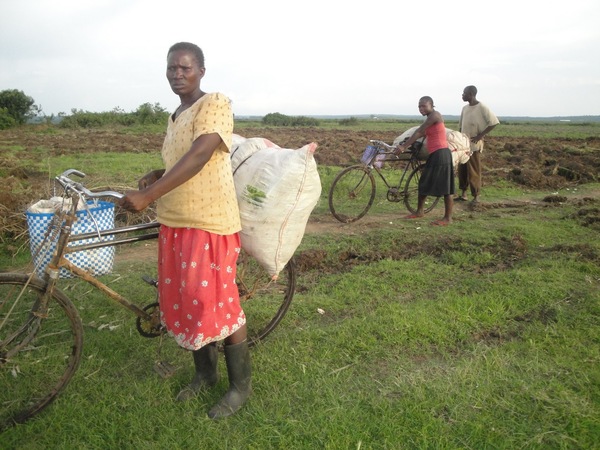
Yala Swamp (Photo: Janak Communications)
“When Burgess came, we did not object to him taking the lands that had already been allocated to the Government years before for the development of an experimental farm,” says Erastus Odindo, a local farmer. “But Dominion Farms has put a fence around much more land than that. The company has taken over all of our community lands without our consent and blocked our access to water.”
Odindo and other local farmers lost nearly all of the lands that they use for grazing their cattle.
“Burgess mocked our farming methods and said we should abandon our traditional cattle breed because it was backwards,” says Odindo. “But now he’s put a fence around our grazing lands and is using the lands for his own local cattle. We are losing doubly because he then sells the cattle on the local market and undercuts us.”
The agreements that Dominion Farms signed with local authorities were for a large scale rice farm. But the company has also gone into cattle, vegetables, bananas and fish.
“The company produces and sells the same foods we local farmers produce,” says Odindo. “First Dominion took our lands and water away from us, and now it is taking our markets. And they are not doing agriculture in a more efficient way than us local farmers. All the machines they have are just for making noise.”
Dominion’s rice farm now extends right up to the edge of Odindo’s village. “When the company sprays pesticides by plane, it comes directly into our homes, poisoning people and contaminating our water supply,” he says. “Workers also face regular exposure to pesticides.”
The local communities accuse Dominion of polluting their soil, water and air, and of badly damaging the area’s biodiversity. They say that it is now difficult to access clean water because of the pollution by pesticides and chemical fertilisers, and that this is damaging the health of mothers and children.
Odindo says that the company’s promises of good jobs have also proven to be a mirage. Most workers are employed on a casual basis, with only a few watchmen hired as permanent staff. Their pay is irregular and sometimes late. “The company hasn’t been paying wages over the past two months and people have been wondering if it’s in financial problems,” says Odindo.
But Dominion still seems intent on grabbing more lands. Having already taken control of all the lands collectively managed by the communities, the company is now aggressively pursuing deals with private land holders. Odindo says that they believe that Dominion is working with Kenyan millionaires to secure land for large agriculture projects, such as a sugar cane plantation that the company is in the initial stages of implementing.
Meanwhile Dominion Farms is also pursuing a new project for a rice plantation in Taraba State, Nigeria, that would be several times the size of its Yala Swamp venture. Odindo hopes that the communities in Nigeria can learn from what his community has gone through and not be duped by Dominion’s promises.
For further information, please contact:
Erastus Odindo: erastusodindo@yahoo.com
Chris Owalla: owallac@ciagkenya.org
(Thanks to Chris Owalla of CIAG-Kenya for his help with this interview)
Obama’s Ebola Czar Thinks There’s Too Many People in Africa
Administration hires another overpopulation fanatic
By Paul Joseph Watson | Infowars | October 21, 2014
President Barack Obama’s new ‘Ebola Czar’ Ron Klain is an enthusiastic advocate of population control who thinks that there are too many people in Africa.
Klain’s role in overseeing the United States’ response to a virus that has killed thousands of Africans and threatens to infect up to 10,000 a week by December 1st is somewhat disconcerting given his views on overpopulation.
In a recent interview, Klain said the top leadership issue challenging the world today was “how to deal with the continuing growing population in the world” including “burgeoning populations in Africa and Asia.”
Critics have attacked Obama’s decision to appoint Klain as a political smokescreen, pointing out that the former Chief of Staff to Al Gore has no medical experience or expertise.
Although Klain is by no means championing Ebola as a means of reducing world population, other prominent individuals have done precisely that – most notably award-winning Texas scientist Dr. Erik Pianka, the UT professor who in 2006 advocated the use of weaponized airborne Ebola as a means of wiping out nine tenths of the earth’s population to save the planet from humanity’s wrath.
The Obama administration’s link to authoritarian ideas about population control was firmly established back in 2009 when it was revealed that White House science czar John P. Holdren had co-authored a 1977 book in which he advocated the formation of a “planetary regime” that would use a “global police force” to enforce totalitarian measures of population control, including forced abortions, mass sterilization programs conducted via the food and water supply, as well as mandatory bodily implants that would prevent couples from having children.
Many on the left continue to embrace hysteria about overpopulation, but the figures just don’t back up the hype.
The UN Population Division’s own figures show that by 2020, population is set to stabilize and then drop dramatically after 2050. In reality, underpopulation is going to be the real long term issue.
As the Economist reported, “Fertility is falling and families are shrinking in places— such as Brazil, Indonesia, and even parts of India—that people think of as teeming with children. As our briefing shows, the fertility rate of half the world is now 2.1 or less—the magic number that is consistent with a stable population and is usually called “the replacement rate of fertility”. Sometime between 2020 and 2050 the world’s fertility rate will fall below the global replacement rate.”

Nigeria Announces Truce With Boko Haram
teleSUR | October 17, 2014
The Nigerian military announced on Friday that it reached a ceasefire agreement with the Islamist militant movement, Boko Haram, and that the Nigerian schoolgirls who were kidnapped by Boko Haram will be returned to their families.
Air Chief Marshal Badeh first spoke about the truce after a three day meeting between Nigeria and Cameroon. The BBC is reporting that the negotiations were mediated by Chad.
An official with Nigeria’s security forces told Reuters “Commitment among parts of Boko Haram and the military does appear to be genuine … It is worth taking seriously.”
Boko Haram has not made any statement about a truce.
The school girls were abducted from Chibok, a town in the northeastern state of Borno state, six months ago. Through the efforts of Nigerian women activists, the kidnapping of the girls became an international cause and brought Boko Haram onto the world stage. The Nigerian government has been strongly criticized by local as well as international human rights groups for its “lackluster” efforts to retrieve the girls. The release of the girls will be finalized next week in Ndjamena, Chad’s capital.
The Nigerian government spokesperson said that Boko Haram will not be given any land, but that the national government will not say what compromises it has made toward the militant group.
Boko Haram was founded in 2002 and has been fighting with the Nigerians military since 2009. More than 2,000 civilians have been killed this year in this conflict.
Now Monbiot is smearing the BBC too
By Jonathon Cook | The Blog from Nazareth | October 16, 2014
Recently I criticised Guardian columnist George Monbiot for lavishing the term “genocide denier” on anyone who disagrees with him about the events in Rwanda 20 years ago. I described Monbiot as a “McCarthy of the left”, after he waged a campaign of vilification of prominent dissident intellectuals Ed Herman and David Peterson for seeking to critically re-examine the west’s official narrative about Rwanda – that the Hutu majority alone committed a genocide against the Tutsi minority – and questioning whether Rwanda’s current Tutsi president, Paul Kagame, and his RPF forces were not also deeply complicit in the slaughter.
Monbiot’s witch-hunt has also targeted others on the left, such as Noam Chomsky, who supported Herman and Peterson’s right to engage in the critical study of what they call the “politics of genocide”.
Monbiot’s efforts to silence these critical voices on the left was thrown a curveball this month when the BBC, one of the biggest enforcers of official narratives, broadcast a programme, Rwanda’s Untold Story, raising many of the same questions as Herman and Peterson. What would Monbiot do?
Well, I have to give him credit: he is consistent. He has joined other journalists, academics and activists deeply committed to the official Rwanda narrative in accusing the BBC and its programme-makers of genocide denial too. In fact, in their letter to the BBC’s director general, Tony Hall, they accuse the BBC team of genocide denial no less than 10 times!
For those who wish to follow the details of this correspondence, the letter from Monbiot et al can be found here. A reply from David Peterson is available here. And there are a further letters to Hall from Theogene Rudasingwa, who was once in Kagame’s inner circle, and from Christopher Black, the barrister for Augustin Ndindiliyimana, a Hutu general acquitted of genocide crimes at the International Criminal Tribunal for Rwanda.
In this increasingly polarised debate, I recommend reading Justin Podur’s interventions. He is a journalist with a deep interest in African politics who has been following both sides of the argument closely. He does not agree with all of Herman and Peterson’s conclusions but, importantly, he argues that the official narrative about Rwanda is inadequate and that it is vital to create space for a respectful debate about what really happened. That stands in stark contrast to Monbiot’s position, and illustrates my reasons for calling his campaign against Herman, Peterson, Chomsky and others McCarthyite.
On his blog, Podur makes the essential point that, despite the repeated smear from Monbiot and his allies in their letter to Hall, the BBC documentary does not deny Rwanda’s genocide: it simply makes the case that Kagame’s role in the genocide, entirely overlooked in the official narrative, needs reassessing and that his current regime, solidly backed by western powers, should be held to account for committing mass murder in neighbouring Congo and for its totalitarian rule inside Rwanda.
By creating a sacred narrative about Rwanda’s genocide, the BBC documentary suggests, Kagame has provided himself with the cover needed to continue with his rule of terror.
Podur quotes from Monbiot et al’s letter: “Denial… ensures the crime continues. It incites new killing. It denies the dignity of the deceased and mocks those who survived.”
And yet, the letter writers [including Monbiot] do all of those things. If the victims of the RPF don’t count, as they do not seem to to these writers, then what is this except denial? All of the victims in Central Africa – of the defeated Rwandan government, of the RPF, of the RPF’s proxies and of their opponents – all deserve to be acknowledged, not denied. The BBC documentary deserved better than shoddy arguments and mudslinging. Kagame is still in power, and the only function of this letter is to provide him with cover. Rather than a letter about ‘genocide denial’, the authors would have been more honest to write a manifesto of unconditional support for Rwanda’s dictator.
Privatized Ebola
By Margaret Kimberley | Black Agenda Report | October 15, 2014
Sierra Leone has waved the white flag in the face of Ebola Virus Disease (EVD). Its meager infrastructure has buckled under the onslaught of a disease which could have been curtailed. The announcement that infected patients will be treated at home because there is no longer the capacity to treat them in hospitals is a surrender which did not have to happen. Not only did Europe and the United States turn a blind eye to sick and dying Africans but they did so with the help of an unlikely perpetrator.
The World Health Organization is “the directing and coordinating authority for health within the United Nations system.” Its very name implies that it takes direction from and serves the needs of people all over the world but the truth is quite different. The largest contributor to the WHO budget is not a government. It is the Bill and Melinda Gates Foundation which provides more funding than either the United States or the United Kingdom. WHO actions and priorities are no longer the result of the consensus of the world’s people but top down decision making from wealthy philanthropists.
The Bill and Melinda Gates Foundation may appear to be a savior when it provides $300 million to the WHO budget, but those dollars come with strings attached. WHO director general Dr. Margaret Chan admitted as much when she said, “My budget [is] highly earmarked, so it is driven by what I call donor interests.” Instead of being on the front line when a communicable disease crisis appears, it spends its time administering what Gates and his team have determined is best.
The Ebola horror continues as it has for the last ten months in Guinea, Liberia and Sierra Leone. The cruelty of the world’s lack of concern for Africa and all Africans in the diaspora was evident by the inaction of nations and organizations that are supposed to respond in times of emergencies. While African governments and aid organizations sounded the alarm the WHO did little because its donor driven process militates against it. The world of private dollars played a role in consigning thousands of people to death.
Critics of the Gates Foundation appeared long before this current Ebola outbreak. In 2008 the WHO’s malaria chief, Dr. Arata Kochi, complained about the conflicts of interest created by the foundation. In an internal memo leaked to the New York Times he complained that the world’s top malaria researchers were “locked up in a ‘cartel’ with their own research funding being linked to those of others within the group.” In other words, the standards of independent peer reviewed research were cast aside in order to please the funder.
Private philanthropy is inherently undemocratic. It is a top down driven process in which the wealthy individual tells the recipient what they will and will not do. This is a problematic system for charities of all kinds and is disastrous where the health of world’s people is concerned. Health care should be a human right, not a charity, and the world’s governments should determine how funds to protect that right are spent. One critic put it very pointedly. “…the Gates Foundation, Bill & Melinda Gates, do not believe in the public sector, they do not believe in a democratic, publically owned, publically accountable system.”
There is little wonder why the Ebola outbreak caught the WHO so flat footed as they spent months making mealy mouthed statements but never coordinating an effective response. The Gates foundation is the WHO boss, not governments, and if they weren’t demanding action, then the desperate people affected by Ebola weren’t going to get any.
Privatization of public resources is a worldwide scourge. Education, pensions, water, and transportation are being taken out of the hands of the public and given to rich people and corporations. The Ebola crisis is symptomatic of so many others which go unaddressed or improperly addressed because no one wants to bite the hands that do the feeding.
The Bill and Melinda Gates Foundation has pledged an additional $50 million to fight the current Ebola epidemic but that too is problematic, as Director General Chan describes. “When there’s an event, we have money. Then after that, the money stops coming in, then all the staff you recruited to do the response, you have to terminate their contracts.” The WHO should not be lurching from crisis to crisis, SARS, MERS, or H1N1 influenza based on the whims of philanthropy. The principles of public health should be carried out by knowledgeable medical professionals who are not dependent upon rich people for their jobs.
The Gates are not alone in using their deep pockets to confound what should be publicly held responsibilities. Facebook founder Mark Zuckerberg announced that he was contributing $25 million to fight Ebola. His donation will go to the Centers for Disease Control Foundation. Most Americans are probably unaware that such a foundation even exists. Yet there it is, run by a mostly corporate board which will inevitably interfere with the public good. The WHO and its inability to coordinate the fight against Ebola tells us that public health is just that, public. If the CDC response to Ebola in the United States fails it may be because it falls prey to the false siren song of giving private interests control of the people’s resources and responsibilities.
Margaret Kimberley can be reached via e-Mail at Margaret.Kimberley(at)BlackAgendaReport.com.
Kissinger Planned Attacks on Cuba

Secretary of State Henry Kissinger. (Photo: Gerald Ford Library)
National Security Archive | October 1, 2014
Secretary of State Henry Kissinger ordered a series of secret contingency plans that included airstrikes and mining of Cuban harbors in the aftermath of Fidel Castro’s decision to send Cuban forces into Angola in late 1975, according to declassified documents made public today for the first time. “If we decide to use military power it must succeed. There should be no halfway measures,” Kissinger instructed General George Brown of the Joint Chiefs of Staff during a high-level meeting of national security officials on March 24, 1976, that included then Secretary of Defense Donald Rumsfeld. “I think we are going to have to smash Castro,” Kissinger told President Ford. “We probably can’t do it before the [1976 presidential] elections.” “I agree,” the president responded.
The story of Kissinger’s Cuban contingency planning was published today in a new book, Back Channel to Cuba: The Hidden History of Negotiations Between Washington and Havana, co-authored by American University professor William M. LeoGrande and Peter Kornbluh who directs the National Security Archive’s Cuba Documentation Project. Research for the book, which reveals the surprising and untold history of bilateral efforts towards rapprochement and reconciliation, draws on hundreds of formerly secret records obtained by the authors. The documents detailing Kissinger’s Cuban contingency planning in 1976 were obtained by Kornbluh through a Freedom of Information Act request to the Gerald R. Ford Presidential Library.
According to the book, Kissinger’s consideration of open hostilities with Cuba came after a protracted effort of secret diplomatic talks to normalize relations — including furtive meetings between U.S. and Cuban emissaries at La Guardia airport and an unprecedented three-hour negotiating session at the five-star Pierre Hotel in New York City. Cuba’s efforts at supporting the anti-colonial struggle in Africa, the authors write, “was the type of threat to U.S. interests that Kissinger had hoped the prospect of better relations would mitigate.”
The book describes Kissinger as “apoplectic” with Castro — in oval office meetings Kissinger referred to the Cuban leader as a “pipsqueak” — for Cuba’s decision to deploy thousands of soldiers to Angola to assist the Popular Movement for the Liberation of Angola (MPLA) party of António Agostinho Neto against attacks from insurgent groups that were supported covertly by the United States and apartheid regime of South Africa. Concerned that Castro would eventually broaden his military incursion beyond Angola, Kissinger counseled Ford that they would have to “crack the Cubans.” “If they move into Namibia or Rhodesia, I would be in favor of clobbering them,” Kissinger told the president, according to a March 15, 1976, Oval Office memorandum of conversation.
In the March 24 meeting with an elite national security team known as the Washington Special Actions Group, Kissinger expanded on the domino scenario. “If the Cubans destroy Rhodesia then Namibia is next and then there is South Africa,” Kissinger argued. To permit the “Cubans as the shock troops of the revolution” in Africa, he argued, was unacceptable and could cause racial tensions in the “Caribbean with the Cubans appealing to disaffected minorities and could then spillover into South America and even into our own country.”
Moreover, the lack of a U.S. response to the global exercise of military power by a small Caribbean island nation, Kissinger feared, would be seen as American weakness. “If there is a perception overseas that we are so weakened by our internal debate [over Vietnam] so that it looks like we can’t do anything about a country of eight million people, then in three or four years we are going to have a real crisis.”
Drafted secretly by the Washington Special Actions Group in April 1976, the contingency plans outlined punitive options that ranged from economic and political sanctions to acts of war such as mining Cuba’s harbors, a naval quarantine, and strategic airstrikes “to destroy selected Cuban military and military-related targets.” The contingency planners warned Kissinger, however, that any act of aggression could trigger a superpower confrontation. Unlike the 1962 missile crisis, stated one planning paper, “a new Cuban crisis would not necessarily lead to a Soviet retreat.”
Indeed, “a Cuban/Soviet response could escalate in areas that would maximize US casualties and thus provoke stronger response,” Kissinger’s national security advisers warned. “The circumstances that could lead the United States to select a military option against Cuba should be serious enough to warrant further action in preparation for general war.”
Back Channel to Cuba was released today at a press conference at the Pierre Hotel, the site of the first official secret meeting to normalize relations between the United States and Cuba in July 1975. The authors suggested that the history of such talks, and the lessons they hold, remain especially relevant at a time when both President Obama and President Raul Castro have publicly declared the urgency of moving beyond the legacy of perpetual hostility in U.S.-Cuban relations.
Document 1: Memorandum of Conversation, February 25, 1976
During a conversation with President Ford in the Oval Office, Secretary of State Kissinger raises the issue of Cuba’s military incursion into Angola, implying that Latin American nations are concerned about a “race war” because of Cuba’s efforts in Africa. “I think we are going to have to smash Castro. We probably can’t do it before the elections.” The president responds, “I agree.”
Document 2: Memorandum of Conversation, March 15, 1976
In another Oval Office conversation, Kissinger raises the Cuban military involvement in Africa and expresses concern that Castro may deploy troops elsewhere in the region. “I think sooner or later we have to crack the Cubans … I think we have to humiliate them.” He continues to argue that, “If they move into Namibia or Rhodesia, I would be in favor of clobbering them. That would create a furor … but I think we might have to demand they get out of Africa.” When President Ford asks, “what if they don’t?” Kissinger responds, “I think we could blockade.”
Document 3: Washington Special Actions Group Meeting, Cuba, March 24, 1976
Kissinger convenes The Washington Special Actions Group-a small elite team of national security officials-on March 24 to discuss a range of options and capabilities to move against Cuba. “We want to get planning started in the political, economic and military fields so that we can see what we can do if we want to move against Cuba,” he explains. “In the military field there is an invasion or blockade.” Kissinger shares his domino theory of Cuban military involvement in the region. “If the Cubans destroy Rhodesia then Namibia is next and then there is South Africa. It might only take five years,” Kissinger argues. In discussing military options, he states, “if we decide to use military power it must succeed. There should be no halfway measures – we get no reward for using military power in moderation.” Kissinger orders the group to secretly draw up plans for retaliation if Cuban troops go beyond Angola.
Document 4: Cuban Contingency Plan Summary, (ca. April 1976)
This document is a summary of the Cuban Contingency survey considering the possible U.S. reactions to continued Cuban and USSR “Angola style” intervention. The summary notes that the U.S. is already engaging in some efforts to dissuade further intervention through “public warnings, signals to the USSR, changes in our African policy and some measures designed to isolate Castro.” While any U.S. response will affect U.S.-Soviet relations, “It is easier to bring pressure on Cuba, as the closer and weaker partner in a tightly interwoven relationship, than on the Soviet Union.”
Document 5: Cuban Contingency Plan Paper 1, (ca. April 1976)
According to this lengthy contingency planning paper, the objective of these plans is to prevent a pattern in which Cuba and the USSR “arrogate to themselves the right to intervene with combat forces in local or regional conflicts.” The contingency plan outlines four courses of action that vary on a scale of seriousness for deterring continued Cuban intervention, including: political pressure, actions against the USSR, a scenario of actions (combining political, economic and military measures), and military steps. Any actions taken towards Cuba could spur greater tension with the USSR. “In short, confronting Cuba — the weaker partner — is an obvious step toward confronting the USSR.” Political measures are presented as the best option for dissuading Cuba because of the increased chances of a U.S.-Cuban “incident” stemming from military actions. Along with the possibility of an incident, this document notes that “one of Cuba’s main foreign policy objectives has been to normalize relations with the countries of this hemisphere.”
The document outlines the option for a quarantine. As Cuba is highly dependent on imports and foreign military equipment (from the USSR), especially by sea, the U.S. would be able to exacerbate Cuba’s greatest vulnerability. On that same theme, the paper points to the U.S. base at Guantanamo as the greatest vulnerability for a Cuban response to any U.S. military actions. Other military steps outlined in the plans include mining Cuban ports and conducting punitive strikes against selected targets.
Document 6: Cuban Contingency Plan Paper 2, (ca. April 1976)
This paper covers several categories of U.S. actions against Cuba: deterrence, pressure to cease and desist, interdiction of Cuban action under way, and retaliation. Any form of deterrence taken by the U.S. would have to be “predicated on a willingness to take some action if the deterrence failed.” However, and reiterated once again, any action taken to confront Cuba would also incite a confrontation with the USSR. The possible military measures presented include three forms of quarantine (selected war materiel, POL imports, maritime blockade excluding food and medicine), mining Cuban ports, and punitive airstrikes on selected targets.
The document notes two important ambiguities — the role of Cuban military involvement in Africa and the threshold to determine the U.S. response to a Cuban provocation. “In sum, there is a good chance the US will be confronted by an ambiguous situation, in which Cuban intervention is not clearly established.” As well, there is “no precise threshold” which would determine the U.S. response, except to state that the threshold would be low if Cuban action were directed against the US or its territories (Puerto Rico), higher in the Caribbean and Latin America, and highest in Africa.
The document states that “we should further make it clear that we are not reverting to the shenanigans of the early 1960’s” and that the U.S. is not violating any international agreements. While the Soviets in 1970 indicated that they regarded the 1962 U.S.-Soviet agreement as still in force, the “failure of the Cubans to permit the UN supervision renders the US pledge technically inoperative.”
Document 7: Kissinger Aide-Memoire to Cuba, January 11, 1975
This conciliatory message drafted by an aide to Kissinger, and approved by the Secretary of State, was given to the Cuban side at the first meeting between U.S. and Cuban representatives, which took place at a cafeteria in La Guardia airport. “We are meeting here to explore the possibilities for a more normal relationship between our two countries,” it begins. The objective is to “determine whether there exists an equal determination on both sides to settle the differences that exist between us.” While the ideological differences are wide, Kissinger expresses hope that such talks will “be useful in addressing concrete issues which it is in the interest of both countries to resolve.” As a gesture to the Cubans, the U.S. will permit Cuban diplomats (accredited to the UN) to travel from New York to Washington and may begin granting additional visas to Cubans for cultural, scientific and education meetings. For Kissinger, “no purpose is served in attempting to embargo ideas.”
Document 8: Memorandum for the Secretary, Meeting in New York with Cuban Representatives, January 11, 1975
In a briefing paper on the first secret meeting at La Guardia airport, Kissinger’s aide Lawrence Eagleburger reports on the tone and exchange of views. The Cubans stated they had no authority to negotiate at that time, but emphasized the importance of removing the embargo as a “sine qua non” for talks. Eagleburger reports that he wanted to “leave both Cubans with a clear understanding that while I had received their message, I was in no way prepared — even unofficially — to accept [removing the embargo] as a precondition to further talks.” Even though at times there was a seemingly difficult tone in the meeting, as Eagleburger explains, “the atmosphere of the meeting was extremely friendly.”
Document 9: Memorandum of Conversation, Pierre Hotel, U.S.-Cuba Meeting, July 9, 1975
This meeting marks the first formal negotiating session to explore normalized relations between the United States and Cuba. To break the ice, Eagleburger suggests that Kissinger is disposed to meet with the Cuban foreign minister during the upcoming UNGA meetings in September. Assistant Secretary of State William D. Rogers begins by explaining that Washington would support lifting multilateral sanctions at the OAS and that the United States would then begin to dismantle the trade embargo, piece by piece, in response to similar gestures from the Cubans. Over the course of the next three hours the U.S. and Cuban officials discuss a series of reciprocal and bilateral improvements of relations, with much of the meeting focused on the Cuban responses to the points raised by the U.S. side. Responding to the piece by piece approach of the U.S., the Cuban representatives reiterate that any precondition for talks remains the lifting of the embargo. “We cannot negotiate under the blockade,” Ramon Sánchez-Parodi argues; “until the embargo is lifted, Cuba and the United States cannot deal with each other as equals and consequently cannot negotiate.”
Correa Denounces US Plans to Intervene in Latin America
teleSUR | September 28, 2014
Ecuador’s President Rafael Correa criticized on Saturday a new U.S. government plan to intervene and weaken Latin American governments.
Correa said that Obama’s intention to create six innovation centers for educating new “leaders” in Latin America, Sub-Saharan Africa, Middle East, and Asia, was clearly intended to interfere with Latin American countries.
“What they want is to intervene in Venezuela, Bolivia, Ecuador, because they say we attack freedom of speech; but go and see for yourselves who are the owners of media in United States,” said Correa.
On Tuesday President Barrack Obama said that his government will support civil society in countries where freedom of speech and association are threatened by the governments.
“We’re creating new innovation centers to empower civil society groups around the world,” said Obama during his speech in a plenary session of the Clinton Open Initiative. “Oppressive governments are sharing worst practices to weaken civil society. We’re going to help you share the best practices to stay strong and vibrant.”
President Correa hit back “This is part of the conservative restoration: the insolent announcement of intervention in other countries.” He added “Let us live in peace and respect the sovereignty of our countries.”
Correa also responded that he will propose the creation of an innovation center in the United States to teach the country “something about human rights,” so they might learn about true democracy and freedom of speech, revoke the death penalty and end the blockade on Cuba.
Correa has accused opposition movements in the country of trying to destabilize his government.
Obama Unleashes Plan to Support ‘Civil Society’ Groups Across the Globe
teleSUR | September 25, 2014
President Barack Obama announced in a speech on Tuesday that the United States would be aggressively funding and supporting “civil society” groups around the globe, calling it a “national security” issue.
“It is precisely because citizens and civil society can be so powerful — their ability to harness technology and connect and mobilize at this moment so unprecedented — that more and more governments are doing everything in their power to silence them,” said Obama at the Clinton Global Initiative’s annual conference in New York.
Obama singled out Venezuela for allegedly “vilifying legitimate dissent” and said that Latin America would host one of the six Regional Civil Society Innovation Centers, a new initiative that seeks to create a global network to create cross-border partnerships. Other regions targeted for these new centers include Sub-Saharan Africa, the Middle East and Asia.
However, U.S. assistance to so-called civil society groups, especially in Latin America, has been marred in controversy, especially with regards to leftist governments.
The United States Agency for International Development (USAID), one of the U.S. bodies that funds and supports “civil society” organizations abroad, funded Venezuelan opposition groups responsible for the 2002 coup attempt against the democratically-elected former president Hugo Chavez.
In 2009, according to USAID documents obtained through the U.S. Freedom of Information Act, the group had also funded local regional governments and municipalities in Bolivia at a time when the government of Evo Morales was dealing with right-wing separatist movements in the eastern part of the country. Morales eventually expelled the agency from the country in 2013, a move followed by Ecuador’s President Rafael Correa later that year. Correa announced in November 2013 that USAID is required to leave the country by the end of this month.
“Partnering and protecting civil society groups around the world is now a mission across the U.S. government,” said Obama.
He ordered, via a presidential memorandum, agencies such as USAID, the Department of State, and Homeland Security, to work more regularly with civil society groups across the globe. … Full article
A scramble for lands
GRAIN | September 22, 2014
With all this money pouring into palm oil companies, lands for oil palm plantations are at an all time premium, wherever they can be found.
Oil palm plantations can, however, only be established on a narrow band of lands in tropical areas that are roughly 7 degrees North or South of the equator and that have abundant and evenly spread rainfall. This makes the potential area for new oil palm plantations rather limited. Plus, most of these lands are composed of forests and farmlands that are occupied by indigenous peoples and peasants, some of whom are already growing oil palms for local markets.
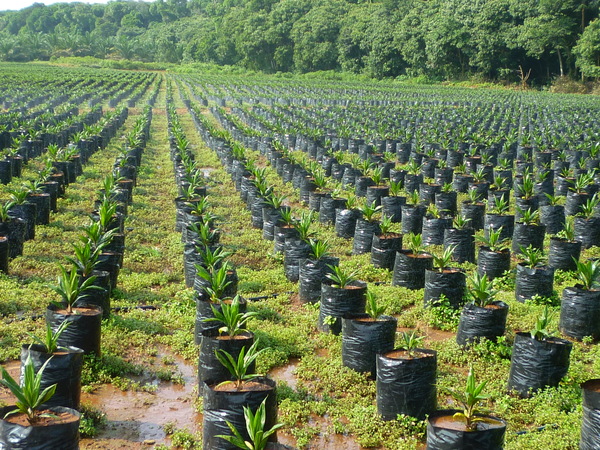
The expansion of oil palm plantations, therefore, depends upon companies getting these people to give up their lands. This is not an easy sell, given the meagre jobs and other benefits that an oil palm plantation generates in comparison with the destruction that it causes and the value that the lands already hold for the people. A typical oil palm plantation requires only one poorly paid worker for every 2.3 hectares, while the surrounding communities pay a high price for the deforestation, water use, soil erosion and chemical fertiliser and pesticide contamination that it causes.1 Companies trying to acquire lands from communities also run into customary forms of land governance that do not allow for a company to buy up land one parcel at a time.
The easy way for companies to get around these hurdles is to ensure that the communities do not even know that their lands have been signed away. It is very common in Africa, for instance, for companies to sign land deals directly with the national government without the knowledge of the affected communities. In many cases, the companies signing the deals are obscure companies registered in tax havens with their beneficial owners hidden from view. The managers of these companies tend to come from the mining sector or other extractive industries with long histories of shady deals in Africa. In Papua New Guinea and Indonesia, land deals are typically brokered between local elites and foreign investors, also often with obscure ownership structures registered in tax havens.
Such small shell companies are not in the business of developing plantations. Once the land contracts are signed, they immediately look to sell out to larger companies with the technical capacity and financial resources to build the plantations. And it is usually at this point that the communities come to understand that their lands have been sold.
Most of these cases eventually lead to a situation where a large multinational plantation company, backed by a national government and a multimillion dollar contract, faces off against a poor community trying desperately to hold onto to the lands and forests it needs to survive. It is incredibly difficult for communities to defend themselves against such powerful forces, and those that do risk the threat of violence, whether by paramilitaries in Colombia, police in Sierra Leone, or the army in Indonesia.
Tax havens and land grabs for palm oil in Africa
The case of Atama Resources Inc
In 2010, the Government of the Republic of the Congo signed away more than 400,000 ha to a Congolese registered company called Atama Plantation whose owners remain unknown.2 In return, this mysterious company promised to develop the Congo Basin’s largest ever oil palm plantation, converting 180,000 ha of mostly forested land in the provinces of Cuvette and Sangha while paying the government a token annual fee of $5 per hectare of planted land. The company was under no obligation to conduct environmental or social impact assessments or to consult with affected populations.
When the contract was signed, Atama Plantation was wholly owned by Silvermark Resources Inc, a company registered in the offshore fiscal paradise of the British Virgin Islands.3 The only publicly available information on Silvermark is that it is owned and directed by two shell companies registered in Brunei. Because of the rules of secrecy governing companies registered in Brunei and the British Virgin Islands, it is impossible to know who the actual owners of these companies are.
In 2011, ownership of Atama Plantation was transferred to a holding company in Mauritius, another fiscal paradise, before finally being sold, in 2012, to Malaysia’s Wah Seong Corporation, a “pipe-coating specialist” company with no history in the palm oil sector that is controlled by Malaysian businessman Robert Tan.4
Whoever the owners of Silvermark are, they pocketed an estimated $25 million, without doing anything more than orchestrate the contract with the Congolese government. And, under the deal with Wah Seong, they still hold 39% of the shares with yet another British Virgin Islands registered company with unknown owners holding the remaining 10%.
The case of Liberian Forest Products Inc. (LFPI)
On August 21, 2006 a little known London minerals exploration company announced to the world that it had taken control of 700,000 ha of land in Liberia– equal to about 7% of the country’s entire land area. The owners of Nardina Resources PLC claimed they had acquired rights over this massive chunk of land through a take over of a Liberian company called Liberian Forest Products Inc. (LFPI). Nardina then changed its name to Equatorial Biofuels PLC and then again to Equatorial Palm Oil Ltd (EPO) to reflect its new mandate as a palm oil company. Meanwhile, the original owners of LFPI walked away with £1,555,000 in shares and cash.
But how did the owners of LFPI get hold of such an obscene amount of territory in a country just emerging from over a decade of civil war? And who were these owners anyway?
EPO’s disclosure documents from its listing on the London AIM stock exchange in 2010 show that the money it paid for LFPI went to two offshore companies, Kamina Global Ltd of the British Virgin Islands and Subsea BV of Liberia, which each had 50% shares of LFPI.
Searches conducted in December 2013 through the company registry in Liberia found no record of registration for a company called Subsea BV. However, the articles for registration for LFPI of November 2006 indicate that LFPI is a Liberian company owned by Tony Smith (50%) and A. Kanie Wesso (50%), who are both trustees for a new company to be formed, called Subsea BV. The sole LFPI director named in the document is Mark Slowen, a British businessman operating from Liberia whose name also turns up as the CEO of SubSea Resources DMCC (Dubai Multi Commodities Centre), a company that acquired mineral rights in Liberia at around the same time.
A second business registry document for LFPI from August 2007 refers to LFPI as a British owned company– with ownership split between Mark Slowen (50%) and Kanie Wesso (50%). Both documents describe LFPI as a company whose sole business is logging.
Subsea BV also turns up in the UK business directory as a director of the G4 Group, which has several business interests in Liberia and is controlled by the notorious financial fraudster Lincoln Fraser.5 The G4 Group’s Liberian subsidiary, G4 WAO Inc., exports rubber tree logs and holds a phosphate exploration concession covering 36,000 ha in Bopolu. According to the company website, G4 WAO “manages in excess of one million acres of the best crop growing conditions in the world” and has partnered with the International Crops Research Institute for the Semi-Arid-Tropics (ICRISAT) “to establish trial sites on various G4 farming enterprises in Liberia, Ghana and Kenya.”6
Kamina Global Ltd, the other company that was paid by EPO for the acquisition of LFPI, is even more opaque. Legislation in the British Virgin Islands does not require companies to disclose their directors or shareholders, so it was not possible to identify the people behind Kamina Global through company records.7
When EPO acquired LFPI, the contract was under examination by Liberia’s Public Procurement and Concession Commission. It would conclude that the agreement contained “gross irregularities and non-compliance with the law” and EPO was forced to renegotiate. LFPI, now under the ownership of EPO, signed a new contract with the government in 2008, this time covering a much reduced but still valuable 55,000 ha area of land in Butaw. With this concession and another of a similar size in Liberia, EPO went public on the London AIM stock exchange, eventually attracting significant investment from the Siva Group, a Singapore-based holding company of Indian billionaire Chinnakannan Sivasankaran, who has quietly amassed one of the world’s largest land banks for oil palm in just a few years. The Siva Group started buying shares of EPO in 2010 and by 2013 it controlled 36.7% of the company and had formed a 50:50 joint venture with EPO based in Mauritius, called Liberian Palm Developments Ltd, that took control of all of EPO’s Liberian land concessions.8
In 2013, the Siva Group would sell its shares in EPO and its Mauritian joint venture to KL Kepong of Malaysia, one of the world’s largest palm oil companies.
Are Chinese companies grabbing land for palm oil?
China runs neck and neck with India for the world’s number 1 palm oil importer. So it would only make sense that Chinese companies would be involved in the current rush for lands for oil palm plantations. But while there have been several reports of massive land grabs for palm oil by Chinese companies, few of these have materialised.
China’s telecom giant ZTE, which has a biofuels division, was said to have signed an agreement with the Democratic Republic of the Congo to develop 2 million hectares of oil palm plantations. The numbers were later scaled down to 100,000 ha and it now seems like the project has been scrapped entirely.
In 2005, Indonesia’s President Yudhoyono announced a plan to develop 1.8 million hectares of land along the Kalimantan border into oil palm plantations. Several Chinese companies including state-owned investment company CITIC Group were offered one third of the area in return for building roads and railways and details were released of a $600 million project between CITIC and Indonesian palm oil giant Sinar Mas to develop a 100,000 ha plantation in the area, with a $380 million dollar loan from the China Development Bank.9 Sinar Mas’ subsidiary Golden Agri Resources is one of the main suppliers of palm oil to China. The plans, however, were never put into operation.
In 2012, Sinar Mas, which is controlled by Indonesia’s Widjaja family, announced a new partnership for oil palm development with China, this time with state-owned China National Offshore Oil Corp. and another Widjaja controlled company, HKC Holdings of Hong Kong. Wang Jun, the former chairman of CITIC Group, is the honorary chairman and a director of HKC. The companies said the project would be rolled out over eight years in Papua and Kalimantan, “where regional governments had reserved about one million hectares of land for it.”
Less than a year later, the Widjajas cemented another major palm oil deal with China. This time in Africa. In March 2013, Golden Agri Resources’ wholly-owned subsidiary Golden Veroleum Limited procured a $500 million term loan facility from the China Development Bank to support the construction of its 220,000 ha oil palm plantation project in LIberia. Typically the CDB only loans to overseas companies or projects when Chinese companies are directly involved.10
For now, China appears to be channeling most of its investments in palm oil through Asian palm oil companies, such as Sinar Mas, that dominate the global palm oil trade. The only Chinese company making significant direct investments in oil palm plantations has so far been China’s state-owned oil company Sinochem. In April 2012, Sinochem paid 193 million euros to acquire 35% of the Belgian plantations company SIAT, which has oil palm plantations in Gabon, Ghana and Nigeria. It also announced that its rubber company in Cameroon would be expanding its plantations and starting to move into palm oil production.
Cash crop | Communities lose out to oil palm plantations
Notes
1 UNEP, “Oil palm plantations: threats and opportunities for tropical ecosystems,” December 2011
2 See the excellent report, “Seeds of Destruction“, Rainforest Foundation UK, 2013
3 Silvermark is owned by Tinaldi Ltd and the Director is Greenland Ltd. Greenland Ltd is reported to be controlled by Benny Lum (who may just be a proxy). It controls Lamington Capital Inc (maybe Singapore) which is also a shareholder in African Petroleum Corporation Limited. It was also used to direct a transfer of funds to a Thai company that is linked to Thaksin. Both Tanaldi Ltd and Greenland Ltd (Brunei) are registered in Brunei to the address of HMR Trust Ltd (which is involved in offshore financial services). Other documents indicate that Tanaldi Limited is owned by Tan Sri Barry Goh Ming Choon of Malaysia and the company acts as a trust for other Malaysian businessmen. Barry Goh controls B&G Capital Resources Berhad (“BCGR”) which he started in 1994. BGCR has served as the principal contractor to Tenaga Nasional Berhad (TNB), one of the largest government link companies in Malaysia
4 Atama Resources Inc was registered in Mauritius in July 2011, as 100% owned by Silvermark. In 2012, Wah Seong purchases 51% of Atama Resources Inc. through its 100% owned subsidiary WS Agro Ind Pte Ltd (Singapore). 39% remains with Silvermark. 10% is taken by Giant Dragon Group (BVI), which is 100% owned by Marston International Ltd. (BVI), who’s director is Eastern Sky Ltd. (Hong Kong). Eastern Sky is a nominee director for several other companies. The Wah Seong Corporation is largely controlled by Malaysian businessman Robert Tan. Marston International Ltd. is the owner of Pergenia International Limited (PIL) incorporated in British Virgin Island on 10 January 2007 and Netstar Holdings Limited registered in BVI in 2003. Marston International Ltd is also the controlling shareholder of PT Jaya Pari Steel Tbk. (Indonesia). Reports from PT Jaya Pari Steel Tbk say that Marston International Ltd is owned by John Matthew Ashwood (50%) and Brian Whiteman and Robinson McKinstry (50%), who seem only to be proxies and John Ashwood likely works for Vistra, an offshore financial company based in Hong Kong. PT Jaya Pari Steel is a company of the Gunawan family of Indonesia, which is involved in finance and steel. The family controls 46 percent of Indonesia’s PT Bank Panin. Marston International Limited is also a major shareholder in another Gunawan steel company, Betonjaya Manunggal Tbk PT, through its ownership of Profit Add Limited (Samoa). Marston International is listed as a shareholder of Best Dragon Enterprises Limited, alongside Tito Sulistio, who is connected to the Suharto family.
5 Fraser is described by Offshore Alert as a “British conman who masterminded the $400 million Imperial Consolidated fraud” which robbed thousands of pensioners and others of their savings when it went bankrupt in 2002.
7 Kamina’s company registration information indicates that it was registered on 17 March 2006 and struck off on 2 November 2009. It’s registered agent is TMF (BVI) Ltd, a company which manages numerous shell companies on behalf of clients around the world. As written on the same document: “Under the BVI Business Companies Act, 2004 companies are not required to file information on Directors and Shareholders of a company.”
8 Siva Group’s 36.7% share of EPO is held by way of several subsidiaries: Biopalm Energy Limited (16.62%), The Siva Group (16.62%) and Broadcourt Investments Ltd (3.46%).(The joint venture is between EPO’s wholly-owned subsidiary Equatorial Biofuels (Guernsey) Limited and Biopalm Energy Limited, a wholly owned subsidiary of Geoff Palm Ltd based in the offshore city of Labuan, Malaysia, and which is owned by Broadcourt Investments Ltd, a British Virgin Islands registered holding company with Chinnakannan Sivasankaran, the Siva Group’s founder and owner, listed as its only director and shareholder since January 2007.
9 “The Kalimantan border oil palm project,” Milieudefensie – Friends of the Earth Netherlands and the Swedish Society for Nature Conservation, 2006; “China’s investment foray into Indonesia,” Asia Sentinel, 6 June 2013
Featured Video
Macgregor: We Haven’t Seen the Worst of the Iran War Yet
or go to
Aletho News Archives – Video-Images
From the Archives
15 Saudi ‘hijackers’ were CIA agents working for US: Scholar
Press TV – April 13, 2016
Fifteen of the 9/11 “hijackers” from Saudi Arabia were CIA agents working for the United States government, which was seeking to destroy the Middle East for Israel and to double the American military budget, says Dr. Kevin Barrett, an American academic who has been studying the events of 9/11 since late 2003…. continue
Blog Roll
 Aletho News
- Iran’s Plan to Shut Down AI in the Persian Gulf
- Israel seeks ‘compensation’ from Washington over Saudi F-35 sale
- Saudi crown prince seeks dialogue with Ansarullah after Yemeni blows: Report
- Damascus rejects Saudi request for Syrian fighters to counter Yemen: Report
- South Korea says will not send troops to join terrorist US war on Iran
- Russia Just Struck the Eyes of NATO’s War Machine in Ukraine
- Russia summons UK charge d’affaires over Kiev drone support
- NATO member warns bloc seeking pretext for war with Russia
- Macgregor: We Haven’t Seen the Worst of the Iran War Yet
- ‘We are not like everyone else’ laws that bind other nations do not apply to Israel, says Likud lawmaker
- If Americans Knew
- Debunking The Claim That Macklemore Has A “History Of Antisemitism”
- CPJ demands release of arrested Palestinian-US journalist near Bethlehem
- Robert Kraft: The Billionaire Friend of Netanyahu Pulling The Strings Behind the Macklemore/Ed Sheeran Blow Up
- Columbia Administered Fund Gives Big Money to Pro-Israel Groups
- Deportation Case of Palestinian Activist Salah Sarsour Tests First Amendment
- ‘We Will Not Forget’: Palestinians Mark 44 Years since Sabra and Shatila
- Why do we let Zionists decide what we can and can’t say?
- US welcomes Israeli, Iranian delegations to UN, but not Palestinians – Daily Update
- Biden’s Genocide Accomplices Targeted by New Accountability Campaign
- AIPAC’s Network Has Already Spent $67.2 Million to Shape the Midterm Elections
- No Tricks Zone
- New Study: ‘Global Drought Shows No Detectable Recent Acceleration Under Climate Warming’
- Economic Masterminds: German Socialists Suggest Taxing Productivity Gains Stemming From Using AI
- The South China Sea Has Not Been Cooperating With The Climate Change Narrative
- Energy Crisis: Germany Enters Heating Season With Historically Low Gas Reserve Fill Levels
- New Study: The Antarctic Ice Sheet Gained Mass From 2020-2024 Due To Staggering Snow And Ice Accumulation
- Study: Ocean Heating Rates From Thousands Of Years Ago ‘Dwarf’ Modern Ocean Heating Rates
- Climate Extremists Target, Attack Large-Scale Power Grid Infrastructure In Germany!
- New Study: Antarctic Ice Melt Has Contributed Less Than 1 Centimeter To Sea Level Rise In The Last 30 Years
- Fear Of Debate: Alarmist German Climate Scientist Calls On Mainstream Media To Discredit Skeptic Voices
- End-Of-August Arctic Sea Ice Extent Hasn’t Fallen In 20 Years, Official Data Show!
 Aletho News