Reflections on MH17
RT Documentary | January 16, 2015
The tragedy of MH17 in which 298 people lost their lives, made the conflict in Ukraine real for many other countries. While the international community awaits the outcome of the crash investigation, speculation in the media continues to fuel the blame game. RTD travels far and wide to interview international experts on what has hindered the investigation, what procedures were needed to collect vital evidence and what might have brought down the ill-fated Boeing 777.
~
OCSE monitor mentions bullet holes in MH17
Original source http://www.cbc.ca/news/world/malaysia… – OCSE monitor Michael Bociurkiw mentions bullet holes in #MH17, not able to find any missile so far.
Why the Secrecy on the Mh17 Investigation?
By JAMES O’NEIL | CounterPunch | December 19, 2014
On 17 July 2014 Malaysian Airlines Flight MH17 en route from Amsterdam to Kuala Lumpur was shot down over the Eastern Ukraine.
Although the precise circumstances were at that point unknown the western media were quick to blame Ukrainian “rebels”. The means by which MH17 was destroyed, the media alleged, was a surface to air BUK missile supplied to the “rebels” by Russia. For a host of reasons it was almost certainly not a BUK missile that caused the crash. The stage was set however, for a demonization of Russia in general as the alleged supplier of the missile, and President Vladimir Putin in particular. The relentless propaganda enforcing this view has continued unabated to this day, although the evidential foundation for the allegations remains at best remote.
The Russians produced an initial denial of involvement. Four days after the tragedy however, as anti-Russian hysteria was escalating to extreme levels, the Russian military held a press presentation. The fact of this presentation was barely reported in the western media. The content, more importantly, was either ignored or misrepresented.
The Russians disclosed, inter alia, their radar and satellite data. These data showed that MH17 had been diverted from its scheduled route so that it flew directly over the war zone in eastern Ukraine. They asked for an explanation but one has never been forthcoming. These data also showed that MH17 had been shadowed during its last minutes by two SU25 fighter jets, a model flown by the Ukrainian air force. Again the Russians asked why this had happened.
The main response was a claim that the SU25 could not fly above 10,000 metres. Not only is this untrue, as an examination of military resources readily demonstrates, but the Wikipedia entry on the SU25 had been altered days before the shoot down to claim that the SU25’s operating ceiling was only 7000 metres. Again the western media ignored this obvious alarm bell.
The Russians further disclosed that at the precise time of the shoot down an American spy satellite was directly overhead the scene and would have recorded the sequence of events. The Russians invited the Americans to share these data with the official investigation that had been launched, but to date the Americans have failed to do so. Again, the western media are singularly incurious as to the reason for this lack of cooperation.
Under IATA Rules, the parties responsible for the investigation would be the Malaysians, as owners of the plane and home country of the airline, and the Ukrainians over whose territory the atrocity occurred. It was the Dutch however, who took the lead role, citing two facts: the plane had departed from Amsterdam; and they had suffered the largest number of their nationals as victims. The Malaysians were initially excluded from the inquiry for reasons that have never been satisfactorily explained. They were finally invited to join the Joint Inquiry on 2 December 2014.
Instead, the initial inquiry group consisted of Ukraine, the Netherlands, Australia and Belgium. The Australians suffered the third largest loss of life but had no standing to be one of the investigatory nations, and certainly less of a claim than the Malaysians. The Australian Prime Minister and some other politicians had been at the forefront of making extreme allegations against Russia and President Putin. Why Belgium was included remains a mystery.
On 8 August 2014 these four investigating nations signed an agreement that the results of the investigation would not be published unless all four countries agreed. This gave one of the prime suspects in the atrocity, Ukraine, an effective veto over any investigations result that attributed blame to them. This is an astonishing situation and probably without precedent in modern air crash investigations.
More significantly however, is that the existence of this secret agreement was not announced by the Australian government, nor to the best of my knowledge has any report about the existence of the agreement or its extraordinary terms, been published in any mainstream publication.
The Dutch magazine Elsevier, under Dutch Freedom of Information laws, sought a copy of the agreement. On 19 November they announced that the request had been refused on the grounds that it “could endanger the relations with other countries involved.”
An Australian citizen (name redacted) wrote to the Minister for Infrastructure and Regional Development (Deputy Prime Minister Warren Truss) seeking a copy of the agreement. By letter dated 15 October 2014 the Department of Foreign Affairs and Trade (DFAT) replied on behalf of the Minister, refusing the requester a copy of the agreement as its contents were “classified.”
The present writer wrote to DFAT on 21 August 2014 seeking a copy of the agreement of 8 August 2014 under the Freedom of Information Act. The department declaimed responsibility and said that they had passed my request on to the Attorney-General’s Department. This was odd, but even odder was advice from the Attorney General that my request had been passed in turn to the Australian Federal Police who were the responsible body.
This must be the first time in Australian history since 1901 that negotiations and agreements between sovereign nations had been conducted on Australia’s behalf by the Federal Police.
On 2 December 2014 the Australian Federal Police finally gave their decision on the FOI request. It was declined on the basis that disclosure of the document (which they acknowledged existed) under section 33 would, or could reasonably be expected to, cause damage to:
(i) the security of the Commonwealth; or
(ii) the defence of the Commonwealth; or
(iii) the international relations of the Commonwealth.
The refusal also relied upon section 37(1)(a) of the Act which exempts a document if it could reasonably be said to prejudice the conduct of an investigation.
Thirdly, the Federal Police relied upon section 37(1) (c) where disclosure could reasonably be expected to endanger the life or physical safety of a person.
The fourth ground of refusal was under section 37(2)(b) which exempts disclosure where it might reasonably be expected to prejudice an investigation by disclosing methods of investigation or detection of unlawful activity.
In the circumstances of this case it is very difficult to see how any of those provisions would apply. The agreement, it should be remembered, is to give any one of the four investigating countries a veto over publication of the results. A final report would be entitled to withhold details of the investigation that would truly prejudice matters of national security.
An investigation of a crash of an aeroplane is however, carried out under IATA Rules and its procedures are well established and well documented. Whose life or safety might be endangered by releasing the agreement is unspecified.
One is left with the conclusion that 33 (iii) is the real ground and the “international relations” referred to are the difficulty Australia and other nations have got themselves into by prematurely blaming Russia when all of the emerging evidence points squarely at Ukraine.
Given the existence of this agreement it is difficult to see how anyone can have any confidence in whatever final report is published by the Dutch. The preliminary report was careful not to apportion blame or even state the cause of the crash other than to say that the plane was hit a by a large number of “high velocity objects” which were undefined.
Another major question is why have the mainstream media kept up a barrage of misinformation up to and including the recent G20 debacle, when they know, or ought to know that the investigation is a sham?
It is also difficult to see how the continued demonization of Russia and Mr Putin for manifestly geo-political reasons (and the probable reasons for the shoot down in the first place) represents any form of justice for the families of the 298 victims and in particular the 37 who were Australian citizens or residents.
It is clear that the Government’s professed support for Security Council Resolution 2116 (2014) for a “full, thorough, and independent international investigation into the incident in accordance with international civil aviation guidelines” is no more than window dressing for a much wider geopolitical agenda.
James O’Neill is a former academic who has practiced as a barrister for the past 30 years. He has a special interest in international human rights issues. He may be contacted at j.oneill@bigpond.net.au
Zionist Attorney-General Refuses to Answer Questions About “Anti-Terrorism” Laws
By Joshua Blakeney | Non-Aligned Media | November 27, 2014
 Recently Israel’s department for her colonies of Australia and Canada dispatched new “anti-terror” legislation which will make it illegal for Australian and Canadian subjects of the Israeli Empire to “condone” so called “terrorism”.
In the above video Australia’s Zionist Attorney-General, George Brandis, can be viewed enabling such farcical anti-free-speech laws to be foisted upon the people of Australia without oversight, by refusing to answer critical questions from senators about the controversial legislation.
That Canada and Australia are governed out of the same colonial office in Tel Aviv was suggested when it was revealed that Prime Ministers John Howard and Stephen Harper had been given the same pro-Iraq-war script to read in 2003 (see below).
US helping Israel boycott Geneva summit on occupied territories – diplomatic sources
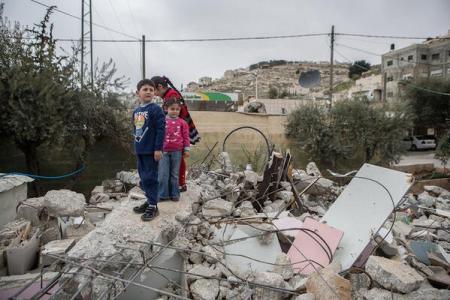
RT | November 27, 2014
Switzerland is under diplomatic pressure from Israel, the US, Canada and Australia, which are trying to prevent an international conference in Geneva from taking place in mid-December on Israel’s occupation of Palestinian territories, Haaretz reports.
Delegations from nearly 200 countries are expected to head to Geneva to discuss the situation in the West Bank, Gaza Strip and East Jerusalem. Yet, according to Haaretz, Israeli and Western diplomats are ready to go for broke to prevent the gathering from taking place.
Switzerland, as the main sponsor of the summit, is bearing the brunt of diplomatic pressure from all sides.
Israeli authorities told the media outlet that Palestinians and Arab states are also pressing Swiss officials to send out letters of invitation to the conference within a matter of days, the Israeli daily reported on Wednesday.
It was in early April when Israel announced plans of constructing 700 new houses in occupied East Jerusalem, a move that pushed Palestinian Authority President Mahmoud Abbas to ask 15 international conventions to join them in the name of the Palestinian state.
One of those was the Fourth Geneva Convention (signed 1949, came into force 1950), which specifically addresses protection of civilians in war zones and territories under military occupation.
Washington finally accepted that its efforts to extend peace talks between Israel and the Palestinians have been torpedoed. Several weeks later, Palestinians and the Arab League sent an official request to Switzerland to hold an international conference of the Fourth Geneva Convention signatory states on the issues of the Israeli occupation of the West Bank and East Jerusalem, together with the damage caused by Israel’s armed forces to civilians in Gaza.
The last time the signatories to the Fourth Geneva Convention gathered in regard to the Israeli-Palestinian conflict was in 2001, after the outbreak of the second intifada. That conference was boycotted by Israel and the United States.
After that summit there have been four fruitless attempts to gather the Fourth Geneva Convention on the issue of Israeli-Palestinian relations. Even the bloody Israeli military Operation Cast Lead in the Gaza Strip in 2009 failed to raise broad international support for holding such a conference, according to the Swiss Foreign Ministry at the time.
The necessity to call the new conference has been not evident this time, too, so Swiss diplomats asked every Fourth Geneva Convention signatory separately whether the time had come to hold a summit.
What the Swiss diplomats have proposed is a three-hour conference at an ambassadorial level, no discussions and no media coverage except for a final press statement. The conference is set to be focused on implementation of the international humanitarian law in troubled Israeli-Palestinian relations.
“We made it clear we didn’t want a political event or debate club, or a conference that would blame or criticize one of the sides,” a Swiss diplomat said.
However small the scale of the proposed event is, Israel strongly objected to it. Israeli diplomats reportedly conducted negotiations in Bern and Geneva, trying to persuade Swiss counterparts to call off the initiative and threatening to boycott it anyway.
“They told us that holding the conference would help a one-sided Palestinian move intended to make Israel look bad and attack it in an international forum,” the Swiss diplomat said.
The US and Canada told Switzerland they are going to boycott the conference, too.
“We strongly oppose the convening of the High Contracting Parties to the Geneva Conventions and have made our opposition unmistakably clear,” a spokesman for the US State Department, Edgar Vasquez, told Haaretz.
It is true that the conference will have no authority to make any binding decisions, yet its work could engender further international criticism of Israel’s settlement policy on the occupied Palestinian territories.
Besides that, once Israeli diplomats received an updated draft of the conference’s proposed contents, they found out that the updated draft text had been phrased in a politicized way, directly naming Israel and going into detail on the issue of West Bank settlements.
Israeli Foreign Minister Avigdor Lieberman has reportedly been ringing colleagues around the globe, attempting to talk them into declaring a boycott to the conference. Part of this work has been delegated to Israeli ambassadors worldwide.
With all due support on the part of the US, Canada and Australia, these efforts are likely to be in vain, and the Swiss diplomacy is decisive to go on with the plan and announce the conference officially soon.
The Fourth Geneva Convention prohibits harming those uninvolved in a conflict, be they civilians, wounded soldiers or POWs, as well as obliging the occupying side to maintain human rights and decent living conditions of an occupied civilian population.
Israel joined the convention, but has never ratified it legislatively. The Israeli government regards the West Bank and East Jerusalem as ‘disputed’, not occupied, areas, therefore considering Israeli settlements as not violating the treaty.
“Security” In the West’s Client States
By ANDRE VLTCHEK | CounterPunch | November 21, 2014
Perhaps you thought that the security at the Atlanta or Newark, or Dallas airports is bad, obnoxious, the worst in the world… Think twice… Of course it all began there, in the United States, from the first glory days of that hypocritical and deranged “War On Terror”: the humiliation of people, especially Arabs, especially Muslims, especially all those who are not white, but eventually everybody, at least to some degree.

But it did not just stay there. The allies joined in almost immediately, and then the ‘client’ states jumped on the bandwagon, competing in tactics and strategies of how most to humiliate those confused and helpless passengers, by censoring internet sites, digging into emails, monitoring mobile phone communications, and relentlessly spying on both citizens and foreigners.
I have travelled all over the world, to some of the most imaginable and unimaginable places. All the while being monitored and harassed, threatened and periodically attacked, even physically, I have also spread many counter-punches: I have observed, recorded, and published, who does what to whom, who is the most diligent, methodical, and ruthless bully?
Unsurprisingly, the toughest surveillance comes from Western allies and ‘client’ states, all over the world – from places that Washington, London and Paris routinely call ‘thriving democracies’.
Countries that have collapsed socially strive to impress their Western neo-colonial masters, by imposing increasingly harsh security and surveillance measures against their own people. At the same time, they are full-heartedly and enthusiastically signing up to the bizarre, ‘War on Terror’. It gives the local rulers many privileges. If they play it right, their gross human rights violations, and even their killing of the opposition, is not scrutinized.
***
When I recently worked in South Africa, I was told that the country is now one of the freest on earth. It has nothing to hide and it is not particularly afraid of scrutiny.
“You can photograph here, whatever you want, and nobody will tell you anything”, many of my South African friends explained to me, in Cape Town, Pretoria, Johannesburg, as well as by those living abroad.
It is true. In fact, after few days there, you can easily forget that there are any restrictions, like a ban on filming or photographing police stations or navy ships. Nobody would ever stop you from taping, for instance, battleships at the Simon’s Town base.
South Africa is a proud BRICS country, a left-wing beacon on the African continent and, together with neighboring Zimbabwe, a target of an aggressive negative Western propaganda campaign.
Just as in South Africa, not once was I stopped from filming or photographing in Zimbabwe. And not once was I intimidated, harassed or humiliated by their immigration or customs at the airports.
That is in stark contrast with the West’s allies on the continent – Rwanda, Uganda, Djibouti, Kenya, Ivory Coast or Senegal, to name just a few.
It is not just that ‘everything is forbidden’ there, but ‘violators’ can easily be arrested, harassed, even ‘disappeared’.
When making my film, “Rwanda Gambit”, about Paul Kagame’s monstrous regime, and about the genocide it had been committing (on behalf of the Western powers) in the Democratic Republic of Congo, I tried to film with a small Leica, at the border between Rwanda and DR Congo, at the Gisenyi/Goma crossing. Within a few seconds later, an enormous Congolese soldier grabbed me and began pulling me towards the border post. I have been arrested in Goma once before, and I knew what it amounts to – what it is to rot in the underground intelligence bunker cut off from the outside world.
I was almost certain that, that time, I would not make it out alive. And so I screamed for help in the direction of the Rwandese soldiers who were watching the scene from the other side of the borderline. It is not that they were really eager to help, but the disappearance of a US citizen, an investigative journalist at that, would be an extra, and unnecessary ‘annoyance’. And so they went to work, grabbing my free hand and pulling me back towards Rwanda. The enormous Congolese man in the end lost, and I survived.
All of this over just a few shots! Nobody would ever even think about preventing me from filming on, say the border between Argentina and Chile, or Vietnam and China!
In Rwanda itself, absolutely everything is forbidden, and everybody snitches on everybody. It is forbidden to photograph the streets, the hospitals, and museums, even the genocide memorial! It is strictly banned to photograph or to film their villages, In order to film military installations or prisons, I had to attach a Drift camera to the undercarriage of my car.
In Rwanda and Uganda, everything is under the surveillance. Walls have ears and eyes, so to speak. It is not like surveillance in London, done with high-tech cameras (although these are also beginning to appear); people simply spy on each other, at an unimaginable rate, and the security apparatus appears to be present absolutely everywhere, omnipresent.
But for the West, that is all fine. Both Rwanda and Uganda are plundering DR Congo of Coltan and uranium. The 10 million lives lost there, appears to be just a token price, and the horrors that are occurring in these countries are just some tiny inconvenient episodes not even worth mentioning in the mainstream press.
Security is ‘needed’, in order to maintain ‘order’ – our order.
The humiliation of travellers at Kigali, Kampala or Nairobi airports is indescribable. It is not about security at all, but about a power game, and plain sadism. In Kigali, there are at least 8 ‘security checks’, in Nairobi 6 to 7, depending on the ‘mood’ at the airport.
Three years ago, on behalf of the West (mainly US, UK and Israel), Kenya attacked the oil-rich part of Somalia, where it is now committing atrocities. Its state apparatus also perpetrated several attacks against its own civilian targets, blaming all of them on the al-Qaida linked movement, al-Shabaab. It was done in order to justify the ‘security measures’.
Now there are metal detectors in front of every department store, hotel or office-building in Nairobi. When I, earlier this year, photographed the entrance to a prison, I was literally kidnapped, thrown into the jail and informed: “We will treat you as a terrorist, as an al-Shabaab member, unless you prove that you are not.”
The slightest argument with the Kenyan military forces, or with the corrupt and outrageously arrogant police, leads to detention. And there are cases of people being harassed, sexually molested, even tortured and killed in detention.
The security forces in East Africa cooperate, as the security forces cooperated in the dark years of the fascist military dictatorships in South America.
As I was walking with my friends through Kampala, a huge lone figure slowly walked towards us.
“That is one of the butchers and he comes from Kenya”, I was told. “He tortures and kills people that pose a danger to this regime… He does things no local person would dare to do. Our countries exchange the most sadistic interrogators; ours go to Kenya, Kenyans come here.”
I recalled that even Paul Kagame, now the President of Rwanda, used to serve as the Chief of the Military Intelligence in Uganda.
Yes, the Newark and Houston airport security is bad, and the surveillance in the West is outrageous, but it is being taken to insane extremes in the ‘colonies’.
In Djibouti, which is basically a military enclave of the French Legionnaires, the US air force and other European armed forces (Somalia, Yemen, Eritrea and Ethiopia are all just a stone-throw away), I once complained at the airport that my passport was being checked twice within a distance of 10 feet. As a result, a huge soldier grabbed me, tore my shirt, threw me against the wall, and then smashed my professional camera against a concrete wall. All this happened in front of the horrified passengers of Kenya Airways. That, I found somehow intolerable. It pissed me off so much that I got up, ready to confront the soldier, no matter what. But the horrified voice of a Kenya Airways’ manager stopped me: “Sir, please leave it at this… They can just kill you, and nothing will happen to them. They can do anything they want!”
In Ivory Coast (Côte d’Ivoire), which is yet another French military dependency, and generally a loyal servant to Western interests in West Africa, ‘security’ is the main excuse for keeping undesirable elements, like myself, away from the country. Earlier this year I embarked on a journey there to investigate the chocolate empire activities of the Ukrainian President Poroshenko. Ivory Coast is the biggest producer of cocoa in the world, and ‘the Chocolate King’ is apparently involved in many unsavory practices there.
The authorities were tipped off in advance that I was coming, and the charade began from the moment I landed. I was ordered to produce my yellow fever certificate, which was inside my bag. As I began searching for it, I was roughly ushered into a small room full of sick people quarantine – and informed that I was to be vaccinated again. I found the certificate just a few seconds later, and went out to present it to the authorities. “Back!” they shouted at me. Wait inside for your turn, and tell the doctor that you have found it. The wait turned out to be 2 hours long. Later, I was told that a visa on arrival is no longer available. For days I had to go to the immigration office, from morning to the evening. For days I was fingerprinted and photographed. I clearly saw that wires were disconnected from their computer, every time my turn came round. “Your fingers are not good for fingerprinting! Go to the hospital and bring a certificate that they are not good!” Going there costs US$100 a time, and another wasted day in Abidjan. The hospital said that my fingers were just fine. I had to bribe them to write that they were not.

The US embassy was clearly aware of what was happening. They even sent an officer to ‘assist me’. I showed him that the wires had been pulled out from the computer. “We cannot interfere in other country’s internal affairs”, he explained.
Then, on the last day, when my visa was finally issued, a lady from the US embassy whispered into the phone: “Well, if you write what you do, you must be ready for the consequences”. ‘Honest person’, I thought.
I am almost ‘embarrassed’ to write this, but I have driven on many occasions, all over China (PRC), around at least 8,000 kilometers, but have never been prevented from photographing or filming anything. I have hours and hours of footage and thousands of photographs from many corners of the nation.
A stark, almost grotesque contrast is India, the ‘largest democracy on earth’, according to the Western assessment.
There, nothing is allowed. Forget about filming the battleships near Mumbai (even the Soviet Union does not care – they would put their battleships on the Neva river in Leningrad during celebrations, for everyone to admire and to photograph them, which I did, as a child, when visiting my grandmother). You cannot even photograph that idiot Clive, inside the Victoria Monument in Calcutta.
In India, surveillance is everywhere. It is the perfect police state.
You need a local SIM card in Beijing? Even in the middle of the night, you just go to any kiosk and buy one, no questions asked, no paperwork.
In India, to get a SIM card is one tremendous saga, monstrous bureaucracy, spiced by demands for all sorts of documents and information.
You want to use the internet at New Delhi airport? You have to provide your name, your telephone number, and your email address! I invent names, like Antonio Mierdez or Amorsita Lopez; sometimes it works, sometimes not. In China, you just stick the front page of a passport onto a scanner, and get password within ten seconds. In South Africa, there is not even need for that – the internet is open and free.
And then, those legendary, those epic security checks in India!
The Indian state appears to be thoroughly paranoid, scared of anyone trying to document the reality.
It has developed an allergy to writers, investigative journalists, film-makers and photographers, especially those that happen to be ‘independent’, therefore ‘unpredictable’ and potentially capable of challenging the clichés fabricated in Washington, London and New Delhi, that depict the country as the ‘largest democracy on earth’.
To fight against such threatening elements, the Indian regime, which consists of the moneyed elites, feudal lords, religious fanatics and the military brass, have become pathologically obsessed with security, with surveillance, with relentless checking on things, and people. I have never witnessed such security zeal, even in countries that are under a direct threat from the West: such as Cuba or China.
Even domestic flights in India, from smaller cities like Varanasi or Jaipur, require an entire chain of security steps. Your passport or ID is checked on at least 10 occasions. As you enter the airport, a few steps later, before you are allowed to check in, when you are checking in, as you are entering the departure area, when you are in the departure area (that one is grand – you are forced to step on a platform and everything is checked), when you are entering the departure gate and when you are leaving it for the plane door. Sometimes there are additional checks. It is all, mostly, very rude.

In Turkey, everything is censored. From my official website to ‘Sitemeter’, even the Hong Kong MTR and Beijing and Shenzhen subway maps (maybe just in case someone wants to compare those pathetic subway developments in Istanbul and Ankara, to those in China).
When I called the guest relations supervisor at the four star ‘Kalyon Hotel’ in Istanbul, where I was staying in November 2014, I was told that she “does not know what internet provider is used by the hotel”, but that censorship is actually part of a “security program”, which in turn is part of “the hotel policy”, or vice versa.
How honest!
She actually kindly suggested that I bring my Mac ‘downstairs’, so the IT manager could “do something with it”. I very politely, declined, remembering an experience two years earlier, at the Sheraton in Istanbul, where the ‘IT manager’ actually installed some spy wear, which totally and immediately corrupted my computer, my email addresses, turning my operating system into something that has since been insisting on functioning almost exclusively in the Turkish language. When I complained over the phone, he, the IT manager, went upstairs, kicked my door, rolled up his sleeves and he let me know that this matter could be settled most effectively, outside the hotel, most likely in the street.
***
It may sound bizarre, but in the countries literally besieged by hostility from the Empire, like Cuba or even North Korea, security appears to be much more lax than in the nations where the elites are terrified of their own poor majority.
I don’t remember going through any security, in order to enter a theatre or a hotel in Havana. In Pyongyang, North Korea, there are no metal detectors at entrances to shopping centers, or subway stations.
It goes without saying that one is monitored more closely by the security cameras and armies of cops in London or New York, than in Hanoi or Beijing.
The most common mode of modern communication – the mobile phone – is regulated much less or monitored in Vietnam, China or Venezuela, than in India, Japan, or Europe. In fact, Japan recently even discontinued the sale of pre-paid SIM cards; every number has to be meticulously registered and issued only after signing an elaborate contract.
As I keep reporting, the world is full of stereotypes and clichés. Countries are not judged by rational analyses and comparisons, but by chimeras created by commercial mass media, especially those in the West.
Three countries in Latin America are still living the nightmare of the ‘Monroe Doctrine’: Honduras, Paraguay and Colombia. In Paraguay and Honduras, the West basically managed to overthrow progressive governments and installed fascist regimes, not unlike those that reigned all over the continent during Ronald Reagan and Otto Reich’s days. Colombia has been, for decades, a US ‘client’ state.

Surveillance in all three countries is monstrous, and so are gangs and death-squads.
But you would not guess it. If you read Western reports, including those produced by Reporters Without Borders, you would think that the true villains are actually countries like Venezuela and Cuba. But then, you look closely, and see who organizations like Reporters Without Borders are playing with… And surprise-surprise: you will discover names like Otto Reich among them!
When Thailand, another staunch ally of the West and a shamelessly servile state, began photographing people at the airports and borders, I asked an immigration officer in Bangkok, where all the data goes. She answered, without any hesitation: “To your country!” That is, to the United States.

Malaysia and its immigration used to be quite different – relaxed and easy. But then, earlier this year, Obama came aboard his diplomatic tank. I landed in Kuala Lumpur just an hour after his Air Force One had touched town. What did I encounter? A fingerprinting machine at KLIA! Obama left, but the machines are still there. To spy on people, to fingerprint and photograph them, is apparently one of the conditions of being a good friend of the West. That would never have happened in the era of Dr. M!
Even Japan now photographs and fingerprints people arriving from abroad! Japan where one can even easily and freely photograph combat air force bases (some of them, including those in Okinawa, have viewing terraces for tourists, all around them) is now also spying on people! That is, obviously, one of the rules laid down by the gang that is ruling the world.
Of course the Western allies of the United States are not much better.
Do you still remember how Europeans were bitching about having to take of their shoes at US airports? What has happened now? They do it, without protesting, at their own airports, in London, Paris, Munich, everywhere.
In fact, the most repulsive security I have ever encountered in the West was at CDG, in Paris. I was taking a night flight on Asiana Airlines, from Paris to Seoul. The flight was full of Korean tourists in their seventies and eighties. The tables were set up, sadistically, far away from the X-ray machines, so the poor old people had to carry their bags and belongings quite a long distance. Security personnel were yelling at them, insulting them. I protested, on behalf of the Koreans. A tough French dude came up to me and began insulting me. I asked for his name. He turned around and mooned me, in public. He took down his pants and showed me his hairy ass. “My name is Nicolas Sarkozy”, he said. In a way he was right…
Once I arrived very early in the morning, in Darwin, Australia, after working in East Timor. My electronic travel authorization was for ‘tourism’. The unfriendly immigration officer was clearly on her power trip: “What are you going to do in Australia?” I told her I would be meeting some of my academic friends in Sydney.” “That is work, academic exchange!” she barked at me. “You requested a tourist permit.” I explained that we would just have dinner together, perhaps get pissed”. That was the typical Aussie-type of tourism, I thought. The interrogation began and went on for 2 hours. As the sun was rising, I had had enough: “Then deport me!” Of course she did not. Humiliating people was simply a form of entertainment, or how to kill a couple of boring hours. Or how to show people where they really belong!
How free and proud one should feel entering that great world of Western democracies!
One has to lie, of course. Once I was held for 4 hours by the Canadian immigration services, entering from the US by car. Why? I told the truth, that I was coming to interview Roma (Gypsy) people fleeing from persecution in the Czech Republic (a staunch ally of the West).
Leaving Israel is beyond anything that I have ever experienced elsewhere in the world. Especially once Mossad realized that I had come to trash Israel for its treatment of Palestinian people, and for its foreign policy.
We commonly end up discussing my grandparents, my books, and my films. I have already commented: no woman in my life, not even my own mother, wanted to know so much about all the details of my existence, as Mossad agents at the airport! And none of them has ever listened so attentively!

I am totally exhausted from all that freedom given to me by the West and its allies.
My email addresses are corrupted and I don’t even know which publication or television network is actually receiving my stuff. There is absolutely no way to tell. I have no idea which immigration service will screw me next, and how.
I have already got buggered about by the security in Colombia, Canada, Indonesia, Kenya, Djibouti, Ivory Coast, DR Congo, Kenya, the US (entering from Mexico), Bahrain and Australia… I can hardly remember, there is much more…
It is all turning into a game of Russian roulette.
My African, Indian, Arab and Latin American friends and colleagues are, of course, going through much deeper shit.
The question that I keep asking myself is very simple: “What are they all so afraid of?” I don’t mean the US and Europe – those are control freaks and they simply don’t want to lose their control of the world… There, it is all transparent and clear.
But it is not as clear elsewhere: what about those regimes in India and Turkey, in Honduras and Kenya, in Indonesia (you have to show your passport or the national ID, even to board a long distance train!) and Bahrain?
What are they fighting for or against? Who is their enemy?

They are fighting against their own people, aren’t they?
Their ‘War on Terror’ is their war against the majority. The majority are the terror. The West is the guarantee of the status quo.
They – the elites and their masters in the West – watch in panic that in many parts of the world, the people are actually winning.
That is why the security in the West’s ‘client’ states is on the increase. The war against the people goes on. This war is one of the last and brutal spasms of feudalism and imperialism.
Check everything and spy on everybody, so nothing changes, nothing moves. But things are moving, and fast! And all those lies, and surveillance cameras, fingerprints and the ‘disappearing’ of people will not be able to prevent progress. They will never manage to smash the people’s dreams of living in societies free of fear!
‘Glaring Error’ in Sydney Terror Case Evidence, Says Defense
teleSUR | November 13, 2014
On Thursday, the lawyer of a Sydney man accused of plotting a terror attack said a phone call at the heart of the case was mistranslated.
“There are inaccuracies in the translation … there is apparently one glaring error, which goes to the absolute crux of whether this man is acquiescing to be involved in a terrorist act,” the accused man’s barrister, Winston Terracini QC stated, according to The Australian newspaper.
Police have alleged that the accused, Omarjan Azari conspired to carry out the attack with accused Islamic State group sympathizer, Mohammad Baryalei.
The prosecution told the court they are still analyzing other evidence, but Terracini claimed police have little else against Azara.
“It seems in fact there was only one phone call, despite previous claims there are others,” he said, according to the Sydney Morning Herald.
Azari, was arrested in September, during a raid touted by law enforcement as the largest counter-terrorism raid of its kind in Australia’s history.
Prime Minister Tony Abbott stated the raids were made in response to a “serious risk” that the Islamic State group was planning to behead random members of the public in Sydney.
At the time, local media carried images of police seizing a sword from one home, with the Daily Mail printing the headline, “Was this the lethal sword terror cell planned to use to behead an innocent victim on a Sydney street?”
According to the sword’s owner Mustafa Dirani, the answer is no. Speaking to the Sydney Morning Herald in October, Dirani said the sword is a common Shiite household ornament, and it’s made of plastic.
How Australia’s New ‘Anti-Terror’ Censorship Law Could Cover Up Botched Intelligence Operations
By Glyn Moody | Techdirt | October 13, 2014
As we reported a few weeks ago, Australia has passed a dreadful “anti-terror” law that not only allows the authorities to monitor the entire Internet in that country with a single warrant, but also threatens 10 years of jail time for anyone who “recklessly” discloses information that relates to a “special intelligence operation.” But what exactly will that mean in practice? Elizabeth Oshea, writing in the Overland journal, has put together a great article fleshing things out. Here’s her introduction:
The parliament has passed legislation that permits the Attorney General to authorise certain activities of ASIO and affiliates as ‘special intelligence operations’. We can only assume that ASIO will seek such authorisation when its operatives plan to break the criminal or civil law — the whole point of authorising an operation as a special intelligence operation is that participants will be immune from the consequences of their unlawfulness. It will also be a criminal act to disclose information about these operations.
So the Australian government can designate activities of its spy services as “special intelligence operations,” which may well be illegal, and then it becomes a criminal act to disclose anything about those operations, however bad they are. Indeed, that even seems to include operations that result in death, as Oshea explains in one of her examples of what could happen under the new law:
A botched operation is conducted that results in the death of an innocent bystander (credit this suggestion to the former Independent National Security Legislation Monitor). Note that if a person with three children dies as a result of a failure to take reasonable care, her family will be unable to make a claim for the cost of raising her dependents. If she is maimed but not killed, she will be unable to make a claim for the cost of her medical care, lost earnings, pain and suffering, and the cost of raising her dependents.
That’s a hypothetical case, but Oshea also lists a number of incidents that have already occurred, but which are likely to be covered by the new law — and would thus become impossible to write about. Here are a couple of them, with links to the real-life cases:
Agents and officers raid a couple in their home and hold them captive at gunpoint for an hour, only leaving when they discovered they were at the wrong address. The couple will have no entitlement to compensation for any property or personal damage arising from imprisonment, trespass and assault.
Agents kidnap and falsely imprison a young medical student. They attempt to coerce answers from him, making threats that go beyond what is permitted by the relevant search warrant.
There’s more of the same, listing previously-reported incidents that would probably be censored in future. The post also explores legislative proposals that are equally disturbing:
The parliament is considering laws that will punish people with life imprisonment for a range of new offences associated with ‘subverting society’ (which is a component of the new definition of ‘engaging in hostile activities’). The law contains a defence of advocacy, protest, dissent or industrial action, but it is very unclear how these would be applied.
Here’s the kind of thing that might get you life imprisonment in Australia in the future:
Leaking materials taken from government information systems that demonstrate serious wrongdoing (as per Manning or Snowden).
Organising and engaging in denial of service attacks – the online equivalent of a sit in – against government websites, such as that of the President, Prime Minister, the Ministry of Industry, the Ministry of Foreign Affairs, and the Stock Exchange.
There’s also an explanation of what data retention might mean for the public. All in all, it’s a valuable guide to some of the seriously bad stuff that Australia is doing. Let’s just hope that other countries don’t take it as a blueprint.
Follow @glynmoody on Twitter or identi.ca, and +glynmoody on Google+
Crackdown on freedoms? Australian Senate passes draconian anti-terror laws
RT | September 26, 2014
Australia’s senate has endorsed new anti-terror laws that will grant its intelligence agency the right to spy on any citizen with just a warrant, while journalists and whistleblowers “recklessly” exposing special ops can face up to 10 years in jail.
The anti-terror laws, which cleared the Australian Senate on Thursday – and will almost certainly pass the House of Representatives on Tuesday – grants extraordinary powers to the nation’s spying agency, ASIO, to effectively monitor the entire Australian internet.
The National Security Legislation Amendment Bill allows one warrant to give the ASIO access to a limitless number of computers on a computer network when attempting to monitor a target. It also allows for the content of communications to be stored – while ASIO agents will be allowed to copy, delete, or modify the data on any of the computers it has a warrant to spy on.
Critics of the law say it effectively allows the entire internet to be monitored as it is a ‘network of networks’ and the bill doesn’t define a computer network.
Moreover, under the new law, anyone identifying ASIO agents or disclosing the information related to a special intelligence operation faces up to 10 years in jail. To be found guilty one would only need to be proven to be “reckless as to whether the disclosure of the information will endanger the health or safety of any person or prejudice the effective conduct of an SIO.”
In addition, any operation can be declared “special” by an ASIO officer, and a person may never know which investigation he allegedly obstructed and being put on trial for – because it is a secret one.
The Australian Lawyers Alliance said the law could have a freezing effect on national security reporting, although Senator George Brandis and the government’s Attorney General, said the laws didn’t target journalists but instead went after people who leak classified information like the former US National Security Agency contractor Edward Snowden.
The new laws were introduced to target government whistleblowers, and over growing concerns about the Islamic State jihadists who threatened to directly target Westerners including Australians.
“Regrettably, for some time to come, the delicate balance between freedom and security may have to shift,” Prime Minister Tony Abbott said in a statement on Monday.
Voting against the measure in the 44-12 vote was Australian Green party Senator Scott Ludlam who added an amendment limiting the number of computers to 20 to be searched at any one time, which failed to gain support.
“What we’ve seen [tonight] is I think a scary, disproportionate and unnecessary expansion of coercive surveillance powers that will not make anybody any safer but that affect freedoms that have been quite hard fought for and hard won over a period of decades,” Senator Ludlam told Fairfax Media.
Jewish Lobby got journalist fired over a ‘Gaza Cartoon’
Rehmat’s World | August 7, 2014
![remote+control+bombing+of+Gaza[1]](https://rehmat1.files.wordpress.com/2014/08/remotecontrolbombingofgaza1.jpg)
Mike Carlton, 68, Australia’s veteran journalist and author, has resigned after his employer Sydney Morning Herald suspended him under pressure from country’s powerful Jewish Lobby.
Australian Jewish groups had slammed the newspaper over Carlton’s July 26 column in which he accused the Zionist entity of “waging its own war of terror on the entire Gaza population”. The column was accompanied by a cartoon (shown above), which was widely condemned as “anti-Jew” by leaders of country’s organized Jewry which also threatened to take legal action against the newspaper under country’s “Hate Law”.
Initially, the newspaper defended the cartoon, explaining that Le Lievre’s drawing was inspired by “news photographs of Israeli Jews seated in chairs and lounges, observing the Israeli shelling of Gaza.”
But then, as expected, the Jewish Lobby invoked the “Six Million Died” smoking gun to demonize the newspaper. The Australian Jewish News wrote: “Not only were we treated to baseless accusations of ‘genocide’ and ‘ethnic cleansing’ on Israel’s part, but then there was a subtle shift. These were crimes being committed by ‘a people with a proud liberal tradition of scholarship and culture, who hold the Warsaw Ghetto and the six million dead of the Holocaust at the centre of their race memory.’ “This column was no longer about a country, this was about a people and a race – a people and a race who should know better because of what they themselves went through. In short, you Jews are the same as the Nazis, worse perhaps because you choose to ignore the lessons of your own history.”
If I were Carlton, I would have responded: “If the shoes fit, wear them.”
However, in order to avoid further backlash from the Jewish community and the pro-Israel Tony Abbott government, on August 3, Herald published an editorial saying it “unreservedly apologizes” for any hurt caused to the Jewish community. The paper also removed the cartoon based on facts from its website. Dr. Danny Lamm, president of the Zionist Federation of Australia welcomed paper’s apology and departure of anti-Semite Mike Carlton.
The Sydney Morning Herald is one of the 30% Australian media which is not owned by the Crypto-Jew billionaire Rupert Murdoch’s News Ltd..
On October 13, 2010 America’s highest paid Israeli lobbyist Abraham Foxman (nearly $700,000 per year) awarded Murdoch his organization’s (ADL) highest award for looking after Israeli interests through his media empire.
Former prime minister of Australia, Malcolm Fraser, and former foreign minister, Robert John Carr have claimed that country’s organized Jewry runs Australia.
Who is hit hardest by Russia’s trade ban?
RT | August 8, 2014
Germany and Poland will lose the most trade with Russia, and neighboring Finland and Baltic states Lithuania and Latvia will lose a bigger proportion of their GDP. Norway will see fish sales to Russia disappear, and US damages would be very limited.
Russia has banned imports of fruit, vegetables, meat, fish and dairy products from the 28 countries of the EU, the US, Canada, Norway, and Australia for one year.
EU trade is heavily dependent on Russian food imports. Last year Russia bought $16 billion worth of food from the bloc, or about 10 percent of total exports, according to Eurostat.
In terms of losses, Germany, Poland and the Netherlands- the top three EU food suppliers to Russia in 2013 – will be hit hardest. Food for Russia makes up around 3.3 percent of total German exports.
French Agriculture Minister Stephane Le Foll said his government is already working together with Germany and Poland to reach a coordinated policy on the new Russian sanction regime.
Last year, Ireland exported €4.5 million worth of cheese to Russia, and not being able to do so this year is a big worry, Simon Coveney, the country’s agriculture minister, said.
Farmers across Europe could face big losses if they aren’t able to find alternative markets for their goods, especially fruit and vegetables.
Some are already demanding their governments provide compensation for lost revenue.
“If there isn’t a sufficient market, prices will go down, and we don’t know if we can cover the costs of production, because it is so expensive,” Jose Emilio Bofi, an orange farmer in Spain, told RT.
Featured Video

REDFIELD REWRITES THE RECORD
or go to
Aletho News Archives – Video-Images
From the Archives
Iran Delenda Est
By Stephen J. Sniegoski • Unz Review • July 25, 2019
After Carthage had been significantly weakened by Rome in the Second Punic War (218 to 201 BC), Cato the Elder, a leading Roman senator, is said to have ended all his speeches with the words: “Carthago delenda est!” (“Carthage must be destroyed!”). This destruction ultimately took place in the Third Punic War (149–146 BC). A somewhat similar situation exists today in the United States, where war hawks demand that Iran–which in no way could effectively attack the United States, or even conquer America’s Middle East so-called allies—be stripped of its ability to protect itself.
Of course, what makes the American situation different from ancient Rome’s is that Rome sought to eliminate Carthage for its own interests whereas the United States is largely acting to advance the military interests of Israel… continue
Blog Roll
Recent Comments
loongtip on Trump tells India to stop purc… eddieb on The Old Testament and the Geno… papasha408 on Trump’s war posturing against… Coronistan on This is How We Should Have Res… Coronistan on NO MANDATES, NO PROFITS: MODER… Lutz Barz on Russia Vows to Protect Its Oil… loongtip on Russia Vows to Protect Its Oil… loongtip on Hamas never agreed to lay down… eddieb on Conspiracy Denial eddieb on WEF Calls for ‘Cultural Revolu… loongtip on Trump wanted to play peacemake… Coronistan on EU member to sue bloc over ‘su…


 Aletho News
- REDFIELD REWRITES THE RECORD
- From Iraq war crimes to Gaza’s ‘board of peace’: Why Tony Blair belongs in The Hague
- Epstein email reveals plan to pursue frozen Libyan assets with help from former MI6, Mossad figures
- Trump tells India to stop purchasing Iran oil, buy Venezuelan instead
- How Trump’s Iran Gambit Could Blow Up the Entire Persian Gulf
- Rafah crossing reopens under strict Israeli restrictions
- The Attack on Pearl Harbor Was No Surprise (Part V)
- How Human Rights Watch Shattered Yugoslavia
- Hamas rejects Israeli accusations as “lies meant to justify its massacres in Gaza”
- Interior ministry: Israeli strike on police building in Gaza shows disregard for mediators
- If Americans Knew
- Israel killed at least 32 Gazans on Saturday – Not a ceasefire Day 114
- Is Israel opening the Rafah border to depopulate Gaza? – Not a ceasefire Day 113
- NBA Star Stephen Curry’s Ties To Israeli Military Intelligence
- ‘Apocalyptic wasteland’: Biden admin. blocked warning on deteriorating Gaza situation after Oct. 7
- Why Israeli counterterrorism tactics are showing up in Minnesota
- Israel Went to Extremes to Return Ran Gvili’s Body. Why Doesn’t It Accord Dead Palestinians the Same Respect?
- Across the West, speaking for Palestine is now a crime
- A West Bank Bus Trip Through ‘the Best Documented Ethnic Cleansing in History’
- Mike Huckabee’s distorted theology does not speak for Christians worldwide
- CBS Evening News” With Tony Dokoupil Is Ellisons’ & Weiss’s Pro-Israel Show
- No Tricks Zone
- One Reason Only For Germany’s Heating Gas Crisis: Its Hardcore-Dumbass Energy Policy
- 130 Years Later: The CO2 Greenhouse Effect Is Still Only An Imaginary-World Thought Experiment
- New Study Affirms Rising CO2’s Greening Impact Across India – A Region With No Net Warming In 75 Years
- Germany’s Natural Gas Crisis Escalates … One Storage Site Near Empty …Government Silent
- Polar Colding…Antarctica Saw Its Coldest October In 44 Years!
- New Study: Sea Levels Rose 20 Times The Modern Rate During The Roman Warm Period
- As German Gas Storage Dips Dangerously Low…Shortage Hardly Avoidable
- New Study: Brazil’s Relative Sea Level Was 2+ Meters Higher And SSTs 3-4°C Warmer 6000 Years Ago
- Philosopher Schopenhauer: Climate Science Certainty Stems From Stupidity, Ignorance
- New Study: Species Extinction Rates Declining Since 1980 – ‘Climate Change Is Not An Important Threat’
 Aletho News