Officer exits Australian army after showing more loyalty to ‘Israel’
Al Mayadeen | July 26, 2025
An Australian army officer has left the Australian Defence Force (ADF) after the Australian Security Intelligence Organisation (ASIO) stripped him of his security clearance, citing concerns over his loyalty to “Israel”. The case, first reported by The Guardian, has raised broader questions about foreign influence, undisclosed training, and security integrity within Australia’s military ranks.
The officer, anonymized as “HWMW” in tribunal documents, was removed from active service after the Administrative Review Tribunal (ART) upheld ASIO’s findings earlier this year. Initially placed in the inactive reserve, The Guardian reports that he has now formally exited the ADF.
ASIO flagged serious loyalty concerns during interviews, where the officer declared he did not consider “Israel” a foreign government. He also admitted he would share classified Australian military information with the Israeli occupation forces (IOF) if asked.
These revelations led ASIO to conclude that he lacked the “appropriate character and trustworthiness” necessary to hold any security clearance.
Further investigations revealed the officer had failed to disclose participation in training programs conducted in “Israel” in 2016 and 2019. Despite serving 19 years in the ADF, he concealed courses involving self-defense, firearms training, and security techniques.
These sessions were linked to his volunteer role in a Sydney-based Community Security Group (CSG), which provides intelligence and protection services to the Jewish community. He was affiliated with the CSG between 2014 and 2023. When questioned, he claimed the omission was not a lie but “not a complete disclosure.” He further admitted that such CSG programs could serve as “natural recruiting pools” for Mossad, “Israel’s” intelligence service.
Political reactions
Greens Senator David Shoebridge, the party’s defence spokesperson, sharply criticized the government’s response. In Senate estimates, Shoebridge questioned whether the defence department had conducted a broader review of ADF personnel with ties to similar CSG training.
He expressed frustration over the lack of answers, stating: “This should have been a simple exercise. Having discovered an ADF member undertook secret training associated with a foreign government, then the exit should have been rapid.” Shoebridge also criticized what he described as Australia’s inconsistent stance on foreign affiliations, pointing to a double standard in the acceptance of loyalty to the US and its allies.
ASIO Director General Mike Burgess emphasized that while community security groups serve a legitimate and important purpose, transparency is key.
“There is nothing wrong with the community security groups,” Burgess said, but noted that foreign training, even for community protection, must be declared. “Training done overseas in Israel might present an opportunity,” he added.
The defense department has reiterated that all holders of security clearances undergo regular evaluations, including reviews of foreign connections and external loyalties. Individuals are required to report any affiliations that might compromise their suitability.
Visit of the Prime Minister of Australia to the PRC
By Vladimir Terehov – New Eastern Outlook – July 26, 2025
The official visit of the Prime Minister of Australia, Anthony Albanese, to the PRC, which took place from July 12 to 18 this year at the invitation of his Chinese counterpart Li Qiang, became a notable event in the rapidly developing process of reshaping the situation in the Indo-Pacific region.
Formally, Albanese’s visit was considered a reciprocal event following the visit to Australia by Chinese Premier Li Qiang in June last year, during the latter’s regular tour of several countries in the region. However, the current visit of the Australian Prime Minister coincided with a period of rapid acceleration in the long-anticipated transformation of the global order and therefore deserves special attention.
Geopolitical uncertainty stimulates the continuation of the China-Australia dialogue
The very fact and nature of this visit serve as yet another testament to the increasing relevance of the “strategy of balancing,” which is being adopted by all more or less significant participants in the current phase of the “Great Game.” This is especially evident in its focal point, which is rapidly shifting toward the Indo-Pacific. One of the most striking examples of this trend toward “balancing” has previously been noted in the policy of one of the leading Asian powers — Japan. To reiterate, this trend itself is a characteristic feature of the reshaping of the world order that began with the end of the Cold War, and it is inevitably accompanied by the emergence of various factors of uncertainty in global politics.
Lately, particularly significant among those factors are the ones triggered by the “tariff war,” launched on April 2 of this year by the 47th President of the United States. Although outwardly motivated by fairly understandable considerations of a “purely economic” nature, it has inevitably affected the sphere of political relations. And this includes countries with which Washington remains in military-political alliances that were once formalized through binding agreements.
Australia belongs to such countries. Along with New Zealand, it has been part of the trilateral ANZUS alliance (Australia, New Zealand, United States Security Treaty) with the U.S. since 1951. Although the alliance had shown few signs of life after the end of the Cold War — primarily due to New Zealand’s de facto boycott — the sharp escalation of the international situation that began at the end of the last decade, as well as the coming to power of the conservative National Party in Wellington in early 2023, appear to be breathing new life into the pact. Australia also participates in “politically non-binding” configurations with the United States (Quad, AUKUS).
All these alliances and configurations are aimed, directly or indirectly, at Washington’s current primary geopolitical opponent — China — which, however, has been Australia’s main trading partner for over ten years. This fact constitutes a fundamentally important departure from the Cold War era and compels Canberra to maintain constructive relations with Beijing in order to ensure the prosperity of Australia’s export-oriented economy.
Let us note that in 2023, Australia exported various goods (mainly from the mining and agricultural sectors) to China worth an enormous $220 billion. At that time, the volume of accumulated Chinese investment in the Australian economy had reached almost $90 billion.
One would think Washington should appreciate the risks Canberra takes by joining overtly anti-Chinese actions in the South China Sea or in matters related to the increasing importance of controlling the Pacific Ocean’s waters. Yet the inclusion of Australia in the list of countries targeted by the “tariff war” waged by the current U.S. President does not suggest that such assessments are present in the thinking of U.S. leadership.
By contrast, the longstanding demand for Australia to “more clearly” demonstrate its stance on the Taiwan issue was once again voiced by the current architect of U.S. defense strategy, Elbridge Colby — and precisely on the eve of Albanese’s visit. In response, during the visit itself, the Australian government issued a reply along the following lines: guided by national interests, our troops will not be sent abroad based on hypotheses regarding the situation in specific regions.
Just a few years ago, Australia’s “older brothers” nearly forced the country into AUKUS, promising to build it a fleet of nuclear-powered submarines. But now, the same Elbridge Colby is pondering the possibility of the U.S. pulling out of the project.
In short, Anthony Albanese, who resumed his post as Prime Minister of Australia following the most recent general elections, had ample reason to choose this visit as his first trip abroad — in order to “clarify the situation” in relations with a political adversary.
Some outcomes of the Australian Prime Minister’s visit to the PRC and the prospects for bilateral relations
The entire week-long visit of Albanese to the PRC can be divided into three components: “business,” “general political,” and “associated.” The first was held mainly in Shanghai with the participation of relevant ministers and business representatives; the second took place in Beijing; and the third, involving representatives of public organizations, was held in Chengdu, the capital of Sichuan Province. Regular meetings were held on several bilateral platforms, including those at the level of prime ministers and ministry heads. The high-ranking Australian guest was received by the Chinese leader, Xi Jinping.
Following the events, several documents were adopted. Of particular note is the “Joint Statement” outlining the outcomes of the latest meeting between the prime ministers. This document includes ten equally important points, of which we will briefly highlight a few here.
Point 3 reaffirms the relevance of maintaining and further developing the Comprehensive Strategic Partnership, as well as the commitment to “wisely overcome” differences. In point 4, the Australian government reiterated its adherence to the “One China” principle — essentially reaffirming the aforementioned response to U.S. demands concerning the Taiwan issue. A message to the same effect is conveyed in point 6, which emphasizes the importance of a “fair, open, and non-discriminatory business environment,” along with its chief regulator, the WTO. Point 8 refers to the intention to further develop this environment within the framework of the Free Trade Agreement concluded in 2015.
Finally, let us point out the potentially greatest challenge to the continued constructive relations between Australia and the PRC. This may turn out to be not so much the renewed U.S. focus on the 1951 alliance, but rather the development of the process of forming (still, it should be repeated, quasi-) allied relations between Australia and Japan. Even more so, since the current leadership of the Philippines is showing increasingly clear interest in joining this emerging regional alliance.
However, within the Philippines itself, resistance to anti-Chinese political trends is growing. In particular, in July of this year, a retired general questioned the usefulness of the well-known 2016 ruling by the Permanent Court of Arbitration in The Hague (in favor of the Philippines) regarding territorial disputes in the South China Sea. According to this general, the only practical result of that decision is turning the country into a “second Ukraine.”
It seems that the word “Ukraine” is beginning to acquire a symbolic meaning and now plays a role in global politics similar to that of “Baba Yaga” in children’s fairy tales — stories that are better left unread before bedtime.
Australia would also do well to avoid a prospect defined in such terms. Today, Canberra has every reason to do so, and those reasons were only strengthened during the visit of Prime Minister Anthony Albanese, as discussed here.
Vladimir Terekhov, expert on Asia-Pacific issues
How Zionists Control Australia’s Media
By Kit Klarenberg | Global Delinquents | July 20, 2025
On July 15th, The New York Times published an unprecedented “guest essay” by Brown University’s professor of Holocaust and genocide studies, Omer Bartov. In it, he formally accused Israel of perpetrating genocide in Gaza, and “literally trying to wipe out Palestinian existence.” Bartov, a Zionist and Occupation Force veteran, previously emphatically denied this was the case in a November 2023 op-ed for the outlet. More generally, America’s newspaper of record has hitherto whitewashed, distorted, and obscured Tel Aviv’s horrific crimes on an industrial scale.
Its editors previously explicitly ordered reporters to avoid “inflammatory terms” such as “ethnic cleansing”, “occupied territory”, “genocide”, and even “Palestine”. Wholly fabricated stories about Hamas atrocities and mass rape fed to the outlet by Israeli government, military and intelligence sources have been exposed as tissues of lies by the newspaper’s own staff, but not retracted. As such, for Bartov to acknowledge the Zionist entity is committing genocide, and The New York Times to provide him with a platform to say so, is no small thing.
It speaks volumes about the state of the Western media that admission of this inarguable fact by any source can be considered remotely noteworthy. Since the beginning of Israel’s unconscionable assault on Gaza in October 2023, it has been unambiguously evident the ZOF’s indiscriminate rampage is concertedly genocidal in nature. In April too, the UN formally accused Tel Aviv of committing “genocidal acts” in Gaza, consciously and intentionally “calculated to bring about the physical destruction of Palestinians as a group.”
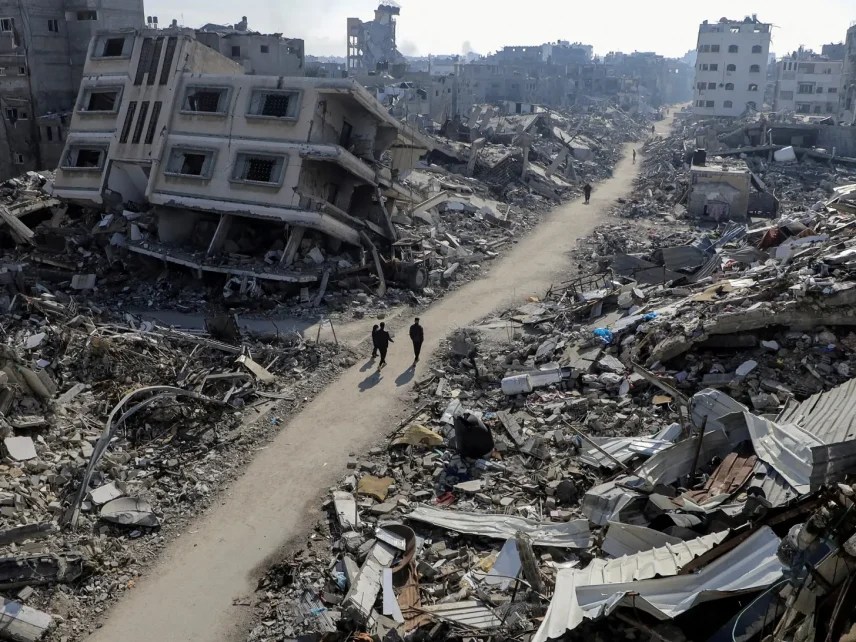
Palestinians traverse ZOF-inflicted ruins in northern Gaza
This finding, along with identical conclusions drawn by Western rights groups and legal scholars, mysteriously escaped the attention of major news outlets. The obvious question arises as to how the mainstream media remained silent so long – to the point of active complicity – not merely about the Zionist entity’s 21st century Holocaust in Gaza, but Israel’s historic abuse, persecution and slaughter of the Palestinian people. An answer is provided in veteran Australian journalist John Lyons’ 2017 biography, Balcony Over Jerusalem.
Buried in the book is a comprehensive account of how Australia’s Israeli lobby systematically plunges its poisonous hooks into influential editors and reporters Down Under, ensuring they act as dependable propagandists for Tel Aviv. The details are of enormous wider relevance, for as this journalist has previously documented, foreign media outreach is a dedicated, devastatingly effective means by which occupation, land theft, and ethnic cleansing hardwired into Zionism has been successfully concealed from Western audiences for decades. Identical operations are undoubtedly in force across the globe.
‘Hardline Side’
Lyons’ disclosures about the Zionist lobby’s mephitic influence in Australia are all the more remarkable given the author evidently does not perceive Palestinians to be wholly innocent victims. His book’s blurb perversely frames them and Zionists as equal parties in a “devastating war”, and boasts how he has “confronted Hamas officials about why they fire rockets” into Tel Aviv. There is zero insinuation in its contents Lyons denies or even vaguely questions Israel’s ultimate right to exist in some form or other.
Moreover, Balcony Over Jerusalem is rife with sentimental passages recalling trips to the Zionist entity to interview senior officials old and new, his long-running personal friendships with Australian Jews, and work on a major project investigating Jewish identity. This renders Lyons’ critical insights particularly valuable. The vicious backlash that erupted against the author from the Israel lobby within and without Australia in response to his book, which has raged ever since, is also instructive. Those same elements initially sought to foster a warm bond with the veteran journalist.
Lyons explains how once appointed deputy editor of the Sydney Morning Herald in the early 1990s, his “phone began ringing with requests for meetings” with local Jewish groups. Only later did he learn, “once you have ‘deputy’ in your title or are perceived as being on the rise within your media organisation you become a target for cultivation” by Australia’s “fiercely efficient pro-Israel lobby.” Public affairs apparatchiks at local Zionist organisations pestered him for a “year or so” to accept an all-expenses-paid tour of Israel.
Lyons eventually accepted, and in 1996 made his first visit to Tel Aviv, funded by the Melbourne-based Australia/Israel and Jewish Affairs Council. He recorded how “it has become almost a rite of passage for deputy editors of any major Australian news outlet to be offered a ‘study trip’ to Israel.” A senior AIJAC official boasted to Lyons the organisation had “sent at least 600 Australian politicians, journalists, political advisers, senior public servants and student leaders on these trips over the last 15 years.”
Lyons’ “assessment” was, “by ‘educating’ rising media executives, the Israeli lobby has in place editors” across Australia “who ‘understand’ the Israeli-Palestinian conflict” exclusively from the Zionist entity’s warped perspective, and report on local events accordingly. “I barely know an Australian newspaper executive who has not been on one of these trips,” he noted. Lyons and other senior staffers at major local media outlets were flown to Tel Aviv “for five days of wining, dining and briefings (including a stay in a kibbutz).”
Once inside the Zionist entity, he “quickly realised how narrow a range of opinions we were receiving” on the reality on-the-ground there. The trip’s organisers “set us up for an hour or so… to hear the point of view of the Palestinian Authority, but apart from that we were getting only one side of the story – and a hardline side at that.” It rapidly became clear to Lyons “the whole point of the trip was to defend Israel’s settlements in the Palestinian territories.”
‘Like Dresden’
In search of a “broader perspective”, Lyons asked his hosts to visit Hebron, Israel’s illegally occupied portion of the West Bank. The trip was spurred by his understanding that “in Hebron you can see the raw conflict,” as “it’s the only Palestinian city where there is an Israeli settlement in the middle of the Palestinian population; normally, the settlements are separated.” At that time, “several hundred settlers” lived “in the middle of 200,000 Palestinians.”
These settlers were and remain protected by the ZOF, and “the same rules of engagement for the army apply” as in other areas illegally annexed and occupied by Tel Aviv. Immediately upon arrival in Hebron, “the cruelty” of Zionist occupation was “there for all to see.” Lyons saw “how the conflict between the settlers and Palestinians played out at the most basic level.” It is a stomach-churning, life-threatening daily reality hidden from the outside world.
Hebron’s streets are typically empty, as “Palestinians are not able to drive on some roads or walk on others.” Years later, he took his editor on a trip there – they remarked, “it’s like Dresden after the bombing.” Arriving late at night, the pair encountered a “heavy Israeli Army presence” and a “certain eeriness” in the silent, deserted city. His stunned editor asked a ZOF soldier at a “closed checkpoint” into Jerusalem, “where are the Palestinians?” The militant smirkingly replied, “they’re all tucked up in bed!”

A street in Hebron where Palestinians are forbidden to tread
In Hebron, Lyons saw how Palestinians placed “wire over their market stalls to stop them being hit when Jewish settlers living above them throw bricks, chairs, dirty nappies and rotting chickens onto them.” He also witnessed Israeli soldiers “decide, without notice, to lock the Palestinians into the old part of the city at night, behind big security gates that look like cages.” The situation has only worsened subsequently, with illegal settlements – and concomitant ZOF repression – expanding exponentially. Lyons’ appraisal of the West Bank under Zionist rule is stark:
“If the whole world could see the occupation up close, it would demand that it end tomorrow. Israel’s treatment of the Palestinians would not pass muster in the West if the full details were known. The only reason Israel is getting away with this is because it has one of the most formidable public-relations machines ever seen, and enormous support from its diaspora communities… Military occupations look ugly because they are ugly. Israel’s reputation will bleed as long as its control over another people continues.”
Such perspectives are vanishingly rare among the countless Australian opinion-formers who have been treated to Zionist lobby-financed tours of Israel. As Lyons records, “wave after wave of journalists, editors, academics, student leaders and trade union officials” have been whisked to Tel Aviv “to hear the same spin from the same small group of people used to defend Israel’s policies in the West Bank” over the years. Few have followed Lyons’ example in actually visiting the area, to see the horror with their own eyes.
Nonetheless, Lyons’ outlook wasn’t fully fatalistic. He noted that while the Zionist entity’s Hasbara tactics “worked for the first few decades of the occupation, now virtually every incident between an Israeli soldier and a Palestinian is filmed by a mobile phone,” exposing the ZOF’s routine savagery to overseas audiences. Fast forward to today, and the Gaza genocide has been televised globally in real-time not merely by fearless Palestinian journalists, who have often paid for their courage with their lives, but Israeli militants who sickly film their own hideous crimes.

The impact of these horrendous images on global public perceptions of the Zionist entity has been catastrophic, and irreversible. Polls consistently show across the West, even in the few countries that harboured some sympathy for Tel Aviv following October 7th, the overwhelming majority of citizens hold deeply unfavourable views of Israel. Support for the entity and its genocidal actions is becoming increasingly indefensible, as the monstrous truth becomes writ ever-larger. It can only be considered an unspeakable tragedy so many innocent Palestinians had to die for us to reach this point.
Between China & USA: Australia chooses trade over geopolitics
By Salman Rafi Sheikh – New Eastern Outlook – July 17, 2025
While the Trump administration doubles down on its ‘America First’ approach to reshaping global power dynamics, key allies like Australia are quietly charting their own course—rebalancing relations with China in ways that may diverge from Washington’s long-term strategy in the Indo-Pacific.
Australia’s Prime Minister Anthony Albances was supposed to meet Donald Trump on the sidelines of G7 summit in Canada. The meeting did not take place, as Trump left the summit in the middle of Iran-Israel war. While such diplomatic snubs would normally raise eyebrows, Canberra seemed unperturbed. Instead, Albanese’s subsequent high-profile visit to Beijing sent a clear message: for Australia, economic pragmatism continues to trump imperatives of ideological or geopolitical alignment. With trade relations with China showing signs of recovery after years of friction, the visit underscored Australia’s effort to navigate a delicate path between its largest trading partner and its key strategic ally.
This calibrated diplomacy comes at a time of renewed uncertainty surrounding the AUKUS pact—a trilateral security agreement between Australia, the US, and the UK aimed at equipping Australia with nuclear-powered submarines to bolster its naval presence in the Indo-Pacific to check Chinese advances. The deal, worth tens of billions of dollars, is currently under review by the Trump administration in Washington. This review includes calls for Australia by the Trump administration to increase its defense spending and overall contributions to the pact, further highlighting Canberra’s growing dependence on the whims of US domestic politics.
This visit comes against the backdrop of the fact that AUKUS, while it offers an unprecedented opportunity to Australia to acquire modern systems, also exposes a deeper vulnerability: Australia’s limited ability to shape the strategic direction of its own neighborhood, caught as it is between economic ties with China and defense commitments to an America that may no longer see alliances as sacrosanct. In this shifting landscape, Australia’s challenge is not just about balancing Beijing and Washington. It’s about asserting agency in an Indo-Pacific increasingly shaped by volatility, mistrust, and great-power rivalry. This assertion has once led it to redefine its ties with China.
Australia’s recalibration is not taking place in a vacuum. There is considerable domestic political support for this policy. Despite how Washington portrays China as a ‘threat’, within Australia, only a minority considers China to be a threat. A majority of the Australians see ties with China as a complex configuration that nonetheless should—and can be—managed because it is ultimately beneficial. Even within China, this publicly backed support for better ties with China and Canberra’s efforts to mutually balance ties between the US and China is clearly well received and understood. China’s state newspaper Global Times says Albanese’s visit “carries special significance” and shows “Australia’s desire to seek more reliable partners in an uncertain world order… with China being the obvious choice”. There is little denying this. China is Australia’s largest trading partner, and Albanese’ visit is about furthering these ties. As reports indicate, Albanese is accompanied by a business delegation to the cities of Shanghai, Beijing and Chengdu for his six-day trip. His official itinerary included meetings with groups involved in business, tourism and sports.
From AUKUS to new forms of bilateral and multilateral trade
In this context, therefore, many observers view the Australian Prime Minister’s recent visit to China as a strategic step toward reinvigorating economic ties and potentially paving the way for China’s entry into the 11-member Comprehensive and Progressive Agreement for Trans-Pacific Partnership (CPTPP). Australia, which currently chairs the CPTPP, plays a central role in shaping the pact’s direction. The CPTPP evolved from the original Trans-Pacific Partnership (TPP) after the United States withdrew in 2017 under President Trump. China formally applied for CPTPP membership in 2021 and continues to lobby for inclusion.
Beijing is increasingly framing its engagement with Canberra within the broader context of a new multilateralism represented by the CPTPP—one that spans beyond the Indo-Pacific to include countries like Canada and the United Kingdom. Underscoring its commitment to deepening trade ties in all possible ways, the Chinese ambassador to Australia has published op-eds in major Australian newspapers emphasizing Beijing’s willingness to deepen bilateral economic partnership, even highlighting emerging sectors such as artificial intelligence as potential areas of collaboration.
The core message from Chinese officials has been consistent: China does not view Australia as an adversary, and there is ample room for peaceful coexistence and mutual benefit. With no direct territorial disputes or major political conflicts between the two nations, this message has found a receptive audience in parts of the Australian political landscape. Labor senator Raff Ciccone, who chairs the Australian Parliament’s security committee in Australia, recently stated that economic engagement with China can play a stabilizing role. “When there’s trade, when there’s dialogue, when there’s economic interests at play,” he said, “countries are less likely to engage in the worst-case scenario, which is war.” In other words, Australia, too, does not necessarily view China as a foe. Albanese’ visit may thus not only reset diplomatic relations but also signal Australia’s openness to a broader regional vision where economic pragmatism and strategic dialogue can go hand-in-hand.
This will not go unnoticed in the White House as well. However, what matters is how the Trump administration responds or can possibly respond. Either it could threaten to withdraw from AUKUS and focus more on developing its own resources or it could double down on its commitment to shoring up Australian naval capability. However, as long as Washington continues to lack a viable programme to reverse China’s economic dominance in Australia specifically and the Indo-Pacific generally, countries like Australia will continue to maneuver in ways that best serve their interests. It is increasingly clear in Australia that their trade interests are best served by having stable ties with China. There is a growing appreciation of the fact that Australia’s ties with China and the US must not be mutually exclusive. This, for China, is a major victory.
Salman Rafi Sheikh, research analyst of International Relations and Pakistan’s foreign and domestic affairs
Does the AUKUS have a future?
By Salman Rafi Sheikh – New Eastern Outlook – July 3, 2025
The Trump administration’s review of the AUKUS pact exposes deep uncertainties in U.S. commitment and capabilities, offering Australia a strategic opportunity to reconsider its role in the trilateral alliance.
Conceived during the Biden era to counter China in the Indo-Pacific region, the trilateral treaty involving Australia, the UK, and the US appears to have been hit by the Trump administration’s distaste for multilateral defence pacts. Underneath, however, also lie serious problems affecting American ability to live up to the pact’s demands, presenting Australia a rare opportunity to walk away from the pact.
The AUKUS in Disarray
When the Trump administration launched early in June a “review” of the multibillion-dollar AUKUS pact, it sent a shockwave across the Pacific, causing Canberra to tremble. The review announcement, according to the US Department of Defence, is meant to ensure that the pact is properly aligned with the President’s MAGA (Make America Great Again) agenda. In effect, part of it means asking both Australia and the UK to raise their shares of the cost of the programme, which was originally supposed to supply nuclear-powered submarines to Australia before the allies make a new fleet by sharing cutting-edge research and technology. Both the UK and Australia have thus far not confirmed their readiness to meet America’s demands. Defence Secretary Pete Hegseth told his Australian counterpart in early June that the country should increase defence spending to 3.5 percent of its gross domestic product, echoing demands that the Trump administration has been making of allies in Europe. But Australia’s Prime Minister Anthony Albanese of Australia said this week that “I think that Australia should decide what we spend on Australia’s defence. Simple as that”. There is, thus, a very clear disagreement affecting the pact.
In reality, this dissonance is not difficult to understand, given that the pact was signed by leaders in all three countries no longer in power. This is particularly the case in the US, where the Trump administration has a credible history of withdrawing from agreed pacts. The first Trump administration, for instance, withdrew from the Iran-nuclear deal signed by the Obama administration in 2015–a decision that directly paved the way for the Iran-Israel war and the US recent bombing of Iranian nuclear infrastructure. In addition, President Trump also withdrew from the Trans-Pacific Partnership (TPP) immediately after assuming office in 2016. Will the AUKUS be put into the dustbin of history similarly?
Many in the US share this fear. A letter addressed to defence secretary Pete Hegseth, signed by five Republican and Democrat lawmakers, urged the Pentagon to back the Pact. Their fears are only compounded by the fact that the review is headed by Elbridge Colby, who has previously been critical of the AUKUS. In a speech last year, he publicly questioned why the US would give away “this crown jewel asset when we most need it.” In Australia, however, the review means not only a potential end of the pact itself but also an assessment about the extent to which Canberra can rely on Washington to build its defences. If Trump scraps the AUKUS, or even if he significantly alters its provisions, Washington’s standing in the Indo-Pacific region will be majorly diminished.
Facing Practical Problems
For the US, however, what matters more than its standing in the Indo-Pacific region is its capacity to project power in an uncompromising manner. At the heart of the review—which once again is aimed at making the pact properly align with Trump’s America First agenda—are practical problems facing America’s ship building industry. Can America build enough (Virginia-class) submarines for its own use by 2030, i.e., when it is supposed to transfer (some of its) its existing submarines to Australia?
For the pact to work—which is supposed to transfer 18 submarines to Australia by 2040–the US needs to be able to produce at least two submarines every year until 2028 and 2.33 per year thereafter. However, reports show that the US shipbuilding industry is in serious disarray, facing workforce shortages and budget constraints, making it problematic to meet sales to Australia and address a production backlog. These challenges have limited production to about 1.2 submarines per year since 2022. Because the US is unable to meet the pact’s demands and because meeting these demands could put Washington’s own strategic needs in jeopardy, the Trump administration might find the pact violating its America First agenda. In that case, the AUKUS might hit the bottom of the Pacific sooner than expected.
Is this bad news for Australia?
If the US withdraws from the AUKUS, does it necessarily mean bad news for Australia? While AUKUS might give Australia access to (used) submarines, the downside of this pact is that it also massively increases Canberra’s dependence on the Anglo-American axis. On the contrary, if the US withdraws from the pact, it gives Canberra strategic flexibility to manage its ties with the US and the EU and China in ways that best serve its national interests. In fact, the second scenario works best for Australia in all possible ways.
The purpose of the AUKUS is not simply to enhance Australia’s capability, but also to establish it as a proactive player in the Indo-Pacific region. However, there is little denying that China and Australia don’t have any direct disputes between themselves, making it highly unlikely that China will ever want to attack Australian territory. On the other hand, Australia can do well to manage its ties with China—which is also its largest trading partner—by further deepening its trade ties with Beijing.
The Trump administration’s decision to review—and possibly scrap or downgrade—the AUKUS could be a blessing in disguise for Canberra. A realistic counter review by Canberra should allow it to pursue alternative approaches.
Salman Rafi Sheikh is a research analyst of International Relations and Pakistan’s foreign and domestic affairs.
Pentagon Puts AUKUS on Ice, Leaving Allies Rattled
By Svetlana Ekimenko – Sputnik – 12.06.2025
The US Defense department is reviewing the 2021 AUKUS submarine deal with the UK and Australia, the Financial Times reported earlier. The review is being led by Elbridge Colby, a senior defense official known for his past skepticism of the pact.
The Pentagon is taking a hard look at its role in the AUKUS alliance to make sure it fits squarely within the Trump administration’s “America First” agenda, according to a Department of Defense spokesperson.
“We’re reassessing AUKUS to ensure this carryover from the last administration aligns with the president’s priorities,” the spokesperson said.
Australia has rushed to say it’s still on board with US defense cooperation, but according to The Australian, the Pentagon’s review is a “major blow” to Canberra.
The Financial Times earlier reported that Washington is weighing a full exit from the AUKUS pact with Australia and the UK.
Announced on September 15, 2021, the AUKUS trilateral partnership between the United States, United Kingdom, and Australia promised to bolster Australia’s fleet with nuclear-powered submarines and increase defense cooperation among countries in the Asia-Pacific region. The deal led to a diplomatic rift between Australia and France after Canberra reneged on a $66 billion contract with Paris to develop 12 advanced conventionally powered attack submarines.
Russia has criticized the trilateral security pact, which focuses on military cooperation and countering China in the Indo-Pacific, as undermining the Nuclear Non-Proliferation Treaty (NPT) by transferring nuclear submarine technology to Australia, a non-nuclear-weapon state.
Australia quietly pivots on Covid-19 vaccine policy
By Maryanne Demasi, PhD | June 3, 2025
It didn’t come with a press conference or a media blitz. In fact, there was no announcement at all.
But sometime around 2 May 2025, the Australian Department of Health quietly removed its recommendation for Covid-19 vaccination in healthy children and adolescents under 18.

The change was tucked into an online update to the Australian Immunisation Handbook—no headline, no ministerial statement, no media campaign to inform the public.
For the first time since the rollout began, Australian health authorities now say that unless a child has underlying medical conditions, they do not need the vaccine.
Australia now joins a growing list of countries backing away from the blanket approach to vaccinating low-risk populations.
In the US, health officials under HHS Secretary Robert F. Kennedy Jr. recently removed routine recommendations for Covid-19 vaccination in healthy children and pregnant women.
The CDC now leaves it up to “shared decision-making”—a tacit acknowledgment that the previous universal approach may have overreached.
Denmark, meanwhile, was ahead of the curve.
It stopped recommending the vaccine for healthy children back in 2022, citing data showing that severe Covid in children was exceedingly rare and that the benefits of mass vaccination did not outweigh the harms.
Australia’s policy reversal might be late, but what makes it striking is how quietly it was done—and how much it implicitly concedes.
For years, anyone who questioned the need to vaccinate healthy children was dismissed as anti-science or dangerous. Now, the same authorities who widely promoted the shots are quietly walking it back.
And the adverse events that critics raised early on—myocarditis, pericarditis, and other post-vaccine complications—are no longer fringe concerns. They’re acknowledged in official risk assessments.
The shift also comes at a time when the legal and regulatory framework that enabled the rapid approval of mRNA vaccines is under growing scrutiny.
In Australia, a case brought by Dr Julian Fidge, a general practitioner and former pharmacist, challenged the legality of the vaccine approvals.
He argued that Pfizer and Moderna’s mRNA vaccines should have been classified as “genetically modified organisms” under the Gene Technology Act 2000, and therefore required a licence from the Office of the Gene Technology Regulator (OGTR) before being rolled out.
But the court dismissed the case on procedural grounds, ruling that Dr Fidge lacked standing to pursue it.
Still, the case drew attention to whether these products were channelled through the wrong regulatory pathway.
That question is now at the centre of a citizen petition in the US, filed with the FDA in January 2025, claiming the agency “wrongfully and illegally” approved the mRNA Covid-19 vaccines by treating them as conventional biologics, not gene therapies.
According to the FDA’s own definition, gene therapy products are those that use genetic material to alter cellular function for therapeutic use.
By that logic, mRNA vaccines clearly qualify – and should have faced far more rigorous safety testing, including environmental risk assessments and long-term follow-up studies.
As of June, the FDA has not responded to the petition—but the implications are enormous.
If regulators in Australia or the US misclassified these products during the emergency rush, it would expose a systemic failure to apply the appropriate safeguards to an entirely new class of biotechnology.
And it’s not just about legal definitions. The public mood is shifting.
The notion that healthy children and adolescents should have been part of a sweeping global experiment with novel gene-based technologies now looks reckless in hindsight. For the public, trust has been damaged—perhaps irreparably.
That shift in perception has consequences far beyond Covid.
Billions of dollars have been invested in mRNA platforms for other diseases—flu, RSV, and cancer. So what happens if confidence in the technology craters?
Already, the US FDA has announced it will require new randomised clinical trials for annual Covid-19 boosters in “healthy” people under 65—setting a higher threshold for evidence (than immunobridging data) that may make future approvals more challenging.
The industry might dismiss this as just a hiccup—but the truth is, mRNA vaccines were never subjected to the kind of long-term scrutiny typically required of products given to healthy people, especially children.
The argument that urgency justified shortcuts has worn thin.
The real emergency now is institutional—one of captured regulators, collapsing public trust, and a health system so entangled with the pharmaceutical industry it can no longer tell the difference between evidence and marketing.
From Betar to Shomrim, re-emergence of Zionist private militias in the West

By David Miller | Press TV | May 25, 2025
In April of this year, anti-Zionist Jewish writer Alon Mizrahi claimed that Israeli Prime Minister Benjamin Netanyahu and his network of international Zionists are working to establish a policing force with powers surpassing those of national law enforcement agencies.
Mizrahi described this as the beginning of overt Jewish-Zionist policing of Western societies.
He was referring specifically to the ever more egregious statements from Betar in the US, an ultra-Zionist group affiliated with the far-right Revisionist Zionist movement founded by Vladimir Jabotinsky.
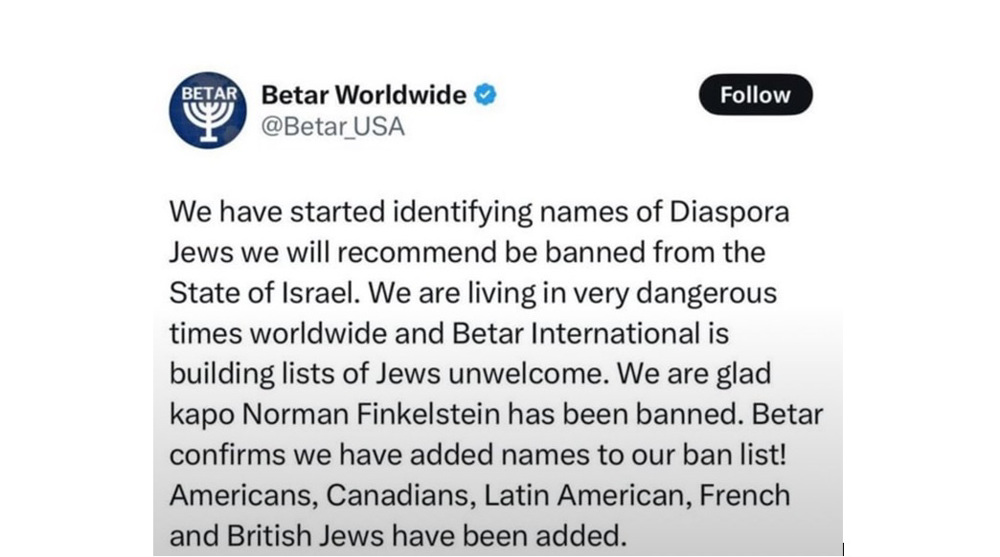
They have threatened to compile lists of Jews to be banned by the Zionist entity across North and South America, as well as Britain and France.
Mizrahi warned, “They start with Jews as a deception: all of you are next.”
However, the situation may already be far worse than what Mizrahi suggests.
Since its founding in 1923, Betar has trained as a paramilitary force. The photo below shows Menachem Begin wearing a Betar uniform in Poland in 1932.
Below it is another photo from Berlin in 1936, taken after the Nazis enacted laws outlawing other political groups in 1933.

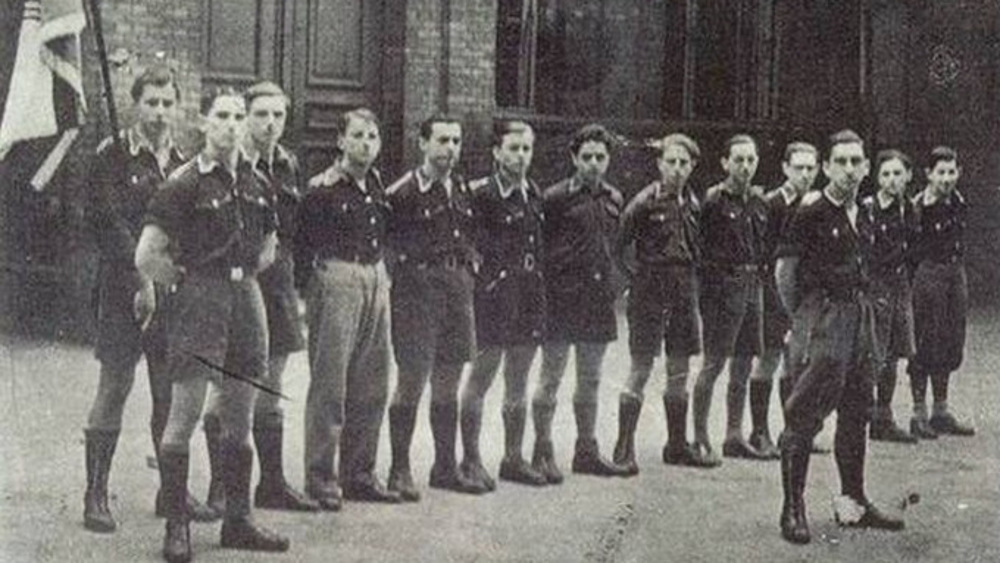
Betar was so closely aligned with the Nazis and Mussolini’s fascists that they were regarded as collaborators. By 1934, Jabotinsky and his Betar youth movement had reportedly “allied with Il Duce,” establishing a naval base north of Rome.
Late that year, Mussolini reportedly expressed support for Zionism and Jabotinsky in particular, stating: “For Zionism to succeed, you need to have a Jewish State with a Jewish flag, and Jewish language. The person who understands that is your fascist, Jabotinsky.”
This remark was made “during a private conversation with Nahum Goldman, founder of the World Jewish Congress, in November 1934,” as reported by Lenni Brenner in Zionism in the Age of Dictators.
Many senior Betar members served in the collaborationist police overseeing the Vilna Ghetto in Lithuania and were involved in betraying Jews in hiding to the Nazis.
One such member, Lotek Salzwasser, was eliminated by Jewish partisans in 1943 for his collaboration, according to Israeli press reports.
Betar and military training
One of the seven core principles of the Betar “Oath” is Magen, meaning “Protection.”
One of Betar’s ideological principles is military preparedness. Betar demands that all its members complete military seminars and know how to use weapons, in order to be ready at any time and to respond personally to a call for defense.
Betar has functioned as a militia since its inception. Here is a film of one of the French branches recorded in 2014 conducting paramilitary training exercises.
In the UK, Betar operated as a registered charity (Brit Tumbledor of Great Britain – Betar) between 1984 and 2004. It was closed down by the Charity Commission in 2004, on the grounds that it had been “Registered in error.”
In March 2025, Betar threatened to murder UN Special Rapporteur Francesca Albanese. On the very same day, the group relaunched its UK branch with a post on Instagram, claiming London “has become, with the time, an epicenter for radical Islam, for hate, for terror.” Their proposed solution?
Today, after more than 30 years, a bunch of strong young leaders stand up to say HERE WE ARE, to defend the Jewish population and to tell them that now we have a solution for the current situation, JEWS ARE NOT AFRAID ANYMORE!
Make no mistake – these threats are part of a deliberate effort to revive Jewish supremacist militias in the UK and the US.
Magen Am
The term Magen also appears in the name of a US-based private Zionist militia called Magen Am, which is currently active in Los Angeles, Orange County, and Phoenix.
Magen Am played a notably violent role in attempts to dismantle the student encampment at UCLA. The group frequently boasts about its close ties to the LAPD, sharing numerous photos of friendly interactions with police officers.
Reports indicate that Magen Am has collaborated directly with law enforcement, including working closely with the LAPD to intimidate and attack student protesters on the UCLA campus.
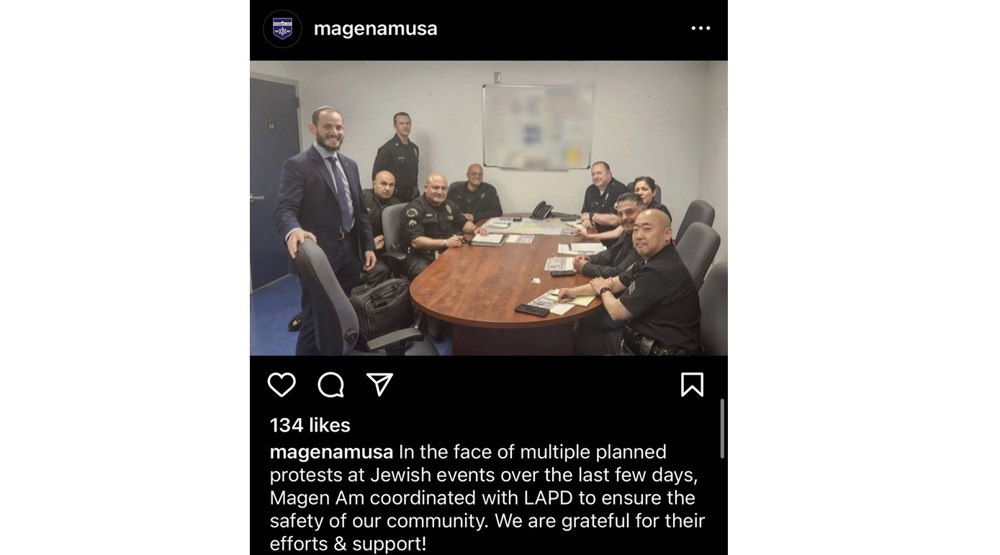
Magen Am, of course, recruits veterans of the occupation forces’ Lone Soldier programme and some then return to “serve” in the genocide as they proudly boast.
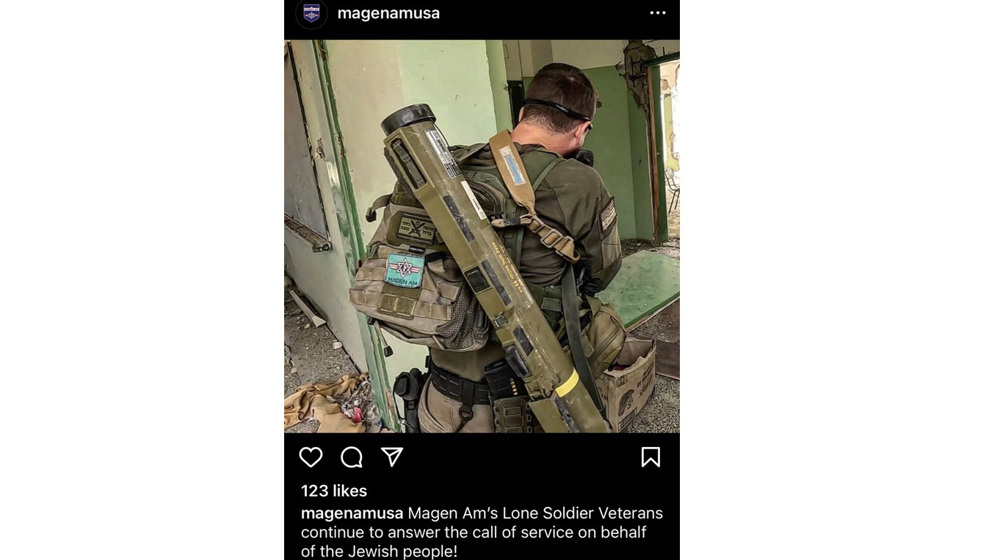
Magen Am was founded in 2017 by Yossi Eilfort, an MMA fighter-turned-Chabad rabbi. The flag of the genocidal Chabad cult was flown by the attackers on campus in Los Angeles.
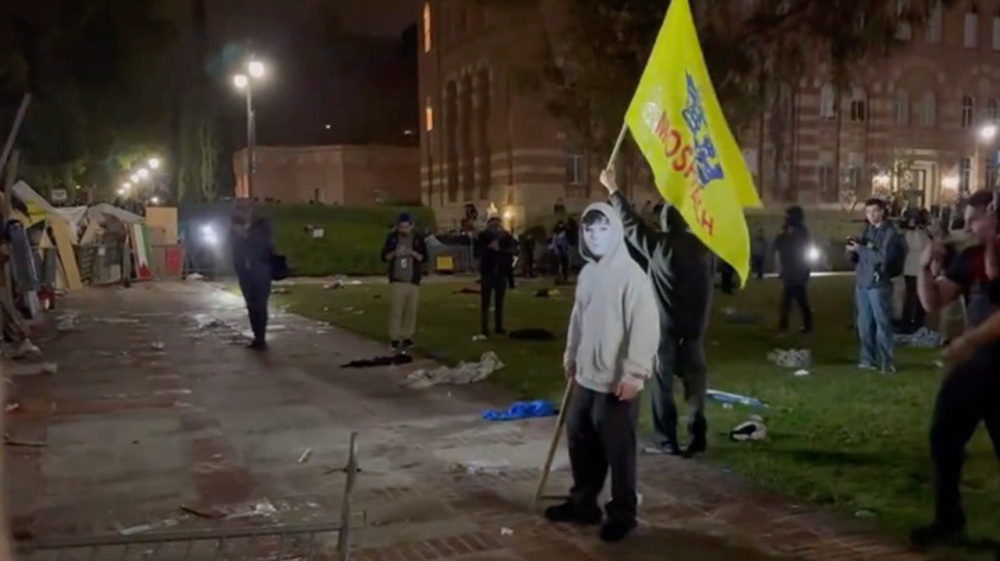
Chabad has many followers in the so-called Hilltop Youth in occupied Palestine, which the Zionist intelligence agency Shin Bet says are responsible for the overwhelming majority of so-called ‘price-tag’ revenge attacks on Palestinians.
The rise of Jewish supremacism in Western societies is becoming increasingly visible, though many continue to deny or downplay its existence.
While Zionist militias and private security firms openly collaborate to suppress student protests in the US, there is a more subtle infiltration of police forces by Zionist Jewish supremacists.
Shomrim: The Private Jewish Patrol
Shomrim is a private Jewish police force operating in parts of the US, UK, Australia, and Belgium. It is reported that “over 20 Shomrim organisations exist worldwide.”
In London, the Shomrim North West Community Patrol operates in the Borough of Barnet. Founded in 2008 by Gary Ost as a registered charity, it acts as a “mobile neighbourhood watch” and acts as eyes and ears for the Metropolitan Police.
Shomrim claims that all “Volunteers have completed training from the Metropolitan Police Counter Terrorism Command (SO15) in assisting to identify potential security threats and suspicious activity. “
One blogger notes that the genocidal cult Chabad also has a ‘nasty tendency to normalize sexual abuse and protect serial sexual predators in its ranks.” But it’s not only Chabad; there is a similar tendency throughout the Zionist movement.
No surprise, then, to find that the founder of Shomrim in London has been implicated in this.
In 2013 Police dropped their investigation into Ost, who had been arrested on suspicion of perverting the course of justice in relation to an investigation of an alleged child sexual abuser, Rabbi Chaim Halpern.
Indeed, charges against the alleged sexual predator were dropped back then, too. Yet new allegations against Rabbi Halpern have resurfaced a decade later, and the trial for these offences is still pending.
Shomrim abuses
In New York, Shomrim has faced criticism for “using excessive force against non-Jewish suspects.”
In 2014, two Shomrim members were charged as part of a group of five Hasidic men for assaulting 22-year-old Black student Taj Patterson as he walked home from a party.
Additionally, Shomrim organizers in New York have reportedly withheld information on suspected Jewish criminals. The NYPD has openly criticized the group for not always notifying police when calls come in, raising concerns about accountability and cooperation.
Given Shomrim’s protected status with law enforcement and the documented culture of sexual abuse in some ultra-Orthodox communities, credible allegations of abuse within these groups are unsurprising.
On October 11, 2023, the United States Department of Justice issued a press release that Jacob Daskal, former head of the Boro Park Shomrim Society—a private Orthodox Jewish crime-patrol group associated with the NYPD—was sentenced to 210 months in prison and fined $250,000 for transporting a minor with intent to engage in criminal sexual activity.
Daskal pleaded guilty to the charge in July 2023. As part of the sentence, Daskal is required to register as a sex offender.” The statement notes that Daskal was introduced to a 15 year old girl “as a result of his position with the Shomrim”, who he then “groomed” for sexual abuse. According to the Department of Justice statement:
“Throughout the abuse, Daskal instructed the victim to delete their communications and warned her not to tell anyone about their sexual relationship. He also used his position as a community leader to silence the victim, bragging about his law enforcement connections and warning her that disclosure would ruin her life. The victim was expelled from her religious school after revealing the relationship to the school principal.”
This case raises troubling questions: How many other abusive situations are currently unfolding within Shomrim and other Jewish militia groups?
Shomrim protects genocide
What is it that Shomrim are protecting? One illustrative example is the Crown Heights Shomrim branch, which in January this year provided security protection for the genocidal President of Israel, Yitzchak Herzog and for the leadership of the genocidal cult Chabad, as shown in the image below.

If Shomrim really wants to protect Jews in the US and UK, they should start by apprehending the entire leadership of Chabad and members of the genocidal Zionist regime.
Police reluctance toward Shomrim in the UK
Initially, UK police were resistant to Shomrim’s activities. In 2008, Chief Superintendent Steve Bending, then Hackney’s borough commander, stated, “I do not support the concept of any community having its own form of patrol service. There is a risk of other communities feeling intimidated by this course of action.”
As late as 2015, Metropolitan Police Commissioner Sir Bernard Hogan-Howe expressed his preference that Shomrim volunteers avoid uniforms resembling those of official officers.
Shomrim, however, rejected this, saying “its volunteers should not drive marked cars or wear uniforms similar to those of the police.” Gary Ost, chief executive of Shomrim in Golders Green, north-west London, stated, “Our uniforms look nothing like the police and are marked from every angle with clear wording saying ‘Shomrim’.”
Yet a glance at their uniforms and liveried vehicles often gives a very different impression.


But the penetration of the police is now much more advanced and cooperation is the name of the game. There are numerous examples of apparent cordial relations between the two on the internet.
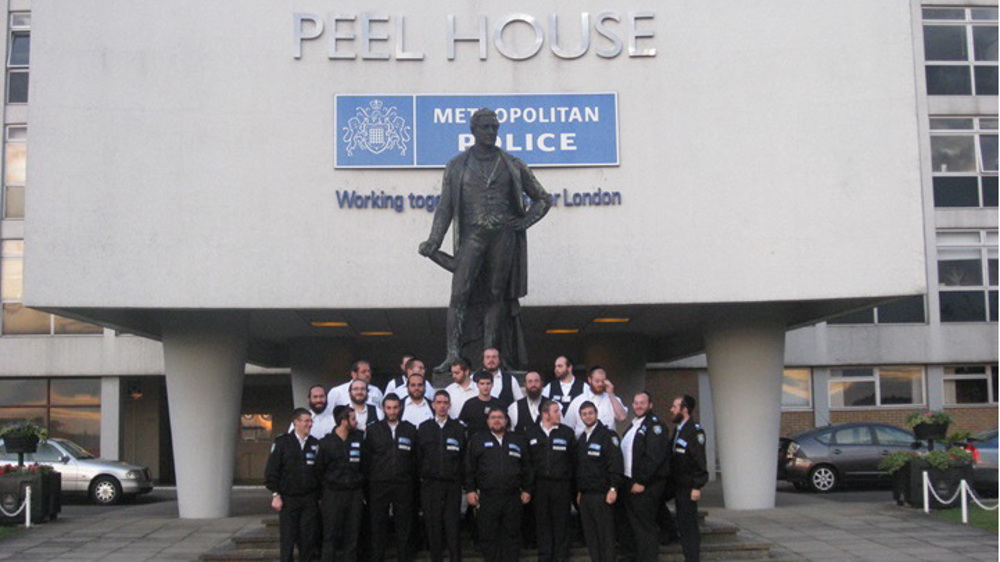
Shomrim members even posed outside Peel House, the headquarters of the Metropolitan Police.
Below is a photo of a prize giving for Shomrim members commended for their “bravery” and “exemplary service to the community” in 2020.
Shomrim chief executive Gary Ost, the one arrested in 2013, is one of the three.

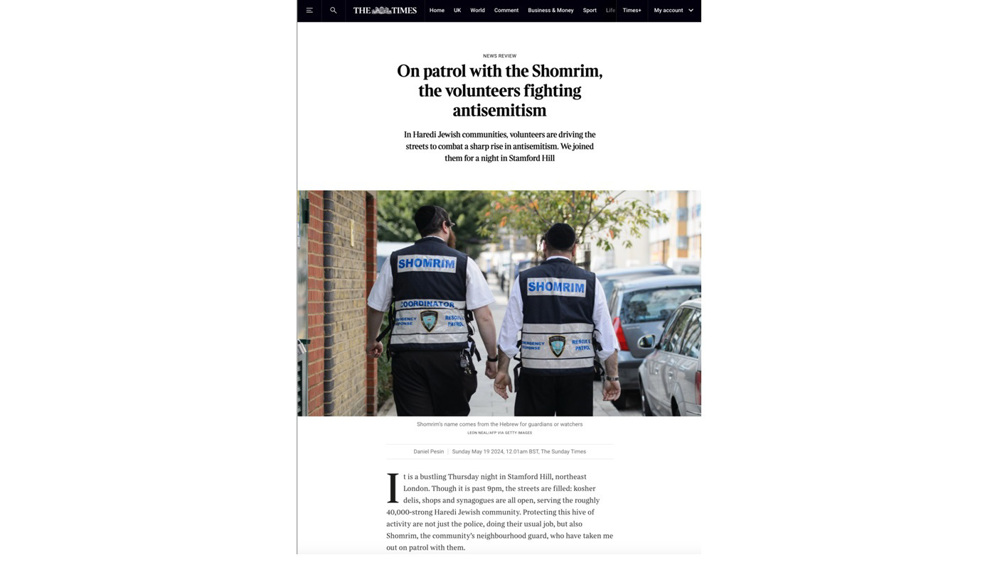
Shomrim plays a key role in shaping the narrative around the widespread antisemitism claims that Israel relies on to justify its genocidal actions.
The pressing question is: What happens when members of Shomrim break the law or commit wrongdoing? Would the police be able—or even willing—to enforce the law against them?
Alon Mizrahi, whom we cited earlier, shared his perspective in a conversation with me:
“They are pretending to be defending themselves in the most friendly country to Jews in history. While committing genocide. In a country that is so hateful of Jews that we need a private police force for Jews only in the US.
“And I have no doubt that if they can normalise this, with the kind of status that Zionist Jews have managed to create for themselves in the US; If this Jewish police force uses violence against black people, black organisers in communities who oppose the genocide, or other migrant groups or any other group, are American police going to be able to charge them?
“To use the law against them? I don’t think so. If you are in the American system, if you have a role in any part of the American system of government, in the police or any other agency, I think that at this point it is clear to you that Zionist Jews are above the law.
“The law doesn’t apply to them. So they don’t have the philosophical or legal means to deal with this. And the Zionists know this.”
Given the current climate, his assessment may well be accurate.
How India-Pakistan war will affect global and regional political order
By Salman Rafi Sheikh – New Eastern Outlook – May 24, 2025
The recent India-Pakistan war, though limited in scope, has triggered significant geopolitical reverberations by showcasing Chinese military superiority and prompting a strategic reassessment in Washington.
The China angle in regional geopolitics
Beyond the oft-repeated rhetoric of the Pakistan-China relationship being “all-weather” and “iron-clad,” the recent India-Pakistan war may come to be seen as its first major demonstration in action. Pakistan’s use of Chinese PL-15 missiles, deployed from Chinese-made J-10C fighter jets to successfully engage French-made Rafale aircraft, has underscored the strategic depth of this partnership. This has received considerable international attention, both in the media and otherwise. This show of alignment is particularly notable given recent strains in the Pak-China bilateral relationship, including attacks on Chinese interests and infrastructure projects within Pakistan.
With Pakistan importing almost 80 per cent of its weapons—which also includes cooperation in the field of military technology—from Beijing, the supply ensured to help Islamabad maintain the balance of power vis-à-vis New Delhi. More than this, China’s policy was also motivated by its desire to counter-balance Washington’s efforts to boost India against China. Ironically enough, it was only days before the recent war that the US Vice-President was in India to discuss ways to collectively counter China. But China’s support for Pakistan meant that New Delhi remained preoccupied more with Pakistan than China in a strategic sense. With this war, New Delhi’s focus will be more on Islamabad than China for at least a few more years to come. By the same token, China will most likely continue to help Pakistan develop its defence capability. Even before the war took place, media reports in Pakistan and China reveled ongoing talks between Beijing and Islamabad for the sale and purchase of J-35 fifth-generation stealth fighter jets.
These developments highlight at least four key takeaways. First, China’s defense technology—likely tested in actual combat for the first time—has proven effective enough to attract interest from other regional powers. Its demonstrated performance could prompt these countries to purchase and integrate Chinese systems into their own militaries. This, in turn, would strengthen China’s position in the regional arms market and help it outcompete rival defense exporters. Second, China’s willingness to export advanced military technology—such as the PL-15 missile and J-35 fighter jets—signals a broader strategic intent to deepen its global partnerships. This approach is consistent with Beijing’s “no-limits” alliance with Moscow.
Third, the demonstrated effectiveness of Chinese weaponry against India could encourage regional states to reassess their foreign policy alignments, potentially fostering deeper integration with Beijing over New Delhi. This trend is already evident in countries like Sri Lanka and the Maldives, where pro-Beijing political shifts have gained momentum—most notably in the Maldives, where the new government compelled Indian troops to withdraw. Fourth, Pakistan’s military successes in this conflict challenge a common narrative in global discourse: that partnerships with China inevitably lead to economic “debt traps.” On the contrary, Pakistan’s economic ties with China appear to have laid the foundation for robust military-to-military cooperation, illustrating how economic integration can support broader strategic alignment.
India’s position in Washington’s arc
Can Washington still push—with enough confidence—India as its key ally? What is the material reality of India’s standing within the US-led Quadrilateral Security Dialogue (QUAD)? If the QUAD was ever to become a military alliance, the only power in the region that the US expected to be effective on its own against China is/was India—not only because India and China have a long history of rivalry, but also because India remains a big military power. Needless to say, it is the only nuclear power part of the QUAD from the Indo-Pacific region. In this sense, it can maintain deterrence vis-à-vis Beijing. But nuclear deterrence can prevent a nuclear war, as is evident from the recent India-Pakistan conflict. It cannot necessarily prevent conventional conflict. Can India act as the front-line ally for Washington in the region in a conventional war?
The outcome of India-Pakistan was means Washington will have to rethink its strategy. It can take two shapes. First, it is very much possible that Washington will deepen its cooperation with New Delhi. Donald Trump has already offered to sell F-35 fifth-generation stealth fighters. (Russia has also offered New Delhi to sell its own fifth-generation Su-57 jets.) This, however, will necessarily involve China deepening its cooperation with Pakistan. As a result, an arms race will be triggered in the region.
A second strategic path for Washington could involve renewed engagement with China. While the timing of the Trump administration’s trade negotiations with Beijing may coincide with the outcome of the India-Pakistan conflict purely by chance, it nonetheless suggests that even a confrontational administration has not entirely ruled out dialogue as a preferred tool. Washington might also pursue a dual-track approach—engaging China while simultaneously strengthening military alliances elsewhere.
However, in the wake of shifting dynamics following the India-Pakistan conflict, the US will likely need to reassess its regional strategy and consider alternatives to India. Japan, for instance, emerges as a strong candidate. With its recent push toward military normalization and a growing appetite for deeper strategic engagement, Tokyo could become a more prominent partner in Washington’s Indo-Pacific security architecture.
To be clear, this does not imply a fundamental rupture in US-India relations. But it is increasingly likely that Washington will place India’s role under careful review, potentially redefining its status as the principal frontline ally in countering China. In response to China’s growing influence and military reach, the US will need to significantly bolster the defense capabilities of other regional actors—most notably Japan and Australia—as part of a broader strategic recalibration.
Salman Rafi Sheikh, research analyst of International Relations and Pakistan’s foreign and domestic affairs
Gender-affirming care for minors under fire in sweeping US report
By Maryanne Demasi, PhD | May 4, 2025
Paediatric gender dysphoria has rapidly emerged as one of the most divisive and urgent issues in medicine today. In the past decade, the number of children and adolescents identifying as transgender or nonbinary has soared.
In the US alone, diagnoses among youth aged 6 to 17 nearly tripled—from around 15,000 in 2017 to over 42,000 by 2021—signalling a seismic shift not only in culture but in clinical practice.

Children diagnosed with gender dysphoria—a condition defined by distress related to one’s biological sex or associated gender roles—are increasingly being offered powerful medical interventions.
These include puberty blockers, cross-sex hormones, and, in some cases, irreversible surgeries such as mastectomy, vaginoplasty, or phalloplasty.
An umbrella review from the US Department of Health and Human Services (HHS) states that “thousands of American children and adolescents have received these interventions,” despite a lack of solid scientific footing.
While advocates often claim the treatments are “medically necessary” and “lifesaving” the report concludes “the overall quality of evidence concerning the effects of any intervention on psychological outcomes, quality of life, regret, or long-term health, is very low.”
It also cautions that evidence of harm is sparse—not necessarily because harms are rare, but due to limited long-term data, weak tracking, and publication bias.
This 409-page report delivers a scathing review of the assumptions, ethics, and clinical practices driving gender-affirming care in the US.
An inversion of medical ethics
At the heart of the HHS critique is a reversal of medical norms.
“In many areas of medicine, treatments are first established as safe and effective in adults before being extended to paediatric populations,” the report explains. “In this case, however, the opposite occurred.”
Despite inconclusive outcomes in adults, these interventions were rolled out for children—without rigorous data, and with little regard for long-term, often irreversible consequences.
These include infertility, sexual dysfunction, impaired bone development, elevated cardiovascular risk, and psychiatric complications.
“The physical consequences are often irreversible,” the report warns.
Puberty blockers, frequently marketed as a reversible ‘pause,’ actually interrupt bone mineralisation at a critical growth stage—raising the risk of stunted skeletal growth and early-onset osteoporosis.
When followed by cross-sex hormones, as is common, the harms multiply. Known risks include metabolic disruption, blood clots, sterility, and permanent loss of sexual function.
Yet many clinics operate under a “child-led care” model, where a minor’s self-declared “embodiment goals” dictate treatment.
The report notes that some leading clinics conduct assessments “in a single session lasting two hours,” often with no robust psychological evaluation.
Consent and capacity
This raises a critical question: are children capable of consenting to life-altering medical interventions?
According to the HHS, informed consent means more than simple agreement—it requires a deep understanding of risks, alternatives, and long-term impact.
And by definition, children lack full legal and developmental capacity for medical decision-making.
“When medical interventions pose unnecessary, disproportionate risks of harm, healthcare providers should refuse to offer them even when they are preferred, requested, or demanded by patients,” the report states.
Supportive parents cannot shield clinicians from ethical responsibility. Many children who present for transition also have autism, trauma histories, depression, or anxiety—all of which can impair decision-making.
Yet clinicians frequently misread a child’s desire to transition as evidence of capacity.
The report warns that the current affirmation model “undermines the possibility of genuinely informed consent” and that the “true rate of regret is not known.”
This becomes especially urgent when the outcomes—sterility, bone loss, and sexual dysfunction—are permanent. Can a 13-year-old grasp what it means to forgo biological parenthood?
As the report suggests, the system has failed to distinguish between a young person’s wish to transition and their developmental ability to understand what that means long term.
A moral failure
The problem is not only medical—it’s moral.
The HHS accuses the medical establishment of abandoning its core duty: to protect vulnerable patients. Ideology and activism, it argues, have taken precedence over evidence and caution.
“The evidence for benefit of paediatric medical transition is very uncertain, while the evidence for harm is less uncertain,” it states.
Among the most disturbing trends highlighted in the report is the sidelining of mental health support.
Research suggests that most cases of paediatric gender dysphoria resolve without intervention. Yet clinicians continue to proceed with irreversible treatments.
“Medical professionals have no way to know which patients may continue to experience gender dysphoria and which will come to terms with their bodies,” the report explains.
The illusion of consensus
The report also takes aim at the idea that gender-affirming care enjoys universal professional backing. It reveals that many official endorsements come from small, ideologically driven committees within larger organisations.
“There is evidence that some medical and mental health associations have suppressed dissent and stifled debate about this issue among their members,” it warns.
Several whistleblowers have spoken out—often at considerable personal risk.
Jamie Reed, a former case manager at the Washington University Transgender Center, alleged that children were being rushed into medical transition without adequate psychological screening. Her testimony led to a state investigation and Senate hearing.
Clinical psychologist Erica Anderson, a transgender woman and former president of the US Professional Association for Transgender Health, has repeatedly raised concerns about the haste with which children are put on medical pathways.
Dr Eithan Haim, a surgeon in Texas, is now facing prosecution after revealing details about paediatric gender surgeries at a children’s hospital.
Rather than sparking debate, these whistleblowers have faced vilification, career damage, and in some cases legal consequences. The HHS suggests this culture of fear has stifled the scientific inquiry necessary for sound medicine.
Psychotherapy as an alternative
Instead of defaulting to hormones or surgery, the report urges a return to psychotherapy. Gender-related distress, it notes, often overlaps with broader psychological challenges that can be addressed non-invasively.
“There is no evidence that pediatric medical transition reduces the incidence of suicide, which remains, fortunately, very low,” the report finds.
Psychotherapy carries no documented harms and offers space for resolution and support. The HHS calls for greater investment in “psychotherapeutic management” as a safer and more ethical approach.
Restoring scientific integrity
Commissioned under President Trump’s Executive Order Defending Children’s Innocence by Ending Ideological Medical Interventions, the report responds to growing alarm over the medicalisation of minors.
Trump’s Executive Order directed federal agencies to evaluate practices to help “minors with gender dysphoria, rapid-onset gender dysphoria, or other identity-based confusion, or who otherwise seek chemical or surgical mutilation.”
It explicitly criticised “junk science” promoted by groups such as the World Professional Association for Transgender Health (WPATH), calling for a return to evidence-based standards and scientific discipline.
Rather than imposing new mandates, the HHS report focuses on delivering “the most accurate and current information available” to clinicians, families, and policymakers—urging caution and restraint.
“Our duty is to protect our nation’s children—not expose them to unproven and irreversible medical interventions,” said NIH Director Dr Jay Bhattacharya. “We must follow the gold standard of science, not activist agendas.”
Reform already underway
The HHS report lands amid a wave of legal reforms.
As of this year, 27 states have passed laws restricting or banning gender-affirming care for minors. These range from full bans on hormones and surgery to tighter consent requirements.
Nineteen of those laws were passed in 2023 alone, according to the Kaiser Family Foundation.
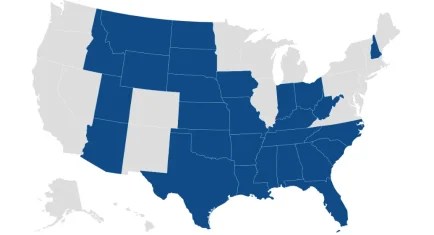
Over half of states have enacted laws/policies limiting youth access to gender affirming care
Though many face court challenges, the trend reflects mounting public concern over the medicalisation of gender-distressed youth. The HHS findings are expected to accelerate further scrutiny and legislative action.
Global shifts
The HHS review is part of a broader international movement to re-examine paediatric gender medicine.
In 2024, the UK’s Cass Review, led by paediatrician Dr Hilary Cass, delivered a landmark critique of NHS gender services. Cass concluded that the model had been adopted prematurely “based on a single Dutch study,” and lacked sufficient evidence.

Dr Hilary Cass, paediatrician
In response, the UK banned the routine use of puberty blockers and began closing the Tavistock gender clinic, replacing it with regional centres focused on holistic mental health care.
In Australia, the Queensland government took similar steps earlier this year, pausing all prescriptions of puberty blockers and cross-sex hormones for minors pending further review.
The move followed the suspension of Dr Jillian Spencer, a senior psychiatrist, from her clinical duties at Queensland Children’s Hospital after she raised concerns about the gender care protocols being used.
Her case has since become a focal point in Australia’s national debate on youth gender medicine.

Dr Jillian Spencer, paediatric psychiatrist, Queensland
A reckoning
The HHS report is more than a policy review—it is a warning.
It reveals that thousands of children—many struggling with underlying psychological issues—have been placed on a path of irreversible medicalisation without the basic safeguards expected in any other area of healthcare.
The report concludes that gender medicine has been practised backwards – treatments were introduced first, and only later did the search for evidence begin.
It calls for a course correction—one that puts evidence before ideology, and ethics above political expediency.
Whether institutions will act on its findings remains to be seen. But for families searching for answers, the report may finally provide the long-overdue clarity that has been obscured by years of activism and politics.
Pregnant women deserve better than “trust us” science
A major study has been used to reassure pregnant women that Covid-19 vaccines are safe. But the data behind the claim are fatally flawed.
By Maryanne Demasi, PhD | April 12, 2025
In medicine, few assurances carry more emotional weight—or greater responsibility—than the claim that something is “safe during pregnancy.”
Pregnant women are justifiably cautious about what they expose themselves to during this vulnerable time, and history has given them every reason to be.
The thalidomide disaster, diethylstilboestrol (DES), and other cautionary tales have shown what can happen when scientific rigour is sidelined in favour of commercial interests.
So, when a new study published in Pediatrics – the official journal of the American Academy of Pediatrics – claimed that Covid-19 vaccination in early pregnancy was safe, it came with an air of authority and reassurance.
News headlines followed suit, and public health recommendations continued to promote the vaccine’s safety in pregnancy.

But scratch the surface of this study, and something starts to unravel.
Not only are the data unverifiable and privately sourced, but the study contains a fatal flaw that renders its conclusions virtually meaningless.
The fatal flaw
The study analyzed 78,052 pregnancies that ended in a live birth—but left out 20,341 pregnancies that ended in miscarriage or other non-live outcomes.
That’s not a minor oversight.
The very purpose of studying vaccine safety in pregnancy is to assess whether exposure in utero leads to adverse outcomes—like miscarriage, birth defects, or foetal death. Yet one-fifth of the pregnancies were excluded from the analysis, removing exactly the kind of outcomes the study was supposed to detect.
This introduces what’s known as live-birth bias—a selection bias that arises when research includes only live births, disregarding the possibility that harmful effects may have caused some pregnancies to end prematurely.
Put plainly, if you only study babies who made it to birth, you’re ignoring the ones who didn’t—and any harm that may have played a role.
Even the study’s authors acknowledge this limitation, conceding that the exclusion “could lead to an underestimation of identified outcomes.” Still, they move forward to conclude there’s no association between the vaccine and birth defects.
Omitting over 20,000 pregnancies isn’t just a technicality – it’s a fatal flaw.
If even a small fraction of those pregnancies ended in miscarriage or birth defects linked to vaccination, the entire outcome could tip the other way.
Commercial data with no accountability
Then there’s the source of the data itself—a point entirely overlooked.
Rather than using clinical records from hospitals or national birth registries, the study relied entirely on a commercial database from Merative® MarketScan® Research Databases.
These databases are vast, aggregating de-identified insurance claims, prescriptions, lab results, and hospital records from more than 263 million Americans. But they are also privately owned, and their inner workings are entirely opaque.
Researchers using MarketScan data cannot verify whether the patients are real or theoretical, whether records have been altered, or how the data has been cleaned or processed before delivery.
In essence, they are working with a black box, one that comes with no guarantee of integrity.
Experts have already noted that the data from this unverified source shows signs of being unreliable.
The authors ran 93 separate statistical tests to look for differences in outcomes like birth defects. By chance alone, you’d expect a handful to be statistically significant. But none were.
The probability of that happening randomly is just 0.8%—a sign that the dataset may have been fabricated, or that its integrity is in question.
When two of the study authors – Dr Stacey Rowe and Dr Annette Regan – were asked if they had verified the authenticity of the MarketScan database—that is, if they could confirm these were ‘real’ patient data—they did not respond.

L: Dr Stacey Rowe, R: Dr Annette Regan
This isn’t a hypothetical problem.
The medical literature has already been rocked by the Surgisphere scandal, where fraudulent hospital datasets were used to produce papers in The Lancet and The New England Journal of Medicine.
Those papers were eventually retracted, but only after independent researchers demanded to see the raw data and were denied – the data were likely fabricated.
Reassurance without evidence
Despite these glaring problems, the study’s conclusions are being used to reassure pregnant women.
In Australia, for example, the government’s official guidance recommends Covid-19 vaccination in pregnancy, stating that the “recommendations for pregnant women are the same as the general population.”
This, despite the fact that pregnant women were excluded from the pivotal clinical trials and no randomised studies have ever been completed to assess the vaccine’s safety in early-pregnancy.
The result is a landscape where pregnant women are asked to make a “shared decision” with their doctors—based on scientific literature that’s increasingly built on unverifiable data, flawed assumptions, and little to no independent scrutiny.
We are drifting into a new era where conclusions are based on data that sit behind corporate firewalls. An era where trust is expected, but no longer earned.
The Pediatrics study is a case in point.
It carries the imprimatur of authority, published in the flagship journal of the American Academy of Pediatrics. But, in reality, the analysis was based on commercial datasets that cannot be independently verified, and a methodology that systematically excludes the very outcomes it was supposed to assess.
This isn’t just bad science—it’s misleading by design.
And when it comes to pregnancy, where the stakes are literally life and death, that kind of scientific chicanery is a betrayal.
Pregnant women deserve better than a “trust us” approach to medicine.
They need full access to the data, honest communication about uncertainties, and above all, respect for their right to make informed decisions based on real evidence, not selective reporting.
Until that happens, we should remain sceptical of any study that asks us to believe in the evidence without seeing it.
Featured Video

Seyed M. Marandi: Negotiations Collapsed – Return to War
or go to
Aletho News Archives – Video-Images
From the Archives
Wartime internment camps in Australia
National Archives of Australia
World War I
During World War I, for security reasons the Australian Government pursued a comprehensive internment policy against enemy aliens living in Australia.
Initially only those born in countries at war with Australia were classed as enemy aliens, but later this was expanded to include people of enemy nations who were naturalised British subjects, Australian-born descendants of migrants born in enemy nations and others who were thought to pose a threat to Australia’s security.
Australia interned almost 7,000 people during World War I, of whom about 4,500 were enemy aliens and British nationals of German ancestry already resident in Australia.
Records of World War I internment camps
World War II
During World War II, Australian authorities established internment camps for three reasons – to prevent residents from assisting Australia’s enemies, to appease public opinion and to house overseas internees sent to Australia for the duration of the war.
Unlike World War I, the initial aim of internment during the later conflict was to identify and intern those who posed a particular threat to the safety or defence of the country. As the war progressed, however, this policy changed and Japanese residents were interned en masse. In the later years of the war, Germans and Italians were also interned on the basis of nationality, particularly those living in the north of Australia. In all, just over 20 per cent of all Italians resident in Australia were interned. … continue
Blog Roll
 Aletho News
- Seyed M. Marandi: Negotiations Collapsed – Return to War
- Tomorrow’s naval blockade showdown
- ‘Israel’ attacks civilians to hide its embarrassing military failures & out of pure sadism
- Any Foreign Military Vessel Approaching Hormuz Under Any Pretext ‘Will Be Dealt With Severely’: IRGC
- Diplomats slam US negotiators’ performance in Iran talks
- Trump Refuses Exit Ramp, War with Iran will Continue
- Trump Says US Naval Blockade in Strait of Hormuz Will Begin Shortly
- US, Iran end 21-hour talks without agreement
- US IRAN TALKS: Who Are the Crazy Ones Here? /Lt Col Daniel Davis
- Talks with the US end without a deal over excessive US demands: Iran
- If Americans Knew
- US-Iran ceasefire negotiations make zero progress – Daily Update
- Pro-Israel ‘Thinktanks’ and Individuals who Influence U.S. Foreign Policy
- Mearsheimer reveals how Israel dictates US policies on Iran, Gaza – video
- After killing 350+, Israel still has a “score to settle” with Lebanon before ceasefire – Daily Update
- Military aid to Israel emerges as the latest political litmus test for Democrats
- The only Palestinian children’s rights organization closes following years-long Israeli campaign against it
- ‘I Can’t Forget the Smell’: Lebanese Reel After Israel Kills Over 300 in Single Day
- DNC Shoots Down Resolutions Calling Out AIPAC and Limiting Arms to Israel
- TCN: Is Israel Blackmailing President Trump?
- Israel killed at least 303 Lebanese yesterday – who were they? Daily Update
- No Tricks Zone
- Cave Discovery Reveals Today’s Desert Climates Were Recently Far Warmer, Wetter, Teeming With Life
- German Expert: Heat Dome Led To Record Temps In Western USA…Warmer In 1934, 1936
- New Study: No Linear Warming Or Glacier Retreat Along Northern Antarctic Peninsula Since 1980s
- An Inconvenient Tree: Uncovered In Alps… Europe Much Warmer Than Today 6000 Years Ago
- New Study Reports A 60% Slowdown In Greenland’s Ice Loss Rate In The Last Decade
- Low Intensity Tornado Wrecks Major Solar Farm, Creating A Potential Toxic Dump
- New Study Finds Warming Saves Lives…Cold Temperatures 12 Times More Deadly Than Excess Heat
- German Science Blog Accuses PIK Climate Institute Of Hallucinating Climate Tipping Points
- Devastating Assessment Of Comirnaty Vaccine By Former Senior Pfizer Europe Toxicologist
- New Study: CO2 Is ‘Effectively Negligible’ As An Explanatory Climate Change Factor Since 2000
 Aletho News