From Betar to Shomrim, re-emergence of Zionist private militias in the West

By David Miller | Press TV | May 25, 2025
In April of this year, anti-Zionist Jewish writer Alon Mizrahi claimed that Israeli Prime Minister Benjamin Netanyahu and his network of international Zionists are working to establish a policing force with powers surpassing those of national law enforcement agencies.
Mizrahi described this as the beginning of overt Jewish-Zionist policing of Western societies.
He was referring specifically to the ever more egregious statements from Betar in the US, an ultra-Zionist group affiliated with the far-right Revisionist Zionist movement founded by Vladimir Jabotinsky.
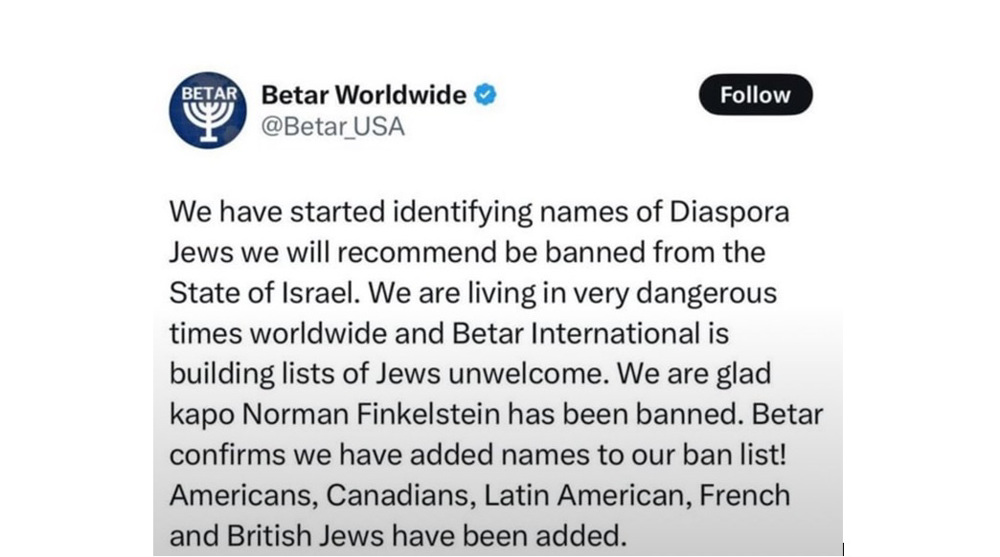
They have threatened to compile lists of Jews to be banned by the Zionist entity across North and South America, as well as Britain and France.
Mizrahi warned, “They start with Jews as a deception: all of you are next.”
However, the situation may already be far worse than what Mizrahi suggests.
Since its founding in 1923, Betar has trained as a paramilitary force. The photo below shows Menachem Begin wearing a Betar uniform in Poland in 1932.
Below it is another photo from Berlin in 1936, taken after the Nazis enacted laws outlawing other political groups in 1933.


Betar was so closely aligned with the Nazis and Mussolini’s fascists that they were regarded as collaborators. By 1934, Jabotinsky and his Betar youth movement had reportedly “allied with Il Duce,” establishing a naval base north of Rome.
Late that year, Mussolini reportedly expressed support for Zionism and Jabotinsky in particular, stating: “For Zionism to succeed, you need to have a Jewish State with a Jewish flag, and Jewish language. The person who understands that is your fascist, Jabotinsky.”
This remark was made “during a private conversation with Nahum Goldman, founder of the World Jewish Congress, in November 1934,” as reported by Lenni Brenner in Zionism in the Age of Dictators.
Many senior Betar members served in the collaborationist police overseeing the Vilna Ghetto in Lithuania and were involved in betraying Jews in hiding to the Nazis.
One such member, Lotek Salzwasser, was eliminated by Jewish partisans in 1943 for his collaboration, according to Israeli press reports.
Betar and military training
One of the seven core principles of the Betar “Oath” is Magen, meaning “Protection.”
One of Betar’s ideological principles is military preparedness. Betar demands that all its members complete military seminars and know how to use weapons, in order to be ready at any time and to respond personally to a call for defense.
Betar has functioned as a militia since its inception. Here is a film of one of the French branches recorded in 2014 conducting paramilitary training exercises.
In the UK, Betar operated as a registered charity (Brit Tumbledor of Great Britain – Betar) between 1984 and 2004. It was closed down by the Charity Commission in 2004, on the grounds that it had been “Registered in error.”
In March 2025, Betar threatened to murder UN Special Rapporteur Francesca Albanese. On the very same day, the group relaunched its UK branch with a post on Instagram, claiming London “has become, with the time, an epicenter for radical Islam, for hate, for terror.” Their proposed solution?
Today, after more than 30 years, a bunch of strong young leaders stand up to say HERE WE ARE, to defend the Jewish population and to tell them that now we have a solution for the current situation, JEWS ARE NOT AFRAID ANYMORE!
Make no mistake – these threats are part of a deliberate effort to revive Jewish supremacist militias in the UK and the US.
Magen Am
The term Magen also appears in the name of a US-based private Zionist militia called Magen Am, which is currently active in Los Angeles, Orange County, and Phoenix.
Magen Am played a notably violent role in attempts to dismantle the student encampment at UCLA. The group frequently boasts about its close ties to the LAPD, sharing numerous photos of friendly interactions with police officers.
Reports indicate that Magen Am has collaborated directly with law enforcement, including working closely with the LAPD to intimidate and attack student protesters on the UCLA campus.

Magen Am, of course, recruits veterans of the occupation forces’ Lone Soldier programme and some then return to “serve” in the genocide as they proudly boast.
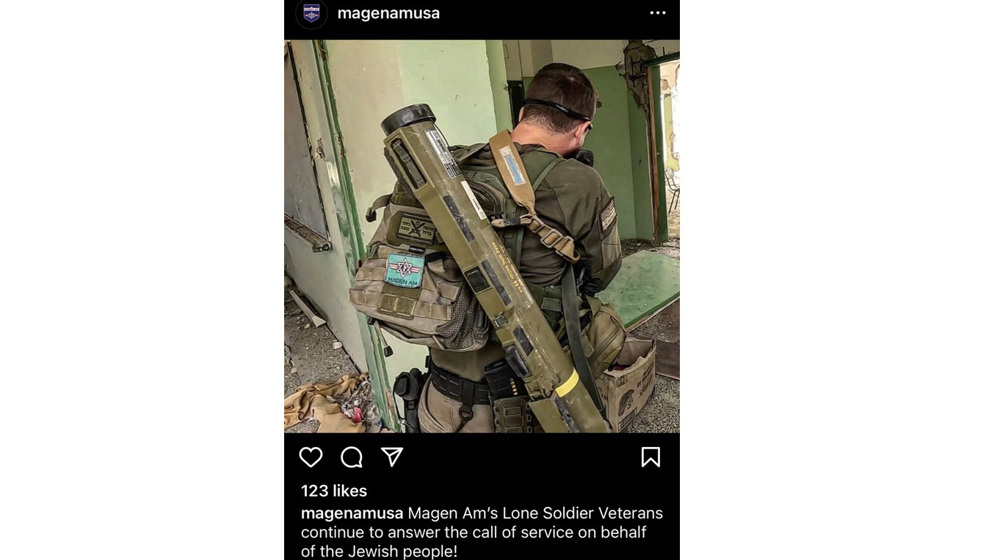
Magen Am was founded in 2017 by Yossi Eilfort, an MMA fighter-turned-Chabad rabbi. The flag of the genocidal Chabad cult was flown by the attackers on campus in Los Angeles.
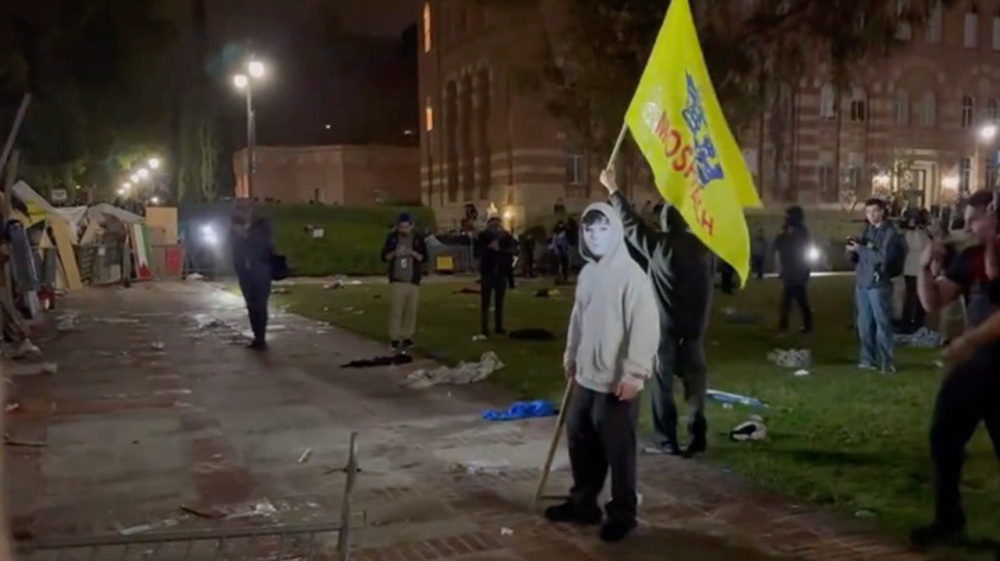
Chabad has many followers in the so-called Hilltop Youth in occupied Palestine, which the Zionist intelligence agency Shin Bet says are responsible for the overwhelming majority of so-called ‘price-tag’ revenge attacks on Palestinians.
The rise of Jewish supremacism in Western societies is becoming increasingly visible, though many continue to deny or downplay its existence.
While Zionist militias and private security firms openly collaborate to suppress student protests in the US, there is a more subtle infiltration of police forces by Zionist Jewish supremacists.
Shomrim: The Private Jewish Patrol
Shomrim is a private Jewish police force operating in parts of the US, UK, Australia, and Belgium. It is reported that “over 20 Shomrim organisations exist worldwide.”
In London, the Shomrim North West Community Patrol operates in the Borough of Barnet. Founded in 2008 by Gary Ost as a registered charity, it acts as a “mobile neighbourhood watch” and acts as eyes and ears for the Metropolitan Police.
Shomrim claims that all “Volunteers have completed training from the Metropolitan Police Counter Terrorism Command (SO15) in assisting to identify potential security threats and suspicious activity. “
One blogger notes that the genocidal cult Chabad also has a ‘nasty tendency to normalize sexual abuse and protect serial sexual predators in its ranks.” But it’s not only Chabad; there is a similar tendency throughout the Zionist movement.
No surprise, then, to find that the founder of Shomrim in London has been implicated in this.
In 2013 Police dropped their investigation into Ost, who had been arrested on suspicion of perverting the course of justice in relation to an investigation of an alleged child sexual abuser, Rabbi Chaim Halpern.
Indeed, charges against the alleged sexual predator were dropped back then, too. Yet new allegations against Rabbi Halpern have resurfaced a decade later, and the trial for these offences is still pending.
Shomrim abuses
In New York, Shomrim has faced criticism for “using excessive force against non-Jewish suspects.”
In 2014, two Shomrim members were charged as part of a group of five Hasidic men for assaulting 22-year-old Black student Taj Patterson as he walked home from a party.
Additionally, Shomrim organizers in New York have reportedly withheld information on suspected Jewish criminals. The NYPD has openly criticized the group for not always notifying police when calls come in, raising concerns about accountability and cooperation.
Given Shomrim’s protected status with law enforcement and the documented culture of sexual abuse in some ultra-Orthodox communities, credible allegations of abuse within these groups are unsurprising.
On October 11, 2023, the United States Department of Justice issued a press release that Jacob Daskal, former head of the Boro Park Shomrim Society—a private Orthodox Jewish crime-patrol group associated with the NYPD—was sentenced to 210 months in prison and fined $250,000 for transporting a minor with intent to engage in criminal sexual activity.
Daskal pleaded guilty to the charge in July 2023. As part of the sentence, Daskal is required to register as a sex offender.” The statement notes that Daskal was introduced to a 15 year old girl “as a result of his position with the Shomrim”, who he then “groomed” for sexual abuse. According to the Department of Justice statement:
“Throughout the abuse, Daskal instructed the victim to delete their communications and warned her not to tell anyone about their sexual relationship. He also used his position as a community leader to silence the victim, bragging about his law enforcement connections and warning her that disclosure would ruin her life. The victim was expelled from her religious school after revealing the relationship to the school principal.”
This case raises troubling questions: How many other abusive situations are currently unfolding within Shomrim and other Jewish militia groups?
Shomrim protects genocide
What is it that Shomrim are protecting? One illustrative example is the Crown Heights Shomrim branch, which in January this year provided security protection for the genocidal President of Israel, Yitzchak Herzog and for the leadership of the genocidal cult Chabad, as shown in the image below.

If Shomrim really wants to protect Jews in the US and UK, they should start by apprehending the entire leadership of Chabad and members of the genocidal Zionist regime.
Police reluctance toward Shomrim in the UK
Initially, UK police were resistant to Shomrim’s activities. In 2008, Chief Superintendent Steve Bending, then Hackney’s borough commander, stated, “I do not support the concept of any community having its own form of patrol service. There is a risk of other communities feeling intimidated by this course of action.”
As late as 2015, Metropolitan Police Commissioner Sir Bernard Hogan-Howe expressed his preference that Shomrim volunteers avoid uniforms resembling those of official officers.
Shomrim, however, rejected this, saying “its volunteers should not drive marked cars or wear uniforms similar to those of the police.” Gary Ost, chief executive of Shomrim in Golders Green, north-west London, stated, “Our uniforms look nothing like the police and are marked from every angle with clear wording saying ‘Shomrim’.”
Yet a glance at their uniforms and liveried vehicles often gives a very different impression.


But the penetration of the police is now much more advanced and cooperation is the name of the game. There are numerous examples of apparent cordial relations between the two on the internet.
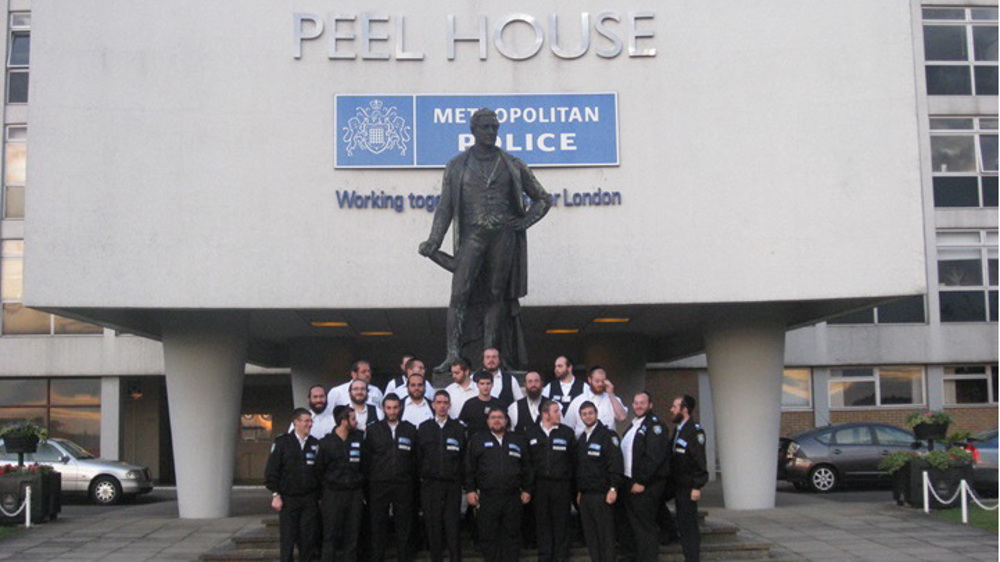
Shomrim members even posed outside Peel House, the headquarters of the Metropolitan Police.
Below is a photo of a prize giving for Shomrim members commended for their “bravery” and “exemplary service to the community” in 2020.
Shomrim chief executive Gary Ost, the one arrested in 2013, is one of the three.

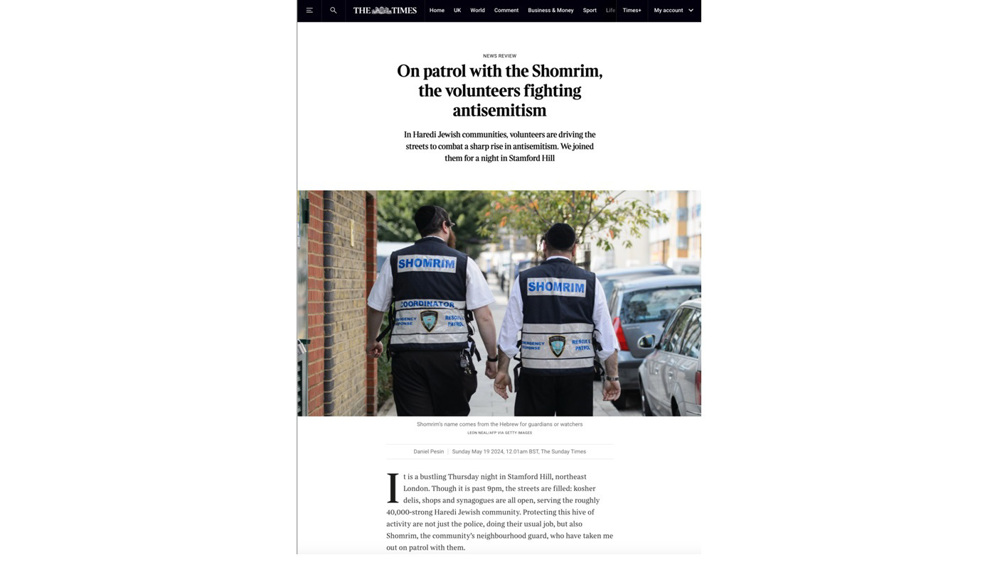
Shomrim plays a key role in shaping the narrative around the widespread antisemitism claims that Israel relies on to justify its genocidal actions.
The pressing question is: What happens when members of Shomrim break the law or commit wrongdoing? Would the police be able—or even willing—to enforce the law against them?
Alon Mizrahi, whom we cited earlier, shared his perspective in a conversation with me:
“They are pretending to be defending themselves in the most friendly country to Jews in history. While committing genocide. In a country that is so hateful of Jews that we need a private police force for Jews only in the US.
“And I have no doubt that if they can normalise this, with the kind of status that Zionist Jews have managed to create for themselves in the US; If this Jewish police force uses violence against black people, black organisers in communities who oppose the genocide, or other migrant groups or any other group, are American police going to be able to charge them?
“To use the law against them? I don’t think so. If you are in the American system, if you have a role in any part of the American system of government, in the police or any other agency, I think that at this point it is clear to you that Zionist Jews are above the law.
“The law doesn’t apply to them. So they don’t have the philosophical or legal means to deal with this. And the Zionists know this.”
Given the current climate, his assessment may well be accurate.
How India-Pakistan war will affect global and regional political order
By Salman Rafi Sheikh – New Eastern Outlook – May 24, 2025
The recent India-Pakistan war, though limited in scope, has triggered significant geopolitical reverberations by showcasing Chinese military superiority and prompting a strategic reassessment in Washington.
The China angle in regional geopolitics
Beyond the oft-repeated rhetoric of the Pakistan-China relationship being “all-weather” and “iron-clad,” the recent India-Pakistan war may come to be seen as its first major demonstration in action. Pakistan’s use of Chinese PL-15 missiles, deployed from Chinese-made J-10C fighter jets to successfully engage French-made Rafale aircraft, has underscored the strategic depth of this partnership. This has received considerable international attention, both in the media and otherwise. This show of alignment is particularly notable given recent strains in the Pak-China bilateral relationship, including attacks on Chinese interests and infrastructure projects within Pakistan.
With Pakistan importing almost 80 per cent of its weapons—which also includes cooperation in the field of military technology—from Beijing, the supply ensured to help Islamabad maintain the balance of power vis-à-vis New Delhi. More than this, China’s policy was also motivated by its desire to counter-balance Washington’s efforts to boost India against China. Ironically enough, it was only days before the recent war that the US Vice-President was in India to discuss ways to collectively counter China. But China’s support for Pakistan meant that New Delhi remained preoccupied more with Pakistan than China in a strategic sense. With this war, New Delhi’s focus will be more on Islamabad than China for at least a few more years to come. By the same token, China will most likely continue to help Pakistan develop its defence capability. Even before the war took place, media reports in Pakistan and China reveled ongoing talks between Beijing and Islamabad for the sale and purchase of J-35 fifth-generation stealth fighter jets.
These developments highlight at least four key takeaways. First, China’s defense technology—likely tested in actual combat for the first time—has proven effective enough to attract interest from other regional powers. Its demonstrated performance could prompt these countries to purchase and integrate Chinese systems into their own militaries. This, in turn, would strengthen China’s position in the regional arms market and help it outcompete rival defense exporters. Second, China’s willingness to export advanced military technology—such as the PL-15 missile and J-35 fighter jets—signals a broader strategic intent to deepen its global partnerships. This approach is consistent with Beijing’s “no-limits” alliance with Moscow.
Third, the demonstrated effectiveness of Chinese weaponry against India could encourage regional states to reassess their foreign policy alignments, potentially fostering deeper integration with Beijing over New Delhi. This trend is already evident in countries like Sri Lanka and the Maldives, where pro-Beijing political shifts have gained momentum—most notably in the Maldives, where the new government compelled Indian troops to withdraw. Fourth, Pakistan’s military successes in this conflict challenge a common narrative in global discourse: that partnerships with China inevitably lead to economic “debt traps.” On the contrary, Pakistan’s economic ties with China appear to have laid the foundation for robust military-to-military cooperation, illustrating how economic integration can support broader strategic alignment.
India’s position in Washington’s arc
Can Washington still push—with enough confidence—India as its key ally? What is the material reality of India’s standing within the US-led Quadrilateral Security Dialogue (QUAD)? If the QUAD was ever to become a military alliance, the only power in the region that the US expected to be effective on its own against China is/was India—not only because India and China have a long history of rivalry, but also because India remains a big military power. Needless to say, it is the only nuclear power part of the QUAD from the Indo-Pacific region. In this sense, it can maintain deterrence vis-à-vis Beijing. But nuclear deterrence can prevent a nuclear war, as is evident from the recent India-Pakistan conflict. It cannot necessarily prevent conventional conflict. Can India act as the front-line ally for Washington in the region in a conventional war?
The outcome of India-Pakistan was means Washington will have to rethink its strategy. It can take two shapes. First, it is very much possible that Washington will deepen its cooperation with New Delhi. Donald Trump has already offered to sell F-35 fifth-generation stealth fighters. (Russia has also offered New Delhi to sell its own fifth-generation Su-57 jets.) This, however, will necessarily involve China deepening its cooperation with Pakistan. As a result, an arms race will be triggered in the region.
A second strategic path for Washington could involve renewed engagement with China. While the timing of the Trump administration’s trade negotiations with Beijing may coincide with the outcome of the India-Pakistan conflict purely by chance, it nonetheless suggests that even a confrontational administration has not entirely ruled out dialogue as a preferred tool. Washington might also pursue a dual-track approach—engaging China while simultaneously strengthening military alliances elsewhere.
However, in the wake of shifting dynamics following the India-Pakistan conflict, the US will likely need to reassess its regional strategy and consider alternatives to India. Japan, for instance, emerges as a strong candidate. With its recent push toward military normalization and a growing appetite for deeper strategic engagement, Tokyo could become a more prominent partner in Washington’s Indo-Pacific security architecture.
To be clear, this does not imply a fundamental rupture in US-India relations. But it is increasingly likely that Washington will place India’s role under careful review, potentially redefining its status as the principal frontline ally in countering China. In response to China’s growing influence and military reach, the US will need to significantly bolster the defense capabilities of other regional actors—most notably Japan and Australia—as part of a broader strategic recalibration.
Salman Rafi Sheikh, research analyst of International Relations and Pakistan’s foreign and domestic affairs
Gender-affirming care for minors under fire in sweeping US report
By Maryanne Demasi, PhD | May 4, 2025
Paediatric gender dysphoria has rapidly emerged as one of the most divisive and urgent issues in medicine today. In the past decade, the number of children and adolescents identifying as transgender or nonbinary has soared.
In the US alone, diagnoses among youth aged 6 to 17 nearly tripled—from around 15,000 in 2017 to over 42,000 by 2021—signalling a seismic shift not only in culture but in clinical practice.
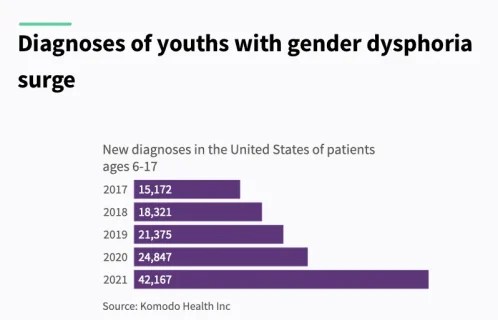
Children diagnosed with gender dysphoria—a condition defined by distress related to one’s biological sex or associated gender roles—are increasingly being offered powerful medical interventions.
These include puberty blockers, cross-sex hormones, and, in some cases, irreversible surgeries such as mastectomy, vaginoplasty, or phalloplasty.
An umbrella review from the US Department of Health and Human Services (HHS) states that “thousands of American children and adolescents have received these interventions,” despite a lack of solid scientific footing.
While advocates often claim the treatments are “medically necessary” and “lifesaving” the report concludes “the overall quality of evidence concerning the effects of any intervention on psychological outcomes, quality of life, regret, or long-term health, is very low.”
It also cautions that evidence of harm is sparse—not necessarily because harms are rare, but due to limited long-term data, weak tracking, and publication bias.
This 409-page report delivers a scathing review of the assumptions, ethics, and clinical practices driving gender-affirming care in the US.
An inversion of medical ethics
At the heart of the HHS critique is a reversal of medical norms.
“In many areas of medicine, treatments are first established as safe and effective in adults before being extended to paediatric populations,” the report explains. “In this case, however, the opposite occurred.”
Despite inconclusive outcomes in adults, these interventions were rolled out for children—without rigorous data, and with little regard for long-term, often irreversible consequences.
These include infertility, sexual dysfunction, impaired bone development, elevated cardiovascular risk, and psychiatric complications.
“The physical consequences are often irreversible,” the report warns.
Puberty blockers, frequently marketed as a reversible ‘pause,’ actually interrupt bone mineralisation at a critical growth stage—raising the risk of stunted skeletal growth and early-onset osteoporosis.
When followed by cross-sex hormones, as is common, the harms multiply. Known risks include metabolic disruption, blood clots, sterility, and permanent loss of sexual function.
Yet many clinics operate under a “child-led care” model, where a minor’s self-declared “embodiment goals” dictate treatment.
The report notes that some leading clinics conduct assessments “in a single session lasting two hours,” often with no robust psychological evaluation.
Consent and capacity
This raises a critical question: are children capable of consenting to life-altering medical interventions?
According to the HHS, informed consent means more than simple agreement—it requires a deep understanding of risks, alternatives, and long-term impact.
And by definition, children lack full legal and developmental capacity for medical decision-making.
“When medical interventions pose unnecessary, disproportionate risks of harm, healthcare providers should refuse to offer them even when they are preferred, requested, or demanded by patients,” the report states.
Supportive parents cannot shield clinicians from ethical responsibility. Many children who present for transition also have autism, trauma histories, depression, or anxiety—all of which can impair decision-making.
Yet clinicians frequently misread a child’s desire to transition as evidence of capacity.
The report warns that the current affirmation model “undermines the possibility of genuinely informed consent” and that the “true rate of regret is not known.”
This becomes especially urgent when the outcomes—sterility, bone loss, and sexual dysfunction—are permanent. Can a 13-year-old grasp what it means to forgo biological parenthood?
As the report suggests, the system has failed to distinguish between a young person’s wish to transition and their developmental ability to understand what that means long term.
A moral failure
The problem is not only medical—it’s moral.
The HHS accuses the medical establishment of abandoning its core duty: to protect vulnerable patients. Ideology and activism, it argues, have taken precedence over evidence and caution.
“The evidence for benefit of paediatric medical transition is very uncertain, while the evidence for harm is less uncertain,” it states.
Among the most disturbing trends highlighted in the report is the sidelining of mental health support.
Research suggests that most cases of paediatric gender dysphoria resolve without intervention. Yet clinicians continue to proceed with irreversible treatments.
“Medical professionals have no way to know which patients may continue to experience gender dysphoria and which will come to terms with their bodies,” the report explains.
The illusion of consensus
The report also takes aim at the idea that gender-affirming care enjoys universal professional backing. It reveals that many official endorsements come from small, ideologically driven committees within larger organisations.
“There is evidence that some medical and mental health associations have suppressed dissent and stifled debate about this issue among their members,” it warns.
Several whistleblowers have spoken out—often at considerable personal risk.
Jamie Reed, a former case manager at the Washington University Transgender Center, alleged that children were being rushed into medical transition without adequate psychological screening. Her testimony led to a state investigation and Senate hearing.
Clinical psychologist Erica Anderson, a transgender woman and former president of the US Professional Association for Transgender Health, has repeatedly raised concerns about the haste with which children are put on medical pathways.
Dr Eithan Haim, a surgeon in Texas, is now facing prosecution after revealing details about paediatric gender surgeries at a children’s hospital.
Rather than sparking debate, these whistleblowers have faced vilification, career damage, and in some cases legal consequences. The HHS suggests this culture of fear has stifled the scientific inquiry necessary for sound medicine.
Psychotherapy as an alternative
Instead of defaulting to hormones or surgery, the report urges a return to psychotherapy. Gender-related distress, it notes, often overlaps with broader psychological challenges that can be addressed non-invasively.
“There is no evidence that pediatric medical transition reduces the incidence of suicide, which remains, fortunately, very low,” the report finds.
Psychotherapy carries no documented harms and offers space for resolution and support. The HHS calls for greater investment in “psychotherapeutic management” as a safer and more ethical approach.
Restoring scientific integrity
Commissioned under President Trump’s Executive Order Defending Children’s Innocence by Ending Ideological Medical Interventions, the report responds to growing alarm over the medicalisation of minors.
Trump’s Executive Order directed federal agencies to evaluate practices to help “minors with gender dysphoria, rapid-onset gender dysphoria, or other identity-based confusion, or who otherwise seek chemical or surgical mutilation.”
It explicitly criticised “junk science” promoted by groups such as the World Professional Association for Transgender Health (WPATH), calling for a return to evidence-based standards and scientific discipline.
Rather than imposing new mandates, the HHS report focuses on delivering “the most accurate and current information available” to clinicians, families, and policymakers—urging caution and restraint.
“Our duty is to protect our nation’s children—not expose them to unproven and irreversible medical interventions,” said NIH Director Dr Jay Bhattacharya. “We must follow the gold standard of science, not activist agendas.”
Reform already underway
The HHS report lands amid a wave of legal reforms.
As of this year, 27 states have passed laws restricting or banning gender-affirming care for minors. These range from full bans on hormones and surgery to tighter consent requirements.
Nineteen of those laws were passed in 2023 alone, according to the Kaiser Family Foundation.
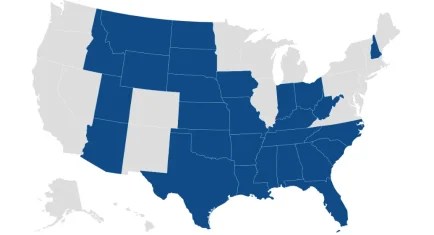
Over half of states have enacted laws/policies limiting youth access to gender affirming care
Though many face court challenges, the trend reflects mounting public concern over the medicalisation of gender-distressed youth. The HHS findings are expected to accelerate further scrutiny and legislative action.
Global shifts
The HHS review is part of a broader international movement to re-examine paediatric gender medicine.
In 2024, the UK’s Cass Review, led by paediatrician Dr Hilary Cass, delivered a landmark critique of NHS gender services. Cass concluded that the model had been adopted prematurely “based on a single Dutch study,” and lacked sufficient evidence.

Dr Hilary Cass, paediatrician
In response, the UK banned the routine use of puberty blockers and began closing the Tavistock gender clinic, replacing it with regional centres focused on holistic mental health care.
In Australia, the Queensland government took similar steps earlier this year, pausing all prescriptions of puberty blockers and cross-sex hormones for minors pending further review.
The move followed the suspension of Dr Jillian Spencer, a senior psychiatrist, from her clinical duties at Queensland Children’s Hospital after she raised concerns about the gender care protocols being used.
Her case has since become a focal point in Australia’s national debate on youth gender medicine.

Dr Jillian Spencer, paediatric psychiatrist, Queensland
A reckoning
The HHS report is more than a policy review—it is a warning.
It reveals that thousands of children—many struggling with underlying psychological issues—have been placed on a path of irreversible medicalisation without the basic safeguards expected in any other area of healthcare.
The report concludes that gender medicine has been practised backwards – treatments were introduced first, and only later did the search for evidence begin.
It calls for a course correction—one that puts evidence before ideology, and ethics above political expediency.
Whether institutions will act on its findings remains to be seen. But for families searching for answers, the report may finally provide the long-overdue clarity that has been obscured by years of activism and politics.
Pregnant women deserve better than “trust us” science
A major study has been used to reassure pregnant women that Covid-19 vaccines are safe. But the data behind the claim are fatally flawed.
By Maryanne Demasi, PhD | April 12, 2025
In medicine, few assurances carry more emotional weight—or greater responsibility—than the claim that something is “safe during pregnancy.”
Pregnant women are justifiably cautious about what they expose themselves to during this vulnerable time, and history has given them every reason to be.
The thalidomide disaster, diethylstilboestrol (DES), and other cautionary tales have shown what can happen when scientific rigour is sidelined in favour of commercial interests.
So, when a new study published in Pediatrics – the official journal of the American Academy of Pediatrics – claimed that Covid-19 vaccination in early pregnancy was safe, it came with an air of authority and reassurance.
News headlines followed suit, and public health recommendations continued to promote the vaccine’s safety in pregnancy.
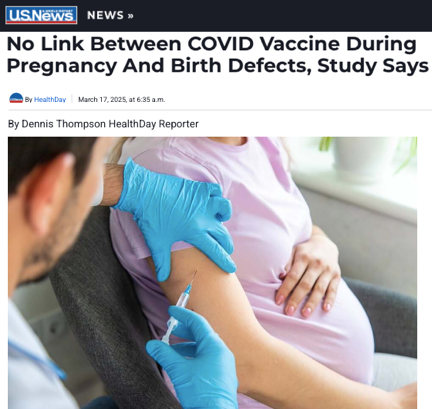
But scratch the surface of this study, and something starts to unravel.
Not only are the data unverifiable and privately sourced, but the study contains a fatal flaw that renders its conclusions virtually meaningless.
The fatal flaw
The study analyzed 78,052 pregnancies that ended in a live birth—but left out 20,341 pregnancies that ended in miscarriage or other non-live outcomes.
That’s not a minor oversight.
The very purpose of studying vaccine safety in pregnancy is to assess whether exposure in utero leads to adverse outcomes—like miscarriage, birth defects, or foetal death. Yet one-fifth of the pregnancies were excluded from the analysis, removing exactly the kind of outcomes the study was supposed to detect.
This introduces what’s known as live-birth bias—a selection bias that arises when research includes only live births, disregarding the possibility that harmful effects may have caused some pregnancies to end prematurely.
Put plainly, if you only study babies who made it to birth, you’re ignoring the ones who didn’t—and any harm that may have played a role.
Even the study’s authors acknowledge this limitation, conceding that the exclusion “could lead to an underestimation of identified outcomes.” Still, they move forward to conclude there’s no association between the vaccine and birth defects.
Omitting over 20,000 pregnancies isn’t just a technicality – it’s a fatal flaw.
If even a small fraction of those pregnancies ended in miscarriage or birth defects linked to vaccination, the entire outcome could tip the other way.
Commercial data with no accountability
Then there’s the source of the data itself—a point entirely overlooked.
Rather than using clinical records from hospitals or national birth registries, the study relied entirely on a commercial database from Merative® MarketScan® Research Databases.
These databases are vast, aggregating de-identified insurance claims, prescriptions, lab results, and hospital records from more than 263 million Americans. But they are also privately owned, and their inner workings are entirely opaque.
Researchers using MarketScan data cannot verify whether the patients are real or theoretical, whether records have been altered, or how the data has been cleaned or processed before delivery.
In essence, they are working with a black box, one that comes with no guarantee of integrity.
Experts have already noted that the data from this unverified source shows signs of being unreliable.
The authors ran 93 separate statistical tests to look for differences in outcomes like birth defects. By chance alone, you’d expect a handful to be statistically significant. But none were.
The probability of that happening randomly is just 0.8%—a sign that the dataset may have been fabricated, or that its integrity is in question.
When two of the study authors – Dr Stacey Rowe and Dr Annette Regan – were asked if they had verified the authenticity of the MarketScan database—that is, if they could confirm these were ‘real’ patient data—they did not respond.

L: Dr Stacey Rowe, R: Dr Annette Regan
This isn’t a hypothetical problem.
The medical literature has already been rocked by the Surgisphere scandal, where fraudulent hospital datasets were used to produce papers in The Lancet and The New England Journal of Medicine.
Those papers were eventually retracted, but only after independent researchers demanded to see the raw data and were denied – the data were likely fabricated.
Reassurance without evidence
Despite these glaring problems, the study’s conclusions are being used to reassure pregnant women.
In Australia, for example, the government’s official guidance recommends Covid-19 vaccination in pregnancy, stating that the “recommendations for pregnant women are the same as the general population.”
This, despite the fact that pregnant women were excluded from the pivotal clinical trials and no randomised studies have ever been completed to assess the vaccine’s safety in early-pregnancy.
The result is a landscape where pregnant women are asked to make a “shared decision” with their doctors—based on scientific literature that’s increasingly built on unverifiable data, flawed assumptions, and little to no independent scrutiny.
We are drifting into a new era where conclusions are based on data that sit behind corporate firewalls. An era where trust is expected, but no longer earned.
The Pediatrics study is a case in point.
It carries the imprimatur of authority, published in the flagship journal of the American Academy of Pediatrics. But, in reality, the analysis was based on commercial datasets that cannot be independently verified, and a methodology that systematically excludes the very outcomes it was supposed to assess.
This isn’t just bad science—it’s misleading by design.
And when it comes to pregnancy, where the stakes are literally life and death, that kind of scientific chicanery is a betrayal.
Pregnant women deserve better than a “trust us” approach to medicine.
They need full access to the data, honest communication about uncertainties, and above all, respect for their right to make informed decisions based on real evidence, not selective reporting.
Until that happens, we should remain sceptical of any study that asks us to believe in the evidence without seeing it.
NSW Premier Chris Minns Calls Free Speech a Government Liability
By Christina Maas | Reclaim The Net | March 18, 2025
Chris Minns, Premier of New South Wales, Australia, has done something that politicians rarely do — he’s said the quiet part out loud. In a rare moment of honesty, he’s admitted that the government sees free speech as a liability.
“I recognize and I fully said from the beginning, we don’t have the same freedom of speech laws that they have in the United States, and the reason for that is that we want to hold together a multicultural community and have people live in peace.”
Meaning: Your rights are negotiable, and the price is social harmony — as defined by the state.
The absurdity of this argument is hard to overstate. Historically, the country thrived on its rough-and-tumble political culture, where disagreements were hashed out in public rather than smothered under layers of legalese. The idea that Australians must now muzzle themselves to accommodate imported conflicts is an outright admission of failure by the political class.
Minns and his allies argue that restricting speech is necessary because multiculturalism has made Australia too volatile to handle open debate. But let’s take a step back. Why is Australia suddenly on edge? Is it because everyday Australians have become more hateful and intolerant, or is it because the government has spent decades encouraging division through identity politics?
The immediate context for Minns’ comments is the recent passage of hate speech laws, pushed through Parliament in a frenzy of moral panic. The justification? A crisis that turned out to be a hoax, reportedly concocted by criminals looking for lighter sentences — something the government allegedly knew early on.
MLC John Ruddick didn’t mince words when he addressed this in Parliament:
“Parliament was misinformed by the Minns government about the urgency of the bills referred to in one A, B, and C… this House calls on the Minns government to repeal the bills… and apologize for both misleading this Parliament, preventing a Parliamentary Inquiry, and further curbing free speech principles by these reactionary bills.”
Minns’ response? Doubling down:
“There have been some that have been agitating in the Parliament to nullify the laws to remove them off the statute books. Think about what kind of toxic message that would send to the NSW community.
“And I think the advocates for those changes need to explain what do they want people to have the right to say?
“What kind of racist abuse do they want to see or to be able to lawfully see on the streets of Sydney?”
This is an old trick — framing any challenge to speech restrictions as a demand for open racism. It’s dishonest, it’s lazy, and it conveniently ignores the fact that these laws will never be enforced evenly.
These laws will be used against dissenters. Against people who question government policies. Against critics of the ruling ideology.
If democracy means anything, it means the right to speak freely — even when that speech is unpopular. Even when it makes politicians uncomfortable. Because when free speech is sacrificed on the altar of “social harmony,” what you’re left with isn’t peace — it’s silence. And that silence is exactly what governments crave.
Russia’s Kursk Region Becomes Final Resting Place for NATO’s Top Tech
By Ilya Tsukanov – Sputnik – March 15, 2025
The near-total collapse of Ukraine’s operations in Kursk region has highlighted the folly of Zelensky’s obsession with throwing his best troops and materiel into a hopeless campaign. Here’s a selection of NATO equipment that has “found its peace in Kursk’s ground” over the past month, complete with photo and video evidence.
Russia’s Defense Ministry estimates that Ukraine has lost nearly 400 tanks, almost 2,800 armored vehicles and over 1,000 guns and mortars in fighting in Kursk region to date, and says over 85% of territories once occupied by Ukrainian forces have been freed.
Liberated areas contain scores of wrecked, burned out, damaged or abandoned vehicles, including some of NATO’s most advanced equipment:
M2A2 Bradley: Over 300 of these do-it-all American infantry fighting vehicles have been sent to Ukraine, with nearly half confirmed lost by Oryx. They’ve been spotted among other wrecked NATO equipment in Kursk region.
M1 Abrams: 31 of these custom-made monkey model American main battle tanks have been delivered to Ukraine. 20 lost to date. One recently spotted being towed away intact in Kursk region. Australia plans to send 49 more.
Leopard 1 AVLB Biber: Armored vehicle-launched bridge built on a German Leopard-1 tank chassis. 30+ sent to Ukraine. One recently found abandoned, in mint shape, in a Kursk village.
M777: A third of the 180 US-made 155mm howitzers sent to Ukraine have been lost, damaged, or abandoned to date, with several recently captured almost intact in Kursk region.
Stryker: Over 400 of these Canadian-built armored fighting vehicles have been transferred to Ukraine. At least 55 destroyed, some caught on Russian MoD FPV drone videos moments before meeting their fate.
BMC Kirpi II: 200 of these Turkish MRAPs have been sent to serve in Ukraine’s elite units. Scores destroyed, damaged or captured by Russian forces, including in Kursk.
HMMWV: 5,000 of these ubiquitous US vehicles, better known as Humvees, have been delivered to Ukraine. Scores captured on Russian FPV drone cam footage in Kursk region.
Roshel Senator: Over 1,700 of the Canadian-built armored cars have been delivered to Ukraine. Also spotted in Russian FPV drone videos.
MAXXPRO: About 440 these Mine-Resistant Ambush Protected Vehicles (MRAPs) have been sent to Ukraine by the US, with at least 197 lost to date, including in fighting for Kursk.
M113: 1,000+ of these ancient tracked APCs have been sent to Ukraine by the US and allies, with nearly 300 destroyed to date, including in Kursk region.
BATT UMG: Ukraine has received 116 of these US-made vehicles. Rarely seen, some are known to have met their fate on the battlefields of Kursk.
Bushmaster PMV: About 120 of these Australian-made Protected Mobility Vehicles have gone to Ukraine, some ending up in Kursk region, and at least 25 lost to date.
M240: Besides heavy equipment, an array of NATO small arms has also been destroyed or captured in Kursk as well, among them the FN M240 7.62mm machinegun, delivered to Ukraine by the US and France. In February, a Russian trooper in Kursk captured an M240 after storming a Ukrainian position and bringing the gun back to friendly lines.
Five Eyes Would Go Blind Without US Backing: US Army Vet and Intel Specialist
By Ilya Tsukanov – Sputnik – 09.03.2025
Britain’s intelligence establishment reportedly started “rationing” what info to pass on to the US after Trump’s election, and his thrashing of Zelensky at the White House last month has sparked talk of a ‘breakaway’ ‘Four Eyes’ intel-sharing pact. Sputnik reached out to a leading US military intel specialist for details on what this could entail.
Sources told The Mail on Sunday that while joint work intercepting electronic communications could be ‘hard to disentangle’, human intelligence by agents on the ground could be held back from being shared with the US, especially “raw intelligence, which can be very exposing of sources if it falls into the wrong hands.”
Diplomatic sources, meanwhile, told the newspaper that the US intelligence establishment is “in a state of panic” over Trump’s approach, and actively destroying files on assets in Russia.
Five Eyes Without US is Nothing
“The US share is huge,” retired US Army Lt. Col. Earl Rasmussen told Sputnik. “There’s very little the remaining Five Eyes would have without the US,” the observer noted, highlighting that America provides:
- Immense signals intelligence (SIGINT) capabilities including information from satellites (about 5,000 of the world’s roughly 8,000 satellites are American), in Rasmussen’s estimation
- a military feed from the US Defense Intelligence Agency
- substantive human intel
- real-time open-source info collection and analysis capabilities
- security intelligence via cooperation between the FBI and the Five Eyes’ allies’ analogs.
If the Five Eyes were to break up, Rasmussen doesn’t exclude the creation of new, regional intel-sharing alliances, like:
- Australia and New Zealand partnering up with Japan and South Korea
- The UK ramping up intel cooperation with France and Germany
As for the Five Eyes’ “global reach, the fusion of information, the mass experience, the analytical tools that are commonly operated…almost all the major ones have either been operated completely by the United States, or via a shared operation with the United States and another [country],” the observer summed up.
UK eyes intelligence alliance to share data with Ukraine
Al Mayadeen | March 9, 2025
The UK government is considering forming a new intelligence-sharing subgroup within the Five Eyes alliance in reaction to US President Donald Trump’s actions toward Ukraine, the Daily Mail reported on Sunday, citing anonymous defense officials.
The requests for the effort apparently arose after the US suspended information collaboration with Kiev and prevented the UK and other allies from sending American intelligence to Ukraine.
A new proposed subgroup would greenlight intelligence cooperation without a US veto, according to the British daily.
According to the Daily Mail, the new project is not about abandoning Five Eyes but rather about establishing a new Four Eyes suborganization within it.
Simultaneously, US allies are mulling lowering the intelligence they share with Washington, citing worries about the administration’s conciliatory attitude to Russia, according to NBC News.
These include “Israel” and Saudi Arabia, as well as Australia, the United Kingdom, Canada, and New Zealand, with the latter four being members of the US-led Five Eyes intelligence cooperation.
Officials in New Zealand, Australia, and Saudi Arabia declined to comment, while authorities in the United Kingdom, Canada, and “Israel” refuted the accusations.
The United States has temporarily suspended intelligence sharing with Ukraine following a notable rift between President Donald Trump and Ukrainian leader Volodymyr Zelensky, CIA Director John Ratcliffe confirmed on Wednesday.
The decision follows a public row between the two leaders during a meeting in the Oval Office last week, which also led to the suspension of critical US military aid to Ukraine.
Speaking to Fox Business, Ratcliffe stated that the pause in intelligence cooperation is linked to Trump’s concerns about Zelensky’s dedication to the peace process with Russia.
“President Trump had a real question about whether President Zelensky was committed to the peace process,” Ratcliffe said. He noted that the suspension is temporary and expressed confidence that the US would soon resume its close partnership with Ukraine.
For Ukraine, which is engaged in a war with Russia, US intelligence support is as vital as military supplies. The sudden halt in assistance has shocked many Ukrainians, who rely heavily on American backing in their war with Russia.
BP in crisis — The oil industry’s biggest loser on renewable energy
The iconic 120 year old company shares fall as rumors of a takeover spread
By Jo Nova | February 25, 2025
BP has lost a quarter of its share value in the last two weeks. The fall started when company profits turned out to be just $9 billion, down from $14b a year ago and $28b in 2022. As The Telegraph reports, “BP’s shareholders had realized that the green spending they supported in 2020 had halved their dividends.” But Shell, Chevron, and Exxon — the other oil giants — they were all doing much better.
Twenty years ago BP changed its branding to “Beyond Petroleum”. By 2020 the company was hellbent on getting there. Suicidally, the oil company pledged to reduce their own oil production by 40% by 2030, (which did nothing except help all their competitors) and promised to pivot into renewable power. BP set itself a target to increase renewables generation by a factor of twenty this decade. The media gushed — “BP Shuns Fossil Fuels“, said Politico. BP supposedly shone a light on “stranded oil and gas”!
Thus and verily, in mid 2020, with exquisite timing, BP management leapt headlong in the magical energy pit. They were sure that after the pandemic the world would ‘build back better’ with renewables “so their economies would be more resilient”... CEO Bernard Looney actually said that (probably while reading from the WEF handbook of “What to Wear for Billionaires”).
So BP flagged a write-down of $18 billion dollars in fossil fuel assets and talked of “accelerating” it’s green investments. Then everything went wrong. Just after BP bet the house on renewables, the Ukraine war broke out and everyone needed oil and gas and no one needed another wind farm. There was a bonanza selling fossil fuels as prices lifted off (seen in the BP income in 2022) but suddenly no one could afford to buy real energy to make solar panels and turbines, and no one had much cash left to buy randomly-failing generators either. It’s been all downhill in renewables ever since.
Prior to this, BP operated Australia’s largest oil refinery for 66 years in Kwinana, Western Australia until it closed in 2021. Until a few weeks ago, BP was planning to launch a $600 million biofuel project on the same site, and the Australian government was thinking of tossing $1 billion dollars at a hydrogen project there too. They were supposed to turn cooking oil into av-gas and renewable diesel, and be a hub for hydrogen. It’s sadly pathetic and unravelling at warp speed.
The Telegraph has all the sordid details as British Petroleum fights for life.
BP faces ‘existential crisis’ after ruinous attempt to go green
The energy giant has vowed a ‘fundamental reset’ after its costly foray into net zero
Johnathon Leake and Ben Marlow, The Telegraph
Five years on from that speech in February 2020, the company is beleaguered by a ruthless activist investor, under pressure to boost its flatlining share price and considering a return to the oil and gas exploration that made it so successful to begin with.
The abrupt turn follows decades of crisis at one of Britain’s most venerable institutions. Today, its future is more uncertain than ever.
To win round doubters, he is expected to announce a major break with the last five years – shifting away from net zero and back towards its oil and gas heritage.
Pushed by analysts, Auchincloss, Looney’s replacement, confirmed a halt to all investment in wind and solar. “We have completely decapitalised renewables,” he said.
We can blame management, who had been on the fruity green path since 1997, and screwed up majorly, but oddly, 88% of BP shareholders also voted in favor of cutting oil and growing renewables which doesn’t make much sense. Not unless the rank and file votes were unknowingly cast-by-proxy through their hedge funds and pension accounts. Were 88% of British Petroleum investors really fooled into thinking oil was “bad” — or was BP quietly undermined by the big banker blob cartel who may have bossed all the pension funds into voting for Hari Kari? Larry Fink, head of BlackRock, pumped up the whole renewables bubble in 2020, and the bankers were known to boss around whole countries with threats of high interest rates if they didn’t behave.
Hypothetically if the Big Bankers were heavily invested in renewable stocks (which they were), then during a bubble, it would work out well for them if one of the largest oil and gas companies performed a large public flip to renewables. And as a bonus, if BP shareholders were stiffed in the process, the wreckage of a great company could be picked up cheaply a few years later…
So management were crazy, but they probably had help from The Blob Bankers and the Blob Media to really screw things up.
USAID – AusAID: Same playbook different actors
By Alan Moran | Regulatory Review | February 18, 2025
Donald Trump tweeted “Looks like billions of dollars have been stolen at USAID and other agencies much of it going to the fake news media as a payoff for creating good stories about the Democrats”. Revelations about corruption in the USAID beg questions about the integrity of Australia’s aid programs.
There are long-standing questions dating back to the Clinton days and before the Rudd ALP Government.
The Clintons are estimated to be worth between $120 million and $240 million having been in debt by $16 million when Bill left office in January 2001. According to the newsagency, Associated Press, 85 private sector stakeholders, which is more than half of the non-government people who met with Hillary Clinton while she was secretary of state, gave money — either personally or through companies or groups — to the Clinton Foundation. This amounted to $156 million. In addition, Clinton met with representatives of at least 16 foreign governments that donated as much as $170 million to the Clinton charity. Australia was among these governments.
According to Grok, in:
- February 2006: $25 million was donated to the Clinton Foundation by Foreign Minister Alexander Downer
- October 2006: Another 15 million was given for HIV/AIDS initiatives by the Clinton Foundation
- April 1 2008 – September 5 2008: Under Prime Minister Kevin Rudd $10 million was donated to the Clinton Foundation
- September 2012: Under Prime Minister Julia Gillard $14 million was donated while Hillary Clinton was the US Secretary of State. Gillard later Chaired the Foundation’s Global Partnership for Education
- September 22 2014: Foreign Minister Julie Bishop announced a commitment of $88 million over five years to the Clinton Health Access Initiative, a sister organisation to the Clinton Foundation
Miranda Devine reported, “The Abbott government topped up the left-wing organisation’s coffers with another $140 million in 2014, bringing total Australian largesse to $460 million, according to a press release from Foreign Minister Julie Bishop. The funding ceased in 2016, when Trump assumed office.
Section 70.2 of the Commonwealth Criminal Code Act 1995 makes it illegal for Australian individuals or companies to bribe foreign officials. Apparently, the law does not extend to Australian officials and politicians!
AusAID (which Tony Abbott located within DFAT in 2013) follows a similar playbook to USAID. Thus:
- The Office of Development Assistance (ODA) investments valued at $3 million and above must have a gender equality objective.
- DFAT has a $3.5 million Inclusion and Equality Fund to support LGBTQIA+ organisations to catalyse change in their communities.
- ODA spent $619 million (15 per cent of its budget) on climate related issues in 2022/23. It is not clear that grants to NGOs pressing climate issues are included.
Other Australian agencies are also involved in foreign expenditures. These include considerable funding for activities associated with climate change under the IPCC and the biennial Conference of Parties in which Foreign Affairs participate (as do CSIRO, BoM, Industry, Agriculture and others). These activities will surely soon be fully recognised as the gross destructive squandering of resources that they always were.
The Global Carbon Capture and Storage Institute (GCCSI) was initially launched in 2008 by Prime Minister Kevin Rudd who committed up to $100 million annually as part of his aim to make Australia a global leader in CCS technology. Over 15 years of total failure has not daunted its subsidy-seekers’ zeal.
More recently, the Quad Clean Energy Supply Chain Diversification Program, a spin-off from the diplomatic partnership between Australia, India, Japan and the United States, has a $50 million budget administered by “Business Australia”. Round 1, which closed on February 10, provides up to $2.5 million in funding for Australian and Indo-Pacific joint applications for studies to develop and diversify clean energy supply chains in the Indo-Pacific region. Such a scheme would not find support from President Trump but will program inertia allow it to survive the changed US agenda?
If Australia is ever to get the Trumpian leadership it needs, such programs will have to be excised, perhaps by using techniques, pioneered by Elon Musk’s Department of Government Efficiency (DOGE), involving freezing bank accounts.
Whose Universities are Better – China vs. the US? Nature Magazine might upset the conventional wisdom
By Hua Bin | February 9, 2025
It’s a widely held truism that the US has the best universities in the world despite a mediocre secondary education system. Harvard, Stanford, MIT, Yale and U Penn are marque brands that are admired worldwide. They attract students from every country and enjoy enormous financial resources from tuitions, endowments, and grants.
On the other hand, Chinese universities are generally considered by the west as diploma mills with unrecognizable and generic names – who can remember the Southern University of Technology.
While Chinese universities may not graduate many students that command astronomical starting salaries or hotly sought after by high flying hedge funds, they seem to be progressing quite nicely in one of the core missions of academic research institutions, i.e. conducing world class research in science and technology.
The prestigious Nature Magazine published its annual Nature Index ranking of the world’s top research institutions and universities in 2024. The Index is illuminating.
– The ranking was based on 75,000 high impact papers in the Nature Index 2024 Global Research Leaders from Nov 2023 to Oct 2024
– It ranked 18,588 research institutes and universities worldwide
– China Academy of Sciences (CAS) is ranked No. 1 global research institute, with 8881 counts of top research output, more than double of No. 2 ranked Harvard University (3830 counts). I wrote about the research prowess of CAS in an earlier Substack article.
– 8 out of top 10 research institutes are Chinese. They include the University of Science and Technology of China, Peking University, Zhejiang University (where the DeepSeek founder graduated from), and Tsinghua University. The other non-Chinese institutes are Harvard University and Max Planck Society in Germany.
– 12 out of top 20 research universities are Chinese. 3 are American (Harvard, Stanford, and MIT). Sichuan University (No. 15), a regional university in Southwest China, is ranked higher than Stanford (No. 16), MIT (No. 17), Oxford (No. 18) and University of Tokyo (No. 19).
– 26 out of top 50 are Chinese. 14 are American. Soochow University (No. 30), decidedly not considered a top tier school by Chinese high schoolers, outranks Yale (No. 31). Xiamen University (No. 37) is ranked higher than Berkeley (No. 38), Columbia (No. 39), Cornell (No. 44), and University of Chicago (No. 49).
– Roughly half of top 100 are Chinese. Hunan University (No. 51) outranks Princeton (No. 52). You get the drift. Interestingly, Russia Academy of Sciences (RAS) made a cameo at No. 98. No universities from India or Australia made it to the top 100 list.
Westerners look at Chinese technological breakthroughs like DeepSeek or Huawei in disbelief and sour envy. Once you dig into the foundational causes of the emergence of these tech successes, you will understand they only represent the tip of the iceberg. Soon enough, you will see the Bummock, i.e. the bulk of the iceberg. Many upsets waiting ahead.
Featured Video

Iran’s Next Strike May Not Explode. It Could Shut You Down
or go to
Aletho News Archives – Video-Images
From the Archive
Zionism’s Violent Legacy
By Donald Neff | Washington Report On Middle East Affairs | January 1996
On January 4, 1948, Jewish terrorists drove a truck loaded with explosives into the center of the all Arab city of Jaffa and detonated it, killing 26 and wounding around 100 Palestinian men, women and children.[1] The attack was the work of the Irgun Zvai Leumi – the “National Military Organization,” also known by the Hebrew letters Etzel – the largest Jewish terrorist group in Palestine. The Irgun was headed by Revisionist Zionist Menachem Begin and had been killing and maiming Arabs, Britons and even Jews for the previous ten years in its efforts to establish a Jewish state.
This terror campaign meant that at the core of Revisionist Zionism there existed a philosophical embrace of violence. … continue
Blog Roll
 Aletho News
- Trump’s Iran war is on an Israeli leash
- Saudi oil boss issues global supply warning
- Riyadh Says Its Oil System Is Intact. The Numbers Say Otherwise.
- Trump and Netanyahu Want to “Finish the Job” on Iran
- US ‘one-sided dictation’ not Iran’s beliefs makes rational talks impossible: Baghaei
- Iran’s Next Strike May Not Explode. It Could Shut You Down /Col Doug Macgregor
- Iran: US political targets legitimate if assassinations return
- Iraq shuts key border crossing with Iran under US pressure: Report
- Undersea Internet cables could be targeted in retaliation for attacks on Iran: IRGC deputy chief
- EU sending ‘biased’ observers to interfere in Serbian election – president
- If Americans Knew
- The Israel Lobby’s Changing Fortunes
- AIPAC has become such a political liability that it’s shifting to a more “nimble” approach to buying politicians
- At least 160 Israeli settler attacks in 2 weeks
- Will Gaza’s Ancient Christian Community Disappear Forever?
- Israel’s vision of regional security rests on keeping Arab states weak
- Heidi Levine recounts how Palestinian youths helped save her in settler attack
- DAILY UPDATE: Latest essential news on Palestine, Israel, & region
- Trump’s Intensifying Sabotage of the ICC, for Israel’s Sake
- Israeli military detain US and UK volunteers in West Bank including Democratic NY politician Brad Lander
- Americans at National Conservatism Conference held in Israel this year criticize Israel
- No Tricks Zone
- E-Cars Reduce CO2 Emissions By Only 41% Compared To Internal Combustion Engine Vehicles
- Predictions Made By Renowned Climate Professor Over Past Decades Have Been Proven To Be Poor
- New Study Suggests Large Regions Of The Pacific Ocean Have Been Cooling For The Last 80 Years
- Germany’s Green Energy Debacle: High Energy Costs Force Kahla Porzellan to Close After 182 Years!
- New Study: 50 Years Of The Most Aggressive ‘Net Zero’ Policies Can Only Affect The Global Climate By 0.03°C
- US September “Heat” Was No Record…Many Records Set Decades Ago
- Latest European Green Energy Debacle; Portugal’s Largest Flagship Solar Park Insolvent!
- Green Energy Debacle: German Expert Professor Fritz Vahrenholt Warns Of Severe Economic And Social Consequences
- Two More Paleo Reconstructions Affirm Meters-Higher Sea Levels Across Ireland, Brazil 7000-6000 Years Ago
- New Study: Earth And Venus Surface Warmth Largely Explained By Convection And Lapse Rate, Not CO2 Or Radiation

