Rousseff hails unveiling of Brazilian torture report
The BRICS Post | December 11, 2014
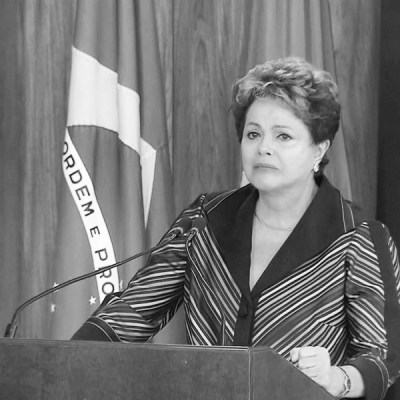 Brazilian national Truth Commission’s report presented to President Dilma Rousseff moved her to tears as it published accounts of torture, killings and disappearances during two decades of military rule from 1964-85.
“I am very proud to be here, because the people here contributed to combat the violation of human rights,” Rousseff said during an emotional speech at the ceremony on Wednesday.
“We, who so love democracy, hope that the wide circulation of this report helps to reaffirm the priority that we must give to upholding democratic liberties. In this way, we must show our absolute aversion to authoritarian states and dictatorships of any kind,” President Rousseff said.
Rousseff is a former leftist guerrilla once imprisoned and tortured by the country’s military regime. The report has identified 377 people of committing “crimes against humanity”, 200 of whom are still alive.
“This is a key step in the right direction for Brazilians: knowing their history they can build a better society,” Rousseff tweeted on Wednesday.
The Brazilian leader has alluded to her past imprisonment and physical torture under the military dictatorship during the presidential campaigning this year.
“I have come up against hugely difficult situations in my life, including attacks which took me to the limit physically. Nothing knocked me out of my stride,” said Rousseff.
Hundreds of Brazilians were murdered and thousands were tortured by the Brazilian military rule but the Latin American nation has never put anyone on trial for the murder and widespread torture of political dissidents during its dictatorship.
In 1979 the Brazilian army pushed an amnesty law to shield themselves from future prosecutions through the Brazilian Congress.
The report released on Wednesday has identified Germany’s Volkswagen AG as one of several foreign companies that provided the Brazilian military with lists and accounts of union activists.
Brazil is seeking a permanent seat on the UN Security Council and was this week voted in with a majority to the Advisory Commission of the United Nations Relief Works Agency (UNRWA).
The vote marked the first time a Latin American country was admitted to the agency’s top consultative body, which advises on “key strategic decisions,” said the UNRWA.
Ballots or Bullets: Democracy and World Power
By James Petras | October 31, 2014
The principal reason why Washington engages in military wars, sanctions and clandestine operations to secure power abroad is because its chosen clients cannot, and do not, win free and open elections.
A brief survey of recent election outcomes testify to the electoral unattractiveness of Washington-backed clients. The majority of democratic electorates rejects candidates and parties which back the US global agenda: neo-liberal economic policies; a highly militarized foreign policy; Israeli colonization and annexation of Palestine; the concentration of wealth in the financial sector; the military escalation against China and Russia. While the US policy attempts to re-impose the pillage and dominance of the 1990s via recycled client regimes the democratic electorates want to move on toward less bellicose, more inclusive governments, which restore labor and welfare rights.
The US seeks to impose the unipolar world, of the Bush Sr. and Clinton era, failing to recognize the vast changes in the world economy, including the rise of China and Russia as world powers, the emergence of the BRIC and other regional organizations and above all the growth of popular democratic consciousness.
Failing to convince electorates by reason or manipulation, Washington has opted to intervene by force, and to finance organizations to subvert the democratic electoral process. The frequent resort to bullets and economic coercion when ballots fail to produce the “appropriate outcome” testifies to the profoundly reactionary nature of US foreign policy. Reactionary in the double sense of ends and means.
Pragmatically, the imperial centered socio-economic policies deepen inequalities and depress living standards. The means to achieve power, the instruments of policy, include wars, intervention, covert operations, are more akin to extremists, quasi-fascist, far right regimes.
Free Elections and the Rejection of US Clients
US-backed electoral parties and candidates have suffered defeats throughout most of the world, despite generous financial backing and international mass media propaganda campaigns. What is striking about the negative voting outcomes is the fact that the vast majority of adversaries are neither anti-capitalist nor ‘socialist’. What is equally striking is that all of the US clients are rightist or far-rightist parties and leaders. In other words, the polarization is usually between center-left and rightist parties; the choice is between reform or reaction, between an independent or satellite foreign policy.
Washington and Latin America: Masters of Defeats
Over the past decade, Washington has backed losing neo-liberal candidates throughout Latin America and then sought to subvert the democratic outcome.
Bolivia
Since 2005, Evo Morales, the center left leader favoring social reforms and an independent foreign policy, has won three Presidential elections against Washington backed rightist parties, each time by a greater margin. In 2008, he ousted the US ambassador for intervening, expelled the Drug Enforcement Agency (DEA) in 2008, USAID in 2013 and the Military Mission after foiling an aborted coup in Santa Cruz.
Venezuela
The United Socialist Party of Venezuela (PSUV) and its predecessor have won every Presidential and Congressional election (over a dozen) except one over the past 15 years despite US multi-million dollar funding of neo-liberal opposition parties. Unable to defeat the Chavez-led radical-reform government, Washington backed a violent coup (2002), a boss’s lockout (2002/3), and decades long paramilitary attacks of pro-democracy leaders and activists.
Ecuador
The US has opposed the center-left government of President Correa for ousting it from the military base in Manta, renegotiating and repudiating some of its foreign debt and backing regional pacts which exclude the US. As a result Washington backed an abortive police led coup in 2010 that was quickly defeated.
Honduras
During democratically elected President Manual Zelaya’s tenure in office, a center-left President, Honduras sought to pursue closer relations with Venezuela in order to receive greater economic aid and to shed its reputation as a US dominated “banana republic”. Washington, unable to defeat him at the ballot box, responded by supporting a military coup (2009) which ousted Zelaya and returned Honduras to the US fold. Since the coup Honduras has experienced more killings of popular leaders-200- than any country in Latin America.
Brazil
The center-left Workers Party has won four straight elections against US backed neo-liberal candidates beginning in 2002 and continuing through the 2014 elections. The US propaganda machine, including NSA’s spying on President Rousseff and the strategic state petrol company, Petrobras, and the international financial press went all out to discredit the reformist center-left government. To no avail! The voters preferred an ‘inclusive’ social liberal regime pursuing an independent foreign policy to an opposition embedded in the discredited socially regressive neo-liberal politics of the Cardoso regime (1994-2002). In the run-up to the 2014 elections Brazilian and US financial speculators attempted to strike fear in the electorate by betting against the currency (real) and driving the stock market into a precipitous fall.
To no avail. Rousseff won with 52% of the vote.
Argentina
In Argentina a massive popular revolt overthrew the US backed neo-liberal regime of De la Rua in 2001. Subsequently, the electorate elected the center-left Kirchner government over the rightist, US backed Menem candidacy in 2003. Kirchner pursued a reformist agenda imposing a moratorium on the debt and combining high economic growth with large scale social expenditures and an independent foreign policy. US opposition escalated with the election of his wife Cristina Fernandez. Financial elites, Wall Street, the US judiciary and Treasury intervened to destabilize the government, after failing to defeat Fernandez’s re-election. Extra-parliamentary financial pressures were matched by political and economic support for rightist politicians in preparation for the 2015 elections.
Earlier, in 1976, the US backed the military coup and political terror that led to the murder of 30,000 activists and militants. In 2014 the US backed a “financial coup” as a federal judge sided with vulture funds, sowing financial terror in international markets against a democratically elected government.
Paraguay
President Fernando Lugo was a moderate former Bishop who pursued a watered-down center-left agenda. Nevertheless, he raised issues that conflicted with Washington’s extremist agenda, including Paraguay’s membership in regional organizations that excluded the US (MERCOSUR). He appealed to the landless rural workers and he retained ties to other Latin American center-left regimes. He was deposed by Congress in 2012 in a highly dubious ‘institutional coup’, quickly supported by the White House and replaced by a straight-line neo-liberal, Federico Franco with tight links to Washington and hostile to Venezuela.
Globalizing US Threats to Democracy
US subversion of democracy when center-left political formations compete for power is not confined to Latin America – it has gone ‘global’.
Ukraine
The most egregious example is the Ukraine, where the US spent over $6 billion in over a decade and a half. Washington financed, organized, and promoted pro NATO shock troops to seize power against an elected regime (Viktor Yanukovych) which tried to balance ties between the West and Russia. In February 2014, an armed uprising and mob action led to the overthrow of the elected government and the imposition of a puppet regime totally beholden to the US. The violent putschists met resistance from a large swathe of pro-democracy activists in the Eastern region. The Kiev junta led by oligarch Petro Poroshenko dispatched air and ground troops to repress the popular resistance with the unanimous backing of the US and EU. When the rightist regime in Kiev moved to impose its rule over the Crimea and to break its military base treaty with Russia, the Crimean citizens voted, by a large margin (85%), to separate and merge with Russia.
In both the Ukraine and Crimea, US policy was directed toward imposing by force, the subordination of democracy to NATO’s drive to encircle Russia and undermine its democratically elected government.
Russia
Following the election of Vladimir Putin to the Presidency, the US organized and financed a large number of opposition “think tanks”, and NGO’s, to destabilize the government. Large scale demonstrations by well-funded NGO’s were given wide play by all the Western mass media.
Failing to secure an electoral majority and after suffering electoral defeats in the executive and legislative elections, Washington and the EU, using the pretext of Russian “intervention” in the Ukraine, launched a full scale economic war on Russia. Economic sanctions were enforced in the hopes of provoking economic collapse and a popular upheaval. Nothing of the sort occurred. Putin has gained greater popularity and stature in Russia and consolidated its ties with China and the other BRIC countries.
In sum, in the Ukraine, Crimea and Russia, facing independent elected governments, Washington resorted to a mob uprising, military encirclement and an escalation of economic sanctions.
Iran
Iran has periodic elections in which pro and anti-western parties compete. Iran has drawn the wrath of Washington because of its support for Palestinian liberation from the Israeli yoke; its opposition to the Gulf absolutist states; and its ties to Syria, Lebanon (Hezbollah) and post- Saddam Hussain Iraq. As a result, the US has imposed economic sanctions to cripple its economy and finances and has funded pro-Western neo-liberal opposition NGO’s and political factions. Unable to defeat the Islamist power elite electorally, it chooses to destabilize via sanctions in order to disrupt its economy and assassinations of scientists and cyber warfare.
Egypt
Washington backed the Hosni Mubarak dictatorship for over three decades. Following the popular uprising in 2011, which overthrew the regime, Washington retained and strengthened its ties to the Mubarak police, military and intelligence apparatus. While promoting an alliance between the military and the newly elected President Mohammed Morsi, Washington funded NGO’s, who acted to subvert the government through mass demonstrations. The military, under the leadership of US client General Abdel Fattah el-Sisi, seized power, outlawed the Moslem Brotherhood and abolished democratic freedoms.
Washington quickly renewed military and economic aid to the Sisi dictatorship and strengthened its ties with the authoritarian regime. In line with US and Israeli policy, General Sisi tightened the blockade of Gaza, allied with Saudi Arabia and the Gulf despots, strengthened its ties with the IMF and implemented a regressive neo-liberal program by eliminating fuel and food subsidies and lowering taxes on big business.
The US backed coup and restoration of dictatorship was the only way Washington could secure a loyal client relationship in North Africa.
Libya
The US and NATO and Gulf allies launched a war (2011) against the independent, nationalist Libyan government, as the only way to oust the popular, welfare government of Colonel Gaddafi. Unable to defeat him via internal subversion, unable to destabilize the economy, Washington and its NATO partners launched hundreds of bombing missions accompanied by arms transfers to local Islamic satraps, tribal, clans and other violent authoritarian groups. The subsequent ‘electoral process’ lacking the most basic political guarantees, fraught by corruption, violence and chaos, led to several competing power centers. Washington’s decision to undermine democratic procedures led to a violent Hobbesian world, replacing a popular welfare regime with chaos and terrorism.
Palestine
Washington has pursued a policy of backing Israeli seizures and colonization of Palestinian territory, savage bombings and the mass destruction of Gaza. Israel, determined to destroy the democratically elected Hamas government, has received unconditional US backing. The Israeli colonial regime has imposed racist, armed colonies throughout the West Bank, financed by the US government, private investors and US Zionist donors. Faced with the choice between a democratically elected nationalist regime, Hamas, and a brutal militarist regime, Israel, US policymakers have never failed to back Israel in its quest to destroy the Palestinian mini-state.
Lebanon
The US, along with Saudi Arabia and Israel, has opposed the freely elected Hezbollah led coalition government formed in 2011. The US backed the Israeli invasion in 2006, which was defeated by the Hezbollah militias. Washington backed the right wing Hariri-led coalition (2008 – 2011) which was marginalized in 2011. It sought to destabilize the society by backing Sunni extremists especially in Northern Lebanon. Lacking popular electoral support to convert Lebanon into a US client state, Washington relies on Israeli military incursions and Syrian based terrorists to destabilize Lebanon’s democratically elected government.
Syria
Syria’s Bashar Assad regime has been the target of US, EU, Saudi and Israeli enmity because of its support for Palestine, its ties with Iraq, Iran, Russia and Hezbollah. Its opposition to the Gulf despotism and its refusal to become a US client state (like Jordan and Egypt) has been another source of NATO hostility. Under pressure from its internal democratic opposition and its external allies, Russia and Iran , the Bashar Assad regime convoked a conference of non-violent opposition parties, leaders and groups to find an electoral solution to the ongoing conflict. Washington and its NATO allies rejected a democratic electoral road to reconciliation. They and their Turkish and Gulf allies financed and armed thousands of Islamic extremists who invaded the country. Over a million refugees and 200,000 dead Syrians were a direct result of Washington’s decision to pursue “regime change” via armed conflict.
China
China has become the world’s largest economy. It has become a leading investment and trading country in the world. It has replaced the US and the EU in Asian, African and Latin American markets. Faced with peaceful economic competition and offers of mutually beneficial free trade agreements, Washington has chosen to pursue a policy of military encirclement, internal destabilization and Pan Pacific integration agreements that exclude China. The US has expanded military deployments and bases in Japan, Australia and the Philippines. It has heightened naval and air force surveillance just beyond China’s limits. It has fanned rival maritime claims of China’s neighbors, encroaching on vital Chinese waterways.
The US has supported violent Uighur separatists, Tibetan terrorists and protests in Hong Kong in order to fragment and discredit China’s rule over its sovereign territory. Fomenting separation via violent means results in harsh repression, which in turn can alienate a domestic constituency and provide grist for the Western media mills. The key to the US countering China’s economic ascent is political: fomenting domestic divisions and weakening central authority. The democratization which Chinese citizens favor has little resonance with US financed ‘democracy’ charades in Hong Kong or separatist violence in the provinces.
Washington’s effort to exclude China from major trade and investment agreements in Asia and elsewhere has been a laughable failure. The principle US “partners”, Japan and Australia are heavily dependent on the Chinese market. Washington’s (free trade) allies in Latin America, namely Colombia, Peru, Chile and Mexico are eager to increase trade with China. India and Russia are signing off on multi-billion dollar trade and investment deals with China! Washington’s policy of economic exclusion miscarried in the first month!
In sum, Washington’s decision to pursue confrontation over conciliation and partnership; military encirclement over co-operation; exclusion over inclusion, goes counter to a democratic foreign policy designed to promote democracy in China and elsewhere. An authoritarian choice in pursuit of unachievable Asian supremacy is not a virtue; it is a sign of weakness and decay.
Conclusion
In our global survey of US policy toward democracy, center-left governments and free elections we find overwhelming evidence of systematic US hostility and opposition. The political essence of the “war on terrorism” is Washington’s world-wide long-term pernicious assault on independent governments, especially center-left democratic regimes engaged in serious efforts to reduce poverty and inequality.
Washington’s methods of choice range from financing rightist political parties via USAID and NGO’s, to supporting violent military coups; from backing street mobs engaged in destabilization campaigns to air and ground invasions. Washington’s animus to democratic processes is not confined to any region, religious, ethnic or racial group. The US has bombed black Africans in Libya; organized coups in Latin America against Indians and Christians in Bolivia; supported wars against Muslims in Iraq, Palestine and Syria; financed neo-fascist “battalions”and armed assaults against Orthodox Christians in the Eastern Ukraine; denounced atheists in China and Russia.
Washington subsidizes and backs elections only when neo-liberal client regimes win. It consistently destabilizes center-left governments which oppose US imperial policies.
None of the targets of US aggression are strictly speaking anti-capitalist. Bolivia, Ecuador, Brazil, Argentina are capitalist regimes which attempt to regulate tax and reduce disparities of wealth via moderate welfare reforms.
Throughout the world, Washington always supports extremist political groups engaged in violent and unconstitutional activity that have victimized democratic leaders and supporters. The coup regime in Honduras has murdered hundreds of rank and file democratic activists, farm workers,and poor peasants.
The US armed Islamic jihadist and ex-pat allies in Libya have fallen out with their NATO mentors and are at war among themselves, engaging in mutual bloodletting.
Throughout the Middle East, South Asia, North Africa, Central America and the Caucuses wherever US intervention has taken place, extreme right-wing groups have served, at least for a time, as Washington and Brussels’ principal allies.
Pro EU-NATO allies in the Ukraine include a strong contingent of neo-Nazis, paramilitary thugs and “mainstream” military forces given to bombing civilian neighborhoods with cluster bombs.
In Venezuela, Washington bankrolls terrorist paramilitary forces and political extremists who murdered a socialist congressional leader and dozens of leftists.
In Mexico the US has advised, financed and backed rightist regimes whose military, paramilitary and nacro-terrorist forces recently murdered and burned alive 43 teachers’ college students, and are deeply implicated in the killing of 100,000 “other” Mexicans, in less than a decade.
Over the past eleven years the US has pumped over $6 billion dollars in military aid to Colombia, funding its seven military bases and several thousand special operations forces and doubling the size of the Colombian military. As a result thousands of civil society and human rights activists, journalists, trade union leaders and peasants, have been murdered. Over 3 million small land-holders have been dispossessed.
The mass media cover up the US option for right wing extremism by describing ruling mass murderers as “center-right regimes” or as“moderates”: linguistic perversions and grotesque euphemisms are as bizarre as the barbarous activities, perpetrated by the White House.
In the drive for world power, no crime is left undone; no democracy that opposes it is tolerated. Countries as small and marginal as Honduras or Somalia or as great and powerful as Russia and China cannot escape the wrath and covert destabilization efforts of the White House.
The quest for world domination is driven by the subjective belief in the “triumph of the will”. Global supremacy depends entirely on force and violence: ravaging country after country, from carpet bombing of Yugoslavia, Iraq, Afghanistan and Libya to proxy wars in Somalia, Yemen, Ukraine to mass killings in Colombia, Mexico and Syria.
Yet there are limits to the spread of the “killing fields”. Democratic processes are defended by robust citizens’ movements in Venezuela, Ecuador and Bolivia. The spread of imperial backed terrorist seizures of power are stymied by emergence of global powers, China in in the Far East and Russia in Crimea and eastern Ukraine have taken bold steps to limit US imperial expansion.
In the United Nations, the President of the United States and his delegate Samantha Powers rant and rave, in a fit of pure insanity, against Russia as “the greatest world terrorist state” for resisting military encirclement and the violent annexation of the Ukraine.
Extremism, authoritarianism and political insanity know no frontiers. The massive growth of the secret political police, the National Security Agency, the shredding of constitutional guarantees, the conversion of electoral processes into elite controlled multi-billion dollar charades, the growing impunity of police involved in civilian murders, speaks to an emerging totalitarian police – state inside the US as a counterpart to the violent pursuit of world power.
Citizens’ movements, consequential center-left parties and governments, organized workers, in Latin America, Asia and Europe have demonstrated that authoritarian extremist proxies of Washington can be defeated. That disastrous neo-liberal policies can be reverted. That welfare states, reductions in poverty, unemployment and inequalities can be legislated despite imperial efforts to the contrary.
The vast majority of the Americans, here and now, are strongly opposed to Wall Street, big business and the financial sector. The Presidency and the Congress are despised by three quarters of the American public. Overseas wars are rejected. The US public, for its own reasons and interests, shares with the pro-democracy movement’s world-wide, a common enmity toward Washington’s quest for world power. Here and now in the United States of America we must learn and build our own powerful democratic political instruments.
We must, through the force of reason, contain and defeat “the reason of force”: the political insanity that informs Washington’s ‘will to power’. We must degrade the empire to rebuild the republic. We must turn from intervening against democracy abroad to building a democratic welfare republic at home.
Raising minimum wage reduces poverty while increasing GDP in Brazil
Report Examines Economy and Social Indicators During the Past Decade in Brazil
CEPR | September 29, 2014
The Center for Economic and Policy Research (CEPR) released a research paper today that looks at social and economic indicators, as well as policy changes that have occurred since 2003 in Brazil.
“The lives of tens of millions of Brazilians have been transformed by the economic and social policy changes of the past decade,” said CEPR Co-Director Mark Weisbrot, lead author of the paper. “A sharp increase in economic growth, combined with increased social spending, large increases in the real minimum wage, and increased bargaining power for labor allowed for greatly reduced poverty and unemployment, as well as declining inequality.”
“These changes appear to be durable, having mostly withstood the world recession and the slowdown in worldwide economic and trade growth of the past few years.”
Among the paper’s findings:
- Since the Workers’ Party (PT) won the presidency with Lula da Silva taking office in 2003, poverty has been reduced by over 55 percent, from 35.8 percent of the population to 15.9 percent in 2012. Extreme poverty has been reduced by 65 percent, from 15.2 percent to 5.3 percent over the same time period. Over the last decade, 31.5 million Brazilians were lifted out of poverty and, of that number, over 16 million out of extreme poverty.
- GDP per person grew at a rate of 2.5 percent annually from 2003-2014, more than three times faster than the 0.8 percent annual growth of the prior government (1995-2002). This was in spite of the 2008-09 world financial crisis and recession, which pushed Brazil into recession in 2009; and also including the slowdown of the past few years.
- While inequality remains high, there were large changes in how the gains from economic growth were distributed as compared with the prior decade. For example, the top 10 percent of households received more than half of all income gains from 1993-2002, but this fell to about one-third for 2003-2012.
- Social spending has consistently increased since 2003, rising from 13 percent of GDP to over 16 percent in 2011, the last year for which data is available. Education spending has increased from 4.6 percent of GDP in 2003 to 6.1 percent of GDP in 2011.
- Unemployment has decreased from 13.0 percent in 2003 to an average of 4.9 percent in the first quarter of 2014, a historic low.
The paper finds that these results were achieved due to policy choices, including often counter-cyclical fiscal and monetary policy, a reactivated industrial policy, lowered domestic interest rates and a break with IMF conditionalities following Brazil’s paying off its IMF debt early, in 2005. Economic stimulus helped Brazil rebound strongly from the 2008-2009 global recession. The government has raised the real (inflation-adjusted) minimum wage by 84 percent; this boosted pensions and public sector wages that are tied to it, as well as other wages and salaries.
Programs such as Bolsa Familia (BF) helped bring down poverty; since 2003, expenditures on the program in real (inflation-adjusted) Reais increased from 4.8 billion to 20.7 billion (0.2 percent of GDP to 0.5 percent of GDP). From 2003 to 2012 the number of individuals covered by Bolsa Familia increased from 16.2 million to 57.8 million. As a percent of the population, coverage increased from below 9 percent in 2003 to nearly 29 percent in 2012.
The PT government has aided the country’s industrial sector in part through the national development bank BNDES. Disbursements from BNDES have increased from 2.2 percent of GDP in 2005 to nearly 4 percent in 2013, with priority sectors for Brazil’s industrial policy receiving about 80 percent of BNDES disbursements between 2006 and 2012.
In the last few years the economy has slowed, although unemployment has continued to decline, and average wages have risen. The paper faults overly-tight and sometimes pro-cyclical macroeconomic policies, including monetary and fiscal policy, since 2011, for the economic slowdown; as well as the slowdown in world economic and trade growth.
Brazil to increase Russia meat exports after US sanctions
The BRICS Post | August 7, 2014
Russia’s BRICS partner, Brazil has said it would step up to fill in the void of chicken imports to Russia after Russian President Vladimir Putin signed a decree banning certain food imports from countries that have sanctioned Russia over the Ukraine crisis.
Russian news agency Ria Novosti quoted a Brazilian official as saying the Latin American economy could increase chicken exports to Russia by 150,000 tons. Brazil, the world’s largest chicken exporter currently exports 60,000 tons of chicken to Russia. US exports of poultry to Russia are expected to be affected after Russia hit back at the US in a tit-for-tat move.
Head of the Brazilian Poultry Association Francisco Turra said the numbers of poultry plants licensed to send chicken to Russia will grow from the current figure of 20 as US and Canadian chicken and pork industries brace for a heavy blow to business after Putin’s announcement of the anti-sanction decree on Wednesday.
Brazilian firms like chicken exporter BRF SA and meatpacker JBS SA stand to majorly benefit from the move.
The Dilma Rousseff government in Brazil was quick to respond to Putin’s strong criticism of the EU’s latest round of sanctions against Russian businesses by offering to step up dairy and meat exports to Russia.
Russia’s agricultural watchdog, Rosselkhoznadzor, is expected to hold discussions on increasing exports from Latin American countries on Thursday.
Earlier on Wednesday, Putin signed a decree prohibiting “import into the territory of the Russian Federation of certain agricultural products, raw materials and foodstuffs originating in the state, has decided to impose economic sanctions against Russian legal entities and (or) physical individual or party to this decision”, said a Kremlin statement.
Russian Prime Minister Dmitry Medvedev said on Thursday fruit, vegetables, meat, fish, milk and dairy imports from the US, EU, Australia and Norway would be banned for the stipulated one-year period according to the decree signed by President Putin yesterday.
Brazil and other BRICS countries had last month rallied against the economic sanctions imposed by the West on Moscow.
“We condemn unilateral military interventions and economic sanctions in violation of international law and universally recognized norms of international relations. Bearing this in mind, we emphasize the unique importance of the indivisible nature of security, and that no State should strengthen its security at the expense of the security of others,” said the joint declaration at the end of the BRICS leaders plenary meet in Fortaleza in July.
Chile, El Salvador, Peru Recall Israel Envoys in Protest of Gaza Offensive
Al-Manar | July 30, 2014
Chile, El Salvador and Peru have announced they are recalling their ambassadors in Tel Aviv in consultation to protest the Israeli assault on the besieged strip of Gaza.
The moves come on the heels of Brazil and Ecuador, who announced last week that they were recalling their envoys.
“Given the escalation of Israeli military operations in Gaza, the Government of Chile, in coordination with others in our region, has decided to call in consultation Santiago Ambassador of Chile in Tel Aviv, Jorge Montero,” the Chilean foreign ministry in Santiago said in a statement.
“Chile notes with great concern and dismay that such military operations, which at this stage of development are subject to a collective punishment against the Palestinian civilian population in Gaza do not respect fundamental rules of international humanitarian law.”
The Chilean foreign ministry emphasized the more than 1,000 Palestinians killed, including women and children during Operation Protective Edge, which continued for a 22nd day on Tuesday. The statement also noted Israel’s attacks “on schools and hospitals.”
“The scale and intensity of Israeli operations in Gaza violate the principle of proportionality in the use of force, an essential requirement to justify self-defense,” the statement added, referring to rocket fire by the resistance movements in the coastal territory.
El Salvador Ambassador in the Zionist entity Susana Edith Gun was also recalled for “urgent consultations” on Tuesday. The Foreign Ministry of the Central American country said that El Salvador President Sanchez Ceren gave these instructions “over serious escalation of violence and Israel’s bombings in the northern part of the Gaza Strip.”
A similar statement was also published by the Peruvian Foreign Ministry, condemning Israel’s operation in Gaza.
Venezuela and Bolivia that cut their ties with Tel Aviv over Israel’s 2009 war on Gaza have also strongly condemned Israel’s actions.
Brazil, Chile, Argentina, Costa Rica, Cuba, Mexico and Venezuela were among the 29 countries that voted in favor of a probe by the UN Human Rights Council into Israel’s war crimes in Gaza.
BRICS create new Development Bank as well as a $100 billion foreign currency reserves pool
By Helmo Preuss | The BRICS Post | July 15, 2014
Fortaleza, Brazil – After some tough rounds of negotiations, BRICS nations (Brazil, Russia, India, China and South Africa) have created not only a new $100 billion Development Bank, but also a $100 billion foreign currency reserves pool.
The announcement was made after a plenary meet of the five BRICS heads of state in Fortaleza on Tuesday.
Shanghai finally won the bid to host the Bank while India will get the presidency of the Bank for the first six years. The Bank will have a rotating chair. The Bank will also have a regional office in Johannesburg, South Africa. All the five countries will have equal shareholding in the BRICS Bank.
The five Finance Ministers will constitute the Bank’s board which will be chaired by Brazil.
The Bank will initially be involved in infrastructure projects in the BRICS nations.
The authorized, dedicated and paid in capital will amount to $100 billion, $50 billion and $10 billion respectively.
The idea of the BRICS Bank was proposed by India during the 2012 Summit in New Delhi.
BRICS have long alleged that the IMF and World Bank impose belt-tightening policies in exchange for loans while giving them little say in deciding terms. Total trade between the countries is $6.14 trillion, or nearly 17 percent of the world’s total. The last decade saw the BRICS combined GDP grow more than 300 per cent, while that of the developed word grew 60 per cent.
Apart from the new development Bank, the group of five leading emerging economies also created a Contingency Reserve Arrangement on Tuesday.
BRICS central banks will keep their reserves in gold and foreign currencies.
China will fund $41 billion, Brazil, India and Russia $18 billion each and South Africa with $5 billion. The funds will be provided according to a multiple. China’s multiple is 0.5, which means that if needed, the country will get half of $41 billion. The multiple is 2 for South Africa and 1 for the rest.
BRICS Finance ministers or central banks’ governors will form a governing body to manage the CRA while it will be presided over by the BRICS President.
The BRICS CRA will not be open to outsiders.
Meanwhile, at the Summit in Fortaleza, Russian President Vladimir Putin said BRICS must form an energy alliance.
“We propose the establishment of the Energy Association of BRICS. Under this ‘umbrella’, a Fuel Reserve Bank and BRICS Energy Policy Institute could be set up,” Putin said on Tuesday.
FBI provided Anonymous with targets, new leaks show
RT | June 5, 2014
Leaked documents pertaining to the case against an American computer hacker currently serving a 10-year prison sentence have exposed discrepancies concerning the government’s prosecution and raise further questions about the role of a federal informant.
The documents — evidence currently under seal by order of a United States District Court judge and not made public until now — shines light on several aspects of the case against Jeremy Hammond, a 29-year-old hacktivist from Chicago, Illinois who was arrested in March 2012 with the help of an online acquaintance-turned-government informant. Last May, Hammond entered a plea deal in which he acknowledged his role in a number of cyberattacks waged by the hacktivist group Anonymous and various offshoots; had his case gone to trial, Hammond would have faced a maximum of life behind bars if found guilty by jury.
Articles published in tandem by The Daily Dot and Motherboard on Thursday this week pull back the curtain on the government’s investigation into Hammond and reveal the role that Hector Monsegur, a hacker who agreed to cooperate with authorities in exchange for leniency with regards to his own criminal matters, played in directing others towards vulnerable targets and orchestrating cyberattacks against the websites of foreign governments, all while under the constant watch of the US government.
Two-and-a-half years before Hammond pleaded guilty, Monsegur did the same upon being nailed with hacking charges himself. In lieu of risking a hefty sentence, however, Monsegur immediately agreed to aid the authorities and serve as an informant for the Federal Bureau of Investigation, eventually helping law enforcement nab Hammond and others. Last week, Monsegur was finally sentenced for the crimes he pleaded guilty to back in 2012 and was spared further jail time by the same judge who in November sent Hammond away for a decade.
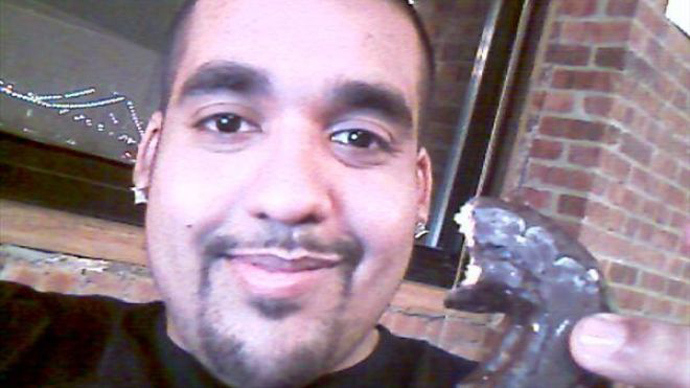
Hector Xavier Monsegur
According to this week’s revelations, Monsegur did more than just inform for the FBI after his arrest. The articles suggest rather that from behind his internet handle “Sabu,” Monsegur solicited vulnerabilities and targets from a wide range of hackers and then handed them off to other online acquaintances, including Hammond, in order to pilfer, plunder and otherwise ravage the websites and networks of foreign entities and at least one major American corporation.
Combined, the articles and the evidence contained therein corroborate very serious allegations concerning the Justice Department’s conduct in the case against Hammond and numerous other hacktivists, while raising numerous questions surrounding the FBI’s knowledge in hundreds of cyberattacks and its documented efforts to coordinate those campaigns using their informant.
Excerpts from previously unpublished chat logs and other evidence used in the Hammond case and obtained by the Dot and Motherboard are cited to provide a new point-of-view concerning two matters in particular: the December 2011 hacking of Strategic Forecasting, or Stratfor; and a January 2012 campaign led by Anonymous against government websites in Brazil and the US.
Contrary to the government’s claims, the Dot article alleges that Hammond did not mastermind the hack against Stratfor, but was rather told to target the Texas-based intelligence firm after Monsegur was made aware of a vulnerability in its network by a mysterious hacker who used the handle “Hyrriiya.” Weeks’ worth of private chats and group messages logged by Monsegur for the FBI after his arrest confirm that Hyrriiya breached Stratfor first, then sent details to the hacker he knew as “Sabu,” who in turn personally recruited Hammond to take the attack to the next level. For the first time, a clear timeline now exists to show exactly how the hack was hatched first by Hyrriiya, then Monsegur. A claim made ahead of Hammond’s sentencing hearing in which he claimed to have never even heard of Stratfor until he was fed the target by Sabu is authenticated with the logs.
Motherboard’s report focuses on a span of time only weeks after the Stratfor hack earned Anonymous headlines around the globe. Monsegur at that time was maintaining a list of targets in Brazil that would then be dispersed among members of Anonymous and other hackers to be defaced en masse as part of at least two concurrent cyber operations carried out in early 2012: an anti-corruption campaign against the Brazilian government; and another op in response to the shutdown of file-sharing site Megaupload.
“Sabu would say he wanted so-and-so, that another hacking team wanted this particular target,” Hammond told Motherboard from prison last month. “Some Brazilian was looking for people to hack them once I gave him the keys.”
Previously, Hammond said that Monsegur directed Anonymous to target websites belonging to no fewer than eight foreign governments while he was fully cooperating with the FBI. Only now, however, has documentation surfaced to verify that claim and others about alleged acts of cyberwar carried out by the the government by proxy.
“It’s completely outrageous that they made Sabu into this informant and then, it appears, requested him to then get other hackers to invade sites and look for vulnerabilities in those sites,” Michael Ratner, an attorney for WikILeaks, told Motherboard. “What that tells you is that this federal government is really — it’s really the major cybercriminal out there.”
The articles were first published Thursday morning and were a joint effort by journalists Dell Cameron of the Dot, Daniel Stuckey of Motherboard and RT’s Andrew Blake.
Brazil: Worker’s Struggle Trumps Sports Spectacle
By James Petras :: 06.03.2014
Introduction
For decades social critics have bemoaned the influence of sports and entertainment spectacles in ‘distracting’ workers from struggling for their class interests. According to these analysts, ‘class consciousness’ was replaced by ‘mass’ consciousness.
They argued that atomized individuals, manipulated by the mass media, were converted into passive consumers who identified with millionaire sports heroes, soap opera protagonists and film celebrities.
The culmination of this ‘mystification’ – mass distraction –were the ‘world championships’ watched by billions around the world and sponsored and financed by billionaire corporations: the World Series (baseball), the World Cup (soccer/futbol), and the Super Bowl (American football).
Today, Brazil is the living refutation of this line of cultural-political analysis. Brazilians have been described as ‘football crazy’. Its teams have won the most number of World Cups. Its players are coveted by the owners of the most important teams in Europe. Its fans are said to “live and die with football” . . . Or so we are told.
Yet it is in Brazil where the biggest protests in the history of the World Cup have taken place. As early as a year before the Games, scheduled for June 2014, there have been mass demonstrations of up to a million Brazilians. In just the last few weeks, strikes by teachers, police, construction workers and municipal employees have proliferated. The myth of the mass media spectacles mesmerizing the masses has been refuted – at least in present-day Brazil.
To understand why the mass spectacle has been a propaganda bust it is essential to understand the political and economic context in which it was launched, as well as the costs and benefits and the tactical planning of popular movements.
The Political and Economic Context: The World Cup and the Olympics
In 2002, the Brazilian Workers Party (PT) candidate Lula DaSilva won the presidential elections. His two terms in office (2003 – 2010) were characterized by a warm embrace of free market capitalism together with populist poverty programs. Aided by large scale in-flows of speculative capital, attracted by high interest rates, and high commodity prices for its agro-mineral exports, Lula launched a massive poverty program providing about $60 a month to 40 million poor Brazilians, who formed part of Lula’s mass electoral base. The Workers Party reduced unemployment, increased wages and supported low-interest consumer loans, stimulating a ‘consumer boom’ that drove the economy forward.
To Lula and his advisers, Brazil was becoming a global power, attracting world-class investors and incorporating the poor into the domestic market.
Lula was hailed as a ‘pragmatic leftist’ by Wall Street and a ‘brilliant statesman’ by the Left!
In line with this grandiose vision (and in response to hoards of presidential flatterers North and South), Lula believed that Brazil’s rise to world prominence required it to ‘host’ the World Cup and the Olympics and he embarked on an aggressive campaign. . . Brazil was chosen.
Lula preened and pontificated: Brazil, as host, would achieve the symbolic recognition and material rewards a global power deserved.
The Rise and Fall of Grand Illusions
The ascent of Brazil was based on foreign flows of capital conditioned by differential (favorable) interest rates. And when rates shifted, the capital flowed out. Brazil’s dependence on high demand for its agro-mineral exports was based on sustained double-digit economic growth in Asia. When China’s economy slowed down, demand and prices fell, and so did Brazil’s export earnings.
The PT’s ‘pragmatism’ meant accepting the existing political, administrative and regulatory structures inherited from the previous neo-liberal regimes. These institutions were permeated by corrupt officials linked to building contractors notorious for cost over-runs and long delays on state contracts.
Moreover, the PT’s ‘pragmatic’ electoral machine was built on kick-backs and bribes. Vast sums were siphoned from public services into private pockets.
Puffed up on his own rhetoric, Lula believed Brazil’s economic emergence on the world stage was a ‘done deal’. He proclaimed that his pharaonic sports complexes – the billions of public money spent on dozens of stadiums and costly infrastructure – would “pay for themselves”.
The Deadly ‘Demonstration Effect’: Social Reality Defeats Global Grandeur
Brazil’s new president, Dilma Rousseff, Lula’ protégé, has allocated billions of reales to finance her predecessor’s massive building projects: stadiums, hotels, highways and airports to accommodate an anticipated flood of overseas soccer fans.
The contrast between the immediate availability of massive amounts of public funds for the World Cup and the perennial lack of money for deteriorating essential public services (transport, schools, hospitals and clinics) has been a huge shock to Brazilians and a provocation to mass action in the streets.
For decades, the majority of Brazilians, who depended on public services for transport, education and medical care, (the upper middle classes can afford private services), were told that “there were no funds”, that “budgets had to be balanced”, that a “budget surplus was needed to meet IMF agreements and to service the debt”.
For years public funds had been siphoned away by corrupt political appointees to pay for electoral campaigns, leading to filthy, overcrowded transport, frequently breaking down, and commuter delays in sweltering buses and long lines at the stations. For decades, schools were in shambles, teacher rushed from school to school to make-up for their miserable minimum-wage salaries leading to low quality education and neglect. Public hospitals were dirty, dangerous and crowded; under-paid doctors frequently took on private patients on the side, and essential medications were scarce in the public hospitals and overpriced in the pharmacies.
The public was outraged by the obscene contrast between the reality of dilapidated clinics with broken windows, overcrowded schools with leaking roofs and unreliable mass transport for the average Brazilian and the huge new stadiums, luxury hotels and airports for wealthy foreign sports fans and visitors.
The public was outraged by the obvious official lies: the claim that there were ‘no funds’ for teachers when billions of Reales were instantly available to construct luxury hotels and fancy stadium box seats for wealthy soccer fans.
The final detonator for mass street protest was the increase in bus and train fares to ‘cover losses’ – after public airports and highways had been sold cheaply to private investors who raised tolls and fees.
The protestors marching against the increased bus and train fares were joined by tens of thousands Brazilians broadly denouncing the Government’s priorities: Billions for the World Cup and crumbs for public health, education, housing and transport!
Oblivious to the popular demands, the government pushed ahead intent on finishing its ‘prestige projects’. Nevertheless, construction of stadiums fell behind schedule because of corruption, incompetence and mismanagement. Building contractors, who were pressured, lowered safety standards and pushed workers harder, leading to an increase in workplace deaths and injury. Construction workers walked out protesting the speed-ups and deterioration of work safety.
The Rousseff regime’s grandiose schemes have provoked a new chain of protests. The Homeless Peoples Movement occupied urban lots near a new World Cup stadium demanding ‘social housing’ for the people instead of new five-star hotels for affluent foreign sports aficionados.
Escalating costs for the sports complexes and increased government expenditures have ignited a wave of trade union strikes to demand higher wages beyond the regime’s targets. Teachers and health workers were joined by factory workers and salaried employees striking in strategic sectors, such as the transport and security services, capable of seriously disrupting the World Cup.
The PT’s embrace of the grandiose sports spectacle, instead of highlighting Brazil’s ‘debut as a global power’, has spotlighted the vast contrast between the affluent and secure ten percent in their luxury condos in Brazil, Miami and Manhattan, with access to high quality private clinics and exclusive private and overseas schools for their offspring, with the mass of average Brazilians, stuck for hours sweating in overcrowded buses, in dingy emergency rooms waiting for mere aspirins from non-existent doctors and in wasting their children’s futures in dilapidated classrooms without adequate, full-time teachers.
Conclusion
The political elite, especially the entourage around the Lula-Rousseff Presidency have fallen victim to their own delusions of popular support. They believed that subsistence pay-offs (food baskets) to the very poor would allow them to spend billions of public money on sports spectacles to entertain and impress the global elite. They believed that the mass of workers would be so enthralled by the prestige of holding the World Cup in Brazil, that they would overlook the great disparity between government expenditures for elite grand spectacles and the absence of support to meet the everyday needs of Brazilian workers.
Even trade unions, seemingly tied to Lula, who bragged of his past leadership of the metal workers, broke ranks when they realized that the ‘money was out there’ – and that the regime, pressured by construction deadlines, could be pressured to raise wages to get the job done.
Make no mistake, Brazilians are sports minded. They avidly follow and cheer their national team. But they are also conscious of their needs. They are not content to passively accept the great social disparities exposed by the current mad scramble to stage the World Cup and Olympics in Brazil. The government’s vast expenditure on the Games has made it clear that Brazil is a rich country with a multitude of social inequalities. They have learned that vast sums are available to improve the basic services of everyday life. They realized that, despite its rhetoric, the ‘Workers Party’ was playing a wasteful prestige game to impress an international capitalist audience. They realized that they have strategic leverage to pressure the government and address some of the inequalities in housing and salaries through mass action. And they have struck. They realize they deserve to enjoy the World Cup in affordable, adequate public housing and travel to work (or to an occasional game) in decent buses and trains. Class consciousness, in the case of Brazil, has trumped the mass spectacle. ‘Bread and circuses’ have given way to mass protests.
Confessed Brazilian Torturer Found Murdered
By Michael Uhl | This Can’t Be Happening | April 27, 2014
At approximately four o’clock this past Thursday afternoon, Paulo Malhaes, a retired officer who served in the ‘70s during the years of Brazil’s military dictatorship, was murdered at his small farm outside of Rio de Janeiro.
Malhaes had become infamous in recent weeks, as I wrote in this space recently [1], for his lurid testimony before the Brazilian Truth Commission, where he described in graphic detail how the bodies of opponents of the repressive regime had been disappeared after being killed under torture.
According to news reports, Malhaes, his wife and a house mate, in some reports described as a valet, had arrived at the farm around two p.m. and were confronted by three intruders already in their home. The wife, Cristina Malhaes, and the house mate, later identified by police only as Rui, were restrained and led off into one room, while the former lieutenant colonel was taken to another.
Cristina and Rui were later released unharmed as the assailants departed the scene by car. Neither of the survivors reported having heard a sound to suggest the Malhaes had been worked over or “tortured.” But when police examined Malhaes’ body Friday morning they found marks on his face and neck, and have tentatively concluded that he died from asphyxiation. The only items the murderers removed from the premises were a computer, a printer, and several weapons that had belonged to the victim.
The announcement of Paulo Malhaes’ murder, reported in front pages all over Brazil, has sent shock waves through the country, including among surviving junta participants. The big question being debated is which side did him in.
It’s certainly conceivable that a victim of the dictatorship, or a relative of someone who was disappeared, might have orchestrated Malhaes’s death in an act of vengeance long delayed. But this hypothesis is being given little credence, as is an alternative theory that Malhaes’ demise occurred in the course of a simple robbery unrelated to his notoriety.
The head of the Sao Paulo Municipal Truth Commission, Gilberto Natalini, suggested uncontroversially that Malhaes’ assassination “demonstrates that this page of Brazilian history has not yet been completely turned.”
His counterpart on the Rio de Janeiro Truth Commission, Wadih Damous, offers a darker theory, saying, “In my opinion, the murder of colonel Paulo Malhaes was an act of witness elimination. He was an important agent of political repression during the dictatorship, and a repository of information on what actually took place behind the scenes in that era.”
“He still had a lot to say,” agreed the former Minister of Human Rights, Maria do Rosario, “and could have been seen as a threat. True, he had already told what happened, but he didn’t reveal who did it.”
One Brazilian senator, Randolfe Rodrigues, speculated on how far those still operating in the “shadow of the dictatorship” might be willing to go “to erase the past.” He warned that the members of the various truth commissions had better start looking to their own security.
Brazil passes ‘internet constitution’ ahead of global conference on web future
RT | April 23, 2014
Ahead of a two-day Net Mundial international conference in Sao Paulo on the future of the Internet, Brazil’s Senate has unanimously adopted a bill which guarantees online privacy of Brazilian users and enshrines equal access to the global network.
The bill known as the “Internet constitution” was first introduced in the wake of the NSA spying scandal and is now expected to be signed into law by President Dilma Rousseff – one of the primary targets of the US intelligence apparatus, as leaks by former NSA analyst Edward Snowden revealed.
Rousseff plans to present the law on Wednesday at a global Internet conference.
The bill promotes freedom of information, making service providers not liable for content published by their users, but instead forcing the companies to obey court orders to remove any offensive material.
The principle of neutrality, calling on providers to grant equal access to service without charging higher rates for greater bandwidth use is also promoted. The legislation also limits the gathering and use of metadata on Internet users in Brazil.
Approval of the Senate was assured after the government dropped a provision in the legislation requiring Internet companies such as Twitter and Facebook to store data on Brazilian users at home.
The final version bill states that companies collecting data on Brazilian accounts must obey Brazilian data protection laws even if the data is collected and stored on servers abroad.
The demand of the use of Brazilian data centers had been added to the legislation last year after Snowden’s leaks revealed the extent of NSA’s spying network and wiretapping of President Dilma Rousseff communications.
The NSA was also involved in spying on Brazil’s strategic business sector, particularly on state-run oil company Petrobras. In response to US spying, Rousseff canceled a state visit to Washington in October and called on the UN, together with Germany, to adopt a UN resolution guaranteeing internet freedoms.
The adoption of the bill was a top priority for the Brazilian leader as a two-day Net Mundial conference in Sao Paulo is scheduled to open in Brazil on Wednesday.
The aim of the global event on internet governance is to discuss cyber security amid the NSA spying scandal. Safeguarding privacy and freedom of expression on the Internet are among the topics to be discussed according to a draft agenda.
US officials will attend the meeting alongside representatives from dozens of other states.
“All of them should have equal participation in this multi-stakeholder process,” Virgilio Almeida, Brazil’s secretary for IT policy, who will chair the conference, told Reuters.
As part of the discussion, Russia and China have submitted a proposal jointly with Tajikistan and Uzbekistan asking for the UN to develop a code of conduct for the Internet.
“Most participants here want a multi-stakeholder model for the Internet,” Almeida told Reuters. “China wants a treaty at the United Nations, but only governments are represented there.”
The event is not expected to result in any binding policy decisions, but Almeida said it will facilitate a debate that will “sow the seeds” for future reforms of internet governance.
Featured Video
NEW FAUCI EMAILS EXPOSE ATTACK ON NATURAL IMMUNITY
or go to
Aletho News Archives – Video-Images
From the Archives
Elite Western universities are a corrupt, parasitic empire
Instead of high-quality education, these institutions are fostering a global neo-feudal system reminiscent of the British Raj
By Dr. Mathew Maavak | RT | May 30, 2025
In a move that has ignited a global uproar, US President Donald Trump banned international students from Harvard University, citing “national security” and ideological infiltration. The decision, which has been widely condemned by academics and foreign governments alike, apparently threatens to undermine America’s “intellectual leadership and soft power.” At stake is not just Harvard’s global appeal, but the very premise of open academic exchange that has long defined elite higher education in the US.
But exactly how ‘open’ is Harvard’s admissions process? Every year, highly qualified students – many with top-tier SAT or GMAT test scores – are rejected, often with little explanation. Critics argue that behind the prestigious Ivy League brand lies an opaque system shaped by legacy preferences, DEI imperatives, geopolitical interests, and outright bribes. George Soros, for instance, once pledged $1 billion to open up elite university admissions to drones who would read from his Open Society script.
China’s swift condemnation of Trump’s policy added a layer of geopolitical irony to the debate. Why would Beijing feign concern for “America’s international standing” amid a bitter trade war? The international standing of US universities has long been tarnished by a woke psychosis which spread like cancer to all branches of the government.
So, what was behind China’s latest gripe? ... continue
Blog Roll
Recent Comments
seversonebcfb985d9 on Villains of Judea: Philip Esfo… loongtip on Report warns that ‘Jewish terr… Craig Nelms on New study shows that toxic gas… loongtip on A Funny Thing Happened on the… loongtip on EU free trade pact on hold as… John Edward Kendrick on Regime Change In Iran Is The F… Bill Francis on Australia Passes New Hate Spee… seversonebcfb985d9 on Australia Passes New Hate Spee… Bill Francis on Britain’s AI Policing Plan Tur… loongtip on Miami Beach Resident Questione… loongtip on Israeli agricultural export co… loongtip on The War On Free Speech In Aust…


 Aletho News
- NEW FAUCI EMAILS EXPOSE ATTACK ON NATURAL IMMUNITY
- Why is the US using Jordan as the main base in possible Iran attack?
- American Academy of Pediatrics Hit With Federal RICO Lawsuit for Vaccine Safety Fraud
- Mom Tells Trump: Dumping Sewage Sludge on Farmland Won’t Make America Healthy Again
- NIAID Funds Gain-of-Function Study Engineering Novel Influenza Viruses
- Villains of Judea: Philip Esformes and the Largest Healthcare Fraud in American History
- US sanctions Popular Conference for Palestinians Abroad over alleged Hamas links
- You reap what you sow: Ukraine’s blackout is Zelensky’s failure
- Ukraine Blackouts Caused by Zelensky’s Terrorist Attacks on Russia
- Orban Hits Out at EU Green Light for $1.5 Trillion Ukraine Aid
- If Americans Knew
- Oppose Israel’s Abuses While You Still Can
- UNRWA Heads Tell Ha’aretz: ‘We Don’t Radicalize Palestinians – Their Lived Existence Does’
- Plans Call for “New Rafah” Built in Israel’s Image — Without Palestinians
- Posing as priest, reporter is spat at many times, highlighting anti-Christian sentiment in Israel
- Leaked Documents: “Planned Community” in Rafah Would Force Palestinians Into Israeli Panopticon
- ‘Permits of Humiliation’: How Israel Strangles Christian Education in Jerusalem
- “The world sees death, destruction and injustice – and they see dollar signs” – Not a ceasefire Day 105
- War criminal Netanyahu kills 11 in Gaza, joins Board of Peace – Not a ceasefire Day 104
- Another baby dies of cold in Gaza, as Rafah crossing remains locked down – Not a ceasefire Day 103
- Brutal Beatings, Arson, and Impunity: A Palestinian Plant Nursery Becomes a Target for Settler Pogroms
- No Tricks Zone
- New Study: Sea Levels Rose 20 Times The Modern Rate During The Roman Warm Period
- As German Gas Storage Dips Dangerously Low…Shortage Hardly Avoidable
- New Study: Brazil’s Relative Sea Level Was 2+ Meters Higher And SSTs 3-4°C Warmer 6000 Years Ago
- Philosopher Schopenhauer: Climate Science Certainty Stems From Stupidity, Ignorance
- New Study: Species Extinction Rates Declining Since 1980 – ‘Climate Change Is Not An Important Threat’
- Denmark Places Climate Protection Above Animal Welfare, Poisoning And Culling Cows
- New Study: Greenland Was 3-7°C Warmer And Far Less Glaciated Than Today 6000-8000 Years Ago
- German Media Report That Current Frigid Weather Can Be Explained By Arctic Warming!
- Berlin Blackout Shows Germany’s $5 Trillion Green Scheme Is “Left-Green Ideological Pipe Dream”
- Modeling Error In Estimating How Clouds Affect Climate Is 8700% Larger Than Alleged CO2 Forcing
 Aletho News