Brazil Elite Codifies Budget Practice Used to Impeach Rousseff
teleSUR – September 4, 2016
Brazil’s newly-installed President Michel Temer has signed legislation that essentially authorizes the identical financial accounting maneuver that was used to justify the impeachment bid against ousted President Dilma Rousseff’s just days after she was removed from office.
The law, announced Friday in the official gazette, expands the government’s ability to seek additional credits without securing authorization from Congress. As described by Brasil de Fato, the rule broadly opens the door for the budgetary maneuver known in Brazil as “pedaling,” in which the government borrows money from state banks to make the budget appear in a better position than it is.
This longstanding practice was used to propel the impeachment process that finally ousted Rousseff from office last Wednesday in a move widely condemned as a parliamentary coup.
Rousseff’s supporters repeatedly pointed out that the accounting trick had been used by many of her predecessors without scrutiny. Independent auditors also found her not guilty of breaking budgetary rules — a fact that did not stop the ill-footed impeachment process from going ahead.
According to Brazil’s Senate news agency Agencia Senado, the unelected Temer government gave pedaling a green-light, claiming that the rule change will make government budget management “more flexible,” including shuffling of expenditures associated with the federal infrastructure Growth Acceleration Program, better known as PAC.
The act allows the government to boost by as much as 20 percent the value of an expenditure by writing down by the value of another by a corresponding 20 percent, which, in fact, doubles the level allowed by previous administrative rules.
Rousseff was ousted Wednesday in a 61-20 Senate vote in favor of her impeachment, though she retained her so-called political rights to hold public office in a second vote.
The day after the impeachment ballot, Rousseff’s defense appealed to the Supreme Court to compel a second Senate impeachment vote, arguing that the process was unconstitutional on the grounds that the budgetary crime she is accused of is not an impeachable offense according to Brazilian law.
Rousseff’s rivals long attempted to paint the impeachment process as a campaign to root out government corruption. But aside from the fact that multiple other leaders have used the pedaling procedure, damning recordings released weeks after her suspension in May revealed that top opposition figures schemed with the Supreme Court and military command to ensure Rousseff’s ouster as part of a bid to stop corruption investigations against their allies.
Like many of his top allies and cabinet members, Temer — installed as president despite being banned from running for public office for eight years — is embroiled in multi-million dollar fraud scandals.
‘Rousseff’s impeachment – sad day for Brazil & democracy’
RT | September 1, 2016
Was the impeachment process against Brazil’s Dilma Rousseff justified? Is interim President Michel Temer credible? How will the people of Brazil react and are we likely to see protests escalating?
Suspended Brazilian President Dilma Rousseff was impeached on Wednesday, after the final vote in Senate. She was ruled to have mishandled Brazil’s budget, and misrepresented the state of the economy prior to her reelection in 2014.
Michel Temer, former Vice President under Rousseff, became acting president of Brazil in May after the start of the impeachment of Rousseff.
Watchdog groups say about 60 percent of the country’s lawmakers, as well as interim President Temer, who may potentially form a new government, have been accused of corruption and fraud.
Maria Mendonca, professor at the University of Rio de Janeiro called the impeachment of Dilma Rousseff “very sad for Brazil” and “a very sad day for democracy”. The result of the 2014 elections, when Dilma was reelected, “was not respected.”
“It is a process that reminds us of the military coup in 1964. That was not a real trial, because most Senators already had a position – they made up their minds even before the whole trial started. There was no legal basis for the impeachment. The public prosecutor already had cleared Dilma of all charges in terms of the mechanisms of basically issuing debt to pay for social programs, which is a regular mechanism in Brazil and also in other countries,” she told RT.
In her opinion, the impeachment was “a way for unpopular corrupt politicians to take power without going through an electoral process.”
According to Mendonca, it is now difficult to predict how the situation is going to develop and whether protests by Rousseff’s supporters – that have been going on for days now – may escalate.
“I think we’re going to stay in a situation of limbo for a while, of uncertainty, because the main rules of democracy were broken,” she said.
She added though that “the media in Brazil can manipulate public opinion,” and has been doing so since the beginning of the impeachment process.
“But once people realize that we’re going to have more instability: cuts in social programs, in health care, education, and we’re going to have more serious economic crisis, then people will realize that this was a manipulative process to get rid of a president that was democratically elected; and to implement austerity measures that would make the situation even more unstable politically and economically,” Mendonca said.
Good for Brazil in longer term
David Riedel, economic analyst from Riedel Research Group argues that Rousseff’s impeachment “is a good move” for Brazil as in the longer term it would benefit from a more “business friendly government.”
Dilma Rousseff has run “a very populist regime; she’s been giving a lot of support to social programs and other things,” he told RT. “I think you’ll probably see some social unrest, as those goodies and those free benefits start to be taken away from the population. But it’s a good move for Brazil in the medium and longer term. They needed to take this step. They were successful with the Olympics, which were great, and now they need to be successful in this transition of power to, I would argue, a more business friendly government, which is going to be very good for investors.”
If Michel Temer – who is running the country at the moment and is likely to become the next Brazilian President – “takes advantage of this populist, very expensive spending that the Rousseff and [Luiz Inacio] Lula [da Silva], before her, administrations had under way – that can protect the currency; it can help improve the investment environment,” Riedel said.
“International investors want Brazil to be a success – so they will give them the benefit without doubt if they see things headed in the right direction. So if they are business friendly and investor friendly and cut back on the profligate spending that has been such an issue across Latin America, I think that investors would give them a second look,” the analyst said.
Absolutely no justification
An independent investigation found there were no grounds for launching action.
Political scientist Daniel Shaw from the City University of New York says there’s “absolutely no justification” for the impeachment “from the prospective of millions of Brazilians who voted for Dilma Rousseff and now see the democratically elected president unconstitutionally removed from power.”
But in the minds of the Brazilian rich, the bourgeoisie –“they feel like they don’t need justification to continue to push things in a rightward direction and to continue to exploit the majority of Brazilians,” he said.
WikiLeaks has revealed that Brazil’s new interim president, Temer, was an embassy informant for US intelligence.
Some also suggest that the US could have orchestrated the “coup” against Rousseff.
Commenting, Shaw said: “If we look critically at the history of US foreign policy and how they’d been involved in supporting dictatorships from Pinochet to Somoza across Latin America, when all of the FOI requests are complete in 10-15 years, there’s no question there’ll come out the role that the US State Department played.”
“They are against the leftward trend that’s been going on since 1999 with Venezuela at the helm and, of course Cuba, Bolivia, Ecuador. This is a blow, an attack not just on the Brazilian people but on the entire progressive current that was sweeping across Latin America,” he added.
Brazil’s Unelected President Cuts Successful Literacy Program
teleSUR | August 29, 2016
With Brazilian Senators preparing to vote this week on whether to oust President Dilma Rousseff from office, interim President Michael Temer’s unelected government last week has axed a popular nationwide educational program that has shaved nearly a quarter from the country’s illiteracy rate in little more than a decade.
The Ministry of Education confirmed that it had discontinued the literacy initiative to a citizen who requested an update on the program through the country’s Access to Information Act, the newspaper Folha de Sao Paulo reported Sunday.
The initiative, known as Literate Brazil Programme, was launched in 2003 in the first year of the President Luiz Inacio Lula da Silva–popularly known simply as “Lula”– of the Workers’ Party or PT. Brazil is historically one of the world’s most economically and social unequal countries in the world and the program was one of several redistributive efforts undertaken by Lula’s administration in his two terms in office.
But the interim Education Ministry, headed by right-wing politician Mendonca Filho, who faces investigation over major accusations of corruption, has dissolved the program, cutting off funding to state and local governments, even while continuing to deny publicly that the program has been revised in any way. State and local officials, however, say that they’ve been unable to enroll anyone in the literacy program, Folha reported Sunday.
Since it began in 2003, the literacy initiative has served an average of 1.3 million learners aged 15 and older, managing to reduce illiteracy rates from 11.6 percent to 8.3 percent in 2014. The Unesco Institute for Statistics estimated the 2015 adult illiteracy rate at 8.2 percent, while less than 2 percent of youth are illiterate.
According to Unesco, the program has shown “real-life success stories” of how literacy skills can improve “future prospects” for Brazilian citizens.
Despite the improvements in the literacy rate, Brazil still ranks behind many countries in the region, including Argentina, Chile, Colombia, Cuba, Mexico, Paraguay, Uruguay, and Venezuela, among others.
There also remains a great regional disparity in Brazil’s overall literacy rate, which ranges from 2.7 percent in the Federal District and 3.2 percent in the state of Rio de Janeiro to 22 percent and 20.2 percent in the poor, service-economy states of Alagoas and Piaui, according to government data reported by Folha.
Immediately after his administration was installed in May, Michel Temer’s all-male, corruption-ridden cabinet of neoliberal ministers moved swiftly to roll back social programs and implement an aggressive state austerity program that includes sweeping privatization efforts. Lula’s protegee, the twice-elected Rousseff is scheduled to testify Monday in her impeachment trial, with a final vote expected Tuesday.
Temer government’s has also cut other key programs and ministries, including the Ministry of Culture, which was absorbed into the purview of Minister of Culture, Mendonca Filho. The move represents the re-joining of the culture and education ministries for the first time since 1985, following the fall of the country’s brutal military dictatorship.
Filho is being investigated for receiving millions of dollars in bribes and illegal donations to fund his successful 2014 reelection campaign to represent the state of Pernambuco in Congress. If convicted, Filho would likely be forced to step down from his post, which would make him the fourth member of Temer’s cabinet to resign following accusations of bribery or fraud. Temer and his Foreign Minister Jose Serra are also embroiled in bribery scandals linked to fraud in the state oil company, Petrobras.
In just three months of “interim” government, Temer’s administration has moved toward privatizing state oil reserves, making cuts to popular social programs including the housing initiative Minha Casa Minha Vida, and hinted at plans to chip away at the country’s longstanding and cornerstone universal health care program. The country has also pivoted away from its left-wing allies in South America toward the United States and conservative governments in the region.
Brazil’s Rousseff vows snap elections if survives impeachment
Press TV – August 17, 2016
Brazil’s suspended President Dilma Rousseff has pledged to hold early elections if she survives a vote on her removal from office in an impeachment trial that is expected to conclude this month.
Rousseff, accused of illegally manipulating finances to hide a growing public deficit ahead of her reelection in 2014, is due to stand trial in the Senate on August 25, four days after the Rio Olympics end.
The Globo news organization reported that the actual judgment vote could take place between August 30 and 31.
In a letter to the federal Senate and Brazilian people that she read out on Tuesday, Rousseff said Brazil’s political and economic problems could only be resolved “through popular vote in direct elections.”
“The full restoration of democracy requires that the population be the one to decide what is the best way to expand governability and perfect the Brazilian political and electoral system,” Rousseff said.
“It’s the only way out of the crisis,” she wrote.
Rousseff admitted she had made mistakes, but said she had done nothing worthy of impeachment.
“I have listened to the tough criticisms of my government, for the errors committed,” she said. “I accept these criticisms with humility and determination so that we can build a new way forward.”
Rousseff further said that forcing her out through impeachment amounts to “an unequivocal coup.”
Rousseff impeachment: A timeline
October 9, 2015: Brazil’s federal audit court rules that Rousseff broke the law while managing the 2014 budget, paving the way for opposition groups to argue that the leader should be impeached.
December 2, 2015: Eduardo Cunha, the president of the Chamber of Deputies, agrees to start anti-Rousseff impeachment proceedings.
December 11, 2015: Rousseff presents a petition before the Supreme Court to stop the process.
March 17, 2016: The Chamber of Deputies, the lower house of the Brazilian National Congress, elects a special impeachment commission, which has a majority derived from the ruling coalition, including the Workers’ Party and the Democratic Movement Party (PMDB).
March 29, 2016: The PMDB leaves the ruling coalition, in a split that hurts Rousseff’s chances of derailing impeachment proceedings.
April 6, 2016: The special impeachment commission publishes a report recommending Rousseff’s impeachment.
April 11, 2016: The impeachment commission decides, in a 38 to 27 vote, to let the Chamber of Deputies vote on the president’s impeachment.
April 15, 2016: The Brazilian Supreme Court rejects Rousseff’s motion to stop the process.
April 17, 2016: A total of 367 out of 513 legislators in the parliament’s lower house vote in favor of Rousseff’s impeachment.
May 12, 2016: Senators vote 55 to 22 to suspend the president for 180 days and hold an impeachment trial in the Senate, the upper house of National Congress, with Rousseff slamming the vote and saying she was “being judged unfairly.”
Michel Temer becomes interim president and announces his new cabinet.
May 24, 2016: The interim government is rattled by a leaked audio tape suggesting a plot against Rousseff, a scandal that forces a number of key ministers in the new cabinet to resign.
June 28, 2016: An investigation by a team of independent auditors, comprised of career Senate budget technicians, concludes there is no evidence that Rousseff participated in budget manipulation.
July 18, 2016: Cunha resigns less than three months after he orchestrated the impeachment.
August 16, 2016: The Senate votes to hold an impeachment trial for Rousseff, pushing her one step closer to dismissal from office. Her trial is due to take place in the week after the Olympics closing ceremony.
A week ago, the Brazilian Senate voted to hold an impeachment trial for the country’s first female president.
A two-thirds majority of the Senate, or 54 votes, would be needed to see her permanently removed from office.
If the trial acquits Rousseff, she will be allowed to serve out her term until 2018. But if it removes her permanently, then acting President Temer will become the full-fledged president until the next election in 2018.
Rousseff is also under fire over a graft scandal at state oil company Petrobras, where she was the manager before taking office as president in 2010.
The embattled leader has denied the allegations and repeatedly asserted that she has fallen victim to a plot by the extreme right.
In recent months, Brazilians have held numerous counter rallies in support of and against the impeachment process.
Refugee team welcomed but Olympics displace 77,000 people in Rio
RT | August 8, 2016
The heart-warming image of the Olympic Refugee Team entering the Maracana Stadium last Friday was a special moment, but 77,000 Brazilian residents have themselves been displaced as a result of the Games.
The Rio 2016 Games are the first to have a team of refugees compete, in recognition of the 60 million refugees around the world.
Athletes from Syria, South Sudan, Ethiopia, and the Democratic Republic of Congo were chosen to represent the refugee team, which has been handed a group of coaches and support staff to help them during the Games.
International Olympic Committee (IOC) President Thomas Bach heralded the refugee team.
“These refugees have no home, no team, no flag, no national anthem,” he said.
“We will offer them a home in the Olympic Village together with all the athletes of the word. The Olympic anthem will be played in their honor and the Olympic flag will lead them into the Olympic Stadium.
“This will be a symbol of hope for all the refugees in our world, and will make the world better aware of the magnitude of this crisis. It is also a signal to the international community that refugees are our fellow human beings and are an enrichment to society.”
Although the Olympics may offer a handful of refugees a temporary home in Brazil, the event itself has directly forced around 77,000 Brazilian natives from their homes to make way for infrastructure.
As was the case in the football World Cup in 2014, protesters opposed the hosting of a major sporting event in Brazil – mainly due to the country’s dire economic situation and the social issues that ravage the nation.
One of the main reasons for opposition to the 2016 Olympics has been the creation of IDPs, internally displaced persons, in Brazil.
Among the worst-affected areas was the poverty-stricken Rio suburb of Vila Autodromo, where residents were forcibly removed from their homes.
The infrastructure upgrade to Vila Autodromo will drive development projects including plush apartment buildings, but serves as a sardonic reminder to poor families that they have been forced out of their homes.
Brazilian Prosecutor Declares Dilma Rousseff Not Guilty of Budgetary Maneuvers

By Desirée Mota and Sophie-Anne Baril | Council on Hemispheric Affairs | July 20, 2016
On July 14, Brazilian Prosecutor Ivan Claudio Marx reported that the delaying of payments to banks made by President Dilma Rousseff’s administration does not constitute a crime of responsibility.[1] Marx stated that the maneuvers, known as fiscal pedaling, were “a violation of the contract between the government and the banks but not a crime.”[2] The prosecutor’s report even advised terminating the criminal case on Rousseff’s accounting practices and requested a new investigation into illegal payments made by the government without congressional approval.[3]
In 2015, Brazil Attorney General Luís Inácio Adams affirmed that delays in transfers from the National Treasury to public banks, which had to be disbursed from Brazil’s own reserves to pay for social programs, also occurred in past governments and were not considered irregular by the Union Accounts Court (TCU).[4] This action, intended to momentarily relieve the fiscal framework of the country, is one of the main accusations the opposition used to carry out the illegal impeachment against President Rousseff. The Brazilian Constitution states that an impeachment can only be carried out if the President commits crimes of responsibility, which Rousseff is not guilty of.
Marx’s report poses an obstacle to the senators and government officials supporting the impeachment. Earlier in July, a board of experts, tasked with investigating the accusations against Brazilian President Dilma Rousseff, found no proof of her direct involvement with the country’s fiscal budgetary maneuvers.[5] Following the release of another report absolving Rousseff, the Workers’ Party Senator Gleisi Hoffmann has filed a request to invite the Federal Prosecutor to speak in the Senate, where the impeachment process is being tried.[6] Additionally, she has asked senators to close the impeachment probe.[7] Following Congresswoman Hoffmann, Senator Lindbergh Farias, also from the Workers’ Party, stated that “this process is discredited once and for all” and further recommended the House to stop leading the impeachment forward.[8]
As evidence finding Rousseff not guilty for budget manipulations continues to be released, the international criticism on the impeachment process is mounting. Congressman Alan Grayson, who serves on the United States House of Representatives’ Foreign Affairs Committee, has stated his concerns over the threats that President Rousseff’s impeachment poses to Brazilian democracy.[9] Similarly, a group of French congressmen have released a manifesto condemning the impeachment process.[10] The outcome, however, is still very much at play. As international criticism on the impeachment process increases, this new report only further affirms the illegitimate nature of the impeachment proceedings against Rousseff.
[1]Brazil Prosecutor Says Rousseff’s Accounting Tricks Are Not A Crime. Accessed July 18, 2016 http://www.bloomberg.com/news/articles/2016-07-14/brazil-prosecutor-says-rousseff-s-accounting-tricks-not-a-crime
[2] Brazil Senators Push to End Impeachment Against Rousseff. Telesur. Accessed July 18, 2016. http://www.telesurtv.net/english/news/Brazil-Senators-Push-to-End-Impeachment-Against-Rousseff-20160716-0006.html
[3] Ibid.
[4] AGU Diz Que Pedaladas Fiscais Foram Adotadas Por Governos Anteriores. G1. http://g1.globo.com/politica/noticia/2015/07/agu-diz-que-pedaladas-fiscais-foram-adotadas-por-governos-anteriores.html
[5] Dilma Rousseff Found Not Guilty of Budgetary Maneuvers. COHA. Accessed July 18, 2016 http://www.coha.org/dilma-rousseff-found-not-guilty-of-budgetary-maneuvers/
[6] Com Decisão do MP, Senadores vão pedir para Paralisar Impeachment. Agência Brasil 247. Accessed July 18, 2016 http://www.brasil247.com/pt/247/brasilia247/244093/Com-decis%C3%A3o-do-MP-senadores-pedir%C3%A3o-para-paralisar-impeachment.htm
[7] Ibid.
[8]Ibid.
[9] Grayson’s statement on Brazilian President’s impeachment. Congressman Grayson. Accessed July 18, 2016. http://grayson.house.gov/index.php/newsroom/press-releases/435-grayson-s-statement-on-brazilian-president-s-impeachment
[10] Dilma Rousseff victime d’une basse manoeuvre parlementaire. Le Monde Idées. July 13, 2017. Accessed July 18, 2016. http://www.lemonde.fr/idees/article/2016/07/13/dilma-rousseff-victime-d-une-basse-manoeuvre-parlementaire_4969141_3232.html
Featured Photo: YouTube
To download a PDF version of this article, click here.
Washington’s ‘New Managers’ in Latin America: Oligarchs, Bankers and Swindlers
By James Petras :: 07.07.2016
Amid raging corruption, social pathologies and outright political thuggery, a new gang of vassal regimes has taken-over Latin America. The new rulers are strictly recruited as the protégé’s of US financial and banking institutions. Hence the financial press refers to them as the “new managers” – of Wall Street.
The US financial media has once again provided a political cover for the vilest crimes committed by the ‘new managers’ as they launch their offensive against labor and in favor of the foreign and domestic financiers.
To understand the dynamics of the empire’s new vassal managers we will proceed by identifying (1) the illicit power grab (2) the neo-liberal policies they have pursued (3) the impact of their program on the class structure (4) their economic performance and future socio-political perspectives.
Vassals as Managers of Empire
Latin America’s current vassalage elite is of longer and shorter duration.
The regimes of longer duration with a historical legacy of submission, corruption and criminality include Mexico and Colombia where oligarchs, government officials and death squads cohabit in close association with the US military, business and banking elites.
Over the past decades 100,000 citizens were murdered in Mexico and over 4 million peasants were dispossessed in Colombia. In both regimes over ten million acres of farmland and mining terrain were transferred to US and EU multinationals.
Hundreds of billions of illicit narco earnings were laundered by the Colombian and Mexican oligarchy to their US accounts via private banks.
The current political managers, Peña in Mexico and Santos in Colombia are rapidly de-nationalizing strategic oil and energy sectors, while savaging dynamic social movements – hundreds of students and teachers in Mexico and thousands of peasants and human rights activists in Colombia have been murdered.
The new wave of imperial vassals has seized power throughout most of Latin America with the direct and indirect intervention of the US. In 2009, Honduras President Manuel Zelaya was ousted by a military coup backed by Secretary of State Hillary Clinton. Zelaya’s program of agrarian reform, regional integration (with Venezuela) and constitutional elections was abolished. Zelaya was replaced by a US vassal, Roberto Micheletti who proceeded to murder several hundred landless rural workers and indigenous activists.
Washington moved to organize a constitutional cover by promoting a highly malleable landowner, Porfirio Lobo Sosa to the presidency.
The State Department next ousted Paraguyan President Francisco Lugo who governed between 2008-2012. Lugo promoted a moderate agrarian reform and a centrist regional integration agenda.
With the backing of Secretary of State Clinton, the Paraguayan oligarchy in Congress seized power , fabricated an impeachment decree and ousted President Lugo. He was briefly replaced by Vice President Federico Franco (2012-2013).
In 2013, Washington backed , the capital, Asuncion’s, notorious crime boss for President, one Horacio Castes – convicted for currency fraud in 1989, drug running in 1990, and most recently (2010) money laundering.
The Honduras and Paraguayan coups established (in miniature) the precedent for a new wave of ‘big country’ political vassals. The State Department moved toward the acceleration of banking takeovers in Brazil, Argentina and Peru.
In rapid succession, between December 2015 and April 2016 vassal managers seized power in Argentina and Brazil. In Argentina millionaire Mauricio Macri ruled by decree, bypassing constitutional legality. Macri fired scores of thousands of public service workers, closed social agencies and appointed judges and prosecutors without Congressional vote. He arbitrarily arrested social movement leaders – violating democratic procedures.
Macri’s Economic and Finance Ministers gained millions of dollars by ‘buying into’ multinational oil companies just prior to handing over private options on public enterprises.
The all-encompassing swindles and fraud carried out by the ‘new managers’ were covered up by the US media, who praised Macri’s professional team.
Moreover, Macri’s economic performance was a disaster. Exorbitant user fees on utilities and transport for consumers and business enterprises, increased three to ten-fold, forcing bankruptcy rates to soar and households to suffer light and gas closures.
Wall Street vulture funds received a seven billion dollar payment from Macri’s managers, for defaulted loans purchased for pennies over a dollar, twenty-fold greater then the original lenders.
Data based on standard economic indicators highlights the worst economic performance in a decade and a half.
Price inflation exceeds 40%; public debt increased by twenty percent in six months. Living standards and employment sharply declined. Growth and investment data was negative. Mismanagement, official corruption and arbitrary governance, did not induce confidence among local small and medium size businesses.
The respectable media, led by the New York Times, the Financial Times, the Wall Street Journal and the Washington Post falsified every aspect of Macri’s regime. Failed economic policies implemented by bankers turned cabinet ministers were dubbed long-term successes; crude ideologically driven policies promoting foreign investor profiteering were re-invented as business incentives.
Political thugs dismantled and replaced civil service agencies were labelled ‘a new management team’ by the vulgar propaganda scribes of the financial press.
In Brazil, a phony political power grab by Congressional opportunists ousted elected President Dilma Rousseff. She was replaced by a Washington approved serial swindler and notorious bribe taker, Michel Temer.
The new economic managers were predictably controlled by Wall Street, World Bank and IMF bankers. They rushed measures to slash wages, pensions and other social expenditures, to lower business taxes and privatize the most lucrative public enterprises in transport, infrastructure, landholdings, oil and scores of other activities.
Even as the prostitute press lauded Brazil’s new managers’, prosecutors and judges arrested three newly appointed cabinet ministers for fraud and money laundering. ‘President’ Temer is next in line for prosecution for his role in the mega Petrobras oil contracts scandal for bribes and payola.
The economic agenda by the new managers are not designed to attract new productive investments. Most inflows are short-term speculative ventures. Markets, especially, in commodities, show no upward growth, much to the chagrin of the free market technocrats. Industry and commerce are depressed as a result of the decline in consumer credit, employment and public spending induced by ‘the managers’ austerity policies.
Even as the US and Europe embrace free market austerity, it evokes a continent wide revolt. Nevertheless Latin America’s wave of vassal regimes, remain deeply embedded in decimating the welfare state and pillaging public treasuries led by a narrow elite of bankers and serial swindlers.
Conclusion
As Washington and the prostitute press hail their ‘new managers’ in Latin America, the celebration is abruptly giving way to mass rage over corruption and demands for a shift to the political left.
In Brazil, “President” Temer rushes to implement big business measures, as his time in office is limited to weeks not months. His time out of jail is nearing a deadline. His cabinet of ‘technocrats’ prepare their luggage to follow.
Maurico Macri may survive a wave of strikes and protests and finish the year in office. But the plunging economy and pillage of the treasury is leading business to bankruptcy, the middle class to empty bank accounts and the dispossessed to spontaneous mass upheavals.
Washington’s new managers in Latin America cannot cope with an unruly citizenry and a failing free market economy.
Coups have been tried and work for grabbing power but do not establish effective rulership. Political shifts to the right are gyrating out of Washington’s orbit and find no new counter-balance in the break-up of the European Union.
Vassal capitalist takeovers in Latin America generated publicist anesthesia and Wall Street euphoria; only to be rudely shocked to reality by economic pathologies.
Washington and Wall Street and their Latin America managers sought a false reality of unrestrained profits and pillaged wealth. The reality principle now forces them to recognize that their failures are inducing rage today and uprisings tomorrow.
Indigenous Leader Killed in Land Dispute in Brazil
By Aline C. Piva | Council on Hemispheric Affairs | June 20, 2016
On June 14, 2016 approximately 70 armed men approached a small group of Guaraní-Kaiowá families and, after terrorizing them by burning their belongings, opened fire, killing 26-year-old indigenous leader Clodiodi Aquileu Rodrigues de Souza Guaraní-Kaiowá. Among those shot, at least 10 other people were injured, including a twelve-year-old boy who was shot in the stomach. The Instituto Socioambiental (Socio-environmental Institute; ISA), a non-profit organization that advocates for human rights observance among the indigenous people, first reported the case, writing that indigenous leaders were taken hostage and that others are missing.[1] The attack happened within a disputed area in the traditional indigenous territory of Tekohá Te’ýikue, located on the indigenous reserve of Dourados-Amambaipegua I. This land is within the municipality of Caarapó, located in the central Brazilian State of Mato Grosso do Sul, a region known for violent conflict between indigenous groups and land owners.
On May 12, as a result of over 30 years of struggle and an intense mobilization of members of the Guaraní and Kaiowá nations in Brasília, the Brazilian government recognized a local parcel of land as an indigenous territory.[2] Although throughout her presidency Dilma Rousseff had done little to advance indigenous rights and to help in reclaiming their traditional lands, this indifference eventually started to change a couple of months before Congress voted on her impeachment process. Rousseff created the National Council for Indigenous Policy and confirmed the demarcation of three indigenous lands. [During] that period, the Ministry of Justice declared five major areas as traditional indigenous territory.[3] It is important to note that these demarcations are now at risk, since Brazilian interim president Michel Temer has stated that he might revise such indigenous demarcations in the country.[4]
Missionaries and indigenous leaders have pointed out that, although the violence against indigenous nations in the region is not a recent development, the attacks have been escalating. According to the Special Indigenous Sanitary District of Mato Grosso do Sul (DSEI/MS), a total of 475 cases of indigenous homicides were recorded in the region from 2001 to 2015. Last year alone, there were 36 murders (34 men and two women), with most of the indigenous people killed being between 15 and 29 years old. In 2014, the DSEI-MS registered 619 cases of physical violence against members of the Guaraní and Kaiowá nations.[5] Large-scale landowners often perpetrate these attacks with the complicity of local authorities so as to evict indigenous communities from their traditional lands illegally and violently with complete disregard for their constitutional rights.
According to Eliel Benites, a professor at the Federal University of Grande Dourados (UFGD) who lives in the indigenous village Te’ýikue, the Kaiowá and Guaraní families are very fearful: “All farmers in the region were together to carry out the attack. We are living a war,” stated Benites.[6] The Fundação Nacional do Índio (National Indigenous Foundation, Funai, responsible for the demarcation of indigenous territories) has started investigating the June 14 attack, but no one has been charged yet. A delegation of members of the Human Rights Committee of the Brazilian Lower House traveled to the site of the attack on Wednesday, June 16, to check closely the situation of the indigenous people in the region.[7]
Diogenes Cariaga, an anthropologist at the Federal University of Santa Catarina (UFSC), reiterates that the conflict situation in the region was already being planned and reveals that the Rural Union of Caarapó (the city where the indigenous land is located) has been encouraging farmers to act violently against indigenous families. On May 18, 2016 shortly after the publication of the report that classified the region of Dourados-Amambaipegua I as an indigenous reserve, the Rural Union Council mobilized the farmers in the region to discuss measures against the demarcation. For Cariaga, the State’s lack of response to the violence against indigenous communities allowed landowners to create and finance militias to attack them.[8]
Over six thousand indigenous families of the Guaraní and Kaiowá nations live in the Caarapó region. As explained by Cariaga, “These families were taken forcibly into the reserve and for many years were forced to stay there.” He points out that since the 1980s, the Guarani and Kaiowá in the region have been fighting to repossess their traditional lands. The anthropologist also recalls that the territories within the boundaries of Dourados-Amambaipegua I were part of a Conduct Adjustment Commitment (CAC) signed between Funai and the Federal Public Ministry, requiring the Funai to publish studies of the areas claimed by indigenous people so that they could be ruled as indigenous reserves.[9]
Although the Funai has been prioritizing indigenous land demarcations, the negligence of the Brazilian state to conclude this process to investigate and prosecute the crimes against these communities has contributed to the escalation of violence in the area. Land disputes in the central region of Brazil have led to serious attacks against constitutional and human rights of the indigenous communities, which has amounted to a systematic genocide against Brazilian native peoples.
[1] “Ataque a Comunidade Guarani Kaiowa (MS) Deixa Um Indígena Morto E Pelo Menos Dez Feridos.” ISA. 2016. Accessed June 15, 2016. https://www.socioambiental.org/pt-br/noticias-socioambientais/ataque-a-comunidade-guarani-kaiowa-ms-deixa-um-indigena-morto-e-ate-dez-feridos.
[2] “Após Mobilização De Guarani E Kaiowa, Funai Reconhece TI Dourados-Amambai Pegua I (MS).” Articulação Dos Povos Indígenas Do Brasil. 2016. Accessed June 15, 2016. https://mobilizacaonacionalindigena.wordpress.com/2016/05/12/apos-mobilizacao-de-guarani-e-kaiowa-funai-reconhece-ti-dourados-amambai-pegua-i-ms/.
[3] “Saiba quais foram os últimos atos de Dilma antes de ela ser afastada”. A Tal da Política. Acessed June 16, 2016. http://ataldapolitica.tk/index.php/2016/05/12/saiba-quais-foram-os-ultimos-atos-de-dilma-antes-de-ser-afastada-executivo/
[4] “Temer Diz a Ruralistas Que Vai Revisar Desapropriações E Demarcações.” O Globo. 2016. Accessed June 16, 2016. http://oglobo.globo.com/brasil/temer-diz-ruralistas-que-vai-revisar-desapropriacoes-demarcacoes-19202640.
[5] “MANIFESTO DE REPÚDIO AO MASSACRE DE CAARAPÓ/MS CONTRA O POVO GUARANI E KAIOWÁ.” Google Docs. Accessed June 15, 2016. https://docs.google.com/forms/d/1hJX2gIKH02gC2d8qCgK7rXVGJ9wE1O-J92UEtXUM7Y4/viewform?c=0.
[6] “Ataque a Comunidade Guarani Kaiowa (MS) Deixa Um Indígena Morto E Pelo Menos Dez Feridos.” ISA. 2016. Accessed June 15, 2016. https://www.socioambiental.org/pt-br/noticias-socioambientais/ataque-a-comunidade-guarani-kaiowa-ms-deixa-um-indigena-morto-e-ate-dez-feridos.
[7] “Comissão De Direitos Humanos: “Os Tiros Foram Para Matar; Atingiram Somente Regiões Vitais” – Viomundo – O Que Você Não Vê Na Mídia.” Viomundo O Que Voc No v Na Mdia Comisso De Direitos Humanos Os Tiros Foram Para Matar Atingiram Somente Regies Vitais. 2016. Accessed June 20, 2016. http://www.viomundo.com.br/denuncias/comissao-de-direitos-humanos-os-tiros-foram-para-matar-atingiram-somente-regioes-vitais.html.
[8] “Ataque a Comunidade Guarani Kaiowa (MS) Deixa Um Indígena Morto E Pelo Menos Dez Feridos.” ISA. 2016. Accessed June 15, 2016. https://www.socioambiental.org/pt-br/noticias-socioambientais/ataque-a-comunidade-guarani-kaiowa-ms-deixa-um-indigena-morto-e-ate-dez-feridos.
[9] ibid
10 Indigenous People Shot, 1 Killed in Brazil
teleSUR – June 15, 2016
Cloudione Souza, a 26-year-old member of the Kaiowa Indigenous community, was shot and killed Tuesday morning during an attack allegedly perpetrated by local landowners and hired henchmen.
Community leaders say the incident began when vehicles started assembling at the location of the community’s territory in the municipality of Caarapo in the state of Mato Grosso do Sul.
The community’s territory is formally recognized as Indigenous land by the Brazilian government.
According to Brasil de Fato, 300 Indigenous people had reclaimed 12,000 acres of land within the area of land demarcated as Indigenous lands, provoking the ire of nearby landowners.
Witnesses said up to 70 armed individuals arrived early Tuesday morning to forcibly expel those occupying the land. They reportedly began burning vehicles and homes before opening fire on those present.
Ten people were wounded, including a 12-year-old boy, AFP reported. The figure is expected to rise as many people fled after the attack and have not reported to the hospital.
In a video recorded by witnesses, the assailants can be heard calling out to those present, using a racial slur to refer to the Indigenous people.
The Indigenous Missionary Council said this was the 25th paramilitary attack on Indigenous people since the 2013 murder of Terena Osiel Gabriel, an Indigenous leader from the community of Buriti.
The council said nearly 400 Indigenous Kaiowa-Guarani people had been killed in land disputes since 2003.
“This is a slow-motion genocide. There is a war against us. We are afraid. They kill our leaders, hide their bodies, intimidate and threaten us,” said community leader Tonico Benites Guarani during a visit to Europe last month.
Featured Video
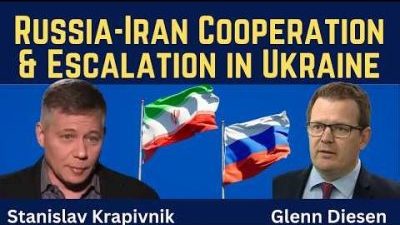
Stanislav Krapivnik: Russia-Iran Cooperation & Escalation in Ukraine
or go to
Aletho News Archives – Video-Images
Frlom the Archives
A dark page from the CIA’s history: What was Project Artichoke, launched 74 years ago?
By Erkin Oncan | Strategic Culture Foundation | August 22, 2025
One of the most useful instruments hidden behind the U.S. empire’s rhetoric of “freedom and democracy” was the Central Intelligence Agency, founded on September 18, 1947, as the successor of the Office of Strategic Services (OSS).
Since its creation, the CIA has carried out countless inhumane operations: assassinations, coups, drug trafficking, support for terrorism, conspiracies. The list of its crimes is endless. But among the darkest and most inhumane chapters of its record lie the notorious “mind control” experiments. … continue
Blog Roll
 Aletho News
- Stanislav Krapivnik: Russia-Iran Cooperation & Escalation in Ukraine
- Indonesia suspends participation in Board of Peace following attack on Iran
- ‘Operation Epic Fury’ burns an estimated $5.82 billion in just 100 hours
- Zionism’s grip over the world: From Epstein to Greater Israel
- How Israel and the FBI manipulated assassination plots to goad Trump into Iran war
- Iranian Strikes Dispel the Illusion of US Security Umbrella
- US Boasts of Destroyed Iranian Launchers Lack Credibility – Ex-DoD Official
- Europe not in position to cooperate with US and Israel against Iran
- Iran Has ‘Broken the Myth’ of Israeli Military Power: Former Pakistani Envoy
- How, and why, US data centers in the Gulf became targets of war
- If Americans Knew
- US troops were told war on Iran was ‘all part of God’s divine plan’, watchdog alleges
- Trump wants to run the show in Iran, but doesn’t know what he’s doing – Not a ceasefire Day 147
- ‘Dirty Work’ :The truth about how Israel was founded
- Mass Expulsion in Lebanon as Israel Expands War: “We Don’t Know Where to Go”
- Lies, distortions, and propaganda: how the U.S. mainstream media coverage on Iran hides the truth
- Palestinians in Gaza fear famine returning as Israel cuts off food amid Iran war
- AIPAC, other pro-Israel groups enter midterms with $100 million to spend
- Iranian girls killed by ‘double-tap’ strikes on Minab school
- Bari Weiss Is Going Full ‘Propaganda-Palooza’ With the Iran War
- Inside the Pro-Israel Campaign to Stop ‘The Voice of Hind Rajab’ From Winning an Oscar
- No Tricks Zone
- Televised! Leading German Political Candidate Tells Schoolchildren CO2 Makes Sun Hotter!
- New Study: A Century Warming Of 1.1°C Is ‘Commonplace’ And ‘Not Unusual’ During This Interglacial
- New Study: ‘Internal Noise’ And Volcanic Forcing Can Trigger 10-15°C Warming Within Decades
- Glaciers Worldwide Are Suddendly Surging, Experts Blame Warming!
- Surprising Discovery: Sahara Is Greening…Billions Of Trees Where Once Thought To Be Barren
- New Research Reaffirms Clouds, Aerosols, And Surface Solar Radiation Are ‘Driving The Climate System’
- Germany: Electric Car Catches Fire At Charging Station, Sets Off Local “Inferno”, Widespread Damage
- New Study: Canada’s New Brunswick Was 1°C Warmer Than Today During The Medieval Warm Period
- Coal Power Back In Trend As Globe Tries To Keep Pace With Growing Demand For Power
- New Study: A 4°C Warmer Beaufort Sea Had ‘No Sea Ice’ 11,700 – 8200 Years Ago
 Aletho News