At the start it was not even a university, but Seneca College. Then it was the University of Ottawa. Then Carleton University, the University of Western Ontario, and the University of Toronto. Now it is almost every university in New Brunswick and Nova Scotia. The law faculty at McGill is also demanding it, presumably to save the university from expensive litigation (an implied threat, and one that strangely assumes that only one side of a debate can litigate in court). If it happens first in the United States, then almost immediately it is copied and pasted into policy in Canada. It is coming everywhere: mandatory vaccination for all faculty, staff, and students.
As a tenured, full Professor in Canada, it is my duty to encourage all faculty to be united in non-compliance with such measures.
Mandatory vaccination pressures are issued allegedly in accordance with “public health”. However, they are mandated through neither parliaments nor legislation, but are instead issued unilaterally by governments under the umbrella of “emergency measures”.
Typically, such vaccination mandates stipulate the following: faculty, staff, and students must show proof of full vaccination in order to access campus and perform their duties. If they do not do so (and some allow refusal only on grounds of medical or religious exemptions), then they must submit to still undefined special measures, such as frequent testing (perhaps twice each week, using rapid antigen tests), and masking at all times and in all spaces on campus.
This will be, for most Canadian faculty, the first if not the only real test of their integrity and dignity, and their purpose as scholars and intellectuals. It is absolutely essential that they not fail this test from the start.
It must be emphasized that this is not a position that can be taken only by non-vaccinated faculty. Action to prohibit and prevent discrimination, and actual abuses of human rights, is a stance to be taken by all faculty, whether fully vaccinated or not.
Rather than following the alternative science narrative tied to the private interests of pharmaceutical corporations and those of politicians, we should expect Canadian universities to encourage critical thinking that—as is now commonly endorsed and celebrated—“speaks truth to power”. This would be in line with Canadian universities’ many recent statements in support of social justice. To see these same universities immediately fail the first real test of their avowed commitments, is both shocking and disappointing.
In particular, mandatory vaccination pressures plainly and indisputably discriminate against employees who are members of particular religious and ethnic communities, in such a way and to such a degree that any claims to upholding “equity, diversity, and inclusivity” become completely unravelled. Not sustaining this commitment in one area, and expecting it to be sustained in other areas, is obviously neither credible nor tenable. Furthermore, the policy which imposes such discrimination is in direct violation of a number of laws and human rights codes, both here in Quebec and in the rest of Canada.
First, faculty should notify senior administrators that at no point, and under no circumstances, can they be compelled to involuntarily release any private information about their personal health status, whether they have been fully vaccinated or not. Such a mandate violates the rights of all, not just some. Such compulsion, that lies outside of the terms and conditions of employment as established by contracts or collective agreements, would be plainly illegal on a number of fronts, including violating existing laws as exist in Quebec and the rest of Canada. At no point when we were interviewed and then hired, were any of us informed of any health requirements to perform our jobs. Established policies for universities to maintain safe working environments place that burden on university administrations—they do not imply any demand for health screening and injection of faculty.
We should be particularly concerned about the apparent effort to pressure people into vaccination. As universities that staunchly uphold ethics in research, following federal requirements, this policy instead negates voluntary informed consent. Consent cannot be mandated, by definition. The policy also violates the principle of do no harm, by not advising members of the community that compliance with this policy could result in experiencing adverse effects, ranging from the mild and trivial, to serious injury requiring hospitalization, and in some cases even death. We have not seen any language warning about adverse reactions and possible death anywhere in the policy announcements.
The compulsion to vaccinate also runs afoul of legal provisions that prohibit discrimination on the grounds of ethnicity, religion, and political beliefs.
What universities are also backing is an emergency measure, but they have not furnished any proof of an emergency. Rapidly spreading viruses are common to our university communities, as with each cold and flu that sweeps through a university population every year, even multiple times in a year. The condition of “rapid spread” and “contagiousness” is not, in and of itself, any basis for an “emergency”.
University administrations should rest assured that, as was usual, when employees develop any symptoms of any sickness, they will automatically refrain from coming to campus, as they have done when they had colds or the flu. Non-vaccinated faculty therefore represent no actual nor potential “threat” to the health of the community.
We must also point out that in the early fall of 2009, some Canadian faculty contracted H1N1, and in some cases they had to be absent from class for weeks. At no point did any university administration in Canada manifest any concern about this fact. It is important to recall that in 2009, the World Health Organization declared H1N1 to be a “global pandemic,” under the very same definition it then used for Covid-19. By enacting radically different measures today, Canadian universities are thus directly at odds with their own practice, from the recent past.
Second, if the consequence of non-compliance with such mandates are that faculty must undergo frequent testing—despite having no symptoms—then this would be unfair and discriminatory treatment based on assumed health status, and that too is illegal and lies outside of our terms and conditions of employment. Being a professor at a Canadian university has never been advertised as a position that comes with a health requirement, or a requirement for medical screening in order to perform one’s duties. Moreover, given that it is now solidly established that the fully vaccinated do carry as much viral load as the non-vaccinated, and do transmit the virus, to then subject one group of persons (assumed to be non-vaccinated) to testing, while exempting others, is obviously unfair discrimination.
One can only conclude that such a discriminatory bias is meant to punish a particular group, to hinder them in carrying out their daily work requirements, and to continue singling out healthy people as a problem. It is also obvious psychological harassment, and thus directly violates most Canadian universities’ own published workplace policies.
Before attempting to unilaterally transform the terms and conditions of employment, university administrations must at least sit down and negotiate with faculty unions. Over the past 18 months, we have seen professors suddenly required to work from home, which is work not required under existing terms and conditions of our employment—it is simply not in our job description, and most are not trained for online teaching. Conversely, we have now seen them barred from continuing remote delivery when this is their first choice. Now we see those who are assumed to be non-vaccinated being forced to undergo testing, regardless of symptoms, and regardless of possible natural immunity (which is irrationally and unjustifiably dismissed from this entire discussion).
The discriminatory testing requirement is thus another apparent legal violation, and it has no place at any Canadian university.
The announced policy is a violation of human dignity: it imposes psychological pressure through a regimen of punishment designed to make the performance of one’s ordinary work duties increasingly onerous and unsustainable. It reaches the point where we could argue that it constitutes a breach of contract.
The announced policy also demands that those who are assumed to be non-vaccinated (i.e., they do not furnish proof of full vaccination), must be visibly and publicly set apart from the rest of the community (i.e., masked where others are not masked). Given the prevailing mass psychosis that incites blame, disrespect, and even overt hatred against non-vaccinated persons, to make such non-vaccinated persons openly stand apart is to jeopardize their dignity and integrity.
Third, Canadian universities must not be pressured, and should not comply with any pressures that force their participation in a regime that violates human rights. As we are only now becoming aware of the real extent of atrocities committed at Canadian Residential Schools, which closed only in the late 1990s, Canadian educational institutions ought to be extremely wary of yet another wave of government demands for harsh, segregationist, and punitive measures in the name of “saving” people.
The administration of Canadian universities may reasonably respond that they are merely following government mandates. Any government mandate that is itself an extra-legal measure, imposed without legislative support, is not one that can be used to force a university into also violating either the law or human rights conventions established under international law, to which Canada is a signatory.
Any compliance by an individual with extra-legal extreme measures could also be read as tacit consent, which would then legitimize such measures which are backed neither by established laws, the Charter of Rights and Freedoms nor—it must be noted—are they backed by any scientific support.
The administrations of Canadian universities are best advised to be prudent, and on the right side of both the law and justice. They must immediately rescind any such policy issued under the heading of a vaccine mandate. They should also be aware that failure to do so exposes them to litigation from those at the receiving end of discriminatory treatment, not just from faculty and staff, but from an even larger number of students.
For any Canadian university to try to justify human rights abuses, because they are what the government ordered, is truly Nuremberg-worthy.
Fourth, any mandate must acknowledge that the burden of proof rests with those issuing, following, and enforcing the mandate. In particular, governments and university administrations in Canada must provide fully documented proof of the following—keeping in mind that widely spread fear is not proof of any emergency other than a psychological one:
(1) That there is indeed a current public health emergency, as an objective and verifiable medical fact, and not as an artifact of government decrees. The greatest number of hospitalizations and deaths in Canada occurred during the so-called “first wave” of March-May, 2020. There has been no repetition of those numbers since then. Even then, we are basing this on assumptions: we assume that people were infected with Covid-19, using flawed testing at a time when the virus had not been isolated, and when the amplification cycles were too high—and we did not follow WHO guidelines that advised against relying exclusively on PCR tests in making any clinical diagnosis. We also did not routinely conduct postmortems to establish the cause of death of most elderly victims in the spring of last year. On top of that, it has since come to light that even among those who were already close to the natural end of their lives, they were often subjected to starvation and dehydration—fear kept away many workers from nursing homes, which then resulted in the neglect of residents. We have also learned that, at least in Quebec, such elderly and frail patients were given morphine that suppressed respiration and which, in almost all cases, quickly resulted in death. Thus we do not yet know the exact size and nature of even the “first wave,” the worst and arguably the only real wave we had.
(2) That infection is spread only by the non-vaccinated. We now know definitively that the advertised “vaccines”—those in use in Canada—do not protect the injected from infection, nor do they stop them from spreading the virus, or even falling sick and dying from the virus. If the fully vaccinated can—and do—spread the virus, then any requirement for frequent and rapid testing must equally apply to them. Failure to do so is proof of discrimination on the basis of health characteristics.
(3) That by advertising the need for vaccination, that the university population is not being misled about the real protection such injectable products afford. Countries such as Israel, which vaccinated more fully and more quickly than Canada, are now witnessing a situation where the overwhelming majority of the infected are the fully vaccinated. In both Israel and the UK in recent weeks, the fully vaccinated account for the majority of Covid deaths. Without even speaking of death, which is extremely rare for anyone exposed to Covid—vaccinated or not—in both Europe and the US there are now several hundred thousand cases of serious adverse reactions. Universally it is acknowledged—even by the manufacturers themselves—that the effectiveness of these injectable products is declining to the point where any protection they might have offered increasingly drops to insignificant levels.
(4) That “cases” are a measure of anything significant. The term “cases” has been abused and distorted: anyone deemed to test positive for Covid-19, has been categorized as a “case”. This is despite the fact that they may have had no symptoms, or if they had symptoms they were mild and required no treatment. Typically a real case involves someone needing treatment as a patient, usually in a clinic or hospital. Therefore it needs to be proven that a rising number of so-called “cases” is any reason for extraordinary measures, especially when hospitalizations and deaths are but a tiny fraction of what they were during the first wave.
(5) That natural immunity is not real and does not matter. Nowhere in these mandates is there any language concerning natural immunity—natural immunity is assumed to not exist, or is assumed to be irrelevant. If those issuing, complying with, or enforcing such mandatory vaccination cannot address this scientific point, then the credibility of their entire argument collapses. On that basis alone, non-compliance would be fully justified and warranted.
(6) That healthy people can be assumed to be bearers of sickness. These workplace vaccine mandates all assume that healthy, even young and healthy people, who are not vaccinated are a “problem”. The healthy are assumed immediately and in advance to not only being actual or potential bearers of infection, but also being the sole bearers of infection, and of being solely infectious. Show the scientific support for this argument, and show it overcoming contrary scientific research.
(7) That the so-called “Delta variant” is in fact “more dangerous”. Being more contagious does not equal more danger of sickness and death, as attested to by published government data. Show the scientific proof for the fact that the Delta variant is a significant variation, not just one that varies by 0.3% of characteristics compared to the original Covid-19. Show the data that proves beyond a doubt that it causes more hospitalizations and deaths than the original Covid-19 ever did. Without this proof, the rationale for such mandates is null and void.
(8) That “herd immunity” can only be achieved with vaccination of 100% of a population. In particular, show the scientific support for achieving such immunity by using injectable products that confer no immunity at all. In addition, show the scientific support for the idea that herd immunity discounts natural immunity—see point #5 above.
If there is little or no scientific support for these positions, then there is no rational justification that warrants a mandate issued on medical grounds, in the name of safeguarding public health. In that case, the policy demands non-compliance and it must be rescinded.
If what remains is merely fear of danger, then in certain instances such fear of danger may in itself be a call for urgent psychological therapy or even psychiatric treatment. This is especially the case where fear is sustained in the absence of evidence or in denial of reality, and where it clearly does harm to the persons holding this fear, who then harm others (by issuing discriminatory mandates, for example).
It must also be recalled that during the height of the lockdowns, well before “vaccines” became available, and even before masking became mandatory, millions of Canadian workers operated in close quarters for long hours every day, and yet deadly outbreaks were few and far between. It remains to be shown why now, with vaccination and masking and numbers only a microscopic fraction of what they were, it is now necessary to go to extreme lengths to ensure 100% vaccination, using products that clearly cannot confer immunity. Such products are not only obviously and indisputably ineffective as tools of immunization, they can also be dangerous.
The announced measures, we already know, will do absolutely nothing to curb the spread of the virus. Knowing that means the policy is being followed for reasons not having to do with public health. We should thus reaffirm our commitment to non-compliance with this policy.
Lastly, if what universities really fear is exposure to litigation, then there is a very simple answer to this concern: ask all those who wish to access campus to sign a waiver that the university bears no responsibility for anyone who may become ill on campus (assuming it can even be proved they became ill on campus). If there is widespread fear of infection, a university could also allow for continued working and learning from home for those who prefer that option. Whatever the option may be, every possible option should be investigated without resorting to extreme and discriminatory measures that violate human rights and the rights of citizenship.
[Canadian faculty are encouraged to adopt and or adapt this statement, in whole or in part, for use in their individual institutional settings, and they can do so without formally crediting this statement, even though it is published under a Creative Commons license. French translation follows.]
The Canadian instigated Lima Group has been dealt a probably fatal blow that ought to elicit serious discussion about this country’s foreign policy. But, don’t expect the media or politicians to even mention it.
In a likely death knell for a coalition seeking to overthrow the Venezuelan government, Peru’s new Foreign Affairs Minister called the Lima Group the country’s “most disastrous” ever foreign policy initiative. Héctor Béjar said, “the Lima Group must be the most disastrous thing we have done in international politics in the history of Perú.”
Two days after Béjar’s statement St Lucia’s external affairs minister, Alva Baptiste, declared: “With immediate effect, we are going to get out of the Lima Group arrangement – that morally bankrupt, mongoose gang, we are going to get out of it because this group has imposed needless hardship on the children, men and women of Venezuela.”
Prior to Baptiste and Béjar’s statements, the Lima Group had lost a handful of members and its support for Juan Guaidó’s bid to declare himself president had failed. Considering its name, the Peruvian government’s aggressive turn against the Lima Group probably marks the end of it. As Kawsachun News tweeted a Peruvian congressman noting, “the Lima Group has been left without Lima.”
The Lima Group’s demise would be a major blow to Trudeau’s foreign policy. Ottawa founded it with Peru. Amidst discussions between the two countries foreign ministers in Spring 2017, Trudeau called his Peruvian counterpart, Pedro Pablo Kuczynski, to “stress the need for dialogue and respect for the democratic rights of Venezuelan citizens, as enshrined in the charter of the Organization of American States and the Inter-American Democratic Charter.” But the Lima Group was established in August 2017 as a structure outside of the OAS largely because that organization’s members refused to back Washington and Ottawa’s bid to interfere in Venezuelan affairs, which they believed defied the OAS’ charter.
Canada has been maybe the most active member of the coalition. Former Foreign Minister Chrystia Freeland participated in a half dozen Lima Group meetings and its second meeting was held in Toronto. That October 2017 meeting urged regional governments to take steps to “further isolate” Venezuela.
At the second Lima Group meeting in Canada, a few weeks after Juan Guaidó proclaimed himself president, Trudeau declared, “the international community must immediately unite behind the interim president.” The final declaration of the February 2019 meeting called on Venezuela’s armed forces “to demonstrate their loyalty to the interim president” and remove the elected president.
Freeland repeatedly prodded Caribbean and Central American countries to join the Lima Group and its anti-Maduro efforts. In May 2019 Trudeau called Cuban president Miguel Díaz-Canel to pressure him to join Ottawa’s effort to oust President Maduro. The release noted, “the Prime Minister, on behalf of the Lima Group, underscored the desire to see free and fair elections and the constitution upheld in Venezuela.”
In a sign of the importance Canadian diplomats placed on the Lima Group, the Professional Association of Foreign Service Officers gave Patricia Atkinson, Head of the Venezuela Task Force at Global Affairs, its Foreign Service Officers award in June 2019. The write-up explained, “Patricia, and the superb team she assembled and led, supported the Minister’s engagement and played key roles in the substance and organization of 11 meetings of the 13 country Lima group which coordinates action on Venezuela.”
Solidarity activists have protested the Lima Group since its first meeting in Toronto. There were also protests at the second Lima Group meeting in Canada, including an impressive disruption of the final press conference. At a talk last year, NDP MP Matthew Green declared “we ought not be a part of a pseudo-imperialist group like the Lima Group” while a resolution submitted (though never discussed) to that party’s April convention called for Canada to leave the Lima Group.
Hopefully the Peruvian and St Lucia governments’ recent criticism marks the end of the Lima Group. But, we should seek to ensure it doesn’t disappear quietly. We need a discussion of how Canada became a central player in this interventionist alliance.
Canada’s Minister for Transport Omar Alghabra announced the introduction of vaccine passports for transport across provincial borders via plane, trains, and large water vessels.
The move underscores the growing adaptation of digital vaccine passports across the globe, particularly in developed countries.
“Vaccine requirements in the transportation sector will help protect the safety of employees, their families, passengers, their communities and all Canadians. And more broadly, it will hasten Canada’s recovery from the COVID-19 pandemic,” Alghabra said during a press conference on Thursday.
For those who cannot get the jabs, the minister said they will still be able to travel by showing proof of recent negative tests.
Alghabra said that the government was looking into practical ways to implement the vaccine passes “as quickly as possible.”
Alghabra’s announcement coincided with an announcement from the Privy Council that the government would be mandating vaccination for federal employees. The employees will be required to show proof of having received both doses of the COVID-19 vaccines.
Policymakers around the world are contemplating a wide variety of proposals to address “harmful” online expression. Many of these proposals are dangerously misguided and will inevitably result in the censorship of all kinds of lawful and valuable expression. And one of the most dangerous proposals may be adopted in Canada. How bad is it? As Stanford’s Daphne Keller observes, “It’s like a list of the worst ideas around the world.” She’s right.
These ideas include:
broad “harmful content” categories that explicitly include speech that is legal but potentially upsetting or hurtful
a hair-trigger 24-hour takedown requirement (far too short for reasonable consideration of context and nuance)
an effective filtering requirement (the proposal says service providers must take reasonable measures which “may include” filters, but, in practice, compliance will require them)
penalties of up to 3 percent of the providers’ gross revenues or up to 10 million dollars, whichever is higher
mandatory reporting of potentially harmful content (and the users who post it) to law enforcement and national security agencies
website blocking (platforms deemed to have violated some of the proposal’s requirements too often might be blocked completely by Canadian ISPs)
onerous data-retention obligations
All of this is terrible, but perhaps the most terrifying aspect of the proposal is that it would create a new internet speech czar with broad powers to ensure compliance, and continuously redefine what compliance means.
These powers include the right to enter and inspect any place (other than a home):
“in which they believe on reasonable grounds there is any document, information or any other thing, including computer algorithms and software, relevant to the purpose of verifying compliance and preventing non-compliance . . . and examine the document, information or thing or remove it for examination or reproduction”; to hold hearing in response to public complaints, and, “do any act or thing . . . necessary to ensure compliance.”
But don’t worry—ISPs can avoid having their doors kicked in by coordinating with the speech police, who will give them “advice” on their content moderation practices. Follow that advice and you may be safe. Ignore it and be prepared to forfeit your computers and millions of dollars.
The potential harms here are vast, and they’ll only grow because so much of the regulation is left open. For example, platforms will likely be forced to rely on automated filters to assess and discover “harmful” content on their platforms, and users caught up in these sweeps could end up on file with the local cops—or with Canada’s national security agencies, thanks to the proposed reporting obligations.
Private communications are nominally excluded, but that is cold comfort—the Canadian government may decide, as contemplated by other countries, that encrypted chat groups of various sizes are not ‘private.’ If so, end-to-end encryption will be under further threat, with platforms pressured to undermine the security and integrity of their services in order to fulfill their filtering obligations. And regulators will likely demand that Apple expand its controversial new image assessment tool to address the broad “harmful content” categories covered by the proposal. … Full article
You are not alone! As of 28 July 2021, 29% of Canadians have not received a COVID-19 vaccine, and an additional 14% have received one shot. In the US and in the European Union, less than half the population is fully vaccinated, and even in Israel, the “world’s lab” according to Pfizer, one third of people remain completely unvaccinated. Politicians and the media have taken a uniform view, scapegoating the unvaccinated for the troubles that have ensued after eighteen months of fearmongering and lockdowns. It’s time to set the record straight.
It is entirely reasonable and legitimate to say ‘no’ to insufficiently tested vaccines for which there is no reliable science. You have a right to assert guardianship of your body and to refuse medical treatments if you see fit. You are right to say ‘no’ to a violation of your dignity, your integrity and your bodily autonomy. It is your body, and you have the right to choose. You are right to fight for your children against their mass vaccination in school.
You are right to question whether free and informed consent is at all possible under present circumstances. Long-term effects are unknown. Transgenerational effects are unknown. Vaccine-induced deregulation of natural immunity is unknown. Potential harm is unknown as the adverse event reporting is delayed, incomplete and inconsistent between jurisdictions.
You are being targeted by mainstream media, government social engineering campaigns, unjust rules and policies, collaborating employers, and the social-media mob. You are being told that you are now the problem and that the world cannot get back to normal unless you get vaccinated. You are being viciously scapegoated by propaganda and pressured by others around you. Remember; there is nothing wrong with you.
You are inaccurately accused of being a factory for new SARS-CoV-2 variants, when in fact, according to leading scientists, your natural immune system generates immunity to multiple components of the virus. This will promote your protection against a vast range of viral variants and abrogates further spread to anyone else.
You are justified in demanding independent peer-reviewed studies, not funded by multinational pharmaceutical companies. All the peer-reviewed studies of short-term safety and short-term efficacy have been funded, organized, coordinated, and supported by these for-profit corporations; and none of the study data have been made public or available to researchers who don’t work for these companies.
You are right to question the preliminary vaccine trial results. The claimed high values of relative efficacy rely on small numbers of tenuously determined “infections.” The studies were also not blind, where people giving the injections admittedly knew or could deduce whether they were injecting the experimental vaccine or the placebo. This is not acceptable scientific methodology for vaccine trials.
You are correct in your calls for a diversity of scientific opinions. Like in nature, we need a polyculture of information and its interpretations. And we don’t have that right now. Choosing not to take the vaccine is holding space for reason, transparency and accountability to emerge. You are right to ask, ‘What comes next when we give away authority over our own bodies?’
Do not be intimidated. You are showing resilience, integrity and grit. You are coming together in your communities, making plans to help one another and standing for scientific accountability and free speech, which are required for society to thrive. We are among many who stand with you.
Angela Durante, PhD
Denis Rancourt, PhD
Claus Rinner, PhD
Laurent Leduc, PhD
Donald Welsh, PhD
John Zwaagstra, PhD
Jan Vrbik, PhD
Valentina Capurri, PhD
Since the Government of Quebec under Premier François Legault decided to jump the gun today and announced the coming of “vaccine” certification on September 1st, possibly in response to the opposition’s demand for always harsher measures, I decided to post these extracts from my larger work earlier than planned. As always, the imitation of Americans is instant in Canada—this comes in the same week that New York City imposed its own “vaccine” certification system. In fact the Liberal Party in opposition added a cruel and perverse twist to the naming of the vaccine passport, calling it a “Freedom Passport”. Without the passport, no freedom, hence the indefinite suspension of the constitutional rights of a select group of Canadians, discriminated against on the basis of their health status. This must also mean that workers in “non-essential services” (does that include political parties?) will be mandated to get injected, or else be fired. A “vaccine passport” is thus also mandatory “vaccination” at the same time. Bruised by many months of lockdowns, private businesses are required to not only collaborate with the state, and agree to reduce their revenue by refusing customers, they also agree to be effectively deputized as the state’s auxiliary police service. Where under Canadian law it is stated that citizens are required to involuntarily divulge their private health information to strangers, it is not known, nor did Legault at any point cite any legal support (let alone scientific support) for this measure. We need to further analyze this obvious slide into full-fledged dictatorship, which uses a “pandemic” as a convenient cover and as a gold mine for imposing always more authoritarian measures.
Health Discrimination in Quebec
The Government of Quebec began planning to penalize the “vaccine hesitant,” by removing from them the freedom to access “non-essential services,” as defined by the government (Manitoba is also following). This is clearly a case of shaming and stigmatizing, and the invention of a threat from those who are officially libelled as a dangerous Other. Having invented a vaccine passport (in the works for several months), for which at first the government claimed there was no use, now the government reveals its intended use: to segregate the public and pressure people to allow themselves to be injected, preemptively blaming them for any rise in “cases” given spreading variants (to which the vaccinated are also clearly vulnerable, and which they can spread). The passports, using QR codes, were easily hacked in a trial, thus the system would further breach person’s private data. The federal government of Canada has not gone so far—since vaccine passports are discriminatory, divisive, and force people to reveal their personal health data—but is reportedly considering mandatory vaccination for all federal employees. Quebec Premier Legault, citing the flimsiest of evidence of increased infections (blamed on the unvaccinated, without any evidence) announced on August 5, 2021, that “vaccine passports” would indeed go into effect on September 1st. The “science” behind this, needless to say, is more akin to magic.
There has also been resistance to vaccine passports internationally, not just on the streets of Europe in massive weekly protests that the media refuse to cover, but also from the WHO. In the UK a parliamentary committee concluded that the scientific case for certification has not been made, that passports are discriminatory on prohibited grounds for discrimination, that there are valid concerns for privacy and data protection, and that such passports have “the potential to cause great damage socially and economically”. However, as noted by the Security and Policing Subgroup that advises the UK government, “Once the majority of the population is vaccinated, the exclusion of individuals who refuse vaccination may have public support” (SPI-B, “Lifting Restrictions: Security and Policing Implications,” February 10, 2021, p. 7)—thus one ostensible aim of mass vaccination is precisely to facilitate discrimination against the resistant. One report from France painted a complete picture of devastation wrought by the introduction of this certification regime, where citizens now have to qualify to enjoy inalienable human rights.
Vaccine certification is coercive, placing people under duress and violating free and informed consent; it is also entirely redundant and unnecessary if public health is really the issue. To be clear: vaccine certification is not a health or medical issue, it is political. Anything concerning inclusion/exclusion, controlling population mobility, borders, and passports, is by definition part of the political domain of the state. Highlighting the politics of vaccine passports, even the acute partisanship of the politics involved, witness Democrats in the US who applaud the entry of unvaccinated migrants from Central America, and yet simultaneously call for the exclusion of unvaccinated Americans from universities, schools, workplaces, and entertainment venues.
What is usually overlooked is that such a system of vaccine certification means the removal of basic rights for everyone in Quebec who is required to furnish proof of official approval to enter whichever establishment (a minor change in the app can change the range of access immediately): the right to participate in civic life is thus abrogated, rendering citizenship provisional and tentative. At a very minimum, this expands the already vastly expansive range of regulations that exist at all levels of government in Quebec, a multiplication of powers of oversight and surveillance that render personal autonomy fictitious. When people comply with this, they agree that all aspects of their everyday behaviour are now subject to licensing.
Testing the Logic of the Passport
Examine the logic of the Quebec government’s decision. For this purpose I will use a semi-fictionalized example based on elements of my own routine, and for this purpose the reader will need to assume that the person in question has not been vaccinated. Let’s begin: schools are declared essential services, so there will be no vaccine discrimination when accessing them. Professor X teaches at a university in Montreal, but does not live in the city. To get to that university, Professor X spends 1.5 hours on a heavily packed train. In the train station itself in Montreal, there is a sandwich and coffee bar, in the middle of masses of people swirling around it—there is no feasible way of barring entry, since it has no walls and no door. After the train station, Professor X switches to a crowded Metro system. He arrives at his campus’ Metro stop, and shuffles in a massive throng of people to go up escalators. Then he squeezes into a packed elevator. He arrives at a packed classroom with no windows and poor ventilation. Class lasts three hours. That is just part of the work for that day. After all is done, on his way out of Montreal, he decides to stop at a restaurant near the campus, to have a bite alone—and it is there where he is barred entry.
(Not only that: within the very same building where Professor X teaches and has his office, there are two cafes and a pub—one of the cafes has only two walls—presumably, he will be denied access to services within the same building and among the same people to which he delivers his service.)
Everywhere else, he has been inside of crowds, for many hours, but suddenly when it comes to having a burger off campus, no, that is just too much. Why? Because the “vaccinated,” benefiting from a “vaccine” that keeps them “safe,” still need to be protected from the unvaccinated. Never has such a low bar of immunity been set for a “vaccine”. The vaccinated ought to be wondering exactly what was squirted into their veins that fails to make them immune to the unvaccinated. As for the unvaccinated, they will be protected from dangerous restaurants, but somehow they will also be safe among thousands of people in buildings that are like stacks of cruise ships. The vaccinated will be protected both inside the restaurant, and inside the train station, yet Professor X cannot have a burger in the restaurant, but he can have a sandwich in the train station. The virus understands these nuanced differences and respects the government’s finicky little dividing lines.
What is to be done to people working in “non-essential services,” who are themselves unvaccinated? Are they to be laid off? How is access regulated to establishments that offer a mix of both “essential” and “non-essential”? Will guards with QR code scanners be posted in each aisle? Meanwhile, all “non-essential services” will presumably need to dedicate personnel to stand guard at entrances and scan the QR code of each single person seeking entry to the establishment. There will be lines of people—people lining up like compliant little toddlers, shifting from foot to foot, and repeating this for each store they visit. The security theatre we found in airports all these years, will now be everywhere: every “non-essential” store will have to become a security clearance point, like in an airport.
If the Quebec government’s aim was to increase exasperation, add to confusion, multiply divisions among people, expand bureaucracy, violate the right to privacy, securitize daily life, openly signal politicians’ lust for total power, effectively suspend civil rights and nullify the defining rights of citizenship, and to maximize distrust of the authorities, then this strategy is refined beyond measure. Success is assured, unquestionably.
Medical Apartheid
It’s an “exotic” word, so of course “educated” Canadians working in the media will struggle with it. Some in the Canadian media take umbrage at anyone calling such a pass-based system of discrimination, “apartheid”. They think that “apartheid” is a holy word, that is racially exclusive property belonging to a specific people. To call one act of discrimination by the same word used for another act of discrimination, somehow “cheapens” and “diminishes” that other discrimination. In other words, there is “good discrimination” which is to be applauded (“vaccine passports”) and then “bad discrimination” (which only became bad in Canada when it was politically convenient). Yet, what is the essence of apartheid? Two of the three definitions listed by The American Heritage Dictionary of the English Language state: “A policy or practice of separating or segregating groups” and “The condition of being separated from others; segregation”. Separation, segregation, discrimination—linking “vaccine passports” with apartheid is all the more warranted when we recognize the fact that targeted Others are forced to contain their movements within what is allowed by a pass. In both cases, the pass is associated with a certain biological property, whether it is skin colour or one’s health status.
Canada, at an official level, likes to celebrate itself as place where diversity and inclusivity reign, and where we face the injustices of the colonial past. This is very convenient, as a distraction. It is a stance that distracts from the new injustices being perpetrated in the immediate present, right under everyone’s nose.
Medical apartheid is precisely the kind of regime we would expect in a Health Security State as discussed extensively by Giorgio Agamben. Writing specifically about “vaccine passports” (or the Green Pass in the case of Italy) in a recent article which, translated from Italian, is titled “Second-Class Citizens,” he explains:
As happens every time a despotic emergency regime is established and constitutional guarantees are suspended, the result is, as happened with the Jews under fascism, the discrimination of a category of humans, who automatically become second-class citizens. This is the aim of the creation of the so-called green pass. That it is a discrimination based on personal beliefs and not an objective scientific certainty is proved by the fact that in the scientific field the debate is still ongoing on the safety and efficacy of vaccines, which, according to the opinion of doctors and scientists who there is no reason to ignore, they were produced quickly and without adequate testing.
Despite this, those who stick to their free and well-founded belief and refuse to be vaccinated will be excluded from social life. That the vaccine is thus transformed into a sort of political-religious symbol aimed at creating discrimination among citizens is evident in the irresponsible declaration of a politician, who, referring to those who do not get vaccinated, he said, without realizing that he was using a fascist jargon: “we will purge them with the green pass”. The “green card” constitutes those who do not have it in bearers of a virtual yellow star.
This is a fact whose political gravity cannot be overstated. What does a country become in which a discriminated class is created? How can one accept living with second-class citizens? The need to discriminate is as old as society and certainly forms of discrimination were also present in our so-called democratic societies; but that these factual discriminations are sanctioned by law is a barbarism that we cannot accept.
Such a certification regime—let us be absolutely clear about this—is authoritarian for everyone. It is not authoritarian just for the “unvaccinated” alone. Everyone who abides by such a system, agrees to furnish documentary proof to gain access to what was previously free and open to them. They thus agree to concede access, on grounds arbitrarily decided by the state. What was previously taken for granted, is now the focus of heightened securitization. This is effectively the abolition of the very concept of everyday life, for everyone.
To end on a personal note, this is an exceptionally depressing time in which I find myself. From the start, I suspected that our summer here of lessened restrictions was just a brief interim period, the carrot dangled in front of the mule before the stick struck our hindquarters again. Never have I personally witnessed such a dark curtain of fascism pulled across a society, and with such insignificant protest, and to the cheers of fake opposition parties and even faker media. Nobody will see this, thanks to ever widening censorship. I knew this was just the beginning of much worse to come, and this newest measure is itself an open door to a permanent “pandemic” of authoritarianism, fear, and the abolition of anything that can meaningfully be called society. It has come to pass, things have finally fallen apart.
I went home to visit my mother. Canada tried to force me into a Covid detention facility threatening fines and police action as they don’t recognize my natural immunity. I had no choice but to immediately fly back to Europe.
At the time of writing, I’m at an altitude of exactly 11,277m, 5,230km away from Vancouver, Canada, and 3,159km from my stopover in Munich, Germany, en route back to Paris, France. Where I really should be is relaxing on the backyard patio or in the jacuzzi at my home near Vancouver with a cold drink on a hot summer day. Instead, I’m on a Lufthansa flight heading back to Paris – just a few hours after arriving across the ocean on a 10-hour flight – because my own country’s officials kicked me out. All because I committed the apparent violation of trying to re-enter my own country with proof of naturally acquired Covid-19 antibodies made by my own immune system post-recovery rather than those generated by the manmade Covid-19 vaccine about which much is still to be learned.
Daily life for a Covid-19 survivor with natural immunity from the disease is not for the faint of heart. As someone with a high level of laboratory tested antibodies whose levels have yet to drop even after several months post-illness, my doctor has advised against vaccination. Much is obviously still to be learned about the Covid jabs, still in stage 3 of clinical trials and considered experimental by health authorities – particularly with reports abounding of breakthrough cases of vaccinated people catching and spreading Covid.
To protect and preserve my acquired immunity by opting out of vaccination that risks interfering with it or causing a risk to my health, France now requires me to succumb to nasal swab antigen tests every 48 hours if I wish to continue accessing everyday venues like public transit, gyms, restaurants, some shopping malls, and bars. But it’s a price that I’m willing to pay for my health.
And now I’m paying another price for choosing to protect my own health. I’ve found myself threatened with internment by the Canadian government – something that not even terror suspects or illegal immigrants are subjected to without at least a hearing.
When I attempted to return home from Paris to Vancouver to visit my elderly mother for the first time in a year, I was treated worse than a criminal. I arrived at the airport with a negative PCR test, two positive Covid antibody tests from March and July proving that I still had significant Covid antibodies post-recovery, and a ‘covid immunity certificate’ written and signed by my French doctor to confirm this fact.
The Canadian border officer refused to accept the antibody laboratory test results as proof that I had recovered and was immune from Covid. He wanted a PCR test less than three months ago, after which everyone is expected to take the vaccine. (I didn’t even know that I had Covid until I took a serology antibody test weeks later.) Nor did the officer show any consideration for the negative PCR test taken hours at departure, or for the various other antigen tests – all negative – taken every 48 hours for the prior 10 days. Instead, he ordered me to sign up for a 3-day stay at a government internment facility (to then be followed by a mandatory and monitored 14-day home isolation).
I was then referred to a federal health officer who asked if I had signed up and paid (up to $2,000) for the 3-day government internment. I said no. She said that I had no choice except with respect to which government-contracted facility I’d like to be detained in at my own expense. I asked, “What if I just walk out?” She gestured to the RCMP officer behind her and said that leaving would result in a fine of nearly $6,000. I asked, “Then what if I just stay here in the airport and book a flight back to Paris and cancel my entire visit back home to Canada?” She replied that it would be fine. So, I booked a flight back on my phone at a cost of just over $1,500 – still cheaper than the government internment. She took down my return flight number, wrote me up a federal ‘health order’ that I had to sign, acknowledging that I was to leave Canada on that flight or face criminal penalties up to and including imprisonment. She helpfully added that I could still be fined for my ignorance, but they’d graciously let me off with a warning this time. What a benevolent budding authoritarian regime.
Let’s be clear: The Canadian government, by behaving in this manner, is routinely criminalizing those with Covid antibodies that are not derived from a manufactured experimental vaccine.
Just a few hours later, I am now on that flight back to Paris. My mother broke down in tears waiting for me on the other side of the arrivals hall as her daughter was expelled from her own country – something that Canada doesn’t even do with terror suspects without some kind of due process.
The next step for myself and others subjected to this discrimination should be a court challenge to the federal government’s actions. Government-ordered internment facilities for immune Covid survivors under threat of incarceration have no place in any democracy.
Rachel Marsden is a columnist, political strategist and host of an independently produced French-language program that airs on Sputnik France. Her website can be found at rachelmarsden.com
We sat down with Dr. Byram Bridle, an associate Professor of Viral Immunology, Department of Pathobiology at the University of Guelph. Here’s the article that we discussed: https://theconversation.com/a-year-of…
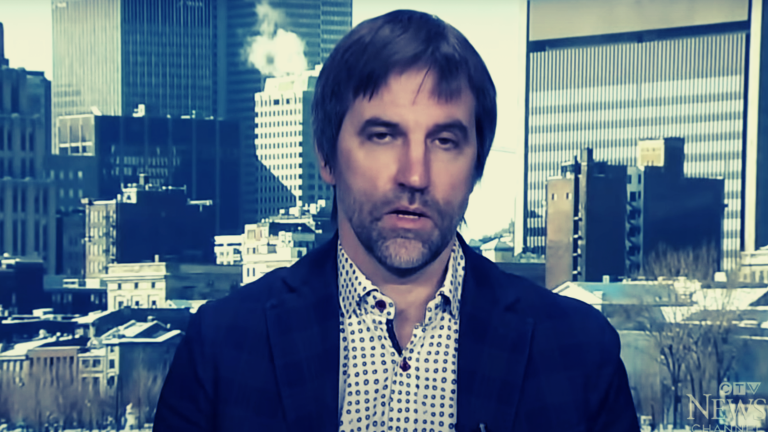
Offensive remarks on social media are legal, but Canada’s Heritage Minister Steven Guilbeault says they “undermine democracy.”
The government is promoting the internet censorship bill C-36, which seeks to obligate social media platforms to mass censor.
In a briefing, reviewed by Blacklock’s Reporter, the Heritage Ministry argued for censorship of offensive Twitter messages because he says they prevent “a truly democratic debate.”
“This content steals and damages lives,” the briefing read. “It intimidates and obscures valuable voices, preventing a truly democratic debate.”
In late June, the cabinet introduced Bill C-36, which threatens social media users with house arrests and fines of up to $50,000 for sharing content that promotes “detestation or vilification.”
“Our objective is to ensure more accountability and transparency from online platforms while respecting the Canadian Charter Of Rights And Freedoms,” said the June 16 briefing note.
“The mandate of the Department of Canadian Heritage includes the promotion of a greater understanding of human rights.”
Under Canada’s Criminal Code, so-called “hate speech” (open to interpretation) is a crime. What Bill C-36 does is make hate speech illegal even when there is no evidence of a crime.
“Social media platforms such as Facebook or Twitter are increasingly central to participation in democratic, cultural and public life,” said the briefing note.
“However, social media platforms can also be used to threaten, intimidate, bully and harass people or used to promote racist, anti-Semitic, Islamophobic, misogynist and homophobic views that target communities, put people’s safety at risk and undermine Canada’s social cohesion or democracy.”
In this group interview facilitated by Sam Dubé, M.D., Ph.D., four physicians from across Canada – emergency physician Dr. Chris Milburn, rural family physician Dr. Charles Hoffe, general surgeon Dr. Francis Christian, and pathologist Dr. Roger Hodkinson – tell their stories of persecution at the hands of their governing bodies. Their only crime: practicing evidence-based medicine by questioning the safety of their patients and the public during the pandemic.
A legal representative for their cases, John Carpay, Esq., provides insights and legal commentary, invoking the Canadian Charter of Rights and Freedoms. These physicians, and others like them, are the living embodiment of the medical mantras of “do no harm” and “informed consent”.
The reprehensible issue of what many deem “mass murder” of indigenous children in Canada’s Catholic school system has been in global headlines in recent weeks. But this should have been in the headlines decades ago.
The nearly 1,000 bodies of indigenous children in mass graves were recently found by ground-penetrating radar, said the Federation of Sovereign Indigenous First Nations (FSIN) and the Cowessess First Nation.
A reported 150,000 indigenous children were abducted and imprisoned in the Catholic schools, where they were tortured with the intent of erasing their culture and language, as were also sexually abused, had needles driven through their tongues for speaking their own language, were sterilized, among many other horrific practices.
After these findings made the news, people were rightly outraged. Catholic churches in British Columbia and Alberta have since been vandalized and set afire, including churches currently used by indigenous communities as meeting places, acts met with disgust by many indigenous, saying vandalism isn’t justice.
The vandalism continued on Canada Day, with another 10 churches in Calgary targeted.
The premier of Alberta, Jason Kenney, denounced the vandalization of an African Evangelical Church, noting that the congregation is “made up entirely of new Canadians, many of whom came here as refugees fleeing countries where Churches are often vandalized & burned down.”
While some have justified the vandalization of the churches as a push for justice, others questioned whether vandalized or burned mosques or synagogues would also receive the same approval.
After Prime Minister Trudeau spoke of “reconciliation” and how “our relationship with indigenous peoples” has evolved, people rightly called out the government of Canada for empty talk, noting indigenous communities around the country frequently lack clean drinking water. Then, there’s the issue that aside from an official apology, the government hasn’t charged or tried anyone for these crimes.
A report first published in March 2016 by the International Tribunal for the Disappeared of Canada (ITDC) has since apparently been heavily censored and removed from Google search results.
It addressed the “Truth and Reconciliation Commission” carried out by the government and churches, calling it “a rapid in-house response by church and state designed to present their own self-serving narrative of their Indian residential schools crimes,” noting it “was created by the same institutions of church and state that were responsible for the residential school crimes being investigated.”
The synopsis notes that the crimes were “legally authorized, sanctioned and protected by every level of government, church and police in Canada,” and “amounted to deliberate genocide.”
It refers to horrifying facts that the average Canadian likely doesn’t know, including that “Native children began dying in droves the very first year the residential schools opened in 1889, at an average death rate of nearly 50%.” This, it emphasized, continued for the next five decades, “despite constant complaints and reports by doctors who inspected the schools.”
The deaths were caused by “a continual denial of regular food, clothing and proper sanitation to children interned in the schools, amidst a regime of routine and systemic rapes, beatings, tortures and killings: conditions that continued unabated for over a century, from 1889 to 1996.”
Why now?
While I fully stand with the push for justice for the manifold crimes committed against the indigenous peoples in what is now Canada, I do wonder, why is this making headlines now? It’s not like these are new revelations.
Ostensibly the reason these mass graves are in the news now is due to their recent discovery. But, others point out that indigenous have for decades said there were mass graves, but were met with silence.
Indeed, an article first published in May 2008 – and according to the author, rejected by Canadian media – spoke of a 1996 lawsuit launched by residential school survivors on the issue of the death and torture at residential schools. It noted that “residential school children were being buried ‘four or five to a grave’, and that the death rate in these schools stayed constant at fifty percent for over forty years.”
It rightly asked: “Why is the disappearance of tens of thousands of native children in these schools not the subject of a major criminal investigation?”
That was 13 years ago, the lawsuit over two decades ago.
This is just one of, I’m sure, countless examples over the years, decades even, of calls to investigate the missing children and the criminal practices of the schools they were forced into.
So, while it would seem a good thing that the media is highlighting the issue of the barbaric ‘residential schools’, the fact that the media – and not just Canadian, but global media – is covering this should make us take pause. These are the same outlets that sold us WMDs in Iraq, chemical weapons in Syria, and innumerable lies to justify wars and invasions against sovereign nations.
Again, for me, the question is, why now is Canada discussing this issue? I don’t know the answer to that, but before getting swept up in toppling statues for ‘justice’, it is worth considering this and whether justice is really served by vandalization and the PM’s empty words.
Eva Bartlett is a Canadian independent journalist and activist. She has spent years on the ground covering conflict zones in the Middle East, especially in Syria and Palestine (where she lived for nearly four years).
A Canadian indigenous group has said 182 unmarked graves have been discovered in the South Interior of the province of British Columbia, the third such discovery in the past two months near former Catholic schools.
The burial site is located at the former Catholic-run St. Eugene’s Mission School, the Lower Kootenay Band announced on Wednesday.
The community of ʔaq’am – or St. Mary’s Indian Band – based near the city of Cranbrook made the gruesome find after using radar detection equipment, which apparently pointed to there being graves around a meter below the surface.
Last week, 751 unmarked graves were uncovered at a Catholic school in Saskatchewan province, another indigenous community announced.
That discovery came after the remains of 215 children, some as young as three years old, were found at another Catholic school in British Columbia in May.
St. Eugene’s, now a casino and resort, was run by the Catholic Church from 1890 until the 1970s, according to the Truth and Reconciliation Commission, a body set up to document the history of indigenous students in Canadian schools.
The Indian Residential School History and Dialogue Centre said the school was hit by frequent outbreaks of influenza, mumps, measles, chickenpox, and tuberculosis.
As many as 100 people from the Lower Kootenay Band had been forced to attend the institution, the group said.
“It is believed that the remains of these 182 souls are from the member Bands of the Ktunaxa Nation, neighbouring First Nations communities and the community of ʔaq’am,” the community said in a statement.
More than 150,000 indigenous children were required to attend Catholic-run state schools in Canada from the 1870s until 1997.
In 2015, a report by the commission said the government’s forced assimilation of indigenous students and the system itself could “best be described as ‘cultural genocide.’”
By Kit Klarenberg | Mint Press News | January 28, 2025
Ever since Tel Aviv’s 1948 creation, much has been said and written about ‘Greater Israel’ – the notion Zionism’s ultimate end goal is the forcible annexation and ethnic cleansing of vast swaths of Arab and Muslim lands for Jewish settlement, based on Biblical claims this territory was promised to Jews by God. The mainstream media typically dismisses this concept as antisemitic conspiracy theory, or at most the fringe fantasy of a minuscule handful of extremist Israelis.
This site is provided as a research and reference tool. Although we make every reasonable effort to ensure that the information and data provided at this site are useful, accurate, and current, we cannot guarantee that the information and data provided here will be error-free. By using this site, you assume all responsibility for and risk arising from your use of and reliance upon the contents of this site.
This site and the information available through it do not, and are not intended to constitute legal advice. Should you require legal advice, you should consult your own attorney.
Nothing within this site or linked to by this site constitutes investment advice or medical advice.
Materials accessible from or added to this site by third parties, such as comments posted, are strictly the responsibility of the third party who added such materials or made them accessible and we neither endorse nor undertake to control, monitor, edit or assume responsibility for any such third-party material.
The posting of stories, commentaries, reports, documents and links (embedded or otherwise) on this site does not in any way, shape or form, implied or otherwise, necessarily express or suggest endorsement or support of any of such posted material or parts therein.
The word “alleged” is deemed to occur before the word “fraud.” Since the rule of law still applies. To peasants, at least.
Fair Use
This site contains copyrighted material the use of which has not always been specifically authorized by the copyright owner. We are making such material available in our efforts to advance understanding of environmental, political, human rights, economic, democracy, scientific, and social justice issues, etc. We believe this constitutes a ‘fair use’ of any such copyrighted material as provided for in section 107 of the US Copyright Law. In accordance with Title 17 U.S.C. Section 107, the material on this site is distributed without profit to those who have expressed a prior interest in receiving the included information for research and educational purposes. For more info go to: http://www.law.cornell.edu/uscode/17/107.shtml. If you wish to use copyrighted material from this site for purposes of your own that go beyond ‘fair use’, you must obtain permission from the copyright owner.
DMCA Contact
This is information for anyone that wishes to challenge our “fair use” of copyrighted material.
If you are a legal copyright holder or a designated agent for such and you believe that content residing on or accessible through our website infringes a copyright and falls outside the boundaries of “Fair Use”, please send a notice of infringement by contacting atheonews@gmail.com.
We will respond and take necessary action immediately.
If notice is given of an alleged copyright violation we will act expeditiously to remove or disable access to the material(s) in question.
All 3rd party material posted on this website is copyright the respective owners / authors. Aletho News makes no claim of copyright on such material.



 Aletho News
 Aletho News