Canada Joins ‘Friendly States’ in Opposing ICC War Crimes Investigation in Palestine
Palestine Chronicle | February 26, 2020
The Canadian government has submitted a letter to the International Criminal Court (ICC), in which it declared support for the Israeli position, thus rejecting the ICC jurisdiction over cases of alleged war crimes committed by Israel in Palestine.
The Canadian Jewish News (CJN), which reported on the letter, said that Ottawa has communicated its position to the Court on February 14, although the content of the letter has not been made public until today.
In the letter, Canada, which reminded the Court that its “financial contribution to the ICC will be $10.6 million this year,” stated that it does not recognize Palestine as a state and that the ICC has no jurisdiction on the case that is presented by the State of Palestine.
The Canadian decision followed a public demand last December by Israeli Prime Minister Benjamin Netanyahu to Canadian Prime Minister Justin Trudeau to condemn a preliminary report by the ICC that has a “reasonable basis” to investigate Israeli war crimes in the occupied territories.
Netanyahu’s letter, which was obtained by the Canadian Globe and Mail newspaper, asserted the position which was eventually adopted by the Canadian government, that the ICC has no jurisdiction over the case because Palestine does not meet the criteria of statehood.
Netanyahu’s letter read in part:
“In light of our special relations and the steadfast friendship between our countries, I urge you to publicly condemn this erroneous decision, to acknowledge there is not a Palestinian state, that the court has no jurisdiction in this matter, which involves political issues to be determined by the parties, and to voice your deep concerns regarding its dangerous ramifications to the court and the region.”
The intense Israeli lobbying followed a statement by the ICC chief prosecutor Fatou Bensouda, in which she declared to be “satisfied that there is a reasonable basis to proceed with an investigation into the situation in Palestine”.
“In brief, I am satisfied that war crimes have been or are being committed in the West Bank, including East Jerusalem, and the Gaza Strip,” she said.
Two days after Ottawa communicated its position to the ICC, Netanyahu praised what he called “efforts” by “friendly states” to prevent the ICC from launching an investigation.
Trudeau’s extraordinary campaign to overthrow Maduro

By Yves Engler · February 26, 2020
The effort Justin Trudeau’s government is putting into removing Venezuela’s President is remarkable. So is the utter hypocrisy of their campaign.
On Thursday Ottawa hosted the Lima Group, a coalition of countries supporting Washington’s bid to overthrow the Venezuelan government. A CBC headline noted, “Ottawa attempts to reboot campaign to remove Maduro from power in Venezuela.” For more than a year the Lima Group has openly pushed Venezuela’s military to overthrow the government. Thursday’s summit was the third held in Canada of a coalition instigated by Canada and Peru in mid 2017.
During the recent Munich Security Conference Trudeau discussed the South American country with a US Senate and House of Representatives delegation led by Republican Senator Lindsey Graham. The Prime Minister’s release noted, “the Congressional delegation thanked Canada for its leadership on the Lima Group and for supporting Interim President Juan Guaidó and the Venezuelan National Assembly in their efforts to achieve a peaceful democratic transition in Venezuela.”
Similarly, the Prime Minister discussed Venezuela at a meeting with Austria’s Chancellor on the sidelines of the Munich Security Conference. According to Chancellor Sebastian Kurz, Canada and Australia “have many shared goals such as the empowerment of women and our support for free & fair elections in Venezuela.” According to this formulation, the empowerment of half the world’s population is of similar import to purported electoral discrepancies in Venezuela.
Foreign minister François-Philippe Champagne also discussed Venezuela with International Crisis Group President Robert Malley at the Munich Security Conference.
Last month Venezuelan politician Juan Guaidó was fêted in Ottawa. The self-declared president met the Prime Minister, deputy PM, international development minister and foreign minister. Trudeau called him “Interim President Guaidó” and Champagne sometimes referred to him simply as “President”.
Over the past couple of years, the government has put out hundreds of press releases, tweets and public statements critical of the Venezuelan government. They hired a Special Advisor on Venezuela to oversee the government’s coup efforts and the Professional Association of Foreign Service Officers gave Patricia Atkinson, Head of the Venezuela Task Force at Global Affairs, its Foreign Service Officers award in June 2019 for her role in overseeing a team of diplomats that organized Lima Group meetings, sanctions, etc. The government has implemented four rounds of sanctions against Venezuelan officials and it’s brought that country to the International Criminal Court, shuttered its Embassy in Caracas, funded opposition groups and decided a marginal opposition politician was the legitimate president.
A look at Canada’s Lima Group allies highlights the hypocrisy of their campaign against Venezuela. The constitutional legitimacy of Honduras’ President is far weaker than Maduro’s; Far more dissidents were assassinated in Colombia last year; The government of Chile is facing greater popular contestation; The electoral legitimacy of Haiti’s President is much weaker; Honduras’ president has clearer links to drug runners; Violence is worse in numerous countries in the Hemisphere.
It is true that Venezuela’s economic downturn – and concurrent outward migration – is substantially worse than other Lima Group members. But, the sanctions imposed by the US and Canada have contributed to Venezuela’s economic collapse as much as any action of the government.
Canada is engaged in an extraordinary effort to overthrow President Nicolas Maduro. But, it isn’t designed to advance democracy or human rights in Venezuela.
Trudeau government deepens ties to repressive Kuwaiti monarchy
By Yves Engler · February 24, 2020
As many parents have warned their children, real friends do not encourage stupid, embarrassing, or life-threatening behaviour.
But because of our “friend” to the south, Justin Trudeau’s government has deepened ties to a repressive 250-year old monarchy in Kuwait and pursued other questionable policies.
After participating in the recent African Union Summit in Ethiopia Trudeau jetted off to meet the Emir of Kuwait, which has been part of the coalition bombing Yemen. The prime minister’s visit marked the most high-profile step in a bevy of diplomatic activity with a government where questioning the Emir or Islam is punishable with a significant prison sentence. During their meeting, notes the official press release, Trudeau “welcomed the long-standing friendship between Canada and Kuwait and thanked the Government of Kuwait for its support of our CAF [Canadian Armed Forces] personnel stationed in Kuwait as part of Operation IMPACT. The two leaders discussed recent developments in the region and agreed on the importance of working towards long term stability and security.”
Before the PM’s visit defence minister Harjit Sajjan had traveled to Kuwait City twice since December 19. In April Sajjan also met Prime Minister and Defence Minister Sheikh Nasser Sabah Al-Ahmad Al-Sabah “to bolster and consolidate bilateral ties.” Three months earlier Governor General Julie Payette visited the Emir in Kuwait City. In November Payette sent a cable to the Emir to wish him well after an illness and the next month Assistant Deputy Minister of Global Affairs Peter McDougall met a Kuwaiti counterpart “to strengthen bilateral relations.” In August 2018 the two countries signed a memorandum of understanding on establishing regular consultations between senior officials.
At the Munich Security Conference last week foreign minister Francois-Philippe Champagne met his Kuwaiti counterpart Ahmad Nasser Al-Mohammad Al-Sabah. At an event in the Canadian Embassy on Monday Kuwait’s deputy foreign minister Khaled Al-Jarallah described the “distinguished … ties between the two countries” and “continuous communication and common interests.” On Thursday Minister of Veterans Affairs and Associate Minister of National Defence Lawrence MacAulay attended a celebration at Kuwait’s Embassy in Ottawa for Canadians who fought in the 1991 Iraq war.
The inaugural Kuwait and Canada Investment Forum took place in April. Finance minister Bill Morneau and parliamentary secretary Omar Alghabra participated. At the time Alghabra wrote, “let’s celebrate and continue our efforts to grow the relationship between Canada and Kuwait in investments, trade and defence.”
So, why the budding romance?
Relations with Kuwait are important to Ottawa because of the Canadian Forces base there. About 300 Canadians are stationed in Kuwait to support the Canadian special forces deployed to Iraq as well as two intelligence and one Canadian air-to-air refuelling aircraft. Alongside 200 highly skilled special forces, there’s a Canadian tactical helicopter detachment, intelligence officers and a combat hospital in Iraq. Despite being labeled a “training” mission, the Canadians called in US airstrikes, provided up-to-date battle intelligence and repeatedly engaged the enemy. A Canadian even killed someone with a record-breaking 3.5-kilometre sniper shot. The Canadian Forces backed Kurdish forces often accused of ethnic cleansing areas they captured. Canadian special forces supported a multi-month battle to dislodge ISIS from Mosul that left thousands of civilians dead in 2017.
Alongside the special forces and air support operations, Canada assumed command of the NATO Mission Iraq in November 2018. A Canadian commands 580 NATO troops, including 250 Canadians. They train instructors at three military schools and advise Iraq’s defence ministry.
The Liberals failed to properly explain why Canada took on a second mission in Iraq. But, it was likely tied to weakening the influence of the Iranian aligned Popular Mobilization Forces, Shia militias that helped defeat ISIS. According to Scott Taylor, “Canada agreed to take command of the NATO-led training mission in Iraq because the Liberal government knew it could not sell the Canadian public on sending troops back into the war in Afghanistan. That is where the NATO leaders wanted Canadians, which seems an incredibly ironic twist in that we originally agreed to go into Afghanistan because it was not Iraq.”
Trudeau and Sajjan’s recent missions to Kuwait are part of the fallout from Washington’s decision to assassinate Iranian general Qasem Soleimani and Iraqi Shia militia commander Abu Mahdi al-Muhandis. After the January 3 killings some Canadian forces in Iraq were withdrawn to the base in Kuwait. Iraq’s parliament passed a resolution demanding foreign soldiers leave the country and Iran threatened to retaliate against US troops in the region.
The flurry of recent diplomatic activity is likely designed to reassure Kuwaiti officials of Canadian backing and to ensure Kuwait doesn’t back out of the base arrangement. The Trudeau government has happily deepened ties to a repressive monarchy to support US policy in Iraq.
To maintain foreign troops in Iraq the Trudeau government has also pushed back against the Iraqi parliament’s call for foreign troops to leave. After the country’s parliament passed a resolution calling for foreign troops to go, defence minister Harjit Sajjan sought to convince his Iraqi counterpart of the importance of Canada’s presence. Last week Sajjan celebrated Iraqi leaders willingness to keep Canadian troops. Additionally, Middle East Eye reported on Iraqi and US military officials holding a secret meeting “in the private residence of the Canadian ambassador to Jordan in Amman” to discuss pulling back US troops from Iraq.
Makes one wonder what else the Trudeau government has done or will do to support US policy in Iraq?
Trudeau is buddies with murderous African dictator
By Yves Engler · February 12, 2020
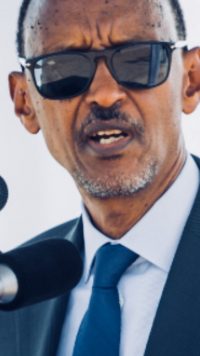 Justin Trudeau wants us to know he’s buddies with Africa’s most ruthless dictator.
At the recent African Union Summit in Ethiopia Trudeau met Paul Kagame. The Prime Minister’s press people released a photo of him laughing with the Rwandan President and announced that the two discussed the upcoming Commonwealth summit Trudeau is set to attend in Kigali.
On at least five occasions since 2018 Trudeau has been photographed with Kagame during one-on-one meetings on the sidelines of different international summits. At one of those meetings the PM “affirmed the importance of strong and growing bilateral relations” between Canada and Rwanda.
Canadian-based Rwandan dissident David Himbara has criticized the PM’s embrace of Kagame. In April 2018 he wrote, “the romance between Canada’s Prime Minister Justin Trudeau and Rwanda’s strongman Paul Kagame is difficult to fathom. For the past several months, the romance between the two and among their respective ministers has blossomed beyond belief.”
After amending the constitution to be able to run indefinitely Paul Kagame won 98.63 per cent of votes in Rwanda’s August 2017 presidential election. In response, Canada’s High Commissioner Sara Hradecky tweeted, “congratulations to Rwandans for voting in peaceful presidential election” and “Canada congratulates Paul Kagame on his inauguration today as President of Rwanda.” The latter tweet was picked up by the state propaganda organ New Times in a story titled “Heads of State, diplomats laud Kagame’s ‘visionary leadership’.”
If garnering 99 per cent of the vote wasn’t a clue that Kagame is a dictator, the High Commissioner could have taken a look at Canada’s ‘paper of record,’ whose Africa bureau chief had recently shined a critical light on Rwanda. At the start of 2016 the Globe and Mail reported on two new books describing the totalitarian nature of the regime.
“Village informers,” wrote South Africa-based Geoffrey York. “Re-education camps. Networks of spies on the streets. Routine surveillance of the entire population. The crushing of the independent media and all political opposition. A ruler who changes the constitution to extend his power after ruling for two decades. It sounds like North Korea, or the totalitarian days of China under Mao. But this is the African nation of Rwanda — a long-time favourite of Western governments and a major beneficiary of millions of dollars in Canadian government support.”
In 2014 York wrote an investigation headlined “Inside the plots to kill Rwanda’s dissidents,” which provided compelling evidence that the regime had extended its assassination program outside of east Africa, killing (or attempting to) a number of its former top officials who were living in South Africa. After the initial investigation York reported on Rwandan dissidents who had to flee Belgium for their safety while the Toronto Star revealed five individuals in Canada who were fearful of the regime’s killers.
On top of international assassinations and domestic repression, Kagame unleashed mayhem in the Congo. In 1996 Rwandan forces marched 1,500 km to topple the regime in Kinshasa and then re-invaded after the Congolese government it installed expelled Rwandan troops. This led to an eight-country war between 1998 and 2003, which left millions dead. Rwandan proxies repeatedly re-invaded the mineral rich eastern Congo. In 2012 the Globe and Mail described how “Rwandan sponsored” M23 rebels “hold power by terror and violence” there.
Despite the regime’s violence, Governor General Julie Payette traveled to Kigali to meet Kagame in August. She lauded “the long-standing partnership between Canada and Rwanda.”
In November 2017 Rwanda’s Environment Minister visited Ottawa to meet her Canadian counterpart, Catherine McKenna, who lauded “our close friendship.” Later that year defence minister Harjit Sajjan hosted his Rwandan counterpart General James Kabarebe.
In 2015 Kabarebe was arrested in London under a Spanish indictment for war crimes committed between 1990 and 2002 in Rwanda, including the murder of two Quebec priests. Previously, Kabarebe had been the subject of an arrest warrant by a French judge for his role in shooting down President Juvénal Habyarimana’s plane, which unleashed the genocidal violence in Spring 1994. A 2012 UN report claimed Kabarebe organized and armed deadly M23 rebels in eastern Congo, labeling Kabarebe “a central player in recruiting on behalf of M23” and noted that “he has often been in direct contact with M23 members on the ground to coordinate military activities.” After former Rwandan spy chief, turned Kagame critic Patrick Karegeya, was strangled to death in a South African hotel in January 2014 Kabarebe said, “when you choose to be a dog, you die like a dog, and the cleaners will wipe away the trash.”
The Rwandan government’s domestic repression, international assassinations and violence in the Congo are well documented. Yet I couldn’t find any criticism of Kagame by the Trudeau government. Instead, Ottawa provides about $25 million annually in assistance to Rwanda.
Canada celebrates agents of Palestinian misery

Ambassador Deborah Lyons with Canadians fighting in IDF Yaakov Herman, Robbie Kohos and Ayala Rotenberg
By Yves Engler · February 10, 2020
Canada is celebrating the agents of Palestinian misery.
Last month the Canadian Embassy in Tel Aviv held an event to celebrate Canadians fighting in the Israeli military. They invited all 78 Canadians in the IDF to the ambassador’s residence to demonstrate their appreciation. Referring to non-Israelis who join the IDF, ambassador Deborah Lyons told the Jerusalem Post, “Canadian lone soldiers are a particularly special group … This is something we want to do on a yearly basis to show our support.” At the event Canada’s ambassador said, “we both share a love of Canada and a love of Israel. We at the embassy are very proud of what you’re doing.”
A top diplomat organizing an event to celebrate Canadians fighting for another country’s military ought to generate criticism. Doing so while that force humiliates Palestinians at checkpoints in the West Bank, fires on protesters in Gaza and bombs Syria in violation of international law is an outrage that must be condemned.
The government has legislation designed to deter Canadians from joining other countries’ militaries. The Foreign Enlistment Act is supposed to prohibit Canadians from recruiting for a foreign army. It notes, “any person who, within Canada, recruits or otherwise induces any person or body of persons to enlist or to accept any commission or engagement in the armed forces of any foreign state or other armed forces operating in that state is guilty of an offence.”
Similarly, the Canada Revenue Agency (CRA) restricts registered charities from supporting other countries militaries. CRA guidelines note, “increasing the effectiveness and efficiency of Canada’s armed forces is charitable, but supporting the armed forces of another country is not.”
Despite these rules, ambassador Lyons celebrated Canadians fighting for the IDF. The event promoting the IDF was a nod to a network of Canadian organizations backing the Israeli military. In November 1100 people attended an Association for the Soldiers of Israel–Canada and Canadian Zionist Cultural Association event in Toronto. The Canadian Jewish News reported, “the evening featured heartfelt and captivating speeches from IDF commanders, as well as a performance by the IDF Ensemble.”
Two months ago, Herut Canada brought Israeli military reservists to a number of Ontario universities. At York their event sparked a high-profile confrontation.
A number of Jewish day schools promote the Israeli military. At Toronto’s Leo Baeck an Israeli emissary spends a year at the school and when they return, notes the Canadian Jewish News, “engages with students by way of live video chat from their Israel Defence Forces barracks dressed in their military uniforms.” Students also pay “tribute to Israel’s fallen heroes” and fundraise for Beit Halochem Canada/Aid to Disabled Veterans of Israel, which supports injured IDF soldiers.
At the other end of the age spectrum a group of 80-something Torontonians gather regularly to make hand-knitted tuques for IDF soldiers. They are part of the Hats for Israeli Soldiers initiative. Another organization that supports the IDF is Israel Defence Forces Widows & Orphans-Canada. Sar-El offers more concrete support to the IDF. Some 150 Canadians volunteer on Israeli army supply bases each year with an organization founded by an IDF general.
For its part, the International Christian Embassy Jerusalem (Canada) has sponsored “fun activities” for “lone soldiers.” Established by billionaire power couple Gerry Schwartz and Heather Reisman, the Heseg Foundation for Lone Soldiers also supports non-Israelis in the IDF.
At its Toronto office, the Friends of Israeli Scouts’ Garin Tzabar program provides Hebrew lessons and support services, as well as help with transport and accommodation in Israel, for Canadian “lone soldiers”. Nefesh B’Nefesh’s also helps non-Israelis join the IDF.
In November the Israeli consulate in Toronto announced a military recruiting effort. According to their announcement, “an IDF representative will conduct personal interviews at the Consulate on November 11-14. Young people who wish to enlist in the IDF or anyone who has not fulfilled their obligations according to the Israeli Defense Service Law are invited to meet with him.”
Sar-El, Nefesh B’Nefesh, Heseg Foundation for Lone Soldiers, Israel Defence Forces Widows & Orphans-Canada and Association for the Soldiers of Israel–Canada (through the Canadian Zionist Cultural Association) offer tax receipts for donations. In January of last year the Beth Oloth Charitable Organization, which had $60 million in revenue in 2017, had its charitable status revoked for supporting the Israeli military. Not particularly well known, the organization appears to have been a conduit for donations to different Israeli charities.
In response to a formal complaint submitted by four Palestine solidarity activists and Independent Jewish Voices Canada in fall 2017, the Canada Revenue Agency (CRA) began an audit of the Jewish National Fund for contravening Canadian charitable law. The JNF financed multiple projects for the Israeli military in direct contravention of CRA rules for registered charities. Despite the JNF openly supporting the Israeli military, the audit of its operations has gone on for two years. The CRA is undoubtedly facing significant behind-the-scenes pressure to let the JNF off with little more than a slap on the wrist. In 2013 Justin Trudeau attended a JNF gala and other Liberal cabinet ministers participated in more recent events put on by an explicitly racist organization that Liberal MP Michael Leavitt once oversaw. Ambassador Lyons attended a JNF event in Jerusalem in 2016 and another one in October.
Canadian charitable guidelines and the Foreign Enlistment Act are designed to deter Canadians from supporting other countries’ militaries. Yet Canada’s ambassador in Israel is celebrating Canadians fighting in that military.
How many Canadians consider that appropriate?
The ‘Lying’ Mainstream Press and Media in Canada
Part one
By Robin Mathews | American Herald Tribune | January 18, 2020
More and more… reasonably informed Canadians believe ‘the Main Stream Press and Media’ constitutes a ‘lie factory’, a ‘manipulator of public response’ in the service of real power in the country. Canada’s MSPM, that is, exists to help ‘the Deep State’. To help the Corporatocracy. To help the Imperial Master. To help the people Stephen Harper’s group governed for … and the same people the Justin Trudeau group governs for with, perhaps, a little more ‘panache’… and cover-up.
Stark proof of Canadians’ dark and suspicious belief about the MSPM was provided in the first election Justin Trudeau won … and after. The Globe and Mail beat the drums to keep the corrupt Conservative Party of Stephen Harper in power … fighting up to the last hour. And … now … that one of Harper’s worst, rabbit-skinned hatchet-men, makers of ugly, anti-democracy legislation is running for leader, you may be sure no one in the Mainstream Press and Media (MSPM) will review his ugly past doings. Not even Andrew Coyne, star commentator for the Globe and Mail who – in a large recent advertisement tells readers “I can just write what I really think”.
What Canadians face with the likes of Andrew Coyne … and all the rest, I allege … is not only (as we will see) ‘fudging’ of stories to protect the Corporate Rich, but outright failure to surface and deal with “facts”, “news”, “information” Canadians have a right to have (and need to have) in order to act positively for the country.
How is it (for instance) that (unreported/uncommented upon) Canadian publishing that flowered in the post 1968 period to become a major economic and cultural activity (as it should be) in Canada …. is now DESTROYED, without as much as a mournful sigh from the (sold out) representatives of the MSPM, let alone full dress reporting to Canadians of the facts.
Today, fewer than 5% of non-fiction books that Canadians buy are produced by Canadian publishers! Canada’s whole book trade is – for all intents and purposes – a branch activity of foreign (mostly Imperial U.S.) publishers. “We will tell Canadians what they may read.” (and who will profit from it.) Think about that …. (Where is Andrew Coyne?)
WHY, for instance, is there no genuinely fact-informed argument for Canada to get out of NATO. NATO is an arm of U.S. Imperial Policy: period. Why… in addition … do we hear nothing – ever – about Canada’s despicable and repressive role (over decades) in Haiti? Silence. Why does no reasonably intelligent and informed commentator cut through the wholesale truckload of lies about the voracious, calculated, perverse U.S. assault on Venezuela [and any other Central and South American country that seeks real democracy and independence]. And especially … why is there no attack on Canada’s sad and shameful backing of the U.S. in every vicious act against those countries? Why does no “mainstream” Canadian newsdealer ever even mention that the extermination of Palestinians is being pursued … a slow and steady program is being pursued…?
Andrew Coyne writes (“what (he) really thinks”) – a column in support of NATO, (Jan 11, 2020, p.02) ringing all the False Bells, accepting U.S. hegemony, liking it, taking for granted an unbrokenly divided world. He chooses, of course, to forget the ‘non U.N.- approved’ murderous “NATO” actions in the old Yugoslavia; to forget Canada’s shameful part in the wholesale murder and relentless destruction of the country with the highest standard of living in Africa, Libya … in the erasure and gruesome murder of the leader of that country moving his people to decent life. Twelve hundred Libyan students were studying in Canada when Muammar Gaddafi was murdered … to the public gloating joy of Hilary Clinton and (may we assume?) Andrew Coyne …?
Why is there never news about the failure of the Bank of Canada to restore its special lending powers to make possible necessary infrastructure, low-cost housing, hospital and educational building … and more? That policy paid for the Second World War, the building, after it, in Canada … and much more… without significant debt! ! It was trashed by Pierre Elliot Trudeau in 1974 at the instancing of the Bank of International Settlements. (For the meaning of that name read: the U.S. hegemony over all Western nations/NATO nations after the 1944 meetings to lay out power distribution in the after-war-world, held at Bretton Woods, New Hampshire.)
Why is there almost never informed, inclusive, critical comment about ANY of the shared (or unshared) Defence, Policing, Private Corporation Activities, Environmental Actions, Foreign Aid, and Military Hardware sales where Canada and the U.S.A. impinge on one another Canadians are kept almost completely ignorant of major matters concerning … Canada.
Especially … why are Canadians kept in the dark (purposefully) about the gigantic subject of large Canadian corporations acting abroad … and, indeed, about any profit-seeking activity … whether the Pirate-Looting by cell-phone-plus suppliers in Canada or the untenable treatment of workers and the bribery of corrupt others in foreign locations around the globe…? Where is the MSPM??
Andrew Coyne writes about a foreign-acting Canadian corporation, SNC Lavelin (Dec. 21, 2019, p. 02,”SNC’s GUILTY PLEA…”) on tip-toe (so-to-speak), missing, many would say, the point absolutely. But why not? As he says in the his big ad: “I can just write what I really think….” Or, perhaps, it would be better to say “I can just write what the wealthy owners of my job really think….”
We will look at Andrew Coyne’s efforts to “think” (in Part Two of The Lying Mainstream Press and Media in Canada) and see if we can show the strange, guileful, warm, charming, slippery, open-hearted process of completely misleading Canadians … by its Mainstream Press and Media (which includes the Castrated Broadcasting Corporation).
Before leaving Part One… think about the fact that the Castrated Broadcasting Corporation NEVER touches Palestinian Extermination; Haiti; Sell-out of Canadian publishing; “the NATO Question”; the “takeover” (by the Bank of International Settlements) of the Bank of Canada; Canada’s shameful me-too foreign policy in the suppression and devastation by the U.S.A. of Central and South American countries and people; or the behaviour of Canadian Corporations overseas …. Think about … that… and add your own contribution to the list of endless failures “achieved” by Canada’s Mainstream Press and Media.
Canada citizens fighting for Israel given warm reception by embassy
MEMO | January 17, 2020
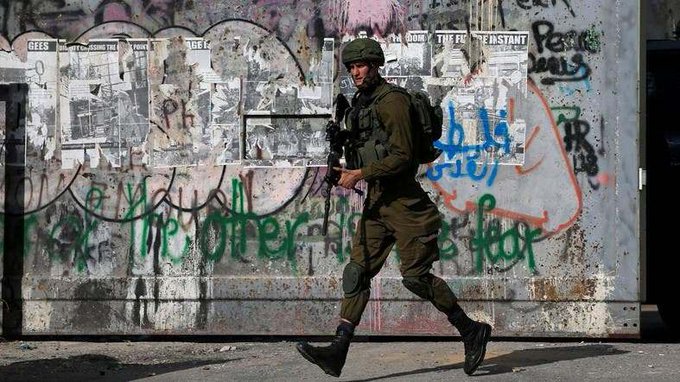
The Canadian embassy in Tel Aviv hosted a party yesterday for its citizens serving in the Israeli army.
It was organised by Ambassador Deborah Lyons, who told The Jerusalem Post that she wanted to show the appreciation and care felt by the embassy for the “lone soldiers” who left their homes to serve in the Israeli army.
“Lone soldiers” are Jewish citizens of a foreign country serving in the Israeli army. As many as 6,000 such soldiers with dual citizenship are said to be in the programme.
Israel’s President Reuven Rivlin calls them “true Zionists,” while Jewish Agency Chairman Isaac Herzog has described them as “a true example of what Zionism is all about.”
Lyons told the Post that she had been wanting to hold a reception for Canadians serving in the Israeli army “for a very long time.” Three years in fact, since she was posted in Tel Aviv.
“Canadian lone soldiers are a particularly special group. I know some of the parents of these kids and I wanted to reach out and let them know that their Canadian family of the embassy is here if they want to talk hockey and a home cooked meal,” she said.
Canada’s Defence Attaché Col. Rick Thompson told the Post “the ambassador thought it would be a nice gesture to reach out to Canadian lone soldiers and make some social connections and talk hockey … If you get homesick, we embassy staff are connected to the wider Canadian community.”
There is a high risk of depression amongst “lone soldiers.” Young Diaspora Jews, according to a report in Haaretz, account for only 2 per cent of soldiers serving in the Israeli army, but in the past year the suicide rate among them has been disproportionately high.
Their recruitment has also been a cause of controversy. An Al Jazeera report found that radical organisations in Europe were recruiting western citizens to serve in the Israeli army where many of these foreign fighters took part in the 2014 Gaza war.
In the UK there have been calls for British citizens who volunteer for the Israeli army to be prosecuted like others who fight for foreign forces.
Remembering the Earthquake in Haiti Ten Years On
By Yves Engler · January 11, 2020

Ten years ago Sunday an earthquake devastated Haiti. In a few minutes of violent shaking hundreds of thousands perished in Port-au-Prince and surrounding regions and many more were permanently scarred.
It’s important to commemorate this horrifying tragedy. But this solemn occasion is also a good moment to reflect on Canada’s role in undermining the beleaguered nation’s capacity to prepare/respond/overcome natural disasters.
Asked my thoughts on Canada’s role in Haiti the day after the quake, I told reporter Paul Koring that so long as the power dynamics in the country did not shift there would be little change: “Cynically, it feels like a ‘pity time for the Haitians’ but I doubt much will really change,” says Yves Engler, a left-wing activist from Montreal who blames the United States, along with Canada, for decades of self-interested meddling in Haitian affairs. “We bear some responsibility … because our policies have undermined Haiti’s capacity to deal with natural disasters.”
Unfortunately, Canada’s response was worse than I could have imagined. Immediately after the quake decision makers in Ottawa were more concerned with controlling Haiti than assisting victims. To police Haiti’s traumatized and suffering population, 2,050 Canadian troops were deployed alongside 12,000 US soldiers (8,000 UN soldiers were already there). Though Ottawa rapidly deployed 2,050 troops they ignored calls to dispatch this country’s Heavy Urban Search and Rescue (HUSAR) Teams, which are trained to “locate trapped persons in collapsed structures.”
According to internal government documents the Canadian Press examined a year after the disaster, officials in Ottawa feared a post-earthquake power vacuum could lead to a “popular uprising.” One briefing note marked “secret” explained: “Political fragility has increased, the risks of a popular uprising, and has fed the rumour that ex-president Jean-Bertrand Aristide, currently in exile in South Africa, wants to organize a return to power.” Six years earlier the US, France and Canada ousted the elected president.
Canada and the US’ indifference/contempt towards Haitian sovereignty was also on display in the reconstruction effort. Thirteen days after the quake Canada organized a high profile Ministerial Preparatory Conference on Haiti for major international donors. Two months later Canada co-chaired the New York International Donors’ Conference Towards a New Future for Haiti. At these conferences Haitian officials played a tertiary role in the discussions. Subsequently, the US, France and Canada demanded the Haitian parliament pass an 18-month long state of emergency law that effectively gave up government control over the reconstruction. They held up money to ensure international control of the Interim Commission for the Reconstruction of Haiti, authorized to spend billions of dollars in reconstruction money.
Most of the money that was distributed went to foreign aid workers who received relatively extravagant salaries/living costs or to expensive contracts gobbled up by Western/Haitian elite owned companies. According to an Associated Press assessment of the aid the US delivered in the two months after the quake, one cent on the dollar went to the Haitian government (thirty-three cents went to the US military). Canadian aid patterns were similar. Author of The Big Truck That Went By: How the World Came to Save Haiti and Left Behind a Disaster Jonathan Katz writes, “Canada disbursed $657 million from the quake to September 2012 ‘for Haiti,’ but only about 2% went to the Haitian government.”
Other investigations found equally startling numbers. Having raised $500 million for Haiti and publicly boasted about its housing efforts, the US Red Cross built only six permanent homes in the country.
Not viewing the René Preval government as fully compliant, the US, France and Canada pushed for elections months after the earthquake. (Six weeks before the quake, according to a cable released by Wikileaks, Canadian and EU officials complained that Préval “emasculated” the country’s right-wing. In response, they proposed to “purchase radio airtime for opposition politicians to plug their candidacies” or they may “cease to be much of a meaningful force in the next government.”) After the first round of the presidential election the US and Canada pushed Préval party’s candidate out of the runoff in favor of third place candidate, Michel Martelly. A six-person Organization of American States (OAS) mission, including a Canadian representative, concluded that Martelly deserved to be in the second round. But, in analyzing the OAS methodology, the Washington-based Center for Economic and Policy Research, determined that “the Mission did not establish any legal, statistical, or other logical basis for its conclusions.” Nevertheless, Ottawa and Washington pushed the Haitian government to accept the OAS’s recommendations. Foreign minister Lawrence Cannon said he “strongly urges the Provisional Electoral Council to accept and implement the [OAS] report’s recommendations and to proceed with the next steps of the electoral process accordingly.”
A supporter of the 1991 and 2004 coups against Aristide, Martelly was a teenaged member of the Duvalier dictatorship’s Ton Ton Macoutes death squad. He is a central figure in the multi-billion dollar Petrocaribe corruption scandal that has spurred massive protests and strikes against illegitimate, repressive and corrupt president Jovenel Moïse. A disciple of Martelly, Moïse is president today because he has the backing of the US, Canada and other members of the so-called “Core Group”.
There was an outpouring of empathy and solidarity from ordinary Canadians after the earthquake. But officials in Ottawa saw the disaster as a political crisis to manage and an opportunity to expand their economic and political influence over Haiti.
On the tenth anniversary of this solemn occasion it is important to reflect not only on this tragedy but to understand what has been done by Canada’s government in our name and to learn from it so we can stop politicians from their ongoing strangulation of this beleaguered nation.
Featured Video
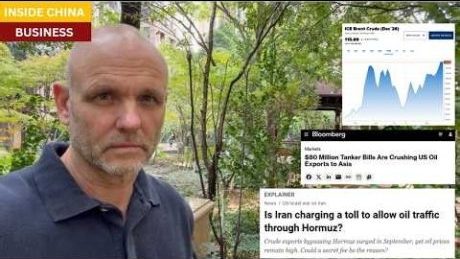
Iran is (probably) collecting tolls, and why Asia stopped buying oil from the US
or go to
Aletho News Archives – Video-Images
From the Archives
The Great Recycling Scam
By Dr. Vernon Coleman – 21st Century Wire – September 2, 2022
Recycling was introduced, worldwide, as a tool to teach citizens to become compliant.
Forcing citizens to sort their rubbish into up to nine separate bags or boxes every week had absolutely nothing to do with ‘saving the planet’ and everything to do with teaching citizens (through a mixture of fines and shame) to behave ‘responsibly’ i.e. to do as they were told without looking too closely at the rationale of what they were being told to do.
The recycling never had anything to do with protecting the planet, of course. Most of the rubbish sorted, washed and collected in the UK was taken abroad, by lorry or ship or train, and burnt or dumped. It was, quite simply, impractical and not cost effective to recycle the material that had been collected. And, of course, collecting the sorted rubbish involved massive costs in terms of cash and pollution.
Today, the recycling business has reached an apogee of lunacy. Councils introduce ever more complex rules and fees. They refuse to take away much of the waste that is collected. And those wanting to take their rubbish to a ‘recycling’ centre will probably have to make an appointment and answer a host of questions.
It is no surprise that fly-tipping has become a major problem. The biggest causes of plastic in the sea are dumped fishing gear and plastic waste (much of it officially designated as recycled) which has been dumped by ships.
The good news, however, is that in Britain, recycling rates are falling. More and more people have become aware that the whole recycling movement was just another piece of manipulative trickery.
Blog Roll
 Aletho News
- Lithuania plans universal conscription
- Lies, Damn Lies, and Ukraine News
- Financial Times rejects Nordic demands to correct Putin call story – media
- The Case for Less Unity in Europe
- Ukraine expands minority rights under EU pressure – but Russians remain excluded
- Albania takes anti-riot crackdown cue from France
- The interest of the House of Rothschild in Ukraine
- Pentagon fires top military planner
- Three tankers hit mines on unauthorized Hormuz route: IRGC Navy
- Iran is (probably) collecting tolls, and why Asia stopped buying oil from the US
- If Americans Knew
- US midterms: Five days left – who leads in the polls as Trump, Obama rally
- Israeli Attacks Kill Four Palestinians in Gaza
- Plotting a Comeback: Gaza Resignees Confront Biden’s Genocide Enablers – VIDEO
- US Journalist and Activist Detained After Israeli Settler Attack in West Bank
- Israeli forces continue West Bank raids as Hebron lockdown enters sixth day
- The Two Faces of Gadi Eisenkot, Who Could Be Israel’s PM
- US Sending an Additional Patriot System to Israel To Prepare for Potential Attacks on Iran
- Pentagon Estimates the US Has Spent Over $47 Billion on Iran War, But True Cost Is Much Higher
- ‘Who Will Bomb Me Next?’: Palestinians in Gaza and the West Bank on Israel’s Election
- DAILY UPDATE: Latest essential news on Palestine, Israel, & region
- No Tricks Zone
- Germany’s Green Energy Transition Becoming Increasingly Expensive…Another 6 Trillion Euros!
- Sudden Stratospheric Warming, Powerful El Niño Combination May Lead To Extreme Europe Cold, Energy Crisis!
- Two New Studies Find Thwaites Glacier Melt Cannot Be Driven By Human Activity Or A Warming Ocean
- E-Cars Reduce CO2 Emissions By Only 41% Compared To Internal Combustion Engine Vehicles
- Predictions Made By Renowned Climate Professor Over Past Decades Have Been Proven To Be Poor
- New Study Suggests Large Regions Of The Pacific Ocean Have Been Cooling For The Last 80 Years
- Germany’s Green Energy Debacle: High Energy Costs Force Kahla Porzellan to Close After 182 Years!
- New Study: 50 Years Of The Most Aggressive ‘Net Zero’ Policies Can Only Affect The Global Climate By 0.03°C
- US September “Heat” Was No Record…Many Records Set Decades Ago
- Latest European Green Energy Debacle; Portugal’s Largest Flagship Solar Park Insolvent!

