ICJ to Rule on Bolivia’s Access to Sea, So What’s At Stake?
teleSUR | September 24, 2015
The International Court of Justice in The Hague is preparing to rule this Thursday on whether or not it will hear Bolivia’s claim demanding access to the Pacific Ocean, which has revived an age-old dispute between them and neighboring Chile.
Bolivia brought its claim against Chile to the ICJ in 2013, based on almost a century’s worth of diplomatic and historical documents in which Santiago committed to resolve the issue of Bolivia’s access to the sea. The coastal territory was taken from Bolivia in The War of the Pacific (1879-1883) between the two countries, and Peru.
Meanwhile, the Chilean government says Bolivia’s claim has no bearing in the international court, saying the issue was resolved by a treaty signed by both nations in 1904, and has asked to have the claim dismissed.
Both countries were given four days with the ICJ earlier this year to justify their positions regarding how much jurisdiction the court should have on the territorial dispute. The court will finally announce their decision Thursday, which could go either way.
Both sides stand to gain economically by controlling the coastal region. For Bolivia – one of only two landlocked countries in Latin America – it could boost the country’s trade. According to figures from the World Bank, landlocked developing countries trade on average 30 percent less than coastal countries.
As a result of higher transportation costs, Bolivia’s exports are 55 percent more expensive than those from Chile and 60 percent more expensive than those from Peru, according to Global Risk Insights.
For Chile, many Liquified Natural Gas (LNG) terminals and pipelines are spread throughout its northern shoreline, the territory under dispute. LNG is imported by sea and is a major source of electricity for the country, which is not rich in hydrocarbons. It is unlikely Chile will be willing to give up this territory.
The Hague could rule either way Thursday. If it rules in favor of Bolivia and agrees to hear its claim, both countries will be invited to return to the court to present oral arguments as to why Bolivia thinks Chile has a legal obligation to negotiate sovereign access to the Pacific. Chile will of course argue the contrary.
This entire process, if it moves forward, will likely take another three to five years, with lawmakers saying any changes are not expected until at least 2020.
Bolivian President Evo Morales has said that he will commit to The Hague’s ruling, regardless of how it decides, explaining that the ICJ had been set up by the United Nations to achieve justice.
However, many speculate that regardless of ICJ’s decision Thursday, relations between the two South American nations have already been strained.
Pinochet’s Right-Hand Man Commits Suicide After Conviction

teleSUR | August 13, 2015
A retired Pinochet-era Chilean general and former head of the DINA secret intelligence unit committed suicide Thursday at the age of 76, after being convicted of dictatorship crimes earlier this week.
Former General Hernan Ramirez Rurange was one of 14 military personnel convicted Tuesday for involvement in the kidnapping and murder of Eugenio Berrios, a chemist and secret police agent under the dictatorship of Gen. Augusto Pinochet.
Berrios was disappeared in the early 1990s after escaping from hiding in Uruguay. He had been sent there as part of DINA’s Operation Silence to avoid testifying in cases of assassinations carried out by secret police in the 1970s in the dictatorship-era Operation Condor.
Ramirez was sentenced to a total of 20 years and two days in prison this week: 10 years and one day for being the mastermind behind Berrios’ kidnapping, and another 10 years and one day for illicit association.
The former general died in the hospital after shooting himself in the head Thursday. His suicide immediately after the sentencing provoked strong reactions on social media.
“Hernan Ramirez couldn’t deal with his conscience or he was too cowardly to face his punishment, because he didn’t have any problem torturing.”
“Hernan Ramirez, today you join in heaven Odlanier Mena, Himmler, Hitler, Goebbels, Goring, Hess and other who valiantly committed suicide.”
Ramirez’ suicide comes a week after Manuel Contreras, another former head of DINA during the dictatorship, died Friday age of 86, remaining unrepentant until his death for the grave human rights abuses he committed, including torture, murder, and disappearances.
Ramirez was a right-hand man to Pinochet. He committed serious crimes aimed at protecting the dictatorship military regime at the beginning of the 1990’s, during the transition to democracy, when the Chilean government launched investigations into military personnel for human rights abuses perpetrated under the dictatorship, according to Chilean newspaper La Tercera.
In the Berrios case, Ramirez testified that Pinochet had directly ordered him in 1991 as a DINA operative to take Berrios into hiding in Uruguay and that Pinochet knew “perfectly” who Berrios was.
Berrios oversaw the development of chemical weapons for use by DINA under Pinochet’s dictatorship. Such biochemical weapons included sarin gas, a chemical used to kill victims silently and without a trace by mimicking a heart attack.
DINA was key in executing Operation Condor, a six-country regional intelligence operation and terror campaign to assassinate political opponents of the participating U.S.-backed right-wing regimes.
Pinochet came to power after a U.S.-backed coup on Sept. 11, 1973, that removed the democratically elected, socialist President Salvador Allende. Pinochet’s bloody regime ruled until 1990, during which time over 3,000 people were murdered and tens of thousands tortured and disappeared.
More Pinochet Soldiers Charged with Burning Chilean Teenagers
teleSUR | July 31, 2015
Five more former Chilean army officers have been charged for involvement in the burning of two teenage activists protesting against the dictatorship of Augusto Pinochet in 1986, bringing the total to 12 people.
Last week, seven former soldiers were charged for complicity in the incident in which photographer Rodrigo Rojas was killed and Carmen Quintana was severely disfigured after the two were doused in gasoline and set on fire.
After setting them ablaze, soldiers abandoned the two activists outside of the capital city Santiago, where they managed to get help to take them to a hospital in critical condition, where Rojas later died of injuries.

Carmen Gloria Quintana is seen near her home in Santiago in July of 1987. In 1986, when she was 18, she suffered severe burns on 65 percent of her body. She spent decades in treatment in Chile and Canada. | Photo: Reuters
The case, closed in the 1990’s after a single conviction of negligence and reopened in 2013 when relatives filed a new lawsuit, is considered among the highest profile among tens of thousands of dictatorship-era human rights abuses carried out during the 1980’s.
The arrests follow the recent conviction of 10 former army officers in the 1973 assassination of Chile’s well-known leftist political folk singer Victor Jara in 1973. Soldiers had cut off Jara’s fingers, broke his hands and wrists, and shot him more than 40 times.
The charges also come as part of a larger investigation into war crimes carried out during the 17-year dictatorship of General Augusto Pinochet.
Over 36,000 people were tortured and at least 3,200 killed or disappeared under the rule of the Chilean dictator.
Latin American Revolutions Under Attack
By ANDRE VLTCHEK | CounterPunch | June 26, 2015
Do not take the Latin American revolutions for granted.
They inspired the entire Planet. They brought hope to every corner of our scarred Earth. But now they are themselves in need of our support.
If left alone, they would thrive for decades and centuries. But the Empire is once again on the offensive. It is shaking with fury. It is ready to invade, to smash, burn to ashes all the hopes, all that which had been achieved.
Don’t believe in the “common wisdom” which proclaims that the rulers of the world simply “closed their eyes” more than a decade ago; that George W. Bush was “too busy” ravishing the Middle East, therefore “allowing” most of the Latin American countries to “sneak away” from the iron grip of the Empire.
Such “analyses” are as patronizing as they are false. The Empire never sleeps! What Latin America now has was built on its daring, its sweat, its genius and its blood – it fought against the Empire, courageously, for decades, losing its best sons and daughters. It fought for freedom, for justice and socialism.
The Empire was not “looking the other way”. It was looking straight south, in fury, but for some time it was too confused, too astounded, too shocked at what it was witnessing. Its “slaves” had risen and taken power back into their own hands. They showed to the entire world what freedom really is.
For some time, the Empire was paralyzed by rage and unable to act.
The Empire’s undeniable property, Latin America, inhabited by “un-people” born only in order to supply cheap labor and raw materials to the rich part of the world, was suddenly, proudly and publicly, breaking its shackles, declaring itself free, demanding respect. Its natural resources were now used to feed its own people, to build social housing, create public transportation systems, construct hospitals, schools and public parks.
But after the first wave of panic, the Empire began to do what it does the best – it began the killings.
It attempted to overthrow Venezuelan government in 2002, but it failed. The Venezuelan people rose, and so did the Venezuelan military, defending then President Hugo Chavez. The Empire tried again and again, and it is trying until now. Trying and failing!
“We are at war”, I was told by one of the editors of Caracas-based television network, TeleSUR, for which I made several documentary films. “We are literally working under the barrel of cannon”.
***
Ms. Tamara Pearson, an Australian revolutionary journalist and activist, who recently moved from Venezuela to Ecuador, explained the difficult situation in Venezuela, a country that is under constant attack from both the US, and the local comprador elites:
“People are suffering a lot. Basic food prices are high, much medicine is unavailable, and various services aren’t working. On one level, people are used to this – the business owners would cause shortages and blame the government before each of the many elections. But usually it’s less intense and lasts just a few months. But this has been going on and getting worse, since Chavez died – over two years now. There is no doubt that the US, and more so, Venezuelan and Colombian elites and business owners are a huge or even the main factor…”
All of revolutionary Latin America is “screaming”.
As I described in two of my recent books, “Exposing Lies Of The Empire” and “Fighting Against Western Imperialism”, the Empire is using similar destabilization strategy against all countries that are resisting its deadly embrace.
Its propaganda is mighty and omnipresent. CNN and FOX TV are beamed into almost all major hotels and airports of Latin America, even in some revolutionary countries like Ecuador. Almost all major newspapers of the continent, including those in Venezuela, Ecuador, Chile and Argentina, are controlled by the right wing business elites. Almost all of the foreign news coverage comes from European and North American sources, making the Latin American public totally confused about Islam, China, Russia, South Africa, Iran, even about their own neighbors.
The local elites continue to serve foreign interests, their loyalties firmly with North America and Europe.
Every left wing Latin American government has been facing bizarre protests and subversion actions conducted by the elites. Destabilization tactics have been clearly designed in far away capitals. They were mass-produced and therefore almost identical to those the West has been using against China, Russia, South Africa, and other “rebellious” nations.
Propaganda, disinformation and spreading of confusion have been some of the mightiest tools of the fascist right wing.
“Economic uncertainty” is an extremely powerful weapon. It was used first in Chile, in the 1973 coup against socialist President Salvador Allende. Pro-Western Chilean elites and businessmen created food shortages, and then blamed it on the socialist government, using El Mercurio and other daily newspapers as their propaganda tools.
Peter Koenig, former World Bank economist and now prominent dissident and critic of the world neoliberal regime, wrote for this essay:
Today Madame Bachelet, the socialist President of Chile has a hard time fighting against the Mercurio inspired Chilean oligarchs. They will not let go. Recently they invited the World Bank to assess the school reform package proposed by Bachelet, basically to return universities to the public sector. Of course, the ‘upper class’ of Chileans knew that the World Bank would come up with nothing less than predicting an economic disaster if the reform is approved. As a result, Bachelet made concessions – which on the other hand are not accepted by professors and teachers. It’s the first step towards chaos – and chaos is what the empire attempts to implant in every country where they strive for ‘regime change’.
But one of the “dirtiest” of their weapons is the accusation of corruption. Corrupt pro-Western politicians and individuals who misused tens, even hundreds of millions of dollars of the peoples money and destroyed the economies of their countries by taking unserviceable loans that kept disappearing into their deep pockets, are now pointing their soiled fingers at relatively clean governments, in countries like Chile and Argentina. Everything in “Southern Cone” and in Brazil is now under scrutiny.
Peter Koenig (who co-authored a book “The World Order and Revolution!: Essays from the Resistance” with leading Canadian international lawyer Christopher Black and me) shows how important it is, for the Empire, destabilization of Brazil, one of the key members of BRICS:
Brazil being a member of the BRICS is particularly in the crosshairs of the empire – as the BRICS have to be destabilized, divided – they are becoming an economic threat to Washington. Brazil is key for the non-Asian part of the BRICS. A fall of Brazil would be a major blow to the cohesion of the BRICS.
There are totally different standards for pro-Western fascist politicians and for those from the Left. The Left can get away with nothing, while the Right has been getting away literally with mass murder and with the disappearance of tens of billions of dollars.
It is, of course, the common strategy in all the client states of the West. For instance, one of the most corrupt countries on earth, Indonesia, tolerates absolute sleaze and graft from former generals, but when progressive socialist Muslim leader, Abdurrahman Wahid, became the President, he was smeared and removed in a short time, on “corruption” charges.
After centuries of the Monroe Doctrine, after mass murder committed in “Latin” America first by Europeans and then by North Americans and their rich local butlers, it will take long decades to fully eradicate the corruption, because corruption comes with the moral collapse of the colonial powers and the local elites. Financial greed is only its byproduct.
The great pre-colonial cultures of what are now Peru, Ecuador and Bolivia did not have corruption. Corruption was injected by Western colonialism.
And now, corruption under left wing, revolutionary governments still exists, since it is difficult to root out all the rats at once, but it is incomparably smaller than under the previous fascist right wing cliques!
***
The rich in Latin America are heartless, servile (to the Empire) and greedy in the extreme. Latin America has still the most unequal distribution of wealth on earth. True, it is much richer (and even its poor are richer, with some exceptions of Central America, Peru or Paraguay) than Africa or even in Southeast Asia, but this cannot be used as an excuse.
Even the most progressive socialist governments now in power would ever dare to touch, to slap the private enterprises too hard. From this angle, China with its central planning and controlled economy is much more socialist than Ecuador or Bolivia.
A few days ago, as I was flying from Ecuador to Peru, I read that the number of multimillionaires in Latin America was actually increasing, and so is the social gap between the rich and the rest of the societies. The article was using some anecdotal evidence, saying that, for instance, in Chile alone, now, more Porsche sports cars are sold than in the entirety of Latin America few years ago. As if confirming it, I noticed a Porsche auto dealership next to my hotel in Asuncion, the capital of the second poorest country in South America. I asked for numbers, but the Porsche manager refused to supply them, still proudly claiming that his company was “doing very well”.
So what do they – the “elites” – really want? They have money, plenty of money. They have luxury cars, estates in their own countries, and condominiums abroad. What more?
As in Thailand, Philippines, Indonesia or Kenya, and all over the West, they want power. They want to feel unique. They want to be admired.
The Socialist governments allow them to stay rich. But they force them to share their wealth and above all, they shame them. They are also trying to minimize the gap – through education, free medical care and countless social projects.
That is, of course, unacceptable to the elites. They want it all, as they always had it. And to have it all, they are ready to murder, to side with the darkest foreign interests, even to commit treason.
***
Increasingly, the interests of the local elites are very closely linked to foreign interests – those of the Empire and those of the private sector.
As I was told in Ecuador, by Ms. Paola Pabón, Assembly Member representing Pichincha area:
Behind the involvement of the US, are some ex-bankers such as Isaiah brothers, who lost power here, escaped courts and went to live in the United States, but there are also huge economic powers such as Chevron. It means that there are not only political interests of the US, but also private, economic ones.
Predominantly, the local elites are using their countries as milking cows, with very little or zero interest in the well being of their people.
That is why their protests against Latin American revolutions are thoroughly hypocritical. They are not fighting for improvements in their countries, but for their own, selfish personal interests. Those shouts and the pathetic hunger strikes of the “opposition” in Venezuela may appear patriotic, but only thanks to propaganda abilities to the Western mass media.
The elites would do anything to make all revolutions, all over Latin America, fail and collapse. They are even spending their own money to make it happen.
They know that if they manage to remove progressive forces from power, they could rule once again, totally unopposed, as their counterparts do in all other client states of the West – in the Middle East, Africa, South and Southeast Asia, and Oceania.
The temptation is tremendous. Most of the elites in Latin America still remember well, how it feels, how it tastes – to control their countries unopposed, and with full support from the West.
***
Eduardo Galeano, the great Uruguayan writer and revolutionary thinker, once told me: “I keep repeating to all those new leaders of Latin America: “Comrades, do not play with poor people’s hopes! Hope is all they have.”
It appears that hope has finally been takes seriously, in Bolivia, Uruguay, Venezuela, Ecuador, Chile, Argentina, Brazil, Nicaragua and elsewhere.
It was also taken seriously in Honduras, but hope was crushed by the US-orchestrated coup. In Paraguay, under a semi-progressive priest who preached liberation theology, hope was taken semi-seriously, but even that was too much in the country that had been ruled, for decades, by fascist cliques. In 2012, a constitutional coup followed by an appalling massacre of predominantly indigenous people, and fascism returned.
After these two setbacks, Latin America shook, but kept moving forward. Hugo Chavez died, or was murdered by the North, depending which theory you subscribe to. His demise was a tremendous blow to the entire continent, but still, the continent kept moving. “Here, nobody surrenders!” Chavez shouted, dying, but proud.
“President Correa of Ecuador is one of very few leaders of the “original project””, said Paola Pabón. “Lula in Brazil will not be able to stand for reelection, anymore, mainly due to corruption scandals. Mujica is not in power, anymore, and Cristina Fernandez will be retiring. Evo Morales does not have regional influence, and even Maduro does not have… For this reason, Ecuador is so important, strategically. If ‘they’ hit us, if there is a successful coup, it would be tremendous victory for them, to destroy a President with regional importance; who speaks for the region… and also, because Ecuador is one country where the government actually functions well.”
Walter Bustos, who used to work for this government, is alarmed by developments in Ecuador and the entirety of Latin America. Both he and Paula Pabón realize how fragile the Latin American revolutions are. While driving with me to an indigenous area of Riobamba, Walter lamented:
In case there is a military coup in Ecuador, the difference between here and Venezuela would be enormous: while in Venezuela, Chavez incorporated the military into his revolution, in case of citizens revolution in Ecuador, we have no security; we cannot count on support of the military in case there is some armed, political or economic attack against us.
Hugo Chavez was not only a great revolutionary, but also a tremendous strategist. He knew that any great revolution has to be fought, won, and then defended. Winning the battle is never enough. One has to consolidate forces, and uphold the victory. Chavez was first thinker, and then soldier.
Correa, Morales, Fernandez go forward, brave, proud but unprotected. Under their governments, the lives of ordinary people improve tremendously. That is what matters to them. They are decent and honest beings, unwilling to dirty themselves with intrigues, speculations and conspiracy theories.
But their great success will not gain them any recognition from the Empire, or from their own elites. The success of socialism is the worst nightmare for rulers of the world and their local butlers.
This is how President Salvador Allende died in 1973. He dismissed all rumors, and then all warnings that the coup was coming. “I am not going to arrest people just because of some suspicion that they may do something”, he used to say. After the coup took place, he died proudly, a true hero, committing suicide by marching towards the helicopter gunships and fighter jets that were bombarding the Presidential Palace of La Moneda. But he was not the only victim. As a result of the coup, thousands of Chilean people died, and tens of thousands were savagely tortured and raped. Chile did not die, but went into a horrific coma, from which it only recently manages to recover.
Henry Kissinger summarized the moral corruption/collapse of his country’s regime when he uttered his memorable phrase:
I don’t see why we need to stand by and watch a country go communist due to the irresponsibility of its people. The issues are much too important for the Chilean voters to be left to decide for themselves.
Despite his great intentions, President Salvador Allende failed his people. He underestimated the bestiality of the Empire, and the result were millions of broken lives.
Since then, the Empire’s selfishness and brutality only evolved. The more successful leaders like Correa become, the more real is the danger of a coup – of a devastating, deadly attack from the North, and subversion from within.
The fragility of Latin American revolutions is obvious. The elites cannot be trusted. They showed on many occasions how far they are willing to go, committing treason, collaborating with the West against their own nations: in Chile, Peru, Colombia, Mexico, Honduras, Venezuela, Paraguay and Bolivia, to name just a few cases.
Appeasing both the elites and the Empire, while fighting for social justice and true independence, is impossible. The elites want to have full control of their countries, while the Empire demands full submission. No compromise could be reached. The history speaks clearly about that. And the Empire demonstrated on countless occasions that Latin American democracy would be respected only if the people vote the way that suits Washington.
Latin America has to learn how to defend itself, for the sake of its people.
Its closer and closer cooperation with China and Russia is essential. A coherent regional defense agreement should follow.
The next few years will be crucial. The revolutions have to be institutionalized; they cannot depend only on charisma of its leaders.
Constant sabotages and coup attempts, like those in Venezuela, should not be tolerated. They lead to chaos and to uncertainty. They break countries economically and socially.
It is clear what the Empire and its servants are doing: they are trying to push Latin American revolutionary countries against the wall, as they pushed, in the past, North Korea. They are trying to make them “react”, so they could say: “You see, this is true socialism, this defensive, hermitic and paranoid system.”
The path will not be easy. It will be dangerous and long.
Latin America can only survive through international cooperation and solidarity. It would also have to fight legally, at home and abroad. Those who are committing treason and those who are interrupting development of the country should face justice.
The left wing governments that are ruling South American countries won democratic elections: much more democratic than those in Europe and the United States. If the individuals and groups act against the expressed will of their own people, they should be taken to courts.
If a powerful country tortures other countries and shows total spite for their people, it should face an international legal system. The United States demonstrated, countless times, that it considers itself well above the law. It even forced several government in Latin America and elsewhere, to give its military personnel immunity. One of these countries is Paraguay, historically flooded with CIA, DEA and FBI agents.
In order to legally restrain the Empire, huge international pressure would have to be built. Like in the case of Managua, which legally sued the US for many acts of terror committed against Nicaragua. The Empire will most likely refuse to accept any guilty verdict. But the pressure has to be on!
All this would be meaningless without dedicated, constant coverage of the events by independent or opposition media, be they huge new state-funded networks like RT, TeleSur, CCTV or Press TV, of progressive independent media like Counterpunch, VNN, or ICH. It is essential that Latin Americans demand information from these sources, instead of consuming the toxic lies spread through CNN en Español, FOX, EFE and other right wing Western sources.
The battle for the Latin American people and for their freedom is on. Do not get fooled, it has been on for quite some time, and it is very tough fight.
Latin America is one of the fronts of the integrated fight for the survival of our Planet.
People who admire this part of the world, all those who have been inspired by Latin American revolutions, should participate in the struggle.
The best sons and daughters of this continent are now fighting in their own, quixotic way, as they always did: frontally, with exposed heart, totally unprotected. But their fight is just, and they are in this battle in order to defend the people.
Their opponents are rich, deceitful and brutal. But they are also selfish and they fight only for their own interests. They are not loved by their nations. If they lose, Latin America will win!
Those countries defending themselves against the Empire should unite, before it’s too late. Now as Latin America is rising from its knees, it becomes clear who are its foes and who are real friends, real brothers and sisters!
This scarred but stunning continent of courageous poets, of dreamers and revolutionaries should not be allowed to fall. In Caracas, Quito and La Paz, they are fighting for entire humanity.
Andre Vltchek is a philosopher, novelist, filmmaker and investigative journalist. He covered wars and conflicts in dozens of countries. His latest books are: “Exposing Lies Of The Empire” and “Fighting Against Western Imperialism”.
The Trans-Pacific Sellout
Guaranteed profits—at any price
By Jason Hirthler | Dissident Voice | April 26, 2015
Last Tuesday, President Barack Obama told beltway bullhorn Chris Matthews that Senator Elizabeth Warren was “wrong” about the Trans-Pacific Partnership (TPP), the largest trade deal in American history, linking United States and Australia, Brunei, Canada, Chile, Japan, Malaysia, Mexico, New Zealand, Peru, Singapore and Vietnam in a pervasive and binding treaty. The president was referring to Warren’s claim that the trade treaty will license corporations to sue governments, and her contention that this was, to put it mildly, a bad idea.
Warren isn’t wrong, Obama is. And he knows it. The entire TPP, as understood, is based on a single overarching idea: that regulation must not hinder profiteering. This is a fundamentally anti-democratic concept that—if implemented—would effectively eliminate the power of a demos to make its own law. The final authority on any law’s validity would rest elsewhere, beyond the reach of popular sovereignty. From the TPP point-of-view, democracy is just another barrier to trade, and the corporate forces behind the draft treaty are intent on removing that barrier. Simple as that.
That’s why the entire deal has been negotiated in conclave, deliberately beyond the public purview, since the president and his trade representatives know that exposing the deal to the unforgiving light of popular scrutiny would doom it to failure. That’s why the president, like his mentor President Clinton, has lobbied hard for Trade Promotion Authority, or Fast Track, which reduces the Congressional role in the passage of the bill to a ‘yea’ or ‘nay.’
Cracks have begun to show in the formidable cloak behind which the deal has been structured. A coalition of advocacy groups advanced on the U.S. Trade Representatives office this week. Wikileaks has obtained and released chapters from the draft document. Senator Harry Reid declared his position on Fast Track as “… not only no, but hell no.” Warren has proved to be a persistent thorn in the side of White House efforts to smooth over troubling issues with the deal. But the monied interests that rule the beltway have all pressed for passage. And as a Fast Track draft makes its way through Congress, stakes are high. The TPP is, in the apt estimation of political activist Jim Hightower, a “corporate coup d’état.”
Not for the first time, the president and his Republican enemies are yoked by the bipartisan appeal of privilege against this faltering fence of protest. The marriage of convenience was described in last Friday’s sub-head to a New York Times article on TPP: “G.O.P. Is Allied With President Against His Own Party.”
All The Usual Suspects
Who else supports the TPP? Aside from this odd confection of neoliberals, the corporations that rule the beltway feverishly back the TPP. From the leak of Sony digital data we learn that it and its media peers have enthusiastically pressed for the passage of the deal. Sony is joined by major agricultural beneficiaries (Monsanto), mining companies like Infinito Gold, currently suing Costa Rica to keep an ecology-harming mine pit active, as well as pharmaceutical coalitions negotiating stiff intellectual property rights unpopular even in Congress, and various other technology and consumer goods groups. And don’t forget nicotine kingpins like Philip Morris.
Obama reinforces the corporate line: “We have the opportunity to open even more new markets to goods and services backed by three proud words: Made in America.” Perhaps he isn’t aware that our leading export is the workforce that once took pride in that moniker. We’ve exported five million manufacturing jobs since 1994, largely thanks to NAFTA, the model on which the TPP is built. The TPP will only continue that sad trend. The only jobs not being offshored are the ones that can’t be: bartenders and waitresses and health care assistants. That’s the Obama economy: a surfeit of low-wage service jobs filled by debt-saddled degree holders. As Paul Craig Roberts argued in The Failure of Laissez Faire Capitalism, between 2007 and 2014, some eight million students would graduate from American universities and likely seek jobs in the United States. A mere one million degree-requiring jobs would await them. The irony of Obama’s statement is that the TPP would actually move to strip the use of labels like, “Buy American,” since they unduly advocate for local goods.
In truth, the authors of the treaty already know all this. The bill concedes as much, with Democrats building in some throwaway provisions of unspecified aid to workers whose jobs have been offshored, and a tax credit to ostensibly help those ex-workers purchase health insurance. Cold comfort for the jobless, as they are exhorted by the gutless paladins of globalization to ‘toughen up’ and deal with the harsh realities of a globalized economy. As neoliberal stooge Thomas Friedman has said, companies in the glorious global marketplace never hire before they ask, “Can this person add value every hour, every day — more than a worker in India, a robot or a computer?” Of course, the answer is invariably no, so the job goes to Bangladesh or a robot. No moral equation ever enters the picture. Just market discipline for the vulnerable and ingenious efforts by a captive state to shelter capital from the market dynamics it would force on others.
The Investment Chapter
Despite Obama’s disingenuous clichés about “… fully enforceable protections for workers’ rights, the environment and a free and open Internet,” the trade deal makes it clear that labor law and environmental law are both barriers to profitability. We know this thanks to Wikileaks, which once again proved its inestimable value by acquiring and releasing another chapter from the cloak-and-dagger negotiations. This time it was the investment chapter, in which so much of the treaty’s raison d’etre is expressed.
As Public Citizen points out in its lengthy analysis of the chapter, any domestic policy that infringes on an investor’s “right” to a regulatory framework that conforms to their “expectations,” is grounds for a suit. Namely, the suit may be pressed to “the extent to which the government action interferes with distinct, reasonable investment-backed expectations.”
Here’s what the TPP says about such legislation as it relates to investor expectations:
For greater certainty, whether an investor’s investment-backed expectations are reasonable depends, to the extent relevant, on factors such as whether the government provided the investor with binding written assurances and the nature and extent of governmental regulation or the potential for government regulation in the relevant sector.
Try putting that tax on financial transactions. Forget it. Barrier to a reasonable return. Don’t believe it? Just read the TPP investment protocols that would ban capital controls, which is what a financial tax is considered to be by TPP proponents. Try passing that environmental legislation. Not a chance. Hindrance to maximum shareholder value. Just ask Germany how it felt when a Swiss company sued it for shutting down its nuclear industry after Fukushima. Try enacting that youth safety law banning tobacco advertising. Sorry. Needless barrier to profits. Just ask Australia, which is being sued by Philip Morris for trying to protect kids from tar and nicotine.
Public Citizen has tabulated that, “The TPP would newly empower about 9,000 foreign-owned firms in the United States to launch ISDS cases against the U.S. government, while empowering more than 18,000 additional U.S.-owned firms to launch ISDS cases against other signatory governments.” It found that “foreign investors launched at least 50 ISDS claims each year from 2011 through 2013, and another 42 claims in 2014.” If these numbers seem small, recall that for a crucial piece of labor legislation to be struck down, only one firm need win in arbitration in order to financially hamstring a government and set a precedent that would likely ice the reformist urge of future legislatures.
As noted earlier, the text also appears to suggest to ban the practice of promoting domestic goods over foreign—another hurdle to shareholder value. This would effectively prohibit a country from implementing an import-substitution economy without threat of being sued. Governments would be relieved of tools, like tariffs, historically used to protect fledgling native industries. This is exactly what IMF prescriptions often produce—agricultural reforms, for instance, that wipe out native crop production and substitute for it the production of, say, cheap Arabica coffee beans, for export to the global north. Meanwhile, that producer nation must then accept costly IMF lending regimes to pay to import food it might have grown itself.
Of course, it is rarely mentioned that protectionism is how the United States and Britain both built their industrial economies. Or that removing competitor market protections is how they’ve exploited developing economies ever since. The TPP would effectively lock in globalization. It’s a wedge that forces markets open to foreign trade—the textual equivalent of Commodore Perry sailing his gunships into Tokyo Harbor.
ISDS Tribunals
The bill’s backers point to language in which natural resources, human and animal life, and public welfare are all dutifully addressed in the document. The leaked chapter explicitly says that it is not intended to prevent laws relating to these core concerns from being implemented. So then, what’s the problem? The problem is that these tepid inclusions lack the teeth of sanctions or punitive fines. They are mere rhetorical asides designed to help corporate Democrats rationalize their support of the TPP. If lawmakers really cared about the public welfare, they’d move to strip the treaty of its various qualifiers that privilege trade over domestic law. By all means, implement your labor protection, but just ensure “… that such measures are not applied in an arbitrary or unjustifiable manner, or do not constitute a disguised restriction on international trade or investment.”
If lawmakers cared about national sovereignty, they wouldn’t outsource dispute settlement to unelected arbitration panels, more fittingly referred to as, “tribunals.” (Think of scrofulous democracy hunched in the dock, peppered with unanswerable legalese by a corporate lawyer, a surreal twist on the Nuremberg Trials.) Just have a glance at Section B of the investment chapter. Suits will be handled using the Investor-State Dispute Settlement (ISDS) model, itself predicated on the tribunal precedent. And in the event a government lost a suit or settled one, legal costs would be picked up by taxpayers, having been fleeced by an unelected committee whose laws it has no recourse to challenge.
Perhaps investor protections like ISDS were once intended to encourage cross-border investment by affording companies a modicum of reassurance that their investments would be safeguarded by international trade law. But the ISDS has been used for far more than that. The ISDS tribunals have a lovely track record of success (first implemented in a treaty between Germany and Pakistan in 1959). Here’s Public Citizen:
Under U.S. “free trade” agreements (FTAs) alone, foreign firms have already pocketed more than $440 million in taxpayer money via investor-state cases. This includes cases against natural resource policies, environmental protections, health and safety measures and more. ISDS tribunals have ordered more than $3.6 billion in compensation to investors under all U.S. FTAs and Bilateral Investment Treaties (BITs). More than $38 billion remains in pending ISDS claims under these pacts, nearly all of which relate to environmental, energy, financial regulation, public health, land use and transportation policies.
New Era, New Priorities
Now the ISDS is a chisel being used to destroy the regulatory function of governments. All of this is being negotiated by corporate trade representatives and their government lackeys, which appear to have no qualms about the deleterious effects the TPP will have on the general population. But then the corporations these suits represent have long since discarded any sense of patriotic duty to their native nation-states, and with it any obligation to regulate their activities to protect vulnerable citizenries. That loyalty has been replaced by a pitiless commitment to profits. In America, there may have been a time when “what was good for Ford was good for America,” as memorably put by Henry Ford. But not anymore. Now what’s good for shareholders is good for Ford. This was best articulated a couple of years ago by former Exxon CEO Lee Raymond, who bluntly reminded an interviewer, “I’m not a U.S. company, and I don’t make decisions based on what’s good for the U.S.” Those decisions usually include offshoring, liberalizing the labor market, practicing labor arbitrage, relocating production to “business friendly climates” with lax regulatory structures, the most vulpine forms of tax evasion, and so on—all practices that ultimately harm the American worker.
Apple says it feels no obligation to solve America’s problems nor, one would assume, any gratitude to the U.S. taxpayer for funding essential research that Apple brilliantly combined in the iPod and iPhone. Former Labor Secretary Robert Reich finally admits corporations don’t want Americans to make higher wages. The U.S. Chamber of Commerce encourages shipping American jobs abroad. World Bank chiefs point to the economic logic of sending toxic waste to developing nations. Wherever you look, there seems to be little if any concern for citizenry.
The Financial Times refers to ISDS as, “investor protection.” But what it really is, is a profitability guarantee, a legal bulwark against democracy expressed as regulation. Forgive me for thinking that navigating a fluid legislative environment was a standard investment risk. Evidently the champions of free trade can’t be bothered to practice it. Still the White House croons that it has our best interests at heart. If that were true, it would release the full text, launch public charettes to debate its finer points, or perhaps just stage a referendum asking the American people to forfeit their hard-won sovereignty. No such thing will ever happen, of course. As it turns out, democracy is the price of corporate plunder. After all, the greatest risk of all is that the mob might vote the wrong way. And, as the language of the TPP makes explicitly obvious, there are some risks that should be avoided at all costs.
Jason Hirthler can be reached at: jasonhirthler@gmail.com.
Chile: Two Found Guilty in Horman Murder Case
Weekly News Update on the Americas | February 2, 2015
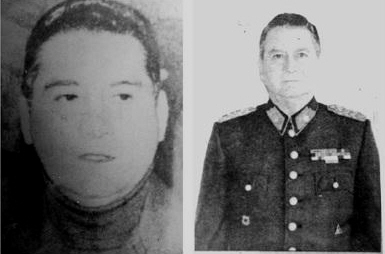
Retired Chilean army colonel Pedro Espinoza and former Chilean air force intelligence agent Rafael González Berdugo have been convicted in the murder of US journalist Charles Horman and US graduate student Frank Teruggi during the days after the Sept. 11, 1973 military coup that overthrew leftist president Salvador Allende Gossens [see Update #1226].
Judge Jorge Zepeda sentenced Espinoza–formerly an officer in the now-defunct National Intelligence Directorate (DINA) who has been described as the right-hand man of DINA head Manuel Contreras—to seven years in prison for the two murders.
González Berdugo was sentenced to two years of police surveillance as an accomplice in Harmon’s murder.
Judge Zepeda ruled in the case on January 9 but the decision wasn’t announced until January 28.
Last summer the judge officially ruled that “US military intelligence services played a fundamental role in the murders” by supplying information to the Chilean military. (El Ciudadano (Chile) 1/31/15)
Former Chilean Secret Police Agents Sentenced to Prison
teleSUR | January 8, 2015
A Chilean judge sentenced 23 former agents from Chilean dictator Augusto Pinochet’s secret police to prison on Thursday for their role in the forced disappearance of a left-wing activist following the 1972 coup that overthrew Salvador Allende’s government.
Among those sentenced was General Manuel Contreras Sepulveda, who was in charge of the notorious National Intelligence Directorate (DINA).
This is only the latest sentence for Contreras, who has been found guilty in numerous other cases of human rights violations. He has been sentenced to serve a total of 400 years for his crimes.
Six of those sentenced today will serve thirteen year terms, while another fifteen will serve ten years. Two others, who played an accomplice role, will serve four years.
Bernando de Castro, who was a member of the President Allende’s Socialist Party of Chile, was disappeared after being arrested by the DINA. The dictatorship deliberately targeted opposition activists.
De Castro was disappeared alongside four others who have yet to be found. Their forced disappearance was part of a cover-up coordinated between the Chile’s secret police forces known as “Operation Colombo.”
As part of the cover-up, magazines sympathetic to the dictatorship published articles claiming that 119 political prisoners had been killed in “internal purges” of the Revolutionary Left Movement, which had launched an armed struggle against the Pinochet dictatorship.
The Justice system in Chile has been working to process claims by victims of the dictatorship, however only 10 percent of Pinochet’s former agents are serving prison sentences.
Chile Rejects Bolivia’s Request for Access to Sea, Again
teleSUR | January 7, 2015
Chile rejected Bolivia’s renewed request for sovereign access to the Pacific Ocean off of its coast Tuesday.
“Chile is not going to cede land or maritime sovereignty in any way, and that has to be clear,” Chilean Foreign Minister Heraldo Muñoz told Radio DNA. “Bolivia is wasting its time when it tries to promote an event which aims to force Chile to negotiate a sovereign outlet.”
The foreign minister’s warnings refer specifically to comments by Bolivian President Evo Morales who said Pope Francis had taken an interest in the issue and had requested more information.
“The pope asked me for documents, so I supplied him with documents,” said Morales.
However, Muñoz confirmed that Chile will not accept any kind of external mediation on the matter and emphasized that the country would never give up its territory to another nation.
The matter is currently being reviewed by the International Court of Justice (ICJ) in the Hague, Netherlands, after Bolivia presented the court with its demand for sovereign access to the coast in 2013.
Last July Chile objected to the ICJ’s involvement, saying the court was incompetent in judging the request.Bolivia responded by making another bid to the international body in November.
Tensions have existed between Bolivia and Chile over access to the Pacific Ocean for decades after Bolivia lost its coast to Chile in the War of the Pacific in 1879, making it a landlocked country.
Chile, El Salvador, Peru Recall Israel Envoys in Protest of Gaza Offensive
Al-Manar | July 30, 2014
Chile, El Salvador and Peru have announced they are recalling their ambassadors in Tel Aviv in consultation to protest the Israeli assault on the besieged strip of Gaza.
The moves come on the heels of Brazil and Ecuador, who announced last week that they were recalling their envoys.
“Given the escalation of Israeli military operations in Gaza, the Government of Chile, in coordination with others in our region, has decided to call in consultation Santiago Ambassador of Chile in Tel Aviv, Jorge Montero,” the Chilean foreign ministry in Santiago said in a statement.
“Chile notes with great concern and dismay that such military operations, which at this stage of development are subject to a collective punishment against the Palestinian civilian population in Gaza do not respect fundamental rules of international humanitarian law.”
The Chilean foreign ministry emphasized the more than 1,000 Palestinians killed, including women and children during Operation Protective Edge, which continued for a 22nd day on Tuesday. The statement also noted Israel’s attacks “on schools and hospitals.”
“The scale and intensity of Israeli operations in Gaza violate the principle of proportionality in the use of force, an essential requirement to justify self-defense,” the statement added, referring to rocket fire by the resistance movements in the coastal territory.
El Salvador Ambassador in the Zionist entity Susana Edith Gun was also recalled for “urgent consultations” on Tuesday. The Foreign Ministry of the Central American country said that El Salvador President Sanchez Ceren gave these instructions “over serious escalation of violence and Israel’s bombings in the northern part of the Gaza Strip.”
A similar statement was also published by the Peruvian Foreign Ministry, condemning Israel’s operation in Gaza.
Venezuela and Bolivia that cut their ties with Tel Aviv over Israel’s 2009 war on Gaza have also strongly condemned Israel’s actions.
Brazil, Chile, Argentina, Costa Rica, Cuba, Mexico and Venezuela were among the 29 countries that voted in favor of a probe by the UN Human Rights Council into Israel’s war crimes in Gaza.
Featured Video
Theodore Postol: Iran’s Missiles & Drones Were Underestimated
or go to
Aletho News Archives – Video-Images
From the Archives
What is the Israeli Lobby in Australia Doing in Interfaith Dialogue?
By Ali Kazak | Dissident Voice | October 11, 2015
For years Israel and its lobby around the world have been trying to normalise their relations with Arabs and Muslims without solving the Palestine Question.
One of the methods they resorted to in the last few years is using human rights and community organizations such as interfaith dialogue and Multiculturalism to achieve this objective and to: isolate the Palestinians, marginalise the Palestine question, end Israel’s isolation, and prevent criticism of Israel, knowing that these organisations will be the first to stand against Israel’s violations, racial and religious discrimination.
The group responsible for this task in Australia is The Australia/Israel & Jewish Affairs Council (AIJAC); its Director of International & Community Affairs, Jeremy Jones is in charge of lobbying religious community organizations, specifically Muslims and Christians. Consequently he convened the Faith Communities for Reconciliation, founding participant in the Australian Partnership of Religious Organisations and the Australian National Dialogue of Christians, Muslims & Jews.
AIJAC is a private political propaganda group. It is recognised as the main Israeli lobby in Australia. It coordinates its activities and works intimately with the Israeli embassy in Canberra and different institutions in Israel. It is privately funded by some Jewish businessmen. It monitors closely Australian politicians, the media, ethnic and religious groups, (especially Arabs and Muslims), unions and academics on their stands towards Israel and the Palestine question. … continue
Blog Roll
 Aletho News
- Iran’s friends are about to make life much more difficult for Israel and the US
- The war of liberation of the Arab and Islamic peoples expands across the Gulf
- Envoy warns UN on Trump’s threat to ‘obliterate’ Iran’s civilian infrastructure
- The Larak Corridor: Iran’s Rial Gate With No US, No Israel, and No Way Around
- ‘Economic terrorism’: Steel facilities hit again in US-Israeli strike
- ‘War Crime’: Iran condemns attacks on Arak, Ardakan nuclear sites
- Two-thirds of Americans want quick end to Iran war even if goals unmet
- Trump to Give “Important Update on Iran” Wednesday in Prime-Time Speech
- Theodore Postol: Iran’s Missiles & Drones Were Underestimated
- Iran To Target Military Industrial-Tech Complex That Facilitated Gaza Genocide
- If Americans Knew
- Israel wants US to bomb more of Iran’s civilian structures (113,000 is not enough) – Not a ceasefire Day 173
- Ann Coulter Rips Into Fox News for Iran War Coverage
- Joe Kent Urges Americans To Call White House and Congress To Object To Sending Troops Into Iran
- DNC Resolution to Reject AIPAC Funding Puts Democratic Leaders in the Hot Seat
- Swedish foundation to build 400 schools as over 650,000 Gaza children remain without education for 2 years
- Israeli army admits photshopping image of slain Lebanese journalist
- This is how Israel is systematically killing health workers under the cover of war in Lebanon
- Carrying life under fire: Israeli invasion of Lebanon leaves pregnant women facing deadly risks
- Champagne all around for the new death penalty (for Palestinians) law – Not a ceasefire Day 172
- Why are Palestinian books struggling to be seen on Amazon?
- No Tricks Zone
- New Study Finds Warming Saves Lives…Cold Temperatures 12 Times More Deadly Than Excess Heat
- German Science Blog Accuses PIK Climate Institute Of Hallucinating Climate Tipping Points
- Devastating Assessment Of Comirnaty Vaccine By Former Senior Pfizer Europe Toxicologist
- New Study: CO2 Is ‘Effectively Negligible’ As An Explanatory Climate Change Factor Since 2000
- Former Pfizer Toxicologist Dr. Helmut Sterz Tells Bundestag Hearing Pfizer Vaccine Should Have Never Been Approved
- Energy Expert: Germany’s Nuclear Phaseout Was A “500 Billion Euro Mistake”
- New Research: South Australia’s Mid-Holocene Sea Surface Temperatures Were 4°C Warmer Than Today
- Storing Green Energy To Last Germany 10 Days Would Require A 60-Million Tonne Battery
- New Studies: UK Sea Levels Were 4 Meters Higher Than Today During The Mid-Holocene
- Destructive Green New Deal: German Energy And Metal Group Warns Of Drastic Crisis
 Aletho News