This is What Can Prompt China Not to Defend N Korea in the Event of War
Sputnik – April 14, 2017
Recently, there have been a growing number of suggestions by Chinese diplomatic and military commentators that Beijing is not obliged to defend Pyongyang in the event of a military attack, an article in the South China Morning Post read.
The assumption comes as senior officials in the United States have warned of a strike against North Korea.
In particular, Washington has positioned two destroyers in the region that can deploy Tomahawk missiles, according to what intelligence officials told NBC News, along with heavy bombers stationed in Guam that could provide support should such a strike take place.
“North Korea is a problem, the problem will be taken care of,” US President Donald Trump told reporters Thursday.
Chinese media outlets and even some official websites have recently published articles saying that in the current situation there are fewer options to find the peaceful solution to the North Korean nuclear issue.
For example, on March 22, website China Military, sponsored by China’s People’s Liberation Army (PLA), published an article commenting on a ground test by Pyongyang of a new type of high-thrust rocket engine.
“We believe that warfare is just a matter of time if DPRK continues its nuclear and missile program. […] Under no condition will the international community accept DPRK’s legal possession of nuclear weapons and intercontinental ballistic missiles. As Pyongyang continues with its nuclear programs, international sanctions will get tighter, and it will eventually be isolated from the rest of the world for a long time,” the article read.
It is not in Pyongyang’s interests to go against international community’s stance on nuclear weapons. In a situation when the US, Russia and China share views of North Korea’s nuclear ambitions Pyongyang has almost no room for maneuvering. On the other hand, Pyongyang’s decision to give up its nuclear ambitions would satisfy the interests of the North Korean political elite, without posing a threat to the country’s existence.
This assumption was made before President Trump and Chinese leader Xi Jinping met in Florida, which proves that Beijing toughened rhetoric towards Pyongyang not under the influence by Washington.
In formal terms, China is North Korea’s only military ally, according to the 1961 Mutual Aid and Cooperation Friendship Treaty. At the same time, many Chinese experts say that de-facto those obligations do not exist anymore. The reason is that Pyongyang’s nuclear ambitions have formed an epicenter of tensions near China’s border.
“Despite China’s support for North Korea during the 1950-1953 Korean War, in the current environment, Beijing will prioritize national security over ideology,” Andrei Karneyev, deputy director of the Institute of Asian and African Countries at Moscow State University, told Sputnik China.
According to the expert, this change of heart is not related to any pressure from Washington, but is dictated by security needs. However, the question remains: what would China do in the event of a military confrontation against North Korea?
Shanghai-based military analyst Ni Lexiong told the South China Morning Post that Beijing would need to provide military assistance to its neighbor if US troops invaded, but Pyongyang’s violation of the UN non-proliferation treaty was a “strong reason” for China not to help.
According to Zhan Debin, an expert from the Shanghai University of Foreign Trade, there is little chance of a military conflict on the Korean Peninsula.
“The US is unlikely to attack North Korea on its own initiative. It would be possible if Pyongyang endangered the key security interests of Washington and Seoul. This would be an adequate reason for the US,” he told Sputnik China.
The expert pointed out that the US military force redeployed to the Korean Peninsula is rather a warning for Pyongyang.
He added that the probability of minor conflicts between the US and North Korea is very low because any minor conflict will turn into a large-scale confrontation.
“We can’t say that the US recklessly wants to start a war. Of course, South Korea doesn’t want war. If a conflict broke out South Korea would be hit the most,” Zhan Debin said. Commenting on China’s actions during the hypothetical confrontation, the expert noted that Beijing may not get involved if Pyongyang provoked a conflict, but at the same time China cannot turn a blind eye to instability in the region.
“Of course, Beijing will try to prevent a conflict from turning into war. China will not supply weapons and provide military and combat assistance,” he said.
The expert continued: “It is not correct to speculate on the matter. This makes no sense. What we should do is to have a backup plan of actions. Of course, China would act [in the event of a confrontation], but there should be a reason for actions. On the whole, China’s goal is to maintain peace and stability in the region.”
China tells US to resolve North Korea tensions peacefully
Press TV – April 12, 2017
Chinese President Xi Jinping has told US President Donald Trump to resolve ongoing tensions with North Korea peacefully.
According to China’s Foreign Ministry spokesman Lu Kang, Xi and Trump discussed the situation on the Korean Peninsula in a phone call initiated by the US president on Wednesday.
“China insists on realizing the denuclearization of the peninsula… and is willing to maintain communication and coordination with the American side over the issue on the peninsula,” Xi told Trump during the conversation.
The White House has not released details on the phone conversation.
Last week, the Chinese and American leaders met in the United States, where Trump reportedly called on China to increase pressure on Pyongyang.
In a tweet on Tuesday, Trump said that if China refused to help, “we will solve the problem without them!”
The US has dispatched a strike group, including an aircraft carrier, to the Korean Peninsula amid rising tensions with North Korea. The Carl Vinson strike group also comprises two destroyers and submarines.
North Korea’s rapidly developing missile and military nuclear programs have unnerved Washington. The presence of US forces in the region and repeated threats of military action by Washington have on the other hand angered the North.
Meanwhile, an article on the Chinese Global Times newspaper warned Pyongyang in an editorial to “hit the brakes for peace.” It called on the North to halt any plans for nuclear and missile activities “for its own security.”
“Pyongyang can continue its tough stance; however, for its own security, it should at least halt provocative nuclear and missile activities. Pyongyang should avoid making mistakes at this time,” the article read.
Angered by the deployment of the US strike group, North Korea has warned to attack US mainland with an atomic bomb. Trump has said Pyongyang “is looking for trouble.”
North Korea Vows Response to ‘Reckless’ US Navy Move
Al-Manar | April 11, 2017
North Korea denounced the US deployment of a naval strike group to the region Tuesday, warning it is ready for “war” as Washington tightens the screws on the nuclear-armed state.
The strike group — which includes the Nimitz-class aircraft supercarrier USS Carl Vinson — cancelled a planned trip to Australia this weekend to head to the Korean peninsula in a show of force.
“This goes to prove that the US reckless moves for invading the DPRK have reached a serious phase,” a spokesman for the North’s foreign ministry said according to state news agency KCNA.
“The DPRK is ready to react to any mode of war desired by the US,” he said, using the country’s official name, the Democratic People’s Republic of Korea.
President Donald Trump, fresh from ordering a missile strike on Syria that was widely interpreted as a warning to North Korea, has asked his advisors for a range of options to rein in Pyongyang, a top US official said Sunday.
Trump has previously threatened unilateral action against Pyongyang if China — the North’s sole major ally — fails to help curb its neighbor’s nuclear weapons ambitions.
“We will take the toughest counteraction against the provocateurs in order to defend ourselves by powerful force of arms,” the North Korean foreign ministry spokesman said.
“We will hold the US wholly accountable for the catastrophic consequences to be entailed by its outrageous actions.”
Speculation over an imminent nuclear test is brewing as the North marks anniversaries including the 105th birthday of its late founding leader on Saturday — sometimes celebrated with a demonstration of military might.
China rejects coal shipments from North Korea
RT | April 11, 2017
A fleet of North Korean cargo ships laden with coal is returning to their home port of Nampo after China ordered its trading companies to refuse the shipments, Reuters reports quoting shipping data.
This appears to show China is committed to the ban on imports of North Korean coal after Pyongyang carried out globally criticized missile tests. Coal is the crucial export product of the isolated state, especially the deliveries of the type used for steel making – coking coal.
To curb coal traffic between the two countries, Chinese customs ordered companies to return their North Korean coal cargoes starting from April 7, according to Reuters sources.
Two million tons are stranded at Chinese ports; the agency reported quoting a source at Dandong Chengtai, one of China’s biggest buyers of North Korean coal.
To reduce the shortfall in coal imports, China resumed buying American coal this year. According to trade data, China bought over 400,000 tons by late February. The US did not export coking coal to China between late 2014 and 2016. However, President Donald Trump pledged to revive the country’s coal sector.
US Secretary of State Rex Tillerson warned that following the missile strike again Syria, North Korea could be the next. Beijing and Washington have reportedly agreed to impose tougher sanctions against Pyongyang if it carries out nuclear or long-range missile tests.
President Trump tweeted on Tuesday that a trade deal between China and the US depends on how Beijing tackles North Korea.
“I explained to the President of China that a trade deal with the US will be far better for them if they solve the North Korean problem! North Korea is looking for trouble. If China decides to help, that would be great. If not, we will solve the problem without them!” he posted.
Hong Kong: Anglo-America’s Struggling Foothold in China
By Joseph Thomas – New Eastern Outlook – March 22, 2017
Prominent American propagandist Howard French recently published a lengthy editorial in the Guardian titled, “Is it too late to save Hong Kong from Beijing’s authoritarian grasp?,” in which he attempts to buttress an otherwise categorically false narrative surrounding an alleged indigenous struggle for democracy and independence within Hong Kong.

French attempts to hold China accountable for backtracking on an agreement made with Britain over the return of its own territory taken from it by force in 1841. He also attempts to portray Beijing’s crackdown on US-UK subversion in Hong Kong as “authoritarian,” never making mention of the extensive funding and meddling both the United States and the United Kingdom are engaged in within Chinese territory.
The article documents only one side of the so-called “independence” movement in Hong Kong, sidestepping any critical analysis of the colonial background of the ongoing political crisis or the neo-colonial aspects that shape current events even now.
The lengthy piece was paid for by a grant from the Pulitzer Center on Crisis Reporting, a Washington D.C.-based front that collaborates with the New York Times, PBS, NPR, Time Magazine and other mainstays of US propaganda. These are the same media outlets that helped sell the US invasion and occupation of Afghanistan and Iraq, as well as US-led attacks on Libya and US meddling in Syria beginning in 2011. By supporting French’s work, they now help sell to the public a narrative that undermines Chinese sovereignty an ocean away from American shores.
The entire editorial, its contents, author and the special interests that paid for it as well as its placement in the Guardian, represent a continued and concerted effort to maintain an Anglo-American foothold in Hong Kong, part of the last vestiges of Western hegemony within Chinese territory.
The Truth About Hong Kong
Had Howard French penned an honest account of Hong Kong’s recent political crisis, he would have included the extensive, some may say exclusive, control the United States and the United Kingdom exercised over an otherwise fictitious and impossible pro-independence movement. Quite literally every leader of the so-called “Umbrella Revolution” is either directly funded and directed by the US and/or UK government, or possesses membership within an organisation, institution or front funded by Anglo-American money.
The notion that a teen-aged Joshua Wong was single-handedly defying Beijing is preposterous even at face value. He was but one cog of a much larger, well-documented foreign-funded machine aimed at stirring up conflict within Hong Kong, undermine Beijing’s control of the territory and infect Chinese society as a whole with notions of Western-style “democracy.”

Just months before the 2014 “Umbrella Revolution,” one of its leaders, Martin Lee, was literally in Washington D.C., before members of the National Endowment for Democracy (NED), pleading for material and political support for upcoming demonstrations. Toward the end of that same year, and despite NED denying Lee was a protest leader, Lee would find himself in the streets of Hong Kong leading the protests from the front shoulder-to-shoulder with Benny Tai and Joshua Wong.
Ironically, after the protests diminished and were finally pushed off the streets by both local police and impatient residents, Lee, Tai and Wong would be invited to Washington D.C. for a special event organised by NED subsidiary, Freedom House, dubbed, “Three Hong Kong Heroes.” The three protest leaders, having attempted to shake off accusations of being Washington puppets, or even protest leaders altogether, would take to the stage with yellow umbrellas in hand.
Howard French, and others attempting to persuade Western audiences of their version of events in Hong Kong omit these critical facts regarding the foreign-funded and directed nature of the “pro-independence” movement. They do so intentionally, with French himself being a 2011 Open Society fellow, Open Society being one of several fronts the US has channelled money through in support of subversion in Hong Kong.
In reality, there is nothing “pro-independence” about the movement in Hong Kong. It is simply the latest in a centuries-long attempt by Western powers to project geopolitical hegemony into Asia and more specifically, upon China itself.
French’s lengthy lament regarding China’s “authoritarianism” captures what may possibly be frustration that Washington and London’s tricks no longer work, and the more “Umbrella Revolutions” they attempt to organise against Beijing, the more familiar the Chinese public will be with them and subsequently, the more determined they will become to frustrate them.
Additionally, China’s influence over Hong Kong and even across Asia as a whole, is stronger, more sustainable and continuously expanding versus waning Western influence. Spectacular political stunts like the “Umbrella Revolution” attempt to leverage global public opinion over which the US media still maintains considerable influence, but ultimately such strategies have been confounded by Beijing and are, in the long-term, unsustainable.
Hong Kong represents a past, strong bastion of Western colonial power, now struggling to maintain itself even as a minor regional foothold. Despite the efforts of manipulators like Howard French and media platforms that lend themselves to his disingenuous narrative, footholds like Hong Kong will continue to diminish until the last remnants of the West’s colonial past are all but swept from modern geopolitics and permanently assigned to the pages of history.
US Navy’s Own Report Indicates Washington is Looking for a Pacific Fight
By Ulson Gunnar – New Eastern Outlook – February 27, 2017
The Pacific Ocean is large. Since World War II, weapon systems operating in this theater have required special provisions regarding extensive range, long duration performance and relative self-sufficiency during operations.
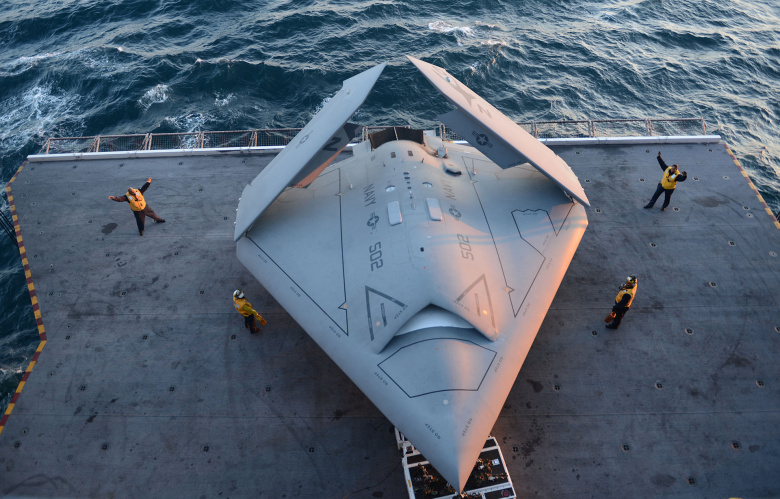
From America’s Gato-class submarines and PBY Catalina flying boats used to fight the Japanese and reassert American hegemony across Asia-Pacific during WWII, to America’s continued presence in Japan, South Korea and islands throughout the region, it is clear the lengths the US has gone through then and now to remain “engaged” in the Pacific.
More recently, a report by the Center for Strategic and Budgetary Assessments (CSBA), commissioned by the US Navy titled, “Restoring American Seapower: A New Fleet Architecture for the United States Navy,” obsesses over not how to defend American shores, but how to remain involved in Asia-Pacific despite the immense distances between there, and America.
The report’s introduction includes:
Great power competitors such as China and Russia increased their military capabilities over the last two decades and now appear willing to challenge the international order.
However, the report never addresses Chinese or Russian forces landing on American shores, or even threatening to do so. Rather, the report revolves around maintaining hegemony within spheres of influence much more appropriately (and likely inevitably) Chinese or Russian.
The report coins a term, “deny-and-punish” to describe the use of US power abroad to “stop aggression,” not in defense of America itself, but in “adjacent theaters.” Ironically, the report cites Iraq as an example, a nation the US, not China nor Russia, invaded, occupied and destroyed with considerable, unchallenged “aggression.”
A more specific point in the 162-page report picked out by The National Interest in an article titled, “How to Guarantee America’s Aircraft Carriers Can Fight China in a War,” involves long-range air sorties of up to 2,000 miles.
The article elaborates:
…a 2000-mile mission would strain human endurance and an unrefueled range of more than 10 hours would require an enormous aircraft that might not fit on a carrier flight deck. Thus, the CSBA proposal calls for a smaller aircraft that would be supported by a tanker.
In other words, in order for the US to project considerable force beyond its own borders, across the Pacific Ocean, and within China’s logical, proximal sphere of influence, it needs not only drone aircraft capable of 10 hour sorties, it needs drone tankers to refuel them.

Defense contractors surely welcome the report’s findings, since it will require the development of not one new aircraft carrier-based vehicle, but two, including the tanker.
The CSBA report concludes by stating:
To be deterred in the 2030s, aggressors must be presented with the possibility that their goals will be denied or that the immediate costs to pursue them will be prohibitively high.
In reality, the “aggression” the United States fears is not the unjust encroachment on other, innocent nations, but rather the undoing of every aspect of its own global order, put together piece by piece through just such aggression. It is an order constructed not within any rational US sphere of influence, rather, one spanning the globe, so far from American shores combat pilots lack the endurance to fly the sorties required to “deter” other nations from reversing America’s grip upon it.
The US seeks to “deter aggression” that may potentially diminish or extinguish entirely America’s systematic and decades-spanning violation of Beijing’s “One China” policy regarding Hong Kong and Taiwan, China’s claims in the South China Sea or regimes the US puts into power along China’s peripheries to admittedly confound regional stability at Beijing’s expense,
Students of history will recognize much of this as a modern-day continuation of European colonization throughout Asia, where sophisticated and overbearing military might was used to corner China and its neighbors across the region, divide and conquer them, as well as prevent them from ever rolling back any of the gains colonial expansion gifted Europe and eventually America in the late 19th century.
The CSBA report is just one of many US policy papers that openly and repeatedly admits that China is not a threat to the United States as a nation, but a threat to the hegemonic order that nation attempts to maintain globally well into the 21st century.
And while the US seeks drone forces to bridge the vast distances between American territory and the territory it seeks to continue dominating, China and Russia are likewise developing weapons systems to make those vast distances greater still. While the CSBA report places urgent imperative in preventing China or Russia from exerting influence within their own territory or along their immediate peripheries, the final conclusion of this new arms race in long-range weapons systems may force the US to accept a reality in which the only region it dominates is the US itself. But the obvious question remains, why isn’t that already the case?
US-North Korean Relations in a Time of Change

By Gregory Elich | February 13, 2017
The months ahead may reveal the direction that U.S.-North Korean relations will take under the Trump administration. After eight years of ‘strategic patience’ and the Rebalance to Asia, those relations now stand at their lowest point in decades. Many foreign policy elites are expressing frustration over Washington’s failure to impose its will on the Democratic People’s Republic of Korea (DPRK). There are increasing calls for a change in policy, but what kind of change do they have in mind? We may be at the point of a major transition.
President Trump has given mixed signals on North Korea, ranging from saying he is open to dialogue, to insisting that North Korea cannot be allowed to possess nuclear weapons and that he could solve the dispute with a single call to China. It is fair to say that any change in policy direction is possible, although deeply entrenched interests can be counted on to resist any positive movement.
Other than his frequently expressed hard line on China, Trump has not otherwise demonstrated much interest in Asian-Pacific affairs. That may mean an increased likelihood that he will defer to his advisors, and conventional wisdom may prevail. The more influence Trump’s advisors have on North Korea policy, the more dangerous the prospects.
National Security Advisor Michael Flynn could be a key figure. Back in November, he told a South Korean delegation that the North Korean nuclear issue would be a top priority for the Trump administration. [1] At around the same time, he told a Japanese newspaper that the North Korean government should not be allowed to last very long, and he has no intention of negotiating an agreement. [2]
Flynn has written that North Korea, Russia, China, Cuba and Venezuela are in a global alliance with radical Islam, a loopy concept if ever there was one. [3] It is a disturbing thought that a man so disconnected from reality is helping to shape policy.
CIA Director Mike Pompeo believes that Iran and North Korea cooperate in what he calls “an evil partnership.” [4] He has also called for the mobilization of economic and military powers against the DPRK. [5]
Establishment think tanks have churned out a number of policy papers, filled with recommendations for the new administration. Their advice is likely to fall on receptive ears among Trump’s advisors. How much influence they will have on Trump’s decision-making is another question, but he is hearing a single message from those around him and from the Washington establishment.
A common theme running through these think tank policy papers is the demand to punish China for its relations with the DPRK.
The most moderate set of proposals offered the Trump administration is the one produced by Joel Wit for the U.S.-Korea Institute, in that it at least calls for an initial stage that Wit terms “phased coercive diplomacy.” Initial diplomatic contacts would “explore whether agreements that serve U.S. interests are possible while at the same time” the U.S. would lay the groundwork for “increasing pressure” on North Korea. A modest scaling back of the annual U.S. war games could be offered as an incentive to North Korea, along with negotiations on a peace treaty, as long as the U.S. feels it can gain more from North Korean concessions.
At the same time, Wit calls for the new administration to “communicate toughness” and implement a “long-term deterrence campaign.” This would include the rotation of B-1 and B-52 bombers into South Korea on a regular basis, along with stationing nuclear weapons-armed submarines off the Korean coast.
While negotiations are underway, Wit wants the U.S. to direct a propaganda war against the DPRK, by increasing radio broadcasts and infiltrating portable storage devices containing information designed to destabilize the government. What he does not say is that such hostile measures can only have the effect of derailing diplomacy.
If North Korea proves less than compliant to U.S. demands, or if it prepares to test an ICBM, then Wit advises Washington to impose a total “energy and non-food embargo” on North Korea. Wit argues that China must accede to U.S. demands in the UN Security Council for what amounts to economic warfare on North Korea, or else the United States should impose “crippling sanctions” on the DPRK and secondary sanctions on China. By attacking the Chinese economy in this manner, Wit says this would send a message “that the United States would be prepared to face a serious crisis with China over North Korean behavior.” The arrogance is stunning. If China does not agree to American demands in the United Nations, then it is to be punished through U.S. sanctions. [6]
This is what passes as the “moderate” approach among Washington’s foreign policy establishment.
Wit is not alone in his eagerness to punish China. Nicholas Eberstadt of the American Enterprise Institute believes that “the next round of penalties will probably have to be ones which have some sort of collateral fallout for China…Sanctions are fine, more sanctions are better,” he says. “Increasing the cost for China, I think, is the way to go.” [7]
Eberstadt argues that U.S. North Korea policy should “consist mainly, though not entirely, of military measures.” “It is time for Beijing to pay a penalty for all its support” for North Korea, he declares. “We can begin by exacting it in diplomatic venues all around the world.” [8] Displaying the presumption all too typical of Washington elites, he has nothing to say about how China might react to his hostile policy prescriptions. The assumption is that China should just take the punishment without complaint. That will not happen.
U.S. Navy Commander ‘Skip’ Vincenzo prepared a set of recommendations that proved so popular that it was jointly published by four think tanks. Vincenzo is looking ahead and planning for how the United States and South Korea could attack the DPRK without suffering great losses. He urges the Trump administration to conduct an information war to undermine North Korea from within. The aim would be “convincing regime elites that their best options” in a conflict “would be to support ROK-U.S. alliance efforts.” He adds that “easily understood themes such as ‘stay in your garrisons and you will get paid’ should target the military rank and file.” North Korean military commanders should be told they would be “financially rewarded” for avoiding combat. “The objective is to get them to act independently when the time comes with the expectation that they will benefit later.” [9]
Interesting phrase, ‘when the time comes.’ Vincenzo anticipates that military intervention in North Korea is only a matter of time. He clearly envisions a scenario like the U.S. invasion of Iraq, when many Iraqi units melted away rather than fight. The fantasy that the U.S. could repeat the Iraqi experience in the DPRK is based on a misjudgment of the Korean national character. Nor does it take into account that what followed the invasion of Iraq could hardly be construed as a peaceful development.
The Brookings Institute, despite its centrist reputation, encourages Trump to take actions that are savage and reckless. “The new president,” the Institute says, “should adopt an approach that focuses on North Korea’s main goal: regime survival… The United States and its allies and partners should make North Korea choose between nuclear weapons and survival.”
The Brookings Institute calls for all-out economic warfare on the North Korean people. “A more robust approach,” it advises, “should go after “the financial lifeblood of the North Korean regime in new ways: starving the regime of foreign currency, cutting Pyongyang off from the international financial and trading system, squeezing its trading networks, interdicting its commerce, and using covert and overt means to take advantage of the regime’s many vulnerabilities. A strong foundation of military measures must underline this approach.”
In a major understatement, the Institute admits that “such an approach carries risks.” Indeed it does, and it is the Korean people who would bear that cost, while Washington’s elites would face none of the consequences of their actions. What the Brookings Institute is calling for is the economic strangulation of North Korea, which would bring about the collapse of people’s livelihoods and mass starvation.
Like other think tanks, the Brookings Institute advocates targeting China, calling for the imposition of secondary sanctions on “Chinese firms, banks, and state-owned enterprises” that do business with North Korea. [10] The aim would be to cut North Korea off from all trade with China.
Walter Sharp, a former commander of U.S. Forces Korea, says that the United States should launch a preemptive strike if North Korea prepares to launch a satellite or test a ballistic missile. “The missile should be destroyed,” he declares. It is easy to imagine the violent response by the United States, were a foreign nation to attack one of its missiles on the launch pad. It is delusional to expect that North Korea not only wouldn’t respond in some manner but would have no right to do so. But Sharp advocates “overwhelming force” if North Korea retaliates, because, as he puts it, Kim Jong-un should know “that there is a lot more coming his way, something he will fear.” [11] If this sounds like a prescription for war, that is because it is.
It is a measure of how decades of militarized foreign policy have degraded public discourse in this country to such an extent that these lunatic notions are not only taken seriously, but advocates are sought out for advice and treated with respect.
With suggestions like that, it is not surprising that Walter Sharp was invited to join the task force that produced a set of recommendations on behalf of the Council on Foreign Relations. The task force calls for the early stages of negotiations to focus on a nuclear freeze, limitations on North Korean conventional forces and missile development, and inspection of nuclear facilities. Obligations on North Korea would be front-loaded, with absolutely nothing offered in return. The promise of a peace treaty and gradual normalization of relations would be back-loaded, contingent on full disarmament, an improvement on human rights, and allowing U.S. and South Korean media to saturate the DPRK. Certainly, that last demand would be a non-starter, as it is impossible to imagine that North Korea would agree to allow its media space to be dominated by hostile foreign entities.
Such a one-sided approach has no chance of achieving a diplomatic settlement. As a solution, the Council recommends that the United States continually escalate sanctions during the negotiating process.
The Council on Foreign Relations calls for the U.S., South Korea, and Japan to build up the capability to intercept North Korean missile launches, “whether they are declared to be ballistic missile tests or civil space launch vehicles.” If negotiations falter, it advises the three allies to shoot down North Korean missiles as soon as they are launched. That would be an act of war. And how does the Council on Foreign Relations imagine North Korea would respond to having a satellite launch shot down? It does not say.
Further development of North Korea’s nuclear program, the Council suggests, would require “more assertive diplomatic and military steps, including some that directly threaten the regime’s nuclear and missile programs and, therefore, the regime itself.”
“The United States should support enhanced information operations” against North Korea, the Council adds, to undermine the government and “strengthen emerging market forces.” Predictably enough, it advocates “severe economic pressure” on North Korea, as well as encouraging private companies to bring legal suits against nations and companies that do business with North Korea. [12]
It is not diplomacy that the Council on Foreign Relations seeks, but regime change, and its policy paper is filled with the language of the bully.
Bruce Bennett is a senior defense analyst at the Rand Corporation. He warns that North Korea’s desire for a peace treaty is a ruse. “In reality,” he says, “by insisting on a peace treaty, North Korea is probably not seeking peace, but war.” He goes on to claim that a peace treaty might lead to the withdrawal of U.S. forces, after which the North could be counted on to invade South Korea. Calls for a peace treaty, he adds, “should be regarded as nothing but a deceitful scam that could lead to the devastation of South Korea, a U.S. ally.” [13] This is an argument that other analysts also make, and is clearly delusional. But it serves as a good illustration of how in the blinkered mindset of Washington’s policy analysts, unsupported assertion takes the place of any sense of reality.
The Center for a New American Security has planted deep roots in the U.S. establishment. Ashton Carter, secretary of defense in the Obama administration, expressed the level of respect and influence that CNAS holds in Washington. “For almost a decade now,” Carter said, “CNAS has been an engine for the ideas and talent that have shaped American foreign policy and defense policy.” Carter added that “in meeting after meeting, on issue after issue,” he worked with CNAS members. [14] His comments reveal that this is an organization that has constant access to the halls of power.
The Center for a New American Security has produced a set of policy documents intended to influence the Trump administration. Not surprisingly, it favors the Rebalance to Asia that was initiated by President Obama, and advocates a further expansion of U.S. military forces in Asia. [15] It also wants to see greater involvement by NATO in the Asia-Pacific in support of the U.S. military. [16]
Patrick Cronin is senior director of the Asia-Pacific Security Program at CNAS, and as such, he wields considerable influence on U.S. policy. Cronin asserts that “Trump will want to enact harsh sanctions and undertake a serious crackdown” on North Korean financial operations, but these steps should be of secondary importance. Trump should “double down” on the U.S. military buildup in the region, he says, and alliance strategy should send the message to Kim Jong-un that nuclear weapons would threaten his survival. There it is again: the the proposal to threaten North Korea’s survival if it does not abandon its nuclear program.
Regardless of diplomatic progress, Cronin believes the U.S. and its allies should conduct an information war against North Korea “at both elite and grassroots’ levels.” [17]
China is not to be ignored, and Cronin feels Trump will need to integrate “tougher diplomacy” with economic sanctions against China. [18]
It remains to be seen to what extent Trump will heed such advice. But the entire foreign policy establishment and mainstream media are united in staunch opposition to any genuinely diplomatic resolution of the dispute. Trump has expressed a healthy skepticism concerning CIA intelligence briefings. Whether that skepticism will be extended to the advice coming from Washington think tanks is an open question.
If the aim of these proposals is to bring about denuclearization on the Korean Peninsula, then they are recipes for failure. But if the intent is to impose economic hardship on the North Korean people, while capitalizing on the nuclear issue as a pretext to dominate the region, then these think tanks know what they are doing. As always, human considerations mean nothing when it comes to serving corporate and imperial interests, and if they fully have their way, it will be no surprise if they succeed in bringing to the Korean Peninsula the same chaos and destruction that they gave to the Middle East. One can only hope that more reasonable voices will prevail during policy formulation.
What none of the policy papers address is the role that South Korea has to play. It is simply assumed that the status quo will continue, and South Korea will go along with any action the U.S. chooses to take, no matter how harsh or dangerous. In the mind of the Washington establishment, this is a master-servant relationship and nothing more.
That Koreans, north and south, may have their own goals and interests is not considered. The truly astonishing mass protests against South Korean President Park Geun-hye, which led to her impeachment, have opened up a world of possibilities. Whatever happens in the months ahead, it won’t be business as usual. U.S. policymakers are in a panic at the prospect of a more progressive and independent-minded government taking power after the next election in South Korea, and this is what lies behind plans to rush the deployment of a THAAD battery ahead of schedule. But in a sense, it may already be too late. Park Geun-hye, and by implication her policies, have been thoroughly discredited. It may well be that the harsher the measures Washington wants to impose on the DPRK, the less it can count on cooperation from South Korea. And it could be this that prevents the United States from recklessly plunging the Korean Peninsula into chaos or even war.
Let us imagine a more progressive government taking power in South Korea, engaging in dialogue with its neighbor to the north and signing agreements on economic cooperation. Were the U.S. so inclined, it could work together with such a government in South Korea to reduce tensions and develop economic ties with the DPRK. Rail and gas links could cross North Korea, connecting the south with China and Russia, and provide an economic boost to the entire region. North and South Korea could shift resources from military to civilian needs and start to dismantle national security state structures. The nuclear issue would cease to matter. All of those things could be done, but it would take a change in mentality in Washington and a willingness to defy the entire establishment.
Alas, it is far more likely that tensions will continue to be ratcheted up. Longstanding confrontation with Russia and China has been the keynote of U.S. policy, leading to the encirclement of those nations by a ring of military bases and anti-ballistic missile systems. The Rebalance to Asia aims to reinforce military power around China. North Korea, in this context, serves as a convenient justification for the U.S. military and economic domination of the Asia-Pacific.
Why is North Korea’s nuclear weapons program regarded as an unacceptable threat, whereas those of other nations are not? Why do we not see the United States imposing sanctions on Pakistan for its nuclear program, or conducting war games in the Indian Ocean, practicing the invasion of India? Why do we not hear calls for regime change in Israel over its nuclear program?
Instead, Pakistan is the fifth largest recipient of U.S. aid, slated to receive $742 million this year. India receives one-tenth of that amount, and the United States recently signed an agreement with it on military cooperation. [19] As for Israel, the United States has pledged to provide it with $38 billion in military aid over the next ten years. [20]
What is it about its nuclear weapons program that causes North Korea to be sanctioned and threatened, whereas the U.S. warmly embraces the others? Pakistan, India, and Israel have nuclear programs that are far more advanced than North Korea’s, with sizeable arsenals and well-tested ballistic missiles. The other major difference is that North Korea is the only one of the four nations facing an existential threat from the United States, and therefore has the greatest need of a nuclear deterrent.
There is no threat of North Korea attacking the United States. It has yet to test a re-entry vehicle, and so cannot be said to have the means of delivering a nuclear weapon. Furthermore, the nation will never have more than a small arsenal relative to the size of that owned by the U.S., so its nuclear weapons can only play a deterrent role.
The “threat” that North Korea’s nuclear program presents is twofold. Once North Korea succeeds in completing development of its program, the United States will lose any realistic possibility of attacking it. Whether the U.S. would choose to exercise that capability or not, it wants to retain that option.
The other aspect of the “threat” is that if the DPRK succeeds in establishing an effective nuclear weapons program, then other small nations facing U.S. hostility may feel emboldened to develop nuclear programs, thereby reducing the ability of the U.S. to impose its will on others.
It’s difficult to see why North Korea would ever give up its nuclear program. For one thing, according to U.S. State Department estimates, North Korea is spending anywhere from 15 to 24 percent of its GDP on the military. [21] This is unsustainable for an economy in recovery, and nuclear weapons are cheap in comparison to the expense of conventional armed forces. The DPRK is placing great emphasis on economic development, and a nuclear weapons program allows it to shift more resources to the civilian economy. [22]
Recent history has also shown that a small nation relying on conventional military forces has no chance of defending itself against attack by the United States. For a nation like North Korea, nuclear weapons present the only reliable means of defense.
North Korea attaches great importance to the signing of a peace treaty. After more than six decades since the Korean War, a peace treaty is long overdue and a worthy goal. But if the DPRK imagines that a peace treaty would provide a measure of security, I think it is mistaken. The U.S. was officially at peace with each of the nations it attacked or undermined.
What kind of guarantees could the United States possibly give North Korea to ensure its security in exchange for disarmament? An agreement could be signed, and promises made, and mean nothing. Libya, it should be recalled, signed a nuclear disarmament agreement with one U.S. administration, only to be bombed by the next. No verbal or written promise could provide any measure of security.
The one-sided record of U.S. negotiators is hardly an encouragement for North Korea to disarm either.
For example, shortly after the United States signed the September 2005 Joint Agreement with North Korea, U.S. negotiator Christopher Hill sought to reassure Congress that the United States was not about to begin to normalize relations, even though that is precisely what the agreement obligated it to do.
Normalization of relations, he explained to Congress, would be “subject to resolution of our longstanding concerns. By this, I meant that as a necessary part of the process leading to normalization, we must discuss important issues, including human rights, biological and chemical weapons, ballistic missile programs, proliferation of conventional weapons, terrorism, and other illicit activities.” North Korea “would have to commit to international standards across the board, and then prove its intentions.” Christopher Hill’s point was clear. Even if North Korea were to denuclearize fully, relations would still not move toward normalization. North Korea would only be faced with a host of additional demands. [23]
Indeed, far from beginning to normalize relations, within days of the signing of the September 2005 agreement, the Treasury Department designated Macao-based Banco Delta Asia as a “primary money-laundering concern,” despite a lack of any evidence to back that claim. U.S. financial firms were ordered to sever relations with the bank, which led to a wave of withdrawals by panicked customers, and the bank’s closure. The aim of the Treasury Department was to shut off one of the key institutions North Korea used to conduct regular international trade. That action killed the agreement.
The Libyan nuclear agreement provides the model that Washington expects North Korea to follow. That agreement compelled Libya to dismantle its nuclear program as a precondition for receiving any rewards, and it was only after that process was complete that many of the sanctions on Libya were lifted. It took another two years to remove Libya from the list of sponsors of terrorism and restore diplomatic relations.
Upon closer examination, these ‘rewards’ look more like a reduction in punishment. Can it be said that a reduction in sanctions is a reward? If someone is beating you, and then promises to cut back on the number of beatings, is he rewarding you?
It did not seem so to the Libyans, who often complained that U.S. officials had not rewarded them for their compliance. [24]
What the U.S. did have to offer Libya, though, were more demands. Early on, Undersecretary of State John Bolton told Libyan officials that they had to halt military cooperation with Iran in order to complete the denuclearization agreement.[25] And on at least one occasion, a U.S. official pressured Libya to cut off military trade with North Korea, Iran, and Syria. [26]
American officials demanded that Libya recognize the unilateral independence of Kosovo, a position which Libya had consistently opposed. [27] This was followed by a U.S. diplomatic note to Libya, ordering it to vote against the Serbian government’s resolution at the United Nations, which asked for a ruling by the International Court of Justice on Kosovo independence. [28]
Under the circumstances, Libya preferred to absent itself from the vote, rather than join the United States and three other nations in opposing the measure.
The U.S. did succeed, however, in obtaining Libya’s vote for UN sanctions against Iran. [29] In response to U.S. directives, Libya repeatedly advised North Korea to follow its example and denuclearize. Under U.S. pressure, Libya also launched a privatization program and opened opportunities for U.S. businesses.
U.S. officials often urged the North Koreans to take note of the Libyan deal and learn from its example. These days, that example looks rather different, given the bombing of Libya by U.S. warplanes and missiles. Colonel Muammar Qaddafi was rewarded for his cooperation with the United States by being beaten, impaled on a bayonet, and shot several times. There is a lesson here, all right, and the North Koreans have taken due note of it.
It is time to challenge the standard Western narrative.
Under international space law, every nation has the right to launch a satellite into orbit, yet North Korea alone is singled out for condemnation and denied that right. The United States, with over one thousand nuclear tests, [30] reacts with outrage to North Korea’s five.
To quote political analyst Tim Beal, “The construction of North Korea as an international pariah is an expression of American power rather than, as is usually claimed, a result of the infringement of international law. In fact, the discriminatory charges against North Korea are themselves a violation of the norms of international law and the equal sovereignty of states.” [31]
Since 1953, North Korea has never been at war.
During that same period, to list only a sampling of interventions, the U.S. overthrew the government of Guatemala, sent a proxy army to invade Cuba, and bombed and invaded Vietnam, at the cost of two million lives. It bombed Cambodia and Laos, sent troops into the Dominican Republic, backed a military coup in Indonesia, in which half a million people were killed, organized a military coup in Chile, backed Islamic extremists in their efforts to topple a secular government in Afghanistan. The U.S. invaded Grenada, mined harbors and armed anti-government forces in Nicaragua, armed right-wing guerrillas in Angola and Mozambique, armed and trained Croatian forces and supplied air cover as they expelled 200,000 people from their homes in Krajina, bombed half of Bosnia, armed and trained the Kosovo Liberation Army, attacked Yugoslavia, invaded Iraq, backed the overthrow of governments in Yugoslavia, Ukraine, Georgia, Honduras, and many other nations, bombed Libya, and armed and trained jihadists in Syria.
And yet, we are told that it is North Korea that is the threat to international peace.
2017 could be a pivotal year for the Korean Peninsula. An energized population is bringing change to South Korea. We should join them and demand change here in the United States, as well. It is time to resist continued calls for a reckless and militarized foreign policy.
Notes
[1] Jesse Johnson, “Trump National Security Pick Tells South Koreans that North’s Nuke Program will be Priority,” The Japan Times, November 19, 2016.
[2] Chang Jae-soon, “Trump Names Former DIA Chief Mike Flynn as his National Security Advisor,” Yonhap, November 19, 2016.
[3] Edward Wong, “Michael Flynn, a Top Trump Adviser, Ties China and North Korea to Jihadists,” New York Times, November 30, 2016.
[4] Press Release, “Pompeo on North Korea’s Nuclear Test,” U.S. Congressman Mike Pompeo, January 16, 2016.
[5] Chang Jae-soon, “Trump’s Foreign Policy Lineup Expected to be Supportive of Alliance with Seoul, Tough on N.K.,” December 13, 2016.
[6] Joel S. Wit, “The Way Ahead: North Korea Policy Recommendations for the Trump Administration,” U.S.-Korea Institute at the Johns Hopkins School of Advanced International Studies (SAIS), December 2016.
[7] FPI Conference Call: North Korea’s Dangerous Nuclear Escalation,” The Foreign Policy Initiative, September 15, 2016.
[8] Nicholas Eberstadt, “Wishful Thinking has Prevented Effective Threat Reduction in North Korea,” National Review, February 29, 2016.
[9] Commander Frederick ‘Skip’ Vincenzo, “An Information Based Strategy to Reduce North Korea’s Increasing Threat: Recommendations for ROK & U.S. Policy Makers,” Center for a New American Security, U.S.-Korea Institute, National Defense University, Georgetown University School of Foreign Service Center for Security Studies,” October 2016.
[10] Evans J.R. Revere, “Dealing with a Nuclear-Armed North Korea: Rising Danger, Narrowing Options, Hard Choices,” Brookings Institute, October 4, 2016.
[11] Richard Sisk, “Former US General Calls for Pre-emptive Strike on North Korea,” Defense Tech, December 1, 2016.
[12] Mike Mullen and Sam Nunn, chairs, and Adam Mount, project director, “A Sharper Choice on North Korea: Engaging China for a Stable Northeast Asia,” Independent Task Force Report No. 74, Council on Foreign Relations, 2016.
[13] Bruce W. Bennett, “Kim Jong-un is Trolling America Again,” The National Interest, May 17, 2016.
[14] Ashton Carter, “Networking Defense in the 21st Century”, Remarks at CNAS, Washington, DC, Defense.gov, June 20, 2016.
[15] Mira Rapp-Hooper, Patrick M. Cronin, Harry Krejsa, Hannah Suh, “Counterbalance: Red Teaming the Rebalance in the Asia-Pacific,” Center for a New American Security, November 2016.
[16] Julianne Smith, Erik Brattberg, and Rachel Rizzo, “Translatlantic Security Cooperation in the Asia-Pacific,” Center for a New American Security, October 2016.
[17] Patrick M. Cronin, “4 Ways Trump Can Avoid a North Korea Disaster,” The Diplomat, December 13, 2016.
[18] Patrick M. Cronin and Marcel Angliviel de la Beaumelle, “How the Next US President Should Handle the South China Sea,” The Diplomat. May 2, 2016.
[19] “Foreign Assistance in Pakistan,” foreignassistance.gov
Rama Lakshmi, “India and U.S. Deepen Defense Ties with Landmark Agreement,” Washington Post, August 30, 2016.
[20] “U.S. Foreign Aid to Israel,” everycrsreport.com, December 22, 2016.
[21] U.S. Department of State, “World Military Expenditures and Arms Transfers 2016,” December 2016.
[22] Bradley O. Babson, “After the Party Congress: What to Make of North Korea’s Commitment to Economic Development?” 38 North, May 19, 2016.Elizabeth Shim, “Kim Jong Un’s Economic Plan Targets Foreign Investment,” UPI, May 19, 2015.
[23] “The Six-Party Talks and the North Korean Nuclear Issue: Old Wine in New Bottles?” Hearing Before the Committee on International Relations, House of Representatives, October 6, 2005.
[24] “Libya Nuclear Chronology,” Nuclear Threat Initiative, February 2011.
[25] U.S. Department of State cable, “U/S Bolton’s July 10 Meeting with Libyan Officials, August 11, 2004.
[26] William Tobey, “A Message from Tripoli, Part 4: How Libya Gave Up its WMD,” Bulletin of the Atomic Scientists, December 7, 2014.
[27] U.S. Embassy Tripoli cable, “Libya/UNSC: 1267, Iran and Kosovo, July 1, 2008.
[28] U.S. Embassy Tripoli cable, “Kosovo ICJ Resolution at UNGA — Libya,” October 6, 2008.
[29] “Libya Nuclear Chronology,” Nuclear Threat Initiative, February 2011.
[30] https://en.wikipedia.org/wiki/List_of_nuclear_weapons_tests_of_the_United_States
[31] Tim Beal, “The Korean Peninsula within the Framework of US Global Hegemony,” The Asia-Pacific Journal, November 15, 2016.
Featured Video

The Truth About the Trump Shootings with Ken Silva
or go to
Aletho News Archives – Video-Images
From the Archives
The Geopolitics behind the War in Yemen (I)
By Mahdi Darius NAZEMROAYA | Strategic Culture Foundation | 30.03.2015
The United States and the Kingdom of Saudi Arabia became very uneasy when the Yemenese or Yemenite movement of the Houthi or Ansarallah (meaning the supporters of God in Arabic) gained control of Yemen’s capital, Sanaa/Sana, in September 2014. The US-supported Yemenite President Abd-Rabbuh Manṣour Al-Hadi was humiliatingly forced to share power with the Houthis and the coalition of northern Yemenese tribes that had helped them enter Sana. Al-Hadi declared that negotiations for a Yemeni national unity government would take place and his allies the US and Saudi Arabia tried to use a new national dialogue and mediated talks to co-opt and pacify the Houthis.
The truth has been turned on its head about the war in Yemen. The war and ousting of President Abd-Rabbuh Manṣour Al-Hadi in Yemen are not the results of «Houthi coup» in Yemen. It is the opposite. Al-Hadi was ousted, because with Saudi and US support he tried to backtrack on the power sharing agreements he had made and return Yemen to authoritarian rule. The ousting of President Al-Hadi by the Houthis and their political allies was an unexpected reaction to the takeover Al-Hadi was planning with Washington and the House of Saudi. … continue
Blog Roll
 Aletho News
- IRGC air defenses destroy another US MQ-1 drone over Strait of Hormuz
- Imran Khan’s entire immediate family detained in Pakistan ahead of mass protest demanding his release
- EU nation detains former presidential frontrunner
- Leaked: Britain’s Sham Conviction Of Hashim Thaci
- Seyed M. Marandi: U.S. Strike Imminent – Toward Total War in the Middle East
- Russia Voted Under Fire. Washington Is Loading the Tankers.
- 12 Things Your Oncologist Was Trained Not to Tell You
- Anthrax Attacks Paved Way for COVID-Era ‘Junk Drugs and Vaccines’
- How Real Is the Impact of Western Sanctions on Israel?
- France, You Are Guilty: How Paris Turned Western Sahara into the Maghreb’s Powder Keg
- If Americans Knew
- Israeli president pardons soldier convicted for killing wounded Palestinian
- Singer Ed Sheeran says his ‘heart broken’ by Gaza devastation, addresses Macklemore controversy
- Israel Has Imprisoned Female Journalist Bushra Al-Tawil Without Trial Or Charge In Solitary Confinement For Past Month
- Israel poised to teach West Bank a lesson after one Israeli killed – Daily Update
- Salah Sarsour’s Legal Team Says DHS Has Not Met Its Burden to Prove He Is Deportable
- An analysis of tax forms by The Intercept show Kraft’s charity and LLC have donated to Friends of the IDF and AIPAC’s super PAC.
- Israeli attacks kill four Palestinians in Gaza – Daily Update
- Inside Gaza’s death trap of collapsing, bombed-out buildings
- The everyday items Israel bans from Gaza every day
- Inside the siege, the ruined buildings of Gaza – Daily Update
- No Tricks Zone
- 2025 Nature Paper Claiming Worsening Global Drought Gets RETRACTED …Heavily Flawed
- New Study: ‘Global Drought Shows No Detectable Recent Acceleration Under Climate Warming’
- Economic Masterminds: German Socialists Suggest Taxing Productivity Gains Stemming From Using AI
- The South China Sea Has Not Been Cooperating With The Climate Change Narrative
- Energy Crisis: Germany Enters Heating Season With Historically Low Gas Reserve Fill Levels
- New Study: The Antarctic Ice Sheet Gained Mass From 2020-2024 Due To Staggering Snow And Ice Accumulation
- Study: Ocean Heating Rates From Thousands Of Years Ago ‘Dwarf’ Modern Ocean Heating Rates
- Climate Extremists Target, Attack Large-Scale Power Grid Infrastructure In Germany!
- New Study: Antarctic Ice Melt Has Contributed Less Than 1 Centimeter To Sea Level Rise In The Last 30 Years
- Fear Of Debate: Alarmist German Climate Scientist Calls On Mainstream Media To Discredit Skeptic Voices
 Aletho News