Australia’s Defense Review Shows Its Readiness to Side With US in Possible Conflict With China
By Oleg Burunov – Sputnik – 25.04.2023
Implementing all the tasks outlined in Australia’s defense review is a challenge that will take plenty of time, Professor Joe Siracusa, US political expert and dean of Global Futures at Curtin University, told Sputnik.
Australia has rolled out its new defense strategic review, billed by the government as the most significant update of its military planning in nearly 40 years.
The document outlined at least six “priority areas for immediate action,” including the development of Australia’s nuclear-powered submarine capability and longer-range strike capacity, speeding up the integration of new technologies into the military, defense workforce retention and recruitment, plus improving strategic cooperation between Canberra and its key partners in the Indo-Pacific.
“These are major changes which are going to take a great deal of effort to realize, because they have neither the capability to produce the boats right now or the ability to manufacture the missiles unless they buy them off the shelf from the Americans,” Siracusa said, referring to nuclear-powered submarines.
The expert argued that the review “does two things: shows that [Australia’s] Labor [Party] is changing the battle plan for the country, and number two, that it’s serious about funding it.”
“It’s been very hard to get this kind of money up in Australia because Australians don’t like to pay a lot of money for defense. […] And so this is a major decision. And once again, it’s a decision taken by a government on a proposal that will take years to come to fruition, when and if it does. This defense plan is sort of a promissory note,” Siracusa claimed.
Joseph Camilleri, emeritus professor at La Trobe University in Melbourne and one of Australia’s leading international relations scholars, in turn, told Sputnik that the goal of the country’s new defense review is “to equip Australian military forces to support the US in any future military confrontation with China.”
According to him, the Australian government looks “to demonstrate that it remains a close ally of the United States and that it will side with it in any future conflict with China.”
Camilleri was echoed by Scott Burchill, Honorary Fellow in International Relations at Deakin University and author of The National Interest in International Relations Theory and Misunderstanding International Relations.
He recalled that the review stipulates a shift in Australian defense policy towards a closer alignment with the US military in the Asia-Pacific outlined under the AUKUS arrangements, which he said “is an incremental rather than a revolutionary change.”
“The emphasis on greater ‘self-reliance’ is welcome and sensible, but the purchase of nuclear-powered submarines and the ‘interchangeability’ foreshadowed under the AUKUS procurements suggest Australia is heading in the opposite direction: to an even closer alignment with US maritime interests in the region,” Burchill pointed out.
He said that Canberra deciding to side with Washington is “a development that will not be lost on the other countries of the region, Australia’s neighbors, who will again question the sincerity of Australia’s desire to more fully integrate with the Asia-Pacific.”
China’s Ambassador To France Taught The West A Lesson About The “Rules-Based Order”
BY ANDREW KORYBKO | APRIL 24, 2023
The “rules-based order” concept is sold by the West as upholding the UN-enshrined system, but it’s really about the arbitrary implementation of double standards designed to advance America’s interests. Certain objective observations are exploited in pursuit of manipulating perceptions about a given issue, which is intended to precondition the targeted audience to support a unilateral change to the status quo that always in one way or another serves the US’ interests.
For instance, the observation that the Communist Party of China (CPC) hasn’t ever controlled Taiwan is exploited to extend credence to the latter’s tacit separatist agenda, which is in turn spun in order to justify the West comprehensively expanding its relations with that island. Chinese Ambassador to France Lu Shaye just taught the West a lesson about how this feels after sharing his thoughts on the legal status of former Soviet Republics.
In his personal view, “Even these ex-Soviet countries don’t have an effective status in international law because there was no international agreement to materialize their status as sovereign countries.” He also referenced Crimea’s original legal status as part of the USSR’s Russian constituent prior to it being gifted by former Soviet leader Khruschev to Ukraine. Since Ambassador Lu shared these thoughts during a TV interview, it was assumed by many that he was officially reflecting a new Chinese position.
Chinese Foreign Ministry Spokesperson Mao Ning clarified her country’s stance on Monday in response to a related question from TASS :
“After the demise of the Soviet Union, China was one of the first countries to establish diplomatic relations with the [newly created] countries. Since the inception of diplomatic relations, China has always adhered to the principle of mutual respect and equal treatment while fostering bilateral relations of friendship and cooperation. China respects the sovereign status of the republics that were founded after the Soviet Union disintegrated.”
As can be seen, there exists no change in China’s position, thus meaning that Ambassador Lu was indeed speaking in a personal capacity.
Nevertheless, he didn’t explicitly say so when sharing his thoughts on this subject, though it’s unlikely that this was a faux pas from the man whose civilization-state has literally millennia worth of diplomatic experience. Rather, it was almost certainly the case that he was tasked with indirectly sending them a message on a “plausibly deniable” basis about how the “rules-based order” concept feels whenever it’s applied to imply an impending unilateral revision of the status quo with respect to Western interests.
South China Morning Post columnist Alex Lo compellingly explained this in his piece about how “China’s questioning sovereignty of post-Soviet states is tit-for-tat over Taiwan”. Basically, Beijing finally got fed up the West flirting with tacit Taiwanese separatism, hence why it had one of its most prominent diplomats in that de facto New Cold War bloc make a tit-for-tat comment in the way that Ambassador Lu did. By doing so, China taught the West a lesson that it’ll never forget even if they don’t ultimately learn from it.
If regional military developments take a decisively negative turn against Russia, however, then China might feel forced to arm its strategic partner as a last resort to ensure its national security interests. In that case, the “plausibly deniable” basis upon which China just made its point about the “rules-based order” could be returned to, albeit as a more official position in that case. The chances of events unfolding in that direction remain low, but this scenario adds further context to the examined incident.
EU navies to face off China over Taiwan
By Drago Bosnic | April 24, 2023
In yet another move set to cement the European Union’s status as a geopolitical pendant of the United States, its foreign policy chief Josep Borrell openly stated that he wants the armed forces (or, in this particular case, navies) of EU countries to patrol the increasingly contested Taiwan Strait to “help protect” Taiwan. Borrell gave a more detailed account of the plan for the first time in an opinion piece he authored for the French weekly Journal Du Dimanche. He insisted that the “peace and stability” of China’s breakaway island province is of “crucial importance” for the EU. Borrell also added that the island “concerns us economically, commercially and technologically” and reiterated the “urgency for the EU navies to ensure its protection”.
Borrell’s exact words were: “I call on [the EU] navies to patrol the Taiwan Strait to show Europe’s commitment to freedom of navigation in this absolutely crucial area.”
This comes mere days after a delegation from the US, including the bulk of its MIC (Military Industrial Complex) announced they would visit Taiwan and “discuss its defense“. Even more interestingly, Borrell mentioned “the economic, commercial and technological importance” of Taiwan, which falls perfectly in line with what a Republican congressman from Texas, Michael McCaul, recently said on air with Chuck Todd of NBC’s Meet the Press, when asked about why the US should “defend Taiwan”. McCaul bluntly stated that the US would go to war over China’s breakaway island province on the basis of “protecting the world’s semiconductor supply“, although he was quick to revert to the official narrative after Todd tried to clarify it.
However, Borrell’s comments are significantly more consequential, as McCaul, despite his extremely powerful position as the chairman of the House Foreign Affairs Committee, doesn’t directly shape US foreign policy. On the other hand, Borrell is one of the troubled bloc’s top officials and such statements will surely not be taken too kindly in Beijing. China has never meddled in the internal affairs of a single EU member state, in stark contrast to Brussels. For its part, the EU has directly meddled (and still does) in the questions of Hong Kong, Xinjiang and now Taiwan. All three areas are China’s provinces with varying degrees of autonomy and Beijing (rightfully) considers them to be a matter of its internal affairs.
Borrell’s controversial (at best) statements seem to be indicative of a major (and rapidly growing) divide between the EU as a (geo)political entity and its top member states. The EU’s head diplomat might have been seeking a counterargument to French President Emmanuel Macron’s recently revealed stance voiced earlier in the month that boils down to the EU essentially minding its own business, taking care of its own numerous issues and just leaving China alone. At the time, coming off a visit to Beijing where he met with the Chinese leadership, including President Xi Jinping himself, Macron had stressed that Europe must not be “a direct vassal” of US policy on Taiwan and that it has to achieve the goal of its own “strategic autonomy”.
“The paradox would be that, overcome with panic, we believe we are just America’s followers,” Macron stated, adding: “The question Europeans need to answer … is it in our interest to accelerate [a crisis] on Taiwan? No. The worst thing would be to think that we Europeans must become followers on this topic and take our cue from the US agenda and a Chinese overreaction… … If the tensions between the two superpowers heat up… … we won’t have the time nor the resources to finance our strategic autonomy and we will become vassals.”
The traditionally Russophobic Poland took this as a sign of “capitulating” to “Putin’s ally” China, as Warsaw is a staunch supporter of US interests in the EU. Recently, Polish Prime Minister Mateusz Morawiecki slammed Macron’s “controversial” comments on Beijing, made just after he met Xi Jinping. At the time, Morawiecki openly mocked the French President’s call for “strategic autonomy”. And while Macron’s stance can hardly ever be considered “pro-Chinese” (provided he even had honest intentions), still, even a semblance of anything that could remotely be seen as “anti-American” is virtual “heresy” in Warsaw. As previously mentioned, this only reinforces the notion of just how divided the EU is.
Obviously, as already stated, Borrell’s comments serve to counterbalance Macron’s stance, but the way in which the EU’s top diplomat chose to do that is as geopolitically unwise as it could possibly be. How is Beijing supposed to react to such rhetoric, particularly in light of US plans to deliver 400 anti-ship missiles to the government in Taipei and accelerate the delivery of over $19 billion worth of other weapons? And this is to say nothing of the effective forming of a “global NATO” or at the very least its Asia-Pacific version in the form of AUKUS, which at some point might even see more active participation of other US vassals and satellite states, including the EU itself. Coupled with NATO aggression against Russia, calling the foreign policy framework of the political West unwise can only be described as an understatement.
Drago Bosnic is an independent geopolitical and military analyst.
Russia-China border region sees surge in investment
RT | April 23, 2023
Ukraine-related Western sanctions against Russia have failed to stop the flow of investment in the country’s far-eastern Khabarovsk Region, bordering on China, Governor Mikhail Degtyarev said this week.
According to the official, a total of 26 new investment projects worth 133 billion rubles ($1.6 billion) were launched in the area in 2022, including a large-scale infrastructure project to build the Pacific Railroad.
“It is comparable to the historical construction of the BAM (Baikal–Amur Mainline railway). It is the first private railroad in Russia to have a length of 500 kilometers. In a short period of time, we have already built 100 kilometers,” Degtyarev stated.
Local projects launched in 2022 include a mining and processing plant at the Kutyn gold deposit in the Tuguro-Chumikansky district, and also the Solnechnaya tin ore processing station. A copper and tin producing plant in the Solnechny district is also nearing completion. The region has also started the development of the Malmyzhsky copper deposit.
Degtyarev also noted that the region last year successfully introduced a simplified procedure for granting land to businesses without them having to bid for import substitution projects, particularly in agriculture, which also drew investors to the area. This year the opportunity was extended to individual entrepreneurs and legal entities involved in import substitution, who can buy a land plot for these purposes for the symbolic sum of 1 ruble.
In his earlier interview, Degtyarev noted that Khabarovsk has been actively boosting cooperation with neighboring China over the past several months, with trade between the region and the Asian powerhouse up 31%, and cargo turnover up by 106% year-on-year as of the end of 2022.
The region also continues working on the Russo-Chinese joint trans-border development territory on Bolshoi Ussuriysky Island, where both Russian and Chinese companies can be residents. They will receive significant benefits for export-import operations, making the territory a de facto free-trade zone.
“We are seeing a turn to the East. There is growth in cargo turnover, growth in industrial production as a whole, and growth in the gross regional product. The Eastern part of the country is now pulling the economy, because the Western regions, unfortunately, faced treacherous sanctions and the collapse of logistics chains,” the official stated.
China’s role in the Yemen war ceasefire should not go unnoticed
RT | April 19, 2023
Eight and a half years of the Yemeni civil war has seen the Arab country torn into shreds.
Estimates suggest at least 350,000 people have died from the war or its consequences, which began in 2014. This includes approximately 85,000 children under the age of five who have died of starvation. Basic civil infrastructure and supply chains have collapsed, and typically treatable communicable diseases like cholera have claimed countless lives.
The war is primarily between the Yemeni government of Rashad al-Alimi, who took over in 2022 from Abdrabbuh Mansur Hadi, and the Houthi armed movement. The conflict escalated significantly when Saudi Arabia became involved in 2015 by backing Hadi (and now al-Alimi) in what is seen as a proxy war between Riyadh and Tehran, who is rumored to be supporting the Houthis.
Some of my first memories as a writer and college radio host was speaking to victims of the war and learning about the situation on the ground.
Fortunately, it now looks like the war might come to a close. US media reported on April 6th that a ceasefire had been struck between warring parties at least through the end of this year. Then, on April 7th, Lebanese news outlet Al Mayadeen reported that Riyadh had informed the Yemeni presidential leadership council of its decision to end the war and close the Yemen file once for all. This was further corroborated by a Reuters report, confirming that Saudi delegates would travel to the capital Sana’a to discuss a “permanent ceasefire.” And indeed these talks just wrapped up on April 14th and are expected to have a follow-up.
What is apparent from this situation, and what I had previously noted, is that the thawing of relations between Iran and Saudi Arabia would likely lead to an end to the conflicts in Yemen and Syria. We are now seeing that play out. Most importantly, it was not US President Joe Biden – who had promised to end the conflict – but China that set the stage for this diplomatic achievement. And it’s not even a secret among US commentators since outlets like The Intercept, heavily quoting foreign policy experts, are giving China the credit.
It is difficult to compare such horrors but in my years speaking with victims of conflict, including Ukrainian refugees now, or previously with Afghans, Syrians and others, some of the most striking stories I’ve heard are from Yemenis. It is undoubtedly one of the most brutal and total wars seen in modern history, yet almost entirely off the radar for most Western media for nearly a decade.
Despite all of its diplomatic capital and links to the Middle East, somehow Washington managed – despite promising to halt the conflict – to be so anti-peace that it has driven perennial enemies to the table. And now, as the recently reported, CIA Director William Burns “expressed frustration” with Riyadh over its rapprochements with regional adversaries. Apparently, the US feels ‘blindsided’ by the deluge of peaceful resolutions – things it could never even fathom, apparently – and it’s angry with Riyadh, hitherto one of America’s largest arms importers.
Of course, buried under this frustration is a sense of loss. Anyone with some degree of familiarity with US politics and especially US foreign policy knows it is dominated by big money. In foreign affairs, this is primarily the military-industrial complex, which thrives off war and hatred. Peace is bad for business. And thus, the owners of US officials – the people who bankroll their campaigns and/or their bosses’ campaigns – are probably ticked.
Such a reaction explains why US diplomacy is inherently antithetical to peace. The US has been involved in numerous conflicts in the Middle East for some three decades, arguably more. With all of this history between Washington and its ‘partners’ in the region, it has extraordinarily little to show for it. The truth is that the US has stoked, proliferated and literally profited from sowing discord and conflict.
On the other hand, China wants to do business in other ways. Beijing is, to be fair, the fourth largest arms supplier in the world – but, according to Statista, it only has a global market share of 5.2% compared to Washington’s 40%. Chinese companies want to sell their goods or services, develop infrastructure and sell affordable and reliable products. This creates a political environment where stability, predictability and orderliness are cherished values.
As such, Chinese diplomacy is largely to thank for the expected conclusion of the gruesome human tragedy that has been the war in Yemen. Counter to what Washington spews about their so-called “rules-based international order” that no one can ever seem to articulate, Beijing believes in the post-WWII status quo – international law, the United Nations, sovereignty and diplomacy. And that is precisely why a growing number of high-level European officials, including most recently French President Emmanuel Macron, believe China can also help mediate the conflict in Ukraine.
Bradley Blankenship is an American journalist, columnist and political commentator. He has a syndicated column at CGTN and is a freelance reporter for international news agencies including Xinhua News Agency.
Biden regime to supply Taiwan with 400 Harpoon anti-ship missiles: Incompetence compounded by obvious death wish
By Gilbert Doctorow | April 18, 2023
The News Review discussion on Press TV, Iran shortly after noon today focused on the announced plans of the Biden Administration to supply Taiwan with Harpoon missiles. Though delivery will not begin for some years, the release of these plans by Bloomberg late yesterday could not have come at a worse time for American interests: precisely in the midst of Chinese Defense Minister Li Shangfu’s four day visit to Moscow. This timing gives the Russians and Chinese the perfect opportunity to discuss scenarios of joint response to the threat such missiles would pose to Chinese ambitions for reunification with Taiwan, by force if necessary. It also pushes the two countries still closer together, to the detriment of American national security.
The reason given by Bloomberg for supplying Harpoons to Taiwan is to enable them to thwart any invasion from mainland China. However, as we saw last week in the PRC’s massive naval exercises in the sea around Taiwan that in effect simulated a blockade of the island, China can bring Taiwan to its knees without putting a single soldier on Taiwanese soil. In this case, the Harpoons represent an attempt by the United States to foil a blockade. However, it should be clear to anyone with sense that for the Harpoons to pose such a threat they must first arrive in the island and China has every possibility and reason to ensure that will not happen. What we have here is precisely the Cuban Missile Crisis of 1962 in reverse, with the USA planning to deliver weapons to an island off the shores of its rival for global leadership, or enemy, if you will. It is simply stunning that the ‘best and the brightest’ of today advising the Oval Office have no memory of past Great Power confrontations and apparently no ability to foresee the next moves of their chess partners.
I trust that readers will enjoy this brief interview. My fellow panelist is a well spoken analyst based in Beijing.
©Gilbert Doctorow, 2023
China, Russia circle wagons in Asia-Pacific
BY M. K. BHADRAKUMAR | INDIAN PUNCHLINE | APRIL 19, 2023
The official visit by Chinese State Councilor and Defence Minister General Li Shangfu to Russia on April 16-19 prima facie underscored the two countries’ emergent need to deepen their military trust and close coordination against the backdrop of worsening geopolitical tensions and the imperative to maintain the global strategic balance.
The visit carries forward the pivotal decisions taken at the intensive one-on-one talks between Russian President Vladimir Putin and Chinese President Xi Jinping in Moscow through March 20-21. In a break with protocol, Gen. Li’s 4-day visit was front-loaded with a “working meeting” with Putin — to quote Kremlin spokesman Dmitry Peskov. (here and here)
Li is no stranger to Moscow, having previously held charge of Equipment Development Department of the Central Military Commission who was sanctioned by the US in 2018 for purchasing Russian weapons, including Su-35 combat aircraft and S-400 surface-to-air missile systems.
Song Zhongping, prominent Chinese military expert and TV commentator, forecast that Li’s trip would signal the high level of bilateral military ties with Russia, and lead to “more mutually beneficial exchanges in many fields, including defence technologies and military exercises.”
Last Wednesday, US Commerce Department announced the imposition of export controls on a dozen Chinese companies for “supporting Russia’s military and defence industries.” The Global Times hit back defiantly that “as China is an independent major power, so is Russia. It’s our right to decide with whom we will carry out normal economic and trade cooperation. We cannot accept the US’ finger-pointing or even economic coercion.”
Putin said at the meeting with Li on Easter Sunday that military cooperation plays an important role in Russia-China relations. Chinese analysts said Li’s visit is also a signal jointly sent by China and Russia that their military cooperation will not be impacted by the US pressure.
Putin had disclosed in October 2019 that Russia was helping China to create an early missile warning system that would drastically enhance the defensive capacity of China. Chinese observers noted that Russia was more experienced in developing and operating such a system, which is capable of identifying and sending warnings immediately after intercontinental ballistic missiles are launched.
Such cooperation demonstrate a high level of trust and require a possible integration of Russian and Chinese systems. The system integration will be mutually beneficial; stations located in the North and West of Russia could provide China with warning data and, in turn, China could provide Russia with data collected at their Eastern and Southern stations. That is to say, the two countries could create their own global missile defence network.
These systems are among the most sophisticated and sensitive areas of defence technology. The US and Russia are the only countries which have been able to develop, build and maintain such systems. Certainly, close coordination and cooperation between Russia and China, two nuclear-armed powers, will profoundly contribute to world peace in the present circumstances by containing and deterring US hegemony.
It cannot be a coincidence that Moscow ordered a sudden check of the forces of its Pacific Fleet on April 14-18, which overlapped Li’s visit. The inspection took place against the background of the aggravation of the situation around Taiwan.
Indeed, in early April, it became known that the American aircraft carrier USS Nimitz approached Taiwan; on April 11, the US began a 17-day military exercise in the Philippines involving over 12,000 troops; on April 17, news appeared about the dispatch of 200 American military advisers to Taiwan.
The US Global Thunder 23 strategic exercises at Minot Air Base in North Dakota, (which is the US Air Force Global Strikes Command) began last week where a training was conducted to load cruise missiles with nuclear warheads on bombers. The images showed B-52H Stratofortress strategic bombers being equipped by the flight technical personnel of the base with AGM-86B cruise missiles capable of carrying nuclear warheads on the underwing pylons!
Again, exercises of US aviation and fleet forces have been increasingly noticed in the immediate vicinity of Russian borders or in regions where Russia has geopolitical interests. On April 5, B-52 Stratofortress circled over the Korean Peninsula allegedly “in response to nuclear and missile threats from North Korea.” At the same time, South Korea, the US and Japan conducted trilateral naval exercises in the waters of the Sea of Japan with the participation of aircraft carrier USS Nimitz.
Russian Security Council Secretary Nikolai Patrushev recently drew attention to Japan’s growing capability to conduct offensive operations, which, he said, constituted “a gross violation of one of the most important outcomes of the Second World War.” Japan plans to purchase around 500 Tomahawk cruise missiles from the US, which can directly threaten most of the territory of the Russian Far East. The Mitsubishi Heavy Industries is working on developing Type 12 land-based anti-ship missiles “in order to protect the remote islands of Japan.”
Japan is also developing hypersonic weapons designed to conduct combat operations “on remote islands,” which Russians see as options for Japan’s possible seizure of the Southern Kuriles. In 2023, Japan will have a military budget exceeding $51 billion (on par with Russia’s), which is slated to increase to $73 billion.
Actually, during the latest surprise inspection, the ships and submarines of Russia’s Pacific Fleet made the transition from their bases to the Japanese, Okhotsk and Bering Seas. Defense Minister Sergei Shoigu said, “in practice, it is necessary to work out ways to prevent the deployment of enemy forces to the operationally important area of the Pacific Ocean – the southern part of the Sea of Okhotsk and to repel its landing on the Southern Kuril Islands and Sakhalin Island.”
‘Loudly on the quiet…
Surveying the regional alignments, Yuri Lyamin, Russian military expert and Senior Fellow at the Centre for Analysis of Strategies and Technologies, a leading think tank of the military-industrial complex, told Izvestia :
“Considering that we have not settled the territorial issue, Japan lays claim to our South Kuriles. In this regard, checks are very necessary. It is necessary to increase the readiness of our forces in the Far East…
“In the context of the current situation, we need to further strengthen defence cooperation with China. In fact, an axis is being formed against Russia, North Korea and China: the USA, Japan, South Korea, Taiwan, and then it goes to Australia. Great Britain is also actively trying to participate… All this must be taken into account and cooperation should be established with China and North Korea, which are, one might say, our natural allies.”
In highly significant remarks at a Kremlin meeting with Shoigu on April 17 — while Li was in Moscow — Putin noted that the current priorities of Russia’s armed forces are “primarily focusing on the Ukrainian track… (but) the Pacific theatre of operations remains relevant” and it must be borne in mind that “the forces of the (Pacific) fleet in its individual components can certainly be used in conflicts in any direction.”
The next day, Shoigu told Gen. Li, “In the spirit of unbreakable friendship between the nations, peoples, and the armed forces of China and Russia, I look forward to the closest and most successful cooperation with you…” The Russian MOD readout said:
“Sergei Shoigu stressed that Russia and China could stabilise the global situation and lessen the potential for conflict by coordinating their actions on the global stage. ‘It is important that our countries share the same view on the ongoing transformation of the global geopolitical landscape… The meeting we have today will, in my opinion, help to further solidify the Russia-China strategic partnership in the defence sphere and enable an open discussion of regional and global security issues.”
Beijing and Moscow visualise that the US, having failed to “erase” Russia, is turning attention to the Asia-Pacific theatre. Suffice to say, Li’s visit shows that the reality of Russia–China defence cooperation is complicated. Russia–China military-technical cooperation has always been rather secretive, and the level of secrecy has increased as both countries engage in more direct confrontation with the US.
The political meaning of Putin’s 2019 statement on jointly developing a ballistic missile early warning system extended far beyond its technical and military significance. It demonstrated to the world that Russia and China were on the brink of a formal military alliance, which could be triggered if US pressure went too far.
In October 2020, Putin suggested the possibility of a military alliance with China. The Chinese Ministry of Foreign Affairs’ reaction was positive, although Beijing refrained from using the word “alliance”.
A working and effective military alliance can be formed quickly if the need arises but their respective foreign policy strategies rendered such a move unlikely. However, real and imminent danger of military conflict with the US can trigger a paradigm shift.
Lula supports de-dollarization on his trip to China, but that is not enough
By Lucas Leiroz | April 18, 2023
Lula’s trip to China was marked by several signals about what may be his foreign policy in his third term. In his speeches, Lula suggested that he will continue to bet on partnerships with the global south and emphasized his criticism of organizations linked to or controlled by the US. Lula’s trip was well received by Chinese partners and brought new hope to bilateral and intra-BRICS relations.
Undoubtedly, the most prominent point in his pronouncements was his support for the de-dollarization of international economic relations. Lula questioned the need to use the dollar as a global commercial currency and expressed his support for the “idea” of creating a currency for the BRICS – or starting to trade in national currencies.
“Why can’t we do trade based on our own currencies? (…) Who was it that decided that the dollar was the currency after the disappearance of the gold standard? (…) Why can’t a bank like that of the BRICS have a currency to finance trade relations between Brazil and China, between Brazil and other countries? It’s difficult because we are unaccustomed [to the idea]. Everyone depends on just one currency”, he said during a press conference.
With this, Lula reiterated what he had mentioned previously, during a trip to Argentina, in which he proposed the creation of a currency for Mercosur and another for the BRICS, both with the aim of advancing economic de-dollarization. To his supporters, this sounds like a big sign that Lula is distancing himself from the US and turning towards greater participation in building a multipolar world. However, this seems like an overly optimistic analysis.
De-dollarization is part of the multipolar world, but it is not its essence. Many countries, even US allies, have been seeking to de-dollarize their international transactions in recent years. Japan, for example, has traded with Beijing without the dollar since 2011, as well as Australia since 2013. Also, the EU has traded with Iran without the dollar since 2020. France recently started its de-dollarization process and Switzerland will certainly start this process soon, as it began to get rid of some of its dollar reserves.
In fact, economic de-dollarization is a technical and pragmatic measure, whose purpose is much more to generate economic benefits than to operate any geopolitical transition. In Brazil, the measure has even been supported on a large scale by businessmen and parliamentarians linked to the agribusiness sector, which is the main segment of the Brazilian economy and whose biggest partner is precisely China. Recognizing the Chinese interest in de-dollarization, there is internal pressure from the Brazilian business community for Lula to de-dollarize the economy. Therefore, it is a technical and pragmatic issue that does not mean much for Lula’s foreign policy agenda.
It is also necessary to emphasize that before traveling to China, Lula repeatedly stated that the main subject of his meeting with Xi would be to discuss the Ukrainian crisis. He planned to show his “peace club” proposal to the Chinese president and garner support, but apparently this was not a relevant topic in the talks. Both presidents limited themselves to generic declarations of support for peace and negotiations, without any more emphatic mention of Lula’s “peace club” project.
Considering that Lula planned the terms of his project in advance with American and European politicians, having even signed a joint statement with Biden condemning the Russian special military operation, it is most likely that Xi has refrained from giving any deep support to the Brazilian president. China and Russia are at their closest moment in history, with unlimited cooperation in all areas. Certainly, Xi would not agree to participate in a “peace club” supported precisely by the states that are waging war against Russia. Therefore, the Ukrainian subject ceased to be the main topic of the tour.
Furthermore, Lula signed interesting agreements with China in the field of space cooperation. A memorandum of understanding was also made in the semiconductor sector. The balance of the trip was positive for Brazil and advanced the de-dollarization agenda, but it did not significantly change the analyses that point out that Lula is closer to the West in this third term. In the same sense, Lula also did not revoke his support for prioritizing the EU-Mercosur agreement over the China-Mercosur agreement, which shows that his position of ambiguity remains.
It seems that Lula plans to continue maintaining this ambiguity. He develops his foreign policy based on a merely multilateralist, not a multipolar, mentality. Lula and his team are acting as if the current world scenario were the same as in his first terms, when there was no possibility of contesting the US unipolar geopolitical order, with the emerging countries only seeking greater economic development through multilateralism.
This reality has absolutely changed, and it is now possible to build a really polycentric system, where emerging countries also have a political role, not merely focused on economic and commercial development through multilateral cooperation. It is hoped that Lula’s team will realize this in time and take more relevant measures towards multipolarity, ignoring American pressure.
Lucas Leiroz is a journalist, researcher at the Center for Geostrategic Studies, geopolitical consultant.
Leaked files: Britain’s secret propaganda ops in Yemen
By Kit Klarenberg | The Cradle | April 17 2023
Yemen’s civil war, considered the world’s gravest humanitarian crisis, appears to be nearing its end due to a China-brokered detente between Iran and Saudi Arabia, who support opposing sides in the bitter conflict.
Early signs suggest that the rapprochement between Tehran and Riyadh may not only end hostilities in Yemen, but across the wider region.
The US, Israel, and Britain have the most to lose from a sudden onset of peace in West Asia. In the Yemeni context, London may be the biggest loser of all. For years, it provided the Saudi-led coalition with weaponry used to target civilians and civilian infrastructure, with receipts running into billions of pounds sterling.
During the entirety of the war, Yemen was struck by British-made bombs, dropped by British-made planes, flown by British-trained pilots, which then flew back to Riyadh to be repaired and serviced by British contractors. In 2019, a nameless BAE Systems executive estimated that if London pulled its backing for the proxy war, “in seven to 14 days, there wouldn’t be a jet in the sky.”
In addition to supplying weapons, the war also presented a golden opportunity for Britain to establish a military base in Yemen, fulfilling long-held fantasies of recovering the Empire’s long-lost glory days “East of Suez.”
Al-Ghaydah airport in al-Mahrah, Yemen’s far eastern governorate, has for some time quietly housed “a fully-fledged force” of British soldiers, providing “military training and logistical support” to coalition forces and Saudi-backed militias. There are even indications that this involvement could extend to torture methods, which is a troubling reflection of one of London’s leading exports.
The Cradle has obtained exclusive information about a previously undisclosed aspect of London’s role in the proxy war against Yemen’s Ansarallah-led resistance. It has been revealed that a multi-channel propaganda campaign, led by the intelligence cut-out ARK and its founder Alistair Harris, a veteran MI6 operative, has been operating in complete secrecy throughout the nine-year-long conflict – one that specifically targeted Yemen’s civilian population.
Anti-Ansarallah ops
Leaked Foreign Office documents have revealed that ARK’s “multimedia” information warfare campaign was designed to undermine public sympathy for the Ansarallah movement and ensure that the conflict would only end on terms that aligned with London’s financial, ideological, and geopolitical interests.
For instance, public acceptance of the UN’s widely unpopular peace proposal required propaganda support from local NGOs and media organizations that “support UK objectives” to “communicate effectively with Yemeni citizens” and change their minds.
It was also necessary to counter “new actors” in the information space that were critical of the Saudi-led coalition’s brutal bombing campaigns and the illegitimate, US-backed puppet government that the aerial assaults sought to protect.
Considering the high rate of illiteracy in the local population, ARK conceived the creation of a suite of “visually rich” products extolling the virtues of a Riyadh-dominated peace plan. These products would be disseminated on and offline, would “deliberately include different demographics, sects, and locations to ensure inclusivity,” and would be informed by focus groups and polling of Yemenis. ARK’s campaign even extended to convening “gender-segregated poetry competitions using peace as a theme” and “plays and town hall meetings.”
Publicly, many of these propaganda products appeared to be the work of Tadafur – Arabic for “work collectively and unite” – an astroturf network of NGOs and journalists constructed by ARK. Its overt mission was to “resolve local level conflicts” and “unite local communities in their conflict resolution efforts.”
The campaign began initially at a “hyper-local level” across six Yemeni governorates, “before being amplified at the national level.” Activities “[in] all areas and at both levels” had unified messaging across “common macro themes,” such as the slogan “Our Yemen, Our Future.”
In each governorate, a “credible” local NGO was identified as a messenger, along with “well-known” and “respected and influential” journalists who served as “dedicated field officers” across the sextet, managed by ARK.
In Hajjah – “a site of strong Houthi influence” – the Al-Mustaqbal Institute for Development was ARK’s NGO of choice; in Ansarallah-governed Sanaa, it was the Faces Institution for Rights and Media; in Marib, the Marib Social Generations Club; in Lahij, Rouwad Institution for Development and Human Rights; in Hadhramaut, Ahed Institute for Rights and Freedom; in Taiz, Generations Without Qat.
These local NGOs were instrumental in promoting ARK’s agenda and advancing the narrative that aligned with Britain’s objectives in Yemen.
The company’s roster of “field officers” comprised of individuals with various backgrounds, such as:
“Human rights abuse” specialist Mansour Hassan Mohammad Abu Ali, TV producer Thy Yazen Hussain, Public Organisation to Protect Human Rights press official and “experienced journalist” Waleed Abdul Mutlab Mohammed al-Rajihi, producer from Alhadramiah Documentary Institute Abdullah Amr Ramdan Mas’id, editorial secretary of Family and Development magazine and the Yemen Times’ Taiz news manager Rania Abdullah Saif al-Shara’bi, as well as journalist and activist Waheeb Qa’id Saleh Thiban.
A Trojan Horse
Once ARK’s field officers and NGOs “successfully designed and implemented hyper-local campaigns,” coverage of “information around the related activities will then be amplified at the national level.” A key platform for this amplification was a Facebook page called “Bab,” launched in 2016 with tens of thousands of followers who were unaware that the page was created by ARK as a British intelligence asset.
Under the guise of a popular grassroots online community, ARK used the Bab page to broadcast slick propaganda “promoting the peace process,” including videos and images of “local peacebuilding initiatives” organized by its NGO and field officer nexus.
“Campaign content will highlight tangible, real-life examples of compelling peacebuilding efforts that all Yemenis, regardless of their political affiliation, can relate to,” ARK stated.
“These will offer inspirational examples for others to emulate, demonstrating practical ways to engage with the peace process at a local level. Taken together, these individual stories form the broader campaign with a national message: Yemenis share a collective desire for a peaceful resolution to the conflict.”
When “high engagement levels” with this content were secured, Bab users were invited to submit their own, which demonstrated “support for the peace process.” They were explicitly asked “to mirror content ARK has produced, such as voxpops, short videos, or infographics.” This was then “shared by the project and field teams through influential WhatsApp messaging groups, a key way of reaching Yemeni youth.”
ARK’s “well-connected communications team” would then “strategically share packaged stories with broadcast media or key social influencers, or offer selected journalists exclusive access to stories.” Creating a constant flow of content was a deliberate ploy to “collectively be as ‘loud’ as partisan national political and military actors.” In other words, to create a parallel communications structure to Ansarallah’s own, which would drown out the resistance movement’s pronouncements.
ARK’s role in Yemen’s peace process
While one might argue that the non-consensual recruitment of private citizens as information warriors by British intelligence was justified by the moral urgency of ending the Yemen war quickly, the exploitation of these individuals was cynical in the extreme. It amounted to a Trojan Horse operation aimed at compelling Yemenis to embrace a peace deal that was wildly inequitable and contrary to their own interests.
Multiple passages in the leaked files refer to the paramount need to ensure no linkage between these propaganda initiatives and the UN’s peace efforts. One passage refers to how campaign “themes and activities” would at no point “directly promote the UN or the formal peace process,” while another says concealing the operation’s agenda behind ostensibly independent civil society voices “minimizes the risk” that “outputs are perceived as institutional communications stemming from or directly promoting the UN.”
Yet, once ARK’s campaigns began “performing successfully at the national level,” the company’s field officers planned to “build a bridge” between its local foot soldiers and national “stakeholders” – and, resultantly, the UN. In other words, the entire ruse served to entrench ARK’s central role in peace negotiations via the backdoor.
Diminished western influence
At that time, the ceasefire deal proposed by the UN required Ansarallah and its allied forces to virtually surrender before Riyadh’s military assaults and economic blockade of the country could be partially lifted, along with other stringent requirements that the Saudis refused to compromise on. The US aggressively encouraged such intransigence, viewing any Ansarallah influence in Yemen as strengthening Iran’s regional position.
However, these perspectives are no longer relevant to Yemen’s peace process. China has now encouraged Riyadh to offer significant concessions, and as a result, the end of the war is within sight, with critical supplies finally allowed to enter Yemen, prisoners returned, Sanaa’s airport reopened, and other positive developments.
Evidently, Washington’s offers of arms deals and security assurances are no longer sufficient to influence events overseas and convince its allies to carry out its agenda. The failure of ARK’s anti-Ansarallah propaganda campaigns to coerce Yemenis to accept peace on the west’s terms also highlights Britain’s significantly reduced power in the modern era.
Whereas wars could once be won on the coat-tails of well-laid propaganda campaigns, the experiences of Yemen, Syria, Iraq, and Afghanistan show that the tide has turned. Subversive information campaigns can confuse and misdirect populations but, at best, can only prolong conflict – not win it.
The Slow Art of Whole-of-Government ‘Warfare’
By Alastair Crooke | Strategic Culture Foundation | April 17, 2023
The Washington Post tells us that President Macron’s China jaunt has created an European ‘uproar’. So it seems. Though on the face of it, his geo-strategic recommendation that Europe should keep equidistant from both the U.S. behemoth and the China colossus, is scarcely so very radical. Yet, whatever Macron’s underlying motivations, his comments seem to have touched raw nerves. He is accused of something approaching ‘betrayal’. The betrayal of America curiously – rather than a betrayal of ordinary Europeans.
Perhaps the irritation reflects our habitual love of comfort, normalcy, and a desire to ‘not rock the boat’. This normalcy bias keeps people frozen in a state of status quo, as if some inner voice intrudes to say: ‘things will be somehow ok. This will pass, and things will again be as they were. “Everything must change, for everything to remain the same”, in the famous quotation pronounced by Tancredi, Prince Fabrizio Salina’s beloved nephew in The Leopard.
On the other hand, Malcom Kyeyune, writing from Sweden, detects a more profound shift under way – an agony writhing within European Atlanticism:
“The war fever that swept Europe in the summer of 2022 made discussion impossible. Ritual denunciations of “Putinists” and even supposed Russian spies became commonplace on social media, and chest-thumping about the immense power of the West and NATO became obligatory. Again, there was a huge pressure not to notice things:
“The only acceptable position was maximalist: Suggesting that a peace deal would likely involve coming to some sort of compromise marked you out as a “Putin loyalist” and “Russian agent.”
“But once again, the fever is starting to break. Few still post about Ukraine on social media; people by and large prefer to pretend it isn’t happening. The chest-thumping has gone away, replaced with a sullen, bitter silence. People aren’t quite ready to admit that the sanctions were a failure and that the West overplayed its hand, but many know these things are true, and that the economic and political consequences of these failures are only really beginning to be felt.”
Is Macron picking up on these ‘vibes’? That is to say, the self-deception, by which we feel the illogicality of going about our daily lives with ‘darkening clouds’ looming ever closer, yet never questioning why Europe is being de-industrialised; why its industry is relocating to the U.S. or China; or why Europeans have to import Liquid Natural Gas at three or four times its going price.
Are Europeans then beginning to notice things again? Are they asking ‘how come’ the economic paradigm has been so drastically eclipsed, or ‘how come’ the fall into mad fervour for incipient wars with China and Russia?
Macron’s equidistant prescription is entirely aspirational. He gives it no substance; he gives no explanation of how strategic autonomy would be achieved, nor does he address the issue of ‘the empty stable’. There is no point in shutting the stable door now after the autonomy horse’ has long fled; It ‘fled’ with the war fever of 2022. We are therefore, where we are. Can the autonomy horse still be led home? That seems improbable.
So much of the ‘uproar’ no doubt reflects the warding-off of uncomfortable admissions, as things begin to be noticed again. Macron at least has opened the issue (however sensitive it may be); He is an outlier for the moment, but is not alone.
EU Council chief, Michel, in an interview, said: “Some European leaders wouldn’t say things the same way that Emmanuel Macron did”, adding: “I think quite a few really think like Macron.” And SPD chair in the Bundestag, Rolf Mützenich, said “Macron is right” and “we must be careful not to become party to a major conflict between the U.S. and China.”
There are multiple revolutions afoot everywhere across the globe. And Macron asks where does the EU fit in, which is fine. But he doesn’t give the answer. To be fair, though, at this point, maybe there isn’t one, for now.
Equidistant from the U.S.? Does Macron mean equidistant from specifically the Neo-con strategy of maintaining U.S. global hegemony through aggressive projections of military and sanctions power? If so, this needs to be made explicit.
For America, too, is undergoing a quiet revolution, and the Macron prescription could need nuancing in the case that the Ukraine war marks the final collapse of the Neo-cons’ short-lived ‘American Century’. There has been a noticeable tone of desperation to western MSM reportage this past week. Ever since the Intelligence leaks, it’s been doom, gloom and panic. The leaks have made uncomfortable truths unmissable (even to those who preferred not to notice) – that the vast ‘optics’ construct that is the Ukraine project is slowly coming undone.
The ‘Saving Ukraine for Democracy’ project was supposed to underwrite the legitimacy of the U.S.-led World Order. In reality, Ukraine has become the “harbinger of terminal crisis”, Kyeyune suggests.
The political path likely to be followed in America however, is far from straight-forward. It is possible though that today’s ‘Other Project’, the ‘western class war’ inversion ‘project’ may similarly collapse in the crisis (in this case) of U.S. societal schism. The Woke ‘project’ is an unlikely one – a strange neo-Marxist construct, in which an ‘oppressed class’ actually is composed of élite affirmative-action intellectuals (who lay claim to the mantle of being redeemed oppressors), whilst Americans, working in industry and in the low-paid service industry, are conversely denigrated as racist supremacist, anti-diversity, white oppressors.
China, too, is undergoing transformation: It is preparing for the war which the American ‘uniparty’ China hawks increasingly clamour. Meanwhile, its ‘political warfare’ strategy is to use geo-political mediation, underpinned by a powerful economy, as the non-intrusive means by which to pursue the Chinese operational art. This project already has re-shaped the Middle East –and its geo-strategic appeal is spanning the globe.
President Putin’s slow, long-term practice of political warfare (as opposed to China’s operational ‘art’) is clearly conceived with an understanding that the slowly-building disillusionment in the West with woke-liberalism – requires time in the chrysalis. In the Russian perspective, this Sun Tzu approach (overcoming the western paradigm, without militarily fighting it) calls for the ‘economy of military application’ within an all-of-system, holistic political ‘war’.
Russia’s is perhaps then, the more complex and more revolutionary: Embracing reform and efficiencies in all areas (cultural, economic, and political) of Russian society too.
China disavows the explicit aim to force a change of behaviour on the West, but for Russia its security is contingent on the U.S. fundamentally changing its military posture in Europe and Asia. This objective requires both patience and employing all complementary means at Russia’s command, (i.e. effectively ‘weaponising’ non-military tools such as financial ‘warfare’ and energy) to overcome the enemy – yet staying at some threshold, just short of all-out war.
The West, by contrast, conceptually separates the military from the political means, which perhaps explains why western analysts misconceive Russian ‘switching’ between military procedures to diplomatic or financial pressures as reflecting some deficiency or stumble in the Russian military machine. It is not. Sometimes the violins play; other times the cellos. And sometimes it is the moment for the big bass drums to sound; It is up to the conductor.
Julian Macfarlane has commented that Russia has started a veritable ‘revolution’, with China now joining in. To make his point, Macfarlane adapts Thomas Jefferson’s “we hold these truths to be self-evident …” speech and glosses it to say “… that all States are equally entitled to sovereignty, undivided security and full respect”. He contextualises this in terms of a Jefferson focus on the tyranny of the British Crown, whereas Putin formulates his multi-polar order doctrine, as versus U.S. hegemonic ‘Rules’ tyranny.
Xi Jinping says it straight: “All countries, irrespective of size, strength and wealth, are equal. The right of the people to independently chose their development paths should be respected, interference in the affairs of other countries opposed – and international fairness and justice maintained. Only the wearer of the shoes knows if they fit or not”.
It is a doctrine winning support across the globe. The EU would be unwise to discount its appeal.
So, back to Macron and the equidistant concept for European Union ‘strategic autonomy’: It is hard to see what space might comprise a median ground between homogenous, ‘Rules Hegemony’ and the Sino-Russian declaration of heterogenic ‘National Rights’. It will have to be one or the other (with perhaps a little ‘betweenness’ just possible, should the U.S. drop its “with us; or against us” dogma).
Equally, Macron warns the EU against the extra-territorial reach of the U.S. dollar (and therefore of sanctions and Third Country sanctions).
Yet, the EU cannot escape the U.S. dollar. The Euro is its’ derivative.
Europe has little autonomous defence manufacturing infrastructure. NATO is the political, as well as the military, framework in which the EU operates. How does it escape from a NATO framework that is so closely meshed in with the EU political one?
The EU is deeply divided on its future path: Macron wants more strategic autonomy for Europe (and Charles Michel says this is supported by not a few member-states), whereas Poland, the Baltic States and certain others want more America and more NATO and a continuing war to destroy Russia. Poland has proved to be a vociferous critic of Western Europe’s perceived softness toward the Kremlin.
Indeed, the war in Ukraine has ushered in a kind of geopolitical shift in Europe, Ishaan Tharoor writes, moving “NATO’s centre of gravity” – as Chels Michta, a U.S. military intelligence officer, recently put it – away from its traditional anchors in France and Germany, and eastward to countries such as Poland, its Baltic neighbours and other former Soviet Republics. In Central and Eastern Europe, wrote Le Monde columnist Sylvie Kauffmann, “the weight of history is stronger … than in the West, the traumas are fresher and the return of tragedy is felt more keenly”.
The EU is deeply divided on structure as well: Warsaw, nervous about a general election due this autumn, is encouraging anti-German paranoia. Its propaganda suggests that Polish opposition politicians are secret agents in a German plot to take control of the EU, and to force degenerate western permissiveness on heterosexual Catholic Poland – a ‘bastion of western Christian civilisation’ – unlike Brussels, which is viewed as a as a “Germanised” conspiracy to overrule the right of independent nations to make their own laws.
Jarosaw Kaczyski, leader of the PiS party, plays with an alternative future for Europe. This would be a Europe des patries, almost on de Gaulle’s model: an alliance of fully sovereign nation states, within NATO but independent of Brussels, which would include post-Brexit Britain, rather than just the EU’s present members. (No EU Third ‘Empire’ there).
In a major speech, the Polish Prime Minister has emphasised that now is the moment to shake up the status quo further West and dissuade those in Brussels who would “create a super-state government by a narrow elite. In Europe nothing can safeguard the nations, their culture, their social, economic, political and military security better than nation states”, Morawiecki said. “Other systems are illusory or utopian”.
Elections are due this autumn in Poland, and polls suggest that the outcome will be close.
It seems that Macron has opened a veritable can of worms. Possibly, this was his intent; or maybe he just didn’t care – his objective being primarily domestic: i.e. to shape a new image in the context of a changing, and turbulent, French electoral landscape.
But in any event, the EU is caught in the midst of a maelstrom of geopolitical change at a moment when it faces the possibility of a banking crisis, high inflation and economic contraction. Simple survival may become more pressing than addressing Macron’s speculative musings about the EU becoming a Third Force.
Russia, China Believe US, Allies Responsible for Escalation on Korean Peninsula
Sputnik – 17.04.2023
MOSCOW – Russian Deputy Foreign Minister Andrey Rudenko discussed the situation around the Korean peninsula with Chinese special envoy on North Korea Liu Xiaoming in Moscow, and the parties agreed that Washington and its allies bear responsibility for the escalation of the situation around the peninsula.
“The parties discussed in detail the current situation around the Korean Peninsula. The parties agreed that Washington and its allies are responsible for the current escalation and contrary to their own obligations, refuse to conduct a dialogue with North Korea on providing it with security guarantees and take practical confidence–building measures, on the contrary, they are increasing large-scale military exercises in the region that are provocative,” the ministry said in a statement following the meeting of Rudenko and Liu.
The diplomats emphasized the need to focus the efforts of the parties involved on finding a political and diplomatic solution to the problems of Northeast Asia, taking into account the legitimate security concerns of all states in the region. China and Russia agreed to maintain close coordination on the matter, according to the ministry.
Last week, the North Korean state-run news agency reported that the new-type Hwansong-18 intercontinental ballistic missile was tested under supervision of North Korean leader Kim Jong Un. Earlier on Monday, United States and South Korea started large-scale combined air drills involving over 100 aircraft — the Korea Flying Training (KFT).
DR-Congo’s Audit & Attempted Renegotiation Of A Chinese Mining Deal Is A Major Move
BY ANDREW KORYBKO | APRIL 17, 2023
Quartz published a concise report earlier this month about the Democratic Republic of the Congo’s (DRC) audit of a Chinese mining deal from the early aughts and attempts to renegotiate its terms more in Kinshasa’s favor. President Tshisekedi claims that his predecessor Kabila agreed to a massively lopsided arrangement, which he claims Beijing hasn’t even perfectly honored. Accordingly, he wants it to pay more taxes as well as invest more in the DRC’s infrastructure like was initially agreed.
This is a major move for several reasons, the first being that the lion’s share of the world’s cobalt reserves (70%) that are indispensable for the green revolution and modern-day technological devices is located in the DRC, almost all of which (80%) is exported to China according to Quartz’s report. Second, China’s positive reputation across Africa is largely based on the perception that it’s a reliable infrastructure investment partner, but the DRC’s latest claims challenge that notion.
The third and fourth reasons why everyone should pay attention to this concern the potential outcome of their planned negotiations. If they successfully agree to new terms, then this could inspire copycat efforts– including those on false pretexts – for pressuring China into revising the terms of other deals elsewhere. Should they fail to agree to new terms, however, then Kinshasa could potentially demand that Beijing sell back its earlier purchased shares in the DRC’s state-run mining firm.
The final reason why all of this is so important is because either outcome could set a precedent that complicates China’s Belt & Road Initiative (BRI) deals across the Global South that have already been under intense scrutiny since the US declared its trade war against the People’s Republic in 2018. While it’s true that some of the unsavory reports and related investigations into those deals were baseless provocations by the US’ intelligence services, others nevertheless have some substance to them.
This means that they should each be approached on a case-by-case basis exactly as the DRC-Chinese one presently is since it’s inaccurate to paint the scrutiny into every deal with the same brush by either dismissing it all as a foreign intelligence provocation or assuming that every criticism is valid. The outcome of this latest audit and attempted renegotiation might set a standard across the Global South in terms of reshaping perceptions about China for better or for worse depending on the ultimate result.
On the one hand, agreeing to renegotiate the deal’s terms would show flexibility on China’s part and thus counteract the weaponized narrative that it’s laid a series of so-called “debt traps” for its partners through BRI. That said, the cumulative effect of potentially setting into motion a series of seemingly never-ending renegotiations on other deals elsewhere could reduce the profitability of its BRI projects, prolong the time that it takes to recoup its investments, and thus imperil this model in the long run.
On the other hand, however, refusing to renegotiate the deal’s terms would feed into the aforesaid weaponized narrative and risk setting the precedent for Kinshasa to demand that Beijing sell back its earlier purchased shares. Instead of setting into motion a series of seemingly never-ending renegotiations on other deals elsewhere, this could catalyze the process whereby BRI states – irrespective of US influence – consider reappropriating Chinese assets just like the DRC might do.
Both outcomes could have outsized consequences for BRI, but the first-mentioned related to successfully renegotiating the DRC-Chinese deal is preferred when all the risks are considered since it would counteract weaponized narratives while also keeping the BRI model alive for the time being. The second scenario could quickly deal immense strategic damage to Chinese interests, especially if US intelligence weaponizes that process, hence why all efforts should be made to avoid it.
It remains to be seen what will happen, but there’s no question that the DRC’s audit and attempted renegotiation of its mining deal with China is a major move that could have far-reaching economic-strategic reverberations in the New Cold War, particularly with respect to its African front. Observers should closely monitor this process for that reason and remain especially alert for any signs of foreign forces like the US’ intelligence agencies and/or media attempting to influence the outcome.
Featured Video
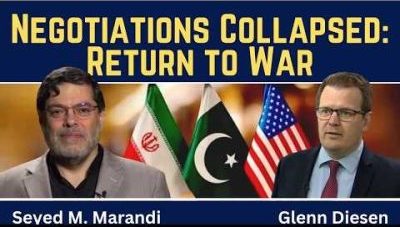
Seyed M. Marandi: Negotiations Collapsed – Return to War
or go to
Aletho News Archives – Video-Images
From the Archives
Wartime internment camps in Australia
National Archives of Australia
World War I
During World War I, for security reasons the Australian Government pursued a comprehensive internment policy against enemy aliens living in Australia.
Initially only those born in countries at war with Australia were classed as enemy aliens, but later this was expanded to include people of enemy nations who were naturalised British subjects, Australian-born descendants of migrants born in enemy nations and others who were thought to pose a threat to Australia’s security.
Australia interned almost 7,000 people during World War I, of whom about 4,500 were enemy aliens and British nationals of German ancestry already resident in Australia.
Records of World War I internment camps
World War II
During World War II, Australian authorities established internment camps for three reasons – to prevent residents from assisting Australia’s enemies, to appease public opinion and to house overseas internees sent to Australia for the duration of the war.
Unlike World War I, the initial aim of internment during the later conflict was to identify and intern those who posed a particular threat to the safety or defence of the country. As the war progressed, however, this policy changed and Japanese residents were interned en masse. In the later years of the war, Germans and Italians were also interned on the basis of nationality, particularly those living in the north of Australia. In all, just over 20 per cent of all Italians resident in Australia were interned. … continue
Blog Roll
 Aletho News
- Seyed M. Marandi: Negotiations Collapsed – Return to War
- Tomorrow’s naval blockade showdown
- ‘Israel’ attacks civilians to hide its embarrassing military failures & out of pure sadism
- Any Foreign Military Vessel Approaching Hormuz Under Any Pretext ‘Will Be Dealt With Severely’: IRGC
- Diplomats slam US negotiators’ performance in Iran talks
- Trump Refuses Exit Ramp, War with Iran will Continue
- Trump Says US Naval Blockade in Strait of Hormuz Will Begin Shortly
- US, Iran end 21-hour talks without agreement
- US IRAN TALKS: Who Are the Crazy Ones Here? /Lt Col Daniel Davis
- Talks with the US end without a deal over excessive US demands: Iran
- If Americans Knew
- US-Iran ceasefire negotiations make zero progress – Daily Update
- Pro-Israel ‘Thinktanks’ and Individuals who Influence U.S. Foreign Policy
- Mearsheimer reveals how Israel dictates US policies on Iran, Gaza – video
- After killing 350+, Israel still has a “score to settle” with Lebanon before ceasefire – Daily Update
- Military aid to Israel emerges as the latest political litmus test for Democrats
- The only Palestinian children’s rights organization closes following years-long Israeli campaign against it
- ‘I Can’t Forget the Smell’: Lebanese Reel After Israel Kills Over 300 in Single Day
- DNC Shoots Down Resolutions Calling Out AIPAC and Limiting Arms to Israel
- TCN: Is Israel Blackmailing President Trump?
- Israel killed at least 303 Lebanese yesterday – who were they? Daily Update
- No Tricks Zone
- German Expert: Heat Dome Led To Record Temps In Western USA…Warmer In 1934, 1936
- New Study: No Linear Warming Or Glacier Retreat Along Northern Antarctic Peninsula Since 1980s
- An Inconvenient Tree: Uncovered In Alps… Europe Much Warmer Than Today 6000 Years Ago
- New Study Reports A 60% Slowdown In Greenland’s Ice Loss Rate In The Last Decade
- Low Intensity Tornado Wrecks Major Solar Farm, Creating A Potential Toxic Dump
- New Study Finds Warming Saves Lives…Cold Temperatures 12 Times More Deadly Than Excess Heat
- German Science Blog Accuses PIK Climate Institute Of Hallucinating Climate Tipping Points
- Devastating Assessment Of Comirnaty Vaccine By Former Senior Pfizer Europe Toxicologist
- New Study: CO2 Is ‘Effectively Negligible’ As An Explanatory Climate Change Factor Since 2000
- Former Pfizer Toxicologist Dr. Helmut Sterz Tells Bundestag Hearing Pfizer Vaccine Should Have Never Been Approved
 Aletho News