Tulsi Gabbard: Presidential candidates must also condemn election interference by US intelligence agencies
By Tulsi Gabbard – The Hill – 02/27/20
Reckless claims by anonymous intelligence officials that Russia is “helping” Sen. Bernie Sanders (I-Vt.) are deeply irresponsible. So was former New York Mayor Mike Bloomberg’s calculated decision Tuesday to repeat this unsubstantiated accusation on the debate stage in South Carolina. Enough is enough. I am calling on all presidential candidates to stop playing these dangerous political games and immediately condemn any interference in our elections by out-of-control intelligence agencies.
A “news article” published last week in the Washington Post, which set off yet another manufactured media firestorm, alleges that the goal of Russia is to trick people into criticizing establishment Democrats. This is a laughably obvious ploy to stifle legitimate criticism and cast aspersions on Americans who are rightly skeptical of the powerful forces exerting control over the primary election process. We are told the aim of Russia is to “sow division,” but the aim of corporate media and self-serving politicians pushing this narrative is clearly to sow division of their own — by generating baseless suspicion against the Sanders campaign.
It’s extremely disingenuous for “journalists” and rival candidates to publicize a news article that merely asserts, without presenting any evidence, that Russia is “helping” Bernie Sanders — but provides no information as to what that “help” allegedly consists of.
The American people have the right to know this information, in order to put Russia’s alleged “interference” into proper perspective. It is a mystery why the Intelligence Community would want to hide these details from us. Instead they are relying on highly dubious and vague insinuations filtered through their preferred media outlets, which seem designed to create a panic rather than actually inform the public about a genuine threat.
All this does is undermine voters’ trust in our elections, which is what we are constantly told is the goal of Russia.
If the CIA, FBI or any other intelligence agency is going to tell voters that “Russians” are interfering in this election to help certain candidates — or simply “sow discord” — then they need to immediately provide us with the details of what exactly they’re alleging. Otherwise, all they are doing is fomenting a sense of powerlessness and paranoia in the voting public, which could suppress engagement in the electoral process. And, at least according to the anonymous officials speaking menacingly to the media, that is precisely what Russia wants.
If our political leaders and those in the media were really concerned with protecting the integrity of our elections from outside manipulation — instead of just making money from manufactured hysteria — they would presumably devote more coverage to proposals to institute backup paper ballots, which would ensure that no malicious actors can ever alter our votes or hack into our election infrastructure. The bill I reintroduced last year, the Securing America’s Elections Act, does exactly that — but the media has never shown much interest because it would not generate the so-called “bombshell” headlines they so desperately crave.
The FBI, CIA or any other intelligence agency should immediately stop smearing presidential candidates with innuendo and vague, evidence-free assertions. That is antithetical to their role in a free democracy. The American people cannot have faith in our intelligence agencies if they are pushing an agenda to harm candidates they dislike.
Any attempts to keep the American people quiet — with the threat that if they dare criticize the Democratic Party establishment, they will be labeled hostile foreign agents — are unacceptable and disgraceful.
This new McCarthyism must be renounced by every presidential candidate, otherwise we must conclude they lack the foresight and integrity required to lead our country. If candidates are too afraid to stand up against those who would suppress the voices of the American people with McCarthyist smears, they are not real leaders. They are just power-hungry, self-serving politicians whose goal is to play-act as president — rather than actually defend the freedoms enshrined in our Constitution.
It is now clear that the mainstream corporate media and the warmongering political establishment are seeking to do two things:
1) Create enough suspicion around Sanders, by falsely tarnishing him as a puppet of Russia, that he loses the election.
2) Or, at the very least, if Bernie wins the Democratic nomination, force him to engage in inflammatory anti-Russia rhetoric and perpetuate the New Cold War and nuclear arms race, which are existential threats to our country and the world.
That strategy worked very well with Trump. Trump has spent his entire presidency trying to “prove” to the media that he is not Putin’s puppet by carrying out extremely aggressive policies that have brought us closer to nuclear war with Russia than we have been in decades.
If Sanders is the Democratic nominee, the corporate media will do everything they can to turn the general election into a contest of who is going to be “tougher” on Russia. This tactic is necessary to propagandize the American people into shelling over their hard-earned tax dollars to the Pentagon to fund the highly lucrative nuclear arms race that the military-industrial complex craves. In the most recent appropriations bill last year, the Pentagon was handed $738 billion — which includes a blank check for dangerous new nuclear warheads and destabilizing missile systems that increase the likelihood of catastrophic war with Russia.
The question facing any potential Democratic nominee is this: Am I going to allow myself to be manipulated and forced into a corner by overreaching intelligence agencies and the corporate media where, in order for me to win the presidency, I’m going to have to do what I know is not in the interests of the American people and world peace?
Or will I stand up to the corrupt neocon and neoliberal establishment, condemn their lies and smears, and act with the integrity and foresight necessary to forge a rational policy that will serve all our interests?
The problem with President Trump is that he talks tough against the media and the intelligence agencies, but he was not strong enough to stand up to their pressure. He was cowed into trying to prove that he’s not a puppet of Russia, and as a consequence has brought us closer and closer to nuclear war. The Democratic nominee cannot make the same mistake; our country and the world are depending on it.
Don’t Hold Your Breath for ‘World War III’: World War IV Has Already Begun
By A. B. Abrams | The Saker Blog | February 27, 2020
“A. B. Abrams is the author of the book ‘Power and Primacy: A History of Western Intervention in the Asia-Pacific.’ His second book covering the history of the United States’ conflict with North Korea is scheduled for publication in 2020.
He is proficient in Chinese, Korean and other East Asian languages, has published widely on defence and politics related subjects under various pseudonyms, and holds two related Masters degrees from the University of London.”
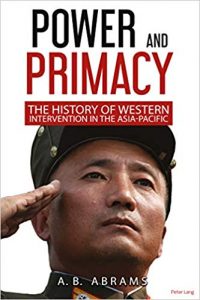 The world today finds itself in a period of renewed great power conflict, pitting the Western Bloc led by the United States against four ‘Great Power adversaries’ – as they are referred to by Western defence planners – namely China, Russia, North Korea and Iran. This conflict has over the past 15 years escalated to encompass the military, economic and information spheres with global consequences – and appears to be coming to a head as signs of peaking tensions appear in multiple fields from military deployments and arms races to harsh economic wars and a harsher still information war.
While the term ‘World War III’ has been common since the 1940s, referring to the possibility of a global great power war on a greater scale than the first and second world wars, the Cold War between the Western and Soviet Blocs was at its height as total, as global and as heated as the prior conflicts. As weapons technology has evolved, the viability of a direct shooting war has diminished considerably – forcing major powers to seek alternative means to engineer their adversaries’ capitulation and assert their own dominance. This has been reflected in how the Cold War, and the current phase of global conflict some refer to as ‘Cold War 2’ have been distinct from the first two world wars despite the final objectives of the parties involved sharing many similarities. I would thus suggest redefining what a ‘world war’ is and acknowledging that this current phase of global conflict is every part as intense as the great power ‘hot wars’ waged in the first half of the 20th century.
Had the intercontinental range ballistic missile and the miniaturised nuclear warhead been invented twenty years earlier, the Allied Powers may have needed to rely more heavily on economic and information warfare to contain and eventually neutralise Nazi Germany. The Second World War would have been very different in nature to reflect the technologies of the time. When viewed from this paradigm, the Cold War can be seen as a ‘Third World War’ – a total conflict more vast, comprehensive and international than its predecessors stretched out over more than 40 years. The current conflict, or ‘World War IV,’ is ongoing. An assessment of prior ‘great power wars,’ and the unique nature of the current conflict, can provide some valuable insight into how warfare is evolving and the likely determinants of its victors.
As of 2020 it is clear that great power conflict has become almost as heated as it can short of an all-out hot war – with the Western Bloc applying maximum pressure on the information, military and economic fronts to undermine not only smaller adversaries such as Venezuela and Syria and medium sized ones such as North Korea and Iran, but also China and Russia. When exactly this phase of conflict began – sometime after the Cold War’s end – remains uncertain.
The interval between the third and fourth ‘world wars’ was considerably longer than that between the second and the third. This was due to a number of factors – primarily that there was no immediate and obvious adversary for the victorious Western Bloc to target once the Soviet Union had been vanquished. Post-Soviet Russia was a shade of a shadow of its former self. Under the administration of Boris Yeltsin the country’s economy contracted an astonishing 45% in just five years from 1992 (1) leading to millions of deaths and a plummet in living standards. Over 500,000 women and young girls of the former USSR were trafficked to the West and the Middle East – often as sex slaves (2), drug addiction increased by 900 percent, the suicide rate doubled, HIV became a nationwide epidemic (3) corruption was rampant, and the country’s defence sector saw its major weapons programs critical to maintaining parity with the West delayed or terminated due to deep budget cuts (4). The possibility of a further partition of the state, as attested to multiple times by high level officials, was very real along the lines of the Yugoslav model (5).
Beyond Russia, China’s Communist Party in the Cold War’s aftermath went to considerable lengths to avoid tensions with the Western world – including a very cautious exercise of their veto power at the United Nations which facilitated Western led military action against Iraq (6). The country was integrating itself into the Western centred global economy and continuing to emphasis the peaceful nature of its economic rise and understate its growing strength. Western scholarship at the time continued to report with near certainty that internal change, a shift towards a Western style political system and the collapse of party rule was inevitable. The subsequent infiltration and westernisation was expected to neuter China as a challenger to Western primacy – as it has other Western client states across the world. China’s ability to wage a conventional war against even Taiwan was in serious doubt at the time, and though its military made considerable strides with the support of a growing defence budget and massive transfers of Soviet technologies from cash strapped successor states, it was very far from a near peer power.
North Korea did come under considerable military pressure for failing to follow what was widely referred to as the ‘tide of history’ in the West at the time – collapse and westernisation of the former Communist world. Widely portrayed in the early 1990s as ‘another Iraq’ (7), Western media initially appeared to be going to considerable lengths to prepare the public for a military campaign to end the Korean War and impose a new government north of the 38th parallel (8). Significant military assets were shifted to Northeast Asia specifically to target the country during the 1990s, and the Bill Clinton administration came close to launching military action on multiple occasions – most notably in June 1994. Ultimately a combination of resolve, a formidable missile deterrent, a limited but ambiguous nuclear capability, and perhaps most importantly Western certainty that the state would inevitably collapse on its own under sustained economic and military pressure, deferred military options at least temporarily.
The fourth of the states that the United States today considers a ‘greater power adversary,’ Iran too was going to considerable lengths to avoid antagonism with the Western Bloc in the 1990s – and appeared more preoccupied with security threats on its northern border from Taliban controlled Afghanistan. With a fraction of the military power neighbouring Iraq had previously held, the presence of an ‘Iranian threat’ provided a key pretext for a Western military presence in the Persian Gulf after the Soviets, the United Arab Republic and now Iraq had all been quashed. With the new government in Russia put under pressure to terminate plans to transfer advanced armaments to Iran (9), the country’s airspace was until the mid 2000s frequently penetrated by American aircraft, often for hours at a time, likely without the knowledge of the Iranians themselves. This combined with a meagre economic outlook made Iran seem a negligible threat.
While the Cold War ended some time between 1985 and 1991 – bringing the ‘third world war’ to a close – the range of dates at which one could state that the ‘fourth world war’ began and the West again devoted itself to great power conflict is much wider. Some would put the date in the Summer of 2006 – when Israel suffered the first military defeat in its history at the hands of the Lebanese militia Hezbollah. Using North Korean tunnel and bunker networks, command structures, weapons and training (10), and bolstered by Iranian funding and equipment, the shock of the militia’s victory, though underplayed in Western media, reverberated among informed circles across the world.
Others would place the date two years later in 2008 during the Beijing Summer Olympics, when Georgia with the full support of the West waged a brief war against Russia – and Moscow despite harsh warnings from Washington and European capitals refused to back down on its position. Post-Yeltsin Russia’s relations with the Western Bloc had appeared relatively friendly on the surface, with President George W. Bush observing in 2001 regarding President Vladimir Putin that he “was able to get a sense of his soul,” and predicting “the beginning of a very constructive relationship.” Nevertheless, signs of tension had begun to grow from Moscow’s opposition to the Iraq War at the UN Security Council to President Putin’s famous ‘Munich Speech’ in February 2007 – in which he sharply criticised American violations of international law and its “almost uncontained hyper use of force in international relations.”
It could also be questioned whether, in light of what we know about Western support for separatist insurgents in Russia itself during the 1990s, the war against the country ever ended – or whether hostilities would only cease with a more total capitulation and partition and with the presence of Western soldiers on Russian soil as per the Yugoslav precedent. As President Putin stated in 2014 regarding continuing Western hostilities against Russia in the 1990s: “The support of separatism in Russia from abroad, including the informational, political and financial, through intelligence services, was absolutely obvious. There is no doubt that they would have loved to see the Yugoslavia scenario of collapse and dismemberment for us with all the tragic consequences it would have for the peoples of Russia” (11). Regarding Western efforts to destabilise Russia during the 1990s, CIA National Council on Intelligence Deputy Director Graham E. Fuller, a key architect in the creation of the Mujahedeen to fight Afghanistan and later the USSR, stated regarding the CIA’s strategy in the Caucasus in the immediate post-Cold War years: “The policy of guiding the evolution of Islam and of helping them against our adversaries worked marvellously well in Afghanistan against the Red Army. The same doctrines can still be used to destabilize what remains of Russian power” (12). The U.S. Congressional Task Force on Terrorism and Unconventional Warfare’s director, Yossef Bodansky, himself also detailed the extent of the CIA’s strategy to destabilize Central Asia by using “Islamist Jihad in the Caucasus as a way to deprive Russia of a viable pipeline route through spiralling violence and terrorism” – primarily by encouraging Western aligned Muslim states to continue to provide support for militant groups (13).
Much like the Cold War before it, and to a lesser extent the Second World War, great powers slid into a new phase of conflict rather that it being declared in a single spontaneous moment. Did the Cold War begin with the Berlin Blockade, the Western firebombing of Korea or when the atomic bombs were dropped on Hiroshima and Nagasaki – which accelerated the move into a nuclear arms race. Equally, multiple dates were given for the opening of the Second World War – the German invasion of Poland in 1939, the beginning of the Sino-Japanese war two years prior, the Japanese Empire’s attack on Pearl Harbour and conquest of Southeast Asia which marked the first major expansion beyond Europe and North Africa in 1941, or some other date entirely. The slide into a new world war was if anything even slower than its predecessors.
The shift towards an increasingly intense great power conflict has been marked by a number of major incidents. In the European theatre one of the earliest was the Bush administration’s withdrawal from the Anti-Ballistic Missile treaty in 2002 and subsequent deployment of missile defences and expansion of NATO’s military presence in the former Soviet sphere of influence, which was widely perceived in Russia as an attempt to neutralise its nuclear deterrent and place the Western Bloc in a position to coerce Moscow militarily (14). This threatened to seriously upset the status quo of mutual vulnerability, and played a key role in sparking a major arms race under which Russia would develop multiple classes of hypersonic weapon. Their unveiling in 2018 would in turn lead the United States to prioritise funding to develop more capable interceptor missiles, a new generation of missile defences based on lasers, and hypersonic ballistic and cruise missiles of its own (15).
Another leading catalyst of the move towards great power confrontation was the Barak Obama administration’s ‘Pivot to Asia’ initiative, under which the bulk of America’s military might and considerable assets from the rest of the Western world would be devoted to maintaining Western military primacy in the Western Pacific. This was paired with both economic and information warfare efforts, the latter which increasingly demonised China and North Korea across the region and beyond and actively sought to spread pro-Western and anti-government narratives among their populations through a wide range of sophisticated means (16). These programs were successors to those sponsored by Western intelligence agencies to ideologically disenchant the populations of the Warsaw Pact and Soviet Union with their own political systems and paint Western powers as benevolent and democratising saviours (17). Economic warfare also played a major role, with efforts centred around the ‘Trans-Pacific Partnership’ trade deal – or ‘Economic NATO’ as several analysts referred to it – to isolate China from regional economies and ensure the region remained firmly in the Western sphere of influence (18). The military aspect of the Pivot to Asia would reawaken long dormant territorial disputes, and ultimately lead to high military tensions between the United States and China which in turn fuelled the beginning of an arms race. This arms race has more recently led to the American withdrawal from the Intermediate-Range Nuclear Forces treaty, which paves the way for deployment of American long-range missiles across the Western Pacific – all with China and North Korea firmly in their crosshairs (19).
It is arguably in the Middle East, however, where the new phase of global conflict has seen its most direct clashes so far. The nine-year conflict in Syria, although far less destructive or brutal, provides ‘World War IV’ with something of an analogue to the Korean War in the Cold War. The conflict has united the Western Bloc and a wide range of allies, from Turkey and Israel to the Gulf States and even Japan (which funds the jihadist-linked White Helmets) (20), in an effort to overthrow an independent government with close and longstanding defence ties to Russia, North Korea, Iran and China. The conflict has seen North Korean, Russian, Hezbollah and Iranian special forces (21) among other assets deployed on the ground in support of Syrian counterinsurgency efforts, with all of these parties providing considerable material support (the Koreans have built and fully staffed at least three hospitals as part of large medical aid packages and continue to be a major supplier of arms and training) (22). China too, particularly concerned by the presence of jihadist militants of Chinese origin in Syria, has played some role in the conflict – the exact details of which remain uncertain with much reported but unconfirmed (23).
Syria’s insurgency involving a range of jihadist groups, at times united only by their intent to end the secular Syrian government, have received widespread support from the Western Bloc and their aforementioned allies. This has involved both material support, which according to State Secretary Hillary Clinton included turning a blind eye to Gulf countries’ considerable assistance to the Islamic State terror group (24), and active deployments of special forces from a wide range of countries, from Belgium and Saudi Arabia to Israel and the U.S. The U.S., European powers, Turkey and Israel have at times directly attacked Syrian units in the field – while Russian reports indicate that close Western coordination with jihadist groups has been used to facilitate a number of successful attacks on Russian positions (25). The conflict in Syria arguably represents a microcosm of the macrocosm which is a new world war – one which pits the Western Bloc and those which support the Western-led order, both directly and through local proxies, against three of its four ‘great power adversaries’ in the field.
‘World War IV’ is unlikely to come to an end for the foreseeable future, and its final outcome remains difficult to predict. Much like in the Cold War, the Western Bloc retains considerable advantages – today most notably in the field of information war which allows it to extensively shape perceptions of the vast majority of the world’s population. This has included the demonization of Western adversaries, the whitewashing of Western crimes both domestically and internationally, and portraying westernisation and increased Western influence as a solution to people’s frustrations from corruption to economic stagnation. This has been a key facilitator of the pro-Western protests engulfing states from Sudan and Algeria to Ukraine and Thailand. Economically too, only China among the Western Bloc’s major adversaries has posed a serious threat to Western primacy. Indeed, it remains highly questionable whether the other three could survive economically under Western pressure without Chinese trade and economic support.
Russia has made a considerable economic recovery since the 1990s, but remains a shadow of its former self in the Soviet era. The country’s leadership has succeeded in reforming the military, foreign ministry and intelligence services, but the economy, legal system and other parts of the state remain in serious need of improvement which, over 20 years after Yeltsin’s departure, cannot come soon enough. Even in the field of defence, the struggling economy has imposed serious limitations – and in fields such as aviation and armoured warfare the country is only beginning to slowly go beyond modernising Soviet era weapons designs and begin developing new 21st century systems (26). On the positive side, the country does remain a leader in many high end technologies mostly pertaining to the military and to space exploration, while Western economic sanctions have undermined the positions of Europhiles both among the elite and within the government and boosted many sectors of domestic production to substitute Western products (27).
In the majority of fields, the ‘Eastern Bloc’ have been pressed onto the defensive and forced to prevent losses rather than make actual gains. While preserving Venezuelan sovereignty, denying Crimea to NATO and preventing Syria’s fall have been major victories – they are successes in denying the West further expansion of its own sphere of influence rather than reversing prior Western gains or threatening key sources of Western power. Pursuing regime change in Venezuela and Ukraine and starting wars in the Donbasss and in Syria have cost the Western Bloc relatively little – the Ukrainians and client states in the Gulf and Turkey have paid the brunt of costs for the war efforts. Material equipment used by Western backed forces in both wars, ironically, has largely consisted of Warsaw Pact weaponry built to resist Western expansionism – which after the Cold War fell into NATO hands and is now being channelled to Western proxies. Libyan weaponry, too, was transferred to Western backed militants in Syria in considerable quantities after the country’s fall in 2011 – again minimising the costs to the Western Bloc of sponsoring the jihadist insurgency (28). The damage done and costs incurred by the Syrians, Hezbollah, Russia and others are thus far greater than those incurred by the Western powers to cause destruction and begin conflicts.
Syria has been devastated, suffering from issues from a return of polio to depleted uranium contamination from Western airstrikes and a new generation who have grown up in territories under jihadist control with little formal education. The war is a victory only in that the West failed to remove the government in Damascus from power – but Western gains from starting and fuelling the conflict have still far outweighed their losses. In the meantime, through a successful campaign centred around information warfare, the Western sphere of influence has only grown – with further expansion of NATO and the overthrow of governments in resource rich states friendly to Russia and China such as Libya, Sudan and Bolivia. Commandeering the government of poor but strategically located Ukraine was also a major gain, with states such as Algeria and Kazakhstan looking to be next in the Western Bloc’s crosshairs. Thus while Syria was saved, though only in part, much more was simultaneously lost. The damage done to Hong Kong by pro-Western militants, ‘thugs for democracy’ as the locals have taken to calling them, who have recently turned to bombing hospitals and burning down medical facilities (29), is similarly far greater than the costs to the Western powers of nurturing such an insurgency. Similar offensives to topple those which remain outside the Western sphere of influence from within continue to place pressure on Russian and Chinese aligned governments and on neutral states seen not to be sufficiently pro-Western.
While the Western Bloc appears to be in a position of considerable strength, largely by virtue of its dominance of information space, which has allowed it to remain on the offensive, a sudden turning point in which its power suddenly diminishes could be in sight. From teen drug abuse (30) to staggering debt levels (31) and the deterioration of party politics and popular media, to name but a few of many examples, the West appears at far greater risk today of collapse from within than it did during the Cold War. A notable sign of this is the resurgence of both far right and far left anti-establishment movements across much of the Western world. Despite massive benefits from privileged access to third world resource bases, from France’s extractions from Francophone West Africa (32) to the petrodollar system propping up American currency (33), Western economies with few exceptions are very far from healthy. A glimpse of this was given in 2007-2008, and little has been done to amend the key economic issues which facilitated the previous crisis in the twelve years since (34). The West’s ability to compete in the field of high end consumer technologies, particularly with rising and more efficient East Asian economies, increasingly appears limited. From semiconductors to electric cars to smartphones to 5G, the leaders are almost all East Asian economies which have continued to undermine Western economic primacy and expose the gross inefficiencies of Western economies. The result has been less favourable balances of payments in the Western world, a growing reliance on political clout to facilitate exports (35), and increasing political unrest as living standards are placed under growing pressure. The Yellow Vests and the rise of Donald Trump and Bernie Sanders are all symptoms of this. With very real prospects of another economic crash in the coming decade, in the style of 2008 but likely much worse, Western economies are expected to bear the brunt of the damage. Their ability to survive remains in serious question. Effects of a crash on North Korea, Iran, Russia and even China will be far less severe. While the previous crash hit Russia particularly hard (36), an economic turnaround from 2014 and the insulation provided by Western sanctions leave it far less vulnerable to the fallout from a Western economic crisis.
Ultimately China appears to be setting itself up for an ‘Eastern Bloc’ victory – a coup de grace which could see Western gains over the past several decades reversed and the power of the West itself diminished to an extent unprecedented in centuries. While the United States reluctantly outsourced much of its high end consumer technologies to East Asian allies during the Cold War – namely Japan, South Korea and Taiwan – China is going for the jugular of the Western world’s economy with its ‘Made in China 2025’ initiative, which will see some critical remaining fields of Western technological primacy shift to East Asian hands. The Coronavirus, bombings in Hong Kong, the trade war, and the wide range of tools in the Western arsenal for destabilisation can at best slightly delay this – but cannot prevent it. In a globalised capitalist economy the most efficient producers win – and East Asia and China in particular, with its Confucian values, stable and efficient political systems and world leading education (37), are thus almost certain to take over the high end of the world economy.
Much as the key to Western victory in the Cold War was successful information warfare efforts and isolation of the Soviet economy from the majority of the world economy, the key to determining the victor of ‘World War IV’ is likely lie in whether or not Beijing succeeds in its attempt to gain dominance of high end technologies critical to sustaining Western economies today. This is far from the only determinant of victory. Efforts to undermine the effective subsidies to Western economies from Central and West Africa, the Arab Gulf states and elsewhere in the third world, and to ensure continued military parity – to deter NATO from knocking over the table if they lose the game of economic warfare – are among the other fields of critical importance. Based on China’s prior successes, and those of other East Asian economies, the likelihood that it will meet its development goals is high – to the detriment of Western interests. The result will be an end to world order centred on Western might – the status quo for the past several hundred years – and emergence in its place of a multipolar order under which Russia, Asia (Central, East, South and Southeast) and Africa will see far greater prominence and prosperity.
- Menshikov, S., ‘Russian Capitalism Today,’ Monthly Review, vol. 51, no. 3, 1999 (pp. 82–86).
- Yulia V. Tverdova, ‘Human Trafficking in Russia and Other Post-Soviet States,’
Human Rights Review, December 11, 2016.
- Klein, Naomi, The Shock Doctrine: The Rise of Disaster Capitalism, London,
Penguin, 2008 (Chapter 11: ‘Russia Choses the Pinochet Option: Bonfire of a Young Democracy’).
- ‘The Death of the MiG 1.44 Program; How the Collapse of the Soviet Union Derailed Moscow’s Fifth Generation Fighter Development,’ Military Watch Magazine, September 16, 2018.
‘Russia’s Sukhoi Unveils Images from Cancelled Next Generation Fighter Program,’ Military Watch Magazine, December 17, 2019.
- Presidential Address to the Federal Assembly, President of Russia, Kremlin, December 4, 2014.
Bechev, Dimitar, Rival Power: Russia’s Influence in Southeast Europe, New Haven, CT, Yale University Press, 2017 (Chapter 1).
- Kristof, Nicholas D., ‘WAR IN THE GULF: China; Beijing Backs Away From Full Support of the War,’ New York Times, February 1, 1991.
- ‘Thaw in the Koreas?,’ Bulletin of Atomic Scientists, vol. 48, no. 3, April 1992 (p. 16).
- ‘Time to End the Korean War,’ The Atlantic, February 1997.
- Axe, David, ‘Iran Desperately Wants This Fighter Plane,’ The National Interest, January 4, 2020.
- ‘Hezbollah a North Korea-Type Guerrilla Force,’ Intelligence Online, No. 529, August 25–September 7, 2006.
“North Koreans Assisted Hezbollah with Tunnel Construction,” Terrorism Focus, The Jamestown Foundation, vol. III, issue 30, August 1, 2006.
Dilegge, Dave and Bunker, Robert J., and Keshavarz, Alma, Iranian and Hezbollah Hybrid Warfare Activities: A Small Wars Journal Anthology, Amazon Media, 2016 (p. 261).
‘Bulsae-3 in South Lebanon: How Hezbollah Upgraded its Anti-Armour Capabilities with North Korean Assistance,’ Military Watch Magazine, September 3, 2019.
- Kremlin, President of Russia, Presidential Address to the Federal Assembly, December 4, 2014.
- Congressional Record, V. 151, PT. 17, U.S. Congress, October 7 to 26, 2005.
- ‘American political scientist: Western Intelligence used Azerbaijan to export terrorism into Russia,’ Panorama, May 30, 2015.
- Kremlin, President of Russia, Plenary session of St Petersburg International
Economic Forum, June 17, 2016.
- Gregg, Aaron, ‘Military Industrial Complex Finds a Growth Market in Hypersonic Weapons,’ Washington Post, December 21, 2018.
- Mullen, Mike and Nunn, Sam and Mount, Adam, A Sharper Choice on North Korea: Engaging China for a Stable Northeast Asia, Council on Foreign Relations, Independent Task Force Report No. 74, September 2016.
Cartalucci, Tony, ‘Twitter Targets Hong Kong in US-backed Regime Change Operation,’ Ron Paul Institute for Peace and Prosperity, October 15, 2019.
Park, Kyung-Ae, ‘Regime Change in North Korea?: Economic Reform and Political Opportunity Structures,’ North Korean Review, vol. 5, no. 1, Spring 2009 (p. 23-45).
- ‘Worldwide Propaganda Network Built by the C.I.A.,’ New York Times, December 26, 1977.
- Wu, S., ‘Why the TPP is an “economic NATO,”’ Huffington Post, October 19,
2015.
- Ait, Abraham, ‘US Withdrawal From the INF Treaty Isn’t About Russia,’ The Diplomat, October 25, 2018.
- al-Jablawi, Hosam, ‘The White Helmets Struggle Without US Funding,’ Atlantic Council, June 11, 2018.
- ‘North Korean Special Forces in Syria; A Look at Pyongyang’s Assistance to Damascus’ Counterinsurgency Operations,’ Military Watch Magazine, June 10, 2018.
- ‘DPRK Ambassador affirms his country’s readiness to support health sector in Syria,’ Syrian Arab News Agency, July 25, 2016.
- Pauley, Logan and Marks, Jesse, ‘Is China Increasing Its Military Presence in Syria?,’ The Diplomat, August 20, 2018.
Hemenway, Dan, ‘Chinese strategic engagement with Assad’s Syria,’ Atlantic Council, December 21, 2018.
- ‘We finally know what Hillary Clinton knew all along – U.S. allies Saudi Arabia
and Qatar are funding Isis,’ The Independent, October 14, 2016.
- ‘Inquiry Into Death of Russian Lt. Gen. Asapov Shows Data Leaks to Daesh –
Source,’ Sputnik, September 26, 2017.
‘Drones used by Syrian terrorists “require advanced training” – Russian MoD in response to US,’ Sputnik, January 9, 2018.
- ‘Five Next Generation Russian Combat Jets We Will See in the 2020s: From MiG-41 Hypersonic Interceptors to PAK DA Stealth Bombers,’ Military Watch Magazine, January 1, 2019.
- Twigg, Judy, ‘Russia Is Winning the Sanctions Game,’ National Interest, March 14, 2019.
- Hersh, Seymour, ‘The Red Line and the Rat Line,’ London Review of Books, vol. 36, no. 8, April 2014
Angelovski, Ivan and Patrucic, Miranda and Marzouk, Lawrence, ‘Revealed: the £1bn of weapons flowing from Europe to Middle East,’ The Guardian, July 27, 2016.
Chivers, C. J. and Schmitt, Eric and Mazzetti, Mark, ‘In Turnaround, Syria Rebels Get Libya Weapons,’ New York Times, June 21, 2013.
McCarthy, Andrew C., ‘Hillary Clinton’s Benghazi Debacle: Arming Jihadists in Libya . . . and Syria,’ National Review, August 2, 2016.
- ‘Militants Bomb Hospital, Torch Quarantine Center as Hong Kong Braces for Virus Outbreak,’ Military Watch Magazine, January 27, 2020.
- ‘Class A drug use “at record levels due to young people”,’ BBC News, September 20, 2019.
- Buchholz, Katharina, ‘Industrialized Nations Have Biggest Foreign Debt,’ Statista, February 7, 2019.
- ‘France’s Colonial Tax Still Enforced for Africa. “Bleeding Africa and Feeding
France,”’ Centre for Research of Globalization, January 14, 2015.
Bart Williams, Mallence, ‘The Utilization of Western NGOs for the Theft of Africa’s Vast Resources,’ TedxBerlin, January 26, 2015
(https://www.youtube.com/watch?v=AfnruW7yERA).
- Wong, Andrea, ‘The Untold Story Behind Saudi Arabia’s 41-Year U.S. Debt Secret,’ Bloomberg, May 31, 2016.
Spiro, David E., The Hidden Hand of American Hegemony: Petrodollar Recycling and International Markets, New York, Cornell University Press, 1999.
- ‘Banks have not learnt lessons of 2008 crisis, says Gordon Brown,’ Financial Times, October 31, 2017.
‘A decade after the financial meltdown, its underlying problems haven’t been fixed,’ The Guardian, August 6, 2017.
- ‘Fearing U.S. Sanctions Over Su-35 Purchase: What is Behind Indonesia’s Interest in New F-16V Fighters,’ Military Watch Magazine, November 6, 2019.
Rogan, Tom, ‘The very political reason Qatar buys different fighter aircraft from Britain, France, and the US,’ Washington Examiner, February 25, 2020.
Krishnan, Rakesh, ‘Countering CAATSA: How India can avoid American arm twisting,’ Business Today, March 6, 2019.
- Gaddy, Clifford G. and Ickes, Barry W., ‘Russia after the Global Financial Crisis,’ Eurasian Geography and Economics, vol. 51, no. 3, 2010 (pp. 281-311).
- Hobbs, Tawnell D., ‘U.S. Students Fail to Make Gains Against International Peers,’ The Wall Street Journal, December 3, 2019.
Turner, Camiilla, ‘Chinese students are two years ahead of their white British peers by age 16, report finds,’ The Telegraph, July 30, 2019.
Rohrabacher, Mueller, and Assange
By Daniel Lazare | Strategic Culture Foundation | February 26, 2020
Reports that Donald Trump offered to pardon WikiLeaks founder Julian Assange if he could prove that Russia didn’t hack Democratic National Committee caused a good-sized media storm when they came out in a British court last week. But then Dana Rohrabacher, the ex-US congressman supposedly serving as a go-between, issued an all-points denial, and the tempest blew over as fast as it arose.
But that doesn’t mean that the Russia-WikiLeaks story is kaput. To the contrary, it’s still brimming with unanswered questions no matter how much the corporate media wishes they would go away.
The most important question is the simplest: why didn’t Special Prosecutor Robert Mueller sit down with Julian Assange and ask him about the 20,000 DNC emails himself?
It’s not as if Assange would have said no. According to Craig Murray, the former British diplomat who serves as an unofficial WikiLeaks spokesman, he “was very willing to give evidence to Mueller, which could have been done by video-link, by interview in the [Ecuadorean] Embassy, or by written communication.” While Assange refuses as a matter of policy to disclose his sources, he had already made a partial exception in the case of the DNC by declaring, “Our source is not a state party.” Conceivably, he had more to say along such lines, information that Mueller might have then used to determine what role, if any, Russia played in the email release.
But he didn’t bother. Without making the slightest effort to get Assange’s side of the story, he assembled page after page of evidence purporting to show that WikiLeaks had collaborated with Russian intelligence in order to disseminate stolen material. Rather than an organization dedicated to exposing official secrets so that voters could learn what their government was really up to, WikiLeaks, in the eyes of the special prosecutor, was the opposite: an organization seeking to help Russia pull the wool over people’s eyes so they would vote for Donald Trump.
This is the super-sensational charge that has roiled US politics since 2016. Yet there is little to back it up.
Even though Mueller is confident that the Russian military intelligence agency known as the GRU routed the emails to WikiLeaks, for instance, he still hasn’t figured out how. “Both the GRU and WikiLeaks sought to hide their communications, which has limited the [Special Prosecutor’s] Office’s ability to collect all of the communications between them,” his report confesses on page 45. “The Office cannot rule out that stolen documents were transferred to WikiLeaks through intermediaries who visited during the summer of 2016,” it adds on page 47. “For example, public reporting identified Andrew Müller-Maguhn as a WikiLeaks associate who may have assisted with the transfer of these stolen documents to WikiLeaks.”
But Müller-Maguhn, a German cyber-expert who has worked with WikiLeaks for years, dismisses any such suggestion as “insane,” a claim the Mueller report makes no effort to rebut. The public is thus left with a blank where a dotted trail the GRU and WikiLeaks ought to be. Then there’s the issue of chronology. The Mueller report says that a GRU website known as DCLeaks.com reached out to WikiLeaks on June 14, 2016, with an offer of “sensitive information” related to Hillary Clinton. Considering that WikiLeaks would release a treasure trove of DNC emails on July 22, less than seven weeks later, the implication that the GRU was the source does not, at first glance, seem implausible.
But hold on. Although the report doesn’t mention it, Assange told a British TV station on June 12: “We have upcoming leaks in relation to Hillary Clinton, which is great.” Either he was amazingly clairvoyant in foreseeing an offer that the GRU would make two days hence or he got the material from someone else.
To be sure, the Mueller report adds that an alleged Russian intelligence “cutout” known as Guccifer 2.0 sent WikiLeaks an encrypted data file on July 14, which is to say eight days prior to publication. But since WikiLeaks didn’t confirm opening the file until July 18, this means that it would have had just four days to vet thousands of emails and other documents to insure they were genuine and unaltered. If just one had turned out to be doctored, its hard-earned reputation for accuracy would have been in shreds. So the review process had to be painstaking and thorough, and four days would not be remotely enough time.
Nothing about the Mueller account – timing, plausibility, the crucial question of how the stolen DNC emails made their way to WikiLeaks – adds up. Yet Mueller went public with it regardless. Which leads to another question: why?
One reason is because he knew he could get away with it, at least temporarily, since it was clear that corporate media howling for Trump’s scalp would accept whatever he put out as gospel. But another is that he’s a dutiful servant of the ruling class. After all, Mueller is the person who, as FBI director from 2001 to 2013, spent much of his time covering up Saudi Arabia’s not-inconsiderable role in 9/11, as investigative reporter James Ridgeway has pointed out on a number of occasions. Mueller is also the man who assured the Senate Intelligence Committee in February 2003 that “Iraq’s WMD program poses a clear threat to our national security,” a claim that the upcoming Iraqi invasion would reveal as fraudulent to the core.
Toeing the official line is therefore more important in his book than telling the truth. This is why he didn’t sit down with Assange – because he was afraid of what he might tell him. In January 2017, the CIA, NSA, and FBI officially reported that “Russian President Vladimir Putin ordered an influence campaign in 2016” and “that Russian military intelligence … used the Guccifer 2.0 persona and DCLeaks.com” to relay stolen computer data to WikiLeaks. Four months later, then-CIA Director Mike Pompeo went even farther by describing WikiLeaks as “a non-state hostile intelligence service often abetted by state actors like Russia.”
This was the official narrative that Mueller felt dutybound to defend when he was appointed special prosecutor a month after Pompeo made his remarks. Even though the CIA account would not hold up to close inspection, his self-perceived mission was to disregard certain facts and cherry-pick others in order to convince the public that it was true.
This leads us to a third question: how do Americans get themselves out of the hole that Mueller has dug for them? Not only does Assange face 170 years in prison for espionage, but the impact in terms of freedom of the press will be devastating. The prosecution’s case rests on an explosive theory that receiving inside information is effectively the same thing as supplying it. Just as a fence encourages people to steal, the idea is that a journalist encourages insiders to hack computers and rifle through file cabinets by offering to publish what they come up with. If upheld, it means that journalists would have to think twice before even talking to an inside for fear of incurring a similar penalty. Armed with such a legal instrument, Richard Nixon would have had no trouble dealing with Bob Woodward and Carl Bernstein. He would merely have charged them with espionage and locked them away until the break-in was forgotten.
If Assange goes down, in other words, democracy will take a major hit. Yet by labeling him a Russian agent, Mueller has seen to it that liberals are as unsympathetic to his plight as the most militant conservative, if not more so. He transformed Assange into the perfect scapegoat for Democrats and Russians to bash with bipartisan glee.
This is why a defense based purely on the First Amendment will not do. Rather, it’s important to deal with the charge of Russian collaboration that – completely unjustly – has turned him into an object of public opprobrium. It’s time to give the Mueller report the scrutiny it deserves before its collective falsehoods undermine democracy even more than they already have.
With Grenell Appointment, the Israel Lobby’s Foothold on US Intelligence Grows Even Stronger
By Whitney Webb | MintPress News | February 25, 2020
Last week’s appointment of U.S. Ambassador to Germany Richard Grenell to the post of Director of National Intelligence (DNI) received criticism from both sides of the political divide, mainly for his lack of experience and history of outspoken and partisan political statements. Much more overlooked, however, are Grenell’s ties to the powerful American pro-Israel lobby and Israeli politicians alike, including organizations and individuals with a history of espionage and blackmail against the United States.
Grenell is merely the latest example in a series of appointments over the past few years that have seen individuals with deep ties to the pro-Israel lobby rise to top positions in the U.S. intelligence community, including the NSA’s current director of Cybersecurity Anne Neuberger as well as the leaders of the President’s Intelligence Advisory Board (PIAB).
With many of these posts directly involved in overseeing the security of the upcoming 2020 election, ostensibly to combat “foreign interference,” these connections are even more significant. Some of the Israel lobby groups in question have not only engaged in illegal espionage against the U.S. government, but are also openly meddling in the current Democratic party primary.
Beyond the potential effects on the upcoming election, these troubling ties between top U.S. intelligence officials and a foreign government do not bode well for American national security and will only advance the long-standing practice of American neoconservatives conflating Israeli national security interests with those of the United States.
Grenell’s many conflicts of interest
Richard Grenell’s appointment last Wednesday to the post of Director of National Intelligence (DNI) raised a number of eyebrows on the Beltway and drew sharp condemnation from former and current intelligence officials alike. Most of the concern was due to the fact that Grenell, who has been serving as the U.S. ambassador to Germany, has virtually no intelligence experience or background. Yet, he will now oversee and coordinate all 17 U.S. intelligence agencies, including the CIA and NSA, and will be responsible for briefing President Trump on intelligence matters of both domestic and international concern.
Grenell’s new position is not required to be confirmed by the Senate unless Trump decides to nominate him as a permanent candidate at the end of the temporary three-month period during which he can serve as acting DNI. There has not been a permanent DNI since Dan Coats resigned last August.
Grenell’s appointment was also criticized due to his brazen political approach towards his diplomatic post as U.S. ambassador to Germany, which he will maintain while coordinating and overseeing U.S. intelligence activities. In his two years as ambassador, Grenell has alienated numerous German politicians to the extent that prominent officials have refused to meet with him. Some German officials began calling for his resignation during his first month as ambassador.
One very valid criticism of Grenell’s appointment, however, has been glossed over, namely his ties to controversial lobbyists, political operatives and foreign politicians. For instance, Grenell used to work on behalf of Arthur Finkelstein and Associates, a firm of the late Republican political operative of the same name.
Finkelstein was one of the main architects of Israeli Prime Minister Benjamin Netanyahu’s first campaign in 1996. Finkelstein was placed in contact with the Netanyahu campaign by prominent Jewish American businessman and billionaire, Ronald Lauder — a close associate of Trump, then-top backer of Netanyahu (they have since had a falling out) and a member of the controversial “Mega Group.”
Finkelstein worked on numerous successive campaigns for far-right politicians in Israel, including former Defense Minister Avigdor Lieberman. He has been described as being “deeply committed” to and a “staunch supporter” of Israel and the hawkish Likud Party. He also spent numerous years on Likud’s payroll.
Grenell’s financial disclosures reveal that his consulting firm, Capitol Media Partners, received more than $5,000 from Finkelstein but does not specify the exact amount. ProPublica recently reported that Grenell, who has ties to Fox News and Newsmax, worked for Finkelstein as a “media consultant” in Eastern Europe, where Ronald Lauder has long held significant media interests. In that capacity, Grenell was paid to work on Finkelstein’s behalf for the now-disgraced Moldovan politician, Vladimir Plahotniuc, work that Grenell did not disclose, but should have according to experts.
Concerns over Grenell’s susceptibility to foreign influence are particularly troubling given his especially close relationship with Israel, despite nominally having served as U.S. ambassador to Germany, a position which ostensibly would require close ties to Germany (which Grenell lacks) as opposed to Israel. Soon after Grenell became ambassador to Germany, he requested Israeli Prime Minister Benjamin Netanyahu to meet him at the Berlin airport. After that meeting, Netanyahu told reporters that Grenell is a “big fan of Israel.” Grenell himself has stated that he views his support for Israeli “peace” (i.e. security) policy as a “biblical mandate” and has visited the country “more times than he can count.”
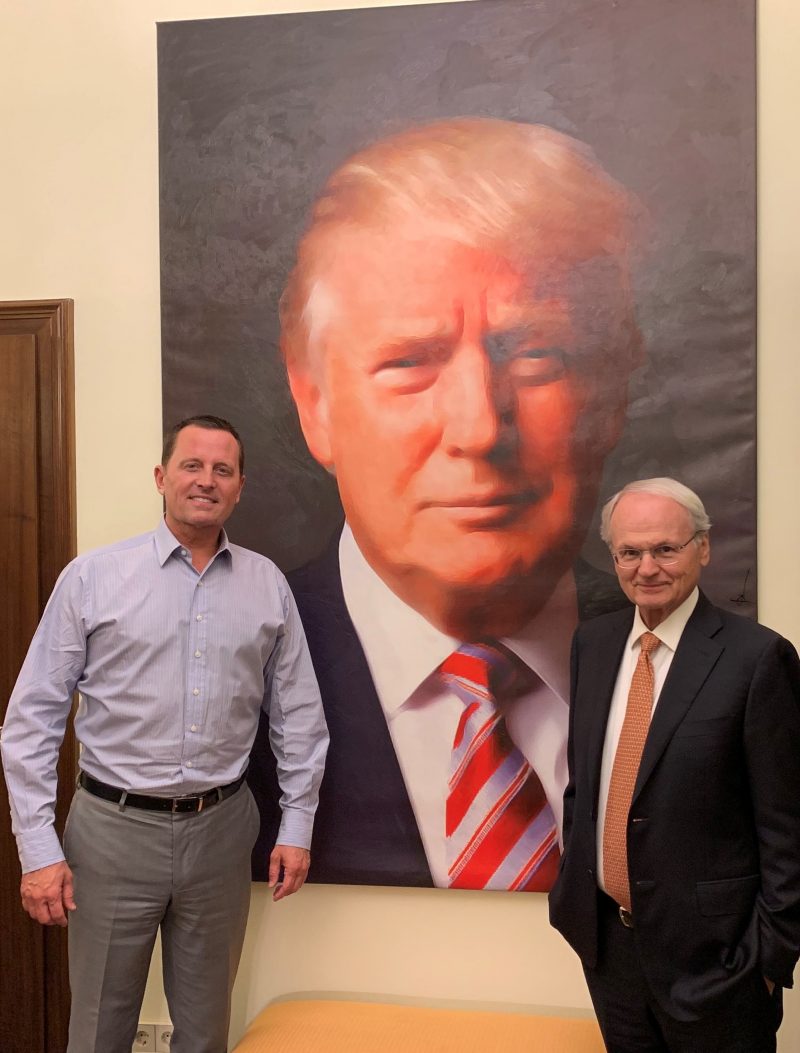
Richard Grenell, left, poses with Morton Klein, head of the Zionist Organization of America. Photo | ZOA
Though many intelligence community veterans and politicians in both major parties opposed Grenell’s appointment, the American Israel lobby was thrilled. The Zionist Organization of America (ZOA) “strongly praised” Grenell’s appointment as acting DNI, with ZOA president Morton Klein, stating:
I am proud to say that during my long personal friendship with Ambassador Grenell, it became powerfully clear to me that Grenell is a very talented and knowledgeable man whose commitment to America and its security is second to none. He is also a man who understands the importance of our country’s great alliance with Israel in promoting U.S. security interests. There has never been a better friend of a strong U.S-Israel relationship than Ambassador Grenell. (emphasis added)”
Klein previously announced his displeasure that Grenell had not been appointed to serve as U.S. ambassador to NATO after he had been given private “assurances” by the Trump administration that Grenell would be nominated to that post.
Grenell’s ties to political operatives like Finkelstein, his close friendships to Israel lobbyists Morton Klein and Israeli PM Netanyahu as well as his failure to disclose paid work done on behalf of foreign politicians make him susceptible to foreign influence or blackmail according to the official policy of the office of the DNI, which Grenell now leads.
That policy holds that “conditions that could raise a security concern and may be disqualifying” include “connections to a foreign person, group, government or country that create a potential conflict of interest between the individual’s obligation to protect classified or sensitive information or technology and the individual’s desire to help a foreign person, group or country by providing that information or technology.”
Given that Israeli politicians and officials, including Netanyahu, have actively used blackmail to influence sitting U.S. presidents and that the pro-Israel lobby has a history of espionage targeting the United States, it is telling that Grenell’s appointment to a sensitive intelligence post has not been criticized in the media over his close ties to the pro-Israel lobby, Arthur Finkelstein and Israel’s government.
Israel’s foothold grows
While Grenell’s appointment is troubling over his ties to the pro-Israel lobby, it is merely the latest such appointment made by the Trump administration as several top intelligence figures with deep ties to the pro-Israel lobby have recently risen to prominence.
For example, current NSA director of Cybersecurity Anne Neuberger is married to Yehuda Neuberger, who serves as chair of AIPAC’s executive council in Baltimore. Neuberger’s parents were rescued via the IDF’s “Operation Entebbe,” an operation led by Benjamin Netanyahu’s brother, Yonathan Netanyahu. Neuberger was less than a year old at the time, but was not with her parents during the incident.
As Cybersecurity director for the NSA, Neuberger oversees a division of that agency that “unifies NSA’s foreign intelligence and cyberdefense missions” and works “to prevent and eradicate threats to national security systems and critical infrastructure,” including the country’s election infrastructure. Her family ties to AIPAC are therefore concerning given the powerful lobby groups’ propensity to meddle in this election’s Democratic primary. This is belied by the fact that AIPAC has, in the past, committed espionage against the U.S. government on Israel’s behalf on more than one occasion.
In addition to Neuberger, both the head and deputy chair of the President’s Intelligence Advisory Board (PIAB) have close ties to foreign lobbies and intelligence services. According to the U.S. government, PIAB “exists exclusively to assist the President by providing him with an independent source of advice on the effectiveness with which the Intelligence Community is meeting the Nation’s intelligence needs, and the vigor and insight with which the community plans for the future. The Board has access to all information needed to perform its functions and has direct access to the President.” The government’s official description of the body’s role also states that PIAB has “immense and long-lasting impacts on the structure, management, and operations of U.S. intelligence.”
PIAB is chaired by Stephen Feinberg, the billionaire owner of Cerberus capital management, which owns scandal-ridden U.S. military and intelligence contractor DynCorp. Court documents cited by the New York Times accused Cerberus of “orchestrating secretive deals that transgressed legal and ethical boundaries,” making his role at PIAB at overseeing the often ethically-challenged U.S. intelligence community troubling. In addition, Cerberus was previously the owner of or majority stakeholder of a string of now-bankrupt companies that defrauded U.S. intelligence and the U.S. military on a massive scale during the George W. Bush administration, with much of that occurring while then-Secretary of Defense Donald Rumsfeld was invested in Cerberus.
Feinberg’s close relationships also raise some red flags. He is a close friend of Jared Kushner, the president’s son-in-law whose family has a close friendship with Netanyahu, as well as Steve Bannon, who has close ties to the U.S. Israel lobby, particularly the ZOA. Feinberg is also a close associate of hedge fund manager Michael Steinhardt, a “Mega Group” member whose father worked for the National Crime Syndicate. Steinhardt was instrumental in the controversial Clinton-era pardon of Mossad asset Marc Rich and is a major funder of pro-Israel organizations.
Feinberg was also one of the main shareholders in Israel’s then-largest bank, Bank Leumi, until he was pressured to sell his stake following the revelation that his partner in that investment, Ezra Merkin, played a key role in the Bernie Madoff scandal. Cerberus’ acquisition of those shares had originally been closely tied to a Likud party initiative to privatize Israel’s entire banking sector.
Companies owned by Cerberus have also been found to be closely tied to Saudi intelligence. The Washington Post reported last year that a U.S.-backed plan to “modernize” Saudi intelligence had been created by Culpeper National Security Solutions, a unit of Cerberus-owned DynCorp, along “with help from some prominent former CIA officials.” Another Cerberus-owned company called Tier 1 has also helped train Saudi Special Forces, some of whom were reportedly involved in the murder of Jamal Khashoggi. Though Feinberg says he divested his personal stake from these companies prior to chairing PIAB, they remain owned by his firm Cerberus and arguably still present a conflict of interest.
In addition to Feinberg, the PIAB’s current deputy chair — Samantha Ravich — formerly worked for the pro-Israel lobby group Washington Institute for Near East Policy (WINEP), a spin-off of AIPAC that was created to shield the lobby organization from scrutiny, when it was investigated in 1984 for espionage against the U.S. government on Israel’s behalf.
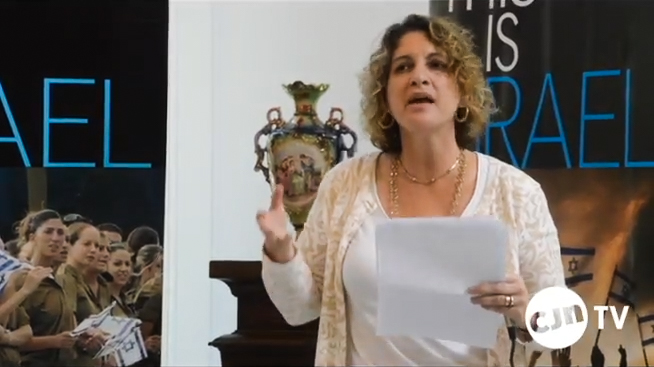
Samantha Ravich speaks at Israel Bonds luncheon in Clevland in 2016. CJN | Screenshot
Ravich, who joined PIAB in 2018, is also a senior advisor to the group the Foundation for the Defense of Democracies (FDD), which was revealed to work directly with Israel’s government in a since-censored Al Jazeera documentary on the Israel lobby. Ravich also worked for the consulting firm of Michael Chertoff, the former head of the Department of Homeland Security whose mother worked with Israel’s Mossad.
Ravich has specifically promoted a “cyber project” to the U.S. Senate that would protect member countries from cyber threats but exclude nations that endorse or fail to condemn the nonviolent Boycott, Divestment, and Sanctions (BDS) movement that supports Palestinian rights and Israeli compliance with international law. Ravich also praised the Trump administration’s decision to partner with Israel’s government on “cybersecurity” in 2017, saying that “the U.S. cannot go it alone in its endeavor to safeguard the networks and systems upon which our economy depends.” As MintPress reported last month, several highly classified networks of the U.S. intelligence community and the military, including networks of the CIA, NSA, and DISA, now use cybersecurity software deeply tied to Israeli military intelligence, thanks in part to this U.S.-Israel partnership.
Now, with Richard Grenell overseeing all 17 U.S. intelligence agencies, Israel’s influence in the U.S. intelligence community has reached new and troubling heights. Yet, his appointment is only the latest move by the Trump administration that places pro-Israel partisans in highly sensitive positions, suggesting that similar appointments are likely in the future, especially if Trump is reelected in November.
Whitney Webb is a MintPress News journalist based in Chile. She has contributed to several independent media outlets including Global Research, EcoWatch, the Ron Paul Institute and 21st Century Wire, among others. She has made several radio and television appearances and is the 2019 winner of the Serena Shim Award for Uncompromised Integrity in Journalism.
US-Palestinian intelligence talks focus on Abbas’ successor
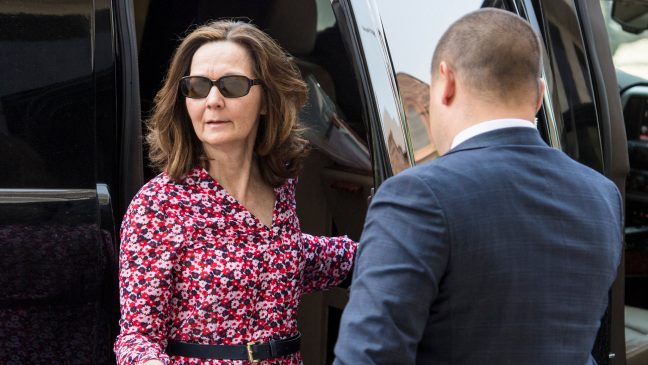
By Dr Adnan Abu Amer | MEMO | February 24, 2020
Just two days after the announcement of the “deal of the century” in late January, Gina Haspel, director of the CIA, secretly arrived in Ramallah in the occupied West Bank, and met with Majed Faraj, head of the Palestinian Intelligence Service, and a number of senior Palestinian officials. They assured her that Palestinian-American security coordination would not be affected after the announcement of the deal.
This visit took place after Israel revealed it had thwarted an assassination attempt on Majed Faraj, at the order of Tawfik Tirawi, a member of the Fatah Central Committee and former head of the General Intelligence Service.
The CIA director’s visit came as a surprise, she could have sent one of her aides or summoned Majed Fatah to Washington. There are some who believe that the visit aimed to persuade the Palestinians to accept the deal of the century.
Perhaps the American security visit is related to the preparation for the succession of Palestinian President Mahmoud Abbas, especially since the visit coincided with the revelation of the assassination attempt on Faraj.
Haspel’s visit came despite Abbas’ announcement that security relations with the Israelis and Americans were being cut, which raised big questions about his credibility.
The information received regarding Haspel’s meeting in Ramallah with Palestinian intelligence leaders indicates that the meetings lasted three days, with 16 officers from both sides participating to discuss in depth scenarios and plans to eliminate the Palestinian resistance system, in the Gaza Strip in particular. They also drew plans to ensure that no chaos occurs in the West Bank that causes the situation to explode in the face of Israel.
On the first day, the meetings discussed all the scenarios to deal with the Palestinian resistance, and the general objectives of each scenario. The second day was dedicated to discussing Palestinian intelligence preparations to implement these scenarios, and on the third day a general American-Palestinian debate was opened to discuss what was described as “creative ideas” to emerge from the crises.
In the end, the meetings concluded with several points, the most important of which is the necessity of progressing from containing Hamas to attacking it, by using the conflicts between the leaders inside Palestine and abroad, and inciting against its leader, Ismail Haniyeh’s visit to Tehran and his participation in Qassem Soleimani’s funeral. This constituted clear proof of the political failure to contain the movement, either by Israel or Egypt. Moreover, Hamas’ attempts to strengthen its relationship with Hezbollah and its failure to comply with the Egyptian conditions of not visiting Iran both serve the interest of the same conviction.
At the end of their meetings in Ramallah, the Palestinian and American security sides concluded that it is not possible to eradicate Hamas, because it has a wide popular base, and therefore a strategy must be worked on to weaken it. In this regard, a proposal was made by the Palestinian general intelligence calling for containing the movement and pushing it to be part of the political system in the context of the PLO, along with draining their sources of funding, in agreement with the US Treasury.
This conclusion, reached by Faraj’s men in the Palestinian intelligence services with their American counterparts, or rather their handlers, is related to what Hamas revealed in April 2019 about the details of a long-term plan prepared by the PA’s intelligence services to ignite an internal conflict in the Gaza Strip, in preparation for changing the political reality in Gaza. It is a plan directly supervised by Majed Faraj, which aims to create chaos and disrupt the masses in the Gaza Strip, as well as affect the harmony and coordination between Hamas, which manages the affairs in Gaza, and the rest of the Palestinian factions.
The American visit may also relate to asking Faraj and his security apparatus, which controls the West Bank, to maintain a state of security in it, and not to allow popular demonstrations and mass activities to take place that may spiral out of control to become confrontations with the Israeli army.
Faraj, 58, has been at the head of the Palestinian General Intelligence Service since 2009, and holds the rank of major general. He was born in the Dheisheh refugee camp in Bethlehem, in the south of the West Bank. He is considered the highest figure among the heads of the Palestinian security services, the only one who practices political activity, and the closest to Abbas. He is directly responsible for contact with the Israelis, participating actively in the negotiations between the Israelis and the Palestinians in 2014. He is well known to all international players, and is the main partner in the reconciliation talks with Hamas.
In coincidence with Haspel’s visit to Ramallah, the Israeli media revealed it had thwarted an attempt to assassinate Majed Faraj. This was met with official Palestinian silence, which may suggest the authenticity of the Israeli narrative, because it reveals the secret struggle over the succession of Abbas, who is turning 85.
The Palestinian Preventive Security Service arrested a cell of Fatah members who intended to target Faraj and his family. Some of its members were former Palestinian prisoners in Israeli prisons with links to Major General Tawfik Tirawi, a member of the Central Fatah Committee, and the former head of the Palestinian Intelligence Agency.
Tirawi is said to have good relations with Muhammad Dahlan, the dismissed Fatah official and the personal archenemy of Abbas and Faraj.
The Preventive Security Services located the weapons and explosives in possession of the members of the cell who planned to bomb Faraj’s private vehicles after following his family members.
Faraj is considered one of the people with a very high chance of his succeeding Abbas as president. The man in command of the intelligence definitely has American-Israeli acceptance, as well as acceptance from countries that are influential inside the Palestinian territories, particularly Egypt, Qatar, Turkey and Saudi Arabia, because everyone in Palestine is aware that any future president must be the result of regional and international understandings.
He has a strong network of relationships with senior CIA officers making him the main and likely favourite of Israel and the US due to his ability to provide adequate security in the West Bank, after his ability to eradicate Hamas, confiscate its weapons and limit its military influence. The group has already taken a hit in the West Bank due to Faraj’s efforts.
Democrats resurrect ‘Russiagate’ to go after both Trump and Bernie Sanders, hide their own election trickery
By Nebojsa Malic | RT | February 22, 2020
Establishment Democrats have now used the claims of ‘Russian meddling’ to go after their own progressive wing as well as President Donald Trump. The bogus accusation seems to be nothing more than cover for their own wrongdoing.
Moscow is now supposedly helping Bernie Sanders in the 2020 US presidential election – that is, if you believe the anonymously sourced Washington Post “bombshell.” This follows a New York Times claim on Thursday that the Kremlin is “again” betting on Trump, written by known partisan hacks and likewise based on anonymous sources.
In the minds of the ‘Russiagate’ cult, the Kremlin is backing Sanders either to get Trump re-elected, or to get a “socialist” president. Never mind that Russia is not socialist, try arguing that there has been precisely zero evidence – now, or back in 2016 – that Russia has backed any US candidate, and watch people’s heads explode. Much like the vaunted US “intelligence community,” they want to believe. That’s the only way they can explain the mind-breaking shock of Hillary Clinton losing to Trump.
Through endless repetition and paranoid denunciations, “Russian meddling” has been elevated to an article of faith, and anyone who dares question it in the slightest is a heretic fit only for the pyre.
So there was little surprise when the canard was trotted out on Thursday, in what was clearly an effort to delegitimize Trump’s pick of Richard Grenell as Director of National Intelligence with a rumored mandate to “clean house” – of, I don’t know, maybe the people involved in spying on Trump’s campaign on false pretenses and manufacturing the predicate for ‘Russiagate’, perhaps?
What’s more shocking, however, is that this accusation has now been leveled against Sanders – and after him spending the past four years proving time and again how he was a loyal DNC foot soldier. Not only did he bend the knee to Clinton after it was documented that she and the DNC colluded to rob him in the primaries, he also jumped on the ‘Russiagate’ bandwagon, and even tried using it just this week to deflect from the Clintonite smear about “Bernie bros” being mean to people online.
Even so, Bernie has now been smeared as a “Russian asset.” Looking at the state of Democrat primaries, the answer is obvious: because he’s winning, despite the DNC’s attempts to promote Pete Buttigieg or literally anyone else in the Iowa caucuses and New Hampshire primaries. With Joe Biden crashing and burning, the party even embraced billionaire media mogul Mike Bloomberg, only to see him wither on the debate stage last Friday and Sanders climb in the polls.
So the paper owned by Jeff Bezos, who reportedly asked Bloomberg to run and stands to pay billions in taxes if Sanders gets elected, breaks the glass and pushes the big red Russiagate button. Perfectly normal, you see.
In what surely must be a coincidence, the DNC had changed its debate rules to accommodate Bloomberg, even as it bent itself into pretzels to exclude Hawaii Congresswoman Tulsi Gabbard. In an even more remarkable coincidence, Gabbard was accused last fall of being a “Russian favorite” by none other than Hillary Clinton, the very source of the original ‘Russiagate’ conspiracy.
There’s no way these things are related, though, and anyone who thinks so simply must be a Russian agent! Expect armed FBI agents to show up at your door, accompanied by CNN cameras, and a federal judge to declare you a danger to Our Democracy any moment now.
That is not to say that US elections haven’t been targeted for meddling, influence, and even hacking. Trouble is, every documented incident tends to point to, well… Democrats.
Lost in the shrieking about “Russia helping Bernie” on Friday was the announcement that the FBI has arrested and charged a hacker linked to California Democrat Katie Hill, who allegedly conducted cyber-attacks against her (Democrat) primary rivals back in 2018. Oops.
Then there is New Knowledge, the “cybersecurity” company that the Senate Intelligence Committee chose to inform its understanding of “Russian active measures.” They were uniquely qualified, you see, because they actually ran a disinformation campaign during the 2017 special election for the Senate in Alabama, using fake Russian bots to frame and defame the Republican candidate.
When you factor in that the loudest shrieking about ‘Russian meddling’ comes from the people who were actually involved in election shenanigans – such as illegally spying on Trump’s campaign using a dodgy dossier compiled by a British spy – what emerges is a damning picture of psychological projection.
Nebojsa Malic is a Serbian-American journalist, blogger and translator, who wrote a regular column for Antiwar.com from 2000 to 2015, and is now senior writer at RT. Follow him on Twitter @NebojsaMalic
Russiagate returns: MSM ecstatically exploit evidence-free NYT claim Moscow ‘helping Trump in 2020’
By Nebojsa Malic | RT | February 21, 2020
The same media that flogged the insane ‘Russiagate’ conspiracy theory for years are resurrecting that particular dead horse, in what appears to be an effort to stop the White House from cleaning up the US intelligence community.
“Russia is aiding President Trump in the 2020 election, intelligence officials told lawmakers,” the New York Times blared on Thursday, adding that President Donald Trump berated the acting Director of National
How nice of the Times to prove Trump’s (alleged) point, then – and with a story that relies entirely on anonymous, unverifiable sources no less. It’s just like the early 2017 stuff about the “Trump-Putin dossier” on which the president-elect was briefed by FBI chief Jim Comey and DNI James Clapper, only for this to immediately leak to the #Resistance press, and set the stage for years of “Russian collusion” investigations.
Sure, the ‘Russiagate’ nonsense failed to stop Trump from getting elected or being sworn in, just like it failed to provide a pretext for his impeachment, so the Democrats had to make one up with the Ukraine phone call. That doesn’t mean they can’t try again, though!
MSNBC – which never recanted its Russiagate reporting – immediately blared the Times report as breaking news. CNN went a step further, calling on Clapper to comment on the story – yes, the very same former spook who brazenly lied to Congress about spying on Americans, co-authored the infamous “intelligence community assessment” claiming Russia was meddling in the 2016 election, and claimed Russians were “genetically driven” to subvert the US.
In what surely speaks volumes by itself, the story was uncritically amplified by the Washington Post’s chief fact checker.
Notice that all of this is happening just a day after nearly every single mainstream Western outlet outright misinterpreted a quote – in exactly the same way – from a court hearing about WikiLeaks publisher Julian Assange, because it fit their narrative about “Russian meddling.”
This new alleged “bombshell” also comes a day after Trump named trusted envoy Richard Grenell to oversee the ODNI – Clapper’s old beat – causing much wailing and gnashing of the teeth among the #Resistance and NeverTrumper types.
Could it be that they’re just a tiny bit nervous Grenell might clean house of all the “resistance” types that have acted for years on the self-righteous conviction that they, not the elected president, should run US policy? Folks like Clapper, Comey, CIA chief John Brennan, or the “whistleblower”-who-must-not-be-named who initiated the Ukrainegate fiasco, for example.
While normal, sane people may think that ‘Russiagate’ was a failure – and on its face, it was – it did actually manage to accomplish two major things. One was to validate the Trump Derangement Syndrome of the mainstream media and the Democrats, eventually encouraging them to believe they could actually impeach him. We all know how that ended.
The other, and perhaps more important, was to provide cover for all the people involved in the spying on Trump’s campaign, illegal FISA wiretaps and “unmaskings” of names, perjury traps, trumped-up prosecutions, letting Hillary Clinton off the hook for private email server use, and whatever actually happened to the DNC computers that got blamed on Russia.
Those people now have lucrative book deals or cushy jobs in the media and think tanks, rather than being charged with plotting a coup and being locked up in a federal penitentiary – even as they bleat how “no one is above the law.” Funny how Washington works, isn’t it?
Nebojsa Malic is a Serbian-American journalist, blogger and translator, who wrote a regular column for Antiwar.com from 2000 to 2015, and is now senior writer at RT. Follow him on Twitter @NebojsaMalic
Everything You Wanted to Know About Pete Buttigieg, But Were Too Afraid to Ask
By Robert Bridge | Strategic Culture Foundation | February 19, 2020
Rhodes Scholar. Afghan vet. Mayor. An impressive resume, to be sure, but to have made the fantastic leap from local politics to the doorstep of the Oval Office – at the age of just 38 – seems altogether impossible without some serious behind-the-scenes connections.
Let’s just cut right to the chase with a couple questions that the media has glaringly failed to consider about the top-polling Democratic presidential candidate. First, the most obvious one. How on earth does a young Midwestern mayor, regardless of his polished resume, jump to the front of the serving line, past hundreds of veteran politicians who have quietly nurtured presidential ambitions inside of the Beltway their entire lives?
As The Economist emphatically stated this week, “Mr Buttigieg is ridiculously young to be doing so well.”
Second, if the mayor of South Bend, Indiana (pop. 101,166) is now in serious contention to challenge Donald Trump in November, what exactly does that say about the depth of the Democratic bench, loaded as it is with Senators, House members, Governors and various state officials with far more political experience and acumen?
While the Oval Office has seen its share of pretenders, and even actors, the great majority of those men who made it to the pinnacle of power have spent at least some time in high political office before contemplating a presidential run. Incidentally, it is on this particular point, political experience, which could make a Trump-Buttigieg debate a very interesting spectacle. Although Buttigieg has limited political experience, Trump had none before he entered the White House, although certainly proving his abilities once in office.
For Pete’s sake!
Born on January 19, 1982, Buttigieg graduated valedictorian from St. Joseph High School in 2000. That same year he won a JFK ‘Profiles in Courage’ essay contest on the subject of none other than Bernie Sanders, the democratic socialist the incredibly rising mayor is competing against for the November nod. “Above all, I commend Bernie Sanders for giving me an answer to those who say American young people see politics as a cesspool of corruption, beyond redemption,” Buttigieg wrote. His trip to Washington D.C. to collect his prize included a meeting with members of the Kennedy clan, an honor that must have left a deep impression on the 18 year old.
Upon graduation from Harvard University, Buttigieg did a stint (2007-2010) at the Chicago office of McKinsey & Co, the discreet U.S. management consulting firm. During his time there, the young upstart took a trip to perhaps the most unlikely destinations in the world, Somaliland, a self-proclaimed independent state in Africa that is struggling for international recognition to this day. In other words, not a trip to Disneyland.
Just before embarking on his African adventure (Summer of 2008), Buttigieg was taken on as a fellow with the Truman National Security Project, a neoliberal think tank that has been described as “a powerful and exclusive club for the best and brightest young progressives in the country.” Among its esteemed alumni is none other than Madeleine Albright, chief architect of NATO’s obliteration of Yugoslavia. Meanwhile, the founder of the Truman Project, Rachel Kleinfeld, deserves some consideration.
Upon graduating from Oxford, Kleinfeld took up employment with Booz Allen Hamilton, the private contractor that carried out a long list of services for the military. It has also been described as “the world’s most profitable spy organization.” The head of the company at the time was none other than James Woolsey, the neoconservative former CIA director who has advocated for a fiercely interventionist U.S. foreign policy, notably the 2003 invasion of Iraq.
Back to Somaliland. In addition to Buttigieg’s affiliation with the Truman Center, where he now sits on the advisory board, his Somalian ‘vacation’ managed to garner special attention in The New York Times, suggesting this was much more than your ordinary getaway.
“Somaliland is pursuing investment and support from China and Gulf countries,” Buttigieg wrote in the Times piece, co-authored by Nathaniel Myers, who also went along for the joyride. “Such support might be enough to ensure Somaliland’s survival and eventual growth, but it will crowd out America’s chance to win the gratitude of a potentially valuable ally in a very troubled area.”
Possibly more than just incidentally, Myers, a Harvard buddy of Buttigieg, now serves as Senior Transition Advisor at USAID – Office of Transition Initiatives (OTI), which works to destabilize governments deemed unfavorable to U.S. interests.
Just over a year later, in September 2009, Buttigieg, and despite his participation in anti-war rallies while at Harvard, signed up for the U.S. Navy Reserve. Due to his particular “pedigree,” writes Stars and Stripes magazine, he was sworn in as an ensign in naval intelligence without any prior preparation, which is not the traditional route for enlistees. In 2014, he was deployed to Afghanistan, which required Buttigieg to take a seven-month leave of absence from his mayoral duties in South Bend. Here is where the political upstart’s career begins to look a little sketchy.
According to The Grayzone, Buttigieg “spent his six months in Afghanistan in 2014 with a little-known unit that operated under the watch of the Drug Enforcement Administration. It was the Afghanistan Threat Finance Cell (ATFC), according to his appointment papers.”
What exactly did Special Officer Pete Buttigieg do in this unit, which was founded by none other than the future CIA chief General David Patreaus, who at the time was the head of U.S. Central Command? Well, that’s hard to say because the job description that appears in his discharge papers is left conveniently blank. This, and the fact that the ATFC has direct links to U.S. intelligence has fueled rumors with regards to who or what was responsible for placing the mayor of South Bend, Indiana on the political fast lane.
But those sorts of connections alone cannot explain Buttigieg’s meteoric rise in Washington, D.C., especially when the young upstart spent the majority of his time in South Bend. No, Pete Buttigieg would require boatloads of cash to earn such fame in such a short time. And as it turns out, the money has been pouring into his coffers from some of the wealthiest families in the country.
Buttigieg attracts the bucks
According to federal election data, forty billionaires and their spouses have donated to Pete Buttigieg’s presidential campaign, putting his campaign war chest at around $52 million, the most collected among all the Democratic candidates. An analysis of the contributions shows that the majority of the billionaire donators came from the financial, media and technology sectors.
Of particular interest, however, is how much the tech titans of Silicon Valley have lavished the democratic frontrunner with attention as well as infusions of hard cash. In December, for example, Rex Reed, co-founder of Netflix, helped organize a fundraising dinner at a wine cellar in Palo Alto, California, which gave Buttigieg’s Democratic opponents a golden opportunity to expose his billionaire connections.
“Billionaires in wine caves should not pick the next president of the United States,” Elizabeth Warren told Buttigieg in a December debate.
Buttigieg responded that he was “literally the only person on this stage who is not a millionaire or a billionaire,” and that therefore Warren had failed the “purity test.”
It’s not just billionaires, however, who are cracking open their wallets for the Indiana native. The list includes more than 200 foreign policy and intelligence officials, including Anthony Lake, national security adviser for President Clinton, former National Security Council spokesman Ned Price, and former deputy CIA director David Cohen, among many others. Although such support from the foreign policy and intelligence community doesn’t prove cause and effect, it has helped spawn a number of online conspiracy theories that Buttigieg is something of a Manchurian candidate, propped up by a deep state desperate to beat the swamp drainer Donald J. Trump.
Those ideas were brought to a boil during the Iowa caucus when the aptly named app Shadow, designed to perform the simple task of reporting the polling results in a timely and efficient manner, fizzled out just as Bernie Sanders had taken a commanding lead over Buttigieg. Would it come as any surprise that Shadow Inc. has a very shadowy history?
“Shadow Inc. was picked in secret by the Iowa Democratic Party after its leaders consulted with the Democratic National Committee on vetting vendors and security protocols for developing a phone app used to gather and tabulate the caucus results,” AP reported. “Shadow Inc. was launched by ACRONYM, a nonprofit corporation founded in 2017 by Tara McGowan, a political strategist who runs companies aimed at promoting Democratic candidates and priorities.”
McGowan is married to none other than Michael Halle, a senior strategist for Pete Buttigieg’s presidential campaign, which records show has also paid Shadow Inc. $42,500 for the use of software.
And people wonder why there are so many ‘conspiracy theorists’ running around these days.
In any case, the glitch led to many days of debate as to who really won the Midwestern state, a debate that continues today. Yet despite that state of mass confusion, Buttigieg didn’t miss an opportunity to seize victory from the claws of (possible) defeat, announcing just hours after the technological breakdown that he had been “victorious” in Iowa. Meanwhile, Sanders’ supporters saw it as yet another brazen move by the DNC to sideline the democratic socialist.
So how does one explain the incredible string of political success for the young star of the Democratic Party? Is he really so politically talented and smart that there was no choice but to let him move to the front of the pack? That seems hard to believe since his speeches come off as hollow and scripted, a rhetorical trick that many politicians with far more experience have perfected. And how about all those billionaires, former state officials and people from the national security apparatus who have come forward to support him? A case of billionaire grassroots democracy in action, or just more good luck for the South Bend native?
As it stands, Pete Buttigieg remains a great mystery, a proverbial dark horse on the U.S. political scene. While there can be no question that he has a long future in American politics, it is too early to tell if that will be a good thing for the American people. There is still a lot of unpacking to do on the life and times of the former mayor of South Bend, Indiana.
The Koch-Soros Quincy Project: A Train Wreck of Neocon and ‘Humanitarian’ Interventionists
By Daniel McAdams | Ron Paul Institute | February 15, 2020
Those hoping the non-interventionist cause would be given some real muscle if a couple of oligarchs who’ve made fortunes from global interventionism team up and pump millions into Washington think tanks will be sorely disappointed by the train wreck that is the Koch/Soros alliance.
The result thus far has not been a tectonic shift in favor of a new direction, with new faces and new ideas, but rather an opportunity for these same old Washington think tanks, now flush with even more money, to re-brand their pet interventionisms as “restraint.”
The flagship of this new alliance, the Quincy Institute for Responsible Statecraft, was sold as an earth-shattering breakthrough – an “odd couple” of “left-wing” Soros and “right-wing” Koch boldly tossing differences aside to join together and “end the endless wars.”
That organization is now up and running and it isn’t pretty.
To begin with, the whole premise is deeply flawed. George Soros is no “left-winger” and Koch is no “right-winger.” It’s false marketing, like the claim that drinking Diet Coke will make you skinny. Both are globalist oligarchs who continue to invest hundreds of millions of dollars to create the kind of world where the elites govern with no accountability except to themselves, and “the interagency,” rather than an elected President of the US, makes US foreign policy.
As libertarian intellectual Tom Woods once famously quipped, “No matter whom you vote for, you always wind up getting John McCain.” That is exactly the world Koch and Soros want. It’s a world of Davos with fangs, not Mainstreet, USA.
A ‘New Vision’?
Anyone doubting that Quincy is just a mass re-branding effort for the same failed foreign policies of the past two decades need look no further than that organization’s first big public event, a February 26th conference with Foreign Policy Magazine, to explore “A New Vision for America in the World.”
Like pouring old wine into new bottles, this “new vision” is being presented by the very same people and institutions who gave us the “old vision” – you know, the one they pretend to oppose.
How should anyone interested in restraining foreign policy – let alone actual non-interventionism – react to the kick-off presentation of the Quincy Institute’s conference, “Perspective on U.S. Global Leadership in the 21st Century,” going to disgraced US General David Petraeus?
Petraeus is, among many other things, an architect of the disastrous and failed “surge” policy in Iraq. He is still convinced (at least as of a few years ago) that “we won” in Iraq… but that we dare not end the occupation lest we lose what we “won.” How’s that for “restraint”?
While head of the CIA, he teamed up with then-Secretary of State Hillary Clinton to develop and push the brilliant idea of directly and overtly training and equipping al-Qaeda and other jihadists to overthrow the secular government of Bashar Assad. How’s that for “restraint”?
When a tape leaked of Fox News contributor Kathleen T. McFarland meeting with Petraeus at the behest of then-Fox Chairman Roger Ailes to convince him to run for US president, Petraeus told her that the CIA in his view is “a national asset… a treasure.” He then went on to speak favorably of the CIA’s role in Libya.
But the absurdity of leading the conference with such an unreconstructed warmongering interventionist is only the beginning of the trip down the Quincy conference rabbit hole.
Rogues’ Gallery of Washington’s Worst
Shortly following the disgraced general is a senior official from the German Marshal Fund, Julianne Smith, to give us “A New Vision for America’s Role in the World.” Her organization, readers will recall, is responsible for some of the most egregious warmongering propaganda.
The German Marshal Fund launched and funds the Alliance for Securing Democracy, an organization led by such notable proponents of “restraint” as neoconservative icon William Kristol, John McCain Institute head David Kramer, Michael “Trump is an agent of Putin” Morell, and, among others, the guy who made millions out of scaring the hell out of Americans, former Homeland-Security-chief-turned-airport-scanner-salesman Michael Chertoff.
The Alliance for Securing Democracy was responsible for the discredited “Hamilton 68 Dashboard,” a magic tool they claimed would seek and destroy “Russian bots” in the social media. After the propaganda value of such a farce had been reaped, Alliance fellow Clint Watts admitted the whole thing was bogus.
Moving along, so as not to cherry pick the atrocities in this conference, moderating the section on the Middle East is one “scholar,” Mehdi Hasan, who actually sent a letter to Facebook demanding that the social media company censor more political speech! He has attacked what he calls “free speech fundamentalists.”
Joining the “Regional Spotlight: Asia-Pacific” is Patrick Cronin of the thoroughly – and proudly – neoconservative Hudson Institute. Cronin’s entire professional career consists of position after position at the center of Washington’s various “regime change” factories. From a directorial position at the mis-named US Institute for Peace to “third-ranking position” at the US Agency for International Development to “senior director of the Asia-Pacific Security Program at the [neoconservative] Center for a New American Security.” This is a voice of “restraint”?
Later, the segment on “Ending Endless War” features at least two speakers who absolutely oppose the idea. Rosa Brooks, Senior Fellow at the “liberal interventionist” New America Foundation, wrote not long ago that, “There’s No Such Thing as Peacetime.” In the article she argued the benefits of “abandon[ing] the effort to draw increasingly arbitrary lines between peacetime and wartime and instead focus[ing] on developing institutions and norms capable of protecting rights and rule-of-law values at all times.” In other words, war is endless so man up and get used to it.
This may be the key for how you end endless war. Just stop calling it “war.”
Brooks’ fellow panelist, Tom Wright, hails from the epicenter of liberal interventionism, the Brookings Institution, where he is director of the “Center on the United States and Europe.” Brookings loves “humanitarian interventions” and has published pieces attempting to convince us that the attack on Libya was not a mistake.
Wright himself is featured in the current edition of the Council on Foreign Relations’ publication Foreign Affairs arguing that old interventionist shibboleth that the disaster in Iraq was not caused by the US invasion, but rather by Obama’s withdrawal.
This Quincy Institute champion of “restraint” concludes his latest piece arguing that:
Now is not the time for a revolution in U.S. strategy. The United States should continue to play a leading role as a security provider in global affairs.
How revolutionary!
The moderator of that final panel in the upcoming Quincy Institute first conference is Loren DeJonge Schulman, a deputy director at the above-named Center for a New American Security. Before joining that neoconservative think tank, Schulman served as Senior Advisor to National Security Advisor Susan Rice! Among her other international crimes, readers will recall that Rice was a chief architect of the US attack on Libya.
Schulman’s entire career is, again, in the service of, alternatively, the war machine and the regime change machine.
The Quincy Institute’s first big event, which it bills as a showcase for a new foreign policy of “restraint,” is in fact just another gathering of Washington’s usual warmongers, neocons, and “humanitarian” interventionists.
Quincy has been received with gushing praise from people who should know better. Any of those gushers who look at this first Quincy conference and continue to maintain that a revolution in foreign policy is afoot are either lying to us or lying to themselves.
But Wait… There’s More!
Sadly, the fallout extends beyond just this particular new institute and this particular event.
Those who continue to push the claim that Koch and Soros are changing their spots and now supporting restraint and non-interventionism should be made to explain why the most egregiously warmongering and interventionist organizations are finding themselves on the receiving end of oligarch largese.
Just days ago a glowing article in Politico detailed the recipients of millions of Koch dollars to promote “restraint.” Who is leading the Koch brigades in the battle for a non-interventionist, “restrained” foreign policy?
Politico reveals:
Libertarian business tycoon Charles Koch is handing out $10 million in new grants to promote voices of military restraint at American think tanks, part of a growing effort by Koch to change the U.S. foreign policy conversation.
The grants, details of which were shared exclusively with POLITICO, are being split among four institutions: the Atlantic Council; the Center for the National Interest; the Chicago Council on Global Affairs; and the RAND Corporation.
The Atlantic Council has been pushing US foreign policy toward war with Russia for years, pumping endless false propaganda and neocon lies to fuel the idea that Russia is engaged in an “asymmetric battle” against the US, that the mess in Ukraine was the result of a Russian out-of-the-blue invasion rather than an Obama Administration coup d’etat, that Russia threw the elections to Putin’s agent Trump, and that Moscow is seeking to to sap and impurify all of our precious bodily fluids.
The Atlantic Council’s “Disinfo Portal,” a self-described “one-stop interactive online portal and guide to the Kremlin’s information war,” is raw, overt war propaganda. It is precisely the kind of war propaganda that has fueled three years of mass hysteria called “Russiagate,” which though proven definitively to be an utter fraud, continues to animate most of Washington’s thinking on the Left and Right to this day.
The Atlantic Council, through something it calls a “Digital Forensic Research Lab,” works with giant social media outlets to identify and ban any independent or alternative news outlets who deviate from the view that the US is besieged by enemies, from Syria to Iran to Russia to China and beyond, and that therefore it must continue spending a trillion dollars per year to maintain its role as the unipolar hyperpower. Thus, the Atlantic Council – a US government funded entity – colludes with social media to silence any deviation from US government approved foreign policy positions.
And these are the kinds of organizations that Koch and Soros claim are going to save us from Washington’s interventionist foreign policy?
Equally upsetting is the “collateral damage” that the Koch/Soros alliance and its love child Quincy hath wrought. To see once-vibrant and reliably non-interventionist upstarts like The American Conservative Magazine (TAC) lured away from the vision of its founders, Pat Buchanan and Taki Theodoracopulos, to slip into the warm Hegelian embrace of well-funded compromise is truly heartbreaking. It is to witness the soiling of that once-brave publication’s vindication for being right about Iraq War 2.0 while virtually all of Washington was wrong.
Incidentally, and to add insult to injury, it is precisely these kinds of Washington institutions who most viciously attacked TAC in those days who now find themselves trusted partners and even “expert” sources!
TAC ! Beware! It’s not too late to wake up and smell the deception!
How to End Endless Wars (The Easy Way)
If a Soros-Koch alliance was actually interested in ending endless US wars and re-orienting our currently hyper-interventionist foreign policy toward “restraint,” it would simply announce that not another penny in campaign contributions would go to any candidate for House, Senate, or President who did not vow publicly in writing to vote against or veto any legislation that did not reduce military spending, that imposed sanctions overseas, that threatened governments overseas, that appropriated funds in secret or overtly to destabilize or overthrow governments overseas, or that sent foreign “aid” to any government overseas.
It would cost pennies to make such an announcement and stick to it, and the result would be a massive shift in the American body politic toward what the current alliance advertises itself as promoting.
But Koch/Soros don’t really want to end endless US interventions overseas. They want to fund the same old think tanks who are responsible for the disaster that is US foreign policy, re-brand interventionism as non-interventionism, and hope none of us rubes in flyover country notices.
To paraphrase what Pat Buchanan said about Democrats in his historic 1992 convention speech, the whitewashing of Washington’s most egregiously interventionist institutions and experts as “restrained” non-interventionists is “the greatest single exhibition of cross-dressing in American political history.”
Why Washington is paranoid about Huawei
By Alex Lo | South China Morning Post | February 12, 2020
The past illuminates the present. This bombshell of a story dropped by The Washington Post certainly explains a lot about America’s current war against Chinese 5G supplier Huawei.
For more than half a century after the second world war, the Swiss company Crypto, whose products the governments of more than 100 countries have relied on to send secure encrypted messages, was secretly owned and operated by the CIA and its West German intelligence counterpart, the BND.
This has enabled American intelligence to read the top secrets of friends and foes alike, and to share them with other members of the so-called Five Eyes, the intelligence services of four other English-speaking countries.
But given the close working relationship with West German intelligence, maybe it should have been called the Six Eyes, despite the language differences.
Washington has kept insinuating that Huawei poses a security risk to all companies and governments that use its 5G infrastructures. Yet, it has never provided actual evidence despite having searched high and low for it, including illegally hacking into Huawei’s mainframes at its Shenzhen headquarters.
What Americans are afraid of, or paranoid about, is that the 5G pioneer will be to Chinese intelligence what Crypto was to the CIA. It takes one to know one.
As George Yeo, former minister of foreign affairs for Singapore, said in a recent speech, “a key reason for the US campaign against Huawei is the fear that China may not only develop a similar surveillance capability but Chinese equipment and Chinese systems will make it harder for the US to maintain the same surveillance reach.”
Americans are afraid if Huawei is dirty. But as Yeo explains, it’s just as bad for US intelligence if it is clean: it won’t have flaws and back-door vulnerabilities so readily available to exploit.
And of course, thanks to Edward Snowden, we know that other US agencies such as the FBI and National Security Agency have exploited such back doors with large US tech companies, including Apple, Google, Facebook, Microsoft, and others.
Yeo makes a third important point: “The only safe assumption is that all systems expose us to external intelligence penetration. We have to find ways to protect ourselves and accept that nothing is foolproof.”
If all systems are penetrable, the only answer is to be extra vigilant. Picking on one company or one country just distracts you from being alert to threats from elsewhere.
Alex Lo has been a Post columnist since 2012, covering major issues affecting Hong Kong and the rest of China. A journalist for 25 years, he has worked for various publications in Hong Kong and Toronto as a news reporter and editor. He has also lectured in journalism at the University of Hong Kong.
Crypto CIA spy op revelations makes us see US’ Huawei objections in a new light

© Global Look Press/www.imago-images.de/MANUEL GEISSE; © REUTERS/Arnd Wiegmann
By Neil Clark | RT | February 13, 2020
The revelation that the CIA (and German Intelligence) was in secret control of the Swiss cryptography firm Crypto AG highlights the hypocrisy of US ‘security concerns‘ over the advance of Huawei and other firms.
The very wise old saying that if you point one finger at someone there are three fingers pointing back at you, was classically illustrated by this week’s bombshell revelations — published in the Washington Post and on ZDF and SRF – that the CIA and BND (West Germany’s secret service) secretly owned and controlled the Swiss cryptography company Crypto. The real owners of Crypto installed ‘backdoor vulnerabilities’ in its products which allowed the US and West Germany to eavesdrop on communications — from enemies and allies alike — which the senders believed had been successfully encrypted. We’re talking here about top secret communications between leading government officials, spies, diplomats and military figures.
Just imagine that back in the 1970s or 80s you had claimed that the Crypto was a CIA front. You’d have been dismissed as a ‘crank conspiracy theorist, ’and/or ‘totally paranoid‘ by the gatekeepers of that time. But the rumours were true. Once again a ‘conspiracy theory’ has turned out to be not as barmy as once depicted. Truth again proved to be stranger than fiction.
How much intelligence was gathered via Crypto is quite staggering. As RT has reported: “Throughout the 1980s — around 40% of all government transmissions analysed by the US National Security Agency (NSA) ran through Crypto‘s devices.”
What a neat little racket. Over 120 governments of the world, but not the former Soviet Union and Communist China who, to their great credit were distrustful, made use of Crypto’s products. These governments, which included Iran, Libya, Argentina and Egypt were effectively paying the Americans and West Germans to spy on them!
The Germans bowed out of the operation in 1993, but for the next 25 years, the CIA kept it running. Which begs the question: what other US Intelligence fronts of the past and present don’t we know about?
In her 1999 book Who Paid the Piper?: The CIA and the Cultural Cold War, Frances Stonor Saunders detailed how the CIA funded a whole range of publications and artistic enterprises often through the ’Congress for Cultural Freedom’.
Literary journals (who conveniently had a pop at communism) were funded by the CIA. Modern artists were funded by the CIA. Writers, poets and philosophers were funded by the CIA.
And under ‘Operation Mockingbird’ leading journalists were basically recruited to the agency.
According to Carl Bernstein, the CIA had over 400 journalists working for them in the old Cold War.
“In many instances, CIA documents show, journalists were engaged to perform tasks for the CIA with the consent of the managements of America’s leading news organizations,” the American journalist writes.
The CIA‘s own records show that, by 1991, they had relationships with “every major wire service, newspaper, news weekly and television network in the country”.
Now we know they were even behind Crypto too!
Given the organisation’s modus operandi, it is scarcely believable that the CIA doesn’t have similar ‘relationships’ and control mechanisms working today. Why wouldn’t it?
Not only should the Crypto revelations make us more aware of the CIA’s very wide reach, they should also make us see the American objections to the involvement of firms from China and Russia with developing telecommunications infrastructure and new technology in a completely different light.
The Russian anti-virus firm Kaspersky, has seen its software banned from use on US government networks, while the Chinese giant Huawei has been hit with sanctions — and warnings given to other countries about letting it build their 5G networks.
Taking the moral high ground (as always), US officials have said that Huawei could covertly access mobile-phone networks through ‘back doors’.
OMG! You mean like the US did with Crypto?
The Wall Street Journal cites the same US officials saying that “Huawei has had this secret capability for more than a decade.”
What ‘intelligence’ would that be I wonder? The CIA’s?
What seems to be the objection here is that China might end up doing what the US has been doing for years, namely spying on countries through ‘back doors’. How dare they! The hypocrisy as I’m sure you’ll agree is off the scale.
The strength of the objections — and indeed the sanctions already imposed in the US against the company tell us one thing. Huawei, unlike Crypto, Encounter magazine, the ‘National Committee for a Free Europe’, and lots of organisations we probably still don’t know about, is no CIA front.
Featured Video

Deception – Submarines against Olof Palme
or go to
Aletho News Archives – Video-Images
From the Archives
Woolsey Fire started at Santa Susana Field Lab — where “radioactive materials released were never accurately measured”
By John Laforge | CounterPunch | November 30, 2018
In my Nov. 16 column, I reported on potential radiation risks posed by California’s Woolsey wildfire having burned over parts or all of the Santa Susana Field Laboratory—south of Simi Valley, Calif., 30 miles outside Los Angeles—site of at least four partial or total nuclear reactor meltdowns.
The field laboratory operated 10 experimental reactors and conducted rocket engine tests. In his 2014 book Atomic Accidents, researcher James Mahaffey writes, “The cores in four experimental reactors on site … melted.” Reactor core melts always result in the release of large amounts of radioactive gases and particles. Clean up of the deeply contaminated site has not been conducted in spite of a 2010 agreement.
Los Angeles’s KABC-7 TV reported Nov. 13 that the Santa Susana lab site “appears to be the origin of the Woolsey Fire” which has torched over 96,000 acres. Southern Calif. Public Radio said, “According to Cal Fire, the Woolsey Fire started on the afternoon of Thursday, Nov. 8 … on the Santa Susana site.” … continue
Blog Roll
 Aletho News
- Dr. Abu-Sitta: Beirut ‘felt like a day in Shifa Hospital’
- Iran Has Won the War, It Will Be Up to the US to Secure the Peace: Mohammad Marandi
- Iran condemns assassination threats against Iranian negotiators amid US talks
- Brussels cannot say where its own pipeline inspectors are as Hungary’s oil lifeline remains shut
- Israel’s Iran War: Myth and Reality
- Between war and industrial breakdown: The US-Israeli attrition crisis
- Pressure builds on Iran to ‘drop’ Lebanon ceasefire demand as Islamabad talks hang in balance
- In another clash report, US denies agreement to release Iran’s assets
- What is fueling unrest across the EU?
- Why no power can undermine Iran’s eternal dominance over the Strait of Hormuz
- If Americans Knew
- Pro-Israel ‘Thinktanks’ and Individuals who Influence U.S. Foreign Policy
- Mearsheimer reveals how Israel dictates US policies on Iran, Gaza – video
- After killing 350+, Israel still has a “score to settle” with Lebanon before ceasefire – Daily Update
- Military aid to Israel emerges as the latest political litmus test for Democrats
- The only Palestinian children’s rights organization closes following years-long Israeli campaign against it
- ‘I Can’t Forget the Smell’: Lebanese Reel After Israel Kills Over 300 in Single Day
- DNC Shoots Down Resolutions Calling Out AIPAC and Limiting Arms to Israel
- TCN: Is Israel Blackmailing President Trump?
- Israel killed at least 303 Lebanese yesterday – who were they? Daily Update
- Amnesty: Urgent – Protect Lebanese civilians from brutal escalation in Israeli attacks
- No Tricks Zone
- German Expert: Heat Dome Led To Record Temps In Western USA…Warmer In 1934, 1936
- New Study: No Linear Warming Or Glacier Retreat Along Northern Antarctic Peninsula Since 1980s
- An Inconvenient Tree: Uncovered In Alps… Europe Much Warmer Than Today 6000 Years Ago
- New Study Reports A 60% Slowdown In Greenland’s Ice Loss Rate In The Last Decade
- Low Intensity Tornado Wrecks Major Solar Farm, Creating A Potential Toxic Dump
- New Study Finds Warming Saves Lives…Cold Temperatures 12 Times More Deadly Than Excess Heat
- German Science Blog Accuses PIK Climate Institute Of Hallucinating Climate Tipping Points
- Devastating Assessment Of Comirnaty Vaccine By Former Senior Pfizer Europe Toxicologist
- New Study: CO2 Is ‘Effectively Negligible’ As An Explanatory Climate Change Factor Since 2000
- Former Pfizer Toxicologist Dr. Helmut Sterz Tells Bundestag Hearing Pfizer Vaccine Should Have Never Been Approved
 Aletho News