Requiem for a Martyr: The “Blind Sheik”, Omar Abdel Rahman, Innocent Victim of Seditious Conspiracy Trial

By Karin Brothers | Global Research | March 5, 2017
“[America’s treatment of me] is a crime that history will never forgive.” – Omar Abdel Rahman
Sheik Omar Abdel Rahman, the “blind sheik”, died on the morning of February 18, 2017, near the 24th anniversary of the 1993 WTC bombing. He was an innocent victim of the US agenda to create a new enemy by engineering events that would make terrorism virtually synonymous with “Islamic fundamentalism”.
Sheik Rahman attained national fame in Egypt while he was on trial for inciting the 1981 assassination of former Egyptian President Anwar Sadat. With a passionate moral integrity, he courageously attacked the government during his two days on the stand; the intensive trial media gave him a national platform that made him famous throughout the Muslim world. His sermons were taped and traded throughout Egypt.
While he was vindicated of the charges against him, President Mubarak’s government ominously refused to give the necessary certification of the verdict and eventually drove Sheik Rahman out of Egypt. The Sheik went to Afghanistan, where he helped the CIA recruit Arab fighters to serve with the US-backed mujahadeen (he would lose at least one of his own sons there), and the Sheik was reportedly on the CIA payroll.
Sheik Rahman came to the US in 1990, hoping to remain until he could safely return to Egypt. According to Benjamin Begin in a 1993 Israel Today newsletter, Rahman’s mosques were infiltrated by FBI and Mossad operatives and would be the source of recruitment for their operations.
The World Trade Center explosion occurred on Friday, February 26th, 1993. The Sheik was soon declared deportable when some of those charged were identified as members of his mosques. The sheik was in the FBI’s crosshairs; the FBI offered Egyptian intelligence agent Emad Salem over one million dollars to entrap him.
The cagey Salem, who had become a trusted member of the Sheik’s inner circle, was aware of the obligation that the Sheik had as spiritual leader to respond to congregants’ needs. Salem blindsided the sheik by going to his home after midnight on a Sunday, pretending to be in a spiritual crisis. He claimed that he felt guilty for his years in the Egyptian military and needed to atone for his actions by attacking a target in the US — such as the United Nations. The sheik tried to fob him off and talked him out of that terrorist target; he suggested that a US military target would be more appropriate, but he told Salem to “slow down” — to cool off. Salem went home happy.
The Joint Anti-Terror Task Force and the Justice Department were allegedly dubious about whether they had evidence that would convict Rahman. The Sheik had repeatedly and publicly denounced the bombing of the WTC and claimed that he had nothing to do with it. Those who heard Emad Salem’s recorded attempt to incriminate the Sheik didn’t think it was persuasive enough to stand up in court. The FBI had tapped the Sheik’s telephones from two weeks before the WTC explosion until June, 1993; there was no evidence of any wrongdoing. The INS said he was complying with the requirements of his deportation appeal. Authorities noted that incarcerating the Sheik would be expensive because of his diabetes. A detention until appeals were completed could have lasted for months — if not for years.
Attorney General Janet Reno, who had publicly been reluctant to charge the Sheik, finally succumbed to the political pressure: pressure that also came from the Egyptian government, which still felt threatened by the Sheik’s popularity. Egyptian officials, afraid that Rahman would be deported to Egypt, wanted him safely incarcerated in the US. On July 1st, 1993, the Justice Department, while avoiding making any criminal charge, decided to take the Sheik into custody – “indefinite administrative detention” — on immigration charges.
The Egyptian conundrum
Egyptian President Hosni Mubarak was afraid of Rahman’s popularity and influence; he appeared to be worried about suffering the same fate as the Shah of Iran, deposed by a popular religious leader. Mubarak banned tapes of Sheik Rahman’s sermons; those found with copies were subject to up to five years in jail. Three thousand copies of a newspaper Al-Hayat that featured a March interview with Rahman were confiscated, and Rahman’s mosque in Fayoum was empty, guarded by a police agent.
While the Egyptian government had initially asked the Clinton administration to hold the Sheik to make sure he was not deported to Egypt, they changed their minds when they were informed that under the immigration charges, the sheik could accept his deportation voluntarily and go to any country that would take him, which could make him even more of a threat to the Mubarak government. After intense discussions, the US agreed to accept Egypt’s official extradition request, which it claimed would take precedence over the deportation charge. The only hitch was that appeals might take as long as eight years.
Mubarak was livid. He reminded the U.S. that he had hosted an Arab summit before the 1991 US-led invasion of Iraq which brought most of the Arab world onside, providing important “optics” for the engineered invasion.
Egyptian authorities were also outraged that two employees of the US Embassy had met earlier that year with prominent members of the Islamic Group, which regarded Sheik Rahman as their spiritual leader. The US seemed to be hedging its bets on Egyptian leadership so that it would not be caught out in Egypt as it had been in Iran, when Khomeini was swept into power. To add insult to injury, there was even a Congressional effort to cut back on US aid to Egypt.
President Mubarak then demonstrated to the Clinton administration who was in charge of Egypt. On July 8th, the Egyptian government hanged seven followers of Sheik Rahman for attacks against foreign tourists and for conspiring to overthrow the Mubarak government. It was the largest number of executions for a political crime in more than four decades, and it would be the start of a brutal campaign against dissidents that would last until the 2011 Arab Spring.
After witnessing Mubarak’s treatment of the Muslim Brotherhood, it was evident that Rahman’s supporters were powerless; Rahman was expendable.
US rejects political asylum for Rahman but can’t extradite him to Egypt
Meanwhile there were unforeseen complications with U.S. efforts to extradite Rahman to Egypt. While the Board of Immigration Appeals rejected Rahman’s appeal for political asylum, it appeared that his appeals would eventually reach the Supreme Court. Also, State Department officials realized that the 100-year old extradition treaty between the US and Egypt did not permit extradition based on “any crime or offense of political character.” While one official claimed that US courts were not limited by treaties, another noted that the treaty strengthened Rahman’s case for political asylum.
The Egyptian plan to ensure that Sheik Rahman would be placed under their control hit another challenge at the end of July when Afghanistan’s Prime Minister Gulbuddin Hekmatyar offered his country as a refuge for the Sheik. The Sheik’s lawyers realized that deportation might be the only way for the sheik to regain his freedom, so they contacted the office of U.S. Attorney Mary Jo White to request his deportation.
White’s office sat on the sheik’s deportation request while trying to accommodate Egypt’s demand for permanent control of the sheik. The problem was that those who were deported were free to go to any country that would accept them, but Egypt did not want the sheik in Afghanistan, where he would be free to communicate with his followers.
The “seditious conspiracy” solution
The sheik’s lawyers were still waiting for a response when, a week later, on August 25th, 1993, Attorney General Janet Reno issued an indictment for Sheik Rahman along with 14 others for “seditious conspiracy”, an obscure charge employed against political dissidents.
The 20-count, 27-page indictment claimed that one terrorist organization [which started in 1989, the year before the sheik arrived in the U.S.] was behind all of the plots and that Sheik Rahman, while not directly involved with the acts, was the “mastermind” who explicitly gave the orders. The listed plots included: plans to attack American military installations; plans to murder F.B.I. agents; plans to seize hostages to help release jailed conspirators; the 1990 killing of Rabbi Meir Kahane; the 1991 killing of Alkifah Center President Mustafa Shalabi; the 1993 WTC bombing [ambiguously included, since there was currently a separate trial for that]; the June “landmarks bombing plot”; and the plot to assassinate President Hosni Mubarak. The New York Times featured a map of the presumed terrorist targets; it appeared that New York City was under a Muslim siege.
The “seditious conspiracy” charge, which had been created to target Confederates at the end of the Civil War, was defined as when two or more people “conspire to overthrow, put down, or destroy by force the Government of the United States, or to levy war against them.” Experts noted that the broad nature of the conspiracy indictment, which did not require connecting a defendant to any specific act of violence and allowed prosecutors to bring in evidence not related to terrorist acts, made it possible to convict people with little proof (let alone evidence) of guilt. Criminal defense experts claimed that the Government was framing the case as much on the defendants’ beliefs as on any acts they may have committed.
Defense lawyers were also disturbed by the Government’s piling up of charges on a socially-isolated and demonized group, especially reviving the Kahane case just two years after El Sayid Nosair had been acquitted. Claiming that the indictment was an attempt to “create an atmosphere of fear and intimidation“, defense lawyer Ronald Kuby noted that, “What they have done is take every allegation, every rumor, every loose end and created a vast mythical Islamic conspiracy. They have created a case that is so big and complicated that it is impossible to defend, impossible to understand, and impossible for any of these defendants to get a fair trial.”
Emad Salem’s tapes
Defense lawyers claimed that Emad Salem entrapped their clients by hiring them for his plots, then taped them making incriminating statements. Salem’s tapes, on which most of this trial would be based, would also include two FBI admissions of overseeing the provision of the WTC explosives. Ron Kuby requested that all of Salem’s tapes collected as evidence (which also showed the FBI’s unsavory ways of doing business) be released in their entirety to the public to expose the case as a conspiracy to frame the defendants. Judge Michael B. Mukasey, (who would be named Attorney General in 2007), refused to allow the tapes to be made public.
The seditious conspiracy trial would be delayed until January, 1995, and corresponded in time to the televised O.J. Simpson trial, which contributed to its lack of media coverage, despite being touted as the terror trial of the century. The year and a half between the defendants’ arrests and their trial gave the Government and courts time to strip the sheik and other defendants of Constitutional rights, including the Sixth Amendment right to counsel, the Fourth Amendment right against unwarranted search and seizure, and other basic freedoms. The homes of two of Rahman’s paralegals would be raided for information against him, and dissident reading material found in defendants’ homes that was deemed “anti-American” or showed “hatred of Jews” could be used as evidence against them.
The seditious conspiracy trial
As with the first World Trade bombing trial, there would be no change of venue, the jury would be unsequestered and — supposedly to protect them from Muslim terror threats — would be identified only by number; their names would never be made public. None of the jury was Muslim.
The media during the entirety of this trial would be filled with various terror stories. The seditious conspiracy trial had barely started when the “mastermind” of the WTC bombing, Ramzi Yousef, arrived in New York with huge media fanfare. Mukasey asked the jury on the day after Yousef’s arrival if their opinions were changed by this media coverage. He immediately determined that they weren’t, but ignored the subsequent barrage of prejudicial media exposure that lasted throughout this trial. Some of Yousef’s publicity should have helped the defendants because Yousef, who didn’t know sheik Rahman, made statements that should have exonerated Rahman and others. Unfortunately Yousef refused to testify at this trial and Judge Mukasey would not permit the defense counsel access to Yousef’s documents that the FBI had taken.
The Oklahoma City bombing, which occurred six weeks later in mid-April, was initially claimed to be similar to the WTC bomb, and due to Muslim terrorism. Mukasey “assumed” that the jury would not be affected by the anti-Muslim media, although the defendants received heightened physical protection in their detention center.
That June, the actual driver of the bomb-laden Ryder van came to media attention and in August, there was media fanfare with his extradition to the U.S.
Sheik Rahman’s (nonexistent) Constitutional rights
Prosecution attention turned to the Sheik’s sermons to show his attitude towards the U.S. as well as his leadership in the Muslim community. Many of the Sheik’s sermons, which encouraged the devout to fight enemies of Islam and God, were read out in an effort to criminalize what should have been his freedoms of speech and belief.
Mukasey barred witnesses that would have shown the role of politics behind the arrest of Sheik Rahman, that would have testified that Rahman was not the radical that the media had described, and that would have provided a clearer understanding of Muslim terms (such as jihad and fatwa) that were being used against the defendants. Mukasey’s rulings were devastating to the Sheik’s defense.
The defense lawyers tried to introduce sealed material from the previous WTC trial that would show the lengths to which the FBI had gone to implicate as well as convict the previous defendants in the World Trade Center trial. Although that material was not produced, FBI scientist Fredrick Whitehurst’s subsequent testimony about the FBI’s incompetence, perjury and obstruction of justice that facilitated the convictions of the four charged in the WTC bombing did tell part of that story.
The Government’s desperation to find damaging information on Sheik Rahman was evident in the arrest of his paralegal at the end of April. The authorities’ claim that Nasser Ahmed’s overstay on a student visa “just came to our attention”, was contradicted by an FBI agent’s message to Ahmed that if he did not cooperate with the FBI, he would be deported to Egypt. After being charged with “secret evidence” and spending three years in solitary confinement, Ahmed would not be released until 1999.
The verdicts
Since this trial showed that there was little evidence that any of the defendants were guilty of any untried crime that had taken place, the prosecution tried to criminalize Islam; it described the defendants as a frightening “jihad army”: foreigners of a mysterious, militant culture. Judge Mukasey assured the jurors they could find that there was a single conspiracy despite the differing defendants and plots, “so long as you find that some of the conspirators continued for the entire duration of the conspiracy to act for the purposes charged in the indictment.”
After deliberating for seven days, the jury returned on October 1, 1995 with guilty verdicts for 48 out of the 50 charges. Sheik Rahman’s lawyer Lynne Stewart broke down and cried.
The defense cries “foul” and calls for a mistrial
The defense counsel immediately called for a mistrial because they believed that the problems with the trial were so egregious. It was clear that the FBI made use of Egypt’s intelligence agent as an agent provocateur to carry out its own agenda. Some defendants claimed that exculpatory conversations were missing from the tapes; the FBI admitted that they had “briefly” returned the tapes to Salem after they had been entered as evidence.
Judge Mukasey told the defense lawyers that he would consider their request to hold a post-trial hearing on the issue of whether he should overturn the convictions. But on January 10, 1996, he rejected the defense motion to throw out the convictions of Sheik Omar Abdel Rahman and nine others, claiming that there was no proof that the evidence that Salem had destroyed would have helped exonerate the defendants. Mukasey ignored Salem’s obvious motive for destroying evidence and the FBI’s interest in wanting him to do it.
Mukasey was determined to make an example of these “terror” defendants. While the sentence for seditious conspiracy was 20 years, Mukasey used that as a starting point, and added the other charges on top of that. He used his discretionary powers to make each part of the sentences sequential rather than concurrent; the sentences ranged from 30 years to life.
Sheik Rahman was sentenced to life. Worse, the government silenced Rahman even further by new “Special Administration Measures” which allowed them to essentially isolate him totally. To facilitate that agenda, it taped what were supposed to be his private conversations with his lawyer Lynne Stewart, and would imprison her for trying to circumvent the restrictions.
The obscure conspiracy law came into its own
The prosecution congratulated itself on its use of the seditious conspiracy charge. The verdict showed that the conspiracy law provided them with an easy venue to obtain verdicts with little evidence and for which no crimes had occurred. The conspiracy charge would become the mechanism to convict Muslims in future terror trials because of the low standards required of any individual’s involvement.
The price
This trial demonstrated how the efforts of the government, the courts and the media — particularly the New York Times — ensured that the Muslim defendants could not obtain a fair trial. The New York Times enabled convictions in all of these related trials by maligning the defendants with anonymous government leaks, generally using biased and inflammatory language to describe them, and invariably assuming their guilt.
The injustice of these convictions and the fruitless appeals have been clear to those following the cases. While few Americans seem to be aware of the injustice, it has not been lost on the worldwide Muslim community. There were various actions designed to free Sheik Rahman, including the 2005 kidnapping of the four Christian Peacemaker Team members in Iraq: Tom Fox (who died), James Loney, Norman Kember and Harmeet Singh Sooden.
The world lost a passionate voice for moral integrity with the silencing of Sheik Omar Abdel Rahman, and his death before attaining justice was tragic. His passing should provide Americans the opportunity to understand how FBI-monitored acts were used to eliminate Constitutional rights to freedom of speech, freedom of belief, the right against unreasonable search and seizure, the right to counsel, and protection from cruel and unusual punishment. By ignoring the elimination of Muslim rights, Americans are laying the groundwork for the elimination of their own.
Karin Brothers is a freelance writer.
Copyright © Karin Brothers, Global Research, 2017
Fake News Calls Russia’s Envoy to Washington a Spy
By Stephen Lendman | March 2, 2017
Reckless US Russia bashing is reminiscent of US propaganda preceding all its wars, vilifying targeted countries and their leaders before attacking them.
The possibility of the world’s dominant nuclear powers clashing militarily should terrify everyone. Nuclear armageddon could follow.
Permanent wars reflect longstanding US policy. The Russian Federation never attacked another nation, fostering world peace and stability instead, threatening no other countries, despite Big Lies claiming otherwise.
Russia’s ambassador to Washington, Sergey Kislyak, is a distinguished diplomat, not an intelligence agent. He joined the Soviet Foreign Affairs Ministry in 1977, serving in many positions – most recently as Deputy Foreign Affairs Minister from 2003 – 2008, since then as envoy to America.
Yet CNN outrageously called him “one of Russia’s top spies and spy-recruiters in Washington” – a disgraceful fake news accusation, related to its coverage of Attorney General Jeff Sessions, having spoken to Kislyak one or more times while serving on the Senate Armed Services Committee.
CNN’s alleged sources: the usual unnamed US officials, past and present, reporting no evidence, the aim part of a diabolical anti-Russia, anti-Trump plot.
The stakes are huge. If officials close to him are eliminated, he’ll be too weak to govern effectively, perhaps more vulnerable to impeachment and removal from office than already.
If he goes, the last vestiges of a free society will go with him, coup d’etat dictatorship replacing him.
If Russia bashing passes a threshold of no return, war between the world’s dominant nuclear powers could follow.
Most Americans are mindless about what’s going on, manipulated by relentless fake news, failing to distinguish between fact and fiction.
Most oppose Trump, according to polls. Most nonsensically believe Russia threatens America. The notion is pounded into the public mind constantly, in NYT and other broadsheet feature stories, round-the-clock on cable television.
Putin spokesman Dmitry Peskov blasted accusations about Kislyak, saying “(y)ou and I have not heard a single statement by the US special services about our ambassador” – just “bogus media speculations that keep fanning tensions,” adding:
“The only piece of advice that I can give is that in a situation like this, avoid reacting to all such anonymous, baseless fake news stories and rely only on official statements by genuine officials.”
If Americans don’t awaken to the clear and present dangers they face and resist, the price for their indifference will be full-blown tyranny – perhaps nuclear war to follow, the ultimate nightmare.
Of course Donald Trump’s phones were tapped!

Image from popularresistance.org
By Kit | OffGuardian | March 4, 2017
The ongoing clashes between the factions that make up the US political elite keep getting more and more absurd. And annoyingly, as no particular fan of Donald Trump, I keep finding myself in the position of having to fight his corner.
In this instance it is about wire-tapping. Donald Trump tweeted out that the Obama’s previous administration had pulled a Watergate and had his office phones monitored during the election. As yet there is no proof, something everyone from CNN to the Guardian to The NYT were very eager to point out.
In fact, every single MSM source that covered this story mentioned the lack of evidence in the headline:

Somebody get these guys a thesaurus.
Whilst simultaneously quoting the other side of the story, without feeling the need to be quite so thoroughly honest:

Don’t worry everyone… Obama denied it. So that settles that.
And honestly, yes, there is (as yet) no proof. There may not be any proof, ever. It’s a possibility that Trump simply made it up. Politicians make things up all the time. I doubt one word in fifty spoken in Washington DC has any kind of basis in fact.
There is, indeed, no proof. However, there is quite a large piece of evidence, one that the media seem to have neglected to mention.
This is where we need to have a quick reality check, because it seems our friends in the media have forgotten:
The Obama administration spied. A lot.
They spied on American civilians, foreign nationals, domestic political figures, and international heads of state. They monitored our internet histories and our phone calls and read our e-mails. None of this is disputed. Obama did one of his hokey phony apologies about it. He almost certainly used the word “folks”.
This was famously reported exclusively in the Guardian just 4 years ago. They stood by their serious journalism back then… right up until GCHQ told them to smash their hard drives with a sledgehammer. Edward Snowden (perhaps you remember him?) is currently hiding-out in Russia for telling us all about it. Luke Harding, a Guardian star reporter, wrote a not-very-good book about it. It seems odd they’ve all forgotten.
The refutation of Trump’s claim, offered by former Obama admin. officials went roughly as follows:
No President can order a wiretap. Those restrictions were put in place to protect citizens from people like you. https://t.co/lEVscjkzSw
— Ben Rhodes (@brhodes) March 4, 2017
There was also this statement from an Obama spokesperson.
The argument being that Barack Obama can’t have ordered a wire-tap on Donald Trump… because it would exceed his legal authority. Now, I’m all for living in a world where the US Government, and all the elected and unelected officials there-in, act only according to their legal authority. It would be a nice world…a lot of people would still be alive that, currently, are not.
But time has shown, hundreds (if not thousands) of times over the past few decades, that legality is not an obstacle to an American political establishment driven to protect their financial interests and military empire.
Torture camps, extraordinary renditions, drone executions, funding of terrorist groups, targeting of civilians, use of cluster munitions, use of chemical weapons, use of depleted uranium, terrorist attacks, mass surveillance and all out wars of conquest are all very, very illegal. That has never been a problem.
To suppose that adding illegal wire taps on presidential candidates to this list is a line they would not cross is naive to the point of insanity.
It is inherently ridiculous to openly acknowledge the existence of a massive (illegal) surveillance network, and not assume that bombastic, populist political opponents would be at the top the target list.
In summary: of course the Obama administration spied on Donald Trump. They spied on everybody.
It’s very important we don’t let them shove that fact down the memory-hole.
Trump Retreats on Detente with Russia
By Gilbert Doctorow | Consortium News | March 1, 2017
Donald Trump’s speech on Tuesday to a joint session of Congress was a reasonably well-crafted and well-delivered exercise in communicating his case to the nation. The President opened with a description of the flurry of executive orders in his first 30 days in office, implementing promises made during the electoral campaign.
He then went on to describe the contours of legislation that his administration will send to Congress, starting with the budget and its scrapping of the cap on military spending, which is to enjoy a 10 percent rise in appropriations while domestic and other government spending is slashed. Then there was a review of his plans to repeal and replace Obamacare and a preview of his proposals for cutting taxes and regulations with the goal of creating more well-paying jobs.
In an emotional highpoint, Trump drew attention to the widow of a Special Forces soldier killed in a raid inside Yemen. He also presented a more compassionate – less combative – tone, calling on Democrats and Republicans to put aside their differences and work together. His 60-minute address was interrupted 93 times by applause, often standing ovations from Republicans but also some applause from the Democratic side, too.
Trump seemed to bask in the enthusiastic show of support, although such State of the Union speeches typically draw the same sort of surface adulation, with the members from the party in power cheering robustly and those from the other side offering sparser shows of support. Still, the televised images contrasted with the portrayal from the mainstream U.S. news media of an embattled leader caught in a Watergate-like scandal over supposedly illicit contacts with Russia, a narrative Trump mistakenly fed with the hasty firing of National Security Adviser Michael Flynn on Feb. 13 during a media frenzy about Flynn talking with the Russian ambassador during the transition.
Flynn became the target of elements inside the U.S. government and the press who opposed Trump’s plans for détente with Russia. Those anti-détente forces are now flexing their muscles, with U.S. Ambassador to the United Nations Nikki Haley sounding much like her hawkish predecessor Samantha Power, insisting that the United States will not recognize Russia’s takeover of Crimea and then, this week, co-sponsoring a resolution in the U.N. Security Council condemning the Assad regime in Syria for allegedly using chemical weapons, a move that provoked angry protests and a veto from Russia’s envoy.
Meanwhile, Vice President Mike Pence, Secretary of State Rex Tillerson and Defense Secretary James Mattis carried messages to Europe reaffirming the U.S. commitment to NATO allies and blaming Russia for the failure of the Minsk Accords to resolve the crisis in Ukraine (although a major obstacle was created by the Ukrainian government when it insisted that ethnic Russian rebels in the Donbass region effectively surrender before other steps would be taken). The U.S. statements could have been delivered by neoconservative and liberal-interventionist diplomats from the past several U.S. administrations.
Only the last five minutes of Trump’s address to Congress dealt with foreign relations. And his own words were consonant with what his cabinet officers had been saying. Trump’s campaign opinions about NATO’s obsolescence had disappeared. Russia was not mentioned by name once in the speech, while America’s allies in NATO and in the Pacific were reassured that “America is ready to lead.” That statement was a rare instance when the entire congressional audience rose to its feet in applause.
Back on His Words
Those who had feared that Trump’s populism and “America First” rhetoric spelled isolationism were reassured that “Our foreign policy calls for a direct, robust and meaningful engagement with the world.”
In fact, in the entire speech, there were only a few lines toward the end that might give heart to those who hoped that Trump might pursue a dramatically new foreign policy that drew back from America’s vast network of military bases and the tendency to intervene in other countries’ affairs.
Though sounding not unlike boiler-plate language that Presidents George W. Bush and Barack Obama might have used, those words did contain the possible seeds of a less warlike strategy. Trump said: “America is willing to find new friends and to forge new partnerships where shared interests align. We want harmony and stability, not war and conflict. America is friends today with former enemies. We want peace, wherever peace can be found. America is friends today with former enemies. Some of our closest allies decades ago fought on the opposite side of these terrible, terrible wars.”
Depending on the strength of one’s powers of self-delusion, those last words might be construed as a hint: just wait, allow me to get my footing and establish my popularity in Congress and in the broad public and I will come back and deliver on my détente aspirations.
But it is an inescapable reality that the firing of Flynn and Trump’s retreat from his foreign policy intentions were precipitated by the powerful collusion between the intelligence services, particularly the CIA, and the mainstream media with a clear intent to either neuter Trump by forcing a policy reversal on Russia détente or remove him through some form of impeachment. The phoniness of the McCarthyite charges of Russian connections used to smear Trump and his entourage has been well explained in recent articles by Professor Stephen Cohen in The Nation and by Gareth Porter at Consortiumnews.com.
Those with a more conspiratorial turn of mind have long spoken of the Deep State, which ensures continuity of policy whatever the results of U.S. elections with this subterranean power residing largely in the intelligence services, especially the CIA and FBI, in the Pentagon, and in the State Department.
State is said to have been purged in its policy-making “seventh floor” during the week of Secretary Tillerson’s European travels. But the text that was placed before the inexperienced Ambassador Haley for delivery in the Security Council shows that not all the old actors have been sent packing. Any purge of the CIA and Pentagon has not even begun.
The ability of neocons and hardliners at the Pentagon to sabotage presidential policy was demonstrated last September when a promising collaboration between Secretary of State John Kerry and Russian Foreign Minister Sergey Lavrov over a cease-fire in Syria was torn to shreds by an “accidental” attack by U.S. and Allied fighter jets on a Syrian government outpost at Deir ez-Zor that killed nearly 100 Syrian soldiers.
If these recalcitrant Cold Warriors in America’s “power ministries” remain untouched, they will be in a position to create provocations at any time of their choosing to override Trump’s planned détente policies. To do so would be child’s play, given the close proximity of U.S. and Russian forces in Ukraine, in Syria, in the Baltic States, on the Baltic Sea and on the Black Sea.
Given the poor state of relations and the minimal trust between Russia and the U.S.-led West, any accident in these areas could quickly escalate. And then we might see the side of Donald Trump’s personality that his Democratic opponents warned us about, his short temper and alpha-male nature which could bring us into an armed clash the outcome of which is unforeseeable but surely not good.
There is another troubling issue for those who hoped Trump would rein in military spending to finance his promised domestic infrastructure investments. Instead, Trump has focused on expanding military spending even more, financed by cuts in domestic spending. There has not been a word to suggest he is considering restructuring the $600 billion military appropriations, for example by cutting the military bases abroad, which are configured to support precisely the global hegemony and American imperialism that he has denounced.
What is at issue is not only the tens of billions of dollars in savings that would come from slashing this overseas base structure but also removing an American presence from countries where it only serves to foster anti-Americanism and to embroil us either in defending hated regimes or intervening in regional conflicts where we have no vital interests.
Without restructuring and reducing the gargantuan network of foreign military bases, the U.S. will be condemned to a never-ending succession of wars abroad and the entire plan of investment in America is doomed to failure. These are not issues that allow for tactical retreats but rather must be addressed head-on. But who will explain this to a headstrong President with the fawning applause of Congress ringing in his ears?
Gilbert Doctorow is a Brussels-based political analyst. His latest book, Does Russia Have a Future? was published in August 2015.
A Troubled CIA Analyst Finds Jesus
And the devil is spelled T-R-U-M-P

By Philip Giraldi • Unz Review • February 28, 2017
Last Monday The Washington Post featured an op-ed by one Edward Price entitled “I didn’t think I’d ever leave the CIA. But because of Trump, I quit.” I must admit that it was refreshing at first to read something in The Post that did not rush to blame BOTH Trump and Vladimir Putin for everything going wrong in the world but, not to worry, evil Russia was indeed cited a bit farther along in the narrative.
Edward “Ned” Price is a likely lad. He has a nice intense look, clean cut, neat tie, good credentials with a degree in international relations from an unidentified college. He decided on a CIA career fifteen years ago and “work[ed] proudly for Republican and Democratic presidents…” Perhaps not temperamentally cut out to be an operations officer or spy, he claims that “as an analyst…[he] became an expert in terrorist groups and traveled the world to help deter and disrupt attacks.”
Price reports that he was quite happy in his work, because both the Bush and Obama administrations “took the CIA’s input seriously.” He was seconded to the White House in 2014 and pats himself on the back for “having [his] analysis presented to the president and seeing it shape events.”
But that was before the wheels came off the car. Per Price, “I watched in disbelief when, during the third presidential debate, Trump casually cast doubt on the high-confidence conclusion of our 17 intelligence agencies, released that month, that Russia was behind the hacking and release of election-related emails.”
Price was also unhappy with Trump’s admittedly odd speech combined with photo op to the CIA staff on his first full day in office but was particularly peeved over the reorganization of the Nation Security Council (NSC), which excluded the CIA director and the Director of National Intelligence (DNI), but included Stephen Bannon, “who cut his teeth as a media champion of white nationalism.” Even though Price was wrong about the DNI and the White House quickly reversed course on including CIA Director Mike Pompeo as the duplicative DNI position might be eliminated, for Price the message was “It [the White House] has little need for intelligence professionals who, in speaking truth to power, might challenge the ‘America first’ orthodoxy that sees Russia as an ally and Australia as a punching bag.”
Towards the end of his apologia, Edward Price noted that his decision had “nothing to do with politics,” before observing how he served “under President George W. Bush, some of whose policies I also found troubling, and I took part in programs that the Obama administration criticized and ended.”
There is inevitably some concluding drivel about intelligence professionals who deliver “the fruits of their labor-sometimes at the risk of life or limb…” being “accorded due deference” by the White house, an amusing commentary from a careerist who clearly spent his time behind a desk.
There are a few things one might say about Price. First of all, his “nothing to do with politics” is pure balderdash. He found Bush policies “troubling” while the clearly more admirable Obama “criticized and ended” the nasty bits. Yes, Bush authorized the use of torture and renditions initially after 9/11 but they were de facto suspended in his second term. And while Bush presented the American people with Iraq, Obama gifted us with Libya and Syria while continuing Afghanistan. And Price was at CIA while the organization was surreptitiously monitoring the Senate Intelligence Committees investigation into its torture program. He was willing to continue working for the Agency after the spying and the war crimes that it was trying to hide were revealed but suddenly found Jesus or a backbone or a conscience (select whichever one applies) only when Trump was elected.
Ned appears to forget that it was Bush who demurred at killing civilians en masse using drones and Obama who has embraced and expanded the practice. Obama also initiated the assassination of U.S. citizens overseas without due process and used the State Secrets Privilege more than all his predecessors combined to block any judicial challenge to his actions. Apparently, Price considered all that to be just fine since it was a liberal Democrat at the controls. And, by the way, Price is on record as having contributed $5,000 to the Hillary Clinton campaign and the Democratic National Committee. He is a registered Democrat in the District of Columbia. His characterization of Steve Bannon as a “white nationalist” and mention of the “Russian hack” come straight out of the Hillary Clinton campaign’s playbook and the more recent Democratic Party narrative to explain why it lost the election.
And there’s more. Price’s rapid rise through the Agency ranks came after his assignment to the Obama White House where he worked for deputy national security adviser Ben Rhodes and became an administration spokesman on the NSC. That means he was not exactly a highly principled intelligence briefer “speaking truth to power,” which is itself a bullshit feel good expression as the CIA has a long history of trimming facts to please the audience, most particularly the president. Price should do a little background reading on what former leading Agency analysts Robert Gates, John McLaughlin, Michael Morell and John Brennan dissimulated about to make the client in the White House happy.
Ned Price was apparently renowned as a White House apologist working to sell a product to a possibly skeptical audience. He was reportedly a highly regarded spin-meister for administration policies, working a well-cultivated group of media contacts that would replay his analysis and attribute it to “a senior White House official.” The analysis would bounce back and forth until it was picked up and validated by appearance in the mainstream media. That used to be called by some “information management” while others would regard it as propaganda.
And then there are the errors in fact and interpretation that Price provides to make his case against Trump. The alleged “conclusion” regarding Russian hacking of the election was really based on the input of the only two intelligence agencies that have the capability to analyze and trace the origin of a hack – the NSA and the FBI. The FBI had to be pressured into agreeing with the conclusions of the report Price cites and the NSA supported them only with “moderate” confidence, meaning that it recognized that the evidence linking the hack to Russia just wasn’t there. Many former intelligence officers and some in the media have questioned the validity of the report and have demanded to see at least some of the evidence to support its conclusions, which, to this date, has not been produced.
Price’s account of the Trump reorganization of the National Security Council also is incorrect. The reorganization states “The Director of National Intelligence… will attend where issues pertaining to [his] responsibilities and expertise are to be discussed.” So the DNI was included and Price fails to recognize that after the DNI position was created under George W. Bush he or she was to be the intelligence referent and the CIA Director no longer filled that role and was excluded. That practice continued under Obama, which Price ignores even though he worked on the NSC, and he also does not note that the CIA and FBI Directors often have, in fact, joined in on the NSC “Principals” meetings as a courtesy. If the office of DNI is eliminated in the current reorganization, the head of CIA will step up and assume those responsibilities in the new structure, so the intelligence community is not in any sense being pushed out.
Price aside, I don’t know how many, if any, CIA officers have resigned recently either for ethical reasons or out of dislike for Trump. But if some have, I would hope they had better rationalizations for doing so than were produced in the op-ed, which is reduced to anti-Russian sentiment, dismay at government reorganization and longing for the good old days when a liberal Democrat who was able to lie very convincingly was running the show. I would have preferred an Edward Price op-ed explaining how he had resigned over a real issue, like the bipartisan unrelenting pressure on Iran that could easily lead to war, or the continuing practice of drone assassinations and special ops killings, like the recent raid in Yemen in which 15 women and children, including an eight year old, died. Still, even lacking that, I get it. Ned Price just doesn’t like Trump very much.
How ‘New Cold Warriors’ Cornered Trump
By Gareth Porter | Consortium News | February 25, 2017
Opponents of the Trump administration have generally accepted as fact the common theme across mainstream media that aides to Donald Trump were involved in some kind of illicit communications with the Russian government that has compromised the independence of the administration from Russian influence.
But close analysis of the entire series of leaks reveals something else that is equally sinister in its implications: an unprecedented campaign by Obama administration intelligence officials, relying on innuendo rather than evidence, to exert pressure on Trump to abandon any idea of ending the New Cold War and to boost the campaign to impeach Trump.
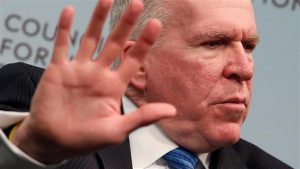 A brazen and unprecedented intervention in domestic U.S. politics by the intelligence community established the basic premise of the cascade of leaks about alleged Trump aides’ shady dealing with Russia. Led by CIA Director John Brennan, the CIA, FBI and NSA issued a 25-page assessment on Jan. 6 asserting for the first time that Russia had sought to help Trump win the election.
Brennan had circulated a CIA memo concluding that Russia had favored Trump and had told CIA staff that he had met separately with Director of National Intelligence James Clapper and FBI Director James Comey and that they had agreed on the “scope, nature and intent of Russian interference in our presidential election.”
In the end, however, Clapper refused to associate himself with the document and the NSA, which agreed to do so, was only willing to express “moderate confidence” in the judgment that the Kremlin had sought to help Trump in the election. In intelligence community parlance, that meant that the NSA considered the idea the Kremlin was working to elect Trump was merely plausible, not actually supported by reliable evidence.
In fact, the intelligence community had not even obtained evidence that Russia was behind the publication by Wikileaks of the e-mails Democratic National Committee, much less that it had done so with the intention of electing Trump. Clapper had testified before Congress in mid-November and again in December that the intelligence community did not know who had provided the e-mails to WikiLeaks and when they were provided.
The claim – by Brennan with the support of Comey – that Russia had “aspired” to help Trump’s election prospects was not a normal intelligence community assessment but an extraordinary exercise of power by Brennan, Comey and NSA Director Mike Rogers.
Brennan and his allies were not merely providing a professional assessment of the election, as was revealed by their embrace of the the dubious dossier compiled by a private intelligence firm hired by one of Trump’s Republican opponents and later by the Clinton campaign for the specific purpose of finding evidence of illicit links between Trump and the Putin regime.
Salacious Gossip
When the three intelligence agencies gave the classified version of their report to senior administration officials in January they appended a two-page summary of the juiciest bits from that dossier – including claims that Russian intelligence had compromising information about Trump’s personal behavior while visiting Russia. The dossier was sent, along with the assessment that Russia was seeking to help Trump get elected, to senior administration officials as well as selected Congressional leaders.
Among the claims in the private intelligence dossier that was summarized for policymakers was the allegation of a deal between the Trump campaign and the Putin government involving full Trump knowledge of the Russian election help and a Trump pledge – months before the election – to sideline the Ukraine issue once in office. The allegation – devoid of any verifiable information – came entirely from an unidentified “Russian emigre” claiming to be a Trump insider, without any evidence provided of the source’s actual relationship to the Trump camp or of his credibility as a source.
After the story of the two-page summary leaked to the press, Clapper publicly expressed “profound dismay” about the leak and said the intelligence community “has not made any judgment that the information in this document is reliable,” nor did it rely on it any way for our conclusions.”
One would expect that acknowledgment to be followed by an admission that he should not have circulated it outside the intelligence community at all. But instead Clapper then justified having passed on the summary as providing policymakers with “the fullest possible picture of any matters that might affect national security.”
By that time, U.S. intelligence agencies had been in possession of the material in the dossier for several months. It was their job to verify the information before bringing it to the attention of policymakers.
A former U.S. intelligence official with decades of experience dealing with the CIA as well other intelligence agencies, who insisted on anonymity because he still has dealings with U.S. government agencies, told this writer that he had never heard of the intelligence agencies making public unverified information on a U.S. citizen.
“The CIA has never played such a open political role,” he said.
The CIA has often tilted its intelligence assessment related to a potential adversary in the direction desired by the White House or the Pentagon and the Joint Chiefs of Staff, but this is the first time that such a slanted report impinges not only on domestic politics but is directed at the President himself.
The egregious triple abuse of the power in publishing a highly partisan opinion on Russia and Trump’s election, appending raw and unverified private allegations impugning Trump’s loyalty and then leaking that fact to the media begs the question of motive. Brennan, who initiated the whole effort, was clearly determined to warn Trump not to reverse the policy toward Russia to which the CIA and other national security organizations were firmly committed.
A few days after the leak of the two-page summary, Brennan publicly warned Trump about his policy toward Russia. In an interview on Fox News, he said, “I think Mr. Trump has to understand that absolving Russia of various actions that it’s taken in the past number of years is a road that he, I think, needs to be very, very careful about moving down.”
Graham Fuller, who was a CIA operations officer for 20 years and was also National Intelligence Officer for the Middle East for four years in the Reagan administration, observed in an e-mail, that Brennan, Clapper and Comey “might legitimately fear Trump as a loose cannon on the national scene,” but they are also “dismayed at any prospect that the official narrative against Russia could start falling apart under Trump, and want to maintain the image of constant and dangerous Russian intervention into affairs of state.”
Flynn in the Bull’s Eye
As Trump’s National Security Adviser, Michael Flynn presented an easy target for a campaign to portray the Trump team as being in Putin’s pocket. He had already drawn heavy criticism not only by attending a Moscow event celebrating the Russian television RT in 2016 but sitting next to Putin and accepting a fee for speaking at the event. More importantly, however, Flynn had argued that the United States and Russia could and should cooperate in their common interest of defeating Islamic State militants.
That idea was anathema to the Pentagon and the CIA. Obama’s Defense Secretary Ashton Carter had attacked Secretary of State John Kerry’s negotiating a Syrian ceasefire that included a provision for coordination of efforts against Islamic State. The official investigation of the U.S. attack on Syrian forces on Sept. 17 turned up evidence that CENTCOM had deliberately targeted the Syrian military sites with the intention of sabotaging the ceasefire agreement.
The campaign to bring down Flynn began with a leak from a “senior U.S. government official” to Washington Post columnist David Ignatius about the now-famous phone conversation between Flynn and Russian Ambassador Sergei Kislyak on Dec. 29. In his column on the leak, Ignatius avoided making any explicit claim about the conversation. Instead, he asked “What did Flynn say, and did it undercut the U.S. sanctions?”
And referring to the Logan Act, the 1799 law forbidding a private citizen from communicating with a foreign government to influence a “dispute” with the United States, Ignatius asked, “Was its spirit violated?”
The implications of the coy revelation of the Flynn conversation with Kislyak were far-reaching. Any interception of a communication by the NSA or the FBI has always been considered one of the most highly classified secrets in the U.S. intelligence universe of secrets. And officers have long been under orders to protect the name of any American involved in any such intercepted communication at all costs.
But the senior official who leaked the story of Flynn-Kislyak conversation to Ignatius – obviously for a domestic political purpose – did not feel bound by any such rule. That leak was the first move in a concerted campaign of using such leaks to suggest that Flynn had discussed the Obama administration’s sanctions with Kislyak in an effort to undermine Obama administration policy.
The revelation brought a series of articles about denials by the Trump transition team, including Vice President-elect Mike Pence, that Flynn had, in fact, discussed sanctions with Kislyak and continued suspicions that Trump’s aides were covering up the truth. But the day after Trump was inaugurated, the Post itself reported that the FBI had begun in late December go back over all communications between Flynn and Russian officials and “had not found evidence of wrongdoing or illicit ties to the Russian government….”
Two weeks later, however, the Post reversed its coverage of the issue, publishing a story citing “nine current and former officials, who were in senior positions at multiple agencies at the time of the calls,” as saying that Flynn had “discussed sanctions” with Kislyak.
The story said Flynn’s conversation with Kislyak was “interpreted by some senior U.S. officials as an inappropriate and potentially illegal signal to the Kremlin that it could expect a reprieve from sanctions that were being imposed by the Obama administration in late December to punish Russia for its alleged interference in the 2016 election.”
The Post did not refer to its own previous reporting of the FBI’s unambiguous view contradicting that claim, which suggested strongly that the FBI was trying to head off a plan by Brennan and Clapper to target Flynn. But it did include a crucial caveat on the phrase “discussed sanctions” that few readers would have noticed. It revealed that the phrase was actually an “interpretation” of the language that Flynn had used. In other words, what Flynn actually said was not necessarily a literal reference to sanctions at all.
Only a few days later, the Post reported a new development: Flynn had been interviewed by the FBI on Jan. 24 – four days after Trump’s inauguration – and had denied that he discussed sanctions in the conversation. But prosecutors were not planning to charge Flynn with lying, according to several officials, in part because they believed he would be able to “parse the definition of the word ‘sanctions’.” That implied that the exchange was actually focused not on sanctions per se but on the expulsion of the Russian diplomats.
Just hours before his resignation on Feb. 13, Flynn claimed in an interview with the Daily Caller that he had indeed referred only to the expulsion of the Russian diplomats.
“It wasn’t about sanctions. It was about the 35 guys who were thrown out,” Flynn said. “It was basically, ‘Look, I know this happened. We’ll review everything.’ I never said anything such as, ‘We’re going to review sanctions,’ or anything like that.”
The Russian Blackmail Ploy
Even as the story of the Flynn’s alleged transgression in the conversation with the Russian Ambassador was becoming a political crisis for Donald Trump, yet another leaked story surfaced that appeared to reveal a shocking new level of the Trump administration’s weakness toward Russia.
The Post reported on Feb. 13 that Acting Attorney General Sally Yates, an Obama holdover, had decided in late January – after discussions with Brennan, Clapper and FBI Director James Comey in the last days of the Obama administration – to inform the White House Counsel Donald McGahn in late January that Flynn had lied to other Trump administration officials – including Vice President Mike Pence – in denying that he discussed sanctions with Kislyak. The Post cited “current and former officials” as the sources.
That story, repeated and amplified by many other news media, led to Flynn’s downfall later that same day. But like all of the other related leaks, the story revealed more about the aims of the leakers than about links between Trump’s team and Russia.
The centerpiece of the new leak was that the former Obama administration officials named in the story had feared that “Flynn put himself in a compromising position” in regard to his account of the conversation with Kislyak to Trump members of the Trump transition.
Yates had told the White House that Flynn might be vulnerable to Russian blackmail because of the discrepancies between his conversation with the Ambassador and his story to Pence, according to the Post story.
But once again the impression created by the leak was very different from the reality behind it. The idea that Flynn had exposed himself to a potential Russian blackmail threat by failing to tell Pence exactly what had transpired in the conversation was fanciful in the extreme.
Even assuming that Flynn had flatly lied to Pence about what he had said in the meeting – which was evidently not the case – it would not have given the Russians something to hold over Flynn, first because it was already revealed publicly and second, because the Russian interest was to cooperate with the new administration.
The ex-Obama administration leakers were obviously citing that clumsy (and preposterous) argument as an excuse to intervene in the internal affairs of the new administration. The Post’s sources also claimed that “Pence had a right to know that he had been misled….” True or not, it was, of course, none of their business.
Pity for Pence
The professed concern of the Intelligence Community and Justice Department officials that Pence deserved the full story from Flynn was obviously based on political considerations, not some legal principle. Pence was a known supporter of the New Cold War with Russia, so the tender concern for Pence not being treated nicely coincided with a strategy of dividing the new administration along the lines of policy toward Russia.
All indications are that Trump and other insiders knew from the beginning exactly what Flynn had actually said in the conversation, but that Flynn had given Pence a flat denial about discussing sanctions without further details.
On Feb. 13, when Trump was still trying to save Flynn, the National Security Adviser apologized to Pence for “inadvertently” having failed to give him a complete account, including his reference to the expulsion of the Russian diplomats. But that was not enough to save Flynn’s job.
The divide-and-conquer strategy, which led to Flynn’s ouster, was made effective because the leakers had already created a political atmosphere of great suspicion about Flynn and the Trump White House as having had illicit dealings with the Russians. The normally pugnacious Trump chose not to respond to the campaign of leaks with a detailed, concerted defense. Instead, he sacrificed Flynn before the end of the very day the Flynn “blackmail” story was published.
But Trump appears to have underestimated the ambitions of the leakers. The campaign against Flynn had been calculated in part to weaken the Trump administration and ensure that the new administration would not dare to reverse the hardline policy of constant pressure on Putin’s Russia.
Many in Washington’s political elite celebrated the fall of Flynn as a turning point in the struggle to maintain the existing policy orientation toward Russia. The day after Flynn was fired the Post’s national political correspondent, James Hohmann, wrote that the Flynn “imbroglio” would now make it “politically untenable for Trump to scale back sanctions to Moscow” because the “political blowback from hawkish Republicans in Congress would be too intense….”
But the ultimate target of the campaign was Trump himself. As neoconservative journalist Eli Lake put it, “Flynn is only the appetizer. Trump is the entree.”
Susan Hennessey, a well-connected former lawyer in the National Security Agency’s Office of General Counsel who writes the Lawfare blog at the Brookings Institution, agreed. “Trump may think Flynn is the sacrificial lamb,” she told The Guardian, “but the reality is that he is the first domino. To the extent the administration believes Flynn’s resignation will make the Russia story go away, they are mistaken.”
The Phony “Constant Contacts” Story
No sooner had Flynn’s firing been announced than the next phase of the campaign of leaks over Trump and Russia began. On Feb. 14, CNN and the New York Times published slight variants of the same apparently scandalous story of numerous contacts between multiple members of the Trump camp with the Russian at the very time the Russians were allegedly acting to influence the election.
There was little subtlety in how mainstream media outlets made their point. CNN’s headline was, “Trump aides were in constant touch with senior Russian officials during campaign.” The Times headline was even more sensational: “Trump Campaign Aides Had Repeated Contacts with Russian Intelligence.”
But the attentive reader would soon discover that the stories did not reflect those headlines. In the very first paragraph of the CNN story, those “senior Russian officials” became “Russians known to U.S. intelligence,” meaning that it included a wide range Russians who are not officials at all but known or suspected intelligence operatives in business and other sectors of society monitored by U.S. intelligence. A Trump associate dealing with such individuals would have no idea, of course, that they are working for Russian intelligence.
The Times story, on the other hand, referred to the Russians with whom Trump aides were said to be in contact last year as “senior Russian intelligence officials,” apparently glossing over a crucial distinction that sources had made to CNN between intelligence officials and Russians being monitored by U.S. intelligence.
But the Times story acknowledged that the Russian contacts also included government officials who were not intelligence officials and that the contacts had been made not only by Trump campaign officials but also associates of Trump who had done business in Russia. It further acknowledged it was “not unusual” for American business to come in contact with foreign intelligence officials, sometimes unwittingly in Russia and Ukraine, where “spy services are deeply embedded in society.”
Even more important, however, the Times story made it clear that the intelligence community was seeking evidence that Trump’s aides or associates were colluding with the Russians on the alleged Russian effort to influence the election, but that it had found no evidence of any such collusion. CNN failed to report that crucial element of the story.
The headlines and lead paragraphs of both stories, therefore, should have conveyed the real story: that the intelligence community had sought evidence of collusion by Trump aides with Russia but had not found it several months after reviewing the intercepted conversations and other intelligence.
Unwitting Allies of the War Complex?
Former CIA Director Brennan and other former Obama administration intelligence officials have used their power to lead a large part of the public to believe that Trump had conducted suspicious contacts with Russian officials without having the slightest evidence to support the contention that such contacts represent a serious threat to the integrity of the U.S. political process.
Many people who oppose Trump for other valid reasons have seized on the shaky Russian accusations because they represent the best possibility for ousting Trump from power. But ignoring the motives and the dishonesty behind the campaign of leaks has far-reaching political implications. Not only does it help to establish a precedent for U.S. intelligence agencies to intervene in domestic politics, as happens in authoritarian regimes all over the world, it also strengthens the hand of the military and intelligence bureaucracies who are determined to maintain the New Cold War with Russia.
Those war bureaucracies view the conflict with Russia as key to the continuation of higher levels of military spending and the more aggressive NATO policy in Europe that has already generated a gusher of arms sales that benefits the Pentagon and its self-dealing officials.
Progressives in the anti-Trump movement are in danger of becoming an unwitting ally of those military and intelligence bureaucracies despite the fundamental conflict between their economic and political interests and the desires of people who care about peace, social justice and the environment.
How Trump Could Be a Truth-teller
By Robert Parry | Consortium News | February 23, 2107
One positive thing about a change in party control of the White House is that the new occupants sometimes release information that the old residents kept hidden because the facts were politically embarrassing or did not support some favored policy.
We saw this in the first days of the Obama administration when President Barack Obama declassified some documents relating to President George W. Bush’s internal policy debates about torture and other abuses from the “war on terror.”
However, as yet, we have seen nothing similar from the Trump administration even though some truth-telling might work very well for President Donald Trump, especially given his reputation for getting facts wrong. A commitment to transparency – giving some truth to the American people on important topics – could change Trump’s image for the better.
Plus, by releasing information that was unjustifiably kept hidden during Obama’s second term, Trump could underscore how Obama grew increasingly obsessive about secrecy the longer he remained in the White House, treating the American people as objects to be manipulated rather than citizens to be informed.
For instance, Obama kept the clamps on CIA analyses relating to the Ukrainian crisis, even regarding the shoot-down of Malaysia Airlines Flight 17 over eastern Ukraine on July 17, 2014, killing 298 people and leading to a dangerous escalation in the New Cold War with Russia.
After the crash, the Obama administration quickly steered the Western media toward blaming President Vladimir Putin and got the European Union to join in economic sanctions against Russia.
However, after exploiting the rush to judgment against Putin, the Obama administration went silent, withholding U.S. intelligence evidence even from the official crash investigators. The more the administration learned about the tragic event and who was responsible the less it wanted to say.
At the time, I was told that the reason was that some senior CIA analysts were uncovering evidence that went in an inconvenient direction, suggesting a rogue Ukrainian operation connected to a hardline oligarch with the intent of shooting down a Russian jetliner, possibly even the one carrying Putin back from a state visit in South America, but instead brought down MH-17, which had similar markings.
To spread confusion and create some deniability for the attack, the scheme supposedly called for launching the missile from as deep inside “rebel-controlled” territory as possible.
A Closed File
The source described getting this briefing from U.S. intelligence analysts, but I was unable to get the CIA or the Office of Director of National Intelligence to provide any guidance. Instead, they clammed up, claiming that they didn’t want to “prejudice” the official Dutch-led investigation (although I pointed out that the hasty U.S. finger-pointing at Russia had already done that).
The refusal of the Obama administration to open its MH-17 files allowed the “Dutch-led” Joint Investigation Team (JIT) to be effectively taken over by Ukraine’s unsavory SBU intelligence agency, which oversaw the care and feeding of Dutch and Australian investigators who decamped for long periods in Kiev.
The SBU’s “evidence” became central to the JIT’s investigation although the SBU was deeply involved in the war against the ethnic-Russian Ukrainian rebels and was even denounced by United Nations investigators for blocking access to alleged SBU torture centers. Beyond that, part of the SBU’s mandate was to protect Ukrainian government secrets, so the SBU had obvious conflicts of interest.
Nevertheless, the JIT relied on SBU-provided telephone “intercepts” of cryptic Russian-language conversations to base its conclusion that Russia provided the rebels a Buk missile system on the night of July 16, 2014, which was then taken on a strangely circuitous route far to the west before circling back to the east to a location far from the battlefront where it shot down MH-17 on July 17 and then was driven back to Russia that evening, again taking an unnecessarily long way home.
Though there were numerous holes in the SBU’s evidence and serious questions about why the Buk would have taken its bizarrely long ride – when a much more direct and discreet route was available – the Western media again showed no skepticism, simply accepting Russian guilt as established fact and dismissing any alternative explanation as “fanciful.”
The Value of Truth
However, whatever the truth is – whether the Russians and their rebel allies were responsible for the tragedy or whether a rogue Ukrainian operation brought down MH-17 – there is no reason why President Trump shouldn’t instruct CIA Director Mike Pompeo to release as much of the U.S. intelligence analysis as possible.
First, the families of the dead deserve all the help that the U.S. government can provide to identify the killers and bring them to justice. Second, by releasing the MH-17 file, President Trump can demonstrate that he does care about truth in contrast to President Obama who mysteriously withheld this information for 2½ years and thus gave the culprits, whoever they are, time to escape and cover their tracks.
Further, if the file blames the Russians, releasing it would show that Trump is not in Putin’s pocket, as many people in Official Washington claim. And, if the file implicates an element of the Ukrainian government – even a rogue faction – that might relieve geopolitical tensions with Russia and open possible paths for resolving the Ukrainian crisis.
The Trump administration also could consider other topics for declassification, such as the circumstances surrounding the U.S-backed coup that ousted elected Ukrainian President Viktor Yanukovych on Feb. 22, 2014. U.S. intelligence surely was following those events closely and could clarify the roles of Assistant Secretary of State Victoria Nuland, U.S. Ambassador to Ukraine Geoffrey Pyatt and Sen. John McCain, who all cheered on and encouraged violent protests that preceded the coup.
Obama also hid the intelligence regarding the mysterious sarin gas attack outside Damascus, Syria, on Aug. 21, 2013, which Secretary of State John Kerry and others blamed on the Syrian government although later evidence seemed to implicate jihadist rebels who wanted to trick the U.S. military into intervening directly in the war on their side.
Given the importance of those turning-point moments – and the Obama administration’s attempts to exploit them for geopolitical ends – the American people deserve to know what the U.S. intelligence analysts ultimately concluded and whether President Obama’s team was telling the truth or had gotten lost in the Orwellian idea of “perception management.”
President Trump might find that he can begin to turn around his reputation as a person who doesn’t care about the truth by becoming a truth-teller.
Investigative reporter Robert Parry broke many of the Iran-Contra stories for The Associated Press and Newsweek in the 1980s.
At US behest Turkey reboots Syrian war
By M K Bhadrakumar | Indian Punchline | February 23, 2017
Turkey has decided to pick up a quarrel with Iran. It all began with President Recep Erdogan’s sudden outburst on February 14 in the first leg of a regional tour of Gulf States – Bahrain, Saudi Arabia and Qatar — when he said, “Some people want both Iraq and Syria to be divided. There are some that are working hard to divide Iraq. There is a sectarian struggle, a Persian nationalism at work there. This Persian nationalism is trying to divide the country. We need to block this effort.”
Tehran hit back by accusing Turkey of supporting terrorist organizations “to destabilize neighbouring countries.” And there has been much back and forth in mutual recriminations since then. The spat makes a mockery of the “trilateral alliance” between Russia, Turkey and Iran that Moscow has been promoting at the recent Astana talks on Syria. The Russian Foreign Ministry had announced as recently as February 16 that Russia, Turkey and Iran have formed a tripartite operational group to stabilize the ceasefire in Syria. The most puzzling aspect is that this is happening just when the Syrian peace talks began in Geneva today under UN auspices.
But then, there is always a method in Erdogan’s madness. Succinctly put, Erdogan’s outburst reflects an overall frustration that Iran has greatly outstripped its traditional rival Turkey in expanding its influence in both Iraq and Syria. The Iranian militia played a big role in taking Aleppo city and vanquishing the rebel groups supported by Turkey.
Turkey had fancied that it would play a similar lead role in wresting control of Mosul from the hands of the ISIS. But to its great consternation and anger, Iran has wrested that role too. The latest reports show that Iraqi forces have stormed Mosul airport. Iraq (and Iran) opposed any role for Turkey in the liberation of Mosul.
Conceivably, with an eye on the new US administration’s reported plan to create an anti-Iran alliance in the region, Turkey is repositioning itself. There are several developments pointing in this direction. The US and Turkey have been holding a series of top-level meetings through the past fortnight since President Donald Trump made his first phone call with Turkish President Recep Erdogan on February 7. The American visitors to Ankara since then included CIA Director Mike Pompeo, Chairman of the Joint Chiefs of Staff General Joseph Dunford and US the senator who heads the Armed Services Committee John McCain.
Meanwhile, Erdogan has undertaken a tour of the GCC states, which aimed at harmonising the Turkish stance on Syria with that of Saudi Arabia and Qatar. (During Erdogan’s tour, Turkey and Saudi Arabia signed a defence agreement.) Ankara has noted that in the past fortnight there have been important visitors from the US to the Gulf region –CIA chief Pompeo, Senator John McCain and Defence Secretary James Mattis. Pompeo conferred on Saudi Crown Prince Mohammed bin Nayef bin Abdulaziz the CIA’s George Tenet Medal for his exceptional contributions in the fight against terrorism. It doesn’t take much ingenuity to figure out that the US is promoting a Saudi-Israeli alliance against Iran.
Equally, Ankara and Washington are edging toward a mutually satisfactory resolution of a discord that had set them apart in the recent past – the fate of Islamist preacher Fetullah Gulen who lives in exile in Pennsylvania. The Trump administration may act to curb Gulen’s activities, while Erdogan may no longer press for his outright extradition to Turkey.
However, one other contentious issue still remains unresolved – US military support for Syrian Kurds. This is a non-negotiable issue for Turkey, which considers the Syrian Kurdish militia to be an affiliate of the separatist Kurdish group PKK. Turkey and the US are actively discussing at the moment the modalities of a Turkish military operation aimed at liberating Raqqa, the ‘capital’ of the Islamic State. The Turkish Prime Minister Binaldi Yildirim discussed the Raqqa operation with the US Vice-President Mike Pence in the weekend at the Munich Security Conference. It will be a major military operation with tanks, armoured vehicles and artillery. Turkey seeks US Special Forces’ participation, which will also serve the purpose of deterring Russian intervention, apart from weakening the Syrian Kurds’ drive to create an entity in northern Syria.
Without doubt, the capture of Raqqa will be much more than a symbolic event. Raqqa determines how much of Syria will be under the control of the Syrian regime. Clearly, Erdogan hopes to project Turkish power right into Damascus and have a big say in Syria’s future. Yildirim sounded upbeat after meeting Pence. See a report in the pro-government Turkish daily Yeni Safak – PM Yildirim: Turkey, US turning over a new leaf.
Suffice to say, Erdogan seems confident that the Trump administration is viewing Ankara once again as a “strategic partner and a NATO ally” (as Trump indeed told him). Just another 5 days remain in the timeline given by the Trump administration to the Pentagon to prepare a comprehensive plan to defeat the Islamic State in Syria and Iraq. But Turkey is already acting as if it had a preview of the Pentagon plan.
A lengthy dispatch from Damascus by Xinhua underscores that Turkey’s journey back to its American ally also coincides with the “re-emergence of the Gulf states as the backers of the rebels” and with a growing probability of US putting boots on the ground in Syria — all in all a “remilitarization” of the Syrian conflict. Read the insightful report titled Spotlight: Gloomy outlook shadows Syrian talks in Geneva.
Featured Video
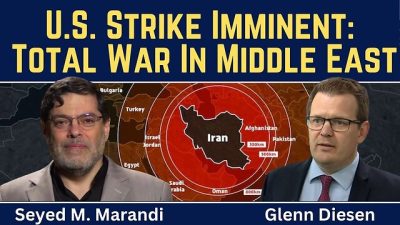
Seyed M. Marandi: Toward Total War in the Middle East
or go to
Aletho News Archives – Video-Images
From the Archives
The Geopolitics behind the War in Yemen (I)
By Mahdi Darius NAZEMROAYA | Strategic Culture Foundation | 30.03.2015
The United States and the Kingdom of Saudi Arabia became very uneasy when the Yemenese or Yemenite movement of the Houthi or Ansarallah (meaning the supporters of God in Arabic) gained control of Yemen’s capital, Sanaa/Sana, in September 2014. The US-supported Yemenite President Abd-Rabbuh Manṣour Al-Hadi was humiliatingly forced to share power with the Houthis and the coalition of northern Yemenese tribes that had helped them enter Sana. Al-Hadi declared that negotiations for a Yemeni national unity government would take place and his allies the US and Saudi Arabia tried to use a new national dialogue and mediated talks to co-opt and pacify the Houthis.
The truth has been turned on its head about the war in Yemen. The war and ousting of President Abd-Rabbuh Manṣour Al-Hadi in Yemen are not the results of «Houthi coup» in Yemen. It is the opposite. Al-Hadi was ousted, because with Saudi and US support he tried to backtrack on the power sharing agreements he had made and return Yemen to authoritarian rule. The ousting of President Al-Hadi by the Houthis and their political allies was an unexpected reaction to the takeover Al-Hadi was planning with Washington and the House of Saudi. … continue
Blog Roll
 Aletho News
- HE SAVED LIVES. NOW HE FACES PRISON.
- Israeli lobby seeks to bind US fate to ‘Israel’: Araghchi
- Pakistan-Iran talks secure LNG shipment to Islamabad through Hormuz
- Black Sea grain crisis puts global wheat supplies under pressure
- IRGC air defenses destroy another US MQ-1 drone over Strait of Hormuz
- Imran Khan’s entire immediate family detained in Pakistan ahead of mass protest demanding his release
- EU nation detains former presidential frontrunner
- Leaked: Britain’s Sham Conviction Of Hashim Thaci
- Seyed M. Marandi: U.S. Strike Imminent – Toward Total War in the Middle East
- Russia Voted Under Fire. Washington Is Loading the Tankers.
- If Americans Knew
- Israeli Attacks in Gaza Kill at Least Seven Palestinians Over Three Days, including Woman and Child
- Trump’s militarization of Washington DC as he pursues Israel’s war against Iran
- Why Israel Fears This Searing New Documentary
- Huckabee aide solicited cash gifts from Israelis
- This isn’t sci-fi, AI is already killing people
- ‘The Most Brutal Thing’: Investigation Reveals Execution of Elderly Woman in Rafah
- Inside Israel’s ‘soft’ ethnic cleansing plan for Gaza through the eyes of its victims
- New online database tracks pro-Israel political donations in the United States
- Israeli president pardons soldier convicted for killing wounded Palestinian
- Singer Ed Sheeran says his ‘heart broken’ by Gaza devastation, addresses Macklemore controversy
- No Tricks Zone
- 2025 Nature Paper Claiming Worsening Global Drought Gets RETRACTED …Heavily Flawed
- New Study: ‘Global Drought Shows No Detectable Recent Acceleration Under Climate Warming’
- Economic Masterminds: German Socialists Suggest Taxing Productivity Gains Stemming From Using AI
- The South China Sea Has Not Been Cooperating With The Climate Change Narrative
- Energy Crisis: Germany Enters Heating Season With Historically Low Gas Reserve Fill Levels
- New Study: The Antarctic Ice Sheet Gained Mass From 2020-2024 Due To Staggering Snow And Ice Accumulation
- Study: Ocean Heating Rates From Thousands Of Years Ago ‘Dwarf’ Modern Ocean Heating Rates
- Climate Extremists Target, Attack Large-Scale Power Grid Infrastructure In Germany!
- New Study: Antarctic Ice Melt Has Contributed Less Than 1 Centimeter To Sea Level Rise In The Last 30 Years
- Fear Of Debate: Alarmist German Climate Scientist Calls On Mainstream Media To Discredit Skeptic Voices
 Aletho News