Colombia, FARC rebels reach agreement over land mines removal
Press TV – March 8, 2015
The Colombian government and the FARC rebels have reached a deal to remove the country’s land mines and discarded explosives, which have killed thousands of people in rural areas in the past 25 years.
The government and rebels from the Revolutionary Armed Forces of Colombia “have agreed to ask (Norwegian People’s Aid) to lead and coordinate a cleanup and decontamination operation for mines in rural areas,” both sides said in a statement after they ended the latest round of peace talks in the Cuban capital Havana on Saturday.
Cuba and Norway are guarantors of Colombia’s peace negotiations.
“Our goal is to put an end to the conflict… so the demining proposal is a first step, but a giant one toward peace,” top government mediator Humberto de la Calle said.
Land mines killed or wounded 11,043 people, including 4,226 civilians, between 1990 and 2015, the Colombian government says.
FARC representatives said on Saturday that progress is also being made on the issue of a bilateral ceasefire.
“The technical sub-commission, which handles such overwhelmingly important topics as a definitive bilateral ceasefire and the mutual agreement to disarm, has begun to move forward at a good pace,” said Ivan Marquez, the FARC lead negotiator.
The peace talks between the Colombian government and the rebels began in November 2012 in Havana.
The negotiations have produced partial agreements on several issues, but have not resulted in a final deal.
FARC is Latin America’s oldest rebel group and has been fighting the government since 1964.
Bogota estimates that 220,000 people have been killed and more than 4.5 million others have been displaced due to Latin America’s longest insurgency.
Colombia’s Journalists Under Threat
teleSUR | January 27, 2015
“2014 ended with threats and 2015 as well started with threats,” said representative in Colombia for Reporters Without Borders, Fabiola León. She insists the situation is worrying as over the course of around 20 days, 5 written threats have been delivered targeting 150 people, who include not only journalists but also social activists and land restitution leaders.
Among those directly threaten is Omar Vera, Chief Editor of “El Turbión,” a digital newspaper that for 11 years has been reporting on the struggles of Colombia’s social movements. In one of the written threats received December last year, the nine journalists working at “El Turbión” including Omar, were identified by their full names in the list of targets.
Omar and his team consider that the threats are related to the “interest of silencing independent voices that are reporting on social movements and that are showing solidarity with a network of organizations currently struggling for a change in the country in the wake of the peace process,” he recalled.
Elkin Sarria, a friend and colleague of Omar, is the editor of “Contagio” radio station, which like “El Turbión” newspaper is among the 12 media outlets targeted in a written threat signed by Aguilas Negras, a paramilitary group that Colombia’s Ministry of Interior Juan Fernando Cristo has recently denied existed.
“If Aguilas Negras does not exist, then who’s behind the threats?” Elkin asks; “Is it the military? Is it the State intelligence? To know who’s behind would be the only real guarantee to our security,” he adds.
For Fabiola León it is not by chance that among the people that have been threatened are not only journalists. “What these people, including journalists, share in common is that we have been talking about the peace process, that we have been working on the resolution of social problems that could serve as base for the final deal to put an end to the armed conflict,” she pointed out.
The tough situation Colombian journalists are currently facing, coincides with the security conditions that members and leaders of the “Broad Front for Peace,” a coalition of activists actively supporting the peace process, have been denouncing.
“Behind the threats I believe there are powerful forces with great interest in the failure of the peace process; determined to hinder fundamental transformations as well as a strengthening of democracy and to sabotage the peace talks in Havana,” Human Rights defender Piedad Cordoba recently declared to teleSUR English referring to the latest life threats she received.
But what worries the most is that whoever is behind the threats, seems to be willing to implement them. That was made clear Wednesday last week when peace activist and social leader Carlos Alberto Pedraza was found dead in strange circumstances.
Social leaders, peace activists and journalists have agreed that the very first step to guarantee the security of those under threat is to identify who exactly is behind the increasing threats, something that has already be demanded from the Colombian authorities.
FARC says killed 8 Colombia soldiers in ‘defensive response’

File photo shows militants belonging to the Revolutionary Armed Forces of Colombia (FARC).
Press TV – January 14, 2015
The FARC rebel group says it has killed eight army soldiers in a “defensive response” to the recent attacks carried out by the Colombian army.
“As a result of the defensive response, we lament that eight military personnel lost their lives, unnecessarily,” read the statement issued by the guerrilla group on Wednesday, adding, “These are all casualties that could have been avoided if the government had been less small-minded.”
According to the statement, the FARC forces killed the soldiers in retaliation for the Colombian army’s mortar attacks on rebels’ positions in the central province of Meta earlier this week.
The rebel group called on the government to put an end to its “senseless” offensives, “because they could provoke the end of the unilateral ceasefire and disturb the climate of confidence that should prevail at the negotiating table.”
Back on December 20, 2014, the FARC declared a unilateral ceasefire in an alleged attempt to boost the peace talks that have been held in Cuba since two years ago. However, Colombian President Juan Manuel Santos rejected the move, saying the guerrillas’ condition for an international verification of the ceasefire cannot be accepted.
Earlier in the month, the Colombian government and the FARC resumed the latest round of peace talks, suspended in November 2014, over the abduction of an army general.
The peace talks were launched in the Cuban capital of Havana in 2012, aimed at ending a half-a-century-old conflict between the rebels and the US-backed government.
Bogota estimates that 600,000 people have been killed and more than 4.5 million displaced due to the fighting.
The Revolutionary Armed Forces of Colombia (FARC) is Latin America’s oldest insurgent group and has been fighting the Colombian government since 1964.
Ecuador: CIA Justifies Reyes “Targeting” in 2008
Weekly News Update on the Americas | December 29, 2014
According to a secret study released by the Wikileaks group on Dec. 18, the US Central Intelligence Agency (CIA) considers the killing of Revolutionary Armed Forces of Colombia (FARC) second-in-command Raúl Reyes by Colombian forces in Ecuadorian territory on Mar. 1, 2008 [see Update #937] an example of ways that assassinations of rebel leaders “can play a useful role.”
In addition to the Reyes case, the paper reviews the use of “high-value targeting (HVT)”—the killing or capture of top leaders—in fighting rebels in Afghanistan, Algeria, Colombia, Iraq, Israel, Peru, Northern Ireland and Sri Lanka. HTV can have “negative effects,” the study concludes, but the practice can “contribute to successful counterinsurgency outcomes” if used strategically. The July 9, 2009 study, marked “secret” and “NOFORN” (“no foreign nationals”), is entitled “Making High-Value Targeting Operations an Effective Counterinsurgency Tool”; it apparently forms part of a “Best Practices in Counterinsurgency” series.
Reyes, the FARC’s chief spokesperson and negotiator, was killed when the Colombian military launched a nighttime air raid and then an incursion against a rebel encampment in Ecuador’s northeastern Sucumbíos province about three kilometers from the Colombian border. Some 19 FARC members were killed in the operation, as were four Mexican students who had been visiting the encampment while in Ecuador to attend a leftist conference. Although the Colombian government and the media treated the attack as a simple raid against a group of rebels, the CIA study refers to it as part of a number of “successful HVT strikes against top insurgent leaders in early 2008, in conjunction with earlier strikes against second and third-tier leaders and finance and logistics specialists.” Reyes’ death “is likely to have seriously damaged FARC discipline and morale, even among its leadership, according to a CIA field commentary.” As an example of the operation’s success, the CIA noted that “[p]ublic support for the Colombian government solidified in the wake of the killing… with President Alvaro Uribe’s approval rating increasing from the mid-70% range to as high as 84%.”
The study treats the Reyes killing as a strictly Colombian operation, although there have been reports that in fact the Colombians dropped US “smart bombs” and that an HC-130 airplane, used for refueling helicopters, took off from the US base then at Manta, Ecuador, just hours before the attack. The FARC itself claimed in a Mar. 14 communiqué that the US Southern Command had led the operation [see Update #940]. Theoretically US agencies are not allowed to participate in targeted assassinations. Executive Order 12333, signed by US president Ronald Reagan on Dec. 4, 1981, states that “[n]o person employed by or acting on behalf of the United States Government shall engage in, or conspire to engage in, assassination.” (La Jornada (Mexico) 12/19/14)
UN Offers to Monitor Colombia Ceasefire
teleSUR | December 20, 2014
The United Nations has welcomed the FARC’s (Revolutionary Armed Forces of Colombia) declaration of an indefinite unilateral ceasefire in Colombia, and offered to help oversea it – if both parties involved agree.
“The United Nations has the competency,” Hochschild told reporters Thursday. He also stated that the U.N. has the willingness and the experience needed for the job.
The leftist rebel group called the indefinite earlier this week in Havana, Cuba marking the end of the last round of peace negotiations for the year.
The FARC and the Colombian government have been engaged in peace talks since November of 2012 to end the 50 years of civil war in the country. Although unilateral ceasefires have been called in the past, this is first time that no time limit has been set, leaving many optimistic that the two sides may be approaching an agreement.
One of the conditions for the ceasefire set by the FARC was that the situation be monitored by an outside body.
On Thursday, the Union of South American Nations (UNASUR) announced that they were open to overseeing the ceasefire. The leftist fighters also approached the Community of Latin American and Caribbean States (CELAC), the International Committee of the Red Cross and the Broad Front for Peace to oversea the ceasefire.
President of Colombia, Juan Manuel Santos, welcomed the ceasefire, however has refused to agree to it, stating fears that rebels would use the time to recalibrate and acquire arms.
The President has also refused to meet the FARC’s conditions for an outside monitoring body, saying the government itself could monitor the situation.
Earlier on Friday, the government accused the FARC of killing five soldiers during clashes in the southwestern state of Cauca. The attack reportedly happened only hours before the ceasefire was due to begin, however it is not clear who started the aggressions. The FARC has not accepted responsibility and has yet to comment on the matter.
According to the FARC, the ceasefire – which took effect at midnight on Saturday – must lead to a truce, and will only call it off if Colombian soldiers directly attack FARC troops.
Santos has said he is only willing to halt military actions if a peace agreement is signed.
US Military’s Training of Mexican Security Forces Continues As Human-Rights Abuses Mount In Mexico
DoD Officials Claim Training is Part of the Solution, Not the Problem
By Bill Conroy | narcosphere | December 3, 2014
The U.S. government has spent more than $62 million since fiscal year 2010 providing highly specialized training to Mexican security forces, including some $16.3 million in fiscal 2013, as part of an effort to help Mexico better prosecute its war on drugs, records made public under the U.S. Foreign Assistance Act show.
The spending has continued even as Mexico’s military and police forces continue to face accusations of pervasive human-rights abuses committed against Mexican citizens, leading some experts to question whether the U.S.-funded training is resulting in some deadly unintended consequences.
The news of the disappearance in late September of 43 students who attended a rural teachers college in Ayotzinapa, located in the southern Mexican state of Guerrero, has sparked massive protests in Mexico. The students were allegedly turned over to a criminal gang after being abducted by Mexican police and they remain missing. The police fired on the three buses transporting the students along a stretch of road near Iguala, about 130 kilometers north of Ayotiznapa, and the abduction was carried out near a Mexican military base, according to Human Rights Watch.
The Ayotzinapa incident was preceded by a lesser-known attack this past June during which Mexican soldiers killed 22 people inside a warehouse in Tlatlaya, 238 kilometers southwest of Mexico City. At least 12 of those homicides were deemed extrajudicial executions, according to Mexico’s National Human Rights Commission [CNDH in its Spanish initials].
Last year, the Mexican government conceded that at least 26,000 people had gone missing, or been disappeared, in Mexico since 2006 — the year the war on the “cartels” in that nation was launched. Over that same period, INEGI (the Mexican State Statistics Agency) reports, there were some 155,000 homicides in Mexico, most with a nexus to the drug war.
The U.S. Department of Defense insists that the relationship it has with Mexican security forces is based on “trust and confidence and mutual respect” and is critical to helping to reduce the violence sparked by criminal organizations in Mexico.
The U.S. training, funded through the DoD and to a lesser extent the U.S. Department of State, encompasses a wide range of military strategy and tactics and is carried out at locations in the United States and inside Mexico. Among the course topics on the menu are asymmetrical conflict, counter intelligence, international counterterrorism, psychological operations, counter-drug operations and urban operations. The training is being provided to a broad spectrum of Mexican security forces, including the Army, Navy and the federal police, according to data provided to Congress under the requirements of the Foreign Assistance Act and is current through fiscal year 2013.
Adam Isacson, senior associate for regional security policy with the Washington Office on Latin America, a nongovernmental organization promoting human rights and democracy in Latin America, says there is a lack of reliable public data on the fate of Mexican security forces after they receive U.S. military training.
“What happens to these trainees a year or two down the road after they are placed in areas dominated by organized crime?” Isacson asks. “We simply don’t have good after-training tracking of these people, and the amount they are paid can’t compete with the drug money. Plus, the risk of getting caught is small. The biggest risk for them isn’t jail, but rather running afoul of the drug organizations.”
From fiscal 2010 through 2013, U.S. military training was provided to some 8,300 members of Mexico’s security forces, according to Foreign Assistance Act data. That training is overseen by U.S Northern Command (Northcom), a Department of Defense branch created in 2002 that is responsible for U.S. homeland defense as well as security cooperation efforts with the Bahamas, Canada and Mexico.
Northcom officials contend that all Mexican security forces receiving U.S. training are well vetted and that data is maintained on all participants. The training is designed to compliment Mexico’s existing efforts to maintain security and stability in the country.
“We do not believe that U.S. military training enables corruption and human rights violations,” Air Force Master Sgt. Chuck Marsh, spokesman for Northcom, says. “On the contrary, U.S. military members who provide training serve as positive role models, displaying professional values for foreign security forces to emulate. They conduct this training in strict accordance with the Leahy Law, which requires us to ensure individuals and units with whom we work are not involved in human rights violations.”
Still, in a country where fewer than 13 percent of crimes are even reported, according to a recent Congressional Research Service report, and where tens of thousands of murders and cases of disappeared individuals remain unresolved, it’s difficult to accept with certainty that the data maintained on U.S.-trained Mexican security forces is of much use in monitoring corruption. If human-rights abuses are not reported, much less investigated, then there’s nothing to track.
And even when abuses are probed, the conviction rates are anemic.
Mexico’s Military Prosecutor’s Office between 2007 and mid-2013 opened 5,600 cases into alleged human-rights abuses by soldiers, Human Rights Watch reports. Yet, as of October 2012, only 38 cases had resulted in convictions and sentences from military judges.
Mexico’s CNDH reported last year that Mexican security forces were suspected of playing a role in at least 2,443 cases in which people were disappeared. Human Rights Watch, in a study released last year, said it “found evidence that members of all branches of the [Mexican] security forces carried out enforced disappearances.”
“Virtually none of the victims have been found or those responsible brought to justice,” Human Rights Watch reports.
WOLA’s Isacson says there is no evidence at this point directly linking human-rights abuses by Mexican security-forces to U.S. military training, but adds that “the risk is huge.”
“Congress a few years ago required DoD to keep more records on trainees, but that information is classified,” he adds.
What’s lacking is quantifiable public data that can be used to assess the effectiveness of U.S. training of Mexico’s security forces or the human-rights track record of trainees after the training is finished. “That evaluation has to now be based mostly on blind faith,” Isacson says.
And in yet another wrinkle to the military-training issue, Isacson points out that the U.S. military is helping to fund Colombia’s export of military training to other nations as part of its security coordination with the South American nation. Colombia provided military and police training to more than 10,310 members of Mexico’s security forces between 2009 and 2013, according to a recent WOLA report that uses figures provided by the Colombian National Police.
“Some of this training was U.S. funded, although Colombia carried out many activities using its own resources, or that of other donors such as Canada,” the WOLA report states.“… Beyond official advertisements of the strategy and occasional, anecdotal press reports, little information is available about the extent and nature of Colombia’s training.
“While foreign aid law requires the United States to report to Congress in some detail about its own overseas training, these reports include no mention of U.S.-funded activities carried out by Colombian forces.”
The nature and sources of funding for Colombia’s exported military training may be opaque. But what is clear is that U.S. military training was provided to 4,486 members of Colombia’s security forces in fiscal 2013 at a cost to taxpayers of $32.9 million, according to the most recently available Foreign Assistance Act data. A good share of that training was in areas consistent with regional security operations, including courses in international counter-terrorism, advanced security cooperation, joint operations and international tactical communications.
The Colombian military and police training provided to Mexico’s security forces, Isacson says, is essentially a proxy arrangement, given the United States’ role in helping to fund and coordinate that training.
“Colombians trained 10,000 Mexicans with the help of U.S. money,” he adds. “Our main concern is the lack of transparency and controls.”
Calls for Peace Actions in Colombia after General Released
teleSUR | December 2, 2014
With Colombia’s peace talks likely to restart in the near future following the release of General Ruben Dario Alzate, calls are growing for a de-escalation of the conflict in order to avoid any future risks to the process.
Though non-government organizations, progressive politicians and peace activists continue to call for a bilateral cease-fire – as do the Revolutionary Armed Forces of Colombia (FARC) – the government maintains that it will not consider such a measure until a final agreement is signed.
However, according to many observers, a full cease-fire is not the only recourse available. Acts of peace such as declaring a Christmas period truce would not only strengthen the process, but reinforce public support, which has been shaken by the recent suspension.
“They cannot continue talking peace in Havana and in the territories continue with this armed confrontation, of which the effects are well known: more victims, more displacement, more antipersonnel mines, more kidnappings, recruitment. What the people in the regions are asking for is ‘please, now, acts of peace,’” said Irma Perilla of the NGO Pensamiento y Accion Social (Social Thought and Action), which has helped stage a series of regional forums to teach communities in conflict zones about the process and give people a space to have their thoughts heard.
According to Carlos Salgado, director general of peace advocacy NGO Planeta Paz (Peace Planet), the two teams must guarantee that the recent rupture following the November 16 capture of Alzate is not repeated, otherwise it would likely prove fatal to the talks.
Government and FARC negotiators are set to meet in Havana on December 2 to discuss how to restart the talks. According to Salgado, conflict reduction measures should form part of any agreement to continue the peace process.
“The two sides are going to be obliged at the negotiating table in Havana to create an atmosphere of de-escalation of the conflict, to be very clear about what would produce a suspension in the future, and to create an atmosphere of trust for society,” said Salgado.
A wide variety of measures remain in order to reduce hostilities, such a regional cease-fires, and agreements on the cessation of certain activities – as United Nations representative in Colombia Fabrizio Hochschild has previously advocated.
Over the past two years, the FARC has implemented a unilateral cease-fire over the Christmas period, with relatively few violations.
This year, both Perilla and Salgado advocate a truce during December, which they say would prove to the public that the two sides are capable of establishing peace, as well as giving those hardest hit by the conflict the opportunity to enjoy the festive season in tranquility.
“Security” In the West’s Client States
By ANDRE VLTCHEK | CounterPunch | November 21, 2014
Perhaps you thought that the security at the Atlanta or Newark, or Dallas airports is bad, obnoxious, the worst in the world… Think twice… Of course it all began there, in the United States, from the first glory days of that hypocritical and deranged “War On Terror”: the humiliation of people, especially Arabs, especially Muslims, especially all those who are not white, but eventually everybody, at least to some degree.

But it did not just stay there. The allies joined in almost immediately, and then the ‘client’ states jumped on the bandwagon, competing in tactics and strategies of how most to humiliate those confused and helpless passengers, by censoring internet sites, digging into emails, monitoring mobile phone communications, and relentlessly spying on both citizens and foreigners.
I have travelled all over the world, to some of the most imaginable and unimaginable places. All the while being monitored and harassed, threatened and periodically attacked, even physically, I have also spread many counter-punches: I have observed, recorded, and published, who does what to whom, who is the most diligent, methodical, and ruthless bully?
Unsurprisingly, the toughest surveillance comes from Western allies and ‘client’ states, all over the world – from places that Washington, London and Paris routinely call ‘thriving democracies’.
Countries that have collapsed socially strive to impress their Western neo-colonial masters, by imposing increasingly harsh security and surveillance measures against their own people. At the same time, they are full-heartedly and enthusiastically signing up to the bizarre, ‘War on Terror’. It gives the local rulers many privileges. If they play it right, their gross human rights violations, and even their killing of the opposition, is not scrutinized.
***
When I recently worked in South Africa, I was told that the country is now one of the freest on earth. It has nothing to hide and it is not particularly afraid of scrutiny.
“You can photograph here, whatever you want, and nobody will tell you anything”, many of my South African friends explained to me, in Cape Town, Pretoria, Johannesburg, as well as by those living abroad.
It is true. In fact, after few days there, you can easily forget that there are any restrictions, like a ban on filming or photographing police stations or navy ships. Nobody would ever stop you from taping, for instance, battleships at the Simon’s Town base.
South Africa is a proud BRICS country, a left-wing beacon on the African continent and, together with neighboring Zimbabwe, a target of an aggressive negative Western propaganda campaign.
Just as in South Africa, not once was I stopped from filming or photographing in Zimbabwe. And not once was I intimidated, harassed or humiliated by their immigration or customs at the airports.
That is in stark contrast with the West’s allies on the continent – Rwanda, Uganda, Djibouti, Kenya, Ivory Coast or Senegal, to name just a few.
It is not just that ‘everything is forbidden’ there, but ‘violators’ can easily be arrested, harassed, even ‘disappeared’.
When making my film, “Rwanda Gambit”, about Paul Kagame’s monstrous regime, and about the genocide it had been committing (on behalf of the Western powers) in the Democratic Republic of Congo, I tried to film with a small Leica, at the border between Rwanda and DR Congo, at the Gisenyi/Goma crossing. Within a few seconds later, an enormous Congolese soldier grabbed me and began pulling me towards the border post. I have been arrested in Goma once before, and I knew what it amounts to – what it is to rot in the underground intelligence bunker cut off from the outside world.
I was almost certain that, that time, I would not make it out alive. And so I screamed for help in the direction of the Rwandese soldiers who were watching the scene from the other side of the borderline. It is not that they were really eager to help, but the disappearance of a US citizen, an investigative journalist at that, would be an extra, and unnecessary ‘annoyance’. And so they went to work, grabbing my free hand and pulling me back towards Rwanda. The enormous Congolese man in the end lost, and I survived.
All of this over just a few shots! Nobody would ever even think about preventing me from filming on, say the border between Argentina and Chile, or Vietnam and China!
In Rwanda itself, absolutely everything is forbidden, and everybody snitches on everybody. It is forbidden to photograph the streets, the hospitals, and museums, even the genocide memorial! It is strictly banned to photograph or to film their villages, In order to film military installations or prisons, I had to attach a Drift camera to the undercarriage of my car.
In Rwanda and Uganda, everything is under the surveillance. Walls have ears and eyes, so to speak. It is not like surveillance in London, done with high-tech cameras (although these are also beginning to appear); people simply spy on each other, at an unimaginable rate, and the security apparatus appears to be present absolutely everywhere, omnipresent.
But for the West, that is all fine. Both Rwanda and Uganda are plundering DR Congo of Coltan and uranium. The 10 million lives lost there, appears to be just a token price, and the horrors that are occurring in these countries are just some tiny inconvenient episodes not even worth mentioning in the mainstream press.
Security is ‘needed’, in order to maintain ‘order’ – our order.
The humiliation of travellers at Kigali, Kampala or Nairobi airports is indescribable. It is not about security at all, but about a power game, and plain sadism. In Kigali, there are at least 8 ‘security checks’, in Nairobi 6 to 7, depending on the ‘mood’ at the airport.
Three years ago, on behalf of the West (mainly US, UK and Israel), Kenya attacked the oil-rich part of Somalia, where it is now committing atrocities. Its state apparatus also perpetrated several attacks against its own civilian targets, blaming all of them on the al-Qaida linked movement, al-Shabaab. It was done in order to justify the ‘security measures’.
Now there are metal detectors in front of every department store, hotel or office-building in Nairobi. When I, earlier this year, photographed the entrance to a prison, I was literally kidnapped, thrown into the jail and informed: “We will treat you as a terrorist, as an al-Shabaab member, unless you prove that you are not.”
The slightest argument with the Kenyan military forces, or with the corrupt and outrageously arrogant police, leads to detention. And there are cases of people being harassed, sexually molested, even tortured and killed in detention.
The security forces in East Africa cooperate, as the security forces cooperated in the dark years of the fascist military dictatorships in South America.
As I was walking with my friends through Kampala, a huge lone figure slowly walked towards us.
“That is one of the butchers and he comes from Kenya”, I was told. “He tortures and kills people that pose a danger to this regime… He does things no local person would dare to do. Our countries exchange the most sadistic interrogators; ours go to Kenya, Kenyans come here.”
I recalled that even Paul Kagame, now the President of Rwanda, used to serve as the Chief of the Military Intelligence in Uganda.
Yes, the Newark and Houston airport security is bad, and the surveillance in the West is outrageous, but it is being taken to insane extremes in the ‘colonies’.
In Djibouti, which is basically a military enclave of the French Legionnaires, the US air force and other European armed forces (Somalia, Yemen, Eritrea and Ethiopia are all just a stone-throw away), I once complained at the airport that my passport was being checked twice within a distance of 10 feet. As a result, a huge soldier grabbed me, tore my shirt, threw me against the wall, and then smashed my professional camera against a concrete wall. All this happened in front of the horrified passengers of Kenya Airways. That, I found somehow intolerable. It pissed me off so much that I got up, ready to confront the soldier, no matter what. But the horrified voice of a Kenya Airways’ manager stopped me: “Sir, please leave it at this… They can just kill you, and nothing will happen to them. They can do anything they want!”
In Ivory Coast (Côte d’Ivoire), which is yet another French military dependency, and generally a loyal servant to Western interests in West Africa, ‘security’ is the main excuse for keeping undesirable elements, like myself, away from the country. Earlier this year I embarked on a journey there to investigate the chocolate empire activities of the Ukrainian President Poroshenko. Ivory Coast is the biggest producer of cocoa in the world, and ‘the Chocolate King’ is apparently involved in many unsavory practices there.
The authorities were tipped off in advance that I was coming, and the charade began from the moment I landed. I was ordered to produce my yellow fever certificate, which was inside my bag. As I began searching for it, I was roughly ushered into a small room full of sick people quarantine – and informed that I was to be vaccinated again. I found the certificate just a few seconds later, and went out to present it to the authorities. “Back!” they shouted at me. Wait inside for your turn, and tell the doctor that you have found it. The wait turned out to be 2 hours long. Later, I was told that a visa on arrival is no longer available. For days I had to go to the immigration office, from morning to the evening. For days I was fingerprinted and photographed. I clearly saw that wires were disconnected from their computer, every time my turn came round. “Your fingers are not good for fingerprinting! Go to the hospital and bring a certificate that they are not good!” Going there costs US$100 a time, and another wasted day in Abidjan. The hospital said that my fingers were just fine. I had to bribe them to write that they were not.

The US embassy was clearly aware of what was happening. They even sent an officer to ‘assist me’. I showed him that the wires had been pulled out from the computer. “We cannot interfere in other country’s internal affairs”, he explained.
Then, on the last day, when my visa was finally issued, a lady from the US embassy whispered into the phone: “Well, if you write what you do, you must be ready for the consequences”. ‘Honest person’, I thought.
I am almost ‘embarrassed’ to write this, but I have driven on many occasions, all over China (PRC), around at least 8,000 kilometers, but have never been prevented from photographing or filming anything. I have hours and hours of footage and thousands of photographs from many corners of the nation.
A stark, almost grotesque contrast is India, the ‘largest democracy on earth’, according to the Western assessment.
There, nothing is allowed. Forget about filming the battleships near Mumbai (even the Soviet Union does not care – they would put their battleships on the Neva river in Leningrad during celebrations, for everyone to admire and to photograph them, which I did, as a child, when visiting my grandmother). You cannot even photograph that idiot Clive, inside the Victoria Monument in Calcutta.
In India, surveillance is everywhere. It is the perfect police state.
You need a local SIM card in Beijing? Even in the middle of the night, you just go to any kiosk and buy one, no questions asked, no paperwork.
In India, to get a SIM card is one tremendous saga, monstrous bureaucracy, spiced by demands for all sorts of documents and information.
You want to use the internet at New Delhi airport? You have to provide your name, your telephone number, and your email address! I invent names, like Antonio Mierdez or Amorsita Lopez; sometimes it works, sometimes not. In China, you just stick the front page of a passport onto a scanner, and get password within ten seconds. In South Africa, there is not even need for that – the internet is open and free.
And then, those legendary, those epic security checks in India!
The Indian state appears to be thoroughly paranoid, scared of anyone trying to document the reality.
It has developed an allergy to writers, investigative journalists, film-makers and photographers, especially those that happen to be ‘independent’, therefore ‘unpredictable’ and potentially capable of challenging the clichés fabricated in Washington, London and New Delhi, that depict the country as the ‘largest democracy on earth’.
To fight against such threatening elements, the Indian regime, which consists of the moneyed elites, feudal lords, religious fanatics and the military brass, have become pathologically obsessed with security, with surveillance, with relentless checking on things, and people. I have never witnessed such security zeal, even in countries that are under a direct threat from the West: such as Cuba or China.
Even domestic flights in India, from smaller cities like Varanasi or Jaipur, require an entire chain of security steps. Your passport or ID is checked on at least 10 occasions. As you enter the airport, a few steps later, before you are allowed to check in, when you are checking in, as you are entering the departure area, when you are in the departure area (that one is grand – you are forced to step on a platform and everything is checked), when you are entering the departure gate and when you are leaving it for the plane door. Sometimes there are additional checks. It is all, mostly, very rude.

In Turkey, everything is censored. From my official website to ‘Sitemeter’, even the Hong Kong MTR and Beijing and Shenzhen subway maps (maybe just in case someone wants to compare those pathetic subway developments in Istanbul and Ankara, to those in China).
When I called the guest relations supervisor at the four star ‘Kalyon Hotel’ in Istanbul, where I was staying in November 2014, I was told that she “does not know what internet provider is used by the hotel”, but that censorship is actually part of a “security program”, which in turn is part of “the hotel policy”, or vice versa.
How honest!
She actually kindly suggested that I bring my Mac ‘downstairs’, so the IT manager could “do something with it”. I very politely, declined, remembering an experience two years earlier, at the Sheraton in Istanbul, where the ‘IT manager’ actually installed some spy wear, which totally and immediately corrupted my computer, my email addresses, turning my operating system into something that has since been insisting on functioning almost exclusively in the Turkish language. When I complained over the phone, he, the IT manager, went upstairs, kicked my door, rolled up his sleeves and he let me know that this matter could be settled most effectively, outside the hotel, most likely in the street.
***
It may sound bizarre, but in the countries literally besieged by hostility from the Empire, like Cuba or even North Korea, security appears to be much more lax than in the nations where the elites are terrified of their own poor majority.
I don’t remember going through any security, in order to enter a theatre or a hotel in Havana. In Pyongyang, North Korea, there are no metal detectors at entrances to shopping centers, or subway stations.
It goes without saying that one is monitored more closely by the security cameras and armies of cops in London or New York, than in Hanoi or Beijing.
The most common mode of modern communication – the mobile phone – is regulated much less or monitored in Vietnam, China or Venezuela, than in India, Japan, or Europe. In fact, Japan recently even discontinued the sale of pre-paid SIM cards; every number has to be meticulously registered and issued only after signing an elaborate contract.
As I keep reporting, the world is full of stereotypes and clichés. Countries are not judged by rational analyses and comparisons, but by chimeras created by commercial mass media, especially those in the West.
Three countries in Latin America are still living the nightmare of the ‘Monroe Doctrine’: Honduras, Paraguay and Colombia. In Paraguay and Honduras, the West basically managed to overthrow progressive governments and installed fascist regimes, not unlike those that reigned all over the continent during Ronald Reagan and Otto Reich’s days. Colombia has been, for decades, a US ‘client’ state.

Surveillance in all three countries is monstrous, and so are gangs and death-squads.
But you would not guess it. If you read Western reports, including those produced by Reporters Without Borders, you would think that the true villains are actually countries like Venezuela and Cuba. But then, you look closely, and see who organizations like Reporters Without Borders are playing with… And surprise-surprise: you will discover names like Otto Reich among them!
When Thailand, another staunch ally of the West and a shamelessly servile state, began photographing people at the airports and borders, I asked an immigration officer in Bangkok, where all the data goes. She answered, without any hesitation: “To your country!” That is, to the United States.

Malaysia and its immigration used to be quite different – relaxed and easy. But then, earlier this year, Obama came aboard his diplomatic tank. I landed in Kuala Lumpur just an hour after his Air Force One had touched town. What did I encounter? A fingerprinting machine at KLIA! Obama left, but the machines are still there. To spy on people, to fingerprint and photograph them, is apparently one of the conditions of being a good friend of the West. That would never have happened in the era of Dr. M!
Even Japan now photographs and fingerprints people arriving from abroad! Japan where one can even easily and freely photograph combat air force bases (some of them, including those in Okinawa, have viewing terraces for tourists, all around them) is now also spying on people! That is, obviously, one of the rules laid down by the gang that is ruling the world.
Of course the Western allies of the United States are not much better.
Do you still remember how Europeans were bitching about having to take of their shoes at US airports? What has happened now? They do it, without protesting, at their own airports, in London, Paris, Munich, everywhere.
In fact, the most repulsive security I have ever encountered in the West was at CDG, in Paris. I was taking a night flight on Asiana Airlines, from Paris to Seoul. The flight was full of Korean tourists in their seventies and eighties. The tables were set up, sadistically, far away from the X-ray machines, so the poor old people had to carry their bags and belongings quite a long distance. Security personnel were yelling at them, insulting them. I protested, on behalf of the Koreans. A tough French dude came up to me and began insulting me. I asked for his name. He turned around and mooned me, in public. He took down his pants and showed me his hairy ass. “My name is Nicolas Sarkozy”, he said. In a way he was right…
Once I arrived very early in the morning, in Darwin, Australia, after working in East Timor. My electronic travel authorization was for ‘tourism’. The unfriendly immigration officer was clearly on her power trip: “What are you going to do in Australia?” I told her I would be meeting some of my academic friends in Sydney.” “That is work, academic exchange!” she barked at me. “You requested a tourist permit.” I explained that we would just have dinner together, perhaps get pissed”. That was the typical Aussie-type of tourism, I thought. The interrogation began and went on for 2 hours. As the sun was rising, I had had enough: “Then deport me!” Of course she did not. Humiliating people was simply a form of entertainment, or how to kill a couple of boring hours. Or how to show people where they really belong!
How free and proud one should feel entering that great world of Western democracies!
One has to lie, of course. Once I was held for 4 hours by the Canadian immigration services, entering from the US by car. Why? I told the truth, that I was coming to interview Roma (Gypsy) people fleeing from persecution in the Czech Republic (a staunch ally of the West).
Leaving Israel is beyond anything that I have ever experienced elsewhere in the world. Especially once Mossad realized that I had come to trash Israel for its treatment of Palestinian people, and for its foreign policy.
We commonly end up discussing my grandparents, my books, and my films. I have already commented: no woman in my life, not even my own mother, wanted to know so much about all the details of my existence, as Mossad agents at the airport! And none of them has ever listened so attentively!

I am totally exhausted from all that freedom given to me by the West and its allies.
My email addresses are corrupted and I don’t even know which publication or television network is actually receiving my stuff. There is absolutely no way to tell. I have no idea which immigration service will screw me next, and how.
I have already got buggered about by the security in Colombia, Canada, Indonesia, Kenya, Djibouti, Ivory Coast, DR Congo, Kenya, the US (entering from Mexico), Bahrain and Australia… I can hardly remember, there is much more…
It is all turning into a game of Russian roulette.
My African, Indian, Arab and Latin American friends and colleagues are, of course, going through much deeper shit.
The question that I keep asking myself is very simple: “What are they all so afraid of?” I don’t mean the US and Europe – those are control freaks and they simply don’t want to lose their control of the world… There, it is all transparent and clear.
But it is not as clear elsewhere: what about those regimes in India and Turkey, in Honduras and Kenya, in Indonesia (you have to show your passport or the national ID, even to board a long distance train!) and Bahrain?
What are they fighting for or against? Who is their enemy?

They are fighting against their own people, aren’t they?
Their ‘War on Terror’ is their war against the majority. The majority are the terror. The West is the guarantee of the status quo.
They – the elites and their masters in the West – watch in panic that in many parts of the world, the people are actually winning.
That is why the security in the West’s ‘client’ states is on the increase. The war against the people goes on. This war is one of the last and brutal spasms of feudalism and imperialism.
Check everything and spy on everybody, so nothing changes, nothing moves. But things are moving, and fast! And all those lies, and surveillance cameras, fingerprints and the ‘disappearing’ of people will not be able to prevent progress. They will never manage to smash the people’s dreams of living in societies free of fear!
Peace Talks in Havana and Murder in Colombia: The Santos Regime’s Dual Strategy
By James Petras | November 5, 2014
Introduction
There are many fabrications and false assumptions underlying the Colombia peace negotiations between the Santos regime and FARC – EP (Revolutionary Armed Forces of Colombia – Peoples Army). The first and most egregious is that Colombia is a democracy. The second is that the Santos regime pursues policies which enhance non-violent social and political activity conducive to integrating the armed insurgency into the political system.
There is sufficient evidence to call into question both assumptions. Over the past two decades and a half nearly three thousand trade union leaders and activists have been murdered; over 4.5 million peasants have been dispossessed and displaced by the military and paramilitary forces; and over nine thousand political prisoners are being held indefinitely for engaging in non-violent socio-political activity. In addition scores of human rights lawyers, activists and advocates have been assassinated.
The vast majority of the victims are a result of regime directed military and police repression or paramilitary death squads allied with the military and leading pro-government politicians.
The scale and scope of regime violence against social opposition precludes any notion that Colombia is a democracy: elections conducted under widespread terror and whose perpetrators are allied with the state and act with impunity, have no legitimacy.
The re-election of President Santos and the convocation of peace negotiations with the FARC to end Latin America’s longest civil war is certainly a welcome step toward ending the bloodshed and providing the basis for a transition to democracy.
While the Santos regime has put a stop to the massive state terror regime of his predecessor, the US backed Alvaro Uribe regime, political assassinations still occur and the perpetrators continue to act with impunity.
For any peace process to culminate with success, the peace accords, agreed to by both parties, must be effectively implemented. Previous agreements ended in state massacres of demobilized guerrillas turned civil society activists and elected political representatives.
The peace negotiations have proceeded for two years and major accords have been reached on a series of vital areas of mutual concern. In particular both sides have signed off on 3 of 5 points on the peace agenda: rural developments, guerrilla participation in politics, policy on drug trafficking. Current negotiations focus on the contentious “transitional justice” for victims of the conflict. Most human rights groups and experts agree that the vast majority of victims are a result of military and paramilitary repression. However, the Santos regime and its backers in the media claim otherwise – blaming the FARC.
Is There a “Peace Process”?
The Santos regime has thrice rejected cease fire offers by the FARC who have gone ahead and unilaterally implemented them . The regime has chosen to continue the war in Colombia while negotiating in Havana. The two year time span of the peace negotiations provides deep insights into the viability of the peace accords signed in Havana. International and Colombian human rights groups and social movements provide timely reports on the scope and depth of ongoing violations of political and human rights in Colombia during the peace negotiations.
Based on data compiled by human rights attorneys and experts affiliated with the Marcha Patriotica (Patriotic March), an alliance of scores of neighborhood, peasant, trade union and human rights organizations, between April 2012 and January 2014, it is clear that the reign of state and paramilitary terror continues parallel to the peace negotiations.
During this 21 month period, twenty-nine Patriotic March (PM) activists were killed and three others were “disappeared” – and presumed murdered. Scores of others have received death threats.
The class background of the victims points to the vulnerability of the peace agreement. Twenty-three of the murdered members of the PM were peasant leaders and activists promoting agrarian reform, the repossession of land under the regime’s Land Restitution Law or engaged in other peaceful civil society activity. Four of the victims were active in social movements supporting a “peace with social justice” agenda; two were human rights lawyers; two were community and neighborhood organizers and one was a leader of a local youth movement.
None of the assailants were arrested. Military and police officials, who had previous notice of death threats, took no precautions. Nor were any investigations undertaken, even when family and neighbors were privy to relevant evidence.
In the face of the Santos’ government’s unwillingness to curtail military, police and death squad complicity in the murder of peasant activists during the peace negotiations, can the regime be trusted to implement the accord on “rural development”? Can the government guarantee the security of disarmed guerrillas as they enter the political system when over one hundred human rights activists received death threats in September 2014?
According to Amnesty International, during 2013, seventy human rights defenders were killed, including indigenous and Afro-Colombian leaders and twenty-seven members of trade unions. At least forty-eight homicides were committed by military units. Military commanders engaged in “false positives”, meaning murdered civilians were falsely labelled by the military as “armed insurgents”. Extra judicial killings by the military continue under the Santos regime.
Equally ominous, Santos has failed to disband the paramilitary death squads. As a result, the regime fails to protect land claimants. Dispossessed peasants and farmers attempting to resettle their land under Santos’ “Land Restitution Law” have been threatened or murdered by paramilitary gangs. As a result the Law has virtually no impact on resettling peasants because of landlord retaliations.
In fact the number of dispossessed has increased according to the United Nations: 55,157, mostly rural, Colombians fled their homes between January and October 2013, because warfare between and among drug and paramilitary gangs.
Presidential Santos War on Civil Society
The pervasive insecurity that rules the countryside, the murders, disappearances and jailing of social activists, accompanying the peace negotiations, call into question the “accords” thus far reached between the FARC and the Santos regime. Supporters of the regime argue that the number of state murders has declined over the past three years. Critics counter that relatively fewer assassinations have the same effect in generating fear, undermining citizen participation and the transition to a democratic political system.
The entire conception of a successful peace process rests on the assumption that the accords will result in constitutional guarantees of free and democratic citizen participation. Yet throughout the two year period, the regime has not demonstrated a clear and consequential commitment to elementary rights. If that is the case during the negotiations with the popular insurgency, still active and armed, how much worse will conditions become once the military, police and paramilitary are free of any retaliation, when they will have a free hand to intimidate and strike down disarmed political dissidents attempting to compete in local or national elections?
The Santos regime appears to have adopted a two prong strategy: combining violent repression of the social movements in Colombia while adopting the language of peace, justice and reconciliation at the peace table in Havana.
The Santos regime can promise to accept many democratic changes but its practice over the past two years speaks to an authoritarian, lawless regime, content with maintaining the status quo.
The Santos regime has three strategic goals: to disarm the popular insurgency; to regain control over the territory under insurgent control; and to weaken and undermine the popular social movements and human rights groups which are likely to form political alliances with the insurgents when and if they become part of the political system.
It is doubtful that the FARC will surrender their arms in a political climate in which paramilitary killers operate with impunity; military commanders still engage in ‘false positives’; and rural development projects are inoperative because of landowners’ terror tactics.
Unless the peace accords are accompanied by fundamental changes in the military; unless the paramilitary forces are effectively demobilized; unless the government recognizes the legitimacy of the demands of the mass social movements and human rights group for a freely elected constituent assembly is accepted, the peace process will end in failure.
Conclusion: Four Hypothesis on Santos Strategy for War and Peace
There are several hypotheses regarding why the Santos regime negotiates a peace accord while gross violations of human rights continue on a daily basis.
(1) The Santos regime is divided, with one sector in favor of peace and another opposed. This hypothesis lacks any credible basis as there are no visible signs of internal conflict and the regime acts with a unified command. While some state violence may be a result of local military commanders, at no point have national leaders reprimanded the “local” transgressors.
(2) The Santos regime actively pursues violent acts against the social movements to strengthen its bargaining position in the peace negotiations to secure a more favorable settlement – in other words to make the minimum of social concessions in order to placate oligarchs critical of any negotiations. This hypothesis explains the ‘dual strategy’ approach advocated by the regime with regard to the FARC, talking peace in Havana and rejecting a cease fire in Colombia; continuing the war while negotiating peace. But it also undermines the regime’s claim that Santos seeks to incorporate combatant groups into the political system.
(3) The regime is in a tacit pact with former death squad – President Alvaro Uribe. As a result the government’s military apparatus is still tied to paramilitary gangs, working with landowners, drug traffickers and businesspeople. There is no doubt that Santos has long-standing ties to Uribe – he was his Defense Minister. Moreover, after Santos defeated Uribe’s candidate for the Presidency by a narrow margin he has sought a political accommodation with Uribe’s Congressional and business supporters. On the other hand Santos recognizes that his economic strategy, especially his focus on promoting trade with Latin America and especially Venezuela, and his big push to exploit the energy and mining sector depends on reaching a peace agreement with the FARC, which controls substantial mineral rich regions. Hence Santos signs “paper agreements’ with the FARC, while applying a ‘hard fist’ (‘mano duro’) policy to the social movements.
(4) The upsurge of the mass social movements, including the Marcha Patriotica, demanding the effective implementation of the ‘rural development’ reforms and repossession of land to 3.5 million displaced families and the increasing role of the human rights groups in monitoring the ongoing violations of human rights, means that the Santos regime cannot secure ‘peace’ solely through an agreement with the FARC in Havana. If the Santos regime’s goal in the peace negotiations is to disarm the guerrillas and incorporate them into the electoral system, without dealing with the root socio-economic structural reforms, it must weaken the civil society popular movements.
This is the most plausible hypothesis. President Santos is capable of promising the FARC any sort of ‘democratic reforms’ and is willing to sign off on anti-drug agreements and even ‘agrarian development’. But what he is unwilling to accept is the emergence of mass peasant movements actively engaged in changing land tenure, repossessing their farms and reclaiming millions of acres of land granted to big foreign owned mining consortiums.
Santos will not ‘demobilize’ the paramilitary gangs because they are instruments of the big landowners and protect the state grants to the big mining companies. But he will try to limit death squad targets to specific activists and organizations in contentious regions.
Santos has not even curtailed the cross border attacks by Colombian paramilitary groups. Assassinations continue, the latest, the assassination of a Venezuelan Congressional leader. He has expanded military ties with the US by pursuing agreements to collaborate with NATO – offering combat units for the Middle East wars.
What is abundantly clear is that the Santos regime has not complied with the most elementary conditions necessary to implement any of the five point reform agenda set forth in Havana. Military impunity, rampaging death squads, scores of daily death threats to human rights activists, over nine thousand political prisoners and dozens of unsolved killings of peasant leaders is not compatible with a transition to a democratic peace. They are compatible with the continuity of an authoritarian oligarchical regime. A democratic transition and a peace agreement requires a fundamental change in the political culture and institutions of the Colombian state.
Terrorism and Assassinations in Venezuela
By Maria Paez Victor | CounterPunch | October 8, 2014
Last Friday, the centre of Caracas was filled with thousands of mourning citizens as they accompanied two flag draped coffins loaded with flowers they had cast upon it in homage.
If a Member of Parliament representing the Venezuelan opposition had been brutally tortured and stabbed to death in his own home, the Western press –including Canada’s- would have splashed the news in headlines around the world.
Yet this has just happened to a Member of Parliament from the governing party of Venezuela, but the international press is mostly silent. International politicians have not wrung their hands with indignation or regret, as they have about the lawful incarceration of opposition leader Leopoldo López who publicly and repeatedly incited mobs to violence and caused has at least 47 deaths.
On Wednesday, October 1, 2014, Robert Serra, 27 years old, a lawyer and legislator from the governing party PSUV, the youngest Member of Parliament of Venezuela, and his partner Maria Herrera, were assassinated in their own home in a central area of Caracas. It was an outrageous and deliberate act of terror. Robert Serra and María Herrera were tortured, stabbed and then bled to death. He specialized in criminology, and was engaged in the task of helping to curb crime in the country. María Herrera assisted him in this vital work. Robert Serra came from a poor family; his mother worked as a street hawker to help him go to law school. He was famous for his insightful interventions in parliament and was much beloved, some referred to him as “ a future Chávez”.
Their deaths were carried out systematically. Ernesto Samper, ex-president of Colombia and current president of UNASUR, said: “This crime is evidence of the infiltration of Colombian paramilitary in Venezuela.”
Just a few weeks ago, President Santos of Colombia deported to Venezuela a young man, Lorent Saleh, who had been meeting with paramilitaries in Colombia to conspire against the Venezuelan government. He appears in a video with Alvaro Uribe, ex-president of Colombia, who owes his political career to his connections to Escobar, the head of Colombian narco-traffic, and is accused by the Colombian Senate of being behind the proliferation of the paramilitary there. Saleh stated he was buying arms of war and contracting snipers and explosive experts because “they” were going to carry out selective assassination of 20 leaders of the Venezuelan government in order to bring it down. Then he said who “they” were: leaders of Venezuela’s opposition parties.
In Parliament, days before his assassination, Robert Serra had denounced -in no uncertain terms- the terrorist plans of Alvaro Uribe and Lorent Saleh.
The Venezuelan government of President Nicolás Maduro has been under relentless and continuous attack since it was elected. It has been submitted to economic sabotage with contraband and withholding of food and goods, a deliberate campaign of false rumors, and three months of street violence to create the appearance of chaos and lack of governability. These subversive actions were deftly overcome by a government that stuck to the letter of the law, refused to take the bait of meeting violence with violence, and its call for peace included setting up negotiations with the opposition facilitated by ministers of neighboring countries. The Venezuelan people overwhelmingly repudiated the violent opposition tactics, and gave Mr. Maduro’s popularity an even larger boost.
In an attempt to produce “regime change”, violence has been intensified now to include assassinations. This was agreed upon in a meeting at Guadarrama, Spain at the end of June hosted by the Spanish spy agency CNI and the FAES – a think tank of the party Partido Popular of ex-president of Spain, Jose Maria Aznar. The USA’s CIA carries out the financing and training of the CNI, as Edward Snowdon has revealed.[i]
Two Venezuelan opposition leaders, Julio Borges and Ramon Muchacho, who were also behind the street violence, were present, and a video message from Maria Corina Machado was viewed. She could not be present as she is being investigated for her part in the street violence, which she enthusiastically led. Machado, as a standing member of Venezuela’s parliament, ignominiously accepted simultaneously the position of ambassador of Panama in order to address the OAS in 2014. According to the Constitution, she in effect, forfeited her condition of parliamentarian by representing a foreign government – and one, which at that time- was against Venezuela.
Machado, along with Lopez, instigated the street violence that cost so many deaths and millions in damages. Yet, holding such disdain for the rule of law, she was invited by the Canadian Council for the Americas to speak at the prestigious Canadian law firm of Cassel Brock and Blackwell last May. This was a clear example either of Canadian willful ignorance or connivance.
The imperial forces believe Venezuela’s oil is just too rich a prize to leave in the hands of its people. The sterling leadership that the country has shown in promoting the integration of Latin America for the purposes of solving its common social problems and to protect its natural resources is just unacceptable to the greed of multinationals, the United States, and their subservient allies who seem to think the petroleum is theirs to take.
The assassinations of Robert Serra and María Herrera, of Eliézer Otáiz head of Caracas Municipality 5 months ago, the killings during the street riots of last March that were led by paramilitary (not students as the world press stated) and the bombing death of district attorney Danilo Anderson ten years ago, as well as the hundreds of rural leaders that have been assassinated by paramilitary mercenaries hired by the large landowners, have only fed the determination of the Venezuelan people. They know that their Bolivarian government, no matter how besieged and no matter how big the problems, is a government on their side, not on the side of the powerful elites and their foreign owners that have never in Venezuelan history sided with the poor or the nation’s best interest.
As the crowds wound their slow way towards the cemetery where Robert Serra and María Herrera were to be buried, the ubiquitous cry that was heard at every step was: “Justice! Justice! We want justice!” The Venezuelan authorities dare not ignore this clamor.
María Páez Victor, Ph.D. is a Venezuelan born sociologist living in Canada.
Notes.
[i] Carlos Fazio, “Violencia y terrorismo son ejes de la nueva fase de desetabilizacion subversive”, Resumen Latinoamericano, 2 octubre 2014, http://www.resumenlatinoamericano.org/
New frontiers for oil palm
Communities lose out to oil palm plantations
GRAIN | September 22, 2014
Palm oil is not something you would associate with a Mexican kitchen. But go to any supermarket in the country, and you will find countless products containing it. The country’s food system has changed immensely since the North American Free Trade Agreement (NAFTA) came into effect in 1994 and multinational companies moved in to take control of the country’s food supply. The alarming rate of obesity, now higher than that of the US, is one manifestation of Mexico’s changing food landscape, and tied to this is the escalating consumption of palm oil.
Palm oil consumption has increased by over four times since NAFTA was signed, and it now accounts for one quarter of the vegetable oil consumed by the average Mexican, up from 10% in 1996. Other countries in Latin America undergoing similar changes to their food systems have also increased their consumption of palm oil. Venezuelans have doubled their intake, and Brazilians are consuming 5 times what they did in 1996.
This growing consumption is matched by growing production, not in Mexico, but in those countries where oil palm can be most cheaply produced. A third of Latin America’s palm oil exports now go to Mexico.
Colombia, with about 450,000 ha under production, is the biggest palm oil producer in the Americas. Since the late 1990s, Colombia’s palm oil production has taken off for several overlapping reasons, including government incentives and a national biodiesel mandate. Oil palm has also been promoted as a substitute crop for coca as part of the US-backed “Plan Colombia” – a programme aimed at ending the country’s long-standing armed conflict and curbing cocaine production. Paradoxically, palm oil is also proving a useful way for drug cartels, paramilitaries and landlords to launder money and maintain control of the countryside.
The most notorious land grabs for palm oil in Colombia have occurred in the north west Chocó province, where businessmen and paramilitaries have colluded to force Afro-Colombian communities to cede their territories for palm oil plantations and contract farming. After dozens of Afro-Colombian leaders were killed resisting such land grabs, Colombia’s Prosecutor General’s Office brought forward charges against 19 palm oil businessmen for crimes of conspiracy, forced displacement, and the invasion of ecologically important land. Three of these businessmen have so far been convicted.
Disease outbreaks have limited palm oil’s expansion in Chocó Province and most of the expansion has instead happened on the pasture lands of the central and eastern parts of the country, where the oil palm industry claims there is little deforestation and displacement of peasants. But studies show that these pasture lands are in fact typically common areas vital to peasants for the production of their food crops and the grazing of their livestock. The “pasture lands” are often the only lands that peasants have access to, and palm oil companies routinely use force and coercion, including paramilitaries, to take control of these lands from them or to force them into oppressive contract production arrangements. Across Colombia, the expansion of palm oil and the presence of paramilitaries are tightly correlated.
Ecuador, Latin America’s second largest palm oil producer, has also seen a recent expansion in oil palm production. While much of its palm oil is produced on farms of less than 50 ha, new expansion is driven by private companies who have been moving into the territories of Afro-Ecuadorians and other indigenous peoples in the Northern part of the country, leading to severe deforestation and displacement and meeting with stiff local resistance.
Land conflicts over palm oil are also erupting in Central America. In Honduras, peasants in the Aguan Valley have been killed, jailed and terrorized for trying to defend their lands and small palm oil farms from powerful national businessmen who have been grabbing their lands to expand their palm oil plantations with the backing of foreign capital. Ironically, these peasant families first moved into the forests of the Aguan in the 1970s as part of a government land reform programme, and were encouraged to grow palm oil and establish their own cooperatives. The neoliberal policies of the 1990s and a coup d’état in 2009, opened the door for powerful local businessmen like Miguel Facussé, to destroy the peasant cooperatives, violently grab lands for plantations, and reorient the supply chain towards exports for biofuels and multinational food companies. Likewise in Guatemala, where production of palm oil has quadrupled over the past decade, the palm oil sector is now entirely controlled by just eight wealthy families who have been aggressively seizing lands from indigenous communities, such as the Q’eqchi,
Some industry insiders predict that an expansion of oil palm production in Brazil will soon dwarf all other production in the region. Brazil is a net importer, and production has so far been confined to a small area of Pará, in the North. But, unlike in other regional palm oil producing countries where production is dominated by national companies and wealthy landowning families, transnational corporations have recently made significant investments in Brazilian palm oil production, such as the mining company Vale, energy companies Petrobras and Galp, and ADM, one of the world’s largest grain traders and a major shareholder in the world’s largest palm oil processor Wilmar.
Going further
Tanya M. Kerssen, “Grabbing Power: The New Struggles for Land, Food and Democracy in Northern Honduras,” FoodFirst, 1 February 2013
Human Rights Everywhere, “The flow of palm oil Colombia- Belgium/Europe: A study from a human rights perspective,” 2006
FARC accuses US, UK, Israel in Colombia war
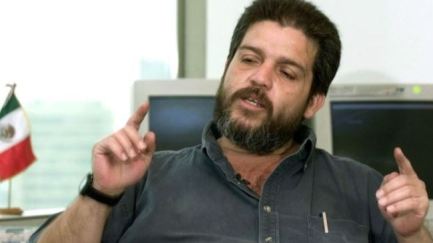
FARC negotiator Marcos Calarca
Press TV – September 7, 2014
The Revolutionary Armed Forces of Colombia (FARC) has accused the United States, the United Kingdom, and Israel of prolonging Colombia’s guerilla war.
FARC negotiator Marcos Calarca leveled the accusation on Saturday at a news conference ahead of another round of peace talks with a delegation of the Colombian government in the Cuban capital Havana.
He pointed to “the responsibility of the government of the United States, of companies involved in the business of war, various intelligence agencies, especially the British and Israeli, whose involvement throughout the conflict encouraged its continuation, escalation and intensification.”
The latest accusation against Israeli and British agencies is a new twist in the 28th round of peace talks in Havana.
He, however, said, “The FARC will acknowledge its responsibility where it concerns us, on the understanding that our military actions have had essentially political goals, derived from our political project to take power.”
The FARC is Latin America’s oldest insurgent group and has been fighting the government since 1964.
Bogota estimates that 600,000 people have been killed and more than 4.5 million others have been displaced due to the fighting.
The rebel organization is thought to have around 8,000 fighters operating across a large swathe of the eastern jungles of the Andean nation.
Featured Video

Rewriting the risk? Inside the government’s vaccine safety messaging
or go to
Aletho News Archives – Video-Images
Book Review
“Davos Can Really Replace the UN”
Inside the book that maps the architecture behind global governance — from the Epstein files to the Pact for the Future
Lies are Unbekoming | April 1, 2026
On June 13, 2019, the United Nations and the World Economic Forum signed a partnership deal to “accelerate the implementation of the 2030 Agenda for Sustainable Development.” That same evening, WEF president Börge Brende — Norway’s former Foreign Minister — had dinner with Jeffrey Epstein at Epstein’s Manhattan townhouse. The Epstein files, released January 2026, contain an exchange between the two from the previous year. Epstein to Brende: “Davos can really replace the UN. C21, cyber, crypto . genetics… intl coordination.” Brende back to Epstein: “Exactly — we need a new global architecture. World Economic Forum (Davos) is uniquely positioned — public private.”
The next day, the UN General Assembly adopted the framework for restructuring global governance.
That sequence — the partnership signing, the Epstein dinner, the candid admission about replacing the UN with a public-private architecture, and then the formal adoption — opens Jacob Nordangård’s The Digital World Brain. Pages two and three. Footnoted to the UN resolution number, the Epstein files, and the General Assembly record.
I keep coming back to it because it captures what this book does that almost nothing else in the independent research space manages. I’ve followed Jacob’s work for years now and interviewed him about his research. Each book peels back another layer of the same institutional architecture, and each time I think he’s reached the limit of what can be documented, the next one goes further. Nordangård doesn’t speculate. He doesn’t editorialize much. He lays institutional actions next to each other in chronological order and lets the pattern announce itself. … continue
Blog Roll
 Aletho News
- Iran Threatens Retaliatory Strike on Stargate AI Project in UAE
- US sent ‘a lot’ of arms to Iranian protesters – Trump
- Barak Ravid Launders Deception To Allow Trump To Back Off Of His Power Plant Threat – Again
- REWRITING THE RISK? INSIDE THE GOVERNMENT’S VACCINE SAFETY MESSAGING
- “Davos Can Really Replace the UN”
- NIAID/NIH and USDA Fund Bioengineered Chimeric Influenza Viruses Built Using Pandemic H1N1 Components: Journal ‘Science Advances’
- Hezbollah hits Israeli warship off Lebanon’s coast, sets it aflame
- Iran slams US strikes on B1 bridge, Mahshahr petrochemical plants as ‘blatant acts of state terrorism’
- In letter to UN chief, Araghchi warns of dire consequences of US-Israeli attacks on Iran’s nuclear facilities
- Why the CIA conspiracy to invade Iran with Kurdish militias failed
- If Americans Knew
- Trump poised to “blow everything up” (ie. commit war crimes) in Iran – Daily Update
- In Iran, Israel-US take aim at “reason, research, and freedom of thought” – Daily Update
- US loses planes over Iran, Israel downgrades Lebanon war goals – Daily Update
- Israel Is Blocking Palestinians from Easter at Church Where Jesus Resurrected
- Plot to assassinate Palestinian activist follows harassment campaign promoted by Zionist groups and elected officials
- Prominent New York synagogue hosts presentation on why U.S. Jews should support the ethnic cleansing of Gaza
- Tapper vs. Piker: Is the CNN Anchor Auditioning for David Ellison?
- Shouldn’t Democrats Be Able to Condemn Genocide?
- Israel-US kill negotiators, destroy civilian structures, but Iran’s military capabilities still largely intact – Daily Update
- ‘War crime’: Global condemnation as Israeli ministers celebrate death penalty law targeting Palestinian prisoners
- No Tricks Zone
- An Inconvenient Tree: Uncovered In Alps… Europe Much Warmer Than Today 6000 Years Ago
- New Study Reports A 60% Slowdown In Greenland’s Ice Loss Rate In The Last Decade
- Low Intensity Tornado Wrecks Major Solar Farm, Creating A Potential Toxic Dump
- New Study Finds Warming Saves Lives…Cold Temperatures 12 Times More Deadly Than Excess Heat
- German Science Blog Accuses PIK Climate Institute Of Hallucinating Climate Tipping Points
- Devastating Assessment Of Comirnaty Vaccine By Former Senior Pfizer Europe Toxicologist
- New Study: CO2 Is ‘Effectively Negligible’ As An Explanatory Climate Change Factor Since 2000
- Former Pfizer Toxicologist Dr. Helmut Sterz Tells Bundestag Hearing Pfizer Vaccine Should Have Never Been Approved
- Energy Expert: Germany’s Nuclear Phaseout Was A “500 Billion Euro Mistake”
- New Research: South Australia’s Mid-Holocene Sea Surface Temperatures Were 4°C Warmer Than Today
 Aletho News