Colombian Social Leader Assasinated Weeks After 7 Campesinos Were Killed

Jose Jair Cortes | Photo: UN
teleSUR | October 17, 2017
A Colombian social leader, Jose Jair Cortes, was murdered in a rural area of Tumaco municipality located in the southwest department of Narino.
Jair Cortes, a member of the local council of the Alto Mira and Frontera Community, was killed in a sector called Y, located in the heart of the city of Tumaco. The social leader was one of seven community leaders to receive death threats in recent months.
The governor of Narino, Camilo Romero Galeano, denounced the murder that occurred just weeks after a massacre that left seven people dead in the village of El Tandil, in the same municipality.
The state government has urged the authorities to investigate the exact details of the community leader’s murder.
“We have once again resisted accepting that the war will continue to make its mark on the Narino pacific,” Romero said. “Our voice of solidarity for the family of Jose Jair Cortes in this painful moment that keeps the mourning in our south.”
“We are profoundly affected by this death, just days after we met in Tumaco with him and the other members of this Junta de Gobierno, corresponding to the territory where the painful events that six peasants and dozens of wounded and still remain of research,” the official statement said.
The community council in the area has repeatedly denounced human rights violations against the Afro-Colombian, Mestizo and Indigenous peasants in the region. The campesinos in the area have been protesting against government’s plan to reduce the production of Cocoa crop, an important means of livelihood for many in the region.
In the western department of Cauca, over 40 campesinos have been injured and one journalist killed in clashes between the Indigenous community members and the Colombian police.
The Indigenous community members who began their protests 10 days ago are demanding the property in the Coconuco Indigenous Reservation, a rural area of Purace municipality, where the government had promised them land in 2013.
The Mobile Anti-Riot Squads (ESMAD) accused the natives of encroaching private property. ESMAD member, Capt. Edgar Garcia, told Caracol, a local radio station that the natives threw “immense rocks that destroy sticks and all around, equally, they shoot us with artifacts, stones, bottles, and explosives to intimidate us, while we are defending the private property.”
Whereas, a spokesman for the protesters quoted by the local radio station, said that “about 10 ESMAD trucks, two tanks and all the artifacts against the indigenous peoples, entered the community.”
Three Social Leaders Murdered in Colombia in Only 72 Hours
teleSUR | August 12, 2017
The Colombian activist and social leader Fernando Asprilla was murdered on Friday in the Cauca department, and was the third death of a social leader recorded in a 72 hour period.
The Ombudsman of Colombia, Carlos Alfonso Negret Mosquera, showed in a recent report that during the period between the first of January, 2016, and March 1st of 2017, at least 156 homicides, five disappearances, and 33 violent attacks against community and social leaders occurred.
According to the report given by Negret, one of the primary causes of the deadly trend is the continued operations of illegal armed right-wing paramilitary organizations that have occupied territory left behind by the disarming Revolutionary Armed Forces of Colombia – People’s Army (FARC – EP).
Human rights defenders and activists in the districts of Antioquia, Arauca, Atlantico, Bolivar, Caldas, Caqueta, Casanare, Cauca, Cesar, Cordoba, Cundinamarca, Choco, Huila, La Guajira, Magdalena, Meta, Nariño, Norte de Santander, Putumayo, Risaralda, Santander, Tolima and Cauca Valley have been assassinated since the FARC’s demobilization process began.
As they have handed over their weapons and negotiated terms of peace with the Colombian government, FARC-EP has consistently demanded that the state works to dismantle paramilitarism in the country, saying its ongoing violence represents the greatest threat to the peace process.
The government however, has largely ignored the existence of paramilitaries, claiming that they were demobilized during Alvaro Uribe’s presidential term between 2006 and 2008. FARC-EP leaders have pointed out that many of the groups have been reclassified as criminal gangs, but continue to represent the same threat as always by assassinating leaders who fight for human and land rights.
ELN Seeks ‘Temporary and Renewable’ Ceasefire in Colombia
teleSUR | July 26, 2017
The chief negotiator of the National Liberation Army (ELN) in Colombia’s peace talks, Pablo Beltran, said on Tuesday that the objective of the third round of negotiations is to reach a “temporary and renewable” bilateral ceasefire, a process which he said takes time because it requires “very precise procedures.”
During an interview with TeleSUR on the Enclave Politica program, Beltran said that the ELN is committed to peace talks and the peace process, and that a consensus has emerged among its members that there “must be a bilateral ceasefire.”
The task of the third round of dialogue is “to make the agreement, design the protocols, sign them, and then apply them. This round must be about the bilateral ceasefire that we want to last beyond the visit of Pope Francis,” according to Beltran.
Beltran emphasized that the group’s motto has always been to “be with the people, and that there is a large sector of Colombian society that wants peace.” The ELN has been accused by some of those opposed to peace talks for allegedly only being interested in peace because their political project has “failed.”
The reason for being in the ELN, he said, is to always be with the people and acting where there is social change and struggle. Beltran said that at the heart of the peace talks is “that there is participation so that the people say how Colombian democracy should be… that is why there are sectors of the right that oppose peace.”
“Some sectors in the government want an expedited negotiation, but we want things to be done well so that it is durable,” he said regarding delays in the process.
“We have lost 26 months in the negotiations because of the government tactic to place the ELN negotiations behind those with the Revolutionary Armed Forces of Colombia – People’s Army (FARC),” he said. “There is a sector of the hard right that is going to oppose anything that signals peace.”
While dialogue progresses, the ELN still is active and present in several regions of Colombia, where the chief negotiater said they have programs and popular support. “The ELN is alive, it is acting,” he said.
Colombia: Bogota Mall Explosion Leaves 3 Dead, 11 Injured
ELN: “There are those who try to tear apart the peace process”
teleSUR | June 18, 2017
Colombian authorities searched Sunday for the perpetrators of a bombing at a major upscale shopping center in Bogota that killed three and left nine others injured in an attack Saturday some have suggested could be an attempt to benefit from fear in the country [which is] implementing peace after more than half a century of civil war.
Authorities reported that an explosion hit a second-floor women’s bathroom at the Andino Commercial Center in Bogota on Saturday night. The shopping center, one of the busiest in the country, was evacuated, while President Juan Manuel Santos returned to the capital from the northern coastal city of Barranquilla to respond to the blast.
“This is a vile, cruel, cowardly act and we are not going to rest until those responsible are captured,” Santos said, adding that there were no indications that another attack was planned in Bogota. The president also expressed solidarity with the victims, while Bogota Mayor Enrique Peñalosa described the incident as a “cowardly terrorist attack.”
Both the FARC and the ELN, the country’s two largest guerrilla groups, condemned the attack and voiced support for the victims.
“Solidarity with the victims in Bogota today,” FARC leader Rodrigo Londoño, also known as Timoleon Jimenez or Timochenko, wrote on his Twitter account Saturday to 95,400 followers. “This act can only come from those who want to close the paths to peace and reconciliation.”
The bombing comes just days before the FARC is set to hand over the last of its weapons to a U.N. monitoring mission as part of a historic peace agreement reached with the government last year paving the way for the guerrilla’s disarmament and transition into a legal political party.
The ELN, currently in peace talks with the government, also responded to the attack.
“ELN Peace repudiates the attack against civilians in the Andino Commercial Center. We share the pain and express solidarity with the victims,” the group’s peace delegation wrote on its Twitter account Saturday to 27,600 followers.
The active rebel army — which has yet to reach a bilateral ceasefire agreement with the government and who claimed responsibility for a bombing outside a bull ring in Bogota in February — was quick to be signaled as a possible suspect in the attack, an assumption the group rejected in its response to the bombing.
“ELN Peace calls for seriousness from those who make unfounded and reckless accusations; there are those who try to tear apart the peace process,” the ELN peace delegation continued, calling for a thorough investigation.
“The ELN will never again carry actions whose objective is to affect the civilian population,” the statement concluded.
The three victims of the attack included a 23-year-old French national, identified as Julie Hunh, who had reportedly been in Colombia for the past six months doing volunteer work.
The U.S. Embassy in Bogota offered condolences in a series of tweets, saying that it is standing by to “provide any support requested by the Colombian authorities.”
Another Social Leader Murdered in Colombia
teleSUR | June 14, 2017
Jose Maria Lemus, president of the Tibu Community Board in Colombia’s North of Santander state, has been killed, the Peoples’ Congress reported Wednesday.
His murder adds to the growing list of recently assassinated social, Indigenous and human rights activists in the South American country.
In May, the United Nations High Commissioner for Human Rights raised alarm over the fact that at least 41 activists have been killed in Colombia so far this year, a record figure in comparison to previous years. The report laid bare to a troubling escalation of violence despite a historic agreement between the government and the country’s largest rebel army last year.
U.N. commissioner Zeid Ra’ad al-Hussein said the figure shows a worsening trend of crimes against social leaders and human rights defenders.
“It’s an increase over the same period last year and the previous years, and it is very alarming,” he said during a news conference.
According to Zeid, the attacks appear to be concentrated in areas that the Revolutionary Armed Forces of Colombia previously controlled during the armed conflict and recently abandoned in order to demobilize after the signing of the peace agreement.
Official statistics show that a staggering 156 social leaders were killed in Colombia in the 14 months between Jan. 1, 2016 and March 1, 2017. Amid the crisis, rights groups have urged the Colombian government to prioritize tackling paramilitary violence that often targets progressive social leaders including campesinos, Indigenous activists and other human rights defenders.
On Monday, organizations such as the Agrarian Summit, Black Communities Process and the Peoples’ Congress protested against the criminalization of social leaders.
Colombia’s FARC Delivers 60% of Weapons to UN Peace Mission
teleSUR | June 14, 2107
The Colombian FARC guerrilla delivered another 30 percent of their weapons Tuesday to the United Nation as part of the landmark peace agreement with the government ending over half a century of civil war.
“With this act, the FARC wants to show Colombia and the world that we leave behind the page of war and starting to write the page of peace … that our commitment is total and that we are going to give everything for the peace of the country,” Pablo Catatumbo, member of the FARC’s leadership, said during the event.
On June 7, the FARC delivered the first 30 percent of the weapons, kicking off its historic disarmament. On Tuesday, another 30 percent will be handed over, and the more than 7,000 members of the groups will deliver the total amount by June 20.
The event that took place in La Elvira, in the western department of Cauca, and had been expected to be attended by President Juan Manuel Santos, the former prime minister of Spain Felipe Gonzalez and former President of Uruguay Jose Mujica.
But the political figures could not participate at the last minute due to heavy rain and had to follow the event through a video conference. Santos from an air base in the city of Cali said: “Today, without a doubt, is a historic day. What we witnessed on television — we could not be there physically because weather did not allow us — is something that the country only a few years ago would never have believed was possible.”
The next step for the Revolutionary Armed Forces of Colombia will be the transition to civilian life and the creation of a political party to participate in the next elections.
The head of the Colombian FARC guerrilla Rodrigo Londoño, also known as Timoleon Jimenez or Timochenko, who is in Norway, said he urged the Colombian government to fight against paramilitary violence in the country.
“We are leaving our weapons behind to continue with politics that we have always maintained and our efforts to build a fairer and just Colombia, where people who think differently are not murdered for their ideas,” Timochenko said during a press conference in Oslo during a forum on conflict resolution.
The leader has said that the government has been slow in implementing the agreement and that there have been problems including security issues and infrastructure shortages for the 26 transition zones where the rebels have assembled before returning to civil life.
He stressed that the most critical issue, though, was that Santos administration has not admitted the ongoing problem of paramilitarism in the country or set out a course of action to tackle it. Timochenko called on the international community to pressure the government to eradicate it, as he says it has become “an obstacle for peace.”
Norway, together with Cuba, was a guarantor country in the four-year peace negotiations between the FARC and the Colombian government. Talks wrapped up in Havana last year once the historic peace accord was finalized. The peace deal brings an end to over 50 years of internal armed conflict that killed some 260,000 people and victimized millions more.
European ‘Left’ Caves in to Censorship and Media Lies
By Tortilla Con Sal | teleSUR | May 31, 2017
In 2011, the former European colonial powers, backed by the United States, with the complicity of the United Nations, worked with minority opposition forces to overthrow legitimate governments in Libya, Syria and the Ivory Coast. They trashed the very international law and basic human rights they cynically proclaimed to defend. In 1961, the Belgian and U.S. governments colluded directly in the murder of Patrice Lumumba, the Democratic Republic of the Congo’s elected Prime Minister.
No one should be surprised at how easily the majority of progressive opinion in the West is intimidated by bullying from the mainstream. The overwhelming majority of progressive Western media outlets and intellectuals either accepted or openly supported Western aggression and intervention in 2011, as if they had learned nothing in the 50 years following the martyrdom of Patrice Lumumba. The 2011 events faithfully re-enacted the catastrophe of the Congo 50 years earlier.
Subsequently, that country has suffered over five million deaths from civil war and foreign intervention, a holocaust shamefully ignored internationally. Similarly, the destruction of Libya and Syria have provoked catastrophic human suffering with millions displaced and hundreds of thousands killed. Now, the U.S. elites and their allies are applying the age old formula of 1961 and 2011 to Venezuela. What still passes for the Western Left should be ferociously defending Venezuela’s right to self-determination.
Instead, less blatantly than in 2011, majority progressive opinion has crumbled and folded against the same old imperialist psychological warfare offensive used against every imperialist target since the end of WWII. Most progressive comments on Venezuela implicitly validate corporate media spin that, as in Syria, Venezuela’s opposition can be neatly segmented into moderates and extremists when in fact the main opposition leaders refuse dialogue.
With great restraint, President Nicolas Maduro has banned the use of lethal force and persisted in efforts at negotiation. Extensive Western media coverage falsely promotes an image of government repression in Venezuela in sharp contrast to their failure in 2009 to cover murderous government repression in Honduras of massive peaceful protests against the country’s coup regime. Those protests lasted over four months, much longer than the Venezuelan opposition’s latest prolonged coup attempt. But events in Honduras received nothing like the coverage of the current crisis in Venezuela. Western media soft-pedalled events in Honduras because the U.S. authorities supported the coup, one they hope to see repeated in Venezuela.
Despite that self-evident fact, Western progressive opinion has effectively caved in to the false mainstream corporate media narrative that the Venezuelan opposition offensive is a legitimate one against a dictatorial government. That moral and political collapse makes itself evident in many ways.
The latest example in Europe is the illegal summary dismissal by a leading Swedish progressive media outlet of its most experienced journalist writing on Latin America, Dick Emanuelsson. Dick has covered Latin American news for over 35 years for the Flamman weekly. Based for many years in Bogota before moving to Tegucigalpa in 2006 where he works with his partner Mirian, Dick’s reports cover all of Latin America and the Caribbean.
Very clearly, Flamman’s decision is blatantly political and should certainly be seen in the context of the Swedish authorities’ support for U.S. attempts to censor Wikileaks in the case of Julian Assange. In Emanuelsson’s case, the decision will surprise no one with any experience with the phony progressive non-governmental and media sector in Western Europe and North America.
Just as Western governments trample human rights while claiming to defend them, so Western non-governmental sector managers abuse basic rights when it suits them. Obviously, Flamman’s editors can no longer accommodate Emanuelsson’s uncompromising support for radical political and social movements in Latin America because it conflicts with received wisdom in Sweden.
Emanuelsson is among the very few European reporters with a lifetime’s experience of reporting on Latin America and one of only a handful writing as revolutionaries. Over the years, his work on Colombia relentlessly exposed the paramilitary and narcotics links of Colombia’s ruling elite. He was practically the only European reporter writing first hand about the FARC-EP’s guerrilla struggle against successive corrupt genocidal Colombian governments and the persistent efforts of the Colombian guerrilla to work for peace.
Similarly, following the 2009 coup in Honduras, Dick and Mirian fearlessly reported the events of the coup itself, the murderous repression of the peaceful protest movement and the return of ousted President Manuel Zelaya. Subsequently, along with a few North American activists, they have worked in constant solidarity with Honduran activists and reporters documenting the corrupt regimes of Porfirio Lobo and Juan Orlando Hernandez.
But now, the supposedly progressive editors of one of Sweden’s leading labor media outlets ignominiously dismissed Emanuelsson two years before retirement, despite his unique record of commitment and achievement.
In order to fire Emanuelsson, Flamman’s editor blew out of proportion minor errors made in relation to a task that only takes up about 10 percent of his overall agreed workload, totally disregarding the Swedish Law of Employment’s Protection – an odd thing to do for a media outlet that regards itself as a defender of worker’s rights. No criticisms about his regular feature reports on Latin America nor about his overall coverage were issued. In fact, no such criticisms against his work have ever been made in almost 35 years!
The paper’s readership has always regarded Emanuelsson’s work as exemplary reporting unavailable elsewhere. On the basis of their flimsy pretext and ignoring his impressive track record, Flamman tried to dismiss him with no compensation. The flagrant illegality of the dismissal notice under Swedish labor law is beyond dispute. When his union intervened, Flamman upped their offer to a measly four month’s salary, a recompense adding insult to the injury of chronic insecurity.
Flamman is an ostensibly left-wing weekly associated with the former VPK Left Communist political party which years ago aligned with acceptable pro-imperialist opinion in Sweden. That realignment is part of the general drift to the right in Europe which has seen the neo-fascist Sverigedemokraterna party become the second most popular in the country. Rather than fight that drift, many former communists and other progressives in Sweden have accommodated to it. That reality is clear from the support of most progressive opinion in Sweden for NATO’s role in the destruction of Libya and Syria and the decline in solidarity with Cuba.
Domestically, Flamman’s treatment of Emanuelsson reflects the accommodation of Swedish former communists with the neoliberal agenda of Sweden’s business sector. Like so many phony progressives across Western Europe, Flamman’s editors talk excitedly about Podemos in Spain, Jeremy Corbyn’s Labor Party in the U.K. or even Syriza in Greece.
But their real commitments reveal themselves in the practice they apply to cases like that of Emanuelsson. People may or may not agree with the politics of his reporting any more than they have to agree with the politics of Julian Assange, but basic justice demands we should defend their fundamental human rights.
Another Indigenous Human Rights Activist Killed in Colombia

Colombian Indigenous activist Alicia Lopez Guisao | Photo: Congreso de los Pueblos
teleSUR | March 3, 2017
Colombian Indigenous and campesino leader Alicia Lopez Guisao was killed in Medellin on Thursday, adding to the growing list of recently murdered human rights activists in the South American country.
The number of social and human rights defenders killed in the last 14 months now stands at at least 120, according to a Friday press release from the Defense of the People.
“The retreat of the FARC from the zones where they previously exercised control has allowed for the entrance of new armed actors who fight for territorial and economic dominance,” states the report. This marks a concerning trend requiring immediate action since the attacks are “pertaining to groups with similar characteristics, and which occurred in the same period and geographic area,” it adds.
Guisao, who was shopping at a grocery store at 8:45 am local time, was shot repeatedly by two unknown gunmen who entered the store, El Tiempo reports.
The People’s Congress, the left-wing organization that Guisao worked for organizing Indigenous peasants, believes the gunmen may have been connected to right-wing paramilitary groups.
“With great sadness and indignation we received and transmitted the news of the murder of comrade Alicia Lopez Guisao,” The People’s Congress said in a statement.
“Her murder is an example of the fact that the right-wing organizations that operate today in the city of Medellin are the same paramilitaries who have murdered others in recent years.”
Guisao, a leader of Colombia’s Indigenous Asokinchas community, organized the Agrarian Summit Project, which distributed land and food for 12 Indigenous and Afro-descendant communities in the department of Choco.
Originally from the rural Uraba Antioquia, Guisao and her family were displaced from the region by U.S.-backed paramilitaries in the late 1990s, forcing them to move to Medellin.
In 2002, after opening a family-led community health and education center, she and her relatives were once again forced out by police and right-wing paramilitaries in a “counter-terrorism operation.”
Operation Orion, the campaign which displaced Guisao and her family, was a joint paramilitary and police offensive that targeted left-wing rebels accused of supporting Colombia’s guerilla movement. Prior to her death, Guisao lived in Choco where she performed community service work.
Her death in the same area from where she was displaced “shows that it’s (paramilitary activity) a structure that persists in the city and that it’s not only general delinquency or criminal gangs like state institutions say,” wrote an open letter signed by dozens of Colombian social justice organizations denouncing her murder.
The letter says that Guisao’s sisters were warned that they and their parents would be next if they show up to her burial. The groups call on the government to ensure the protection of her family and the prosecution of those responsible.
Marcha Patriotica, the leftist political party that worked closely with Guisao and The People’s Congress, says that during the first two months of 2017, more than 20 Colombian social leaders, including six women, were killed. Most of those killed, they say, were Indigenous campesino activists fighting for human rights.
Last January, Indigenous human rights activist Yoryanis Isabel Bernal Varela was murdered in Valledupar by suspected paramilitaries. Eyewitnesses said that she was threatened with a gun by several people on a motorcycle, who then shot her in the head. Varela, a member of Colombia’s Wiwa tribe, fought to protect Indigenous and women’s rights in her community.
“Indigenous people are being threatened and intimidated,” said secretary of the Wiwa Golkuche organization Jose Gregorio Rodríguez shortly after her murder on January 26. “Today they murdered our comrade and violated our rights. Our other leaders must be protected.”
The retreat of the FARC and other left-wing guerrilla groups that have historically defended Indigenous campesino groups has created a power vacuum in areas across the country that right-wing paramilitaries are exploiting.
Colombian Human Rights Leader Assassinated

Colombian human rights defender Emilsen Manyoma | Photo: Conpaz
teleSUR – January 18, 2017
On Tuesday police in the Pacific coast city of Buenaventura announced they had discovered the body of Afro-Colombian human rights activist Emilsen Manyoma, 32, and her partner Joe Javier Rodallega, who had been missing since Saturday.
A prominent leader in the Bajo Calima region since 2005, Manyoma was an active member of the community network CONPAZ where she was an outspoken critic of right-wing paramilitary groups and the displacement of local by international mining and agribusiness interests.
For the past year Manyoma played a key role in documenting attacks on human rights leaders in the region as part of the recently created Truth Commission.
The police said they had found the bodies in an advanced state of decomposition in a jungle area beside the highway. The Justice and Peace Commission, an ecumenical human rights group, reported that both bodies were severely wounded, with Rodallega’s hands reported tied. Radio Contagio reported that both bodies were beheaded.
While police did not release the names of any suspects, just days before their disappearance on Saturday, Rodallega reported being threatened and said a truck had been circling Manyoma’s house.
According to the human rights organization Front Line Defenders, at least 85 human rights defenders were murdered in Colombia in 2016 alone.
Venezuela Expresses Concern Over Colombia-NATO Cooperation
By Jeanette Charles | Venezuelanalysis | December 26, 2016
La Ceiba – The Venezuelan Ministry of Foreign Relations released an official statement Monday expressing its concern over Colombian President Juan Manuel Santos’ announcement that Colombia and the North Atlantic Treaty Organization (NATO) are set to further military cooperation. Venezuela’s Bolivarian government recognizes the agreement as a threat against regional peace emphasizing Latin American institutions such as the Community of Latin American and Caribbean States’ (CELAC) commitment to peace of which Colombia is a member.
Santos celebrated the recently approved agreement and publicly reminisced how the process began nine years ago when he served as Defense Minister under former Colombian President Alvaro Uribe’s administration.
TELESUR reports that the agreement between the South American nation and Northern hemispheric military organization is based upon pre-existing cooperation tackling organized crime. In 2013, Colombia signed a cooperation memorandum with NATO in Brussels, Belgium the first of its kind for the military organization with a Latin American nation.
The 2013 memorandum was signed by former Colombian Defense Minister Juan Carlos Pinzón and NATO Vice-Secretary General Alexander Vershbow. Pinzón expressed then that the agreement sought to “access knowledge, experience, good practices in peace missions, humanitarian missions, human rights, military justice, transformation processes and improvement of the defense and security sector, in addition to help in the fight against drug trafficking.”
Venezuelan Foreign Relations Minister Delcy Rodríguez expressed her nation’s concern Monday via social media platform Twitter where she published the Bolivarian government’s official statement.
“The Venezuelan Government is strongly opposed to the attempt to introduce external factors with nuclear capability in our region, whose past and recent actions claim a policy of war, violate bilateral and regional agreements of which Colombia is a member (UNASUR, CELAC) and through which Latin America and the Caribbean have been declared a Peace Zone,” read the statement.
For the Bolivarian government, Santos’ announcement also “distorts the principles of Bandung that gave rise to the Non-Aligned Movement (NAM), which expressly prohibits member states from forming military alliances.”
Additionally, “the Bolivarian Government of Venezuela, for the sake of union and integration of the Patria Grande, urges the Colombian government to not generate elements of destabilization and war in South America and vows to attend to our Liberators’ historic call for peace and unity.”
NATO was founded in 1949 and has been most recently criticized for waging wars in Afghanistan, Iraq and Libya. Twenty-eight member states constitute the multi-governmental military organization.
News of Santos’ decision to build a stronger alliance with NATO comes after several tumultuous months for the Colombian people following the devastating results of the Peace Accords plebiscite.
In recent weeks, the Colombian government and Revolutionary Armed Forces of Colombia (FARC) reached consensus on revised peace accords which suggest potential opportunities for peace in the South American nation.
Eyewitnesses Say Fallen FARC Rebels Were Ambushed by Sniper

Two FARC rebels, identified as Joaco (L) and Monica, were allegedly killed Wednesday by a government sniper. | Photo: Prensa Rural
teleSUR | November 18, 2016
Eyewitnesses told a verification team that the two rebel fighters with the Revolutionary Armed Forces of Colombia killed earlier this week in the northern department of Bolivar died as a result of an ambush by government forces, Prensa Rural reported Friday.
The Ministry of Defense claimed that the armed guerrilla rebels were killed in combat after carrying out criminal activities.
Meanwhile the leaders from the Revolutionary Armed Forces of Colombia, known as the FARC, said they were merely making their way to “pre-concentration” areas where members of the rebel army are gathering ahead of the final process of demobilization as part of the ongoing peace process.
Members of the Association of Agroecological and Mining Brotherhoods of Guamoco, a local organization, spoke to witnesses in the municipality of Santa Rosa del Sur, where the incident took place to collect testimonies.
According to these witnesses, the two victims, FARC rebels who went by the names Joaco and Monica, were standing near two houses near a section of town known as the “Y” when suddenly Joaca, who was on the phone, was struck by a bullet and fell to the ground. Monica then bent down to check on him when she too was struck by a bullet.
The testimonies were collected from people who were inside one of the houses and witnessed the entire series of events. Prensa Rural reported that the house contained four men, two women, a child, and an infant.
Government troops, who were positioned approximately 40 meters away, then fired two bursts of rounds into the air. Troops then ordered a third rebel fighter to the ground and subsequently detained him.
The government troops then harassed the locals, storming into their homes, reportedly insulting those present and demanding they produce identification. They further accused the civilians of being FARC collaborators. Locals reported that they fear reprisals from state security forces after being labeled collaborators.
Witnesses reported that two of the government soldiers wore masks to hide their identities. Others said they recalled seeing some of the government troops, in civilian clothing, visiting the house near where the killings took place.
The testimony from witnesses matched early statements from the FARC. Spanish lawyer Enrique Santiago, who has served as a legal advisor to the FARC during the peace negotiations in Havana, wrote Wednesday on his Twitter account that the two rebels were killed “by a sniper.”
The Tripartite Monitoring and Verification Mechanism, which forms part of the bilateral cease-fire agreement, was activated in order to conduct formal investigation of the events.
However, this early report raises serious questions about the conduct of the government soldiers. It is widely known within Colombia that there are high-ranking officials in the armed forces who oppose the peace process and may try to sabotage efforts to end the five-decade-long conflict.
Witness testimony belied the government’s version of events in an incident in April 2015 that left 13 dead. There the government claimed troops were ambushed but witnesses said the deaths were the product of a lengthy gun battle and that locals had warned the government soldiers not to make camp in the area. That incident took place before a bilateral cease-fire had been established and threatened to derail peace talks.
The details surrounding this latest incident, such as the presence of government troops in civilian clothing days earlier, suggests the killings were not the product of a chance encounter but rather a pre-planned operation.
The killing of the two FARC rebels marked the first documented break in some 80 days of the official bilateral cease-fire and, according to the Center for Resources for Analysis of the Conflict.
The Tripartite Mechanism is expected to issue a series of recommendations to avoid any future incidents.
FARC and government negotiators signed a new peace deal in Havana Saturday, just six weeks after a previous peace plan was narrowly rejected in a nationwide plebiscite. The new agreement includes modifications made after consultations with the “No” side as well as other sectors of Colombian civil society.
RELATED:
Exclusive: 2nd Colombia Deal ‘More Inclusive’ Says FARC Lawyer
Featured Video
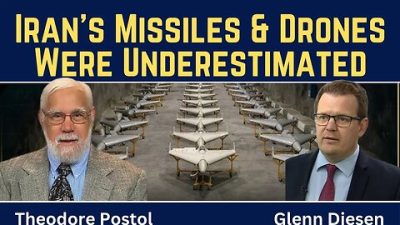
Theodore Postol: Iran’s Missiles & Drones Were Underestimated
or go to
Aletho News Archives – Video-Images
From the Archives
Wars for Israel: A reminder of who’s giving the marching orders
By Damian Lataan | February 7, 2012
As the West prepares to march off to yet another war in the Middle East, we should perhaps remind ourselves of who is giving the West their marching orders.
In February 2003, just weeks before the US and their allies launched their attack on Iraq and her peoples, a delegation of US congressmen, together with the US Ambassador to the United Nations, John Bolton, a well known pro-Zionist and neoconservative war-hawk, were in Israel at the invitation of the Israeli government then led by Israeli Prime Minister Ariel Sharon.
Addressing the congressmen, Sharon told them ‘that Iran, Libya and Syria should be stripped of weapons of mass destruction after Iraq’. Later, Sharon told John Bolton ‘that Israel was concerned about the security threat posed by Iran, and stressed that it was important to deal with Iran even while American attention was focused on Iraq’. … continue
Blog Roll
 Aletho News
- Trump’s April Fools’ Address to the nation
- The Most Important Bet You’ve Never Heard Of
- The killing of three Indonesian soldiers in Lebanon should remind Jakarta that Israel does not want peace
- Defeated and delusional: Netanyahu’s remarks reveal $80bn war failure, says analyst
- Iran’s friends are about to make life much more difficult for Israel and the US
- The war of liberation of the Arab and Islamic peoples expands across the Gulf
- Envoy warns UN on Trump’s threat to ‘obliterate’ Iran’s civilian infrastructure
- The Larak Corridor: Iran’s Rial Gate With No US, No Israel, and No Way Around
- ‘Economic terrorism’: Steel facilities hit again in US-Israeli strike
- ‘War Crime’: Iran condemns attacks on Arak, Ardakan nuclear sites
- If Americans Knew
- Gaza families reunite years after babies evacuated amid Israel’s war
- International Rescue Committee warns Gaza’s children face grave protection risks
- Iran’s Alleged 47-Year War on America: Debunking the 1,050 American Deaths Canard
- Israel wants US to bomb more of Iran’s civilian structures (113,000 is not enough) – Not a ceasefire Day 173
- Ann Coulter Rips Into Fox News for Iran War Coverage
- Joe Kent Urges Americans To Call White House and Congress To Object To Sending Troops Into Iran
- DNC Resolution to Reject AIPAC Funding Puts Democratic Leaders in the Hot Seat
- Swedish foundation to build 400 schools as over 650,000 Gaza children remain without education for 2 years
- Israeli army admits photshopping image of slain Lebanese journalist
- This is how Israel is systematically killing health workers under the cover of war in Lebanon
- No Tricks Zone
- New Study Finds Warming Saves Lives…Cold Temperatures 12 Times More Deadly Than Excess Heat
- German Science Blog Accuses PIK Climate Institute Of Hallucinating Climate Tipping Points
- Devastating Assessment Of Comirnaty Vaccine By Former Senior Pfizer Europe Toxicologist
- New Study: CO2 Is ‘Effectively Negligible’ As An Explanatory Climate Change Factor Since 2000
- Former Pfizer Toxicologist Dr. Helmut Sterz Tells Bundestag Hearing Pfizer Vaccine Should Have Never Been Approved
- Energy Expert: Germany’s Nuclear Phaseout Was A “500 Billion Euro Mistake”
- New Research: South Australia’s Mid-Holocene Sea Surface Temperatures Were 4°C Warmer Than Today
- Storing Green Energy To Last Germany 10 Days Would Require A 60-Million Tonne Battery
- New Studies: UK Sea Levels Were 4 Meters Higher Than Today During The Mid-Holocene
- Destructive Green New Deal: German Energy And Metal Group Warns Of Drastic Crisis
 Aletho News