US DOJ Refuses To Cooperate With Colombia In Uribe Trial
teleSUR | October 22, 2019
The United States Department of Justice has told the Colombian judiciary that they will not cooperate with them in their investigation into disgraced former right wing President Alvaro Uribe. This is despite Colombia believing that the DOJ hold information about Uribe’s contact with paramilitaries and drug traffickers.
Supreme Court magistrate Cesar Augusto Reyes requested that the DOJ hand over records they have about such calls and visits that Uribe held.
Reyes believes that the US could hold key information that would either corroborate or disprove central claims made by Uribe’s defense attorneys.
According to the magazine La Semana, Reyes has written letter to the DOJ condemning them as ‘disrespectful’ for refusing his “appropriate request.”
Among the charges he must answer to is that he paid for false testimonies to “politically finish off” left-wing lawmaker Ivan Cepeda, who had been exposing his links to paramilitarism. Congress threw out the case against Cepeda and pursued an inquiry into Uribe instead.
Another one of the serious charges he faces is that he bribed former paramilitaries huge amounts to testify that Uribe was not involved in the death squad known as ‘Bloque Metro’.
During Uribe’s time in power, he was a close ally of then president George Bush, and of US interests in the region.
Armed FARC: Colombia Peace Only Possible with ‘Humanist Government’
teleSUR | August 31, 2019
The “new guerrilla” movement led by former Revolutionary Armed Forces of Colombia, People’s Army (FARC-EP) Ivan Marquez announced to the public Saturday it is willing to engage in “dialogue” with a “coalition.”
An open letter signed “from the mountains of insurgent Colombia” by former high-ranking FARC commanders who are referring to themselves as the “New Power”, reiterates that the state’s failing to follow through with the 2016 Havana Peace Accords is what led the minority faction to return to arms. According to the ‘New Power’ that announced its rearmament Aug. 29 via a 32-minute Youtube video, the group took up weapons again because, “the history of betrayals suffered leaves no alternative.”
The former FARC commanders and soldiers in the split faction of around 30 people that “only an open process and an alternative humanist government can pave the way towards a scenario of coexistence in which the interests of the people and true development prioritized” for Colombia.
On Thursday morning a video was published by a minority of senior leaders of the former FARC announcing their split from the main organization and to rearm. Among those in the video was Jesus Santrich, a key FARC leader who has been missing since mid-July and Ivan Marquez, a once-senior commander who was integral in negotiating the peace accord, announcing a “new stage of armed struggle.”
In the ‘New Power’ letter, the authors recognize all those who participated in the peace accord that was negotiated over several years. “They became the moral fire of the cause of reconciliation.” They are “the great coalition of social justice and democracy that promotes a new dialogue to achieve true, final, stable and lasting peace,” the communique reads.
“Hopefully, total peace is achieved involving all armed actors that forges a New Alternative Government that saves the country from this general crisis,” say the dissident leaders who send a message to the Communist Party, the Patriotic Union and other nearby political factions: “As revolutionaries, sooner or later we will meet along the way.”
Marquez, Santrich and the other signatories say there are “men and women of this country, who believe that another Colombia is possible who have struggled and continue to fight with patience and intelligence for peace.” Among those on that list are Congressmen Ivan Cepeda, Alvaro Leyva, Roy Barreras, Gustavo Petro, Angela Maria Robledo and Angelica Lozano, among others.
The guerillas thank all social movements and guarantor countries that part in crafting the peace agreement and denounce the “Dominant Power Block—the oligarch class that sows wars to be freed by others.”
Also on Saturday, Colombia’s military announced it had killed, in total, 12 former FARC in a rural area in the southern department of Caqueta, near the border with Ecuador. Colombian Army General Nicacio Martínez said Saturday that the number of FARC dissidents who died in a large military operation rose to 12, three more than was first announced Friday following the Aug. 30 operation ordered by President Ivan Duque.
It’s still unclear how, or if, the Caqueta faction is related to the ‘New Power’ under Marquez.
The main ex-FARC constituency officially condemned the move on Thursday. In a tweet on their official account, they say unequivocally that “more than 90% of former guerrillas remain committed to the peace process.” The group did later that day say it was breaking with the Comprehensive System of Truth, Justice, Reparation and Non-Repetition (SIVJRNR), the institutions that form the basis of the Havana Peace Accords, which includes the Special Judicial Court, or JEP, set up to help the over eight million people affected by the 50-year civil conflict.
Revered Social Leader and Activist Killed in Colombia

teleSUR | July 5, 2019
Social leader Tatiana Paola Posso Espitia, 35, was shot twice in the head Wednesday morning in front of her house in El Copey located in the Department of Cesar when two men on motorcycles fired at the activist and fled the scene.
The assassination occurred just as Espitia’s taxi driver, Wilson Ortega Palomino, arrived at her home to take the social leader to work, according to local media reports. The bad timing resulted in Ortega also being shot four times by the hitmen. He is in critical condition at a nearby hospital.
The National Network for Democracy and Peace in Colombia published a communique on its Twitter account firmly condemning the murder.
“Posso Espitia was a social activist committed to humanitarian aid, helping vulnerable people and victims of the armed conflict that continue to affect Colombia,” said the report.
The organization added that the social activist, who was a candidate for the community council, was a beloved member of her community.
The document also explained how the city El Copey has had a long history marked by threats against social leaders, deaths and massive displacement of the population.
The tragic event comes as the Institute of Studies for Development and Peace (Indepaz) showed that since the signing of the peace agreement between the disarmed Revolutionary Armed Forces of Colombia (FARC) and the government of former president, Juan Manuel Santos in November 2016, 727 social leaders or human rights advocates have been killed in Colombia.
The assassinations have so far mainly targeted Afro-Colombian and Indigenous rights activists, in addition to rural farmers advocating for land and political rights in their respective regions.
Colombia’s Ombudsman announced Wednesday that at least 983 social leaders have been threatened with death in Colombia, 50 percent of them are women.
Last week, the ‘We Defend Peace in Colombia’ human rights organization called for major peaceful protests in the country and abroad meant to pressure the President Ivan Duque administration into fully addressing the rampant murders.
The global march is set to take place July 26 and is meant to “pay tribute to the (assassinated) social leaders and to demand action to end these crimes,” said organizers.
The New False Positive Being Planned Against Venezuela
Orinoco Tribune | May 5, 2019
The defeat of the military political operation of April 30, 2019 against the government of President Maduro, adds to the long list of failures that led to Ivan Duque accusing the Venezuelan government of protecting the ELN, in a desperate attempt to meet one of the two tasks that have been assigned to him within the uribista government: to close the roads to the one of peace in Colombia and to attack Venezuela.
Once again defrauded by the Venezuelan opposition, the United States continues giving more and more prominence to the Colombian right. The call of Ivan Duque to the Venezuelan military during that day, shows a clumsy despair before the incapacity of the Venezuelan right, which gave one more element to President Maduro to accuse the US government and Colombia of being behind the failed coup d’etat. But the Bolivarian triumph in this battle does not end with the war.
The new false positive, to link the Venezuelan government with the ELN, is still under construction.
ELN, A GUERRILLA ORGANIZATION THAT IS APPROACHING ITS 55TH ANNIVERSARY
The National Liberation Army (ELN) and the Revolutionary Armed Forces of Colombia (FARC) were born in 1964 while Raúl Leoni occupied the presidency of Venezuela. Not even the most tendentious versions of history mention any possibility that Leoni’s government was behind its founding, nor any political group of the Venezuelan left, since all the existing ones for that moment were less strong than those that existed. They gave rise to the Colombian guerrillas during the last half of the 20th century.
Since its inception, both guerrilla groups have operated throughout the country, which obviously includes the territories of the porous border with Venezuela.
After the FARC-EP secretariat signed the peace agreements, and with it the demobilization of most of its troops, the ELN became the largest and oldest guerrilla group on the continent. The Uribista government of Duque, decided to breach and tries to modify the agreements with the FARC-EP and got up from the dialogue table with the ELN, that is, closed any near possibility of achieving a negotiated political solution to the conflict. And at the same time, it has made repression and judicialization the only government response to popular demands, while paramilitaries and the Public Force execute a new genocide against leaders and social leaders.
The reality is obvious, in Colombia there is no peace , no post-conflict and is on the verge of a humanitarian crisis. In more than five decades of confrontation, the Colombian state has not had the true political will to solve the social conflict generated by the war and its Public Force, has not managed to defeat the ELN militarily, not even with the support of paramilitary forces or the contest of the US military institutions. They have more than 16 facilities of different types in the country. On the contrary, on more than one occasion, it has been forced to negotiate. So far, the ELN has held dialogues with five presidents and seven Colombian governments.
The first dialogues had the support of Carlos Andrés Pérez, who was in his second term as president of the then Republic of Venezuela and later with the support of the governments of Hugo Chávez and Nicolás Maduro, whose interest in the peace of Colombia has been evident.
THE PSYCHOLOGICAL PROJECTION OF THE URIBE GOVERNMENT
The Colombian government refuses to assume that the entire state is in check because of the penetration of drug trafficking into its institutions. The production of cocaine and the planting of coca have a constant increase in Colombia and, according to Donald Trump himself, had never been as high as since Ivan Duque’s presidency. But the Uribe government insists on attributing to the Venezuelan government, the status of “narco-government” that actually belongs to him, and now he blames it for his own inability to win a war that has lasted more than half a century.
The caricature of President Maduro that has been built by media corporations and the voices of the Colombian government, as a fool without popular support that only remains in the presidency with the support of the FANB, is opposed to that of the man they accuse of being behind all the struggles of the Colombian people and now, even to sustain a guerrilla organization that was born when he was only one year old and since then has remained active uninterruptedly.
What looks like typical psychological projection, is actually a new attempt to generate a false positive – as denounced by the Venezuelan chancellor – but to succeed they need to erase history.
FROM IRAN TO VENEZUELA
A few days ago, Donald Trump announced that the United States would declare Iran’s Revolutionary Guard a “foreign terrorist organization,” as indeed it happened. Since this military force is the institution of an independent republic, recognized by the United Nations, this measure has no precedents and sows a very bad precedent as it is a violation of international law and the most elementary diplomatic norms.
The ELN, for its part, has been included in the list of foreign terrorist organizations designated by the US for many years , so it is not unreasonable to assume that, in addition to the argument to justify the involvement of Colombia in the first war between countries of the region of the 21st century, another dangerous objective of this attempt to link the Venezuelan government with the Colombian guerrilla organization, could be to declare the FANB as a foreign terrorist organization, given that they have not managed to co-opt, divide or defeat it.
If the internal consensus were achieved or if the pressure from the United States forced it, it would be expected that before August 2019 the Colombian state will add to its terrible history of wars, a costly and complicated military aggression against Venezuela.
Coincidentally, a few hours after the failed coup d’etat in Venezuela, Trump decided to change his ambassador in Bogotá, Kevin Whitaker, to post Philip Goldberg, whose record can give clues to the new strategies that will be directed from Colombia against Venezuela.
Goldberg was expelled from Bolivia in 2008 for allegations of conspiracy made by President Morales, he was recently in charge of business in Havana, he was also part of the diplomatic corps in Kosovo, he is an intelligence specialist and was the Coordinator in Bogotá of the terrible Plan Colombia.
Therefore, while it is important to disprove the false opinion matrices and investigate the non-governmental organizations that sustain these matrices with pseudo-investigations -even some linked to sectors that call themselves the left, Venezuela must continue preparing to respond in other areas because the lies will keep coming out of the laboratories without ceasing and will be as diverse as the tactics require; what has not changed much in the last two centuries are the strategic objectives of the United States on the region and the world.
Source: Mision Verdad
Translated by: JRE\EF
RELATED CONTENT: Venezuelan Military Deserters Removed From Hotel in Cúcuta for Late Payments
US Air Freight Company that Smuggled Weapons Into Venezuela Linked to CIA “Black Site” Renditions
By Whitney Webb | MintPress News | February 13, 2019
GREENSBORO, NORTH CAROLINA – Two executives at the company that chartered the U.S. plane that was caught smuggling weapons into Venezuela last week have been tied to an air cargo company that aided the CIA in the rendition of alleged terrorists to “black site” centers for interrogation. The troubling revelation comes as Venezuelan President Nicolás Maduro has rejected a U.S. “humanitarian aid” convoy over concerns that it could contain weapons meant to arm the country’s U.S.-backed opposition.
Last Tuesday, Venezuelan authorities announced that 19 rifles, 118 ammo magazines, 90 radios and six iPhones had been smuggled into the country via a U.S. plane that had originated in Miami. The authorities blamed the United States government for the illicit cargo, accusing it of seeking to arm U.S.-funded opposition groups in the country in order to topple the current Maduro-led government.
A subsequent investigation into the plane responsible for the weapons caché conducted by McClatchyDC received very little media attention despite the fact that it uncovered information clearly showing that the plane responsible for the shipment had been making an unusually high number of trips to Venezuela and neighboring Colombia over the past few weeks.
Steffan Watkins, an Ottawa-based analyst, told McClatchy in a telephone interview that the plane, which is operated by U.S. air cargo company 21 Air, had been “flying between Philadelphia and Miami and all over the place, but all continental U.S.” during all of last year. However, Watkins noted that “all of a sudden in January, things changed” when the plane began making trips to Colombia and Venezuela on a daily basis, sometimes multiple times a day.
According to Watkins’ analysis, this single plane had conducted 40 round-trip flights from Miami International Airport to Caracas and Valencia — where the smuggled weapons had been discovered — in Venezuela, as well as to Bogota and Medellin in Colombia in just the past month.
Publicly available flight radar information shows that the plane, although it has not returned to Venezuela since the discovery of its illicit cargo, has continued to travel to Medellin, Colombia, as recently as this past Monday.
Multiple CIA ties
In addition to the dramatic and abrupt change in flight patterns that occurred just weeks before U.S. Vice President Mike Pence prompted Venezuelan opposition member Juan Guaidó to declare himself “interim president,” a subsequent McClatchy follow-up investigation also uncovered the fact that two top executives at the company that owns the plane in question had previously worked with a company connected to controversial CIA “black sites.”
Indeed, the chairman and majority owner of 21 Air, Adolfo Moreno, and 21 Air’s director of quality control, Michael Steinke, both have “either coincidental or direct ties” to Gemini Air Cargo, a company previously named by Amnesty International as one of the air charter services involved in a CIA rendition program. In this CIA program, individuals suspected of terrorism were abducted by the intelligence agency and then taken abroad to third-country secret “black sites” where torture, officially termed “enhanced interrogation,” was regularly performed.
Steinke worked for Gemini Air Cargo from 1996 to 1997, according to a 2016 Department of Transportation document cited by McClatchy. Moreno, although he did not work for Gemini, registered two separate businesses at a Miami address that was later registered to Gemini Air Cargo while the CIA rendition program was active. McClatchy noted that the first business Moreno registered at the location was incorporated in 1987 while the second was created in 2001. Gemini Cargo Logistics, a subsidiary of Gemini Air Cargo, was subsequently registered at that same location in 2005.
21 Air has denied any responsibility for the weapons shipment discovered onboard the plane it operates, instead blaming a contractor known as GPS-Air for the illicit cargo. A GPS-Air manager, Cesar Meneses, told McClatchy that the weapons shipment had been “fabricated” by the Maduro-led government to paint his government as the victim. Meneses also stated that “the cargo doesn’t belong to 21 Air and it doesn’t belong to GPS-Air” and that it had been provided by third parties, whose identities Meneses declined to disclose.
Contras redux?
The revelation that the company that operates the plane caught smuggling weapons into Venezuela has connections to past controversial CIA programs is unlikely to surprise many observers, given the CIA’s decades-long history of funneling weapons to U.S.-backed opposition fighters in Latin America, Southeast Asia and other conflict areas around the globe.
One of the best-known examples of the CIA using airliners to smuggle weapons to a U.S.-backed paramilitary group occurred during the 1980s in what became known as the Iran-Contra scandal, in which the Reagan administration delivered weapons to the Contra rebels in order to topple the left-leaning Sandinista movement. Many of those weapons had been hidden on flights claiming to be carrying “humanitarian aid” into Nicaragua.
The parallels between aspects of the Contra scandal and the current situation in Venezuela are striking, particularly given the recent “outrage” voiced by mainstream media and prominent U.S. politicians over Maduro’s refusal to allow U.S. “humanitarian aid” into the country. Maduro had explained his rejection of the aid as partially stemming from the concern that it could contain weapons or other supplies aimed at creating an armed opposition force, like the “rebel” force that was armed by the CIA in Syria in 2011.
Though the media has written off Maduro’s concern as unfounded, that is hardly the case in light of the fact that the Trump administration’s recently named special envoy in charge of the administration’s Venezuela policy, Elliott Abrams, had been instrumental in delivering weapons to the Nicaraguan Contras, including hiding those weapons in “humanitarian aid” shipments. In subsequent testimony after the scandal broke in the 1980s, Abrams himself admitted to funneling weapons to the Contras in exactly this way.
With the recently uncovered illicit weapons shipment from the U.S. to Venezuela now linked to companies that have previously worked with the CIA in covert operations, Maduro’s response to the “humanitarian aid” controversy is even more justified. Unfortunately for him, the U.S.-backed “interim president,” Juan Guaidó, announced on Monday that his parallel government had received the first “external” source of “humanitarian aid” into the country, but would not disclose its source, its specific contents, nor how it had entered the country.
As US Laments Human Rights in Venezuela, US-Allied Colombia Descends into Drug-fueled Humanitarian Crisis
By Whitney Webb | MintPress News | February 8, 2019
BOGOTÁ, COLOMBIA – Several troubling situations are currently playing out across Colombia, yet the country’s continuing downward spiral into drug-fueled and politically-motivated violence has caused little concern in Washington, offering yet another clear indication that the U.S.’ current posturing on Venezuela is hardly motivated by concerns about “democracy,” “human rights,” or the welfare of the Venezuelan people.
This, of course, can hardly be considered surprising, given that Colombia is a top U.S. ally whose government has long been closely aligned with Washington’s interests. However, although the lack of U.S. government or media attention to Colombia may effectively hide it from the American public, the country is becoming increasingly lawless, with cocaine production reaching new record levels and the government sanctioning the mass murder of the country’s largest indigenous group. Not only that but since Colombia’s new president, Iván Duque, came to power late last year, the number of indigenous social leaders who have been murdered has spiked to the highest levels in over a decade.
Ultimately, the lack of media coverage of Colombia’s humanitarian crises, which have large implications for the Americas as a whole, is a telling example of how such crises are regularly weaponized by governments and media to exclusively target governments it wishes to pressure or overthrow, while turning a blind eye to those same or worse acts when committed by an allied nation.
An absurdly double standard
Though it was Barack Obama who first deemed Venezuela a “national security threat” and re-initiated draconian sanctions against the oil-rich nation, the Trump administration has greatly increased the sanctions targeting Venezuela, often citing its government’s alleged participation in illegal drug trafficking as justification for doing so. However, the U.S. has offered little in the way of concrete evidence to back up those allegations.
During this same period, moreover, the Trump administration has expressed little concern for the booming illicit drug trade in neighboring Colombia, which has broken records for cocaine production for the last two years in a row. Though the Colombian government and military have been repeatedly tied to the country’s drug trade, the Trump administration – like previous U.S. administrations – hasn’t lifted a finger.
According to UN figures released last September, Colombia’s cocaine production has again broken records, with the country producing an estimated 1,379 tons of cocaine in 2017, the latest year for which such statistics exist. That figure is a 31 percent increase in cocaine production from 2016. 2016 itself was a record-breaking year with cocaine production gaining by 50 percent over 2015 levels.
Though Trump had threatened to decertify former Colombian President Juan Manuel Santos’ government over the rapid growth of cocaine production, he ultimately gave Colombia a pass in the U.S.’ annual determination of countries considered to be “major drug transit or major drug producing” areas “because the Colombian National Police and Armed Forces are close law enforcement and security partners of the United States in the Western Hemisphere.”
The document also described Venezuela, along with its regional ally Bolivia, as “countries that have failed demonstrably during the previous 12 months to adhere to their obligations under international counternarcotics agreements” despite the fact that Bolivia had the fewest illegal coca crops of any South American country that year.
Since getting a free pass from the Trump administration, Colombia’s current president, Iván Duque, has signaled his hopes to revive a failed, U.S.-backed program to indiscriminately spray suspected coca fields with the infamous Monsanto product glyphosate to reduce cocaine production.
Though the U.S. government and Western media have traditionally placed the blame on leftist guerillas in Colombia, like the FARC, the 2016 peace deal that saw the FARC abandon the drug trade has removed this convenient scapegoat and highlighted the long-standing role of the Colombian military and prominent right-wing politicians in cocaine production.
In fact, the United Nations Drug Control Program (UNDCP) has described the Colombian military — which has been armed and trained for decades by the U.S. under the Clinton era policy known as “Plan Colombia” — as being among “the biggest heroin and cocaine trading institutions.”
The Colombian government has also been intimately involved, particularly during the presidency of Álvaro Uribe, who allegedly served as the “head of Colombia’s paramilitary groups” both before and while in office. Uribe was once ranked by the U.S. Defense Intelligence Agency “on a list of 104 important narco-traffickers contracted by the Colombian narcotics cartels.”
There are also indications of the U.S. government’s own involvement in the Colombian cocaine trade. For example, Colombia’s most notorious drug trafficker, Pablo Escobar, at one point worked for the U.S. Central Intelligence Agency, according to Escobar’s own children. Escobar allegedly sold cocaine for the CIA to help the U.S. government finance its fight against communism and left-wing governments in Latin America.
As pointed out in the book Cocaine, Death Squads and the War on Terror: U.S. Imperialism and Class Struggle in Colombia, the U.S.’ anti-drug efforts in Colombia were never intended to eradicate cocaine, but instead alter the market share by ensuring that allies of the U.S. in Colombia – the Colombian government, paramilitaries and the wealthy elite who are favorable to U.S. business interests – could monopolize the drug trade with no competition from outsiders. Thus, it should hardly shock anyone that the U.S. continues to turn a blind eye to the country’s booming illegal drug trade and its associated violence, even as it continues to break records year after year.
Erasing the erasure of the Wayuú
As the long-standing, U.S.-backed plan to oust the Chavista regime in Venezuela has unfolded, Maduro’s government has been called out in Western media for “starving his own people,” despite the fact that U.S. sanctions imposed on Venezuela are a driving factor behind the country’s economic crisis. However, since 2011, Colombia has been the site of ongoing genocide against the country’s largest indigenous group – the Wayuú – in the country’s Guajira region, after the Colombian government diverted their only source of water to support the operations of the country’s – and continent’s – largest coal mine.
The suffering of the Wayuú, who have reported the deaths of at least 14,000 children due to the lack of clean water, has gone unreported by the same outlets that routinely raise concern about lack of essential goods in Venezuela. The Wayuú, who comprise around 20 percent of Colombia’s entire indigenous population and 48 percent of the Guajira region’s total inhabitants, are now on the brink of dying out completely seven years after the Ranchería river – their community’s only freshwater source – was diverted by the government-constructed Cercado dam in order to service the water needs of the Cerrejón coal mine.
An estimated 37,000 Wayuú now suffer from severe malnutrition, as they can no longer grow crops or raise livestock without a freshwater source. Each person in the community now lives off of less than 0.7 liters (24 oz.) of water a day while the Cerrejón mine guzzles more than 2.7 million liters of water in a 24-hour period – most of which is used to improve mine “visibility” by minimizing dust pollution. Despite the clear impact of the dam and mine on the humanitarian crisis facing the Wayuú, the Colombian government and supportive Western media have blamed “climate change” and weather patterns like El Niño for the situation.
The most likely reason for the erasure of the slow genocide of the Wayuú from Western media is the fact that the Cerrejón mine is a largely a U.S.-backed operation, as the mine was originally founded by ExxonMobil and is now owned by a consortium of largely Western mining companies such as Anglo American and BHP Billiton. These same mining companies often work with right-wing paramilitary groups — who are also closely connected to the Colombian government — and who repeatedly threaten the lives of Wayuú who speak up about their people’s suffering, including their chief legal advocate, Javier Rojas Uriana.
Notably, the Colombian Wayuú have been immigrating to the Wayuú community in Venezuela in order to avoid the slow death caused by malnutrition, lack of water, and waterborne illnesses from the polluted water from the community’s remaining wells. The Venezuelan Wayuú have been largely supportive of Chavismo and have backed the Maduro-led government, referring to U.S.-backed opposition protests as violent riots “intended to create chaos.” The Huffington Post noted in 2017 that the Wayuú’s support for Maduro had largely been erased by the Western media because it “does not match up with the media’s anti-Venezuelan government narrative.”
Liquidating social leaders, activists, human-rights advocates
While the fate of the Wayuú (and thus 20 percent of the country’s entire indigenous population) continues to hang in the balance, the plight of Colombia’s indigenous peoples has grown even worse since the recent inauguration of Colombian President Iván Duque.
Despite Duque’s having come to power just last August, El Tiempo recently reported that the murders of indigenous leaders in the country have spiked to levels unseen in over a decade since Duque became Colombia’s president. According to data cited by El Tiempo, 120 indigenous social leaders – as well as human-rights defenders — have been murdered in cold blood during Duque’s first 100 days in office.
Though the murder of social leaders by right-wing paramilitary groups has a standing problem in Colombia’s recent history, this level of targeted murder represents a spike over recent years — in which 226, 159, and 97 such murders occurred over the course of the entire years of 2018, 2017 and 2016, respectively. Notably, the Venezuelan government of Nicolás Maduro has been routinely accused by Western media of murdering opposition activists; yet, those same outlets have been silent on Colombia’s recent spike in activist murders.
Despite the jump, Duque’s government has expressed little concern. This is hardly surprising when one considers that Duque is the hand-picked successor and protégé of Álvaro Uribe, the former Colombian president who was once “the head of Colombia’s paramilitary groups,” according to former paramilitary group commanders of the right-wing death squad AUC, which has been funded by several prominent U.S. corporations.
Uribe, who was Colombia’s president from 2002 to 2010, and was a close ally of George W. Bush, was also personally implicated in organizing a massacre conducted by a right-wing paramilitary group; and his cousin, Colombian politician Mario Uribe, was charged with mobilizing right-wing death squads in the country to help secure Uribe’s presidential victory in 2002. Uribe’s brother was also arrested for founding a right-wing paramilitary group in 2016.
Under Uribe’s presidency, the Colombian military massacred thousands of civilians — such as in the “false positives” scanda,l where the Colombian military dressed up an estimated 5,000 civilians in guerilla clothing and killed them in cold blood, subsequently gaining a bonus from Uribe’s government for the sinister act. It should be no surprise then that, under Uribe, the murder rate of indigenous leaders and human-rights activists reached its all-time high at 1,912 murders in 2003.
Given Duque’s close relationship to Uribe, it is also little surprise that paramilitary groups have endorsed Duque following his election and have vowed to “exterminate” Duque’s opposition, calling prominent Colombian progressives “military targets.”
What to expect if US gets its way in Venezuela
If Washington’s publicly stated concerns about “human rights” and the welfare of a country’s people in Venezuela were genuine, it would be equally critical of Colombia’s government, given the numerous troubling situations currently unfolding in that country. Instead, the dichotomy between Washington’s relationship with Venezuela and Colombia is yet another clear example that the public justifications for the U.S.’s Latin America policy are little more than window dressing for the U.S.-backed expansion of neo-fascist governments throughout Latin America.
Indeed, if Juan Guaidó – the self-declared, U.S.-backed “president” of Venezuela – manages to seize power in the country, the current state of affairs in Colombia is a telling harbinger of what would likely manifest should Nicolás Maduro be overthrown and replaced with the same type of government that the U.S. has either backed or installed in several Latin American countries over the last few decades, and particularly in recent years.
Whitney Webb is a staff writer for MintPress News and has contributed to several other independent, alternative outlets. Her work has appeared on sites such as Global Research, the Ron Paul Institute and 21st Century Wire among others. She also makes guest appearances to discuss politics on radio and television. She currently lives with her family in southern Chile.
Colombia Witnesses Murder of 17th Social Leader in 2019
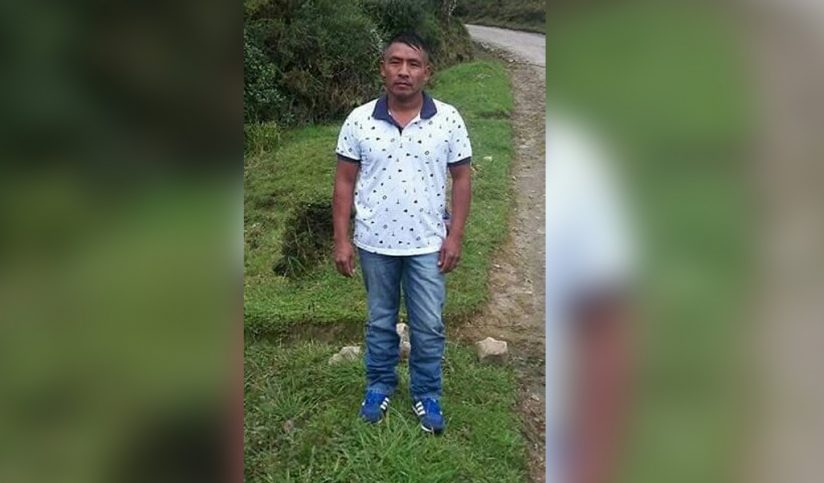
Dilio Corpus Guetio, a Campesino leader was murdered in Colombia, making it 17th murder in 2019. | Photo: Twitter / @Paola_teleSUR
teleSUR | January 30, 2019
A Colombian Campesino leader Dilio Corpus Guetio, 44, who was a member of Asocordillera (Mountain Area Association of Campesino Workers) and also a member of the local Campesino Guard militia was shot to death Tuesday.
Corpus Guetio left his home in the municipality of Suarez in the department of Cauca, in southwest Colombia, at around six in the morning for work. On the way armed men from a car shot him several times.
“The murderers were in a van which hit him and made him lose control of his bike. At that point, they got out of the car to get close to Dilio, who was already injured and he was shot repeatedly, killing him,” said a representative from the United National Federation of Agricultural Unions (FENSUAGRO).
Studies for Development and Peace, Indepaz, say that within the 29 days of 2019, 16 social leaders have been killed in Colombia, excluding Corpus Guetio.
Dilio was known for his work monitoring rural areas and protecting the territory and its inhabitants. His murder case has been registered in the village of Santa Barbara, his place of work.
This week another community leader from Cuca, Jose Jair Orozco, 52, was also assassinated.
Colombian Attorney General Nestor Humberto Martinez said in early January that the greatest number of Colombians murdered over the past two years since the signing of the peace agreement have been social leaders who serve on Communal Action Boards (JAC).
JACs began in the 1950s and are local-level councils where citizens decide upon, plan and develop community projects based on their own needs. The majority of JACs are in rural areas and members include mainly low-income Campesino, Indigenous, and Afro-Colombian members of society.
According to Martinez, the assassinations of JAC leaders is “passively systematic.” The attorney general said that those responsible are paramilitary groups “such as the “Gulf Clan” that works on behalf of narco traffickers and “Los Caparrapos” he added.
Indigenous people made up 13 percent of those killed and farmers 10 percent. Union leaders and social leaders, Afro-Colombians and LGBTI population were the other main murder victims.
A Humanitarian Crisis in Venezuela? A Case Study into NGO Mercy Corps
By Nina Cross | Venezuelanalysis | October 31, 2018
Following a sharp increase in Venezuelan migration since 2015, the corporate mainstream media, alongside the governments of the US, EU and Colombia, is aggressively pushing the narrative of a “humanitarian crisis,” at the same time that Western NGOs flock to set up shop along the Colombian border.
But what if NGOs are being used to influence how the movement of people from Venezuela into Colombia is being shaped and reported, and what’s more, if they are directly benefiting from this situation? To explore the idea, we focus on one such NGO, US-based Mercy Corps, which recently announced an expansion of its operations on the Colombo-Venezuelan border.
Mercy Corps’s budget for global operations, on the order of US $500 million (according to its 2017 annual report), includes funding from US and EU government agencies. Its financiers have included the UK’s International Department of Development, which has regularly sent aid via Mercy Corps to rebel-held areas in Syria. Other funders include the Bill and Melinda Gates Foundation and the Clinton Foundation.
In March 2018, Mercy Corps carried out a “rapid needs assessment” (RNA) of Venezuelan migrants arriving at two main points along the Colombian border. The information gathered was used to “demonstrate” the dangers involved during and after crossings from Venezuela, and the reasons for leaving the country. It is in response to this second question that the people interviewed by Mercy Corps all say the same thing: they are migrating due to an economic crisis in Venezuela, which is linked to hyperinflation.
Independent UN experts, as well as other commentators, have shown on many occasions that the causes of this economic crisis have been significantly exacerbated by the economic sanctions imposed for years upon Venezuela by the US, as well as clarifying that the crisis in Venezuela is economic, not humanitarian. Even US State Secretary Mike Pompeo recently admitted that the sanctions “sometimes have an adverse impact on the people of Venezuela.”
However, Mercy Corps is not concerned with narratives that expose US and EU complicity, and as such, its recommendations fail to include the most obvious point: end the sanctions and stop the hostility towards Venezuela as they are inflicting hardship on its population.
Instead, Mercy Corps’ RNA identified 3 basic needs to be met by the Colombian government: a path to legal entry into Colombia that did not involve passports, the legal right to work in Colombia with the same wages and protections as Colombians and access to shelter, food and water. It is on this third point which Mercy Corps looks to fish for substantial (tax-free) donations and financing from the Global North.
In April, the Colombian government agreed that migrants could register, without passports, at any of the 500-plus checkpoints it would set up along the border over a two month period, to end in June. The reason given was to see how many Venezuelans were entering Colombia. The checkpoints were spread along the 1,500 mile border. Any information supplied by migrants at the checkpoints would be retained by NGOs, not passed to government departments.
By August, the Colombian government agreed that nearly half a million Venezuelans could remain in Colombia for up to two years, look for employment and have access to basic services. The reason given for this change was to accommodate humanitarian needs.
This shift in policy was a reversal of the government’s ruling in February, when up to 3,000 Colombian soldiers were stationed along the border to check for passports. This tightening of rules was referred to as a “diplomatic closure” and the government claimed in a short time the number of migrants fell by 30%.
Yet within a few weeks Bogota U-turned its policy to allow the unhindered movement of Venezuelans, and NGOs such as Mercy Corps were conscripted to enable the process. The new policy of the Colombian government met exactly the needs identified by Mercy Corps, suggesting that the campaign for this migration was an international, organised effort.
In October of this year, Mercy Corps announced they are expanding their services on the border, including providing migrants with a debit card to purchase products. Yet, one out of every three Venezuelans attended by Mercy Corps did not see any improvements to their diet in the two weeks since arriving to Colombia, and 12 percent reported that it had worsened.
Since the Colombian government changed its policy, the number of people leaving Venezuela has increased, according to the Migration Policy Institute, an organisation affiliated to the EU.
As the exodus expands, the humanitarian needs of migrants grow more urgent.
Humanitarian crisis? Mercy Corps as a propaganda tool
The situation of Venezuelan migrants is now being called a “regional humanitarian crisis,” creating a picture of unimaginable catastrophe that needs external intervention.
This escalating crisis narrative of an expanding exodus is placing Venezuela under intense scrutiny. While punishing Venezuela with sanctions from the front, and promoting a migration crisis from behind, the EU and US, with the cooperation of Colombia, are attempting to box Venezuela into a more isolated and vulnerable position.
Colombia has enjoyed close ties with the EU, and soon after changing its policy on Venezuelan passports, it became a NATO partner, further cementing its EU and US dealings. This ballistic development means that the consequences of border conflict, fuelled by a recent movement of 5,000 extra troops to the Catatumbo border region, should be taken very seriously.
Meanwhile, Mercy Corps has consistently driven a narrative of a full-blown humanitarian crisis and rampant violence under President Maduro, including unfounded allegations of repression and torture. For instance, the NGO has made the unsubstantiated, hyperbolic claim on their website that “newborns in Syria have a better chance of survival than those born in Venezuela today,” wich clearly looks to stoke the fire.
Harnessing its “independent charity voice,” Mercy Corps is playing its part as a propaganda tool in vilifying the Venezuelan government, enabling its US and EU funders to continue their sanctions, which only worsen the economic hardship of average Venezuelans, the root cause for leaving their country, as explained in Mercy Corps’ own needs assessment. And whilst all this goes on, Mercy Corps gleefully rakes in ever greater funding so as to “attend” to the “humanitarian crisis” they, together with the mainstream media, have played a key role in manufacturing.
Political interference and profit from Mercy Corps
However, beyond playing a role in the international media war, Mercy Corps is intimately linked to the Washington policy-making establishment that has formulated the US policy of illegal, unilateral sanctions.
Mercy Corps is connected to the influential US Council on Foreign Relations (CFR) through its CEO Neal Keny-Guyer, who declared earnings of $460,000 just for his Mercy Corps role in 2017. Apart from being a member of the CFR, he also serves as chairman for Interaction, the US’ largest alliance of NGOs and sitting on the World Economic Forum’s Global Agenda Council on Fragility, Violence and Conflict. The CFR, a virtual who’s who of America’s wealthiest and most powerful people, claims it “helps policymakers” on “international peace and stability,” whilst actually pushing Washington’s neoliberal agenda and interests around the world.
The president of the CFR is Richard Haass, Middle East advisor under George Bush, and advisor to Colin Powell under George W. Bush. On his 2016 election win, Donald Trump publicly considered Haass as an advisor.
The CFR president recently displayed his frustration that US-backed military coups and UN- sanctioned military intervention in Venezuela, all of which would create a further migratory exodus, were taken off the table, despite ongoing rumours from the White House, Bogota, and even Brasilia, that they may be be possible.
In February the CFR made a Preventive Action Plan which recommended more economic sanctions for Venezuela, and in May more US sanctions were imposed.
Whilst sanctions have helped create the conditions which drive people out of Venezuela, US government aid has flowed to NGOs in Colombia, to which Mercy Corps has taken its chunk.
Mercy Corps’ 2017 financial statement shows that the organization benefited from US $464,452,000 in governmental grants and private backing alone, only spending $139,876,000 in humanitarian relief and $46,699,000 in humanitarian recovery. Of this humanitarian relief, the vast majority was spent on the mysteriously entitled “subgrant” category, and only $21,753,000 on actual materials and supplies for migrants.
Aid and NGOs: Assets of US policymakers
The CFR also included an aid plan for Venezuela which called for State Department funding for the Bureau of Population, Refugee and Migration (PRM), an organisation which finances Mercy Corps.
In August, the US announced an aid plan at the United Nations Assembly General (UNGA), matching the plan set out by the CFR.
Additionally, in an April article the CFR also suggests “…bypassing the government, if enough aid is provided by the United States, the Lima Group, and the EU to enable people to bring some back into Venezuela.”
The CFR continues: “While not the ideal means to provide humanitarian aid inside Venezuela, smuggling is a well-established activity and effectively closing the border to the influx of such aid would significantly add to the discredit of the Maduro government.”
Indeed, the CFR is explicitly advocating illegal smuggling as a means of destabilizing the elected government in Caracas. Meanwhile, smuggling is a problem for Venezuela, but not in the terms described by the CFR. On the contrary, Venezuela has suffered from extensive smuggling of subsidized goods and fuel into Colombia, exasperating shortages and as such generating more inflation.
Mercy Corps: A toy in the US imperialist toolbox
This game played by think-tanks and policymakers reveals Washington’s glaring double-standards vis-a-vis Venezuela. While they help to create and exploit the need for basic foods and medicines in another hemisphere, roughly 45,000 of their own people die each year through lack of health care. Around 30 million Americans have no medical cover at all, roughly the population of Venezuela, which has health care written into its constitution.
Every year a further 2 million Americans travel out of the US for treatment they cannot afford at home. Some will die if they do not find treatment abroad, but instead of being a crisis, this is termed ‘medical tourism.’
At the same time, the US is deporting tens of thousands of Hondurans, while more attempt to cross the border into the US every day, a legacy of Hillary Clinton’s 2009 adventurism.
Yet, we are constantly told to believe that Washington cares about migrants and the well-being of Venezuelans.
While US policymakers play games around Venezuela, with toys from the imperialist toolbox, along with their EU friends, it is no wonder Maduro fears assassination.
This article is a combination of two texts by Nina Cross, the first of which was published by the Morning Star, edited by Venezuelanalysis.
72nd FARC Member Murdered in Colombia Since Peace Agreement

Colombians protest against the murder of social leaders in Bogota. | Photo: EFE
teleSUR | September 27, 2018
The systematic targeting of social leaders and former FARC guerrilla fighters has become one of the main obstacles to peace in Colombia.
In Colombia, two former combatants of the demobilized Revolutionary Armed Forces of Colombia (FARC) were attacked in the Cauca department. One of them, John Faber Gomez, who was also a member of the National Protection Unit, died as a result of the wounds he sustained.
The armed attack took place after the Colombian government authorized the new Temporary Hamlet Zone for Normalization in the municipality of Patia, to replace the abandoned hamlet zone in Policarpa, Nariño.
The Common Alternative Revolutionary Force (FARC) party condemned the attack and demanded security guarantees from the government.
“Peace is in mourning. In the Cauca department, a member of the National Protection Unit and our party @FARC_EPueblo was murdered, 72 former combatants have already been murdered. #WeDemandTheRighttoLife #ThatPeaceDoesNotCostUsOurLives #WeWorkForPeace #TheyAreKillingUs,” Pablo Catatumbo tweeted Monday.
The systematic targeting of social leaders, human rights defenders, and former FARC guerrilla fighters has become one of the main obstacles to peace, especially because the state has failed to guarantee control over the territories left by the demobilized FARC.
In the framework of the United Nations General Assembly, the U.N. Secretary-General, Antonio Guterres, met with Colombian President Ivan Duque to ratify his commitment to the Colombian peace process and stress the urgency of providing security and development to conflict zones.
Cauca, Nariño, and Antioquia are the departments that record the highest number of murders. Human rights organizations have denounced the country’s General Attorney’s Office for lacking an investigation strategy that takes into account the existence of paramilitary groups, and the systematic nature of the murders against former combatants and social leaders.
RELATED:
Colombia’s Peace Crumbles as Social Leaders Killed With Impunity
Colombia recognizes Palestinian state, then abruptly vows to review the move amid Israeli outrage
RT | August 9, 2018
After it emerged that the former president Juan Manuel Santos recognized Palestine as an independent state just before leaving office, Colombia’s new government has pledged to “cautiously” review the decision and its implications.
Palestine was described as a “free, independent and sovereign state” in Santos’ August 3 letter to the Palestinian representative in Colombia, which was only made public on Wednesday. “Just as the Palestinian people have a right to constitute an independent state, Israel has a right to live in peace alongside its neighbors,” it added.
The Palestinian representative welcomed the announcement, expressing hope it will “contribute significantly to generating the necessary conditions in the search for peace in the Middle East.” Palestine is currently recognized as a sovereign state by the UN, the International Criminal Court and at least 137 countries.
Israel, however, immediately slammed the last move by the outgoing Colombian administration, urging the new government to reverse the decision, which, according to Israeli embassy in Bogota, “contravenes the close relations, extensive cooperation in vital areas and interests of both countries.”
Apparently facing some pressure, the new Colombian Foreign Minister Carlos Holmes said in a statement later on Wednesday that, given “possible omissions that could come to light about the way in which this decision was taken by the outgoing president, the government will cautiously examine its implications and will act according to international law.”
Colombia’s new president, Ivan Duque, took office on Tuesday in an inauguration ceremony attended by visiting US ambassador to the UN, Nikki Haley. Colombia was one of the few states that abstained from voting on a US General Assembly resolution that urged the US to rescind its recognition of Jerusalem as Israel’s capital last December.
Colombia’s New Defense Minister To Impose Permit Requirement for Protests
teleSUR | July 19, 2018
Colombia’s incoming Defense Minister Guillermo Botero is planning to “regulate” anti-government protests by only allowing demonstrations if they are previously approved by authorities. The announcement was made by Botero during a summit attended by USAID director Mark Green and former U.S. vice-president Joseph Biden.
Also attending the summit, president-elect Ivan Duque, said that “opposition is important to scrutinize, make demands and to criticize. But the invitation is that we pull together for a future for us all.”
Botero, who will be in charge of both the National Police and military, seemed to agree, saying public protests should “represent the interests of all Colombians and not just a small group.”
Restricting anti-government protests, which appears to go in contradiction to some parts of the ongoing peace process, was the first proposal made by Botero after being appointed by Duque.
Outgoing president Juan Manuel Santos vowed to release jailed participants in protests that turned violent during major social tensions between neglected or discriminated communities and the authorities, according to Colombia Reports.
Over the past decade, the overwhelming majority of protests were held by historically neglected groups, mainly Indigenous groups and African-descendant communities. They also included labor unions, campesinos, teachers, as well as political opponents to the government.
Botero’s proposal comes amid a surge of assassinations and death threats against human rights defenders and social activists.
Opposition Senator Alexander Lopez, who earlier this year survived an alleged assassination attempt, took to Twitter to voice his concern over the restrictive measure. “Botero hasn’t even taken office and he’s already persecuting social protest. He wants us to just raise our arms for him to do what he wants with us.”
Colombia’s inspector general, Fernando Carrillo, has accused elements of the country’s police and military of collaborating with criminal organizations to assassinate human rights defenders and community leaders. “State agents are co-opted by criminal organizations that are eliminating social leaders,” the official said on Wednesday.
Carrillo’s office is one of the state departments tasked with investigating the murders of at least 311 social leaders since 2016.
RELATED:
Colombia: State Agents Accused of Murdering Social Leaders
Featured Video
“Historic Russia”: The Land Putin Will Not Give Back
or go to
Aletho News Archives – Video-Images
Book Review
Why the War on Conspiracy Theories Is Bad Public Policy
By Kevin Barrett • Unz Review • February 1, 2019
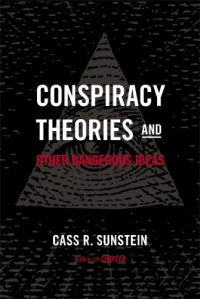 A Review of Conspiracy Theories and Other Dangerous Ideas by Cass Sunstein (based on an earlier paper co-authored with Adrian Vermeule); In Defense of Troublemakers: The Power of Dissent in Life and Business by Charlan Nemeth; and Conspiracy Theories and the People Who Believe Them, edited by Joseph E. Uscinski
On January 25 2018 YouTube unleashed the latest salvo in the war on conspiracy theories, saying “we’ll begin reducing recommendations of borderline content and content that could misinform users in harmful ways—such as videos promoting a phony miracle cure for a serious illness, claiming the earth is flat, or making blatantly false claims about historic events like 9/11.”
At first glance that sounds reasonable. Nobody wants YouTube or anyone else to recommend bad information. And almost everyone agrees that phony miracle cures, flat earthism, and blatantly false claims about 9/11 and other historical events are undesirable.
But if we stop and seriously consider those words, we notice a couple of problems. First, the word “recommend” is not just misleading but mendacious. YouTube obviously doesn’t really recommend anything. When it says it does, it is lying. … continue
Blog Roll
 Aletho News
- “Historic Russia”: The Land Putin Will Not Give Back
- How the Cambridge Analytica scandal still haunts Mark Zuckerberg
- The Ongoing Cancellation Campaign Against a Dissenting Academic in Norway
- Yemen and ‘the Houthis’: Challenging Sami Hamdi’s Narrative
- No, Christians did not invent Zionism
- AIPAC-led lobbying network opens branches in Cypriot, Greek parliaments
- Araghchi blasts ‘parasitic’ alliance as US taxpayers pay for Israel’s war on Iran
- Easy fix for Europe’s chaos? Stop fueling war against Russia
- Putin’s key remarks on peace talks and Europe’s ‘schizophrenia’
- Trita Parsi: Israel Set a Trap for Total War in the Region
- If Americans Knew
- An error has occurred; the feed is probably down. Try again later.
- No Tricks Zone
- E-Cars Reduce CO2 Emissions By Only 41% Compared To Internal Combustion Engine Vehicles
- Predictions Made By Renowned Climate Professor Over Past Decades Have Been Proven To Be Poor
- New Study Suggests Large Regions Of The Pacific Ocean Have Been Cooling For The Last 80 Years
- Germany’s Green Energy Debacle: High Energy Costs Force Kahla Porzellan to Close After 182 Years!
- New Study: 50 Years Of The Most Aggressive ‘Net Zero’ Policies Can Only Affect The Global Climate By 0.03°C
- US September “Heat” Was No Record…Many Records Set Decades Ago
- Latest European Green Energy Debacle; Portugal’s Largest Flagship Solar Park Insolvent!
- Green Energy Debacle: German Expert Professor Fritz Vahrenholt Warns Of Severe Economic And Social Consequences
- Two More Paleo Reconstructions Affirm Meters-Higher Sea Levels Across Ireland, Brazil 7000-6000 Years Ago
- New Study: Earth And Venus Surface Warmth Largely Explained By Convection And Lapse Rate, Not CO2 Or Radiation

