Why Can’t the Government be More Transparent About the Data Guiding its Decisions?

By Professor Anthony A. Fryer | Lockdown Sceptics | April 27, 2021
When I look back over the last year or so of the pandemic, I can forgive the first couple of months. We were all finding our feet with a largely unknown entity. However, as a clinical scientist with over 30 years in NHS laboratories and as an academic researcher with over 200 peer-reviewed clinical research articles in scientific and medical journals (including over 130 involving use of the polymerase chain reaction [PCR]), I found my views increasingly divergent from those of the Government and its advisors. Those who know me will know that it takes a lot to get me annoyed, but I could not sit by and do nothing when I could see the immense damage being done to countless lives and businesses in the name of supposedly protecting us from SARS-CoV-2.
But let me say at the start; I am not one to deny the damage that COVID-19 can do. (And I deliberately use that term, rather than SARS-CoV-2. It’s the disease that causes the problems – most people manage the virus without much difficulty.) COVID-19 can be very nasty and my heart goes out to all those affected. But the way in which the Government handled the pandemic has, in my view, been shocking. It’s felt like it has focused blindly on the virus (and not very well at that either – just think about PPE in care homes for a start) and ignored the massive implications on every other level.
So I wrote. I wrote letters to the local paper, emailed the Chief Medical Officer, submitted evidence to a Parliamentary Inquiry, signed the Great Barrington Declaration, published scientific papers on the ineffectiveness of face coverings and on the non-Covid harms to people with diabetes, and wrote to my MP. Several times. I also joined UsforThem and the Health Advisory and Recovery Team (HART).
Back in October 2020, I wrote one of my letters to my MP, Fiona Bruce, raising a number of concerns about the Government’s handling of the pandemic, and requesting that she raise these concerns with the powers that be on my behalf. While the letter was written as a member of the public, I felt that my expertise and experience put me in a position to comment in a way that perhaps others couldn’t.
In the letter, I highlighted three main concerns:
1. Evidence. That measures to reduce the spread of coronavirus SARS-CoV-2 were introduced without evidence to support them.
2. Context. That such measures were generating more harms than those caused by the virus itself, and this was not being reflected in a balanced way in the press briefings, including in the figures presented, thereby creating an atmosphere of fear.
3. Testing. That the way in which testing data has been presented had been misleading to the public and media. This area was of particular concern to me, given my clinical and research experience in the field.
In respect of the above three areas, I requested the following of my MP:
1. Please could you lobby that scientific evidence underpinning decisions is provided with all future communications.
2. I would ask that you raise this with the Prime Minister and Secretary of State for Health as a matter of urgency to ensure that contextual information is co-presented at press briefings for comparison.
3. I would be grateful if you could impress upon the Secretary of State for Health, the Chief Medical Officers and the Chief Scientific Officer to present adjusted data in a more balanced way to reflect the major difference in rates of cases now with those in April.
… and…
I would request that you (i) ask the Secretary of State for Health to ensure that all positive tests are repeated before labelling an individual as positive, and (ii) that the estimated one third of deaths attributed to COVID-19 because of a SARS-CoV-2 positive test, but where the cause of death was not COVID-19, be removed from the figures.
On April 13th 2021, some six months later, the reply arrived, along with a letter from Lord Bethell (Parliamentary Under Secretary of State at the Department of Health and Social Care), dated April 7th.
The response, which you can read here, was both enlightening and disheartening, if not unexpected.
Here is my commentary on the response from Lord Bethell, passed on by my MP:
Evidence
Lord Bethell referred to the release of papers and minutes from SAGE, presumably to exemplify the evidence underpinning the decisions to implement mitigation measures. The complete lack of credibility of anything coming from SAGE notwithstanding, this is hardly an independent assessment of the evidence underpinning the Government’s decisions.
To me, anyone with any scientific nous could present a fairly long list of actions that the Government has taken without first presenting clear evidence to indicate their effectiveness and an evidence-based risk-assessment of potential non-Covid harms. The “Rule of Six”, the 10pm curfew, face coverings (anywhere, let alone in schools), lockdowns (in any of its many guises, including Tiers), etc, etc, etc. Where is the assessment of non-Covid physical and mental health harms, economic impact, or the effect on our children’s education and wellbeing? Or even evidence on reducing transmission of the virus itself, for that matter?
All we have seem to have seen is exaggerated figures predicting doomsday scenarios, mostly based on modelling rather than actual data, none of which have come to pass. These seem only aimed at scaring the public into following their non-evidence-based guidelines (an approach which, to me, could itself have a potentially significant negative mental health impact).
Context
In terms of presenting COVID-19 data in a wider context, Lord Bethell’s response seemed silent on this one. I am still waiting to hear a press conference which presents the non-Covid harms that we are hearing about all the time in the scientific literature, from the mental health sector, from education, from the business world and from thousands of individual stories.
We are instead presented with advertising campaigns which tell us to “act like you have it”. Not only is that completely illogical – if we all took that literally, society would stop. All of it. No hospitals, no supermarkets, no police, nothing. We’d all be at home self-isolating. But it verging on emotional blackmail. Please give the public some respect and allow them to make responsible decisions.
Testing
The third area covered three distinct points:
- Comparing like with like. A request to not compare figures in October with those in April when testing levels were at a much lower level.
- False positives. A request to define positive ‘cases’ accurately by correctly addressing the issue of false positives.
- ‘With’, not ‘from’. A request to exclude deaths where COVID-19 was not the cause of death from the figures for COVID-associated deaths.
a. Comparing like with like. On the first of these, it’s hard to identify whether Lord Bethell had anything to say on this. He didn’t address it directly. My point focused on the unbalanced way figures were presented back in October which, in my view, presented to the public another doomsday, worst-case scenario to frighten them into compliance with Government wishes. Models presenting huge potential death tolls, all of which were subsequently shown to be out by orders of magnitude.
b. False positives. On the second point, Lord Bethell’s response went into some detail, the content of which itself seemed to either miss the point, or indeed add fuel to my initial concern.
On the positive side, there were some admissions about the PCR test. For example, his response stated: “We are also aware that when PCR test detects viral material it does not indicate that the virus is intact and infectious.” So a positive test doesn’t equate to infectiousness, or even having the virus at all. That’s obvious. It’s just a pity this isn’t mentioned in any of the press briefings along with an evidence-based assessment of its impact on the figures. “Positive tests”, “infections” and “cases” are used interchangeably.
Regarding the PCR test cycle threshold (Ct), he also acknowledged that “…values obtained in this way are semi-quantitative, meaning they do not measure the precise quantity of the virus…” He focuses on the small number of samples with a cycle threshold of over 37. I would be interested in what proportion are above 27, as there is increasing evidence that test samples above this level are significantly less likely to be infectious (and have a much higher false positive risk). Indeed, some data published by the Oxford Group based on the UK’s COVID-19 Infection Survey illustrated that the vast majority of ‘positive’ PCR tests have a Ct value of >27 (Pritchard et al. Impact of vaccination on SARS-CoV-2 cases in the community: a population-based study using the UK’s COVID-19 Infection Survey). So most of the positive tests contain low levels of virus (if any) and the risk of transmission is small.
But even taking Lord Bethell’s Ct cut-off, his comments on test specificity are particularly revealing. He acknowledges that, “Like any diagnostic test, there is a possibility of a false negative or false positive result”, but goes on to say, “but this is very small”. He states that: “Independent, confirmatory testing of positive samples indicates a test specificity that exceeds 99.3%, meaning the false positive rate is less than 1%.”
My HART colleague Dr Claire Craig did some sums on this. At a false positive rate of 0.7%, there would have been 8,700 false positives and 6,200 true positives for the week beginning April 12th on PCR. In other words, 58% of the positives would have been false. If we include the Lateral Flow Tests, then 70% of the cases would have been false positive that week.
My real question is, why are the ‘case’ figures not revised downwards accordingly, or at least the impact of false positives explained at the briefings?
c. “With”, not “from”. On the third point, Lord Bethell made some valid points, though their interpretation was a little off kilter. My concern related to the definition of the figures used to define Covid-associated deaths in official figures. In my mind there were three ways these could be derived; (i) those where the cause of death was primarily COVID-19 (“from” Covid), (ii) those where the person had a SARS-CoV-2, or even COVID-19, but where this was not the cause of death (“with” Covid), and (iii) those who had a false positive test for SARS-CoV-2 (i.e., did not actually have the virus or COVID-19 when they died).
My view was that these latter two would over-estimate the figures for Covid-associated deaths and should be excluded (though I acknowledge that separating the first two from each other can sometimes be difficult in clinical practice). Lord Bethell rightly pointed out three other possible scenarios that could theoretically cause an under-estimate of the figures. Firstly, those who “had COVID-19 but had not been tested”, secondly, those who had “tested positive only via a non-NHS or PHE laboratory” so their positive result was not recorded on their death certificate, and thirdly, those who “had tested negative and subsequently caught the virus and died”. He also acknowledged that it is possible that my options (ii) and (iii) above are plausible scenarios: “It is true that people who have tested positive for COVID 19 could, in a few cases, have died from something else.” (His phrasing is interesting here – I wonder if he realises that PCR is not a test for the disease, COVID-19, but for the virus, SARS-CoV-2?) It is saddening that he feels the need to qualify the option that overestimates death with the phrase “in a few cases”, but not his three scenarios that might lead to under-counting, despite the likelihood that these have much less impact on the figures.
Have we moved on since October?
My feeling is that we have moved on in some areas. Now we have the vast majority of susceptible individuals vaccinated (one of the few success stories), a huge number of people who are resistant or immune, herd immunity, and a whole range of effective treatments (and that’s excluding the two magic pills we are promised by autumn). This should mean that we are completely back to normal – no masks, no distancing, no sanitisers – and focusing on how we can help those in other countries to get to the same place, and recovering from the damage caused by the mitigation measures.
But sadly we still don’t get anything high profile (e.g. in Government briefings) on my areas of concern. Nothing on the evidence underpinning the Government’s decisions, nothing on non-Covid harms, nothing on the impact of false positives on “cases” and Covid-associated deaths. And still, millions of people in the UK suffer needlessly. An apology would be nice.
In the first paragraph of his response, Lord Bethell states that “we are committed to open sharing of the scientific advice that guides our response to COVID-19 where possible”. I am yet to be convinced.
Dr Anthony Fryer is Professor of Clinical Biochemistry at the Institute for Science and Technology in Medicine at Keele University and member of HART and is writing in a personal capacity.
“The UK Currently Operates a System of Informed Consent for Vaccinations.” Currently, Minister?
By Will Jones • Lockdown Sceptics • April 27,2021
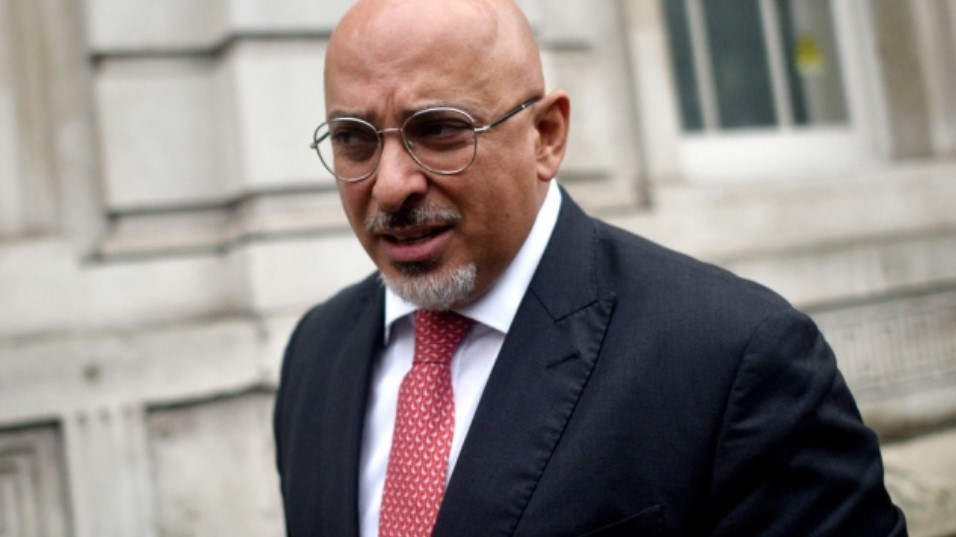
Dr Helen Westwood, a GP whose previous letters and comments have appeared on Lockdown Sceptics, wrote to her MP Sir Graham Brady in March with some concerns about the vaccines and the potential for coercion. She has now received a reply from Vaccines Minister Nadhim Zahawi that is far from reassuring.
Here’s what she wrote.
Dear Sir Graham,
Firstly I wish to thank you again for your ongoing hard work in arguing for a more proportionate response to dealing with COVID-19. The concerns I wish to raise with you today relate to the vaccination program and the proposition of vaccination certificates.
As you know I am a GP. I am horrified by the talk of ‘No Jab, No Job’ policies and vaccination certificates.
The GMC are very clear that “all patients have the right to be involved in decisions about their treatment and care” and that “doctors must be satisfied that they have a patient’s consent… before providing treatment or care”. They also state “doctors must… share relevant information about the benefits and harms of proposed options and reasonable alternatives, including the option to take no action”.
Following interim analysis of the ongoing clinical trials, emergency use authorisation has been granted by the MHRA for both the Pfizer BioNTech and the AstraZeneca vaccines. They are as yet unlicensed. The clinical trials are due to continue until 2023. I find it alarming that much attention is paid to the headline figures of relative risk reduction (RRR) with no mention of the absolute risk reduction (ARR). The RRR of the Pfizer BioNTech vaccine is 95.1% (CI 90.0%-97.6%, p=0.016). Dig a little deeper into the data and you learn that the ARR is only 0.7% (CI 0.59%-0.83%, p<0.001) and the number needed to vaccinate in order to prevent one infection is 142 (CI 122-170).
The WHO published a bulletin written by John Ioannidis, Professor of Medicine at Stanford University, in October 2020. He quotes an infection fatality rate (IFR) for Covid of 0.00-0.57% and in those under the age of 70 it stands at 0.05%.
Given the minimal risk healthy people under the age of 70 face, and the very small absolute risk reductions noted in the clinical trials, I have to ask why are we so desperate to vaccinate the whole population? For healthy, working age people Covid poses less of a risk than seasonal flu. It has never been proposed that we vaccinate the entire adult population against flu; we target the populations most at risk.
The speed at which these vaccines have been developed is truly remarkable. However, I have grave concerns that they are being rolled out on such a scale and at such pace. I am not sure whether you are familiar with the work of Joel Smalley MBA (a member of HART) but he has done some very interesting analysis of mortality data. Whilst correlation (between vaccination administration and rises in mortality) absolutely does not mean causation, the striking patterns he has highlighted suggest to me that now is the time to pause and reflect on the data we have so far. We know from the clinical trials that the Pfizer BioNTech vaccine causes a drop in lymphocytes around seven days post administration; theoretically at least this could pose a risk of intercurrent infection, especially in frail patients.
Both vaccines in current use in England employ novel technology, namely mRNA (Pfizer BioNTech) and Adenovirus vector (AZ). Human challenge studies have only recently begun. We do not currently know anything about the medium and long term safety of these vaccines. There are concerns about Antibody Dependent Enhancement (ADE) reactions whereby vaccinated individuals may develop more severe disease upon exposure to the wild virus. Theoretical concerns have also been raised about potential cross reactivity with Syncytin-1 which could have effects on placental development and therefore fertility. Until these areas have been studied we cannot advise patients fully. This has significant implications for the informed consent process.
There seems to be some enthusiasm for “vaccination passports” among the population, whether for domestic use or international travel. These have been compared to Yellow Fever certificates that are required for individuals travelling to certain destinations. In reality there is no comparison. The mortality rate for Yellow Fever is in the region of 30%, transmission of Yellow Fever is confined to a relatively small number of countries and there are long term safety data available regarding the licensed vaccine.
Uptake of the Covid vaccine has been notably lower amongst certain ethnic minorities. The reasons for this are as yet unclear, but any policy requiring proof of vaccination has the potential to lead to indirect discrimination.
Professor Chris Whitty has said that doctors and care workers have a “professional responsibility” to get vaccinated. Given that reduction of transmission is not an outcome that is being measured in the clinical trials that are still ongoing, I do not agree with him. Article 6 of the Universal Declaration on Bioethics and Human Rights states: “Any preventive, diagnostic and therapeutic medical intervention is only to be carried out with the prior, free and informed consent of the person concerned, based on adequate information. The consent should, where appropriate, be express and may be withdrawn by the person concerned at any time and for any reason without disadvantage or prejudice.”
On November 4th 2020 Theresa May MP made a speech in the House of Commons. She was referring to the closure of places of worship when she said, “My concern is that the Government today making it illegal to conduct an act of public worship, for the best of intentions, sets a precedent that could be misused by a Government in future with the worst of intentions, and that has unintended consequences.” I fear the same could be said for the introduction of vaccination passports.
Personally I have declined this vaccine because of the concerns outlined above. I hope this decision does not mean I am unable to work, visit a restaurant or travel.
Yours sincerely,
Dr Helen Westwood
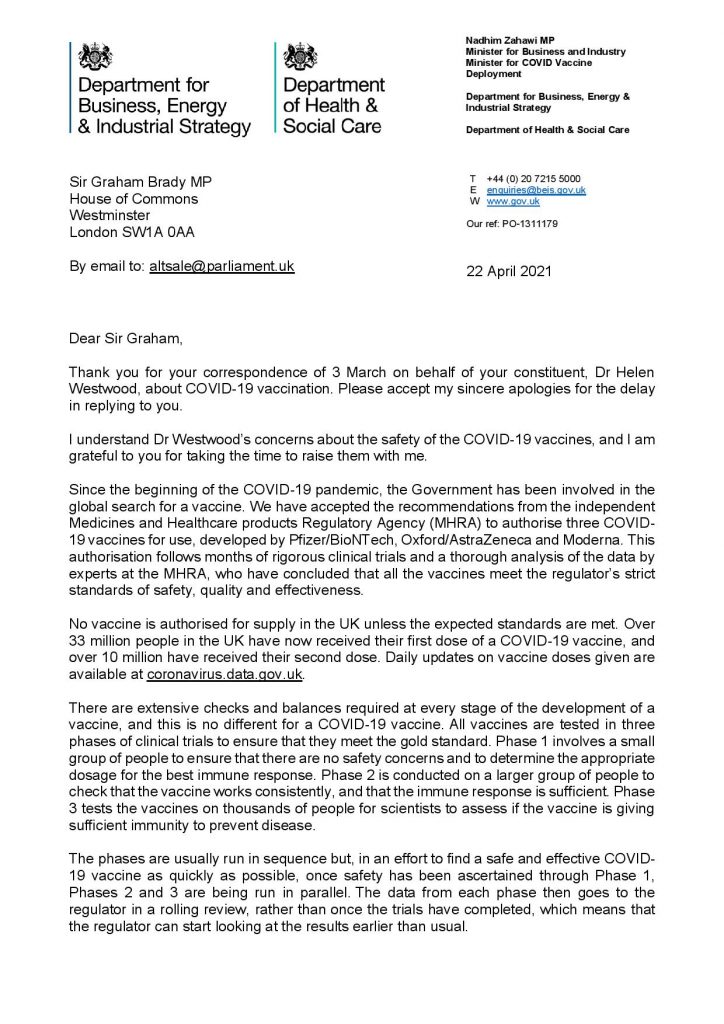
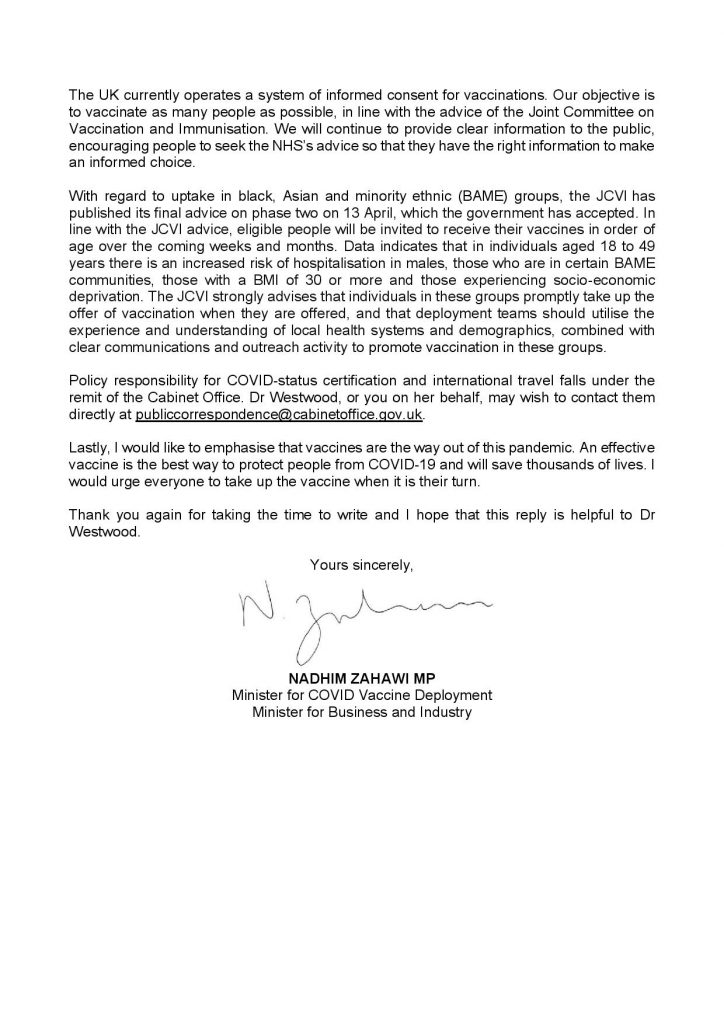
Here is Nadhim Zahawi’s response, passed on to Dr Westood by Sir Graham Brady.
This is how Dr Westwood replied this week.
Dear Sir Graham,
Thank you for sending me the letter you received from Nadhim Zahawi MP, Minister for Business and Industry & Minister for COVID Vaccine Deployment in response to the representations you made to him on my behalf. I have attached his letter and my original email.
I must say I find his responses entirely unsatisfactory. He has failed to address any of my concerns. I know he is an intelligent man, so I can only assume that he has been deliberately disingenuous rather than not understanding the questions posed.
I am already aware of the processes involved in the development and testing of new drugs. I understand that Phases 2 and 3 are usually run sequentially but, given the urgency of this situation, a pragmatic decision was taken to run them in parallel. For elderly patients at increased risk from COVID-19 infection I can understand this approach. However, when the program is being rolled out to younger, healthy individuals whose risk-benefit ratio is entirely different, an alternative approach is required. It is imperative that individuals are not exposed to a greater risk of harm undergoing a medical intervention than the risk of not doing anything. Primum non nocere. Since my original email, significant concerns have been raised in a number of European countries about the risk of rare cerebral venous sinus thromboses associated with thrombocytopenia. Young, fit, healthy people who were at negligible risk of COVID-19 have tragically died.
Mr Zahawi has elected not to make any comment on the concerns I raised regarding rises in mortality in the immediate post-vaccination period. This is a pattern that has been repeated in multiple locations, currently most notably in India. I would like to know what research is being done by the UK Government to investigate this.
I note that Mr Zahawi referred to the fact that the UK “currently operates a system of informed consent for vaccinations”. I have two concerns regarding this statement. Firstly, how is the consent fully informed if we do not know the answers to the questions I have raised? I know from first hand experience that individuals attending for Covid vaccinations are not routinely being informed that the clinical trials are ongoing until 2023. Nor is the potential issue of antibody dependent enhancement being discussed. The advice for vaccinating pregnant women changes virtually day by day. Secondly, why does he need to use the word “currently”? Are there plans for mandatory vaccination in future? Already there are discussions about making vaccination compulsory for care home workers. In September 2019 the Guardian reported that Secretary of State for Health Matt Hancock was seriously considering making vaccinations compulsory for state school pupils. I defy anyone not to find this proposal chilling.
With regard to black, Asian and minority ethnic populations, again Mr Zahawi seems to have entirely missed my point. I was not arguing for the prioritisation of these groups; I was pointing out that uptake in these groups has been lower and therefore any certification system has the potential to lead to indirect discrimination.
I agree with Mr Zahawi that an effective vaccine is an excellent way to protect those that need protection, but it also needs to be safe. Given his failure to address the concerns I raised I can only assume he does not have answers to my questions.
Yours sincerely,
Dr Helen Westwood
UK Hiring COVID Marshals to Patrol Streets Until 2023 Despite Lockdown Restrictions Supposedly Ending in June
By Paul Joseph Watson | Summit News | April 27, 2021
Government councils in the UK are hiring COVID Marshals to patrol streets from July until the end of 2023, despite the fact that all lockdown restrictions are supposed to end in June.
“A new army of Covid Marshals is being recruited for roles that could last until 2023 despite Government plans to lift all remaining restrictions on June 21,” reports the Telegraph.
“Councils around the country are advertising jobs that do not begin until July – several days after the supposed freedom day.”
One example is Hertfordshire County Council, which is “offering a contract of up to £3 million to firms that can supply 60 marshals from July 1 until January 31 next year.”
“The contract comes with a possible one-year extension, meaning marshals would still be patrolling until 2023,” states the report.
The Marshals will be tasked with ensuring “compliance” and helping the public understand “regulations and guidance,” despite the fact that all regulations are supposed to be terminated in 8 weeks time.
“We know that the virus is still circulating and will be for some time. We know from last year that numbers of infections can change rapidly, and Government are very clear that we should plan in case a third wave arises. It would be a dereliction of duty not to prepare for a third wave,” said Jim McManus, director of public health for Hertfordshire County Council.
Critics have accused the government of wasting taxpayer money by allowing councils to use government grants to fund the program.
“To start hiring people based on the situation we faced last year, before we had rolled out the vaccines, does seem to be a waste of public money,” said Mark Harper MP, Tory chairman of the Covid Recovery Group.
The fact that COVID Marshals will be patrolling the streets beyond June once again illustrates how the timetable to lift restrictions is completely phony.
Just like the UK government promised for months that it wouldn’t introduce vaccine passports while secretly funding their creation, the state has been caught lying yet again.
In all likelihood, fearmongering over a “third wave” of the virus, despite the UK vaccinating virtually all of its vulnerable population, will be used to reintroduce lockdown at the beginning of Autumn.
Are Covid Fatalities Comparable with the 1918 Spanish Flu?
By Ethan Yang | AIER | April 27, 2021
On April 23, 2021 The New York Times published an article titled “How Covid Upended a Century of Patterns in U.S. Deaths.” The article lays out some data regarding the unprecedented uptick in the US death rate that occured in 2020.
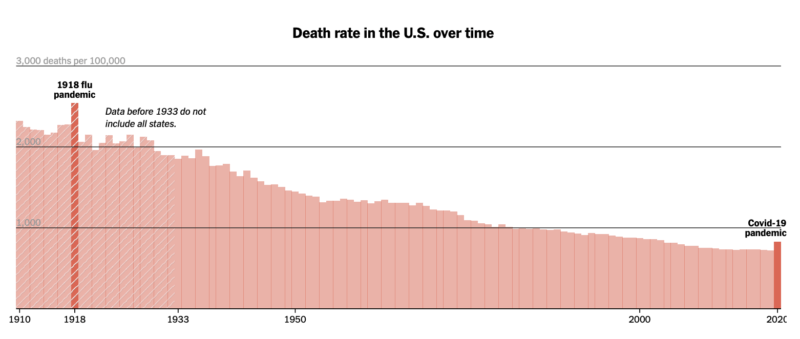
As shown in the graph provided by the New York Times, US death rates have been steadily declining over the past century, likely due to advances in technology and living standards. Last year certainly signaled a noticeable break from this trend with a sizable increase in deaths, but not nearly the same as the 1918 Flu which is a universal benchmark for a killer influenza virus.
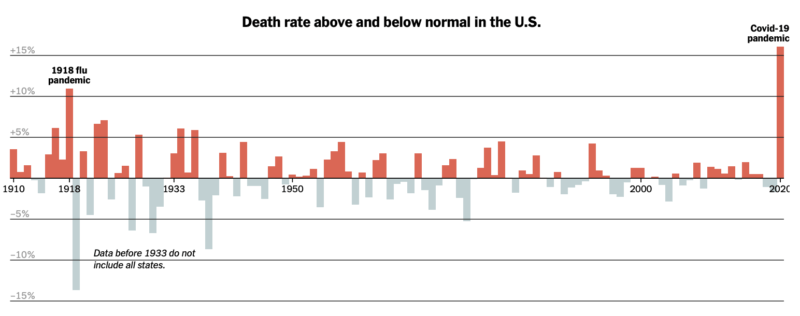
This graph provided by the New York Times indicates the spike in excess deaths in 2020, which is the number of deaths that have occured exceeding the predictions of standard death trends. This is of course all important information. Last year was certainly a horrific year with the outbreak of Covid-19, the lockdowns, and all the chaos that followed. It was a year of death and despair which should not be taken lightly.
Important Discussion: Deaths and Victims
It is common to invoke comparisons with the 1918 Flu Pandemic, as that was an extremely devastating virus that rocked the world. The article makes multiple references to the 1918 pandemic but there are a couple that raise interesting questions for further investigation. The first point is as follows,
“Combined with deaths in the first few months of this year, Covid-19 has now claimed more than half a million lives in the United States. The total number of Covid-19 deaths so far is on track to surpass the toll of the 1918 pandemic, which killed an estimated 675,000 nationwide.”
Comparing the death counts between the 1918 Flu and Covid-19 without adjusting for population growth is extremely misleading. In 1918 the population of the United States was roughly 103 million, while near the end of 2020 it stood at roughly 330 million. According to CDC statistics compiled by a study in JAMA Covid-19 killed 345,000 people in 2020 and now stands at around half a million as stated by the New York Times. Adjusted for the population growth of over 200 million people and holding the death rates constant, the 1918 Flu would have killed over 2 million people if it occured today, which is more than four times greater than Covid-19.
Furthermore, the two diseases are vastly different in terms of who is vulnerable. Covid-19’s severe outcomes almost exclusively affect the elderly and the immunocompromised, particularly those over the age of 65, which is also approaching the life expectancy of a human. Furthermore 94 percent of Covid deaths occurred with preexisting conditions. It poses virtually no risk to children, minimal risk to young adults, and only seems to kill more than 1 percent of victims with those over the age of 65.
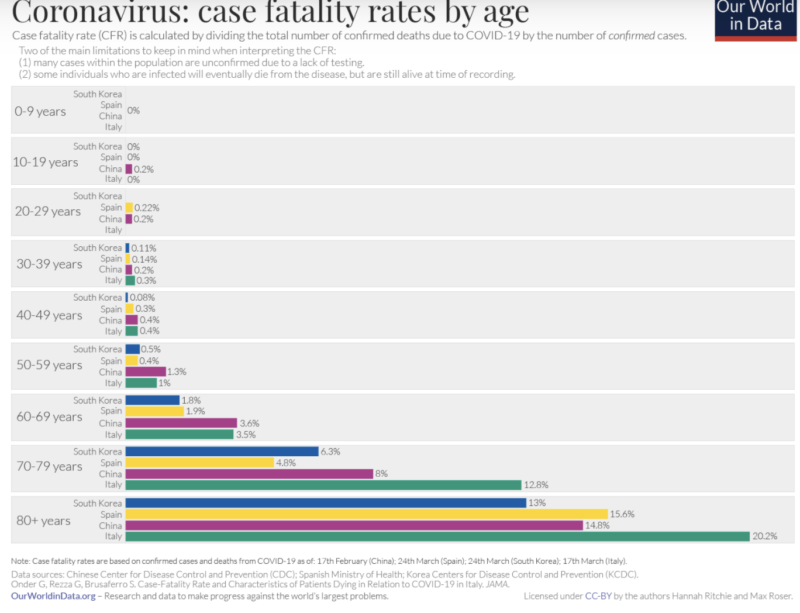
On the other hand the Spanish Flu was devastating to virtually all age groups and did not discriminate between the healthy and the unwell. The CDC writes the following about the 1918 Flu:
“Mortality was high in people younger than 5 years old, 20-40 years old, and 65 years and older. The high mortality in healthy people, including those in the 20-40 year age group, was a unique feature of this pandemic.”
It is clear that the comparison is flawed between the 1918 Flu and Covid-19, as the former was a devastating killer virus whereas the latter only poses a threat to vulnerable populations.
Too Much Statistical Noise
It is certainly worth investigating the noted increase in excess deaths in 2020 as that is obviously a problem. However, the article seems to suggest that Covid-19 was the main causal factor driving increases in death. Although that is certainly a reasonable intuition given that it is a novel virus, clearly there is far more at play.
The main issue to point out is that there were two health crises, not one. Covid-19 is certainly one but we cannot simply ignore the absolutely devastating and unprecedented use of lockdown policies that drastically upended all of society in a way that a virus could never accomplish.
The effects of lockdowns have been thoroughly studied by AIER and in a series of articles I noted just some of the damage to the economy, young people, and the normal functioning of society. All these disruptions led to adverse outcomes whether it be mental health issues, decline in living standards, or even disrupted healthcare procedures. In a press release the CDC noted that in May 2020, it recorded the highest number of drug overdoses ever recorded in a 12-month period.
A study in JAMA notes that although there was a substantial increase in overall deaths in 2020, Covid-19 was only one part of the problem, assuming all Covid deaths are directly attributable to Covid and not a comorbidity.
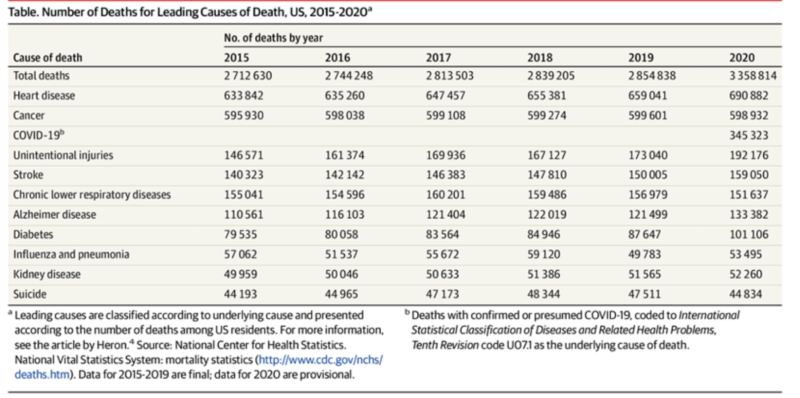
Some statistics of note are an increase in deaths due to heart disease, unintentional injuries, stroke, and diabetes. Although more investigation would be needed to understand how all of this comes together, it wouldn’t be absurd to believe that lockdown policies led to an increase in deaths due to their many disruptions to normal societal functions.
To cite one example of many, the Mackinac Center Legal Foundation recounts on one of its clients by writing,
“One of the affected medical practices, Grand Health Partners, operates in the Grand Rapids area. It performs endoscopies and other elective surgeries, many of which were deemed nonessential by executive order. Due to the shutdown, many of their patients were not able to receive treatment and have suffered because of it.”
Alongside exploring and cutting through the statistical noise posed by increases in death plausibly related to lockdowns, there still needs to be a discussion on quantifying the Covid-19 death count. Genevieve Briand, an economist at John Hopkins University, was subject to a massive degree of controversy for putting out a flawed but important lecture – later expanded into a research paper – that pointed out among other things that Covid-19 deaths may be inappropriately reclassified as deaths from other leading causes.
This is especially worthy of discussion given that the overwhelming majority of Covid deaths occur with comorbidities amongst eldery populations often nearing or exceeding life expectancy.
Key Takeaway
The data is clear; 2020 was a horrific year full of death and despair. The New York Times’ article certainly does a great job at starting a conversation about this topic. However, its comparisons of Covid-19 and the 1918 Flu raises more questions than answers. Furthermore its presentation of data regarding increases in deaths requires more context.
Upon further investigation, it is clear that Covid-19 claimed many lives. However, it is also clear that there is a substantial presence of statistical noise from comorbidities and increases in death from other causes. This raises many questions not just about the collateral damage of our policy response, but also about whether we are even operating with the appropriate information to be making such decisions with people’s lives in the first place.
Lockdowns Devastating For Child Development & Language Skills
By Richie Allen | April 27, 2021
A major survey has concluded that lockdowns are having a devastatingly negative impact on child development. Data from 50,000 pupils and a survey of schools across England, has revealed that an increased number of four- and five-year-olds need urgent help with their language skills.
The Education Endowment Foundation (EEF) research suggests that the lockdowns have deprived the youngest children of social contact and experiences essential for developing their vocabulary. According to the BBC:
Less or no contact with grandparents, social distancing, no play dates, and the wearing of face coverings in public have left children less exposed to conversations and everyday experiences.
Of 58 primary schools surveyed across England:
- 76% said pupils starting school in September 2020 needed more support with communication than in previous years
96% they were concerned about pupils’ speech-and-language development. - And 56% of parents were concerned about their child starting at school following the lockdown in the spring and summer.
Sally Miner, head teacher at Ryder Hayes school in Walsall told the BBC that problems with communication were “really limiting” for young children, particularly if they were unable to express themselves, interact with peers and make themselves understood.
“It’s absolutely key,” she said. “It’s all about a child’s self-esteem and confidence. She went on to say:
“All the research shows that if a child does have issues with language at that age, by adulthood they’re four times more likely to struggle with reading, three time more likely to have mental health issues, twice as likely to be unemployed and have social-mobility issues, so getting this right at such an early age is literally the key to children’s futures.”
Lockdowns are a crime against humanity. Lockdowns are a form of child abuse. If lockdowns are child abuse, the witch doctors and lying politicians responsible for them are child abusers, plain and simple. There must be a day of reckoning for them.
The Truth About the Covid ‘Crisis’ in India
By Will Jones • Lockdown Sceptics • April 27, 2021
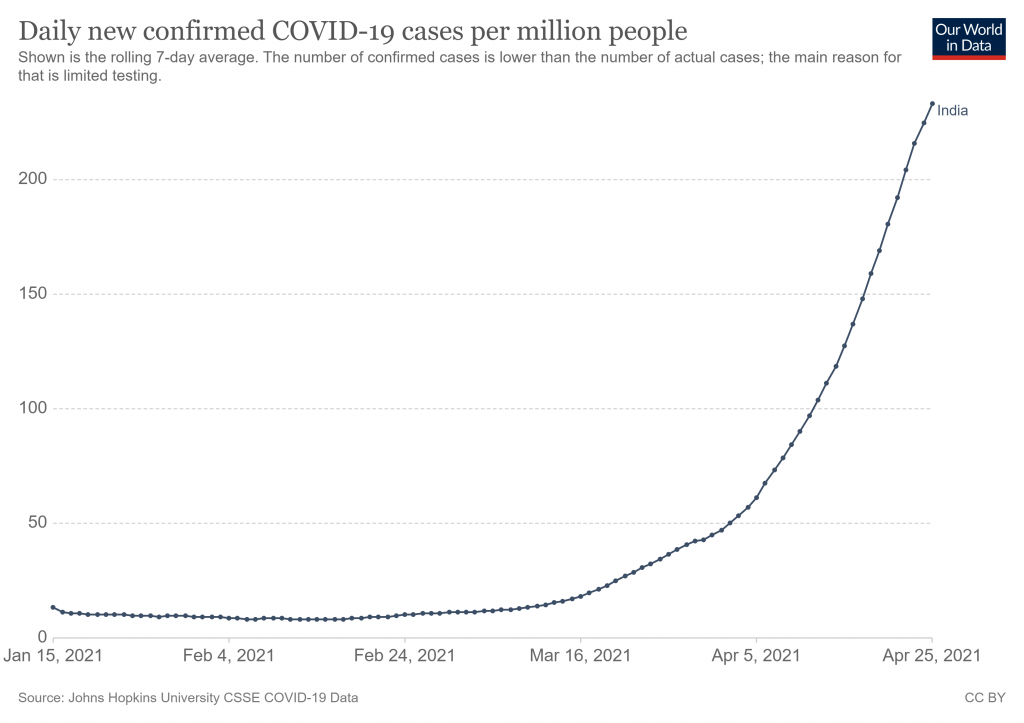
Now that Chile is settling down a bit, the latest Covid cautionary tale is India, which never seems to be out of the news at the moment as its positive cases and deaths have rocketed in the past few weeks.
Even the usually level-headed Kate Andrews in the Spectator has been painting the situation in lurid colours.
As it happened, the UK’s worst nightmares were never realised. The Nightingale hospitals built to increase capacity were barely used. But what the British Government feared most is now taking place elsewhere. India is suffering an exponential growth in infections, with more than 349,000 cases reported yesterday, as well as nearly 3,000 deaths. Hospitals are running out of oxygen for patients and wards are overflowing. There are reports of long queues as the sick wait to be seen by medical professionals. It’s expected the situation will deteriorate further before it gets better.
Jo Nash, who lived in India until recently and still has many contacts out there, has written a very good piece for Left Lockdown Sceptics putting the current figures in context – something no mainstream outlet seems to have any interest in doing.
Jo makes the crucial point that we need to keep in mind the massive difference in scale between India and the UK. At 1.4 billion people, India is more than 20 times larger than the UK, so to compare Covid figures fairly we must divide India’s by 20. So 2,000 deaths a day is equivalent to a UK toll of 100. India’s current official total Covid deaths of approaching 200,000 is equivalent to just 10,000 in the UK.
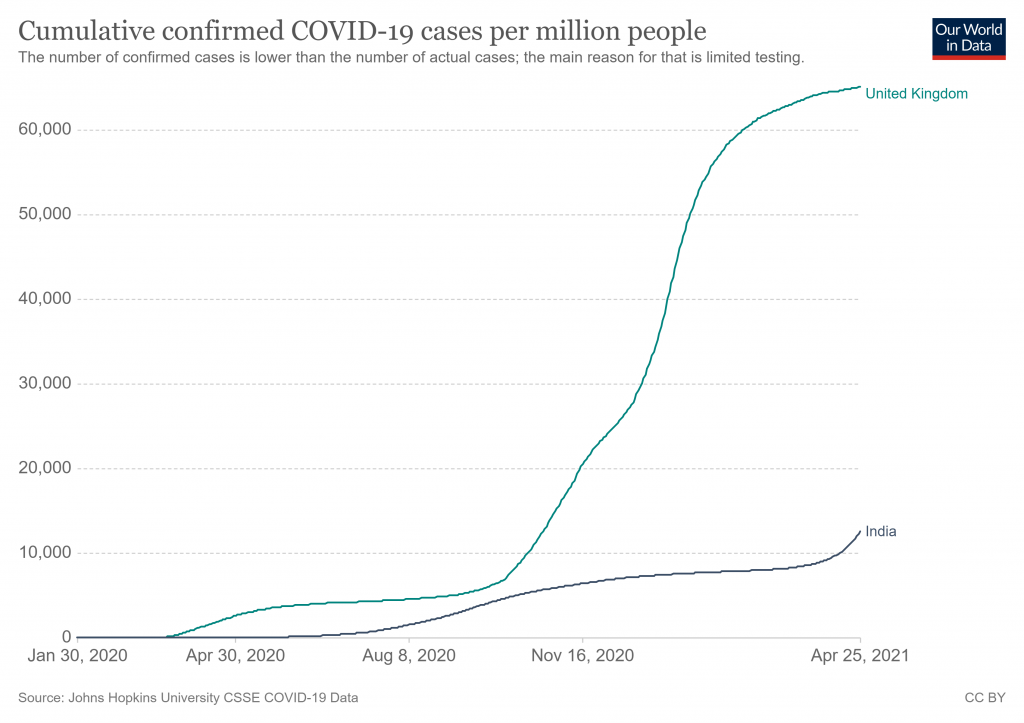
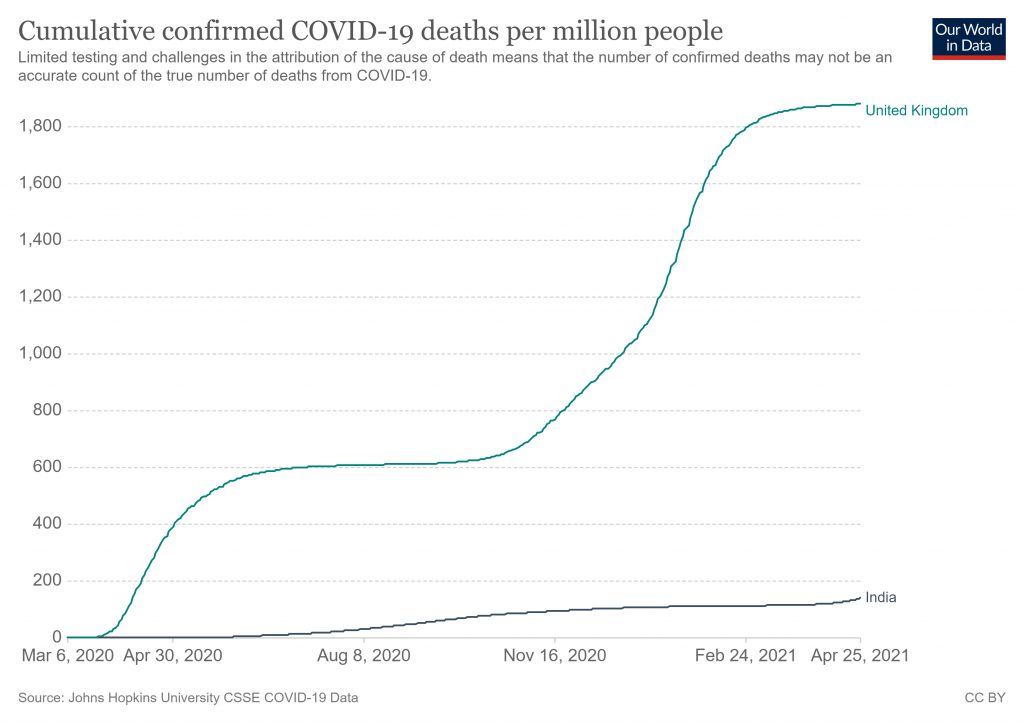
In a country the size of India and with the huge number of health challenges faced by the population, the number of Covid deaths needs to be kept in perspective. As Sanjeev Sabhlock observes in the Times of India, 27,000 people die everyday in India. This includes 2,000 from diarrhoea and 1,200 from TB (vaccinations for which have been disrupted by the pandemic). The lack of adequate hospital provision for Covid patients may be more a reflection of the state of the health service than the severity of the disease.
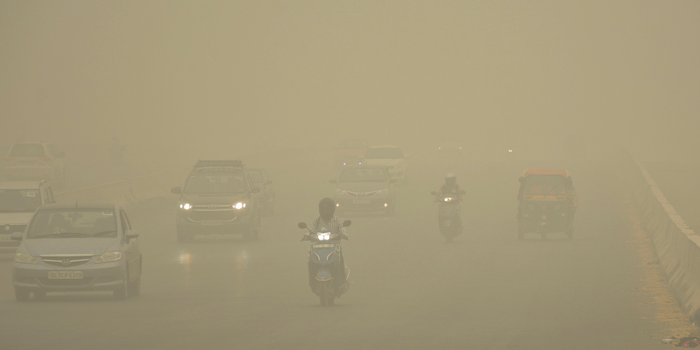
Jo Nash also points out that poor air quality plays a role.
Delhi, the focus of the media’s messaging, and the source of many of the media’s horrifying scenes of suffering, has the most toxic air in the world which often leads to the city having to close down due to the widespread effects on respiratory health…
Respiratory diseases including COPD, TB, and respiratory tract infections like bronchitis leading to pneumonia are always among the top ten killers in India. These conditions are severely aggravated by air pollution and often require oxygen which can be in short supply during air pollution crises…
According to my contacts on the ground, people in Delhi are suffering from untreated respiratory and lung conditions that are now becoming serious. I’ve also had breathing problems there when perfectly healthy and started to mask up to keep the particulate matter out of my lungs. I used to suffer from serious chest infections twice yearly during the big changes in weather in India, usually November/December and April/May. When I reluctantly masked up that stopped. My contacts have reported that the usual seasonal bronchial infections have not been properly treated by doctors afraid of getting Covid, and people’s avoidance of government hospitals due to fear of getting Covid. Undoubtedly, these fears will have been fuelled by the media’s alarmist coverage of the situation. Consequently, the lack of early intervention means many respiratory conditions have developed life-threatening complications. Also, people from surrounding rural areas often travel to Delhi for treatment as it has the best healthcare facilities and people can go there for a few rupees by train. This puts pressure on Delhi’s healthcare system during respiratory virus seasons.
Positive cases look like they may be peaking in many regions now.
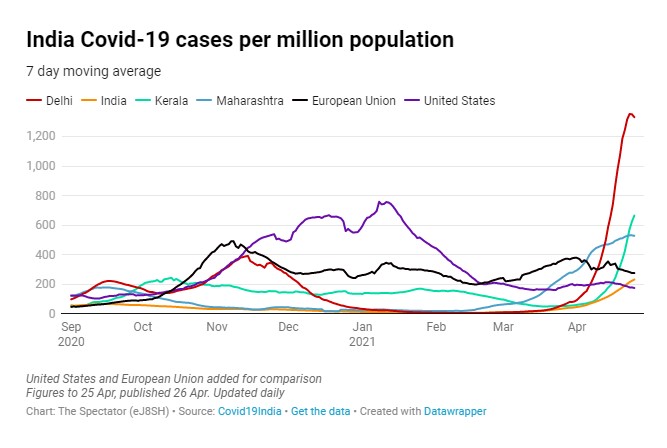
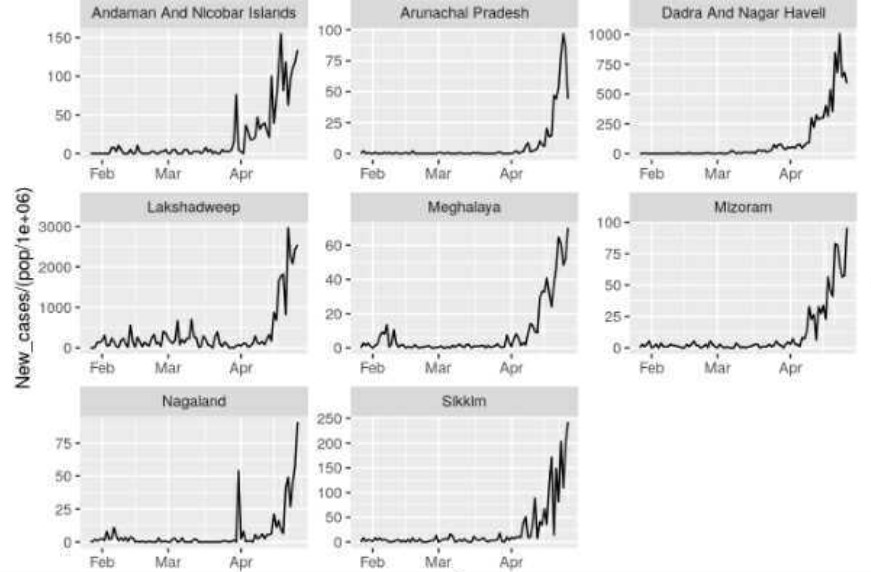
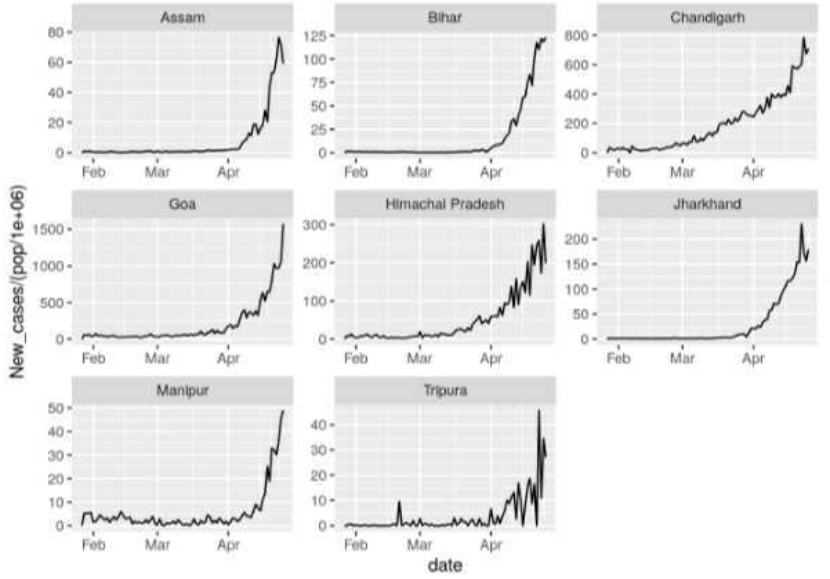
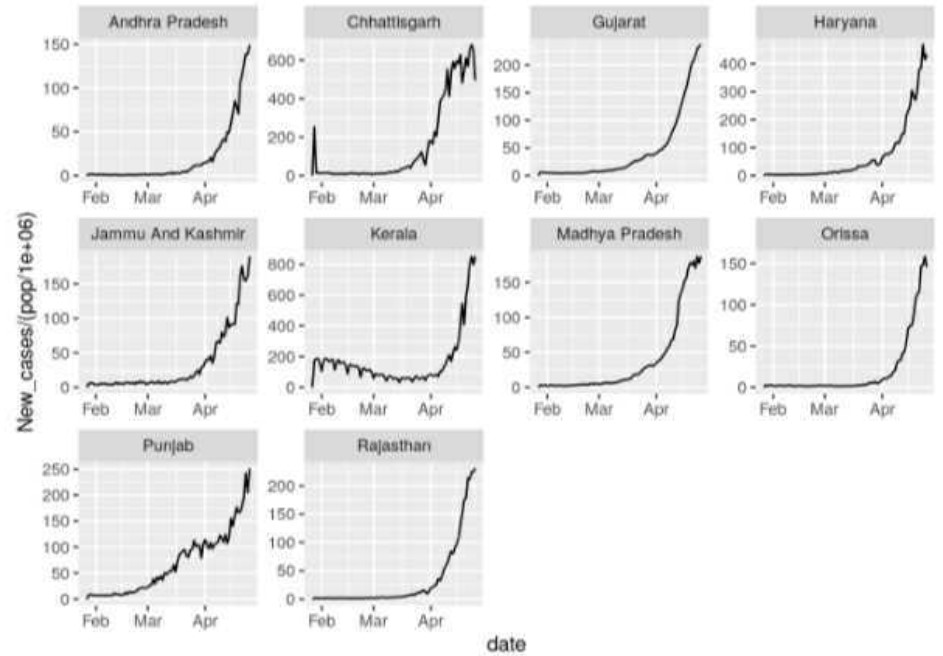
One mystery, as yet unexplained, is why India, which has not experienced a strong surge like this so far, suddenly did in March and April. Adding to the mystery is that the simultaneity of the surge across the regions is unexpected in a country as large as India and contrary to earlier outbreaks last year. Nick Hudson from Panda suggests it means there must be something artificial about it as it is not a natural pattern, since viruses naturally spread across the country with some delay and variation evident between regions.
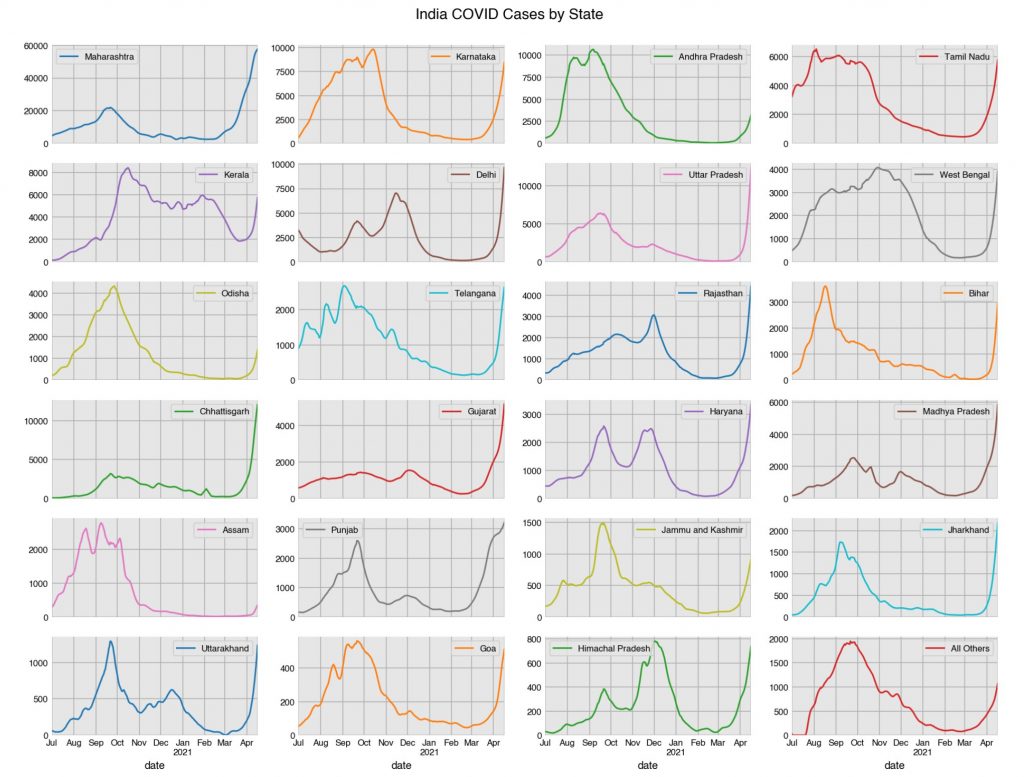
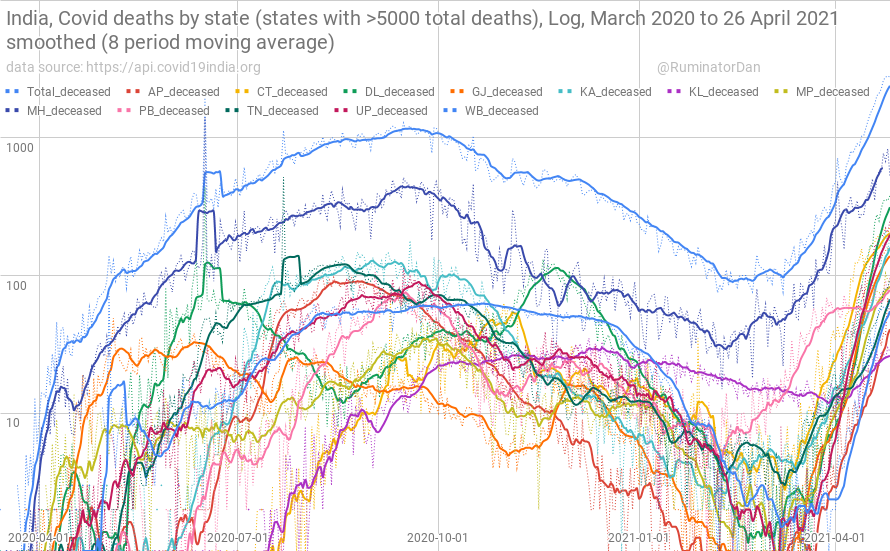
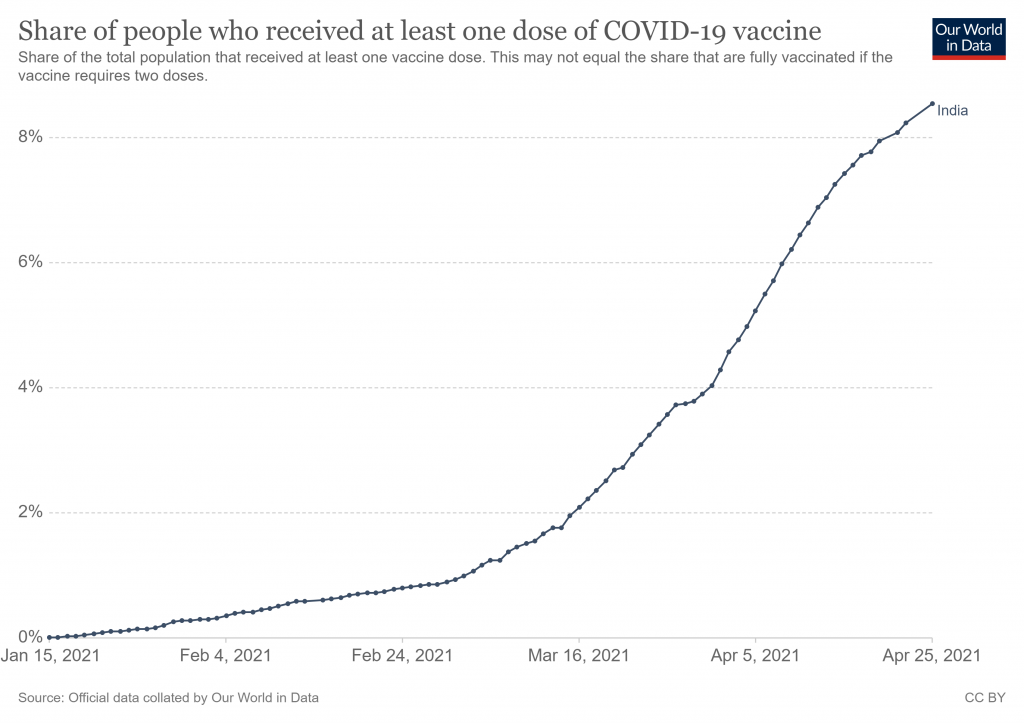
It hasn’t escaped people’s attention that one novel factor is the nationwide vaccine programme rollout, beginning in January and accelerating during March. Is this a further example of the post-vaccine infection spike seen in the various trials and population studies, possibly caused by temporary suppression of the immune system?
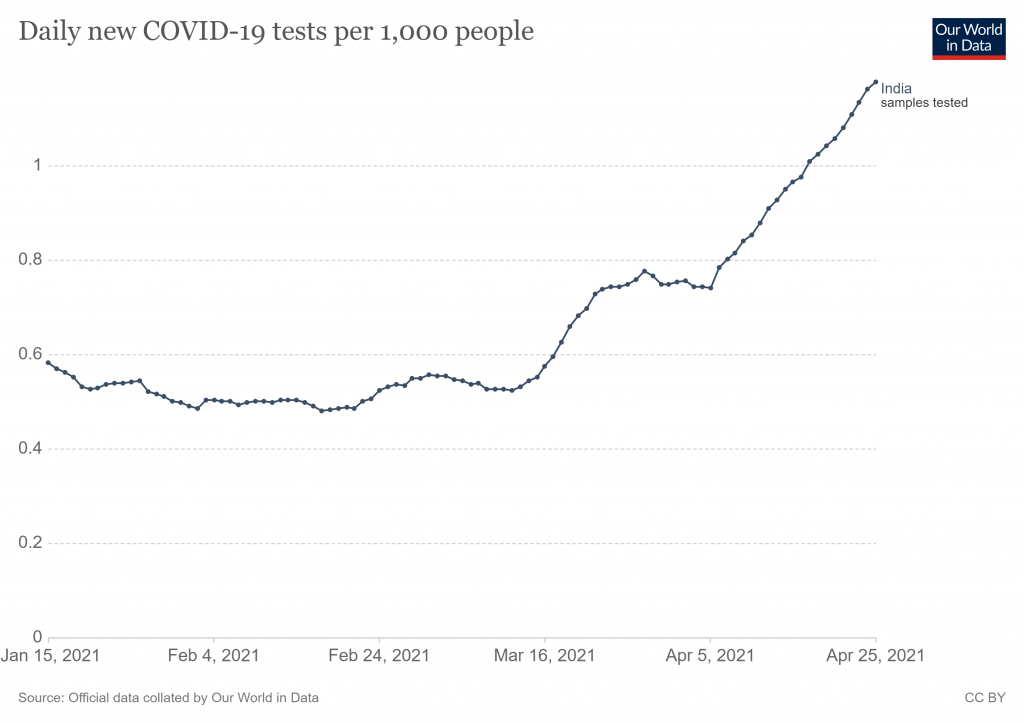
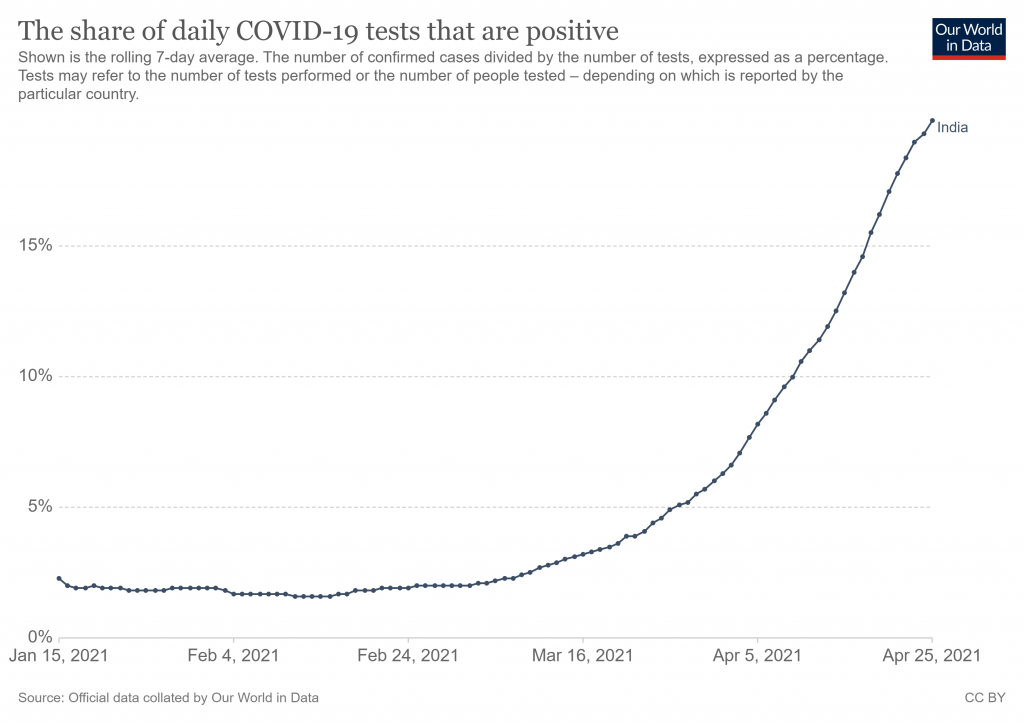
Testing is another possible factor, as the number of tests being carried out surged in March and April – though so did the positive rate, suggesting this can’t be the only explanation.
Whatever is going on, it’s a pity there is not more curiosity among our scientists and journalists. Instead, it’s just the usual scaremongering driven by the misrepresentation of data.
Stop Press: Former Assistant Secretary-General of the United Nations Professor Ramesh Thakur has been in touch with a comment he left on a story in the Australian.
Some context and perspective. India’s Covid deaths yesterday were 2,163 (seven-day rolling average). India’s average daily death toll is 25,000 from all causes.
Second, despite this surge, as of now India’s Covid mortality rate is 140 dead per million people. This compares to 401 for the world average, 1,762 for the US, and 1,869 for the UK. It puts India 119th in the world on this, the single most important statistic for comparison purposes.
Third, the crux of the problem in India is not the proportion of cases and deaths from Covid. Rather, it is the lack of a fit-for-purpose public health infrastructure and medical supplies of equipment and drugs.
Fourth, although Government neglect of public health while prioritising vanity projects like a new Parliament building during the pandemic, building temples and statues etc. is a contributory factor, the real cause of a poor public health system is poverty. Put bluntly, poverty is the world’s biggest killer.
Fifth and finally, this is why a strong economy is not an optional luxury but an essential requirement for good health.
Australian MP blasts Facebook’s ‘interference’ after his OFFICIAL page was banned for Covid-19 ‘misinformation’
RT | April 26, 2021
After Facebook deleted the official page of Craig Kelly for spreading “misinformation” about the coronavirus and vaccines, the independent MP said the “book-burning” US social media giant was interfering in Australia’s democracy.
Kelly was informed of Facebook’s ban by text on Monday morning, he told the media, describing the move as “censorship.”
Banning the page with some 86,000 followers represents “interference in Australian democracy,” he said.
“This was the most popular, highly used political Facebook page in the country,” he said, in remarks quoted by ABC. “They have basically burnt and torched and incinerated and obliterated from the record, previous comments and previous things that I’d made.”
Kelly’s personal page and Instagram account remained active, for now. A Facebook spokesperson said in a statement that the Australian MP had “repeatedly” violated their policies.
“We don’t allow anyone, including elected officials, to share misinformation about Covid-19 that could lead to imminent physical harm or [Covid-19] vaccines that have been debunked by public health experts,” the spokesperson said.
“It is not misinformation if you have a difference of opinion,” Kelly shot back. “The idea that they are some purveyors of all truth is just absolutely outrageous.” The ban is not just outrageous but also violates the principles of free speech, he added.
Facebook did not just remove a few posts, but the entire page, he said, describing it as “like setting fire to a book, not just removing the pages they disagree with.”
These people are the heirs to those who used to go around burning books because that is effectively what they have done.
Kelly has represented Hughes, a parliamentary district south of Sydney in New South Wales, since 2010. He resigned from the ruling Liberal Party in February, after Facebook suspended him for “misinformation” about Covid-19 and someone from the office of Prime Minister Scott Morrison told him to “shut up” about the virus.
Flush from the success of “fortifying” the 2020 US presidential election, Facebook announced in December that it would ban any “false claims” and “misinformation” about Covid-19, even if posted by public officials.
In January, Mark Zuckerberg’s social media behemoth clashed with Canberra over a proposed law requiring social media to pay for news content. After a week-long Facebook ban on all news content in Australia, the government relented and proposed an amended law, which critics said favored major corporations over local and independent news outlets.
10 Covid-Skeptic Memes to Get You Through the Day
By Kim Usbourne | OffGuardian | April 26, 2021
What’s occurring in the world nowadays is no joke. But if you’re living under oppression for over a year, it’s probably healthy to have a laugh once in a while.
And so, on this late-April Monday morning, here are 10 memes to give you a quick chuckle in these maddening times:
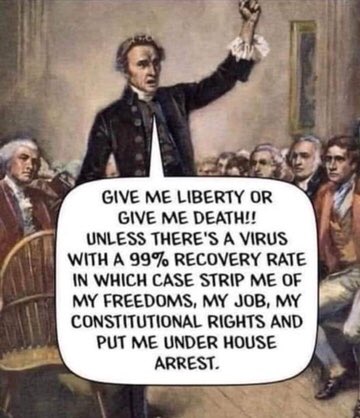
1.
A meme that uses historical artwork always makes me chortle…
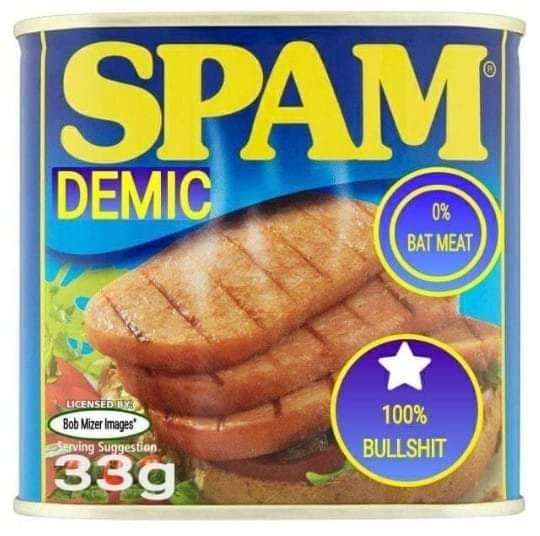
2.
A tasty treat for the mindless masses?
3.
Some contemporary artwork from MadebyJimbob (you can even get this on a greeting card to send to your ever-wary neighbours…)

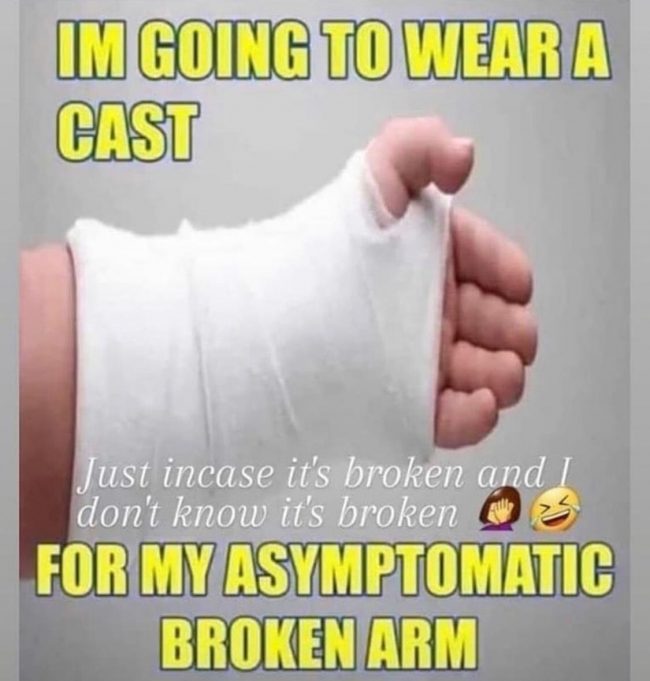
4.
Ok ok, the distortion of the original photo is upsetting to anyone who does graphic design, but it’s still bloody funny…
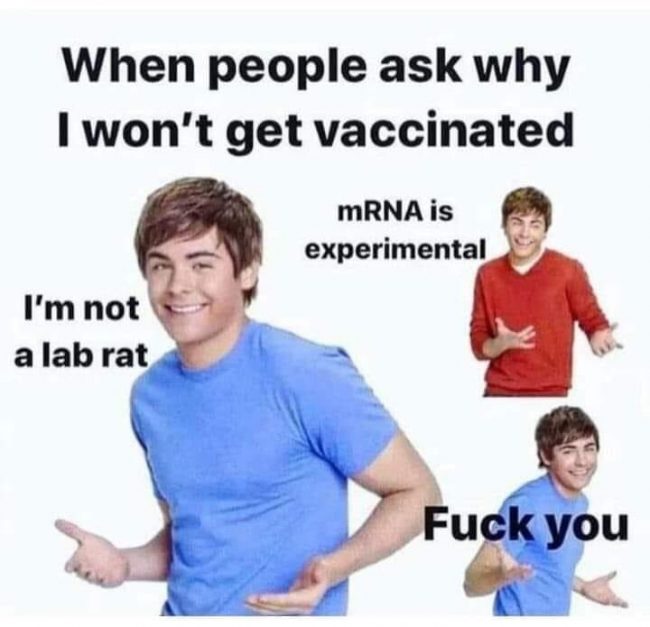
5.
I don’t know why, but the fact that it’s a teenage Zac Efron just makes this even funnier!
6.
They keep telling me I’m going to get sick but I have this amazing immunity superpower called “thinking it’s all complete nonsense”

7.
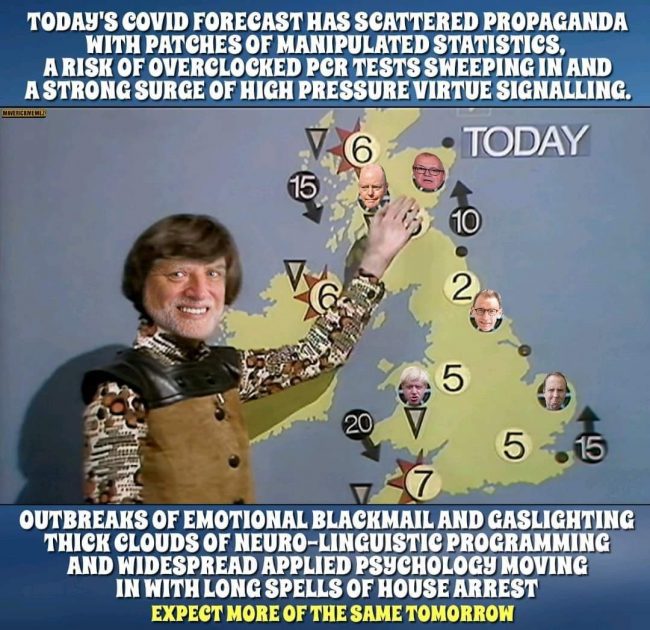
In my humble opinion, the use of “Hide the Pain Harold” as the weatherman is perfection.
8.
“Take my money” comes to mind… I want one of these badges!

9.
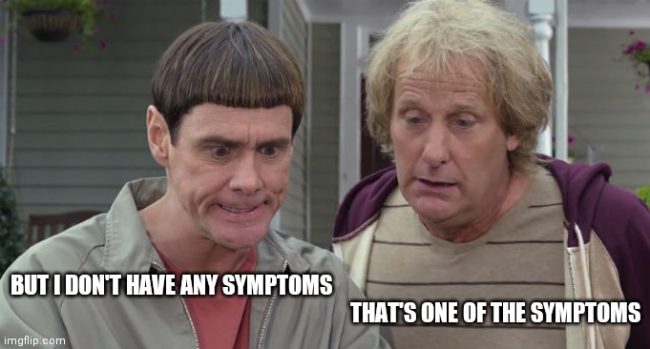
I’ve never actually seen ‘Dumb & Dumber’ but those are words I’d use to describe the general public nowadays…
10.
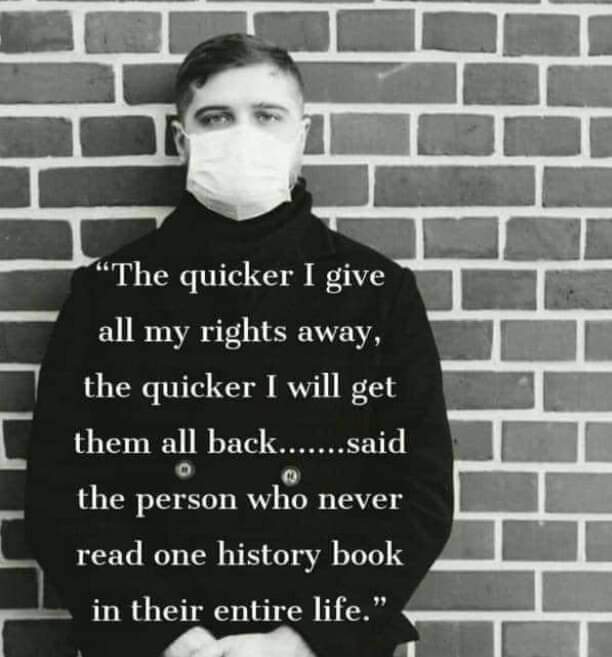
Ok this one might be a little depressing, but it’s not wrong!
AND…
… if you’ve been on facebook or Twitter during the last year and haven’t seen any of those, chances are they were taken down because…

Here’s wishing every skeptic, “conspiracy theorist”, freethinker, “dissenter” and “covidiot” a fantastic week!
“No Evidence Facemasks Keep Kids & Teachers Safe”
By Richie Allen | April 26, 2021
Speaking on Talk Radio this morning, Oxford University epidemiologist Carl Heneghan said that there is no evidence that face masks help to keep pupils and teachers safe in the classroom.
Heneghan told Julia Hartley-Brewer;
“What I would say to people is, in the absence of evidence, if you think they should be wearing them, go and talk to some children. That’s what I’ve done. And I’ve said, what’s the reality on the ground? What’s it like for you in class? How does it feel?
And I can tell you they hate them. They find it really difficult. They don’t adhere to the guidelines. So for instance at the end of class they go into their pocket. They pull them out. That’s a dangerous issue with co-infections and the potential of that to stay infected for a period of time.”
Heneghan went on to say that medical interventions must be backed by hard evidence that the intervention will work. He said;
“That’s all I ever do is say, where’s the evidence to inform what we do and if it’s lacking, you have to come down on the side of not intervening.
Now one of the key problems we’ve got when we intervene, is it becomes incredibly difficult to roll back interventions. And that’s what we are saying. That’s the great problem now, the just in-case approach. That’s not how to perform in healthcare.”
Should Unvaccinated and Obese Be Penalized by Government?
By Dr. Joseph Mercola | April 23, 2021
“Vaccine refusal will come at a cost — for all of us,” Edward-Isaac Dovere, a staff writer for The Atlantic, proclaims in an April 10, 2021, political commentary.1 Unvaccinated individuals “will have higher health care costs,” he says, and the vaccinated will have to foot the bill, either through taxes or insurance premiums.
This argument could have been made for decades, and can still be made today, for any number of groups. Obese individuals have far higher health care costs than those of normal weight. Insulin resistant people and those with Type 2 diabetes end up costing the health care system enormous sums. Who pays for them?
Overall, healthy individuals — people who generally do what they can to take good care of themselves to prevent chronic conditions — have always paid for those who are less particular about their diets and lifestyle.
The Economic Costs of Vaccination Vs. Vaccine Refusal
Dovere predicts the economic costs of vaccine refusal will begin to feature heavily as we move forward. He quotes Washington Gov. Jay Inslee, who told him,2 “You have a liberty right, and that unfortunately is imposing on everyone else and their liberty right not to have to pay for your stubbornness.” Not surprisingly, Dovere and Inslee both focus on just one side of what needs to be a two- if not four-sided equation.
When making public health policy, you have an obligation to analyze both the benefit and the cost of any given policy. In this case, what might be the cost of vaccine side effects, both in terms of health care costs and lives lost? As of April 1, 2021, VAERS had received 56,869 adverse events following COVID-19 vaccination, including 7,971 serious injuries and 2,342 deaths.3 By April 13, the had updated that death toll to 3,005.4
What might be the cost if the vaccines don’t work and you get sick anyway? As of April 15, 2021, some 5,800 Americans who had been fully vaccinated against COVID-19 had been diagnosed with COVID-19 post-vaccination; 396 (7%) required hospitalization and 74 died.5 These cases are popping up all over the world.
The vaccines are not foolproof. In fact, so-called “breakthrough cases,” meaning cases in which a fully vaccinated individual is diagnosed with COVID-19 are to be expected. I’m not sure why anyone is surprised, seeing how the vaccine makers have acknowledged that the mRNA injections are not designed to actually make you immune to SARS-CoV-2.
You can still contract the virus and spread it to others. What the shots may do is lessen your symptoms if and when you get infected with SARS-CoV-2. So, of course people can still get sick, as they did before. Some will require hospitalization. Some will die — just like they did previously, before the vaccine.
Then there’s the question of whether vaccinated individuals end up being more susceptible to variants of the virus than unvaccinated individuals. Preliminary research6,7,8,9 found that people who had received both doses of the Pfizer COVID-19 vaccine were eight times more susceptible to contracting the South African variant of SARS-CoV-2, called B.1.351, (5.4% compared to 0.7%).
Unfortunately, the study was too small to glean any information about outcomes, so we don’t know whether they developed milder or more serious illness than unvaccinated people sickened by the same variant.
Either way, if vaccinated people are more susceptible to more dangerous variants (which they claim B.1351 is), why assume that unvaccinated people would incur higher health care costs? Variants are now cropping up all over the place, so maybe vaccinated people will end up being responsible for a greater share of medical expenses. Maybe, if they have milder illness and unvaccinated have more serious illness, the costs might end up about the same for each group.
May There Be Economic Benefits to Vaccine Refusal?
In my view, the notion that COVID-19 vaccines will end this pandemic is an illogical fallacy since these shots do not provide actual immunity. The fizz in Dovere’s argument starts going flat on that basis alone. But there’s much more.
To really determine what’s best for public health, you’d also want to do the benefit and cost analysis of not vaccinating and relying on naturally-acquired immunity in combination with immune-boosting strategies instead, such as improving vitamin D levels across the entire population, for example.
Only when you have made all of those calculations — the benefit and cost of vaccinating, and the benefit and cost of not vaccinating — can you compare the two and begin to make statements about how certain groups of people may incur higher health care costs, and which strategy is likely to save the most lives. As of right now, it’s pure guesswork as to who’s going to cost more in the long run.
For example, I don’t know of any actual data showing that the health of people who are planning to forgo the vaccine place them at increased risk of serious COVID-19. If I were to guess, and this is pure speculation, people who have decided not to get vaccinated may be doing so because a) they know they’re in a low-risk category and/or b) they are health-conscious people who feel confident that they can prevent and/or treat COVID-19 in other cost-effective ways, should they get sick.
There are a lot of data that need to be compiled and analyzed before we can start declaring the COVID-19 vaccination campaign a public health care success, let alone a cost-saving imperative.
Appeal to Illogical Reasoning
Dovere goes on to discuss some of the messaging campaigns employed to lure people out of their vaccine hesitancy:10
“Two appeals seem to work best: First, the vaccines are safe, and they’re more effective than the flu vaccine. Second, you deserve this, and getting vaccinated will help preserve your liberty and encourage the government to lift restrictions.
(That last idea is what Jerry Falwell Jr. focused on in the vaccination selfie he posted11 this week, captioned, ‘Please get vaccinated so our nutcase of a governor will have less reasons for mindless restrictions!’) Inslee hopes that emphasizing those points will persuade more Republican men to get their shots.”
Sometimes it can help to spell out a logical fallacy using different words. (Personally, I believe Falwell was simply trying to be funny, but Dovere and Inslee have apparently seized the “lift restrictions” angle as a social conditioning opportunity, so that’s really what I’m addressing here.)
One rewrite of Falwell’s plea could be: “Please ignore your current health status and potential vaccine risks and just obey so that our governor will have less reason to impose unconstitutional and unscientific limitations on our basic rights and freedoms.”
In my view, a more appropriate way to prevent “mindless restrictions” would be to peacefully disobey and/or take the governor to court, as has been done to California Gov. Gavin Newsom. The Supreme Court has ruled against him no less than six times, finding he abused his power, overstepped his authority and violated the Constitution with his pandemic restrictions on churches.12
Urging someone to take a vaccine to prevent an elected official — who can be unseated — from implementing unscientific and/or unconstitutional restrictions is hardly rational. Let’s not forget that cost-benefit analyses13 have actually been done for lockdowns — perhaps one of the most mindless of restrictions — and the cost is far greater than the benefit.
The cost of the lockdowns in the U.K., in terms of Wellbeing Years (WELLBY), is five times greater than might optimistically be saved, and may in reality be anywhere from 50 times to 87 times greater. The cost for lockdowns in Canada is at least 10 times greater than the benefit.
In Australia, the minimum cost is 6.6 times higher, and in the U.S., the cost is estimated to be at least 5.2 times higher than the benefit of lockdowns. A cost-benefit analysis performed for New Zealand, which looked at the cost of adding just five extra days of “COVID-19 alert level 4” found the cost in Quality Adjusted Life Years (QALY) was 94.9 times higher than the benefit.
Should We Penalize Obesity and Vitamin D Deficiency?
If it’s determined that unvaccinated individuals need to be penalized socially, financially or otherwise, then how can we not also penalize other choices that significantly add to the COVID-19 burden? We know, for example, that vitamin D deficiency significantly raises your risk of COVID-19. In one analysis,14 82.2% of COVID-19 patients were vitamin D deficient.
I published a scientific review15 on the impact of vitamin D in COVID-19 in October 2020, co-written with William Grant, Ph.D., and Dr. Carol Wagner, both of whom are part of the GrassrootsHealth expert vitamin D panel. You can read the paper for free on the journal’s website.
Another major COVID-19 factor is obesity. As reported by CNN16 March 5, 2021, the COVID-19 death rates were more than 10 times higher in countries where more than half the adult population was overweight, compared to countries in which the obesity rate was below 50%. The COVID-19 death rates also rose in tandem with the prevalence of obesity, thereby strengthening the link, according to the report, released by the World Obesity Federation.
At the lowest end is Vietnam, which has an obesity rate of 18.3% and a COVID-19 death rate of 0.04 per 100,000. Toward the high end is the U.S., which has an obesity rate of 67.9% and a COVID-19 death rate of 152.49 per 100,000. (Of course, this report used COVID-19 mortality statistics that have been proven to be wildly exaggerated, as detailed in my interview with Dr. Henele.)
Making an already dire situation worse, recent data17 show 42% of U.S. adults have packed on unwanted pounds, with an average weight gain of 29 pounds, since the start of the pandemic. Only 18% report undesired weight loss, with an average weight loss of 26 pounds.
Government Has Ignored the Value of Healthy Population
According to the World Obesity Federation report, obesity was the second most important risk factor for hospitalization and death from COVID-19 — old age being the primary risk factor — and as noted by Johanna Ralston, CEO of the World Obesity Federation:18
“Old age is unavoidable, but the conditions that contribute to overweight and obesity can be highly avoidable if governments step up and we all join forces to reduce the impact of this disease. The failure to address the root causes of obesity over many decades is clearly responsible for hundreds of thousands of preventable deaths.”
Lead author of the report, Dr. Tim Lobstein, added:19
“Governments have been negligent, and ignored the economic value of a healthy population at their peril. For the last decade they have failed to tackle obesity, despite setting themselves targets at United Nations meetings. COVID-19 is only the latest infection exacerbated by weight issues, but the warning signs were there. We have seen it in the past with MERS, H1N1 and other respiratory diseases.”
Let’s Not Accept Hypocrisy and Double Standards
Even WHO Director-General Tedros Adhanom Ghebreyesus commented on the report saying it “must act as a wake-up call to governments globally,” as “The correlation between obesity and mortality rates from COVID-19 is clear and compelling.”
That said, let’s get back to Dovere’s argument that unvaccinated people are bound to incur higher health care costs due to COVID-19, and therefore there must be some way to penalize those people or force them into compliance.
Using that logic, what, then, do we need to do about obese individuals, whose risk of hospitalization due to COVID-19 is anywhere from 40% to 113% greater, and their chances of requiring intensive care 74% higher,20 than that of their non-obese peers? What do we need to do about people who just refuse to get their vitamin D levels up, and end up taking up the lion’s share of hospital beds?
To be clear, I am NOT proposing we penalize people based on their weight, metabolic flexibility or vitamin D status. I do not support that any more than I support penalizing unvaccinated people — and that is the whole point. Most would agree that this would be completely ridiculous.
My point is, if you cannot fathom penalizing obesity, insulin resistance, diabetes or vitamin D deficiency — conditions known to significantly raise your risk of severe COVID-19 — then how could you possibly consider penalizing an unvaccinated person based on that single parameter alone?
The question is especially valid because, again, vaccinated persons can contract and spread SARS-CoV-2 like anyone else. It’s really unclear how vaccinated people are “safer” than unvaccinated ones, when the only person standing to gain from these shots is the person getting it (in the form of milder symptoms when sickened).
Are You ‘Pure’ Enough for Your Government?
I think it’s important to realize that the COVID-19 vaccine campaign is less about protecting public health and more about creating the infrastructure and psychological climate required for the implementation of global tyranny, which will likely begin with the introduction of vaccine passports that are very similar to the China social credit system.
As discussed in “Vaccines Are the New ‘Purity Test,’” it can almost be likened to a loyalty test. Or perhaps it could best be described as a totalitarian submission test?
Getting private companies to require these vaccine passports only makes sense if there is a strong vaccine push, and this is one of many clues as to what’s really behind the stated “need” for the whole world to get vaccinated.
We’re not all at risk for COVID-19. For a vast majority of individuals, the vaccines make little or no sense, as for young, healthy individuals, their risks outweigh the benefit. Now they are pushing to vaccinate children, whose risk of getting COVID-19 is well-established as being profoundly minuscule.
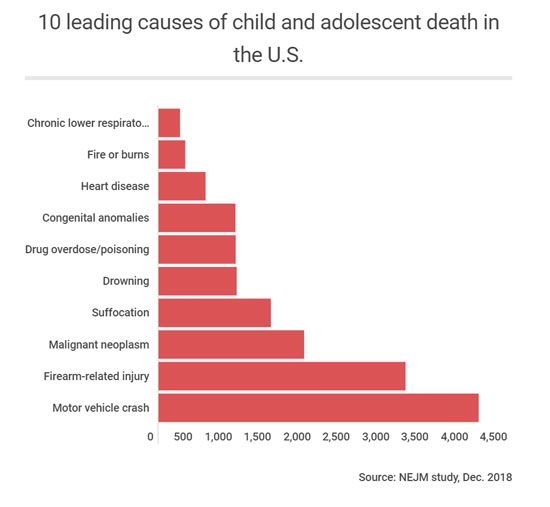
They are at exponentially higher risk from many other factors. There are currently fewer than 500 children who are reported to have died from COVID-19, even with the massively manipulated causes of death. Remember, if you had a positive COVID test and died from terminal cancer or a motorcycle accident, you were classified as a COVID-19 death.
As you can see from the graph below, there are 10 higher risks of death than COVID-19 for children. To be logically consistent, the government would need to be equally rigid about addressing all of these causes as aggressively as they are pursuing COVID-19 vaccination for children.
But it’s not about simply getting a vaccine into your arm. Ultimately, it’s about getting you tied into the digital system being launched in the form of vaccine passports. As explained by former Clinton adviser and author Naomi Wolf (whom I will be interviewing shortly) in a March 28, 2021, interview with Fox News’ Steve Hilton:21,22
“‘Vaccine passport’ sounds like a fine thing if you don’t understand what those platforms can do. I’m [the] CEO of a tech company, I understand what these platforms can do. It is not about the vaccine, it’s not about the virus, it’s about your data.
Once this rolls out, you don’t have a choice about being part of the system. What people have to understand is that any other functionality can be loaded onto that platform with no problem at all. It can be merged with your Paypal account, with your digital currency. Microsoft is already talking about merging it with payment plans.
Your network can be sucked up. It geolocates you everywhere you go. Your credit history can be included. All of your medical and health history can be included … It is absolutely so much more than a vaccine pass … I cannot stress enough that it has the power to turn off your life, or to turn on your life, to let you engage in society or be marginalized.”
Dangerous Curves Ahead
Wolf also points out the horrific history of IBM, which developed a sophisticated system of punch cards that allowed Nazi Germany to create a two-tier society and ultimately facilitated the rounding up of Jews for extermination. Fast-forward to today, and IBM is now a leader in the vaccine passport business. I wrote about this in “IBM Colluded With Hitler, Now Makes Vaccine Passports.”
In Nazi Germany, the obsession with purity — both in terms of hygiene and race theory — drove the genocide of Jews, the old, the handicapped and the mentally challenged.
In present day, the public narrative has eerily followed Nazi Germany’s playbook for genocide, starting with the scapegoating of healthy people, as the rapid spread of COVID-19 was blamed on asymptomatic individuals not properly masking, social distancing and self-isolating.
That then grew into the nurturing of prejudice against people who refuse to wear masks, and now we’re seeing the narrative building toward persecution of those who do not want to get the vaccine. It will start with discrimination, and already, we’re hearing talk of how only vaccinated people ought to have the right to partake in certain social activities. If that is tolerated, then outright persecution will be the inevitable next step.
This is why I reject and counter commentaries such as that by Dovere. These half-baked, one-sided, persecutory arguments must be challenged at every turn, because they only lead us one way. And unless you’re part of the technocratic elite, you — regardless of how you feel about vaccination right now — do not want to end up there.
Sources and References
- 1, 2, 10 The Atlantic April 10, 2021
- 3 The Defender April 9, 2021
- 4 CDC, Selected Adverse Events Reported after COVID-19 Vaccination April 13, 2021
- 5 The Defender April 15, 2021
- 6 Epoch Times April 11, 2021
- 7 Reuters April 10, 2021
- 8 Washington Examiner April 11, 2021
- 9 Medical Xpress April 11, 2021
- 11 Twitter Ruth Graham April 8, 2021
- 12 Townhall April 13, 2021
- 13 Preprints.org 2020: 2020100330 DOI: 10.20944/preprints202010.0330.v2
- 14 The Journal of Clinical Endocrinology & Metabolism October 27, 2020; dgaa733 [Epub ahead of print], Results
- 15 Nutrients October 31, 2020;12, 3361; doi:10.3390/nu12113361
- 16, 18, 19, 20 CNN March 5, 2021
- 17 APA.org Undesired Weight Change Since Start of Pandemic
- 21 Real Clear Politics March 29, 2021
- 22 The Epoch Times March 29, 2021
Featured Video
HE SAVED LIVES. NOW HE FACES PRISON.
or go to
Aletho News Archives – Video-Images
From the Archives
NATO Sanctions and the Coming Global Diesel Fuel Disaster
By F. William Engdahl – New Eastern Outlook – 11.04.2022
Amid the ongoing global inflation crisis, NATO heads of state and mainstream media repeat a mantra that high energy prices are a direct result of Putin’s actions in Ukraine since end of February. The reality is that it is the western sanctions that are responsible. Those sanctions including cutting SWIFT interbank access for key Russian banks and some of the most severe sanctions ever imposed, are hardly having an impact on the military actions in Ukraine. What many overlook is the fact that they are increasingly impacting the economies of the West, especially the EU and USA. A closer look at the state of the global supply of diesel fuel is alarming. But Western sanctions planners at the US Treasury and the EU know fully well what they are doing. And it bodes ill for the world economy.
While most of us rarely think about diesel fuel as anything other than a pollutant, in fact it is essential to the entire world economy in a way few energy sources are. The director general of Fuels Europe, part of the European Petroleum Refiners Association, stated recently, “… there is a clear link between diesel and GDP, because almost everything that goes into and out of a factory goes using diesel.” … continue
Blog Roll
 Aletho News
- Trita Parsi: Middle East Unraveling — Are We on the Path to World War?
- Iran FM meets with US envoy on UN meeting’s sidelines at American side’s insistence: Report
- Qatar PM calls for Gulf security framework with Iran, says war must be ‘wake-up call’
- China condemns US extortion of Iranian airlines, rejects Washington’s ‘illegal’ sanctions threats
- Italy to move military personnel from Taif base after missile strike
- Finland’s Stubb tells European leaders to calm down
- Defeating Russia on battlefield impossible – Fico
- Finland’s Gender Clinic Reversal
- Massachusetts Wants Mental Health Visits, Why Does Government Use ‘Health’ to Enter Our Homes & Families?
- US lawmaker admits American people footing bill for Trump’s failed aggression against Iran
- If Americans Knew
- Sanctions are collective punishment: immoral and self-defeating
- Phosphorus Munitions Fired by Israel Burn Groves, Orchards in Southern Lebanon
- Israel Carries Out New Ceasefire Violations Across Gaza
- AI – Emphasis on the ‘I’: Israel Is Funding AI Chatbot Propaganda
- Israel Blocking Hundreds of Wheelchairs for Injured Children From Entering Gaza
- Israel Is Expanding and Upgrading Compounds for Palestinian Militias in Gaza
- The Palestinian-American Residents of This West Bank Town Are Wondering: Where Is Trump?
- Gaza desperately needs tents, wheelchairs, fuel… and everything else (Israel blocks it all) – Daily Update
- Israeli Attacks in Gaza Kill at Least Seven Palestinians Over Three Days, including Woman and Child
- Trump’s militarization of Washington DC as he pursues Israel’s war against Iran
- No Tricks Zone
- 2025 Nature Paper Claiming Worsening Global Drought Gets RETRACTED …Heavily Flawed
- New Study: ‘Global Drought Shows No Detectable Recent Acceleration Under Climate Warming’
- Economic Masterminds: German Socialists Suggest Taxing Productivity Gains Stemming From Using AI
- The South China Sea Has Not Been Cooperating With The Climate Change Narrative
- Energy Crisis: Germany Enters Heating Season With Historically Low Gas Reserve Fill Levels
- New Study: The Antarctic Ice Sheet Gained Mass From 2020-2024 Due To Staggering Snow And Ice Accumulation
- Study: Ocean Heating Rates From Thousands Of Years Ago ‘Dwarf’ Modern Ocean Heating Rates
- Climate Extremists Target, Attack Large-Scale Power Grid Infrastructure In Germany!
- New Study: Antarctic Ice Melt Has Contributed Less Than 1 Centimeter To Sea Level Rise In The Last 30 Years
- Fear Of Debate: Alarmist German Climate Scientist Calls On Mainstream Media To Discredit Skeptic Voices

