HEALTH HEADS KNEW COVID SHOT WASN’T ‘THE WAY OUT’
The Highwire with Del Bigtree | August 31, 2023
Syndicate Fact Checkers Confirm Empiric Regimen is Valuable for Post-Acute Sequelae after SARS-CoV-2 Infection and COVID-19 Vaccination
By Peter A. McCullough, MD, MPH | Courageous Discourse | August 31, 2023
It took less than a day since our Base Spike Protein Detoxification Protocol was published for the Biopharmaceutical Complex to come out with syndicate social media allies discrediting the most hopeful news long-COVID and vaccine suffers have heard since the start of their misery.
Syndicate fact checker Science Feedback, issued an unsupported false counterclaim on Instagram given below.
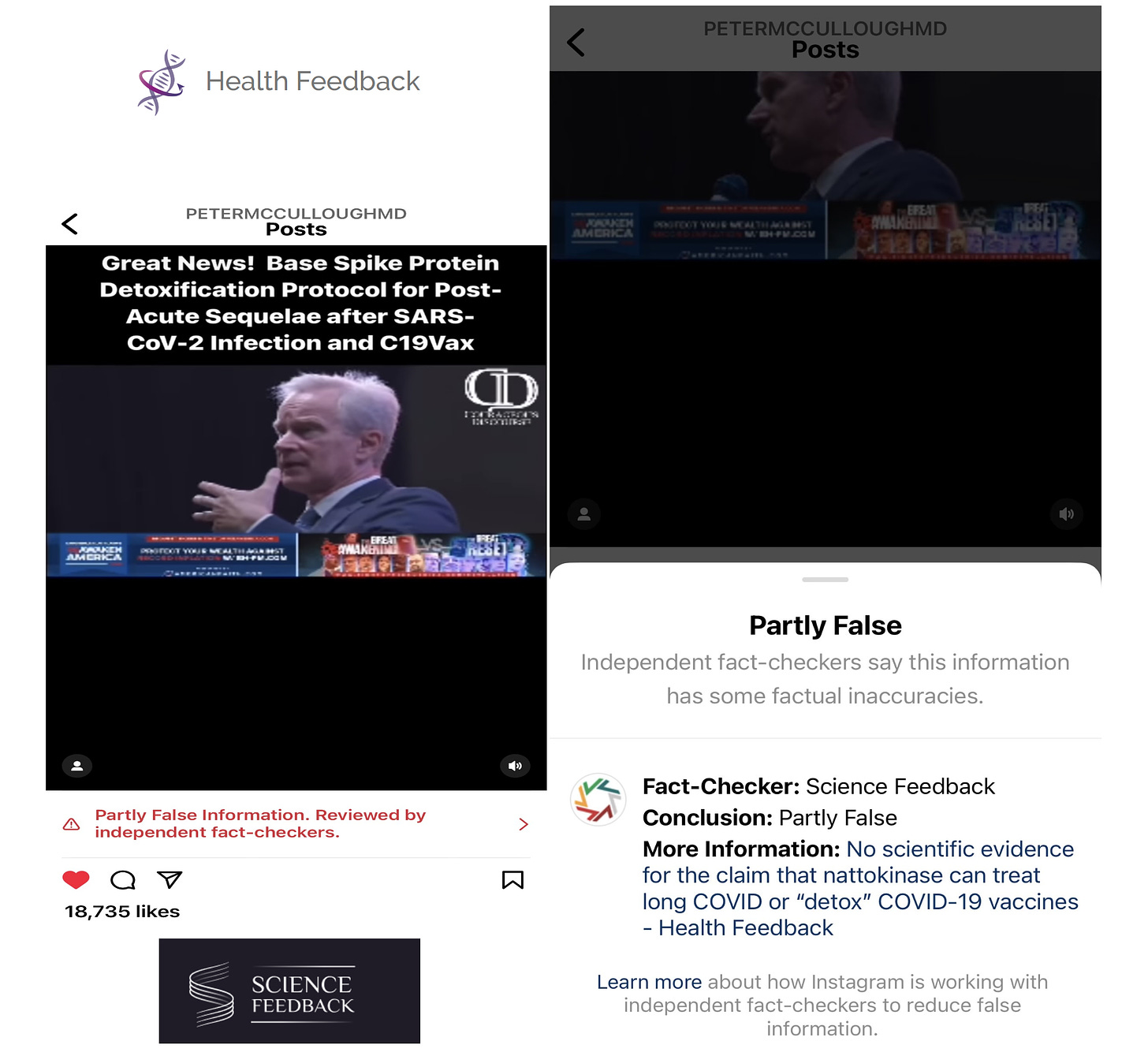
Science Feedback, a science and climate blogging organization with no foundation in peer-reviewed medical publications, is not advised by prominent physicians working in the COVID-19 field. Their major donor is former Microsoft and Apple executive Eric Michelman who is also a noted Democrat supporter, donating money to the Presidential campaigns of Barack Obama and Joe Biden. Michelman is also a climate change activist, founding a climate change advocacy organization and publicly supporting a carbon tax.
LinkedIn pulled a post indicating the COVID-19 vaccine causes more post-acute sequelae than SARS-CoV-2 which is my clinical opinion supported by the data. Base Spike Detoxification is an approach a to both problems. LinkedIn uncredentialed anonymous content moderators obviously disagreed and continue to push the false narrative indicating that long-COVID is unassailable and the only answer is more genetic shots.

I have found it interesting that the fact checkers have never made claims against a myriad of drugs or supplements that were ineffective during the pandemic. They have exclusively targeted therapies with preclinical and clinical studies demonstrating signals of benefit and acceptable safety (iodine/xylitol nasal washes, vitamin D, hydroxychloroquine, ivermectin, budesonide). In a perverted way, the Biopharmaceutical Complex has confirmed Base Spike Detoxification is the path forward for so many patients suffering from long-COVID and or regretting the jab.
Peter A. McCullough, MD, MPH
President, McCullough Foundation
By Michael Nevradakis, Ph.D. | The Defender | September 6, 2023
The New York Times on Sept. 1 published a “guide to fall vaccine shots,” which included recommending the general public get COVID-19, flu and RSV (respiratory syncytial virus) vaccines, and infants 6 months and older receive COVID-19 shots this fall.
Written by Times senior writer David Leonhardt, the guide warns about rising COVID-19 cases and the approaching flu season, before offering, “The good news is that there are vaccines and treatments that reduce risks from all major viruses likely to circulate this season.”
According to the Times, “This year, we should take a broader approach,” rather than “obsess over COVID.”
Peter Hotez, M.D., Ph.D., dean of the National School of Tropical Medicine at the Baylor College of Medicine — described by the Times as a “vaccine expert” — echoed that appeal. “It’s not only COVID you have to think about,” he said.
Hotez, Nirav Shah, M.D., J.D., principal deputy director of the Centers for Disease Control and Prevention (CDC), and other public health officials and experts quoted by the Times recommended Americans prepare for the upcoming fall and winter by getting the trio of COVID-19, flu and RSV vaccines.
None of these experts, however, addressed any of the potential safety risks posed by these vaccines.
Medical and public health experts who spoke with The Defender took a different view and questioned the Times’ guide, citing concerns about the safety and efficacy of vaccines for respiratory illnesses.
“Vaccines against respiratory illnesses have failed miserably,” said cardiologist Peter McCullough M.D., MPH. “America is wary of vaccines at this point, wanting to get on with life free of menacing vaccines, and are willing to seek early treatment, which is always the best way to handle infections, vaccinated or not.”
Pediatrician Dr. Liz Mumper, president and CEO of the Rimland Center for Integrative Medicine, told The Defender, “There have been no studies examining the effects of giving RSV vaccine, flu vaccine and COVID vaccine at the same time.”
“If you follow the advice in The New York Times article,” Mumper said, “be aware that your child will be part of post-marketing experimentation.”
Times still pushing vaccine propaganda
According to the Times, “The best defenses against COVID haven’t changed: vaccines and post-infection treatments,” which are “especially important for vulnerable people, like the elderly and immunocompromised.”
The federal government is “on track” to approve updated COVID-19 shots, designed to combat recent variants, in mid-September, the Times reported. Once they are available, “all adults should consider getting a booster shot.”
“COVID can still be nasty even if it doesn’t put you in the hospital,” the Times states. “A booster shot will reduce its potency.”
Hotez resurrected a claim heard often during 2021 and 2022, telling the Times, “Overwhelmingly, those who are being hospitalized are unvaccinated or undervaccinated.”
Experts who spoke with The Defender disagreed.
Harvey Risch, M.D., Ph.D., professor emeritus and senior research scientist in epidemiology (chronic diseases) at the Yale School of Public Health, citing data from U.K. Public Health, said, “All-cause deaths ages 18+ are disproportionately among vaccinated people, whether one, two or three doses, compared to unvaccinated people.”
“The statistic quoted by Dr. Hotez is false,” Risch said.
Brian Hooker, Ph.D., senior director of science and research for Children’s Health Defense (CHD) said, “The new booster simply hasn’t been tested to affirm any assertion of protection. The original trials on children were laughable as they looked at antibody titers rather than actual disease prevention.”
McCullough told The Defender, “The COVID-19 vaccines have been a safety debacle with record cases of myocarditis, blood clots, stroke, and all-cause mortality.”
Despite the injury and mortality reports and the Times’ admission that the risk of COVID-19 to young children is “very low,” Shah nonetheless recommended children as young as 6 months of age get the COVID-19 booster shots this fall.
“Do you want to see your grandpa … [and] grandma?” Shah asked in the Times. “Are you really sure you’re not going to give COVID to them?”
Experts who spoke with The Defender refuted Shah’s advice.
Dr. Pierre Kory, president and chief medical officer of the Front Line COVID-19 Critical Care Alliance (FLCCC), said “There is no medical justification for a healthy 6-month-old or older child to be vaccinated for COVID-19,” adding:
“There is so little data available on the safety of the COVID-19 vaccine in children that to give blanket recommendations like Shah is doing creates an unnecessary risk to children’s health.
“We simply do not know enough about the COVID-19 vaccines to make such broad recommendations. Additionally, COVID-19 is highly treatable in children and poses very little risk to a healthy child.”
Mumper told The Defender, “Any official who advocates that children take a vaccine to protect grandparents has not read the medical literature carefully.” She said, “After doing a deep dive on the risks and benefits of COVID vaccines in children, I remain steadfastly opposed to their use in healthy children,” adding:
“Any immunity from COVID shots is short-lived and follows a period of immune suppression. Very worrisome adverse events like inflammation of the heart, triggering autoimmunity, interfering with autonomic functions and reproductive toxicity are well described in the medical literature.”
Not all countries following suit
Some countries began limiting COVID-19 vaccination for children last year. In April 2022, Denmark ended its blanket COVID-19 vaccination recommendation, including for children.
Now, Denmark recommends “booster-vaccination” only for people “aged 50 years and above and selected target groups.”
Earlier in 2022, public health authorities in Sweden and Norway opted not to recommend COVID-19 vaccines for children between the ages of 5 and 11.
Sweden now recommends COVID-19 vaccination only for those 50 and above (18 and above for high-risk groups), while Norway is still only recommending COVID-19 vaccines for those 65 and older (and as young as 5 for high-risk groups).
In March of this year, the World Health Organization (WHO) said healthy children and adolescents ages 6 months to 17 years have a “low disease burden” and are therefore low priority for vaccination.
In June, Australian public health officials said Moderna’s COVID-19 vaccine is “no longer available” for children under 12, and in January, U.K. public health authorities ended their booster program for those under 50.
COVID vaccine recommendations ‘not science, not medicine, not public health’
Dr. Meryl Nass, an internist and member of CHD’s scientific advisory committee, told The Defender that while public health authorities and the media continue to recommend COVID-19 vaccines, none of them have been fully licensed in the U.S., as all such vaccines are available under Emergency Use Authorization (EUA) only.
In May 2022, the U.S. Food and Drug Administration (FDA) said that COVID-19 vaccines for kids under 6 would not have to meet the agency’s 50% efficacy threshold required to obtain an EUA.
CDC data released in September 2022 showed that more than 55% of children between 6 months and 2 years old had a “systemic reaction” after their first dose of the Pfizer-BioNTech or Moderna COVID-19 vaccines.
“The CDC, criminally, claims the (authorized) vaccines are ‘safe and effective,’” Nass said, adding:
“That is a term of art that is only allowed to be used for licensed vaccines and drugs. No licensed COVID-19 vaccine is available in the U.S. Public health is supposed to balance benefit and risk.
“This is not science. Not medicine. Not public health.”
Flu vaccines have demonstrated ‘declining efficacy’
According to the Times, “The most immediate step worth considering involves R.S.V.” On Sept. 5, the CDC issued a health advisory warning of rising RSV cases in parts of the U.S., particularly among children and babies.
Last month, the CDC signed off on the first-ever monoclonal antibody vaccine Beyfortus for the prevention of RSV, for babies up to 8 months old.
Also last month, the FDA approved an RSV vaccine for pregnant women, despite concerns raised by some medical experts about premature births identified during clinical trials. In May, the FDA approved Pfizer’s Abrysvo and GlaxoSmithKline’s Arexvy RSV vaccines for people 60 and older.
The Times quoted Ashish Jha, M.D., MPH, former White House COVID-19 adviser and now dean of Brown University’s School of Public Health, who said, “If you’re 60 or over, you don’t want to get into November without having an RSV vaccine.”
And though there is no RSV vaccine approved for administration to children, the Times said that “parents may want to ask their pediatrician” about monoclonal antibody treatment for children under 8 months of age.
According to Hooker, “the RSV vaccine given to pregnant women could not even make a 20% threshold for protection (as specified by the FDA) against lower respiratory RSV infection.”
Supporting the push for the flu vaccine, the Times and experts such as Jha said, “The flu officially kills about 35,000 Americans in a typical year,” but “the flu’s toll would be lower if more people got a vaccine shot,” noting that “In recent years, less than half of Americans have done so.”
Jha added, “We underestimate the impact that respiratory viruses have on our population. The flu can knock people out for weeks, even younger people.” Jha pointed out that flu can make heart attacks and strokes more common as well.
Kory, however, told The Defender that the COVID-19 vaccines have made people more susceptible to other respiratory illnesses, like the flu and RSV:
“In my practice, we treat many vaccine-injured patients who are now more susceptible to the flu, RSV and many other viruses. The COVID vaccines cause many to present as if they have an autoimmune disease and now respond with more severe symptoms to common viruses like the flu.”
Risch, meanwhile, said, “Traditional flu vaccines are considered to be safe for most people” and may be a “reasonable” option for them, but “this should be discussed with one’s healthcare provider.”
“The flu vaccines seem to have had declining benefit over the last 10-15 years, to the point now that they may confer only a 30% benefit,” Risch added.
And according to Hooker, “The flu shot is also notoriously bad at protection against the flu and there are very few data regarding this season’s flu shot efficacy.”
‘Ludicrous’ public health messaging
Shah’s recommendation that children as young as 6 months get a COVID-19 shot this fall follows in a long line of questionable advice and claims disseminated by public health officials, some of which were later contradicted.
In a May 2021 MSNBC interview, Dr. Anthony Fauci, then-head of the National Institute of Allergy and Infectious Disease (NIAID), said:
“Although you don’t like to see breakthroughs, the fact is, this is one of the encouraging aspects about the efficacy of the vaccine. It protect you completely against infection. If you do get infected, the chances are that you’re going to be without symptoms, and the chances are very likely that you’ll not be able to transmit it to other people.”
Fauci’s statements, however, failed to account for the many examples of breakthrough infections with severe symptoms and hospitalization.
After years of official “safe and effective” claims, in YouTube’s new “medical misinformation” policy introduced Aug. 15, “Claims that any vaccine is a guaranteed prevention method for COVID-19” are prohibited. Fauci’s videos from 2021, notably, are still up on YouTube.
In April 2020, Fauci said that remdesivir will become the “standard of care” for treating COVID-19. But numerous victims of COVID-19 hospital protocols prescribed by the CDC have come forward in recent months claiming that remdesivir was administered without permission of the patients or their families and contributed to further injury or death.
Similarly, former CDC Director Rochelle Walensky said in March 2021 “Our data from the CDC today suggests … that vaccinated people do not carry the virus, don’t get sick … can’t transmit it to others.” She doubled down on these statements during a House Select Subcommittee on the Coronavirus Pandemic hearing in June, asserting that her statement “was generally accurate.”
Hooker said these statements were “obviously patently false, as the vaccines distributed in the U.S. at that time [in 2021] were not tested for transmission and there was evidence of ‘breakthrough’ infections even in the clinical trials.”
“This obviates any protection to ‘Grandma and Grandpa’ through children getting vaccinated against COVID-19,” Hooker added.
Also in 2021, Walensky recommended wearing pantyhose over a mask to ensure a tight fit.
Nass called such public health messaging “ludicrous,” noting that Walensky’s pantyhose recommendation “quickly disappeared” because it “had connotations the CDC was not willing to deal with.”
Kory criticized the Times’ fall vaccine guide, characterizing it as an example of “disinformation.”
“The New York Times is carrying the disinformation that continues to come from the CDC and other government health agencies,” he said. “This is one of the reasons that the public continues to lose trust in the media and our government.”
As a result, public health officials “create a mockery of how medical and scientific evidence is used to inform patient care decisions and public health policy,” Kory said.
Other experts who spoke with The Defender suggested taking vitamins to boost one’s immune system, rather than a series of vaccinations.
“For the immune system to defend against respiratory viruses, all people should take daily vitamin D to achieve blood levels of 50 or greater,” Risch said. “This is typically 5,000 units per day for a 150-lb person, but can be adjusted up or down according to body weight.”
“Serious RSV infections generally occur only in the youngest young and the oldest old. People in these categories should discuss this with their doctors,” he added.
Michael Nevradakis, Ph.D., based in Athens, Greece, is a senior reporter for The Defender and part of the rotation of hosts for CHD.TV’s “Good Morning CHD.”
This article was originally published by The Defender — Children’s Health Defense’s News & Views Website under Creative Commons license CC BY-NC-ND 4.0. Please consider subscribing to The Defender or donating to Children’s Health Defense.

By Hunter Fielding – N/A – September 5, 2023
The vast majority of the population of Haiti is unvaccinated for COVID-19 but the impoverished Caribbean nation recorded virtually no deaths from the virus.
Haiti remains one of the least vaccinated countries in the world while also showing the lowest Covid death rate.
As of the end of April, just 254 people have died in Haiti from what authorities agree constitutes Covid, according to reports.
However, this figure is likely overblown considering SARS-CoV-2 has never even been isolated and proven to exist.
Compared to the United States, which currently has a COVID-19 death rate of around 1,800 per one million people, Haiti has a Covid death rate of just 22 per one million people, or 0.0022% – basically 0 percent.
NPR admits in a report about Haiti that Covid restrictions were never enforced there.
Nobody there wears a mask, people are mostly unvaccinated, and daily life is normal with busy and crowded buses and markets.
For most Haitians, the pandemic never happened.
“And Haiti hasn’t yet administered a single COVID-19 vaccine,” NPR‘s Jason Beaubien further reveals.
It turns out that Haiti had its own version of Tony Fauci, a man named Dr. Jean “Bill” Pape, who headed up a commission during the “pandemic” to deal with the fallout. In the end, however, the commission was dissolved because Haiti was, and continues to be, COVID-free.
“The reason mainly is because we have very, very few cases of COVID,” Pape said about why the commission was ultimately disbanded.
GHESKIO, the local health agency that Pape heads, also closed its COVID units last fall due to a lack of patients.
While the Western world is stricken with hordes of “fully vaccinated” people who are now sick as dogs, Haiti is back to normal thanks to its rejection of the shots.
“Sometimes it’s two, sometimes zero, sometimes it’s 20 cases,” Pape said.
“But we are not seeing a second wave as we thought would happen.”
Unlike much of the rest of the world, Haiti remained open during the “pandemic.”
Outdoor markets were never closed, and people there continued working because sheltering in place and remote employment are not things that the average Haitian can afford.
“Most people don’t wear a mask,” Pape added, noting that Haitians continued working as normal throughout the pandemic because “if they don’t work, they don’t eat – their family doesn’t eat.”
When AstraZeneca tried to peddle its COVID injection in Haiti, the Haitian government denied a shipment of it.
It turns out that the medical community in Haiti heard about all the “rare” side effects of the jab and thus rejected it.
“COVID did not impact us as badly,” said Dr. Jacqueline Gautier, who serves on the national technical advisory group on COVID vaccination in Haiti.
“People don’t think [the vaccine] is worth it, actually.”
Another factor that makes Haiti an incredible success story compared to other nations is the fact that its population is very young.
The average age in Haiti is around 23, while in the United States, it is closer to 40.
Younger people tend to have stronger immune systems than older people.
And without COVID jabs to destroy them, Haiti’s millions of unvaccinated people fared well compared to the rest of the world.
“Also, there are many other major problems the country is facing,” Gautier added.
“So people don’t see COVID as our major, as a major, problem for us.
“And who can blame them?”
During the UK Parliamentary debate on the WHO Treaty there was a noticeable contrast between those supporting the petition and those opposing it. This article analyses the arguments made by those rejecting the petition, drawing on insights from Behavioural Science.
BY ALICE ASHWELL, SINEAD STRINGER, DR DAVID BELL | PANDA | AUGUST 25, 2023
On 17 April 2023, a petition [1] was debated in the UK Parliament calling for the Government “to commit to not signing any international treaty on pandemic prevention and preparedness established by the WHO, unless this is approved through a public referendum.” The petition had received 156,086 signatures. Of the thirteen Members of Parliament (MPs) who spoke during the debate [2] four strongly supported the motion, three took a more neutral stance, and six strongly opposed the petition or elements of the argument. Examples of arguments in support of the petition can be viewed in a collation of clips taken from the video of the debate [3].
There was a noticeable contrast between the arguments presented by MPs supporting the petition — who exhibited concern for the constituents who had signed the petition and approached them directly — and those opposing it. All those who, like the petitioners, were concerned about the growing power and influence of WHO and threats to national sovereignty were familiar with the contents of the so-called ‘pandemic treaty’ [4], since labelled the WHO CA+, as well as proposed amendments to the International Health Regulations (IHR) [5]. While some opposing the petition were also familiar with the document, others had not even read it, prompting Andrew Bridgen (MP for North West Leicestershire) to plead with members to do so.
Those concerned about these proposals presented well-reasoned arguments reflecting an understanding of the history of WHO [6], its many failures during Covid-19, and its current problematic relationships with non-state funders [7,8]. Those supporting WHO’s proposals uncritically supported WHO, focusing on its public health successes and ignoring obvious concerns. Perturbed by the lack of parliamentary scrutiny of the Covid response measures, some MPs worried that the UK government, having played a leadership role in drafting the treaty, might ratify it without parliamentary debate. This reservation was flatly denied by those opposing the petition, with some denying that WHO would in any way threaten UK sovereignty, that its role would remain advisory in nature, and that those opposing the treaty were in effect opposing international cooperation.
This article analyses the arguments made by those rejecting the petition, drawing on insights from Behavioural Science. During the debate, these MPs tended to rely on the following tactics:
The debate was a sad reminder that it is not necessarily the quality of arguments, or even the sincerity of the individuals making them, that wins the day.
1. Using derogatory language and labels to discredit speakers and their arguments
A tactic used to shut down discussion and debate was to attach derogatory labels to those supporting the petition. In the debate, two such labels used in relation to the Covid event and the pandemic treaty were ‘conspiracy theory/theorist’ (ten references made by four speakers) and ‘anti-vax’ (one speaker). Some opposing the petition used these labels early in their presentations, their comments and tone indicating that these were untenable positions that no sane person could possibly subscribe to.
Using such labels at the beginning of the debate set the scene, immediately employing a behavioural science tactic to prime the participants and the wider audience. Priming is a ‘nudge’ [9] tactic; techniques that are used to modify people’s behaviours or emotions in a way that is unconscious and therefore difficult to identify or counter. Priming [10] occurs when the emotional attachment or views held about one issue are then used to influence the emotional attachment on a separate and unrelated issue; an emotional contagion if you like. This can be utilised to produce a positive or negative relationship. Over the past three years in particular, the phrase ‘conspiracy theorist’ has become strongly and negatively associated with an archetype of someone whose views are not based in fact and who are not community minded, and therefore not socially acceptable. By stating in his introductory comments that “I have no time for conspiracy theories”, leader of the debate Nick Fletcher (MP for Don Valley) activated this already negative mental construct and associated it with the question of the WHO pandemic treaty. Whether this was purposeful or not is debatable but concerns about conspiracies do seem strangely placed in a debate which should be about publicly documented proposals, and UK and international legislation.
Similarly, Sally-Ann Hart (MP for Hastings and Rye), who herself was committed to representing the concerns of constituents who had signed the petition, warned that, “We must be wary of … conspiracy theories distorting the facts and scaring people. Transparency of debate is therefore needed to squash those conspiracy theories.”
Some comments could only be described as invective. Language such as that used by John Spellar (MP for Warley) was entirely inappropriate in the context of a Parliamentary debate:
… the poisonous cesspit of the right-wing conspiracy theorist ecosystem in the United States … an appalling subculture of those who live by conspiracy theories … Unfortunately, we have some people — a very limited number … who wallow in the realm of conspiracy theories.
The ‘conspiracy theorist’ label has become a catch-all term used to discredit numerous perspectives that disagree with the dominant narrative. It has also taken on the power of a curse, which those who hope to remain accepted by their peers must protect themselves from by declaring their immunity.
Another such label is ‘anti-vax’, used by Mr Spellar who interjected early in Mr Fletcher’s introduction:
I thank the hon. Gentleman … for highlighting both smallpox and polio. Is the fact of the matter not that it has been a worldwide vaccination programme that has enabled us to achieve that? Does that not demonstrate the falseness of the anti-vax campaigns?
This is another example of priming, where an exceptionally negative construct (anti-vax), which was set up in mainstream and social media over the past few years, is associated with those who may have genuine concerns about the powers being delegated to a non-elected body. When attached to a person, the related term ‘anti-vaxxer’ is an example of an ad hominem attack [11], which is an example of a false argument. Instead of the argument being discussed on its own merit in terms of data or facts, the audience and other participants are misdirected toward a perceived ‘failing of character’ in those who might have a different view and legitimate questions.
Mr Spellar used this terminology to discredit those wary of vaccinations, in particular the Covid-19 genetic therapy. He continued his interruption of Mr Fletcher’s introductory remarks with the following tirade against academic gastroenterologist Dr Andrew Wakefield who, in 1998, co-authored a research study in The Lancet, linking inflammatory bowel symptoms in 12 autistic children to the Measles-Mumps-Rubella (MMR) vaccine:
Part of this argument has been about vaccination. We go back to Dr Wakefield and that appalling piece of chicanery that was the supposed impact of the measles, mumps and rubella vaccine, which has now been completely exposed and discredited. Indeed Mr Wakefield is now no longer a recognised doctor.
This argument is an example of ‘false equivalence’ [12], another propaganda tool that has the effect of misdirecting the audience away from the key facts of the debate. Those who doubt the safety and efficacy of the novel Covid ‘vaccine’ have not necessarily questioned the safety and efficacy of all other vaccines, and should therefore not be considered ‘anti-vaxxers’. By associating arguments against the Covid shot with the MMR vaccine debacle, the purpose is to tar objections to this entirely novel and inadequately tested therapy with the same brush as arguments levied against an earlier, unrelated, conventional vaccine.
Mr Spellar’s interjection also reflects another tactic of those who wish to quash debate, namely the use of threats to intimidate those who might be inclined to consider alternative narratives. The story of the suppression of harms caused by the MMR vaccine has much in common with the current censorship of reports of serious adverse events and deaths following the Covid injections. Raising the 25-year-old case of Dr Wakefield who is “no longer a recognised doctor” represents a threat, already a reality for many ethical doctors and scientists, that those who speak out against the harms caused by the Covid injections face being dismissed and deregistered.
2. Using inaccurate and unsubstantiated statements
Justin Madders (MP for Ellesmere Port and Neston) also used derogatory language in denying concerns about threats to national sovereignty posed by global organisations such as WHO:
On the absurd side, a narrative has been created that the World Health Organization is a body intent on world domination. Borrowing tropes from conspiracy theories, I found one website referring to the WHO as ‘globalists’ … That sentiment is clearly ludicrous, as is the reference to the WHO being owned by Bill Gates or the Chinese Government.
The treaty has nothing to do with Bill Gates, and it is not the first step in creating a world-dominating authoritarian state.
The first sentence in the quote above is an example of a behavioural science nudge tactic called ‘framing’. In framing, words, metaphors and perspectives are used in a way that makes the message more attractive and activates certain emotional reactions. The image created by the MP’s statements is quick to evoke a mental picture of a film-like villain plotting to take over the world. Being ‘absurd’ (untrue) and a ‘narrative’ (story), this should clearly be discounted.
Beyond the language used, Mr Madders’s claims are not substantiated and as such are simply opinions. Firstly, as the United Nations (UN) agency responsible for global public health, WHO can indeed be considered a ‘globalist’ organisation, along with numerous other international bodies such as other UN agencies, the World Bank and International Monetary Fund, the World Economic Forum (WEF), and international corporations and foundations. But, largely due to the growing influence exerted over national governments by WHO and other unelected supra-national bodies during Covid, the term ‘globalist’ has taken on more sinister connotations. Its use by those critical of the dominant narrative may account for Mr Madders treating the term as a ‘red flag’.
Secondly, Mr Madders may be unaware of the significant changes to WHO’s funding model that have taken place in recent years, with assessed contributions [13] from Member States having declined to less than 20% of WHO’s financing, and Bill Gates now being one of its major funders. WHO’s own website records that, as of Quarter 4 of 2021, the Bill and Melinda Gates Foundation (BMGF) was their second-largest donor (9.49%) after Germany [14]. While on this point, Steve Brine (MP for Winchester) asserted that “the UK is the second-largest contributor to the WHO”, which is incorrect; in fact, the UK is the sixth-largest contributor (5.99%). Gates is also a founding partner and second-largest contributor to Gavi, the Vaccine Alliance, which is the fifth-largest funder of WHO (6.43%). And with 56.14% of BMGF’s funding going to support WHO’s Headquarters [15], it is unlikely that “The treaty has nothing to do with Bill Gates”, as asserted by Mr Madders.
Many unsubstantiated statements regarding Covid ‘vaccine’ safety and effectiveness were also made during the debate. Anne-Marie Trevelyan (Minister of State, Foreign, Commonwealth and Development Office) asserted that “AstraZeneca saved lives worldwide”, despite the use of this adenovirus viral vector vaccine being restricted or suspended in numerous countries due to many reports of recipients suffering blood clots [16].
Similarly, Mr Spellar, referring to the Pfizer mRNA ‘vaccines’, stated that it “certainly was not unproven or unsafe, and it had a huge beneficial impact across the world.” There is, in fact, mounting evidence showing that the Covid injections, released under emergency use authorisation before adequate testing could be undertaken, have been neither safe nor very effective. All vaccine adverse events tracking systems, including the Medicines and Healthcare products Regulatory Agency (MHRA) Yellow Card system in the United Kingdom, the European Medicines Agency’s EudraVigilance system in the European Union, and the Vaccine Adverse Events Reporting System (VAERS) in the United States, have recorded unprecedented numbers of serious adverse reactions, including deaths. Furthermore, an increasing number of studies are reporting evidence of a broad range of serious adverse events [17]. An independent systematic review of serious harms of the Covid-19 vaccines, currently in pre-print, adds significant weight to these findings [18].
Furthermore, after a group of scientists and medical researchers successfully sued the United States Food and Drug Administration (FDA) under the Freedom of Information Act (FOIA) [19] to release many thousands of documents related to licensing of the Pfizer-BioNTech Covid-19 vaccine, it was revealed that early trials had resulted in hundreds of adverse reactions [20 (Appendix 1)]. This information had been withheld from the public by the authorities.
The injections have also been been unable to stop SARS-CoV-2 infection or transmission, with Dr Peter Marks of the FDA admitting in a letter responding to a citizens’ petition that proof of efficacy had not been required for authorisation [21]:
It is important to note that FDA’s authorization and licensure standards for vaccines do not require demonstration of the prevention of infection or transmission. (p.11)
Furthermore, the applicable statutory standards for licensure and authorization of vaccines do not require that the primary objective of efficacy trials be a demonstration of reduction in person-to-person transmission. (p.13)
In addition, there is growing concern that claims that the boosters prevent severe illness and deaths amount to a “wishful myth” [22].
Three years of pro-vaccine propaganda and ongoing efforts to censor reports of vaccine harms have effectively blinded many people to the possibility that the rollout of Covid injections may be related to the sharp rise in excess deaths now being experienced in many countries [23; 24]. This is despite the fact that many vulnerable people, such as the elderly and those with multiple comorbidities, had died previously as a result of Covid-19, lockdown measures and medical interventions.
Despite having had the opportunity to peruse the evidence presented by the petitioners, Mr Spellar was still sure that the vaccination campaign had been a huge success, stating:
… mobilisation of [the] intellectual power and production capacity [of the major pharmaceutical companies] in producing a vaccine in record time to stem the tide of covid was absolutely magnificent.
3. Using globalist slogans
Just as certain terms (conspiracy theorist, anti-vaxxer) have become modern-day curses causing those so labelled to be socially shunned, so have other terms and slogans become the mantras of those wishing to demonstrate their membership of the mainstream. These catchy but often meaningless slogans are building blocks of a collective reality, introduced and normalised through the presentations, publications and public relations communications of powerful individuals, and globalist organisations such as the UN, WHO, WEF and BMGF.
Mr Madders, for example, echoed Bill Gates [25] when he stated: “We need to be better prepared for the next pandemic.” This also represents an unsubstantiated claim, as it ignores the reality that pandemics are actually extremely rare. Since 1900, only five pandemics, each responsible for over one million deaths, have broken out, namely the Spanish flu (1918-1920), the 1957-1958 influenza pandemic, the Hong Kong flu (1968-1969), the AIDS pandemic (ongoing since 1981), and Covid-19 [26]. It also powerfully illustrates the effectiveness of presupposition, where the speaker inserts a statement or assumption as a fact agreed by all and therefore requiring no evidence of its own. The phrase “the next pandemic” provides a nudge by inserting itself unconsciously into the psyche of the listener and readily bypassing the conscious thought process [27].
The Covid event did, however, demonstrate that a pandemic can mean big gains for certain people. It can literally be used to “reset our world” [28], creating unprecedented numbers of billionaires while destroying the lives of billions or others, stripping citizens of their rights and freedoms, unleashing a tyrannical and repressive security apparatus, and creating a ‘polycrisis’ [29], in response to which governments and even citizens will beg for unprecedented levels of global control.
One of the most meaningless slogans, which appears to have been invented by the UN at the beginning of the Covid event, and which has become a mantra reiterated by countless organisations and individuals, is ‘nobody is safe until everyone is safe’. It is not clear what this unsubstantiated statement even means, but what is clear is that it is demonstrably untrue. Nonetheless, this mantra was recited in some form by four speakers, with Anne McLaughlin (MP for Glasgow North East) stating, “It is only when the world is safe from Covid-19 that any of us are truly safe.”
Not only does such an obvious fallacy, a propaganda trope, have no place in a parliamentary debate, its use as some type of rational fact by four MPs across the political spectrum does bring into question the quality and independence of any literature provided to them ahead of this event. It is worth considering this much-used slogan and its ramifications in terms of any safety incident. The ideology underpinning it is one of collectivism, even socialism, in that the individual and their relative safety is merely incidental compared to the safety of all. Some might argue that this contradicts the fundamental principles of the International Declaration of Human Rights, which puts the individual at its core. Certainly, it is not an idle statement and reflects the underlying changes being proposed by WHO, which is seeking under their ‘One Health’ initiative [30] a more far-reaching remit where ‘everyone’ will include not only all sovereign citizens of participating nations, but animals and the environment as well.
Slogans infuse documents produced by UN agencies such as WHO. In referring to the zero-draft of the Pandemic Treaty, Preet Kaur Gill (MP for Birmingham, Edgbaston) used a number of them, including: ‘leave no country behind’, ‘global health is local health’, ‘we are stronger together’, and ‘vaccine equity’. Trotting out vacuous statements like this might be appropriate at a protest rally but should have no place in a parliamentary debate. Slogans are rallying cries. They are right-sounding and apparently well-meaning, even moral, in nature. Their repetition is quite hypnotic and they seem to act as spells, potentially binding those who faithfully recite them to an outcome they may live to regret [31].
The repetitive nature of any phrase or slogan is a tool of both behavioural science and propaganda. Both the repetitive effect and the rhythmic phrasing allow such phrases to easily enter the unconscious. Over time we simply accept the statement as true, as it bypasses our conscious thought processes that might critically assess such a phrase and see it as false or simply nonsensical. The use of such tactics, particularly by people in positions of authority or trust, allow the effect to be amplified. This is known as the ‘messenger effect’. Simply put, we are more likely to trust the message because it was issued by someone representing expertise and trust [32].
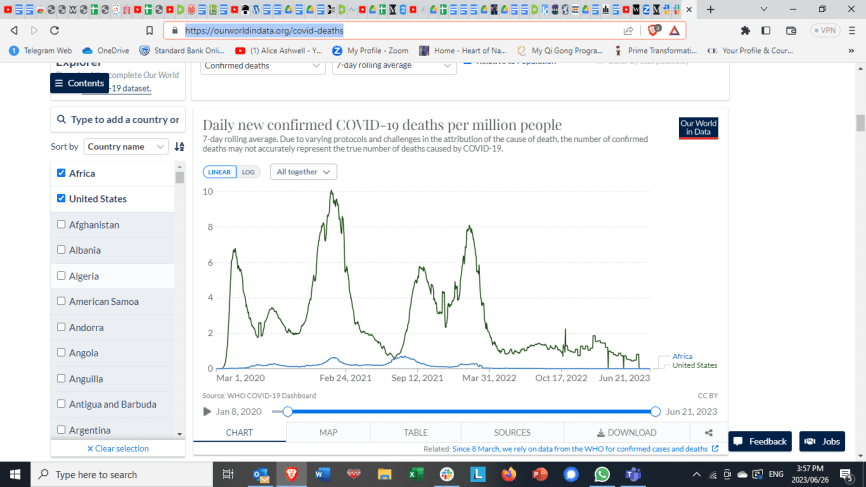
One such case relates to the slogan ‘vaccine equity’. Referring to the “terrible divide in coverage between richer countries and the global south,” Ms Gill lamented that “just 27% of people in low-income countries have received a first dose of a Covid vaccine.” What she does not go on to say, disappointingly, is that there was no correlation between high vaccination rates and low death rates from Covid-19. Indeed, some low-income countries (especially in Africa) with young populations and low vaccination rates experienced very low death rates due to Covid-19, while the USA, one of the richest and most highly vaccinated countries in the world, had one of the highest Covid-19 death rates [33].
4. Patronising the petitioners
Regarding the aim of the petition, which was to request that a referendum be held before the Government could agree to signing the pandemic treaty, Mr Fletcher declared:
Referendums are divisive; they polarise positions and leave a lasting legacy of division. Whether a referendum is appropriate is for the Government to decide, and if they think it is, they must make all the facts known. I suggest that petitioners, while playing their part in the education process, must do so in a sensible manner.
The patronising tone of this comment is ironic. While the referendum on Brexit did indeed sharpen the edge between ‘Leavers’ and ‘Remainers’, the UK Government’s Covid-19 response was possibly even more effective at dividing the populace into camps and pitting one side (those who complied with the mandates) against the other (those who chose not to comply). Furthermore, insisting that citizens should be “sensible” ignores the fact that constituents in favour of a referendum contacted their MPs to raise thoughtful, well-researched concerns, while some MPs arguing against the referendum tended to rely on slogans, unfounded generalities, and invective, rather than “sensible”, factual, reasoned arguments.
Mr Spellar not only used disparaging language to deny the request for a referendum, but also predicted that it would be rejected by the House:
We cannot be arguing to have [a referendum] for every bloomin’ issue, every policy and every treaty. … What we are seeing is overreaction and hysteria, and I would argue that we should give the petition a firm rejection, as I am sure we would do if it ever came to the Floor of the House of Commons.
Inasmuch as MPs in the UK are supposed to represent and take seriously the concerns of their constituencies, it is disturbing that an elected Member should respond with such contempt to a petition signed by more than 150,000 people.
5. Party-political point-scoring
Disappointingly, despite the importance of the debate and the number of citizens who had taken the time to express their concerns about the pandemic treaty, Ms McLaughlin and Ms Gill spent much of their time criticising the Conservative Government’s response to the Covid event. Instead of focusing on the debate, they chose to score party-political points by indicating the readiness of the Scottish National Party and Labour Party to implement WHO’s agenda, including enabling vaccine equity; sharing technology, knowledge, and skills; and strengthening global health systems using, ironically, the failing National Health Service as a model.
6. Downplaying or normalising threats to sovereignty
The Covid-19 event has been a classic case of the popular dialectic of ‘Problem-Reaction-Solution’. The engineered over-reaction to the problem of Covid-19 (whether or not there was an engineered virus), and the subsequent societal fall-out, have left traumatised people and their governments desperate to be better prepared for the much-anticipated ‘next one’, and ready to accept a ‘solution’ that few would have countenanced just four years ago.
In her presentation, Ms Gill expressed the need for an international approach to tackle transnational threats and improve global public health:
Negotiating an effective international treaty on pandemic preparedness is an historic task, but, if we can achieve it, it will save hundreds of thousands of lives.
If we can use the WHO to support basic universal healthcare around the world, infectious diseases are less likely to spread and fuel global pandemics.
It is through multilateral efforts, strengthened through international law, that we can ensure that the response to the next pandemic is faster and more effective, and does not leave other countries behind.
… the Opposition absolutely support the principle of a legally binding WHO treaty that sets the standard for all countries to contribute to global health security.
We need a binding, enforceable investment and trade agreement among all participating countries to govern the coordination of supplies and the financing of production, to prevent hoarding of materials and equipment, and to centrally manage the production and distribution process for maximum efficiency and output in the wake of a pandemic being declared.
The last few comments (underlined above) point to one of the most worrying issues for those concerned about sovereignty: if accepted, the pandemic treaty and amendments to the IHR would no longer be non-binding recommendations subject to government oversight but would become legally binding. WHO would be given legislative powers to mandate medical and non-pharmaceutical interventions; to commandeer intellectual property, production capability and resources; and to sanction those who refused to comply.
Some MPs downplayed concerns about these threats to national sovereignty. Mr Madders stated that “creating a global treaty [was] entirely reasonable and responsible” and that it was possible to “both protect our values of freedom and democracy and work more closely with other countries in the face of a global threat.”
Mr Spellar agreed, noting that they were “signatories to hundreds of treaties around the world” and that signing trade treaties was “part of engaging with the world.” He added that during Covid, “international scientific cooperation” had “enabled us to produce a vaccine within something like twelve months instead of the normal ten years … [thus] stabilising the situation.” What was not mentioned is that it was not primarily international collaboration among scientists that allowed the rapid deployment of these Covid-19 countermeasures, but the institution of emergency use authorisations, which allowed inadequately tested products to be dispensed worldwide. Far from “stabilising the situation”, these injectables continue to cause unprecedented numbers of adverse events and deaths, resulting in ongoing destabilisation of society post-Covid.
Steve Brine (MP for Winchester) observed that, “We cede sovereignty through membership of organisations. We cede the sovereignty to go to war by being a member of NATO.” It is true that all manner of treaties exist between countries and that these are essential for international cooperation; but cooperating as sovereign nations is entirely different to taking instructions from an unelected, supra-national body that is unaccountable to populations. Once in place, WHO’s pandemic treaty and the amendments to the IHR threaten to reduce national sovereignty, giving full power to WHO and its director-general to call pandemics and health emergencies and to regulate the responses of member states.
Those in favour of the pandemic treaty provided no evidence that a one-size-fits-all, legally mandated response to future pandemics would actually prove effective. In fact, Covid-19 was an object lesson in the foolishness of imposing the same public health ‘solutions’ on radically different nations and communities. In reality, mandating centralised protocols disrespects human rights, cultural diversity, national sovereignty, the scientific method, and innovation in healthcare. Instead of trusting human ingenuity to create a multitude of locally appropriate responses, it increases the risk of spectacular failure should the single global solution prove ineffective.
In an attempt to counter fears about a loss of sovereignty, Mr Madders stated that “We live in a liberal democracy and … are determined to keep it that way.” He denied people’s:
fears that the treaty will restrict freedom of speech to the extent that dissenters could be imprisoned, that it will impose instruments that impede on our daily life, and that it will institute widespread global surveillance without warning and without the consent of world leaders … [and that] Under this treaty, those things will apparently be done without our Government having a say.
He did, however, acknowledge that the measures mentioned above were “already in the power of the Government under the Public Health (Control of Disease) Act 1984.” Referring, without giving any details, to “fact checkers” and an unnamed “WHO spokesperson”, he reassured citizens that “WHO would have no capacity to force members to comply with public health measures.” The tyrannical actions during Covid of governments worldwide against their own citizens — many of whom assumed that they did, in fact, live in a “liberal democracy” — makes one wonder why these governments would behave any more independently in future, especially if legally required to follow WHO’s dictates. The repressive regulations and laws passed in various countries since 2020 suggest that this is unlikely, as governments seem to have become addicted to the sweeping emergency powers granted them by this convenient global ‘pandemic’.
Mr Madders and Ms Gill also attempted to allay citizens’ fears by pointing out that there was “over a year of negotiations to go” and that the treaty “would still have to be ratified by the United Kingdom”. Ms Gill also commented that:
The draft treaty is primarily about transparency, fostering international cooperation, and strengthening global health systems … the very first statement in the zero draft text reaffirms “the principle of sovereignty of States Parties” [and that] the implementation of the regulations “shall be with full respect for the dignity, human rights and fundamental freedoms of persons.”
Noting the dismissive attitude of the majority of MPs to the petitioners’ concerns, there is little chance that another year of negotiations will convince the UK Government to reject the treaty.
7. Promoting internationalism over sovereignty
The UK, as an erstwhile imperial and colonial power, continues to play a leadership role internationally. This may be why some MPs, such as Ms McLaughlin, could not believe that WHO might threaten UK’s sovereignty:
The treaty would have absolutely no effect whatsoever on the UK’s constitutional function and sovereignty … [Imagine a] terrible situation whereby the UK might be unable to make its own decisions if it is outvoted by other countries … the UK is a leading member of the WHO and a primary architect of the treaty, so that is not what is happening here.
Anne-Marie Trevelyan (Minister of State, Foreign, Commonwealth and Development Office) also stressed that the UK was:
a sovereign state in control of whether we enter into international agreements … with its voice, expertise and wisdom, and our trusted partner status with so many other member states in the UN family, [it] is respected and listened to.
Ms Trevelyan also referred to the UK’s role as “a global leader, working with CEPI, Gavi and the WHO,” stating that she was “proud to lead the fundraising for Gavi and COVAX.”
A deep chasm appears to have formed between the UK Government and its people. The discussions during this debate suggest that a minority of MPs [3] [link to PANDA video] view themselves as representatives whose duty it is to serve their constituents and respond to their concerns. Most, however, appear to have shifted their focus and allegiance to the international sphere, identifying as members of the “UN family”, playing a leading role in developing WHO’s pandemic instruments, and raising funds, which will ultimately benefit vaccine manufacturers and their investors, impoverishing the majority in the process. Under these circumstances, it is clear why Parliament is unwilling to risk a referendum on WHO’s Pandemic Treaty. There are just too many globalist interests at stake.
At home, increasing numbers of UK citizens are growing weary of a government that speaks glibly of ‘no country left behind’, while leaving its own nation in the dust. Where the people are concerned, trust is gone.
As Danny Kruger (MP for Devizes) warned:
At the moment, we do not have a commitment from the Government that they would bring the proposals to Parliament, which is very concerning. They say that in our interconnected world we need less sovereignty and more co-operation, which means more power for people who sit above the nation states. I say that in the modern world we need nation states more than ever, because only nation states can be accountable to the people, as the WHO is not.
Concluding comments
After two-and-a-quarter hours of deliberation, Mr Fletcher concluded the debate by thanking the Minister for assuring Members that UK sovereignty was not at risk, and then delivering the most inconclusive resolution:
That this House has considered e-petition 614335, relating to an international agreement on pandemic prevention, preparedness and response.
For the 156,086 citizens and their representatives who had made the effort to engage Parliament thoughtfully and actively using the relevant democratic process, this ‘resolution’ resolved nothing at all. The exercise amounted to all form and no substance; not only were requests for a referendum dismissed out of hand without adequate discussion, but there were indications that the matter might not even be discussed in the House of Commons.
Illustrating just how little impact was made by those representing the petitioners despite the strength of their arguments, subsequent to the debate and in response to this petition, the government’s official response published on their website [1] commenced with the words:
To protect lives, the economy and future generations from future pandemics, the UK government supports a new legally-binding instrument to strengthen pandemic prevention, preparedness and response.
This ominous response was followed by the now familiar slogan that would sit comfortably in the pages of Orwell’s 1984 but has no place in an official government statement: “Covid-19 has demonstrated that no-one is safe until we are all safe.” Its use further erodes the expectations that such debates will be carried out without bias, undue influence, or ignorance.
MPs have a duty of care to their constituents to ensure that they are as knowledgeable as possible about the issue being debated, and that they consider the facts rationally and honestly; and citizens deserve to have their concerns taken seriously. Yet two critical questions remain unanswered: firstly, having explicitly stated their support for WHO’s pandemic instruments, will the UK Government bring this matter to Parliament to be debated? And secondly, would agreement with these instruments, ‘in effect’ if not legally, mean the relinquishment of sovereignty? After all, if the only way the UK will be able to make a sovereign decision in future is by removing itself from membership of WHO, then why would the country wish to sign this treaty in the first place?
References
… so that she doesn’t feel uncomfortable being the only “oddball” wearing a face diaper in public

eugyppius: a plague chronicle | September 6, 2023
We’ve encountered Head Girl Science Fan Veronika Hackenbroch here at the plague chronicle once before. She’s a medical writer for Spiegel who defended lockdowns until the very end and is still fighting a halfhearted rearguard action to keep Corona alive. Her latest is a diatribe demanding that Germans “Get their masks back out” because “Covid infections are rising again. If you’re smart, you’ll wear a mask, even if the government doesn’t make you.”
To make this argument, Hackenbroch must first surumount a considerable hurdle, namely that the venerated Covid prophet Christian Drosten has been increasingly noncommittal about masking, at one point even saying he won’t mask in unmasked company because he “doesn’t want to be Dr. Strange.” For someone like Hackenbroch, whose entire worldview is shaped by the opinions of arbitrary Science Authorities, this is no small thing, but she can take some comfort in the fact that the French Health Minister is still a committed fan of face diapers who believes that “masking must become commonplace.” There’s also the fact that nasal spray vaccine enthusiast Akiko Iwasaki “currently travels wearing an FFP2 mask.”
There are people who spend thousands acquiring handbags sported by their favourite film stars, and there is Veronika Hackenbroch, who does whatever the Yale virus luminary Iwasaki does.
Only after urging her readers to imitate the personal eccentricities of assorted Covid celebrities does Hackenbroch bother to address the scientific evidence:
Masks, especially FFP2 masks, can significantly reduce the risk of infection. In a California study, the risk of corona infection was 66 percent lower in study participants who wore a medical mask for two weeks than in people without masks. For FFP2 mask wearers, the figure was as high as about 83 percent.
Masks are even better than for self-protection when it comes to protecting the community: if everyone wears a correctly fitted FFP2 mask, including those who are unknowingly infected and already contagious, the risk of infection drops into the per thousand range even in close contact, according to a study by the Max Planck Institute for Dynamics and Self-Organisation in Göttingen.
The California study finds that respirators lower the odds of infection by 83%, a clearly impossible statistic contradicted by many other studies, natural experiments and also by publicly available case data. The Max Planck study merely looks at the mechanics of masking – things like “respiratory particle size distribution” and “exhalation flow physics” – to predict how well masking ought to work. Its insane results that FFP2 masks can reduce the risk of infection nearly to zero are replicated nowhere in the real world, and seem to be in tension with the California study Hackenbroch cited just a few sentences earlier.
Then things really go off the rails:
That mask-wearing permanently weakens the immune system due to the lack of contact with pathogens (“immunodeficiency”) is a myth. It is not true that you have to be sick regularly to have healthy immune defence. You don’t have to train your immune system like a muscle. On the contrary, several viral infections only increase the susceptibility to further infections.
The adaptive immune system is a real thing, and in the absence of regular exposure to constantly evolving pathogens, adaptive immunity loses its ability to respond to new infections. Or does Hackenbroch not think that regular Covid vaccination is necessary, because “you don’t have to train your immune system”?
As with fellow Covid harpy Christina Berndt, of course, Hackenbroch’s primary concern is that if not enough people mask, she won’t feel comfortable masking. She concedes that “now is the time to make masks compulsory again,” but she does hope that more will “act responsibly” so she doesn’t have to worry about passersby thinking she’s “an oddball.” It’s a remarkably petty concern on behalf of a measure that Hackenbroch believes so strongly will protect her from a virus she continues to insist is quite dangerous.
On the one hand, it is amusing to watch the Hackenbrochs of the world stomp their feet and demand that all of society bend to their eccentric preferences. For the early years of the pandemic, they rode a massive wave of propaganda-induced virus panic and helped shape the hygiene hysteria of millions. Now their ranks have been reduced to a few isolated ninnies whose opinions, thankfully, very few care about. That they themselves don’t seem to have noticed this shift is an occasion for low comedy. On the other hand, sporadic local mask mandates are returning, and this thing won’t be fully over until every last one of these mask nags is shamed into silence. Masking is deeply irrational, it has no demonstrable purpose, it seems to have addictive properties for some people, and if done frequently enough it threatens merely to increase public hygiene anxiety and set off another self-reinforcing virus panic spiral.
FLCCC Alliance | Brownstone Institute | September 4, 2023
The Fifth Circuit Court of Appeals reversed a lower court’s ruling that “sovereign immunity” protects the Food and Drug Administration (FDA) from any wrongdoing or harm in telling the public to stop taking ivermectin, a safe, well-studied, and proven drug for the prevention and treatment of COVID-19.
In their opinion, Judges Clement, Elrod, and Willett state, “FDA argues that the Twitter posts are ‘informational statements’ that cannot qualify as rules because they ‘do not ‘direct’ consumers, or anyone else, to do or refrain from doing anything.’ We are not convinced.”
“We are very pleased with this development and extremely proud of our colleagues for taking a stand against a government health agency that is clearly overstepping its authority,” said Pierre Kory, M.D., M.P.A., president and chief medical officer of the FLCCC. “The FDA’s campaign against ivermectin continues to be used as an excuse by hospitals to deny access to a lifesaving treatment and weaponized by medical boards to threaten the licenses of doctors who stray from the mainstream to prescribe a drug that has been proven in controlled trials to safely treat hundreds of thousands of patients around the world.”
The lawsuit, Apter et al v. Dep’t. of Health and Human Services et al, was brought by Robert Apter, MD, Mary Talley Bowden, MD, and FLCCC co-founder, Paul E. Marik, MD, and first filed in the US District Court on June 2, 2022. It stated that the FDA acted outside of its authority and illegally interfered with the doctors’ ability to practice medicine with an aggressive effort to stop the prescribing of ivermectin for the prevention and treatment of COVID-19.
The case was later dismissed by the court citing that the FDA had “sovereign immunity,” giving the agency absolute protection from any wrongdoing or harm in directing the public, including health professionals and patients, to not use ivermectin, a drug that has received full FDA approval for human use. Earlier this year, Apter et al filed an appeal in the US Court of Appeals for the Fifth Circuit requesting the Court reverse the lower court’s dismissal of the lawsuit.
The Court’s reversal was issued yesterday with the ruling, which said “FDA is not a physician. It has authority to inform, announce, and apprise—but not to endorse, denounce, or advise. The Doctors have plausibly alleged that FDA’s Posts fell on the wrong side of the line between telling about and telling to.”
The ruling goes on to say the “FDA can inform, but it has identified no authority allowing it to recommend consumers ‘stop’ taking medicine.” And finally, “Even tweet-sized doses of personalized medical advice are beyond FDA’s statutory authority.”
“The work of the legal team at Boyden Gray has been nothing short of superb,” Kory added. “We are very fortunate to have them on the side of our doctors in this case.”
The Fifth Circuit Court’s ruling can be found here:
The FLCCC filed its amicus brief in support of the lawsuit in February of this year. A copy of the brief can be found here.
About the Front Line COVID-19 Critical Care Alliance
The FLCCC Alliance was organized in March 2020 by a group of highly published, world-renowned critical care physicians and scholars with the academic support of allied physicians from around the world. FLCCC’s goal is to research and develop life-saving protocols for the prevention and treatment of COVID-19 in all stages of illness including the I-RECOVER protocols for “Long COVID” and Post Vaccine Syndrome. For more information: www.FLCCC.net
By Peter A. McCullough, MD, MPH | Courageous Discourse | September 2, 2023
Gene Bailey is the steady and faithful host of Flashpoint, a popular faith based show on The Victory Channel that truly cares about its audience. The producers treat everyone like family.
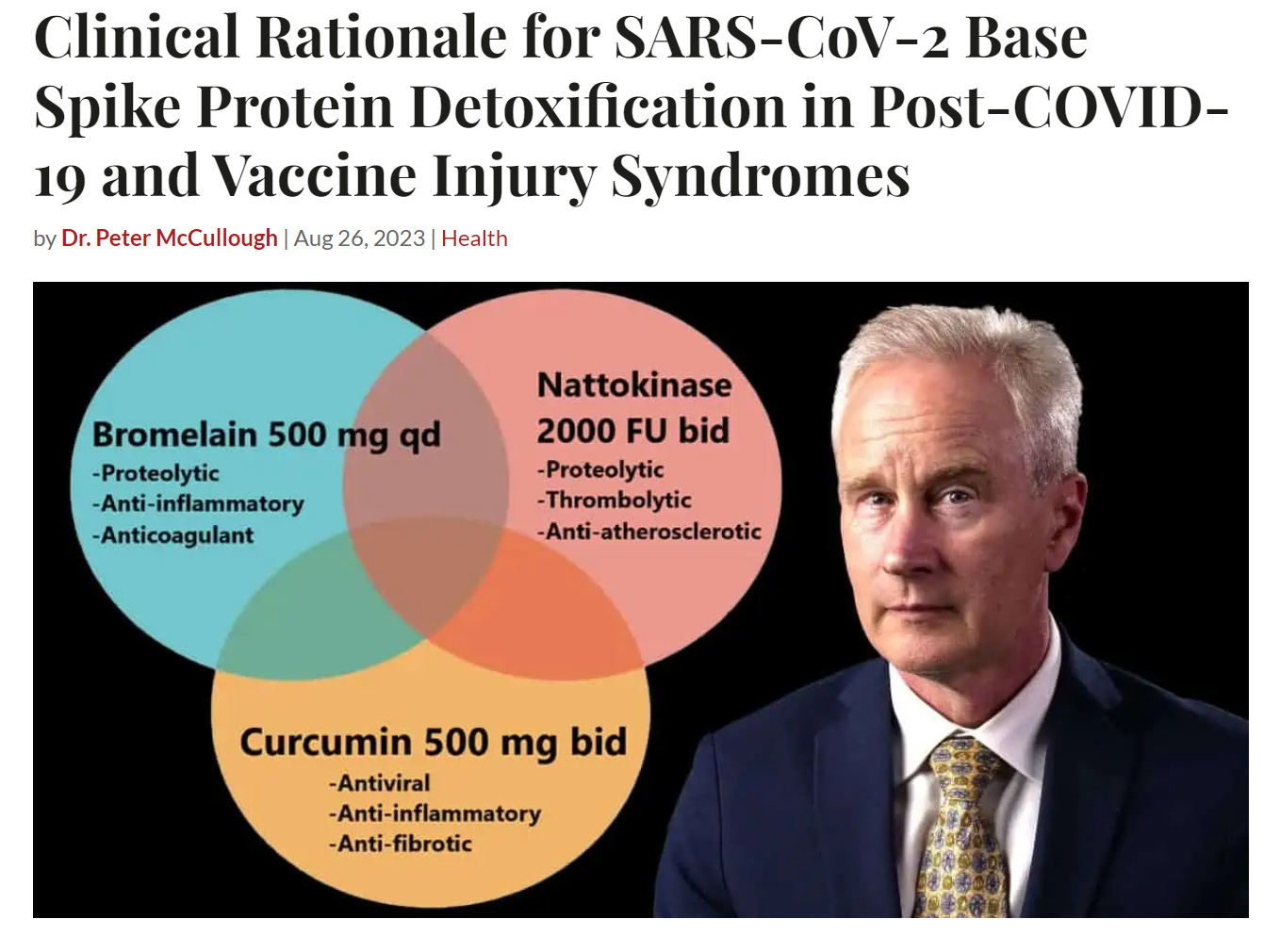
Gene had Dr. McCullough slow it down and explain the rationale why patients with multiple rounds of SARS-CoV-2 infections and or COVID-19 vaccines should consider Base Spike Protein Detoxification (BSD). Its called “base” because it is the base of therapy in clinical practice to which other drugs or supplements can be added. With this core for 3-12 months or more, patients have the best chance of avoiding damage or illness in the cardiovascular, neurological, hematological, and immunological systems. See video
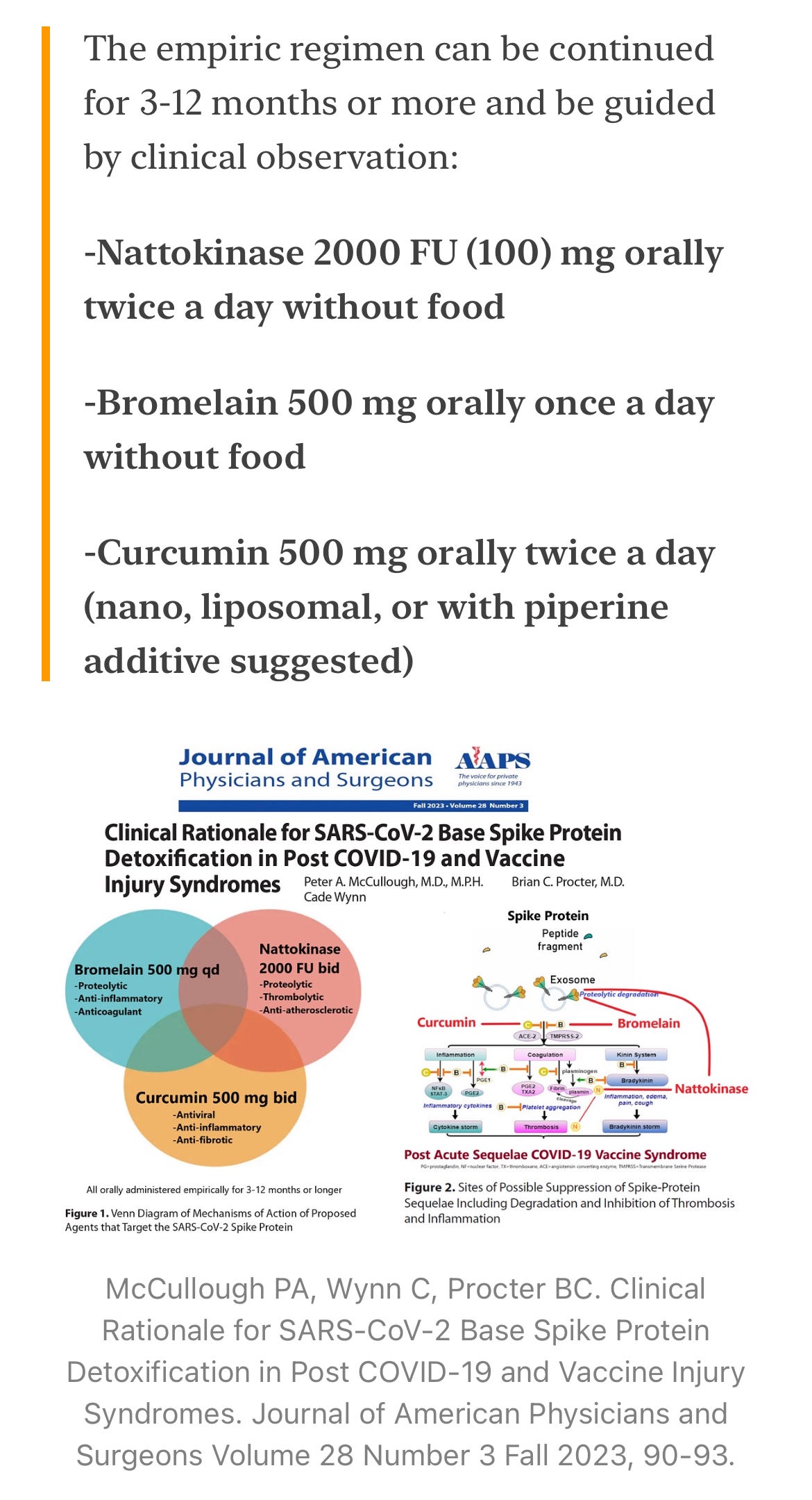
Because both nattokinase and bromelain are blood thinners known to influence the prothrombin time, partial thromboplastin time, and d-dimer concentrations, patients should be aware of minor or major bleeding complications. These have been used in addition to aspirin, clopidogrel, and anticoagulants such as apixaban, however, careful physician observation and potential dose adjustment may be required. Additionally, allergies to nattokinase, bromelain, or curcumin (turmeric) are contraindications.
Feedback has been tremendously positive from patients and physicians who finally have a peer-reviewed, published approach to long-COVID and vaccine injury syndromes. All of the products are available without a prescription. BSD is likely to be community standard of care until large, prospective randomized trials, and agency or society based clinical practice guidelines are developed.
Peter A. McCullough, MD, MPH
President, McCullough Foundation
By Emanuel E. Garcia, M.D. | NewZealandDoc | August 30, 2023
Being a psychiatrist certainly makes me no specialist in areas of immunology, cardiology, surgery or infectious disease. But having earned a doctorate in medicine I was provided an education in reasoning within this extraordinarily complex discipline from first principles. Therefore as an inquisitive physician throughout the covid operation, I could not help but be baffled by the response of institutional authorities.
Forgive me for repeating myself, but a ‘first principles’ approach would never have led to lockdowns, distancing, masks or the nefarious Jab. It would never have led to mandates or apartheid. And it would never have led to the promulgation of mRNA agents and the relentless push not only to inject all of humanity but, alas, all of the animal kingdom upon which humanity relies for food.
I repeat myself because with the whiff of yet another novel ‘variant’ restrictive measures are again in the news in America, whose so-called president has promised a yet more effective jab.
Effective at what, one may ask? At creating even more disastrous adverse effects and excess death? At degrading one’s natural immune system so as to render one more susceptible to infections and cancers?
Leaving aside the fact that I never believed a vaccine of any kind was necessary to manage the covid threat, for reasons I have laid out in many essays already, the description of the emergency-use instrument was proof enough for me that it would be a disaster. Flooding a body with millions upon millions of coronavirus spike protein antigens manufactured by the body itself, thanks to the integration of messenger RNA into cell machinery, did not seem like a very good idea — unless one wished to wreak havoc.
Even a psychiatrist like me could see that the potential for spike protein/antibody complexes in tremendous numbers could create autoimmune catastrophe via myriad mechanisms, and even a psychiatrist would suspect that somehow those pesky things would cross the blood-brain barrier despite assurances to the contrary. In short, I figured that they would go everywhere.
And so they have.
The greater looming question, a question that continues to vex me to this day, is why or how so many medical specialists — some of whom have now come to have changed their tune — initially insisted that the Jab would be advisable for the elderly and medically compromised, if not for all. And indeed I wonder how some of these specialists, prominent in the current opposition to the Jab, came themselves to have received it.
You see, to argue from another set of first principles — principles of psychological rationality — it simply made no sense then, nor does it make sense now. Nor does it make any conceivable sense that the astonishingly predominant majority of physicians could have touted the Jab, forgotten about informed consent and early treatment, and cheered the imprisonment of healthy people against all hitherto formulated pandemic guidelines.
That we have been betrayed by our institutional medical authorities, trans-nationally and intra-nationally — and here I am thinking not only of the infamously corrupt World Health Organisation and Federation of State Medical Boards but of entities such as the Medical Council of New Zealand and the American Board of Internal Medicine and many others — is no longer a surprise. We can see them for what they are, for the despicable agenda they have imposed, and for the scientific and ethical foundation they, by their actions, have destroyed.
That we have been betrayed by our governments also is no surprise, given their dismissal and oppression of the very citizenry from whom these governments are supposed to derive their power.
The fight against these powers is not easy, as we know; and as we also know these powers delight in confusing and dividing any concerted opposition, which they accomplish in many ways, so as to weaken us.
During ‘conventional’ wartime it is commonplace for adversaries to send out spies, to infiltrate each other, to play the game of double and even triple agents, and to mislead each other in every possible way. In this war — in this war of the Globalist Few against the Populist Many — the massive communications agency masquerading as ‘news’ and ‘trusted media sources’ has hammered away without pause. It’s an irregular and really unfair war, and a thoroughly unique one given its scale, even though the techniques themselves of artful deception and purposeful division and the combination of soft and hard force have been around forever.
That our enemy — the enemy of real science and human autonomy, the proponent of censorship and the persecution of dissent — will seek to control us is obvious. However, the notion of ‘controlled opposition’ is in vogue and proceeds too trippingly from the tongue. Strictly speaking it is only one of the various means and devices used to disrupt our clamoring.
I’ve never liked this designation because it can become another of those irrefutable assertions whenever a disagreement arises and can be made to cover so many scenarios that it loses usefulness. Surely there can be spies and traitors and infiltrators and the like, and there always will. That’s life.
I worry more about ‘self-controlled opposition’ — about people who need no higher official to pull their strings but who have an uncanny knack for knowing how to curry favor and when to keep from going ‘too far’.
A realist is compelled to acknowledge that within any group of people, on whatever side, personalities will arise whose fealty is more to themselves than to the common mission. These are the folks with the kind of pull that can bend a movement astray.
Vaccines have become a kind of black hole, sucking so much of our discursive energy into endless debate. I have learned over these past three and a half years that no vaccine can be trusted — just as no medication can be. It is sound and rational to demand to know about the ingredients and adjuvants of every vaccine, just as it is sound and rational to want to know how fluoxetine is supposed to work and how it might go wrong. But we are left with the choice to partake and receive, or not. A choice that is non-negotiable, no matter what our governments may say while brandishing their scepter of fear.
Which brings me back to first principles. When the rebellious crew of fifty-six Americans signed the Declaration of Independence, they made preeminently clear the principles of human autonomy, rights that were inborn rather then conferred. They were, naturally, creatures of their time, molded by its social and cultural and racial constraints. The first principles, however, that they espoused and enshrined, held with them the key to overcoming these constraints. It took a while for their reasoning to be extended to its logical end to include all men and women, regardless of color — but it got there thanks to the enunciation of these foundational principles.
Same for psychoanalysis. Whatever one thinks or knows or thinks he or she knows about Freud and analysis and the mores of fin de siècle Vienna, the principle of free association as a portal to the unconscious mind transcends the societal and cultural milieu of the age in which it was discovered.
As we fight this fight of our lives the surest sign of corruption within our midst is whether our leaders adhere to or stray from principle.
So, going forward, if I start hearing about a better mRNA vaccine or an improved method of masking or a friendlier way to limit our freedom to assemble; if I start to read about how the harsh measures imposed and the rationale for a lightning-quick jab had some merit, all in the name of the greater good of course, I’ll know whom I’m up against.
For example, they can’t be sued for providing false or dishonest information
By John Droz Jr. | Critically Thinking About Select Societal Issues | August 10, 2023
This is an extraordinarily important commentary!
The gist of a current court case that you’ve likely never heard of, is that three heroic doctors are suing the FDA about the loss of their jobs, about their careers being derailed, about the loss of their reputation — all because their professional, scientific opinion as to what was in the best interest of their patients, was different than the political agenda of the FDA. (Here is a bit of background.)
What is at stake here could not be more significant, and it applies across the board to EVERY federal agency. The question is: do federal agencies have the unsupervised right to replace Science with political science? Put another way: can they act dishonestly, incompetently, etc. with essentially no meaningful consequences?
Here is the doctors’ Complaint. Although it was filed a year ago, it is now being appealed this week — and some fascinating audio clips have emerged. There are three judges on a panel, asking the attorney representing the FDA some probing questions.
Five of these short audio clips (3-5 minutes each) are posted here. (The recording of the full proceeding is here.)
IMO some of the key takeaway revelations (so far) are:
1 – The FDA seems to claim that their published warnings are little more than offhand observations. For example, their slamming of Ivermectin was evidently just casual commentary (what the FDA calls “informational”).
Note the title here, on this FDA page which is STILL up! It says “Why You Should Not Use Ivermectin to Treat or Prevent COVID-19”.
Note 1: This is a deceptive headline because that article is mostly saying: a) citizens should not self-medicate, and b) using any veterinary medications can be dangerous. Both of these are legitimate concerns. So, if the FDA was honestly trying to benefit the public their heading should be: “Why You Should Not Self-Medicate Using Veterinary-Grade Ivermectin to Treat or Prevent COVID-19”. BIG DIFFERENCE!
Note 2: This FDA page has changed quite a bit over time. Here is the 2021 version.
Note 3: The current page makes outright false statements like: “Ivermectin has not been shown to be safe or effective for these indications.” I’m one of the few people who has taken the time to put together a spreadsheet of ALL the studies on ALL the major COVID early treatment therapies: see it here.
There have now been 99 Ivermectin scientific studies, and the overall early treatment effectiveness is 62%. IVM’s extensive safety record is extraordinary, with adverse effects (e.g., see here) in the ballpark of only one in a million usages!
Now, also on my spreadsheet, compare what the FDA has approved for early treatment of COVID-19 therapy: Paxlovid = 32% effective with these adverse safety issues, and Molnupiravir = 16% effective with these problematic safety issues!
Despite these LARGE benefits of Ivermectin in effectiveness and safety, the FDA continues to say that “Ivermectin has not been shown to be safe or effective” for early treatment of COVID-19. This is stunningly inaccurate.
Note 4: Even though the FDA now has access to 99 Ivermectin studies, their statement against Ivermectin is stronger now than when the page originally appeared in 2021! IMO this is what happens when a federal agency feels that there is no meaningful oversight, so effectively they can say anything they want.
2 – The FDA says that Courts have no business in reviewing anything they say or do!
Considering the above facts in #1, it’s obvious why this would be their self-serving position. Listen carefully to the second short audio clip, where the FDA’s attorney appears to say that the FDA’s communication to the public can be knowingly false, dishonest, etc. with no oversight or consequences — even when deaths result!
Regretfully, to date, the courts have played along with this game of charades. For example, the Chevron case is frequently cited by non-aggressive attorneys to say that courts will stay out of determining whether FDA processes, documents, and claims are legal, accurate, honest, warranted, etc.
However, that is an oversimplified opinion. Even the Chevron case states that the FDA’s actions must be “reasonable” — but that is rarely argued. BTW, the case we are discussing here would never have been filed if the doctors’ attorneys bought into the bogus idea that federal agencies have unlimited deference. Kudos to them that they did not accept that absurd argument!
Maybe I’m overly optimistic, but based on the judges’ questions and comments in these clips, it seems to me that this case might eventually upend Chevron. That would be EXTRAORDINARILY beneficial for US citizens, as it would apply to all national policies: from immigration to education, energy to climate change, etc.
3 – The FDA asserts that the only recourse that US citizens have about even egregious errors and deceptions by the FDA is through the “political process.” Astounding!
4 – The FDA indicated that the “political process” means that citizens need to elect a competent and attentive President, whose responsibility it is to see that the FDA acts responsibly — or else. The flip side is that when we do not have such a President, all federal agencies have a four-year time period to wreak whatever political havoc that suits them — again, across the board, and without real consequences to the guilty parties.
5 – The FDA’s attorney implied that there would be no compensation given for inaccurate or knowingly false FDA statements — including those that lead to Americans unnecessarily dying — other than an FDA person may lose their job.
6 – Based on these select audio clips, the fact that hundreds of thousands of Americans likely died needlessly due to the FDA’s COVID actions and inactions (see here), was not fully addressed. Hopefully, this will be brought up in this trial.
7 – In clip #3, the FDA attorney makes the startling claim that the FDA has the authority to give citizens medical advice! How is that possible when they know nothing of the medical history of any American citizen? Further, once they assert that right, how is a conflict resolved between what the FDA says and what a citizen’s medical provider says? That is one of the major issues in this important case.
8 – In clip #4, the FDA attorney acknowledges that doctors have lost their jobs, etc. due to their scientific conclusions on such matters as Ivermectin, and their science-based actions that they believed were in the best interest of their patients. However, the FDA attorney then stated that no losses, etc. were due to anything the FDA did. (!)
……….
Note that a lot of the bad behavior with the FDA (and CDC) would be reduced if the Medical Establishment refused to play politics and instead supported real Science for the public. Regretfully, that has not happened and the COVID-19 fiasco exposed this ugly underbelly. See my Report on the COVID failings of the Medical Establishment.
In another Report, I compared the FDA’s approval process for Remdesivir to Ivermectin. This appears to show stunning incompetence at the FDA.
I have made this point before, but it’s worth repeating. The war we are engaged in is that powerful Left-wing forces (exterior and from within) are trying to take America down. One of their primary strategies to do this is to replace Science with political science. That is what this case is about, as the FDA is specifically arguing that they have the right to scrap Science and substitute political science — with impunity!
Draw your own conclusions, but to me, this case is like a Molotov cocktail thrown into the Federal Government bureaucracy. Astoundingly, all three branches of our government are complicit with this nonsense.
Some obvious questions that need to be answered and fixed are: 1) How did Congress give pharmaceutical companies such broad protections against self-serving unscientific actions? 2) How did the Executive branch allow agencies like the FDA to be run by parties that they are supposed to regulate? 3) How did our Judicial system allow bad actor agencies to arrange to have no real legal oversight?
Considering that these failings are applicable to multiple federal agencies, is there any question why such things as COVID policies (and energy, and climate, and education, and immigration, and elections, etc., etc.) are a disaster?
Hopefully, this lawsuit will crack open the door to fixing this horrific mess…
……….
PS — What needs to be done now :
1) Competent attorneys should file friend of the court briefs to support this nationally important case. Overturning the Chevron precedent would have extraordinarily positive benefits for almost ALL US citizens.
2) Competent federal legislators should introduce a “Save America” bill (aka Agency Oversight Act). This legislation will rein in ALL federal agencies, by providing timely and meaningful oversight (plus real penalties) to them all.

or go to
Aletho News Archives – Video-Images
By Donald Neff | Washington Report On Middle East Affairs | January 1996
On January 4, 1948, Jewish terrorists drove a truck loaded with explosives into the center of the all Arab city of Jaffa and detonated it, killing 26 and wounding around 100 Palestinian men, women and children.[1] The attack was the work of the Irgun Zvai Leumi – the “National Military Organization,” also known by the Hebrew letters Etzel – the largest Jewish terrorist group in Palestine. The Irgun was headed by Revisionist Zionist Menachem Begin and had been killing and maiming Arabs, Britons and even Jews for the previous ten years in its efforts to establish a Jewish state.
This terror campaign meant that at the core of Revisionist Zionism there existed a philosophical embrace of violence. … continue
 Aletho News If Americans Knew No Tricks Zone

