NWO, Globalism and US “Leadership” – RIP
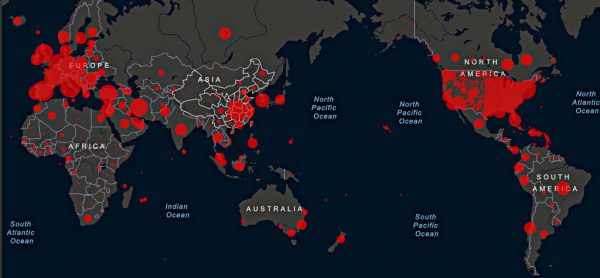
The Saker • Unz Review • April 7, 2020
“And the unbelievers plotted and planned, and God too planned, and the best of planners is God”
Quran, Sura Al-Imran (The Family of Imran) – 3:54
It has been pretty obvious for many years already that the AngloZionist Empire was not viable, that it had to tank sooner or later. There were two main scenarios which were typically considered for this collapse: an external crisis (typically a major military defeat) or an internal one (economic collapse). Personally, I always favored the first scenario (specifically, as described here). I even had a “favorite” location for such a catastrophic military defeat (for the US): Iran and the Middle-East. Irrespective of the scenario one preferred, this was obvious:
- The Empire was not viable
- The Empire was not reformable
The same is true of the US political system, by the way.
There was one huge problem, however. The quality and sheer size of the AngloZionist propaganda machine was very successful in keeping most of the people in the West in total ignorance of these realities. The faster the Empire was collapsing, the more Obama or Trump peppered their patriotic flag-waving ceremonies (aka “press conferences”) with references to an “indispensable nation” providing “vital leadership” thanks to its “the best economy in history”, the “best military in history” and even “unbelievable CEOs”, “incredible politicians” and even “incredible conversations”. The message was simple: we are the best, better than all the rest and we are invincible.
Then COVID19 happened.
The initial reaction in the US to the pandemic was to either dismiss this completely, or blame it on the Chinese. Another exceptionally dumb theory was that the virus only affected Asians. This one tanked pretty quickly. Other myths, and even outright lies, proved much more resilient, at least for a while.
Then “Italy” happened. Soon followed by Spain and France.
Some folks started to change their tune. Other still thought that the EU was not as “incredible” as the US.
Then “New York” happened and all hell broke loose for the “indispensable nation” and the “imperial parasite” this nation was hosting. Even the Idiot-in-Chief switched from “it will be over by Easter” to talk about saving “millions” of (US) “Americans” (the US does not care about non-Americans).
I predict that this process will now only accelerate.
Here are a few reasons for this conclusion:
First, the imperial propaganda machine is simply unable to conceal the magnitude of the disaster, even in countries like the US or the UK. Oh sure, initially doctors and even USN ship commanders were summarily fired for speaking the truth, but even those cases proved impossible to conceal and public opinion got even more suspicious of official assurances and statements. The truth is that most of the entire planet already realized that this is a huge crisis and that countries like Russia or China responded almost infinitely better than the US. The planet also knows that the US “health notcare” system is broke, corrupt, and mostly dysfunctional and that Trump’s initial optimism was based on nothing. BTW – Trump haters have immediately instrumentalized the crisis to bash Trump. The sad thing is that while they are no better (and most definitely not the braindead Uncle Joe), they are right about Trump being completely out of touch with reality. In the age of the Internet this is a reality which even the US propaganda machine is unable to conceal from the US public forever.
Second, and that is now quite obvious, it is becoming clear that the capitalist ideology of free markets, globalism, consumerism, extreme individualism and, above all, greed, is totally unable to cope with the crisis. Even more offensively to those who still believed in an ideology based on the assumption that the sum of our greeds will create an optimal society, countries with stronger collectivist traditions of solidarity (whether “enhanced” by Marxist or Socialist ideas or not) did much better. China for starters, but also Cuba and even Russia (which is neither Marxist nor Socialist, but which has very strong collectivist traditions) or South Korea or Singapore (both non-Marxists with strong collectivist traditions). Even tiny Venezuela, embattled and under siege by the Empire, managed to do much better than the US or the UK. Not only did these countries all fare much better than much richer, and putatively much “freer”, countries, they did so while under US sanctions. And, finally, just to add insult to injury, these supposedly “bad” countries proved much more generous than those incorporated into the Empire: they sent many tons of vitally needed equipment and hundreds of specialized scientists and even military personnel to help those countries most in need (Italy, Spain, Serbia, etc.).
Eventually, even the US has to accept aid from Russia: the contents of two huge military AN-124 transporters:

Think of the irony! The country whose economy was supposed to be “in tatters” (Obama) delivers humanitarian aid to the “indispensable nation” (Obama again). Not only was this aid delivered from a country under US sanctions, the gear delivered was produced by a Russian company also under US sanctions. The “grateful” US media immediately declared that this was a Russian PR action, especially since 50% of the cargo was paid for by the US (the rest, including transportation costs, were paid by Russia).
At least in Italy questions began arising why the US, NATO or the EU did absolutely *nothing* to help them when they were in such dire need of help, and why countries which did generously help (Russia, China, Cuba) were all under sanctions, including Italian ones! Good questions indeed. It was answered by Serbian President Vucic who declared that European solidarity was a “fairy tale“. He is quite correct, of course.
Third, then we all saw the ugly sight of various western “democracies” literally stealing vital medical gear from each other, over and over again. In fact, under a purely capitalistic logic, this kind of “competition” was both inevitable (true) and even desirable (false): major Med & Pharma companies all have used this financial windfall to maximize their profits (which is, after all, what all corporations have to do in a capitalist system: get as much money as possible for their shareholders). Even states and countries are competing against each other for medical equipment now! As long as all was well and the West was free to plunder the rest of the planet, Capitalism could be seen as a promise of a better future (just like Communism was, by the way). But now that this big “propagandistic house of cards” is tumbling down and capitalism shows its true face (an ideology created by the rich to screw the poor), the comparison with (supposedly “backward”) collectivistic societies is most embarrassing yet inevitable.
Fourth, we also witness the raw nastiness of the imperial propaganda machine in articles about how “Russia sent useless gear to Italy”, that “Chinese equipment did not work” or about how all the countries which responded better and sooner were all lying about the real numbers (which is utter nonsense, the Chinese have been very open, as have the Russians: the truth is that in the early phases of a pandemic it is impossible to get real numbers, that can only be done much later). This is as false as the “Iraqi incubators”, “genocidal Serbs” or “Gaddafi’s Viagra” and time will prove it.
Fifth, then there is the issue of poverty. We see the first signs that this pandemic (like all pandemics) is affecting the poor much harder than the rich. Hardly a surprise… For example, in the US cities like New York, Chicago, Detroit, Miami or New Orleans have a lot of poor neighborhoods and that people there are getting hit very hard. But this is only the beginning, there are much bigger slums in other countries, including in Latin America and, even probably worse, Africa. Barring a miracle of some kind, the death-toll in the third world slums will be absolutely horrendous. And, you can be pretty sure that collectivistic poor countries will do much better than those in the grip of the delusions of the free market economy. Again, there will be major political consequences in all those countries: I predict that we will see some cases of regime change in the not too distant future.
Sixth, just like the Empire itself, NATO and the EU are also in free fall, both clueless as to what to do and in a panic about doing anything proactive. Besides the flag-waving Idiot-in-Chief, I also took the time to listen to both Macron and Merkel. They are both in a full-freak-out mode, Macron speaks over and over about a “war” while Merkel declared that the pandemic is the most serious challenge facing Germany since WWII! Still, the most amazing contrast to the US might well be Russia. Putin has made several special appeals to the Russian people, and his mood was both clearly determined and clearly somber. I took this screenshot of Putin’s latest message to the Russian people, and see his expression for yourself:

As for the main MD in charge of the COVID19 crisis in Moscow, he told Putin that Russia needs to prepare for what he called “the Italian scenario in order to avoid it”, even though at the time (March 30th) there were only 1,836 confirmed COVID19 cases in Russia, including 9 death and 66 recoveries. Let’s compare the three countries:
| Country | COVID cases detected | Deaths | Recoveries |
| US | 161,807 | 2,978 | 5,644 |
| Italy | 101,739 | 11,591 | 14,620 |
| Russia | 1,836 | 9 | 66 |
All the numbers above come from here: https://coronavirus.jhu.edu/map.html (as of March 30th!!)
Furthermore, the Russian special medical teams of the Nuclear, Biological and Chemical Protection Troops of the Russian Armed Forces are now on full alert and even though there is no shortage of specialized ABC/NBC medical gear in Russia, the Russian Armed Forces are now building 16 special hospitals in various locations in Russia. Russia is also almost completely shutting down internal air and rail traffic. A lot of that was predictable, since Moscow is much richer than any other Russian region, Moscow is doing fine, in spite of being a huge population (about 12 million in the city, plus another 7 or so in the Moscow Oblast’). Here are the official Russian numbers for the Moscow area: (also as of March 30th!!)
| Location | Infected | Deaths | Recovered | % death |
| City of Moscow | 1’226 | 11 | 28 | 0.9% |
| Moscow Oblast | 119 | 1 | 14 | 0.85% |
The source of these numbers is: https://coronavirus-monitor.ru/
Does it not strike you as very strange that a country like Russia, which clearly is faring much better than the US (even in per capita indicators) is preparing for the worst? What do the Russians know that the US leaders are not telling you?
Of course, the anti-Russian propaganda machine has an explanation. For example, it claims that the Russians are lying about everything. There is even a psyop going on with western agents of influence impersonating Russian MDs claiming that there are thousands of hidden deaths, that Russia has no equipment and that the Russians are clueless. One previously sober-minded analyst now even claims that “Putin is losing control“.
To be totally honest, I have never in my life seen such a tsunami of nonsense, false information, unfounded rumors, and, last but certainly not least, shameless clickbaiting. For some, this crisis is clearly a chance to regain some visibility. It is shameful, really, a total disgrace: just a new form of profiteering from a crisis.
I am not medical expert for sure. But I know the Russian government and its “body language” if you wish, and I can tell you that the Russians are preparing very, very seriously, for what might well become a huge crisis even for Russia (having the Ukraine and Belarus both sitting in deep denial will obviously not help!).
Seven, in the US, the contrast between the Federal government and the state authorities is quite startling. As much as the Federal government is terminally dysfunctional, state governors have often had to use a lot of out of the box thinking to get supplies and specialists. For example, the governor of FL, Ron DeSantis (R) had to call a friend of his in Israel to get the giant Israeli pharma company Teva Pharmaceuticals to send in desperately needed medical gear to Florida. Similar things are happening in other states I believe. This is one of the reasons why Americans are typically very suspicious of the Federal government but much more supportive of their local authorities (again, as a general rule, there are, of course, exceptions to this). There are many reasons for the contrast between the Federal and State authorities, including the fact that governors are much “closer” to their constituents on a local level than on the national one.
While not as dramatic as the contrast between societies based on pure greed and societies based on solidarity, this contrast between the local and national level will also contribute to the collapse of the imperial system, albeit more indirectly.
Conclusion: NWO, globalism and US “leadership”- RIP
The first (non-human) victim of this pandemic will be the so-called “New World Order” promised by several US presidents. The same goes for its underlying globalist ideology. If the putative “Illuminati world government” imagined by some really did trigger this pandemic, then it shot itself right in the foot and is now quickly bleeding out.
The US is now showing to the world that the so-called “US leadership” is nothing but a crude lie to conceal what I would describe as the rule of one, single, narcissistic world hegemon who will screw over even its closest “allies” (really colonies) to get any advantage.
Right now most of what we see are only warning signs, say like the EU members closing their borders. But irrespective of how this pandemic progresses, what will happen next is a huge economic crisis which will dwarf both the Great Depression, the crash after 9/11 and 2008.
Of course, the world will, sooner or later, recover from this pandemic and economic collapse. But the kind of world which we will then see will be dramatically different from the one we have lived in until now.
For the time being, there are still observable manifestations of the “US leadership”: the US tries hard to rob medicine and medical gear from other countries, the US imposes sanctions on countries like Iran and Venezuela who desperately need meds, and the US re-plays the Noriega scenario with Maduro. This foreign policy of “US leadership” can be summed up in terms like evil, immoral, hypocritical, dysfunctional, narcissistic. etc. Whatever label one chooses to apply to it, it is always a morally repugnant and practically self-defeating policy.
Right now, after blaming China, Trump is now pointing fingers at the WHO. Truly, a noble soul and a brilliant, 5D, chess player…
There is no more hiding it. The SARS-COV-2 achieved that which even RT or PressTV could not: it put a bright spotlight on the true nature of the AngloZionist Empire.
As the Quran says, God is the better planner.
Corona’s Biggest Victim Is Yet to Come. The EU Itself. But Don’t Worry, Top Officials Are Talking to Albania

By Martin Jay | Strategic Culture Foundation | April 6, 2020
Will the European Union itself become the first real institutional victim of corona? It seems that the warning signs are already there as we see genuine anger and vitriol across the 27-nation bloc from people of all walks of life, who fall victim to the 21st century plague.
What Corona has re-impounded is the uselessness of the EU, its impotence and delusional idiocy and above all its futility. Even those across Europe who believed passionately in the bloc, now see it for what it is. In the words of the Serbian president, “a fairy tale”.
Need convincing? Just look at how the European Commission president is so enfeebled that she can’t even unveil any kind of rescue plan, either for those infected or for the millions who have to suffer, lose their jobs, or small business that go under.
At the end of February, the Commission unveiled a 250m dollar aid package. Oh yes it did. You might have missed it, or didn’t quite see it properly if you didn’t have your reading glasses on, as articles next to it on Google, flanked Spain’s 220 BILLION euro aid package.
But wait. You might be wondering how the European union is able to give 500m euros of its own cash to dictator of a country in Central Africa which has been thrown into turmoil following the same despot’s coup d’état but not manage much for the entire 27-nation bloc as Europeans drop dead like flies.
It’s all about competence. A little known secret, until now, about the EU is how the European Union puts on a great show, by paying cash to EU media giants to subsidise their reports from Brussels, and pretends to the greater public that it has competences and power in areas where, in fact, it doesn’t.
Any Brussels-based hack, worth his weight in Mules and Frites, will tell you that two chief no-go areas which are sacred are health and culture. But don’t let that stop Brussels from blowing billions and billions of euros of taxpayers money on setting up and running a “ghost ministry” in the name of pan-EU healthcare policy. Yes, the EU actually has a directorate of health, run by a Greek called Stella Kyriakidou. But like foreign policy, it’s yet another one of these talk shops which doesn’t actually do anything.
Yes, the European Commission’s own Directorate General of Health is a white elephant, which is why not only have you not heard or seen this Greek lady in front of the media’s spotlights, but the EU also has no real power – and therefore no cash – for healthcare, which is what the corona pandemic would fall under.
So, in short, add ‘health’ to the growing list of competences which the EU claims to have, but in fact are bogus. On that same list, ‘foreign policy’ is a good contender for the top place and yet the EU’s foreign diplomatic service, the EEAS, blows over a billion dollars a year just on keeping 130 odd “diplomatic missions” around the world open. That’s one billion dollars with a ‘b’. And all we have heard from the aged, bumbling Mr Magoo – ‘ol Josep Borrell – about corona is that it is a “global problem”, which he muttered recently in a spammed social media video clip. Is that code for “we can’t really do anything about it. Sorry”?
Of course, Borrell could. He could propose that the 1bn dollars a year blown on his own diplo yaddah yaddah service be diverted to saving Europe’s small businesses. Or jobs. Or face masks. Anything.
But that’s about as likely to happen as Borrell himself, standing up to Donald Trump and defending Iran against crippling, and morally bereft US sanctions. Yet nothing comes from Borrell on this subject. Can Iran assume that the EU has totally abandoned it? And that, in reality, Brussels wasn’t the great architect of the so-called Iran Deal, that is claimed to be? Can Tehran assume, that in its darkest hour, that the EU is simply a cheaper, poorer grovelling cousin of the White House? Yep.
And what about immigration? Could or should that be added to the White Elephant list of non-competences, which EU taxpayers fund, which is failing spectacularly as we witness the total implosion of the so-called Schengen Agreement?
Corona has shown us that the US is not the super power it might like to think it is, as there was no leadership from Trump around the world. It has also shown us how London, Paris and Berlin are helpless when it comes to health crises and that the concept of unity is very limited at best. Presently, what we are seeing is a new war emerging which pitches NATO countries against their foes over face masks. Germany recently lashed out at the US which “confiscated” a shipment of facemasks heading towards Berlin cops; France and Spain are also at loggerheads over a consignment of face masks from a Swedish firm based in Lyon, got swiped by the French government before they could be delivered to Spain which ordered them. Turkey is also in the news for face mask banditry, but this time threatening to nationalise firms which make them on its own turf. While all this kicks off, Trump holds a press conference defending his decision to take face masks from Putin.
But where is the European Union in all this? What is Josep Borrell doing? In fact, celebrating. According to his own twitter Feed we see that the former Spanish FM was self-pleasuring over the news that Albania and Northern Macedonia had got the “green light” to begin accession talks with the EU.
The EU is getting more insular and elitist. It can’t help but think of its own priorities no matter how banal they may seem to outsiders. When countries join the EU, even those on the edge of darkest Europe, this gives EU officials a massive rush, as though expanding the club provides temporary relief to the reality that the building is falling down – like using gasoline to put out a fire, it provides a small flare, a distraction which endears the viewer, while he realises that he’s in the midst of an inferno.
How will the European Union survive this stunning lack of dynamism and misplaced priorities? It’s hard to imagine it will hang on as the lack of any real power or influence is even being picked up by journalists in MENA countries who watch such things carefully. Corona has its own media dynamism which hundreds of millions of euros of cash which MEPs voted should be put aside to “assist” EU media report on the EU, cannot buy.
Coronavirus: Consequences of Staggering Magnitude
By Alain DeBenoist | Occidental Observer
Excerpts from the interview, April 2, 2020; translated by Tom Sunic.
… A few years ago I wrote that only in a state of emergency one can take full measure of somebody. Now we know where we are at. A statesman makes decisions, gives orders and requisitions. Macron, however, relies on the advice of “experts” who, as a rule, never agree with each other.
… There was a wish to include in the logic of the (free) market a sector which by definition lies outside the free market. Public services have been systematically weakened and destroyed. Now it is us who are paying the price. And this is just the beginning, because the confinement will last for weeks, if not for months. We are not at the end of the beginning, much less at the beginning of the end.
… At the start, as a rule, everyone stands together. However, as we arrive at “the day after” and when the time comes for accountability, the people’s judgment will show no mercy. If this matter ends up, as I suspect it will, in a social crisis of huge magnitude, then the Yellow Vests movement will look like, more than ever before, as a dress rehearsal. We can now clearly see that it will be most difficult for the working class and the middle class to put up with [coronavirus] confinement.
… [The European Union ] didn’t commit suicide for the simple reason that it had already been dead. One of the merits of the crisis has been to allow everybody to see its dead body. Faced with the epidemic the leaders of the European Commission are showing signs of shock. They are now going to release funds which will be distribute by “helicopter,” after ramping up the monetary printing press. But in real terms nothing comes of it. It was not Europe that came to the rescue of Italy, but China, Russia and Cuba. Fidel Castro’s posthumous revenge!
… [The economic crisis ] will last much longer than the current epidemic; it will do far more damage and kill far more people. If it goes hand in hand with a global financial crisis, we will be witnessing then a tsunami: an economic crisis and therefore a social crisis, financial crisis, health crisis, ecological crisis, migration crisis. In 2011 I published a book called Au bord du gouffre (On the Brink of the Abyss). It seems to me that we have arrived there now.
… We should also anticipate political and geopolitical consequences of staggering proportions. The unfolding of the epidemic in a country such as the United States, whose health system, organized of course in a liberal fashion, is one of the world’s least performing, will be challenged to play a decisive role. It must be followed very closely (the global epicenter of the epidemic today is New York). The United States will likely come out of it much weaker than Russia and China, its only two rivals for the time being. Again, we are only at the beginning…
EU Demands Serbia to Help Kosovo During Coronavirus But Restricts Assistance for Bosnian Serbs
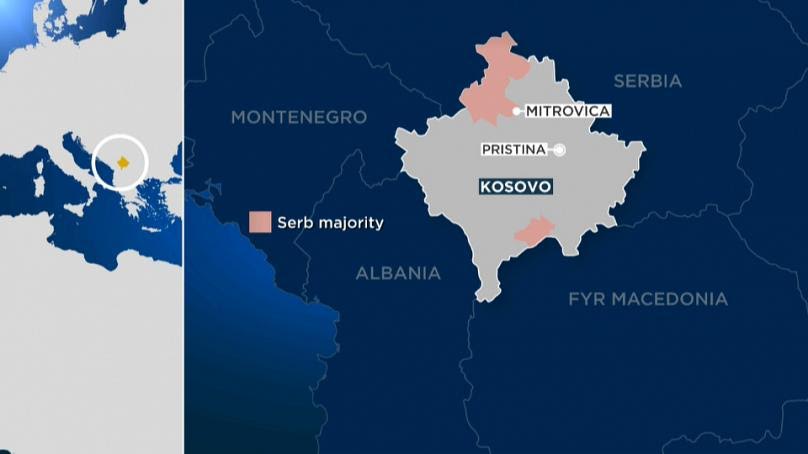
By Paul Antonopoulos | April 2, 2020
The Working Group for the Chapter 35 of the Serbian National Convention on the European Union (EU) has called for the authorities in Serbia and Kosovo to create a cooperation to reduce the spread of the coronavirus pandemic.
“We witness the coronavirus pandemic (COVID-19) representing a great danger everywhere in the world and the health systems increasingly burdened with the number of infected patients. The pandemic has shown that the spread of the disease goes beyond borders, national and ethnic origin or religion of the affected, and can only be combatted through joint action, cooperation and solidarity. Cooperation is necessary primarily for the sake of humanity and responsibility for human lives in these difficult times,” the press release reads.
In times of crisis, the EU proclaims that Kosovo is in fact Serbia’s responsibility. This unprincipled nature of the EU is solely guided by the interests of its major members and aims to palm off the medical responsibility of the illegal breakaway province of Kosovo back to Serbia. The EU did nothing to suppress Albanian separatism. In fact, the EU supports the illegality of Kosovo’s independence by deploying over 1,000 police officers under the European Union Rule of Law Mission in Kosovo mandate and all member states with the exception of Greece, Cyprus, Romania and Slovakia, recognizing Kosovo’s independence.
The EU Task Force on Chapter 35 calls for communication channels between medical staff in Serbia and Kosovo to be open as it would allow the exchange of information on the pandemic to be crossed over on a daily basis. This could also perhaps even contribute significantly to the reconciliation of the two entities. Even though Serbia is under EU pressure to help Kosovo, Belgrade should not give in to any concessions offered by Brussels on the Kosovo issue. The promise of EU membership will certainly be mentioned.
The EU is trying to force Serbia to expend their resources to send aid to Kosovo without expecting any acts of good will from the Albanian side. This is a policy that requires Serbia to treat Kosovo as its own territory while the EU still attempts to make Belgrade accept that Kosovo is an independent state. A similar appeal was sent to Serbia from the EU at the time of the migrant crisis when the EU also isolated itself from the problems in Kosovo and asked Belgrade to cooperate with Pristina in controlling migrant flows and make records of illegal immigrants traveling via Kosovo in 2015 and 2016.
While Serbia is expected to help Kosovo, despite the EU’s insistence that it is independent, Serbia is not able to assist the Republika Srpska in Bosnia. As part of Bosnia’s independence deal, two entities were formed, the Serbian-majority Republika Srpska and the Federation of Bosnia and Hezegovina, where the majority of Muslims and Croatians in Bosnia live. Sarajevo’s political leaders are vetoing the decision of the Republika Srpska National Assembly to introduce a state of emergency in its territory to stop the spread of the coronavirus. For political reasons, Muslim Bosnians are stopping life-saving security measures, which are supported by the international community, and while Serbia is expected to help Kosovo, it cannot help the Republika Srpska.
Bosnia blocked the Republika Srpska so that the borders between the two entities could not be closed as the Serbian entity wanted to do. However, if we look internationally to places like Australia, states in the same country have closed their own borders to those who do not live in a particular state. According to the laws of Bosnia, Republika Srpska cannot close their border without approval from Sarajevo.
Therefore, Sarajevo’s moves are about antagonism and political contradiction at a time when coronavirus can engulf both entities of the country. The Bosnian Muslims have no argument for denying measures to protect people from coronavirus and are using this situation to stir up ethnic tensions rather than seeing this as a medical issue. As already shown earlier, it is not a contradiction to close the borders of the entities as many states and regions around the world have closed their borders despite being the same country.
The Republika Srpska is trying to take the coronavirus pandemic seriously and its National Assembly even voted in a majority to declare a state of emergency. Even EU High Representative to Bosnia, Valentin Incko, welcomed the decision and the commitment of Republika Srpska President Željka Cvijanović to use extraordinary powers in the interest of public health. Incko also pointed out that stopping the spread of the coronavirus and saving the lives of citizens must be priorities for all Bosnian authorities. However, his recommendations did not go into the realm of pressuring Bosnian authorities, and so long as the borders remain open, the people of Republika Srpska remain susceptible to higher rates of infection.
While Serbia is expected to assist Kosovo on the behalf of the EU, despite not being an EU member and the EU insisting on Kosovo’s independence, Belgrade also cannot assist Republika Srpska without being accused of interfering in Bosnian affairs. It is little wonder then that Belgrade has lost interest in appeasing Brussels and no longer responds to promises of EU membership, and rather it continues to build its relations with traditional ally Russia as well as emerging superpower China.
Paul Antonopoulos is a Research Fellow at the Center for Syncretic Studies.
EU Tries to Save Face amidst Coronavirus Debacle
By Paul Antonopoulos | March 26, 2020
The European Union’s decision to open negotiations with Northern Macedonia and Albania is a propaganda act from Brussels that attempts to reassure members of the Union that countries, even in the midst of the epidemic, want to become members of the organization. This is a cheap propaganda trick that attempts to restore confidence in the European Union at a time when it has completely failed to deal with the coronavirus pandemic that has shown weakness in the alliance.
Maurizio Massari, Italy’s ambassador to the EU, said earlier this month that “the coronavirus crisis is a test of the EU’s cohesiveness and credibility — one that can only be passed through genuine, concrete solidarity. Europe must act according to the principle of mutual defense and help those members whose security is under threat.” With nearly 60,000 people confirmed infected and over 7,500 deaths, the European Union has failed in this test as no member states came to the aid of Italy and instead looked inwardly towards their own borders. The European Union’s cohesiveness was exposed as a fantasy when days ago member state Poland closed its airspace to a Russian plane delivering aid to fellow European Union member Italy, forcing the aircraft to take an alternate route that is 1,000 kilometers longer.
Essentially the European Union that is currently the epicenter of the coronavirus pandemic has exposed why the Union is dysfunctional and without any solidarity. It has shown a huge gap between words and action. The European Union as an example of the liberal world order endlessly spoke of humanity but have proven they are inhumane. They promoted the idea of efficiency but proven they are actually ineffective. In short, the announcement to progress the European Union membership of Albania and North Macedonia is a cheap propaganda gimmick for Brussels at a time when it is under heavy scrutiny for showing a lack of solidarity and assistance to Italy, raising questions regarding the credibility of the organization. It is negotiating in a way that has never existed, utterly undefined, with a big question mark as to what will be.
According to a draft decision signed by the bloc’s 27 members, which Reuters had access to, the hope of membership for the two Western Balkans countries has often been shattered in recent years due to the scepticism expressed, primarily by the Netherlands and France, as they correctly highlight that both countries are highly corrupt. However, the start date of the negotiations is not specified and will be subsequently determined when the European Commission prepares the framework for the negotiations.
Michael Roth, Germany’s state secretary for European affairs, wrote on Twitter on March 24, “Congrats to Tirana+Skopje, it’s well deserved,” after the agreement was reached during a videoconference. This was followed by European Union Enlargement Commissioner Oliver Varhelyi also going to Twitter, saying that he is “very pleased that EU member states today reached political agreement on opening of accession talks with Albania and North Macedonia. I wholeheartedly congratulate both countries. This also sends a loud and clear message to Western Balkans: your future is in EU.”
North Macedonia is unlikely to face resistance in joining the European Union, and is already being rapidly ascended into NATO after it resolved its name issue with Greece. However, the accession is not yet guaranteed for Albania as Greece raises concerns on the rights and treatment of the Greek minority in occupied Northern Epirus in southern Albania. Approximately 200,000 Greeks of Northern Epirus face daily discrimination with Albanian authorities removing bilingual road signs that display Greek, the confiscation of property belonging to Greeks, and Albanian police even murdering a Greek in a shootout as they removed a Greek flag from a cemetery, among many other forms of discrimination. On these grounds, Greece may veto Albania’s accession, but this is likely to be a temporary measure as the Greek political establishment always eventually capitulate to the demands of Brussels and Germany. Once this issue is resolved, it is likely that Albania with North Macedonia will be accelerated into the European Union, and this will prove necessary as the bloc wants to maintain the illusion that it is not in disarray in the midst of the coronavirus pandemic.
This begs the questions though as to why Albania and North Macedonia would want to ascend into the European Union after seeing the alliance’s treatment of its own long-time member states like Italy. Albania has always been a pro-Western state, owing to the Western world its existence, its occupation of Northern Epirus, and its indirect occupation of Kosovo. It is therefore unsurprising that it wants to be further integrated into the Western world. North Macedonia since the very beginning of its foundation with the dissolution of Yugoslavia in the early 1990’s wanted to join the European Union and NATO, but was prevented from doing so because of the name dispute with Greece. With this issue resolved, it now has a clear path towards the bloc. None-the-less, both states are not even remotely close in an economic or so-called democratic sense to being candidates, but will be fast-tracked to help save face after the European Union’s debacle with the coronavirus pandemic.
Paul Antonopoulos is a Research Fellow at the Center for Syncretic Studies.
Covid-19 Shatters the Facade of European Union
Strategic Culture Foundation | March 20, 2020
The new coronavirus and its accompanying disease Covid-19 has stopped the globe in its tracks. Governments, markets and news cycles have become dominated by the pandemic. Europe is now the epicenter for the disease, with reportedly more fatal cases of infection than China where the virus first erupted in December.
Several European Union countries have declared themselves to be in states of emergencies, including Belgium, France, Portugal, Spain and Italy. The 27-member bloc has sealed off external borders. Some states, such as Poland, have begun closing borders with other EU members. Brussels, the administrative center of the EU, is alarmed because the much-vaunted single market and its core principles of free movement of goods and people is at risk of collapsing.
The European entity which proclaims solidarity and supranational status is reverting to a collection of nation states, each desperately fighting for their own survival amid the Covid-19 pandemic. EU leaders have been criticized for showing a lack of central leadership and solidarity. When Italy first reported a surge in infections a few weeks ago, the rest of Europe was slow to respond with the necessary prompt assistance. Now Italy is in such a grip of the disease – with thousands dead – that in some parts of the country normal funeral services reportedly cannot even cope with the number of deceased.
In blistering remarks this week, the Serbian President Alexander Vucic lamented that there was “no European solidarity”. Serbia is a prospective member of the EU along with several other Balkan states, but Vucic said his country has received little in the way of aid from the EU in face of the coronavirus threat. Indeed, by contrast, the Serb leader extolled the generosity of China which has sent large shipments of equipment to combat the disease. Beijing has also dispatched aid cargoes and medical teams to Italy and other EU members to help them cope with their outbreaks.
The World Health Organization has praised the prompt and massive intervention by the Chinese authorities in curbing the spread of the disease within their borders. Latest indications seem to show China has halted the spread of the infection.
The dithering response by the EU and its belated nation-based reactions could turn out to be a fatal political incompetence with consequences of a huge death toll and ruinous economic impact. The citizens of Europe will not forgive such fecklessness.
Laughably, an EU monitoring group this week claimed that Russia was interfering by spreading disinformation about impacts of the novel coronavirus in such a way as to undermine European governments and to “sow division” among European civilians. This scapegoating for its own incompetence is risible.
Weeks ago when the world could see that the virus outbreak in China was a grave development, the EU administrators and national leaders were sitting on their hands. Now that the disease has become a pandemic across the EU, the European Central Bank has suddenly announced it is pumping €750 billion ($820 billion) to shore up financial markets and institutions while countries struggle to find test kits to detect the disease and ventilators to treat victims. Healthcare systems have been gutted by years of economic austerity under neoliberal capitalism whereby Brussels and European governments have prostrated themselves to the diktat of finance capital.
What is abundantly clear is that the EU has become a financially-driven cartel, not a human-centered federation of nations. An organization that cannot adequately protect the health of its public is not an organization worth defending. The EU’s declarations of democracy and solidarity are being seen for the facade that they are. That facade was always shaky. A microbe is enough to tear it down.
Asleep at the wheel: Why didn’t Western politicians act quicker on Covid-19 spread?
By Neil Clark | RT | March 19, 2020
Western countries are in lockdown due to Covid-19, but if leaders, their advisers, and the political class in general had paid attention to what was going on in China at the turn of the year, the crisis might have been averted.
Imagine you’re a passenger on a ship. You’d expect, wouldn’t you, that the captain and his officers keep a very good look-out for dangers ahead? You’d expect them to have up-to-date weather information. You’d expect them to take corrective action before the ship hit an iceberg.
The sad truth – for Western citizens, the passengers of the ship – is that those whose job it was to watch out for gathering storms have let us down very badly.
The chronology is most important.
According to the South China Morning Post, the first case of someone suffering from what later came to be known as Covid-19 occurred in China on November 17. The number of cases grew in December, (the majority linked to the Huanan Seafood Market), but we didn’t know internationally what was going on until news began to come out that Wuhan had been hit by a new virus in very late December/early January. The Chinese informed the World Health Organization of new pneumonia cases of unknown etiology on December 31.
The Chinese delay in flagging up what was happening in Wuhan absolutely didn’t help, but there was still time – about a two-week window – for other countries to act.
As reported in the BMJ, on January 11 and 12, the Chinese authorities shared the virus’ genetic sequence for countries to use in “developing specific diagnostic kits.” 440 deaths had been confirmed by January 21. By the 22nd, seven cases had been confirmed OUTSIDE China, including one in the US. All were travelers from Wuhan.
That surely should have got alarm bells ringing in Western capitals, especially as Chinese New Year on January 25 was coming up. Western leaders, and their advisers, would surely know that many Chinese workers based in the West would return home to celebrate, greatly increasing the risk that the virus would be brought back to Europe and North America.
On January 22, the UK government announced that health teams would meet the three direct flights a week from Wuhan, China, the epicenter of the virus. At the same time, the risk level was raised from ‘very low’ to ‘low’. But as Neil Ferguson, director of the MRC Centre for Global Infectious Disease Analysis at Imperial College, London, pointed out, flight screening was no panacea.
“This measure will only identify people who have symptoms as they come off the plane. If someone was infected two days before they travelled, they will arrive without any symptoms at all.” He added, and I emphasize in bold: “It’s essential that the entire health system is alert to the possibility that there will be cases here.”
Lo and behold, the first British case was confirmed nine days later, on January 31, 2020, from Chinese nationals staying at a hotel in York. That very same day, the first cases were also confirmed in Italy. Guess what: they were two Chinese tourists in Rome. Italy is now the world’s number one coronavirus ‘hotspot’. Nearly 3,000 have died there and 60mn people are in quarantine.
Wouldn’t it have been better, if instead of ineffective flight screening, all flights to Western countries from China had been stopped in January – and all travelers who had recently visited China been quarantined? France, by the way, got its first three cases on January 24 (a week before Italy and the UK). All three people had just come back from China. You don’t have to be Sherlock Holmes to see the pattern, do you?
In the New Year, the number one priority of Western politicians should have been the new coronavirus and how best to protect their own populations from it. But their minds were clearly on other things.
Trump – egged on by Washington’s Endless War Lobby – was engaged in an utterly reckless escalation of tensions with Iran. While Covid-19 was spreading in China, the New Year began with the assassination of General Soleimani, a man who had been fighting ISIS, but who was now portrayed as the ‘worst terrorist in the world’. The ‘Iran crisis’ dominated the news cycle. Boris Johnson meanwhile began the year on holiday with his girlfriend in Mustique. The opposition Labour Party were focusing on a leadership election which needn’t have taken place for several months. Three of the four candidates declared on television on February 13 – a day after the UN had activated its WHO-led Crisis Management team to deal with a rapidly escalating problem –that their ‘number one priority’ was… tackling ‘anti-Semitism’ in the Labour Party. Yet after all the brouhaha about anti-Semitism being ‘rife’ in Labour, it was reported at the end of February that the police had ended up charging just one person, a former Labour member.
One person, that is, out of a membership of half a million.
It seemed in February that no one in the political class was very interested in Covid-19.
This is despite the publication in the leading medical journal The Lancet on January 24 of a report entitled ‘A novel coronavirus outbreak of global concern’.
Covid-19 only began to be taken with the seriousness it warranted when it was already too late to try and stop its entry.
By not acting in time to restrict travel to and from China – and later from other ‘hotspots’ like northern Italy and Madrid, Spain, the governments instead waited and waited, until the measures they did take were far more draconian that might otherwise have been the case. It’s true that Trump did bar foreigners who had recently visited China from entering the US on January 31, but as David Leonhardt pointed out in the New York Times, it was “not the sweeping solution that Trump portrayed it to be.”
The costs to the economies of the various lockdowns are incalculable. People’s livelihoods are going to be destroyed. Entire industries are threatened. Don’t forget lockdowns and ‘social distancing’ can actually cause deaths too. As John Pilger pointed out on Twitter, a 2012 study showed that isolation killed the elderly, but isolate is what they’re now being told to do.
We’re in a right old state at the moment, but how much of this could have been avoided if instead of dozing off, or looking elsewhere, those whose job it was to protect us had acted quickly, at the proper time?
Kremlin slams ‘unfounded’ EU report on Russian pandemic disinformation
RT | March 18, 2020
An EU report which accuses Russia of waging a disinformation campaign around Covid-19 isn’t backed by a single fact and has nothing to do with common sense. That’s according to Vladimir Putin’s spokesman.
Earlier, the Financial Times claimed that it obtained findings by the European External Action Service (EEAS), which insist that the “Russian pro-Kremlin media” is running a “significant disinformation campaign” to stoke “confusion, panic and fear” in the EU and the US to “aggravate the coronavirus pandemic crisis.”
“I can’t comment on this from the point of view of common sense,” Dmitry Peskov said when asked by journalists about the controversial paper. “One might expect that this Russophobic obsession would decline in the current situation, but as we see it’s not happening.”
The EEAS’ report didn’t even include a single example or a reference to a specific media outlet, so all the accusations are “unfounded,” Peskov concluded.
Russiagate all over again: Secret EU report blames Russia for coronavirus ‘confusion, panic and fear’
By Nebojsa Malic | RT | March 17, 2020
When all else fails, blame Russia. That seems to be the EU approach to deflecting blame from its response to the coronavirus pandemic, no doubt because it has worked so well for Democrats in the US or London in the Skripal affair.
As Brussels finally got around to locking down the EU borders on Tuesday, London’s Financial Times ran a ‘bombshell’ story blaming “Russian pro-Kremlin media” for a “significant disinformation campaign” to stoke “confusion, panic and fear” in the West and “aggravate the coronavirus pandemic crisis.”
This is based on a nine-page report by the strategic communications division of the European External Action Service, the EU’s de facto foreign ministry. The EEAS did not officially comment on the FT story.
First things first: “strategic communications” is bureaucrat-speak for public relations, meaning that this report – assuming it is authentic – was produced by the EEAS propaganda division. Secondly, it consists of generalities, cliches and tropes already worn out from four years of “Russiagate” hysteria in the US, down to these alleged efforts being “in line with the Kremlin’s broader strategy of attempting to subvert European societies from within by exploiting their vulnerabilities and divisions.”
It’s almost as if the PR flacks in Brussels plagiarized the work of James Comey, Jim Clapper and John Brennan from the infamous US “intelligence community assessment” blaming Russia for the 2016 election – down to segueing into a diatribe against RT instead of offering evidence.
Whether the EEAS report does so or not, the FT story takes just such a deceptive leap, going on about “Russian state-linked false personas and accounts” before abruptly bringing up the entirely unrelated subject of RT Spanish, whose number of social media shares recently put it “ahead of some big western media outlets.”
How dare they, as Greta Thunberg might say.
This isn’t the first attempt to blame Russia for “disinformation” about the pandemic. The US State Department bandied about one such conspiracy theory just last month. It seems to be the go-to tactic of Western propagandists to deflect criticism from their own governments, whether it’s Theresa May using the “highly likely” Skripal affair to distract from Brexit woes or the US establishment trying to leverage it against President Donald Trump via “Russiagate.” It doesn’t appear to matter that both ultimately failed to achieve their objectives; propaganda always doubles down.
Their insistence on conflating RT with the Russian government deserves a separate analysis, but suffice to say that various Western hacks just can’t seem to comprehend that a news organization will perforce cover a major news topic – which the covid-19 pandemic most certainly is, literally on the global level.
Those looking for “confusion, panic and fear” can find an abundance of them in the pronouncements of their own government officials and health experts, as well as mainstream Western news outlets.
There indeed is an epidemic of fake news about the coronavirus – witness the recent “marshall law” hoax in the US – but what the Eurospooks and FT either missed or chose to ignore is that it has targeted Russia too.
Completely ignoring their erstwhile rhetoric about universal values and global solutions, governments and media across the West are using the pandemic to settle internal political scores, while projecting blame on Moscow in order to deflect it from themselves.
Much like the coronavirus, hypocrisy apparently knows no bounds.
Nebojsa Malic is a Serbian-American journalist, blogger and translator, who wrote a regular column for Antiwar.com from 2000 to 2015, and is now senior writer at RT. Follow him on Twitter @NebojsaMalic
Call for retraction of EU-funded G-TwYST study on GM maize
Study claiming no adverse effects from a GM maize is unreliable, writes Prof Gilles-Eric Séralini in a new peer-reviewed analysis
Report by Claire Robinson | GM Watch | March 7, 2020
Prof Gilles-Eric Séralini of the University of Caen has published a peer-reviewed paper criticising the EU-funded 2-year feeding study on GM maize that claimed to show no adverse effects from the GM diet.
The EU-funded study was published in 2019 by Pablo Steinberg and colleagues and reported the results of the 2-year rat feeding study, called G-TwYST, on a GM Roundup-tolerant maize, NK603. The published paper claimed that there were “no adverse effects” related to the feeding of the GM maize cultivated with or without Roundup spraying and that no further long-term studies with GMOs were justified.
This was in spite of the fact that the male rats in this study that were fed NK603 maize sprayed with Roundup had a significantly increased mortality rate compared with controls. The main cause of death was pituitary tumours, followed by kidney disease.
The Steinberg study was carried out to follow up the study led by Prof Séralini, which was initially published in 2012. The Séralini study had found serious adverse effects in rats fed NK603 maize and very low doses of Roundup fed both separately and together with the maize. Effects in most treatment groups strongly paralleled the findings of Steinberg’s team, including severe kidney disease and increased mortality. The pituitary gland was the second most tumour-affected organ in females after the mammary gland.
Now Prof Séralini has responded to the Steinberg study in a new peer-reviewed publication. Séralini draws attention to the differences between his own team’s and Steinberg and colleagues’ study, as follows.
* Steinberg and colleagues used a rat strain that was not sensitive to tumour-causing substances:
Steinberg and colleagues used a rat strain, the Wistar, that was less sensitive to substances causing tumours than the Sprague-Dawley rat used by Séralini (and Monsanto in its shorter study). In GMWatch’s view this is only understandable on the basis that they were actively trying not to find tumorigenic and carcinogenic effects from the GM maize tested. The Sprague-Dawley rat is one of the most commonly used models for human breast cancer risk. In other words, the Sprague-Dawley rat is about as sensitive to substances causing mammary tumours as humans and thus a suitable model for a study intended to look at carcinogenic effects.
* Steinberg and colleagues didn’t study Roundup or glyphosate alone:
Long-term effects of Roundup alone at environmentally relevant levels (0.1 ppb) on a diet without pesticides were not tested by Steinberg and colleagues, unlike Séralini’s team. Séralini’s team found severe health effects from this low dose of Roundup, including non-alcoholic fatty liver disease, which was confirmed by separate research carried out by a different group of researchers at a later date.
* Heavy contamination of diets in Steinberg and colleagues’ study meant effects of the GMO could be masked:
Glyphosate-based residues were present at high levels in the diets in Steinberg and colleagues’ study, including the control diets, even though the aim was to study a glyphosate-tolerant GMO. The levels of glyphosate found corresponded to 300–1400 times more glyphosate than was present in the dose of Roundup found to be toxic in the Séralini study.
Steinberg and colleagues also found many other contaminants in the analysis of their feeds. The authors considered a priori that all the feed contaminations would have no effect. But Séralini comments, “This is only their subjective opinion, and many indications that we have cited can prove the contrary.” The bottom line is that the effects of such mixtures have not been properly tested for, so it is not valid to claim that they have no effect.
This heavy contamination of the feeds, Séralini suggests in the new paper, increased the background level of serious diseases in the controls, preventing many observable effects of the GMO treatment on animals. He writes that such contamination would have prompted him to abandon the experiment before it began: “Given such neglect of the contamination issue, we would have stopped there instead of drawing scientifically inadequate conclusions.”
The probable reason for the differences in contamination levels was that in the Séralini study, the crops were grown specially using organic methods. Thus pesticide residues were so low as to be undetectable – at least, by the detection methods available at the time, which were less sensitive than those available now. Therefore the researchers were able to highlight any effects from the GMO and/or the Roundup.
Given the low-to-non-existent pesticide and GMO contamination of the base and control diets in the Séralini team’s experiment, it is perhaps not surprising that they found 5–8 times fewer tumours and diseases in their control rats than did Steinberg and colleagues. Separate research led by Séralini showed that laboratory rat feeds are routinely contaminated by many pollutants, including GMOs, heavy metals, dioxins, and pesticides.
* High mortality rates in males fed GM NK603 corn dismissed by Steinberg and colleagues:
Séralini writes, “In spite of the many weaknesses of the study design, Steinberg et al. still found significant differences, most notably in male mortality, which was higher in the animals fed the GM corn sprayed with Roundup for 2 years. In addition, increased incidence of pituitary neoplasia, and disorders of the sex hormones estradiol and thyroid in females were also noticed.”
GMWatch has also drawn attention to these dramatic findings. But bafflingly, not a single mainstream media outlet has reported on them, even though they will be clearly evident to anyone who reads the full paper rather than just the abstract and the press statements put out by the G-TwYST researchers.
As Séralini points out in the new paper, these findings in Steinberg and colleagues’ experiment were the same as those observed in the earlier Séralini study. But Steinberg and colleagues dismissed these effects as “not… adverse”, due to the lack of histopathological alterations in the estrogen-sensitive tissues and organs. However, Séralini counters, “Lesions can be missed in the histopathological sectioning, and/or some functional alterations that have biological effects on the organism may not result in histopathological changes. It is not the place of Steinberg et al. to dismiss such changes based on assumptions, like EFSA or industry conclude, particularly in a research study conducted with the aim of revealing any health risk to humans.”
* Steinberg and colleagues haven’t published their histopathology slides:
This brings us to an important omission in Steinberg and colleagues’ paper. As Séralini writes, the histopathological sections are not shown even in supplementary data, and thus cannot be analysed by others to confirm or refute the interpretation of Steinberg and colleagues that there were no adverse effects from the GM maize.
Moreover, on closer examination of the Steinberg and colleagues’ publication, GMWatch has noticed that they did not conduct their histology (microscopic analysis of tissues) and histopathology (microscopic analysis of tissues with the aim of studying development of disease) blinded. They justify this highly unusual move on the grounds of saving time and money. However, the issue with this is that absence of blinding allows bias to creep in. They also state that they didn’t look at tissues from all the animals – but only the control and high dose group animals. The problem with that is that they could easily have missed important effects in the lower dose groups.
* Steinberg and colleagues dismiss differences in GM-fed animals for invalid reasons:
Steinberg and colleagues dismissed some statistically significant differences in treatment groups as not biologically relevant since they are “small” or “not dose-related”, the latter meaning there should be an effect proportional to the dose of the GMO. But as Séralini writes, “Such assertions are not scientifically justifiable. A dose-related observation begins with three doses and not two according to OECD [Organisation for Economic Cooperation and Development, which sets protocols for industry experiments conducted for regulatory purposes]. Moreover, an effect that is statistically significant should not be dismissed as ‘small’ and the effects of hormone disruptors are often not proportional to the dose.”
* Steinberg and colleagues misuse historical control data to dismiss differences:
In order to dismiss the differences in GM-fed animals, Steinberg and colleagues compare the effects observed in this experiment with the “historical control data” obtained from previous feeding trials. Séralini points out that this use of unrelated historical control data violates the Test Guidelines of the Organisation for Economic Cooperation and Development (OECD) on the conduct and design of chronic toxicity and carcinogenicity studies [30] — guidelines that Steinberg and colleagues cite in their paper. The OECD states, “the concurrent control group is always the most important consideration” when considering the effects of the test substance.
Séralini writes that he finds it surprising that the authors conclude from their findings that “we should no longer bother to conduct long-term studies on agricultural GMOs in general”. This, he states, “is contrary to the spirit of scientific inquiry and (more importantly) is not supported by the concerning results that were found in spite of the methodological weakness of the study”.
Séralini continues by pointing out the many conflicts of interest of Pablo Steinberg, which were not declared in the G-TwYST study publication. For example, elsewhere Steinberg noted that he was an expert for the International Life Science Institute (ILSI), an industry lobby group funded by the likes of Monsanto and Syngenta, which has worked to weaken regulation and testing, including of GMOs and pesticides, and supports their use.
Séralini concludes that the results of Steinberg and colleagues’ paper are “unreliable” and that the paper “should be retracted, and the results deleted from regulatory appraisals and risk assessments”.
Update on long-term toxicity of agricultural GMOs tolerant to Roundup
Gilles-Eric Seralini
Environmental Sciences Europe volume 32, Article number: 18 (2020)
https://enveurope.springeropen.com/articles/10.1186/s12302-020-0296-8
Abstract
Agricultural genetically modified organisms (GMOs) are plants obtained by gene transfer or more recently by gene-editing. Their major common phenotypic trait for which 99% have been modified is that these are designed to be grown with pesticides, which may bioaccumulate in the plants and/or the consumer, and/or express insecticides in their cells. Examples of both types are Roundup-tolerant soy and corn and Bt insecticidal plants. Recently, Steinberg et al. concluded that there were no adverse effects in rats from consumption of a GM corn tolerant to Roundup, called NK603, and that no other long-term studies are justified. This contradicts several of our in vivo studies on the short- and long-term toxicological effects of either the same GMO, other GMOs, or the pesticide Roundup itself. Our results were attributed in particular to the long-term in vivo effects of Roundup residues, which also present toxic and endocrine-disrupting effects in vitro. These effects were clearly linked to the formulants of the pesticide, such as petroleum residues and heavy metals, and not to glyphosate alone. In fact, the treated rats in Steinberg et al.’s experiment showed many adverse effects, some of which, including increased mortality in males fed GM corn + Roundup, were statistically significant. Other adverse effects affected both treated and control groups. The latter trend may be due to contamination of the feed of the control animals by many carcinogenic pollutants, including pesticides, but also by Roundup residues and Roundup-tolerant GMOs. For instance, glyphosate contained in Roundup was found to be 300–1400 times more elevated in their control feed than in our treated group. In conclusion, Steinberg et al.’s study is invalidated by the contaminated feed, biased interpretations, and major undeclared conflicts of interest.
Coronavirus: People are left alone in the face of a rapidly growing virus pandemic – some thoughts out of Germany
By Roman Baudzus | Institute For Political Economy | March 3, 2020
Germany’s Federal Minister of Health, Jens Spahn (CDU), is a professional politician and a bureaucrat, so it can be assumed that Spahn may have learned a lot from Jean-Claude Juncker, who recently resigned as the EU´s Commission President.
“When things get serious, you have to lie,” Juncker once blatantly said in public when looking back at the euro crisis in the year 2011. It is easy to understand that, in addition to statements like these, it is the adapting behavior patterns of bureaucrats and professional politicians that have led to a steady decline in trust among citiziens in their European institutions over the past few years.
The fact that Jens Spahn seemed to be using the motto of Jean-Claude Juncker on the evening of January 31st was probably noticed by anyone who, based on good observation skills, developed a feeling for making an assessment for himself or herself of when and whether someone is lying.
This impression came to viewers on the evening of a TV program called “Maybrit Illner”, which is broadcast once a week on the Second German Television (ZDF), during which the discussions among the invited guests was the “novel Coronavirus” and its possibly associated dangers and risks for the German population.
According to data officially reported by the National Health Department of China (NHS), it should be noted that the number of novel Coronavirus infections in mainland China had – at this point of time – already exceeded the SARS infections registered in 2002 and 2003 over a period of nine months.
The city of Wuhan and the province of Hubei were already under lockdown enforced by the members of the People’s Liberation Army. At the same time, first cases of infection became known in Germany in the free state of Bavaria, where a Chinese woman infected at least four employees of the Bavarian automotive supplier Webasto with the new corona virus.
The afore mentioned TV program developed into a clash between Federal Minister of Health, Jens Spahn, look for yourself at the tense impression the guy made during the program, and Dr. Johannes Wimmer. Statements and warnings from Dr. Wimmer, according to whom the prospect of an aggravation of the situation in Germany should also be expected and a possibly deteriorating mood among the population, was answered by Spahn with occassional aggressive rejections.
The official narrative of the German federal government at this very early point in time was that only a handful of infection cases with the novel Coronavirus or SARS-CoV-2 had been identified in Germany, whereas in the course of a seasonal flu, far more people were statistically at risk from contagion and / or could find death. The Coronavirus would be more harmless than a normal flu. At this time, there was no reason for scaremongering, according to Spahn. And it would be counterproductive.
Spahn also pointed out that the German health care system was well prepared if there was an increase in the number of infections in the country, whereas according to his statement at the time, five of the people suffering from the novel Coronavirus were already doing well and were cheerfully happy.
Not just Dr. Johannes Wimmer, but also other German doctors and virologists see the statements made by Spahn in a contrary way. Spahn was often faced with the illusion that Germany’s hospitals were well prepared for such a crisis.
Many people who work in German hospitals or care facilities have complained for years that there is a lack of personnel and important resources in this area. At this point in time, doctors and nursing staff are completely overwhelmed with their daily amount of patients.
As a result, it cannot be ruled out that, in the event of a pandemic and a massive increase in the number of affected patients, the German health system could collapse due to a lack of staff and permanent austerity measures – if it got really bad like in China.
In the face of a drastically worsening situation in mainland China following this television discussion, the Chinese government, whose officially transmitted infection data cannot be believed for a variety of reasons, Chinese travelers – despite many demands from various associations – were not refused entry to Germany by the German government.
Infection clusters were also growing in other regions of the world, particularly in Thailand, Iran, Japan, South Korea and Malaysia. From the point of view of the German federal government, this also gave no reason to protect the country’s home airports from travelers from the most affected countries by simply banning them from entry.
What was done was to introduce the taking of temperatures at German airports and set up various information boards to alert arriving travelers from all over the world to the dangers associated with the new coronavirus.
Since it had long been established at the time based on the results of a study that people infected with the novel Coronavirus could be asymptomatic for up to 24 days, which means without showing any signs of symptoms or illness, this behavior of the German federal government has already been negligent and over the past few weeks completely incomprehensible.
At the same time, the official narrative, according to which normal influenza was more dangerous and resulted in more fatalities over the course of a season, was maintained by the Federal Government and Federal Health Minister Jens Spahn, with which, from today’s perspective, the German population was misled and misinformed by its own government.
Officials such as Federal Minister of Health, Spahn, constantly downplayed possible dangers and risks, while increasingly critical reporting on the Internet was of course defamed under the category “conspiracy theories”.
From this point of view, the question arose how an interview by health expert Karl Lauterbach from the SPD party ruling the country in a coalition with the CDU with Springer press medium Die Welt from February 3 fitted into this narrative, which was officially maintained by the federal government, in which Lauterbach announced as follows: “We are dealing with a very dangerous pest.”
Now it should be looked at whether the time since the beginning of February has been used by the German government to initiate any preventive or containment measures of SARS-CoV-2 from spreading in the home country in the face of constantly increasing infection numbers in the rest of the world.
In this regard, nothing happened over the entire month of February. Rather, the risk of contagion and the health risk associated with SARS-CoV-2 were still downplayed by the German Minister of Health, Jens Spahn, in public appearances, with the help of Germany´s National Center for Infections and Disease Control, namely the Robert Koch-Institute (RKI).
The Robert Koch-Institute even issued the recommendation not to wear face masks. The question arises whether this recommendation could have something to do with the fact that German Foreign Minister Heiko Maas sent protective clothing, sprayers and disinfectants in abundance to China after the German government made the statement to the Chinese authorities to support them in their struggle against their local epidemic.
The result is that mouth and face masks have been sold out in almost all German pharmacies for some time. Some pharmacies that still have face masks in stock now sell a pack of 100 pieces for up to 90 euros. The German government is countering a buying panic by notifying the public that mouth protection against the virus is of no use.
Let´s see how things are seen in China, where Global Times editor Hu Xijin twittered as follows on March 2, 2020:
Suggesting people not wear face mask is seriously misleading. All of the Chinese experts have advised people to wear face masks when in contact with others during time of epidemic and consider it one of the most effective measures. Please heed suggestion of Chinese experts. pic.twitter.com/xUxq11m7Bg
— Hu Xijin 胡锡进 (@HuXijin_GT) March 2, 2020
And this at a time when a great deal of uncertainty was and is even more so spreading among the German population despite the attempt by government officials to calm down everyone, the German Chancellor Angela Merkel would have been expected to turn to the citizenry in terms of addressing the threat that is associated with SARS-CoV-2.
But in this emerging crisis, Merkel can hardly be heard or seen at all. Anyone who has followed the news formats on Germany´s public channels such as the first channel (ARD) over the month of February, especially the daily news broadcast every evening at 8:00 p.m. (Tagesschau), could not help but become aware of it, to become a “victim” of a propaganda and disinformation campaign that seemed to be focused on suppressing what´s going on in the rest of the world.
The more the number of infections with SARS-CoV-2 increased abroad – and especially in Asia – the calmer it became in the reporting by Germany´s public media. In some news programs such as ARD Tagesschau, the global development around SARS-CoV-2 was increasingly not even mentioned in one word. Such reporting can be described as ignoring propaganda.
Otherwise, most of the news programs on public channels, for whose reception German citizens have to pay an annual compulsory levy, dedicated its news stories in particular to the regional election in the eastern German state of Thuringia (Thüringen), the interference of the Berlin government with regard to its election result and a supposedly reviving right-wing radicalism in the country.
Once there was talk of the spread of SARS-CoV-2, it was in most cases about an establishment of quarantine stations in the country, in which German citizens brought home from Wuhan were taken in over a period of 14 days. It has also been reported that members of the German Red Cross will volunteer to help those affected in these quarantine facilities.
The fact that a 14-day quarantine period, based on current studies showing that the incubation period can be up to 27 days before infected people start developing disease symptoms, turns out to be too short, is neither mentioned nor addressed in the official planning of the various government authorities.
Furthermore, German airports remained open to travelers from high-risk areas such as China, Iran, South Korea, Thailand, etc. throughout the entire month of February – and this is still the case at present time.
A responsible government would have ensured that risks, threats, and dangers were communicated openly to the citizenry!
In my view, a responsible government would have ensured that risks and dangers were communicated openly to an increasingly insecure population. This would have included the temporary suspension of major events such as Carnival, Bundesliga soccer matches or the like in order to prevent a massive spread of infections. However, none of this has happened so far.
After such decisions have long been made in Italy, France and Switzerland, the German government is still not doing anything. The result is that weekend after weekend tens of thousands of visitors flock to the Bundesliga soccer stadiums to enjoy the matches.
The whole thing gets even more incredible. Despite the significant increase in confirmed novel Coronavirus cases in Germany, the Robert Koch-Institute does still not seem to see any increased risk to the general health of the German population.
“The risk can be assessed as low to moderate,” said RKI Vice President Lars Schaade recently at a press conference in Berlin. The RKI also advises: “Please receive your informatiom from reliable sources.” This statement is intended to insinuate that in the case of a “reliable source” it is solely the Robert Koch-Institute to advise people what to do and what not do.
Are people listening what the RKI is publicly recommending? It does not seem so. And there must be a valid reason why people choose not to listen.
For example the RKI explicitly does not recommend “the use of disinfectants in everyday life, even in this current situation. It is neither recommended to use face masks or any other kind of mouth-nose protection in the general public or in everyday life. ”
It is already known among people that the RKI advises against mouth-nose protection like a mantra. Reason seems to be, as more and more local politicians from several states warn, that there is by far not enough equipment stored at German warehouses for which the health minister of the Western state Nothrine-Westphalia not only openly apologized recently but also said in a TV discussion to feel ashamed that things like this would be possible in a developed nation like Germany.
Hygiene expert Professor Dr. Klaus-Dieter Zastrow contrastingly believes that the hand disinfection among people is now actively talked down by the RKI, which Zastrow finds “extremely dangerous”.
“This is a kind of misinformation that does neither help the population nor the country a yota in containing the local epidemic,” says Zastrow. Mouth and nose protection is the only effective protection against droplet infection. ”
The expert repeatedly criticized the incorrect information being published by the RKI. Since mouth and nose protection as well as hand disinfection were discouraged from the onset, the result is that a spread of the virus is even promoted and there would be no way to contain it.
Over the past few years things like this have unfortunately become quite normal in Germany. The fact that eleven cities in the two Northern Italian provinces of Lombardy and Veneto are now under lockdown by police and military forces does not change the perspective of the German government and the Robert Koch-Institute at all.
Considering the dramatically increasing number of confirmed cases, it is still pretended that an even greater spread of the novel Coronavirus in Germany could be managed by itself, although Federal Health Minister Jens Spahn has meanwhile announced that individual infection chains can no longer be traced back.
From “Coronavirus is more harmless than flu” to “We are at the beginning of a serious epidemic” – Despite the fact, Spahn is still doing nothing while Merkel is nowhere to be seen or heard!
After all, the basic general opinion of the German Federal Minister of Health changed at least once after the events in Northern Italy, since Spahn all of a sudden sees Germany “at the beginning of a Coronavirus epidemic”. It’s hard to believe! In a conference call, he (Spahn) asked the Federal Health Ministers of the 16 German states to “activate their pandemic plans and prepare for their possible entry into force”.
Despite his fears of an epidemic outbreak, Mr. Spahn still does not want to consider closing the German borders to other – and highly affected – European nations or to take into consideration a set up of police controls at the inner German borders of the individual states!
What kind of political “leadership” is that? Mr. Spahn seems to be waiting for the novel Coronavirus to spread throughout Germany, what is happening anyway at the moment. The failure to act by this federal government does not only leave you with the impression of negligence, but almost with the bitter impression of sabotaging the interests of the own population!
And what does the Brussels EU have to say in terms of this development: We exactly got what had to be expected.
Even in the wake of the rapid spread of the novel Coronavirus in Europe, EU officials are vehemently opposed to finally implementing border closures. Rather, in the face of current developments, it seems more important from their perspective to maintain the policy of open borders among the 28 European Union member states.
Meanwhile, the number of confirmed infections in Italy has risen to more than 2,300 and a death toll of 52 persons as of today. Please keep in mind that this increase from three to more than 2,300 officially confirmed cases occurred within just a little more than one week. But the EU Health ministers, including Mr. Jens Spahn, still insist on their viewpoint that the Schengen agreement must remain untouched.
In the meantime, 50,000 citizens in Northern Italy still see themselves under lockdown in the two provinces of Lombardy and Veneto. From this point of view, why is it so difficult to close the borders in order to prevent an infiltration from Italy to the neighbouring nations on the continent? !! According to published information many cases being recently confirmed show that the affected German persons had been on vaccation or a business trip to Italy. Or they contracted the novel Coronavirus while being out for Carnival as if no one could have seen this coming.
Infiltration has already happened in Switzerland and Austria, too. The Italian Prime Minister Giuseppe Conti refuses to consider border closures as well, arguing that such a decision would not prevent the novel Coronavirus spreading to other European nations – what?!
Do you understand this logic? To minimize the spread of the highly infectious Coronavirus, far more drastic measures are likely to be needed soon, when you look at China and what the Chinese government was willing to be doing to bring the R0 or reproductive value of this virus down to one or below that level.
Former Italian Minister of the Interior, Matteo Salvini, has in the meantime called for the resignation of Conte in response to Conte’s statements, because Conte obviously seems to be “unable to defend Italy and its citizens against a great danger”.
French Transport Minister Jean-Baptiste Djebbari also refuses to close borders between France and Italy – not even temporarily. Germany´s Federal Minister of Health, Spahn, who has so far turned out to be a total failure in view of the crisis – and above all from a German perspective – seems to see things the same way.
EU Health Commissioner Stella Kyriakides naturally sees things in the light of a common European market. Why wonder about Ms. Kyriakides being worried, when according to her own statement she sees “risks of a disinformation campaign”.
Statements like this are just echoing “concerns” over at the WHO, whose general director Dr Ghebreyesus is still not willing to declare a global pandemic by obviously keeping a close eye on the development of the so called catastrophe bonds formerly issued by the Worldbank. All these side shows seem to be more of importance than the health issues being associated with the Coronavirus outbreak. Or just name it corruption.
The question arises whether it is perhaps not just those people who are in leading political positions who, due to their ideologically coloured glasses, seem to be no longer aware of what is happening in the world. At what point will it become more important to stop a global and highly dangerous pandemic instead of putting one’s own economic ideology of open borders above the well-being of all people on our continent and the rest of the world?
A recent article in The Epoch Times, stated with reference to Deutschlandfunk, (in extracts) as follows:
Virologist criticizes “very slow” government reaction – Coronavirus “at least ten times more dangerous” than flu
The German virologist Alexander Kekulé has criticized the reactions of the European Union authorities regarding the outbreak of the novel Coronavirus. The approach of the responsible authorities would be far too “slow, relaxed, and leisurely”, Kekulé told Deutschlandfunk.
He called for “early” entry controls and “area-wide screenings” to protect populations against the epidemic, but it did not happen with the result that “infiltrations from country to country occurred”. Kekulé holds the academic Chair for Medical Microbiology and Virology at the Martin Luther University Halle-Wittenberg and is Director of the Institute for Medical Microbiology at the University Hospital Halle.
On the occasion of the outbreak in Northern Italy, he now called for extensive testing of “every case” in Europe that can be associated with “serious respiratory infections”. The virologist had already suggested this to the European Health ministers two weeks ago. “The EU Health ministers did not agree with my suggestion, and now we observe things unfolding in Italy.”
Meanwhile, he also criticized the assessment of Germany´s Health Minister Jens Spahn and his authority in terms of the danger that is associated with the novel Coronavirus. “Above all, it is still the case that his authorities try to pretend as if the novel Coronavirus would be more harmless than flu.”
According to the virologist, the novel Coronavirus is “at least ten times more dangerous than flu” for those who get infected. In contrast to a normal flu, the risk groups being associated with the novel Coronavirus are still unknown.
“It’s a very different situation,” says Kekulé. The novel Coronavirus is not only fatal from the perspective of older or very young people, but for middle-aged people, too. On top there is no existing vaccine for the novel Coronavirus and “that’s why I do not understand why they’ve taken things so lightly thus far”.
If the German population is learning one thing these days, it is that they are alone in the face of a rapidly growing virus pandemic. At least it should be said with chancellor Merkel hiding in the shadow that the Berlin government has managed to set up a “crisis team” that includes the same government figures who have so far reportedly played down the emerging crisis and – for whatever reason – have taken things very lightly. This endangers people’s trust in the authorities.
So, my American fellows, and now look at your “crisis team”: Health Czar Mike Pence, Steven Mnuchin and Larry Kudlow. Jikes! Similar to the German perspective, this is certainly a “dream team” to fight dangerous viruses! An ex-Goldman investment banker and a former cocaine addict whose economic assessments were often nothing more than smoke and mirrors in the past.
Have you ever wondered what these people actually know about viruses?
Good luck with that and may god be with us!!
Roman Baudzus is running his own economics blog Wirtschaftsfacts on Cashkurs.com and has been contributor to various economic or political websites such as Goldmoney.com, Goldseiten.de or Heise/Telepolis.
European sanctions-busting payment channel for Iran registers ZERO transactions – Iranian ambassador
RT | March 3, 2020
Over a year since its launch, the EU’s INSTEX financial mechanism – designed to facilitate trade with sanctions-hit Iran – has not carried out any operations, Iran’s ambassador to Russia Kazem Jalali has revealed.
“The Europeans have developed the INSTEX mechanism, but to date, as I’m talking to you, no transactions have been made,” Jalali said during a meeting with Konstantin Kosachev, chair of the Foreign Affairs Committee in the Russian senate.
The special purpose vehicle INSTEX was established by France, Germany and the United Kingdom in January 2019 in an attempt to rescue the 2015 nuclear agreement with Iran. The move came after the US, which used to be one of the parties of the landmark deal, unilaterally abandoned the accord and restored tough sanctions on the Islamic Republic. After the trade channel became operational, six more EU states – Belgium, Denmark, Finland, the Netherlands, Norway and Sweden – decided to join it.
While the mechanism is still far from being implemented, having such a financial instrument could be more vital than ever for Iran, as it has been hit hardest among Middle Eastern countries by the coronavirus outbreak. The pneumonia-causing disease that originated from China has already killed 66 people in the country and infected more than 1,500.
Although the European initiatives to save the nuclear deal, also known as the Joint Comprehensive Plan of Action (JCPOA), look good on paper, Iran has repeatedly slammed the partners for their lack of action. Since the US’ withdrawal from the deal, Tehran has been gradually scaling back its nuclear commitments. One of the latest steps was made in January, when it announced that it would determine the enrichment level and the amount of enriched material it produced only in accordance with its own needs.
Featured Video

New positive ivermectin evidence
or go to
Aletho News Archives – Video-Images
From the Archives
Fanatical Followers of the Covid Regime: A Jim Jones-Style Cult?
By Professor Roger Watson and Dr. Niall McCrae | The Daily Sceptic | November 15, 2021
As scholars at leading British universities over recent decades, we witnessed the replacement of critical thinking and debate by narrative: facts are discrimination and scientific method is imperialism; truth, instead, is derived from ‘progressive’ values. This educational trend may be a major contributory factor to the ease in which society has been inculcated to the Covid ‘new normal’ of masking, testing, and repeated doses of vaccines for a disease of similar risk to severe influenza.
One doesn’t need much critical reasoning to observe the flawed logic of some vaccination enthusiasts, such as people who respond to experiencing any side effects, however debilitating, by saying “at least I know it’s working”, or, after contracting the disease despite their promised inoculation (over 90% effective, according to initial drug company claims), “I’d have been worse off without the jab.” … continue
Blog Roll
 Aletho News
- EU Council Advances Chat Control 2.0 Scanning Proposal
- Ex-Greek MEP files complaint against Israeli spyware firm over alleged Pegasus surveillance
- Troubling ideas throughout the Torah, Talmud, Mishneh Torah and Tanya
- ‘Grave, alarming’: Iran mission on Trump’s UNGA ‘annihilation’ threats
- Najaf airport to reopen to Iranian flights within 24 hours: Ambassador
- From ‘How Will This End For Iran’ to ‘When America Walks Away’: A tale of two Economist covers
- Tehran blasts ‘baseless’ speculation linking Iran to alleged bomb plot at UK air base
- The Rise And… Rise Of ‘Color Revolutions’
- The Coming GOP Bloodbath?
- Arctic Scare Stories Melt Away
- If Americans Knew
- Netanyahu Asked UAE Leader to Deny Report on Oct. 7 Warning in Secret Visit, Sources Say
- CNN Chief Int’l Correspondent Clarissa Ward on Journalists in Gaza
- Democratic Party Consultants Surround Troy Jackson with Pro-Israel Donors
- Christian Leader Responds To Netanyahu’s Claims Regarding Palestinian Christians
- In Gaza, ‘Whoever Survives the Bombing Won’t Survive the Rubble’
- Israel kills more Palestinians, amid push to resettle Gaza – Daily Update
- Israel forces Gazans to live in constant peril – Daily Update
- Deconstructing Netanyahu’s pants-on-fire UN rant – Daily Update
- Trump betrayed voters with his campaign lies and prioritized a foreign country once he took office
- Netanyahu calls Israel’s war in Gaza ‘opposite of genocide’ in UN speech to near-empty hall
- No Tricks Zone
- New Study: Earth And Venus Surface Warmth Largely Explained By Convection And Lapse Rate, Not CO2 Or Radiation
- 2025 Nature Paper Claiming Worsening Global Drought Gets RETRACTED …Heavily Flawed
- New Study: ‘Global Drought Shows No Detectable Recent Acceleration Under Climate Warming’
- Economic Masterminds: German Socialists Suggest Taxing Productivity Gains Stemming From Using AI
- The South China Sea Has Not Been Cooperating With The Climate Change Narrative
- Energy Crisis: Germany Enters Heating Season With Historically Low Gas Reserve Fill Levels
- New Study: The Antarctic Ice Sheet Gained Mass From 2020-2024 Due To Staggering Snow And Ice Accumulation
- Study: Ocean Heating Rates From Thousands Of Years Ago ‘Dwarf’ Modern Ocean Heating Rates
- Climate Extremists Target, Attack Large-Scale Power Grid Infrastructure In Germany!
- New Study: Antarctic Ice Melt Has Contributed Less Than 1 Centimeter To Sea Level Rise In The Last 30 Years

