Trump’s Foreign Policy Is In Service To Israel
By Paul Craig Roberts | Institute For Political Economy | January 28, 2018
Peter Jenkins, a former British ambassador to the International Atomic Energy Agency, expresses concerns about the decisions of France, Germany, and the UK to appease President Trump on fixing “flaws” in the Iranian nuclear agreement. http://lobelog.com/europe-dont-go-all-wobbly-on-the-jcpoa/ It is worth a read to see that the European governments are still Washington’s toadies despite the “hate Trump” attitude that allegedly prevails among Washington’s European vassals.
Readers need to understand that there are no flaws in the agreement. The allegation of “flaws” is an israeli orchestration in order to resurrect the attacks on Iran that the nuclear agreement terminated. What Trump is doing is appeasing Israel. Israel doesn’t want Iran to have long range missiles, non-nuclear ones, that enhance Iran’s defensive posture. More importantly, Israel does not want to lose the nuclear weapons charge that Israel invented and hoped to use to have the US military destabilize Iran a la Iraq and Libya. Israel’s problem with Syria and Iran is that both countries support Hezbollah, the Lebanese militia that has twice driven the vaunted Israeli army out of southern Lebanon, territory Israel wants to occupy for the water resources. If Israel, armed as it is with the American Zionist Neoconservatives who control US foreign policy, can resurrect the Western attack on Iran, Israel can perhaps pressure Iran to abandon Hezbollah and Lebanon to Israel.
Americans are so totally brainwashed by Israeli propaganda that there is no public restraint on Washington serving Israel’s interest. And that is what Trump is doing. The tough guy is nothing but a panderer for Israel.
What is going on has nothing whatsoever to do with the Iranian nuclear or missile program. It has to do with Israel’s use of US power, including the intimidation power over Europe, to remove Iran as a constraint on Israeli expansion.
Of course, the UK diplomat probably knows this, but he also knows that he cannot say it without being read out of his career as an “anti-semite.”
Russia sanctions a ‘dead horse,’ seriously damaged economy – German regional heads
RT | January 27, 2018
Anti-Russian sanctions have achieved nothing other than placing a significant burden on the German economy, prime ministers of two German federal states have argued, calling on fellow regional leaders to demand their lifting.
The German government should gradually lift sanctions it imposed against Russia over its alleged role in the Ukrainian crisis, Minister President of Saxony-Anhalt Reiner Haseloff told journalists in the German city of Magdeburg on Friday. He said he would raise the issue at a conference of the heads of five German states on Monday and urge them to adopt a unified position against the anti-Russian sanctions.
The initiative has already been supported by Bodo Ramelow, Minister President of Thuringia, who said the German economy had already suffered enough because of the effects of the sanctions. “There must be an exit strategy [as to] the anti-Russian sanctions,” Ramelow told the German DPA news agency, adding that “they have already seriously damaged us economically.”
Sanctions are “a dead horse one should not ride anymore,” Ramelow told Der Spiegel as he pointed out that they did not actually contribute anything to the resolution of the Ukrainian crisis. Ukraine’s problems cannot be “solved through a symbolic policy at the expense of our industries,” he said.
Economic restrictions that the EU imposed against Russia indeed put a heavy burden on the economy of Germany, and its eastern states in particular. Between 2014 and 2016, the volume of Russian imports to the eastern German states has halved while the volume of their export to Russia has decreased by one third, Der Spiegel reported citing the German Federal Statistical Office.
Eastern German states might lose access to some markets for a long period of time, Ramelow warned, adding that Germany’s agriculture and food industries are hit particularly hard by this situation. “However, this is not just about agriculture, but also about machine industry and the [sector] of engineering technologies,” he added.
The head of Thuringia also said that the initiative of the East German states might receive backing from other parts of Germany. “I have heard that Bavaria could possibly support it,” Ramelow said, as cited by DPA.
In the meantime Haseloff, a member of the German Chancellor Angela Merkel’s Christian Democratic Union (CDU), said that he would put the issue of lifting the anti-Russian sanctions on the agenda of the ongoing collation talks between the CDU and the Social Democrats. The politician, who is part of the CDU negotiating team, said he would do so in case the head of the eastern German states succeed in forming a unified position on the issue.
In December 2017, a study published by the Kiel Institute for the World Economy showed that Germany is de facto Europe’s biggest loser from the EU penalties introduced against Russia. German exports to Russia dropped nearly 40 percent with the country losing €618 million ($768 million) each month because of the sanctions.
The sanctions were introduced in 2014 over Russia’s alleged involvement in the conflict in eastern Ukraine and its reunification with Crimea. The EU restrictions targeted Russia’s financial, energy and defense sectors, along with some government officials, businessmen and public figures.
Moscow responded by imposing an embargo on agricultural produce, food and raw materials on countries that joined the anti-Russian sanctions. Since then both sides have repeatedly broadened and extended the restrictive measures.
Davos 2018: Elites to save the world at cocktail party schmooze-fest

© Ruben Sprich / Reuters
RT | January 23, 2018
It’s that time of year again when the elite gather at Davos by day to tackle the many problems plaguing the planet. And then by night it’s back to hitting the slopes, sipping champagne and networking again.
Since its first gathering in 1971, the scenic Alpine town of Davos, Switzerland – home to over 200 miles of breathtaking ski slopes – has played perfect host to the world’s financial and political elite, who spend three days attending panel discussions on a variety of topics.
Thanks to the natural edifices of the Swiss Alps, Mother Nature’s most effective security apparatus, not to mention 4,500 police and many miles of security fencing, the Masters of the Universe will be at liberty to discuss momentous global issues without being rudely interrupted by the dissenting voices of the global village far below.
“The skies over Switzerland are choked with private planes and helicopters as Davos gets underway,”CNN reported. “Security is tight, and rooftop sharpshooters watch over attendees as they parade through metal detectors and then swap snow boots for dress shoes.”
And then there is the price of membership in the world’s swankiest club: corporations don’t blink when they are asked to pay $60,000 to purchase base membership to the World Economic Forum; premier corporate partnerships are up to 10 times that amount. The cost alone makes the event prohibitive for your average person, in the highly-unlikely event he or she awoke one morning to find an invitation to this event in his or her mailbox.
In the insulated, discreet world of the elite, this is what seems to pass for ‘democracy in action’. But in reality, the real importance of these annual forums is the golden networking opportunities they offer attendees during “informal talks and…deal-making which takes place elsewhere in the conference centre and in hotel lobbies.”
Meanwhile, with the vast majority of the mainstream media literally in their pockets, Davos – formally known as the World Economic Forum – is rarely on the receiving end of negative publicity. Indeed, it is usually described in one monotonous, uncritical voice as some kind of “high-minded gathering” that aims to “hash out the world’s most intractable problems,” to quote an article from USA Today.
The rationale behind these high-profile meetings is that the corporate elite – due to their lofty position, influence and wealth – are the best-equipped to cure the world’s ills. And judging by the annual theme at these events (Davos 2018’s is ‘Creating a Shared Future in a Fractured World’), mankind is always presented as teetering on the edge of disaster. There is good reason for that. This creates the impression that the only thing required to abolish poverty, fix the environment and end global wars, for example, is for ‘Davos Man’ to sit through a few more dry seminars before hitting the piste.
However, since this brave new dawn for mankind always sits temptingly over the horizon, just out of our grasp, the elite always have the perfect excuse for planning next year’s cocktail party. For some, that may sound like an overly cynical view of this annual event, but it is difficult to see what has changed for the average consumer/citizen since the launch of Davos almost half a century ago.
On the very eve of Davos, the world was greeted with some sobering news: the world’s richest 1 percent received 82 percent of the wealth pie from last year, while the poorest half of the population got exactly nothing, Oxfam said Monday. At the same time, the wealth of billionaires has surged six-times faster than that of ordinary workers since 2010. Finally, a new billionaire was born every two days between March 2016 and March 2017, the charity added.
“The billionaire boom is not a sign of a thriving economy, but a symptom of a failing economic system,” Oxfam executive director Winnie Byanyima said in a statement.
Yet, according to Byanyima, the world’s political and business elite – the same individuals who will be rubbing shoulders in Davos this week – are making things worse for everyone else by “slashing taxes and scrapping labour rights.”
Despite many decades of Davos members getting together for the purpose of improving the economic lot of the world’s citizens, it is painfully apparent they are failing on a grand scale. In fact, the situation is only getting worse.
In 1999, as resistance to globalization was on the rise, then-UN Secretary General Kofi Annan wrote an impassioned plea to that year’s Davos members, calling for a “global compact of shared values and principles, which will give a human face to the global market.”
“Globalization is a fact of life,”Annan wrote. “But I believe we have underestimated its fragility…The spread of markets outpaces the ability of societies and their political systems to adjust to them, let alone to guide the course they take.”
“History teaches us that such an imbalance between the economic, social and political realms can never be sustained for very long.”
Once again, however, another Davos forum passed with the elite delivering a lot of empty words – not action – to address the problem of global inequality. Then, in November 1999, echoing Kofi Annan’s warning to the elite, Seattle erupted in massive anti-globalization demonstrations made up of tens of thousands of protesters. The protests were aimed at the World Trade Organization that had convened in the state of Washington to launch a new round of controversial neoliberal trade negotiations.
Today, the mixed feelings for globalization have not changed and, as the British vote for Brexit proved, has only really intensified.
Since its inception in 1971, Davos has been devoted to the liberal economic principles of open borders. This anti-national stance witnessed at Davos was described by the academic Samuel Huntington, who argued that the global elite (which Huntington famously labeled ‘Davos Man’) “…have little need for national loyalty, view national boundaries as obstacles that thankfully are vanishing, and see national governments as residues from the past whose only useful function is to facilitate the elite’s global operations.”
This year, with US President Donald ‘Make America Great Again’ Trump expected to grace the Davos forum with his weighty presence (assuming his trip does not get canceled due to the shut-down of the US government), the Davos elite will be forced to defend their increasingly untenable position – based on raw statistics – that globalization is a force for the wellbeing of the world’s citizens.
It may well be the first time that ‘Davos Man’ will be forced to defend its position from a top politician who is far more motivated by the interests of the nation-state.
It’s too bad more representatives of the people don’t have a ticket to this event, which promises to be quite a show.
For a comprehensive list of Davos participants since 2013, click here.
Robert Bridge is an American writer and journalist. He is author of the book, ‘Midnight in the American Empire,’ released in 2013. robertvbridge@yahoo.com
European Commission to Issue Plan on Tackling Foreign Fake News
Sputnik – January 18, 2108
The European Commission is preparing a strategy to counter fake news, which will be published this spring, European Commissioner for the Security Union Julian King said during a debate at the EU Parliament on Wednesday.
“There’s been a focus on a wider phenomenon of fake news. It’s one of the European Commission’s priorities for the coming year… In November last year, we established a high-level expert group which has now started its work to advise the commission on scooping the phenomenon … and presenting recommendations. It will contribute to the preparation of a strategy addressing the challenge of fake news, which we’ll issue in spring this year,” King said at the European Parliament’s debates entitled “Russia — the influence of propaganda on EU countries.”
According to King, there was little doubt that a pro-Kremlin disinformation campaign was an orchestrated strategy aimed at spreading disinformation in various languages and through various channels.
“Russian disinformation can be extremely successful. So that’s why we need to redouble efforts to debunk this propaganda,” King stressed. Western politicians have repeatedly accused the Kremlin of orchestrating disinformation and propaganda campaigns and spoken about threats allegedly posed by Russian media, specifically emphasizing the role of Sputnik news agency and RT broadcaster. Moscow has repeatedly dismissed such allegations.
However, current EU polices on countering fake news and propaganda are focused on Russian media exclusively, with some other outlets like Fox News and Al Jazeera not being under the radar, the European Parliament member from the Group of the Progressive Alliance of Socialists and Democrats, Tanja Fajon, said on Wednesday.
“I agree that monitoring the impact of the media on the politics in society is necessary … but I have a few critical remarks. Firstly, why are we dealing only with Russian propaganda, how do we view the news on the American Fox News, do we have a problem with the stakes of the US media corporations in EU media outlets whose views are reported by Al Jazeera? And if we remain in Europe, how do we feel about the national media owned by a political party members and related persons, in Slovenia we have such a media outlet,” Fajon said during a debate at the EU Parliament dubbed “Russia — the influence of propaganda on EU countries.”
She added that RT broadcaster and Sputnik news agency perhaps should be seen as an attempt of Russia to find its place in the media world, which had long been dominated by the West.Meanwhile, several other lawmakers also pointed at the hypocrisy of the European Parliament. Joerg Meuthen from the Alternative for Germany (AfD) party noted that the term “fake news” was often used to discredit unwanted facts and opinions.
“Today’s debate about alleged election influence by Russian fake news is for the established European parties like Easter and Christmas at once … This is pure hypocrisy, since this Parliament will lead an election campaign in pure self-interest in the 2019 European elections. The self-supporting slogans of EU officials and campaigners will produce their own truths, which will be propaganda of the best calibre. Anyone who acts like that has no right to complain about alleged election interferences by Russia. You are sitting in a glasshouse here in Strasburg, you should therefore not throw stones,” Meuthen warned.
Leader of the UK Independence Party (UKIP) in Scotland, David Coburn, stressed that it was the European Union that spent millions in propaganda to prevent Brexit, and that was destroying impartiality or credibility of this debate about alleged Russian influence.
“The EU is still doing it by setting up the Orwellian machine to push the EU project and subvert national democracies, in its own words, ‘challenging Euroscepticism.’ It is pure Soviet ‘Pravda’ [newspaper]. I am more concerned with EU propaganda than with their clunky Russian version,” he said. Moreover, Coburn recalled that RT broadcaster gave the UKIP an opportunity to voice its position when they could not get on the BBC.
Western politicians have repeatedly accused the Kremlin of orchestrating disinformation and propaganda campaigns and spoke about threats allegedly posed by Russian media. Moscow has repeatedly dismissed all such allegations.In November 2016, the European Parliament adopted a Polish-initiated resolution which declared that Russia was waging an “information war” against the European Union and claimed the need to “fight” Russian “disinformation.” Commenting on that decision, Russian President Vladimir Putin stated that the adoption of the resolution demonstrated the degradation of the perception of democracy in the European society and expressed hope that the common sense would prevail.
Since then, the European External Action Service East Stratcom Task Force, set up in 2015, has secured over $1 million in funding and published multiple articles “debunking” alleged cases of “disinformation” by Russian outlets. A lot of these cases appeared to “debunk” news pieces reporting about opinionated remarks by Russian officials and overblown tabloid headlines.
Quit Lying To Us About The ‘Peace Process’: Israel Won’t Willingly Return the Lands and Resources It Has Stolen
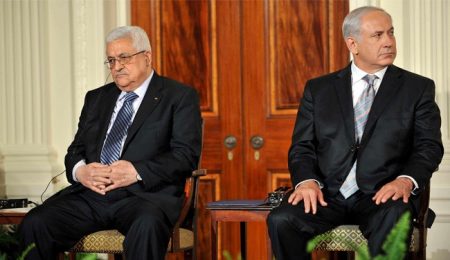
By Stuart Littlewood | American Herald Tribune | January 17, 2018
Face the truth: Israel won’t willingly return the lands and resources it has stolen unless slapped with tough, sustained sanctions. Civil society in the US and UK must end the conspiracy among their warped government ‘élites’ that makes a mockery of international law.
It goes something like this:
“Listen up, you wretched Palestinians. There’s no way you’re getting your lands back, or a state of your own, because that would make our Zionist buddies feel upset and insecure. And you know how their security matters above everyone else’s. Besides, God told them they could grab your land and kick you out even if they don’t really have any ancestral connection to it. So you rabble don’t belong here. And you might as well know that we support them 100 percent in their efforts to make life so f*cking unbearable that you all piss off somewhere else – and we don’t care where just as long as our beloved friends get their hands on your farms and homes and resources. Naturally we’ve suspended your human rights, and international law simply isn’t available to you.
“You don’t like being shafted? Tough. Learn to accept it. Bow down to those who are favoured by God, as we have done.”
signed: US and UK, adoring sponsors of God’s Rogue Regime
Life for the Palestinians hasn’t improved. It has only got worse under the tyrrany of Israel’s military occupation. And throughout that time the performance of their representatives to the outside world, the PLO (Palestine Liberation Organisation), has been chronic verging on useless. Thanks in part to the Palestinian leadership’s diplomatic ineptitude and quisling tendencies Israel has been able to expand its frontiers and flourish far more than it had any right to.
By 2015, Israeli Prime Minister Netanyahu felt untouchable enough to say that if he was returned to power, a Palestinian state would not be established because handing back territory would threaten Israel’s security.
And in August 2017 he announced that Israel would keep the West Bank permanently and there would be no more uprooting of settlements: “We are here to stay forever…. This is the inheritance of our ancestors. This is our land.”
Netanyahu’s ancestors, by the way, are from… where? And the rest of the thugs in his administration… where do their roots lie? Few if any can show ancestral links to the Biblical lands they claim are theirs. The true inheritors, of course, are the Palestinian peoples who have been there since the days when Jerusalem was a Canaanite city.
Netanyahu’s position echoes his Likud Party’s stance back in 1999 and 2009, so western politicians should be well acquainted with it. To remind them, David Morrison has produced a neat analysis of Israel’s unchanging position:
- “The Government of Israel flatly rejects the establishment of a Palestinian Arab state west of the Jordan river.”
- “The Jordan Valley and the territories that dominate it shall be under Israeli sovereignty. The Jordan river will be the permanent eastern border of the State of Israel.”
- “Jerusalem is the eternal, united capital of the State of Israel and only of Israel. The government will flatly reject Palestinian proposals to divide Jerusalem”
- “The Jewish communities in Judea, Samaria and Gaza are the realization of Zionist values [written before Israel removed its troops]. Settlement of the land is a clear expression of the unassailable right of the Jewish people to the Land of Israel and constitutes an important asset in the defense of the vital interests of the State of Israel. The Likud will continue to strengthen and develop these communities and will prevent their uprooting.”
Likud’s message still stands. Tzipi Hotovely, Israel’s Deputy Foreign Minister and second only in ranking to Netanyahu, told Israeli diplomats in 2015 that “we need to return to the basic truth of our rights to this country…. This land is ours. All of it is ours. We did not come here to apologise for that.” She rattled on about God having promised the land of Israel to the Jews and how she was going to get the international community to “recognise Israel’s right to build homes for Jews in their homeland, everywhere”.
Zionist leaders before Netanyahu broadcast their fraudulent claims to the land and bragged about their plan to seize it. Their evil intent has been well advertised. Even if Netanyahu wanted a two-state solution he would be opposed by his own party and the five others making up his ruling coalition, virtually all of which stand against Palestinians having a state of their own.
Israel’s bad behaviour richly rewarded
As David Morrison and others have repeatedly pointed out, the UN Security Council has never applied sanctions against Israel to force a reversal of its illegal land grab. Instead of punishing the regime for its 50 years of terror, the US, UK and EU have showered it with privileges.
Since 1967, the US has handed Israel well over $100 billion in mostly military aid and provided political and diplomatic cover by vetoing resolutions critical of it in the UN Security Council. Obama before he left office guaranteed Israel a further $38 billion in military aid over the next ten years.
Hard-pressed American taxpayers still don’t seem to have grasped this misappropriation of their funds or they’d surely be angry enough to stop it.
The EU for its part allowed Israel to sign up to the Euro-Mediterranean Partnership in 1995 and gave it privileged access to EU markets under the EU-Israel Association Agreement of 2000, even though it breached the basic terms of membership from the start and continues to do so.So there are no painful consequences for Israel’s bad behaviour, just rich rewards.
Maintaining the illusion of a peace process
The peace process is, of course, a sham. Anyone who believes in it is hallucinating. But to perpetuate the cruel illusion Netanyahu offers an occasional glimmer of hope for a ‘negotiated’ settlement provided there are no awkward preconditions. In any event he will ensure the talks go nowhere, just as he has done many times before, aided and abetted by discredited ‘peace broker’ America and always blaming the Palestinians. It is patently obvious that Israel and the US (and indeed the UK) conspire to keep the idea of a peace process alive in order to provide a smoke-screen while Israel continues its expansionist policy and establishes more ‘facts on the ground’ designed to make its occupation irreversible.
Ban Ki-moon said two years ago: “The United Nations is committed to working to create the conditions for the parties to return to meaningful negotiations. That is the one and only path to a just and lasting solution — an end to the occupation that began in 1967…”
First, “meaningful negotiations” simply aren’t going to happen; and if they do they’ll lead nowhere as before. Besides, negotiations between a strong party backed by mighty powers and a weak demoralised party are unlikely to produce a “just” solution. Second, it is not “the only path”. There’s law and sanctions. And the law has already spoken. All that’s needed is the integrity and guts to enforce it. Nothing will change until the UN — or a significant section of the international community — rises to the moral challenge and enforces international law and the many resolutions relating to Israel’s crimes, and slaps Israel with severe sanctions until it complies. As long as it does nothing the UN is seen to be in on the conspiracy too.
The British government knows the facts. So what on earth was Ambassador Peter Wilson, UK Deputy Permanent Representative to the United Nations, thinking when he recently addressed the Security Council briefing on the Middle East Peace Process?
“Support for a two-state solution is the only way to ensure a just and lasting resolution to the Israeli-Palestinian conflict…. The United Kingdom’s longstanding position on the Middle East Peace Process remains clear and unchanged: we support a negotiated settlement leading to a safe and secure Israel living alongside a viable and sovereign Palestinian state; based on 1967 borders with agreed land swaps, Jerusalem as the shared capital of both states, and a just, fair, agreed and realistic settlement for refugees.
Theresa May has all her ministers and MPs mouthing and writing the same tosh, as did her predecessors. It isn’t difficult given that 80 percent of them are reported to be signed-up Friends of Israel. We watched their grovelling worship of the rogue regime — and of the arch-criminal Netanyahu — at the Balfour centenary celebrations in London. Wilson added:
“The leadership and engagement that President Trump and his administration have demonstrated in reinvigorating the Middle East Peace Process must have our support. We call on the region, Israelis, and Palestinians to seize the opportunity that this presents and turn 2017 not just into another anniversary of occupation, but a new anniversary of peace.”
Well, we’ve seen Trump’s bull-in-a-china-shop leadership at work, gifting Jerusalem to Israel, and what that did for peace.
The Norwegian Refugee Council, an organisation not given to exaggeration, reacted by reminding everybody that acquiring or annexing territory is prohibited under international law, and the US is disregarding the international community’s long-standing position of not recognising Israel’s unlawful annexation of East Jerusalem. Recognising Jerusalem as the capital of Israel is tantamount to condoning annexation and the occupation. Furthermore Israel, as the occupying power, is prohibited from forcibly transferring Palestinians out of their homes in Jerusalem. Israel disregards this with its programme of evictions, home demolitions and residency revocations. “The US administration’s declaration risks condoning these practices and other violations of international law in the occupied Palestinian territory that NRC witnesses daily…. The international community should insist on respect for international law and the enforcement of existing UN resolutions, while governments should use their influence to hold those responsible for violations to account.”
Unfortunately respect for international law, enforcing UN resolutions and applying sanctions are not part of the US-UK tool kit unless directed against Iran and Israel’s other enemies.
So, as David Morrison warns, it looks as if “today’s Palestinian children will still be living under occupation when they are grandparents”.
And we as a nation will never be able to hold our heads up on account of the humiliation we heaped on them.
US forcing Europe to abandon Russian gas & buy more expensive American LNG – Lavrov
RT | January 15, 2018
The United States is afraid of fair competition in the energy sector, and is hampering the implementation of the Russian Nord Stream 2 gas pipeline project, according to Russian Foreign Minister Sergey Lavrov.
“There is reprisal in the energy sector against North Stream 2. It is the US which is calling it politicized, leading to a split in Europe, and the strangling of Ukraine,” he said at a press conference on Monday.
“Washington clearly forces Europeans to abandon Nord Stream 2, despite the fact that gas deliveries to Germany via the pipeline could be 2,000km shorter than through Ukraine, and the cost of transit could be halved,” said the Russian diplomat.
Europeans “are being forced to buy much more expensive liquefied gas from the United States instead of Russian gas,” Lavrov added.
He also said that the US could not withstand fair competition from Russia in the gas-export sector.
Russia plans to build the Nord Stream 2 natural gas pipeline under the Baltic Sea to Germany, and to double the existing pipeline’s capacity of 55 billion cubic meters per year.
The project has faced fierce resistance from some EU members, especially from the Baltic states and Poland. They say the pipeline will cut gas transit through Ukraine and will result in a Russian monopoly in the EU gas market.
Other countries like Austria, Hungary and Germany are in favor of buying Russian gas.
Israeli Security Minister Says EU Ready to Increase Pressure on Iran
Sputnik – January 14, 2018
Israeli Public Security Minister Gilad Erdan said Sunday that he believed US President Donald Trump who had promised to waive sanctions against Iran for the last time, also noting that France, Germany and the United Kingdom also started expressing their readiness to increase pressure on Tehran.
On Friday, Trump said that he had extended Iran’s sanctions waivers, stipulated by the Iran nuclear deal, for the last time, calling on the European Union to take part in rewriting the Joint Comprehensive Plan of Action (JCPOA).
“I definitely believe him [Trump]… We also see that the Europeans start realizing that Iran should change its behavior… I believe the Germans start expressing their readiness to increase pressure on Iran. I think that the British and the French are also moving in this direction,” Erdan said as quoted by Israel’s Army Radio also known as Galei Tzahal.
According to the Israeli minister, Iran’s actions in Syria and Lebanon as well as the country’s ballistic and nuclear programs will convince the European countries that the US president’s plans are reasonable.
“I believe that in 120 days when he [Trump] will have to decide on whether the United States will remain in the agreement [JCPOA] or not, serious changes will take place,” the minister stressed.
In July 2015, the EU, Iran and the P5+1 group of nations comprising the US, Russia, China, France and the United Kingdom plus Germany signed the JCPOA. The nuclear agreement stipulates a gradual lifting of sanctions imposed on Tehran in exchange for Iran’s nuclear program program remaining peaceful.
In late October, Trump refused to re-certify the JCPOA, accusing the Islamic Republic of violating the agreement.
READ MORE:
Israel, Middle East Leaders Tried to ‘Trap’ US into War With Iran — Kerry
Israel agrees to EU deal excluding settlements
RT | December 31, 2017
Israel’s government has approved an agreement with the EU that includes a provision excluding funding for settlements, seemingly consenting to the EU’s boycott of settlements.
The agreement centers on Israel’s part in the EU’s ENI Cross-Border Cooperation in the Mediterranean (CBC Med) program, which provides funds for projects for non-EU countries in the Mediterranean area, such as Israel, Egypt and Jordan, Haaretz reports. The projects are largely focused on promoting development, education, technology and environmental sustainability.
As per EU policy, the ENI CBC Med agreement contains a provision which excludes areas outside Israel’s 1967 borders from receiving grants. This means Israeli settlements inside the West Bank, East Jerusalem and the Golan Heights (which were occupied by Israel in the conflict) cannot receive funding under the program.
Israeli settlements inside Palestinian territories are considered both an impediment to the peace process between Israelis and Palestinians, and to be in violation of a number of UN resolutions and the Fourth Geneva Convention.
Israel’s Culture and Sport Minister, Miri Regev, voiced her objections to the agreement to the cabinet secretary earlier in the month. She fought against the deal at the cabinet meeting, the Jewish Press reports, but no other minister agreed to second her motion to delay the vote pending further debate.
The deal was given final approval by the government Sunday, after Prime Minister Benjamin Netanyahu signed off on the measure last week. It’s also been approved by the Justice Ministry and Foreign Ministry, Haaretz reports. The foreign ministry is said to have led the charge for Israel to be part of the program.
The agreement is at odds with the Israeli government’s stance on settlements, which it continues to develop within the occupied territories in disregard of the EU and others’ condemnation. Netanyahu is also a fierce opponent to the international Boycott Divestment and Sanctions (BDS) movement which calls for boycotts and sanctions against Israel.
“My fundamental position is that the Israeli government should reject agreements from the outset that require us on a de facto basis to boycott portions of the homeland or populations living in the Golan Heights, Jerusalem or Judea and Samaria [the West Bank] other than with very limited exceptions,” Regev wrote in her letter.
“I do not see the justification to compromise and with one hand sign the agreement while with our other demanding that the world give de facto recognition to our right to a united Jerusalem and even to move embassies to Israel’s capital,” she added.
Aside from the settlement matter, Regev’s letter to Cabinet Secretary Tzachi Braverman also took issue with the text of the agreement referring to the Palestinian Authority “as if it were a neighboring country.”
It is “not acceptable to me,” she said.
The far-right Regev managed to halt a similar agreement with the EU last year. A Creative Europe culture and media program contained a similar provision excluding settlements, and, although Netanyahu had given consent, Regev stopped it from going ahead. Earlier this month, Regev succeeded in forcing the NBA remove a reference to Palestine as being “occupied territory.”
Read more:
Immigration and Capital
By Maximilian Forte | Zero Anthropology | August 3, 2016
Immigration, rightly or wrongly, has been marched to the frontline of current political struggles in Europe and North America. Whether exaggerated or accurate, the role of immigration is situated as a central factor in the Brexit referendum in the UK, and the rise of the “America First” Trump movement in the US. It seems impossible that one can have a calm discussion about immigration today, without all sorts of agendas, assumptions, insinuations and recriminations coming into play. Staking a claim in immigration debates are a wide range of actors and interests, with everything from national identity and national security to multiculturalism, human rights, and cosmopolitan globalism. However, what is relatively neglected in the public debates is discussion of the political economy of immigration, and especially a critique of the role of immigration in sustaining capitalism.
Before going forward, we have to first dismiss certain diversionary tactics commonly used in public debate, that unfortunately misdirect too many people. First, being “anti-immigration” does not make one a “racist”. One does not follow from the other. Being a racist means adopting a racial view of humanity as being ordered according to what are imagined to be superior and inferior, biologically-rooted differences. Preferring “one’s own kind” (whatever that means) might be the basis for ethnocentrism, but not necessarily racism as such. It’s important not to always lunge hysterically for the most inflammatory-sounding terms, just because your rhetorical polemics demand an instant “win” (because you don’t win anything; you just sound like someone who doesn’t know what he or she is talking about). Also, xenophobia neither implies racism nor ethnocentrism, because it can exceed both by being a fear or dislike of anyone who is “foreign” or “strange”. Conversely, one can be entirely racist, and quite pro-immigration at the same time, as long as immigration is restricted to members of one’s own race. Other forms of racist pro-immigration policies would include slavery itself, indentured labour, down to the casual racism of “let’s have Mexicans, they make such wonderful gardeners”. Furthermore, the available survey data in the US suggests that, “far from being rooted in racism, opposition to immigration in the U.S. seems to be rooted in concerns about the ability of less-skilled immigrants to support themselves without Medicaid, SNAP, the earned-income tax credit, and various other supports” (Salam, 2016b). Salam adds this point: “My guess is that if immigration policy were not viewed through a racial lens, opposition to immigration would in fact increase substantially”. Also, there is a distinction to be drawn between opinions that are anti-immigrant and policies that are anti-immigration, even if there can be overlap between the two. Finally, all of this obscures the basic questions that are seemingly never asked today in most public debates: 1) Are questions about racism, identity, and openness the most important ones to be asked about immigration? And, 2) Why must workers be pro-immigration?
When we turn our attention to the current political economy of immigration in Europe and North America, and the relationship between immigration and capital, we might discover two odd absences. One is that those on the left who in past years were vocal critics of mass immigration, especially of the illegal kind, have either been silent on the topic in current debates, or have reversed positions without any explanation. Second, you may find Marxist writers who, armed with all of the necessary conceptual and empirical tools, avoid drawing explicit connections in their own work that could be the basis for a critique of immigration. My guess is that what explains both absences is this fear of being stigmatized as xenophobic, or worse yet, racist—but as shown above, such fear is illogical and should be pushed aside.
From the Left: Past Public Criticism of Immigration
In the not-too-distant past, leftist activists and politicians, such as Naomi Klein and Bernie Sanders, have both gone public in criticizing immigration for its role in depressing wages, increasing unemployment, deepening proletarian dependency and despair, and fostering an elitist form of cosmopolitan detachment from place. For the record, let’s review the two.
Naomi Klein argued that “rooted people” are “the biggest threat” to neoliberal capitalism because they have “roots and stories,” so the global capitalists prefer to “hire mobile people”. Klein also recognized that this “economic model creates armies of surplus labour,” and migrant labourers are useful in “keeping wages very, very low”. Naomi Klein also spoke of the rebuilding of New Orleans after Hurricane Katrina, where those who lost their homes, mostly African-Americans, did not get the jobs—instead, “a migrant workforce” was used.
Second, Bernie Sanders, who would later denounce “open borders” as a plot by the right-wing oligarchs, the Koch brothers, told Lou Dobbs the following in 2007:
“If poverty is increasing and if wages are going down, I don’t know why we need millions of people to be coming into this country as guest workers who will work for lower wages than American workers and drive wages down, even lower than they are right now.”
Dobbs added,
“And as we know, the principle industries which hire the bulk of illegal aliens—that is construction, landscaping, leisure, hospitality—those are all industries in which wages are declining….I don’t hear that discussed on the Senate floor by the proponents of this amnesty legislation.”
To which Sanders responded:
“That’s right. They have no good response.”
You can view/listen to the complete exchange here:
I am not playing this out here to rub salt into the wounds of Sanders supporters. Instead, it is simply to point how far back the left has retreated when it comes to a critique of the political economy of immigration, such that they can hardly have any legitimate complaint that the ground they vacated has been taken up by the Trump movement in the US, or by right-wing advocates of Brexit in the UK. As the Bloomberg article pointed out, “it’s Sanders’s rhetoric against guest-worker programs for legal immigrants that has brought him trouble with the left”. Should it have? Should Sanders have gone back on his record, and adopted his enthusiastically pro-immigrant stance (embracing even those who entered illegally)?
Yet Sanders is not the focus of this article; instead my broad purpose here is to argue for the negative in answering these questions. I will do so first by revisiting the work of a Marxist writer, David Harvey, even though he seems to evade the critique of immigration in his 2014 book on the contradictions of capitalism. While the writings of Marxist scholars can be useful for understanding how immigration works to uphold capitalism, and especially its neoliberal form, the writers themselves seem reluctant to draw out those connections too clearly, creating an eerie silence around what should be obvious.
Immigration: Serving the Owners of Capital
Those who consider themselves leftist and anti-capitalist while being pro-immigration with few if any restrictions, might be on the wrong side of the argument in one way or another. In David Harvey’s 2014 book, Seventeen Contradictions and the End of Capitalism, there are some useful insights about immigration’s role in propping up capital. However, the material is scattered throughout the book (I gathered the relevant elements below), and one might wonder if Harvey thus missed the eighteenth contradiction—the contradiction between unrestricted capitalism and the anti-immigration politics of working class movements. At least capitalists would think of the contradiction as an important one, given their now extreme public panic over the working class gaining the political upper hand, under the leadership of populist nationalists.
In Seventeen Contradictions Harvey notes that for many Marxists the contradiction between capital and labour is the primary contradiction of capitalism, not that Harvey (himself a Marxist) agrees that this contradiction can stand alone as an explanation for all capitalist crises (p. 65). Harvey’s own definitions of capital, and the way he distinguishes it from capitalism, leave much to be desired (see pps. 7, 73).1 Having fixed the place of labour in the unfolding history of capitalism—whether paramount or not it remains central—Harvey in his usual anthropomorphosis of capital says that “capital strives to produce a geographical landscape favourable to its own reproduction and subsequent evolution” (p. 146)—although it’s actual capitalists who do that, and not capital as such. What he could have added is that reworking the geographical landscape means how humans fit into landscapes, and moving workers around the planet is a definite reworking of “geography”. Having established the centrality of the capital-labour contradiction, and having introduced the significance of geographic changes, Harvey adds the third key component of his analysis: “that an economy based on dispossession lies at the heart of what capital is foundationally about” (p. 54). How are workers dispossessed?
The usefulness of immigration in the capitalist system lies in the ability of capitalists to use immigration to break the monopoly power of labour (p. 120). Simply put, labourers can assert a virtual monopoly over their work, especially when such work is specialized and the number of labourers is contained. The inflow of immigrants can thus help to break the labourers’ monopoly, by creating competition among the ranks of workers. Harvey explains this in detail—but without speaking of immigration—using an example which ends up being very relevant to the present in the US:
“What is on capital’s agenda is not the eradication of skills per se but the abolition of monopolisable skills. When new skills become important, such as computer programming, then the issue for capital is not necessarily the abolition of those skills (which it may ultimately achieve through artificial intelligence) but the undermining of their potential monopoly character by opening up abundant avenues for training in them. When the labour force equipped with programming skills grows from relatively small to super-abundant, then this breaks monopoly power and brings down the cost of that labour to a much lower level than was formerly the case. When computer programmers are ten-a-penny, then capital is perfectly happy to identify this as one form of skilled labour in its employ…” (pp. 119-120).
Now we can update that explanation by factoring in immigration. Harvey highlights increased access to training as means of increasing the numbers of skilled workers, but he misses—and this is odd, because he has worked in universities for most of his life—the fact that another key way to increase the numbers is by bringing in foreign students to undergo such training, and then retaining those foreign students, or otherwise importing specialists from abroad through formal immigration. This is in fact a central plank in the platform of Hillary Clinton in her 2016 presidential run—around which silence generally prevails thanks to the diversionary tactics of political correctness that I mentioned above. Thus in Hillary Clinton’s Initiative on Technology & Innovation, we can read the following:
“Attract and Retain the Top Talent from Around the World: Our immigration system is plagued by visa backlogs and other barriers that prevent high-skilled workers and entrepreneurs from coming to, staying in, and creating jobs in America. Far too often, we require talented persons from other countries who are trained in U.S. universities to return home, rather than stay in here and continue to contribute to our economy. As part of a comprehensive immigration solution, Hillary would ‘staple’ a green card to STEM masters and PhDs from accredited institutions—enabling international students who complete degrees in these fields to move to green card status. Hillary will also support ‘start-up’ visas that allow top entrepreneurs from abroad to come to the United States, build companies in technology-oriented globally traded sectors, and create more jobs and opportunities for American workers. Immigrant entrepreneurs would have to obtain a commitment of financial support from U.S. investors before obtaining the visa, and would have to create a certain number of jobs and reach performance benchmarks in order to pursue a green card”.
Thus US students who acquired massive debts to gain degrees in STEM disciplines, will find it increasingly harder to get their heads above water when they have to compete with immigrants for a finite number of positions, or when their salaries drop as the availability of replacement workers increases. What Clinton is proposing is nothing very new: she would be formalizing and making more efficient the already existing realities of competition from foreign white-collar workers (see Munro, 2016).
At the root of capitalists’ power to depress wage levels, is the depression of employment opportunities. In the US case, it is not just the fact that immigrant workers are competing for jobs, it’s that they are also getting a disproportionate share of the available employment opportunities. Thus while foreign-born workers make up only 15% of all workers, they gained 31% of new jobs (see Kummer, 2015).
In Marx’s analysis, the interest of capitalists is in possessing a vast “industrial reserve army” in order to contain the ambitions of the employed (Harvey, 2014, pp. 79-80). And, as Harvey adds, “if such a labour surplus did not exist, then capital would need to create one” (p. 80). How would it do that? Harvey identifies two ways to create a labour surplus: technologically induced unemployment (automation), and opening access to new labour supplies (such as outsourcing to China) (p. 80). It is again peculiar that Harvey does not list another obvious option: expand the “domestic” supply of labour by importing labourers (immigration). Since immigration can play an important role in creating a labour surplus, then why not mention it?
So far we have talked about how immigration is used to break the monopoly power of labour, by expanding the domestic supply of labour, or by outsourcing. Harvey does mention in passing that immigration can serve as a spatial fix for the capitalist system, by redistributing surplus labour where it is needed most (p. 152). But spatial fixes of a contemporary kind appear in two forms—one of them is what we call outsourcing or offshoring (p. 148). Offshoring essentially makes workers subsidize capital—it is one of the absurdities of contemporary “free trade” that all sorts of government subsidies to workers are banned, but workers can be super-exploited at atrociously low wage levels that account for the competitive global cheapness of their products. That is a subsidy, just not a voluntary one, and not a state subsidy. However, offshoring, where jobs go overseas, is just one way to increase competition among workers. A second method is what we might call onshoring: it’s not the jobs that go to meet workers overseas, it’s workers overseas who migrate to meet the jobs—immigration. Unfortunately, Harvey does not mention onshoring as part of a pair of options along with offshoring.
Historically, immigration has been used to depress the wages of workers in the receiving nation. This is especially true in the US case. As Paul Street recently explained,
“The ever-shifting supply and demand for labor power is a factor that holds no small relevance to the triumphs, trials and tribulations of the American working class past and present. As the leading left U.S. economist Richard Wolff explains, the long historical rise in real wages in the United States ended more than thirty years ago thanks to ‘the combination of computerization, exported jobs, women surging into the labor market, and a new wave of immigration… this time mainly from Latin America, especially Mexico and Central America…. Capitalists from Main Street to Wall Street quickly realized that employers could slow or stop wage increases, given that supply now exceeded demand in the labor market…’
“If you don’t believe immigration is used by employers to depress living and working standards in the U.S., then take a job in any U.S. factory that has a significant number of unpleasant low-skill tasks. You will see your capitalist bosses keeping wages down and workers cowed and oppressed by (among other things) hiring immigrants whose experience of extreme poverty, violence, and other forms of misery in their lands of origin make them more than ready to work obediently and without outward complaint for $10 an hour or less in ‘modern manufacturing’”.
Nonetheless, “expert opinion” persists in creating the myth that immigration has no negative impact on workers.
Another key way that immigration can sustain capital has to do with the purchasing power of wages. As we have seen, it’s in the interest of capitalists to keep wages as low as possible. However, the contradiction that arises—and Harvey devotes considerable attention to this—is that lower wages means less money available to purchase goods, which shrinks market size, and reduces the profit gained by capitalists. So if workers all have less money, what to do to sustain demand? One option is to increase wages—bad. Another option is to increase credit, as is being done. A third option is to increase the total mass of workers—as is also being done. Workers may all have less money to spend, but by importing more workers, you have a greater number of people spending (however little). Thus immigration can help to sustain or even increase demand, without increasing wages (see p. 82).
“A phenomenal rate of growth in the total labour force,” Harvey writes, “would augment the mass of capital being produced even though the individual rate of return was falling” (p. 107). However, Harvey does not mention that one way to engineer a phenomenal growth in the total labour force is by fostering mass immigration, or tacitly allowing for large numbers of people to enter illegally. What Harvey does say is that immigration can help to support future economic growth, but it’s not clear how as soon after he says that, in the US case, “job creation since 2008 has not kept pace with the expansion of the labour force” and that the seeming decline in the unemployment rate instead reflects “a shrinkage in the proportion of working-age population seeking to participate in the labour force” (pp. 230-231). Again, he fails to consider the impact of millions entering the work force from abroad.
Why David Harvey would appear reticent about producing a focused critique of immigration, might be explained by one very peculiar line in his book, where he seems to blame the working class itself, and its attitudes toward others, for its own unemployment through offshoring:
“When a rising anti-immigrant fervour among the working classes grabbed hold, capital migrated to the Mexican maquilas, the Chinese and Bangladeshi factories, in a mass movement to wherever surplus labour was to be had”. (Harvey, 2014, p. 174)
What a disappointing statement. Suddenly, capital is no longer in charge, in this abrupt deviation from Harvey’s central narrative. It is the working classes that have somehow “grabbed hold”. How did they achieve such power as to grab hold of the very production processes that they never owned? And if the working classes had a cheerier view of competition from immigrant labour, would those jobs not have still gone overseas? Do capitalists make their decisions on where to gain the most profit, by first consulting workers on what they feel about others? I don’t know that there is any evidence at all that can remotely validate such an absurd conclusion.
Where Harvey might have found a more fruitful point of entry, in his own discussion, is where he wrote that “three of the most lucrative businesses in contemporary capitalism” are “trafficking women, peddling drugs or clandestinely selling arms” (p. 32). Trafficking “women”? Why not trafficking workers—as is the case with illegal immigration, which is exploited by human traffickers in far greater numbers than the trade in women alone? Either way, “open” or weak borders are a boon to the “three most lucrative businesses” of contemporary capitalism. The best way to maximize the growth in the total labour force is precisely by illegal means, because as should be obvious “illegal” means that the movement is: (a) unregulated by the state, and not subject to political debate; (b) unrestricted in volume; and, (c) the situation where workers cannot avail themselves of rights under labour laws.
In the frame of current political debates in the US, Harvey reminds us of some important points. One is that it was under the administration of President Bill Clinton that the US saw a vast increase in the number of poverty-ridden unemployed workers. In return, Harvey points out, “Clinton has been handsomely rewarded since by business organisations, earning some $17 million in 2012 from speaker’s fees mainly from business groups” (p. 176). One of the many things shared in common between Bill and Hillary Clinton is therefore a consistent set of policy-making designed to ensure the growth of the “reserve army” of workers. Otherwise, with current debates in mind, there is little in the book to explain how Mexico, as an example, gains from the outflow of migrants to the US (producing remittances) along with the production of cheap goods for export. One would think this was important, because it disturbs established neo-Marxist models of the one-way flow of capital from the periphery to the centre—or maybe it doesn’t, but that is why further discussion would be useful.
Otherwise, Harvey does have some useful insights into how we are witnessing a conflict between “politics” and “economics” over migration policies (p. 156). By politics, he means the state, and the territoriality of state power, and by economics he means the interests of capital. As Harvey observes, “the constructed loyalty of citizens to their states conflicts in principle with capital’s singular loyalty to making money and nothing else” (p. 157). In what again should have been an opening for Harvey to reflect on immigration, he writes that, “affections and loyalties to particular places and cultural forms are viewed as anachronisms” which he follows by asking: “Is this not what the spread of the neoliberal ethic proposed and eventually accomplished?” (p. 277). Here we might revisit Naomi Klein’s comments above.
A less charitable argument about Seventeen Contradictions would be that the persistent reluctance of David Harvey in allowing his critiques to incorporate the realities of immigration is troubling, in part because it suggests a weakness not just in the analytical frame, but also in the ability or willingness to analyze. A more charitable argument would say that Harvey explicitly admits to leaving out race and gender among the contradictions he studies (p. 7), and therefore immigration might just be another of the contradictions he did not address. His reasoning is that race and gender conflicts are not specific to capitalism—and one might say that mass migrations of human populations long preceded capitalism too. However, contemporary inter-state migration definitely is a phenomenon of the modern capitalist system, and thus his logic of exclusion would not apply, and I might add that his argument is also on particularly shaky grounds when it comes to racism (which is not a prehistoric form of labour discipline and discrimination).
Immigration: Serving the Owners of Votes
If you agree with Marx, that it’s in the interest of capitalists to possess a large reserve army of unemployed workers to keep wage levels down and to possibly break the back of collective labour organization, then you would not think that the creation of disposable workers was in any way new. (You also do not need to be a Marxist to agree with what is in fact an observation of reality.) However, it should also be clear that in the US, Canada, and parts of Europe, deindustrialization that stems from free-trade deals has left many more unemployed than previously. The phenomenon of increased job loss due to globalized free trade is particular to neoliberal capitalism. Clearly for those benefiting from this state of affairs—the political and economic elites who rule this system to their own advantage—a crisis has set it in for them now that they experience a backlash from those they dispossessed. Liberal democracy, a system of power, was only permitted once politics were divorced from economics, and voting did not appear to threaten the economic system (Macpherson, 1965, pp. 12, 13, 51). However, once dispossessed workers find a way to register their protests through elections, then that boundary begins to break down. No wonder then that liberal democratic elites now routinely proclaim that what we are witnessing today is the “suicide of democracy,” writing even in apocalyptic terms that “the end is nigh” and that “tyranny” is coming. What is at an end—because it had to be, it was so obviously irrational and unsustainable—is the “democratic elitist” system the rulers created that they hoped would preserve the economic system by removing popular politics (Bachrach, 1980). Instead, voters now realize that in exceptional cases they can, in effect, cast a vote on globalization, free trade, and neoliberalism—as in the case of the UK’s Brexit vote and in the case of the Trump movement in the US.
(But who knew that the elites could be so delicate, and hysterical, that now when they are richer than ever before in human history any talk of a reduction in their ability to take more is conceived in terms of suicide and apocalypse?)
Otherwise liberal democracy never makes such questions about free-trade or immigration available for popular decision-making. It never meant to, as workers are held in deep disdain (see Krugman, 2016; Confessore, 2016). In the case of Brexit, there has been open disregard for democracy by those who voted for Remain—everything from calling on parliament to simply ignore the result of the referendum, to calling for a second referendum with a higher threshold for victory for Brexit to be possible, and both efforts have failed. Members of the metropolitan left have turned on the working class. That some of the advocates of Remain were motivated by the prospects of new quantities of cheap labour, is something that did not escape attention. The oligarchs are in deep trouble, and they would like the rest of us to save them.
An oligarchic system that is in trouble, looks for solutions of course. Having rendered the majority of existing workers disposable, the key lies in finding ways to also make them disposable as voters. Fortunately for the oligarchs, history offers them solutions. On the US State Department’s own website, there are lessons for regime survival from politicians who imported grateful immigrants as a new supply of voters. One of these cases concerns Guyana under the rule of Forbes Burnham and the People’s National Congress (PNC). With a working class divided between Afro- and Indo-Guyanese, with the latter supporting the opposition party and having greater numbers, what Burnham did was to import black immigrants from some of the nearby smaller islands of the Caribbean, who would vote PNC in thanks for Burnham’s patronage. Similar things happened in Trinidad & Tobago, under the US-allied government of Eric Williams and the People’s National Movement (PNM). In this it was widely suspected that the large growth in the immigrant population from Grenada and St. Vincent boosted the PNM voter base.
In the US, there seems to be relief bordering on glee when Democrats can pronounce the decline in the number of white working class voters, and the rise in number of Hispanic voters—thanks to both immigration, both legal and illegal, which their policies helped to support. I would not argue that the current rulers of the US directly took hints on regime survival from states that used immigration to engineer new demographic bases of support—nor do I think that the logic is so exotic that it needs to be imported. Instead, the point is to understand how immigration is used as a tool for regime survival in an ethnically-divided nation. An unusually wise insight came from one of the right-wing talk radio hosts in the US who, in mocking the political correctness of calling illegal immigrants “undocumented workers,” he instead called them “undocumented Democrats”.
“Open borders” provide the opportunity for extending the lifespan of an unpopular regime. The ruling elites realize that: (a) disposable workers are disposable voters, and, (b) that they can always import a new voter base, grateful for their patronage—as long as they can make their pro-immigration talk stick. This is where they turn to identity politics, the neo-tribal lobby, and righteous moral narcissism that exploits calculated expressions of outrage. As the oligarchs turn to the rest of us to save them, many have fallen for the seductive, exploitative politics of identity and moral outrage. Some do so under the illusion that they are in some age-old fight against “fascism,” and they come to the fight appropriately armed with photos posted to social media of the classic Marxist texts from the 1800s and early 1900s that they are proudly reading. Others do so because once again they let instant emotional reactions guide them toward aims they barely perceive.
What is instructive is that the real Fascism did not take root in a nation that was experiencing high levels of immigration. Instead, it emerged in one of the world’s leading producers of emigrants: Italy, where the very concept of fascism was invented. Indeed, actually existing historical Fascism included a plan for colonization in order to settle and employ a burgeoning population at home—none of which describes Trump’s positions.
While immigration can sustain regime survival at home, it can also be a destabilizing factor when it stems from regime change abroad. Immigration was a leading factor motivating the recent Brexit victory in the UK (see Kummer, 2016a, for details). As some have explained, “British society has been transformed by a wave of immigration unprecedented in its history”: since the advent of Tony Blair’s government, “roughly twice as many immigrants arrived in the United Kingdom as had arrived in the previous half-century” (Salam, 2016a). As a result, some have argued that Brexit is a victory for Britain’s working class.


In the European case, the aftermath of the massive inflow of refugees and migrants during the past two years, traveling via Turkey, Greece, and Libya, has not promoted stability for the dominant political class. Here we see European governments, some of which actively supported/support US regime change campaigns in Iraq, Afghanistan, Libya, and Syria, reaping the blowback of a refugee influx. Having created weakened states or virtual non-states in Afghanistan, Iraq and Libya, while severely undermining the Syrian state, the unprecedented levels of violence in those nations have generated massive refugee populations. For a while, it was possible to transfer the burden to nations little or least able to afford hosting refugees, such as Jordan, Turkey, and even a badly crippled Greece. Syria itself hosted hundreds of thousands of Iraqis after the US invasion. Once a portion of the region’s refugee populations began to move northward, into the European Union, the ruling political elites effectively transferred the costs to the working class, by crowding them out of already reduced social services that have shrunk under austerity, and expecting them to be accommodating. Protests from the working class were then labelled “racist” and “xenophobic,” especially by supposed “progressives”. The point here ought not to have been whether those who can least afford making room for refugees and migrants should be welcoming or hostile—the point is that Western nations should not have created those refugee populations in the first place, as they did with their invasions, occupations, and bombing campaigns.
Conclusion: The Vanishing Left?
Thus far we have witnessed a number of cases where the left, broadly speaking, has abandoned any effort to articulate a critical perspective on immigration. We see it in cases such as,
- the retreat of leftist politicians and activists from critiques of immigration, as with Naomi Klein and Bernie Sanders, who have either gone silent or reversed themselves;
- the clear reluctance of Marxist academics like David Harvey in drawing obvious connections within their own work;
- leftists denouncing working classes resisting the added austerity of losing access to health, education, and social services to make room for migrants; and,
- political elites who try to appeal to the left, claiming to be progressives who support migrants from Mexico and Central America.
However, given the way immigration has been enmeshed in sustaining neoliberal capitalism, and given the current collapse of neoliberal rule, the left is threatening itself with extinction by following along the tracks of neoliberal politicians. “I won’t vote for a racist or bigot” can easily be translated as “I am saving the oligarchy”. What we may be witnessing in the West then is an even bigger historical turning point than some of us might have previously imagined—where the future will be shaped by the left’s absence from the future. Even if one is less pessimistic, the left could amount to little more than a residue, a legacy, that occasionally appears in the form of various surface appearances or a series of phrases and motifs, rather than a substantial social force.
Without a left, current left-right distinctions (which are already blurred and evaporating, on all sides) will become increasingly meaningless, especially as the right begins to take over key issues and concerns that were once the domain of the left. Taken a few steps further, in the US case what could happen is a new reversal: the Democrats will be more clearly positioned as the Party of Big Business, while the Republicans will become the Party of Workers, but in no absolute fashion as both parties are essentially multi-class alliances. Whatever left there may be, whatever left may mean, it will have to rework its alignments accordingly and write new core texts for itself.
The most important thing we should do now, in broad political terms, is to subject immigration to democratic decision-making. It needs to be debated thoroughly, and there should be broad public consultation. Simply shaming people into silence, with the aid of facile and sometimes hypocritical charges of “racism,” will not do as a substitute for democracy. The public needs to know how immigration can impact wages, prices, employment opportunities, social services, and union organizing—given that the subject is so deeply tied to economic, welfare, and trade policy. At present in the US I suspect that, for too many on the left, the US should be held more answerable to non-US citizens for its immigration policy than to US citizens, and this is a harmful and irrational approach. In addition, too often immigration policy-making has been sequestered behind the closed doors of committees that are laced with influence from private interests, producing twisted and shady immigration programs, and deflecting debate until momentous turning points—by which time the political field has become so polarized, that debate proceeds only in the most absolute terms. Finally, in terms of US foreign policy, what needs to be reversed is the decades-long practice of promoting the US internationally as a beacon, a model, the highest point of human achievement in wealth and development, that makes it the automatic choice of destination for so many, who choose it with little question and without knowing better.
Notes
- I confess that sometimes I find Harvey’s explanations and definitions to be murky—for example, at one point he defines capital in a manner that seems to include everything economic: capital is money, land, resources, factories, and labourers labouring (p. 73). If labour is capital, then how can there be a contradiction between capital and labour? At other moments, his distinction between capital and capitalism becomes cloudy, such that we may not know if he means a contradiction of capital, or a contradiction in capitalism—and the title of his book (“the end of capitalism”) does not help to make the case for the former. He says he is making a clear distinction between capital and capitalism, and where he says he does that he only offers his definition of capitalism (p. 7). So no distinction is actually offered, and nearly 70 pages later capital is defined basically as a thing or maybe as processes for making things—and since things do not make history, and processes are processes of something, it would seem that capitalism is what makes sense of capital. As I confessed, it was quite confusing. However, given the routine anthropomorphosis of capital in Harvey’s work, such that “capital” takes on human qualities of initiative, decision-making, and action, this suggests that he too might not be all that clear on when to write “capital” and when to write “capitalists”.
References
Bachrach, Peter. (1980). The Theory of Democratic Elitism: A Critique. Lanham, MD: University Press of America.
Clinton, Hillary. (2016). Hillary Clinton’s Initiative on Technology & Innovation. HillaryClinton.com, June 27.
Confessore, Nicholas. (2016). “How the G.O.P. Elite Lost Its Voters to Donald Trump”. The New York Times, March 28.
Editors, Globe and Mail. (2016). “The end is nigh: Donald Trump, and other signs of the apocalypse”. The Globe and Mail, July 24.
Encyclopedia.com. (2007). Trinidad and Tobago. Worldmark Encyclopedia of Nations.
Forte, Maximilian C. (2016a). “The Wall: A Monument to the Nation-State”. Zero Anthropology, April 17.
Forte, Maximilian C. (2016b). “Social Imperialism and New Victorian Identity Politics”. Zero Anthropology, July 30.
Gilens, Martin, & Page, Benjamin I. (2014). “Testing Theories of American Politics: Elites, Interest Groups, and Average Citizens”. Pre-publication draft, April 9.
Greenfield, Jeff. (2016). “Doubts Start Creeping In for Democrats”. Politico Magazine, August 1.
Guyana Times. (2015). “Letter to the Editor: Kamaluddin Mohamed did greater damage than good”. Guyana Times, December 14.
John, Arit. (2015). “Bernie Sanders Has an Immigration Problem With the Left”. Bloomberg, November 13.
Harvey, David. (2014). Seventeen Contradictions and the End of Capitalism. London: Profile Books Ltd.
Krugman, Paul. (2016). “Republican Elite’s Reign of Disdain”. The New York Times, March 18.
Kummer, Larry. (2015). “The numbers about immigration that fuel Trump’s campaign”. Fabius Maximus, September 17.
Kummer, Larry. (2016a). “Immigration: a cause of Brexit, denied by the Left”. Fabius Maximus, June 28.
Kummer, Larry. (2016b). “A Harvard Professor explains the populist revolt against immigration & globalization”. Fabius Maximus, July 14.
Kummer, Larry. (2016c). “A UK engineer explains: elites oppose Brexit because they import cheap workers”. Fabius Maximus, July 1.
Limbaugh, Rush. (2015). “I’ve Been Properly Credited for Coining the Term ‘Undocumented Democrats’”. The Rush Limbaugh Show, December 22.
Macpherson, C.B. (1965). The Real World of Democracy. Toronto: House of Anansi Press Inc.
Munro, Neil. (2016). “Hillary Clinton’s Vow To College Grads: I’ll Outsource Your Jobs To Foreign Graduates” Breitbart, June 28.
Romney, Mitt. (2016). Full transcript: Mitt Romney’s remarks on Donald Trump and the 2016 race. Politico, March 3.
Sadiq, Nauman. (2016). “Brexit: a Victory for Britain’s Working Class”. CounterPunch, June 24.
Salam, Reihan. (2016a). “Why Immigration Pushed Britons to Brexit: It’s not only about race”. Slate, June 24.
Salam, Reihan, (2016b). “Why Are Immigration Advocates So Quick to Play the Race Card?” National Review, July 1.
Savransky, Rebecca. (2016). “Trump: My GOP will be a ‘worker’s party’”. The Hill, May 26.
Street, Paul. (2016). “Political Correctness: Handle with Care”. CounterPunch, July 22.
Sullivan, Andrew. (2016). “Democracies end when they are too democratic. And right now, America is a breeding ground for tyranny”. New York Magazine, May 1.
Survival International. (1975). News from Survival International, 10, April.
US Department of State. (2009). Foreign Relations, 1964-1968, Volume XXXII, Dominican Republic; Cuba; Haiti; Guyana.
West, Patrick. (2016). “The post-Brexit ugliness of the left: Money-obsessed and anti-working class – the liberal left has revealed its ugly side”. Spiked, July 8.
Featured Video

The American Retreat from Vietnam
or go to
Aletho News Archives – Video-Images
From the Archives
Secret document reveals plans for civil war in Lebanon, Israeli false flags, and invasion
By Randi Nord | Geopolitics Alert | April 5, 2019
Beirut – During his visit with US Secretary of State, Mike Pompeo, Lebanese President Michael Aoun reportedly received a US-Israeli document detailing plans for creating a civil war in Lebanon with covert false flag operations and possible Israeli invasion.
Although the source of the document is Israeli and created in partnership with Washington, no one knows who presented it to Aoun. The Lebanese TV station, Al-Jadeed, initially reported the document on Lebanese TV and a video on its website. Geopolitics Alert translated the report for this article. … continue
Blog Roll
 Aletho News
- ‘Distance yourselves from Israel’: IRGC urges US population to question govt policies
- America’s Greenland deal has a radioactive backstory
- The RAF Fairford ‘terror plot’: Unpacking escalation in the UK echo-chamber
- EU Council Advances Chat Control 2.0 Scanning Proposal
- Ex-Greek MEP files complaint against Israeli spyware firm over alleged Pegasus surveillance
- Troubling ideas throughout the Torah, Talmud, Mishneh Torah and Tanya
- ‘Grave, alarming’: Iran mission on Trump’s UNGA ‘annihilation’ threats
- Najaf airport to reopen to Iranian flights within 24 hours: Ambassador
- From ‘How Will This End For Iran’ to ‘When America Walks Away’: A tale of two Economist covers
- Tehran blasts ‘baseless’ speculation linking Iran to alleged bomb plot at UK air base
- If Americans Knew
- Israel Has Kidnapped Another American Teenager
- US arms sales to Israel worth $21.6 billion in 20 months
- Three Palestinians Killed in Israeli Attacks on Gaza
- Revealed: German “Anti-Semitism Expert” Driving Crackdown on Palestine Solidarity is Former Israeli Spy
- Egypt’s Warning to Israel Before Oct 7
- Israel’s siege signals another cruel winter for 1.8 million Gazans – Daily Update
- Netanyahu Asked UAE Leader to Deny Report on Oct. 7 Warning in Secret Visit, Sources Say
- CNN Chief Int’l Correspondent Clarissa Ward on Journalists in Gaza
- Democratic Party Consultants Surround Troy Jackson with Pro-Israel Donors
- Christian Leader Responds To Netanyahu’s Claims Regarding Palestinian Christians
- No Tricks Zone
- New Study: Earth And Venus Surface Warmth Largely Explained By Convection And Lapse Rate, Not CO2 Or Radiation
- 2025 Nature Paper Claiming Worsening Global Drought Gets RETRACTED …Heavily Flawed
- New Study: ‘Global Drought Shows No Detectable Recent Acceleration Under Climate Warming’
- Economic Masterminds: German Socialists Suggest Taxing Productivity Gains Stemming From Using AI
- The South China Sea Has Not Been Cooperating With The Climate Change Narrative
- Energy Crisis: Germany Enters Heating Season With Historically Low Gas Reserve Fill Levels
- New Study: The Antarctic Ice Sheet Gained Mass From 2020-2024 Due To Staggering Snow And Ice Accumulation
- Study: Ocean Heating Rates From Thousands Of Years Ago ‘Dwarf’ Modern Ocean Heating Rates
- Climate Extremists Target, Attack Large-Scale Power Grid Infrastructure In Germany!
- New Study: Antarctic Ice Melt Has Contributed Less Than 1 Centimeter To Sea Level Rise In The Last 30 Years

